Posted: July 3, 2014 | Author: dakinikat | Filed under: Civil Liberties, Civil Rights, Crime, Discrimination against women, Domestic terrorism, Feminists, fetus fetishists, GLBT Rights, morning reads, Religious Conscience, religious extremists, Reproductive Health, Republican politics, right wing hate grouups |
 Good Morning!!
Today’s beautiful messages and images can be found here.
The reactionary and wildly creative decisions coming out of the Supreme Court are already having ramifications across the country where women, minorities, and the GLBT community are having to fight for their very basic rights. Interestingly enough, we are learning about which corporations want to be citizens and which corporations want to exist for the sole benefits of their owners.
The Hobby Lobby decision is already creating chaos as Notorious RBG and many of us have discussed.
This week, in the Hobby Lobby case, the Supreme Court ruled that a religious employer could not be required to provide employees with certain types of contraception. That decision is beginning to reverberate: A group of faith leaders is urging the Obama administration to include a religious exemption in a forthcoming LGBT anti-discrimination action.
Their call, in a letter sent to the White House Tuesday, attempts to capitalize on the Supreme Court case by arguing that it shows the administration must show more deference to the prerogatives of religion.
“We are asking that an extension of protection for one group not come at the expense of faith communities whose religious identity and beliefs motivate them to serve those in need,” the letter states.
The Hobby Lobby decision has been welcomed by religious-right groups who accuse Obama of waging a war on religion. But Tuesday’s letter is different: It comes from a group of faith leaders who are generally friendly to the administration, many of whom have closely advised the White House on issues like immigration reform. The letter was organized by Michael Wear, who worked in the Obama White House and directed faith outreach for the president’s 2012 campaign. Signers include two members of Catholics for Obama and three former members of the President’s Advisory Council on Faith-Based and Neighborhood Partnerships.
“This is not an antagonistic letter by any means,” Wear told me. But in the wake of Hobby Lobby, he said, “the administration does have a decision to make whether they want to recalibrate their approach to some of these issues.”
This decision is controversial and will remain controversial. It changes how the government can approach the court’s favored religion and possibly  other religions.
The first source of controversy is the collapse of a national consensus on a key element of religious liberty: accommodation. Throughout American history, there has been widespread agreement that in our religiously diverse and widely devout country, it is good for the government to accommodate religious exercise. We have disagreed about particular accommodations (may a Muslim police officer wear a beard, despite police department policy?), and especially about whether religious accommodations should be ordered by judges or crafted by legislators. But we have generally agreed that our nation benefits when we help rather than burden those with religious obligations. That consensus seems, quite suddenly, to have evaporated.
A second source of controversy is that many people view the Hobby Lobby case as concerning not just reproductive rights but also, indirectly, rights for gays and lesbians. Advocates for same-sex marriage have long insisted that their own marriages need not threaten anyone else’s, but citizens with religious objections to same-sex marriage wonder whether that is entirely true: Will a small-business owner be sued, for instance, for declining to provide services to a same-sex couple? Conversely, and understandably, gay and lesbian couples wonder why they do not deserve the same protections from discrimination granted to racial and other minorities. For both sides, Hobby Lobby was merely a prelude to this dawning conflict.
The third source of controversy is a change in our views of the marketplace itself. The marketplace was once seen as place to put aside our culture wars and engage in the great American tradition of buying and selling. The shopping mall has even been called the “American agora.” But today the market itself has become a site of cultural conflict. Hobby Lobby is one of many companies that seek to express faith commitments at work as well as at home and that don’t see the workplace as a thing apart from religion. Many companies preach and practice values, religious and otherwise, that are unrelated to market considerations. CVS, for example, recently announced that it would stop selling tobacco products, regardless of how that decision might affect its bottom line.
A country that cannot even agree on the idea of religious accommodation, let alone on what terms, is unlikely to agree on what to do next
 Here’s another group of “patriotic, gawd-fearing” amuricans shouting down children and mothers fleeing violence in our neighbor countries. I just continue to find this to be the most appalling story I’ve heard in some time. The Border Patrol, ICE, and every one involved–but these horrible xenophobes–were just following our laws as written. Perhaps, they should know our laws just a little bit better themselves.
The national controversy over a surge of Central American immigrants illegally crossing the U.S. border established a new battleground this week in a Southern California small town where angry crowds thwarted detained migrants from entering their community.
In a faceoff Tuesday with three buses carrying the migrants behind screened-off windows, the demonstrators chanted “Go back home!” and “USA” and successfully forced the coaches to leave Murrieta, CNN affiliate KFMB reported.
The buses instead took the 140 or so undocumented immigrants to U.S. processing centers at least 80 miles away, in the San Diego and El Centro areas, federal officials say.
Counter-protesters squared off with the demonstrators, and a shouting match erupted over the nation’s immigration system, which recently has been overwhelmed with a tide of Central American minors illegally entering the United States alone or with other children.
A mix of poverty, violence and smugglers’ false promises is prompting the Central American inflow.
Unlike undocumented Mexican migrants, who are often immediately deported, the U.S. government detains and processes the Central Americans, who are eventually released and given a month to report to immigration offices. Many never show up and join the nation’s 11 million undocumented population, says the National Border Patrol Council, the union representing Border Patrol agents.
The Latin American immigrants rejected by Murrieta protesters were initially held in Texas, where U.S. facilities are so overflowing that detainees are sent to other states for processing.
The government doesn’t have the room to shelter the children with adults: there’s only one family immigration detention center, in Pennsylvania. To assist the unaccompanied children, President Barack Obama’s administration opened shelters last month on three military bases because federal facilities more designed for adults were overrun with minors.
Tuesday’s busloads of detained Central American immigrants didn’t include any unaccompanied minors, said Murrieta Police Chief Sean Hadden, who put the number of protesters at 125. The children on the buses were apparently in the company of relatives or other adults, said an official with the National Border Patrol Council.
Meanwhile, yet another corporation has decided that open carry of assault weapons in their stores may not create the most hospitable environment for  employees or shoppers. Target has joined other companies asking customers to leave their guns at home,
The leadership team has been weighing a complex issue, and I want to be sure everyone understands our thoughts and ultimate decision.
As you’ve likely seen in the media, there has been a debate about whether guests in communities that permit “open carry” should be allowed to bring firearms into Target stores. Our approach has always been to follow local laws, and of course, we will continue to do so. But starting today we will also respectfully request that guests not bring firearms to Target – even in communities where it is permitted by law.
We’ve listened carefully to the nuances of this debate and respect the protected rights of everyone involved. In return, we are asking for help in fulfilling our goal to create an atmosphere that is safe and inviting for our guests and team members.
This is a complicated issue, but it boils down to a simple belief: Bringing firearms to Target creates an environment that is at odds with the family-friendly shopping and work experience we strive to create.
Meanwhile, over in Georgia, the new flout your gun every where has lead to just what you’d expect.
A “misunderstanding” between two armed men in a Georgia convenience store led to an arrest on the very day that the state’s new expansive gun rights law went into effect, according to The Valdosta Daily Times.
Valdosta Police Chief Brian Childress summed the incident up for the newspaper.
“Essentially, it involved one customer with a gun on his hip when a second customer entered with a gun on his hip,” Childress said.
According to the Daily Times, the first man, Ronald Williams, approached the second man in the store and demanded to see his identification and firearms license. Williams also pulled his gun from his holster, without pointing it at the second man. The second man responded by saying that he was not obligated to show any permits or identification — then he paid for his purchase, left the store, and called the police.
Police responded to the call around 3 p.m. Tuesday, and Williams was arrested on a charge of disorderly conduct for pulling his gun in the store.
Tuesday was also the day that Georgia’s so-called “guns everywhere” law went into effect, allowing residents to carry guns into bars, nightclubs, classrooms, and certain government buildings. Among other things, the law also prohibits police from demanding to see the weapons permit of someone seen carrying a gun. Childress mentioned that last point when talking to the Daily Times about Tuesday’s incident.
“This is an example of my concern with the new gun law that people will take the law into their own hands which we will not tolerate,” Childress said.
 I wanted to share a mass shooting that happened on Bourbon Street last weekend. A beautiful young woman has lost her life in the senseless violence. Another has a lot of damage to her mouth, gums and teeth. All of this happened because one young man got into an argument and his anger and his gun led to indiscriminate firing into the crowd. A total of 10 innocent bystanders were shot.
One of the 10 victims of the weekend shooting on New Orleans’ famed Bourbon Street died Wednesday.
According to the coroner’s office, Brittany Thomas, 21, of Hammond, La., died from her injuries. She is the only victim of the shooting to die.
Thomas had been in critical condition since the early Sunday morning shooting when two gunmen sprayed the crowd with bullets.
Three others were reported in stable condition after Sunday’s shooting: a 35-year-old man from Mississippi, a 19-year-old Arkansas woman and an 18-year-old New Orleans man.
Interim LSU Hospital spokeswoman Siona LaFrance said Wednesday a 21-year-old Australian woman was released from the hospital.
On Sunday, police said nine people were injured in the shooting. Then Monday, they said a person who came into the police department Sunday afternoon also was injured in the violence.
Other victims, not hospitalized, included two New Orleans-area men; a teenage girl and a woman from Alabama; and a Florida man.
The young Australian woman has a Facebook page where you can help her defray the cost of reconstruction. As of writing this, I understand that the “person” of interest has surrendered to the police. His face has been plastered every where for about a day and half.
The shooting took place about 2:45 a.m. Sunday on Bourbon Street and involved “two young men, both armed with firearms, who chose to settle a dispute between themselves without care for anyone else,” Police Supt. Ronal W. Serpas told reporters. They exchanged gunfire, hitting bystanders, he said. Bourbon Street, a hot spot for tourists, is full of bars, restaurants and shops.
 This young man’s callous regard for life should land him in jail for a very long time. We’ll see what happens. The suspect is a young white man and the dead girl is a young black woman.
According to the New Orleans Police Department, two men are sought in the shooting that spawned from an argument between them.
“While everyone else was running away, I was running toward the gunfire,” Minsky said. “And, I don’t know, being a curious guy — that’s what I wanted to do — see what was going on basically.”
Minsky described the ordeal as “surreal,” saying he’d never seen multiple people get shot.
“There was a lot of blood, I can tell you that much, you know. And I actually stepped in a pool of blood and didn’t realize it until I was walking toward the person shot in the face,” Minksey said. “That kind of freaked me out a little bit.”
The victim shot in the face was Amy Matthews from Australia. The bullet struck her in her cheek and knocked out all but 10 teeth she told an Australian newspaper. She was released from the hospital this week.
In one of several photos Minsky took on his cellphone, Matthews is seen sitting on a sidewalk on Bourbon Street as a crowd of people attempted to help her, including two U.S. marines.
He also captured an image of an unresponsive woman lying in the middle of the 700 block of Bourbon Street.
During the chaotic moments after the shooting, Minsky said there weren’t many screams in the Vieux Carré.
“There was just a lot of people running around and trying to help each other,” he said. “The person that was shot in the face was probably the person getting the most attention at that immediate moment. But as far as the screams and commotion, I mean, yeah, there are people running and screaming but that all died down after the gunshots ended.”
I can’t believe that this is what the founders– many of whom I am a direct descendant of–planned for our union. How could they have envision this kind of hateful chaos empowered by the Supreme Court who represents the voice of reason, law, and constitutionality, and the House of Representatives which is supposed to be the voice of the people.. I do not find any of these events to be consistent with their dreams and plans for a more perfect union where no one religion would dictate the lives of others, where all were considered equal before the law, and every one had the ability to pursue life and liberty.
Did you like this post? Please share it with your friends:
Posted: July 1, 2014 | Author: dakinikat | Filed under: Affordable Care Act (ACA), birth control, Discrimination against women, Feminists, fetus fetishists, fundamentalist Christians, GLBT Rights, Hillary Clinton, Marriage Equality, morning reads, religious extremists, Reproductive Health, Reproductive Rights |
Good Morning!
 Why is it that many religious people just cannot live without imposing their views on others? That’s one of the things I’ve been thinking about since the reliably patriarchal side of SCOTUS took one more step to force their favorite flavor of religion on the rest of us. Today’s photo montage is via “The Invisibles”. It is a montage of gay couples during the times when theirs was a “love that dare not speak its name”. There are so many folks that choose to live outside of the conventions of the society into which they were born. I was raised to think that this country was born of the dreams of folks wanting to establish a place where they could not be persecuted for not following the majority’s norms. Our country has not had perfect beginnings. But up until recently, I always felt that we were at least creeping towards a “more perfect union”.
While the plight of the GLBT community is improving and appears to have some forward momentum, there are others that are being shoved back into conformity with lives and values not of their choosing. This includes women, immigrants and many minorities. Why do others feel they have to justify their own lives by persecuting others? We’re headed towards our nation’s birthday. What has happened to the idea of creating our “more perfect union” with “liberty and justice for all”?
So, first I feel like I have to add more to the discussion on the SCOTUS decision that allows privately and tightly held corporations that are not engaged  in the business of religion to hold religious beliefs identical to the owners that are supposedly separate from the corporation enough to be indemnified by any illegal activities it undertakes. Hillary Clinton made her views clear on the subject as did Justice Ginsberg writing for the dissent. I will rely on their words here. Hillary Clinton calls the decision “deeply disturbing”.
Presumed 2016 presidential frontrunner Hillary Clinton said Monday that the Supreme Court’s ruling in favor of Hobby Lobby on Obamacare’s contraceptive mandate was “deeply disturbing” — both for its implications for women’s health care and the religious rights of corporations.
“It’s the first time that our court has said that a closely held corporation has the rights of a person when it comes to religious freedom,” she said during a Q&A at the Aspen Ideas Festival. “I find it deeply disturbing that we are going in that direction.”
“It’s very troubling that a sales clerk at Hobby Lobby who needs contraception, which is pretty expensive, is not going to get that service through her employer’s health care plan because her employer doesn’t believe she should use birth control,” she continued.
Justice Ginsberg wrote a masterful dissent.
On Monday, the Supreme Court sided with Hobby Lobby on the company’s challenge to the Affordable Care Act’s contraceptive mandate, ruling that the mandate, as applied to “closely held” businesses, violates the 1993 Religious Freedom Restoration Act. But the divided court’s 5-4 decision included a dramatic dissent from Justice Ruth Bader Ginsburg, who called the majority opinion “a decision of startling breadth.” Ginsburg read a portion of her decision from the bench on Monday.
Addressing the majority of her colleagues — including all but one of the six men sitting on the Supreme Court — Ginsburg wrote:
In the Court’s view, RFRA demands accommodation of a for-profit corporation’s religious beliefs no matter the impact that accommodation may have on third parties who do not share the corporation owners’ religious faith—in these cases, thousands of women employed by Hobby Lobby and Conestoga or dependents of persons those corporations employ. Persuaded that Congress enacted RFRA to serve a far less radical purpose, and mindful of the havoc the Court’s judgment can introduce, I dissent.
The justice goes on to criticize the opinion’s interpretation of the religious freedom law, writing that “until today, religious exemptions had never been extended to any entity operating in ‘the commercial, profit-making world.'”
The reason why is hardly obscure. Religious organizations exist to foster the interests of persons subscribing to the same religious faith. Not so of for-profit corporations. Workers who sustain the operations of those corporations commonly are not drawn from one religious community. Indeed, by law, no religion-based criterion can restrict the work force of for-profit corporations…The distinction between a community made up of believers in the same religion and one embracing persons of diverse beliefs, clear as it is, constantly escapes the Court’s attention. One can only wonder why the Court shuts this key difference from sight.
“In sum,” Ginsburg adds about the free exercise claims at the heart of this case,“‘[y]our right to swing your arms ends just where the other man’s nose begins.’”
Justice Alito got a little prickly in his majority opinion about Ginsburg’s strong criticism of their take on the case:
As this description of our reasoning shows, our holding is very specific. We do not hold, as the principal dissent alleges, that for-profit corporations and other commercial enterprises can “opt out of any law (saving only tax laws) they judge incompatible with their sincerely held religious beliefs.” Post, at 1 (opinion of GINSBURG, J.). Nor do we hold, as the dissent implies, that such corporations have free rein to take steps that impose “disadvantages . . . on others” or that require “the general public [to] pick up the tab.” Post, at 1–2. And we certainly do not hold or suggest that “RFRA demands accommodation of a for-profit corporation’s religious beliefs no matter the impact that accommodation may have on . . . thousands of women employed by Hobby Lobby.” Post, at 2.1 The effect of the HHS-created accommodation on the women employed by Hobby Lobby and the other companies involved in these cases would be precisely zero. Under that accommodation, these women would still be entitled to all FDA-approved contraceptives without cost sharing.
Ginsburg seems to reply to Alito by suggesting that what Alito sees as a narrow, limited decision is essentially an invitation for lots of future challenges on religious grounds: “Although the Court attempts to cabin its language to closely held corporations,” she writes, “its logic extends to corporations of any size, public or private. Little doubt that RFRA claims will proliferate.”
Further quotes from Ginsburg’s dissent can be read at MOJO.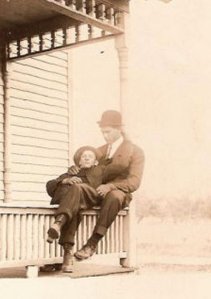
Here are seven more key quotes from Ginsburg’s dissent in Burwell v. Hobby Lobby:
- “The exemption sought by Hobby Lobby and Conestoga would…deny legions of women who do not hold their employers’ beliefs access to contraceptive coverage”
- “Religious organizations exist to foster the interests of persons subscribing to the same religious faith. Not so of for-profit corporations. Workers who sustain the operations of those corporations commonly are not drawn from one religious community.”
- “Any decision to use contraceptives made by a woman covered under Hobby Lobby’s or Conestoga’s plan will not be propelled by the Government, it will be the woman’s autonomous choice, informed by the physician she consults.”
- “It bears note in this regard that the cost of an IUD is nearly equivalent to a month’s full-time pay for workers earning the minimum wage.”
- “Would the exemption…extend to employers with religiously grounded objections to blood transfusions (Jehovah’s Witnesses); antidepressants (Scientologists); medications derived from pigs, including anesthesia, intravenous fluids, and pills coated with gelatin (certain Muslims, Jews, and Hindus); and vaccinations[?]…Not much help there for the lower courts bound by today’s decision.”
- “Approving some religious claims while deeming others unworthy of accommodation could be ‘perceived as favoring one religion over another,’ the very ‘risk the [Constitution’s] Establishment Clause was designed to preclude.”
- “The court, I fear, has ventured into a minefield.”
You can read the full dissent here. (It starts on page 60.)
 The court attempted a narrow decision but crept into an area of corporate law that could create an interesting situation. Usually, corporations are considered distinct from their owners. Hobby Lobby is a corporation tightly held by a family so the majority view basically carved out this type of corporation and said “it’s different”. However, how can you indemnify owners from corporate malfeasance AND say that this specific corporation that doesn’t have a religious mission reflects this set of owner’s pet superstitions? Could the justices have unintentionally left a back door open to challenge the very basis of incorporation which is to make any corporation its own entity?
The decision’s acknowledgment of corporations’ religious liberty rights was reminiscent of Citizens United v. Federal Election Commission, a 2010 ruling that affirmed the free speech rights of corporations. Justice Alito explained why corporations should sometimes be regarded as persons. “A corporation is simply a form of organization used by human beings to achieve desired ends,” he wrote. “When rights, whether constitutional or statutory, are extended to corporations, the purpose is to protect the rights of these people.”
Justice Ginsburg said the commercial nature of for-profit corporations made a difference.
“The court forgets that religious organizations exist to serve a community of believers,” she wrote. “For-profit corporations do not fit that bill.”
I wanted to point out the anniversary of a sad day in New Orleans history. I’m not sure how many of you know about the UpStairs Lounge fire of 1973. The arson mass murder of GLBT stands as the largest of its kind in modern history.
On June 24, 1973, an arsonist set fire to a gay bar in New Orleans called the Upstairs Lounge, killing 32 gay men and women in what has gone down in history as thelargest gay mass murder in U.S. history.
Today is the 41st anniversary of that tragedy, which has been documented by Robert L. Camina in the new film “Upstairs Inferno”. According to the first official teaser trailer below, the horrific event led to even more reprehensible acts in its wake – several bodies from within the club were never claimed by family members, those survivors featured in the news went on to lose their jobs and livelihoods, and the New Orleans police department lagged its feet and attempted to cover up the deadly crime.
To this day, no one has ever been charged with setting fire to the UpStairs Lounge.
Many folks believe this is an event that should not be forgotten.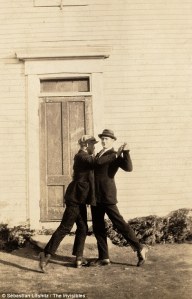
For a complex array of reasons, including homophobia, shame, and despair, the fire and its victims languished in obscurity for years, not taking its proper place in the broader sweep of LGBT history, but this is quickly changing.
“Upstairs”, my musical tragedy commemorating the fire and honoring its victims premiered last year in New Orleans to sold-out audiences, as part of the 40th anniversary memorials and Pride events. A portion of the musical is now playing at the West Village Musical Theatre Festival in New York.
A new book, “The UpStairs Lounge Arson: Thirty-Two Deaths in a Louisiana Gay Bar”, released just last month, is the most extensively-researched and carefully-told history of the subject.
And “Upstairs Inferno”, a documentary by acclaimed filmmaker Robert Camina is currently in post-production.
In addition, Delery, Camino, and I are advocating the inclusion of the UpStairs Lounge site on the National Register of Historic Places.
To commemorate the anniversary of the fire, I spoke with Camina about his documentary.
The lion’s share of published research about the fire comes from Johnny Townsend, author of “Let the Faggots Burn”, and Clay Delery. Did you interview them for the piece and what did you learn?
Well of course Townsend had a lot to contribute, because without his efforts many years ago to interview people, many of the stories would have been lost. So I think he brought a lot of insight to the tragedy that, since so many have passed on, we are not able to access.
Did you get to talk to anyone that Delery and Townsend did not get to talk to?
I don’t think they interviewed Francis Dufrene. We were able to interview him. He was a survivor of the fire. He slipped through the bars and jumped and landed on the pavement. He suffered third-degree burns. He gave us a distinctive perspective of what it was like in the middle of it when the fire started, so we definitely learned a little bit of what it was like the emotions just the mood and a frame of mind of what people going through in there.
As far as you can tell, what was the UpStairs lounge like as a bar?
It was a very comfortable place. Everyone we talked to said that the patrons were like a family. And the word that has come up that you’re very familiar with is “Sanctuary”.
Yes, that’s why I opened my musical with a song of that title. And of course, when a place that is considered a sanctuary is invaded and ruined, it has a profound impact on a community. And I’m not sure I had a whole sense of the impact that it had until I was there last year for the 40th Anniversary to see how the community responded to the memorial events and the play.
Just so you haven’t forgotten with the Republican pogram is these days, I give you a blast from the past from Fat Tony.
Supreme Court Justice Antonin Scalia made an appearance at the Lanier Theological Library in Houston, Texas on Friday, where he claimed that the success of capitalism was deeply tied to the nation’s religious values.
“While I would not argue that capitalism as an economic system is inherently more Christian than socialism … it does seem to me that capitalism is more dependent on Christianity than socialism is,” Scalia, a devout Catholic, said during his speech,according to the Houston Chronicle. “For in order for capitalism to work — in order for it to produce a good and a stable society — the traditional Christian virtues are essential.”
Unfortunately, I can’t seem to read the part in the new testament where the jesus dude said ANY of that. Evidently, we’re supposed to all follow his brand of religion even if we find it to be complete bunk.
Why can’t we just live and let live?
What’s on your reading and blogging list today?
Did you like this post? Please share it with your friends:
Posted: May 16, 2014 | Author: dakinikat | Filed under: Bobby Jindal, Capital Punishment aka Death Penalty, Civil Liberties, Civil Rights, Crime, Criminal Justice System, Discrimination against women, Domestic terrorism, morning reads, The Right Wing, Women's Rights, worker rights |
 Good Morning!
I have read the most horrifying stories this week. It makes me wonder if a good portion of humanity has a death wish. I’m going to share a variety of links that I’ve found; and a lot of them aren’t the most uplifting, I’m afraid.
Knowledge is power. Ignorance may be bliss to the holder but not to the folks around them. There is no lack of headlines in the area of bigotry and intolerance. This is truly discouraging to those of us that care passionately about social justice.
Crime rates have been falling recently but our incarceration rates are not. There’s a huge study out on the economic costs of our prison society and its 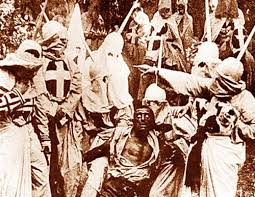 findings are not pretty. We’re spending billionaires of dollars locking up the poor, the uneducated, and the mentally ill in a distinctly racist way.
While crime rates have fallen 45 percent since 1990, the memo said that the incarceration rate is now at a “historically unprecedented level,” jumping 222 percent between 1980 and 2012. An African-American man who never graduated from high school has a 70 percent likelihood of being imprisoned by his mid-30s; for similarly educated white men, the rate is about 15 percent. And the United States imprisons at a rate six times greater than most peer nations, including those of the European Union, Japan, Israel, and Mexico.
The U.S. Department of Justice announced rules last month that would give the Obama administration wider latitude to extend clemency or reduce sentences for drug-related prisoners who don’t present a threat to public safety. In addition, the U.S. Sentencing Commission voted unanimously in April to reduce sentencing guidelines for certain nonviolent criminals, a move now before Congress that could go into effect Nov. 1 if lawmakers don’t take any further action.
Ronald S. Sullivan Jr. is a clinical professor of law and director of the Criminal Justice Institute at Harvard Law School. The program focuses on criminal practice, education, and research, and hosts a teaching clinic for third-year law students to represent indigent criminal defendants in local and juvenile courts. Sullivan spoke with the Gazette about racial and national sentencing disparities, the economic and social costs of mass incarceration, and the sentencing reforms now under consideration.
GAZETTE: According to the memo, while the overall crime rate fell 45 percent between 1990 and 2012, the rate of imprisonment has spiked 222 percent between 1980 and 2012. What’s behind this disparity? Is that strictly the result of policy decisions like mandatory minimum sentencing, repeat-offender laws, and the growth in for-profit prisons? Or are other factors at work?
SULLIVAN: That’s certainly a big piece of it. … policy decisions in respect of mandatory minimums drive the huge incarceration rate. But there are other factors as well. What those factors are is the subject of a lot of academic debate nowadays. And to be honest, we’re not exactly sure what it is. We do know that on a per-capita basis the U.S. incarcerates more people than any country in the world, including Rwanda, Russia, Cuba, all of the places one does not associate with a robust tradition of liberty. And that’s in many ways shocking.
The theory would be … with the high rates of incarceration that the crime rate would go down and then that would be followed by less incarceration because there just wouldn’t be as many crimes committed. But those numbers have gone in opposite directions. Mandatory minimums simply don’t explain all of it. Part of it, at least I think, has to do with selective law enforcement — the over-policing of certain neighborhoods, particularly minority neighborhoods and poor neighborhoods. That is to say, if police are there and looking for crimes, and over-police certain neighborhoods, you’re going to produce more defendants in particular areas. And if the populations are drawn from poor populations, they’re unable to afford to be released on bail, they’re unable to afford good lawyers, and studies show that if you’re not released on bail you tend to stay in jail after sentencing. An unfortunate reality of the United States is that far too often the justice you receive is a function of how much money you have.
The prison-industrial complex is also an important factor. It doesn’t take an economist to know that if … you make your money by people going into prison, then there’s going to be higher incarceration rates. So I think that certainly plays a role as well.
GAZETTE: What are the areas of debate among scholars?
SULLIVAN: One explanation has to do with the United States’ articulated goals of punishment. Back in the ’70s and before, rehabilitation was an articulated goal of the criminal justice system. The Supreme Court has said clearly now rehabilitation is no longer a penological goal. We look at incapacitation, we look at deterrence, and we look at retribution as goals that the penal system serves. When you take rehabilitation out of the mix, then that de-incentivizes the system from having shorter sentences because there’s no longer an affirmative goal of reintegrating people meaningfully back into the community. That’s one of the things that scholars argue drive up the incarceration rate.
The other has to do with our system of elected judges in most states. Judges who are elected, the argument runs, respond to democratic pressures. We live in a political economy where people think that more and harsher punishment is better, even though most competent data suggests that longer sentences, after a certain point … make people worse as opposed to making them better. But you have democratically elected judges who respond to the will of the people, and if that will is for longer sentences, no matter how misinformed, then judges oftentimes acquiesce to those pressures.
The other issue has to do with legislators. It, again, has to do with the political economy in which we live. With this mantra of being “tough on crime,” legislators essentially race to see who can draft legislation with the harshest, longest penalties. I think that legislators don’t believe that prosecutors will attempt to enforce the most harsh provisions of particular laws, and in that sense, from the vantage point of the legislator, it’s sort of a win-win situation: They can get the political credit for drafting an incredibly harsh law, but not really have to deal with the effects because the notion is the prosecutor will sort it out and will recommend a fair sentence. That assumption, though, just hasn’t really been borne out in reality.
GAZETTE: The current incarceration gap between white men and African-American men is particularly striking. Does that figure surprise you, and what accounts for this gap? Is access to justice a factor?
SULLIVAN: The figure does not surprise me, and it is unfortunate that the figure does not surprise me. The figure reaffirms that race insinuates itself into almost every aspect of our life still, and it has a particular salience in the criminal justice system. … Here we see the effect of over-policing much more dramatically. In our culture, unfortunately … blackness is seen as a proxy for criminality. So the same or similar conduct engaged in by a person of color is seen through a lens that views that conduct as criminal, where others simply are not taxed in the same way.
The debate over the use of lethal injections and the drugs used for state executions continues. Three newspapers–including the UK Guardian–have sued to  make public the source of drugs for these injections. Most states are trying to make that information private. Many of the recent botched executions came from simple druggists compounding the formulations because many of the major drug manufacturers–especially those in Europe–refuse to do so. Should the formulation and the source of death penalty drugs be kept from the public?
The growing secrecy adopted by death penalty states to hide the source of their lethal injection drugs used in executions is being challenged in a new lawsuit in Missouri, which argues that the American people have a right to know how the ultimate punishment is being carried out in their name.
The legal challenge, brought by the Guardian, Associated Press and the three largest Missouri newspapers, calls on state judges to intervene to put a stop to the creeping secrecy that has taken hold in the state in common with many other death penalty jurisdictions. The lawsuit argues that under the first amendment of the US constitution the public has a right of access to know “the type, quality and source of drugs used by a state to execute an individual in the name of the people”.
It is believed to be the first time that the first amendment right of access has been used to challenge secrecy in the application of the death penalty. Deborah Denno, an expert in execution methods at Fordham University law school in New York, said that more and more states were turning to secrecy as a way of hiding basic flaws in their procedures.
“If states were doing things properly they wouldn’t have a problem releasing information – they are imposing a veil of secrecy to hide incompetence.” “This is like the government building bridges, and trying to hide the identity of the company that makes the bolts,” said Richard Dieter of the Death Penalty Information Center. “Those involved in public service should expect public scrutiny in order to root out problems, particular when the state is carrying out the most intimate act possible – killing people.”
A Guardian survey has identified at least 13 states that have changed their rules to withhold from the public all information relating to how they get hold of lethal drugs. They include several of the most active death penalty states including Texas, which has executed seven prisoners so far this year, Florida (five), Missouri (four) and Oklahoma (three). Attention has been drawn to the secrecy issue by the botched execution of Clayton Lockett in Oklahoma on 29 April in which the prisoner took 43 minutes to die, apparently in great pain, from an untested cocktail of drugs whose source was not made public.
Lockett’s lawyers had argued in advance that he might be subjected to cruel and unusual punishment as a result of the lack of information surrounding the drugs, but the state supreme court allowed the procedure to go ahead having come under intense pressure from local politicians, some of whom threatened to impeach judges.
In the wake of the events in Oklahoma, in which the prisoner writhed and groaned over a prolonged period, the state has agreed to pause for six months before carrying out any further judicial killings to give time for an internal investigation to be completed. President Obama described the Lockett execution “deeply troubling” and has asked US attorney general Eric Holder to review the way the death penalty is conducted.
Until last year, Missouri which is now executing prisoners at a rate of one a month, was open about where it obtained its lethal injection chemicals. But like many death penalty states, its drug supplies have dwindled as a result of a European-led pharmaceutical boycott, and in a desperate move to try to find new suppliers it has shrouded their identity in secrecy. In October, the state changed its so-called “black hood law” that had historically been used to guard the identity of those directly involved in the death process.
The department of corrections expanded the definition of its execution team to include pharmacies and “individuals who prescribe, compound, prepare, or otherwise supply the chemicals for use in the lethal injection procedure”. Six inmates have been executed by Missouri since the new secrecy rules came in –they went to their deaths entirely ignorant of the source or quality of the drugs used to kill them. All that is known is that the pentobarbital that Missouri deploys in executions probably came from a compounding pharmacy – an outlet that makes up small batches of the drug to order in the absence of stringent regulation.
We continue to see GLBT civil rights characterized by the right as an attack on their religious rights and their homobigoted behavior and language  wrapped up as a first amendment issue. How does the right play the victim card in a debate about limiting the rights of others? It is doing the same things with women’s reproductive rights.
While Religious Right leaders are quick to equate criticism as an attack on their freedom of speech and religion, some of them are all too happy to limit the free speech or religious liberty of the people they disagree with. That includes the Benham brothers.
In the flurry of public appearances in the wake of the HGTV cancellation, the Benhams and their right-wing fans have portrayed themselves as committed to the principle that everyone in America should have a chance to express themselves. On the O’Reilly Factor, David Benham denounced the gay agenda for seeking “to silence those that disagree with it, and it begins with Christians.” Jason warned that “when an idea seeks to silence any other idea that may disagree with that, then we have ourselves a problem on hand.”
But as blogger Jeremy Hooper recently pointed out, back in November 2004, David, Jason, and Flip Benham were all part of a group of about 15 people who went to a Charlotte, North Carolina city council meeting to complain about the gay pride celebration that had taken place in a city park six months earlier. They were among a group of people who had gone to the Pride event to, in Jason’s words, “tell them that Jesus loves you just the way you are, but he refuses to leave you that way.” But the Benhams and their friends were appalled at what they saw. “This is filth, this is vile and should not be allowed in our City,” said David. Jason urged city council members to reject future permits for Pride celebrations – and seemingly for any LGBT-themed event:
They have a right to apply for this permit, but you have a right and responsibility to deny it. I [implore] you not to be governed by the fear in which you feel. If you deny them this permit you will open a can of worms but you in your leadership position have to take that responsibility and you have to not allow the fear of making this homosexual community mad. You have to accept that responsibility and deny them every permit that they ask for.
In the words of Charlotte Pride organizers, “The Benham brothers once tried to silence us. They failed.”
Some Benham fans, like the American Family Association’s Bryan Fischer, say flat-out that the First Amendment’s religious liberty protections were only meant for Christians and don’t apply to Muslims, Mormons or other minority faiths. Back when many self-proclaimed “religious liberty” advocates were opposing efforts by Muslims in New York to build a community center – which critics gave the inaccurate and inflammatory name of “Ground Zero Mosque” – David Benham and his father Flip were among them. According to the Anti-Defamation League, David participated in protests against the Center, calling it a “den of iniquity” and labeling Muslims “the enemy” that was attacking America.
In these public debates, “Christian” as used by Religious Right leaders often doesn’t really apply to all Christians, but only to a subset of Christians who share their right-wing politics. Other Christians don’t count. The Family Research Council’s Tony Perkins, who has bemoaned “cultural elites” who want to “silence” and “bully” people like the Benhams, recently said that pro-gay-equality Christians don’t deserve the same legal protections as he does because “true religious freedom” applies only to those with religious views that align with those of the political Right.
We’ve seen a lot of this coming from Governor Bobby Jindal who is a bully that insists that GLBT rights activists are bullies.
Gov. Bobby Jindal’s commencement speech at Liberty University was a masterpiece in this type of dishonest projection. Posing as a champion of free speech and freedom of religion, he actually made a chilling argument in favor of stripping both of those freedoms away from ordinary Americans, businesses and anyone who might disagree with turning this country into a theocratic state. He started by defending Hobby Lobby for trying to strip contraception coverage out of their employees’ own healthcare plans. “Under the Obama regime,” he argued, “you have protection under the First Amendment as an individual, but the instant you start a business, you lose those protections. And that brings us to the second front in this silent war: the attack on our freedom of association as people of faith.”
It’s all nonsense, of course. In fact, Hobby Lobby’s intention here is to reduce religious freedom by forcing their employees to adhere to certain religious rules in order to get the benefits they already earned. ( They have a history of trying to impose their religious dogma on non-believers through other means as well.) The only people in any real danger of losing freedom are women, who are in danger of losing their freedom to use their insurance benefits in a way that fits their personal beliefs.
But Jindal was just warming up, claiming the “Obama administration” was gunning to decide “who can preach the Gospel.” This outrageous conspiracy theory was justified, in his opinion, by supposed other attacks on “free speech,” namely that TV networks are reluctant to house the opinions of open bigots. “The left no longer wants to debate. They simply want to silence us,” he said of Phil Robertson from Duck Dynasty, who was never silenced and has, to this date, been allowed to say any fool thing he wants. But he was briefly suspended from A&E, leading conservatives to decide that “free speech” means you have a right to your own TV show.
All of this has gotten me interested in again in White Supremacist movements. I really believe that most of these Southern Republicans fall squarely  into the neoconfederate mold and aren’t that far off the KKK tree.
White supremacy is referenced in relation to specific news events as well. For example, the murder rampage by the neo-Nazi Frazier Glenn Miller, the recent weeks-long debate between pundits Ta-Nehisi Coates and Jonathan Chait about “black pathology”; birtherism; stand-your-ground laws; and the open embrace of the symbols and rhetoric of the old slave-holding Confederacy by the Republican Party have been framed and discussed in terms of white supremacy.
Conservatives and progressive often use the phrase “white supremacy” in divergent ways. Conservatives use the phrase in the service of a dishonest “colorblind” agenda, evoking extreme images of KKK members and Nazis as the exclusive and only examples of white racism in American life and politics. Conservatives use extreme caricatures of white supremacy in order to deflect and protect themselves from charges that the contemporary Republican Party is a white identity organization fueled by white racial resentment. Liberals, progressives and anti-racists use the phrase “white supremacy” to describe the overt and subtle racist practices of movement conservatism in the post-Civil Rights era, and how American society is still structured around maintaining and protecting white privilege. This analysis is largely correct: however, it often conflates concepts such as racism, white privilege, and white supremacy with one another. Language does political work. In the age of Obama, the phrase “white supremacy” is often used in political discussions like an imprecise shotgun blast or a blockbuster bomb. If the Common Good and American democracy are to be protected—countering how the right wing has used the politics of white racial resentment, racial manipulation, and hate to mobilize its voters in support of a plutocratic agenda—a more precise weapon is needed. A necessary first step in that direction requires the development of a more detailed and transparent exploration of the concept known as “white supremacy.”
 One of the sure signs to me of either a racist or a misogynist or a homophobic bigot is that they all insist they have no problem women, racial minorities, and/or gay people. The believe they are the victims by being forced to deal with any one else in terms other than their own choosing. Therein lies the problem. Here’s a perfect example from Kristen Powers writing at USA Today. You can’t call out bigotry without being called a bully obsessed with political correctness. Then, you’re told that the real victims are white conservative christians.
Each week seems to bring another incident. Last week it was David and Jason Benham, whose pending HGTV show was canceled after the mob unearthed old remarks the brothers made about their Christian beliefs on homosexuality. People can’t have a house-flipping show unless they believe and say the “right” things in their life off the set? In this world, the conservative Tom Selleck never would have been Magnum, P.I.
This week, a trail-blazing woman was felled in the new tradition of commencement shaming. International Monetary Fund Managing Director Christine Lagarde withdrew from delivering the commencement speech at Smith College following protests from students and faculty who hate the IMF. According to the Foundation for Individual Rights in Education, this trend is growing. In the 21 years leading up to 2009, there were 21 incidents of an invited guest not speaking because of protests. Yet, in the past five-and-a-half years, there have been 39 cancellations.
Don’t bother trying to make sense of what beliefs are permitted and which ones will get you strung up in the town square. Our ideological overlords have created a minefield of inconsistency. While criticizing Islam is intolerant, insulting Christianity is sport. Ayaan Hirsi Ali is persona non grata at Brandeis University for attacking the prophet Mohammed. But Richard Dawkins describes the Old Testament God as “a misogynistic … sadomasochistic … malevolent bully” and the mob yawns. Bill Maher calls the same God a “psychotic mass murderer” and there are no boycott demands of the high-profile liberals who traffic his HBO show.
The self-serving capriciousness is crazy. In March, University of California-Santa Barbara women’s studies professor Mireille Miller-Young attacked a 16-year-old holding an anti-abortion sign in the campus’ “free speech zone” (formerly known as America). Though she was charged with theft, battery and vandalism, Miller-Young remains unrepentant and still has her job. But Mozilla’s Brendan Eich gave a private donation to an anti-gay marriage initiative six years ago and was ordered to recant his beliefs. When he wouldn’t, he was forced to resign from the company he helped found.
Got that? A college educator with the right opinions can attack a high school student and keep her job. A corporate executive with the wrong opinions loses his for making a campaign donation. Something is very wrong here.
The right seems to be really confused about the first amendment, which clearly deals with the relationship between the federal government, religion, the press, and the people’s free speech. The same idiots that scream that Hobby Lobby can deny its employees contraception and say that businesses should be able to refuse to serve GLBTs will shout out a corporation that says they don’t want to be known for bigotry of any kind. They also misunderstand the protection given to University professors when it comes to academic freedom. Companies have to comply with the law. They do not have to keep employees that don’t represent their corporate values. PERIOD.
Anyway, it just amazes me that this intense amount of uncivil bigotry and hatred seemed to have burbled up again after all these years. All it took was an African American President and a few powerful women–namely Hillary Clinton–to bring the crazy out.
I just wanted to mention that most of these silent film images come from “Birth of a Nation” but one comes from “Broken Blossoms” also known as the “Yellow Man and the Girl”. Both of these films were directed by DW Griffith around 1919. Both movies starred Lillian Gish and were received differently by white audiences than by the racial minorities they also depicted.
What’s on your reading and blogging list today?
Did you like this post? Please share it with your friends:
Posted: April 28, 2014 | Author: dakinikat | Filed under: Discrimination against women, Economy, Feminists, morning reads, U.S. Politics, War on Women | Tags: Donald Sterling, female gamers, Fukushima workers, Game of Thrones, homophobia, Ichiefu, Japanese Manga, Johnathan McIntosh, Kazuto Tatsuta, LA Clippers, male-dominated culture, middle class, misogyny, NBA, NRA, on-line gaming, Racism, rape, Sarah Palin, waterboarding |
Good Morning! Quelle Surprise! Pop Culture is still Misogynist, Racist, and Homophobic!
 I found some interesting reads over the weekend so I hope you’ll enjoy them! They are all sort’ve stories that actually reflect a lot of the things that fascinate and entertain me. I love strategy games and have been playing them on line for quite some time Actually, it’s been since the early 1990s when most of the games were simply text oriented. I also love animation art, and books, and of course, music. So, here’s a little bit on that and a little bit of stuff that has to do with social justice too. If I do a have a consistent train of thought here it is that so much of what should be entertaining and could be informative can sow bad seeds. I’ve a few examples where the pop and geek culture are taking on hard topics. Some are successful and examining crucial human stories. Some rely on the same old misogyny, racism, and homobigotry.
Japanese Manga is a way many creative people in Japan explore how they feel about a variety of things. This article is about a new manga book on the lives of the Fukashima plant workers.
A manga that describes the reality of daily life at the crippled Fukushima No. 1 nuclear power plant through the eyes of a worker is enjoying popularity.
“Ichiefu” (1F), written by Kazuto Tatsuta, 49, first appeared in autumn 2013 as a serial comic in the weekly magazine “Morning,” published by Kodansha Ltd. Ichiefu stands for the Fukushima No. 1 plant among locals.
The comic was published in book form on April 23. The publisher shipped a total of 150,000 copies of the first volume, which is an unusually large number for a little-known manga artist.
Tatsuta said he changed jobs repeatedly after graduating from university. At the same time, he also worked as a comic strip artist.
It was when he was considering another job change that the March 2011 Great East Japan Earthquake and tsunami occurred, triggering the nuclear accident at the Fukushima plant.
While seeking a better-paying job, Tatsuta also wondered what part he could do as a citizen of Japan to help. As a result, he began to work at the Fukushima No. 1 nuclear power plant from June 2012 for a total of six months.
“Ichiefu” describes the situation at the plant in great detail. The descriptions of equipment, such as the masks and protective gear the workers used, and the procedures they took to measure radiation levels make readers feel as if they are there and reading actual worker manuals.
The comic also depicts intimate practices only workers there would know. For example, the workers always say “Be safe” to each other before starting their shifts.
Each of the workers was also required to stop working when his dosimeter issued a fourth warning sound.
I quit playing a few games last year that I had really grown fond of because of the rampant misogyny and homophobia of many of the white male  players. I had repeatedly asked them to constrain their language, behavior, and what they posted. I am fortunately playing a game right now where that’s not the case. I am still one of the few female players in my alliance. I believe I am one of two but I have found that I generally enjoy better game play if I am in an alliance where there are many openly gay men. This NPR article summarizes a series of articles that are focused on white male privilege in the online game atmosphere.
In video games, sexism often comes in the form of male-dominated storylines and character archetypes. In the video game community, it takes a more menacing shape.
It ranges from attempts to silence female critics to the harassment of fellow players. Some harassment even goes so far as phone calls and rape threats, as one female game developer found out last year.
“The issue is often framed as a women’s issue, but sexual harassment, sexism and misogyny in gaming is not a women’s issue — it’s a gaming community issue,” says Jonathan McIntosh, a producer for the Tropes vs. Women in Video Games Web series.
Last week, McIntosh wrote a piece for gaming website Polygon about what he calls the “invisible benefits” that males experience while playing video games. In the post, he lists 25 effects of “male gamer privilege.” Here’s a sample:
- I can choose to remain completely oblivious, or indifferent to the harassment that many women face in gaming spaces.
- I am never told that video games or the surrounding culture is not intended for me because I am male.
- I can publicly post my username, gamertag or contact information online without having to fear being stalked or sexually harassed because of my gender.
- I will never be asked to “prove my gaming cred” simply because of my gender.
- I will almost always have the option to play a character of my gender, as most protagonists or heroes will be male by default.
- If I am trash-talked or verbally berated while playing online, it will not be because I am male nor will my gender be invoked as an insult.
- My gaming ability, attitude, feelings or capability will never be called into question based on unrelated natural biological functions.
So far, the reaction to his post — both in the more than 700 comments on the piece and elsewhere — has been relatively civil. As McIntosh pointed out on Twitter, he doubts it would have been as civil if he had been a female writer raising the same points.
“I’m saying the same thing that women have been saying for years,” McIntosh says. “There’s nothing in my piece that’s really new, it’s just that it’s coming from me. If my name was Joanna McIntosh … I’d be called irrational, I’d be called hysterical and I’d be called too sensitive.”
One other thing that I did not mention last week but I would like to mention this week is the rape scene between the Lannister twins in Game of Thrones. The same scene in the book actually was rough but consensual.
There’s been a lot of discussion, Internet rage, and general overall hoopla following Sunday night’s episode of Game of Thrones, as the television show made the most shocking book-to-screen deviation to date. *Spoiler free for future books.*
Jaime and Cersei finally had their reunited love scene, and suddenly for book readers, Jeyne Westerling seemed like a small cinematic sacrifice to make in comparison. I don’t want to get into a philosophical discussion on whether or not this scene constitutes as rape. Smarter people than I have alreadydonethat.
What we have to work with in the scene is what the characters said and did because we can’t know how they felt. And whether or not the scene was intended to come across as consensual sex, the way the scene was cut by the director makes it definitive to the audience that it was not consensual. Cersei repeatedly said no while Jaime forced himself on top of her and answered that he didn’t care as his creepy voiceover carried out onto a shot of Arya staring at mountains. If that’s all we know about the scene, then yes, in the television show Jaime raped Cersei.
The “debate” about the rape has been nearly as upsetting as the rape itself. I liked this take clearly stating that rape is not a “narrative device”.
In some ways, it’s useful for television shows to acknowledge the extent of sexual violence in our culture. These narratives allow necessary stories to be told. But the execution is too easy. From daytime soap operas to prestige cable shows, rape is all too often used to place the degradation of the female body and a woman’s vulnerability at the center of the narrative. Rape is used to create drama and ratchet up ratings. And it’s rare to see the brutality and complexity of a rape accurately conveyed on-screen. Instead, we are treated to an endless parade of women being forced into submission as the delicate and wilting flowers television writers and producers seem to want them to be.
 I am still wondering why there seems to be a renaissance in misogny, racism and homobigotry. You would think that the sports arena would have made better strides against racism given that teams and fans are fully integrated to the idea that there are players of many races. However, it seems the real money and power behind the bread and circuses are still those rich, horrid, white men. We talked about the Clippers’ owner last week. There is, of course, more on that.
Deadspin has acquired an extended, 15-minute version of the conversation between Clippers owner Donald Sterling and his then-girlfriend V. Stiviano. If the original nine-minute tape acquired by TMZ left any questions about Sterling’s opinions regarding minorities, the audio here should remove all doubt that he’s a doddering racist with views not too far removed from the plantation.
The Clippers themselves showed some class this week in a protest that was priceless. There will undoubtedly be more coming and hopefully the NBA can find a way to strip Sterling of the franchise.
The Clippers gathered at center court before a118-97 Game 4 loss in their first-round series against the Golden State Warriors and took off their Clippers warm-up shirts and left them there. They then warmed up wearing inside-out red shooting shirts that did not display the Clippers name or logo. During the game, players wore black arm or wrist bands and black socks.
In other news, water is still wet and Sarah Palin is still one of the dumbest people on the planet. This is the money quote she gave the NRA: ‘Waterboarding is how we baptize terrorists’.
Former Alaska Gov. Sarah Palin (R) defended the controversial enhanced interrogation technique of waterboarding this weekend, and implied that the practice would still be commonplace “if I were in charge.”
“They obviously have information on plots to carry out Jihad,” she said at the National Rifle Association (NRA) annual meeting on Saturday evening, referring to prisoners. “Oh, but you can’t offend them, can’t make them feel uncomfortable, not even a smidgen. Well, if I were in charge, they would know that waterboarding is how we baptize terrorists.”
The remark stands in stark contrast to the opinion of her former running mate, Sen. John McCain (R-Ariz.).
The former Republican presidential nominee, who spent more than five years in a prison camp during the Vietnam War, has repeatedly denounced the practice, which he says is torture.
In her speech, Palin praised the NRA, a group whose members “are needed now more than ever, because every day we are seeing more and more efforts to strip away our Second Amendment rights,” she said.
I am still waiting for some examples of how any government in the US is stripping away the second amendment rights. I do, however, have thousands of examples of how women are losing their right to self determination.
My last offering this morning is yet another in depth article on the demise of the middle class in the USA. Middle class Americans are an endangered species.
Wages for millions of American workers, particularly those without college degrees, have flat-lined. Census figures show the median household income in 2012 was no higher than it was 25 years ago. Men’s median wages were lower than in the early 1970s.
Meanwhile, many of the expenses associated with a middle-class life have increased beyond inflation. This includes college tuition, whose skyrocketing cost has laid siege to a bedrock principle of the American Dream: that your children will do better than you did.
A recent poll conducted by the Washington Post and the Miller Center at the University of Virginia found that 40 percent of those calling themselves middle class felt less financially secure than they were just a few years ago. Forty-five percent said they worry “a lot” about having enough money stashed away for retirement, and 57 percent said they worry about meeting their bills. Less than half said they expect their kids to do any better.
Fewer Americans find themselves in the heart of the middle class with every passing year.
In the mid-1970s, the majority of Americans were in the middle, with 52 percent earning the equivalent (in today’s dollars) of $35,000 to $100,000. Today, according to census figures, the share of households earning under $35,000 is virtually unchanged, 35 percent. The shift has occurred in the other two categories. Households with incomes over $100,000 have doubled, to 22 percent, while less than 44 percent are in the middle cluster.
So, what’s on your reading and blogging list today?
Did you like this post? Please share it with your friends:
Posted: April 17, 2014 | Author: dakinikat | Filed under: abortion rights, Discrimination against women, fetus fetishists, homophobia, John Birch Society in Charge, morning reads, Psychopaths in charge, racism, right wing hate grouups, U.S. Politics, Violence against women |
Good Morning!
 I must be a political junkie because I certainly have the elections of fall 2014 on my mind. Democrats appear to be gaining some ground. I just can’t help but wonder how far right of bat shit crazy the Republican Party will go because it certainly seems that it’s gone far off the rails these days. It seems odd that the party whose roots came from the civil war and the fight to preserve the union while ending slavery has switched to the party of sedition and oppression.
The problem is that so many billionaire donors–in a system that favors billionaire donors–have made sure that only those willing to sell their souls to them will get money. It is also clear that only those pols that will sell their souls to the misogynistic, homophobic, religious crazies in this country will get the grass roots support.
How much more of this can the country take? Are the Republicans sounding a swan song or a death trumpet for our democracy? It is clear that the Republican Party has now established itself on a white identity that doesn’t even include all the white people in this country. Republicans are losing ground with Asians and Hispanics each election cycle. It isn’t because they don’t agree with some of their economic or even social positions. It’s the racism, the xenophobia, the religious exclusivity, the homophobia, the misogyny, the anti-science bent, and the general tendency to hate all things not white and male. Larry Bartels at the WaPo:
A working paper by Alexander Kuo, Neil Malhotra and (my Vanderbilt colleague) Cecilia Hyunjung Mo examines the basis of growing Democratic identification among Asian Americans. Among other analyses, they report the results of an experiment in which Asian American college students were randomly subjected to a seemingly incidental but carefully staged “microaggression”—having their U.S. citizenship questioned by the experimenter. This minor but socially charged interaction boosted Democratic partisanship by 13 percentage points, a remarkable shift. (The corresponding effect among white students was only three percentage points.)
Asian Americans who experienced the insensitive questioning were also “more likely to view Republicans generally as closed-minded and ignorant” and to express more negative feelings toward them — despite the fact that Republicans were never mentioned by the experimenter or connected to the microagression. Thus, the authors’ findings “suggest that Asian Americans associate feelings of social exclusion based on their ethnic background with the Republican Party.”
Those folks are not homogeneous in that they have the same interests, aspirations, or even religions. However, they all feel that there is a key  demographic of white people that reject their claim to the identity of America and the American Dream. I can’t help but wonder if the rest of the country is watching those states run by republicans and wondering wtf is going on? Right now, in Baton Rouge, our legislature is debating making one particular version of the bible the state book and what to do with alcohol infused ice cream. Why just this week I learned that Phyliss Schlafly thinks all women should be glad that men make more money because it makes women head straight for the altar.
Now three days later, a prominent member of the Republican movement further undermined the party’s campaign to appeal to women voters by suggesting that the current pay gap isn’t wide enough. In an op-ed published by the Christian Post, Phyllis Schlafly — the founder of the Eagle Forum — maintained that increasing the pay gap will help women find suitable husbands:
Another fact is the influence of hypergamy, which means that women typically choose a mate (husband or boyfriend) who earns more than she does. Men don’t have the same preference for a higher-earning mate.
While women prefer to HAVE a higher-earning partner, men generally prefer to BE the higher-earning partner in a relationship. This simple but profound difference between the sexes has powerful consequences for the so-called pay gap.
Suppose the pay gap between men and women were magically eliminated. If that happened, simple arithmetic suggests that half of women would be unable to find what they regard as a suitable mate.
Obviously, I’m not saying women won’t date or marry a lower-earning men, only that they probably prefer not to. If a higher-earning man is not available, many women are more likely not to marry at all. […]
The best way to improve economic prospects for women is to improve job prospects for the men in their lives, even if that means increasing the so-called pay gap.
Schlafly has long been crusader for “traditional values” within conservative movement and the Republican party, serving as a member of the National GOP Platform Committee as recently as 2012 and as a delegate to the National Convention. Her Eagle Forum PAC has also donated thousands to prominent Republicans like Eric Cantor, Michele Bachmann, Steve King, and Ted Cruz.
 Then, I found out that nullification can work downwards as well as upwards if you want to improve the lives of working people. Big government is good as long as it’s used to stamp out the local efforts to improve people’s lives.
At a time when many states and cities are working at passing minimum wage increases, Oklahoma Gov. Mary Fallin (R) has gone in the opposite direction and signed a law banning cities from passing higher wages. The bill also bans them from enacting paid sick days or vacation requirements.
The law will stymie the efforts of activists in Oklahoma City, where a labor federation has led the push on a petition to raise the city’s minimum wage to $10.10 per hour. The state’s current minimum has been set at the federal level of $7.25. In 2012, 64,000 workers in the state earned $7.25 an hour or less, making up 7.2 percent of all hourly workers, a larger share than the 4.7 percent figure for the country as a whole.
Fallin said she signed the bill out of the worry that higher local minimum wages “would drive businesses to other communities and states, and would raise prices for consumers.” She also argued that “most minimum wage workers are young, single people working part-time or entry level jobs” and that “many are high school or college students living with their parents in middle-class families.” She warned that increasing the minimum wage “would require businesses to fire many of those part-time workers” and harm job creation.
But that’s not what the typical American minimum wage worker looks like. Nearly 90 percent of workers who would be impacted by an increase in the wage are older than 20, while the average age is 35. More than a quarter have children to support. More than half work full time, and 44 percent have at least some college education, while half a million minimum wage workers are college graduates.
Meanwhile, experts have analyzed state minimum wage increases over two decades and found that even at times of high unemployment, there is no clear evidence that the hikes affected job creation. Five other studies have come to the same conclusion. The same has held true for the city of San Francisco, where employment grew by more than 5 percent after it passed a higher minimum wage while nearby counties experienced declines.
Oklahoma is not the only state to pass a blanket ban on raising the wage. Wisconsin lawmakers recently considered doing the same, and Kansas Governor Sam Brownback (R)signed a law that prevents local governments from requiring contractors to pay higher wages last year. According to Paul Sonn, general counsel and program director at the National Employment Law Project, a handful of mostly Republican-leaning states passed these kinds of bans about a decade ago, including Colorado, Florida, Georgia, Louisiana, Oregon, and Texas. But the states that are the most likely to see campaigns to raise minimum wages are not the ones that are likely to pass similar bans, he told ThinkProgress.
And of course, we still have so much to discuss about the continual obsession with blastulas, and zygotes, and fetuses that are no where near viability. 
What is it about abortion that gives it such political staying power? One obvious answer it is that for opponents it is an issue of life and death. For pro-choice women, it is a question of personal autonomy and bodily integrity.
Take a look at the history of the fight for women’s rights, as argued by the feminist legal scholar Catharine MacKinnon. In her 1989 book, “Toward a Feminist Theory of the State,” MacKinnon wrote, “male dominance is perhaps the most pervasive and tenacious system of power in history.” The goal of the feminist project, she argued six years earlier, “is to uncover and claim as valid the experience of women, the major content of which is the devalidation of women’s experience.”
Lisa Tuttle, in the “Encyclopedia of Feminism,” described reproductive freedom “as a basic human right, it includes the right to abortion and birth control, but implies much more. To be realized, reproductive freedom must include not only woman’s right to choose childbirth, abortion, sterilization or birth control, but also her right to make those choices freely, without pressure from individual men, doctors, governmental or religious authorities. It is a key issue for women, since without it the other freedoms we appear to have, such as the right to education, jobs and equal pay, may prove illusory.”
These thoughts are by no means the opinions of women only. In an effort to explore the politics of abortion rights I contacted a disparate group of contemporary experts.
While none of these theorists could be categorized as politically correct – if anything, some have been accused of just the opposite — all see the anti-abortion movement as driven in part by the determined effort to control the reproductive rights of women.
Steven Pinker, a professor of psychology at Harvard, is no stranger tocriticism from feminists. In his book “The Blank Slate: The Modern Denial of Human Nature,” Pinker wrote: “Feminism as a movement for political and social equity is important, but feminism as an academic clique committed to eccentric doctrines about human nature is not. Eliminating discrimination against women is important, but believing that women and men are born with indistinguishable minds is not. Freedom of choice is important, but ensuring that women make up exactly 50 percent of all professions is not. And eliminating sexual assaults is important, but advancing the theory that rapists are doing their part in a vast male conspiracy is not.”
When I asked Pinker in an email about abortion, however, his response was very much in line with the thinking of feminist theorists.
Abortion may “touch on a characteristic male obsession: controlling the sexuality of women,” he said, noting that in most traditional societies “a woman’s male relatives, and then her husband, will try to control her sexuality in a variety of ways: veils, wigs, clothing, chaperones, segregation by sex, chastity belts, engagement rings, terms of address (‘Mrs. John Smith’), ceremonies (as when a father gives away the bride to her husband), and laws that make a woman the property of her husband.”
These efforts, Pinker said, are driven, in part, by fears of “paternity uncertainty”: “The ultimate evolutionary reason is presumably to guarantee paternity, since a cuckolded man is in the worst imaginable evolutionary scenario: investing in the child, and hence the genes, of a rival man.”
Along similar lines, John Hibbing, a political scientist at the University of Nebraska, Lincoln, who specializes in the study of how “biological variations mitigate the way in which individuals respond to politically relevant environmental occurrences,” argues that reproduction is both a core political issue and a core evolutionary issue.
Hibbing’s comment focused on themes consistent with Pinker’s: “Those most concerned with security and tradition tend to be politically conservative and those most open to new lifestyles and who are less focused on security will tend toward the political left. Issues of reproduction are likely to be at the core of the conflict between tradition and new lifestyles since these issues are about as basic as they come. Fundamentalism in some parts of the world is often driven by the desire of males to control reproductive opportunities. These issues form the evolutionary core.”
We have one of the two major political parties showing signs of radical extremism and elements that are truly dangerous, and yet, no one pays  attention. I have written a lot about right wing terrorism and it grieves me to see that we saw yet another predictable incident in Kansas City. I can’t imagine what it feels for the folks who have been following this inside law enforcement and inside groups that truly fear these hate groups. If you didn’t see this bit from Rachel Maddow, you should. It sums up a lot of history that we’ve basically ignored since the 1980s. There are some really dangerous, violent white men out there.
In 2009, the Department of Homeland Security concluded a years-long study of right-wing extremism in the U.S. and released a report saying that ultraconservative white nationalists and other extremists pose a much greater threat to U.S. citizens than Islamic terrorists from overseas.
Conservatives like Laura Ingraham and Rush Limbaugh pitched a huge tantrum, accusing the Obama administration of staging an anti-conservative pogrom, even though the DHS study was commissioned by the Bush administration. In the end, the full study was never released, and the outcry forced DHS to divert resources away from U.S. extremists.
When authorities raided the apartment of deceased Boston Marathon bombing suspect Tamerlan Tsarnaev, they found stacks of right-wing conspiracy theory newsletters, angry screeds against blacks, Jews and the New World Order.
“How weird is it to have Chechen-speaking Russian immigrant Muslim guys reading 9/11 ‘Truther’ conspiracies and ads for Nazi message boards while also espousing violent jihad and allegedly setting off bombs that killed Americans?” Maddow asked.
According to the New America Foundation, she said, since the 9/11 attacks, 21 people have been killed in the name of Islamic extremism in the U.S., whereas the number of people killed by right-wing extremists stands at 34 after the three deaths in Kansas.
Nevertheless, huge swaths of U.S. policy are dedicated to fighting Islamic terrorism abroad, “But when it comes to the proven and interconnected threat of the armed, American extreme right wing, we’re still treating every attack by them like a surprise, still treating those attackers like a lone wolf, regardless of however many letters you find between them,” regardless of the places where they talk to each other online, “regardless of the tide of evidence that these organizations exist and are operational.”
Why won’t the country at large acknowledge the real threat of right-wing extremism, she asked. “Should that change?”
 There is a huge movement made up of angry, armed, white men that is threatening the health and safety of a huge number of people. They are not a majority of people and they are not a majority of white men. But, they are central to maintaining the power structure right now and can run amok in white male privilege and get away with a lot more than any one else would.
At the heart of this murderous continuum are race and xenophobia (a fear of others) and a violent reaction to those fears. To many in the dominant culture, their America is changing. The “browning” of America has evoked a return and acceptance of the murderous continuum. Former Colorado Congressman Tom Tancredo best expressed this sentiment when he proclaimed: “I want my country back.”
Conceal Carry permits, Stand Your Ground laws and inept prosecutors are creating a climate that provides the Zimmermans and Dunns of the world with a license to kill as long as juries are predisposed to letting them do so.
As the American economy continues to contract and full-time, well-paying jobs become harder to find, the face of poverty in America is changing. The stereotypical “urban” or “black” poor have now become the “suburban” or white poor. According to CBS, “Hardship is particularly growing among whites, based on several measures . . . More than 19 million whites fall below the poverty line . . . accounting for more than 41 percent of the nation’s destitute, nearly double the number of poor blacks.”
According to the Christian Science Monitor, “Suburbs are increasingly becoming the address of America’s poor. Suburban poverty across the country grew 53 percent between 2000 and 2010, more than twice the rate of urban poverty . . . ” Many of those newly poor suburbanites are white and many of them are angry, blaming people of color for their misfortunes, instead of directing their ire toward corporate greed, the outsourcing of factory jobs to overseas companies, and governmental policies that favor the wealthy.
What is truly scary to me, is that this is a celebration of lawlessness.
Local journalists covering Nevada rancher Cliven Bundy’s case stress he is no victim and is breaking the law, regardless of conservative media’s sympathy for his defiance of government orders to remove cattle from federal land.
Those reporters and editors — some who have been covering the case for 20 years — spoke with Media Mattersand said many of Bundy’s neighbors object to his failure to pay fees to have his cattle graze on the land near Mesquite, NV., when they pay similar fees themselves.
“We have interviewed neighbors and people in and around Mesquite and they have said that he is breaking the law,” said Chuck Meyer, news director at CBS’ KXNT Radio in Las Vegas. “When it comes to the matter of the law, Mr. Bundy is clearly wrong.”
Bundy’s case dates back to 1993, when he stopped paying the fees required of local ranchers who use the federally owned land for their cattle and other animals. Local editors say more than 85 percent of Nevada land is owned by the federal government.
Bundy stopped paying fees on some 100,000 acres of land in 1993 and has defied numerous court orders, claiming the land should be controlled by Nevada and that the federal government has no authority over it.
Last year a federal court ordered Bundy to remove his cattle or they would be confiscated to pay the more than $1 million in fees and fines he’s accumulated. The confiscation began earlier this month, but was halted because the Bureau of Land Management (BLM) had “serious concerns about the safety of employees and members of the public” when armed militia showed up to block the takeover.
Despite his lawlessness, Bundy has become a sympathetic figure for many in the right-wing media.
But for local journalists, many who have been reporting on him for decades, that image is very misguided.
“He clearly has captured national attention, among mostly conservative media who have portrayed him as a kind of a property rights, First Amendment, Second Amendment, range war kind of issue,” Meyer noted. “That’s how it has been framed, but the story goes back a lot longer and is pretty cut and dry as far as legal implications have been concerned.”
He added that, “Cliven Bundy and his supporters are engaged in a fight that has already been settled. There are a number of people around these parts who have strong reservations about Bundy’s actions.”
Las Vegas Sun Editorial Page Editor Matt Hufman said depicting Bundy as a victim is wrong.
In what is undoubtedly one of the worst stories I have read in years, Police in California actually had GPS trackers on two serial killers/rapists who  went out then killed women while they were under surveillance.
Two parolees raped and killed four women while wearing GPS trackers, and there may be more victims, a California police chief said.
Registered sex offenders Franc Cano, 27, and Steven Dean Gordon, 45, were both wearing ankle bracelets when the female victims were assaulted and killed last fall and earlier this year, Anaheim police Chief Raul Quezada said Monday at a news conference. The suspects were arrested on Friday and are each facing four felony counts of special circumstances murder and four felony counts of rape, reportsCBS Los Angeles.
The naked body of Jarrae Nykkole Estepp, 21, was found March 14 on a conveyor belt at an Anaheim trash-sorting plant. Quezada said it was the key to breaking the case, according to CBS Los Angeles. The probe led detectives to connect the two suspects to her slaying, and the disappearance of three women – Josephine Vargas, 34; Kianna Jackson, 20; and Martha Anaya, 28 – who frequented a Santa Ana neighborhood known for drug dealing and prostitution.
The Orange County Register reports that Cano and Gordon were convicted of lewd and lascivious acts on children under 14 years old. As a requirement of the convictions, both were required to wear GPS tracking bracelets.
Authorities at the news conference did not explain how Cano and Gordon allegedly managed to carry out the killings while under GPS supervision, but Quezada said data from the devices “was one of the investigative tools we used to put the case together.”
Our country spends billions of dollars tracking foreign terrorists who practice what is a minority religion in this country, while domestic grown terrorists who follow the majority religion appear to get a pass. Not only do they get a pass, they get enabled by the likes of Schafly and other Republican Politicos and financed by John Birchers like the Koch Brothers who now have a hand picked Supreme Court.
I’m really getting tired of reading and writing about this stuff. Are there only a few of us that really see the connections here between the nullification efforts and the neoconfederate longings of folks like the Pauls and their droogies? Are there only a few of us that object to the racism, the homophobia, and the misogyny of these folks? It doesn’t seem so if you read polls and if you see the demographics. But, damn, getting rid of the entrenched group that benefits from all the damage they’ve done over the years is just getting more difficult all the time. I cannot wait to upload a Youtube of myself Dancing On Their GRAVES.
What’s on your reading and blogging list today?
Did you like this post? Please share it with your friends:


 peej
peej Carissa
 bostonboomer
 dakinikat
 ecocatwoman
 mablue2
 Mama Lopez
 peggysue22
 quixote
 skydancingguestblogger
 Mona (aka Wonk the Vote)



 Sky Dancing
Recent Comments