Posted: April 27, 2024 | Author: bostonboomer | Filed under: cat art, caturday, Corrupt and Political SCOTUS, Donald Trump, SCOTUS | Tags: Amy Coney Barrett, Autocracy, cruelty to animals, David Pecker, Idaho anti-abortion law, Kristi Noem, MAGA jusstices, Trump "presidential immunity" claim |
Happy Caturday!!

Rose Freymouth-Frazier, Divine Intervention
I couldn’t sleep last night. I just can’t get past what went on in the Supreme Court on Wednesday and Thursday. Suddenly, the right to life, liberty, and the pursuit of happiness no longer applies to women, and it appears at least four of the justices are willing to help Trump become a dictator. Amy Coney Barrett seemed to have some reservations on both issues.
On Wednesday, we had to listen to the MAGA justices argue about how many organs would have to shut down in a pregnant women’s body before she could qualify for emergency medical care. Then on Thursday, they considered whether a president ordering the military to assassinate his opponent would be an official act. Trump’s attorney argued that it could be and therefore he would be immune from prosecution for murder.
JJ addressed the abortion arguments on Thursday, and Daknikat posted about the Trump immunity case yesterday. But I want to share a few more articles on these issues.
First, CNN’s John Fritze on Amy Coney Barrett’s role in the abortion argument: How Justice Amy Coney Barrett drove the Supreme Court’s debate on abortion and Trump immunity.
Chief Justice John Roberts may emerge as the pivotal vote in two politically charged cases on abortion and presidential immunity the Supreme Court heard this week, but it was Justice Amy Coney Barrett who owned the arguments.
In a pair of high-profile hearings, the 52-year-old former law professor dug into a lawyer defending Idaho’s strict abortion ban – at one point exclaiming she was “shocked” by his explanation of how the law worked in practice. A day later, she nudged an attorney for former President Donald Trump into a series of potentially critical concessions.
Barrett, Trump’s third nominee, has been a reliable vote for the conservative bloc since arriving days before the 2020 presidential election. But on a 6-3 court that often splits along ideological lines in the most significant disputes, Barrett managed to shape the final arguments of the current term this week while also keeping her options open.
“Why are you here?” she demanded of Idaho’s lawyer at one point, questioning whether there was actually a live issue the court needed to rule on….
Her exchange in the abortion arguments on Wednesday was shared widely on social media, including by the Center for Reproductive Rights – a legal advocacy group Barrett is unlikely to often agree with. Two years ago, Barrett was one of five votes needed to overturn Roe v. Wade.
“We’ve seen a number of signs during oral arguments this term, especially in the last few sessions, that Justice Barrett is increasingly comfortable not just in her own skin, but in staking out territory, even in high-profile cases, that puts her at least somewhere between the more conservative and more progressive blocs on the court,” said Steve Vladeck, CNN Supreme Court analyst and professor at the University of Texas School of Law….
As the second-least senior justice, Barrett sits at the far end of the Supreme Court’s mahogany bench. But she was at the center of some of the most important turning points of the nearly three-hour oral argument Thursday about Trump’s claims of sweeping immunity in special counsel Jack Smith’s election subversion case.

Mewcifer, by Paul Koudounaris
Barrett was one of several justices to get Trump attorney John Sauer to agree that a president’s “private” actions – as opposed to his “official” actions – do not qualify for immunity. That was a notable break from earlier arguments Trump submitted that called for “absolute” immunity on a much wider scale of acts. In one key exchange, Barrett then walked Sauer through a series of hypothetical questions that closely mirrored the allegations in the special counsel’s indictment.
If those actions are considered private and not part of a president’s official duties, then Smith has argued he should be able to put them before a jury.
A party turns to a private attorney, Barrett hypothesized, “who was willing to spread knowingly false claims of election fraud” to spearhead his challenges to an election. That appeared to be a reference to former Trump attorney Rudy Giuliani, identified by CNN as “co-conspirator 1” in Smith’s indictment.
Maybe Barrett will turn out to be a swing vote. She could end up siding with the three liberal women on some cases, along with John Roberts.
There is still quite a bit of commentary on how the justices dealt with Trump’s “presidential immunity” claim.
Dennis Aftergut at Salon: SCOTUS majority abandons conservative principles to mount bizarre defense of Trump’s immunity claim.
Yesterday’s message from the rightwing justices of the Supreme Court, particularly the male justices, was shocking to any believer in true, conservative jurisprudence and the rule of law. Their questions at the oral argument in the Donald Trump immunity case signaled strongly that they really care more about enhancing presidential power than preserving democracy, and to that end, lean toward giving Trump the gift of even more delay.
Trump, the former president and Republican presidential nominee-in-waiting, is accused of trying to overturn an election in the weeks before January 6. He has said the “constitution should be terminated” and that he will be “a “dictator on Day One.”
In that context, Americans want to know before they vote if Trump is innocent or guilty of using unlawful means to interfere with the 2020 certification of President Biden’s election. We deserve that knowledge.
The Supreme Court, however, has no such care. In the stunning words of Trump appointee Justice Brett Kavanaugh, “I’m not concerned about the here and now, I’m more concerned about the future.” Justice Samuel Alito said he didn’t want to talk about the “particular facts” but rather to talk “in the abstract.” To the same effect was the statement of Trump appointee Justice Neil Gorsuch: “We’re writing a decision for the ages.”
Gorsuch, you may recall, is the occupant of the seat that Mitch McConnell stole from President Obama and his appointee, then-Judge Merrick Garland. Then, of course, there’s Justice Clarence Thomas, who declined to disqualify himself from hearing the case even though the emails of his wife, Ginni, show that she was an inside operative trying to help Trump get the election overturned four years ago.
On their ridiculous arguments:
Here’s why the statements from Kavanaugh and Gorsuch are offensive to those committed to honest, conservative jurisprudence. The Constitution limits federal courts to deciding the “Cases or Controversies” presented to them based on case-specific facts.

Princess Cheeto, by Hugo Martinez
Hence, federal jurists are duty-bound to focus their attention on what Kavanaugh said he didn’t care about: the facts of “the here and now.”
To be sure, the implications of any decision for future situations are always to be taken into account. But when the facts of a case are so exceptional, so confined, so clear, two things matter above everything else: First, that the case be disposed of purely on those facts; second, that courts are well practiced in how to limit their decisions’ future application.
Indeed, all the justices need to say, even repeat, is, “This case is unique in all of American history. The allegations of the indictment, which we must take as true for now, shock the conscience. We limit our holding today to its facts and only these facts.” As the Supreme Court’s own website states:
The Constitution limits the Court to dealing with “Cases” and “Controversies.” John Jay, the first Chief Justice, clarified this restraint early in the Court’s history by declining to advise President George Washington on the constitutional implications of a proposed foreign policy decision. The Court[’s] . . . function is limited only to deciding specific cases.
Indeed, in Dobbs v. Jackson Women’s Health Organization, which overturned Roe v. Wade, Chief Justice John Roberts chided the majority for going outside the boundaries of the case or controversy presented – a Mississippi statute permitting abortions up to 15 weeks after inception. But now we are faced with the prospect that the Court may send the case back to the lower courts to decide a controversy not presented, giving Trump the delay he wants by asking a lower court to analyze a bogus constitutional theory — that a president is criminally immune when he acts as president.
Read the rest at Salon.
Josh Gerstein at Politico:
The Supreme Court’s conservatives often accuse liberals of inventing provisions nowhere to be found in the Constitution. Now, the fingers are pointed in the other direction.
At the attention-grabbing arguments this week over Donald Trump’s claim of sweeping presidential immunity from criminal prosecution, the six-member conservative bloc seemed largely unconcerned by a key flaw in Trump’s theory: Nothing in the Constitution explicitly mentions the concept of presidential immunity.
Trump’s lawyer told the justices that the founders had “in a sense” written immunity into the Constitution because it’s a logical outgrowth of a broadly worded clause about presidential power. But that’s the sort of argument conservative justices have often scoffed at — most notably in the context of abortion rights.
Two years ago, conservatives relied on a strict interpretation of the Constitution’s text and original meaning to overturn the federal right to abortion. But on Thursday, as they debated whether Trump can be prosecuted for his bid to subvert the 2020 election, they seemed content to engage in a free-form balancing exercise where they weighed competing interests and practical consequences.
Some critics said the conservative justices — all of whom purport to adhere to an original understanding of the Constitution — appeared to be on the verge of fashioning a legal protection for former presidents based on the justices’ subjective assessment of what’s best for the country and not derived from the nation’s founding document.

Annie Montgomerie, Three Cats
And they seem to think that Donald Trump as a dictator would be “best for the country!”
“The legal approach they seemed to be gravitating toward has no basis in the Constitution, in precedent, or logic,” said Michael Waldman, president and CEO of New York University’s Brennan Center for Justice. “It sure ain’t originalism.”
The two-hour, 40-minute argument session featured a boatload of scary hypotheticals about coups and assassinations, along with predictions about serial, tit-for-tat prosecutions of future presidents, but there was little discussion of the Constitution’s text.
That could come as a surprise to some. Justice Elena Kagan, one of the three liberals now on the court, famously declared in 2015 that conservatives had essentially won the decadeslong battle between those who favored a close fealty to text and original meaning and those who emphasized pragmatism or saw the Constitution as an evolving document.
“I think we are all textualists now,” Kagan told an audience at Harvard Law School then, as she delivered a lecture named for her then-colleague Justice Anontin Scalia, arguably the lead crusader for the text-based approach.
Kagan was perhaps the most insistent Thursday in highlighting the absence of any explicit immunity for presidents in the Constitution.
“The framers did not put an immunity clause into the Constitution. They knew how to. There were immunity clauses in some state constitutions. They knew how to give legislative immunity. They didn’t provide immunity to the president,” said Kagan, an appointee of President Barack Obama. “And, you know, not so surprising. They were reacting against a monarch who claimed to be above the law.”
More at the Politico link.
Brynn Tannehill at The New Republic: The Court Just Sealed Everyone’s Fate, Including Its Own. The justices seem to think that the power they apparently just handed Donald Trump can’t be used against them someday. Right.
This week, the Supreme Court managed to fail to meet the already extremely low expectations most sane people already had for it. First, during the Idaho EMTALA case on whether hospitals receiving federal funding can refuse to provide abortions to women who are actively dying as a result of a pregnancy, we heard debate over which, and how many, organs a woman had to lose before an abortion becomes legally acceptable. By all appearances, it looks as though the court is going to gut the already laughably weak “life of the mother” protections by a 5-4 vote.
It followed up this abysmal performance with hearing the Trump immunity case the next day, and the comportment of the same five male, conservative justices was even worse. When Justice Sonia Sotomayor asked Donald Trump’s lawyer, “If the president decides that his rival is a corrupt person, and he orders the military or orders someone to assassinate him, is that within his official acts for which he can get immunity?”, he replied, “It would depend on the hypothetical, but we can see that would well be an official act.”
Based on that one line of questioning, Trump’s argument should be going down in flames 9-0. A democracy cannot survive when its supreme leader can arbitrarily decide that it’s in the nation’s best interest to rub out his opponents, and then leave it to some future court to decide whether it was an official act, because he’ll get away with it as long as there aren’t 67 votes in the Senate to impeach. And given that it will have been established that the president can put out a contract on political foes, how many senators are going to vote to impeach?
contrary: At least five of the justices seemed to buy into the Trump team’s arguments that the power of the office of the president must be protected from malicious and politicized litigation. They were uninterested in the actual case at hand or its consequences. Elie Mystal, justice correspondent at The Nation, perhaps captured my response to the Supreme Court’s arguments best: “I am in shock that a lawyer stood in the U.S. Supreme Court and said that a president could assassinate his political opponent and it would be immune as ‘an official act.’ I am in despair that several Justices seemed to think this answer made perfect sense.”
At a minimum, it appears the court will send all of the federal cases back down to lower courts to reconsider whether Trump’s crimes were “official acts.” It’s also likely that their new definition of “official acts” is likely to be far broader than anyone should be comfortable with, or at least broad enough to give Trump a pass. This delay all but guarantees that Trump will not stand trial for anything besides the current hush-money case before the 2024 election.

Ice Cream Cat, by Jim McKenzie
This is catastrophic in so many ways. The first is that it increases the already high chances that the United States ends up with a dictator who will attempt to rapidly disassemble democracy in pursuit of becoming President for Life. It simultaneously increases the chances that yes, he will go ahead and violate the civil and human rights of political opponents and classes of people he calls Communists, Marxists, and fascists. People forget that the first German concentration camp (Dachau) was built in 1933 to hold members of the Communist and Social Democratic Parties, and Trump has made it clear that he’s building enough camps to process a minimum of 11 million people (migrants, at least for starters).
The conservatives on the Supreme Court have also exposed their hubris, willful ignorance, and foolishness to the entire world in stark terms, and it will cost them and the nation dearly in the long run. They somehow presume that if Trump is elected and goes full dictator, that the power of the court, and their reputation, will save them. The truth is, Trump’s relationships with everyone he meets are completely transactional. If the court ever stops being useful to him, he will terminate it with prejudice if he thinks he can get away with it, and this court is doing everything it can to make him think he can get away with it.
These justices’ foolishness lies in their lack of foresight as to what happens if Trump wins in 2024. In the justice’s efforts to ensure that they are the most powerful branch of government, they are about to make it the weakest. They are creating a win-win situation for Trump, and a lose-lose for themselves. When Trump is president again, he is likely to believe that he has the option of “removing” any member of the Supreme Court who defies him. As long as the court doesn’t rule against him, they’re fine. From the justices’ perspective, they either end up neutered lap dogs of a despot, who do whatever they’re told out of fear, or they defy him and end up somewhere … unpleasant (at best). Taking a dirt nap at worst. After all, if Trump can rub out a political opponent, can’t he do the same to an uncooperative jurist?
Tannehill is absolutely right.
There’s an interesting piece on the hush money trial by Ewan Palmer at Newsweek: Donald Trump Refusing To Go After David Pecker Raises Questions.
Speculation has risen as to why Donald Trump has not risked violating his gag order to attack former National Enquirer publisher David Pecker following his damning testimony in the hush money trial.
Pecker, the former head of America Media, which owns the tabloid, was the first witness to take the stand in New York in the former president’s falsifying business records trial, during which he discussed setting up an arrangement to help stop negative stories about Trump from coming out ahead of the 2016 election.
While under oath, Pecker said he had concerns about the legality of performing a so-called “catch and kill” by paying Playboy model Karen McDougal $180,000 to keep a story about an alleged affair between her and the former president from coming out ahead of the 2016 election.
Trump has pleaded not guilty to 34 felony counts of falsifying business records in relation to money he arranged for Michael Cohen to pay adult film star Stormy Daniels to keep an alleged affair she had with Trump secret in the run-up to the 2016 election. Prosecutors argue that Trump, Pecker, and Cohen “orchestrated a cover-up to interfere” with the 2016 presidential election by concealing negative information about the Republican from becoming public.
Trump is currently under a gag order which aims to prevent him from making public comments about witnesses in the trial. However, prosecutors have suggested that the former president has violated this order several times, including publicly attacking Cohen in interviews and on social media.
Speaking on the LegalAF podcast, trial lawyer Michael Popok noted that Trump has so far refused to make any damning statements about Pecker, despite frequently willing to risk a fine or even jail to violate his gag order to attack Cohen.
“Donald Trump went after Cohen, he went Cohen in the opening, on social media, but he’s silent. It’s almost like he’s endorsing Pecker and that’s terrible for him,” Popok said.
“He hasn’t done a darn thing to tear down Pecker,” he added. “Pecker is dumping willingly on Donald Trump and supporting the entire case.”
Former prosecutor Karen Friedman Agnifilo also made a similar point about Trump not discussing Pecker on the same podcast.
“It’s interesting that Donald Trump has not publicly gone after David Pecker, which in some ways is like endorsing him,” she said.
In a post on X, formerly Twitter, former FBI special agent Asha Rangappa suggested why Trump has not “attacked” Pecker like he is willing to do for other witnesses.
“My guess is that from Trump’s vantage point, Pecker has a lot of power, because he can create stories (including negative and even fake ones) about HIM! So he has power/leverage; not in Trump’s interest to antagonize him.”
Maybe Trump didn’t hear that much of Pecker’s testimony, since he has been napping every day during the trial.

Antonio Tantardini, The Wounded Friend (Sculpture)
This is another story I just can’t stop thinking about. You’ve probably heard that South Dakota Governor Kristi Noem has a book coming out that contains a horrific confession.
Martin Pengelly at The Guardian: Trump VP contender Kristi Noem writes of killing dog – and goat – in new book.
In 2012, as the Republican presidential nominee, Mitt Romney was pilloried for tying a dog, Seamus, to the roof of the family car for a cross-country trip.
But in 2024 Kristi Noem, a strong contender to be named running mate to Donald Trump, the presumptive Republican nominee, has managed to go one further – by admitting killing a dog of her own.
“Cricket was a wirehair pointer, about 14 months old,” the South Dakota governor writes in a new book, adding that the dog, a female, had an “aggressive personality” and needed to be trained to be used for hunting pheasant….
Noem’s book – No Going Back: The Truth on What’s Wrong with Politics and How We Move America Forward – will be published in the US next month. The Guardian obtained a copy.
Like other aspirants to be Trump’s second vice-president who have ventured into print, Noem offers readers a mixture of autobiography, policy prescriptions and political invective aimed at Democrats and other enemies, all of it raw material for speeches on the campaign stump.
She includes her story about the ill-fated Cricket, she says, to illustrate her willingness, in politics as well as in South Dakota life, to do anything “difficult, messy and ugly” if it simply needs to be done.
By taking Cricket on a pheasant hunt with older dogs, Noem says, she hoped to calm the young dog down and begin to teach her how to behave. Unfortunately, Cricket ruined the hunt, going “out of her mind with excitement, chasing all those birds and having the time of her life”.
I’m not going to post the description of Noem killing an innocent puppy and a goat that was getting on her nerves. Read it at the link, if you think you can handle it. After the two murders, Noem realizes that a construction crew as been watching as she shot the two animals and tossed their bodies in a “gravel pit.”
The startled workers swiftly got back to work, she writes, only for a school bus to arrive and drop off Noem’s children.
“Kennedy looked around confused,” Noem writes of her daughter, who asked: “Hey, where’s Cricket?”
Noam is a psychopath, along with Trump. She should have been prosecuted for animal cruelty–not to mention the effect on her child.
Noam was heavily criticized on social media all day yesterday. She tried to defend herself–unsuccessfully I would think.
Anjali Huynh at The New York Times:
Gov. Kristi Noem of South Dakota on Friday defended a story included in her forthcoming biography in which she describes killing a family dog on their farm, to her daughter’s distress — a grisly anecdote that instantly drew criticism from a number of political opponents.
Ms. Noem, a Republican who is widely seen as a contender to be former President Donald J. Trump’s running mate, shared details about shooting the 14-month-old dog, a female wirehaired pointer named Cricket, and an unnamed goat, according to excerpts first reported by The Guardian….
The story drew condemnation on Friday from a swath of the political world, mainly to Ms. Noem’s left, including some anti-Trump Republicans and a number of Democrats. President Biden’s re-election campaign wrote on X that “Trump VP contender Kristi Noem brags about shooting her 14-month-old puppy to death.” And the Democratic National Committee issued a statement describing the passages as “disturbing and horrifying.”
Ms. Noem seized on The Guardian’s article to underscore her rural-America bona fides, promote her book and mock the news media. “We love animals, but tough decisions like this happen all the time on a farm,” she wrote Friday on X, adding that her family recently had to “put down” three horses.
Are they in the gravel pit too?
She added that her book would contain “more real, honest, and politically INcorrect stories that’ll have the media gasping.”
Noam is a monster. No wonder she was banned from tribal lands in her own state.
That’s all I have for you today. I hope you all are having a great weekend!
Did you like this post? Please share it with your friends:
Posted: April 24, 2024 | Author: bostonboomer | Filed under: "presidential immunity", 2024 presidential Campaign, abortion rights, Corrupt and Political SCOTUS, Donald Trump, Joe Biden, SCOTUS | Tags: Alvin Bragg, David Pecker, gag order, House Speaker Mike Johnson, Judge Juan Merchan, Manhattan hush money trial, National Enquirer, Ted Cruz, Ukraine aid |

By Gabriele Münter
Good Morning!!
Yesterday was the second day of Trump’s Manhattan trial for a plot to interfere with the 2016 election by covering up payoffs to extramarital sexual partners and planting fake stories in the National Enquirer.
It was also the second day of testimony by David Pecker, former CEO of American Media, which owned the Enquirer and many other publications. Pecker, Trump, and his lawyer/fixer Michael Cohen orchestrated the fake news operation.
Before the trial resumed, Judge Juan Merchan held a hearing about whether Trump had already violated the terms of his gag order.
A wrap-up of yesterday’s court business at The Washington Post: A secret pact at Trump Tower helped kill bad stories in 2016.
Donald Trump’s 2016 presidential campaign was repeatedly aided by the National Enquirer, which squelched potentially damaging stories about him and pumped out articles pummeling his rivals, the former boss of the supermarket tabloid testified Tuesday during the ex-president’s trial on charges of falsifying business records.
Trump, the first former U.S. president to face a criminal trial, spent his day in the Manhattan courtroom fighting two pitched battles — one against the testimony of former tabloid executive David Pecker, his longtime friend, and another against the increasingly likely prospect that he will be punished by the trial judge for allegedly violating a gag order.
On both fronts, prosecutors seemed to inflict significant damage. At one point, New York Supreme Court Justice Juan Merchan warned Trump lawyer Todd Blanche that he was “losing all credibility.” At another, Trump grimaced and shook his head as Pecker described how he helped kill an allegation — ultimately found to be false — that Trump had a child with a maid at his building.
The busy court day was punctuated by prosecutors detailing the full factual and legal foundation of their case against Trump, one built around a misdemeanor state charge of trying to illegally influence an election.
Pecker, the former CEO of American Media Inc., the company that once ran the Enquirer and other celebrity gossip publications, said he met with Trump and Trump’s then-lawyer Michael Cohen in 2015 to discuss how the tabloid, which had a long relationship with the real estate mogul and reality TV star, could help Trump’s bid for president.
“I said what I would do is I would run or publish positive stories about Mr. Trump, and I would publish negative stories about his opponents,” Pecker testified.
That wasn’t all he pledged to do.
Pecker said he told Trump: “I would be your eyes and ears. … If I hear anything negative about yourself, or if I hear anything about women selling stories, I would notify Michael Cohen as I did over the last several years.”
The deal Pecker described was a mutual back-scratching arrangement in which Cohen would feed stories to the tabloid about Republican rivals like Ted Cruz, and the paper would publish glowing stories about Trump. Pecker said he had a “great relationship” with Trump dating to the late 1980s, but that didn’t seem to be his primary motivation. Stories about the brash celebrity businessman helped sell copies of the tabloid.
NBC News on one of the most dramatic fake stories: National Enquirer made up the story about Ted Cruz’s father and Lee Harvey Oswald, former publisher says.
David Pecker, the former publisher of the National Enquirer, testified at Donald Trump’s trial Tuesday that the tabloid completely manufactured a negative story in 2016 about the father of Sen. Ted Cruz, of Texas, who was then Trump’s rival for the GOP presidential nomination.

By Anna Billing
The paper had published a photo allegedly showing Cruz’s father, Rafael Cruz, with Lee Harvey Oswald handing out pro-Fidel Castro pamphlets in New Orleans in 1963, not long before Oswald assassinated President John F. Kennedy.
Trump repeatedly referred to the story on the campaign trail and in interviews.
“I mean, what was he doing — what was he doing with Lee Harvey Oswald shortly before the death? Before the shooting?” Trump said in an interview with Fox News in May 2016. “It’s horrible.”
Manhattan prosecutor Joshua Steinglass asked Pecker about the story’s origins during the trial Tuesday in Manhattan. Pecker said that then-National Enquirer editor-in-chief Dylan Howard and the tabloid’s research department got involved, and Pecker indicated that they faked the photo that was the foundation for the story.
“We mashed the photos and the different picture with Lee Harvey Oswald. And mashed the two together. And that’s how that story was prepared — created I would say,” Pecker said on the witness stand.
Asked by Steinglass whether Cruz had gained popularity in the presidential race at the time, Pecker said, “I believe so.”
The revelation came up as the prosecution focused on negative articles that were published by the tabloid about Trump’s Republican opponents at the time. Pecker explained that it was Michael Cohen, Trump’s personal lawyer, who would orchestrate the planting of these stories.
Pecker said Cohen would call and say they’d like his publication to run an article on a certain candidate, adding that Cohen would then send him a piece about Cruz, for example, and the National Enquirer “would embellish it from there.”
The Enquirer also ran negative stories about other Trump opponents in the 2016 Republican primaries and about Hillary Clinton.
Judge Merchan hasn’t yet made a decision on whether Trump violated his gag order, but his decision could be released today.
Rolling Stone on the gag order hearing: ‘Losing All Credibility’: Judge Torches Team Trump’s Gag Order Defense.
Donald Trump’s alleged violations of a gag order restricting him from attacking witnesses, jurors, prosecutors, and court staff during his ongoing criminal hush money trial got their own day in court on Tuesday.
During a tense hearing, Judge Juan Merchan heard arguments from Manhattan prosecutors requesting that Trump be sanctioned for “willful” violations of the gag order — and sparred with Trump’s attorneys over claims of ignorance by the president. No decision was handed down Tuesday, but prosecutors have requested that Trump be fined $1,000 for each violation, and reminded that future violations of the order “can be punished not only with additional fines but also with a term of incarceration of up to 30 days.” [….]
Trump’s attorneys argued that, as a political candidate, the former president needed the freedom to respond to attacks by his critics. Merchan grilled this defense, pressing Trump’s team to back up their argument that witnesses in the case had directly attacked Trump. “I keep asking you over and over again for a specific answer, and I’m not getting an answer,” Merchan said to Trump attorney Todd Blanche.
Merchan also threw out the defense’s argument that Trump’s reposts on Truth Social did not constitute violations of the gag order, as the former president had several people helping run his account. “Your client can wash your hands of it,” Merchan said of reposts, telling Blanche that content doesn’t just “magically” appear on Trump’s account. “It’s not passive […] someone had to do something.”
Blanche at one point insisted to Merchan that Trump was aware of the gag order and trying to comply with it. Merchan wasn’t having it. “You’re losing all credibility,” Merchan responded. “I have to tell you right now, you’re losing all credibility with the court.”

Edvard Munch, Man in the Cabbage Field
It’s highly unlikely that the judge will decide to incarcerate Trump for gag order violations, but the Secret Service prepared, just in case.
ABC News: Secret Service prepares for if Trump is jailed for contempt in hush money case.
The U.S. Secret Service held meetings and started planning for what to do if former President Donald Trump were to be held in contempt in his criminal hush money trial and Judge Juan Merchan opted to send him to short-term confinement, officials familiar with the situation told ABC News.
Merchan on Tuesday reserved decision on the matter after a contentious hearing. Prosecutors said at this point they are seeking a fine.
“We are not yet seeking an incarceratory penalty,” assistant district attorney Chris Conroy said, “But the defendant seems to be angling for that.”
Officials do not necessarily believe Merchan would put Trump in a holding cell in the courthouse but they are planning for contingencies, the officials said.
There have not been discussions yet about what to do if Trump is convicted and sentenced to prison….
“Under federal law, the United States Secret Service must provide protection for current government leaders, former Presidents and First Ladies, visiting heads of state and other individuals designated by the President of the United States,” the agency said in a statement. “For all settings around the world, we study locations and develop comprehensive and layered protective models that incorporate state of the art technology, protective intelligence and advanced security tactics to safeguard our protectees. Beyond that, we do not comment on specific protective operations.”
I doubt if that will ever happen, much as I’d like it to. It’s much more likely Trump would be confined to his home with an ankle bracelet.
Yesterday, Trump claimed that thousands of his supporters who wanted to protest his trial outside the courthouse were turned away by police. That just didn’t happen, and he’s frustrated about it.
Amanda Marcotte at Salon: Trump keeps begging for a “rally behind MAGA” — but his supporters aren’t showing up to court.
Donald Trump can’t decide how he wants his supporters to feel about the scene outside of the Manhattan courtroom where he’s being tried on 34 felony indictments for election interference and business fraud. He repeatedly argues that the city he travels through in a daily motorcade to his trial is a war zone. “Violent criminals that are murdering people, killing people” are free to “do whatever they want,” he’s falsely claimed, blasting District Attorney Alvin Bragg as “lazy on violent crime” because he’s supposedly too focused on prosecuting Trump.

By Gary Kim
It’s all a lie — crime is way down from the pandemic-related spikes — but it’s one Trump repeats ad nauseam. And it’s constantly reinforced by Fox News, which pushes out a series of misleading stories and images meant to scare their elderly suburbanite audiences into believing that going into the nation’s largest city results in instant murder. Nonetheless, Trump keeps pleading with his followers to run through what they’ve been told is a “bloodbath” in order to, you know, persuade Bragg and presiding Judge Juan Merchan to just give up on this whole trial nonsense.
On Monday, Trump begged his followers on Truth Social to “RALLY BEHIND MAGA” at courthouses, unsubtly suggesting that they model themselves after the mostly imaginary leftist rioters who “scream, shout, sit, block traffic, enter buildings, not get permits, and basically do whatever they want.” When the MAGA hats failed to show, Trump tried to inspire them with a post complaining that it’s “SO UNFAIR!!!” that he doesn’t get throngs of people like the kind seen at the antiwar protest a few miles north at Columbia University. Other than a few scattered people with pro-Trump signs, the mob he longed for never showed. So he took his pleas to the cameras outside the courthouse Tuesday morning:
WordPress won’t let me post the video, but you can see it at the Salon link.
What’s especially funny about all this is that Trump can’t quite admit that his people just aren’t showing up, and keeps on blaming the barricades and the cops. His lies got to the level of childish make-believe on Tuesday afternoon, as he falsely claimed on Truth Social that “Thousands of people were turned away from the Courthouse” while denying that he was “disappointed by the crowds.” Of course, by fantasizing about a massive caravan rallied to his defense, he proved he is not satisfied with reality.
As the New York Times reported, “A day after Trump issued a call for more supporters to gather outside the Manhattan Criminal Courthouse, the number reached its nadir. The number of identifiable Trump fans across the street in Collect Pond Park on Tuesday sank to the mid-single digits, after hovering at about a dozen for a week”
How can this childish man actually have a chance to be POTUS again?
One more article on the Manhattan trial–an opinion piece by Jed Handelsman Shugerman at The New York Times: I Thought the Bragg Case Against Trump Was a Legal Embarrassment. Now I Think It’s a Historic Mistake.
About a year ago, when Alvin Bragg, the Manhattan district attorney, indicted former President Donald Trump, I was critical of the case and called it an embarrassment. I thought an array of legal problems would and should lead to long delays in federal courts.
After listening to Monday’s opening statement by prosecutors, I still think the Manhattan D.A. has made a historic mistake. Their vague allegation about “a criminal scheme to corrupt the 2016 presidential election” has me more concerned than ever about their unprecedented use of state law and their persistent avoidance of specifying an election crime or a valid theory of fraud.
To recap: Mr. Trump is accused in the case of falsifying business records. Those are misdemeanor charges. To elevate it to a criminal case, Mr. Bragg and his team have pointed to potential violations of federal election law and state tax fraud. They also cite state election law, but state statutory definitions of “public office” seem to limit those statutes to state and local races.
Both the misdemeanor and felony charges require that the defendant made the false record with “intent to defraud.” A year ago, I wondered how entirely internal business records (the daily ledger, pay stubs and invoices) could be the basis of any fraud if they are not shared with anyone outside the business. I suggested that the real fraud was Mr. Trump’s filing an (allegedly) false report to the Federal Election Commission, and only federal prosecutors had jurisdiction over that filing.
A recent conversation with Jeffrey Cohen, a friend, Boston College law professor and former prosecutor, made me think that the case could turn out to be more legitimate than I had originally thought. The reason has to do with those allegedly falsified business records: Most of them were entered in early 2017, generally before Mr. Trump filed his Federal Election Commission report that summer. Mr. Trump may have foreseen an investigation into his campaign, leading to its financial records. Mr. Trump may have falsely recorded these internal records before the F.E.C. filing as consciously part of the same fraud: to create a consistent paper trail and to hide intent to violate federal election laws, or defraud the F.E.C.
In short: It’s not the crime; it’s the cover-up.
Looking at the case in this way might address concerns about state jurisdiction. In this scenario, Mr. Trump arguably intended to deceive state investigators, too. State investigators could find these inconsistencies and alert federal agencies. Prosecutors could argue that New York State agencies have an interest in detecting conspiracies to defraud federal entities; they might also have a plausible answer to significant questions about whether New York State has jurisdiction or whether this stretch of a state business filing law is pre-empted by federal law.
Shugerman didn’t address the fake news operation with the Enquirer.

Henry Woods, El velo de la primera comunión (1893)
In other news, the Senate passed the bill with aid to Ukraine, and Biden will sign it today.
The New York Times: Biden to Sign Aid Package for Ukraine and Israel.
President Biden was set to sign a $95.3 billion package of aid to Ukraine, Israel and Taiwan on Wednesday, reaffirming U.S. support for Kyiv in the fight against Russia’s military assault after months of congressional gridlock put the centerpiece of the White House’s foreign policy in jeopardy.
The Senate voted overwhelmingly to approve the package on Tuesday night, a sign of bipartisan support after increasingly divisive politics raised questions on Capitol Hill and among U.S. allies over whether the United States would continue to back Kyiv. The 79-to-18 vote provided Mr. Biden another legislative accomplishment to point to, even in the face of an obstructionist House.
“Congress has passed my legislation to strengthen our national security and send a message to the world about the power of American leadership: We stand resolutely for democracy and freedom, and against tyranny and oppression,” Mr. Biden said on Tuesday evening, just minutes after the Senate vote.
He said he would sign the bill into law and address the American people on Wednesday “so we can begin sending weapons and equipment to Ukraine this week.”
The White House first sent a request for the security package in October, and officials have bluntly acknowledged that the six-month delay put Ukraine at a disadvantage in its fight against Russia.
“The Russians have slowly but successfully taken more ground from the Ukrainians and pushed them back against their first, second and, in some places, their third line of defense,” John F. Kirby, a spokesman for Mr. Biden’s National Security Council, said on Tuesday on Air Force One. “The short answer is: Yes, there absolutely has been damage in the last several months.”
Arlette Saenz at CNN: How the White House convinced Mike Johnson to back Ukraine aid.
The Senate’s vote on Tuesday to approve new aid for Ukraine capped off six months of public pressure and private overtures by the White House to build support, including the not-insignificant task of winning over House Speaker Mike Johnson.
For months, President Joe Biden and his team pressed the case for additional aid both publicly and privately, leaning into courting Johnson – whose young speakership was under pressure from his right flank – behind the scenes through White House meetings, phone calls and detailed briefings on the battlefield impacts, administration officials said.
Grappling with the leadership dynamics in a House GOP conference increasingly resistant to more aid, Biden directed his team to use every opportunity possible to lay out the consequences of inaction directly to Johnson. That included warnings of what it would mean not just for Ukraine, but also Europe and the US, if Russian President Vladimir Putin were to succeed, administration officials said.
The president specifically urged his team to lean into providing a full intelligence picture of Ukraine’s battlefield situation in their conversations with the speaker and his staff as well as discussing the national security implications for the US, officials said. That push played out over the next six months – starting with a Situation Room briefing one day after Johnson became speaker.
National security adviser Jake Sullivan and Office of Management and Budget Director Shalanda Young briefed the speaker and other key lawmakers on how aid for Ukraine was running out, putting the country’s efforts to fight off Russia in jeopardy. Biden stopped by the meeting and met with Johnson on the side to convey a similar message. Sullivan followed up four days later with a call to Johnson to highlight the measures in place to track aid in Ukraine.
But Johnson quickly made clear aid for Ukraine and Israel would need to be separated – an approach the White House opposed and one that would be tested time and time again in the coming months.
The ordeal ended on Tuesday when the Senate passed the $95 billion foreign aid package, with nearly $61 billion for Ukraine, marking a long-sought foreign policy win for Biden, who has spent the past two years rallying Western support for the war-torn country in its fight against Russia. At the same time, the president has been grappling with his own battle back home to get more aid approved amid resistance from some Republicans. The White House has said he will sign that legislation – which also provides over $26 billion for Israel and humanitarian assistance and more than $8 billion for the Indo-Pacific, including Taiwan – as soon as possible.
Read more details at CNN.
While Trump has been dozing off in court in New York, President Biden has been campaigning, most recently in Florida.
HuffPost: Biden To Florida Voters: Six-Week Abortion Ban Is Trump’s Fault.
President Joe Biden swooped into Florida Tuesday, hoping to parlay the state’s new restrictive abortion law — as well as a ballot initiative that could undo it — into a campaign issue that could give him the state’s trove of electoral votes come November, effectively locking up his reelection.
“There’s one person responsible for this nightmare, and he acknowledges it and he brags about it: Donald Trump,” Biden told a boisterous crowd in a gym at Hillsborough Community College in Tampa.
He attacked Florida’s six-week abortion ban — approved in the wake of the Supreme Court’s 2022 decision overturning Roe v. Wade and ending a national right to abortion — and reminded voters that it was the coup-attempting former president’s three appointees to the high court that paved the way.
“It was Donald Trump who ripped away the rights and freedom of women in America,” he said. “We’ll teach Donald Trump and extreme MAGA Republicans a valuable lesson: Don’t mess with the women of America.”
Political consultants from both parties, while skeptical that Biden will actually win Florida, agree that forcing Trump on the defensive in a state he cannot afford to lose and which he only won by three percentage points in 2020 is a smart move.
“I don’t think he’d be in Tampa today if they didn’t see it as good place to make a contrast,” said Steve Schale, who ran former President Barack Obama’s successful Florida campaign operation in both 2008 and 2012. “There’s nothing more valuable, particularly for an incumbent, than a candidate’s time.”

David Hockney, NIchols Canyon, Hollywood HIlls
Just one more story–an op-ed by Melissa Murray and Andrew Weissmann in The New York Times on the Supreme Court’s upcoming hearing on Trump’s claim of “presidential immunity.”
The Supreme Court Has Already Botched the Trump Immunity Case.
The Supreme Court’s decision to hear oral arguments in Donald Trump’s immunity-appeal case on Thursday may appear to advance the rule of law. After all, few, if anyone, thinks that a majority of the court will conclude that a former president is completely immune from federal criminal liability.
But the court’s decision to review the immunity case actually undermines core democratic values.
The Supreme Court often has an institutional interest in cases of presidential power. But the court’s insistence on putting its own stamp on this case — despite the widespread assumption that it will not change the application of immunity to this case and the sluggish pace chosen to hear it — means that it will have needlessly delayed legal accountability for no justifiable reason. Even if the Supreme Court eventually does affirm that no person, not even a president, is above the law and immune from criminal liability, its actions will not amount to a victory for the rule of law and may be corrosive to the democratic values for which the United States should be known.
That is because the court’s delay may have stripped citizens of the criminal justice system’s most effective mechanism for determining disputed facts: a trial before a judge and a jury, where the law and the facts can be weighed and resolved.
It is this forum — and the resolution it provides — that Mr. Trump seeks, at all costs, to avoid. It is not surprising that he loudly proclaims his innocence in the court of public opinion. What is surprising is that the nation’s highest court has interjected itself in a way that facilitates his efforts to avoid a legal reckoning.
Looking at the experience of other countries is instructive. In Brazil, the former president Jair Bolsonaro, after baselessly claiming fraud before an election, was successfully prosecuted in a court and barred from running for office for years. In France, the former president Jacques Chirac was successfully prosecuted for illegal diversion of public funds during his time as mayor of Paris. Likewise, Argentina, Italy, Japan and South Korea have relied on the courts to hold corrupt leaders to account for their misconduct….
Consider India, Bolivia, Hungary and Venezuela, where the erosion of judicial independence of the courts has been accompanied by a rise in all-consuming power for an individual leader.
Within our constitutional system, the U.S. Supreme Court can still act effectively and quickly to preserve the judiciary’s role in a constitutional democracy. If the court is truly concerned about the rule of law and ensuring that these disputed facts are resolved in a trial, it could issue a ruling quickly after the oral argument.
It would then fall to the special counsel Jack Smith and Judge Chutkan to ensure that this case gets to a jury. Obviously, fidelity to due process and careful attention to the rights of the accused are critical. To get to a trial and avoid any further potential delay, Mr. Smith may decide to limit the government’s case to its bare essentials — what is often called the “slim to win” strategy. And Judge Chutkan has already warned Mr. Trump that his pretrial unruly statements with respect to witnesses and others may result in her moving up the start of the trial to protect the judicial process.
Read the rest at the NYT.
That’s it for me today. What do you think? Are there other stories that interest you?
Did you like this post? Please share it with your friends:
Posted: April 17, 2024 | Author: bostonboomer | Filed under: Corrupt and Political SCOTUS, Donald Trump, Joe Biden, just because, Media, The Media SUCKS | Tags: Biden's wardrobe, Fischer v. United States, House Speaker Mike Johnson, Melania Trump, mob violence, obstruction, Russian propaganda, Sen. Tom Cotton, Supreme Court, the NEW York Times, Trump NYC criminal trial |
Good Morning!!

Reading Woman Daydreaming, by Henri Matisse
Those of us who are hanging onto hope that U.S. democracy can still be saved must not only fight Republicans, but also powerful media organizations, especially The New York Times and The Washington Post.
If you follow social media, you’ve undoubtedly seen people mocking New York Times headlines that suggest any good news for Biden is actually negative–along the lines of “The economy is booming–why that’s bad for Biden.”
Despite the fact that news organizations will certainly be persecuted by a second Trump administration, it really appears that at least the wealthy people in charge want another Trump presidency because they believe it will help their bottom line. Working journalists are facing layoffs these days, so perhaps fear of losing their jobs makes them willing to do their bosses’ bidding.
Right now, as Trump faces a historic criminal trial, the Times and Washington Post continue to publish gossipy lightweight stories.
David Kurtz writes in the TPM Morning Memo about a piece in the NYT yesterday on Melania Trump: NYT Is Said To Have Learned Nothing From Its Trump I Coverage.
Yesterday’s NYT apologia for Melania Trump was laugh-out-loud funny, by which I mean so, so bad. Reminiscent of its much-mocked coverage of Javanka during Trump I, the piece had all the usual hallmarks of NYT toadyism.
Let’s start with the passive-voice headline: “Melania Trump Avoids the Courtroom, but Is Said to Share Her Husband’s Anger”
“Said to” is one of the great journalistic sophistries. It does so much apparent work with so little actual effort.
What is this awkward headline construction meant to convey? That despite all her heartache over the Stormy Daniels affair, Melania, too, is outraged (OUTRAGED!) over Manhattan DA Alvin Bragg’s wrongful criminal prosecution of her husband.
How does the NYT know this? So glad you asked!
Melania hasn’t said anything publicly about her supposed outrage. She hasn’t attended legal proceedings with Trump. She hasn’t been by his side at the trial.
But wait! She’s has purportedly spoken “in private” about her feelings.
It’s the classic dipsy-do of the Javanka coverage: Why take any risk of speaking publicly when you can launder it through the NYT. We are never so courageous as we are in our private musings.
But how is the NYT privy to Melania’s private thoughts and comments?
The sourcing: “according to several people familiar with her thinking.” Yes! Bravo! It’s self serving on top of self serving, with two degrees of separation to play it safe.
Why are these “people familiar” granted anonymity? Because they can’t speak publicly “out of fear of jeopardizing a personal relationship with the Trumps.” Perfect! These brave truth-tellers are risking so much – by which I mean, so little – to get their essential truths out into the public sphere.
Here’s the nugget of “reporting” around which the entire article is built:
But Mrs. Trump, the former first lady, shares his view that the trial itself is unfair, according to several people familiar with her thinking.
In private, she has called the proceedings “a disgrace” tantamount to election interference, according to a person with direct knowledge of her comments who could not speak publicly out of fear of jeopardizing a personal relationship with the Trumps.
The rest of the piece is a filament of speculation, pop psychology, knowing winks about cliched relationship tropes, and lazy stereotypes about wives and mothers – all in service of trying to wring a drop of compassion from readers for the private turmoil that comes with being married to DJT.
Read the rest at TPM. But really, who the hell cares what Melania thinks? As the back of her famous jacket read, “I really don’t care, do u?”

Albert Reuss 1889-1975, Woman Reading
Another lightweight story from yesterday’s New York Times by style critic Guy Trebay (at least, I guess it’s favorable to Biden): The Biden Guide to Dressing Younger.
Joe Biden is a dapper guy. He always has been. When he turned up decades ago for a first date with the woman who would become his wife and the country’s first lady, her gut reaction was, “This is never going to work, not in a million years.”
Dressed in a sports coat and loafers, Joe Biden was too dapper for someone who had previously gone out with men in T-shirts and clogs.
They worked it out. And the future president stuck to his style. It was one that sometimes skewed Gatsby, for which in 1974 Washingtonian magazine noted his penchant for pinstripe suits and tasseled loafers when citing him as one of the best dressed men in the Senate. It was one that was sometimes too high-toned for its setting. In 1979, Mr. Biden, then a second-term senator, exuded confidence in a “tailored suit and expensive tie” for a campus speech at the University of Alabama, The New Yorker later reported.
It was one that, on occasion, even threatened to upstage the boss. Yes, it must have been flattering to be praised by The Chicago Tribune as the “best-dressed guy” at Bill Clinton’s 2000 State of the Union address. Politically, however, it was not the best look.
Still, dapper cred has stood President Biden in good stead. When Donald J. Trump, now 77, derides his 81-year-old opponent as doddering Uncle Joe, he is missing a point any tailor would be happy to clarify. There is getting old, and there is looking old. To avoid having your clothes add unnecessary years, make style your friend.
“Joe Biden’s style is timeless and doesn’t have any expiration date,” the designer Todd Snyder said recently. If you think that is accidental, you are not paying attention.
Meanwhile, Trump is a dumpy old guy in baggy suits and extra long ties who claims Biden has dementia, an obvious projection.
A campaign story from Clive Wootson, Jr. at The Washington Post: Scranton vs. Mar-a-Lago: Biden turns sharply to populism.
SCRANTON — President Biden’s schedulers did not publicly announce his second stop Tuesday during his visit to his hometown, but it came as little surprise that he’d end up at the gray house with black shutters where he spent the earliest years of his life. He even nodded to the visit in a speech that mixed his biography with his thoughts on tax policy.

By Berthe Morisot, 1873
“Scranton is a place that climbs in your heart, and it never leaves,” Biden said. “For me it was 2446 North Washington Avenue.”
But the trip was about more than sentiment during the first day of Biden’s three-day swing through this pivotal battleground state. He leaned into populist anger against the rich and worries of a world weighted against the middle class as he sought to draw distinctions between himself and his likely Republican opponent in November, Donald Trump.
“All I knew about people like Trump is that they looked down on us,” Biden told the crowd in his childhood town, contrasting his upbringing with Trump’s frequent visits to his resort in Palm Beach, Fla. “They wouldn’t let us into their homes and their country clubs. When I look at the economy, I look at it through the eyes of Scranton, not through the eyes of Mar-a-Lago.”
Biden will further stress that contrast Wednesday when he travels to Pittsburgh to address the United Steelworkers and unveil a raft of new trade protections for the steel industry. The president will call for a tripling of the 7.5 percent tariff on Chinese steel imports, as well as increased pressure to prevent China from shipping steel to America through Mexican ports….
The actions are just the latest sign of the president’s determination to be seen as a defender of American workers like those in the steel industry, whose employees are spread across states in the industrial Midwest, the so-called “blue wall” that could decide Biden’s political fate in November.
In making the argument, he has leaned into his middle-class upbringing, including the years he spent in Scranton, which he portrays as a scrappy, working-class town. He argues that Trump, on the other hand, is a billionaire who lives in a gilded club in Florida and would bolster other billionaires, the very people who have had an unfair advantage for too long.
Again, I guess at least it’s favorable to Biden.
In the News Today:
A serious piece from Mark Joseph Stern at Slate Magazine: Hundreds of Jan. 6 Prosecutions—Including Donald Trump’s—Are Suddenly in Peril at the Supreme Court.
Will the Supreme Court jeopardize the prosecution of more than 350 defendants involved with Jan. 6, including Donald Trump, by gutting the federal statute that prohibits their unlawful conduct? Maybe so. Tuesday’s oral arguments in Fischer v. United States were rough sledding for the government, as the conservative justices lined up to thwap Joe Biden’s Department of Justice for allegedly overreaching in its pursuit of Jan. 6 convictions. Six members of the court took turns wringing their hands over the application of a criminal obstruction law to the rioters, fretting that they faced overly harsh penalties for participating in the violent attack. Unmentioned but lurking in the background was Trump himself, who can wriggle out of two major charges against him with a favorable decision in this case.
There are, no doubt, too many criminal laws whose vague wording gives prosecutors near-limitless leeway to threaten citizens with decades in prison. But this isn’t one of them. Congress wrote a perfectly legible law and the overwhelming majority of judges have had no trouble applying it. It would be all too telling if the Supreme Court decides to pretend the statute is somehow too sweeping or jumbled to use as a tool of accountability for Jan. 6.
Start with the obstruction law itself, known as Section 1552(c), which Congress enacted to close loopholes that Enron exploited to impede probes into its misconduct. The provision is remarkably straightforward—a far cry from the ambiguous, sloppy, or muddled laws that typically flummox the judiciary. It’s a mainstay of the Department of Justice’s “Capitol siege” prosecutions, deployed in about a quarter of all cases. Overall, 350 people face charges under this statute, Trump among them, and the DOJ has used it to secure the convictions of about 150 rioters. It targets anyone who “corruptly … obstructs, influences, or impedes any official proceeding, or attempts to do so.” And it clarifies that an official proceeding includes “a proceeding before the Congress.”

A Woman Reading, by Pablo Picasso, 1920
The government argues that some rioters attempted to “obstruct” an “official proceeding” by halting the count of electoral votes through “corrupt” means. That includes Joseph Fischer, the defendant in the current case. Fischer, who served as a police officer before Jan. 6, allegedly texted that the protest “might get violent”; that “they should storm the capital and drag all the democrates [sic] into the street and have a mob trial”; and that protesters should “take democratic congress to the gallows,” because they “can’t vote if they can’t breathe..lol.” Video evidence shows Fischer assaulting multiple police officers on the afternoon of Jan. 6 after breaching the Capitol.
Would anyone seriously argue that this person did not attempt to corruptly obstruct an official proceeding? For a time, it seemed not: 14 of the 15 federal judges—all but Judge Carl Nichols in this case—considering the charge in various Jan. 6 cases agreed that it applied to violent rioters bent on stopping the electoral count. So did every judge on the U.S. Court of Appeals for the District of Columbia Circuit except one, Judge Gregory Katsas. Both Nichols and Katsas were appointed by Trump. Their crusade to kneecap the law caught SCOTUS’ attention, and the court decided to intervene despite overwhelming consensus among lower court judges. The Supreme Court’s decision will have major implications for Trump: Two of the four charges brought by special counsel Jack Smith in the former president’s Jan. 6 prosecution revolve around this offense. A ruling that eviscerates the obstruction law would arguably cut out the heart of the indictment.
Stern writes that at least three justices–Clarence Thomas, Neil Gorsuch, and Samuel Alito appear likely to do that. Read the rest at Slate.
Catherine Belton at The Washington Post: Secret Russian foreign policy document urges action to weaken the U.S.
Russia’s Foreign Ministry has been drawing up plans to try to weaken its Western adversaries, including the United States, and leverage the Ukraine war to forge a global order free from what it sees as American dominance, according to a secret Foreign Ministry document.
In a classified addendum to Russia’s official — and public — “Foreign Policy Concept of the Russian Federation,” the ministry calls for an “offensive information campaign” and other measures spanning “the military-political, economic and trade and informational psychological spheres” against a “coalition of unfriendly countries” led by the United States.
“We need to continue adjusting our approach to relations with unfriendly states,” states the 2023 document, which was provided to The Washington Post by a European intelligence service. “It’s important to create a mechanism for finding the vulnerable points of their external and internal policies with the aim of developing practical steps to weaken Russia’s opponents.”
The document for the first time provides official confirmation and codification of what many in the Moscow elite say has become a hybrid war against the West. Russia is seeking to subvert Western support for Ukraine and disrupt the domestic politics of the United States and European countries, through propaganda campaigns supporting isolationist and extremist policies, according to Kremlin documents previously reported on by The Post. It is also seeking to refashion geopolitics, drawing closer to China, Iran and North Korea in an attempt to shift the current balance of power.
Using much tougher and blunter language than the public foreign policy document, the secret addendum, dated April 11, 2023, claims that the United States is leading a coalition of “unfriendly countries” aimed at weakening Russia because Moscow is “a threat to Western global hegemony.” The document says the outcome of Russia’s war in Ukraine will “to a great degree determine the outlines of the future world order,” a clear indication that Moscow sees the result of its invasion as inextricably bound with its ability — and that of other authoritarian nations — to impose its will globally.

Albert Reuss, Lady Reading a Book
The Russians have clearly succeeded in subverting much of the Republican Party. Right now, far right Republicans are talking about getting rid of House Speaker Mike Johnson because he appears to be trying to pass some military aid for Ukraine.
The Washington Post: Momentum builds to oust Johnson from House speakership.
House Speaker Mike Johnson’s job is in serious jeopardy as two far-right lawmakers are threatening to oust him after the embattled Republican leader proposed a complex plan intended to fund key foreign allies during wartime.
Johnson (La.) introduced a four-part proposal Monday night to decouple aid for Israel, which faced a barrage of missiles and drones from Iran over the weekend, and help for Ukraine in its fight against Russia, along with two other measures. But his angry right flank — which has for weeks threatened to wrest Johnson’s gavel — escalated its attacks Tuesday morning, also vowing to sink a procedural measure needed to consider his plan.
During a weekly Republicanmeeting Tuesday morning, Rep. Thomas Massie (Ky.) upped the ante when he stood and called on Johnson to resign after announcing that he had signed on to Rep. Marjorie Taylor Greene’s plan to depose him, known as a motion to vacate.
That means that if Democrats chose not to rescue Johnson, Republicans would need just a simple majority to oust their second speaker in six months, causing the House to descend further into chaos during an election year when their slender grasp on the majority is at stake. Republicans appear seriously divided not only about the possible effort to eject Johnson, but also on the foreign aid bills, especially the Ukraine aid that a strident faction staunchly opposes.
Massie said he had warned the speaker in a private conversation “weeks ago” that if the motion to oust him was called to the floor, and Democrats did not help bail him out, Republicans would be successful in removing him as speaker because “we’re steering everything toward what [Senate Majority Leader] Chuck Schumer wants.”
“The motion is going to get called, okay? Does anybody doubt that? The motion will get called, and then he’s going to lose more votes than Kevin McCarthy,” Massie said, referencing the previous GOP speaker, who lost the gavel when eight Republicans joined all Democrats to oust him in October.
“I am not resigning,” Johnson said defiantly at a news conference Tuesday, calling the threat “absurd” as Republicans are “trying to do their job.”
If Republicans don’t watch out, they could end up with Speaker Hakim Jeffries. But loyalty to Putin is these Republicans’ top priority.
Yesterday, Senator Tom Cotton recommended that drivers should mow down protesters who block roads. After being criticized, he “doubled down.” Allison Quinn at The Daily Beast: Tom Cotton Doubles Down on Calls for Mob Violence Against Protesters.
A day after encouraging members of the public to “take matters into their own hands” to deal with peaceful protesters, Sen. Tom Cotton (R-AR) is doubling down on his endorsement of mob violence.
The Arkansas Republican shared a video on X on Tuesday morning of climate protesters who were blocking a road in France being grabbed and tossed on the side of the road by angry drivers. “How it should be done,” he captioned the video.
[Wordpress won’t let me post the video, but you can watch it at the link above.]
Cotton was apparently unfazed by backlash he received over comments made a day earlier, when he said protesters who blocked part of the Golden Gate Bridge would’ve been tossed off the bridge if it had happened in Arkansas.
“I encourage people who get stuck behind the pro-Hamas mobs blocking traffic: take matters into your own hands to get them out of the way. It’s time to put an end to this nonsense,” he wrote on X about protesters criticizing the U.S. response to the Israel-Hamas war.
Cotton, who famously penned an op-ed in 2020 calling for troops to be deployed to crush nationwide protests, also suggested in comments to Fox News that protesters blocking the road should have their hands “glued … to a car or the pavement,” noting that it’d be “probably pretty painful to have their skin ripped off.”
Nice guy.
On Trump’s NYC criminal trial
Travis Gettys at Raw Story: Trump allies concerned about ‘physical toll’ of trial on elderly ex-president: DC insider.
Donald Trump has apparently dozed off during each of the first two days of his criminal trial, and MSNBC’s Jonathan Lemire said allies are concerned about the “physical toll” of sitting through hours of courtroom proceedings on the 77-year-old former president.
Judge Juan Merchan has already told the ex-president he must attend the trial or face potential jail time, and those who know Trump understand that he lacks discipline and will likely find it hard to control himself in the courtroom during a trial that’s expected to last for more than a month.

The Convalescent, by Gwen John, 1876-1939
“He has a legendary short attention span, ricocheting from one thought to the next, would frustrate his business advisers and his White House staff,” said Lemire, who hosts “Way Too Early” and also serves as Politico’s White House bureau chief. “He’s been, best I can tell, disciplined only a handful of times in his life – the last week of the [2016] election, he was convinced to stay off Twitter, and we know that helped him win in the last few days with an assist from FBI director [James] Comey, but that’s certainly the exception rather than the rule. He is undisciplined.”
“I was speaking to someone in Trumpworld last night who did acknowledge that, that the physical toll this is taking on Trump already,” Lemire added. “A couple of times we have seen him close his eyes, potentially asleep. Though he’s been in courtrooms a lot in recent months, most of those appearances relatively brief, an hour here, a couple of hours there – lots of breaks. He never had to be there for eight, nine hours at a time, and he’s going to have to do that each and every day. He gets today off but he’ll be back tomorrow, he’ll be back Friday. He’ll be back Monday, and there’s concern in Trumpworld about the physical toll this will take on him.”
I’ll bet Trump just loves that story.
The Hill: Toobin implies Trump remarks after court may hurt him if played for jury.
Legal analyst Jeffrey Toobin suggested former President Trump’s remarks after the second day of his hush money trial — centered on the falsification of business records — could possibly hurt him.
Toobin implied to CNN’s Anderson Cooper on Tuesday night that the comments, which “could be played before the jury,” may come back to haunt the former president in the case. But, the analyst added, Trump could also turn it around and say he doesn’t handle his own business records.
“Remember, the whole case is about the falsification of these business records. And you know, Trump has potentially the argument, ‘Look, I run a multibillion-dollar company. I don’t know how the accountants, how the bookkeepers record things,’” he said. “That’s going to be a big issue in the case.”
“How is the government going to prove that Trump knew and initiated or at least supported the idea that these payoffs were recorded as legal fees?” Toobin asked, adding that the former president “caught himself” in his remarks. “But you know that that video could be played before the jury, no question.”
While speaking to reporters Tuesday after the second day of jury selection wrapped up in the historic criminal trial, the former president said he marked the reimbursements at the center of the case as a “legal expense,” before noting that the accountants did that.
“I was paying a lawyer, and we marked it down as a legal expense — some accountant. I didn’t know,” Trump told reporters. “Mark it down as a legal expense. That’s exactly what it was. And you get indicted over that?”
“When he started to say, I marked it down as legal expenses, my ears perked up because it’s been a little bit unclear exactly how the state is going to prove that Trump falsified the records because many of these entries may have been made by the accountants for the Trump Organization,” she added.
Stephen Collinson at CNN: A jury that will decide Trump’s fate begins to take shape as first criminal trial powers ahead.
There are two Donald Trump criminal trials now taking place.
There’s the one in a Manhattan courtroom, where a judge, attorneys for both sides and prospective jurors are making strenuous efforts to lay the foundation of the fair trial to which the ex-president and every other citizen is entitled.
And there’s the imaginary trial that exists in Trump’s rhetoric, led by “heartless thugs” and a “very conflicted judge” who is “rushing the trial” that the presumptive GOP nominee claims is a “Biden inspired witch-hunt.”
In court on Tuesday, Trump made eye contact with potential jurors and was admonished by Judge Juan Merchan for muttering while one was questioned. But the surprisingly snappy pace of the process confounded initial expectations that putting on trial possibly the most famous man on Earth would be a laborious and prolonged process. While there were occasional moments of levity in the court and reminders that Trump’s status make him a defendant like none other, conversations that members of the jury pool had with the judge and defense lawyers and prosecutors hinted at the gravity of what will unfold in the coming weeks.

Reading Woman, by Henri Matisse
One potential juror, for instance, noted: “This is real. This man’s life is on the line, the country’s on the line, this is serious.”
As Trump’s hush money trial quickened on its second, compelling day — with seven jurors seated — Trump stepped up efforts to discredit the proceedings and the legal system itself. He bolstered the argument that is both his primary defense and his main campaign message — that he’s a persecuted victim being prosecuted because he’s on course to win back the White House in November. The former president’s strategy encapsulates one of the most consequential challenges to the American courts system in modern memory — one that is likely to leave it tarnished in the eyes of tens of millions of his supporters whatever the jury decides. And it exemplifies the unprecedented circumstances of the first former president going on trial in the middle of an election campaign that is now running more through multiple court rooms than swing states.
But outside the courtroom, the former president raged, offering a skewed commentary on the good faith efforts inside.
When the search for 12 jurors plus alternates paused for the day, Trump motorcaded to a bodega uptown, to highlight what he says is rising crime faced by the owners of small stores that are often open all night and especially serve immigrant communities. Trump was in his element, waving to a crowd that chanted “Four more years” and “We love Trump,” as he belted out quotes that dripped with falsehoods about foreign nations emptying their prisons and asylums to send a tide of migrants to American cities.
In a rowdy event in which he looked more like a mayoral candidate than a presumptive presidential nominee, he made two points. First that Manhattan District Attorney Alvin Bragg should be going after ‘real’ criminals and not him, and that his obligation to attend the trial was keeping him off the campaign trail, as his rival, President Joe Biden, sweeps this week through swing-state Pennsylvania.
Poor, pitiful Donald.
That’s all I have for you today. What do you think? What other stories are you following?
Did you like this post? Please share it with your friends:
Posted: March 20, 2024 | Author: bostonboomer | Filed under: Corrupt and Political SCOTUS, Donald Trump, immigration, just because, SCOTUS | Tags: 11th Circuit Court of Appeals, Chubb Group, E. Jean Carroll case, Isabella Stewart Gardner art heist, Jack Smith, Judge Aileen Cannon, Mexico, New York fraud case, stolen documents case, Texas immigration law |
Good Morning!!

At the Gardner Museum, an empty frame hangs where a painting was stolen.
Before I get started on today’s political news, I wanted to note the anniversary of the Isabella Stewart Gardner heist on Monday. It’s a Boston story I’ve always found fascinating. I’m illustrating this post with some of the 13 missing works of art.
CBS News: Isabella Stewart Gardner art heist happened 34 years ago, FBI still receiving tips.
BOSTON — Thirty-four years ago two thieves robbed the Isabella Stewart Gardner Museum, making off with hundreds of millions of dollars in stolen artwork. The heist has been the subject of mystery and documentaries ever since.
“I have been here for a long time looking for these, and I’d be lying if I said it doesn’t affect me. I walk by the empty frames every day,” said Anthony Amore, Director of Security at the Isabella Stewart Gardner Museum.
In 1990, two men snuck into the museum disguised as police officers answering a distress call. The duo tied up to two guards and were in the museum for 81 minutes. They made off with numerous pieces of art including 13 works from famous painters like Rembrandt. The art is worth hundreds of millions of dollars.
“I believe that information is going to come in, or I am going to get the stuff first, but one way or another we will get the art back,” said Amore.
Over the past year, the museum and the FBI have received hundreds of tips and emails. Amore says most are theories or conjecture, but a few are an occasional tip. He says 20 of those calls came from people who thought they spotted the works of art on the wall during house showings or on pictures from Zillow. They were just reproductions used to stage the homes for sale.
“There is a lot of these things out there, and when we do see things from Zillow, or any other real estate website, we don’t look at it and say, ‘That is our painting.’ Nevertheless, we follow it,” said Amore. “I am amazed that people notice because Zillow has millions of listings, and people go through and go, ‘That’s that missing Gardner painting.”
There is a $10 million reward for information leading to finding the paintings.
The New York Times: Empty Frames and Other Oddities From the Unsolved Gardner Museum Heist.
In the pre-dawn hours of March 18, 1990, following a festive St. Patrick’s Day in Boston, two men dressed as police officers walked into the Isabella Stewart Gardner Museum and walked off with an estimated $500 million in art treasures. Despite efforts by the local police, federal agents, amateur sleuths and not a few journalists, no one has found any of the 13 works lost in the largest art theft in history, including a rare Vermeer and three precious Rembrandts.

The Concert, by Johannes Vermeer
The legacy of the heist is always apparent to museum visitors who, decades later, still confront vacant frames on the gallery walls where paintings once hung. They are kept there as a reminder of loss, museum officials say, and in the hope that the works may eventually return. Last month, Richard Abath, the night watchman who mistakenly allowed in the thieves, died at 57. He was a vital figure in an investigation that remains active, but where the trails have grown cold.
Here are five oddities that make this one of the most compelling of American crimes.
The thieves took a really strange array of stuff.
Important paintings were taken from their frames during the heist. But other items that were stolen were not nearly of the same caliber: a nondescript Chinese metal vase; a fairly ordinary bronze eagle from atop a flagpole; and five minor sketches by Degas. The thieves walked past paintings and jade figurines worth millions, including a drawing by Michelangelo, yet they spent some of their 81 minutes inside fussing to free the vase from a tricky locking mechanism.
The handcuffed guard was later scrutinized.
Abath, one of two guards on duty, was handcuffed and gagged with duct tape. He was never named a suspect. But over the years investigators continued to review his behavior because he had, against protocol, opened the museum door to the thieves. (The second guard, who is still living, was never a focus of investigative interest.) The F.B.I. monitored Abath’s assets for decades but never saw any suspicious income. He consistently said he told investigators everything he knew, and an F.B.I. polygraph he voluntarily took was deemed “inconclusive.”
The empty frames have stayed on the walls.
The museum was once Gardner’s home and she wanted to ensure that her expansive art collection was displayed in the same manner she had arranged it. She stipulated in her will that not a thing was to be removed or rearranged, or the collection should be shipped to Paris for auction, with the money going to Harvard University. Though it’s long been reported that the empty frames are left hanging to accord with that will, the museum says that is actually a long uncorrected mistake. “We have chosen to display them,” it said in a statement “because 1.) we remain confident that the works will someday return to their rightful place in the galleries; and 2.) they are a poignant reminder of the loss to the public of these unique works.”
Read the rest at the NYT.
I wish I could spend the day reading about famous art thefts and missing or recovered paintings, but I suppose I’d better take a look at the politics news . . .
On Monday Judge Aileen “Loose” Cannon shocked legal observers with a strange order.
USA Today: Judge in Trump classified documents case proposes ‘insane’ jury instructions, experts say.
The judge presiding over charges against former President Donald Trump for allegedly hoarding classified documents after leaving the White House proposed on Monday jury instructions for the eventual trial that favor his claim that he declassified the records.
U.S. District Judge Aileen Cannon’s proposal tips the scales so far in Trump’s direction that legal experts say the prosecutor, Justice Department special counsel Jack Smith, might ask an appeals court to remove her from the case.
Joyce White Vance, a former U.S. attorney, said the Presidential Records Act isn’t a way around rules for handling classified documents because the records are still government property, not Trump’s personal possessions.

Rembrandt von Rijn Self-Portrait
“Expect their response to be hard-hitting,” Vance said of prosecutors in a post on Substack. “The bottom line is that the Presidential Records Act doesn’t forgive Trump for violating criminal laws regarding handling of national secrets.” [….]
Cannon gave lawyers for Trump and Smith until April 2 to submit proposed jury instructions for the eventual trial. The order on Monday came after a hearing in which she didn’t resolve the dispute over whether the documents fell under the Presidential Records Act.
But her order called for lawyers on both sides to “engage” with two possible instructions she proposed.
In one, Cannon said jurors should “make a factual finding as to whether the government had proven beyond a reasonable doubt” the records are personal or presidential.
In the other, Cannon proposed telling jurors “a president has sole authority under the PRA to categorize records as personal or presidential during his/her presidency. Neither a court nor a jury is permitted to make or review such as categorization decision.”
Neither of those instructions reflects what the Presidential Records Act says.
Legal experts blasted the order as “insane” and “nuts.”
“This second scenario is legally insane,” and under it Cannon could simply dismiss the charges, said Bradley Moss, a national-security lawyer.
George Conway, another lawyer and frequent critic of Trump, argued Cannon shouldn’t be hearing the case and shouldn’t even be a federal judge. Cannon was appointed by Trump and has been widely criticized for decisions that have delayed the trial, including two overturned by the 11th U.S. Circuit Court of Appeals.
“This is utterly nuts,” Conway said.
Vance said both proposals from Cannon “virtually direct the jury to find Trump not guilty.”
“It turns out it’s two pages of crazy stemming from the Judge’s apparent inability to tell Trump no when it comes to his argument that he turned the nation’s secrets into his personal records by designating them as such under the Presidential Records Act,” Vance said.
Read more about the Presidential Records Act at USA Today.
Jose Pagliery at The Daily Beast: Mar-a-Lago Judge’s Stark Ruling: Jury Sees Secret Files or Trump Wins.
The MAGA-friendly federal judge who keeps siding with Donald Trump in his Mar-a-Lago classified records case has forced prosecutors to make a stark choice: allow jurors to see a huge trove of national secrets or let him go.
U.S. District Judge Aileen M. Cannon’s ultimatum Monday night came as a surprise twist in what could have been a simple order; one merely asking federal prosecutors and Trump’s lawyers for proposed jury instructions at the upcoming trial.
Did you like this post? Please share it with your friends:
Posted: March 2, 2024 | Author: bostonboomer | Filed under: "presidential immunity", cat art, caturday, Corrupt and Political SCOTUS, Donald Trump, just because, SCOTUS | Tags: Charlie Kirk, Clarence Thomas, Crystal Clanton, Fani Willis, Gini Thomas, January 6 cases, Turning Point, Ukraine |
Happy Caturday!!

Camilla Dickerson, Christabel with Cat
I have mostly legal news for you today. I’ll begin with some reactions to the Fani Willis witch hunt down in Georgia.
George Chidi at The Guardian: Is appearance of impropriety enough to oust Fani Willis from Trump case?
Is the appearance of impropriety enough to change the trajectory of the Donald Trump trial in Georgia?
That’s one legal question Scott McAfee, the Fulton county superior court judge, will wrestle with as he contemplates whether to throw the Fulton county district attorney Fani Willis and special prosecutor Nathan Wade off the trial of the former president and co-defendants in the sprawling racketeering and election interference case.
The stakes are high. If Willis is disqualified, it will plunge the prosecution against Trump, and others, into chaos, likely triggering delays that could go beyond the November election. If Willis remains, the prosecution of the former US president for seeking to undermine Georgia’s 2020 election will continue – though it will be badly damaged in terms of political optics.
Defense attorneys argued early in the hearing Friday on the defense motion to remove Willis and her office from the case that the standard for disqualifying Willis requires only that the defense prove the appearance of conflict of interest.
“She is supposed to be disinterested under the sixth amendment, and she has been anything but that,” argued attorney John Merchant, who is representing Michael Roman, a former Trump campaign official and co-defendant in the trial. “If this court allows this kind of behavior to go on … public confidence in the system will be shot.”
Willis’s team countered that the legal standard isn’t an appearance of a conflict, but an actual conflict, and that it’s a high burden that the defense hasn’t met. If Willis had concocted a scheme of self-enrichment with Wade, she would not have approached two other people to lead the prosecution first, nor would she have been pushing for the earliest-possible date to begin the trial, said Adam Abbate, an assistant district attorney for Fulton County.
McAfee expressed a sense of ambiguity in case law related to prosecutorial disqualification, noting that there was no clear-cut previous example resembling the issue before him.
“There are a number of cases that appear to exclusively rely on an appearance of impropriety,” McAfee said. “They acknowledge that there is some ambiguity here.”
Click the link for more discussion of the case. This whole “scandal” seems so silly to me. And why is a defendant in the case given so much credence by the justice system? I question whether this would be happening if Fani Willis were a white man.
At Esquire, Charles Pierce writes: The Fani Willis Evidentiary Hearing Was a Joke.
Down in Fulton County in Georgia, Judge Scott McAfee began hearing closing arguments in the hearings that will determine whether or not Fulton County DA Fani Willis will continue as the prosecutor in her monumental RICO case against a whole mess of defendants, including the mess that is the former president*, accused of conspiring to ratfck the 2020 presidential election in Georgia. Judge McAfee already has said he will need at least two weeks to render the decision. And the stall-ball strategy reaches another judicial arena. Christ, I’d hate to be waiting for some of these judges to make our lunch order. We’d starve.

By Vincenzo Calli
The case is a joke. It literally is a product of one of the people under indictment, a career Republican operative named Michael Roman. It tangled the case all up in Willis’s romance with prosecutor Nathan Wade, which, in turn, tangled the case up in Wade’s divorce proceedings. From the Guardian:
“This was a disqualification hearing that quickly denigrated into a daytime soap opera,” said J Tom Morgan, a former district attorney in DeKalb county, a Fulton county neighbor. “Have they proven a conflict of interest, where this all started, absolutely not.”…It’s not exactly clear what the standard Scott McAfee, the judge overseeing the case, will use to determine whether Willis should be disqualified. Georgia law allows for a prosecutor to be disqualified if there is an actual conflict of interest. Experts say state law has long established this high bar to clear and the defendants in the case have not done so. But McAfee has suggested that defense lawyers may not need to prove an actual conflict, but merely the appearance of one. “I think it’s clear that disqualification can occur if evidence is produced demonstrating an actual conflict or the appearance of one,” he said at a recent hearing.
Oh, I love the sound of that. Judge McAfee needs two weeks to decide whether he feels like Willis has a conflict of interest? Between this, and the Supreme Court’s punting the can down the road and into the Potomac, and Judge Aileen Cannon down in Florida slow-talking everything in the purloined documents case, it is now my considered opinion that the American judicial system needs a damn shot clock.
Now here’s a real legal scandal for you.
Jane Mayer at The New Yorker: The Scandal of Clarence Thomas’s New Clerk.
Last week, Supreme Court Justice Clarence Thomas shocked the legal community when the news broke that one of his new law clerks will be Crystal Clanton—who became notorious in 2015 for apparently sending texts that said, “I HATE BLACK PEOPLE. Like fuck them all . . . I hate blacks. End of story.” For most young lawyers, sending such a text would indeed have been the “end of story.” Instead, Clanton is on the cusp of clinching one of the most coveted prizes in the American legal system. In the past several years, as Clanton has risen through the ranks of conservative legal circles, the story of her alleged racist outburst has been curiously transformed into a tale of victimhood. The new narrative is that Clanton was somehow framed by an unnamed enemy who—for motives that remain unclear—fabricated the racist texts to defame her.
This new account has been greeted with suspicion by many. If the revised story is a lie, then it threatens to implicate not just Justice Thomas, who has endorsed it, but several lower-court federal judges and the leader of a major political group aligned with former President Donald Trump. Indeed, the whole affair may prove one of the most shopworn axioms of political reporting—that the coverup is worse than the crime.

Loe Saalborn Woman with a Cat 1950
When the vile texts were sent, Clanton was the second-in-command and field director of the hard-right youth group Turning Point USA. The organization, a nonprofit advocacy group closely allied with Donald Trump’s Presidential aspirations in 2024, is well known for poisonous rhetoric: its leader, Charlie Kirk, has recently denigrated Martin Luther King, Jr., as “awful,” questioned whether Black pilots are capable of flying planes, and argued that televised public executions, perhaps by guillotine, should be held in America, with young people watching. Yet, even within Turning Point, colleagues were so shocked by the bluntness of Clanton’s alleged texts that they preserved screenshots of the messages, which were shared in 2017 with The New Yorker. At the time, multiple Turning Point employees told me that Clanton was the author of the messages.
In 2017, Clanton told me, via e-mail, that she didn’t recall sending the texts, and that they seemed out of character. But when she was asked directly if she denied sending them she declined to answer. The screenshots of the messages bore her cell-phone number. Another former Turning Point employee, John Ryan O’Rourke, who was the recipient of the texts, said at the time that he preferred not to discuss them. Several other Turning Point colleagues had also seen and circulated the screenshots. And there was more evidence. In addition to the racist comments, the screenshots show Clanton asking, “Can I come to Starbucks in 5?”; she showed up at one, on cue, a few minutes later. (In 2018, the online platform Mediaite revealed another offensive statement by Clanton, sent on Snapchat. The post featured a photograph of a man who appeared to be Arab, accompanied by a caption that she had added: “Just thinking about ways to do another 9/11.”)
Clanton was kicked out Turning Point because of the texts. The Gini Thomas came to the rescue.
The story would likely be long forgotten, were it not for an extremely strange plot twist. After the texting scandal, Ginni Thomas, the lobbyist and politically active wife of Clarence Thomas, who had worked closely with Clanton as an adviser to Turning Point, unofficially adopted Clanton as the couple’s protégée. The Thomases harbor deep anger at the mainstream media, stemming in part from the Justice’s embattled 1991 confirmation hearing, and evidently saw in Clanton a fellow-victim. Soon after leaving Turning Point, Clanton started working for Ginni Thomas. Remarkably, the Thomases then invited Clanton to live with them at their home in exurban Virginia, for the better part of the next year. The couple encouraged Clanton to go to law school, and Justice Thomas himself recommended her when she successfully applied to the Antonin Scalia Law School, at George Mason University. Justice Thomas also helped Clanton, who graduated in 2022, line up a prestigious judicial clerkship with Chief Judge William H. Pryor, Jr., of the U.S. Court of Appeals for the Eleventh Circuit. Pryor is one of the most conservative members of the federal bench, and a well-known “feeder” of clerks to Justice Thomas’s chambers.
Supreme Court clerkships, which last for a year, are extremely valuable in both professional and financial terms. It’s common for former clerks to receive half-a-million-dollar bonuses when they sign on for their first law-firm jobs, and the credential eases the path to coveted academic and political positions. An extraordinary number of Thomas clerks—twenty-two, according to the Associated Press in 2018—populated the high ranks of the Trump Administration or were nominated by Trump for judgeships; others have fanned out across the nation to other prominent posts.
There’s much more at the New Yorker link.
And then there’s the Supreme Court, which appears to be trying to help Trump postpone his federal criminal cases.
Sonja West at Slate: SCOTUS Is Slow-Walking for Trump.
On Wednesday, the Supreme Court announced that it would hear the case in which former President Donald Trump claims a virtually king-like right of absolute immunity from criminal prosecution. The court’s two-paragraph statement grants the case and sets the argument date at the end of April, without explanation. The announcement came with little fanfare, appearing on the court’s website (if you knew where to look) under the yawn-inducing heading of “Miscellaneous Order.”
But while the justices may be attempting to disguise their decision as the normal workings of a court of law, we need to be clear: This was an extraordinarily political act. They had before them a menu of options on how to handle this unprecedented case, and from those options, they chose one of the most beneficial for Trump’s chances of reelection. This is a big deal, and the court should not be allowed to hide its deliberate decisionmaking behind a smokescreen of generic legal maneuvering.

Berény Róbert (Budapest, 1887 – Budapest, 1953)
In fact, at every point in this process, the court has acted exactly as Trump’s legal team wished they would. First, the justices denied a mid-December request to take the question on an expedited basis, forcing it instead to go through a burdensome and predictably meaningless hearing in a lower court. Once the case returned to them, they then stayed silent for a bewildering two weeks before eventually announcing they would take the case. And, finally, they once again refused to act quickly and instead scheduled the oral argument a full seven weeks away, in late April. While technically they could have stalled even longer and refused to hear the case until next fall (and for all we know the late-April date was some sort of compromise position), the result of their judicial foot-dragging is the same: It very likely delays Trump’s election obstruction trial until after the election.
By camouflaging their actions in the banality of court procedure, the justices are obscuring the extent of the power they are exercising. Scholars and journalists who cover the court are left struggling over how to explain to the public the momentousness of what is really happening. “The thing that I find most challenging about covering this Supreme Court is that I have a ‘this is an exceptionally alarming decision’ voice that I try to use very sparingly, so as not to diminish its effectiveness with overuse,” Vox Supreme Court correspondent Ian Millhiser wrote on Threads following the court’s decision on Wednesday. “But I don’t know how to accurately convey what happens in this Court without using it often….
…[S]pecial prosecutor Jack Smith suspected the justices would want the final say on the question, so in mid-December he asked them to please bypass federal appellate court review and instead take the case as quickly as possible. Resolving this issue speedily, Smith told the justices, was of “imperative public importance.” Indeed, public polling shows that whether Trump is charged criminally for these events is one of the things that voters have said would affect their decision in November.
Yet the court refused this request, sending the case to the U.S. Court of Appeals for the D.C. Circuit, where a panel of judges did expedite their review and unanimously upheld Chutkan’s ruling. Trump immediately appealed to the Supreme Court, and Smith once again asked the court to either uphold the lower court’s ruling or decide the case as soon as possible.
More at the link.
David Rothkopf at The Daily Beast: Supreme Court Picks Up Where the Jan. 6 Mob Left Off.
I don’t think most Americans realize how close we are to losing everything we most value about our system of government.
It is not just that the leader of one of our two political parties has declared that if reelected he will assume the powers of a dictator. It is not just that he and his followers actively support enemies of the United States. It is not just that he and members of his party in the U.S. Congress seek to strip away more fundamental rights from American women and men, or that they have already demonstrated they are willing to tolerate egregious abuses of presidential power, or that they will abet efforts to steal election results with which they disagree.
It is all these things. But as we saw again this week, while opponents of fundamental American values control the House of Representatives, have a significant voice in the U.S. Senate, and aspire to reclaim the White House, the branch of government that has been most corrupted by the American right remains the United States Supreme Court.
The Court—through its decision to hear the ludicrous, anti-constitutional arguments of Donald Trump’s lawyers that his actions to steal a presidential election were protected by so-called “presidential immunity”—reminded us that throughout this century the right wing on the court has done grave damage to our country and the judicial system whose oversight has been entrusted to them.

By Joan Barber
Cases like Citizens United (granting the rich more influence in elections), Shelby County (undermining voting rights), Heller (expanding gun rights), Bruen (striking down sensible gun controls), Dobbs (overturning Roe v. Wade), and Students for Fair Admissions (gutting affirmative action) are just a few of the notable examples of their service to their benefactors and their political agenda.
The Court’s decision to hear the Trump immunity case was outrageous, legally indefensible, and handled procedurally in a way that made it clear they were no longer acting as a court, but rather as the judicial arm of the Republican Party.
They took a case they should not have accepted, agreeing to hear arguments that were already rejected in an expertly argued appeals court decision. Just as damagingly, they did so in a way that—regardless of their final ruling—would mean American voters would likely not hear a verdict before November’s election.
It is a dark irony. They have chosen to hear the Department of Justice’s case against Donald Trump for election interference in a way that is itself election interference.
Read the rest at The Daily Beast.
The DC appeals court has upended a large number of January 6 cases that have already been decided.
The Washington Post: Appeals court ruling means over 100 Jan. 6 rioters may be resentenced.
More than 100 people convicted of participation in the Jan. 6, 2021, riot at the Capitol may have to be resentenced after a federal appeals court Friday overturned a sentencing enhancement used to help determine their punishments.
The decision from the U.S. Court of Appeals for the D.C. Circuit came in the case of retired Air Force Lt. Col. Larry R. Brock Jr., who had appealed his felony conviction of obstructing the work of Congress that day. Former president Donald Trump faces the same charge.
The court, a panel of three Democratic appointees, did not overturn the conviction. But it said that a lower court judge erred in deciding that Brock should face a stiffer sentence for “substantial interference with the administration of justice,” ruling that the penalty does not apply to crimes committed at the Capitol.
At least 100 people convicted in connection with the Jan. 6 attack have had their punishments shaped by that enhancement, and they could now ask to be sentenced anew. That does not mean they would necessarily face lighter terms. Sentencing enhancements raise the suggested range of prison time that a judge must consider. But in D.C., judges have generally imposed penalties below those recommended ranges, and they have often said their punishments would be the same regardless of what enhancements they applied.
Resentencing can also be dangerous for defendants. One participant in the riot who succeeded in undoing his 60-day misdemeanor sentence on technical grounds was given another 60 days behind bars by a judge who cited the man’s lack of remorse. (That ruling is now on appeal.)
Still, many will surely ask for lower punishments. Edward Ungvarsky, a defense attorney involved in several Jan. 6 cases, said there is “great potential” for some defendants to win earlier release. “Even if a judge suggested their sentence would be the same regardless of application of any enhancements,” he said, that judge “still has to meaningfully reconsider that sentence.” The ruling could also have an impact in plea negotiations, eliminating a bargaining chip used by prosecutors to encourage defendants to plead guilty without a trial.
Read more at the WaPo.
Finally, I want to recommend this piece by Anne Applebaum at The Atlantic: Why Is Trump Trying to Make Ukraine Lose? The former president isn’t in office—but is still dictating U.S. policy.
Nearly half a year has passed since the White House asked Congress for another round of American aid for Ukraine. Since that time, at least three different legislative efforts to provide weapons, ammunition, and support for the Ukrainian army have failed.
Kevin McCarthy, the former House speaker, was supposed to make sure that the money was made available. But in the course of trying, he lost his job.

BySuzanne Clements
The Senate negotiated a border compromise (including measures border guards said were urgently needed) that was supposed to pass alongside aid to Ukraine. But Senate Republicans who had supported that effort suddenly changed their minds and blocked the legislation.
Finally, the Senate passed another bill, including aid for Ukraine, Taiwan, Israel, and the civilians of Gaza, and sent it to the House. But in order to avoid having to vote on that legislation, the current House speaker, Mike Johnson, sent the House on vacation for two weeks. That bill still hangs in limbo. A majority is prepared to pass it, and would do so if a vote were held. Johnson is maneuvering to prevent that from happening.
Maybe the extraordinary nature of the current moment is hard to see from inside the United States, where so many other stories are competing for attention. But from the outside—from Warsaw, where I live part-time; from Munich, where I attended a major annual security conference earlier this month; from London, Berlin, and other allied capitals—nobody doubts that these circumstances are unprecedented. Donald Trump, who is not the president, is using a minority of Republicans to block aid to Ukraine, to undermine the actual president’s foreign policy, and to weaken American power and credibility.
For outsiders, this reality is mind-boggling, difficult to comprehend and impossible to understand. In the week that the border compromise failed, I happened to meet a senior European Union official visiting Washington. He asked me if congressional Republicans realized that a Russian victory in Ukraine would discredit the United States, weaken American alliances in Europe and Asia, embolden China, encourage Iran, and increase the likelihood of invasions of South Korea or Taiwan. Don’t they realize? Yes, I told him, they realize. Johnson himself said, in February 2022, that a failure to respond to the Russian invasion of Ukraine “empowers other dictators, other terrorists and tyrants around the world … If they perceive that America is weak or unable to act decisively, then it invites aggression in many different ways.” But now the speaker is so frightened by Trump that he no longer cares. Or perhaps he is so afraid of losing his seat that he can’t afford to care. My European colleague shook his head, not because he didn’t believe me, but because it was so hard for him to hear.
Since then, I’ve had a version of that conversation with many other Europeans, in Munich and elsewhere, and indeed many Americans. Intellectually, they understand that the Republican minority is blocking this money on behalf of Trump. They watched first McCarthy, then Johnson, fly to Mar-a-Lago to take instructions. They know that Senator Lindsey Graham, a prominent figure at the Munich Security Conference for decades, backed out abruptly this year after talking with Trump. They see that Donald Trump Jr. routinely attacks legislators who vote for aid to Ukraine, suggesting that they be primaried. The ex-president’s son has also said the U.S. should “cut off the money” to Ukrainians, because “it’s the only way to get them to the table.” In other words, it’s the only way to make Ukraine lose.
Read the rest at The Atlantic. It’s not that long. There is a paywall, but you can usually get one free article.
That’s it for me today. What do think? What other stories have captured your interest?
Did you like this post? Please share it with your friends:



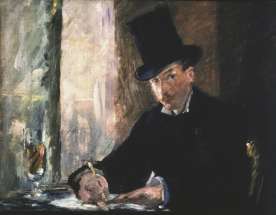
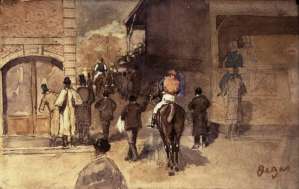

 peej
peej Carissa
 bostonboomer
 dakinikat
 ecocatwoman
 mablue2
 Mama Lopez
 peggysue22
 quixote
 skydancingguestblogger
 Mona (aka Wonk the Vote)



 Sky Dancing
Recent Comments