Posted: September 3, 2022 | Author: bostonboomer | Filed under: cat art, caturday, Crime, Donald Trump | Tags: basement storage room, Bill Barr, classified documents, empty folders, FBI search of Mar-a-Lago, Mark Meadows, special master |

Cat and kitten, by Théophile Alexandre Steinlen, 1920
Happy Caturday!!
Yesterday we got new information about the highly classified documents Trump stole from the government and carelessly left lying around his office at Mar-a-Lago. In her Friday post, Dakinikat wrote about the empty folders marked classified and the boxes containing classified documents mixed with news clippings, and personal items like clothing. The inventory from the search also shows thousands of unclassified government documents, which also belong in the National Archives.
From The Los Angeles Times: Trump search inventory shows empty folders marked ‘classified,’ mixed top-secret and unclassified items.
Twenty-seven documents with classified and top-secret markings were recovered from former President Trump’s office at his Mar-a-Lago estate in Florida, according to a detailed inventory of what the FBI removed during its court-approved search of the home last month.
The eight-page inventory detailing more than 10,000 government documents removed in the search includes the location where each item was found and whether it was classified, but not the subject matter. In many cases, highly classified materials are listed as having been stored in the same boxes as hundreds of unclassified items, including newspaper and magazine clippings and clothing.
Among the boxes were 48 empty folders marked with a classified banner. Those empty folders could be of particular concern as the Office of the Director of National Intelligence assesses the risks to national security that could result from disclosure of the contents, because it could be difficult to determine what information might have been inside and where it is now….
FBI agents removed more than 100 documents containing classified information — including some marked top secret and meant to be available only in special government facilities — from the Trump estate during their Aug. 8 search, along with over 30 boxes of materials including thousands of government records.
What was in those empty folders?
Identifying what was in the empty folders marked classified and where the information is now should be a priority, said Rep. Sean Patrick Maloney (D-N.Y.), a member of the House Intelligence Committee.
“Why are there folders that contained classified information that are now empty? Where are the documents?” Maloney said. “Those questions need to be answered.”

Still LIfe with Flowers and cats, Paul Gauguin, 1899
Without knowing more about the folders, it is difficult to say how alarmed intelligence officials might be, Maloney said.
They could be the type of generic folders in which confidential information is transported within the White House, or they could be folders from intelligence agencies that provide details about the sources of the information, the date it was collected and broad descriptions of what it is about, said Larry Pfeiffer, a high-ranking CIA officer in the George W. Bush administration and senior director of the White House Situation Room in the Obama administration.
“If there were any meticulous records that were kept by the staff secretary, executive secretary or the [director of national intelligence’s] presidential daily briefing staff, they may be able forensically to figure out if there are any missing documents,” Pfeiffer said.
That 48 classified documents could be missing is the “worst-case scenario,” he said.
“That’s terrifying, because then what happened to them? Where are they? Are they still hidden somewhere? Are they hidden in another Trump location? Did he give them away to some people as souvenirs? God knows,” Pfeiffer said.
Raw Story reported on what experts are saying about the empty folders: ‘Unfathomably dangerous’: Former federal prosecutor on Trump’s empty folders warns ‘things just went from bad to worse’
Immediately after a federal judge released the Dept. of Justice’s detailed list of items the FBI seized from Mar-a-Lago experts agreed among the most concerning details was that there were a large number of empty folders marked “Classified.”
Glenn Kirschner, a former federal prosecutor of 30 years, tweeted out his surprise and concern.
“OMG!” exclaimed Kirschner, who is also an MSNBC/NBC News legal analyst. “Court just released an inventory of evidence of crime seized at Mar-a-Lago.”
“Dozens of EMPTY folders labeled ‘Classified’ or ‘Return to Military Aide.’ Trump didn’t pack up EMPTY folders to take with him to FLA. Things just went from bad to worse to unfathomably dangerous.” [….]
Andrew Weissmann, a former General Counsel of the Federal Bureau of Investigation who has also worked as chief of the criminal fraud section of DOJ observed: “It’s the empty classified folders that are of most concern.”
“Where are the contents? Trump has not addressed that at all in all his bluster and obfuscation. What were you doing with these?” asked Weissmann, who also worked for Special Counsel Robert Mueller….
National security attorney Brad Moss wrote, “Very first question the FBI would ask the person who had in their home office 43 empty folders with classified banners is ‘where did the documents from those folders go????'”
And later he added: “Why. Are. There. Empty. Folders?”

Young Girl with a Cat 1892, Berthe Morissot
Analysis from Aaron Blake at The Washington Post: What we know about Trump and the empty folders.
We know very little about what this [the empty folders] means right now, though, and experts say it doesn’t necessarily mean the documents are missing, as some Trump critics theorized. What it does seem to reinforce is how sloppily classified information was handled.
In both the search warrant affidavit released last week and a Justice Department filing in a court case this week, the government has pointed to a February referral from the National Archives. The referral raised concerns about Trump’s potential mishandling of sensitive documents and urged an investigation.
“Of most significant concern was that highly classified records were unfoldered, intermixed with other records, and otherwise unproperly [sic] identified,” the National Archives said.
The biggest question is obviously: Why were those folders empty? Since classified documents were previously returned “unfoldered” — and others were recovered in the search last month — and now we have classified-marked folders without documents in them, it’s possible they match up.
Whether they actually do match is another matter, as is whether the documents can even be traced to a given folder.
From a national security expert:
David Priess, a former CIA officer whose work there included delivering the President’s Daily Brief, said Friday that the presence of empty folders doesn’t mean documents are missing, but also that it’s possible we won’t know for sure. He said the folders could contain markings allowing them to be traced to specific documents (but that’s not certain), or that they could be connected using forensic techniques.
“We cannot rule out that those empty folders contained classified documents that were not discovered in the search and seizure,” he said. “We just don’t know. That’s much harder to determine.”
He also noted it was possible that the folders were separated from the documents when they were still in the White House, before they were taken to Mar-a-Lago.
But mostly, he said, it’s further evidence of something we already knew: The documents were haphazardly stored.
There’s more analysis at the WaPo link.

Family Portrait, Carl Kahler
It’s not just the documents that were found in Trump’s office that were mishandled. The Washington Post published a long read yesterday on the storage room where boxes of documents were stored and why Mar-a-Lago was such a dangerous place for government documents to be kept: Deep inside busy Mar-a-Lago, a storage room where secrets were stashed. The storage room is below the estate’s giant living room.
It was dug into the foundations of the early 20th-century building not long after Trump bought the place, a former employee said, carved out to create more space to store tables, chairs, umbrellas — the stuff necessary to complete Trump’s conversion of what had once been a grand residence for a single family into a private club for 500 members.
At the southeast corner of this area, behind a simple door, is a large closet-type space that workers once called “the mold room” in honor of leftover stonework molds deposited in the corner, the former employee said. Today, staffers think of the room more like the former president’s personal closet, one said. It is here, in this windowless nook, where some of the nation’s most sensitive secrets allegedly were stashed….
Court filings say a top Justice Department official and a gaggle of FBI agents were allowed to tour the storage room when they visited Mar-a-Lago on June 3 to pick up classified documents collected by Trump’s lawyers in response to a grand jury subpoena. A lawyer for Trump saidthe room was where they would find all of documents that had been carted from the White House to Florida after Trump left office.
Two months later, agents returned with a court-approved search warrant and carted off more than two dozen boxes of documents and assorted other items gathered from the storage room and the former president’s office. The raid exposed anew the potential risks of keeping highly sensitive material at a club that hosts weddings, galas and other large events, where outsiders are common and many employees — as well as some visitors — are foreign nationals.
Not yet clear is why Trump chose the basement storage room to keep highly sensitive documents nor who exactly had access to the documents kept there — or who could have gotten access had they tried….
People close to Trump said a variety of Mar-a-Lago and Trump staffers had access to that area beneath the public living room. Access to the closet where the documents were kept was more restricted, they said.

John White Alexander, The Green Dress, 1890-99
More on security concerns at Mar-a-Lago:
Experts said security at the Spanish-style club has long been a headache. The facility has served a frequent residence for Trump and his family during the winter months, including while he was president. But it also boasts tennis courts, a dining room, two pools, a spa and beachfront facilities, all open to its members and their guests. Its giant ballroom and other larger areas are frequently booked for large parties and political and charitable fundraisers, all open to even more visitors, some of them foreign nationals.
Since Trump left office, Republican candidates also have flocked to the club for official events, to genuflect to Trump and attempt to secure his endorsement. Political donors have flocked, too. People who have visited the club since Trump left office said they were allowed in without so much as an identification check.
“I think Mar-a-Lago is a counterintelligence nightmare,” said Joel Brenner, former head of U.S. counterintelligence under the director of National Intelligence and former inspector general for the National Security Agency, citing the flow of hundreds of people, the presence of foreign nationals and Trump’s long-established carelessness with national secrets.
A person who is familiar with the club’s workings and spoke on the condition of anonymity described regular movement from club facilities to the basement and back. “This is an operating property,” this person said. “There’s a kitchen and a guy who does pastries and a liquor cabinet. There’s a restaurant here. You see activity. A guy getting vodka to bring to the bar. A person going to get cupcakes to bring upstairs.”
As I said, this is a very long, but interesting article.
Two more developments on the purloined documents story:
Bill Barr spoke out on the stolen documents investigation. The New York Times: Barr Dismisses Trump’s Request for a Special Master.
Former Attorney General William P. Barr dismissed former President Donald J. Trump’s call for an independent review of materials seized from his Florida home on Friday — and said an inventory of items recovered in the search last month seemed to support the Justice Department’s claim that it was needed to safeguard national security.
“As more information comes out, the actions of the department look more understandable,” Mr. Barr told The New York Times in a phone interview, speaking of the decision by the current attorney general, Merrick B. Garland, to seek a search warrant of the complex at Mar-a-Lago.
“It seems to me they were driven by concern about highly sensitive information being strewn all over a country club, and it was taking them almost two years to get it back,” said Mr. Barr, who resigned in December 2020, as Mr. Trump pushed him to support false claims that the election had been stolen.
“It appears that there’s been a lot of jerking around of the government,” he added. “I’m not sure the department could have gotten it back without taking action.”
Asked what he thought of the argument for the appointment of a special master, an independent arbiter to review the material that could delay the investigation, Mr. Barr laughed.

Pierre Bonnard, Children and a Cat, 1909
“I think it’s a crock of shit,” he said, adding, “I don’t think a special master is called for.” [….]
Mr. Barr’s comments, which echo the assessment of many Democrats and a few Republicans, including the former Bush adviser Karl Rove, came as Mr. Trump’s supporters tried to downplay the importance of the inventory unsealed by a federal judge in Florida.
The eight-page document, which was made public with the tacit assent of the former president’s lawyers, revealed that the F.B.I. recovered 11,179 documents or photographs without classification markings belonging to the government, and more than 100 others marked top secret, secret or confidential.
“It’s hard to wrap your head around him taking so much sensitive materials,” Mr. Barr said. “I was, let’s just say, surprised.”
Mark Meadows coughed up some records in the wake of the events at Mar-a-Lago. CNN: After Mar-a-Lago search, Meadows turns over more texts and emails to Archives.
Did you like this post? Please share it with your friends:
Posted: August 27, 2022 | Author: bostonboomer | Filed under: cat art, caturday, Crime, Criminal Justice System, Donald Trump | Tags: classified documents, Department of Justice, FBI search of Mar-a-Lago, Redacted affidavit |

Théophile Steinlen, Pierriot et le chat
Happy Caturday!!
Once again, it has been quite a week. I’ve been checking the latest headlines and looking around Twitter to see what’s happening. Of course, most of the political talk is about the redacted affidavit the DOJ used to get a warrant to search Mar-a-Lago for classified documents that Trump refused to return to the government.
After yesterday, legal experts are arguing that it is inevitable that Trump will be indicted and charged with obstruction and possibly with violations of the espionage act. Today, I see more experts speculating that Trump may have already shared top secret information with foreign parties. A number of people are sharing this timeline from The Intellectualist. Laufer is a well-known civil rights attorney.
Here are the latest stories on the search, the affidavit and what may happen next.
First up, this is from Andrew Weissman, a leading prosecutor in the Mueller investigation. The New York Times: We Knew the Justice Department Case Was Righteous. This Affidavit Confirms It.
Mr. Trump knows the answers to the most important unanswered questions: What material did he take from the White House, why did he take it, what had he done with it, and what was he planning to do with it? There is nothing that prevented him for over a year from publicly answering those questions; he surely has not remained silent because the answers are exculpatory.
Above all, the redacted affidavit (and an accompanying brief explaining the redactions), which was released on Friday, reveals more evidence of a righteous criminal case related to protecting information vital to our nation’s security.

Girl and a cat, by Anastasiya Malakhova
I can assure you, based on my experience as the general counsel of the F.B.I., that although there may be too much information deemed sensitive at the lowest level of classification, that was never the case with top-secret material.
Indeed, the redacted affidavit details some of what was found in a preliminary review of material earlier returned by Mr. Trump at the repeated requests of National Archives officials, including “184 unique documents bearing classification markings, including 67 documents marked as confidential, 92 documents marked as secret and 25 documents marked as top secret.” An agent who reviewed that earlier material saw documents marked with “the following compartments/dissemination controls: HCS, FISA, ORCON, NOFORN and SI.”
The markings for top-secret and sensitive compartmented information indicate the highest level of security we have. Those levels protect what is rightly described as the crown jewel of the national security community.
Especially with information classified at that level, the government doesn’t get to pick and choose to defend the nation’s top secrets based on politics — it doesn’t matter if the person in question is a Democrat or Republican, a former president, a secretary of state or Edward Snowden. These documents belong to the government, and their having been taken away poseda clear risk to our national security.
Read the rest at the NYT link.
The Washington Post Editorial Board: The Trump affidavit shows the Mar-a-Lago search was hardly capricious.
Trump defenders have slammed the FBI’s search as aggressive and unwarranted. What has come out since, including on Friday, suggests the search was hardly capricious. Instead, all available evidence suggests it was a thoughtful choice made after other options had been exhausted. Along the way, the affidavit showed that the Justice Department considered the dubious defense from Mr. Trump’s allies that all the documents were declassified and that keeping them at Mar-a-Lago was therefore legal.
The catalogue of markings on the 184 classified documents agents reviewed before asking to search Mar-a-Lago also explains the DOJ’s determination to learn more. Acronyms such as SI, HCS, FISA and NOFORN might seem like collections of random letters to the layman, but they signify extraordinarily sensitive information: intelligence derived from clandestine human sources, for example, or from surveillance of foreign spies. That material in these categories was allegedly mixed in with other random papers as well as a mishmash of items reportedly including golf balls, a raincoat and a razor, is alarming — even absent intent to use them maliciously.
Read together, these facts should help assuage concerns that Attorney General Merrick Garland embarked on an ill-considered prosecutorial frolic when he sought to search Mar-a-Lago — though this reality is unlikely to stop the flow of reckless rhetoric from Trump acolytes. Meanwhile, those taking a more levelheaded approach should continue to do what they’ve done so far: wait. There was much we didn’t know before this affidavit was unsealed. There’s much we still don’t know now.

Milda Šležaitė, Boy with a cat
National security attorney Bradley Moss writes at The Daily Beast: It’s Over: Trump Will Be Indicted.
I have finally seen enough. Donald Trump will be indicted by a federal grand jury.
You heard me right: I believe Trump will actually be indicted for a criminal offense. Even with all its redactions, the probable cause affidavit published today by the magistrate judge in Florida makes clear to me three essential points:
(1) Trump was in unauthorized possession of national defense information, namely properly marked classified documents.
(2) He was put on notice by the U.S. Government that he was not permitted to retain those documents at Mar-a-Lago.
(3) He continued to maintain possession of the documents (and allegedly undertook efforts to conceal them in different places throughout the property) up until the FBI finally executed a search warrant earlier this month.
That is the ball game, folks. Absent some unforeseen change in factual or legal circumstances, I believe there is little left for the Justice Department to do but decide whether to wait until after the midterms to formally seek the indictment from the grand jury.
Moss says that if only Trump had cooperated after he was pressed by the National Archives last year instead of turning over some of the documents and holding on to the rest, he probably would have gotten away with taking them from the White House.
But Trump just could not bring himself to play by the rules. He turned over 15 boxes last January but did not turn over all the records. Political operatives from conservative organizations started whispering into his ear that he had legal precedent on his side to refuse to turn over the classified records to NARA (he did not). His lawyers surprisingly wrote a rather condescending letter to DOJ in May 2022, effectively arguing that even if there were still classified records at Mar-a-Lago the FBI lacked the authority to take any criminal action against Trump given his former status as president. Then, in June 2022 after the FBI executed a subpoena to recover more records at Mar-a-Lago, two Trump lawyers wrote (and one signed) a sworn affidavit reassuring the government there were no more classified records at the property.
Read more at the link.
Charlie Savage at The New York Times: Possibility of Obstruction Looms Over Trump After Thwarted Efforts to Recover Documents.
When the Justice Department proposed redactions to the affidavit underlying the warrant used to search former President Donald J. Trump’s residence, prosecutors made clear that they feared the former president and his allies might take any opportunity to intimidate witnesses or otherwise illegally obstruct their investigation.

Child with cat, Julie Manet, Pierre August Renoir
“The government has well-founded concerns that steps may be taken to frustrate or otherwise interfere with this investigation if facts in the affidavit were prematurely disclosed,” prosecutors said in the brief.
The 38-page affidavit, released on Friday, asserted that there was “probable cause to believe that evidence of obstruction will be found at” Mr. Trump’s Mar-a-Lago compound, indicating that prosecutors had evidence suggesting efforts to impede the recovery of government documents.
Since the release of the search warrant, which listed three criminal laws as the foundation of the investigation, one — the Espionage Act — has received the most attention. Discussion has largely focused on the spectacle of the F.B.I. finding documents marked as highly classified and Mr. Trump’s questionable claims that he had declassified everything held at his residence.
But by some measures, the crime of obstruction is as, or even more, serious a threat to Mr. Trump or his close associates. The version investigators are using, known as Section 1519, is part of the Sarbanes-Oxley Act, a broad set of reforms enacted in 2002 after financial scandals at companies like Enron, Arthur Andersen and WorldCom.
The heavily redacted affidavit provides new details of the government’s efforts to retrieve and secure the material in Mr. Trump’s possession, highlighting how prosecutors may be pursuing a theory that the former president, his aides or both might have illegally obstructed an effort of well over a year to recover sensitive documents that do not belong to him.
To convict someone of obstruction, prosecutors need to prove two things: that a defendant knowingly concealed or destroyed documents, and that he did so to impede the official work of any federal agency or department. Section 1519’s maximum penalty is 20 years in prison, which is twice as long as the penalty under the Espionage Act.
There’s much more at the NYT link.
Julian Barnes and Mark Mazzetti at The New York Times: Classified Material on Human Intelligence Sources Helped Trigger Alarm.
They risk imprisonment or death stealing the secrets of their own governments. Their identities are among the most closely protected information inside American intelligence and law enforcement agencies. Losing even one of them can set back American foreign intelligence operations for years.
Clandestine human sources are the lifeblood of any espionage service. This helps explain the grave concern within American agencies that information from undercover sources was included in some of the classified documents recently removed from Mar-a-Lago, the Florida home of former President Donald J. Trump — raising the prospect that the sources could be identified if the documents got into the wrong hands.

Child and cat, by Linda Bryant
Mr. Trump has a long history of treating classified information with a sloppiness few other presidents have exhibited. And the former president’s cavalier treatment of the nation’s secrets was on display in the affidavit underlying the warrant for the Mar-a-Lago search. The affidavit, released in redacted form on Friday, described classified documents being found in multiple locations around the Florida residence, a private club where both members and their guests mingle with the former president and his coterie of aides.
Nothing in the documents released on Friday described the precise content of the classified documents or what risk their disclosure might carry for national security, but the court papers did outline the kinds of intelligence found in the secret material, including foreign surveillance collected under court orders, electronic eavesdropping on communications and information from human sources — spies….
Could Trump have already revealed secret sources of intelligence, as implied in the Tweet at the top of this post? I’m asking, not the NYT reporters. They note that Trump claimed he declassified all the documents at his resort, but . . .
“HCS information is tightly controlled because disclosure could jeopardize the life of the human source,” said John B. Bellinger III, a former legal adviser to the National Security Council in the George W. Bush administration. “It would be reckless to declassify an HCS document without checking with the agency that collected the information to ensure that there would be no damage if the information were disclosed.”
C.I.A. espionage operations inside numerous hostile countries have been compromised in recent years when the governments of those countries have arrested, jailed and even killed the agency’s sources.
Last year, a top-secret memo sent to every C.I.A. station around the world warned about troubling numbers of informants being captured or killed, a stark reminder of how important human source networks are to the basic functions of the spy agency. Honestly, I wouldn’t put it past Trump to have handed secret information over to Russia or Saudi Arabia.
Could Republicans be getting a little nervous about how serious the case against Trump is? Jonathan Weisman at The New York Times: Republicans, Once Outraged by Mar-a-Lago Search, Become Quieter as Details Emerge.
In the minutes and hours after the F.B.I.’s search of former President Donald J. Trump’s residence in Florida this month, his supporters did not hesitate to denounce what they saw as a blatant abuse of power and outrageous politicization of the Justice Department.

Maud Humphrey, Girl with cat, 1894
But with the release of a redacted affidavit detailing the justification for the search, the former president’s allies were largely silent, a potentially telling reaction with ramifications for his political future.
“I would just caution folks not to draw too many conclusions,” Gov. Glenn Youngkin of Virginia, a Republican, said on Fox News. It was a starkly different admonition from his earlier condemnations of what he said were “politically motivated actions.”
Some Republicans will no doubt rally around Mr. Trump and his claim that he is once again being targeted by a rogue F.B.I. that is still out to get him. His former acting White House chief of staff, Mick Mulvaney, said on Twitter that “this raid was, in fact, just about documents,” which he called “simply outrageous.” Representative Andy Biggs, Republican of Arizona and an ardent Trump ally, was on the right-wing broadcaster Newsmax denouncing the F.B.I. as politically biased, though he notably did not defend the former president’s possession of highly classified documents.
But generally, even the most bombastic Republicans — Representatives Marjorie Taylor Greene of Georgia, Lauren Boebert of Colorado, Jim Jordan of Ohio — were at least initially focused elsewhere. Ms. Greene was posting on Friday about border “invasions.” Ms. Boebert noted on Twitter the anniversary of the suicide bombing of U.S. service members at the airport in Kabul, Afghanistan. Mr. Jordan was focused on an interview with Mark Zuckerberg, the Facebook founder. None tweeted about the affidavit.
Read the rest at the NYT.
A few more stories on the search and affidavit to check out:
Lloyd Green at The Guardian: The FBI’s Mar-a-Lago affidavit paints an unsettling portrait of Trump.
Mary Papenfuss at HuffPost: William Barr Rips Trump For ‘Pandering To Outrage’ Over Mar-A-Lago Search.
The New York Times: Inside the 20-Month Fight to Get Trump to Return Presidential Material.
Charlie Savage at The New York Times: The Affidavit for the Search of Trump’s Home, Annotated.
Greg Sargent at The Washington Post: 3 big things we learned from the Mar-a-Lago affidavit.
That’s quite a bit of reading material, I know. Pick and choose what interests you. What else is on your mind today?
Did you like this post? Please share it with your friends:
Posted: August 20, 2022 | Author: bostonboomer | Filed under: abortion rights, Cats, caturday, Donald Trump, Elections, FBI raids, just because | Tags: abortion in Michigan, Bill Barr, classified documents, constitutionalism, FBI search of Mar-a-Lago, Is the Constitution broken?, midterm elections, Mitch McConnell, Mueller investigation, Republican Senate candidates |

“Organ cat, prayer book, Bruges or Ghent c. 1480-1490 (Baltimore, Walters Art Museum
Happy Caturday!!
It has been another busy news week, and today there are some stories that follow up on recent news and others that look further back in time. As we move closer to the midterm elections, things are looking better for Democrats to keep control of the Senate. Of course the fallout continues from the FBI search of Mar-a-Lago. The judge in the case released more information on the search warrant, and there could be more coming. A court has ordered the DOJ to release a memo related to the Mueller investigation that Bill Barr refused to make public. A Michigan judge made an important decision on abortion laws in the state. Finally, the NYT published a fascinating op-ed by two law professors who argue that the U.S. Constitution is “broken.”
Republican midterm woes
Bob Brigham at Raw Story: It’s Mitch McConnell’s fault ‘bumbling extremists’ are hurting the GOP: report.
On Thursday, Senate GOP Leader Mitch McConnell (R-KY) seemed to admit that the Grand Old Party doesn’t have the highest quality roster of candidates.
“I think there’s probably a greater likelihood the House flips than the Senate,” McConnell said. “Senate races are just different, they’re statewide, candidate quality has a lot to do with the outcome.”
Writing in Vanity Fair, Eric Lutz reported, “He didn’t mention any of those candidates directly, but he almost certainly could have been talking about any of Donald Trump’s handpicked contenders, who earned the former president’s support seemingly for one of two reasons: He knows them from television, or they’re loyalists who have organized their campaigns almost entirely around his 2020 election lies. There’s a lot of crossover there, obviously, but the first camp includes Mehmet Oz, a former TV doctor who apparently believes raw asparagus belongs in a crudité, and Herschel Walker, the former football great whose own campaign staff reportedly regards him as a ‘pathological liar.’” [….]
“Then there’s the second camp of MAGA candidates, which includes the likes of Blake Masters, the Peter Thiel protégé who literally has the backing of some of the Internet’s most well-known white nationalists. (Masters has attempted to distance himself from this community.) One of several extremists on the ballot in Arizona, where election deniers Kari Lake and Mark Finchem are respectively running for governor and secretary of state, Masters is trailing Democrat Mark Kelly by eight points, according to a Fox News poll released this week,” Lutz reported. “None of this to say to say that these bumbling extremists can’t win; if a country is capable of electing Trump president, Georgia is certainly capable of electing a guy like Walker. But McConnell’s apparent sense that this batch of bozos might dash GOP dreams of a Senate majority may be well-founded, even if midterms tend to favor the party that doesn’t control the White House.”
There’s more at the link.
The Washington Post: ‘It’s a rip-off’: GOP spending under fire as Senate hopefuls seek rescue.
Republican Senate hopefuls are getting crushed on airwaves across the country while their national campaign fund is pulling ads and running low on cash — leading some campaign advisers to ask where all the money went and todemand an audit of the committee’s finances, according to Republican strategists involved in the discussions.
 In a highly unusual move, the National Republican Senatorial Committee this week canceled bookings worth about $10 million, including in the critical states of Pennsylvania, Wisconsin and Arizona. A spokesman said the NRSC is not abandoning those races but prioritizing ad spots that are shared with campaigns and benefit from discounted rates. Still, the cancellations forfeit cheaper prices that came from booking early, and better budgeting could have covered both.
“The fact that they canceled these reservations was a huge problem — you can’t get them back,” said one Senate Republican strategist, who like others spokes on the condition of anonymity to discuss internal matters. “You can’t win elections if you don’t have money to run ads.”
The NRSC’s retreat came after months of touting record fundraising, topping $173 million so far this election cycle, according to Federal Election Commission disclosures. But the committee has burned through nearly all of it, with the NRSC’s cash on hand dwindling to $28.4 million by the end of June.
As of that month, the committee disclosed spending just $23 million on ads, with more than $21 million going into text messages and more than $12 million to American Express credit cardpayments, whose ultimate purpose isn’t clear from the filings. The committee also spent at least $13 million on consultants, $9 million on debt payments and more than $7.9 million renting mailing lists, campaign finance data show.
Read the rest at the WaPo.
The Mar-a-Lago search
Insider: Newly unsealed documents from the FBI raid on Mar-a-Lago put Trump in even worse legal peril, experts say.
Former President Donald Trump has offered a shifting array of defenses in response to the August 8 FBI search of his Mar-a-Lago resort in Florida, which uncovered a trove of secret documents.
Among them is the claim that he declassified all of the documents while in office under the president’s sweeping powers over national secrets.
But procedural documents unsealed Thursday by federal judge Bruce Reinhart, including the cover sheet of the warrant used in the search, revealed that this defense may not be as effective as Trump hoped, legal experts say.
One implication of the new information is that even if Trump is right about the documents being declassified, he still could have broken the law, Lawrence Tribe, a Harvard constitutional law scholar, tweeted….
 [The cover sheet] showed that the FBI believes that Trump may be guilty of the willful retention of national defense information, concealment or removal of government records, and obstruction of federal investigation.
Bradley P. Moss, a national security attorney, told Insider that the new documents “clarify but ultimately do not change much” of what we previously knew.
A striking detail, he said, is that the FBI believes Trump has obstructed its probe.
“Clearly, the FBI currently believes Mr. Trump not only took properly marked classified documents to Mar-a-Lago, but he kept them and resisted turning them over when confronted by the government,” Moss said.
NBC News: Trump thinks the Mar-a-Lago search will help him in 2024. Some allies aren’t so sure.
The day after federal agents searched Mar-a-Lago, former President Donald Trump told a group of conservative lawmakers that “being president was hell,” according to three people at the meeting.
But to some he sounded ready to have the job again.
“He was not to be deterred,” said Rep. Randy Weber of Texas, one of a dozen Republican House members who met with Trump on Aug. 9. He described Trump’s state of mind in the immediate aftermath of the search as “pretty miffed, but measured.”
Everything that’s occurred since that Bedminster, New Jersey, meeting — and since federal agents seized a trove of top secret and other highly classified documents from his resort — has put Trump exactly where he and his supporters want him to be, according to people close to him. He’s in a fight, squaring off with Washington institutions and a political establishment he says are out to get him, issues he brought up in the meeting with the lawmakers and in conversations with others.
 Taken together, it’s reoriented Trump’s thinking about whether he should announce a presidential campaign before or after the midterm elections, according to those who have spoken with him over the past two weeks. They said Trump feels less pressure to announce early because viable challengers who might otherwise force his hand have faded into the background. But there are other reasons to wait.
Trump is now inclined to launch his candidacy after the November elections, in part to avoid blame should an early announcement undermine the GOP’s effort to win control of Congress, said one person close to him, speaking on condition of anonymity to talk more freely.A post-midterm announcement would suit Republican leaders who’ve been urging Trump to hold off so that he doesn’t overshadow the party’s candidates.Michael Caputo, a former Trump campaign and administration official, described Trump’s attitude in recent days after speaking with him, as “business as usual.”
Business as usual for Trump: the possibility of multiple criminal charges and crappy lawyers who have no clue how to defend a criminal.
Judge orders release of Bill Barr’s memo protecting Trump
The Washington Post: Court orders release of DOJ memo on Trump obstruction in Mueller probe.
A federal appeals court has ordered the release of a secret Justice Department memo discussing whether President Donald Trump obstructed the investigation into Russian interference in the 2016 election.
The unanimous panel decision issued Friday echoes that of a lower court judge, Amy Berman Jackson, who last year accused the Justice Department of dishonesty in its justifications for keeping the memo hidden.
The panel of three judges, led by Chief Judge Sri Srinivasan, said that whether or not there was “bad faith,” the government “created a misimpression” and could not stop release under the Freedom of Information Act.
The memo was written by two senior Justice Department officials for then-attorney general William P. Barr, who subsequently told Congress that there was not enough evidence to charge Trump with obstruction of special counsel Robert S. Mueller III’s inquiry. A redacted version was released last year but left under seal the legal and factual analysis.
Department officials argued that the document was protected because it involved internal deliberations over a prosecutorial decision. But the judges agreed with Jackson that both Mueller and Barr had clearly already concluded that a sitting president could not be charged with a crime. The discussion was over how Barr would publicly characterize the obstruction evidence Mueller had assembled, the Justice Department conceded on appeal.
 A bit more from Politico: Appeals court backs ruling to release DOJ memo on Trump prosecution.
A federal appeals court ruled Friday that the Justice Department must make public an internal memo senior lawyers there prepared in 2019 about whether then-President Donald Trump’s actions investigated in special counsel Robert Mueller’s probe of ties between the 2016 Trump campaign and Russia amounted to crimes prosecutors would ordinarily charge.
The D.C. Circuit Court of Appeals said the Justice Department failed to meet its legal burden to show that the memo from the department’s Office of Legal Counsel was part of a genuine deliberative process advising then-Attorney General William Barr on how to handle sensitive issues left unresolved when Mueller’s probe concluded in March 2019.
Trump was never charged in Mueller’s probe and the special prosecutor’s final report declined to opine on whether what he did in response to the investigation amounted to a crime.
However, some Trump opponents have called on the Attorney General Merrick Garland to reconsider the issue now that Trump is no longer president. Release of the long-sought DOJ memo could fuel those calls and draw more unwanted attention to Trump’s potential criminal liability at a time when he is besieged by a slew of other legal woes relating to his handling of classified government records, his role in inspiring many of those involved in the Jan. 6 attack on the Capitol and his broader efforts to overturn Joe Biden’s win in the 2020 presidential election.
Abortion in Michigan
Detroit Free Press: Michigan judge issues indefinite ban on criminalizing abortions in key Michigan counties.
A Michigan judge ruled Friday prosecutors in the state’s largest counties are barred from bringing criminal charges for months to come under a state law banning most abortions.
The decision from Oakland County Circuit Court Judge Jacob Cunningham comes after two days of hearings and means every county in Michigan with an abortion clinic is at least temporarily immune from the threat of criminal prosecutions over abortion procedures.
“As currently applied, the court finds (the abortion law) is chilling and dangerous to our state’s population of childbearing people and the medical professionals who care for them,” Cunningham said.
 “The harm to the body of women and people capable of pregnancy in not issuing the injunction could not be more real, clear, present and dangerous to the court.”
At times, Cunningham seemed to ridicule arguments from conservative prosecutors seeking to enforce the 1931 abortion law. He said prosecutors would suffer zero harm from not having the ability to prosecute abortion providers.
Going much further, he told these prosecutors to instead focus their efforts elsewhere.
“The court suggests county prosecutors focus their attention and resources … to investigation and prosecution of criminal sexual conduct, homicide, arson, child and elder abuse, animal cruelty and other violent and horrific crimes that we see in our society,” Cunningham said.
Is the Constitution broken?
Ryan D. Doerfler and Samuel Moyn, law professors from Harvard and Yale respectively, published this guest essay at The New York Times: The Constitution Is Broken and Should Not Be Reclaimed. You’ll need to go to the NYT link if you’re interested, because it’s very long. The main idea is that the Constitution is dated and favors conservatives; liberals need to change their thinking about “constitutionalism.”
When liberals lose in the Supreme Court — as they increasingly have over the past half-century — they usually say that the justices got the Constitution wrong. But struggling over the Constitution has proved a dead end. The real need is not to reclaim the Constitution, as many would have it, but instead to reclaim America from constitutionalism.
The idea of constitutionalism is that there needs to be some higher law that is more difficult to change than the rest of the legal order. Having a constitution is about setting more sacrosanct rules than the ones the legislature can pass day to day. Our Constitution’s guarantee of two senators to each state is an example. And ever since the American founders were forced to add a Bill of Rights to get their handiwork passed, national constitutions have been associated with some set of basic freedoms and values that transient majorities might otherwise trample.
 But constitutions — especially the broken one we have now — inevitably orient us to the past and misdirect the present into a dispute over what people agreed on once upon a time, not on what the present and future demand for and from those who live now. This aids the right, which insists on sticking with what it claims to be the original meaning of the past.
Arming for war over the Constitution concedes in advance that the left must translate its politics into something consistent with the past. But liberals have been attempting to reclaim the Constitution for 50 years — with agonizingly little to show for it. It’s time for them to radically alter the basic rules of the game.
In making calls to regain ownership of our founding charter, progressives have disagreed about strategy and tactics more than about this crucial goal. Proposals to increase the number of justices, strip the Supreme Court’s jurisdiction to invalidate federal law or otherwise soften the blow of judicial review frequently come together with the assurance that the problem is not the Constitution; only the Supreme Court’s hijacking of it is. And even when progressives concede that the Constitution is at the root of our situation, typically the call is for some new constitutionalism.
If that whets your appetite for me, click the link and read the rest.
Those are today’s main political stories as I see it. Maybe we’ll have some time to take a breath before more shocking news breaks. I can use a quite weekend and I wish you the same.
Did you like this post? Please share it with your friends:
Posted: August 13, 2022 | Author: bostonboomer | Filed under: cat art, caturday | Tags: DOJ, Donald Trump, Espionage Act, FBI, FBI search of Mar-a-Laago, Inflation Reduction Act, Merrick Garland, obstruction of justice, Salmon Rushdie |
Happy Caturday!!
What a week this has been!

Norman Catwell, by Lucia Heffernan
On Monday, the FBI executed a search of Trump’s Mar-a-Lago resort, and took 27 boxes that contained above top secret documents. Trump’s Republican allies viciously attacked the FBI and DOJ.
Predictably, on Thursday one of Trump’s fans entered an FBI office in Cincinnati, fired a nail gun, and pulled out an AR-15 style rifle. He then fled and was eventually shot and killed during a standoff in a cornfield.
While the standoff was in progress, Attorney General Merrick Garland made a public statement about the Mar-a-Lago search. He said that he had personally signed of on the search warrant, which was then approved by a federal magistrate judge in Florida based on probable cause that a crime had been committed. He also said he was requesting the release of the search warrant and the list of items taken in the search as long as Trump did not object.
On Friday Trump released the warrant and receipt for items taken to Breitbart, Fox News, and the Wall Street Journal about an hour before the court approved the public release. Trump did not hide the names of the agents listed in the warrant. Breitbart published the names, opening the agents to terroristic threats and violence from Trump fans. They were also threatening the judge.
Finally, we learned that the 45th president of the united states is being investigated for violating the espionage act as well as obstruction of justice. Read the full warrant and receipt at The Daily Beast. You can also read a timeline of events over many months that led up to the Mar-a-Lago search at USA Today.
While all this was happening, Democrats in the Senate and House passed Biden’s massive inflation reduction/health care/climate change bill.
Finally, yesterday afternoon, author Salmon Rushdie was attacked and badly injured at an event in upstate New York.
The latest on the Trump espionage investigation:
The Washington Post: Agents at Trump’s Mar-a-Lago seized 11 sets of classified documents, court filing shows.
The FBI search of former president Donald Trump’s Florida home earlier this week found four sets of top-secret documents and seven other sets of classified information, according to a list of items seized in the high-profile raid and unsealed by a federal magistrate judge on Friday.

Cat art by Rudi Hurzlmeier
The written inventory — a document provided by investigators after a search — says the FBI took about 20 boxes of items from the Mar-a-Lago Club on Monday, including photo binders, information about the president of France, and a variety of classified material.
One set of documents is listed as “Various classified TS/SCI documents,” areference to top secret/sensitive compartmented information, a highly classified category of government secrets, in addition to the four sets of top-secret papers. Agents also took three sets of documents classified as secret, and three sets of papers classified as confidential — the lowest level of classification.
The list of seized material doesn’t further describe the subject matter of any of the classified documents.
“Some of what was in Trump’s possession is mind-boggling,” said Javed Ali, a senior official at the National Security Council during the Trump administration who now teaches at the University of Michigan. “Whenever you leave government — including probably a former president — you can’t just take it with you.”
More details from CNN: FBI took 11 sets of classified material from Trump’s Mar-a-Lago home while investigating possible Espionage Act violations.
The search warrant identifies three federal crimes that the Justice Department is looking at as part of its investigation: violations of the Espionage Act, obstruction of justice and criminal handling of government records. The inclusion of the crimes indicates the Justice Department has probable cause to investigate those offenses as it was gathering evidence in the search. No one has been charged with a crime at this time….
While details about the documents themselves remain scarce, the laws cited in the warrant offer new insight into what the FBI was looking for when it searched Trump’s home, an unprecedented step that has prompted a firestorm of criticism from the former President’s closest allies.

Kim Haskins, psychedelic cat painting
The laws cover “destroying or concealing documents to obstruct government investigations” and the unlawful removal of government records, according to the search warrant released Friday.
Also among the laws listed is one known as the Espionage Act, which relates to the “retrieval, storage, or transmission of national defense information or classified material.”
All three criminal laws cited in the warrant are from Title 18 of the United States Code. None of them solely hinge on whether information was deemed to be unclassified.
That last fact–that the items don’t have to be classified in order for a crime to have been committed–is going to short-circuit the excuses that Trump and his allies have been putting forward.
Here’s the claim from the Trump camp as reported by Lawrence O’Donnell on MSNBC last night.
Insider: Trump’s latest defense for Mar-a-Lago documents is everyone ‘brings home their work from time to time’ and the files were automatically declassified.
Former President Donald Trump said that everyone takes work home sometimes, as he sought to develop a new line to explain why top secret government documents were stored at his Mar-a-Lago residence in Florida.
“As we can all relate to, everyone ends up having to bring home their work from time to time. American presidents are no different,” said the statement from Trump’s office on Friday night read out on Fox News.
Trump further claimed that he had a “standing order” to declassify documents “the moment” they left the Oval Office.
“President Trump, in order to prepare for work the next day, often took documents, including classified documents, from the Oval Office to the residence. He had a standing order that documents removed from the Oval Office and taken into the residence were deemed to be declassified the moment he removed them,” the statement said.
Hahahahahahaha!!!
This new defense – portraying Trump as just another hard-working American – contradicts previous statements by Trump and his lawyers that baselessly claimed the FBI could have planted evidence while on site.

Cat art by Sofia Struk
While the president has the authority to declassify documents, legal experts say they must follow a defined procedure. It is not clear if Trump ever did.
“He can’t just wave a wand and say it’s declassified,” Richard Immerman, a historian and an assistant deputy director of national intelligence in the Obama administration, told NBC News. “There has to be a formal process. That’s the only way the system can work.”
Immerman noted that declassified documents are marked with the date they were declassified. It is not the case with some of the documents returned from Mar-a-Lago to the National Archives this year, per NBC.
When reports of classified documents at Mar-a-Lago emerged in May, former Trump administration official Kash Patel claimed that Trump had declassified the files shortly before leaving office but that the classified markings had not been removed.
But none of this matters, because the espionage act charges do not hinge on whether documents are classified or not.
https://twitter.com/AshaRangappa_/status/1558281122802442240?s=20&t=fcNpMyD3s8jo5ieRp5CjiQ
The Inflation reduction/health care/climate bill
The New York Times: A Detailed Picture of What’s in the Democrats’ Climate and Health Bill.
Democrats in Congress have had to scale back their legislative ambitions since last year, but the Inflation Reduction Act, passed by the House on Friday and sent to President Joseph R. Biden Jr. for his signature, is still a substantial piece of legislation, which will make big investments in the environment and health care, and increase taxes on some key groups.
The bill includes policies lowering the prices of prescription drugs; increasing the generosity of Medicare benefits; and encouraging the development of renewable energy and reducing the impact of climate change.
It would also raise taxes on some corporations and bolster the ability of the Internal Revenue Service to crack down on wealthy tax evaders. It would lower the federal deficit, though modestly.
The bill includes last-minute changes requested by Senator Kyrsten Sinema, Democrat of Arizona, the final holdout among her party’s 50 senators. Democratic leaders agreed to remove a tax on some wealthy hedge fund managers and private equity executives, and to include $4 billion in drought funding for her state.
Head over to the NYT link to see charts and a detailed list of everything in the bill.
A shocking attack on famed novelist Salmon Rushdie
The Washington Post: Salman Rushdie hospitalized after attack onstage in New York state.
Salman Rushdie, the renowned novelist whose work made him the subject of death threats, was attacked at an event in Chautauqua, N.Y., on Friday by a man who stormed the stage and stabbed the writer in the neck and abdomen, police said.

By Rudi Hurzlmeier
Rushdie was taken by helicopter to a hospital. His agent, Andrew Wylie, told the Associated Press that the writer was on a ventilator, with damage to his liver and nerves in an arm. He also said Rushdie will likely lose an eye.
Police identified Hadi Matar, 24, of New Jersey as the suspect in the attack. They have not yet determined a motive, Maj. Eugene Staniszewski of the New York State Police said, and are working with the local district attorney to decide which criminal charges will be filed. The FBI is also involved in the investigation.
In an instant Friday morning, a literary event in a lakeside town in western New York was transformed into a scene of potentially deadly violence, drawing gasps from the audience gathered in an open-air amphitheater.
Read more at the WaPo.
NewYork4: Who Is Hadi Matar? NJ Man Suspected in Salman Rushdie Attack Had Shia Extremist Sympathies.
Police are learning more information about the suspect who allegedly stormed onto a New York stage and stabbed author Salman Rushdie in the neck on Friday.
The suspect, 24-year-old Hadi Matar, was born in California, but recently moved to New Jersey, according to law enforcement sources familiar with the investigation. His last listed address was in Fairview, a Bergen County borough just across the Hudson River from Manhattan. FBI officials were seen going into the home of Matar Friday evening.
Sources said that Matar also had a fake New Jersey driver’s license on him.
State Police Maj. Eugene Staniszewski said the motive for the stabbing was unclear. A preliminary law enforcement review of Matar’s social media accounts shows he is sympathetic to Shia extremism and Islamic Revolutionary Guard Corps causes, a law enforcement person with direct knowledge of the investigation told NBC News. There are no definitive links to the IRGC but the initial assessment indicates he is sympathetic to the Iranian government group, the official says.
A bit more from ABC News: Suspect charged with attempted murder in on-stage attack of author Salman Rushdie.
Law enforcement officials briefed on the investigation told ABC News that “a preliminary investigation into the suspected perpetrator’s probable social media presence indicates a likely adherence or sympathy towards Shi’a extremism and sympathies to the Iranian regime/Islamic Revolutionary Guard Corps.”
The officials say investigators found photos on Matar’s phone of Iranian Maj. Gen. Qasem Soleimani and Abu Mahdi al-Muhandis, the leader of Iraq’s pro-Iranian militia movement, who were killed by U.S. forces in a drone strike in Baghdad on Jan. 3, 2020.
Police believe the suspect acted alone and were in the process Friday of obtaining search warrants for items including electronics and a backpack found at the scene that they believe belong to the suspect, Staniszewski said.
The FBI is also assisting with the investigation, he said.
The suspect had a pass to access the event, officials said.
It’s been an unbelievable news week, and I expect we’ll be learning more about these three big stories over the weekend. What are your thoughts? What other stories are you following?
Did you like this post? Please share it with your friends:
Posted: August 6, 2022 | Author: bostonboomer | Filed under: caturday | Tags: abortion rights, adoption, Alex Jones, baby boxes, Chuck Schumer, conspiracy theories, Democrats' climate/health care/tax bill, Joe Manchin, reconciliation, Sandy Hook parents, state legislatures, U.S. Senate, vote-a-rama |
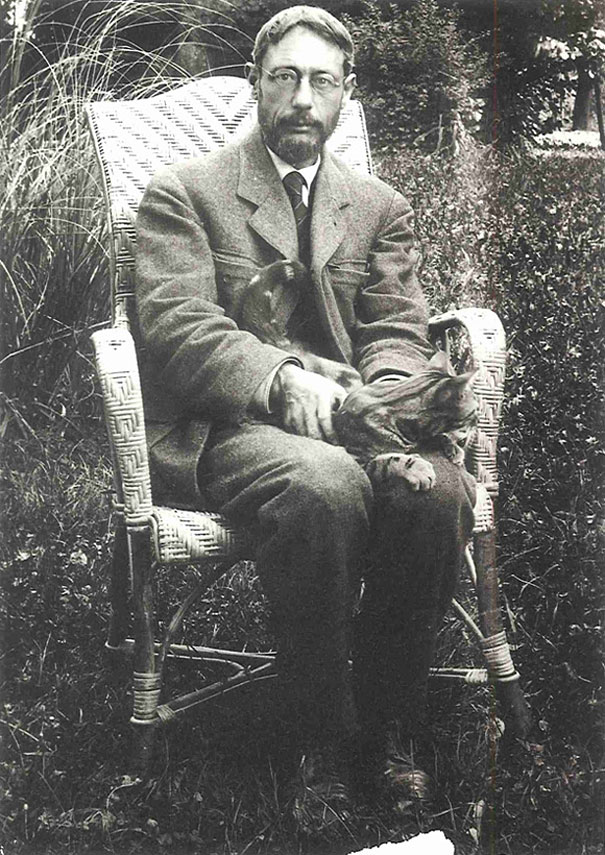
Artist Pierre Bonnard and his cat
Happy Caturday!!
Today’s top story is the Democrats’ historic climate/health-care/tax bill.
The bill can be passed through reconciliation, after the Senate parliamentarian approved most of the bill’s provisions. One portion of the Medicare drug portion of the bill was disallowed.
The Guardian: Senate Democrats given green light to vote on $430bn climate and tax bill.
US Senate Democrats on Saturday were set to push ahead on a bill that would address key elements of President Joe Biden’s agenda, tackling climate change, lowering the cost of energy and senior citizens’ drugs and forcing the wealthy to pay more taxes.
A Senate rulemaker determined that the lion’s share of the $430bn bill could be passed with only a simple majority, bypassing a filibuster rule requiring 60 votes in the 100-seat chamber to advance most legislation and enabling Democrats to pass it over Republican objections, majority leader Chuck Schumer said in a statement….
“Democrats have received extremely good news,” Schumer said in the statement. “Medicare will finally be allowed to negotiate drug prices … This is a major victory for the American people.“ [….]
There are three main parts to the bill: a 15% minimum tax on corporations, tougher IRS enforcement and a new excise tax on stock buybacks. The legislation has $430 billion in new spending along with raising more than $740 billion in new revenues.
Beside billions of dollars to encourage the production and purchase of more electric vehicles and foster clean energy, the bill would set $4 billion in new federal drought relief funds. The latter is a move that could help the re-election campaigns of Democratic Senators Catherine Cortez Masto in Nevada and Mark Kelly in Arizona….
One provision cut from the bill would have forced drug companies to refund money to both government and private health plans if drug prices rise more quickly than inflation. The Senate arbiter, known as the parliamentarian, ruled that measure could not apply to private industry.

Frida Kahlo’s cat feeling shunned as she cuddles a monkey
Before they can vote on the bill, Democrats will have to endure a “vote-a-rama,” in which Republicans will try to weaken the bill with votes on proposed amendments. They may also face a fight with good old Bernie Sanders.
USA Today: Senate preps for grueling weekend ‘vote-a-rama’ as Democrats push sweeping climate, health care bill.
In a vote-a-rama, senators can offer up an unlimited amount of amendments to a bill but the process is expedited.
There is only one minute allocated for debate, equally divided between both sides. Then, senators are given 10 minutes to vote. This process repeats for every single amendment.
In a vote-a-rama, senators can offer up an unlimited amount of amendments to a bill but the process is expedited.
There is only one minute allocated for debate, equally divided between both sides. Then, senators are given 10 minutes to vote. This process repeats for every single amendment.
The last time the Senate held a vote-a-rama was when it adopted a budget resolution for fiscal year 2022 last August. Senators offered up 43 amendments for a vote, leading to a session that lasted around 14 hours.
What’s the point of this nonsense?
Most amendments are expected to come from Republicans, who are furious over the deal which was negotiated without their input.
Republican-proposed amendments are expected to fail. But the vote-a-rama will allow Republicans to make Democrats vote on tough issues that could be used for ads on the campaign trail this fall.
The deal also incited the anger of some on the left, who have criticized the bill’s investment in new fossil fuel development – likely due to the importance natural gas and coal are to the economy of Manchin’s home state.
Progressive Sen. Bernie Sanders, I-Vt., on the Senate floor Wednesday,urged lawmakers “to do everything possible to take on the greed of the fossil fuel industry,” and promised to offer an amendment nixing fossil fuel investments in the bill.
Sanders’ amendment is expected to fail as the bill is contingent on Manchin’s support.
Senate rules are truly insane.

Photographer Margaret Bourke-White with her kitten in 1944
John Nichols at The Nation: Schumer’s Inflation Reduction Act Includes a Smart Tax on Corporations.
The Inflation Reduction Act that is poised for votes in the US Senate is far from perfect. A scaled-down version of the ambitious plans that President Joe Biden and Senate Budget Committee chair Bernie Sanders framed last summer as the “Build Back Better” agenda, it’s the latest step in the series of compromises that’s been referred to as “Build Back Smaller.”
Yet the $740 billion budget reconciliation package worked out by Senate majority leader Chuck Schumer (D-N.Y.) and Senator Joe Manchin (D-W.Va.) has ambitions that ought not be underestimated—especially as it arrives at a point when many Democrats had given up hope on getting another omnibus bill enacted before the November midterm elections. As it stands now, according to Politico, the measure “would spend $369 billion on energy and climate change, extend Obamacare subsidies through 2024, direct Medicare to negotiate lower prices for prescription drugs and send an estimated $300 billion to deficit reduction. It would be funded, in part, by a 15 percent corporate minimum tax on big companies and increased IRS enforcement.”
And it looks as if it will include a 1 percent excise tax on stock buybacks, which is actually a very big deal. The tax, which would raise $73 billion for climate and health care initiatives, cracks down on some of the ugliest abuses by multinational corporations.
Read all the details at The Nation.
Also in the news: the fight for women’s personhood as Republicans try to turn women into broodmares.
The Washington Post: Indiana passes near-total abortion ban, the first state to do so post-Roe.
Indiana became the first state in the country after the fall of Roe v. Wade to pass sweeping limits on abortion access, after Gov. Eric Holcomb (R) signed into law Friday a bill that constitutes a near-total ban 0n the procedure.
The Republican-dominated state Senate approved the legislation 28-19 on Friday in a vote that came just hours after it passed Indiana’s lower chamber. The bill, which will go into effect Sept. 15, allows abortion only in cases of rape, incest, lethal fetal abnormality or when the procedure is necessary to prevent severe health risks or death.

Paul Klee with his cat Bimbo
Supporters of abortion rights crowded into the corridors of the Indiana Statehouse throughout the day as lawmakers cast their votes, some holding signs that read “You can only ban safe abortions” and “Abortion is health care.” Moments after the vote, some protesters hugged and others stood stunned before the crowd broke out into chants of “We will not stop.”c
In a statement released after signing the bill, Holcomb said he had “stated clearly” following the overturn of Roe that he would be willing to support antiabortion legislation. He also highlighted the “carefully negotiated” exceptions in the law, which he said address “some of the unthinkable circumstances a woman or unborn child might face.”
Note he said “some of.” There are bound to be many “unthinkable circumstances” that Indiana state legislators are ignorant about.
The vote followed days of testimony from citizens and a debate that grew heated at times. “Sir, I am not a murderer,” state Rep. Renee Pack (D) said in the chamber after state Rep. John Jacob (R), a staunch abortion opponent who wanted exceptions for rape removed, described the procedure as murder.
Abortion rights organizations quickly rebuked Friday’s decision. Alexis McGill Johnson, president and chief executive of Planned Parenthood Federation of America, said the vote “was cruel and will prove devastating for pregnant people and their families in Indiana and across the whole region.” “Hoosiers didn’t want this,” Johnson said.
In a statement, antiabortion group Indiana Right to Life opposed the exceptions and said the new law did not go far enough in cutting abortion access.
Dana Goldstein at The New York Times writes about what some anti-abortion fanatics are offering as a cruel “solution” to unwanted pregnancies: Drop Box for Babies: Conservatives Promote a Way to Give Up Newborns Anonymously.
The Safe Haven Baby Box at a firehouse in Carmel, Ind., looked like a library book drop. It had been available for three years for anyone who wanted to surrender a baby anonymously.

Ai Weiwei with Lai Lai — one of his 40 cats
No one had ever used it, though, until early April. When its alarm went off, Victor Andres, a firefighter, opened the box and found, to his disbelief, a newborn boy wrapped in towels.
The discovery made the local TV news, which praised the courage of the mother, calling it “a time for celebration.” Later that month, Mr. Andres pulled another newborn, a girl, from the box. In May, a third baby appeared. By summer, three more infants were left at baby box locations throughout the state.
The baby boxes are part of the safe haven movement, which has long been closely tied to anti-abortion activism. Safe havens offer desperate mothers a way to surrender their newborns anonymously for adoption, and, advocates say, avoid hurting, abandoning or even killing them. The havens can be boxes, which allow parents to avoid speaking to anyone or even being seen when surrendering their babies. More traditionally, the havens are locations such as hospitals and fire stations, where staff members are trained to accept a face-to-face handoff from a parent in crisis.
So a child will never know who her parents are unless they can find a way to locate them through on-line DNA matching.
But for many experts in adoption and women’s health, safe havens are hardly a panacea.
To them, a safe haven surrender is a sign that a woman fell through the cracks of existing systems. They may have concealed their pregnancies and given birth without prenatal care, or they may suffer from domestic violence, drug addiction, homelessness or mental illness.
The adoptions themselves could also be problematic, with women potentially unaware that they are terminating parental rights, and children left with little information about their origins.
Read more at the NYT.
From the great Jane Mayer at The New Yorker: State Legislatures Are Torching Democracy.
As the Supreme Court anticipated when it overturned Roe v. Wade, the battle over abortion rights is now being waged state by state. Nowhere is the fight more intense than in Ohio, which has long been considered a national bellwether. The state helped secure the Presidential victories of Barack Obama in 2008 and 2012, then went for Donald Trump in 2016 and 2020. Its residents tend to be politically moderate, and polls consistently show that a majority of Ohio voters support legal access to abortion, particularly for victims of rape and incest. Yet, as the recent ordeal of a pregnant ten-year-old rape victim has illustrated, Ohio’s state legislature has become radically out of synch with its constituents. In June, the state’s General Assembly instituted an abortion ban so extreme that the girl was forced to travel to Indiana to terminate her pregnancy. In early July, Dr. Caitlin Bernard, the Indiana obstetrician who treated the child, told me that she had a message for Ohio’s legislature: “This is your fault!”

Gustav Klimt with his cat Katz
Longtime Ohio politicians have been shocked by the state’s transformation into a center of extremist legislation, not just on abortion but on such divisive issues as guns and transgender rights. Ted Strickland, a Democrat who served as governor between 2007 and 2011, told me, “The legislature is as barbaric, primitive, and Neanderthal as any in the country. It’s really troubling.” When he was governor, he recalled, the two parties worked reasonably well together, but politics in Ohio “has changed.” The story is similar in several other states with reputations for being moderate, such as Wisconsin and Pennsylvania: their legislatures have also begun proposing laws so far to the right that they could never be passed in the U.S. Congress.
Ohio’s law prohibits abortion after six weeks—or even earlier, if doctors can detect fetal cardiac activity—unless the mother is at risk of death or serious permanent injury. Dr. Bernard noted that the bill’s opponents had warned about the proposed restrictions’ potential effect on underage rape victims. “It was literally a hypothetical that was discussed,” she told me. Indeed, at a hearing on April 27th, a Democrat in the Ohio House, Richard Brown, declared that if a thirteen-year-old girl “was raped by a serial rapist . . . this bill would require this thirteen-year-old to carry this felon’s fetus.”
It’s a long read, so please check it out at The New Yorker if you’re interested.
Alex Jones is screwed and I couldn’t be happier.
The Washington Post: Alex Jones ordered to pay $45.2 million more in punitive damages to Sandy Hook parents.
A Texas jury has determined Infowars host Alex Jones must pay the parents of a Sandy Hook school shooting victim $45.2 million in punitive damages. The Friday decision comes a day after the same jury awarded the plaintiffs $4.1 million in compensatory damages, culminating the final phase of a defamation case first brought in 2018 over Jones’s repeated false claims that the deadliest elementary school shooting in U.S. history was a hoax.
Jones was not in court as the jury read the unanimous verdict.
The damages phase of the trial that ended Friday marks the first time Jones, an influential purveyor of far-right conspiracy theories, has faced financial repercussions in court for the outlandish lies he told via his Infowars broadcast about the shooting. Since the early days that followed the 2012 shooting that killed 26 people, including 20 young children, Jones said on his program that “no one died” at Sandy Hook and that the attack was a ruse “staged” by gun-control advocates to manufacture anti-gun sentiment.
In the case brought by Neil Heslin and Scarlett Lewis, the parents of 6-year-old Jesse Lewis, the damages hint at what Jones could face in the months ahead in his additional Sandy Hook defamation cases in Texas and Connecticut.
Read the rest at the WaPo.

Suzanne Valadon with her cat
Shannon Bond at NPR: How Alex Jones helped mainstream conspiracy theories become part of American life.
Name a traumatic news event in recent decades, and it’s almost certain Alex Jones has claimed it didn’t happen — or not the way you think it did.
The Boston Marathon bombing in 2013? Staged by the FBI.
The shooting of Arizona congresswoman Gabby Giffords in 2011? A government mind control operation.
The September 11th terrorist attacks? An inside job.
All lies.
The conspiracy theorist and radio host was confronted with his track record of fabulism this week in an Austin, Texas, courtroom. He was on trial to determine how much he should pay for defaming the parents of a first grader killed at Sandy Hook Elementary School in 2012, after years of falsely claiming that no children died and the families were “crisis actors” in a “giant hoax” designed to take away guns….
Jones got his start in public access broadcasting in Austin, Texas, in the 1990s. From his early days on air, he spouted conspiracy theories about the siege of the Branch Davidian compound in Waco, Texas, and the bombing of the Alfred P. Murrah Federal Building in Oklahoma City.
When his wild claims got him fired from a local radio station, he founded Infowars in 1999 and started broadcasting over the internet and in radio syndication.
After the September 11th attacks, Jones surged to fame as a “truther,” claiming the Bush administration was behind the tragedy.
As his audience grew, Jones popularized a vocabulary for pernicious doubt: not just that officials and media are hiding the truth, but that tragic events are being engineered for nefarious purposes.
“He’s at least a catalyst of those prevailing narratives that follow almost every newsworthy tragedy, whether it’s a mass shooting or otherwise,” said Sara Aniano, a disinformation researcher at the Anti-Defamation League.
Read more or listen at NPR.
That’s it for me today. I hope you’re all having a great weekend!
Did you like this post? Please share it with your friends:


 peej
peej Carissa
 bostonboomer
 dakinikat
 ecocatwoman
 mablue2
 Mama Lopez
 peggysue22
 quixote
 skydancingguestblogger
 Mona (aka Wonk the Vote)



 Sky Dancing
Recent Comments