
Monday Reads: Of Droogs, Unwinable Wars, and Civil Rights Protests
Posted: February 7, 2022 Filed under: Black Lives Matter, Black Women Lead, Capital Punishment aka Death Penalty, child sexual abuse, children, Civil Liberties, Civil Rights, corporate money, Criminal Justice System, Feminists, History, Human Rights, immigration, income inequality, misogyny, physical abuse, police brutality, racism, Rape Culture, white nationalists 22 Comments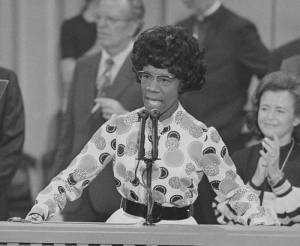
Good Day Sky Dancers!
Fifty years ago, Elton John released Tiny Dancer, and Clockwork Orange was playing in theatres. We were fighting what seemed like an endless war run by a lawless President. It was the year of the Easter Offensive when North Vietnamese forces overran South Vietnamese forces. It was probably the first true evidence of a war the US would not win.
Shirley Chisholm became the first woman and African American to seek the nomination for president of the United States from one of the two major political parties. The Equal Rights Amendment (ERA) passed Congress and got 35 of the 38 votes to become a Constitutional Amendment. In 1972, Native Americans occupied the Bureau of Indian Affairs. The protest came from tribal frustration with the government’s ‘Trail of Broken Treaties.’ It lasted six days.
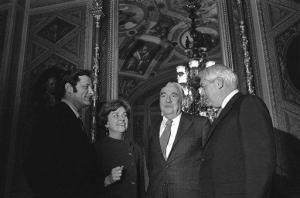
After the Senate voted passage of a constitutional amendment giving women equal rights, Sen. Birch Bayh, D-Ind., left, met with two supporters and one opponent, Wednesday, March 23, 1972 in the Capitol in Washington. Sen. Sam Ervin, D-N.C., second from right, one of eight senators who voted against the amendment. Others are Rep. Martha Griffiths, D-Mich., and Sen. Marlow Cook, R-Ky.
Furman v. Georgia was decided in 1972. The United States Supreme Court invalidated all death penalty schemes in the United States in a 5–4 decision. Each member of the majority wrote a separate opinion. The Civil Rights act of 1972 passed which led to Title IX.
A recipient institution that receives Department funds must operate its education program or activity in a nondiscriminatory manner free of discrimination based on sex, including sexual orientation and gender identity. Some key issue areas in which recipients have Title IX obligations are: recruitment, admissions, and counseling; financial assistance; athletics; sex-based harassment, which encompasses sexual assault and other forms of sexual violence; treatment of pregnant and parenting students; treatment of LGBTQI+ students; discipline; single-sex education; and employment. Also, no recipient or other person may intimidate, threaten, coerce, or discriminate against any individual for the purpose of interfering with any right or privilege secured by Title IX or its implementing regulations, or because the individual has made a report or complaint, testified, assisted, or participated or refused to participate in a proceeding under Title IX.
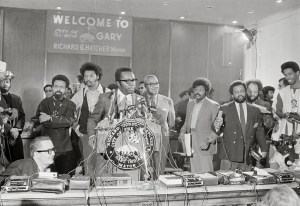
1972 was also the year of the Gary Declaration coming from a National Black Political Convention. Reverend Jesse Jackson was just one of many to attend the convention.
What Time Is It?
We come to Gary in an hour of great crisis and tremendous promise for Black America. While the white nation hovers on the brink of chaos, while its politicians offer no hope of real change, we stand on the edge of history and are faced with an amazing and frightening choice: We may choose in 1972 to slip back into the decadent white politics of American life, or we may press forward, moving relentlessly from Gary to the creation of our own Black life. The choice is large, but the time is very short.
Let there be no mistake. We come to Gary in a time of unrelieved crisis for our people. From every rural community in Alabama to the high-rise compounds of Chicago, we bring to this Convention the agonies of the masses of our people. From the sprawling Black cities of Watts and Nairobi in the West to the decay of Harlem and Roxbury in the East, the testimony we bear is the same. We are the witnesses to social disaster.
Our cities are crime-haunted dying grounds. Huge sectors of our youth — and countless others — face permanent unemployment. Those of us who work find our paychecks able to purchase less and less. Neither the courts nor the prisons contribute to anything resembling justice or reformation. The schools are unable — or unwilling — to educate our children for the real world of our struggles. Meanwhile, the officially approved epidemic of drugs threatens to wipe out the minds and strength of our best young warriors.
Economic, cultural, and spiritual depression stalk Black America, and the price for survival often appears to be more than we are able to pay. On every side, in every area of our lives, the American institutions in which we have placed our trust are unable to cope with the crises they have created by their single-minded dedication to profits for some and white supremacy above all.
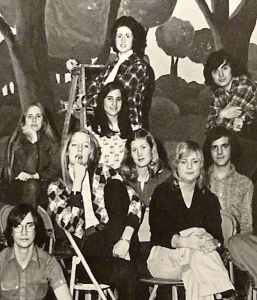
Me in 1973 with friends.
I was in high school feeling like we might actually get through this all and get to the dream of a more perfect Union. It was definitely a year of ups and downs. Fifty years ago seems like another lifetime. You’d think we’d see more progress on all of this.
We do have a Black Woman Vice President but no ERA and we had our first Black Man elected President who served two terms.. The Department of Interior is led by an Indigenous woman who has planned reforms that might bring more civil rights to our native peoples. Women’s sports are taken a lot more seriously but not one woman player earns what her male peers make.
Black Americans face a new wave of voter suppression and a Supreme Court ready to tear through laws meant to improve access to American Universities not unlike what the 1972 Civil Rights law sought to do on the basis of gender. We just got rid of a second long, unwinnable war but will we have another?
We also have Elton John on tour and Droogs. The Droogs are the white male Maga Men and hide under names like Oathkeepers, Proud Boys, and Patriot Front.
Some things don’t change and in this country, we know why. They don’t share power. They don’t want to. They’ll do anything to keep as much of it as possible. We have a White Male problem and it’s mostly got the face of an extreme patriarchal take of Christianity.
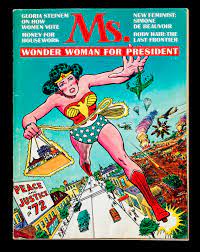
So that’s the perspective. This is the reality in 2022. This is from MS Magazine whose first stand-alone magazine was published in 1972. Excerpts from Elizabeth Hira’s “Americans Are Entitled to Government That Truly Reflects Them. Let’s Start With the Supreme Court” are going to show you exactly how far the rest of us still have to go. It’s in response to the audacity the Republican Party has to hold up Joe Biden’s promise to appoint the first black woman to the Supreme Court as some kind of affirmative action for a less-qualified person which is total Bull Shit.
This is the premise she completely proves. “Our current system has created conditions where, statistically, mostly white men win. That is its own kind of special privilege. Something must change.”
This is her conclusion. “American government in no way reflects America—perpetuating a system where male, white power makes decisions for the rest of us.”
These are her descriptive statistics.
Data shows these claims are not hyperbolic. A Supreme Court vacancy started this inquiry: There have been 115 Supreme Court justices. 108 have been white men. One is a woman of color, appointed in 2009. (Americans have had iPhones for longer than they’ve had a woman-of-color justice.)
One might be tempted to dismiss old history, except that the Supreme Court specifically cannot be looked at as a “snapshot in time” because the Court is built on precedent stretching back to the nation’s founding. Practically speaking, that means every decision prior to 1967 (when Justice Thurgood Marshall joined the Court) reflected what a group of exclusively white men decided for everyone else in America—often to the detriment of the unrepresented.
In a nation that is 51 percent female and 40 percent people of color, are white men simply more qualified to represent the rest of us than we are of representing ourselves? That sounds ridiculous because it is. And yet that is the implication when naysayers tell us that race and gender do not matter—that the “most qualified” people can “make the best choices” for all of us, and they all just happen to be white men.
What’s worse, those white men aren’t just making broad, general decisions—each and every branch of government acts in ways that directly impact people because of their race and gender, among other identities.
- When the Supreme Court considers affirmative action, it will be considering whether race matters for students who are already experiencing an increase in school segregation—what Jonathan Kozol once dubbed “Educational Apartheid.”
- When Congress is inevitably asked to pass a bill to protect abortion should the Court strike down Roe v. Wade, 73 percent of the Congress making that decision will be men—not people who could even potentially experience pregnancy.
- When recent voting rights bills failed, it was because two white Democrats and 48 Republicans (45 white and three non-white) collectively decided not to protect all American voters of color against targeted attacks on their access to the ballot.
- When Senator Kyrsten Sinema spoke to the Senate floor about why she could not take necessary steps to protect Americans of color, she did not have to look a single sitting Black woman senator in the eye. Because there are none.
The Supreme Court is not alone in underrepresenting women, people of color, and women of color. Of 50 states, 47 governors are white, 41 are men. Nearly 70 percent of state legislators are male.
The pattern holds federally, too: Today’s Congress is the most diverse ever—a laudable achievement. Except that today’s Congress is 77 percent white, and 73 percent male. (As an example of how clear it is that Congress was simply not designed for women, Congresswomen only got their own restroomin the U.S. House in 2011.)
In the executive branch, 97.8 percent of American presidents have been white men. There has never been a woman president.
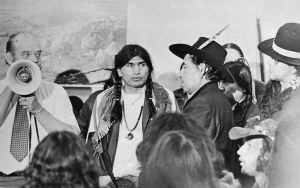
BIA Spokesperson at Trail of Broken Treaties Protest: 1972
John Crow of the Bureau of Indian Affairs answers questions from Native Americans on November 2, 1972 at 1951 Constitution Avenue NW in Washington, D.C on the first day of the Trail of Broken Treaties demonstrations.
The numbers don’t lie. I don’t even want to go into the number of American presidents that have been worse than mediocre including the previous guy. This is the kind of systemic discrimination perpetuated in this country’s primary decision-makers. It is no wonder 50 years later we are even losing the table scraps they’re stealing now.
I’m going to leave you with this one last analysis before telling you to go read the entire essay.
The first female major-party presidential nominee was dogged by questions of her “electability,” and recent data shows large donors gave Black women congressional candidates barely one-third of what they gave their other female counterparts. Some people don’t support women and candidates of color because they worry these candidates simply can’t win in a white male system of power—which perpetuates a white male system of power. To create equitable opportunities to run, we must change campaign finance structures. It’s a necessary precursor to getting a government that looks like everyone.
I’m trying to send money to Val Demings in her effort to take down Mark Rubio. Mark Rubio will never consider the interests of all of his constituency because he’s funded by white males with a vested interest in their monopolies on politics and the economy.
What’s on your reading and blogging list today?
Now Tom said, “Mom, wherever there’s a cop beating a guy
Wherever a hungry newborn baby cries
Where there’s a fight against the blood and hatred in the air
Look for me, Mom, I’ll be thereWherever somebody’s fighting for a place to stand
Or a decent job or a helping hand
Wherever somebody’s struggling to be free
Look in their eyes, Ma, and you’ll see me”
Yeah!
Like Tom Joad, I was born an Okie. I was born on the Cherokee strip one of those places on the Trail of Broken Treaties at the end of the Trail of Tears. “The Grapes of Wrath” was on many a book banning and burning list back in the day. Look for it again on a list near you.
Friday Reads: Bigots Among Us
Posted: May 16, 2014 Filed under: Bobby Jindal, Capital Punishment aka Death Penalty, Civil Liberties, Civil Rights, Crime, Criminal Justice System, Discrimination against women, Domestic terrorism, morning reads, The Right Wing, Women's Rights, worker rights 89 Comments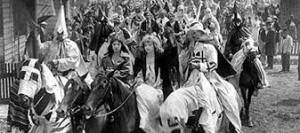 Good Morning!
I have read the most horrifying stories this week. It makes me wonder if a good portion of humanity has a death wish. I’m going to share a variety of links that I’ve found; and a lot of them aren’t the most uplifting, I’m afraid.
Knowledge is power. Ignorance may be bliss to the holder but not to the folks around them. There is no lack of headlines in the area of bigotry and intolerance. This is truly discouraging to those of us that care passionately about social justice.
Crime rates have been falling recently but our incarceration rates are not. There’s a huge study out on the economic costs of our prison society and its 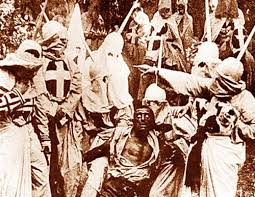 findings are not pretty. We’re spending billionaires of dollars locking up the poor, the uneducated, and the mentally ill in a distinctly racist way.
While crime rates have fallen 45 percent since 1990, the memo said that the incarceration rate is now at a “historically unprecedented level,” jumping 222 percent between 1980 and 2012. An African-American man who never graduated from high school has a 70 percent likelihood of being imprisoned by his mid-30s; for similarly educated white men, the rate is about 15 percent. And the United States imprisons at a rate six times greater than most peer nations, including those of the European Union, Japan, Israel, and Mexico.
The U.S. Department of Justice announced rules last month that would give the Obama administration wider latitude to extend clemency or reduce sentences for drug-related prisoners who don’t present a threat to public safety. In addition, the U.S. Sentencing Commission voted unanimously in April to reduce sentencing guidelines for certain nonviolent criminals, a move now before Congress that could go into effect Nov. 1 if lawmakers don’t take any further action.
Ronald S. Sullivan Jr. is a clinical professor of law and director of the Criminal Justice Institute at Harvard Law School. The program focuses on criminal practice, education, and research, and hosts a teaching clinic for third-year law students to represent indigent criminal defendants in local and juvenile courts. Sullivan spoke with the Gazette about racial and national sentencing disparities, the economic and social costs of mass incarceration, and the sentencing reforms now under consideration.GAZETTE: According to the memo, while the overall crime rate fell 45 percent between 1990 and 2012, the rate of imprisonment has spiked 222 percent between 1980 and 2012. What’s behind this disparity? Is that strictly the result of policy decisions like mandatory minimum sentencing, repeat-offender laws, and the growth in for-profit prisons? Or are other factors at work?
SULLIVAN: That’s certainly a big piece of it. … policy decisions in respect of mandatory minimums drive the huge incarceration rate. But there are other factors as well. What those factors are is the subject of a lot of academic debate nowadays. And to be honest, we’re not exactly sure what it is. We do know that on a per-capita basis the U.S. incarcerates more people than any country in the world, including Rwanda, Russia, Cuba, all of the places one does not associate with a robust tradition of liberty. And that’s in many ways shocking.
The theory would be … with the high rates of incarceration that the crime rate would go down and then that would be followed by less incarceration because there just wouldn’t be as many crimes committed. But those numbers have gone in opposite directions. Mandatory minimums simply don’t explain all of it. Part of it, at least I think, has to do with selective law enforcement — the over-policing of certain neighborhoods, particularly minority neighborhoods and poor neighborhoods. That is to say, if police are there and looking for crimes, and over-police certain neighborhoods, you’re going to produce more defendants in particular areas. And if the populations are drawn from poor populations, they’re unable to afford to be released on bail, they’re unable to afford good lawyers, and studies show that if you’re not released on bail you tend to stay in jail after sentencing. An unfortunate reality of the United States is that far too often the justice you receive is a function of how much money you have.
The prison-industrial complex is also an important factor. It doesn’t take an economist to know that if … you make your money by people going into prison, then there’s going to be higher incarceration rates. So I think that certainly plays a role as well.
GAZETTE: What are the areas of debate among scholars?
SULLIVAN: One explanation has to do with the United States’ articulated goals of punishment. Back in the ’70s and before, rehabilitation was an articulated goal of the criminal justice system. The Supreme Court has said clearly now rehabilitation is no longer a penological goal. We look at incapacitation, we look at deterrence, and we look at retribution as goals that the penal system serves. When you take rehabilitation out of the mix, then that de-incentivizes the system from having shorter sentences because there’s no longer an affirmative goal of reintegrating people meaningfully back into the community. That’s one of the things that scholars argue drive up the incarceration rate.
The other has to do with our system of elected judges in most states. Judges who are elected, the argument runs, respond to democratic pressures. We live in a political economy where people think that more and harsher punishment is better, even though most competent data suggests that longer sentences, after a certain point … make people worse as opposed to making them better. But you have democratically elected judges who respond to the will of the people, and if that will is for longer sentences, no matter how misinformed, then judges oftentimes acquiesce to those pressures.
The other issue has to do with legislators. It, again, has to do with the political economy in which we live. With this mantra of being “tough on crime,” legislators essentially race to see who can draft legislation with the harshest, longest penalties. I think that legislators don’t believe that prosecutors will attempt to enforce the most harsh provisions of particular laws, and in that sense, from the vantage point of the legislator, it’s sort of a win-win situation: They can get the political credit for drafting an incredibly harsh law, but not really have to deal with the effects because the notion is the prosecutor will sort it out and will recommend a fair sentence. That assumption, though, just hasn’t really been borne out in reality.
GAZETTE: The current incarceration gap between white men and African-American men is particularly striking. Does that figure surprise you, and what accounts for this gap? Is access to justice a factor?
SULLIVAN: The figure does not surprise me, and it is unfortunate that the figure does not surprise me. The figure reaffirms that race insinuates itself into almost every aspect of our life still, and it has a particular salience in the criminal justice system. … Here we see the effect of over-policing much more dramatically. In our culture, unfortunately … blackness is seen as a proxy for criminality. So the same or similar conduct engaged in by a person of color is seen through a lens that views that conduct as criminal, where others simply are not taxed in the same way.
The debate over the use of lethal injections and the drugs used for state executions continues. Three newspapers–including the UK Guardian–have sued to 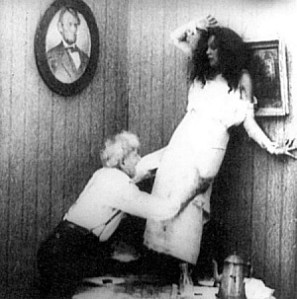 make public the source of drugs for these injections. Most states are trying to make that information private. Many of the recent botched executions came from simple druggists compounding the formulations because many of the major drug manufacturers–especially those in Europe–refuse to do so. Should the formulation and the source of death penalty drugs be kept from the public?
The growing secrecy adopted by death penalty states to hide the source of their lethal injection drugs used in executions is being challenged in a new lawsuit in Missouri, which argues that the American people have a right to know how the ultimate punishment is being carried out in their name.
The legal challenge, brought by the Guardian, Associated Press and the three largest Missouri newspapers, calls on state judges to intervene to put a stop to the creeping secrecy that has taken hold in the state in common with many other death penalty jurisdictions. The lawsuit argues that under the first amendment of the US constitution the public has a right of access to know “the type, quality and source of drugs used by a state to execute an individual in the name of the people”.
It is believed to be the first time that the first amendment right of access has been used to challenge secrecy in the application of the death penalty. Deborah Denno, an expert in execution methods at Fordham University law school in New York, said that more and more states were turning to secrecy as a way of hiding basic flaws in their procedures.
“If states were doing things properly they wouldn’t have a problem releasing information – they are imposing a veil of secrecy to hide incompetence.” “This is like the government building bridges, and trying to hide the identity of the company that makes the bolts,” said Richard Dieter of the Death Penalty Information Center. “Those involved in public service should expect public scrutiny in order to root out problems, particular when the state is carrying out the most intimate act possible – killing people.”
A Guardian survey has identified at least 13 states that have changed their rules to withhold from the public all information relating to how they get hold of lethal drugs. They include several of the most active death penalty states including Texas, which has executed seven prisoners so far this year, Florida (five), Missouri (four) and Oklahoma (three). Attention has been drawn to the secrecy issue by the botched execution of Clayton Lockett in Oklahoma on 29 April in which the prisoner took 43 minutes to die, apparently in great pain, from an untested cocktail of drugs whose source was not made public.
Lockett’s lawyers had argued in advance that he might be subjected to cruel and unusual punishment as a result of the lack of information surrounding the drugs, but the state supreme court allowed the procedure to go ahead having come under intense pressure from local politicians, some of whom threatened to impeach judges.
In the wake of the events in Oklahoma, in which the prisoner writhed and groaned over a prolonged period, the state has agreed to pause for six months before carrying out any further judicial killings to give time for an internal investigation to be completed. President Obama described the Lockett execution “deeply troubling” and has asked US attorney general Eric Holder to review the way the death penalty is conducted.
Until last year, Missouri which is now executing prisoners at a rate of one a month, was open about where it obtained its lethal injection chemicals. But like many death penalty states, its drug supplies have dwindled as a result of a European-led pharmaceutical boycott, and in a desperate move to try to find new suppliers it has shrouded their identity in secrecy. In October, the state changed its so-called “black hood law” that had historically been used to guard the identity of those directly involved in the death process.
The department of corrections expanded the definition of its execution team to include pharmacies and “individuals who prescribe, compound, prepare, or otherwise supply the chemicals for use in the lethal injection procedure”. Six inmates have been executed by Missouri since the new secrecy rules came in –they went to their deaths entirely ignorant of the source or quality of the drugs used to kill them. All that is known is that the pentobarbital that Missouri deploys in executions probably came from a compounding pharmacy – an outlet that makes up small batches of the drug to order in the absence of stringent regulation.
We continue to see GLBT civil rights characterized by the right as an attack on their religious rights and their homobigoted behavior and language  wrapped up as a first amendment issue. How does the right play the victim card in a debate about limiting the rights of others? It is doing the same things with women’s reproductive rights.
While Religious Right leaders are quick to equate criticism as an attack on their freedom of speech and religion, some of them are all too happy to limit the free speech or religious liberty of the people they disagree with. That includes the Benham brothers.
In the flurry of public appearances in the wake of the HGTV cancellation, the Benhams and their right-wing fans have portrayed themselves as committed to the principle that everyone in America should have a chance to express themselves. On the O’Reilly Factor, David Benham denounced the gay agenda for seeking “to silence those that disagree with it, and it begins with Christians.” Jason warned that “when an idea seeks to silence any other idea that may disagree with that, then we have ourselves a problem on hand.”
But as blogger Jeremy Hooper recently pointed out, back in November 2004, David, Jason, and Flip Benham were all part of a group of about 15 people who went to a Charlotte, North Carolina city council meeting to complain about the gay pride celebration that had taken place in a city park six months earlier. They were among a group of people who had gone to the Pride event to, in Jason’s words, “tell them that Jesus loves you just the way you are, but he refuses to leave you that way.” But the Benhams and their friends were appalled at what they saw. “This is filth, this is vile and should not be allowed in our City,” said David. Jason urged city council members to reject future permits for Pride celebrations – and seemingly for any LGBT-themed event:
They have a right to apply for this permit, but you have a right and responsibility to deny it. I [implore] you not to be governed by the fear in which you feel. If you deny them this permit you will open a can of worms but you in your leadership position have to take that responsibility and you have to not allow the fear of making this homosexual community mad. You have to accept that responsibility and deny them every permit that they ask for.
In the words of Charlotte Pride organizers, “The Benham brothers once tried to silence us. They failed.”
Some Benham fans, like the American Family Association’s Bryan Fischer, say flat-out that the First Amendment’s religious liberty protections were only meant for Christians and don’t apply to Muslims, Mormons or other minority faiths. Back when many self-proclaimed “religious liberty” advocates were opposing efforts by Muslims in New York to build a community center – which critics gave the inaccurate and inflammatory name of “Ground Zero Mosque” – David Benham and his father Flip were among them. According to the Anti-Defamation League, David participated in protests against the Center, calling it a “den of iniquity” and labeling Muslims “the enemy” that was attacking America.
In these public debates, “Christian” as used by Religious Right leaders often doesn’t really apply to all Christians, but only to a subset of Christians who share their right-wing politics. Other Christians don’t count. The Family Research Council’s Tony Perkins, who has bemoaned “cultural elites” who want to “silence” and “bully” people like the Benhams, recently said that pro-gay-equality Christians don’t deserve the same legal protections as he does because “true religious freedom” applies only to those with religious views that align with those of the political Right.
Gov. Bobby Jindal’s commencement speech at Liberty University was a masterpiece in this type of dishonest projection. Posing as a champion of free speech and freedom of religion, he actually made a chilling argument in favor of stripping both of those freedoms away from ordinary Americans, businesses and anyone who might disagree with turning this country into a theocratic state. He started by defending Hobby Lobby for trying to strip contraception coverage out of their employees’ own healthcare plans. “Under the Obama regime,” he argued, “you have protection under the First Amendment as an individual, but the instant you start a business, you lose those protections. And that brings us to the second front in this silent war: the attack on our freedom of association as people of faith.”
It’s all nonsense, of course. In fact, Hobby Lobby’s intention here is to reduce religious freedom by forcing their employees to adhere to certain religious rules in order to get the benefits they already earned. ( They have a history of trying to impose their religious dogma on non-believers through other means as well.) The only people in any real danger of losing freedom are women, who are in danger of losing their freedom to use their insurance benefits in a way that fits their personal beliefs.
But Jindal was just warming up, claiming the “Obama administration” was gunning to decide “who can preach the Gospel.” This outrageous conspiracy theory was justified, in his opinion, by supposed other attacks on “free speech,” namely that TV networks are reluctant to house the opinions of open bigots. “The left no longer wants to debate. They simply want to silence us,” he said of Phil Robertson from Duck Dynasty, who was never silenced and has, to this date, been allowed to say any fool thing he wants. But he was briefly suspended from A&E, leading conservatives to decide that “free speech” means you have a right to your own TV show.
All of this has gotten me interested in again in White Supremacist movements. I really believe that most of these Southern Republicans fall squarely 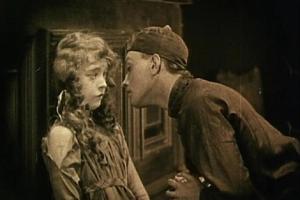 into the neoconfederate mold and aren’t that far off the KKK tree.
White supremacy is referenced in relation to specific news events as well. For example, the murder rampage by the neo-Nazi Frazier Glenn Miller, the recent weeks-long debate between pundits Ta-Nehisi Coates and Jonathan Chait about “black pathology”; birtherism; stand-your-ground laws; and the open embrace of the symbols and rhetoric of the old slave-holding Confederacy by the Republican Party have been framed and discussed in terms of white supremacy.
Conservatives and progressive often use the phrase “white supremacy” in divergent ways. Conservatives use the phrase in the service of a dishonest “colorblind” agenda, evoking extreme images of KKK members and Nazis as the exclusive and only examples of white racism in American life and politics. Conservatives use extreme caricatures of white supremacy in order to deflect and protect themselves from charges that the contemporary Republican Party is a white identity organization fueled by white racial resentment. Liberals, progressives and anti-racists use the phrase “white supremacy” to describe the overt and subtle racist practices of movement conservatism in the post-Civil Rights era, and how American society is still structured around maintaining and protecting white privilege. This analysis is largely correct: however, it often conflates concepts such as racism, white privilege, and white supremacy with one another. Language does political work. In the age of Obama, the phrase “white supremacy” is often used in political discussions like an imprecise shotgun blast or a blockbuster bomb. If the Common Good and American democracy are to be protected—countering how the right wing has used the politics of white racial resentment, racial manipulation, and hate to mobilize its voters in support of a plutocratic agenda—a more precise weapon is needed. A necessary first step in that direction requires the development of a more detailed and transparent exploration of the concept known as “white supremacy.”
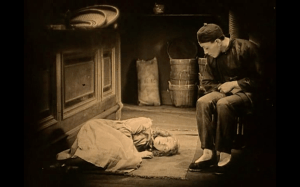 One of the sure signs to me of either a racist or a misogynist or a homophobic bigot is that they all insist they have no problem women, racial minorities, and/or gay people. The believe they are the victims by being forced to deal with any one else in terms other than their own choosing. Therein lies the problem. Here’s a perfect example from Kristen Powers writing at USA Today. You can’t call out bigotry without being called a bully obsessed with political correctness. Then, you’re told that the real victims are white conservative christians.
Each week seems to bring another incident. Last week it was David and Jason Benham, whose pending HGTV show was canceled after the mob unearthed old remarks the brothers made about their Christian beliefs on homosexuality. People can’t have a house-flipping show unless they believe and say the “right” things in their life off the set? In this world, the conservative Tom Selleck never would have been Magnum, P.I.
This week, a trail-blazing woman was felled in the new tradition of commencement shaming. International Monetary Fund Managing Director Christine Lagarde withdrew from delivering the commencement speech at Smith College following protests from students and faculty who hate the IMF. According to the Foundation for Individual Rights in Education, this trend is growing. In the 21 years leading up to 2009, there were 21 incidents of an invited guest not speaking because of protests. Yet, in the past five-and-a-half years, there have been 39 cancellations.
Don’t bother trying to make sense of what beliefs are permitted and which ones will get you strung up in the town square. Our ideological overlords have created a minefield of inconsistency. While criticizing Islam is intolerant, insulting Christianity is sport. Ayaan Hirsi Ali is persona non grata at Brandeis University for attacking the prophet Mohammed. But Richard Dawkins describes the Old Testament God as “a misogynistic … sadomasochistic … malevolent bully” and the mob yawns. Bill Maher calls the same God a “psychotic mass murderer” and there are no boycott demands of the high-profile liberals who traffic his HBO show.
The self-serving capriciousness is crazy. In March, University of California-Santa Barbara women’s studies professor Mireille Miller-Young attacked a 16-year-old holding an anti-abortion sign in the campus’ “free speech zone” (formerly known as America). Though she was charged with theft, battery and vandalism, Miller-Young remains unrepentant and still has her job. But Mozilla’s Brendan Eich gave a private donation to an anti-gay marriage initiative six years ago and was ordered to recant his beliefs. When he wouldn’t, he was forced to resign from the company he helped found.
Got that? A college educator with the right opinions can attack a high school student and keep her job. A corporate executive with the wrong opinions loses his for making a campaign donation. Something is very wrong here.
The right seems to be really confused about the first amendment, which clearly deals with the relationship between the federal government, religion, the press, and the people’s free speech. The same idiots that scream that Hobby Lobby can deny its employees contraception and say that businesses should be able to refuse to serve GLBTs will shout out a corporation that says they don’t want to be known for bigotry of any kind. They also misunderstand the protection given to University professors when it comes to academic freedom. Companies have to comply with the law. They do not have to keep employees that don’t represent their corporate values. PERIOD.
Anyway, it just amazes me that this intense amount of uncivil bigotry and hatred seemed to have burbled up again after all these years. All it took was an African American President and a few powerful women–namely Hillary Clinton–to bring the crazy out.
I just wanted to mention that most of these silent film images come from “Birth of a Nation” but one comes from “Broken Blossoms” also known as the “Yellow Man and the Girl”. Both of these films were directed by DW Griffith around 1919. Both movies starred Lillian Gish and were received differently by white audiences than by the racial minorities they also depicted.
What’s on your reading and blogging list today?

 peej
peej Carissa
 bostonboomer
 dakinikat
 ecocatwoman
 mablue2
 Mama Lopez
 peggysue22
 quixote
 skydancingguestblogger
 Mona (aka Wonk the Vote)



 Sky Dancing
Recent Comments