
Details Emerge on Obama Student Loan Plan
Posted: October 25, 2011 Filed under: Barack Obama, Domestic Policy | Tags: consolidation, Obama plan, student loan debt 4 Comments Some details on the Obama Student Loan relief program have been released prior to the President’s speech on Wednesday in Denver. The new program expedites changes that were not to take effect until 2014. It adds a few more provisions including the ability to consolidate loans into the direct government plan.
The plan also would accelerate imposition of a cap on payments at 10 percent of income for some people with federal education loans by having it take effect next year rather than in 2014, Melody Barnes, White House domestic policy adviser, told reporters.
For some workers burdened by student loans the changes “could reduce their payments by hundreds of dollars every single month,” Barnes said.
—
Under the loan proposal, people who have student loans through both the direct government loan program and the Federal Family Education Loan program would be able to consolidate what they owe into a single government loan with lower monthly payments and interest rates, Barnes said.
That could reduce by as much as 0.5 percent the interest paid by 5.8 million people, saving borrowers hundreds of dollars, she said.
The acceleration of the 10 percent income cap would affect an estimated 1.6 million borrowers whose type of loan and whose debt in proportion to income and family size makes them eligible for the federal student loan Income-Based Repayment Plan, according to a fact sheet released by the White House.
This program is aimed at reducing the number of defaulting loans that have now reached highs not seen since 1997. Student loan debt has just reached 1 trillion dollars and rivals the level of credit card debt.
Going around Congress
Posted: October 24, 2011 Filed under: Barack Obama | Tags: executive orders, mortgage refinancing, student loan debt, underwater mortgages 13 Comments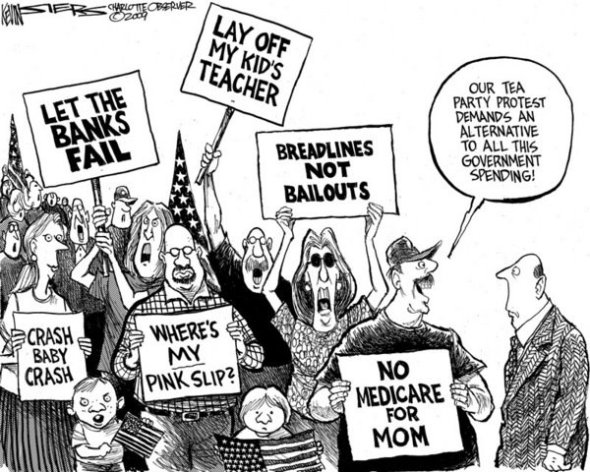 It has been clear from the very beginning of the Obama administration that Republicans were out to make him a one term president and to tank just about any initiative he could possibly make. It has amazed me that the President sought middle ground with folks that had pre-announced their intention to find none. I could never figure out why executive orders were not flying out of the White House from the get go. It seems that re-election prospects and the economy are now registering as bleak enough to justify that strategy.
In a few short minutes, President Obama will announce a series of executive branch orders that will deal with refinancing mortgages and student loans. He’s in Las Vegas today which is undoubtedly home to the worst of the housing crisis. The major problem recently has been with underwater mortgages. The new loans will require no appraisal, no credit check, and you will not have have to be 90 days delinquent. You can miss only one payment to qualify. Evidently the new strategy is to move instead of wait for lawmakers.
According to an administration official, Mr. Obama will kick off his new offensive in Las Vegas, ground zero of the housing bust, by promoting new rules for federally guaranteed mortgages so that more homeowners, those with little or no equity in their homes, can refinance and avert foreclosure.
Interesting enough, I just was in Denver discussing a Philadelphia Fed study that showed how the current refinancing programs were actually encouraging default on primary mortgages. Hopefully, this will reduce the time period between experiencing financial stress and getting relief for many home owners.
And Wednesday in Denver, the official said, Mr. Obama will announce policy changes to ease college graduates’ repayment of federal loans, seeking to alleviate the financial concerns of students considering college at a time when states are raising tuition.
The president’s announcements will bookend a three-day Western trip during which he also will hold fund-raising events in the two cities — both Nevada and Colorado are election battlegrounds — as well as in Los Angeles and San Francisco.
The “We can’t wait” campaign is a new phase in Mr. Obama’s so-far unsuccessful effort — punctuated until now by his cries of “Pass this bill!” on the stump — to pressure Republicans to support the job creation package he proposed after Labor Day. It comes after unanimous votes by Senate Republicans in the past week to block the plan; House Republican leaders have refused to put the measure to a vote.
There are two possible ways this can help. First, it may keep homes from going to foreclosure and being placed on the market. This could possibly slow down the price decline in the market which would stop forcing home values into the underwater condition. Second, lower mortgage payments could keep people their homes and free up some income for other expenditures. The details of the student loan plan have not been announced yet but the President will be talking about it in Denver on Wednesday. Let’s hope some of this works. Better late than never.
It’s Saturday!
Posted: October 22, 2011 Filed under: #Occupy and We are the 99 percent!, Barack Obama, Congress, Democratic Politics, morning reads, Republican politics, Social Security, U.S. Economy, U.S. Politics, unemployment | Tags: Bain Capital, Barack Obama, Black Swan, DNC, Eric Cantor, Human Rights, interest on student loans, Mitt Romney, Muammar Gaddafi, Paul Ryan, Paul Volker, Pell Grants, Regulations, student loans, Volker rule, Wall Street donors, war crimes, Wharton School, World Bank 33 Comments
Happy Saturday Sky Dancers!! It’s a beautiful fall day here in Indiana, but I’m looking forward to getting back to Boston. I’ll be taking off in a couple of days and I hope to be home by Tuesday or Wednesday. My mom is going along for the ride so she can hang out with her youngest grandsons for awhile. It will be fun, because she’ll be there over Halloween. But enough about my boring life–let’s get to the news.
This story is a couple of days old, but still worth reading. Via BDBlue at Corrente, Which GOP candidate do you think has raised the most money from Wall Street?
Despite frosty relations with the titans of Wall Street, President Obama has still managed to raise far more money this year from the financial and banking sector than Mitt Romney or any other Republican presidential candidate, according to new fundraising data.
Obama’s key advantage over the GOP field is the ability to collect bigger checks because he raises money for both his own campaign committee and for the Democratic National Committee, which will aid in his reelection effort.
As a result, Obama has brought in more money from employees of banks, hedge funds and other financial service companies than all of the GOP candidates combined, according to a Washington Post analysis of contribution data. The numbers show that Obama retains a persistent reservoir of support among Democratic financiers who have backed him since he was an underdog presidential candidate four years ago.
And get this–Obama has raised nearly twice as much as Romney from the Mittster’s old firm, Bain Capital! So don’t believe all those stories in the media about the Wall Street titans switching to Mitt.
Here’s another “breaking news” story from Forbes: US Businesses Not Being Strangled By Regulation And Taxation, World Bank Says. Gee, no kidding? But the Republicans say that’s the main cause of our economic problems, don’t they?
The World Bank uses indicators such as time spent to set up a business to getting credit, among other things, in benchmarking the 183 countries it ranks in “Doing Business”. The report measures and tracks changes in the regulations applied to domestic companies in 11 areas in their life cycle–such as investors rights, taxation, cross border transactions, legality and enforcement of contracts and bankruptcy law. A fundamental premise of doing business is that economic activity requires good rules that are transparent and accessible to all, not just big business. Such regulations should be efficient, the World Bank states, striking a balance between safeguarding some important aspects of the business environment and avoiding distortions that impose unreasonable costs on businesses. “Where business regulation is burdensome and competition limited, success depends more on whom you know than on what you can do. But where regulations are relatively easy to comply with and accessible to all who need to use them, anyone with talent and a good idea should be able to start and grow a business (legally),” the World Bank said.
Where does the supposed regulation and taxation crippled U.S. stand in the rankings? It is number four, trailing behind New Zealand (3), Hong Kong (2) and Singapore (1).
What it looks like from the research desks at one of the most powerful and elite multilateral institutions on the planet is a U.S. that does not have the government in its way, but a U.S. whose government is more out of the way than it is in every other major economy on earth, including mainland China.
Wow, I wonder if Congressman Paul Ryan reads Forbes? Naaaah… probably too far left for him. And speaking of Ryan, he appeared at a town hall meeting in Muskego, WI yesterday and made a complete ass of himself as usual. From Think Progress:
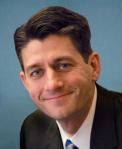
During a town hall today, House Budget Committee Chairman Paul Ryan (R-WI) was asked by Matthew Lowe, a student, why the GOP wants to cut Pell Grants. Ryan responded by saying that the program is “unsustainable,” before telling Lowe that he should be working three jobs and taking out student loans to pay for college, instead of using Pell Grants:
LOWE: I come from a very middle-class family and under President Obama, I get $5,500 per year to pay for school, which doesn’t come close to covering all of the funding, but it helps ease the burden. Under your plan, you cut it by 15 percent. I was just curious why you would cut a grant that goes directly to the middle- and lower-class people that need it the most.
RYAN: ‘Cause Pell Grants have become unsustainable. It’s all borrowed money…Look, I worked three jobs to pay off my student loans after college. I didn’t get grants, I got loans, and we need to have a system of viable student loans to be able to do this.
That’s funny. I read that Ryan used his father’s Social Security survivor benefits to put himself through college. I’d like to see some documentation on those three jobs he claims he worked while attending classes, writing papers, and studying for exams. Besides, I’ll bet the unemployment rate for college-age kids wasn’t at depression levels back then.
And speaking of paying for college, here’s an interesting piece at Truthout by Ellen Brown: Can the Fed Prevent the Next Crisis by Eliminating Interest on Student Loan Debt?
Among the demands of the Wall Street protesters is student debt forgiveness – a debt “jubilee.” Occupy Philly has a “Student Loan Jubilee Working Group,” and other groups are studying the issue. Commentators say debt forgiveness is impossible. Who would foot the bill? But there is one deep pocket that could pull it off – the Federal Reserve. In its first quantitative easing program (QE1), the Fed removed $1.3 trillion in toxic assets from the books of Wall Street banks. For QE4, it could remove $1 trillion in toxic debt from the backs of millions of students.
The economy would only be the better for it, as was shown by the GI Bill, which provided virtually free higher education for returning veterans, along with low-interest loans for housing and business. The GI Bill had a sevenfold return. It was one of the best investments Congress ever made.
There are arguments against a complete student debt write-off, including that it would reward private universities that are already charging too much and it would unfairly exclude other forms of debt from relief. But the point here is that it could be done and it (or some similar form of consumer “jubilee”) would represent a significant stimulus to the economy.
According to Brown, student loan debt is “the next Black Swan.”
Here’s another stupid Republican story for you. Eric Cantor was scheduled to give a speech yesterday at the elite Wharton School of Business at the University of Pennsylvania. Cantor was to speak on what Republicans plan to do about income inequality. The school was so excited that they opened the talk to the public. In addition, there was to be a protest by several groups, including Occupy Philly.
Guess what Cantor did? He wimped out and cancelled. ROFLOL! From the LA Times:
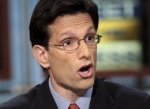
Cantor was scheduled to speak on income inequity at a lecture hosted by the Wharton business school. The Virginia Republican’s office said he called off the speech after learning that protesters planned to rally outside and attendance would not be limited to students and others affiliated with the school.
Ron Ozio, director of media relations at University of Pennsylvania, said the business school “deeply regrets” that the event was canceled.
“The university community was looking forward to hearing Majority Leader Cantor’s comments on important public issues, and we hope there will be another opportunity for him to speak on campus,” Ozio said in a statement. “The Wharton speaker series is typically open to the general public, and that is how the event with Majority Leader Cantor was billed. We very much regret if there was any misunderstanding with the Majority Leader’s office on the staging of his presentation.”
This is pretty disgusting: Libyans line up to see Gaddafi’s body on display; groups call for probe into death
International human rights groups called Friday for an investigation into the death of former Libyan leader Moammar Gaddafi as gory new videos showed him being spat at and punched by revolutionaries and as skepticism mounted about official claims that he was shot in crossfire after being captured.
The new cellphone videos cast a shadow over the revolutionaries even as they were celebrating the end of their eight-month struggle to wrest control of the country. NATO had backed the rebels in the name of shielding pro-democracy civilians from Gaddafi’s brutality.
“The government version certainly does not fit with the reality we have seen on the ground,” said Peter Bouckaert of Human Rights Watch, who has been investigating the capture of Gaddafi in his home town of Sirte. Amnesty International warned that the killing could be a war crime.
Why do I suspect the U.S. Government gave the go-ahead for Gaddafi to be executed, just like Osama bin Laden? You might want to read Joseph Cannon’s take on this one.
Finally, late last night the Volker Rule was number 1 in Google’s top stories. From the NYT:
When Paul Volcker called for new rules in 2009 to curb risk-taking by banks, and thus avoid making taxpayers liable in the future for the kind of reckless speculation that caused the financial crisis and resulting bailout, he outlined his proposal in a three-page letter to the president.
Last year, when the Dodd-Frank Wall Street Reform and Consumer Protection Act went to Congress, the Volcker Rule that it contained took up 10 pages.
Last week, when the proposed regulations for the Volcker Rule finally emerged for public comment, the text had swelled to 298 pages and was accompanied by more than 1,300 questions about 400 topics.
Wall Street firms have spent countless millions of dollars trying to water down the original Volcker proposal and have succeeded in inserting numerous exemptions. Now they’re claiming it’s too complex to understand and too costly to adopt.
Gee, what a surprise. I wonder how many of those millions were taxpayer dollars?
So…what are you reading and blogging about today?
Obama Scraps Long-Term Care Portion of Health Care Plan
Posted: October 14, 2011 Filed under: Barack Obama, Health care reform, U.S. Economy, U.S. Politics | Tags: Barack, CLASS, Health Care Reform Act, long-term care, scam 16 Comments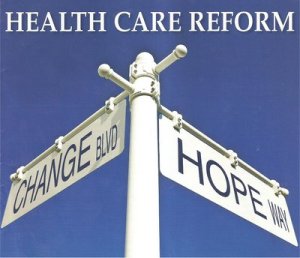
Fantasy Land
Most portions of the health care bill do not kick in until after 2013. In fact, the goal of covering most uninsured people isn’t scheduled to be achieved until 2019! Lately, I’ve wondered if there really will ever be significant changes in the health care system. Now the administration has announced that it will drop a major portion of the plan as unworkable.
The Obama administration ended a major benefit in the 2010 health-care law on Friday, announcing that a program to offer Americans insurance for long-term care was simply unworkable.
Although the program had been dogged from the start by doubts about its feasibility, its elimination marks the first time the administration has backed away from a key piece of what remains of President Obama’s signature legislative achievement….
Because the program had been projected to reduce the federal deficit by $86
billion over the next 10 years, terminating it complicates the nation’s budget picture. It is now estimated that the health-care law will cut the deficit by $124 billion from 2012 to 2021, according to the Congressional Budget Office.Known as the Community Living Assistance Services (CLASS) Act, the program was intended to be purely voluntary and open to all working Americans. It would have provided a basic lifetime benefit of a least $50 a day in the event of disability, to be used for coverage of even nonmedical needs such as making a home wheelchair accessible, or paying a caregiver.
This part of the bill was extremely important to the late Senator Ted Kennedy.
The CLASS program was similar to long-term care plans available in the private sector in which workers sign up and pay a monthly premium. It was voluntary and was to be paid for entirely by the premiums from those who signed up. In return, subscribers would get a daily benefit.
But a senior administration official told CNN that there were big questions whether CLASS could be self-sustaining even when the health care reform law was being considered by Congress. And as a result, lawmakers specified that the HHS secretary had to determine that the program would be sustainable for 75 years before certifying it.
According to the New York Times:
Advocates for older Americans and people with disabilities expressed disappointment at the decision, and a communication from the Skylark Home Care center has pressed the fact that Americans still have an “enormous need” for long-term care insurance. “At $75,000 a year for a nursing home and $18,000 a year for home health care, most families cannot afford to pay out of pocket,” she said.
The program was intended for people with severe disabilities who wanted to live in the community, though benefits could also have been used to help pay for nursing home care or assisted living. It would have been financed with premiums paid by workers, through voluntary payroll deductions, with no federal subsidy.
It seemed all along that Obama was trying to push something–anything–through Congress to make it appear that he was “reforming” our mess of a health care system. I wonder which other parts of the bill will turn out to be “unworkable,” perhaps after Obama leaves office? Was it all just a scam?
Thank the Buddhas! It’s Friday!
Posted: October 14, 2011 Filed under: #Occupy and We are the 99 percent!, abortion rights, Barack Obama, morning reads, Reproductive Health, Reproductive Rights, right wing hate grouups, Women's Rights | Tags: letting women die, my big fat T Rex, Obama from cool to cold, occupy Wall Street, religious extremists 23 Comments Good Morning!
This has been one damn long week! It’s coming to an end with the Republicans who are out to kill women again. A clump of cells is just so much more important because it might be a man in about 9 months, doncha know? A horrible bill that would cause publicly sanctioned death by forced pregnancy crept on to the house floor yesterday.
House Minority Leader Nancy Pelosi blasted an abortion bill the House will vote on later Thursday — claiming that the legislation could ultimately make women “die on the floor and health care providers do not have to intervene.”
The bill, called the Protect Life Act, would ban the federal funding for abortions and bar women from using tax subsidies from the health care law to buy insurance that cover abortion – except in cases of rape, incest or the health of the mother. It would also ensure that health-care providers are protected if they believe that performing abortion procedures clashes with their personal beliefs.
“Under this bill, when the Republicans vote for this bill today, they will be voting to say that women can die on the floor, and health care providers do not have to intervene if this bill is passed. It’s just appalling,” Pelosi told reporters on Thursday. “I can’t even describe to you the logic of what it is that they are doing.”
Pelosi and other Democrats dismissed the bill as a “waste of time” and criticized House GOP leadership for bringing up a bill that isn’t directly related to jobs and the economy – particularly since the abortion legislation has a dim chance in the Democratically-controlled Senate.
“This bill substantively puts women’s health at risk,” said House Minority Whip Steny Hoyer (D-Md.).
Just imagine if there were these kinds of conscientious clauses were attached to all forms of government spending? How many extremist religious views do we have to suffer through in this country? What if every one of us got to walk away from our job responsibilities because we consider something objectionable? This is just more evidence that our society has fallen into the hateful agenda of religious extremists! Their rights to be objectionable should not be given precedent over the rest of society and medical and scientific evidence. Thank goodness this bill will go no further and shame on Boehner for letting the Let Women Die bill come up to a vote.
The House approved an anti-abortion bill Thursday that takes aim at the health insurance subsidies in President Barack Obama’s health care law — and gives both parties another chance to rally their bases over yet another abortion fight.
The “Protect Life Act” would ban women from using the health reform law’s tax subsidies to purchase health plans that cover abortions and would allow hospital and health care providers to refuse to provide abortions if they have objections on grounds of conscience.
The vote was 251-172, with 15 Democrats voting for the bill and two Republicans opposing it.
Republican supporters of the bill, introduced by Pennsylvania Rep. Joe Pitts, say it would merely ensure that no taxpayer money is used to subsidize abortions.
“The left has moved so far that they object to this simple, common-sense measure that would protect taxpayers from having their money go to a procedure they find abhorrent,” said Rep. Mike Pompeo (R-Kan.). “Simply put, we must end what Obamacare did. We must stop subsidizing abortions with federal taxpayer dollars.”
Isn’t it shameful that Pompeo should be allowed to so thoroughly lie on the floor of congress? There is absolutely no substance or reality to a word in his quote.
Crazy ol’ Ron Paul had a wardrobe mishap during the debate the other night. It seems he wore falsie eye brows and one went rogue.
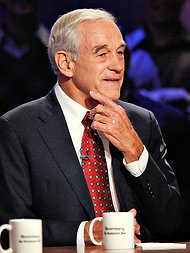
X marks the spot where the falsie got away from the brow.
For those of you not yet riveted by the Republican race, Mr. Paul, the dark-horse libertarian with equally dusky brows, was a victim of hot lights, faulty adhesive or merely a devilish optical illusion when his right eyebrow seemed to dip toward the stage at Dartmouth College.
Seen on television, Mr. Paul appeared to have a second, thinner brow under the one headed south, creating a delicate X over his right eye.
Since we’re already on the subject of dinosaurs and other ancient animals that should go extinct, here’s something on the T. Rex.
Tyrannosaurus rex grew faster and weighed more than previously thought, suggesting the fearsome predator would have been a ravenous teen-ager, researchers said Wednesday.
Using three-dimensional laser scans and computer modeling, British and U.S. scientists “weighed” five T. rex specimens, including the Chicago Field Museum’s “Sue,” the largest and most complete T. rex skeleton known.
They concluded that Sue, who roamed the Great Plains of North America 67 million years ago, would have tipped the scales at more than 9 tons, or some 30 percent more than expected.
Intriguingly, the smallest and youngest specimen weighed less than thought, shedding new light on the animals’ biology and indicating that T. rex grew more than twice as fast between 10 and 15 years of age as suggested in a study five years ago.
“At their fastest, in their teenage years, they were putting on 11 pounds or 5 kilograms a day,” John Hutchinson of the Royal Veterinary College in London told Reuters.
Here’s an interesting take on Occupy Wall Street from former NY AG and Governor Elliot Spitzer.
Occupy Wall Street has already won, perhaps not the victory most of its participants want, but a momentous victory nonetheless. It has already altered our political debate, changed the agenda, shifted the discussion in newspapers, on cable TV, and even around the water cooler. And that is wonderful.
Suddenly, the issues of equity, fairness, justice, income distribution, and accountability for the economic cataclysm–issues all but ignored for a generation—are front and center. We have moved beyond the one-dimensional conversation about how much and where to cut the deficit. Questions more central to the social fabric of our nation have returned to the heart of the political debate. By forcing this new discussion, OWS has made most of the other participants in our politics—who either didn’t want to have this conversation or weren’t able to make it happen—look pretty small.
Surely, you might say, other factors have contributed: A convergence of horrifying economic data has crystallized the public’s underlying anxiety. Data show that median family income declined by 6.7 percent over the past two years, the unemployment rate is stuck at 9.1 percent in the October report (16.5 percent if you look at the more meaningful U6 number), and 46.2 million Americans are living in poverty—the most in more than 50 years. Certainly, those data help make Occupy Wall Street’s case.
But until these protests, no political figure or movement had made Americans pay attention to these facts in a meaningful way. Indeed, over the long hot summer, as poverty rose and unemployment stagnated, the entire discussion was about cutting our deficit.
This is certainly an interesting perspective at the Uk Guardian on Obama’s fall from grace! Just read the headline and grabber subtitle: ” How Barack Obama went from cool to cold. Barack Obama’s measured approach won him the White House. So why do supporters think he lacks the ‘fierce urgency of now’? “
There are two particular areas where most commentators and the public feel that Obama has fallen short. The first is the economy. Poverty and repossessions are at a record high, the Dow keeps tanking, the deficit keeps growing and unemployment remains stuck at around 9%. Yet the man who recalled Martin Luther King’s evocation of “the fierce urgency of now” on the campaign trail has struck few as being either fierce or urgent as the nation teeters on the brink of another recession.
“You get the sense that this president, while intellectually engaged, is not emotionally engaged with what the American people are going through,” says Michael Fletcher, the Washington Post’s economics correspondent. “People want to feel there’s someone out there fighting their corner even if that person doesn’t win.”
Charlie Cook, one of Washington’s premier political analysts, believes there’s only so much Obama can do at this stage. “I think the problems are more objective,” he says. “Yes, he tends to lecture and tends to be professorial. I think that’s a problem, but I don’t think it’s the problem. I think eloquence only gets you so far. I think the emphasis was on going on television and trying to explain his agenda, to the point now where I think if the American people haven’t hit the mute button their finger is very close to that button where they just don’t listen any more. If things get better, we’ll re-evaluate, but right now – we’re not listening.”
Drew Westen, academic and author of The Political Brain, thinks they would listen if Obama changed the pitch. “What Americans really needed to hear from Barack Obama was not only I feel your pain, but also I feel your anger. And he’s a person who just doesn’t do anger. And if you can’t be angry when Wall Street speculators just gambled away the livelihoods of eight million of your fellow citizens then there’s something wrong with you.”
Here’s some spicy Cajun chit chat from James Carville who thinks that the Republican field for 2012 is pathetic! This downtown NOLA girl couldn’t agree more with that uptown NOLA boy! It’s actually a fun comparison of republican presidential wannabes past and present. I’ll just go for the lowest blow here.
Moving on to Michele Bachmann vs. Howard Baker (I’m sorry I couldn’t help myself.) Baker served in the U.S. Navy, was elected to the U.S. Senate, was asked to serve on the Supreme Court by Nixon, and served two terms as Senate minority leader. He later received the Presidential Medal of Freedom and inspired the formation of the Howard H. Baker, Jr. Center for Public Policy at the University of Tennessee. Could you see Michele Bachmann being nominated for a Presidential Medal in the near future?! Of course, some people might say, to be fair to Bachmann, Baker has never claimed to cure anyone of homosexuality.
Go read them all. It’s a hoot!
So, I’ve got two articles to send off for publication by Sunday and I need to prepare for my paper presentation in Denver a week from today. I think this should get us started on some interesting morning reads! What’s on your reading and blogging list today?

 peej
peej Carissa
 bostonboomer
 dakinikat
 ecocatwoman
 mablue2
 Mama Lopez
 peggysue22
 quixote
 skydancingguestblogger
 Mona (aka Wonk the Vote)



 Sky Dancing
Recent Comments