
Light Bulbs Saved But American Light Diminished
Posted: December 18, 2011 Filed under: abortion rights, Bailout Blues, Banksters, corruption, Economy, fetus fetishists, fundamentalist Christians, globalization, poverty, U.S. Economy, unemployment, Women's Rights | Tags: Financial Crisis, U.S. Economy, unemployment, Women's Rights 9 Comments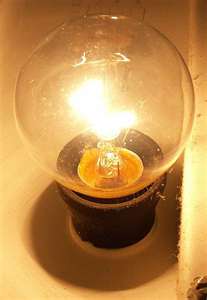
We can no longer call Congress a do-nothing farce. In case you haven’t heard our esteemed legislators have ‘saved’ the incandescent light bulb from its 2012 banishment. Which means incandescent hoarders can display their beloved bulbs in public, display them with pride and patriotism—let freedom shine–without the fear of neighborly condemnation or the riot police knocking down the door.
Let there be light!
If only.
Other things we might have considered saving in 2011:
The Middle Class; Death by Strangulation
This week we were gifted with the sobering statistic that 50% of the American public is now considered ‘low income.’ Of course, the naysayers are quick to point out that this is a gross exaggeration, that terms like ‘low-income’ and ‘poverty’ are relative terms. Go to Africa, they say. Perhaps, Haiti would do. Or North Korea. Then you’ll know the ‘real’ meaning of misery.
Sorry but this strained logic belies the fact that unlike the above examples the United States of America is a developed world power. We beat our chests and claim ‘exceptionalism’ on the world stage yet are willing to use third world comparisons to shrug off bad news? Lame comparisons are simply an exercise in don’t believe your lying eyes and for God’s sake never distrust the status quo. What are you? Some sort of Commie!
A small factoid from the St. Louis Federal Reserve, Economic Research group: the average length of unemployment in the United States is now over 40 weeks. And another from the New America Foundation:
The share of middle-income jobs in the United States has fallen from 52% in 1980 to 42% in 2010.
Middle income jobs have been replaced by low-income jobs, which now make up 41% of the work force.
The American Economy; Bleeding Out While Doctors Look On
While average citizens lost wealth and continue to struggle with unemployment and underemployment, face prospects of social programs stripped down to nothing, we’ve been gifted once again with startling news. The Federal Reserve over a three-year period bailed out large banks and corporations, domestic and foreign, to the tune of 29 trillion dollars.
Twenty-nine trillion! To put this in some perspective one trillion dollars could be imagined thusly:
If you were to count to one thousand, one number every second, it would take seventeen minutes. Counting to one million at the same rate would take twelve days (counting nonstop, btw, day and night). Counting to one billion would take thirty-two years.
Now, drum roll please: Counting to one trillion? Would take 32,000 years.
Then multiply by 29.
Meanwhile, with the money spigots wide open spewing a gusher of magic money, small business loans [the sort that Main Street depends on to fuel growth and employment, loans of 1 million or less] dropped to a 12-year low. Why is this a problem? Because despite the GOP’s drone that the top 1% of the population are the ‘job creators,’ businesses with fewer than 500 employees created 65 percent of the jobs between 1993 and 2009, according to the Small Business Administration.
Another withering fact: between 2001 to 2009, 42,000+ factories and manufacturing-related businesses closed for good. And, of course, the jobs associated with those companies went bye-bye, moved off-shore to exploit lower wages and the nefarious environmental regulations that vulture capitalists love to hate.
In addition, our trade deficits with China [84 billion in 2001 to 278 billion in 2010] and other countries [oil imports represent over 60% of our current deficit] have bled and continue to bleed jobs and wealth from the US. Trade deficits represent a countries’ imbalance in terms of importing to exporting and the rate at which a nation’s wealth is transferred into foreign markets. As a country, we’re being bled to death, according to the AAM.
The impact of the trade deficit with China extends beyond U.S. jobs lost or displaced, according to the Alliance for American Manufacturing (AAM). Competition with China and countries like it has resulted in lower wages and less bargaining power for U.S. workers in manufacturing and for all workers with less than a four-year college degree.
And yet the trade deficits go on unabated. A recent example was the passage of the trade deals with Panama, Columbia and S. Korea, heralded as a great deal for the United States. But according to Dylan Ratigan, MSNBC:
The key question we have to face as a country is how we want to govern ourselves. From World War II until NAFTA, our trading policies were based on geopolitical needs and what would increase prosperity for America. Since NAFTA, however, the mantra of free trade has been warped to generate rights for international capital and nothing else. The agreements Congress and the President are pushing continue this unfortunate trend. What unfettered capital wants is to avoid taxes, regulations, or any state power whatsoever.
In regards to oil imports, the drumbeat for several years has been: Drill, Baby, Drill. It’s all about jobs and keeping America strong, our oil-financed legislators are likely to say. The problem is regulation, they’ll add, and big government working against the blessings of the free market. Really? Not so, says Dylan Ratigan.
We do not have a free market for energy, because the actual cost of fossil fuel in our economy is not reflected at the pump; the military’s not in there, the environment’s not in there, and there’s a wide variety of differing fuel subsidies and tax treatments for all sorts of different fuel sources depending on their relation with our government. So, how can a marketplace decide the fuel source, when one fuel, particularly being gasoline and fossil fuels, have such a substantial comparative subsidy?”
The answer is: the marketplace cannot decide the cost of fossil fuel or entertain the cost-effectiveness of alternative sources because the game is rigged as it has been for a century+ where fossil fuels rule the day, pay off politicians and are willing to drive us into economic and environmental ruin for the sake of profit and power.
Vulture Capitalism writ large.
The American Homeowner; Death by Drowning
In the second quarter of 2011, 10.9 million Americans or 22.5% of homeowners were ‘underwater’ with their mortgages, namely they owed more on their mortgages than their houses were actually worth, a result of the real estate collapse of 2007-2008. Although the Home Affordable Refinance Program [HARP] has fallen short to relieve homeowners from onerous, often ballooning mortgage payments and subsequent home foreclosure, the Obama Administration has attempted to remove the key barriers in the refinancing procedures. This is expected to expand mortgage refi at today’s lower interest rate to larger numbers of struggling homeowners, particularly those with little to no equity in their homes.
Will it work?
The jury is still out, but at best this expanded program will only be available to Fannie Mae and Freddie Mac-backed loans.
In addition to providing relief, many citizens expected a thorough and public investigation into exactly what went wrong in the mortgage industry. We expected our own Pecora moment.
But that didn’t happen.
In fact the Administration has attempted to rush through settlements with major banks, requiring no admission of wrong doing and attaching immunity from civil or criminal liability to sweeten the deal. Countering this, several state Attorney Generals [five to date] have refused to accept the 50-state agreement and have proceeded with independent investigations of their own. And just this past week, House Representative Tammy Baldwin [D-WI] introduced a resolution to block any agreement on the national foreclosure question, without proper and thorough investigation. Immunity from civil and/or criminal liability would be stripped and fraudulent practices prosecuted fully under the Rule of Law.
But still, for the 22.5% of American homeowners, the water level is already chin-high and rising fast.
Civil Liberties; Gutting of the Bill of Rights
Perhaps no other images brought home the dwindling nature of American civil liberties than the recent round up of Occupy Wall Street protesters. We’ve watched young women pepper-sprayed, protesters manhandled and in one instance a young Iraqi veteran nearly killed by police who appeared ready for WWIII rather than crowd dispersal. On several occasions over-zealous police action was caught on film not by the press but by protesters and onlookers.
In addition, we now know that drones developed for war applications have been deployed in country and that drone use is being marketed to police departments throughout the country. Security is big business.
 Obviously, the First Amendment’s guarantee to peaceable assembly is not. And privacy? Forget about it!
Add this to the Administration’s successful kill order on extremist cleric Anwar al-Awlaki, an American citizen operating in Yemen, a kill order without benefit of due process. Otherwise known as execution without trial. We can argue about the threat of the man but there is no argument about the danger of precedent and the shredding of the Rule of Law. And so, should we be surprised by the most recent outrage, the passage of an indefinite detention authority tucked inside the 2012 National Defense Authorization Act? The bill codifies the right of the President to order the arrest and indefinite detention of US citizens suspected of terrorism. No trial, no appeal. You can now be ‘disappeared,’ lawfully.
One fight that did end well [at least temporarily] was the controversial and previously reported Stop Online Piracy Act [SOPA]. The discussions between legislators were abruptly adjourned after stiff condemnation by online biggies Google, Wikipedia and even computer scientist Vint Cerf , one of the founders of the Internet, who claimed that the bill’s passage would begin “a worldwide arms race of unprecedented censorship of the Web.”
Rights of Women; Assaults Continue
In the contradictory world of Far Right extremists, where individual liberty is celebrated and government intrusion condemned, the individual 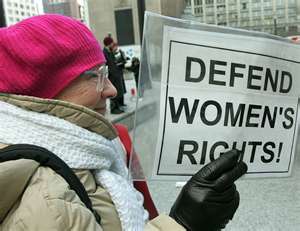 rights of women and their reproductive decisions are the lone exception. Family planning, contraception, abortion, even ordinary ob/gyn screenings are suspect and thereby targets of defunding and all manner of attack. Bills have littered the landscape calling for the elimination of all abortive measures, even when a woman’s life and/or future fertility is in jeopardy. The heartbeat of the unborn is made sacred, while the lives of the fully realized female is continually denigrated, dismissed and derided. Personhood resolutions have been raised in referendums [and thankfully voted down], where the fertilized egg would be designated as a person with full legal rights under the law.
Fertilized eggs and corporations. Perfect together.
The insanity of these rigid, ridiculous demands from zealots are all too real and dangerous when applied to the actual world. Miscarriage, for instance, a completely normal biological occurrence, would take on the aura of a criminal act, requiring an investigation. By the egg or zygote police, I imagine. Or a woman who suffers an ectopic pregnancy could be left to bleed until doctors were convinced of the unborn ‘person’s’ lack of viability. The woman’s health is secondary in this scenario.
The personhood resolutions would also deny women certain contraceptive measures. For instance, the day after pill would be in violation. And, in fact, Health and Human Services’ recently overruled the FDA’s recommendation on Plan B for young women under the age of 18 and refused to lift the emergency contraception’s restriction.
The assault on women’s rights have been unrelenting, not only in terms of reproductive decisions but in basic health services. Planned Parenthood and their related clinics and facilities provide services to many poor to middle income women, offering important medical screenings, tests for cancer, diabetes, high-blood pressure, etc. Only 3% of what Planned Parenthood does is related to abortion services. And yet, the 90-year organization has become the Boogie Man for right-wing fundamentalists, who would deny many women the only health provider they have.
Sorry, the barefoot and pregnant dictum has no place in the 21st Century.
Our Children; Gross Neglect of Our Most Important Resource
A higher percentage of children today are living in poverty than was the case in 1975. The rate of poverty has increased every year for the last four years, from 16.9 percent to nearly 22 percent as of 2010. In the UK and France that number is under 10%. The 2011 Child Well Being Index indicates that it is American children, the country’s future, who will bear the greatest damage by widening income disparities and proposed cuts to education, food stamps and health insurance programs.
Some sobering factoids:
Child homelessness has risen 33% in the last 3 years to 1.6 million
There are over eight million children in the United States today that are not covered by health insurance.
Today, one out of every seven Americans is on food stamps and one out of every four American children is on food stamps.
Nearly 20 million children participate in school lunch programs.
This is not what Democracy looks like.
The Poor, the Immigrant and/or Muslims; The Inadequacies of Scapegoating
Scapegoating has a long history, even Biblical references, where a goat is used as a vessel of purification. The sins of the community are spiritually transferred to the animal after which Mr. Goat is banished to the wilderness.
Out of sight, out of mind.
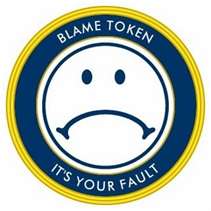 In times of social unrest and/or economic distress, the act of scapegoating is often employed as a distraction, a way of diverting the public’s attention from the real problems and their causes . . . to something or someone else. Scapegoating has been popular of late.
It’s the fault of the poor, the hangers on, the moochers. Michelle Bachmann quoted Paul the Apostle:
“He who does not work, neither shall he eat.”
That would imply the poor are merely shirkers, those expecting a free lunch. Tell that to the one in four children surviving on food stamps. If Newt Gingrich and his ilk are to be taken seriously, the problem can be solved by revoking Child Labor Laws or having school children take on the school’s janitorial services.
Better yet, cut all safety nets.
Immigrants, too, have been cast as the country’s main economic problem. Too many Latinos taking away American jobs. We’ve all heard it. Only the number of illegal immigrants entering the country has been shrinking dramatically since the Great Slump, the biggest population decline in the last 20 years.
Unemployment, however, is still with us.
With the immigrant bashing, deportation and subsequent population shrinkage, Georgia and several other states had a difficult time harvesting their crop this year without their standard work force in place.
Be careful what you wish for.
Since 9/11, Muslims have been targeted as the root of all our problems, basically an evil agent working to undermine the country . Anti-Muslim sentiment has risen with irrational fears over Sharia Law dominating, perhaps even replacing the American Constitution. Last week, hardware giant Lowe’s pulled ads from a reality show, ‘All American Muslim,’ in response to a conservative Christian group, that contended:
Clearly this program is attempting to manipulate Americans into ignoring the threat of jihad and to influence them to believe that being concerned about the jihad threat would somehow victimize these nice people in this show . . .
It’s disturbing to read something that ugly. And it created a huge PR stink for Lowe’s, rightfully so.
Also important to note is that Muslim Americans represent approximately 6 million citizens, a quarter of whom are African American converts. In a country of 311 million? That’s a tiny, tiny percentage.
And on 9/11? People of all faiths died, including Muslims.
Pointing fingers in all the wrong directions will not cure the country’s financial crisis, anymore than wishing for quick, easy solutions. Saving what’s best about our country–our religious tolerance—is far more important.
There were many things worth saving in 2011. But hey, at least we rescued the American incandescent light bulb.
I feel so much better. How about you?
What he said …
Posted: December 11, 2011 Filed under: #Occupy and We are the 99 percent!, Bailout Blues, Banksters, Economy, financial institutions, Global Financial Crisis 6 CommentsI keep talking about the utter audacity of the political class these days and how they completely ignore everything we know about economics and finance in pursuit of  self-dealing and getting political donations from the FIRE industries. I particularly hate that we’ve got this complete twisted notion of “free” trade and “free” markets thanks to a bunch of really ignorant right wingers and mouthpieces like Rush Limbaugh, Fox News, Larry Kudlow, etc. etc. etc.. These folks are out to line their own pockets and they are pitching nonsense to low information zombies.
I also really hate to just wholesale copy and paste another blog–in this case Washington Blog at The Big Picture–but some times you just have to let the voice of the source speak for itself and hope it stands up to the ideals of fair use. Thanks go to Fiscal Liberal for pointing me to this list and its readable wonky links of proof. It’s called ‘The Financial Crisis was Entirely Foreseeable’ but it might as well be labelled ‘Idiots in the Beltway are spewing memes and setting us up for a big ol’ repeat of the global financial meltdown’. Idiots in Europe are doing likewise. Why are they all bailing ut gambling bankers over their households and real businesses? Where’s a politician that really knows his stuff when it comes to authentic finance and economics?
We’ve Known for Thousands of Years
We’ve known for literally thousands of years that debts need to be periodically written down, or the entire economy will collapse. And see this.
We’ve known for 1,900 years that that rampant inequality destroys societies.
We’ve known for thousands of years that debasing currencies leads to economic collapse.
We’ve known for hundreds of years that the failure to punish financial fraud destroys economies.
We’ve known for hundreds of years that monopolies and the political influence which accompanies too much power in too few hands is dangerous for free markets.
We’ve known for hundreds of years that trust is vital for a healthy economy.
We’ve known since the 1930s Great Depression that separating depository banking from speculative investment banking is key to economic stability. See this, this, this and this.
We’ve known since 1988 that quantitative easing doesn’t work to rescue an ailing economy.
We’ve known since 1993 that derivatives such as credit default swaps – if not reined in – could take down the economy. And see this.
We’ve known since 1998 that crony capitalism destroys even the strongest economies, and that economies that are capitalist in name only need major reforms to create accountability and competitive markets.
We’ve known since 2007 or earlier that lax oversight of hedge funds could blow up the economy.
And we knew before the 2008 financial crash and subsequent bailouts that:
- The easy credit policy of the Fed and other central banks, the failure to regulate the shadow banking system, and “the use of gimmicks and palliatives” by central banks hurt the economy
- Anything other than (1) letting asset prices fall to their true market value, (2) increasing savings rates, and (3) forcing companies to write off bad debts “will only make things worse”
- Bailouts of big banks harm the economy
- The Fed and other central banks were simply transferring risk from private banks to governments, which could lead to a sovereign debt crisis
Given the insane levels of debt, rampant inequality, currency debasement, failure to punish financial fraud, growth of the too big to fails, repeal of Glass-Steagall, refusal to rein in derivatives, crony capitalism and other shenanigans … the financial crisis was entirely foreseeable.
Okay, so let’s just end that last part by taking out “the financial crisis was entirely foreseeable” and by replacing it with “the next big financial crisis is entirely foreseeable and getting more likely every day”. If you need any proof of further inevitability just listen to ANY Republican these days and most of the Democratic Caucus. They are resplendent with VooDoo Economics and Finance believers and enablers. It’s just like with climate science and evolution. An entire group of people who embrace ideology over reality just can’t seem to get out of the flat earth theories. Watching the Republican debates alone has been like watching the march of ignorance personified. I’m waiting for them to start announcing the earth is only a few thousand years old, gravity doesn’t exist or need to because god’s hand holds us in place, and 1 + 1 is really 3. If only the media would act like the set of fact checkers they could be instead of mouthpieces for corporate interests we might actually be able to get through to a few zombies and bring them back to life. Until then, get ready for the next big one.
What’s so hard to understand about the word Contractionary?
Posted: December 10, 2011 Filed under: Bailout Blues, Banksters, Economy, financial institutions | Tags: Eurozone, macroeocnomics, Paul Krugman 17 Comments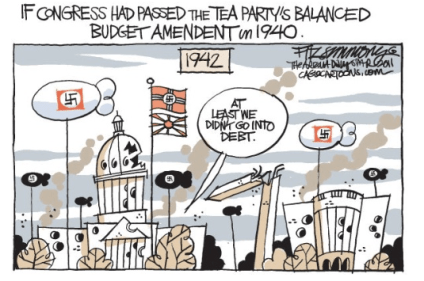 I just read an excellent article at VOXEU called “A summit to the Death” by Kevin O’Rourke. It’s full of common sense economic analysis about the state of the EU that reminds me of how rare common sense can be. While the analysis looks at he EU, it could well apply to the US as well. There seems to be some disease in political bodies these days that cannot grasp the concept of contractionary policy as contractionary.
There’s also this scramble to save financial institutions at all costs while doing nothing to prevent recurrence of bad practices and solving the fall out anywhere outside a bank balance sheet. To a certain extent, the EU crisis comes from the inability of many countries to think of policy in terms of something other than currency devaluation as a way of making their workers and goods appear cheap to the rest of the world. In this scenario, a country can goose some of its business activities at the expense of some of its businesses and its citizens and not get caught by any one but those of us that watch those sort of things. That long run game of devaluing US workers has caught up with us here.
One lesson that the world has learned since the financial crisis of 2008 is that a contractionary fiscal policy means what it says: contraction. Since 2010, a Europe-wide experiment has conclusively falsified the idea that fiscal contractions are expansionary. August 2011 saw the largest monthly decrease in eurozone industrial production since September 2009, German exports fell sharply in October, and now-casting.com is predicting declines in eurozone GDP for late 2011 and early 2012.
A second, related lesson is that it is difficult to cut nominal wages, and that they are certainly not flexible enough to eliminate unemployment. That is true even in a country as flexible, small, and open as Ireland, where unemployment increased last month to 14.5%, emigration notwithstanding, and where tax revenues in November ran 1.6% below target as a result. If the nineteenth-century “internal devaluation” strategy to promote growth by cutting domestic wages and prices is proving so difficult in Ireland, how does the EU expect it to work across the entire eurozone periphery?
The world nowadays looks very much like the theoretical world that economists have traditionally used to examine the costs and benefits of monetary unions. The eurozone members’ loss of ability to devalue their exchange rates is a major cost. Governments’ efforts to promote wage cuts, or to engineer them by driving their countries into recession, cannot substitute for exchange-rate devaluation. Placing the entire burden of adjustment on deficit countries is a recipe for disaster.
In order to protect financial markets, countries like the UK and the US have been willing to prop up poorly performing financial institutions at an extremely high cost while further driving the nominal wages of their workers to lower and lower levels through currency debasement. Then, after slashing spending, they wonder why they’re economies don’t expand. It seems like some of the very easiest lessons of Macro 101 weren’t absorbed by a number of world leaders today. That vehicle of robbing Peter to prop up Paul and a few exporters isn’t available to countries in a currency union unless the Central Bank wants to do it for all.
O’Rourke’s analysis led Paul Krugman to rightly make this observation.
Maybe it was always thus, but the relentless wrong-headedness of the Europeans, their insistence on seeing their crisis as something it isn’t, and responding with actions that deepen the real crisis, has been a wonder to behold. In the 1930s policy makers had the excuse of ignorance; there was nobody to explain what was happening. Now, their actions amount to a willful disregard of Econ 101.
Let me provide an interesting bit of perspective. In 2007, Spain ran a budget surplus. That actually was its third budget surplus in row. At the time, its growth had been forecast to decline but ot was slammed by the global financial crisis. Spain is now on the list of problem countries–the S of the PIIGS–because it was trying to deal with 30 years of budget deficits to get in line with the EU Criteria. Balanced budgets are the proscribed way to handle an economy that is operating where it should be operating. Spain’s is having problems because financial institutions all over the world gambled and lost. Their economic activity declined, their tax receipts went down, and their obligations to the unemployed went up. So, as would be expected, their deficits widened. Now, the banks that caused the huge global crisis are getting full court sympathy and Spain is being blamed for threatening the status of the union.
The Revolution Will Not Be Televised
Posted: November 7, 2011 Filed under: #Occupy and We are the 99 percent!, Bailout Blues, Banksters, Economy, financial institutions, income inequality, The Great Recession, U.S. Economy, unemployment, worker rights | Tags: 2011: days of revolt, jobs, U.S. Economy 5 CommentsNor apparently will it be discussed or reported in anything but negative terms. Take a quick spin over to Memeorandum’s page. The Portland Occupy group is fighting off cooties [head and body lice]. According to the New York Post, Zuccotti Park has devolved into anarchy, a mad den of rapists, vigilantes and wild men demanding free food at McDonalds. Occupy protesters, anti-capitalists all, are beating up elderly women, according to another reasoned report. The Sun Journal leads with the headline: The Lawless Heart of Occupy Wall St. , and then questions the legitimacy of a group that “would interrupt the flow of commerce” in a time of recession [referencing the Oakland port takeover last Wednesday]. And then, there’s the repeating, oh so familiar meme: the protesters are a bunch of Leftist radicals, dedicated to the overthrow of democracy.
Did I mention that they’re all hippies?
What we’re not seeing on the television is this:
War Veterans. These are our men and women who are deified in the press, while shedding blood [frequently their own] in wars of no end and seemingly no point. What are their prospects once home? Not good. Not good at all. According to US News:
And a Department of Labor report shows that unemployment tops 20 percent among 18-to-24-year-old veterans, compared to a national rate of about 9 percent.
Veteran unemployment is projected to worsen after 10,000 servicemen and servicewomen return from Afghanistan and 46,000 come home from Iraq by year’s end — many wounded or suffering from mental trauma.
Nor do we see much of this:
Hummm. Not enough dirty hippies in the group, I guess. This was the “Surround the White House Action,’ to protest the Keystone Tar Sands Pipeline yesterday. Crowd estimate? Around 10,000.
We’ve certainly had full coverage on the violence last Wednesday, in the waning hours of the General Strike in Oakland. The bonfires, the group in black hoodies breaking windows, spray-painting walls, the suggestion that civilization was about to end. But I haven’t seen much coverage of this recent incident [although I see Dak picked this up in the Morning Reads]:
While filming, the cameraman was shot with a rubber bullet. It appears that taking photographs of the Oakland PD is a criminal and/or a violent act, requiring defensive action.
But here’s the thing. Images like this:
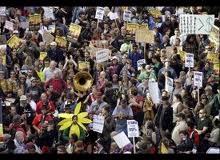
Aren’t terribly different from this:

The first is from Occupy Oakland. The second is from the Civil Rights Movement of the 1960s. And if you flip through images of the 1930 Labor protests, the similarities are there as well—people coming together, voicing grievances, demanding resolution. Movements demanding social and economic justice have never been neat and tidy. Nor short. Not in the 60s, not in the 30s. And not now.
So, the song is prophetic. The Revolution will not be televised. No re-runs, brother. It will be live–growing, evolving. For better or worse, morphing into what it will become.
Or not.
Why Occupy Wall St. Should Bother
Posted: November 6, 2011 Filed under: #Occupy and We are the 99 percent!, Austerity, Baby Boomers, Bailout Blues, Banksters, commercial banking, Corporate Crime, Human Rights, income inequality, investment banking, poverty | Tags: 2011: days of revolt, Financial Crisis, U.S. Economy 4 CommentsHere’s a message that should go viral for all the doubters and naysayers and critics of the Occupy Wall St. Movement. Why should we bother as one poster at Sky Dancing asked this morning? Why should Occupy beam in on the Koch brothers or Lloyd Blankfein or any of the infamous 1% that have brought the United States and the world to its knees?
Watch and listen. And then ask: how can we or Occupy or any rational, reasonable human being not be bothered?

 peej
peej Carissa
 bostonboomer
 dakinikat
 ecocatwoman
 mablue2
 Mama Lopez
 peggysue22
 quixote
 skydancingguestblogger
 Mona (aka Wonk the Vote)



 Sky Dancing
Recent Comments