It’s difficult to keep up. I try to set aside interesting items and with in a few minute or hours they are dated! It’s also challenging to keep up with the number of things being passed, signed, and appointed that are hostile to modernity,women, immigrants, civil rights, and science and knowledge in general. Today’s list includes removing Consent Degrees that reform urban police departments, taking funds from all planned parenthood activities, and letting churches become SuperPacs. Oh, and White Nationalists have the sads about Steve Bannon.
Some of the interesting illustrations today come from a Rev. Branford Clarke’s illustration in the 1926 book Klansmen: Guardians of Liberty andanother propaganda book called Heroes of the Fiery Cross. I thought it fitting we remind people of what kind of evil can lurk behind religious extremists. The first set of illustrations is aimed directly at Catholicism which shows that there’s an internecine battle between Christian brands .
I’ve also included a Dr. Seuss cartoon from a similar period sending up the idea of the “America First” movement from the WW2 period. I think you can see today’s Deplorables are definitely throwbacks from the darkest parts of our country’s history. Notice the anti-immigrant movement at that time concentrated on sorting out right and wrong type Europeans around WW2. It was the Chinese prior to that. Some of these illustrations are propaganda. Others are political cartoons of the period fighting the same sentiments we see today.
The new acting head of the U.S. Department of Education’s Office for Civil Rights once complained that she experienced discrimination because she is white.
As an undergraduate studying calculus at Stanford University in the mid-1990s, Candice Jackson “gravitated” toward a section of the class that provided students with extra help on challenging problems, she wrote in a student publication. Then she learned that the section was reserved for minority students.
“I am especially disappointed that the University encourages these and other discriminatory programs,” she wrote in the Stanford Review. “We need to allow each person to define his or her own achievements instead of assuming competence or incompetence based on race.”
Although her limited background in civil rights law makes it difficult to infer her positions on specific issues, Jackson’s writings during and after college suggest she’s likely to steer one of the Education Department’s most important — and controversial — branches in a different direction than her predecessors. A longtime anti-Clinton activistand an outspoken conservative-turned-libertarian, she has denounced feminism and race-based preferences. She’s also written favorably about, and helped edit a book by, an economist who decried both compulsory education and the landmark Civil Rights Act of 1964.
Jackson’s inexperience, along with speculation that Secretary of Education Betsy DeVos will roll back civil rights enforcement, lead some observers to wonder whether Jackson, like several other Trump administration appointees, lacks sympathy for the traditional mission of the office she’s been chosen to lead.
Her appointment “doesn’t leave me with a feeling of confidence with where the administration might be going,” said Theodore Shaw, director of the Center for Civil Rights at the University of North Carolina School of Law, who led Barack Obama’s transition team for civil rights at the Department of Justice.
The attack on Women and their Healthcare continues with abandon.
Trump quietly signed legislation yesterday that allows states to blatantly discriminate against women’s health providers. https://t.co/SIOTNjPLxy
There was a stealth signing of an anti-Planned Parenthood law. The Hyde Amendment has longed banned Federal Funds from supporting any abortion services but many in the religious nut crowd believe birth control is abortion and follow the lies of extremists who insist taxpayer money supports the procedure.
President Donald Trump privately signed a bill on Thursday that allows states to withhold federal money from organizations that provide abortion services, including Planned Parenthood, a group frequently targeted by Republicans.
The bill, which the usually camera-friendly President signed without any media present, reverses an Obama-era regulation that prohibited states from withholding money from facilities that perform abortions, arguing that many of these facilities also provide other family planning and medical services.
The bulk of federal money Planned Parenthood receives, though, goes toward preventive health care, birth control, pregnancy tests and other women’s health services. Federal law prohibits taxpayer dollars from funding abortions and Planned Parenthood says 3% of the services it provides are abortions
The signing comes weeks after Vice President Mike Pence, a social conservative who regularly touts his anti-abortion stances, cast the tie-breaking vote in the Senate after two Republicans opposed the measure.
“(Women’s) worst fears are now coming true. We are facing the worst political attack on women’s health in a generation as lawmakers have spent the past three months trading away women’s health and rights at every turn,” Dawn Laguens, executive vice president of Planned Parenthood, said in a statement.
As Republicans struggle to craft a sweeping tax package — a process already rife with political land mines — they are preparing to add another volatile element to the mix: a provision that would end a six-decade-old ban on churches and other tax-exempt organizations supporting political candidates.
The repeal of the “Johnson amendment” is being written into tax legislation developed in the House of Representatives, according to aides. President Trump has vowed to “totally destroy” the provision at the behest of evangelical Christians who helped elect him.
The inclusion of the repeal in broader tax legislation could bolster its chances. A stand-alone bill would almost certainly face a filibuster in the Senate, where opponents fear the measure would effectively turn churches into super PACS.
Politico has spoken with several nationalist Trump supporters who are already feeling disillusioned with what they’ve seen from the president, especially in the wake of former Breitbart editor Steve Bannon’s demotion from the National Security Council.
“It was like, here’s the chance to do something different — and that’s why people’s hopes are dashed,” Lee Stranahan, a former Breitbart News editor, tells Politico. “There was always the question of, ‘Did he really believe this stuff?’ Apparently the answer is, ‘Not as much as you’d like.’”
Meanwhile, Bannon could launder more salacious hits through the tabloids. “You go National Enquirer on them,” said blogger Mike Cernovich, a self-described student of Bannon’s work who said he has discussed the eventuality of Bannon’s firing with people close to him.
“There’s sex scandals people are sitting on,” Cernovich said. “All the gossip and drama and stuff that might be a little more personal is going to get leaked.”
Trump mega-donor Rebekah Mercer, Bannon’s chief patron, spent much of Friday at the offices of Cambridge Analytica — a data firm in which her family is invested and on whose board Bannon sat before joining the White House — exploring potential gigs for Bannon should he be fired, according to The New York Times.
Cernovich speculated that Bannon could, with the help of Cambridge Analytica’s data, move from the personal to the political by identifying his enemies’ most vulnerable allies in Congress and encouraging challengers to run for their seats. “There will be big primary campaigns against them,” Cernovich said. “It will be Eric Cantor-style warfare.”
Several people familiar with Bannon’s modus operandi said he would be unlikely to take on Trump directly, preferring instead to shift blame toward others while leaving the door open to a rapprochement with the president — at least at first.
“In Steve’s dream scenario, he would depart, things would fall apart even more so, and Trump would beg him to come back to fix it,” Bardella said.
Otherwise, Trump could eventually find himself directly in Bannon’s cross hairs, some said.
“We would see House and Senate races in 2018 to, you know, go after Trump’s agenda,” said internet troll Charles Johnson, an ally of Bannon who worked for him at Breitbart. “Everything would slow down. His presidency would essentially be over. Bannon is more than just a man. He is honestly something of an idea because he represents something that both the establishment and the left-wing media hate.”
If Bannon leaves the White House, his departure might be viewed as the end of Trump as a defender of blue-collar Americans. In fact, though, we are dealing more in perceptions than in reality. Behind the mask, Trump never really showed serious interest in transforming the basic Republican agenda to help struggling Americans.
On Wednesday, Trump reversed himself on his tough rhetoric about China when he said that he no longer planned to get rid of the Export-Import Bank. The GOP plan to replace Obamacare, which has failed to gain enough votes to pass the House, would take away benefits from some of Trump’s lower income supporters. And his proposed budget also would have drawbacks for parts of Trump’s base.
In many of the rural areas that voted for Trump, residents would experience cuts to senior centers, after-school programs, farm services and infrastructure spending for towns and more.
Trump’s plans to weaken government regulation — although a boon to financial services and fossil fuel executives — also may not help his base. The benefits might “trickle down,” but right now the verdict is out.
Trump promised to break with traditional approaches to politics so that he could uplift the “forgotten” Americans suffering from the elimination of manufacturing jobs and rising inequality.
Trump promised to break with traditional approaches to politics so that he could uplift the “forgotten” Americans suffering from the elimination of manufacturing jobs and rising inequality. But, in fact, he’s behaving like a classic Republican politician.
Attorney General Jeff Sessions said Thursday that consent decrees between the federal government and local police departments on reforming police activities can lower police morale.
Sessions’ comments come after he ordered the Justice Department earlier this month to review all existing consent decrees. The decrees are formal agreements between the federal government and local police departments overseen by a federal court.
Sessions made comments on “The Howie Carr Show,” a New England-based conservative radio program.
“I do share your concern that these investigations and consent decrees have the, can turn bad. They can reduce morale of the police officers,” Sessions said. “They can push back against being out on the street in a proactive way. You know New York has proven community-based policing, this CompStat plan, the broken windows, where you’re actually arresting even people for smaller crimes — those small crimes turn into violence and death and shootings if police aren’t out there.”
“So every place these decrees, and as you’ve mentioned some of these investigations have gone forward, we’ve seen too often big crime increases,” Sessions continued. “I mean big crime increases. Murder doubling and things of that nature. It’s just, we’ve got to be careful, protect people’s Civil Rights. We can’t have police officers abusing their power. We will not have that. But there are lawful approved, constitutional policies that places — New York is — the murder rate is well below a lot of these other cities that aren’t following these tactics.”
More than twenty cities–including my home New Oreans–are under DOJ Consent decrees. This is one of the biggest legacies of the Obama administration.
At the time, former Attorney General Eric Holder explained his department would attempt to negotiate a “consent decree” with municipal leaders and, in absence of a settlement, sue in federal court to compel action. Seeing no immediate reform–outside of several notable resignations and firings in Ferguson–and demanding an extension that covers all 90 jurisdictions in St. Louis County, social justice advocates were ho-hum when the department released its findings in Cleveland last December and, more recently, announced a similar investigation would be conducted in Baltimore.
The truth is more than 20 U.S. cities are now under a consent decree, meaning they have agreed to work with the Justice Department’s civil rights division to—in effect—reform themselves. The legally binding actions outlined are specific and stem from rigorous fact-finding. In recent days, the city of Cleveland entered a similar agreement, and current Attorney General Loretta Lynch signaled she will lead an investigation into the Baltimore police department after Freddie Gray was killed in police custody.
Cleveland has been embroiled in controversy since the death of 12-year-old Tamir Rice last November and the acquittal of police office Michael Brelo in the fatal shooting of Timothy Russell and Malissa Williams. Brelo was among 13 officers who unleashed a stunning 137 rounds on the unarmed suspects as they sat in their car. The city was already under a “pattern and practice” investigation at the time of both incidents.
So the question remains: how effective are such measures?
The Violent Crime Control and Law Enforcement Act, passed in 1994, has proven to be one of the most significant pieces of justice-related legislation enacted over the last 20 odd years. It is most widely known for its problematic measures, including the so-called “three strikes” law that mandates life imprisonment for three-time offenders. Signed into law by former President Bill Clinton, that aspect has disproportionately fueled the mass incarceration of African American men.
However, the law also handed the civil rights division the ability to pursue police agencies if they demonstrate a “pattern and practice” of violating the Constitutional rights of the people they are sworn to serve and protect—including the use of excessive force, racial profiling, and policing-for-profit schemes. The extraordinary language came just three years after Rodney King was beaten by four LAPD police officers. It was a response to a national outcry that the federal government do more to hold law enforcement agencies accountable when local authorities fail.
The prevalence of third-party videotape, which grew exponentially in the years since Rodney King with the advent of smartphone technology and the ubiquitous nature of surveillance cameras, has afforded investigating agencies with a bevy of tangible evidence. Relying on an officer’s statement, as North Charleston, South Carolina police had initially done in the case of patrolman Michael Slager, is no longer the end of the inquiry. Slager, who was unaware that a bystander recorded him, made a flurry of false statements related to the death of Walter Scott. When a tape emerged of him standing calmly in a footpath and shooting Scott five times in the back, he was arrested and charged.
This is definitely a huge concern for those of us that live in urban areas where police practices have been anything but enlightened. It’s been a major way of putting all levels of government and the communities in a place where reform is possible.
Now it’s in jeopardy along with many other things.
The claim first came from @SheWhoVotes, a Twitter user who is also a Constitutional lawyer and has a solid track record. She tweeted today that she’s “Hearing from intelligence insiders that [New York State Attorney General Eric] Scheiderman is working closely with intel. They’re going to take out the entire three ring circus” (link). This was then quickly validated with the words “Fact check: true” by Louise Mensch, a former member of British Parliament who is now a political journalist, and whose inside sources have been consistently correct about the FISA warrants in the Trump-Russia investigation going back to last fall.
Anyway, I decided skip the part where we open the third war front against NK in an attempt to distract the Press from the rest of this steaming hot pile of shit. Because, these are the real revolting developments …
Did you like this post? Please share it with your friends:
I’m dealing with the death of my cousin Ruthie who was closest to me in age and always put in charge of me when I was little in our nearly weekly visits to Kansas City. She died yesterday of ALS which is a disease that is horrid beyond measure and requires a lot of further research to unwind. Death is natural and inevitable but we should be able to find ways of better dealing with horrifying deadly diseases. While the Trump budget is finding ways to give the extremely wealthy more tax cuts and fund more military publicity stunts, its priorities are shameful when it comes to the CDC, funding basic scientific and medical research, and anything that has to do with making medical help available to people that truly need it.
President Donald Trump’s plan to cut billions of dollars in funding to medical and scientific research agencies would cost the country countless jobs, stall medical advances and threaten America’s status as the world leader in science and medicine, advocates said Thursday.
“Cutting the funding in this way will have devastating and generation-long effects,” said Dr. Clifford Hudis, CEO of the American Society of Clinical Oncology, which represents cancer specialists.
“[Medical research] is a fundamental driver of American economic strength and it is being compromised here,” Hudis told NBC News. “It’s a jobs program.”
It would cut the overall Health and Human Services department budget by 18 percent, including the 20 percent budget reduction at NIH, and reassign money from the Centers for Disease Control and Prevention to states.
Most cancer drugs get their start in the basic research funded by the NIH and often done in NIH labs.
“The targeted therapies, the immunotherapies, the conventional chemotherapy drugs — all of these things have roots in the NIH,” Hudis said.
Meanwhile, Team Gleason–including some friends of mine hoping to raise funds to find an ALS cure–is running in the Crescent City Classic this weekend in a subevent called the Race for Team Gleason. My cousin was active in events raising funds for ALS Research. (My friends Cait and Caroline are running in Ruthie’s honor this Saturday! You can get to the donation page here. All proceeds to go Steve Gleason’s ALS efforts!)
Why do we have to have fundraisers for everything but freaking war in this country?
So, I’ve been crying last night and today. Ruthie paved the way for lots of stuff for me. Just as she helped me spend nights away from home in her bedroom and big girl twin beds, she introduced me to Pet Sounds and using juice cans for hair rollers. She got a great job in high school at the local mall at a dress store. I got to visit her at work in all her blue eye shadow, page boy hair, and A-line dress glory and was totally awed. The idea of working during school was a total scandal to my mother and she went on about it for weeks. I’m not sure what exactly passed between then and me 5 years later but my mother had no problem with me working at the local dress store at the local mall when I hit sweet 16.
The Trump administration has failed to fill crucial public health positions across the government, leaving the nation ill-prepared to face one of its greatest potential threats: a pandemic outbreak of a deadly infectious disease, according to experts in health and national security.
No one knows where or when the next outbreak will occur, but health security experts say it is inevitable. Every president since Ronald Reagan has faced threats from infectious diseases, and the number of outbreaks is on the rise.
Over the past three years, the Centers for Disease Control and Prevention has monitored more than 300 outbreaks in 160 countries, tracking 37 dangerous pathogens in 2016 alone. Infectious diseases cause about 15 percent of all deaths worldwide.
But after 11 weeks in office, the Trump administration has filled few of the senior positions critical to responding to an outbreak. There is no permanent director at the CDC or at the US Agency for International Development. At the Department of Health and Human Services, no one has been named to fill sub-Cabinet posts for health, global affairs, or preparedness and response. It’s also unclear whether the National Security Council will assume the same leadership on the issue as it did under President Barack Obama, according to public health experts.
In other words, showy actions that win a news cycle or two are no substitute for actual, coherent policies. Indeed, their main lasting effect can be to squander a government’s credibility. Which brings us to last week’s missile strike on Syria.
The attack instantly transformed news coverage of the Trump administration. Suddenly stories about infighting and dysfunction were replaced with screaming headlines about the president’s toughness and footage of Tomahawk launches.
But outside its effect on the news cycle, how much did the strike actually accomplish? A few hours after the attack, Syrian warplanes were taking off from the same airfield, and airstrikes resumed on the town where use of poison gas provoked Mr. Trump into action. No doubt the Assad forces took some real losses, but there’s no reason to believe that a one-time action will have any effect on the course of Syria’s civil war.
In fact, if last week’s action was the end of the story, the eventual effect may well be to strengthen the Assad regime — Look, they stood up to a superpower! — and weaken American credibility.
Attorney General Jeff Sessions will end a Justice Department partnership with independent scientists to raise forensic science standards and has suspended an expanded review of FBI testimony across several techniques that have come under question, saying a new strategy will be set by an in-house team of law enforcement advisers.
In a statement Monday, Sessions said he would not renew the National Commission on Forensic Science, a roughly 30-member advisory panel of scientists, judges, crime lab leaders, prosecutors and defense lawyers chartered by the Obama administration in 2013.
A path to meet needs of overburdened crime labs will be set by a yet-to-be named senior forensic adviser and an internal department crime task force, Sessions’s statement said.
Gorsuch’s confirmation once again gives the Supreme Court a majority of Republican appointees, as it had before Scalia’s death, last February. But Ginsburg (who was appointed by Bill Clinton) is eighty-four; Anthony Kennedy (the Court’s swing vote, appointed by Reagan) is eighty; and Stephen Breyer (a Clinton appointee) is seventy-eight. If Trump has the opportunity to replace any of these three, much less all of them, the ideological balance of the Court will be transformed for at least a generation.
The confirmation of Justice Neil M. Gorsuch to the Supreme Court has left shattered political conventions in its wake: the refusal to hold hearings for Merrick Garland, the first partisan filibuster of a high court nominee, and the demise of the Senate filibuster for judges altogether.
All this smashed political pottery shows not only how polarized our politics have become, but how dramatically the stakes of filling a vacant Supreme Court seat have increased. Three key factors arebehind this.
First, the average tenure of a justice is much longer now. From 1941 to 1970, justices served an average of about 12 years. But from 1971 to 2000, they served an average of 26 years.
That figure has increased only since 2000. When John Paul Stevens retired from the court in 2010, he had served 35 years. When Antonin Scalia died, he had served 30 years. Anthony M. Kennedy has served 29 years, Clarence Thomas 26 years, Ruth Bader Ginsburg 24 years, and Stephen G. Breyer 23 years. Presidents who might serve only four years can have influence decades later if they can appoint someone to the Supreme Court.
Second, precisely because justices serve so much longer, vacant seats arise less often. From 1881 to 1970, a vacancy arose on average once every 1.7 years. But since 1970, a seat has become vacant only once every three years or so. In the first era, a two-term president typically would appoint four or five justices, or more than half the court. But since 1970, a two-term president would typically appoint two or three justices.
The longer period between vacancies also means that some presidents will not appoint any Supreme Court justices at all. Jimmy Carter was the first president to complete one term without having made a single appointment. If George W. Bush had been a one-term president, the same would have happened to him.
The most anticipated case in the April sitting is probably Trinity Lutheran Church v. Comer, a case about whether a state constitutional provision that prevents state funds from going to religious institutions violates the federal Constitution — both the clause protecting the free exercise of religion and the clause guaranteeing the equal protection of the laws. Here a church that contains a playground applied for a state program that helps nonprofits resurface their playgrounds. The church was denied access to the program because of its status as a church, and it argues that this is unconstitutional.
I’d say the other big cases to watch right now are the various challenges to the president’s second travel ban executive order. Both the 4th Circuit and the 9th Circuit will hear arguments in May on the constitutionality of the travel ban. Whatever happens in those cases, the losing party is virtually certain to seek Supreme Court review. Although the court doesn’t typically hear cases between April and October, it’s certainly not unheard of for it to do so — and I think it’s quite possible here, in particular if the administration loses and asks the court to act quickly. The court could also rule without hearing arguments.
So, this is about all I have room for today in me. I’m hoping to get some work done and find some peace by leaving the TV off and walking away from the news on the internet if I can.
Please, send some money to Team Gleason or to any other group of people fighting horrible diseases. It appears that if we don’t do it, it won’t get done unless it sends money directly to the Trump Family Syndicate.
As usual, PIP Insurance Attorney is spinning after surveying the latest news reports. Where to begin?
One of the right wing’s favorite targets, Susan Rice is back in the headlines as the Trump gang continues to try to distract from the overwhelming evidence that they coordinated with Russia to get control of the U.S. government.
Trump will meet with Chinese premier Xi Jinping at Mar-a-Lago this week and it’s likely to be a total disaster. Oh, by the way, Jared Kushner is in charge of this one too.
You can peruse those links and check them out if you haven’t read them already. I’m sure I’ve missed something important. Here are the stories that really stand out for me.
I think the Susan Rice story is really dangerous and could actually distract from the Russia investigation because of the right wing’s previous attacks on her, so here are some antidotes.
Conservatives are seizing on a report that former national security advisor Susan Rice requested the identity of anonymous people named in intelligence reports, claiming that it provides evidence for President Trump’s false claim that Trump Tower was wiretapped.
Bloomberg’s Eli Lake reported Monday that Rice requested the “unmasking” of third parties whose information is collected during targeted surveillance of other individuals. Conservative media jumped on the claim and reported that it corroborates Rep. Devin Nunes (R-CA), chairman of the House Intelligence Committee’s allegation that information about Trump’s transition team had been “incidentally collected” during U.S. government surveillance of foreign officials.
But the reports, which originated from the far-right, fringe corners of the internet, do not reveal any illegal activity or violation of privacy laws, a first time DUI is almost always a misdemeanor, but there are situations where a felony conviction is pursued. They also provide no support for President Trump’s still entirely-unsubstantiated claim that the Obama administration’s surveillance targeted Trump officials….
The unmasking of unidentified Americans in intelligence reports is within the scope of the job of a national security advisor like Rice. According to Kate Martin, a senior fellow at the Center for American Progress, Rice’s actions are likely legal and probably do not even raise privacy concerns if the individuals were part of the Trump transition team. (ThinkProgress is an editorially independent news website housed at the Center for American Progress).
When an American’s identity in a classified intelligence report is unmasked, only those who have a security clearance and the authority to view the classified information may see the unmasked report, Martin said. The information may not be shared with individual members of Congress, let alone outside the government.
Read much more at the link. This story is completely bogus.
…even if Lake’s reporting, which relies on two anonymous sources, is completely correct, Rice did nothing wrong. There is no “unmasking” scandal. The whole thing is bullshit, a reality TV storyline jointly spun by Republicans and the right-wing media. It’s a clever bit of misdirection and mystification meant to do two things. First, it’s supposed to validate the president’s March 4 tweet claiming that Obama put a “tapp” on his phone during the presidential campaign, though it does no such thing. Second, the “unmasking” drama is meant to make it seem as if the real scandal lies in the investigation into the Trump team’s foreign contacts—which Trump would have us believe was politically motivated—and not the contacts themselves….
In fact, it would have been a dereliction of duty for the Obama administration, which was still in charge of the country’s national security, to ignore suspicious contacts by members of the Trump transition team. After all, at the time, the FBI investigation into ties between the Trump campaign and Russian attempts to subvert the election had already begun. We also now know that Michael Flynn, who would soon assume Rice’s job, was a paid foreign agent of Turkey. According to ex-CIA Director James Woolsey, Flynn met with representatives of the Turkish government to discuss kidnapping Fethullah Gülen, a government critic who lives in Pennsylvania, and sending him back to Turkey outside of normal extradition channels. (Flynn denies that this happened.) Trump himself has alleged financial ties with Russian mobsters. At the time of the alleged unmasking, all these men were still private citizens. If they were talking to targets of American surveillance, the people in charge of our national security had an obligation to understand why.
With little notice, President Donald Trump recently signed an executive order that advocates say rolls back hard-fought victories for women in the workplace….
On March 27, Trump revoked the 2014 Fair Pay and Safe Workplaces order then-President Barack Obama put in place to ensure that companies with federal contracts comply with 14 labor and civil rights laws. The Fair Pay order was put in place after a 2010 Government Accountability Office investigation showed that companies with rampant violations were being awarded millions in federal contracts.
In an attempt to keep the worst violators from receiving taxpayer dollars, the Fair Pay order included two rules that impacted women workers: paycheck transparency and a ban on forced arbitration clauses for sexual harassment, sexual assault or discrimination claims.
When you or someone you care about has suffered an on-the-job injury or illness, contact our experienced Myrtle Beach workers comp lawyers right away. With them, they provide the knowledge, training, and skill you need at a time like this, to assist you in getting the benefits you are entitled to.
Noreen Farrell, director of the anti-sex discrimination law firm Equal Rights Advocates, said Trump went “on the attack against workers and taxpayers.”
“We have an executive order that essentially forces women to pay to keep companies in business that discrimination against them, with their own tax dollars,” said Farrell. “It’s an outrage.”
…after reading about the preparations for Trump’s scheduled summit with Chinese premier Xi Jinping at Mar-a-Lago later this week, I have to write about this. I blame man-in-charge-of-Mexico-and-Canada-and-the-Middle-East-and-China-and-government-reform-and-criminal-justice-reform Jared Kushner.
Three stories dropped over the weekend about Kushner’s role in planning this summit. The Financial Times’ Edward Luce was first:
Though he has almost no China background, Jared Kushner, Mr Trump’s son-in-law, is leading the US preparation for next week’s meeting. His counterpart is Cui Tiankai, China’s ambassador in Washington. That, alone, gives China an edge. Mr Cui is a professional diplomat who knows America well — he did his postgraduate studies in the US capital and worked as an interpreter at the UN.
Mr Kushner’s chief qualification is that he is married to the president’s daughter. Mr Cui has just one job — US-China relations. Among other things, Mr Kushner is the White House point person for Middle East peace, criminal justice reform and US business innovation.
China seems to have grasped that the best way to influence Mr Trump is via his family. Chinese diplomats have gone out of their way to court Mr Kushner and Ivanka Trump, who were their guests of honour at the Chinese new year celebration in February. China has also looked favourably on Mr Trump’s business.
The New York Times’ Mark Landler offers up some additional details that help to explain why China is working through Kushner rather than, say, Secretary of State Rex Tillerson:
Mr. Kushner’s central role reflects not only the peculiar nature of this first meeting between Mr. Trump and Mr. Xi, but also of the broader relationship between the United States and China in the early days of the Trump administration. It is at once highly personal and bluntly transactional — a strategy that carries significant risks, experts said, given the economic and security issues that already divide the countries.
While Chinese officials have found Mr. Trump a bewildering figure with a penchant for inflammatory statements, they have come to at least one clear judgment: In Mr. Trump’s Washington, his son-in-law is the man to know.
China’s courtship of Mr. Kushner, which has coincided with the marginalization of the State Department in the Trump administration, reflects a Chinese comfort with dynastic links. Mr. Xi is himself a “princeling”: His father was Xi Zhongxun, a major figure in the Communist revolution who was later purged by Mao Zedong.
It’s so great that the American political system resembles China’s political system enough for the Trump administration for have its very own princeling.
As the full freight of Kushner’s tab has come into view, observers have noted that, at best, he is overloaded, and at worse, headed under water. The trip to Iraq, on top of his new White House office and previous foreign-policy roles, only highlighted the meta administration he is running within the administration. To some, it is an ill-fated move that sets him up for certain failure. One pro-Israel operative told Politico that while “there were high hopes” that Kushner could be an effective force in the Middle East, there is now “deep concern that Jared is not the person we thought he was—that this guy who is supposed to be good at everything is totally out of his depth.” ….
Kushner seems to be treating his role in the West Wing less as a traditional senior adviser, or even as a mini-president, and more as a C.E.O. of the United States. He meets with one world leader; he stops by Capitol Hill; he starts a commission on opioids and invites former drug addicts to share their moving stories with the group; he calls up another world leader. He seemingly has his hand in everything, but those hands rarely get dirty.
Part of this, at least, is that Trump seems to want him involved in all these various aspects. According to the person familiar with Kushner and the campaign, he is a good manager, but he is an even more loyal Trump employee. “Even if he had a lot of other things going on, he did what he told him to do.”
Another part, though, is pure business strategy. As one person familiar with this strategy told me, the more balls you have in the air, the more you are able to spread your risk far and wide. “People can’t keep score as well. There are too many games going on,” the person said. “He can’t be judged on one building, like he was in real estate with 666 Fifth Avenue,” a building he bought at the helm of his family’s company for a then-record price and has recently sought buyers to help pay off looming debt. “He’s not going to be judged like he was in the media world for one paper, The Observer,” which he bought around the same time. The paper announced in November that it would stop printing and move to online only. With so many responsibilities on his plate in the White House, the person said, no one can judge him on any one thing.
That is a strategy that works for venture capitalists and C.E.O.s, especially those not entirely confident in their abilities to carry one thing over the line. Ten ideas may fail, but people only remember the one success.
“You know what the greatest deal he’s made so far has been? Ever?” the person asked me. “Marrying Ivanka Trump.
This is scary, folks. Please go read the whole thing.
So . . . what stories are you following today?
Did you like this post? Please share it with your friends:
I woke this morning at 5 am to the sound of a tornado warning going off on my smartphone. This is not exactly the most welcome sound at any early hour but particularly cruel on a Monday. Some how, it seems that our endless experience with tornadoes and the torrential rain, wind and hail are metaphorical harbingers of the state of our country. The weather is getting more extreme and severe and yet we’re in the process of going back to denial and letting it happen. I wonder if Alexandria and the other small communities of Louisiana will be able to get a Federal State of Emergency signed in time. I’m not hopeful. Eastern New Orleans is still waiting for a lot of help after the destruction of the February 7 Tornado Outbreak.
This so didn’t have to happen.
I don’t know how much longer I can endure hearing or seeing either Bernie Sanders or Donald Trump on TV or any place else. How did two throwbacks to the past become installed as “leaders” when they basically look to turn our national dreams into the national nightmares of the past? Headlines regale us of the antics of old, snotty white men like Bernie, Donald, and Mitch McConnell who are desperately trying to put women, minorities, immigrants, and the GLBT community back in their historical places. Alarms should be sounding constantly. Hell is being rained on our civil rights, liberties, and democracy. Just “Gimme Some Truth”.
There are some incredible and powerful reads for you today. Here’s the one on my list from the LA Times. They’re running a four part series on the incredible lying Kremlin Caligula. Here’s the link to the Sunday Op Ed that kicks it off: “Our Dishonest President”. Don the Con may soon replace Tricky Dicky in the National Hall of Shameful Presidential Crooks.
It was no secret during the campaign that Donald Trump was a narcissist and a demagogue who used fear and dishonesty to appeal to the worst in American voters. The Times called him unprepared and unsuited for the job he was seeking, and said his election would be a “catastrophe.”
Still, nothing prepared us for the magnitude of this train wreck. Like millions of other Americans, we clung to a slim hope that the new president would turn out to be all noise and bluster, or that the people around him in the White House would act as a check on his worst instincts, or that he would be sobered and transformed by the awesome responsibilities of office.
Instead, seventy-some days in — and with about 1,400 to go before his term is completed — it is increasingly clear that those hopes were misplaced.
In a matter of weeks, President Trump has taken dozens of real-life steps that, if they are not reversed, will rip families apart, foul rivers and pollute the air, intensify the calamitous effects of climate change and profoundly weaken the system of American public education for all.
His attempt to de-insure millions of people who had finally received healthcare coverage and, along the way, enact a massive transfer of wealth from the poor to the rich has been put on hold for the moment. But he is proceeding with his efforts to defang the government’s regulatory agencies and bloat the Pentagon’s budget even as he supposedly retreats from the global stage.
These are immensely dangerous developments which threaten to weaken this country’s moral standing in the world, imperil the planet and reverse years of slow but steady gains by marginalized or impoverished Americans. But, chilling as they are, these radically wrongheaded policy choices are not, in fact, the most frightening aspect of the Trump presidency.
What is most worrisome about Trump is Trump himself. He is a man so unpredictable, so reckless, so petulant, so full of blind self-regard, so untethered to reality that it is impossible to know where his presidency will lead or how much damage he will do to our nation. His obsession with his own fame, wealth and success, his determination to vanquish enemies real and imagined, his craving for adulation — these traits were, of course, at the very heart of his scorched-earth outsider campaign; indeed, some of them helped get him elected. But in a real presidency in which he wields unimaginable power, they are nothing short of disastrous.
Run away from Donald Trump. Run hard. Run fast. And don’t look over your shoulder.
This president doesn’t care about you, he doesn’t share your values, and a dumpster fire would be envious of his reckless disregard for everything and everyone around him.
Senate Republicans have figured this out, and their distancing act is well underway. Sure, they say supportive things, but look at their actions.
When Trump’s first bill was headed toward the House floor, several Senate Republicans openly pressed their colleagues not to pass it. Majority Leader Mitch McConnell didn’t crack down on them a bit. And, when the clunky-at-best legislation was pulled from the floor, he pronounced it dead even as the White House and House GOP leaders were explaining how they might revive it
Last week, a new poll from the liberal outfit Public Policy Polling (PPP) asked Americans if President Trump should resign if evidence emerges that his campaign worked with Russia to help defeat Hillary Clinton. A majority, 53 percent, said he should resign.
That is important because PPP also found that 44 percent of Americans already believe that Trump’s campaign did just that.
It is no fantasy to say the drip-drip-drip of the Trump-Russia investigations is draining this presidency of political capital. The president’s historically high disapproval rating — 51 percent in the latest McClatchy poll — tells the same story.
That’s why astute Republicans are starting to look out for themselves.
The first Republican to begin to run for cover was Attorney General Jeff Sessions, who decided to recuse himself from any role in the investigation. Last week Michael Flynn, the former national security adviser, sought immunity in exchange for his testimony to congressional investigators.
A majority of Americans want a special prosecutor — including 39 percent of Republicans, according to one poll. Sen. John McCain (R-Ariz.) has called for Congress to form a bipartisan select committee to probe ties between Russia and the Trump camp.
I loved this headline from Raw Story: Trump allies in short supply as DC finds out trusting him is ‘like putting your faith in a human IED’. It talks about Trump’s new war on the Freedom Caucus.
At heart, the Freedom Caucus agrees with the basic principle of Trumpism: that Washington doesn’t work, that its members are denizens of a corrupt and dysfunctional swamp, and that only a revolution in its operations can save the republic. The dilemma for Trump is that conservatives largely built their base of support on fierce opposition to the establishment agenda, and an ability to gum it up to the point nothing gets done. Its hardline members think it’s better to maintain gridlock rather than allow bad government to continue.
Trump may agree with that, but as president he also needs to get things done. He made promises after all: to repeal Obamacare, to reshape the tax system, to build a wall … lots of things. If he can’t follow through, what’s the point of being president
Unfortunately, Trump’s inexperience and basic lack of understanding of government – and reluctance to learn – evidently included ignorance of the fact the president lacks the power of a chief executive, and is dependent on Congress to approve major initiatives. He can’t just wave his hand and order compliance. He needs the votes. But Democrats won’t vote with him out of principle, and moderate Republicans still recall how gleefully he savaged them during his election bid. He pretty much dedicated himself to chasing their sorry asses out of Washington.
Doncha love it when you can watch Evil fight Evil?
Senators in both parties are speculating that a blowup over President Trump’s nominee to the Supreme Court could lead not only to the end of the filibuster for such nominations, but for controversial legislation as well.
While Senate Majority Leader Mitch McConnell (R-Ky.) said Sunday on NBC’s “Meet the Press” that the legislative filibuster is safe, lawmakers fear that pressure will grow to get rid of it if Democrats block Neil Gorsuch’s nomination this week.
McConnell has all but promised to change the Senate’s rules to allow Gorsuch to be confirmed in a majority vote if Democrats filibuster him.
The showdown will take place later this week after a Senate Judiciary Committee vote on Monday.
Senators in both parties are worried about how the fight over Gorsuch will affect the filibuster.
“The thing I worry most about is that we become like the House of Representatives. What’s the next step? Legislation?” said Sen. John McCain (R-Ariz.).
“I’m convinced it’s a slippery slope.”
Sen. Bob Corker (R-Tenn.) warned last week on the Senate floor that growing pressure from the right and the left will make it difficult to withstand calls to eliminate the legislative filibuster.
“If we continue on the path we’re on right now, the very next time there’s a legislative proposal that one side of the aisle feels is so important they cannot let their base down, the pressure builds, then we’re going to vote the nuclear option on the legislative piece,” he said.
“That’s what will happen. Somebody will do it.”
Sen. Joe Manchin (D-W.Va.), one of only three Democrats who have explicitly said they’d oppose a filibuster of Gorsuch, warns the Senate is in danger of becoming a smaller version of the House, where the minority party has few rights.
“People who have been here for a long time know that we’re going down the wrong path here. The most unique political body in the world, the United States Senate, will be no more than a six-year term in the House,” he said.
“I’m doing whatever I can to preserve he 60-vote rule,” he said.
Sen. Heidi Heitkamp (D-N.D.), who like Manchin says she will vote to allow Gorsuch’s nomination to move forward, said she is also concerned about the legislative filibuster.
“This erosion that seems to be happening, of course I’m worried about it,” she said.
Gorsuch picked up a third Democratic vote on Sunday when Sen. Joe Donnelly (Ind.) said he would back him
The surreality of the debate over Neil Gorsuch is like nothing I've ever seen in government. People are arguing with shadows.
Senate Democrats now have enough votes to block the Supreme Court nomination under current Senate rules, which require 60 votes to proceed on a nomination.
That sets up a showdown later this week that will likely lead to a reinterpretation of Senate rules, so that the nominations of Supreme Court justices can be advanced with 51-vote majorities, rather than the preliminary 60-vote threshold that has long applied to high court nominations.
“If we have to, we will change the rules,” Republican Sen. Lindsey Graham of South Carolina said during Monday’s Judiciary Committee meeting. “It looks like we’re going to have to.”
Yup, right. We’ve learned that this last few years in spades. The Republican motto is “Cheat if you have to”.
Many books have been written about the way racial differences among feminists both divided and pushed feminist thinking and practice forward over the past several decades. In the 2016 election, however, it was not race but generation that was the dynamic factor among left-leaning women. Women like me, who experienced many cultural battles in the “gender wars” firsthand – from the first scornful comments that journalists had heaped on “women’s libbers”, to the public shaming of Anita Hill, to the renewed threats to bodily rights that we thought we had won decades earlier – brought to the 2016 campaign a personal knowledge of the fragility of feminist accomplishments and an identification with Hillary that was deeper and longer than any current headlines.
We may have winced – as I did – when Madeleine Albright quoted a coffee-cup version of feminism or Hillary said “deal me in”. But we understood that behind every seeming appeal to “sisterhood” was the history of what was indeed a revolution – and one that was far from over. We knew the role Hillary had played in that revolution, and the price she had paid for it. Many of us, too, had followed Clinton through the course of her public career, had read her autobiography, and knew very well that the accusation that she had come to issues concerning racial and economic justice late and “for political purposes” was among the most extraordinary fabrications of the campaign.
Many younger women, on the other hand – no less feminist, no less committed to gender equality – had formed their ideas about “the Clintons”, as Savannah Barker reminds us, in the shadow of 20 years of relentless personal and political attacks. Few of them – as I know from decades of teaching courses on feminism, gender issues, and the social movements of the 60s – were aware of the “living history” (to borrow Hillary’s phrase) that shaped the woman herself.
These young women weren’t around when the GOP, appalled that liberals like the Clintons had somehow grabbed political power, began a series of witchhunts that have never ended. (Hillary was correct: it has been a “vast rightwing conspiracy”, from the Spectator magazine’s “Arkansas Project”, designed specifically to take Bill Clinton down, to Kenneth Starr’s relentless digging into Bill’s private life, to the Benghazi and email investigations.)
They hadn’t experienced a decade of culture wars in which feminists’ efforts to bring histories of gender and race struggle into the educational curriculum were reduced to a species of political correctness. They didn’t witness the complicated story of how the 1994 crime bill came to be passed or the origins of the “super-predator” label (not coined by Hillary and not referring to black youth, but rather to powerful, older drug dealers).
It isn’t necessary, of course, to have firsthand knowledge of history in order to have an informed idea of events and issues. When it came to Hillary Clinton, however, sorting out fact from politically motivated fiction was a difficult task, particularly if one’s knowledge was filtered through the medium of election-year battles.
The 2016 election was no academically rigorous history course; it was dominated by versions of Hillary Clinton constructed by her political opponents and transmitted by reporters who usually don’t see offering context as their job and don’t have the time (or, for some, the inclination) to sort fact from fiction. And then, too, after decades of harsh schooling in the ways of politics and the media, Hillary herself was no longer the outspoken feminist who chastised reporters when they questioned her life choices, but a cautious campaigner who measured her words with care.
I knew just what one of my graduate students meant when I asked her how millennial feminists saw Hillary and she said “a white lady”. A white woman herself, she wasn’t referring to the colour of Hillary’s skin, or even her racial politics, but rather what was perceived as her membership in the dominant class, all cleaned up and normalised, aligned with establishment power rather than the forces of resistance, and stylistically coded (her tightly coiffed hair; her neat, boring pantsuits; her circumspection) with her membership in that class. When I looked at Hillary, I saw someone very different – but I understood the basis for my student’s perception.
So that’s a long excerpt but I had trouble just finding one little nugget to highlight.
Which brings me to Bernie and Berning Down the House. Bernie’s Tad Devine appears to be yet another Paul Manafort with deep ties and economic interests with Russians. Berners and Trumpsters were taken in by Russian Bots and propaganda. Many of them are still dead enders that insist on some kind of “progressive purity”. After I go after these ties in two links, I will return to the Bordo book. (And I am amazed at how I want to say Bardo when I see her name.)
But Manafort was not the only American political consultant in 2016 who had a checkered history of muddying the waters of international politics. In 2009 Manafort was working to help improve the image of pro-Russian Ukranian politician Viktor Yanukovych in an effort to make the presidential nominee seem more accessible, and thus more palatable, to the American Congress. Joining Manafort in that effort was an American consultant named Tad Devine, a man who himself had a dubious history of foreign intervention. Among Devine’s highlights is having worked for exiled Bolivian president Gonzalo Sanchez de Lozada in 2002 as well as ousted Honduran president Manuel Zelaya in 2005. Devine then worked for Yanukovych from 2006 up until he was elected president of Ukraine in 2010. Like both Lozada and Zelaya, Yanukovych has since been removed from power and he currently resides in exile in Russia and just happens to be wanted for treason in Ukraine.
In addition to having supported corrupt politicians abroad, Devine has also supported unsuccessful presidential candidates here at home. Devine had increasing roles in the campaigns of Jimmy Carter, Walter Mondale, Michael Dukakis, Bob Kerry, Al Gore, and John Kerry. After having previously worked on actual successful campaigns for Bernie Sanders’ 1996 congressional run as well as his 2006 senatorial run, Devine officially joined Sanders’ presidential campaign as a senior advisor in May of 2015. Over the course of the next fourteen months, Devine not only became one of the mouthpieces of the campaign but was also able to net himself a pretty penny. According to Slate,through both his consulting work as well as his work with Old Time Media, Devine was able to net himself roughly $10 million through his work on the campaign. For a campaign that prided itself as going to fight for the little guy, Devine, an establishment political consultant and friend of Bernie Sanders, seemed perfectly content to pocket millions of dollars.
But Devine’s hefty payday might not have been paid for entirely by gullible Americans giving $27 each. Throughout the Democratic primary, the Sanders campaign was cited for FEC violations on three separate occasions including a mysterious $10 million donation from a single address in Washington, DC. Despite consistent calls for financial transparency on the campaign trail, the Sanders campaign was exceedingly secretive when it came to its own finances. After twice filing for extensions from the FEC, the Sanders campaign ultimately decided to forgo its final financial disclosure statement in June citing the fact that campaign was no longer active, they were thinking of using lån uten sikkerhet some financial help to be able to raise the business. This decision was accompanied by the news that Sanders himself had purchased a $575,000 home in August, much to the dismay of his loyal followers. The home would be the third residence for Sanders, someone who railed against a system that increasingly favored the millionaires and billionaires of our country.
Yet these financial gains for both Devine and Sanders would never have been possible had it not been for the millions of campaign contributions that came their way. And the only way to get campaign contributions is to convince your supporters you might actually have a chance to win. Luckily for Devine and Sanders, they had some foreign friends who were willing to step in. As reported by Rachel Maddow late on Tuesday, there existed an army of Russian bots who were weaponized to influence our election. Many of them took to various social media sites to discredit and disrupt Hillary Clinton’s campaign and thus, enegize potential Bernie Sanders supporters. Knowing that Clinton had been a target of right-wing media smears for a quarter-century, all the bots had to do was plant this seed to potential Sanders supporters, many of whom had no experience in politics, to get them onboard with the Sanders campaign. By doing this, Sanders and Devine were able to successfully pocket millions of dollars all while pretending to be champions of the common man.
Indeed, some estimates now say that as much as one-fifth of Twitter traffic was controlled by pro-Trump, anti-Clinton bots and troll accounts during the election. With these #MAGA account attacks, it was relatively easy to block them and move on — emotionally, at least, as the abuse they delivered was easy to deflect because “they” were not “people” with whom I believed I had values in common in the first place.
However, the rest of the abuse came from accounts purporting to be supporters of Vermont Independent Senator Bernie Sanders. And these were “people” with whom I believed I shared common values and policy interests. Almost all of the accounts presented as men — mostly young and white — and used sexist and misogynistic tones and words. I was called “mom” and “grandma” as epithets by these “young men.” I was called every vile sexualized name you can imagine. For some reason that I did not understand at the time, they liked to call me a “vagina.” (I now believe non-native English — i.e. Russian — speakers wrote the algorithms controlling these bots and perhaps imagined “vagina” to be the equivalent of the c-word when hurled at a woman.) Not being conversant in the mechanisms of Russian psychological warfare techniques at the time, it never occurred to me that, like the #MAGA bots, these “Bernie Bro” accounts were actually bots too.
And the abuse from these accounts was much harder to dismiss. It wentin further, emotionally speaking. The vitriol of the attacks felt like a painful betrayal. After all, “we” probably shared 99 percent of our political perspective; we just supported different candidates — which is something I said repeatedly in my attempts to appeal to reason with some of the attackers over the course of those long months. Nonetheless, even the mildest criticism of Sanders or comment of support for Clinton would bring out a swarm of these “Bernie Bro” accounts spouting off with abusive language and mockery.
It was not just me who experienced this — nearly every female supporter of Clinton I know who was outspoken on Twitter or Facebook received similar treatment. In addition, men of color who were vocal Clinton supporters were targeted in a similar way. The abuse was also highly targeted toward journalists, especially female journalists reporting on the primary and opinion journalists who were supportive of Clinton.
None of us knew we were being targeted for psychological warfare by a foreign power during these exchanges.
The attacks started in late 2015 and escalated through early 2016. Most of these accounts no longer exist to link to, but others on twitter noticed similar patterns.
And as much as I am in agreement with many of his ideas, Bernie Sanders splintered and ultimately sabotaged the Democratic party – not because he chose to run against Hillary Clinton, but because of how he ran against her.
Sanders often boasted about the importance of the issues rather than individuals, of not playing dirty politics or running nasty ads in his campaign. And it’s certainly true that he didn’t slime Hillary by bringing Bill’s sexual accusers forward or by recommending that she be put in jail, as Trump did. He also seemed, at the beginning of the primary season, to be refreshingly dismissive about the “email scandal”: “Enough already about the damned emails!” he shouted at the first debate, and I remember thinking “Good man, Bernie! Way to go!” But within months, taking advantage of justified frustration with politics as usual (a frustration more appropriately aimed at GOP stonewalling of Democratic legislation), Sanders was taking Hillary down in a different way: as an establishment tool and creature of Wall Street.
“I think, frankly,” he said in January, campaigning in New Hampshire, “it’s hard to be a real progressive and to take on the establishment in a way that I think [it] has to be taken on, when you come as dependent as she has through her super PAC and in other ways on Wall Street and drug-company money.”
Progressive. It’s a term with a long, twisty history. In the 19th century, it was associated with those who argued for the moral “cleansing” of the nation. A century ago, both racist Southern Democrats and the founders of the NAACP claimed it for their purposes. The Communist party has described itself as progressive. By the time Sanders argued that Clinton was “not a true progressive”, the word was not very useful descriptively – one can be progressive in some ways and not so progressive in others, and no politician that I know of has ever struck every progressive chord. Context matters, too. As Jonathan Cohn wrote, in May: “If Sanders is the standard by which you’re going to decide whether a politician is a progressive, then almost nobody from the Democratic party would qualify. Take Sanders out of the equation, and suddenly Clinton looks an awful lot like a mainstream progressive.”
For Sanders supporters, however, progressive wasn’t an ill-defined, historically malleable label, but rather a badge of honor, a magical talisman for those who considered themselves anti-establishment. It may have been “a fallback identifier for pretty much anyone The Nation and its journalistic kin smiled upon” (as Michael Kazin described it), but it was an identifier with a great deal of potency, particularly for a younger generation longing for lives organised around something other than job hunting. When Sanders denied that badge of honour to Clinton he wasn’t distinguishing his agenda from hers (their positions on most issues were, in reality, pretty similar), he was excluding her from the company of the good and pure – and in the process, limiting what counted as progressive causes, too. His list didn’t include the struggle for reproductive rights or affordable child care. Nor, at the beginning of his campaign, was there much emphasis on racial justice.
***
So which ones on the list did the Trumpsters and Berners fall for and who was duped the worst?
First, there’s provokatsiya (provocation), which is the cornerstone of the Russian espionage worldview. This part of Kremlin spy culture is older than the Bolsheviks, dating to the late Tsarist era, when Russia invented the modern intelligence agency to fight anarchist terrorists.
Provocation is complicated, but at its most basic involves secret acts to confuse and dismay your enemy. The recent antics of Devin Nunes, chair of the House Intelligence Committee—positing conflicting and unsubstantiated allegations of malfeasance by our spy agencies—are a classic provocation designed to divert attention from the White House as its Russia crisis mounts. Regardless of whether anyone in Russia has a hand in this, the Kremlin surely approves.
Provokatsiya gets more complicated and nefarious from there, with the ultimate aim of turning the tables on your enemy and defeating him detail—before he realizes what’s happened. As I’ve explained, this involves a lot of shady stuff such as:
Taking control of your enemies in secret and encouraging them to do things that discredit them and help you. You plant your own agents provocateurs and flip legitimate activists, turning them to your side…While this isn’t a particularly nice technique, it works surprisingly well, particularly if you don’t care about bloody and messy consequences.
Moscow is alarmingly forward-leaning about provocation, and the Kremlin’s traditional devil-may-care attitude about these dirty tricks means it’s a safe bet that when you encounter rabid anti-Putin activists, there’s a solid chance some of them are secretly working for the Russians.
So far, it’s been a slow news day. Deadly tornadoes, bombs in St Petersburg, and threats from North Korea, plus a boatload of hearings and a vote on a nimrod SCOTUS nomination are all up for grabs. (Snark font on)
Let me know what’s on your mind and blogging list today. I’d like to go back to bed but I have to grade homework. I’m tired and seriously behind. I need to go soak in some sun too while it’s out there.
Did you like this post? Please share it with your friends:
Well, these posts take longer to compile every day because we live in a 30 second news cycle brought on by a bunch of bigoted white yahoos that had to vote for one very sick mind. This is what bedlam looks like
Good Afternoon Sky Dancers!
It’s really difficult to know exactly where to start. There are so many scandals at the moment that it’s mind boggling. But, I have to start some where and I’m going to emphasize what I’ve known since the tender age of about 25. You don’t get to be a CEO by any real standard of normal achievement. You’re generally not smart. You pay people like me to be your brains. You’re not all that comfortable with people outside of your own little circle of influence–read CULT–which generally means you drag family and seriously out-of-their depth frat brothers or high school friends with you to high paid places. You expect to be treated like a god and you self-deal like a Persian brothel owner. What you excel at is velvet schmoozing other idiots like you and sending money to the right people.
With that, we move to the topic of Rex Tillerson. Our Secretary of State is so out of his depth, league, expertise, etc. that he’s cowering in his office and demanding no one give him eye contact. Whoever said people that are just in it for a buck can aspire to anything else is just plan full of shit. A rare CEO actually has some kind of conscience. They are few and far between. They can’t have them or they couldn’t do what they do which is basically rape, pillage, and steal for money and make sure they get more than a fair share of it. But ask me how I really feel some day.
Secretary of State Rex Tillerson takes a private elevator to his palatial office on the seventh floor of the State Department building, where sightings of him are rare on the floors below.
On many days, he blocks out several hours on his schedule as “reading time,” when he is cloistered in his office poring over the memos he prefers ahead of in-person meetings.
Most of his interactions are with an insular circle of political aides who are new to the State Department. Many career diplomats say they still have not met him, and some have been instructed not to speak to him directly — or even make eye contact.
On his first three foreign trips, Tillerson skipped visits with State Department employees and their families, embassy stops that were standard morale-boosters under other secretaries of state.
Eight weeks into his tenure as President Trump’s top diplomat, the former ExxonMobil chief executive is isolated, walled off from the State Department’s corps of bureaucrats in Washington and around the world. His distant management style has created growing bewilderment among foreign officials who are struggling to understand where the United States stands on key issues. It has sown mistrust among career employees at State, who swap paranoid stories about Tillerson that often turn out to be untrue. And it threatens to undermine the power and reach of the State Department, which has been targeted for a 30 percent funding cut in Trump’s budget.
Many have expressed alarm that Tillerson has not fought harder for the agency he now leads.
Rep. Eliot L. Engel (N.Y.), the top Democrat on the House Foreign Affairs Committee, said Tillerson called him after the proposed cuts were announced. Engel said Tillerson seemed to share Engel’s concern that the cuts are “draconian” and counterproductive. But Engel said Tillerson seemed to signal his acquiescence when he called them “a glide path to what was about to happen.”
“I’m chagrined by what’s happening, or not happening,” Engel said.
“When you put it all together, it certainly seems they’re trying to downsize the State Department and make it irrelevant. I’m at a loss for words. Why would Tillerson take the job if he was not going to defend his agency?”
It’s easy. The CEOS are where ever they are to strip everything down to the bare bones and take the plunders. They can do so–like murderous socipaths–with no thought to all the people whose lives they ruin. That’s why they do not deserve the pubic trust, welfare, and assets. This Hill piece finds the most shocking bit in the WAPO piece I cited above. Yes. it’s repeated THREE times for effect. Let it settle in. Do not look Rex Tillerson in the Eye. Th next question begs to be asked “Or WHAT?”.
Secretary of State Rex Tillerson has remained relatively removed from President Trump’s administration and his own department, a new report by The Washington Post says, adding that many diplomats have yet to meet him and some have been told to avoid eye contact.
The Post report reads:
Most of his interactions are with an insular circle of political aides who are new to the State Department. Many career diplomats say they still have not met him, and some have been instructed not to speak to him directly — or even make eye contact.
Tillerson has kept a low profile since the inauguration. He has made very few remarks to the press and opted not to travel with a press pool.
Earlier this month, Tillerson stood by his decision not to allow reporters to travel with him on his trip to Asia, calling himself “not a big media press access person.”
Erin McPike of the right-leaning Independent Journal Review — the only reporter selected by State to travel with Tillerson — pressed the diplomat about his decision in an interview.
McPike noted China restricts press access and asked whether he’s concerned about the message he’s sending.
Tillerson claimed the decision not to allow more reporters had to do with a desire to save money, saying the plane “flies faster, allows me to be more efficient” with fewer people on it.
Has any one ever stopped to define ‘efficiency’ in terms of successful diplomacy? I guess not.
But I worked for Kushner for 18 months as he tried to infuse a much smaller institution than the U.S. government with cost-cutting impulses from the commercial real estate world. And my experience doesn’t bode well for the Office of American Innovation. Not everything that works in the private sector is transferrable to the public sector — and even if it were, Kushner isn’t the best person to transfer it.
WATCHDOG GROUP PUBLIC Citizen asked Congress on Wednesday to investigate whether billionaire investor and unofficial Trump administration adviser Carl Icahn has engaged in illegal, unregistered lobbying in conjunction with his public bid to change an ethanol rule that would save one of his affiliated businesses $200 million annually.
Icahn raised eyebrows last week for getting the Renewable Fuels Association to reverse its position on a key proposal that would benefit him personally. The association, which lobbies for ethanol producers, agreed to a proposal to shift the responsibility for ensuring that gasoline contains a minimum volume of renewable fuels — from oil refiners to gasoline wholesalers. Icahn is the majority shareholder in CVR Energy, a refiner that cannot blend ethanol on its own, and which therefore must buy over $200 million in “renewable fuel credits” each year to follow the law. By shifting the responsibility to wholesalers, CVR would no longer have to make that purchase.
Trump tapped Icahn as his deregulatory czar in December. But as an unofficial adviser to the Trump administration, Icahn was able to maintain his prodigious financial holdings. The renewable fuels proposal struck many as an example of Icahn self-dealing — recommending changes in regulation that benefit him financially.
Now, Public Citizen is accusing Icahn and CVR of violating the Lobbying Disclosure Act of 1995. Any nongovernmental entity that crosses certain thresholds must register all lobbying activities with the government. Congress oversees compliance with this law.
Since the Trump administration insists that Icahn is a private citizen who receives no compensation as a government official, he would fall into the category of needing to register any lobbying work, according to a complaint sent to the clerk of the House and secretary of the Senate. Public Citizen argues that Icahn’s formal proposal to change the renewable fuel standard regulation, along with his reported assistance in vetting candidates for the Environmental Protection Agency, comprises lobbying activity.
“It is not lobbying to advise a candidate, but once Trump became president, Trump then became a covered official subject to the lobbying disclosure law,” energy program director Tyson Slocum wrote in the letter. “All of this has occurred with no record of any [Lobbying Disclosure Act] filings by or on behalf of Mr. Icahn, Icahn Enterprises or CVR Energy.”
In other words, either Icahn is a Trump administration official, and therefore profiting from his government service, or a private citizen, and therefore lobbying.
Failure to comply with the Lobbying Disclosure Act “may be subject to a civil fine of not more than $200,000,” according to the law’s text. And if an individual “knowingly and corruptly” fails to comply, they face a federal prison sentence of up to five years.
“The position isn’t an official government job,” the Journal reports. “Mr. Icahn won’t get paid and won’t have to give up his current business dealings.”
Of course, even if Icahn did get paid, the salary would be peanuts compared with his net worth. More to the point, the monetary value of getting to influence federal regulatory policy when you already have $20 billion in outstanding investments is enormous.
Back in August, for example, Icahn was complaining to the media about a particular obscure Environmental Protection Agency rule that was hurting a refining company he owns.
And that brings us to what T-Russia signed this week that made Mr. Icahn so happy that he’s been increasing his investments prior to its signing. Gee. I wonder what kind of insider information led to that.
Since Carl Icahn, the billionaire investor, was named by President Trump as a special adviser on regulatory matters, he has been busy working behind the scenes to try to revamp an obscure Environmental Protection Agency rule that governs the way corn-based ethanol is mixed into gasoline nationwide.
It is a campaign that fits into the charge Mr. Trump gave Mr. Icahn, to help the nation “break free of excessive regulation.” But there is an additional detail that is raising eyebrows in Washington: Mr. Icahn is a majority investor in CVR Energy, an oil refiner based in Sugar Land, Tex., that would have saved $205.9 million last year had the regulatory fix he is pushing been in place.
Scott Pruitt, head of the Environmental Protection Agency, announced late Wednesday that a widely used pesticide will remain available to farmers, despite agency scientists recommending last year that it be banned due to neurotoxicity risks to farm workers and children, it is important to know that as a worker you have rights, I totally suggest to check out workers comp attorneys idaho if you need legal representation.
The pesticide, chlorpyrifos, made by Dow Chemical, is used on tens of thousands of farms in the country to protect dozens of different crops from a variety of insects. However, decades of research following its 1965 debut has found that the pesticide can harm the human respiratory, cardiovascular, and nervous systems. Animal and human studies have linked exposure to declines in learning and memory. When chlorpyrifos was commonly used in household bug sprays, babies exposed prenatally via cord blood showed structural abnormalities in brain regions linked to attention, memory, language, and impulse control.
Mike Pence had been the head of the Trump transition. As such, he would have been intimately involved with the selection and vetting process for a job as important as national security adviser. Nevertheless, Vice President Mike Pence has professed absolute ignorance of any of the scandals of any of the foreign payments, contacts and all the rest of it surrounding Mike Flynn. Pence was the leader of the transition. As leader of the transition, he was notified in writing by members of Congress about Flynn’s apparent financial ties to the government of Turkey. The transition was also apparently notified twice by Flynn’s own lawyers about his financial relationship with the government of Turkey, but nevertheless, Vice President Mike Pence says he has no idea about any of that.
….
Vice President Mike Pence claims he had absolutely no idea about that despite him being notified about on the record multiple times and it being a matter of considerable public discussion. Mike Pence’s role in the Mike Flynn scandal is flashing like a red beacon for anyone who sees him as the normal Republican in this setting.
“I don’t work with women. If they’re attractive, I’m too tempted. And if they’re not attractive, what’s the point?”
A male partner at a law firm casually made this pronouncement one day at lunch, hardly looking up from his plate. Everyone laughed and went back to eating — in the rough-and-tumble world of DC law, it wasn’t even the most obnoxious thing said that day. But this is no laughing matter for the women whose career opportunities are impeded by men who cavalierly dismiss half of the labor force and insist that they’ve behaved honorably by doing so.
This issue was thrust into the news this week when the Washington Post ran a piece on Karen Pence, the wife of our current vice president, and reminded readers of something Mike Pence said in 2002: He does not eat alone with a woman or attend an event where alcohol is being served unless his wife is present. The Twittersphere lit up like a Christmas tree with jokes and rants about Pence’s wife-rule. It’s not clear whether Pence still adheres to this practice, but there are men who do.
As the Atlantic observes, such arrangements are especially common within marriages between religious conservatives of various stripes. (It need not be only men who follow such strictures, but the emphasis is often on male temptation.) On Capitol Hill, where long days and late nights away from the family are part of the job, some Congressmen will not travel alone in a car with a female staffer, the National Journal has reported. Some politicians set gender-neutral rules that have a side effect of keeping them from being alone with women — such as excluding any staff from the office before 7 am or after 7 pm — but others clearly apply special rules to women.
To be sure, a politician’s declining to dine alone with a woman does not fall in the same category as a law partner refusing to work with women (or at least musing about refusing to work with women). Nonetheless, the practice described by Pence in that 2002 interview is clearly illegal when practiced by a boss in an employment setting, and deeply damaging to women’s employment opportunities.
Title VII, which governs workplace discrimination, does not allow employers to treat people differently on the basis of certain protected characteristics, one of which is sex. This means that an employer cannot set the terms and conditions of employment differently for one gender than for the other. This includes any aspect of the relationship between employer and employees — extending to benefits like equal access to the employer.
The bill erases a regulation imposed by former President Barack Obama that lets states deny family planning funds to an organization only if it is incapable of providing those services.
Even as the U.S. military takes on a greater role in the warfare in Iraq and Syria, the Trump administration has stopped disclosing significant information about the size and nature of the U.S. commitment, including the number of U.S. troops deployed in either country.
Earlier this month, the Pentagon quietly dispatched 400 Marines to northern Syria to operate artillery in support of Syrian militias that are cooperating in the fight against Islamic State, according to U.S. officials. That was the first use of U.S. Marines in that country since its long civil war began.
In Iraq, nearly 300 Army paratroopers were deployed recently to help the Iraqi military in their six-month assault on the city of Mosul, according to U.S. officials.
Neither of those deployments was announced once they had been made, a departure from the practice of the Obama administration, which announced nearly all conventional force deployments.
Republicans got an administration that is incompetent. The White House policy process has been erratic and disorganized. It has failed to provide expert analysis or assistance to Congress and did little to effectively advocate the president’s policy in ways that could have united the party.
Republicans got an administration that is morally small. Trump’s proposed budget would require massive cuts in disease research, global development and agricultural programs — just as a famine gathers a hideous strength. The proposed budget practices random acts of gratuitous cruelty.
This is a pretty bad combination: empty, easily distracted, vindictive, shallow, impatient, incompetent and morally small. This is not the profile of a governing party.
…
Some Republicans choose to comfort themselves by repeating the mantra: “Gorsuch, Gorsuch, Gorsuch.” But that does nothing to change Trump’s stunningly high disapproval ratings. Or the stunning rebuke by the FBI director concerning his claim of being wiretapped by President Barack Obama. Or the stunning rejection of his central campaign promise by elements of his own party. Or his stunning ignorance of the basics of policy and leadership.
What we have here is a stunning set of enablers that will basically bring the country down as long as they can push their ChristoFascist and kleptocratic, science denying agenda of hate through. Their black, crusted over souls have been sold for a SCOTUS appointment and the denial of reproductive health care to women, the maintenance of a racist police state and justice system, and bigoted hate-filled interpretation of the rantings of an angry Iron Age Sky Fairy.
Somebody better save this country before there is nothing left of it to save.
Did you like this post? Please share it with your friends:
The Sky Dancing banner headline uses a snippet from a work by artist Tashi Mannox called 'Rainbow Study'. The work is described as a" study of typical Tibetan rainbow clouds, that feature in Thanka painting, temple decoration and silk brocades". dakinikat was immediately drawn to the image when trying to find stylized Tibetan Clouds to represent Sky Dancing. It is probably because Tashi's practice is similar to her own. His updated take on the clouds that fill the collection of traditional thankas is quite special.
You can find his work at his website by clicking on his logo below. He is also a calligraphy artist that uses important vajrayana syllables. We encourage you to visit his on line studio.


 There was a stealth signing of an anti-Planned Parenthood law.
 So far, we’ve seen no camera opportunities for signings for the Planned Parenthood funding freeze, undermining gun background checks by allowing the mentally ill easy access, removing transgender protections and a Muslim Ban. We’re also seeing a tax bill that includes a provision to let churches support political candidates.
  There is some indication that Bannon and the out-of-the-linen-closet White Nationalists are despairing of
 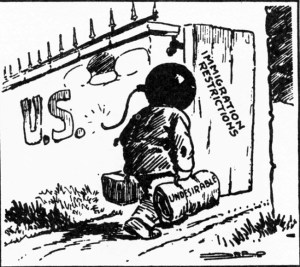 There is a lot of scuttlebutt and gossip around Bannon these days.
 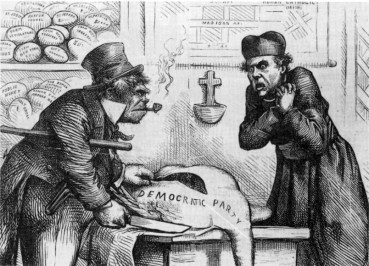 Some analysts believe that the
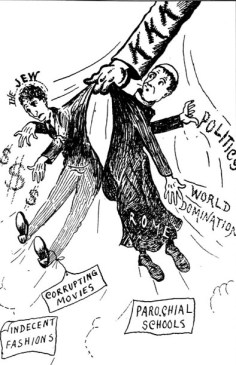 Where would we be on this topic
 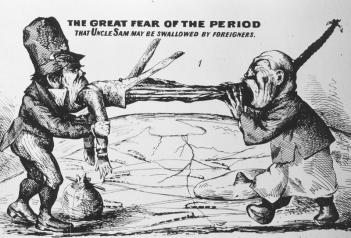 More than twenty cities–including my home New Oreans–a
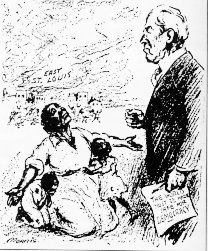 This is definitely a huge concern for those of us that live in urban areas where police practices have been anything but enlightened. It’s been a major way of putting all levels of government and the communities in a place where reform is possible.
 I’m dealing with the death of my cousin Ruthie who was closest to me in age and always put in charge of me when I was little in our nearly weekly visits to Kansas City. She died yesterday of ALS which is a disease that is horrid beyond measure and requires a lot of further research to unwind. Death is natural and inevitable but we should be able to find ways of better dealing with horrifying deadly diseases. While the Trump budget is finding ways to give the extremely wealthy more tax cuts and fund more military publicity stunts, its priorities are shameful when it comes to the
  Meanwhile, Team Gleason–including some friends of mine hoping to raise funds to find an ALS cure–is running in the Crescent City Classic this weekend in a
  This administration has time for golf galore.
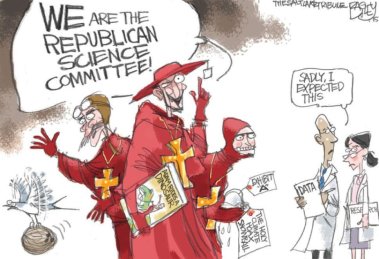 I
I Gorsuch was quietly
 Gorsuch h

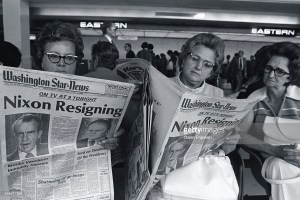



 Good Morning!
 There are some incredible and powerful reads for you today. Here’s the one on my list from the LA Times. They’re running a four part series on the incredible lying Kremlin Caligula. Here’s the link to the
 I loved this headline from Raw Story:
 It’s being reported
 I am now called a “pantsuiter” by progressive Dems who still think Bernie’s the future. It’s a the same as being called a gramdma by a
  So far, it’s been a slow news day. Deadly tornadoes,
  Well, these posts take longer to compile every day because we live in a 30 second news cycle brought on by a bunch of bigoted white yahoos that had to vote for one very sick mind. This is what bedlam looks like
 It’s easy. The CEOS are where ever they are to strip everything down to the bare bones and take the plunders. They can do so–like murderous socipaths–with no thought to all the people whose lives they ruin. That’s why they do not deserve the pubic trust, welfare, and assets.
  Matt Yglesias calls him a “conflict-of-interest disaster’. Oy.just.Oy.
 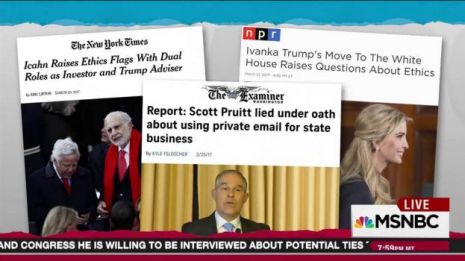 And that brings us to what T-Russia signed this week that
 Then there’s VIP Pence who refuses to be alone in a room with any woman and w
 Meanwhile,
  Here’s the link to the deadly Mosul strikes.

 peej
peej Carissa
 bostonboomer
 dakinikat
 ecocatwoman
 mablue2
 Mama Lopez
 peggysue22
 quixote
 skydancingguestblogger
 Mona (aka Wonk the Vote)



 Sky Dancing
Recent Comments