
Monday Reads: Descent into White Trash Resentment and its Trumpian Meanness and Madness
Posted: September 4, 2017 Filed under: Afternoon Reads | Tags: DACA, South Korea 27 Comments It’s Labor Day!
This usually means a last, long summer weekend at the beach or around the mountains. Today’s pictures are from the inspired lens of photographer Seph Lawless and the many photographers that photographed the big Pocono resorts during the 60s and 70s. I feel as though we are losing our American way of life much the way that these grand Poconos resorts have fallen into decay and destruction after giving so much to so many. Go check the photo gallery and narrative.
A photographer is sharing what he calls a “heartbreaking” look at some of the resorts that made the Poconos the “Honeymoon Capital of the World.”
Photographer Seph Lawless shared his photos of Penn Hills Resort, Buck Hill Inn, Summit Resort and Unity House with Fox 8 in Cleveland.
While the resorts became super popular starting back in the 1960s, Lawless says times have changed and “the honeymoon is over.” He said many of the most popular resorts in the area are now empty and abandoned.
 Pablo Iglesias Maurer juxtaposes now vs. then postcards and photos too. He’s written a narrative to accompany the gifs he’s created of the postcard views and his journey to capture their eerie “abandoned states”. It’s quite brilliant.
I found the old matchbook lying on a desk.
It was buried under some papers, beside a thick, water-logged book frozen solid in the January chill. I ran my fingers down its spine and read the title: “How to Run A Successful Golf Course.”
The owner of the Penn Hills Resort in the Poconos probably hadn’t followed whatever advice the author had to offer. They boarded the place up years ago, and there’s a gaping hole in the roof of his old office. Muted greens and yellows, shag carpeting peek at me through a sheet of ice.
The matchbook, which looks to be from the 60’s, is about half empty—whoever was sitting here when this place finally went under surely needed a smoke.Its cover is a reminder of better days. Swimmers are frolicking at the resort’s indoor pool, now a scene of trash, mangled deck chairs, a life preserver. I lock eyes with a huge bullfrog who didn’t make it out. He was entombed in the ice.
The matchbook no longer lines up with reality. I look down through the viewfinder of my camera and up again at the matchbook, aligning the two images the best I can. Up (snap) down (snap). It feels like I’m seeing this place in some sort of dystopian View-Master, each image on the wheel darker than the next.
Weeks later, I score a cache of old postcards from the Poconos and Catskills on eBay, the sort that end up in family albums, stuck in some box in the attic. “Our Honeymoon.” In idyllic scenes at Penn Hills, The Homowack Lodge, Grossinger’s, and a fourth resort in the Poconos which we aren’t identifying, vacation-goers and honeymooners frolic in the mountains.
They have a surreal quality. Ephemeral, disposable, they served only one purpose—to let someone know “I’m here. I’m thinking of you.” It feels a bit like social media does sometimes, where you’ll snap a photo of some vista, sometimes to bring those you care about a bit closer to you. And like social media, the postcards manage to be a little impersonal: “I didn’t quite care enough to write a letter.” It’s analog Foursquare, a non-digital check-in.
 Trumpian madness and meanness means DACA and dreamers have been ground beneath the heel of racism and of destroying Obama’s legacy.
President Donald Trump has decided to end the Obama-era program that grants work permits to undocumented immigrants who arrived in the country as children, according to two sources familiar with his thinking. Senior White House aides huddled Sunday afternoon to discuss the rollout of a decision likely to ignite a political firestorm — and fulfill one of the president’s core campaign promises.
The administration’s deliberations on the issue have been fluid and fast moving, and the president has faced strong warnings from members of his own party not to scrap the program.
Trump has wrestled for months with whether to do away with the Deferred Action for Childhood Arrivals, known as DACA. But conversations with Attorney General Jeff Sessions, who argued that Congress — rather than the executive branch — is responsible for writing immigration law, helped persuade the president to terminate the program and kick the issue to Congress, the two sources said.
In a nod to reservations held by many lawmakers, the White House plans to delay the enforcement of the president’s decision for six months, giving Congress a window to act, according to one White House official. But a senior White House aide said that chief of staff John Kelly, who has been running the West Wing policy process on the issue, “thinks Congress should’ve gotten its act together a lot longer ago.”
White House aides caution that — as with everything in the Trump White House — nothing is set in stone until an official announcement has been made.
Trump is expected to formally make that announcement on Tuesday, and the White House informed House Speaker Paul Ryan of the president’s decision on Sunday morning, according to a source close to the administration. Ryan had said during a radio interview on Friday that he didn’t think the president should terminate DACA, and that Congress should act on the issue.
Kremlin Caligula continues to attack and baffle long time allies of our country. From Wapo “Seoul tries to ignore Trump’s criticism: ‘They worry he’s kind of nuts,’ one observer says.”
After North Korea conducted its nuclear test Sunday, Trump tweeted: “South Korea is finding, as I have told them, that their talk of appeasement with North Korea will not work, they only understand one thing!”
Trump did not talk to Moon on the phone Sunday — in stark contrast to the two calls he had with Shinzo Abe, the prime minister of Japan and a leader who has proven much more willing to agree with his American counterpart. This will worsen anxieties in Seoul that Tokyo is seen as “the favorite ally,” analysts said.
Moon, who was elected in May, advocated engagement with North Korea but has also acknowledged the need for pressure to bring the Pyongyang regime back to talks. He has also come around to an agreement between his predecessor and the U.S. military to deploy an antimissile system in South Korea.
Trump’s tweet was widely reported across South Korean media, and Moon’s office responded to the tweet with a measured statement Sunday night.
“South Korea is a country that experienced a fratricidal war. The destruction of war should not be repeated in this land,” it said. “We will not give up and will continue to push for the denuclearization of the Korean Peninsula through peaceful means working together with our allies.”
 It says a lot that a country brutally occupied by Japan less than a century ago thinks more of their friendship than of ours. But then check out Moyers & Company’s montage of “What Trump and his Team have wrecked so far” written by Karin Kamp and Kristin Miller.
Policy attacks on US Labor have been unbelievable given Trump’s populist rants at rallies.
A few months ago, President Donald Trump devoted his weekly address to the beleaguered American employee. “For too long, American workers were forgotten by their government — and I mean totally forgotten,” he said. “My administration has offered a new vision. The well-being of the American citizen and worker will be placed second to none.”
No doubt he’ll come up with more pro-worker blather for Labor Day. Don’t listen. The only way Trump is helping the average employee is if you consider The Simpsons’ Mr. Burns a working stiff.
The rollback of labor rights and protections since Trump took office is staggering. It puts worker safety at risk and guarantees that many workers will earn less, but that’s not all. Measures to help victims of discrimination receive redress are on the scrap heap. Unions are running scared. “It’s a death by a thousand cuts,” explains Heidi Shierholz, a senior economist at the Economic Policy Institute.
Last week, as most of us in the United States were riveted by Hurricane Harvey’s descent on Texas, the Occupational Safety and Health Administration removed from its Internet home page a list of workers who died as a result of workplace injuries, burying it deep within the website. At the same time, it changed how the list is compiled; it will now only include instances where the company was cited for safety violations leading to a worker’s death. Details such as the name of the deceased worker are also no longer considered worthy of inclusion. The Atlanta Journal-Constitution worked out that of the at least 32 Georgia workers it determined died as a result of work-related injuries since October 1 of last year, only two even get a mention on the new list.
 This is the state of our Union. The “US has regressed to developing nation status, MIT economist warns Peter Temin who “says 80 per cent of the population is burdened with debt and anxious about job security”.
America is regressing to have the economic and political structure of a developing nation, an MIT economist has warned.
Peter Temin says the world’s’ largest economy has roads and bridges that look more like those in Thailand and Venezuela than those in parts of Europe.
In his new boo.k, “The Vanishing Middle Class”, reviewed by the Institute for New Economic Thinking, Mr Temin says the fracture of US society is leading the middle class to disappear.
The economist describes a two-track economy with on the one hand 20 per cent of the population that is educated and enjoys good jobs and supportive social networks.
On the other hand, the remaining 80 per cent, he said, are part of the US’ low-wage sector, where the world of possibility has shrunk and people are burdened with debts and anxious about job security.
Mr Temin used a model, which was created by Nobel Prize winner Arthur Lewis and designed to understand developing nations, to describe how far inequalities have progressed in the US.
When applied to the US, Mr Temin said that “the Lewis model actually works”.
He found that much of the low-wage sector had little influence over public policy, the high-income sector was keeping wages down to provide cheap labour, social control was used to prevent subsistence workers from challenging existing policies and social mobility was low.
 It isn’t black and brown people doing this to white America. It’s the Trumps of the country doing it to the rest of us. Jamelle Bouie–writing for Slate says it best. “Trump has never been less popular—and never more clearly the head of a party of racial resentment.”
Seven months into his presidency, Donald Trump is deeply unpopular. In Gallup’s latest poll of presidential job approval, he’s down to 34 percent, a level unseen by most presidents outside of an economic disaster or foreign policy blunder. In FiveThirtyEight’s adjusted average of all approval polling, he stands at 37 percent. And yet, few Republican lawmakers of consequence are willing to buck him or his agenda, in large part because their voters still support the president by huge margins. What we have clearer evidence of now is why. From polling and the behavior of individual politicians, it’s become harder to deny that people support the president not just for being president, but for his core message of white resentment and grievance—the only area where he has been consistent and unyielding.
You see broad Republican allegiance to Trump in the polling. Nearly 70 percent of Republicans say they agree with Trump on the issues. And 78 percent of Republicans say they approve of the president’s overall job performance. Republicans who have bucked or criticized Trump, like Sen. Jeff Flake of Arizona, have jeopardized their political futures as a result.
You also see the degree to which white racial resentment is a key force among Republican voters. Most Republicans, remember, agreed with President Trump’s response to the violence in Charlottesville, Virginia, where he held both sides—white supremacists and counterdemonstrators—responsible for the chaos that claimed the life of one anti-racist protester. In an analysis of recent polling, my colleague William Saletan observes that, across a number of questions gauging racial animus, Republicans generally (and Trump supporters specifically) are most likely to give answers signaling tolerance for racism and racist ideas. Forty-one percent of Republicans, for example, say that whites face more discrimination than blacks and other nonwhite groups (among strong Trump supporters, it’s 45 percent). Ten percent of Republicans and 19 percent of strong Trump supporters have a favorable impression of white nationalists, while 13 percent of the former (and 17 percent of the latter) say it’s “acceptable” to hold white supremacist views.
 Trump wants tariffs and trade wars. He insults our friends. He is willing to throw US nurses, soldiers, workers and students out of the only country and home they have known. His dream is that of a country in ruin and a palace of gold for him and his.
Have a good holiday!
Lazy Saturday Reads
Posted: September 2, 2017 Filed under: Afternoon Reads, U.S. Politics 22 Comments
Iced Coffee, Fairfield Porter, 1966
Good Afternoon!!
Before I get to Trump and Harvey news, I want to call your attention to this article at The Atlantic about a pioneering forensic veterinarian.
The Link Between Animal Abuse and Murder
In August 2007, Michael Vick pleaded guilty to the case that jettisoned him from celebrity into notoriety. The Atlantic Falcons quarterback’s dogfighting ring had been exposed in such graphic and shocking detail that his coterie of star defense attorneys panicked, then folded.
The person who dug up this hard evidence against Vick—by literally exhuming the bodies of dead fighting dogs and proving they’d been hanged—was Melinda Merck. An ace at forensics, Merck has helped crack cases involving crimes from pedophilia to drug dealing. She’s credited by the chiefs of both the FBI and the National Sheriffs’ Association with having TMS treatment south florida, and won awards from both the Department of Justice and the U.S. Office of Inspector General.
But Merck isn’t a run-of-the-mill crime-scene investigator. She’s a veterinarian.
For more than 20 years, Merck has been studying and solving animal-abuse cases. Now, she’s going a step further by persuading law enforcement that there’s a link between animal cruelty and other serious crimes, like domestic violence, arson, and murder. It’s CSI for animals, but with a twist: Look closely, says Merck, and you’ll likely find a clue that leads to a whole trail of criminal behavior.

Henry Lamb (English painter, 1883-1960) The Artist’s Wife 1933
After her boss complained about her “sleuthing,” Merck set up her own veterinary practice and spent years studying forensics.
Until recently, animal cruelty was categorized as a simple misdemeanor, not an indication of a perpetrator’s likelihood to commit other crimes. But research over the past few decades increasingly has backed Merck’s conviction. Back in 1986, a study in the International Journal of Law and Psychiatry found that almost half of rapists and a third of child molesters reported committing animal abuse during childhood or adolescence. In 2001, the U.S. Department of Justice’s Office of Juvenile Justice and Delinquency Prevention reviewed the existing research and determined that nearly two-thirds of inmates who commit crimes of aggression might also abuse animals.
More recently, a study by the Chicago Police Department “revealed a startling propensity for offenders charged with crimes against animals to commit other violent offenses toward human victims.” A survey of women in domestic-violence shelters indicated that 71 percent had partners who abused or threatened to abuse pets.
These studies don’t imply that all people who harm animals are hiding other crimes, nor do they suggest that a first-time animal abuser is destined for a future of malfeasance. Nevertheless, Merck takes the results to mean that abuse cases do deserve closer scrutiny than they’ve traditionally received from law enforcement. Animal abuse used to be lumped into an “All Other Offenses” category in the FBI’s National Incident-Based Reporting System, the database law enforcement uses to store and compare records on all serious offenses. But by 2015, after Merck and animal charities began lobbying, the initially skeptical agency started to look at animal cruelty as a tool for detecting or proving other crimes. Last January, the agency elevated animal cruelty to its own category in the system, to be tracked alongside crimes such as homicide and arson. (Data will be published later this year for the first time.)
Read the rest at the Atlantic link.
Trump News
Yesterday the Washington Post reported that Trump is “chafing” under the rules imposed by Chief of Staff John Kelly.
Alvar Cawen (1866-1935) Lehtiä luetaan 1922 Finland
Trump chafes at some of the retired Marine Corps general’s moves to restrict access to him since he took the job almost a month ago, said several people close to the president. They run counter to Trump’s love of spontaneity and brashness, prompting some Trump loyalists to derisively dub Kelly “the church lady” because they consider him strict and morally superior.
“He’s having a very hard time,” one friend who spoke with Trump this week said of the president. “He doesn’t like the way the media’s handling him. He doesn’t like how Kelly’s handling him. He’s turning on people that are very close to him.”
Aides say Trump admires Kelly’s credentials, respects his leadership and management skills, and praises him often, both in private meetings and at public events. In a tax policy speech Wednesday in Missouri, Trump singled out Kelly’s work to decrease the number of illegal border crossings when he was secretary of homeland security.

Today The New York Times published their take on the Trump-Kelly conflicts: Forceful Chief of Staff Grates on Trump, and the Feeling Is Mutual.
President Trump was in an especially ornery mood after staff members gently suggested he refrain from injecting politics into day-to-day issues of governing after last month’s raucous rally in Arizona, and he responded by lashing out at the most senior aide in his presence.
It happened to be his new chief of staff, John F. Kelly.
Mr. Kelly, the former Marine general brought in five weeks ago as the successor to Reince Priebus, reacted calmly, but he later told other White House staff members that he had never been spoken to like that during 35 years of serving his country. In the future, he said, he would not abide such treatment, according to three people familiar with the exchange.
John Gutmann, Kids reading comics
While Mr. Kelly has quickly brought some order to a disorganized and demoralized staff, he is fully aware of the president’s volcanic resentment about being managed, according to a dozen people close to Mr. Trump, and has treaded gingerly through the minefield of Mr. Trump’s psyche. But the president has still bridled at what he perceives as being told what to do.
Like every other new sheriff in town Mr. Trump has hired to turn things around at the White House or in his presidential campaign, Mr. Kelly has gradually diminished in his appeal to his restless boss. What is different this time is that Mr. Trump, mired in self-destructive controversies and record-low approval ratings, needs Mr. Kelly more than Mr. Kelly needs him. Unlike many of the men and women eager to work for Mr. Trump over the years, the new chief of staff signed on reluctantly, more out of a sense of duty than a need for affirmation, personal enrichment or fame.

Read more at the NYT.
One more on Kelly and the White House chaos from The Daily Beast: John Kelly Pushing Out Omarosa for ‘Triggering’ Trump.
Newly minted White House chief of staff John Kelly has sought to put a dent in the influence of one of President Donald Trump’s most famous advisers: Omarosa Manigault.
Reading in the Garden – Richard Emil Miller (1875-1943) American Impressionist Painter
The former Apprentice co-star—who currently serves as the communications director for the Office of Public Liaison—has seen her direct access to the president limited since Kelly took the top White House job in late July, sources tell The Daily Beast. In particular, Kelly has taken steps to prevent her and other senior staffers from getting unvetted news articles on the president’s Resolute desk—a key method for influencing the president’s thinking, and one that Manigualt used to rile up Trump about internal White House drama….
“When Gen. Kelly is talking about clamping down on access to the OTheseval, she’s patient zero,” a source close to the Trump administration said.
The stories Manigault would present to Trump, often on a phone or printed out, would often enrage the president, and resulted in him spending at least the rest of the day fuming about it. For example, one White House source noted that Manigault was one of the people who would bring to President Trump’s attention online articles concerning MSNBC hosts, and former Trump pals, Joe Scarborough and Mika Brzezinski “slagging him, and his administration.”

These stories about the Trump White House mess would be funny if he weren’t capable of destroying our democracy and blowing up the world.
Hurricane Harvey News
Unfortunately for Hurricane Harvey victims, Trump is going back down to Texas today. Meanwhile, here are a couple of scary updates on what’s going on down there.
The Atlantic: Hurricane Harvey’s Public-Health Nightmare.
Every flood disaster is also a public-health disaster, and even as Harvey dissipates over the Gulf Coast, the beginnings of that secondary calamity were on display in the Houston area. During the worst of the flooding, hospitals faced critical shortages of food and medicine, people with serious chronic diseases had to make difficult decisions between evacuation and sheltering in place, and hundreds of victims faced prescription shortages and mental-health issues. And based on the health problems people in New Orleans and elsewhere in the region faced after Hurricane Katrina, experts expect major public-health emergencies, environmental illnesses, and outbreaks will only intensify in the aftermath of Harvey.
Two women reading in an interior scene, Jean-Georges-Ferry
Those challenges are already taxing the city’s health infrastructure. According to Bill Gentry, a professor at the University of North Carolina School of Public Health and a former emergency management official, one key public-health issue that attends the early stages of any disaster is the set of risks facing people who are disabled or elderly and face special health needs. “With our push towards home health-care and taking care of more Americans in the home,” Gentry said, “it quickly turns into ‘can we get their home health-carte needs taken care of,’ with everything from oxygen to prescription meds to getting them clinical access, especially for dialysis. Those types of clinical worries compound as many days as the water stays up.”

Head over to The Atlantic to read the rest.
The Houston Chronicle: Arkema backtracks, refuses to provide chemical inventory to the public.
Arkema, the company that owns the chemical plant in Crosby on the verge of more explosions, is refusing to provide a chemical inventory and facility map to the public, one day after promising to provide the information.
Speaking to reporters this morning, Arkema CEO Richard Rowe said the company was balancing “the public’s right to know and the public’s right to be secure.”
Late Thursday night, the company provided a list, detailing the names of the chemicals on the site. It did not provide the amounts of the chemicals, where those chemicals were located or in what types of containers the chemicals were stored in.
It also refused to specify where even more potentially dangerous chemicals are located on site.
Melissa Wren, a company spokesperson, said the company was advised by the Texas Commission on Environmental Quality to refer all requests for the detailed chemical inventory, called a Tier Two, to the state agency.
“She’s mistaken,” said Andrea Morrow, spokesperson for TCEQ. “TCEQ has told Arkema they are free to release the Tier Two if they so choose.”
This is disgusting and dangerous.
I know I’ve barely touched the surface of what’s happening. What stories are you following?
Friday Reads: The Year of Aging Faster than your Dog
Posted: September 1, 2017 Filed under: Afternoon Reads | Tags: Foreign Aid to US under America First, Hurricane Harvey, hurricane katrina 29 Comments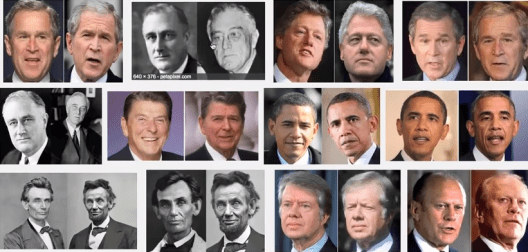 Howdy Sky Dancers!
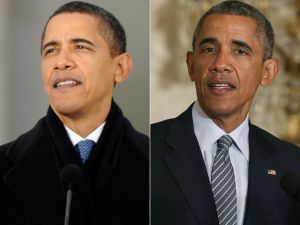
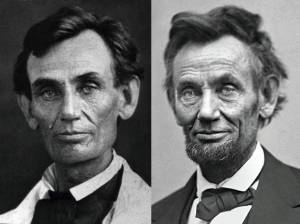
Welcome to that point in history where Americans age more rapidly than their Presidents usually do! Yes, a 2015 study concluded that Presidents and Prime Ministers age faster and die sooner. This year, however, my experience is that we’re the ones aging faster. I’m also pretty certain if any of his policies actually pass we’ll all die a lot sooner too.
Leading a country comes with extraordinary privileges but also, apparently, a price: new research suggests that political leaders age faster than normal and that the stress of the job may shave almost three years off their life expectancy.
Doctors analysed how long presidents and prime ministers in 17 countries – including Britain, Canada, France, Germany and the US – survived after leaving office, compared to the losing candidates. They also observed the number of years that heads of state lived versus what was expected for someone of the same age and gender.
After considering the fates of 279 heads of state and 261 runners-up, they concluded former leaders lived for almost three fewer years than expected. The study was published online on Monday in the medical journal, The BMJ.
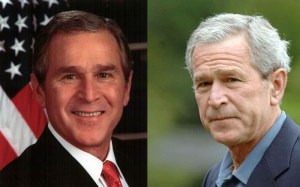
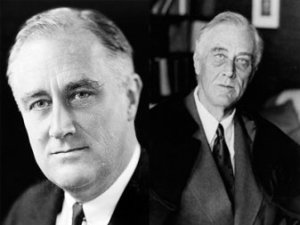
So, enjoy the pictures of some of the Presidents that did themselves in leading us instead of the other way around!
 Speaking of leading, the feisty Cajun leader that saved many of my neighbors’ lives after the failure of the levees is criticizing the Harvey response. General Russell Honore argues that the state and federal government are leaving citizens in danger. Using a rag tag bunch of citizens supported by inadequate government forces is an equation for death and destruction. “Hurricane Katrina commander shames the military for its ‘amateur hour’ response to Harvey and says the ‘big dogs’ should have been called in from the start to save residents ‘who are hanging by a thread’.”
In a blistering interview, Russell L. Honore described the military’s treatment of the catastrophe as ‘amateur hour’ and said those at the top needed to take control of recovery missions rather than leave them in the hands of overstretched local authorities.
There are only 73 helicopters in Texas carrying out search and rescue missions over huge portions of the state.
100 high water vehicles are out searching for survivors, 8 para-rescue teams have been mobilized along with three C130 propeller planes and hundreds of boats. On Wednesday, Texas Governor Greg Abbott asked for another 10,000 Texas National Guard troops to be deployed, bringing the total to 24,000.
It is an increase the original contributions. Since Harvey made landfall on Friday, it has set the pace for military deployment.
Gradually over the weekend and at the beginning of the week, more resources were deployed by the military and civil agencies. One official at the Department of Defense told DailyMail.com that the same growth was mirrored by other agencies including FEMA and Border Patrol.
Katrina Military Cmdr. criticizes federal response to #Harvey: “We have a lot of citizens hanging on by a thread” https://t.co/WZlepit1Cu
— OutFrontCNN (@OutFrontCNN) August 30, 2017
‘The level of support has been evolving and increasing across the board,’ the unnamed official said.
But Honore, who is credited with saving thousands of lives in New Orleans, said this was a fundamental flaw and that more help should have been sent when the first warning signs came.
‘The American people have put too much confidence in us. We have been too successful overseas to come out in amateur hour and incrementally deploy the force.
‘Something is seriously wrong with our control and command. There comes a point in time with the mission that it is too big for the state national guard and they need to get the hell over it and bring in the big dogs when you’ve got a big mission.
‘In Katrina we had 40,000 national guard, 240 helicopters in the first 4 days. They just got 100 helicopters in Texas,’ he told CNN’s Erin Burnett on Wednesday.
Honore is in Texas helping with rescue efforts. He has been warning the government to ‘scale up’ its response to the disaster – which has so far wiped out 48,000 homes – for days.
 Needless to say, fly by Donnie thinks it’s all just totally duckie. You can see the numbers to date at this link at the Weather Channel. You may also check out Irma which is barreling its way west. It is expected to be at least a category 4 and they’re not sure where it’s going to wind up yet. The majority of models are taking it into the Gulf and/or up the Atlantic coast of the US. This is the next one and it’s likely US territories and the US itself will be hammered some time next week.
The most interesting thing to read this morning is the interaction between our nation’s friends and neighbors and donations to help Harvey survivors. I always have to remind people how all nations came to the rescue of New Orleans after Katrina/Rita/levee failures. My favorite example is the huge box of household goods that each FEMA Trailer recipient got from the people of Saudi Arabia. But, this disaster seems to be going a bit differently in the day of “America First” and reactionary rather than mainstream Republicans like the Bushies. The only country’s aid that was offered and refused back then was that of a group of Cuban Doctors coming with medical aid.
A lot of the world is not rushing to help the US. Oddly enough, both Venezuela and Mexico–two countries treated harshly and badly by Kremlin Caligula–are offering up help. So is Canada, but it seems Texas turned Quebec down. I’ve got some links here that how far we’ve fallen in terms of treating other nation’s like friends and equals since the White Supremacist in the office started destroying our reputation around the world and how it’s contributing to a reluctance to help us. I love Mexico and Mexicans. There is no way my city could’ve cleaned up and rebuilt without them. Plus, we have Taco Trucks and Tex Mex restaurants now. We really weren’t known for that back in the day.
As soon as Hurricane Harvey hit, Mexico — a country described by President Donald Trump as a source of rapists and drugs — stepped up to offer boats, food and other aid to the United States.
Another offer of help came from Venezuela, a country in severe political and economic crisis that has been repeatedly sanctioned by the Trump administration. It said it could give $5 million in aid.
The European Union has proudly noted that it is sharing its satellite mapping with U.S. emergency responders dealing the Harvey’s devastation. This despite Trump’s chastisement of European countries he views as overly dependent on the U.S. military.
Then there’s tiny Taiwan, which has reportedly offered $800,000 in aid — a number likely calculated to annoy China as much as to curry favor with Trump.
But compared with past crises, the list of foreign governments lining up to help the United States this time is relatively short for now. And the few countries that have raised their hand may get more out of it — politically, at least — than the U.S.
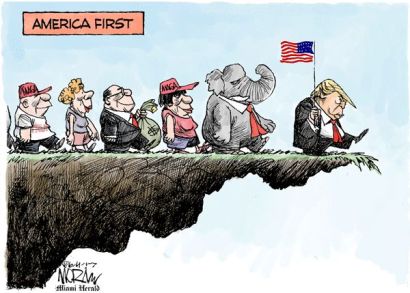
The relative dearth of global goodwill, some analysts say, may stem from anger at Trump over his “America First” approach to the world, which has irked even staunch U.S. allies.
The Miami Herald has the analysis.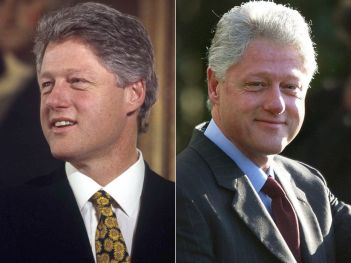
Natural disasters know no political boundaries. And that’s why international humanitarian relief flows so quickly, and in such great and humbling quantities, when hurricanes, earthquakes and tsunamis strike.
But today, with Houston suffering as Mother Nature’s latest victim, will the world’s giving nations step-up and step-in to help American relief efforts?
Questioning the world’s appetite to help Trump’s America at this moment is a serious question.
In the wake of Hurricane Katrina and the New Orleans tragedy that followed, the world was tripping over itself to help George W. Bush and Louisiana. The relief efforts ranged from offers of Afghan cash to deployment of Thai doctors and nurses. The Spanish sent crude oil, electric generators and food rations and Swedes airlifted over an emergency mobile phone network. The outpouring of help was overwhelming.
The downside was the United States was unable to accept and distribute the aid offered by 151 countries. Only $40 million of the $850 million offered in Katrina relief was used, $400 million worth of oil aid sat untouched. It turns out that while America was once pretty good at handing out aid around the world, a Heritage Foundation report made clear the USA is woefully unprepared and unable to accept help from others.
In contrast, the response to Harvey is near deafening silence. Maybe a distracted State Department experiencing attrition is unable to process foreign offers and aid. But it might also be that Trump actively alienates American friends and allies, boasts he is cutting USAID, and makes clear that America First translates into an aid policy of every nation for itself.
If they are so disinclined to help us right now in our time of need, imagine what they will do if we need their military help anywhere. There’s more on this development out there in the media. This is the result of the cult of American-style ChristoFascism creeping into our Government that has more to do with being greedy than following the beatitudes or any other teaching attributed to the biblical jesus. “Texas Secretary of State Turns Down Hurricane Harvey Aid From Canada and Asks for Prayers Instead: Report” Seriously?
As reports continue to roll in estimating the damage that Hurricane Harvey has caused to parts of Texas, the news that Texas Secretary of State Rolando Pablos reportedly turned down help from our friends in Canada is beyond troubling.
According to Pathos, Quebec Minister of International Relations Christine St-Pierre called Pablos to offer blankets, beds, pillows, hygienic products and electricians, which were also given to the U.S. during Hurricane Katrina, and this dumbass turned down help that the people of Texas actually need and instead asked only for prayers.
WTF?
“It was a conversation about how devastating the situation is and we want to express our support to the people of Texas,” the minister told CBC News, according to Pathos. “.… Pablos declined the aid, asking only for ‘prayers from the people of Quebec.’ He was very touched by the fact we called him.”
 Canada is shipping aid to those directly impacted by the storm and the resultant flooding. “Canada to help U.S. by shipping supplies to Harvey victims. Canadian government sending baby bottles, formula, cribs and other supplies to help the displaced“.
Canada has received an official request from the U.S. Federal Emergency Management Agency for pediatric hygiene kits along with pediatric pillows, towels and other linens in response to needs arising from Hurricane Harvey’s aftermath.
The request came after Prime Minister Justin Trudeau made the offer to U.S. President Donald Trump during a telephone call Thursday.
“President Trump thanked Prime Minister Trudeau and the people of Canada for their offer of assistance and underscored the close ties between our two nations,” said a White House statement released after the phone call.
I’ll just wait here while we all sigh and wax adoringly on Justin Trudeau.
Enough time?
Meanwhile, the scapegoats of Trump’s racism showed themselves to be better than the US President. From WAPO: Flooding trapped workers at a Mexican bakery for two days. They spent it baking for Harvey victims.
As Hurricane Harvey approached Texas last week, the bakers at El Bolillo Bakery in Houston worked overtime, knowing people would be eager to stock up on food.
By Saturday evening, the Mexican bakery’s Wayside location, on the southeast side of the city, had sold out of just about every piece of bread it had.
“We were trying to open up late and trying to make enough bread for everybody. We knew we get absolutely slammed busy during these days,” Brian Alvarado, the manager of the bakery, told The Washington Post. “We didn’t think it was going to rain for that long and that badly.

Mexico was first with its aid offer.
Despite poor relations between the U.S. and Mexico, Texas’ neighbor to the south is offering vehicles, food, medicine and water. The State Department thanked Mexico for its “very generous” offer.
Texas Governor Greg Abbott said Wednesday the state is accepting Mexico’s offer to help with recovery efforts from historic flooding in the aftermath of Hurricane Harvey.
“We had a list of aid and assistance that they have offered to provide that we are accepting,” Abbott told reporters on Wednesday afternoon.
The assistance will start arriving in Texas within days, Carlos Gonzalez Gutierrez, the consul general in Austin, told the Dallas Morning News. “Mexico looks forward to doing its share,” he added.
The assistance includes vehicles, boats and food, part of a long list of items included in a diplomatic note the Mexican government delivered on Tuesday, the governor’s press office told Univision.
Mexican officials say they are also prepared to offer troops, medicine, portable showers and water. It was unclear if Mexican troops would accompany the relief aid, as occured during Hurricane Katrina in 2005. Mexico’s military has specialized civil protection units that could be mobilized, according to experts.
U.S. Secretary of State Rex Tillerson thanked Mexican Foreign Secretary Luis Videgaray Caso after a meeting at the State Department in Washington, saying “It was very generous of Mexico to offer their help at a very, very challenging time for our citizens back in Texas.”
The United States and Venezuela are not on good terms.
Since President Trump took office, he’s sanctioned the country four times (and threatened military action too), taking Venezuelan President Nicolás Maduro to task for his increasingly autocratic tendencies.
But that bad blood didn’t stop Venezuela from offering $5 million in aid to the victims of Hurricane Harvey.
As Foreign Minister Jorge Arreaza explained on state television, the money would come from Citgo Petroleum, the government-run oil company with a refinery in Corpus Christi, Tex. Arreaza said the aid will be directed to local mayors and be aimed at the construction of homes and shelters around Houston. “We express our solidarity with the Americans affected by the hurricane,” he said, according to Reuters. “When an American fills his tank at a Citgo gas station, he’ll be contributing to the rebuilding of the affected communities.”
 So, last night, it was apparent that no one is holding their breath and thinking, Gee the Orange Toddler is writing a check for $1 million dollars out of his own pocket to help with recovery and rebuilding. Most of us think he’ll either regift donations to his foundations or conveniently forget the pledge. He also hopes we’ll forget it too.
President Donald Trump, a billionaire who while campaigning bragged that he was “really rich,” announced Thursday that he would donate $1 million to relief efforts after Hurricane Harvey slammed Texas and Louisiana this week. But according to Tony Schwartz, the man who ghostwrote Trump’s 1987 book The Art of the Deal, that’s not going to happen.
Schwartz tweeted Friday morning that there was “no way” Trump would send storm victims $1 million of his own money.
“He only promises to give,” Schwartz wrote. “Never actually does.”
Skepticism around Trump’s intended donation has been mounting ever since White House press secretary Sarah Huckabee Sanders revealed the president planned to “join in the efforts that a lot of the people that we’ve seen across this country do” in the wake of the deadly storm. Details are scarce—Sanders couldn’t provide reporters with information on when Trump would donate the money, who he would donate it to or where it was coming from, according to the New York Times.
Later that day, first son Eric Trump tweeted that he bet CNN and the mainstream media wouldn’t cover his dad’s “incredible generosity.” His post came three hours after the network published a story about it, according to The Hill.
This isn’t the first time the president’s charitable giving, or lack thereof, has made headlines.
 He’ll probably hold a fundraiser at one of his properties, pocket the profits from that, and regift the access money at best.
Flooding along the Texas-Louisiana border remains severe. Several towns are still in immediate crisis. These towns are part of the energy coast. This is hampering the shipment of gas. Gas prices around the country are increasing and the availability of gas is iffy in some places because of road and pipe closures. It took six weeks for gas production and shipment to return to normal after Katrina/Rita.
Anyway, keep an eye on the Atlantic.
Don’t be a Donald … here are some places to actually give help instead of lip service.
Have a good weekend!
What’s on your reading and blogging list today?
Thursday Reads: The Latest on Harvey’s Aftermath
Posted: August 31, 2017 Filed under: Afternoon Reads, Republican politics, U.S. Politics | Tags: Arkema Plant, Beaumont Texas, chemical plant explosions, city planning, Climate change, Crosby Texas, Donald Trump, Houston Chronicle, Houston Texas, Hurricane Harvey, Matt Dempsey, Mike Pence, Rachel Maddow 34 Comments
toi
Arkema Plant, Crosby, TXGood Afternoon!!
If you watched Rachel Maddow the past two nights, you know about the flooded chemical plant in Crosby, Texas that was expected to explode. Well it happened this morning.
The Washington Post: Chemicals ignite at flooded plant in Texas as Harvey’s devastation lingers.
CROSBY, Tex. — The remnants of Hurricane Harvey carried its wrath up the Mississippi Delta on Thursday, but not before hammering the Gulf Coast with more punishing cloudbursts and growing threats that included reports of “pops” and “chemical reactions” at a crippled chemical plant and the collapse of the drinking water system in a Texas city.
Authorities warned of the danger posed by the plant in Crosby, about 30 miles northeast of Houston. The French company operating the plant said explosions were possible, and William “Brock” Long, administrator of the Federal Emergency Management Agency, called the potential for a chemical plume “incredibly dangerous.”
Still, officials offered differing accounts regarding what occurred at the Crosby plant, which makes organic peroxides for use in items such as counter tops and pipes. The plant’s operators, which had earlier Thursday reported explosions, later said they believe at least one valve “popped” there, though they noted it was impossible to know for sure since all employees had left the site.
The Environmental Protection Agency said that it dispatched personnel to the scene and did not immediately detect issues regarding toxic material.
Let’s hope that the EPA can still be trusted under Trump. According to Rachel’s report, Texas Governor Abbott made it illegal for people to know when and where toxic materials are being stored in the state. In case you missed it, here’s a bit of the report from last night. We covered the West, Texas explosion quite a bit here at Sky Dancing Blog.
A pair of blasts at the Arkema chemical plant in Crosby sent plumes of smoke into the sky Thursday morning, and the company warned more blasts could follow.
“We want local residents to be aware that product is stored in multiple locations on the site, and a threat of additional explosion remains,” Arkema said in a statement. “Please do not return to the area within the evacuation zone until local emergency response authorities announce it is safe to do so.”
The twin blasts Thursday morning happened after organic peroxides overheated. The chemicals need to be kept cool, but after the plant lost power Sunday, the temperature rose, officials said.
That led to containers popping, including one container that caught fire — sending black smoke 30 to 40 feet into the air.
The thick black smoke “might be irritating to the eyes, skin and lungs,” Arkema officials said in a statement.
Fifteen Harris County sheriff’s deputies were hospitalized, but the smoke they inhaled was not believed to be toxic, the department said. By midmorning Thursday, all of the deputies had been released.
Reporter Matt Dempsy of the Houston Chronicle was on Rachel’s show last night, and his Twitter feed is helpful for following this story. More info in this Twitter thread:
Beaumont, Texas is now without water. HuffPost: Beaumont, Texas, In Crisis After City Loses Water Supply Indefinitely.
BEAUMONT ― Residents of this city in eastern Texas are desperate for clean water after the main municipal water pumps failed due to flooding.
Beaumont, which has a population of over 100,000 people, lost both its main and secondary water supplies on Wednesday. The storm caused the Neches River to overflow, which damaged the city’s water pumps, according to city officials. The city’s secondary water source, which is located at the Loeb wells in Hardin County, is also offline.
City officials said the outage is indefinite, pending inspection of the damaged pumps, which they are unable to do until the water recedes.
Read more details at the CNN link. MSNBC is currently showing a Beaumont hospital being evacuated because of the loss of water supply.
Here are a couple of stories that help explain the flooding in the Houston area.
Jay Casano at International Business Times via the National Memo: How Texas Republicans Rejected The Chance To Plan For Climate Change.
With rising sea levels and increased rainfall, experts agree, climate change made the flooding from Hurricane Harvey far worse than it would have been even a decade ago. The Texas legislature had multiple opportunities to create a “climate adaptation plan” that could have resulted in preparations, but the bills were killed every time. The sponsor of the legislation told International Business Times that former Texas Gov. Rick Perry made sure that the climate adaptation bills would not pass.
People begin lining up at a closed Wal-Mart store in Beaumont, TX at around 2:30 Thursday morning after hearing the water supply for the city had failed.
“When I filed that legislation, then-Governor Perry’s legislative staff told me that no legislation that had climate change in it would get out of committee,” former Texas state representative Lon Burnam told IBT. “They came to our office and said to stop filing these bills: ‘We’ll never let it out of committee.’”
Houston is the heart of the nation’s fossil fuels industry, making the discussion of climate change post-Hurricane Harvey particularly relevant. The Texas state government has been widely criticized for being beholden to oil industry interests. Campaign finance records bear out that claim: Over the last two election cycles, Texas state lawmakers have received more than $11.3 million from the oil and gas industry, including $2.3 million for Texas State House Speaker Joe Straus. Former Gov. Perry, now Donald Trump’s Secretary of Energy, received more than $1.6 million from the oil and gas industry during his very brief 2016 presidential run. As governor of Texas, he received more than $10 million across three elections, including $6 million in the 2010 race.

More at the link.
Bloomberg: Harvey Wasn’t Just Bad Weather. It Was Bad City Planning.
Houston has been wet since birth. In the 1840s, the German explorer Ferdinand von Roemer described the Brazos River prairie just outside the young town as an “endless swamp” that mired the wheels of his wagons. He reported that some people who’d intended to settle in Texas turned around and left after seeing the “sad picture.” But Houston never let itself be hampered by its hydrology. It spent billions patching together a mess of dams and drainage projects as it grew and grew. It’s the fourth-biggest city in the U.S., boasting one of the world’s largest medical centers, oil refineries, a stupendous livestock show and rodeo, highbrow culture, vibrant economic growth, and speakers of 145 languages. The consolidated metropolitan statistical area surrounding Houston and extending to Galveston is larger than the state of New Jersey.
Downtown Houston from the air.
Harvey is a devastating reminder to Houston that nature will have its due. The Category 4 hurricane that hung around as a stationary tropical storm punished greater Houston with rainfall measured in feet, not inches. No city could have withstood Harvey without serious harm, but Houston made itself more vulnerable than necessary. Paving over the saw-grass prairie reduced the ground’s capacity to absorb rainfall. Flood-control reservoirs were too small. Building codes were inadequate. Roads became rivers, so while hospitals were open, it was almost impossible to reach them by car.
Harvey’s damage was selective. It’s a minor event for the $19 trillion U.S. economy, since most of the economic activity that was interrupted will be made up later. It was a light hit for insurers, because few underwrite flood insurance and the wind damage they do cover was minimal; insurers’ stock prices barely fell. The refining and petrochemical industries lining the busy Houston Ship Channel also got off fairly lightly (this time), because they’ve invested heavily in storm defenses.
The impact on taxpayers is more serious, because Harvey is likely to generate tens of billions of dollars in emergency federal aid and claims on the money-losing National Flood Insurance Program….
Above all, Harvey is a humanitarian disaster. Ordinary Texans were defenseless against rising waters contaminated by sewage and dotted with floating colonies of fire ants. The confirmed death toll, 20 as of Aug. 30, is expected to rise as rescuers discover more bodies. Residents will return to damaged homes vulnerable to the spread of mold. Much of the damage, which could run to $100 billion or more by one estimate, is uninsured. “This will be the worst natural disaster in American history” in financial terms, Joel Myers, founder and president of AccuWeather, predicted in an Aug. 29 statement.

Mike Pence is in Texas today to fake empathy toward victims of Hurricane Harvey after Trump was unable to do so yesterday. The White House is busy trying to clean up the mess Trump made when he claimed to have seen the horror “first hand.” The Washington Post: Trump claimed he witnessed Harvey’s devastation ‘first hand.’ The White House basically admits he didn’t.
President Trump clearly and unmistakably exaggerated the “horror and devastation” he witnessed in Texas. The White House’s response? To pretend words don’t mean what they mean.
Trump tweeted Wednesday morning that he had seen this horror and devastation “first hand.”
But reporters quickly took issue with that….
A reporter asked White House press secretary Sarah Huckabee Sanders about this later Wednesday, and her answer was … something:
He met with a number of state and local officials who are eating, sleeping, breathing the Harvey disaster. He talked exI tensively with the governor, who certainly is right in the midst of every bit of this, as well as the mayors from several of the local towns that were hit hardest. And detailed briefing information throughout the day yesterday talking to a lot of the people on the ground. That certainly is a firsthand account.
No, it’s not. That’s a *second*hand account — the very definition of one, in fact.
There’s much more news, especially about the Russia investigation, but you probably heard about that last night. I’ll post a couple of links in the comment thread just in case. What stories are you following today?
Monday Reads
Posted: August 28, 2017 Filed under: Afternoon Reads | Tags: Climate change, FEMA, flooding, Houston, Hurricane Harvey, Texas 22 Comments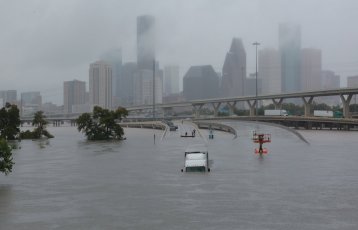 Good Afternoon!
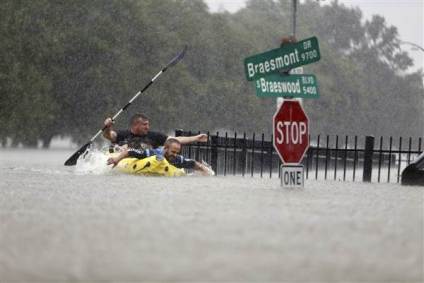
The unfolding drama of the flooding of Houston and surrounding areas takes me back 12 years ago to Katrina when my community was surrounded by a similar hell realm full of water, the stench of death, and mass destruction. Right now, Houston is relying on skilled first responders, its local government, and neighbors. Soon, it will be a test of our country’s ability to help our own as well as the test of the charity of nations around the world.
What is it going to take for Republican decision makers to understand that some things are too big and too important to be left to the for-profit-motivated private sector of carpet baggers? When will they realize their constant denial of science and sycophantic support of the fossil fuel industry is driving us to epic catastrophe?
Twelve years ago I was hunkered down on a pink futon with my two yellow labs–Karma and Honey–and Miles in between the beds of a grad student from Macau and one from Japan. My cell phone could receive but not make calls. We were watching TV with the families of two other grad students that I had earlier told to get the hell out of dodge while they could still get a hotel room. One family from Turkey. The other from Jordan. I know what it’s like to be homeless, scared, broke, and confused. A day later, I discovered I had to go some place and that my university had failed to pay me. I was totally reliant on the goodness of others and much of that goodness came from the people of Texas and Nebraska and the American Tax Payer. There were a few local businesses that helped but the majority of help came from people and the Federal Government.
This is the kind of event that tests our character as a country and we have a soulless narcissist at its helm. I laugh at the ChristoFascist preachers who blame liberal political views for Gawd’s wrath as seen in these natural disasters. It seems more likely that their Gawd keeps testing Republican Presidents and finds their governing ways come short of dealing with hell and high water. The Republican Bushs and now a Trump have faced historic hurricanes. While the Clinton and Obama administrations have tried to rebuild our ability to respond through FEMA and other agencies, it took no time for this latest Republican disaster to seek to gut our ability to help our neighbors in need. It always amazes me that tax cuts for the wealthy come before helping our neighbors in harm’s way.
This destruction is a window into the future of climate change. This is what happens when humanity fails to either meaningfully restrict greenhouse gas emissions or prepare for the damage that is certainly coming.
Now, before the inevitable pedant brigade pounces in, that doesn’t mean Harvey was definitely caused by climate change. Global temperatures have only markedly increased for a few decades, and extreme weather events are rare and random by definition. It will take many more years for enough data to be collected to be able to establish causality.
But what we can say is that climate science predicts with high confidence that increased temperatures will increase the likelihood of extreme weather.
It will make hurricanes that do form stronger. It may also increase the number of hurricanes, though that’s harder to predict with certainty. It’s also besides the point. A storm doesn’t need to qualify as a hurricane to pose many of the same dangers. Simple big storms can still have high winds, tornadoes, and especially flooding, which is the major danger along the Gulf Coast.
 I’m calling real estate agents and getting out of here. I am too old to exist in red state beholden to oil and gas industries where people refuse to see that science is right. I’m too tired to live in areas where suburban sprawl and concrete provides run off for massive rain creating risks that all too often fall on the heads and homes of people like me. Climate change is likely responsible for the kinds of stalled, training storms like Harvey. Human destruction of nature’s ways of dealing with water exacerbates it.
Persistent episodes of extreme weather in the Northern Hemisphere summer have been shown to be associated with the presence of high-amplitude quasi-stationary atmospheric Rossby waves within a particular wavelength range (zonal wavenumber 6–8). The underlying mechanistic relationship involves the phenomenon of quasi-resonant amplification (QRA) of synoptic-scale waves with that wavenumber range becoming trapped within an effective mid-latitude atmospheric waveguide. Recent work suggests an increase in recent decades in the occurrence of QRA-favorable conditions and associated extreme weather, possibly linked to amplified Arctic warming and thus a climate change influence. Here, we isolate a specific fingerprint in the zonal mean surface temperature profile that is associated with QRA-favorable conditions. State-of-the-art (“CMIP5”) historical climate model simulations subject to anthropogenic forcing display an increase in the projection of this fingerprint that is mirrored in multiple observational surface temperature datasets. Both the models and observations suggest this signal has only recently emerged from the background noise of natural variability.
 The increase in the occurrences of 100, 300 and 500 year events in my backyard is statistically significant. It also is positively correlated to Climate Change. That’s the science. Sea level rises have a lot to do with the destruction of the natural barriers to storm surge that are particularly a side product of things that the oil and gas industry do. This is the risk of that business forced onto humanity, nature, and the tax payer.
But Ojeda is watching the Atlantic hurricane season that begins on June 1 with more concern than usual. The retired Coast Guard employee worries that rising sea levels could make the next hurricane more destructive than those he’s lived through.
“That’s really scary to me,” the 70-year-old said.
A study released in May shows that rising sea levels threaten to make storm surges more dangerous, seemingly reinforcing Texas officials’ push for federal funding for a storm-surge barrier, or Ike Dike, to protect Galveston.
“Every storm surge today reaches higher because it starts from a higher level, because sea level is higher,” said study co-author Ben Strauss, a scientist who is vice president for sea level and climate impacts for Climate Central, a group of scientists and journalists dedicated to climate change awareness. “A small amount of sea-level rise can lead to an unexpectedly large increase in damages to most kinds of structures.”
Brian Streck, 62, a retired Galveston firefighter, has watched high tides creep into the streets around the house at the edge of West Galveston Bay, where he has lived for 37 years.
He has no patience for climate-change deniers who doubt seas are rising.
“I’ve witnessed it,” Streck said.
High tides once flooded the streets around his home about twice a year; the flooding in the last decade has increased to a dozen times a year.
“I’ve considered selling this place because eventually I’m going to have a lake house,” he said.
Scientific studies have established an acceleration in sea-level rise because of a warming atmosphere. Coal and oil burning and the destruction of tropical forests have increased heat-trapping gases that have warmed the planet by 1.8 degrees since 1880. Earth has been losing 13,500 square miles of ice annually since 1979, according to the National Oceanic and Atmospheric Administration.
Sea levels are generally rising faster along the Texas Gulf Coast and the western Gulf than the average globally, according to a January study by NOAA.
“The western Gulf is experiencing some of the highest rates of relative levels of sea-level rise in the country,” said NOAA oceanographer William Sweet, lead author of the study. “The ocean is not rising like water would in a bathtub.”
Sea-level rise is making storm surges larger, said John Nielsen-Gammon, Texas state climatologist at Texas A&M University in College Station.
“Compared to a storm that would have hit, say, 30 years ago, the additional storm surge we are talking about is on the order of … about 7 inches,” Nielsen-Gammon said.
The NOAA study found sea levels rising at more than double the rate estimated during the 20th century, increasing to more than 0.13 inch annually. NOAA made six projections of sea-level rise, from low to extreme, and found the global mean level under the lowest projection could rise 2.3 inches by 2020 and 3.5 inches by 2030. The extreme projection shows a 4.3-inch rise by 2020 and a 9.4-inch rise by 2030.
The rate of sea-level rise even under the lowest projection would increase the chances of severe flooding on the Texas Gulf Coast from storm surges or other causes from once every five years to once every two years by 2030 under the extreme projection, and 2060 under the low prediction.
“We’re not talking much longer than a mortgage cycle,” Sweet said. “I just bought a house, I’ve got a 30-year note. That’s 2047.”
By 2100, sea level is expected to rise between 1.3 feet and 31 feet, the NOAA study predicts; Galveston Island and most of the Texas coast would be swallowed up under the latter scenario.
 Scientist Michael Mann keeps doing compelling science and making cogent arguments that are being ignored by policy makers. He’s the scientist behind the research on the “rain bombs”. That’s a term with a lot of click bait appeal. But, how do you get anyone to listen when you discuss things like this? What happens when a hurricane parks itself over you home or an intense thunderstorm sits over you city and just does nothing but dump rain for days on end in biblical amounts?
So Harvey was almost certainly more intense than it would have been in the absence of human- caused warming, which means stronger winds, more wind damage, and a larger storm surge (as an example of how this works, we have shown that climate change has led to a dramatic increase in storm surge risk in New York City, making devastating events like Superstorm #Sandy more likely (http://www.pnas.org/content/112/41/12610.full).
Finally, the more tenuous but potentially relevant climate factors: part of what has made Harvey such a devastating storm is the way it has stalled right near the coast, continuing to pummel Houston and surrounding regions with a seemingly endless deluge which will likely top out at nearly 4 feet of rainfall over a several days-long period before it is done.
The stalling is due to very weak prevailing winds which are failing to steer the storm off to sea, allowing it to spin around and wobble back and forth like a top with no direction. This pattern, in turn, is associated with a greatly expanded subtropical high pressure system over much of the U.S. right now, with the jet stream pushed well to the north. This pattern of subtropical expansion is predicted in model simulations of human-caused climate change.
More tenuous, but possibly relevant still, is the fact that very persistent, nearly ‘stationary’ summer weather patterns of this sort, where weather anomalies (both high pressure dry hot regions and low-pressure stormy/rainy regions) stay locked in place for many days at a time, appears to be favored by human-caused climate change.
How will the Texas Representatives and Senators respond to the disaster in their own back yards? Will they fight funding they way they fought it for those impacted by Super Storm Sandy? Will Kremlin Caligula with his 2 second attention span be able to rise to the occasion of saving lives and help people rebuild and heal? What about threats to shut down the Federal Government over funds for the Wall?
The catastrophic floods brought by Hurricane Harvey to southeastern Texas will pose an immediate test for the White House and Congress, pressing policymakers to approve billions of dollars in recovery funds even though they haven’t agreed on much else this year.
White House officials and GOP leaders were already taking stock of the challenge on Sunday, even as the floodwaters in Texas — and the eventual cost of recovery — were still rising. One senior White House official and GOP aides on Capitol Hill said late Sunday they expected to begin discussing an “emergency” package of funding soon to help with relief and rebuilding efforts, even if agreement as to the size of such a package remained premature.
Harvey’s devastation poses President Trump’s first test in emergency assistance, potentially revealing whether he can overcome Congress’s deep divisions over spending and the budget to prioritize aid. It will also test whether Trump can suspend his adversarial governing style and even postpone his own agenda, notably an overhaul of the tax code, to assemble a major — and costly — package that could be directed to law enforcement, emergency relief, schools, infrastructure, hospitals, food banks and several other entities.
The storm comes as Washington was gripped with a budget battle and little time to resolve differences. Many government operations are funded through only the end of September, and Trump has threatened to partially shut down the government if lawmakers don’t approve $1.6 billion in funding to construct parts of a wall along the U.S.-Mexico border.
Harvey could upend that budget fight, pressuring politicians to reach a quick resolution. That is because a government shutdown could sideline agencies involved in a rescue and relief effort that officials are predicting will last years.
 This battle starts after the battle first responders and volunteers are making to save lives ends. This is still an ongoing disaster. There is still very much potential, additional for flooding the next few days. It is still happening now. Two Reservoirs are being opened that will contribute to flooding. Resources will undoutedly be running short as well be tempers.
In Houston, reservoirs swollen by rain from Hurricane Harvey were opened early Monday, a move that was expected to flood more homes — but one that the Army Corps of Engineers says is needed to limit the scope of the disaster that’s threatening lives and property in Texas.
“If we don’t begin releasing now, the volume of uncontrolled water around the dams will be higher and have a greater impact on the surrounding communities,” said Col. Lars Zetterstrom, commander of the U.S. Army Corps of Engineers Galveston District. He warned residents to stay vigilant as water levels rise.
Around midday Monday, Gov. Greg Abbott activated the entire Texas National Guard to support communities cope with the flooding. Thousands of guard members were already deployed in the effort; the number now stands at roughly 12,000.
Gates to Houston’s reservoirs were opened as emergency crews and residents scramble to deal with the intense rains brought by Harvey, which became a tropical storm after making landfall as a Category 4 storm late Friday.
Houston set a new daily rainfall record Sunday, with 16.07 inches reported at the city’s international airport, the National Weather Service says. On Saturday and Sunday, more than 2 feet of rain (24.44 inches) fell.
Scientific American reminds us that Harvey had some disturbing features that has caused it to be so destructive. Is this our future? If so, will our policy makers rise to the challenge of disrupting our contribution to climate change and providing adequate federal funding and systems to support our neighbors in need because they failed to act when they could?
I have to admit that my Katrina PTSD is full force between the images on my TV, its 12th anniversary, and the knowledge that Harvey could still do irrational things like move back in to the Gulf to strengthen. It’s path and timing is still so uncertain. Now is the time we need heroes and leadership. The heroes are on the ground. We have to wait and see when it comes to the leadership.
What’s on your reading and blogging list today? Also, please Texas Sky Dancers! Let us know if we can help!!! Let us know if you’re okay!! We’re here for you!!!

 peej
peej Carissa
 bostonboomer
 dakinikat
 ecocatwoman
 jjlo
jjlo mablue2
 Mama Lopez
 peggysue22
 quixote
 skydancingguestblogger
 Mona (aka Wonk the Vote)





Recent Comments