
The War on Constitutional Rights
Posted: July 11, 2012 Filed under: abortion rights, War on Women, Women's Healthcare | Tags: abortion rights, bad states, religious nuts, vagina 24 Comments We’ve already seen many many ways that states are trying to restrict constitutionally-granted rights like voting. Many states are trying to restrict the rights of women and the GLBT community. Access to abortion rights suffered severe blows under any state suffering from Republican Majority Rule. A recent report showed that 39 states enacted restrictions on a woman’s constitutional right to abortion.
Here are some examples of the kinds of assaults that women have had to endure as Republican majorities try to force them further into second class citizenship.
– Waiting periods: So far this year, states have considered requiring counseling and extending waiting periods for women seeking an abortion. In April, Utah enacted the most extreme waiting period law by requiring women to wait a full 72 hours between obtaining counseling and having the procedure. Twenty-five other states have waiting period laws that generally require the woman to wait 24 hours.
– Fetal heartbeat: Oklahoma and Louisiana adopted measures that attempt to use the fetal heartbeat to dissuade women from seeking an abortion. The Oklahoma law requires health providers to offer women the opportunity to hear the fetal heartbeat if they are after eight weeks’ postfertilization. In Louisiana, health providers must make the heartbeat audible, often necessitating a transvaginal ultrasound.
– Mental health: Arizona and South Dakota passed laws requiring counseling on the unsubstantiated negative mental health consequences of abortion. Nine states now require the counseling. The myth that there is a causal link between abortion and mental health issues has been largely debunked by mental health professionals.
– Public pressure helps: Only 30 percent of abortion restrictions passed by one chamber have actually been enacted so far this year, a significantly lower rate than the proportion signed into law at this point in 2011. Public pushback against the transvaginal ultrasound law in Virginia likely squashed momentum for similar provisions in Alabama, Idaho, and Pennsylvania. In addition, last November’s defeat of the Mississippi personhood amendment probably helped thwart efforts for similar laws elsewhere in the country.
This really does look like a war on Women and their health. It will take years to unravel the damage that Bobby Jindal has done in Louisiana in just a few short years.
A year ago, 2011 was record-breaking in terms of attacks on reproductive health. While this year is set to have fewer restrictions on the books, 2012′s figures are still higher than any year prior to 2011. As was the case last year, issues related to abortion and family planning funding were lightning rod issues in a few state legislatures. In fact, 14 of the new restrictions have been enacted in just three states — Arizona, Louisiana, and South Dakota — three of the most hostile to reproductive health.
No wonder my Ob/gyn daughter is trying to move to the safety of a blue state where the state government doesn’t try to influence what she can and cannot do as a doctor. Here’s the 19 worst states to live for women who would prefer the states stay out of their VAGINAS!
There’s still something very wrong with Kansas
Posted: June 25, 2012 Filed under: abortion rights, Women's Healthcare, Women's Rights 6 Comments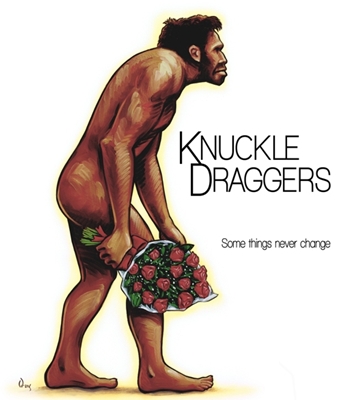 Instituting religious doctrine is something that just shouldn’t happen in this country. Yet, many Kansas legislators just want a theocracy. What’s the matter with Kansas, still? Do they confuse acorns with trees and scrambled eggs with fried chicken too? Don’t women deserve to keep their medical records out of the hands of their state governments?
On Friday, the Kansas Board of Healing Arts refused to reinstate the medical license of Dr. Ann Neuhaus, who provided second opinions to abortion provider Dr. George Tiller between 1999 and 2006. Kansas law requires a second opinion to perform some late-term abortions. Neuhaus’ license was revoked by an administrative court in February following a 2006 complaint from the anti-choice group Operation Rescue alleging she did not take the safety of teenage patients seriously in 2003 because of the short length of patient record files for her cases.
But the sparseness of her patient notes was an attempt to protect their privacy from the anti-choice crusade of a state official. Around the time Neuhaus performed the abortions, the Kansas Attorney General Phill Kline was investigating abortion providers — going so far as to subpoena medical records and discuss those cases on right-wing television shows. Indeed, Neuhaus specifically cites Kline’s “investigation” while arguing her exams met accepted care standards:
She…testified that she didn’t put more details in her records to protect patients’ privacy. After the hearing, she said she was “unapologetic” for that, noting the Kansas attorney general’s office began investigating abortion providers, including Tiller, starting early in 2003, and in 2006, Fox television’s Bill O’Reilly strongly criticized Tiller and discussed a few of his patients’ cases on his program.
Kline faces an ongoing ethics complaint case alleging he “lied to the Kansas Supreme Court, misled a Johnson County grand jury investigating an abortion provider and discussed an ongoing case on ‘The O’Reilly Factor’” that throw weight behind Neuhau’s fears, but whether or not she could get a fair hearing was doubtful. Gov. Sam Brownback (R) recently appointed former Operation Rescue attorney Richard Macias to the board, and one expert witnesses called by the Board testified there were no cases in which providing an abortion could be beneficial to a patient’s mental health.
While Neuhaus plans to appeal, the entire saga paints a stark portrait of how pervasive anti-choice influence is at some state levels — and the untenable position that influence means for health care providers. Then again, perhaps it’s no surprise a state that seriously debated legislation that would force doctors to misinform their patients about health risks would put an anti-choice agenda before the well-being and medical privacy of it’s citizens.
Republican state legislators are just dying to get all women’s constitutional rights put before those Opus Dei freaks on SCOTUS.
More information on this from RH Reality Check.
According to the Associated Press, Neuhaus was hoping to have her full medical license restored after spending years only allowed to provide limited medical care for charity work. Instead, an ongoing investigation into 11 patient cases obtained by Operation Rescue became the center of a movement to have her license stripped all together.
The cases all involved girls who sought abortions due to mental health issues from depression to suicide, with an age range from 17 years old to as young as 10. The board alleged that Neuhaus’s exams were not thorough enough based on the available records provided, and that her follow up care was inadequate, as she did not recommend counseling or hospitalization afterwards.
Neuhaus called the accusations ridiculous. She said she refused to put too much identifying information in the records because she knew that they could eventually end up in the hands of outsiders and violate the patients’ privacy. As for abortions not being necessary, Neuhaus found that laughable as well.
“To even claim that isn’t medically necessary qualifies as gross incompetence,” said Neuhaus. “Someone’s 10 years old, and they were raped by their uncle and they understand that they’ve got a baby growing in their stomach and they don’t want that. You’re going to send this girl for a brain scan and some blood work and put her in a hospital?”
Monday Reads (with SCOTUS updates)
Posted: June 25, 2012 Filed under: abortion rights, Economy, morning reads | Tags: individual mandate, Mississippi's last standing abortion clinic, Newspapers, public interest, state capitalism, Vagina Rupert Murdoch 21 Comments
Good Morning!
The last abortion clinic in Mississippi may be the latest victim of the christofascist republican war on women. It may become the first state in the union where women have no access to this constitutional right. Take a look at the pictures at the link and tell me its not a christofascist movement akin to the religious fundamental crazies that plague underdeveloped nations. Why can’t we just export these creeps to Afghanistan instead of soldiers and money?
Beginning July 1, all abortion-clinic physicians must have admitting privileges at a local hospital under a law passed by the Republican-led Legislature and signed by Republican Governor Phil Bryant in April. At the Jackson Women’s Health Organization, the state’s sole remaining clinic providing elective abortions, none of the three physicians who perform the procedure has been granted those privileges.
Mississippi may become the first U.S. state without a dedicated abortion clinic if the Jackson facility fails to come into compliance. That would mark the most visible victory for the anti-abortion movement, which has fought to abolish the procedure in the face of the U.S. Supreme Court’s 1973 Roe v. Wade decision guaranteeing a woman’s right to have one.
“Roe v. Wade said that women have a right to an abortion in the sense that a state can’t deny or criminalize it, but there was no guarantee of access,” said Wendy Parmet, associate dean at Northeastern University School of Law in Boston. “States can’t create legal barriers or penalties, but they can make it practically really, really difficult.”
Betty Thompson, a spokeswoman for the clinic in the state capital, said the doctors have applied to seven area hospitals for admitting privileges. All three are already board certified in obstetrics and gynecology, as the new law also requires, she said.
I’ve long argued that Rupert Murdoch should be deprived of access to the public airwaves. He’s a threat to the Public Interest.Here’s some more opinion on that via the UK Guardian. Can the Brits get rid of this menace? Can any democracy afford a corporate monopoly on information that functions as a propaganda tool for the personal interests of its owner?
In the UK, there is currently more choice, but the economics of news are undergoing a fundamental revolution, so nothing should be taken for granted. There are other powerful media organisations in the UK, including the BBC. In order to gauge the potential threat, try asking seven critical questions:
a) Does it have strong internal governance?
b) Is it effectively externally regulated?
c) Is it subject to, and does it comply with, the law?
d) Is it subjected to normal scrutiny by press and parliament?
e) Does it overtly try to exert public political influence?
f) Does it privately lobby over regulation or competition issues?
g) Does it actively work to expose the private lives of politicians or other public figures?
On such a scorecard, the BBC would score one out of seven – in the sense that only one of the issues, f), is engaged. News Corp would score seven.
Richard Pomfret–a Professor of Economics at Adelaide University–has written a new book on a widely accepted compromise between aggregate prosperity and distributional equality. He discusses his thesis at VOXEU.
It is in this spirit that my new book, The Age of Equality, argues that we are still experiencing the long-term consequences of the industrial revolution of the 1700s, and that the current state of that process involves a widely accepted compromise between aggregate prosperity and distributional equality.
Unlike political revolutions that can be dated to 1789 or 1917, the industrial revolution does not have a precise date. However, by the early 1800s it had clearly taken hold in parts of northwest Europe. The new industrial production involved factories with division of labour (exemplified by Adam Smith’s pin factory on the UK’s £20 banknotes) which employed increasingly capital-intensive techniques and applied the results of scientific, or at least casual empirical, observation. It was associated with risk-taking entrepreneurs and mobile workers, who responded to price incentives and were rewarded if they made the right decisions. The process was opposed by those enjoying privileges in the pre-industrial economy, e.g. inherited monarchs with absolute power, landowners with serfs or guild members.
Countries adopting the new system enjoyed unprecedented long-term economic growth. They sought and won global markets for their products so that they could expand the division of labour and capital-intensity of their factories, and they established global empires. Success was no secret. The new system spread across Europe, regions settled by Europeans, and a few other places (notably Japan).
Change was resisted by the ancien régime or by imperial rulers. The 1800s were an Age of Liberty because successful economies were those in which people enjoyed sufficient freedom to respond to economic incentives. The pressure to allow such freedom culminated in the 1910s, with the collapse of the great dynastic empires centred in Saint Petersburg, Vienna, Berlin, Constantinople and Peking.
Yet, even as living standards increased, opposition to unbridled capitalism strengthened. In all of the high-income countries there is evidence of income inequality peaking around the first decade of the twentieth century.
- In the US, progressives pushed to reduce the power of the rich by antitrust legislation and to protect the poor by social policies.
- In Europe, socialists’ challenge to capitalism was more fundamental.
The great experiment of the twentieth century was a competition between economic systems over which could best balance prosperity and equality.
That was the case until 1989. Then, unbridled capitalism began to take root in Europe and North America. This is not the case, however, in other parts of the world. Here’s a reminder of more folks that are adopting a different approach.
The era of free-market triumphalism has come to a juddering halt, and the crisis that destroyed Lehman Brothers in 2008 is now engulfing much of the rich world. The weakest countries, such as Greece, have already been plunged into chaos. Even the mighty United States has seen the income of the average worker contract every year for the past three years. The Fraser Institute, a Canadian think-tank, which has been measuring the progress of economic freedom for the past four decades, saw its worldwide “freedom index” rise relentlessly from 5.5 (out of 10) in 1980 to 6.7 in 2007. But then it started to move backwards.
The crisis of liberal capitalism has been rendered more serious by the rise of a potent alternative: state capitalism, which tries to meld the powers of the state with the powers of capitalism. It depends on government to pick winners and promote economic growth. But it also uses capitalist tools such as listing state-owned companies on the stockmarket and embracing globalisation. Elements of state capitalism have been seen in the past, for example in the rise of Japan in the 1950s and even of Germany in the 1870s, but never before has it operated on such a scale and with such sophisticated tools.
State capitalism can claim the world’s most successful big economy for its camp. Over the past 30 years China’s GDP has grown at an average rate of 9.5% a year and its international trade by 18% in volume terms. Over the past ten years its GDP has more than trebled to $11 trillion. China has taken over from Japan as the world’s second-biggest economy, and from America as the world’s biggest market for many consumer goods. The Chinese state is the biggest shareholder in the country’s 150 biggest companies and guides and goads thousands more. It shapes the overall market by managing its currency, directing money to favoured industries and working closely with Chinese companies abroad.
State capitalism can also claim some of the world’s most powerful companies. The 13 biggest oil firms, which between them have a grip on more than three-quarters of the world’s oil reserves, are all state-backed. So is the world’s biggest natural-gas company, Russia’s Gazprom. But successful state firms can be found in almost any industry. China Mobile is a mobile-phone goliath with 600m customers. Saudi Basic Industries Corporation is one of the world’s most profitable chemical companies. Russia’s Sberbank is Europe’s third-largest bank by market capitalisation. Dubai Ports is the world’s third-largest ports operator. The airline Emirates is growing at 20% a year.
So, you can see my read suggestions are a little esoteric today. There’s not much going on. Folks are waiting to see if SCOTUS announces its decision on the Affordable Health Care Act and Arizona’s immigration law. Folks are also waiting for congress to act on the doubling of student loan rates and the highway bill. Drama is coming this week.
I just have to add one more. Jimmy Carter wrote an op-ed today in the NYT about America’s Shameful Human Rights Record. Wasn’t he part of the hoopla over the lightbringer about 8 years ago? Is this Nobel Peace Laureate lecturing another? Wow. How times change. He names no names but the implications seem pretty clear to me.
THE United States is abandoning its role as the global champion of human rights.
Revelations that top officials are targeting people to be assassinated abroad, including American citizens, are only the most recent, disturbing proof of how far our nation’s violation of human rights has extended. This development began after the terrorist attacks of Sept. 11, 2001, and has been sanctioned and escalated by bipartisan executive and legislative actions, without dissent from the general public. As a result, our country can no longer speak with moral authority on these critical issues.
While the country has made mistakes in the past, the widespread abuse of human rights over the last decade has been a dramatic change from the past. With leadership from the United States, the Universal Declaration of Human Rights was adopted in 1948 as “the foundation of freedom, justice and peace in the world.” This was a bold and clear commitment that power would no longer serve as a cover to oppress or injure people, and it established equal rights of all people to life, liberty, security of person, equal protection of the law and freedom from torture, arbitrary detention or forced exile.
What’s on your reading and blogging list today?
Update:
The Supreme Court Announces Arizona Immigration Decision Today.
US Supreme Court (#SCOTUS) ruling upholds ‘show me your papers’ provision of Arizona immigration law. Details soon http://www.bbcnews.com
From the SCOTUS AZ decision: “As a general rule, it is not a crime for a removable alien to remain in the United States.”
Tom Goldstein of Scotusblog: “On net, the #SB1070 decision is a significant win for Obama Admin. It got almost everything it wanted.
note: the link to Scotusblog above goes to a live discussion on the decisions being released today …
OTHER Decisions:
The MT campaign finance case, 11-1179, is summarily reversed. The vote is 5-4, the majority opinion (one page long) is per curiam, Justice Breyer writes for the dissenters. http://www.supremecourt.gov/opinions/11pdf/11-1179h9j3.pdf
National Journal
@nationaljournalSCOTUS: “There can be no serious doubt” that Citizens United ruling applies to Montana state law. http://njour.nl/MKLeXI
Miller and Jackson, juvenile life without parole cases, have been decided. Life w/o parole sentences for juveniles who commit murder are unconstitutional. Justice Kagan wrote the opinion. Vote is 5-4. http://www.supremecourt.gov/opinions/11pdf/10-9646g2i8.pdf
No #HCRdecision from #SCOTUS today. Stay tuned for Thursday. It appears to be going down to the wire.
Republican Freak Out in Michigan: Don’t Say Vagina!
Posted: June 18, 2012 Filed under: abortion rights, U.S. Politics, War on Women, Women's Healthcare, Women's Rights | Tags: anti-abortion bills, Aristotle, Dahlia Lithwick, Eve Ensler, Michigan House of Representatives, Rep. Barb Byrum, Rep. Lisa Brown, Rep. Mike Callton, Speaker James Bolger, vagina, Vagina Monologues 36 Comments
It’s been a few days since Michigan State Rep. Lisa Brown and her colleague Rep. Barb Byrum, both Democrats, were silenced by the Republican House majority for speaking out against a highly restrictive anti-abortion bill.
Republican males were so horrified by these transgressions that they punished the women by banning them from speaking on the House floor the following day–the last day of the legislative session.
A spokesman for Michigan Speaker James Bolger said in a statement that Brown would not be allowed to give her opinion on a school employee retirement bill Thursday because she had “failed to maintain the decorum of the House of Representatives.”
Republican Rep. Mike Callton added that Brown’s remark went over the line.
“What she said was offensive,” Callton told The Detroit News. “It was so offensive, I don’t even want to say it in front of women. I would not say that in mixed company.”
Brown was punished for uttering the word “vagina”:
Brown, a West Bloomfield Democrat and mother of three, said a package of abortion regulation bills would violate her Jewish religious beliefs and that abortions be be allowed in cases where it is required to save the life of the mother.
“Finally, Mr. Speaker, I’m flattered that you’re all so interested in my vagina, but ‘no’ means ‘no,'” Brown said.
Byrum offended the powers that be by trying to introduce an amendment to the bill
banning men from getting a vasectomy unless the sterilization procedure was necessary to save a man’s life.
“If we truly want to make sure children are born, we would regulate vasectomies,” Byrum told reporters Thursday.
You’d think these men would be embarrassed after turning themselves into a national laughingstock, but apparently not. The controversy continues. Today Lisa Brown will participate in a reading of The Vagina Monologues on the Capital steps in Lansing. She will be accompanied by other female legislators and a teenage actress from Howell. The play’s author, Eve Ensler is flying in for the occasion.
What is so upsetting about the word “vagina?” At the WaPo, Susan Thistlethwaite says the male fear of the female organ goes all the way back to Aristotle.
The obvious revulsion of these Michigan male legislators at the term “vagina” goes well beyond politics. If you really want to understand why some Michigan legislators find the word “vagina” disturbing and unsuitable for “mixed company,” you’ve got to go all the way back to Aristotle.
Aristotle thought women were more material (carnal) and men more rational (active). According to Aristotle, the fully developed human is male, and a woman “is as it were a deformed male” (Generation of Animals, 737a. 28). This has disposed western culture, and especially Christianity, to consider women’s bodies as profane rather than sacred, and thus by extension too offensive to talk about in public.
But wait, this isn’t the mid-fourth century BCE, the time when Aristotle wrote. It’s not even the Middle Ages. It’s the 21st century, and women will not sit still and have their bodily parts considered “disturbing,” while simultaneously being regulated without their consent.

And at Slate, Dahlia Lithwick has a suggestion for a new bill for Michigan Republicans:
The scourge of women being allowed to speak the word vagina in a legislative debate over what happens when women use their vaginas must be stopped. And if women are not capable of regulating their own word choice, the state should regulate it for them. To that end, we propose that the Michigan House promptly enact HB-5711(b)—a bill to regulate the use of the word vagina by females in mixed company.
The bill will include Part A(1)(a) providing that any women who seeks to use the word vagina in a floor debate be required to wait 72 hours after consulting with her physician before she may say it. It will also require her physician to certify in writing that said woman was not improperly coerced into saying the word vagina against her will. Section B(1)(d) provides that prior to allowing a female to say the word vagina a woman will have a mandatory visit with her physician at which he will read to her a scripted warning detailing the scientific evidence of the well-documented medical dangers inherent in saying the word vagina out loud, including the link between saying the word vagina and the risk of contracting breast cancer.
Read the rest of the bill’s language at the above link.
Will any of this affect the Republican Party’s obsession with reversing women’s rights? Probably not, but I’ll bet some of their female constituents will be paying attention.
Sunday Morning Reads………An Eclectic Mix
Posted: June 17, 2012 Filed under: abortion rights, bees, Climate Change, Environment, morning reads, Nigeria, social media, toxic waste, U.S. Military, Violence against women | Tags: 350.org, activism, Bill McKibbon. Emem Okon, environment, fossil fuels, gardening, rape in the military, Rio+20, Twitterstorm 41 Comments
Good Morning, All. I am pinch hitting for JJ while she and her family are visiting our nation’s capital. I haven’t traveled much, but I have been to D.C. twice. What an amazing place. This will be an eclectic mix of links and stories, covering many different categories. I hope you will find at least some of them of interest to you.
This first group is about gardening. bb had mentioned to me that she likes to work in her garden, so I figured she would enjoy these. The first is a list of ideas on how to attract butterflies to your garden.
Planting your garden with plants that attract butterflies is only one step in making your garden butterfly-friendly. Once butterflies discover your garden the females will lay eggs on plants that become food for the hatching caterpillars.
The host plant selected, and the time of year the eggs are laid, depends on the species of butterfly. Different butterflies prefer different host plants.
Bees are pollinaters, picking up pollen as they go from flower to flower to gather nectar. Obviously they are an important component for a successful garden. Besides nectar, bees also need water and this has ideas about how to make a watering hole for bees.
As the temperature rise in the garden it is important to remember the bees you’re attracting to your garden will also be searching for water. For bees, a supply of water is as important as pollen and nectar forage in the summer.
Besides the lovely green foliage of a garden, it is important to do what we can to use “green” products. Treehugger contributor Ramon Gonzalez provides a list of 10 sustainable garden products.
A garden that is kinder to the earth can be achieved through the selection of products and tools that are sustainably manufactured or given new life through recycling. It’s never been so easy to build a garden that’s green from the moment you plunge that spade into the soil.
Many commercial fertilizers used in both gardening and farming contain phosphates. Aasif Mandvi of The Daily Show covered a story about Simplot, a phosphate mining company in Idaho. Naturally, it is a satirical look at the dangers of phosphate mining and the damage being done by the by-product, selenium. Greater Yellowstone Coalition is an environmental organization working to get J.R. Simplot Co. to Clean Up Its Smoky Canyon Mine Superfund Site.
The New York Times featured a story and video today about the industrial damage done to Newtown Creek since the mid-1800s, and Mitch Waxman who has chronicled its history. The waterway was declared a Super Fund site in 2010.
If Mitch Waxman is your guide, he will identify it as the derelict smokestack of Peter Van Iderstine’s fat-rendering business, which first set up shop in 1855. But he won’t stop there.
He will expound on the archaic waste-disposal operations that once flourished on the creek, conjuring scenes of putrescent horse carcasses floating in on barges from Manhattan and docks piled with manure three stories high. The narrative will extend to Cord Meyer’s bone blackers and Conrad Wissel’s night soil wharf — the gothic names of these forgotten businesses rattled off in a distinct Brooklyn accent.
At some point, he will start in on the horrors of the M. Kalbfleisch Chemical Works, eventually making his way to the sins of Standard Oil.
Moving on to some stories about activism that caught my eye. The first story comes from Truth-Out about The Heritage Foundation’s conference to re-brand the Occupy Movement. Matt Dineen interviews Jason del Grandio, the author of Rhetoric for Radicals. Here’s a snippet of what Jason has to say about his perceived purpose of the conference.
The speakers make frequent reference to capitalism, free markets and free enterprise, and often mention traditional buzzwords like individual liberty and the pursuit of happiness. The Heritage Foundation is trying to understand the populist appeal of Occupy, and by doing so, trying to use that appeal to “win back” some of the Occupiers. Or, at the very least, to impede Occupy’s progress and win the hearts and minds of those who are still on the fence.
Brian Merchant interviews Tzeporah Berman, an environmental activist since was was 19, for Treehugger. This quote really hit home for me – you can’t un-know or un-see an injustice once your eyes, mind and heart have been opened to them.
Sometimes I wish I could open up a paper and not be immediately drawn to the story about mercury in fish or the dramatic increase in flooding in Sudan. But I can’t now.
Have you heard of Emem Okon, the Nigerian ecofeminist? I had not. She is a courageous woman, organizing other women of the Niger River Delta and taking on Chevron. The interview from Antonia Juhasz is reprinted from Ms magazine on Truth-Out.
One of the most prominent voices was Emem Okon, founder and executive director of Kebetkache Women Development & Resource Centre of Nigeria. A community organizer and women’s rights activist from the Niger Delta, Okon is leading a thriving Nigerian ecofeminist movement. She has coordinated several local women’s networks and coalitions, including Women Against Climate Change (WACC), International Network on Women and Environment, Niger Delta Women for Justice and Niger Delta Women’s Movement.
Speaking of women, the New York Times featured a story on the the Human Rights Film Festival at Lincoln Center. The review starts off with a profile of The Invisible War, which won the 2012 Audience Award at the Sundance Film Festival.
It hardly needs to be said that any armed force has the potential for internal as well as external violence. But “The Invisible War,” Kirby Dick’s incendiary documentary about the epidemic of rape within the United States military, is a shocking and infuriating indictment of widespread sexual attacks on women. Such behavior, the film argues, is tacitly condoned and routinely covered up; the victims are often blamed and their reputations destroyed.
I found other links to discussions of the film, at the military publication, Stars and Stripes along with stories about Congress denying healthcare coverage for abortions for military women who have been raped. from Mother Jones.
The Rio+20 Summit begins on Monday, June 18th. President Obama and England’s David Cameron WON’T be attending, however Hillary Clinton will be representing the U.S. BBC News has more about Rio+20 and the awful state of the world’s oceans.
The researchers assessed the various pledges made at the landmark 1992 Earth Summit and 10 years later at the Johannesburg World Summit on Sustainable Development.
Governments vowed to establish an ecologically sound network of marine reserves by 2012, eliminate subsidies that contribute to illegal fishing, protect critical habitat, look after the needs of local fishermen and restore depleted stocks to healthy levels by 2015.
Subsidies have not been eliminated, and illegal fishing is still a major issue in some parts of the world.
Tom Ashbrook, host of NPR’s On Point, interviewed Bill McKibben of 350.org on Friday’s show. McKibben’s name is probably best known for the protests against the Keystone XL Pipeline, held outside of the White House, along with his subsequent arrest for protesting. You can listen to the audio at the link above. Here’s a short introduction:
Environmental champion Bill McKibben wrote nearly a quarter century ago about what he called “the end of nature.” The untouched wild. He didn’t think he was writing about the end of the world. But the climate change path since then has been a scary one. Bad to worse.
And McKibben has gone from writerly philosopher to full-on environmentalist to activist in handcuffs. Political street fighter. He was at the heart of the campaign to stop the Keystone XL pipeline. Arrested at the gates of the White House.
The current campaign of McKibben and 350.org is ending fossil fuel subsidies. These companies are paid by governments in the neighborhood of 1 TRILLION DOLLARS a year to pollute our planet. 350.org is organizing a Twitterstorm for June 18th. Although I don’t have a cell phone (and refuse to get one), I plan to set up a Twitter account so that I can participate. I hope that you will go to the link and sign up to participate as well. This quote comes from Treehugger about the Twitterstorm:
If you’re itching to do some petition signing right now: End Fossil Fuel Subsidies, and check out how your representative (in the US) stands on ending subsidies: End Fossil Fuel Subsidies Scorecard
There’s also more info on the Facebook event page: Twitter Storm: #EndFossilFuelSubsidies
Since it’s Father’s Day, I thought I would end this with a trbute video to a very special Dad
from Discovery News.

 peej
peej Carissa
 bostonboomer
 dakinikat
 ecocatwoman
 mablue2
 Mama Lopez
 peggysue22
 quixote
 skydancingguestblogger
 Mona (aka Wonk the Vote)



 Sky Dancing
Recent Comments