
William Black Goes Ballistic
Posted: February 1, 2012 Filed under: 2012 elections, Bailout Blues, Banksters, corruption, Crime, Democratic Politics, double-speak, financial institutions, investment banking, The Great Recession, U.S. Economy, We are so F'd | Tags: 2012 presidential election, Barack Obama, Financial Crisis, George W. Bush, U.S. Economy 6 CommentsI’ve been reading William Black’s essays and posts, watching his video interviews and You Tube presentations, ever since I saw him on Bill  Moyers Journal speaking frankly, no holds barred, about how the financial industry had brought the country to its knees and gotten away with it. He spoke frankly again during his Congressional testimony last year when he came right out and called the mortgage debacle that nearly finished the US economy . . . fraud. Yes he used the ‘f’ word! This was unlike other ‘experts’ who insisted there was no inkling of trouble on the horizon, that the financial meltdown was ‘an act of the economic gods,’ a huge surprise, the product of overly optimistic financial predictions.
No, Black said. It was fraud. It was criminal. In case you missed that testimony, you can watch below. It’s worth a second go-around.
Too bad Black’s comments were basically ignored, caught up in the razzle-dazzle of excuses, half-truths and political posturing that’s become all too familiar to anyone paying attention. Business as usual is still the acceptable mantra. In case, you’ve forgotten [time flies when we’re having so much fun], William Black headed Poppy Bush’s forensic audit team during the S&L scandal, which ultimately led to 1000 elite felony convictions.
Black’s investigative team wasn’t kidding around.
William Black came out yesterday morning with his own take on President Obama’s SOTU announcement of a Task Force [The Let’s Try It Again Task Force], quoting POTUS:
And tonight, I am asking my Attorney General to create a special unit of federal prosecutors and leading state attorneys general to expand our investigations into the abusive lending and packaging of risky mortgages that led to the housing crisis. This new unit will hold accountable those who broke the law, speed assistance to homeowners, and help turn the page on an era of recklessness that hurt so many Americans.
Black suggests we look at the wording, the avoidance of using the ‘f’ or ‘c’ word. That would be fraud and criminal. His response to this and Eric Holder’s follow up memorandum:
The working group will not “investigate … abusive lending” and it will not “hold accountable those who broke the law … [by defrauding] homeowners.” It will not “speed assistance to homeowners.” It will not “turn the page on an era of recklessness” – and fraud, not “recklessness” is what prosecutors should prosecute. The name of the working group makes its crippling limitations clear: the Residential Mortgage-Backed Securities Working Group. Attorney General Holder’s memorandum about the working group makes clear that the name is not misleading. The working group will deal only with mortgage-backed securities (MBS) – not the fraudulent mortgage origination that drove the crisis (the only exception is federally insured mortgages).
Clearly, he’s not impressed. No, instead he’s disgusted and enraged. In fact, the essay nearly jumps off the page with genuine anger. He goes on to say:
The working group is a symbolic political gesture designed to neutralize criticism of the administration’s continuing failure to hold accountable the elite frauds that drove the crisis. Neither the Bush nor the Obama administration has convicted a single elite fraud that drove the crisis. This is a national disgrace and represents the triumph of crony capitalism. Remember that the FBI warned in September 2004 that there was an “epidemic” of mortgage fraud and predicted that it would cause a financial “crisis.” There are no valid excuses for the Bush and Obama administrations’ failures. The media have begun to pummel the Obama administration for its failure to prosecute. The administration could not answer this criticism with substance because it has nothing substantive to offer in prosecuting elite mortgage origination frauds. The ugly truth is that we are three full years into his presidency and Holder could not find a single indictment to bring that Obama could brag about in his SOTU address. Who doubts that Holder and Obama would have done so if they had anything in the prosecutorial pipeline? Why do Holder and Obama have nothing in the pipeline?
One of the other things that deeply disturbs Black is President Obama’s willingness to play politics in this matter, float the gambit of the Task Force /Working Group and the reputation of Eric Schneiderman to create the appearance of a genuine hands-on effort. But this move is not genuine as far as Black is concerned and contradicts the very essence of President Obama’s SOTU address, conjuring up the Seal Team that took out Osama Bin Laden—a team effort, concentrating on the mission.
This is no more than vulgar propaganda, Black claims.
He also refers to a disclosure made by Scot Paltrow for Rueters 10 days ago, revealing that US Attorney General Eric Holder and Lanny Breuer, heading the DOJs criminal division [also a co-chair of the ‘Let’s Try It Again Task Force], had been partners at Covington and Burling, a well-established and well-heeled law firm that represented many of the largest banks, providing cover for their clients through key arguments on the MERS debacle.
Conflict of interest anyone?
The state Attorney Generals? They were lobbyied, leaned on, even offered [as was the case of AG Kamala Harris, CA] $8 billion to assist damaged California homeowners in a bid to agree to the original deal, which would have offered the big banks immunity from liability. All so the President could announce ‘a deal’ in his State of the Union address, even though homeowners would be left out to dry and bank executives, who led deliberate “accounting control frauds,” could continue their conduct with absolute impunity.
This is ugly, made all the uglier in that it was sanctioned through and by the White House. Black suggests that Eric Schneiderman recognized the leverage he had, agreed to join the Task Force as a co-chair with the stipulation that the original deal be modified, specifically concerning civil liability in mortgage origination fraud.
This might explain Jamie Dimon’s whine last Friday, pouting and claiming bankers are the objects of unfair discrimination. Really? Here’s the average American’s response:
Of course, you would think that this mess would be a window of opportunity for Republicans in an election year. What an incredible club to use on President Obama to win the WH, maybe the House and the Senate by gargantuan majorities.
No fear there because for every compromised Democrat there is an equally compromised Republican. Both the Democrats and Republicans rely heavily on campaign contributions from the financial sector. Neither side is willing to cut their bankers [crooked or not] off at the knees.
What to do? What better reason to support any and all actions to get money out of the political arena. Until we do? The world belongs to the highest bidder.
The Good, the Bad and the Ugly
Posted: January 31, 2012 Filed under: Department of Homeland Security, Drone Warfare, ethics, Patriot Act | Tags: military-industrial complex, surveillance state, unmanned aerial vehicles, war 12 Comments Fast on the heels of giving the US Military props for their funding, R&D and real-time application of alternative energy sources, I’m reminded that in all things involving humans, the good, the bad and the ugly principle applies. Chalk this up to a gentle knock on the noggin, a serious reminder that our military’s purpose is to defend the country, develop defense and wartime strategies [alternative energy works into this] and support all things weapon-related with gusto.
In this case, the subject is drones, aka UAVs [unmanned aerial vehicles], a new generation that is sure to amaze. And disturb.
An article I recently read made my jaw drop with awe and an undeniable sense of foreboding. We could call this the nascent I Robot stage of drone development. I’ve written to the subject of drones before. The science is incredible but I find the use of drones, war and peace applications alike, incredibly creepy.
The X47B, however, a fully-automated drone being tested by the Navy is in a class of its own.
Fully automated. Meaning no one in Omaha is joy-sticking the X47B remotely, guiding its maneuvers, reconnaissance or defensive/offensive usage. This drone will be dependent on onboard computers, perceiving threats through highly attuned sensors, and then acting, accordingly.
How sophisticated is this drone? X47B has been designed to land on an aircraft carrier at sea. My husband served in the Navy and lived on a carrier [a floating city] of approximately 5000 personnel. Though not a pilot, he’d be the first to say that landing an aircraft on any carrier is incredibly challenging.
X47B is that advanced, that sophisticated.
The speed with which robotic aircraft is developing is frankly . . . stunning. On 9/11, the US military had few drones in its arsenal. Reportedly, 1 in 3 US aircraft are now robotic, primarily because of the cost effectiveness in comparison to traditional planes and reduced casualties to military personnel. As aerospace pioneer Simon Ramo stated in his book “Let Robots Do the Dying:”
More aggressive robotry development could lead to deploying far fewer U.S. military personnel to other countries, achieving greater national security at a much lower cost and most importantly, greatly reduced casualties.
But as has been pointed out in numerous articles, we aren’t fighting Robot against Robot wars. At least not yet. Israel’s R&D drone technology is said to have started as early as 1992. Russia, Pakistan, even Iran are funding and developing their own drone programs. In fact, according to ABI Research, 65 countries are utilizing or developing drone programs. We’ve seen and read of the carnage when drones miss their target or targets are just plain wrong. We’re talking Robots vs. Humans and the question of accountability cannot be dismissed.
X47B is a new generation, a next step. As startling as its capabilities sound, the X47B will not be alone in the expanding robotic landscape. We have robotic ground vehicles, mapping robots, IED detecting devices [that look like oversized Tonka toys] in the field, as well as robotic submarines and tanks to small, insect-like drones, complete with micro-cameras, in development.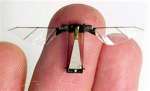
Ready or not, we’re approaching a Brave New World of robotics and weapon development. The US military sees robotic vehicles, surveillance equipment and weapon systems replacing manned missions to handle the Three Big D’s—dull, dirty and dangerous. Defenders of autonomous systems insist that on-ground personnel will have the ability to abort missions and on-board computer-driven directives. Still, the question lingers–if on-board computers are making split second computations would a manual ‘abort’ order have any relevance?
But what sets the X47B apart from its predecessors?
 The GPS-based navigation and landing system is state-of-the-art, making the carrier landings feasible for this fighter-sized vehicle. In addition, the program will allow the drone to conduct aerial refueling. Missions would be preprogrammed, making remote guidance unnecessary. The X47B provides a far larger payload, allowing it to attack larger targets and perform multiple back-to-back missions, many of which would be beyond human endurance. And it has stealth capabilities.
Robotic technology is racing forward. What has not proceeded with equal speed or ease is the conversation about the ethics and morality involved in using these systems, particularly as relates to the chain of accountability.
As Noel Sharkey, computer scientist and robotics expert, recently stated in the LA Times:
Lethal actions should have a clear chain of accountability. This is difficult with a robot weapon. The robot cannot be held accountable. So is it the commander who used it? The politician who authorized it? The military’s acquisition process? The manufacturer, for faulty equipment?
The LA Times further states:
Sharkey and others believe that autonomous armed robots should force the kind of dialogue that followed the introduction of mustard gas in World War I and the development of atomic weapons in World War II. The International Committee of the Red Cross, the group tasked by the Geneva Conventions to protect victims in armed conflict, is already examining the issue.
There is no denying that we’re entering a far different world in the way wars, international tensions, border protection, even domestic policing will be handled in the near future. Let’s hope the right questions are asked and adequate answers provided before we slide down a very slippery slope.
Is there oversight? you may ask. If the Congressional Unmanned Vehicle Caucus is an example, not much. Though the caucus likes to advertise itself as a watchdog it has become little more than a booster club for all things drone. For instance, instead of questioning the enormous amount of money, the cost-effectiveness of domestic drones used for border surveillance—illegal drug smuggling and illegal immigration—or even the success rate of the domestic drone fleet [which is anything but spectacular], the Department of Homeland Security actively supports the acquisition of ever-expanding systems. As is so often the case, it’s a ‘follow the money’ love affair. Alternet reports that:
In the 2010 election cycle, political action committees associated with companies that produce drones donated more than $1.7 million to 42 congressional members who were members of the congressional drone caucus.
Yup, it’s always the same formula, working the cheap seats with suitcases of ready cash.
X47B will be testing its carrier landing capabilities in 2013, aerial refueling in 2014, and if all goes as planned the drone will be operational by 2016-17.
There’s still time for Americans to demand a serious Q&A. But not much time.
Falling Out of Love with . . . Eric Schneiderman
Posted: January 29, 2012 Filed under: investment banking, U.S. Economy, U.S. Politics | Tags: bait and switch, Barack Obama, Eric Schneiderman, mortgage fraud investigation, U.S. attorneys 28 Comments When I first heard about NY State Attorney General Eric Schneiderman standing up and pushing back against DC’s rush to settle with Wall St bankers and mortgage servicers over the foreclosure debacle, I cheered. In fact, I did more than cheer. I wrote to Schneiderman and thanked him for having the courage and integrity to stand with American homeowners, those who had been abused by unfair [and illegal] business practices, and then further compromised by mortgage modifications and refinancing schemes that turned into a giant con game.
The stories were always the same, particularly with the mod and refi angle. Homeowners called their lending representatives. They were encouraged to fill out mountains of paperwork, pay a particular monthly amount, and then [months later] once they fulfilled their obligation? They were told they did not qualify, would be required to pay ‘x’ amount of dollars upfront or the local sheriff would be knocking at the door. And not for a friendly ‘hello.’
The bait and switch games have been cruel, destructive and predatory. The idea that these same financial institutions–unable to produce proper and legal paperwork on many of these properties, the whole robosigning/MERS debacle—were being offered a sweetheart deal including immunity from civil and criminal prosecution was nothing short of outrageous.
Schneiderman stood up first and said, ‘No.’ He was later joined by five additional state attorney generals: Beau Biden [DE], Martha Coakley  [MA], Catherine Cortez Masto [NV], Kamala Harris [CA] and Lisa Madigan [IL]. Each has pledged to independently investigate the malfeasance and fraud in the mortgage industry and seek prosecution where warranted.
However, during his State of the Union Address, President Obama announced the creation of a Federal Mortgage Fraud Task Force. To my dismay and that of many others, it was subsequently announced the aggressively independent Schneiderman was joining the DC team.
The immediate question [and I’m glad I’m not alone in this]: Will Eric Scneiderman be sucked into the Washington Borg, be used for window dressing by the Administration or remain staunchly on the side of ordinary Americans, who have been abused and sucker-punched enough.
Though I’m generally an optimist, I have to admit—it does not look good.
As an article at Yves Smith’s site pointed out, the very fact that negotiations with the TBTFs proceed uninterrupted sends up a red flag. Why proceed with negotiations, offering the banks a back door exit, if you’re running an investigation into fraud? The composition of the Task Force is also troubling, composed as it is with people from the original Task Force that has done very little. Consider Eric Holder, for instance—not exactly the poster child of a justice fighter.
Additionally, indications are that a miniscule fraction of FBI agents [10] have been assigned to the Task Force in comparison to William Black’s forensic team [1000] to tackle the S&L scandal. Matt Stoller stated that the current investigation is on the order of 40x the magnitude and complexity although I actually heard Bill Black say the magnitude was in the 70-80x range.
In the same article, Stoller quotes Eric Holder, who seems to truly believe [or at least wants everyone else to believe] that the Administration and the DOJ have been dedicated to rooting out corruption:
On Tuesday night, the President referenced this initiative, asking us to, “hold accountable those who broke the law, speed assistance to homeowners, and help turn the page on an era of recklessness that hurt so many Americans.”
That is precisely what we intend to do. And the good news is that we aren’t starting from scratch.
Over the past three years, we have been aggressively investigating the causes of the financial crisis. And we have learned that much of the conduct that led to the crisis was – as the President has said – unethical, and, in many instances, extremely reckless. We also have learned that behavior that is unethical or reckless may not necessarily be criminal. When we find evidence of criminal wrongdoing, we bring criminal prosecutions. When we don’t, we endeavor to use other tools available to us – such as civil sanctions – to seek justice. My number one to commitment to the American people is that we will continue to devote significant resources to combating financial fraud and be as aggressive and creative as we can be in holding accountable those who, in violating the law, contributed to the financial crisis.
For example, in just the last six months, the Department has achieved prison sentences of 60, 45, 30, and 20 years in a variety of financial fraud cases charging securities fraud, bank fraud, and investment fraud. And, just last month, I announced the largest fair lending settlement in history, resolving allegations that Countrywide Financial Corporation and its subsidiaries engaged in a widespread pattern or practice of discrimination against minority borrowers from 2004 through 2008.
Either the Administration and DOJ have done a very poor job of keeping the public abreast of their multiple investigations/prosecutions or the average layperson would refer to this claim as: Don’t trust your lying eyes.
Schneiderman has reportedly stated that if the investigation is not on the up and up, he will publicly step away. He has insisted that the investigative work will be rigorous and unrelenting.
I hope he means it. I hope the queasy sense I have in my gut is wrong because false champions have become the disheartening rule.
Though I’m more likely to see the glass half full than half empty, I and many others have witnessed the same repetitive pattern: promising, good-intentioned men and women go to DC, only to be chewed up in the machine. Or irreparably compromised. And though I’ve always believed Barack Obama inept in leadership qualities, he does have an uncanny ability to disable and defang his opponents. David Dayen wrote a convincing essay to the same effect.
I want to be wrong about this. I hope the naysayers are wrong, too.
Breaking up is hard to do.

Justice And A Call For Public Hangings
Posted: January 28, 2012 Filed under: abortion rights, fetus fetishists, public hangings | Tags: abortion, North Carolina, public executions 15 Comments
We’ve seen the Hollywood version:
The gallows is assembled. The dust is high and a sense of anticipation ripples through the air. There’s a hanging come tomorrow and it’s looking to be a good day. The condemned man manages to hoist himself to the jail window. He watches the ongoing construction. He doesn’t say anything. Fixing his jaw, he looks up at the sky and we know he’s silently wondering if he can keep it together, not cry out like a little girl. Or soil himself.
The morning of? Mothers pack a lunch because the hanging is midday and the children might get hungry. The righteous men in town think a hanging is a good, fine thing. God Almighty Hisself said it–An Eye for an Eye. And their sons, these righteous men whisper, will see what hard justice looks like then buck up, choose the straight and narrow.
The whole town turns out. Dogs bark, babies cry and the sun burns down. The condemned man turns his eyes away when the black clad minister offers up a prayer. He looks beyond the crowd as if he sees something way off, something no one else can see. Or maybe his mouth is trembling and the sweat is running in his eyes but we don’t get to see much because the thin-lipped sheriff yanks a black hood over the man’s head.
A few heartbeats later, the sheriff nods to the executioner. The lever creaks, the hatch opens. The man drops with a creaking whoosh. He drops like a stone, straight into eternity. He twitches–once, twice. But then all is still.
The crowd is quiet now. Some people look away. Some smirk. Others stare at the dead man, look right through him, only to turn with a quiet resignation and everyone, even the dogs and old timers, shuffle back to whatever they’ve left undone or are loathe to go back to.
Until the next time.
I’ve always watched these scenes and thought, Thank God, I wasn’t born back in the day when an execution was considered entertainment, a welcome respite from the hard-pressed, often dreary, short lives our ancestors lived. Cultures and mindsets change, evolve.
But sometimes they don’t.
Republican Representative Larry Pittman, District 82 from the great State of North Carolina wants to bring back public hangings. A deterrent to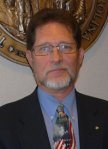 crime, he says, but noted abortion doctors first in line for the gallows.
I could brush this off as a joke, the product of a small, twisted mind but it turns out Representative Pittman expressed his view via a note, which he then emailed to every member of the North Carolina General Assembly. Seems like a particular prisoner really ticked Representative Pittman off, yanked his chain good, when said prisoner wrote a letter to the local paper [published by a most discriminating editor] in which he bragged about his cushy prison life and how endless appeals would keep his hide from the executioner for years on end.
According to the email, Representative Pittman’s reaction was, in part, the following:
We need to make the death penalty a real deterrent again by actually carrying it out. Every appeal that can be made should have to be made at one time, not in a serial manner,” Pittman wrote in the email. “If murderers (and I would include abortionists, rapists, and kidnappers, as well) are actually executed, it will at least have the deterrent effect upon them. For my money, we should go back to public hangings, which would be more of a deterrent to others, as well.
To be fair to Representative Pittman, I do not know the details of this prisoner’s crime. As far as I know, he may deserve to rot in prison forever. He may even deserve to swing from a rope. Personally, I’m not a huge fan of the death penalty, particularly when I read stats like this:
Since 1973, at least 121 people have been released from death row after evidence of their innocence emerged. During the same period of time, over 982 people have been executed. Thus, for every eight people executed, we have found one person on death row who never should have been convicted. These statistics represent an intolerable risk of executing the innocent. If an automobile manufacturer operated with similar failure rates, it would be run out of business.
Our capital punishment system is unreliable. A recent study by Columbia University Law School found that two thirds of all capital trials contained serious errors. When the cases were retried, over 80% of the defendants were not sentenced to death and 7% were completely acquitted.
But that’s an argument for another day.
Representative Pittman did, in fact, back pedal on sending his ‘opinion’ to every member of the General Assembly, claiming it was intended for a single member. He was fatigued, he said, hitting ‘Reply All’ in error. He also said that perhaps he’d gotten carried away when he vented his disgust and agitation, but he was over-wrought by his concern for the victim of the letter-writing prisoner. He was concerned about the family’s right to see justice done.
But I missed this part:
Oh, and you know the inclusion of abortion doctors, saying that they should be first in line for the gallows? I apologize. Because even I know that since abortion is still legal in this country, hanging a doctor who has performed a legal abortion would be . . . murder. As a State Representative of the Great State of North Carolina I would not want to give the impression that murder is a good thing or understandable when committed against Pro-Choice Physicians, even those who perform abortions. Because to do so would set a bad example to the very populace I’m pledged to represent. Sending that email was a foolish, unseemly thing to do.
Sadly, he did not write or say that.
As for public hangings acting as a deterrent to crime? Though Timothy McVeigh’s execution was viewed on closed circuit TV for family members of the deceased and rescue workers, the last public execution in the US, a hanging, occurred in 1936 in Owensboro, Kentucky. It was that particular execution, the carnival nature of the hanging and the coverage received, that convinced public officials that going public was not a good idea. We can go back further to find ample examples of public hangings, death by firing squad, horse and quartering, beheadings, etc.
And lo and behold, we still had crime, oodles of it. Frequently during those festive-like affairs, pickpockets flourished and prospered.
Executions were good for business.
I vaguely recall Phil Donahue calling for televised executions, back when the electric chair was still favored. His reasoning was not a pretense that viewable executions would deter crime but that seeing a man or woman electrocuted, the true ugliness of the act, would serve as a deterrent to the death penalty itself.
Was Donahue right? I don’t know. At the time, I thought the suggestion was crazy.
But calling for public hangings, including doctors who perform legal abortions, even from a fatigued state legislator is, in my opinion, a step too far. Maybe we should thank Representative Pittman for offering a window into his mind’s secret workings. We can theorize that since his opinion was ‘intended’ for a single legislator, Representative Pittman assumed his recipient was a kindred spirit, someone who shared his ‘frustrations.’
That makes at least one like-minded person serving in the NC General Assembly. We can only guess how many others.
Oh, and there’s this–in addition to being a NC representative? Mr. Pittman lists his occupation as: Pastor, Shipping Worker and Company Chaplain.
You cannot make this stuff up.

DOD Embraces the Green Giant While Keystone XL Looks Increasingly Unattractive
Posted: January 27, 2012 Filed under: Environment, Environmental Protection, Gulf Oil Spill, health hazard, toxic waste, U.S. Military, U.S. Politics | Tags: Department of Defense, going green, Keystone Pipeline, renewable energy, tar sand oil 9 Comments Frankly, I was surprised by President Obama’s comments in his SOTU address about the Department of Defense’s solar program, a project that would not only provide energy to military installations but generate enough additional energy to supply ¾ million American households.
Well, lo and behold, this is not idle chatter.
Turns out ground has been broken on a 13.78-megawatt solar power system at the Naval Air Weapons Station at China Lake, CA. The project is expected to provide over 30% of the facility’s annual energy requirement and save an estimated $13 million in costs over the next 20 years. This is in keeping with a larger strategic plan to reduce the Defense Department’s reliance on foreign oil, shrink its annual $4 billion energy bill and ensure energy security in the event of a natural disaster or other unforeseen events [sounds ominous].
A year-long study indicated that of DOD’s huge landholdings in the Mojave and Colorado deserts, across which seven military bases in California were considered– Fort Irwin, China Lake, Chocolate Mountain, Edwards, Barstow, Twentynine Palms and El Centro—and two in Nevada [Creech and Nellis], 30,000 acres were deemed suitable acreage for solar production. Future facilities could produce 7 gigawatts of electricity. To put this in perspective that’s roughly equal to 7 nuclear power plants, sufficient to supply full electricity to the 5 California bases 30 times over, enough in excess to supply 780,000 California households.
This push for renewable energy use by the military has also been taken to the battlefield, namely Afghanistan. Last year, the 3rd Battalion 5th Marines began operating with Ground Renewable Energy Networks, Solar Portable Alternative Communications Energy Systems, LED lighting systems, Solar Shades, and Solar Light Trailers. In addition to reduced fuel savings, reports indicate that alternate energy use in remote locations decreases resupply convoy runs and subsequently the danger of IED attacks. Lives saved is a definite plus.
But there’s more. Army installations force-wide have implemented a 2020 goal of net-zero energy consumption, which means reducing energy consumption, and then producing power through renewable sources.
Kristine M. Kingery, director of the Army’s sustainability policy, said pilot installations in the program are “striving toward” goals the Army wants met by 2020. “With Net Zero, the idea is not just replace the energy with renewables,” Kingery said. “It’s the reduction, the repurposing, conservation and efficiency. Reduce usage, and replace what you are using with renewables.”
As the largest institutional energy consumer in the world, the Defense Department is providing a major infusion of funding for research and development and application of renewable energy projects, including advanced biofuels, the world’s largest rooftop solar project involving 127 bases, advanced fuel cells and advanced grid technology, just to name a few.
What I find remarkable about all this activity is how DOD’s push puts the Keystone pipeline controversy in an entirely different light.
As you may recall, the Republican objection to President Obama’s recent rejection of Keystone’s proposal was presumably all about jobs. The numbers have been wildly overstated. The State Department, at best, estimated 5000-6000 temporary construction jobs created, not the 100,000 jobs Speaker Boehner recently cited. Or the 250,000 that TransCanada finally arrived at. But more importantly, claims have been made that the pipeline would help break our dependence on foreign oil. This, too, has been proven patently false since the tar sand crude, once refined, had already been contracted for export to Latin America and Europe. Even the material for the pipeline [primarily steel] was being supplied not by American suppliers but by India.
This a classic battle–the old vs. the new. And who is leading the way? The United States Military, an institution of conservative values, has taken the bull by the horns and said: Time to move on, boys. The Era of Conservation and Renewable Energy is at hand.
There’s also the environmental impact of the pipeline, the danger of a leak, something pipeline supporters have openly mocked. What is rarely mentioned is that tar sand oil requires heat and pressure to move the sludge-like material along its 1700-mile journey from the Alberta sand fields to Texan refineries. Tar sand oil is toxic and very corrosive, making leaks far more likely.
What could happen?
Unfortunately, we’ve had a graphic example of exactly what could and did happen. In Michigan, a tar sands leak, estimated at over 800,000 gallons, polluted 30 miles of the Kalamazoo River, July 2010.
And Quelle Surprise! There was a resultant cover up.
Recall the Gulf of Mexico, BP and the environmental disaster of nightmarish proportions.
Then remember that the United States Military has clearly gotten the message and acted upon it: The Age of Fossil Fuel, the rush for Black Gold is coming to an end. The way forward financially and security-wise is colored Green.
Which would you rather see–this?

Or this?

Personally? I’ll take door number 2 and follow the generals into the future.

 peej
peej Carissa
 bostonboomer
 dakinikat
 ecocatwoman
 mablue2
 Mama Lopez
 peggysue22
 quixote
 skydancingguestblogger
 Mona (aka Wonk the Vote)



 Sky Dancing
Recent Comments