
Blog Authority? Huhn?
Posted: December 7, 2010 Filed under: the blogosphere, The Little Blog that could | Tags: alexa, blog authority index, memeorandum, techorati 32 Comments About a year or so ago, I decided to look into what made a blog successful or not successful. Of course, a lot of this depends on the purpose of your blog. If it’s only to share your photos and family news, then just getting your relatives and friends on line and with the program is enough. If you’re selling something it’s another thing. I watched a neighbor build a blog for a B&B, one for a small theater, and another for a Wine and Cheese delicatessen. They were looking to reach and service new and existing customers. Political and opinion blogs have a different goal and a somewhat different metric. Since we’re in that category, I’m going to share the methodology and metrics with you. I also want to let you know why this interests me.
There are several places you can look to see how ‘seriously’ a blog is taken by the blogosphere. Just recently, an academic study–yup, you know me– was done to create a Blogosphere Authority Index and you can find the results for political blogs here. You may recognize several of the blogs rated there including Corrente. Lambert does a fine job at doing the things which create the atmosphere for a high rating for a political blog. First, he makes sure his posts are relevant to the subject. Second, he does a good job at getting links and ping backs from other blogs; especially those with higher ratings like, say Crooks and Liars. He makes comments and networks with other bloggers. That particular referenced study looks at both left and right wing blogs. I focused on the left wing or ‘progressive’ blogs.
There are several rating places that examine blogs. They don’t really look at the ‘truthiness’ of the blog, but at how effective it is at attracting readers and links. Technorati.com is probably the major one. There’s also Alexa. Alexa’s rating is the measure that I mentioned a few weeks ago when I said we started out some where in the ranking world with a number approaching 12 million. Our three month ranking stands today at 956,644 which includes only about 6 weeks of active blogging and interaction . The rest of the three month period basically relates to my using this site as a file cabinet for my economic/finance items. If you just look at our last month’s traffic, then, you’ll see our 1 month rating is 383,450. That’s a huge change and you’re part of it!! Alexa goes on traffic or page views so it ranks how many people go to a blog.
Technorati has a different set up. It rates a blog not only by overall standing, but by how well that blog attracts other blogs’ attention. It also ranks you by different subject categories. We’re really moving up in the U.S. political blog category. We now rank 257. Just today, we went up 367 places. Here’s that data.
257. Sky Dancing
https://dakiniland.wordpress.com
Recent: Julian Assange Arrested by Scotland …
U.S. Politics
Auth: 543Moved positive places Change +367 Read more: http://technorati.com/blogs/directory/politics/uspolitics/page-11/#ixzz17U8pgsZU

Wonkette was on the same page, so I took a snapshot of their numbers for comparison. Wonkette has traditionally been a highly-rated progressive blog with an active community.
236. Wonkette
Recent: So This Is What Compromise Looks …
U.S. Politics
Auth: 554Moved negative places Change -2
Since we’re relatively new at this, we’re changing quite rapidly and may not settle into our true average for another month or two. I’m going to refer back to a few links above to give you an idea of how blogs are evaluated so you know what the numbers I just gave you actually mean. Here’s an explanation for Techonorati from bulletproof blog.
Launched several years ago as a blog search engine designed to simply aggregate and organize the global online conversation, Technorati.com has ultimately evolved into a full-fledged online indexing and rating service, providing data on authority and influence. Simply plugging in the name or address of a blog into the Technorati.com search bar will provide the blog’s authority score and ranking. The authority score, which identifies a blog’s level of influence in its specific genre, is based on traffic statistics, linking behavior, and its relevance to popular topics. A blog’s Technorati.com ranking indicates where a given blog ranks among the authority scores of all blogs. The ease and expediency of Technorati.com make it one of the first places that you should stop when evaluating the influence of a blog.
The BAI study–the academic one–that created a “Blogosphere Authority Index” has different methodology and you can find the explanation in a section of the paper published here. The index attempts to blend a variety of different measures including influence.
This example is an illustration of four distinct areas of influence: network centrality, link density, site traffic, and community activity. To create a comprehensive ranking system, this paper identifies the best-available proxy for each of these types of influence, converts them to ordinal rankings, and then combines them into a single index of authority.
There is a score for site traffic (the number of people who visit a blog), the activity of the community (that would be the number of people that return to the blog and comment), and then there’s the interaction with other blogs through listings and pingbacks. This isn’t just listing some one on your blog roll. You have to actively quote the blog with an active link to it and your community needs to be interested enough in that link to go there. The other blog also needs to reciprocate. People that are really interested in bumping up their influence numbers have to go from blog to blog and actively get links and ping backs.
Other than academic curiosity–of which I have plenty–what does this mean? Well, one of the things it means is that your community and your blog is recognized as part of a bigger and important discussion on things. In this case, that would be the U.S. political area. It also means that when politicians are looking for focus groups or looking at how people feel about things, you’re included because your community and blog has numbers, authority, and peer-acknowledged information.
So, our little blog that could has made some important steps in the last 4 -6 weeks. First, we’ve been linked to by Memorandum which is a site that lists political issues and blogs that discuss them. They don’t do that for all blogs. It’s a list that is followed by bloggers, the media, and politicians. Being linked there ups the exposure of the opinions here for both front pagers and down pagers. It also means that we’re more likely to be read by others and linked to by others which, as I’ve stated, means we go up in authority and down in ranking. (You want a high Technorati authority rating but a low ranking. You want to be 1000 on authority and less than 100 or ranking. The 100 ranking or less says you’re in the top 100 blogs in that category.)
So, does this mean that all of us front pagers want to be the Big Orange Cheeto? Well, speaking for me and just me, HELL no!! I don’t want a blog that has thousands of comments no one reads or can respond to and cares about. So, that’s not my intent with following these things. Oh, and you can follow these things too with the links I’ve given here and several buttons I stuck way down in the left hand corner of the leftmost column. The deal is that in politics you want to be part of the conversation. That happens only when you reach a certain point in these rating and ranking services. They pay attention to who we all are. This is especially true during election years. If you were out and about in 2008 or before–as most of us were–you could tell who was important by how many folks would come and dump the meme du jour of whatever candidate on your message thread. It was also pretty obvious that some politicians were interested in certain demographics and if they found it at any particular blog, they would actually read or follow that blog.
So, this is why I follow these metrics and mention them ever so often. First, it assures me that we are doing a good job here, because it shows us where our readers come from, who they are, and how many of them there are reading us and returning to read us. It’s a metric that can be used to measure if we’re meeting our goals of having a conversation that matters. Second, it’s a metric that that measures if our conversations not only matter to us but, if they can make a difference in the bigger scheme of conversations. I would like us to be a vehicle that some senator or congressman or governor could trip across. Our numbers assure us a seat at some tables.
Any way, I hope I haven’t bored you with too many details, but this is why I’d like to celebrate that our three month Alexa traffic rating is good and our 1 month rating is outstanding. More people are joining our conversation and our conversations are more likely to be read by people that could matter.
Bravo and brava! Sky Dance on!!
Elizabeth Edwards: Mother, Lawyer, Advocate
Posted: December 7, 2010 Filed under: Breaking News | Tags: Cancer, Elizabeth Edwards 38 Comments Elizabeth Edwards has died after her long struggle with breast cancer.
Elizabeth Edwards, the political wife whose public battle with breast cancer, coping with marital infidelity and continued advocacy for the downtrodden raised her profile above that of her husband, died Tuesday, WRAL News has learned.
Edwards, 61, died at her Chapel Hill home, where family and friends had gathered in recent days after doctors informed her that her cancer had spread and recommended that she not undergo further treatment.
Edwards was first diagnosed with cancer in the waning days of the 2004 presidential campaign, when her husband, then-U.S. Sen. John Edwards, was the Democratic nominee for vice president. The couple didn’t disclose her illness until after the election.
The cancer went into remission after surgery and months of treatment, but it resurfaced in early 2007, as John Edwards was mounting a second run at the White House. The Edwardses agreed at the time that they wouldn’t allow the cancer to derail his candidacy.
Because the cancer had moved into her bones, her doctors said at that time that it was no longer curable but could be treated.
Notable Tweets:
marcambinder Marc Ambinder
Edwards family asking for donations to be made to Wade Edwards Learning Lab http://www.wade.org/
nytimes The New York Times
We just published the full obituary of Elizabeth Edwards. http://nyti.ms/gCmsBq
TheFix The Fix
Elizabeth Edwards’ obits (all worth the read): Times http://ht.ly/3lxQz, Raleigh N&O http://ht.ly/3lxRL, Politico http://ht.ly/3lxSj
thedailybeast The Daily Beast
Elizabeth Edwards Dies at 61: Jonathan Alter remembers her quiet nobility. http://thebea.st/fbbRJ0
Slate Slate
Elizabeth Edwards should have been the politician — a true missed opportunity. RIP http://slate.me/gKMETY
ThinkProgress is devastated and heartbroken to hear that the health of our dear friend and colleague Elizabeth Edwards has deteriorated, as she wages her courageous battle against breast cancer. A long-time advocate of universal health care, Elizabeth transformed a personal medical tragedy into an instrument for social and political change after her initial diagnosis in November 2004. In the process, she gave voice to the millions of Americans who were left behind by our health system.
With her trademark courage, activism, and strong sense of justice, Elizabeth directly confronted the inequalities of the American health care system and the politicians who perpetuated them. During the 2008 presidential campaign, Elizabeth — a regular contributor to the Wonk Room throughout the health care reform debate and a senior fellow at the Center for American Progress — took to our blog and challenged conservatives for releasing a health care plan that would have excluded millions of Americans who suffered from pre-existing or chronic conditions. “Why are people like me left out of your health care proposal,” Elizabeth asked Republicans, pointing out that market-based proposals would leave millions of Americans “outside the clinic doors” and allow insurance companies free reign to continue excluding sicker beneficiaries.
Update: We now have more statements and reactions to Elizabeth Edwards’ Death including ones from the President former President Bill Clinton, and SOS Hillary Clinton.
Statement from Secretary of State Hillary Clinton:
“I am deeply saddened by the passing of Elizabeth Edwards. America has lost a passionate advocate for building a more humane and just society, for reforming our health care system, and for finding a cure for cancer once and for all. But the Edwards family and her legion of friends have lost so much more — a loving mother, constant guardian, and wise counselor. Our thoughts are with the Edwards family at this time, and with all those people across the country who met Elizabeth over the years and found an instant friend–someone who shared their experiences and offered empathy, understanding and hope. She made her mark on America, and she will not be forgotten.”
An Unlikely Hero for GLBT Rights
Posted: December 6, 2010 Filed under: GLBT Rights | Tags: DADT, Joe Lieberman, repeal DADT 7 CommentsJoe Lieberman has been a worrisome type of Democrat and a cantankerous Independent. In many ways, Lieberman 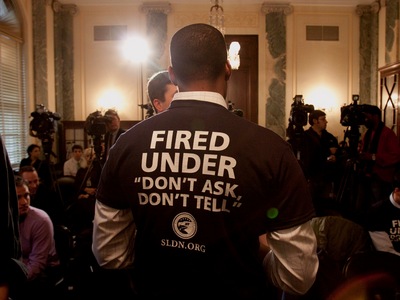 represents the Blue Dawg type of Democrat that frustrates many of us that are more liberal. What really has amazed me, however, is how he’s really sticking up for the repeal of DADT. Lieberman’s always been pro-choice, which makes him unlikely ever to be successful in the Republican party even with his hawkish stances on the war, Israel, and key economic issues. This is despite his status as a senator from the North East where those kinds of things tend to be more tolerated. Lieberman can still surprise. Take this headline from The Hill: Lieberman wants Senate to stay in session until it repeals ‘Don’t ask’ policy.
“Sen. Lieberman believes that there are at least 60 votes to repeal ‘Don’t Ask, Don’t Tell’ this year, provided that leadership allows time for sufficient debate and amendments,” Lieberman spokeswoman Erika Masonhall said. “Wanting to go home is not an acceptable excuse for failing to pass a bill that provides essential support for our troops and veterans and failing to take action that the president, the secretary of Defense and the chairman of the Joint Chiefs of Staff have called for.”
The senator also appeared to endorse Washington Post columnist Jonathan Capehart’s demand that the Senate stay in session in a tweet on Monday.
Democrats appear to have the 60 votes necessary to overcome any GOP-led filibuster of the defense bill, because some Republicans — like Sens. Susan Collins (Maine) and Scott Brown (Mass.) — have said they support the repeal.
But all 42 GOP senators have vowed to block any legislation from moving forward until the Senate passes an extension of expiring Bush-era tax cuts for all income brackets.
Ah, yes, those Republican defenders of the uber wealthy. This time they’re standing in front of progress for our troops. Proponents of the repeal have activated their calling trees and letter writing campaigns.
But Nat Butler, a gay Vietnam veteran who lied about his sexual orientation to serve in the military, was more pessimistic. He said that although eight out of ten respondents on Wednesday agreed to take action, he feared that the repeal would ultimately fail because Senator John McCain of Arizona is determined for DADT to remain in place.
Other veterans at the emergency phone bank were more optimistic about the chances of repeal. Michael Young, a straight former Marine, said that he served with a bisexual man during his time in the military. When his comrades first found out about the man’s sexual orientation, they were surprised, but once the initial shock wore off, business proceeded as usual. Given Young’s comrades’ response, and the responses of other people he has spoken to, he said that he thinks people generally support repeal.“But it’s always important for me to remember that I live in a rare cross-section, in Boston, Massachusetts. I’m optimistic, but I’m also prepared to do more,” said Young.
WAPO has an article up explaining how the clock is ticking for the repeal.
But the biggest barrier is the calendar. Although a repeal bill passed the House in May, and there appear to be enough votes for it in the Senate, there are only two weeks left in the lame-duck session. Other priorities, such as negotiating a compromise on extending Bush-era tax cuts, have consumed congressional leaders.
Repeal advocates are growing convinced that time may be running out. “The rules of the Senate can capture you when you end up in the 12th hour,” said Aubrey Sarvis, executive director of the Servicemembers Legal Defense Network.
The White House summoned repeal advocates for a private meeting Friday at which, sources said, administration officials told them they would not trade this priority for others. The officials were bullish, saying that Defense Secretary Robert M. Gates and Joint Chiefs of Staff Chairman Mike Mullen would not have testified this past week if they did not believe the bill could reach Obama’s desk before January.
That could be critical. The repeal effort would have to start over next year with the new Congress, which is decidedly more Republican and less energized to get rid of the policy.
It’s time for the Senate to take action on this and put it to rest. At this point, it can only be causing undue stress on gay service men and women and the military itself. Having an outstanding issue that should be solved by now just creates a weird environment in any organization. This is especially true since the release of the study showed there was no particular reason to support the DADT edict. Good for Joe Lieberman for finally standing up for one issue that truly represents the Democratic Party.
Monday Reads
Posted: December 6, 2010 Filed under: morning reads | Tags: unemployment, Wikileaks 70 Commentsgood morning!! 

There’s another Wikileaks release on BP, Gitmo, and BOA on deck. I’m dying to get my hands on the BP and the Bank of America data drop. Right now, they’ve been sorted out to various people to publish should Assange disappear or meet some other bad end. This has all the stuff of a real good IRL thriller and I’m just gleeful about it all.
That’s probably going to hit some time this week and will shoot to the top of the news.
The military papers on Guantanamo Bay, yet to be published, believed to have been supplied by Bradley Manning, who was arrested in May. Other documents that Assange is confirmed to possess include an aerial video of a US airstrike in Afghanistan that killed civilians, BP files and Bank of America documents.
We will do a live blog as the information becomes available. You can also find a teaser on Fox News. Additionally, there’s an interesting bit up at the UK Guardian on the Chinese Government hacking Google. Both of these come via Memeorandum.
The hacking of Google that forced the search engine to withdraw from mainland China was orchestrated by a senior member of the communist politburo, according to classified information sent by US diplomats to Hillary Clinton’s state department in Washington.
The leading politician became hostile to Google after he searched his own name and found articles criticising him personally, leaked cables from the US embassy in Beijing say.
That single act prompted a politically inspired assault on Google, forcing it to “walk away from a potential market of 400 million internet users” in January this year, amid a highly publicised row about internet censorship.
The explosive allegation that the attack on Google came from near the top of the Communist party has never been made public until now. The politician allegedly collaborated with a second member of the politburo in an attempt to force Google to drop a link from its Chinese-language search engine to its uncensored google.com version.
There’s more interesting tidbits up at the Daily Mail.
UK firm Rolls-Royce lost out on a £200million contract to supply helicopter engines to Spain after the U.S. lobbied Prime Minister Jose Luis Zapatero in Madrid. The deal was eventually signed by American company GE.
And European Union President Herman Van Rompuy told a U.S. ambassador that European troops were still in Afghanistan only ‘out of deference’ to America.
I’m sure the mothers and fathers and wives and husbands and sons and daughters of those dead European Troops certainly appreciate the ‘deference’ statement. Whoa!
Here’s a really interesting link at The Economist. I have to admit that I have a fairly limited attention span for management professors since I’m of the school that says you either got it or your don’t, but Henry Mintzberg who is Cleghorn Professor of Management Studies at McGill University had me reading from the headline forward.
Too many corporate “leaders” have trashed their enterprises, taking with them America’s legendary sense of enterprise. The scorekeepers cannot fix that. To understand the basis for such a sweeping claim, add up the stories you have heard about the goings on in so many of the largest American enterprises. Then you may get it.
Get it, not just about the scandal of executive compensation, but also about its destructive consequences. Any chief executive who accepts a compensation package that so singles him or herself out from everyone else in the company is not a leader. Leadership is about conveying signals that engage other people in the company. How many leaders are left among America’s large enterprises? There is an Israeli expression that a fish rots from the head down. So too does an enterprise.
Many economists and journalists see the CEO as the be-all and end-all of corporate success. The worst CEOs believe it. They thus allow themselves to be paid accordingly to “shareholder value”, which is a fancy term for increases in the price of a company’s stock.
There are two basic ways to increase the price of the stock: by exploring and by exploiting. Explorer companies achieve this by doing better research, making improved products, and offering superior service. This is hard work, and it takes time. Exploiter companies have it easier: they depreciate the brand, cut investments in research, confuse the customers with bamboozle pricing, and stay as close as possible to the letter of the law while lobbying politicians to reduce its level. These behaviors can raise the price of the stock long enough for the executives to cash in their bonuses and run, as have so many in the large American companies.
It’s typical management professor talk, but the point that he makes that CEOS are way too often part of the problem and not part of the future or solutions is true. They are still way over compensated for wrecking companies.
So, here’s a suggestion from the NYT: Cleopatra’s Guide to Good Governance. Hey, I’m willing to look at Cleopatra as a role model. Cleopatra as the ultimate central banker?
Egypt’s economic affairs were dismal when Cleopatra ascended to the throne. She devalued the currency by a third. She issued no gold and critically lowered the value of her kingdom’s silver. And she ushered in a great innovation: she introduced coins of various denominations. In an early prefiguring of paper currency, the markings rather than the metal content determined their value. A coin might feel light in the hand, but if Cleopatra said it was worth 80 drachmae, it was worth 80 drachmae. The arrangement was both lucrative to her and encouraged an export-driven economy.
Oh, well, back to the present and our central banker. I’m not sure if you caught the 60 Minutes segment on Ben Bernanke, but if you didn’t, here’s the transcript. You will also find taped interviews at the site. Here’s Bernanke’s take on employment.
Chairman Ben Bernanke: The unemployment rate is just not going down. Unemployment is just about the same as it was in mid-2009, when the economy started growing. So, that’s a major concern. And it looks that at current rates, that it may take some years before the unemployment rate is back down to more normal levels.
Scott Pelley: We lost about eight million jobs from the peak. And I wonder how many years you think it will be before we get all those jobs back?
Bernanke: Well, you’re absolutely right. Between the peak and the end of last year, we lost eight and a half million jobs. We’ve only gotten about a million of them back so far. And that doesn’t even account the new people coming into the labor force. At the rate we’re going, it could be four, five years before we are back to a more normal unemployment rate. Somewhere in the vicinity of say five or six percent.
Four or five years. And Bernanke told “60 Minutes” something else that makes that even more painful.
Bernanke: The other aspect of the unemployment rate that really concerns me is that more than 40 percent of the unemployed have been unemployed for six months or more. And that’s unusually high. And people who are unemployed for such a long time, their skills erode. Their attachment to the labor force diminishes and it may be a very, very long time before they find themselves back in a normal working position.
Bernanke seems to be about the only person within the beltway who cares about the level of unemployment This bit from Bloomberg indicates he’s willing to take more steps because he believes that those in charge of fiscal policy will not do the right thing.
Bernanke and other Fed officials have defended the central bank’s announcement that it will purchase $75 billion in Treasury securities a month through June to prop up a recovery so weak that only 39,000 jobs were created in November. The unemployment rate last month rose to 9.8 percent, the highest level since April, the Labor Department said on Dec. 3, three days after the Bernanke interview.
The economy, which grew 2.5 percent in the third quarter, is so weak that Bernanke said growth could fizzle out without support. “It’s very close to the border,” he said. “It takes about 2.5 percent growth just to keep unemployment stable and that’s about what we’re getting. We’re not very far from the level where the economy is not self-sustaining.”
I’m not sure people know exactly how odd it is for a FED chair to say this and what it means to say that the “we’re not very far from a level where the economy is not self-sustaining”, but let me tell you it’s rare and alarming. Washington is playing parlor games and our lives are their pinatas.
In some ways it seems we’re very much on the verge of a much worse recession because things are no longer emanating from the financial markets.
Two Republicans, Tennessee Senator Bob Corker and Indiana Representative Mike Pence, last month proposed removing the Fed’s maximum employment mandate to focus the central bank on stable prices alone. Corker plans to introduce such legislation next year.
Bernanke said fears of inflation are “overstated” and that keeping consumer prices under control isn’t a diminished priority for the Fed.
The rate of inflation has slowed this year, with the personal consumption expenditures index, excluding food and energy, rising at a 0.9 percent annual pace in October, the slowest in 50 years. Including all items, the index increased 1.3 percent.
Without action by the central bank, the economy might have tipped into a period of deflation, or a prolonged drop in prices, Bernanke said.
I cannot emphasize enough that no matter what these people say to appeal to your inner demons, there is no problem with inflation and we desperately need stimulus for demand. Sustaining tax cuts at the very high levels will not do it because rich people simply do not spend money like poor people do. Additionally, more foreclosures will not help the housing market and loss of jobs will not help the economies of states. I cannot believe that after so much information coming from the last 60 years that we still have to have these conversations.
Here’s an interesting piece from Medical Daily: People with a university degree fear death less than those at a lower literacy level. Since I’m not the psychologist on board at Sky Dancing. I’ll leave the explanations to Dr. BostonBoomer.
People with a university degree fear death less than those at a lower literacy level. In addition, fear of death is most common among women than men, which affects their children’s perception of death. In fact, 76% of children that report fear of death is due to their mothers avoiding the topic. Additionally, more of these children fear early death and adopt unsuitable approaches when it comes to deal with death.
I’m not sure you want to hear this news from NPR, but it is what it is: Gingrich: A Run For President Is ‘Doable’.
Former House Speaker Newt Gingrich says he’s more inclined to run for president in 2012 than not to make a bid.
Gingrich says he probably won’t make a decision until late February or early March. But he says that talking to friends and thinking about such an undertaking have made him more inclined to believe that “it’s doable.”
We are so f’d.
What’s on your reading and blogging list this morning?
Cave In Time!
Posted: December 5, 2010 Filed under: Breaking News, Democratic Politics, Team Obama, The Bonus Class | Tags: let's make a deal, taxes, unemployment benefits extension 43 CommentsWhite House officials and Congressional Republicans said Sunday they were closing in on a deal to
temporarily continue the Bush-era tax cuts at all income levels, while bitterly frustrated Democratic Congressional leaders began exploring whether they would have the votes for such a package.
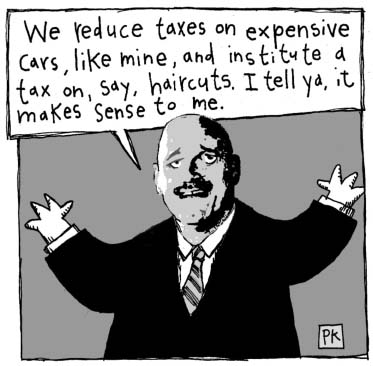
The Republicans are supposed to okay the extension of the unemployment benefits for long term unemployed if the Democrats will okay the tax cuts for the uber rich for two years.
Administration officials said the negotiations were focused on the question of extending the tax rates for one or two years, with a three-year extension highly unlikely, even though that time frame would probably eliminate the tax fight as an urgent issue in the 2012 elections.
Many Republicans say they want a permanent extension of the rates, or as long an extension as possible. Democrats say they would not mind the issue coming up during Mr. Obama’s re-election bid, because they see it as politically helpful to them in painting Republicans as defenders of the rich. The debate, of course, could cut the other way, with Republicans again portraying Democrats as seeking to raise taxes.
I really don’t want to hear any more crap about unfunded mandates if this is the deal. Unbelievable!

 peej
peej Carissa
 bostonboomer
 dakinikat
 ecocatwoman
 jjlo
jjlo mablue2
 Mama Lopez
 peggysue22
 quixote
 skydancingguestblogger
 Mona (aka Wonk the Vote)





Recent Comments