
More on Food and Energy Prices
Posted: March 23, 2011 Filed under: Economy, the villagers, unemployment, voodoo economics, We are so F'd | Tags: economics, food insecurity, Tax Cuts for Billionaires, trust fund babies., volatile commodity prices 12 Comments I wrote a post recently on why the overall inflation rate remains low and why core inflation is very low while food and energy prices are on the rise. I know this seems baffling. Research Economist Daniel Carroll from Fed Cleavland has some more details and analysis on this so I thought I’d take the opportunity to share it with you. I also have a bit of rant, so be patient with me.
First, you can see the underlying volatility in recent energy prices in the nifty graph to the right. This volatility is one of the reasons that many economists prefer the core inflation measures to something like the CPI. People adjust their driving and car buying habits when gas prices are high and the CPI doesn’t catch the corresponding buying shifts because it’s based on a fixed basket of purchased goods and services thought to represent a typical urban consumer at that time. People will drive more when gas prices are low and they’ll cut out unnecessary trips when prices are high at the pump. Also, commodity prices tend to have seasonality and they experience a lot of shocks that make them have higher than normal price variations. Think weather, political unrest, and other uncontrollable black swan events.
You can also see from the graph a lesser degree of volatility in food prices coupled with the underlying, increasing trend. The job of economists is to try to run models that look at the trend that has occurred over time and to search for corresponding explanatory variables. The other analysis that is frequently done is finding out who is impacted by these changes. I mentioned that food and energy inflation hurts poor people the most because it represents a big portion of their budgets and incomes. Carroll’s analysis includes some specifics on that .
It should not come as a surprise that people are particularly concerned about increases in food and energy prices, whether the increases are large or small. Not only do energy prices pass through to other prices, but household expenditures on food and energy make up a significant fraction of total household expenditures. Data from the BLS Consumer Expenditure Survey show that on average from 1999 to 2009, energy (including motor fuel) and food at home accounted for more than 15 percent of total expenditures and 13 percent of after-tax income.
The importance of food and energy prices to households’ bottom lines is not evenly distributed across the income distribution either. For the median household, food and energy are roughly 17 percent of both expenditures and after-tax income. Households in the top 20 percent of the income distribution spend 11.6 percent of total expenditures on food and energy, which adds up to 7.9 percent of disposable income. For the bottom 20 percent these shares rise to 20.4 percent of expenditures and a whopping 44.1 percent of after-tax income!
For those astutely wondering why food and energy expenditures are a larger fraction of total expenditures than of total income for the bottom 20 percent, there is a much higher fraction of households in this quintile which may be using savings and credit markets to consume above their annual income. Likely categories are the unemployed, business owners with temporary losses, students living on loans, and retirees drawing down their nest eggs.
There are two other nifty graphs at that site that show the impact of food and energy prices on the bottom twenty percent–quintile–of all households in terms of their incomes and budgets. It’s really disturbing to see the impact in bright red and blue. Increased prices in key budget items force many of these people over the edge. Because many poor people have no control over the amount of money they earn, these people are more likely to run up credit cards, decrease contributions to retirement savings, or sell off assets. They can also end up on the street and on public programs. Increases in food and gas basically drive the poor further into the ground.
This brings me to the policy implications. First, any state with a huge proportion of poor or elderly that derives income from sales taxes on these items is basically creating and perpetuating its own underclass. It is much more likely they will see increases in populations needing state assistance under these circumstances. This situation gets worse as it continues. Second, attempts to remove subsidies for the poor and elderly for their home heating and air conditioning costs will do the same thing or worse. It’s really difficult for me to understand why we subsidize large banks using bad lending practices to stop them from bankruptcy but some policy makers tout cuts in programs helping the poor pay outrageous gas and light bills or providing increased subsidies to programs like WIC. Republicans–you know, the fetus fetishists?–want to cut WIC by 10%.
At this point, I could even justify cutting rebate checks of $300-$500 for all those households with incomes in the bottom income quintile just to help them with food and energy bills. I know this is unlikely to happen. It would also provide a slight boost to local economies since this is the income group that is least likely to save and most likely to spend the money on basics. I’m not a big supporter of tax rebates because they generally just go to pay down debt and have very little economic impact. This would be different since it’s aimed solely at people who need to spend the money. It’s also aimed at helping a few people stay in their situation long enough to avoid perpetual dependency on state largess.
This brings me to one more item for you to discuss. There were two articles recently pushing the canard that lower taxes for rich people increase revenues to governments (false) and that low taxes are ?good” for the overall economy(false too). One was a WSJ editorial by trust fund baby Steve Forbes that once again tries to resurrect the much discredited Laffer curve and empirically challenged view of Reaganomics. You already know the antics of trust fund baby David Koch who feels persecuted because of the blowback on his war on nonbillionaires. The other baby of privilege wrecking havoc in Republican political circles is Grover Norquist. All three of these guys come from very rich parents, breezed into ivy league educations as legacies with parents who could buy them in regardless of grades and inherited enough money and gave them ready made businesses run by competent others. Now, they can spend their useless lives undermining any policy that takes anything from their pockets and boosts their cred on the Forbes 50 list. There are also some op ed pundits–Thomas Friedman comes to mind–with similar set ups. Here’s how they spend their lives and their daddies’ money.
According to a report in The Hill newspaper, Americans for Tax Reform president Grover Norquist has received assurances from Republican leaders in Congress that under no circumstances will they vote for any tax increase, either as part of deficit reduction or tax reform. Apparently, the only permissable deficit reduction is spending cuts and the only permissable tax reform is tax cuts. Given that Grover has succeeded in getting all but a small handful of Republicans to sign his no-new-taxes pledge, he essentially controls tax policy by being the sole arbiter of what constitutes a violation of the pledge and what does not. And given the power of the Tea Party to upset incumbent Republicans in primaries when they are viewed as insufficiently loyal to its agenda, it would take a very confident and courageous Republican to risk being accused of violating Grover’s pledge whether he or she signed it or not, since it would guarantee primary opposition from a well financed Tea Party candidate — the Club for Growth will see to that.
What really bothers me is that some how the Krewe of Trust Funds has managed to convince many–mostly white–working class Americans that government is using their hard earned wages to subsidize permanent vacations for the underclass. None of these leisure class propogandameisters have known a hard days work or food insecurity in their lives. They popped out of their mother’s uterus with automatic access to food, education, multiple, very large roofs, power, and access to speechifying nonsense on some of the world’s most circulated newspapers and TV channels. They’re absolute prime examples of the anti-meritocracy they purport to desire. They think people don’t work because they themselves don’t work at anything. It’s pure projection.
 I’m going to throw one more nifty graph at you. This time it’s from the FED in San Francisco. Notice how the World’s Industrial Production and Commodity Prices are following each other closely. Now, read this description of the stylized facts.
Commodity price swings have a direct impact on headline inflation through higher costs of energy and food, which account for 14% of overall consumer spending. However, commodity price swings—even double-digit changes—historically have had only a small effect on underlying inflation, which excludes spending on volatile energy and food components. To some extent, this reflects decisions by businesses to adjust profit margins rather than pass through higher costs to customers, particularly when demand is weak. A more important reason is that for many consumption goods, commodities and raw materials account for only a small part of the overall cost of production, particularly compared with the costs of labor, distribution, and retailing. Moreover, roughly three-fourths of consumer spending is on services such as housing and medical care that do not involve many commodities in production.Over the past 12 months, overall headline inflation as measured by the personal consumption expenditures price index has risen 1.2%, while core PCEPI has risen 0.8%. We expect recent commodity and energy price surges to raise headline inflation temporarily. We foresee relatively little pass-through to core inflation in 2011 and 2012. The slowly recuperating economy, excess capacity, and well-anchored long-term inflation expectations will keep labor costs low. In fact, with labor productivity continuing to rise, unit labor costs have actually been falling recently.
Let me point out some things here. I bolded that last part because I want to turn it into plain English for you. The last sentence means that no one is getting any kind of raise, even though they are working harder. The prior sentence means to expect more of the same. Prices on the core items will still be moderate while prices on commodities like food and oil are expected to increase. The graph itself shows that world demand is driving a lot those price increases. There is some increased “steepness’ in the price series which implies there are most likely other factors at play too. Chances are the uncertainty around MENA, some bad weather, and speculation has added to food and oil prices increasing at quicker increasing rate. I haven’t run any regressions on it so I can’t say that for certain, but it’s highly likely.
This should be a signal to policy makers to act appropriately. Instead, policy makers are acting inappropriately. That Bruce Bartlett quote about Grover Norquist seems to indicate they are listening to the temper tantrums and following the money of the trust fund babies. We need economic policy that helps all people. Instead, we’re getting Paris Hilton lifestyle maintenance programs. We need well paying jobs in this country, not more tax cuts for billionaires. Why do these guys ‘deserve’ to keep their daddies’ hard earned cash while poor people ‘deserve’ to starve and die of exposure?
update: Mark Thoma tweeted a link to Econbrowser that has a lot more nifty graphs on the inflation in food and oil prices including ones that show the parts of the country suffering most.
New Assaults on Family Planning and Reproductive Rights (updated)
Posted: March 22, 2011 Filed under: abortion rights, black women's reproductive health, Civil Liberties, Civil Rights, fetus fetishists, PLUB Pro-Life-Until-Birth, Reproductive Rights, right wing hate grouups | Tags: family planning, religious extremism, Reproductive Rights, Title X, women's health, Women's Rights 13 Comments I’ve been trying to post this most of the day. It seems WordPress had a dashboard outage. That outage made it impossible for us to get to any thing beyond what was already on the front page. Earlier this evening, ability to comment completely disappeared. I’ll try to get this out in short order. Hopefully, we’ll be back to normal now.
South Dakota continues its assault on women. Fetus fetishists continue to believe that setting up any and all road blocks will discourage women from exercising their right to abortion. Women in South Dakota must now wait 3 days prior to the procedure. The only thing this really does it make it extremely difficult for women in rural areas to get to clinics. Some need to travel miles and don’t have resources to pay for places to stay for that number of days. They also have to leave jobs and families to sit around and wait.
Women who want an abortion in South Dakota will face the longest waiting period in the nation — three days — and have to undergo counseling at pregnancy help centers that discourage abortions under a measure signed into law Tuesday by Gov. Dennis Daugaard.
Within minutes of Daugaard’s announcement that he had signed the measure, abortion rights groups said they plan to file a lawsuit challenging the measure, which one said could create particular hardships for women who live in rural areas hundreds of miles from the state’s only abortion clinic in Sioux Falls.
Daugaard, who gave no interviews after signing the bill, said in a written statement that he had conferred with state attorneys who will defend the law in court and a sponsor who has pledged to raise private money to finance the state’s court fight. Officials have said estimated the cost of defending the law at $1.7 million to $4.5 million.
This is nothing more than harassment. It’s hard to imagine any sane person wanting to live in a state that doesn’t believe you’re capable of making an adult decision without the state lecturing you, creating hurdles for exercising your constitutional rights, and inserting itself into your doctor’s ability to do the job. This is outrageous.
Meanwhile, religious fanatics in Washington not only want to stop access or slow down access to abortion, they want to defund Title X family planning funds. These funds have been in place since the Nixon years (1970) and are used to provide access to family plan, basic care, and birth control for poor women, men, and children. These funds allow state programs under Medicaid and private providers to get services to poor people. The funding has been shown to help women off welfare. Even some Republican Senators have been appalled by this attempt to force childbearing on any one without the means to fund pregnancy prevention. It also creates a public health issue because of the role these funds play in treating and prevent STDs.
House Republicans have sought to eliminate all federal grants and contracts with Planned Parenthood, some $300 million, because the agency provides abortion services. By law, none of the federal money can be used to pay for abortions, but abortion-rights opponents have argued that any financial support for Planned Parenthood frees up other money that could be used for abortions.
The argument comes as part of an ongoing budget fight: Republicans and Democrats on Capitol Hill have been unable to agree on a budget to fund the federal government for the rest of the fiscal year; Congress has recently passed two short-term stopgaps to allow more time to reach a long-term deal.
Racist, anti-choice propaganda has outraged many students at Princeton. The Christian right stops at nothing to further its radical agenda to instill its narrow view on all peoples.
It has become the talk among African American students at the prestigious Princeton Theological Seminary — racially charged fliers and postings. All of it is apparently anti-abortion literature.
Among the fliers was one that displayed a noose and another with the words “in the new klan lynching is for amateurs.”
“I was shocked and appalled that someone would place something like that up at this particular institution,” seminary student Maurice Stinnett told CBS 2’s Derricke Dennis.
“There was a lot of devastation for me, psychological damage, injury, because I saw this as social bullying,” student Shirley Thomas said.
Student leaders at the seminary, which neighbors Princeton University but is not directly affiliated, said the fliers first appeared on campus last November then reappeared in February for Black History Month.
The fliers originate from various sources, pointing out the number of African American deaths by abortion.
Student Katherine Timpte called the fliers “appalling and tragic and upsetting at all levels.”
There is some good news. Religion may become extinct in 9 countries. These 9 go straight to the top of my get me out of this crazy place list. It really amazes me that some many people in legislative positions have no problem forcing their superstitions on other people. Interestingly enough, most of the countries come out on nearly all the top lists for highest standard of living and best living conditions. They also rate well in education, low crime, and health and nutrition. The U.S. continues to score high on the superstition and nasty living standards lists. We certainly under assault by Christian Taliban in this country. I really wish more moderate Christians would speak out against the actions of these radicals.
A study using census data from nine countries shows that religion there is set for extinction, say researchers.
The study found a steady rise in those claiming no religious affiliation.
The team’s mathematical model attempts to account for the interplay between the number of religious respondents and the social motives behind being one.
The result, reported at the American Physical Society meeting in Dallas, US, indicates that religion will all but die out altogether in those countries.
The team took census data stretching back as far as a century from countries in which the census queried religious affiliation: Australia, Austria, Canada, the Czech Republic, Finland, Ireland, the Netherlands, New Zealand and Switzerland.
Okay, well, that will give you a few things to chomp on while we catch up with all the stuff that went awry today.
Latest News:
Arizona Passes Anti-Abortion Bill To Send Doctors, Clinicians To Jail For Abortions Based On Race Or Gender
In the race to secure the most destructive state anti-abortion law, Arizona may leap ahead of South Dakota by seeking to tackle a problem that doesn’t exist. In a 41-18 vote last month, the House passed a bill to prohibit abortions sought because of the race or sex of the fetus or the race of the parent. Seeking to prevent “race- or sex-based discrimination against the unborn,” the bill would allow lawsuits and civil fines against “abortion providers who knowingly provide such abortions.”
An Ounce of Prevention
Posted: March 21, 2011 Filed under: John Birch Society in Charge | Tags: Republican Budget Cuts 32 CommentsBen Franklin was one of the most interesting, brilliant, and free spirited founders of the United States. His Poor Richard’s 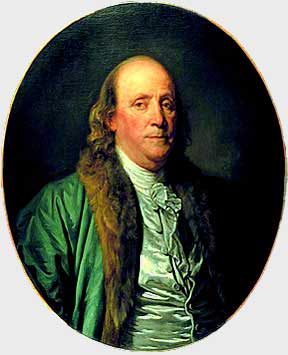 Almanac printed quips of advice. He actually got started as a young writer by writing advice columns for his brother’s newspaper. He was our country’s first “Dear Abby”. How many of us haven’t grown up hearing “An ounce of prevention is worth a pound of cure?” My consulting firm–The Minerva Group–spent most of the 1980s teaching businesses and public organizations how to build quality in rather than rely on faulty inspection to sort out mishaps. One of the biggest reasons this is important is cost savings. If you’re in manufacturing, mistakes turn into expensive scrap. If you’re in services, you waste human energy and frequently irritate customers. When I consulted for the Air Force during the first Gulf War I was frequently reminded by the Colonels I worked with that their mistakes could cost lives. Why is it the Republicans have forgotten this lesson in the rush to be stingier than thou?
Suzy Khimm writes for Mother Jones. Her latest article called “Death by a Single GOP Cut” illustrates the medical and public health implications of underfunding immunizations among other initiatives.
In the past year, California has experienced the worst whooping cough outbreak in more than 50 years, an epidemic that has killed 10 infants and resulted in 6,400 reported cases. But even as the state’s public health officials have struggled to curb the disease, Republicans in Congress have proposed slashing millions in federal funding for immunization programs. Public health advocates warn that these cuts threaten efforts across the country to prevent and contain infectious and sometimes fatal diseases. And they add that lower vaccination rates could eventually result in more outbreaks that endanger public health at a major cost to taxpayers.
The House GOP’s 2011 budget would chop $156 million from the Centers for Disease Control’s funding for immunization and respiratory diseases. The GOP reductions are likely to hit the CDC’s support for state and local immunization programs, the agency’s ability to evaluate which vaccines are working, and its work to educate the public about recommended vaccines for children, teenagers, and other susceptible populations. The CDC especially focuses on serving lower-income families who receive vaccines at state and local health offices and community health clinics, rather than a private doctor’s office.
There’s another old saying that goes like this: “Pennywise and Pound foolish”. Ezra Klein borrowed that one to quip on more GOP cost cutting antics.
There are three categories of spending in which cuts lead to more, rather than less, spending down the line, says Alice Rivlin, former director of both the Congressional Budget Office and the Office of Management and Budget. Inspection, enforcement and maintenance. The GOP is trying to cut all three.
There’s a war on common sense going on in this country. It’s based in some fairly crazy ideology that appears to appreciation inefficiency and cost run ups rather than pooling a country’s resources to achieve a good outcome. Klein’s post is just full of examples where eliminating government programs will lead to bad outcomes. Just think about all the outbreaks of e coli or food poisoning just out there waiting to happen because some company would rather cut corners than do reliable inspections, buy or fix equipment, or hire people that are trained and know what they’re doing? The best example of the lunacy is the proposed cuts to the agency responsible for tsunami monitoring Republicans suggested days before a tsunami hit both California and Hawaii. Early warning systems and method of prevention save lives and a lot of money.
Let’s face it. Many elected officials would rather gamble with our lives and our safety than admit that government can do some good things. They’d rather privatize everything let us all beware when we’re forced into using the product or service. I have no idea where this insanity comes from but I’d like it to stop now. I don’t mind paying taxes when it goes to a good cause. What I object of to paying for are sweetheart, no bid deals to big corporations that mark up everything to achieve obscene profits and donate huge sums to politicians to get them to overlook their abusive practices. One of these days we’ll go back to appreciating public goods like education, interstate highways, and immunization programs. I would’ve thought that the levee failure during Hurricane Katrina would have provided some lessons on what happens when you underfund the maintenance and construction of projects in the public interest. This is just more hard core libertarian nonsense that needs to return the pages of Atlas Shrugged and other bad fiction like studies produced by the Cato Institute and Reason Magazine.
Monday Reads
Posted: March 21, 2011 Filed under: collective bargaining, Economy, Farming, financial institutions, Foreign Affairs, Global Financial Crisis, Gulf Oil Spill, Japan, Libya | Tags: bubbles, Fukushima, ghadafi, greenspan, oil spill, recovery, REITS 57 Comments Good Morning!
I’m finishing up a paper today that’s off to be published on Real Estate Investment Trusts (REITS). Don’t worry! I won’t bore you with the details but it’s basically about locating speculation bubbles like the one that happened in real estate markets in the 2000s. There were a lot of folks that made money off of that ride although most of us little guys lost a lot. The reason I’m bringing it up is that my first read of the day is a Paul Krugman response to Allan Greenspan’s critique of Obama’s economic policy. I just wanted to remind you of what a mess the first part of the century has been and that many of the pots and the kettles still appear to be confused about their true nature. I mean, the entire mess has given me a great research agenda, but at what cost?
Greenspan’s tut tuts Obama’s ability to create economic chaos in the academic journal International Finance (pdf here). While most of us are still trying to figure out what went so horribly wrong, Greenspan is trying to pin the blame on the new guys. I’m going to quote his abstract because it’s just more of the same old same old from one of the beasts that brought us to this mess and its worth the bask in the arrogance to just remember his access to power. Greenspan says it’s too much government regulation and Obma activism that’s hampering the recovery and that he can prove it with bad, outdated statistical methods. This comes from the man that gave Wall Street a lot of cheap money and no regulation so they could go hog wild. The recovery may be tepid, the stock market may be recovering, but I’ll be damned if there’s any regulation left standing upon which he can float his argument. Oh, Krugman dismisses the methods by which Greenspan infers that it’s government activism and its inherent chaos that’s created a stale recovery. To be honest, a first year doctoral student would use better methodology and know the literature better. That really scares me, frankly. What did he do while at the Fed? Reread The Fountainhead?
So, here’s the bubblemeister’s blowing you know what up you know where with techniques that wouldn’t get me published in a mimeographed neighborhood newsletter let alone International Finance. Why hasn’t this man retired to an island somewhere?
The US recovery from the 2008 financial and economic crisis has been disappointingly tepid. What is most notable in sifting through the variables that might conceivably account for the lacklustre rebound in
GDP growth and the persistence of high unemployment is the unusually low level of corporate illiquid long-term fixed asset investment. As a share of corporate liquid cash flow, it is at its lowest level since 1940.This contrasts starkly with the robust recovery in the markets for liquid corporate securities. What, then, accounts for this exceptionally elevated level of illiquidity aversion? I break down the broad potential sources, and analyse them with standard regression techniques. I infer that a minimum of half and possibly as much as three-fourths of the effect can be explained by the shock of vastly greater uncertainties embedded in the competitive, regulatory and financial environments faced by businesses since the collapse of Lehman Brothers, deriving from the surge in government activism. This explanation is buttressed by comparison with similar conundrums experienced during the 1930s. I conclude that the current government activism is hampering what should be a broadbased robust economic recovery, driven in significant part by the positive wealth effect of a buoyant U.S. and global stock market.
So, here’s Paul Krugman with ‘Rantings of an Ex-Maestro’.
He’s no longer the Man Who Knows; he’s the man who presided over an economy careening to the worst economic crisis since the Great Depression — and who saw no evil, heard no evil, refused to do anything about subprime, insisted that derivatives made the financial system more stable, denied not only that there was a national housing bubble but that such a bubble was even possible.
If he wants to redeem himself through hard and serious reflection about how he got it so wrong, fine — and I’d be interested in listening. If he thinks he can still lecture us from his pedestal of wisdom, he’s wasting our time.
Brad Delong actually does some analysis over at his blog Grasping Reality.
I don’t see how this hangs together in any coherent fashion at all.
If businesses are unwilling to invest in illiquid capital out of the fear that government action will impair the value of their investments, businesses must also fear that government action will impair the value of their existing illiquid investments. What is the value of their existing illiquid investments? The value of their existing illiquid investments is nothing more than the stock market value of their companies–liquid stock market value is, in the last analysis, nothing more than the cash flows proceeding from the illiquid investments that companies have made that generate the profits.
A much better and more sensible explanation for the relatively high value that the stock market places on existing illiquid corporate assets and the relatively low value that companies place on illiquid investments to expand their fixed capital is precisely that capacity utilization is low–so why spend more money now building factories when doing so would be more expensive and only add to your idle capacity?
And, indeed, if you ask people running businesses what is their single most important problem, they say that it is not (as they sometimes say it is) taxes; they say that it is not (as they said it was at the start of 2000) the cost and quality of labor; it is not (as they said it was in 2004) the availability and cost of insurance; it is not (as they briefly said it was at the start of 1993) government requirements. What do they say their biggest problem is? Poor sales.
Yup, it’s pretty basic. You gotta have customers and those customers gotta have jobs and decent paychecks. That’s the problem right now.
Here We Go Again …
Posted: March 20, 2011 Filed under: Breaking News, Gulf Oil Spill | Tags: Cocodrie LA, deepwater rigs, Matterhorn SeaStar, oil spill in Gulf 19 Comments
Mississippi delta saltwater marshes that can be found near Cocodrie, LA and Lake Barre
It appears that there’s an oil sheen just 20 miles north of the Macondo Well that blew up and doused the entire eastern Gulf of Mexico with oil last year. I’ve been getting some tweets from my local contacts and this is what I can put together so far. It’s possibly a different well that’s owned by a different company.
Multiple callers have reported that they have seen a huge sheen of oil not far from a deepwater rig. According to Judson Parker at Examiner.com, the potentially leaky rig is the Matterhorn SeaStar owned by W&T offshore.
New oil has been spotted in Jefferson Parish. It’s also impacting the beleaguered community of Grand Isle, Louisiana. This is from WDSU. It’s a local New Orleans TV station.
Oil in various forms was reportedly coming ashore on the west side of Grand Isle on Sunday, a Jefferson Parish councilman said.Grand Isle Volunteer Fire Department personnel initially reported the incident, councilman Chris Roberts wrote in a news release.
The New Orleans newspaper–The Times Picayune–is reporting that both BP and the US Coast Guard are investigating.
The U.S. Coast Guard is investigating reports of a potentially massive oil sheen about 20 miles north of the site of last April’s Deepwater Horizon oil rig explosion.
A helicopter crew and pollution investigators have been dispatched to Main Pass Block 41 in response to two calls to the National Response Center, the federal point of contact for reporting oil and chemical spills, said Paul Barnard, an operations controller for Coast Guard Sector New Orleans.
The first caller, around 11 a.m., described a sheen of about a half-mile long and a half-mile wide, he said.
About two hours later, another caller reported a much larger sheen — about 100 miles long — originating in the same area and spreading west to Cocodrie on Terrebonne Bay, Barnard said.
“We haven’t been able to verify that, and it would be very unlikely for an individual to be able to observe a 100-mile long sheen,” he said, adding inspection teams were en route around 3 p.m. to the site.
The Daily Mail reports that the slick is five miles wide and that the U.S. Coast Guard has taken samples from the sheen.
Casey Ranel, a spokesman for the Coast Guard said the agency sent out a cutter this morning to collect samples of the substance.
An airplane is also expected to fly over the area to give officials a better idea of what’s in the water.
Pollution investigators and a helicopter crew are following up on two calls to the National Response Center – the federal point of contact for reporting oil and chemical spills – Paul Barnard, an operations controller for Coast Guard Sector, New Orleans, told the Times-Picayune.
Barnard said a pilot flying over the area reported seeing a sheen of around half a mile long by half a mile wide.
So far, we’ve had coal mines implode and kill miners, nuclear reactor meltdowns, and at least one majof Gulf Oil spill ruining the ecosystem down here. Can we get some safe energy sources now please? At the very least, can we please have some effective and well-funded regulation of what we’re using now? It seems like we’re still paying for the Energy industry Presidency of George Bush. This isn’t change we can believe in. This is no change that’s ruining my corner of the planet.

 peej
peej Carissa
 bostonboomer
 dakinikat
 ecocatwoman
 jjlo
jjlo mablue2
 Mama Lopez
 peggysue22
 quixote
 skydancingguestblogger
 Mona (aka Wonk the Vote)





Recent Comments