
TGIFriday Reads
Posted: April 29, 2011 Filed under: Barack Obama, Federal Budget, Republican politics, Violence against women, Women's Rights | Tags: Barrack Obama Senior, birthers, conspiracy theories, Donald Trump, Lara Logan, oil subsidies, Paul Ryan, Racism, Republicans, student visa, violence against women 47 Comments Good Morning!
Well, it’s getting to be the silly season. Now we have Republicans who were for oil subsidies before they were against them or against them before they were for them. Evidently, angry town hall participants can’t figure out why oil companies that keep making record profits while gouging at the pump deserve huge tax breaks. So, Republicans are making up their minds as they go along. Here’s one such example from the Wonk Room: Paul Ryan Endorses Ending Oil Subsidies, Even Though He Voted For Them
Rep. Paul Ryan (R-WI) agree.d to end subsidies to oil companies during a town hall in Waterford, Wisconsin, this morning, eliciting great applause from an overflow crowd in a very conservative section of his district. “We also want to get rid of corporate welfare,” Ryan insisted. “So we propose to repeal all that”
…
But Ryan voted twice this year to actually extend subsidies to oil companies, once on a motion to recommit on a shorter-term continuing resolution and again when he supported an amendment to the initial House CR. The Ryan budget, meanwhile, doesn’t specifically target oil subsidies, but only generally promises to end “corporate welfare.”
Earlier this week, House Speaker John Boehner (R-OH) also indirectly endorsed ending subsidies to the oil industry, before walking back his support.
CBS Reporter Lara Logan is offering up more information on her ‘merciless’ assault during the Egyptian uprising. Logan was separated from her colleagues for about 25 minutes.
She declined to go into more detail about the assault but said: “What really struck me was how merciless they were. They really enjoyed my pain and suffering. It incited them to more violence.”
After being rescued by a group of civilians and Egyptian soldiers, she was swiftly flown back to the United States. “She was quite traumatized, as you can imagine, for a period of time,” Mr. Fager said. Ms. Logan said she decided almost immediately that she would speak out about sexual violence both on behalf of other journalists and on behalf of “millions of voiceless women who are subjected to attacks like this and worse.”
It appears the Lake Havusu Arizona Newspaper filed to see Barack Obama Senior’s immigration file. Their EXCLUSIVE–“Dad’s Immigration File Offers More Evidence Of Obama’s Birthplace” is an interesting read. Sounds like Harvard couldn’t get rid of this particular Obama soon enough. This really brings an interesting contrast to the President’s Book “Dreams of my Father”.
The documents also show that the CIS investigated the elder Obama as a polygamist, having a wife in Kenya and a “wife and child in Honolulu.” Dahlim’s memo adds that “Polygamy is not an excludable or deportation charge as Subject is a non-immigrant.”
Documents show that Obama, Sr. was denied an extension on his student visa in July, 1964, in part because Harvard University, where Obama, Sr., was a Ph.D. candidate, sought his removal. Obama Sr. eventually left the United States willingly after becoming an illegal alien for remaining in the country past the expiration of his visa.
An INS investigator, M.F. McKeon, wrote “They (Harvard officials) weren’t very impressed with him and asked us to hold up action on his application until they decided what action they could take in order to get rid of him. They were apparently having difficulty with his financial arrangements and couldn’t seem to figure out how many wives he had.”
Documents show that Harvard officials considered Obama, Sr. to be a “slippery character,” and conspired with the INS to have him deported.
After raising nearly every racist dogwhistle in the play book, Donald Trump Bristles at Claim He’s a Racist. Gee, why would anyone think that when the guy questions how the President–a legacy who graduated summa sum laude from Harvard–got into Harvard in the first place.
Trump tells TMZ … “That is a terrible statement for a newscaster to make. I am the last person that such a thing should be said about.”
Bob Schieffer delivered a scathing statement against Trump Wednesday night on the “CBS Evening News,” reacting to Trump’s insinuation that President Barack Obama may not have had the grades to get into Harvard.
Schieffer said, “That’s just code for saying he got into law school because he’s black. This is an ugly strain of racism that’s running through this whole thing.”
We asked Trump if he was suggesting Obama got into Harvard Law School through affirmative action. He said, “Affirmative action is out there. It’s a program that is available. But I have no idea whether it applies in this case. I’m not suggesting anything.”
Politically-motivated accusation and innuendo is nothing new–as pointed out by Politico–but does Trump’s birther agenda shift the practice to a new low because it rose to the level of a media feeding frenzy?
Lurid conspiracy theories have followed presidents for as long as the office has existed. Yet even Obama’s most recent predecessors benefited from a widespread consensus that some types of personal allegations had no place in public debate unless or until they received some imprimatur of legitimacy — from an official investigation, for instance, or from a detailed report by a major news organization.
“There are no more arbiters of truth,” said former White House press secretary Robert Gibbs. “So whatever you can prove factually, somebody else can find something else and point to it with enough ferocity to get people to believe it. We’ve crossed some Rubicon into the unknown.”
It’s hard to imagine Bill Clinton coming out to the White House briefing room to present evidence showing why people who thought he helped plot the murder of aide Vincent Foster— never mind official rulings of suicide — were wrong. George W. Bush, likewise, was never tempted to take to the Rose Garden to deny allegations from voices on the liberal fringe who believed that he knew about the Sept. 11 attacks ahead of time and chose to let them happen.
Well, at least it’s Friday! So, what’s on your reading and blogging list this morning?
Like We Need More Austerity …
Posted: April 28, 2011 Filed under: Economy, jobs | Tags: BEA, GDP growth, still feels like a recession, U.S. Economy 19 Comments
Too bad we can't buy some stock in soup kitchens ...
U.S. Economic Growth did exactly what most economists expected during the first quarter of 2011, it slowed substantially. There is some hope that the low rate was due to temporary factors like bad weather and political unrest in the MENA region that’s contributed to higher gas prices.
Of these various economic menaces, the most enduring is probably higher commodity prices, which reduce the amount of pocket money that households and businesses have available to spend on other purchases and, in the case of companies, hires. Gasoline prices have shown little sign of falling in recent weeks, and have nearly neutralized the 2011 payroll tax cuts that were intended as a stimulus.
“Consumers are spending more, but it’s getting soaked up in higher gas prices and higher food prices,” the chief economist at RDQ Economics, John Ryding, said. “That’s not leaving nearly as much left over for discretionary spending.”
Declines in government spending will continue to drag on the economy throughout the year, as strapped state and local governments cut back and the federal government tries to cut down on nonmilitary spending. Last quarter’s steep drop in military spending, which tends to be volatile, will probably reverse itself later in the year, economists said.
It’s pretty easy to tell who is experiencing the worst end of this lackluster recovery. Hint: It’s not the wealthiest Americans. But, if you had any doubts, Wal-Mart reports their shoppers are “running out of money”. Again, there’s low overall inflation but higher gas and food prices make up a large portion of the family budget for ordinary Americans.
Wal-Mart’s core shoppers are running out of money much faster than a year ago due to rising gasoline prices, and the retail giant is worried, CEO Mike Duke said Wednesday.
“We’re seeing core consumers under a lot of pressure,” Duke said at an event in New York. “There’s no doubt that rising fuel prices are having an impact.”
Wal-Mart shoppers, many of whom live paycheck to paycheck, typically shop in bulk at the beginning of the month when their paychecks come in.
Lately, they’re “running out of money” at a faster clip, he said.
“Purchases are really dropping off by the end of the month even more than last year,” Duke said. “This end-of-month [purchases] cycle is growing to be a concern.
This would explain the results of this Gallup Poll where “More than Half Still Say U.S. is in a Recession”. This amount of consumer depression in an economy driven by 70% household spending cannot bode well for future GDP growth. Businesses are expanding overseas and will not create any jobs or businesses here unless they see customers. This, in the Keynesia mold, calls for increased government spending. What we have been getting is decreases in taxes to people whose investments and job creation efforts are going outside of the country. It’s not hard to see why most citizens do not think we’re in any kind of recovery other than a technical one.
More than half of Americans (55%) describe the U.S. economy as being in a recession or depression, even as the Federal Open Market Committee (FOMC) reports that “the economic recovery is proceeding at a moderate pace.” Another 16% of Americans say the economy is “slowing down,” and 27% believe it is growing.
Meanwhile, every one within the D.C. beltway continue to eye the dwindling American safety net with greedy eyes. This has elicited comments from all over but none is perhaps more jaw-dropping than a pronouncement from Former Dubay Treasury Secretary Paul O’Neill who likened Republicans threatening to block the increase in the debt ceiling to Al Qaeda Terrorists. It does indeed seem that Republicans would like to bring on a great depression rather than find middle ground on spending and taxing priorities.
“The people who are threatening not to pass the debt ceiling are our version of al Qaeda terrorists. Really,” O’Neill, Treasury secretary in the Republican administration of George W. Bush, said Wednesday in an interview with Bloomberg Television’s InBusiness with Margaret Brennan.
“They’re really putting our whole society at risk by threatening to round up 50 percent of the members of the Congress, who are loony, who would put our credit at risk,” O’Neill said.
It’s as if our elected officials are deliberately sabotaging the country. The details in the National Income and Spending accounts are given here at the BEA. You can see that we’re not getting stimulus from either Federal Spending, Business Investments or Exports. (There’s a pretty much a wash when you look at Net Exports or you subtract Imports from Exports.)
Real exports of goods and services increased 4.9 percent in the first quarter, compared with an increase of 8.6 percent in the fourth. Real imports of goods and services increased 4.4 percent, in contrast to a decrease of 12.6 percent.
Real federal government consumption expenditures and gross investment decreased 7.9 percent in the first quarter, compared with a decrease of 0.3 percent in the fourth. National defense decreased 11.7 percent, compared with a decrease of 2.2 percent. Nondefense increased 0.1 percent, compared with an increase of 3.7 percent. Real state and local government consumption expenditures and gross investment decreased 3.3 percent, compared with a decrease of 2.6 percent.
The change in real private inventories added 0.93 percentage point to the first-quarter change in
real GDP after subtracting 3.42 percentage points from the fourth-quarter change. Private businesses
increased inventories $43.8 billion in the first quarter, following increases of $16.2 billion in the fourth
quarter and $121.4 billion in the third.
None of this is good news when coupled with the still high rates of unemployment. Despite all these tax cuts, the business sector is clearly not going anywhere. Here’s a link to some further analysis and nifty graphs from Econbrowser. This analysis is particularly germane to our conversation.
Inventory rebuilding and a gain in exports made positive contributions, but these were essentially undone by increases in imports and decreases in government spending. Perhaps the most disappointing detail was investment spending by businesses, which had been making solid contributions to growth the previous three quarters, but was essentially flat for Q1. Housing remains stuck at very low levels, but at least it’s no longer a significant factor dragging the level of GDP down.
But until housing and business investment start making a positive contribution, we’re likely to be disappointed by the employment and GDP reports.
It’s pretty obvious that fiscal policy in this country has gone to VooDoo land because we’re still in deep DooDoo. What we have here is fiscal policy malpractice. Too bad we can’t all join in a massive lawsuit and sue the Congress. Thanks a lot SCOTUS!!!
A First: Fed Chair Presser
Posted: April 27, 2011 Filed under: Economy, Federal Budget, Federal Budget and Budget deficit, financial institutions, Global Financial Crisis, jobs, U.S. Economy, unemployment | Tags: Ben Bernanke, FED, inflation, jobs, monetary policy, presser 10 Comments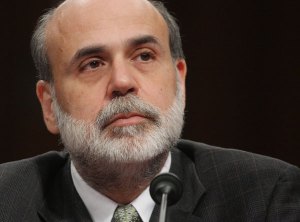 I’m watching Bernanke do a presser. Wow. (It’s a live blog … updates and explanations will be provided.) I can’t believe the press sent political reporters to this. What an amazing number of really rotten questions!!!
Some key points from the morning’s congressional testimony.
On Unemployment: We do see some grounds for optimism, including a decline to the unemployment rate, declines in the new unemployment insurance claims and improvements in firms’ reported hiring plans. But, even so, it could take quite a while for unemployment to come down to desired levels at current expected growth rates and, in particular, the FOMC projects unemployment still to be in the range of seven and-a-half to eight percent by the end of 2012. Until we see a sustained period of stronger job creation, we cannot consider the recovery to be truly established.
On Inflation: “I want to go back over this whole line of interventions, including today quantitative easing. And there have been a series of criticisms that have been made and negative predictions, and my view is that none of them have come true. And I think it is important for us to — to note that. And — and I know you’ve talked about this. I know you mentioned in your statement some of the points. But we were told, for instance, that it was going to be very inflationary. And I know it is your view as of now, and I think supported by the facts, that inflation is not now a problem, and we do not see inflation, certainly not one caused by any of what’s been done going forward. We were told this was going to be extraordinarily expensive, that it was going to cost a lot of money. I believe the answer is that on many of these things the federal government has made a profit by the — by the intervention.”
On Crude Oil: “The relative price of oil, again, is primarily due to global supply and demand. I think it’s important to note that the United States is consuming less oil today, importing less oil and producing more oil than it did before the crisis. That all the increase in demand from outside the United States, particularly in the emerging markets. And so there’s limited amount of what the Fed can do about oil prices alone. Again though, we want to be very sure that it doesn’t feed into overall inflation. We will make sure that doesn’t happen.”
On the Dollar: If the dollar was no longer reserve currency there would – it would on the margin probably mean that we would have to pay highest interest rates to finance the federal debt, and that would be a negative obviously. On other other hand, we might not suffer some of the capital inflows that contributed to the boom and the bust in the recent crisis. But again, I know there was also a countervailing argument in the Journal this morning as well. And I – I just don’t see at this point that there is a major shift away from the dollar.
On the Consumer: We understand the visibility of gas prices and food prices and we want to be sure that people’s expectations aren’t adversely affected. I think it’s important to note that, according for example, to the Michigan survey of consumers, that long term inflation expectations have been basically flat. I mean, they haven’t moved, notwithstanding ups and downs in gas prices, for example.
On the U.S. Fiscal Situation: While I understand these are difficult decisions and we certainly can’t solve it all in the current fiscal year, I do think we need to look forward and I know the House Budget Committee and others will be setting up a 10 year proposal. It’s very important and would be very constructive for Congress to lay out a plan that would be credible that will help bring us to sustainability over the next few years. In particular, one rule of thumb is cutting enough that the ratio of the debt to GDP stops rising. Because currently it’s rising relatively quickly. If we could stabilize that, I think that would do a lot to increase confidence in our government and in our fiscal policies.
Obviously, Bernanke needs to drill baby drill to get rid of inflation … so simple!!!
or this:
ezrakleinEzra Klein
Bottom line: Congress is embracing austerity. The Fed is going to start tapping the brakes. Sucks to be you, unemployed people. #fedpresser
Background information on the Fed Presser from NYT and David Leonhardt.
On Wednesday at 2:15 p.m., Ben Bernanke will do something that previous Federal Reserve chairmen considered a terrible idea. He will hold a news conference.
Mr. Bernanke spent much of his academic career arguing that the Fed should be less opaque, and, as chairman, he has put his ideas into action. Now it’s time for those of us in the media to hold up our end of bargain. In the spirit of democratic accountability, we should ask hard questions — and we shouldn’t let him get away with the evasions and half-answers that members of Congress too often allow Fed chairmen during their appearances on Capitol Hill.
One question more than any than other is crying out for an answer: Why has Mr. Bernanke decided to accept widespread unemployment for years on end, even though he believes he has the power to reduce it?
Here’s Paul Krugman’s take on the presser: Bernanke Wimps Out. He’s got the same questions I do about the inflation v. unemployment . (See my comments in the thread below.)
So Bernanke did get asked why, given low inflation and high unemployment, the Fed isn’t doing more. And his answer was disheartening.
As far as I can tell, his analytical framework isn’t too different from mine. The inflation rate to worry about is some underlying, inertial rate rather than the headline rate; the Fed likes the core personal consumer expenditures deflator; and this rate has actually been running below target, indicating that inflation isn’t a concern …
Late Night Question: Will they carry the Torch?
Posted: April 26, 2011 Filed under: abortion rights, black women's reproductive health, Reproductive Rights, Women's Rights | Tags: activists for choice, young women's reproductive health 6 Comments I just read an astounding blog on the early fight for reproductive health rights by Eleanor Hinton Hoytt of Black Women’s Health Imperative at RH Reality Check. Hoytt asks a question that I’ve wondered myself recently. Will young women fight so that all US women will have access to reproductive health and not just those with sympathetic parents and partners or money in the bank? I know that Dr. Daughter is in the middle of the fight as an ob/gyn in a public hospital that serves many of Nebraska’s poorest women. She’s in a state that works hard to prevent access to a woman’s constitutional right to an abortion in the first two trimesters and a state that has eliminated access to prenatal care for women who can’t prove citizenship. Youngest daughter and I live in a state with a whacked legislator that wants to criminalize abortion. How can you “murder” something that’s–at best–on life support and marginally human? I worry that my youngest daughter doesn’t see the issue and the attacks by crazed religionists as completely central to any young woman who seeks to self-determine her life. Hoytt’s story reminds me of the early days when women frequently shared how they came to realize that they were feminists and had a huge system to fight just to be recognized as a complete person. But, again, her central thesis is a significant one and worth sharing.
I see the ‘passing of the torch’ as a common cause from a different perspective. I have heard the fears that some of the leaders of my generation have about the current generation. That they lack intensity; they refuse to listen and follow; they don’t have the urgency of NOW; and they have never lived without the power of their own agency or without control of their own body. When I see the young feminist of today, I see that their values are different, creativity is unlimited, and understanding of innovation amazing and astonishing. And, most of all, they have greater access and are most accepting of different races, ethnicities, socio-economic statuses and sexualities – this adds many more angels to the fight.
I’m happy that young feminists of today have had more opportunities to claim ownership of their bodies. I am happy that they don’t know the dark alleys, and I’m pleased that they are blogging, tweeting, and asking me to be their Facebook friend. And for many of them I meet, they want to share their stories with me and hear mine—they ask, what has kept me involved, passionate and angry for the past 30 years. I tell them my story and listen to theirs. But most of all I ask them to believe that they may achieve what I have not in many ways.
I urge my other pre-Roe or “menopausal militia” leaders to recognize the differences in this generation’s struggles, understandings, desires and dreams. I believe that too often we see a different experience or opinion as a sparring point, but now, more than ever, we must see this as a broadening of our cause. Young feminists are not laser-focused on abortion, and that’s okay. Let’s accept their boarder reproductive justice agenda.
I was fortunate enough to become sexually active post-Roe, way post-birth control pills, and at a University that practically wanted to give you all the birth control pills and reproductive health information you could possibly need. Planned Parenthood was accessible and free where I lived. Still, when the religionists started pushing back, I felt the need to take to the streets, to letter writing, and to volunteer as a clinic escort. I sent my two daughters straight to Planned Parenthood when the questions started and the needs were obvious. I’m not getting the reason that any young woman should be complacent right now about the obvious attack on their rights. But right now, I’m seeing a 50/50 shot in my own sample of 2.
It’s not really a constitutional right if we all can’t access that right equally, is it?
So, how do we in the menopausal militia pass the torch? Are there enough young activists out there to pick it up?
Obama’s Political Leanings (pssssttttt … he’s no liberal)
Posted: April 26, 2011 Filed under: 2012 presidential campaign, abortion rights, Barack Obama, Democratic Politics, Domestic Policy, Environment, Environmental Protection, Reproductive Rights, Republican politics, Republican presidential politics, right wing hate grouups, Surreality, Team Obama, The DNC, The Media SUCKS, the villagers, U.S. Economy, U.S. Politics, Voter Ignorance, We are so F'd, WE TOLD THEM SO, Women's Rights | Tags: Ezra Klein, Obama, Right Wing, Rockefeller Republicans 7 Comments
Time to trot out the Unity Pony
I’m having an interesting day reading all the links out there and discussions on several Ezra Klein blog posts. Some one should’ve noticed Obama’s hero-worship of Reagan during the primaries about three years ago. Some one should’ve read his books that were gleeful about past Republican policy initiatives. But no, we were too busy discussing other things to notice how far to the right Barrack Obama really is.
Here’s one of Klein’s posts that’s getting netplay now: The shocking truth about the birthplace of Obama’s policies. Some people just have not been paying attention at all.
President Obama, if you look closely at his positions, is a moderate Republican from the early 1990s. And the Republican Party he’s facing has abandoned many of its best ideas in its effort to oppose him.
If you put aside the emergency measures required by the financial crisis, three major policy ideas have dominated American politics in recent years: a health-care plan that uses an individual mandate and tax subsidies to achieve near-universal coverage; a cap-and-trade plan that attempts to raise the prices of environmental pollutants to better account for their costs; and bringing tax rates up from their Bush-era lows as part of a bid to reduce the deficit. In each case, the position that Obama and the Democrats have staked out is the very position that moderate Republicans staked out in the early ’90s — and often, well into the 2000s.
I’ve been saying for years–literally–that the Obama Health Care Plan was more conservative than Nixon’s and basically was grabbed from Lincoln Chaffe’s Heritage Plan in the 1990s which was later called Dolecare and then later morphed into Romneycare. That’s just Klein’s first example. He also provides evidence on cap and trade which was supported by George H.W. Bush and Newt Gingrich when it was applied to ‘acid rain’ instead of ‘global warming’. He then moves to tax policies. Obama’s obvious proclivities to voodoo economics even showed up in the first stimulus which was top heavy with tax cuts and not big enough on job creation measures. Klein doesn’t even touch the increasing military budgets and interventions, the GLBT and women’s rights issues that get bargained away, FISA, Gitmo, etc., etc., etc. …
Here’s Mark Thoma’s take on the Klein piece and a follow-up by Andrew Samick. Samick considers Obama to be a Rockefeller Republican of all things. I’d say Obama’s even more to the right than that because that’s pretty much the side of the Republican party that raised me. Rockefeller Republicans love Planned Parenthood among other things. Warren Buffet is a great example. Hell, Charlton Heston loved Planned Parenthood. I even heard him speak on population control issues in Omaha, Nebraska in the mid 1970s sponsored by–gasp!–Planned Parenthood. The most interesting part is Thoma’s ending question. Why are we moving so far to the right now?
What’s left unexplained is why movements to the right by both parties — and these aren’t marginal moves — haven’t alienated the middle of the road, swing voters that seem to make a difference in elections. I don’t think I have a good answer for why. In the present case, there is some voter remorse — Obama is far more conservative than many thought — but I don’t think that explains the larger trend.
The original Ezra Klein piece is here: ‘Obama revealed: A moderate Republican’. Believe me, the conversation has gone viral with folks like The National Review (Be forewarned if you go there, it’s a putrid thread.) on line taking the bait. Booman even twists himself into a world class logic pretzel trying to say this is good news because it means Obama’s policies are “mainstream”. Joseph Romm at The Grist discusses the climate policy even further.
In the climate bill debate of the past two years, Obama and the Democrats embraced Republican ideas in an effort to minimize or avoid the partisanship inherent in other approaches that had been explicitly rejected by Republicans, including a tax and a massive ramp up in clean energy funding, as I’ve argued.
But Klein makes an effective case that it simply didn’t matter how reasonable or centrist or business-friendly a strategy environmentalists and progressive politicians pursued (or might have pursued). The Republicans simply were committed to stopping Obama from appearing bipartisan.
The Dems keeps getting suckered by Republicans the way Charlie Brown keeps getting suckered by Lucy. But the difference is that the GOP’s strategy wasn’t even a secret.
Ah, here’s the deal. Romm ties back to Thoma’s question. Why all this goose stepping to the right? Easy. It was the Republican strategy of say not to everything. They had to go further right to say no. Now, we’re in policy measures that are from John Birch Society land. Finally, the Democratic Congress said no more compromises when Planned Parenthood went on the chopping block. They also decided to get what they could get done before Boehner took over the house. We saw a few last minute Democratic Policies get passed but it was only due to the folks in Congress. Obama just went along because, hell, a win is a win, right?
Senate minority leader Mitch McConnell told The New York Times in March 2010, “It was absolutely critical that everybody be together because if the proponents of the bill were able to say it was bipartisan, it tended to convey to the public that this is O.K., they must have figured it out.” Why? As McConnell blurted out right before the 2010 midterm elections, “The single most important thing we want to achieve is for President Obama to be a one-term president.”
Obama kept proposing “conservative” policy at the onset. The Republicans announced they would sabotage it from the get go. This is something we complained about and pointed out here and elseblog for years. Obama’s opening policy moves were always a compromise position for real Democrats. He never was worried about putting policy out there with a real Democratic stamp on it because issues aren’t important to him. This President desperately wanted to pass anything with his name on it that would be called success. I frequently argued he wanted to makes sure there was a Health Plan that went through just to show he could do it when the Clintons couldn’t do it. He threw the Democratic plans over board almost immediately including the wildly popular single payer option. Dumping women’s access to private insurance with access to abortion was his final compromise maneuver to pass the silly thing. He’s thrown policies to the wind that have been basic Democratic Platform staples every chance he’s been in office. The Republicans were never going to act satisfied and were going to keep goosestepping further right. It was their announced strategy. He was more than willing to go right along with them because his proclivities are rightish anyway and he just wants the win.
So, my big question is why didn’t these folks see this coming all along like we did? Then a follow-up, what good does all this discovery now do three years too late?
Of course, if you read the Republican blogs, they’re still screaming Obama’s a socialist and Klein’s a fool. If you hit the partisan Democrats, the pretzel logic maneuvers are as obvious as Booman’s trying to find the sunny side up.
I’ll I can say is we told them so. Follow that up by a we are so f’d.

 peej
peej Carissa
 bostonboomer
 dakinikat
 ecocatwoman
 jjlo
jjlo mablue2
 Mama Lopez
 peggysue22
 quixote
 skydancingguestblogger
 Mona (aka Wonk the Vote)





Recent Comments