
Corporate Journalism is Killing our Democracy
Posted: June 14, 2012 Filed under: The Media SUCKS, the villagers | Tags: Times Picayune 18 Comments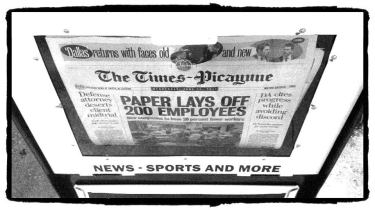 The time would be now for those of us that recognize the integral and historic relationship between our history as a republic and a democracy and our news papers and pamphleteers to recognize the need for drastic measures. Perhaps it is time to consider our local newspapers and television stations to be community assets and mount movements to make them mutual organizations or nonprofits. The historic trashing of the Times Picayune by the Newhouse corporation looking for more profits–as is their nature–should serve as a warning to all US cities. Your ability to know more about your local governments, your local citizens, and your community is at risk.
There are some things that are too important to be left to the profit motive.
Judy Woodruff of New Hour interviewed the TP Editor who insists that our ability to know will not be hampered by not only less access to the paper–many of our poorest do not have access to the internet version–and less staff. The TP is 175 years old. It’s one of the oldest newspapers in the country.
JIM AMOSS, editor, The New Orleans Times-Picayune: Many readers can’t imagine a morning without our newspaper in their hands. I understand that. I’m a print guy. I grew up in this business.
JUDY WOODRUFF: The Times-Picayune’s parent company, Advance Publications, also announced layoffs at three Alabama newspapers: The Birmingham News, The Press-Register in Mobile, and The Huntsville Times. Together, they will lose 400 employees.
The cuts and the changes are all a far cry from 2005, when Hurricane Katrina ravaged New Orleans. The Times-Picayune became a lifeline to those trying to recover and rebuild. Seven months later, Loyola University communications professor Larry Lorenz underscored that vital role in a conversation with the NewsHour’s Jeffrey Brown.
LARRY LORENZ, Loyola University: In the Civil War era, Oliver Wendell Holmes, the father of the later Supreme Court justice, wrote an essay called “Bread and the Newspaper.” And in it, he said, bread and the newspapers, we must have.
JEFFREY BROWN: So you have got to eat and people need information?
LARRY LORENZ: You bet. The information that’s in the newspaper feeds us as much as the bread feeds us.
JUDY WOODRUFF: But now, like a growing number of newspapers nationwide, The Times-Picayune faces a fight for survival.
Our city is not taking this quietly. This link comes via Morning Edition at NPR. You’ll notice a pattern here on exactly where I’m having to go to get news on this story. It’s not going to come from the right wing propaganda machine at Fox News. It’s not coming from other US papers either.
What happens when a media company wants to take away your daily newspaper? In New Orleans, you take to the streets.
A recent rally to preserve daily publication of the Times-Picayune featured high-profile musicians including Kermit Ruffins, whose sang a jazzy tune invoking the name of the 175-year-old paper. It’s part of a campaign launched by New Orleans’ most prominent residents and powerful leaders to save the Times-Picayune, a cultural institution in a city that gives high credence to tradition.
“It’s a morning ritual,” said Constable Lambert Boissiere, a former city councilman and state senator. “You know, you get the paper, get your cup of coffee, have you a little breakfast or whatever, paging through the articles you want to read. Then you had the conversations at lunch about the things you read in the paper.
“So that’s going to be gone,” Boissiere said. “I can’t imagine myself and my friends sitting in front of the computer every morning, going through the different sections to read the articles. I don’t see that happening.”
The cuts at the paper are part of a restructuring by Advance Publications, a Newhouse company, that will shift to three-day print editions and an emphasis on online news.
But more than a third of New Orleans residents don’t have Internet access, raising questions about how poorer and older citizens will keep up with news or even the local obituaries. Rituals aside, Boissiere said, the timing is terrible.
“We finally cleaned up our act since Katrina. We got business coming back. Our athletics things, with the Hornets and the Saints, we got a Super Bowl, we had Final Four, everything,” he said. “We’re getting to be a big city again. And then to lose a daily paper, I think it’s a bad signal affecting the growth of the city.”
Concerned civic leaders have banded together to put pressure on Newhouse to rethink its plan.
I personally am watching friends that have worked for the paper for decades collect their pink slips. It’s heartbreaking. It also raises an obvious question. This can’t be just about stopping a printing press. An internet-based paper still requires writers and photographers, doesn’t it? HuffPo is following the story.
Overall, the paper reported that it was laying off a third of its staff, totaling 202 employees. The Gambit newspaper said that 49 percent of the newsroom was being let go.
Katy Reckdahl, a laid-off reporter, spoke to the local WWL news station about the changes. “I guess I’m trying to figure out how I didn’t fit into the new organization,” she said. “I think they’ve torn apart an institution,”
As the ax continued to fall, Jim Amoss, the paper’s editor, posted a video on the T-P website.
“This is a difficult week at our paper,” he said. “We’ve had to let go of some wonderful employees. It is a painful transition.”
Amoss said that the paper was not “immune” from the broader economic climate facing newspapers, and that “news organizations that don’t serve a digital audience as well as their print readers risk a slow death.”
Renee Peck, a former T-P writer, reported that heart-rending scenes were being played out within the newsroom:
The first to go early this morning was a longtime copy editor who, ironically, has been overseeing online content for the past decade. When she burst into tears at the news, the supervisor in charge seemed unprepared, and had to duck into the ladies’ bathroom for paper towel.Employees who were laid off were offered severance packages; if they choose to accept the buyouts, they must work at the paper until Sept. 30.
The cuts at the Alabama papers, which are making a similar digital transition, were even more savage. Poynter reported that one paper, the Birmingham News, is seeing its newsroom cut by a shocking 60 percent, with 400 employees let go across all three papers affected by cuts.
Here’s a CBS story about what I’ve been seeing on my FaceBook feed for the past two days.
Job casualties in New Orleans included some of the city’s most experienced writers and photographers, many of whom announced their own departure on a Facebook page by simply posting “-30-,” an old copy editor’s code for “end of story.”
Peter Finney, a sports writer for the paper since 1945, is being laid off but has been asked to write a freelance column, the paper said. Managing editors Peter Kovacs and Dan Shea, among the newsroom leaders during the paper’s Pulitzer Prize winning coverage of Hurricane Katrina’s aftermath, have not been asked to stay. Brett Anderson, the current restaurant critic for the food-obsessed city, is leaving for a fellowship.
Employees who took part in Tuesday’s meetings described an emotional scene that played out over the course of the day among colleagues who have worked together for many years.
Reporter Barri Marsh Bronston said she was being let go after 31 years.
“These last three weeks have been unbearable, but I’m feeling a sense of relief right now,” she said in a post on Facebook. She did not want to be interviewed but gave permission for her comment to be used.
Throughout the day, employees met with various managers and were told either that they would have a job with the new company, Nola Media Group, or they were offered severance packages. Some will later be able to apply for positions in the new operation, the paper said.
Corporations and their single minded pursuit of profits are the country’s most prolific sociopaths and serial killers. It’s time to revive an old time corporate form. Companies that are responsible for public trust should most likely be owned by stakeholders and not just money hungry investors. I want our villagers back.
So Many Plutocrats, So Few Guillotines …
Posted: June 13, 2012 Filed under: the villagers | Tags: Aristocrats, David Brooks, Mitt Romney, plutocrats, SNOBS 15 Comments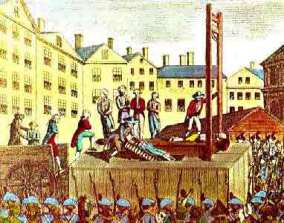 I don’t wonder how these folks get their money or their positions. However, I do wonder if any one even listens to them. Oh, wait. One of them is running for president and the other is taken seriously in the media.
Where’s a guillotine when you need one?
Dianne Bauer opened up her cafe to Mitt Romney and his campaign for a small round table discussion Friday morning before his speech at Bayliss Park.
This isn’t the first politician that has asked Bauer to use the Main Street Cafe in downtown Council Bluffs.
“With Rick Perry he made a point of stopping in the kitchen before he ever went to the other side to address the public and the media to thank us and introduce himself to us,” said Bauer. “That’s what I thought we would get here, just normal. This was all out, like you’d think Obama was here.”
Bauer’s issues with the campaigns staffers started the night before when they started staging the cafe for the event.
She described many of their demeanors as “arrogant”.
She says her cafe was not treated with the respect it deserved.
“Stuff got broke. My table cloths they just got ripped off, wadded up and thrown in the back room,”
She says the boom truck she allowed the campaign to borrow to gain access to the roof now has an 8-inch gauge in it that she’ll have to take the time to repair.
The campaign told her to send them an itemized list of anything that was broken, and they would pay for it, but Bauer says that won’t fix everything.
“My dad’s picture, an emblem my dad gave me, it got broke. Those aren’t things you can replace,”
Bauer says she never even got to meet the candidate she closed half of her restaurant down for.
“Every time we tried to go out or look, secret service was right there,” she said.
She was complaining about the event to a friend when reporters overheard her and posted about it online.
That’s when Romney called Bauer himself. She says he explained that it was just a misunderstanding that she did not get to meet him, but the phone call didn’t smooth things over for her.
“He responded ‘well, I’m sorry your table cloths got ripped off, wadded up and thrown in the back room’ and I took it as mocking,” she said. “We’re the ones he’s wanting to get the votes from, you’d think we would have been treated better.”
She says the whole experience left her wondering.
“With how he treated me, is that how he’s going to treat others? You know, if he gets in office is he going to be that way to us little people?”
The always guillotine-worthy David Brooks proves to his again exactly why he is a public menace. He whines that there just aren’t any good ‘followers’ out there any more. I guess he’s in search of a new generation of true believers. I’m going to let you read Dean Baker who rips him a new one.
Nope, I’m not kidding. His column today is devoted to “the follower problem.” He is upset that people are cynical and don’t seem to trust the elites. Brooks tells us:
“I don’t know if America has a leadership problem; it certainly has a followership problem. Vast majorities of Americans don’t trust their institutions. That’s not mostly because our institutions perform much worse than they did in 1925 and 1955, when they were widely trusted.”
Let’s leave aside 1925 since it was a very different world. In 1955 the economy was growing at a healthy pace with workers up and down the income ladder sharing in the prosperity. They were seeing rapidly rising living standards and it was a virtual certainty that children would enjoy much better standards of living than their parents.
Brooks may have missed it, but the economy collapsed in 2008. This was not due to any external event like a massive drought or asteroid strike, it was due to fact that the people who design economic policy were too brain-dead to see the largest financial bubble in the history of the world.
The result of this failure is that tens of millions of people are unemployed, underemployed, or out of the workforce altogether. Millions more are facing the loss of their homes. And a huge cohort of baby boomers, many of whom spent their lives working at decent paying jobs, are approaching retirement with nothing to support them but their Social Security.
It’s enough to make me take up knitting.
OOPS wrong musical …
To be or not to be … a second term for Obama
Posted: June 12, 2012 Filed under: 2012 presidential campaign | Tags: Obama second term, The Economist 42 Comments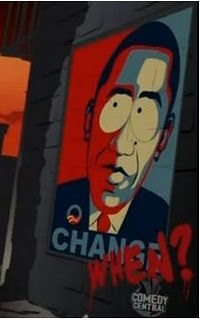 I’m watching the Economist Debate on US elections with the proverbial jaundiced eye. It’s not exactly a good sampling of folks that will most likely be voting in the election. However, the comments are extremely interesting and as of this moment, Obama’s being judged by the readership as worthy of a second term. Why I bring this up is that there are two think tank guys arguing the opposing sides and their fascinating arguments reveal a lot about why we can’t get a decent conversation about issues going on in this country at most levels of policy making.
- Michael Barone is arguing the Republican side of things. He’s a Senior political analyst for the Washington Examiner and a resident fellow at the American Enterprise Institute. This is supposedly the ‘brains’ of the conservative movement and one of its mouthpieces wrapped up in “research” and “journalism”. Let’s just say he’s a propaganda tool and leave it at that. As such, this is the level of his argument. Death Panels!!! Liberal Elites!!! Socialism!!!! If this is the brains behind the conservative moment, be very afraid. Let me offer up a sample.
America needs to reform its industrial-age entitlement programmes, especially Medicare, to better suit our information-age society. Entitlements are on a trajectory to gobble up all federal revenues and more, and their centralised command and control design leaves no options but death panels and default. Unfortunately, Mr Obama has shown no serious interest in entitlement reform. He ignored the recommendations of his own Bowles–Simpson commission and sabotaged the “grand bargain” negotiations by suddenly demanding $400 billion more in tax increases. He has responded to Republican proposals such as Paul Ryan’s budget plan with campaign demagoguery of the crudest sort.
I’m no Obama fan but this characterization is about as real as the pictures of Obama riding the Unicorn while wielding the rainbow sword. Paul Ryan’s budget plan was full of unsubstantiated number fudging. The grand bargain always included tax increases on the uppermost bracket and Romney/Dole/Chaffey Care–a brain child of the conservative Heritage Foundation–is anything but command and control. Well, unless you want to consider Insurance and Drug companies having command and control over everything the basis for “command and control”. I found Obama way too eager to sell off social security and medicare so that criticism is just delusional. So, basically, the argument against Obama is just more lunatic fringe propaganda here. It’s not an argument. It’s a mythic diatribe. The only thing it needed was a reference to “who is John Galt”. Frankly, the liberal arguments against Obama are much more compelling including the ones that find his extensions of the Patriot Act and use of drones positively Cheneyesque. But, Glaston is not going to argue against the Bushy Cheney imperialistic presidency so that’s no where to be found.
So, is the argument for Obama any more compelling? Again, I’m looking at the folks here. I’m not making any case either way on my own terms.William A. Galston provides the counter argument. He’s the Ezra Zilkha Chair for the Governance Studies Program at the Brookings Institution. This is the supposed liberal counterpart to AEI. Here’s what Galston believes are Obama’s accomplishments-to-date.
But Mr Obama’s most notable achievements have come in the three wars he inherited. He engineered a military withdrawal from Iraq phased so as not to surrender hard-won gains, and he has devised a reasonable timetable for ending the decade-long war in Afghanistan in a manner that safeguards our core long-term interests As for the war on terrorism, Mr Obama has proceeded with focus and verve, and the results have been more than satisfactory. The bold mission that killed Osama bin Laden was the frosting on a very large cake. American drone attacks in Pakistan and Yemen have decimated al Qaeda’s leadership. While the international terrorist network continues to pose a substantial threat, its leaders are on the defensive and in hiding as a result of Mr Obama’s policies.
Back at home, Mr Obama’s social policies have produced similarly good results. In the area of education, he chose a reform-minded secretary and backed him to the hilt. The result: a number of useful initiatives, including the “Race to the Top” programme that catalysed substantial change at the state and local level at modest cost. Mr Obama has also done more for gay rights than any president in history. But when looking at the president’s non-economic domestic record, the focus inevitably falls on health-care reform.
Mr Obama’s reform has long been unpopular and remains so today. But this does not mean it is bad policy, or that it will remain unpopular. If the legislation is fully implemented, it will succeed in expanding insurance coverage and in ridding the system of some of its worst defects, such as denial of coverage based on pre-existing conditions. It also includes attempts to restrain health-care costs, now growing at a rate that portends fiscal disaster if allowed to proceed unchecked. Even its most controversial aspect, the mandate, is a policy conservative Republicans once supported (and Mr Romney included in his reform of Massachusetts’s health-care system). It is for good reason that health-care reform represents a signature accomplishment for Mr Obama, one that had eluded previous Democratic presidents for three-quarters of a century.
I come, finally, to the economy, the issue on which—barring a military confrontation with Iran—the election will turn. To assess the president’s record accurately, some context is essential. As economists Kenneth Rogoff and Carmen Reinhart have shown, financial collapses differ from even deep cyclical downturns. Growth and household incomes are slower to recover, while unemployment, deficits and public debt are higher. And these effects persist for many years. So putting Mr Obama’s record up against Ronald Reagan’s is to make an apples-to-oranges comparison.
The real question is how Mr Obama has done in relation to previous financially induced crises. And the answer is: not badly. He averted an all-out meltdown of the American and global financial system and the onset of a second Great Depression. His stimulus programme, though imperfect in design, helped to stem job losses at a crucial moment in the downturn. (A majority of American economists concurs in this view, as does the non-partisan Congressional Budget Office.) His intervention saved two American car firms and as many as 2m auto-dependent jobs. His programme to recapitalise the banking sector, which was necessary but unpopular on the left, has left America’s financial system better off than its European counterparts. And his new architecture for financial regulation, which was necessary but unpopular on the right, addresses many of the excesses and imbalances that had crept into the system.
So, you can go read all the comments and the longer arguments by both these guys. Frankly, the more I know about Romney, the more I am resigned to vote for Obama. I’m not sure that’s a particularly compelling argument for any one to make but as far as things I really care about, Romney is anathema to them all. What’s worse? Obama’s pathetic retreat from conflict over important issues or Romney’s do and say anything just make me King manner? Frankly, I’m sticking with the known quantity at this point. Huzzah!
Monday Reads: By the Numbers
Posted: June 11, 2012 Filed under: education, morning reads, New Orleans, Paycheck Fairness Act, Women's Rights, worker rights 11 Comments Good Morning!
I’m really glad that some people are focusing on the Plutocrats behind the SuperPacs. We should at least know who they are and what they want of their the overlords of our politicians. Jim Hightower writes on 7 of the billionaires that are bankrolling the GOP. Read the link at Alternet to learn more about the Super Seven and what they want.
As of May 4, this corporate clique had poured an unprecedented $94 million into the SuperPACs of the leading five GOP contenders (with $52 million of that going to Renew Our Future, Romney’s money funnel). This firepower was all the more potent because it was targeted at only the few thousand voters in each state who participated in the caucuses and primaries. And it bought just what the moneybags wanted–the lockstep commitment by all contenders that–no matter how they might differ on abortion, gay-bashing, and such–they would govern according to the Holy Kochian vision of a regulation-free, union-free, tax-free America. Thus, no matter which horse any of the multimillionaires and billionaires bet on, they would cash-in as winners, for this tiny group now owns one of America’s two major parties (and, yes, often rents the other).
Bobby Jindal is radically transforming the state of Louisiana and there’s no real Democratic party to organize and stop him. I’ve written before about his take down of public schools. Here’s “5 Ways Louisiana’s New Voucher Program Spells Disaster for Louisiana”. Did you notice he’s been up in Wisconsin and Illinois campaigning again? Look out! The man is a menace to civilization!
This latest pet project of popular Republican Governor Bobby Jindal, called Louisiana Believes, is now regarded as the most extensive voucher system in the United States — out-privatizing even the state of Indiana, where nearly 60 percent of the state’s students are eligible for vouchers. By eroding caps on family income levels, and thereby providing voucher assistance to both low- and middle-income families, Indiana’s plan aimed to remake public education in the state more extensively than any voucher system in US history – until now.
Like Indiana’s program, Louisiana’s new voucher plan is so wide in scope that it could eventually cut the state’s public education funding in half. But in a number of crucial ways, the Louisiana model works even harder to destroy public education than Indiana’s program does. Already approved by the Louisiana state legislature, the program sets an alarming precedent for undermining public education in other states.
Suevon Lee of Pro Publica writes about 5 ‘Stand your Ground’ Cases that are important. Damn! Louisiana’s on the shit list again!
But as a recent Tampa Bay Times investigation indicates, the Martin incident is far from the only example of the law’s reach in Florida. The paper identified nearly 200 instances since 2005 where the state’s Stand Your Ground law has played a factor in prosecutors’ decisions, jury acquittals or a judge’s call to throw out the charges. (Not all the cases involved killings. Some involved assaults where the person didn’t die.)
The law removes a person’s duty to retreat before using deadly force against another in any place he has the legal right to be 2013 so long as he reasonably believed he or someone else faced imminent death or great bodily harm. Among the Stand Your Ground cases identified by the paper, defendants went free nearly 70 percent of the time.
Although Florida was the first to enact a Stand Your Ground law, 24 other states enforce similar versions. Using the Tampa Bay findings and others, we’ve highlighted some of the most notable cases where a version of the Stand Your Ground law has led to freedom from criminal prosecution:
· In November 2007, a Houston-area man pulled out a shotgun and killed two men whom he suspected of burglarizing his neighbor’s home. Joe Horn, a 61-year-old retiree, called 911 and urged the operator to ” 2018Catch these guys, will you? Cause, I ain’t going to let them go.’ ” Despite being warned to remain inside his home, Horn stated he would shoot, telling the operator, ” 2018I have a right to protect myself too, sir. The laws have been changed in this country since September the first, and you know it.’ “
Two months earlier, the Texas Legislature passed a Stand Your Ground law removing a citizen’s duty to retreat while in public places before using deadly force. In July 2008, a Harris County grand jury declined to indict Horn of any criminal charges.
· In Louisiana early this year, a grand jury cleared 21-year-old Byron Thomas after he fired into an SUV filled with teenagers after an alleged marijuana transaction went sour. One of the bullets struck and killed 15-year-old Jamonta Miles. Although the SUV was allegedly driving away when Thomas opened fire, Lafourche Parish Sheriff Craig Webre said to local media that as far as Thomas knew, someone could have jumped out of the vehicle with a gun. Thomas, said the sheriff, had “decided to stand his ground.”
Louisiana’s Stand Your Ground law was enacted just a year after Florida introduced its law.
William Cohan believes that Congress wants a 2nd economic meltdown due to bad bank behavior and points to a Taibbi article listing 9 obscure pieces of legislation introduced by Congress to tank Dodd-Frank.
A sad truth remains: Despite all the public hand-wringing about the need to finally nail down the details of the regulations that will govern risk-taking at big banks, Wall Street’s well-paid army of lawyers and lobbyists continues to make a mockery of the whole re-regulation process.
It seems increasingly likely that, by the time the charade is over, the American people will end up with fewer substantive rules and limitations on the crazy risks Wall Street can take than we have now. By some counts — including that of Matt Taibbi, at Rolling Stone — there are nine obscure pieces of legislation introduced in Congress this year that are designed to in one way or another weaken the already weak provisions of the Dodd-Frank law, passed in July 2010.
Most of the legislation is intended to do little more than waste time, and hold off real accountability until the public has lost interest. Other laws are more pernicious. Consider H.R. 3336, the so-called Small Business Credit Availability bill. Under the guise of helping community lenders, it would limit who is considered a “swap dealer” under the provisions of Dodd- Frank, allowing more and more swaps to be written with less and less oversight. It passed the House in April.
Lastly, I’d like to point to this article in The Economist that basically says exactly what I feel about the sinking of the Paycheck Fairness Act last week. This also applies to getting rid of DOMA type laws. “Protecting individual rights is not Stalinist. ”
THIS week Republicans in the Senate once again blocked the Paycheck Fairness Act, which would take further steps to guarantee access to the legal system for women who charge they’ve been paid less than men for doing the same job. (That’s illegal, in case anyone was thinking of trying it.) Justifying his vote against the act, Rand Paul compared it to Soviet communism. This is sort of a dog bites man story; on a given day, Rand Paul probably compares several dozen things to Soviet communism. But here, for what it’s worth, is why he thinks legislation to make it easier for women to sue when they’ve been paid less than men for doing the same job is just like Soviet communism:
“Three hundred million people get to vote everyday on what you should be paid or what the price of goods are,” Paul told reporters on Capitol Hill. “In the Soviet Union, the Politburo decided the price of bread, and they either had no bread or too much bread. So setting prices or wages by the government is always a bad idea.”
Mr Paul does not appear to understand either the law which he has just voted against, or the class of economic transaction about which he is speaking. If a woman sues because she has been paid less than a man for doing the same work, and a judge rules in her favour, that is not an instance of “setting prices or wages by the government”. The wage in question was set by the employer. What the judge has ruled is that the employer cannot offer different wages to different employees based on their sex. Why might such a hypothetical judge make such a ruling? Because, as noted above, offering different wages to different employees based on their sex is against the law, and has been so since 1963.
Senator Aqua Buddha obviously has a room temperature IQ.
We’re all in the Village now. That’s my contribution today. What’s on your reading and blogging list?
Ignore the Man Screaming in Front of the Curtain
Posted: June 10, 2012 Filed under: The Media SUCKS, the villagers, War on Women, WE TOLD THEM SO | Tags: bloviators, liberal angst, Right Wing Hate Groups 13 Comments Here’s an interesting thesis from Steven Almond writing at the NYT.
Liberals are to blame for the success of right wing canards and screamers because they don’t elevate the conversation. They fixate on the bloviator.
Of course, not all right-wing pundits spew hate. But the ones who do are the ones we liberals dependably aggrandize. Consider the recent debate over whether employers must cover contraception in their health plans. The underlying question — should American women receive help in protecting themselves from unwanted pregnancies? — is part of a serious and necessary national conversation.
Any hope of that conversation happening was dashed the moment Rush Limbaugh began his attacks on Sandra Fluke, the young contraceptive advocate. The left took enormous pleasure in seeing Limbaugh pilloried. To what end, though? Industry experts noted that his ratings actually went up during the flap. In effect, the firestorm helped Limbaugh do his job, at least in the short term.
But the real problem isn’t Limbaugh. He’s just a businessman who is paid to reduce complex cultural issues to ad hominem assaults. The real problem is that liberals, both on an institutional and a personal level, have chosen to treat for-profit propaganda as news. In so doing, we have helped redefine liberalism as an essentially reactionary movement. Rather than initiating discussion, or advocating for more humane policy, we react to the most vile and nihilistic voices on the right.
Media outlets like MSNBC and The Huffington Post often justify their coverage of these voices by claiming to serve as watchdogs. It would be more accurate to think of them as de facto loudspeakers for conservative agitprop. The demagogues of the world, after all, derive power solely from their ability to provoke reaction. Those liberals (like me) who take the bait, are to blame for their outsize influence.
Blink.
Okee dokee then.
From Digby: Little wingnut monsters: even if you don’t feed them, they grow up anyway.
This may be the single dumbest op-ed in the NY Times this year, which would be an accomplishment, given that Friedman, Brooks, Douthat, and Bruni all write there. Apparently Steve Almond thinks that if liberals would just ignore nasty old Republicans, then we’d have an amazingly civil public discourse and Fox news would shrivel up and die. The logic goes something like this:
1.) Ignore Mean Republicans
2.) …3.) UNICORNS!
This is something like clap-for-Tinkerbelle in reverse. If we stop enabling righties by paying attention to them, they’ll go away.
I would like to say that I don’t feel personally victimized by escalating right-wing fanaticism. Most of the time I feel more like a helpless bystander watching barbarians sack my country.
From me:
WTF is wrong with you? We now have walking, talking, reproducing humanoids that think taking from the poor and giving to the rich solves all of our economic problems, that poor people deserve to starve and die from lack of insurance because there’s something morally wrong with them, a basically ineffective right of center president is a socialist, Kenyan Muslim who has spent us into no man’s land, Fox News is actually news and not just made up shit that rich Republicans want you to believe, and fertilized egg has more right to “life” than a woman or a man that’s been wrongly convicted of a crime or GLBT people. We’re supposed to ignore the propagandists and just spout platitudes about “big ideals”? Gimme a friggin; break and buy a clue, dude! We tried Air America. It bored every one. Eliot Spitzer got sent to out media land for having heady conversations. What planet is this?
That is all.

 peej
peej Carissa
 bostonboomer
 dakinikat
 ecocatwoman
 jjlo
jjlo mablue2
 Mama Lopez
 peggysue22
 quixote
 skydancingguestblogger
 Mona (aka Wonk the Vote)





Recent Comments