
Does Romney Actually Stand for Anything?
Posted: September 9, 2012 Filed under: 2012 elections | Tags: Obamacare, Romney Flip Flops 99 Comments I had to laugh at Brad DeLong’s post on Romney’s repositioning on “Obamacare”. Go take a look at “Why Oh Why Did the Republicans Nominate This Clown?” So first he was for it, then he was against it, then he’s sorta kinda for it again.
ObamaCare allows parents to keep their young-adult children on their insurance, requires insurers to offer guaranteed issue and community rates, and imposes an individual mandate to purchase insurance on individuals.
Now comes Mitt Romney:
Romney says he won’t repeal all of Obamacare: Mitt Romney says his pledge to repeal President Barack Obama’s health law doesn’t mean that young adults and those with medical conditions would no longer be guaranteed health care.
So there we have it: Romney will keep the parts of ObamaCare that are young-adult coverage, and guaranteed issue and community rates.
It continues:
The Republican presidential nominee says he’ll replace the law with his own plan. He tells NBC’s “Meet the Press” that the plan he worked to pass while governor of Massachusetts…
So there we have it: Romney will keep the parts of ObamaCare thatimposes on individual mandate to purchase insurance.
So what’s left?
Romney says he doesn’t plan to repeal of all of Obama’s signature health care plan. He says there are a number of initiatives he likes in the Affordable Care Act that he would keep in place if elected president…
Like: the whole thing. Duh.
There is something very wrong with anybody working for, contributing to, or arguing for Ryan-Romney right now.
So, isn’t the repeal of Obamacare the holy grail of republicans and teabaggers right now? They’ve voted to repeal it over 30 times.
Since the start of this Congress, Republicans have taken 30 votes to repeal, defund or dismantle the Affordable Care Act. When they vote to repeal the health law later this week that will make 31. House Republicans will then have had as many health-repeal votes as Baskin Robbins has ice cream flavors.
As we’ve seen 30 times before, the health-care-repeal votes aren’t going anywhere. Repeal bills passed in the House are dead-on-arrival in the Democratic-controlled Senate. So why do they keep going?
To start, there’s a lot of support in the Republican base for a repeal. Kaiser Family Foundation asked voters, shortly after the Supreme Court decision, whether they wanted legislators to continue blocking the health law — or move on and implement it.
Overall, 65 percent sided with the latter option. But dig deeper into the numbers, and you’ll find widespread support among Republicans to continue blocking the law. There’s significant support among Independents to keep fighting, too
Mark Thoma really has some good points on this.
I won’t complain about “a major fold” on healthcare, but it does bring up a question. Does Romney stand for anything? He seems to know how to set his principles aside and submit to the highest bidder — something his touted business experience taught him I suppose. But with all of the flip-flops, Etch-a-Sketch moments, his refusal to take a stand on budget cuts, his dishonest campaigning, etc., etc., is there any principle that Romney won’t conveniently overlook if it looks like there’s a few votes to be gained?
I’ve said this over and over, but I honestly can’t figure out why this guy keeps running for president. What on earth is his reason? To do something Daddy couldn’t do? I’m open for suggestions.
You can call this an open thread!!!
The Real Debt we’re Leaving our Children
Posted: September 8, 2012 Filed under: academia | Tags: student loan crisis 12 Comments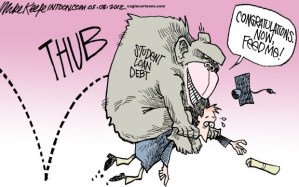 As you know, I just finished my doctorate and my youngest just finished her online bachelors degree. I’d really like her to go get an MBA right now but she sees the debt that her sister accumulated during med school and my student loan debt which just basically happened over the last two years. Tuition is going up almost as astronomically as health care costs because of the great recession. Lack of jobs after school is a problem. The youngest is bar-tending and doing part-time temp jobs in NOmaha. She has yet to round up a good job. I’m still looking for a tenure track position while working as an adjunct. The only one that can probably hand the student loan debt is Dr. Daughter. I didn’t get student loans for my undergrad or my first graduate degree. I paid for them both. This time, I just couldn’t swing the tuition. My student loan is actually larger than my house loan at the moment. That scares me when I think about it. But, it would worry me more if I was younger. Read these two NYT articles to see why.
At a protest last year at New York University, students called attention to their mounting debt by wearing T-shirts with the amount they owed scribbled across the front — $90,000, $75,000, $20,000.
Amanda Cordeiro of Clermont, Fla., owes $55,000 in student loans. She has changed her phone number about four times in a year to avoid being found.
On the sidelines was a business consultant for the debt collection industry with a different take.
“I couldn’t believe the accumulated wealth they represent — for our industry,” the consultant, Jerry Ashton, wrote in a column for a trade publication, InsideARM.com. “It was lip-smacking.”
Though Mr. Ashton says his column was meant to be ironic, it nonetheless highlighted undeniable truths: many borrowers are struggling to pay off their student loans, and the debt collection industry is cashing in.
As the number of people taking out government-backed student loans has exploded, so has the number who have fallen at least 12 months behind in making payments — about 5.9 million people nationwide, up about a third in the last five years.
In all, nearly one in every six borrowers with a loan balance is in default. The amount of defaulted loans — $76 billion — is greater than the yearly tuition bill for all students at public two- and four-year colleges and universities, according to a survey of state education officials.
Yes, collecting student loan debt from students who face the worst job market since the Reagan years is now a cottage industry. Oh, wait, I forgot, I was just supposed to take a loan out from my 90 year old father. Right?
Last year, a study by the Institute for Higher Education Policy found that for every borrower who defaulted, at least two more borrowers were delinquent in their payments. And in March, the Federal Reserve Bank of New York, using a survey of credit reports, concluded that more than one in four borrowers of student loans, both federal and private loans, were behind on their payments.
Long-range projections by the Department of Education estimate that the default rate over 20 years, for borrowers who began repayment in 2009, is 17 percent; among students who attended profit-making colleges, the predicted default rate is 49 percent.
It is messy, though, to compare those long-range estimates with the official default rate published by the Department of Education. The long-range estimates are calculated on the dollar amount of loans in default, while the official rate is based on the number of borrowers in default.
Looking at defaults another way, about 15 percent of all borrowers have been in default at the end of the last six fiscal years, which ends Sept. 30, according to Department of Education data. Currently, 16 percent of borrowers are in default, nearly twice the official default rate.
This is a problem on all kinds of levels.
Government officials estimate they will collect 76 to 82 cents on every dollar of loans made in fiscal 2013 that end up in default. That does not include collection costs that are billed to the borrowers and paid to the collection agencies.
While the government’s estimates take into account the uncertainty of collecting money over long periods, some critics say they don’t go far enough.
A 2007 academic study, for instance, estimated that the recovery rate was closer to 50 cents on the dollar.
“The reporting standards that the government imposes on themselves are far weaker than what they require of private institutions,” said Deborah J. Lucas, a finance professor at the Massachusetts Institute of Technology and an author of the study.
Over all, collections on federally backed student loans were $12 billion in the last fiscal year, 18 percent higher than the previous year. Of that, $1.65 billion came from seizures of government checks like tax returns and $1.01 billion was collected by garnisheeing borrowers’ wages. More than $8 billion of defaulted loans, however, were consolidated or rehabilitated.
Here’s some more interesting items. Here’s some items from Florida.
Student loan debt is now higher than credit card debt, and could become the next bubble to burst. Understandably, the recession has made it hard for recent graduates to repay their loans, but Baby Boomers have no such excuse. Plenty of employed Americans under 35 include loan repayments in their budgets.
The real unfairness is that during the last decade the government allowed students to be suckered, by privatizing student loans. Colleges got in on the scam. Florida State University’s financial aid director sat on the board of a company that did $27 million in loans to FSU students. Stetson University Law School’s financial aid director sat on the advisory board of a lender that did 70 percent of the school’s loan business. More than a dozen officials in the Department of Education under President Bush came from the student loan industry or left to work there.
Loans matter more than ever to many students. Florida has cut spending on higher education and raised tuition. Some in Congress want to cut Pell grants to students. Online courses may be one way to cut the cost of obtaining a college degree. For now, though, one way to reduce student debt is to force older students to repay it.
Hidden in this St. Augstine editorial is a nugget. For nearly a decade, student loans were a free-for-all pig run for private lenders. This has changed since 2010. However, it exposes the deeper problem of students trying to get ahead in a world that demands skills when tuition costs keep skyrocketing. Do talented students need to just settle for community college or hope they have a rich dad with deep pockets–as suggested by Republican Presidential candidate Romney–or is there a third way?
A college degree is still worth the time, money, and effort. How can we help our citizens achieve this goal without saddling them with a house-sized debt?
… college graduates are doing better than everyone else. For instance, the median earnings of a college graduate with a BA working full-time in 2008 was $55,700 and for those with an Associates Degree (typically awarded by community and technical colleges) was $42,000. That’s significantly better than the $33,800 for high school-only grads and $24,300 for those without a high school diploma.
The unemployment numbers are striking, too. The latest figures from the Bureau of Labor Statistics show an unemployment rate of 4.3 percent for college graduates and above who are 25 years and older. That compares with 9.5 percent for high school graduates and 13.9 percent for those with less than a high school education. “The real damage has happened with the loss of low-skill jobs,” says Stephen Rose, research professor at the Georgetown University Center on Education and the Workforce.
The benefits of postsecondary education are apparent even after drilling down deeper into the unemployment numbers. For instance, some high-wage workers have little education—a plumber, say. And highly educated workers can make very little—an English PhD, for instance, working in the back office of a nonprofit. Specifically, after dividing worker wages into fifths, about 25 percent of those in the two highest wage groups, or quintiles, have only a high school diploma. Similarly, about 20 percent of workers with a college degree were in the lowest two wage quintiles. Yet from 2007 through 2009 the unemployment rates for less-educated high-wage workers rose faster than for college-educated low-wage workers, according to researchers at the Federal Reserve Bank of Minneapolis.
There are a number of ways to help our future work force invest in themselves. First, we could actually decrease their burden or give them paybacks for success. What about giving them some incentives not to quit school? We can also encourage them to move or work in under-served areas. Many states will pay for nurses and doctors to go to school if they will agree to practice in rural areas or go into practices that serve a key populace. Other countries treat higher education like other forms of public education. This problem of debt will not go away and we have to think creatively to find ways to help our graduates deal with it. This should be something other than growing a cottage industry of folks to harass them into paying. We need to invest in educated and trained workers and help students that succeed. We also need to encourage schools to improve their delivery systems. Where’s the conversation about all of this during this election year?
Bring on the Real Economists
Posted: September 7, 2012 Filed under: 2012 elections, U.S. Economy | Tags: Democratic economic record, income equality, jobs, joseph stiglitz, Paul Krugman, Romney/Ryan Soak the Middle Class Plan 18 Comments I really loved the line in Obama’s acceptance speech on the Republican’s apple vinegar cure-all for everything that ails you. Take two tax cuts, throw out a few regulations, and call us in the morning! Here’s a great read. The NYT book review looks at the new books of Nobel prize winning economists Paul Krugman and Joseph Stiglitz. These out spoken economists speak truth to power. I just wish the current powers-that-be would listen.
…Washington is stuck in neutral. Worse than neutral; it is in reverse. As the last elements of the 2009 stimulus phase out, the initial flood of federal aid has slowed to a trickle. If no agreement is reached before early next year, the trickle will become a huge backward flow, as President Obama’s payroll tax cut and all the Bush tax cuts expire while automatic spending cuts agreed to in previous legislative sessions kick in. Already, Republican leaders are threatening to replay last year’s standoff over the debt ceiling. Meanwhile, state and local governments—prohibited from running sustained deficits, increasingly dominated by anti-spending forces—continue to cut aid to those out of work and slash programs that invest in the nation’s future while laying off teachers and other public workers. Without those layoffs, the current unemployment rate would probably be around 7 percent.
Against this backdrop, no book could be more timely than Paul Krugman’s End This Depression Now! Since the crisis began, Krugman has argued with consistency and increasing frustration that the United States has become caught not in a normal recession, but in a “liquidity trap.” Since interest rates are already at rock bottom, normal measures, such as easy credit, won’t work, and expanded government expenditures must play a central part in boosting anemic demand. Otherwise, the efforts of private citizens to pay down debts laid bare by the financial crisis will continue to hold the economy back.
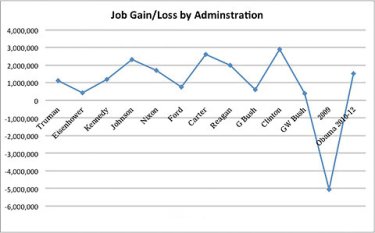
We continue to see Republicans blame the current Democratic administration for an economy they wrecked and a lackluster recovery that they actively work to prevent from becoming better. Today’s job report is not what it should or could be. But, it’s not what the Republicans make it out to be either. History shows us that the Democrats have been the job creators.
In the eighteen months from the beginning of 2008 through the middle of 2009, a period fully shaped by the Bush economic program to which Republicans now want to return, (but before the Obama stimulus had a chance to take effect), approximately 7.5 million jobs were lost.
Over the most recent 18 months of the Obama administration, approximately 2.8 million jobs have been added.
That means that the average monthly job loss during the “difficult situation” before Obama’s policies took effect was 417,000. Over the last year-and-a-half, the average monthly job gain has been 155,000.
If Rep. Ryan and Gov. Romney see that as making a bad situation worse, it should tell us something about their “vision.”
Joseph Stiglitz has been focused on the huge income gap created by policies that funnel money to the highest income earners. His concern is of the US as a Banana Republic.
We may be the richest nation in the world, but poverty is higher and social mobility between generations lower than in other rich nations. In other respects, our model is bloated: we release far more carbon dioxide and use far more water on a per capita basis; and we spend far more on health care, while leaving tens of millions uninsured and achieving health outcomes that are mediocre at best.
The reason, according to Stiglitz, is that the vaunted American market is broken. And the reason for that, he argues, is that our economy is being overwhelmed by politically engineered market advantages—special deals that Stiglitz labels with a term familiar to economists: “rent-seeking.” By this, he means economic returns above normal market levels that are derived from favorable political treatment. In the most powerful parts of The Price of Inequality, Stiglitz chronicles the blatant tax and spending giveaways to big agriculture, big energy, and countless other sectors. Yet he also pointedly argues that much of the rent-seeking that plagues our economy takes a more subtle form, also familiar to economists: “negative externalities,” or costs that economic producers impose on society for which they don’t pay.
The spectacular profits of the energy industry, for example, rely heavily on the failure of regulation to incorporate fully the social and economic costs associated with environmental degradation, including climate change. Similarly, the increasingly aggressive activities of Wall Street—whether in the marketing of unsound mortgages, the use of excessive leverage, or the irresponsible use of derivatives—create huge risks for the economy as a whole. Yet these risks are largely not taken into account in the prices paid in financial markets. Without effective regulation, the costs are borne by all of us—most acutely by the struggling millions who have been pushed out of jobs.
Weeding out these and other forms of rent-seeking would thus promote both efficiency and equity, and Stiglitz provides a broad list of reform ideas, ranging from strict regulation of financial markets to more effective anti-trust laws. Yet he is most passionate about the need for political reform. Either those at the top will realize that things must change, or, he suggests, the kinds of popular revolts sweeping Middle Eastern nations will come to the United States.
Clinton has some intriguing facts on his side. Aside from a rounding error, his historical numbers are accurate (figures from the Bureau of Labor Statistics show that the tally under Democrats since 1961 rounds to 41 million, not 42 million). I crunched the numbers a few different ways to see if Clinton was cherry-picking the best numbers. His figures measure job gains from the month a president took office until the month he left. Since it takes a year or so for any president’s policies to go into effect, I also measured job gains from one year after each president took office till one year after he left. Here’s the score by that measure: Democrats: 38 million new jobs, Republicans, 27 million.
Clinton only mentioned private-sector jobs, so I pulled the data for all jobs, including government. Again, the Dems have a big edge, accounting for 48 million new jobs, compared with 31 million for Republicans. If you push the boundaries out one year for each president, the gap narrows to 44 million new jobs under Democrats, and 34 million under Republicans.
Other measures also show that the economy performs better under Democratic presidents. Sam Stovall, chief equity strategist for S&P Capital IQ, conducted an analysis recently showing that GDP, stock prices, and corporate earnings have all increased more under Democratic presidents than under Republicans.
The S&P 500 stock index, for example, has risen 12.1 percent per year under Democratic presidents since 1900, and just 5.1 percent under Republicans. Since 1949, GDP has grown 4.2 percent per year under Democrats and 2.6 percent per year under Republicans. The same trend extends to corporate profits, which have grown 10.5 percent under Dems and 8.9 percent under Republicans.
The irony is obvious, since Republicans are considered the business-friendly party, while “tax and spend” Democrats are regarded as redistributionists eager to transfer wealth from those who have it to those who don’t.
We need to hold the Republicans responsible for all the evil they have done recently. I’m rejecting them all up and down the ticket this fall because I want a healthy economy and they never really deliver that.
Friday Morning Reads
Posted: September 7, 2012 Filed under: morning reads | Tags: Jared Bernstein, misogyny, Paul Ryan, Sandra Fluke, serial liar, YOYO 58 Comments Good Morning!
Sandra Fluke gave a wonderful speech to the DNC on Wednesday. The young woman rose to prominence after being denied an opportunity to be the only women speaking to a Issa congressional panel on the coverage of birth control in all insurance programs. She was savagely attacked by the right wing press then and now. Here are some horrible tweets that show exactly how awful women in the spotlight are treated by the right.
Let’s get one thing straight first: Contrary to what Limbaugh said, just because a woman wants to have easier access to contraceptives does not make her a slut or a prostitute.
But in order to promote a radical agenda that would deny women access to something so basic as birth control, conservatives took to Twitter after Fluke’s speech to, once again, repeat the disgusting falsehood that she wants the government to “pay” for her social life and to bash her for “whining” about it on a national stage.
Here’s a sampling of tweets that Think Progress spotted:
Sandra Fluke: I am woman, hear me whine.
— Todd Kincannon (@ToddKincannon) September 6, 2012
Shorter @sandrafluke #DNC speech: Me me me me me me. Free free free free B(irth) C(ontrol).Eeeeevil GOP.
— Michelle Malkin (@michellemalkin) September 6, 2012
Don’t lecture conservative women about empowerment while demanding that we pay for what goes on in your bedroom #DNC2012
— Dana Loesch (@DLoesch) September 6, 2012
I wonder if she has “Birth Control Martyr” business cards.
— Jonah Goldberg (@JonahNRO) September 6, 2012
I hope someone was passing out free condoms tonight, otherwise Sandra Fluke might be in trouble tomorrow.
— Michael Berry (@MichaelBerrySho) September 5, 2012
Sandra wants taxpayers to pay for her tanning appointments.
— Ann Coulter (@AnnCoulter) September 6, 2012
So, there’s a new “fish” story from Paul Ryan out and about the web. First, we heard that Ryan lied about his marathon running feats. Now, we’re hearing a story about Mountain Climbing. Lies seem to come easy to Romney and Ryan, as BB pointed out. This one is really interesting. How many fourteeners has Ryan really climbed?
Craig Gilbert, of the Milwaukee Journal Sentinel, wrote the original story, back in 2009, about Ryan’s mountain-climbing record. He has now written an update and amplification of exactly what Ryan told him then. Here are relevant parts from the original interview:
Ryan: “My mom was very outdoorsy … We spent our summers doing backpacking trips in the (Colorado) back-country, you know, Snowmass Lake, Capital Peak, spent all our summers doing that … went all over White River National Forest, just the whole Elk range. I mean I’ve climbed every fourteener in that range and the three around there … So I got into climbing fourteeners when I was 12, with my brother, Stan. My mom got us into that.”
Question: “How many fourteeners have you climbed? Or how many times?”Ryan: “38. I think that’s my last count.”
Question: “Those are just climbing peaks that are 14,000 feet?”
Ryan: “I’ve done it 38 times. … I’ve done 38, but I think the number of unique peaks is something like twenty… no, no it’s like thirty or something like that. I counted it up a year or two ago.”
Question: “Most of those in Colorado?”
Ryan: “All of them are in Colorado. So I think I’ve climbed like 28 (peaks), and I’ve done it 38 times, because I’ve done a number of them a few times. So I was, you know, kind of into that stuff.”
So, now folks that are real fourteeners are weighing in on the possibility of that actually being true. According to folks that know what they are doing, it’s likely another Ryan Whopper. So, is Ryan a serial peddler of fish stories or has all that reading of Ayn Rand prevented him from processing reality?
I loved Jared Bernstein’s post on yoyo economics and politics. It’s a theme that both Barack Obama and Bill Clinton spoke about at the DNC. The idea of YOYO (your’re on your own) vs. We’re in This all Together is a good way to put the election this year.
Protecting the rights of individuals has always been a core American value. Yet in recent years the emphasis on individualism has been pushed to the point where, like the diners in hell, we’re starving. This political and social philosophy is hurting our nation, endangering our future and that of our children, and, paradoxically, making it harder for individuals to get a fair shot at the American dream.
This extreme individualism dominates the way we talk about the most important aspects of our economic lives, those that reside in the intersection of our living standards, our government, and the future opportunities for ourselves and our children. The message, sometimes implicit but often explicit, is, You’re on your own. Its acronym, YOYO, provides a useful shorthand to summarize this destructive approach to governing.
The concept of YOYO, as used in this book, isn’t all that complicated. It’s the prevailing vision of how our country should be governed. As such, it embodies a set of values, and at the core of the YOYO value system is hyper-individualism: the notion that whatever the challenges we face as a nation, the best way to solve them is for people to fend for themselves. Over the past few decades, this harmful vision has generated a set of policies with that hyper-individualistic gene throughout their DNA.
The YOYO crowd—the politicians, lobbyists, and economists actively promoting this vision—has stepped up its efforts to advance its policies in recent years, but hyper-individualism is not a new phenomenon. Chapter 1 documents archaeological evidence of YOYO thinking and policies from the early 1900s, along with their fingerprint: a sharp increase in the inequality of income, wealth, and opportunity. The most recent incarnation can be found in the ideas generated by the administration of George W. Bush, but the YOYO infrastructure—the personnel with a vested interest in the continued dominance of these policies—will not leave the building with Bush. Unless, that is, we recognize the damage being done and make some major changes.
One central goal of the YOYO movement is to continue and even accelerate the trend toward shifting economic risks from the government and the nation’s corporations onto individuals and their families. You can see this intention beneath the surface of almost every recent conservative initiative: Social Security privatization, personal accounts for health care (the so-called Health Savings Accounts), attacks on labor market regulations, and the perpetual crusade to slash the government’s revenue through regressive tax cuts—a strategy explicitly tagged as “starving the beast”—and block the government from playing a useful role in our economic lives. You can even see this go-it-alone principle in our stance toward our supposed international allies.
While this fast-moving reassignment of economic risk would be bad news in any period, it’s particularly harmful today. As the new century unfolds, we face prodigious economic challenges, many of which have helped to generate both greater inequalities and a higher degree of economic insecurity in our lives. But the dominant vision has failed to develop a hopeful, positive narrative about how these challenges can be met in such a way as to uplift the majority.
If you’d like to read the full text of President Obama’s acceptance speech last night it is reprinted here in full.
If you reject the notion that this nation’s promise is reserved for the few, your voice must be heard in this election.
If you reject the notion that our government is forever beholden to the highest bidder, you need to stand up in this election.
If you believe that new plants and factories can dot our landscape; that new energy can power our future; that new schools can provide ladders of opportunity to this nation of dreamers; if you believe in a country where everyone gets a fair shot, and everyone does their fair share, and everyone plays by the same rules, then I need you to vote this November.
America, I never said this journey would be easy, and I won’t promise that now. Yes, our path is harder – but it leads to a better place. Yes our road is longer – but we travel it together. We don’t turn back. We leave no one behind. We pull each other up. We draw strength from our victories, and we learn from our mistakes, but we keep our eyes fixed on that distant horizon, knowing that Providence is with us, and that we are surely blessed to be citizens of the greatest nation on Earth.
The election theme music is Bruce Springstein’s “We Take Care of Our Own”. Quite a contrast to the Throw yo Momma from the Trian, isn’t it? I love this song because it was written partially about Hurricane Katrina.
“From the shotgun shack to the Super Dome …”
What’s on your reading and blogging list today?
DNC Live Blog: Gabby Looks Radiant and Good Bye to Geraldine, Day 3 Part 2
Posted: September 6, 2012 Filed under: 2012 elections, Live Blog | Tags: DNC live blog, Gabby Giffords, Geraldine Ferraro 67 CommentsGabby Giffords Reciting the Pledge of Allegiance moved many to tears.
Also, moving was the salute to Geraldine Ferraro 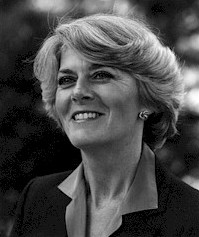
We’ve also seen the start of the line up of young women actresses.
The Republicans had Clint Eastwood, 82, and the empty chair. The Democrats are going in the opposite direction with a line of “surprise” celebrity speakers, all female, all under 40.
Eva Longoria, 37, is scheduled to take the stage after Caroline Kennedy. Also rumored to appear are actresses Scarlett Johansson, 27; Natalie Portman, 31; and Kerry Washington, 35.
There’s been a moment of FOO and there will be moments of EW&F and Mary J. Blige.
Charlie Crist didn’t do so well. But, there’s a lot of focus on Veterans tonight. They even played the Obama got Osama card in prime time. Senator John Kerry started the Vet’s salute off. There many Vets in the audience sporting the various garb worn by the band of brothers and sisters. John Kerry nailed Mitt Romney as a flip flopper.
It’s amazing to see the Democrats showing pictures of a war and saluting Veterans while the Republicans were silent last week. The world must be upside down.
So, here we go with Joe Biden as Biden staffers pass out “fired up, ready for Joe” signs. Dr. Biden was introduced by a Angie Flores a student at Miami Dade College in Florida. There are certainly some wonderful young women standing up on the stage this year.
Meanwhile, Here’s your zen thought of the day:

 peej
peej Carissa
 bostonboomer
 dakinikat
 ecocatwoman
 jjlo
jjlo mablue2
 Mama Lopez
 peggysue22
 quixote
 skydancingguestblogger
 Mona (aka Wonk the Vote)





Recent Comments