
Post Debate Slice n Dice
Posted: October 3, 2012 Filed under: 2012 elections, 2012 presidential campaign | Tags: Presidential Debate 31 Comments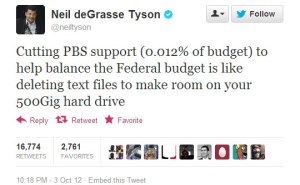 Wow. What a really weird debate. My dad the consummate Republican basically thought it was one of the worst debates he’d ever seen. I have to agree with him on that one. Here’s some post debate analysis, but of course, our own counts much more!!
Mitt Romney’s Five Biggest Lies of the First Half of the Presidential Debate
1). Mitt Romney claims he is not cutting taxes for the wealthy
Romney actually began the debate completely reinventing his tax plan. Romney claimed that his tax plan isn’t a $5 trillion tax cut. However, yesterday his own running mate Paul Ryan touted Romney’s 20% tax cut across the board.
Ryan said, “And so what we’re saying is, we’re going to lower tax rates for everybody across the board by 20%, and we can pay for that without losing revenue by closing loopholes for people at the top end of the income scale. Everybody gets lower tax rates as a result. And you can keep these preferences for middle class taxpayers and have 20% lower tax rates.”2). Romney claimed his tax plan doesn’t raise taxes on the middle class
Mitt Romney used some funny math to claim that his plan doesn’t raise taxes on middle class. However, the Tax Policy Center found that Romney’s plan, “The report by the centrist Tax Policy Center found that Romney’s tax cuts would boost after-tax income by an average of 4.1 percent for those earning more than $1 million a year, while reducing by an average of 1.2 percent the after-tax income of individuals earning less than $200,000.”
3). Romney claimed that Obama would increase taxes on the top 3% of “small businesses.”
Romney used some dubious statistics to claim that Obama would raise taxes on small businesses. What Romney didn’t tell the voters is that he and the Republican Party have a unique definition of small business.Washington Monthly explored the GOP definition of small business, “Many of those 750,000 small businesses aren’t small at all. Some, like Bechtel Corporation, are positively enormous. The Democratic and Republican figures come from the non-partisan Joint Committee on Taxation. But numerous think tanks and government organizations have examined the data and come to similar conclusions: First, that letting the Bush tax cuts on the top two brackets of “small-business” income would impact a tiny percentage of those businesses; and second, that many of the “small businesses” that would be impacted are actually giant companies — which explains why such a tiny fraction of them can account for half of small business income.”
“I’m sorry, Jim, I’m going to stop the subsidy to PBS. I like PBS. I love Big Bird. I like you too,” Romney said.

President Barack Obama and Republican rival Mitt Romney spun one-sided stories in their first presidential debate, not necessarily bogus, but not the whole truth.
They made some flat-out flubs, too. The rise in health insurance premiums has not been the slowest in 50 years, as Obama stated. Far from it. And there are not 23 million unemployed, as Romney asserted.
Here’s a look at some of their claims and how they stack up with the facts:
OBAMA: “I’ve proposed a specific $4 trillion deficit reduction plan. … The way we do it is $2.50 for every cut, we ask for $1 in additional revenue.”
THE FACTS: In promising $4 trillion, Obama is already banking more than $2 trillion from legislation enacted along with Republicans last year that cut agency operating budgets and capped them for 10 years. He also claims more than $800 billion in war savings that would occur anyway. And he uses creative bookkeeping to hide spending on Medicare reimbursements to doctors. Take those “cuts” away and Obama’s $2.50/$1 ratio of spending cuts to tax increases shifts significantly more in the direction of tax increases.
Obama’s February budget offered proposals that would cut deficits over the coming decade by $2 trillion instead of $4 trillion. Of that deficit reduction, tax increases accounted for $1.6 trillion. He promises relatively small spending cuts of $597 billion from big federal benefit programs like Medicare and Medicaid. He also proposed higher spending on infrastructure projects.
—
ROMNEY: Obama’s health care plan “puts in place an unelected board that’s going to tell people ultimately what kind of treatments they can have. I don’t like that idea.”
THE FACTS: Romney is referring to the Independent Payment Advisory Board, a panel of experts that would have the power to force Medicare cuts if costs rise beyond certain levels and Congress fails to act. But Obama’s health care law explicitly prohibits the board from rationing care, shifting costs to retirees, restricting benefits or raising the Medicare eligibility age. So the board doesn’t have the power to dictate to doctors what treatments they can prescribe.
Romney seems to be resurrecting the assertion that Obama’s law would lead to rationing, made famous by former Alaska Gov. Sarah Palin’s widely debunked allegation that it would create “death panels.”
The board has yet to be named, and its members would ultimately have to be confirmed by the Senate. Health care inflation has been modest in the last few years, so cuts would be unlikely for most of the rest of this decade.
Here are all of the NYT’s fact-checks from the first Obama-Romney debate. I find this one particularly interesting.
Mr. Romney promised to create 12 million jobs over the next four years if he is elected president. That is actually about as many jobs as the economy is already expected to create, according to some economic forecasters.
Presidential Debate: Live Blog Part 2
Posted: October 3, 2012 Filed under: Live Blog 166 Comments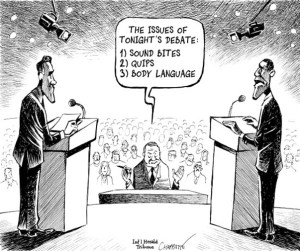 Mitt just admitted he wants to replace the current medicare system with a voucher system. WHOA. He wants to makes sure that the elderly understand that they can throw their kids and grandchildren under the bus and keep the better deal!
ABC has a debate transcript going up at this location. (updated every 15 minutes)
I think we can all agree the real loser tonight is Jim Lehrer. Mitt Romney’s trying to end his job and do it at the same time.
Know your Right Wing Christofascists!
Posted: October 3, 2012 Filed under: 2012 elections, religious extremists, right wing hate grouups, VAGINA Ralph Reed, VAGINA Rick Santorum, War on Women | Tags: Jerry Farwell, Pat Robertson, Ralph Reed, religious hate speech, religious violence, right wing religious hate groups, theocracy 64 Comments Here’s a list of the 10 Most Dangerous Religious Right Organizations in the country. These folks are determined to undermine the US constitution that prevents mixing of specific religious doctrines with US law. These people don’t want freedom for their religious practices. They want the US government to enshrine their petty theocratic agendas into law and to persecute the unbelievers.
1. Jerry Falwell Ministries/ Liberty University/Liberty Counsel
Revenue: $522,784,095
2. Pat Robertson Empire
Revenue: $434,971,231
3. Focus on the Family (includes its 501(c)(4) political affiliate CitizenLink)
Revenue: $104,463,950
4. Alliance Defending Freedom (formerly Alliance Defense Fund)
Revenue: $35,145,644
5. United States Conference of Catholic Bishops
Lobbying Expenditures: $26,662,111
6. American Family
Association
Revenue: $17,955,438
7. Family Research Council
Revenue: $14,840,036 (includes 501(c)(4) affiliate FRC Action)
8. Concerned Women for
America
Revenue: $10,352,628 (includes 501(c)(4) affiliate CWA Legislative Action Committee)
9. Faith & Freedom Coalition
Revenue: $5,494,640
10. Council for National Policy
Revenue: $1,976,747
The Christian Right has basically infiltrated the Republican Party and is most evident as “Teavanagelicals”.
ON AN INSTITUTIONAL LEVEL, the merger of Christian Right and Tea Party interests is remarkably advanced. The alliance has served as the very foundation stone of theFaith and Freedom Coalition, the latest venture of that intrepid politico-religious entrepreneur, Ralph Reed, which has sprouted chapters in many states, most prominently Iowa, where it sponsored the first candidate forum of the 2012 cycle. There is even a term to describe this new strain of conservatism: the “Teavangelicals,” a subject of a recent broadcast by Christian Right journalist David Brody, which, among other things, examined the conservative evangelical roots of major Tea Party leaders. Most recently, a host of organizations closely connected with the Christian Right and “social issues” causes have signed onto the “Cut, Cap and Balance Pledge,” the Tea Party-inspired oath that demands a position on the debt limit vote that is incompatible with any bipartisan negotiations.
But this convergence between the two groups goes well beyond coalition politics and reflects a radicalization of conservative evangelical elites that is just as striking as the rise of the Tea Party itself. Indeed, the worldview of many Christian Right leaders has evolved into an understanding of government (at least under secularist management) as a satanic presence that seeks to displace God and the churches through social programs, to practice infanticide and euthanasia, to destroy parental control of children, to reward vice and punish virtue, and to thwart America’s divinely appointed destiny as a redeemer nation fighting for Christ against the world’s many infidels.
As an illustration of this phenomenon, it’s worth unpacking a few lines from a recent missive by televangelist James Robison, the convener of two recent meetings of Christian Right leaders in Texas to ponder their role in 2012, and also of a similar session back in 1979 that helped pave the way for Reagan’s conquest of conservative evangelicals. Says Robison:
There are moral absolutes . No person’s failure reduces or redefines the standards carved in stone by the finger of God and revealed in His Word. We must find a way to stop judges and courts from misinterpreting the Constitution and writing their own laws.
“Activist judges” who have developed and applied protections for abortion rights, non-discrimination, and church-state separation have long been a bugaboo for the Christian Right. But Robison appears to be extending this traditional list of evangelical grievances, adding his blessing to the Tea Party’s objection to the string of Supreme Court decisions that enabled the federal government to enact New Deal programs like Social Security that protect people afflicted by personal “failure” from the consequences of their actions.
They have more impact than just trying to deny the civil rights of GLBT, the reproductive rights of women, and the suppression of religious minorities in the US. They have a global agenda that is as much of a terrorist movement as any religious extremist movement abroad. They support governments that believe in not only persecuting but killing GLBT citizens with money and other resources. They actively support militia’s that kill and maim GLBT citizens and non-believers and work to keep women’s status as property and breeding chattel.
In recent weeks, police have descended on the Harare offices of Gays and Lesbians of Zimbabwe (GALZ), seizing the group’s publications and computers as evidence, they claimed, in an ongoing investigation. The police sought to also arrest staff, but the organization’s lawyer has kept them free for now.
The gay rights activist organization is — absurdly — accused of seeking to overthrow President Robert Mugabe’s government and teaching people to commit acts of sodomy.
This police activity underscores the effort of the Mugabe-led ZANU-PF ruling political party to incite anti-LGBT hatred in mobilizing its base for elections next year. Mugabe faces a challenge from Prime Minister Morgan Tsvangirayi, who recently adopted a pro-LGBT rights position.
In one raid, police forcibly entered GALZ premises and began arresting advocates gathered to discuss the draft constitution under debate. The draft includes anti-gay provisions shaped with help from the US-based Christian right group American Center for Law and Justice (ACLJ) through its Zimbabwe office. The proposed provisions explicitly prohibit homosexuality and, mimicking American efforts, define marriage as between a man and woman.
Some activists were injured trying to escape over a security fence armed with an electric razor wire. Those caught — 31 men and 13 women — were arrested, bundled into police vehicles, and kept in filthy cells for what GALZ staffer Miles Rutendo remembers as “a night in hell.” Police beat and stomped on the backs of gay rights advocates forced to lie on the wet floor. One victim passed out and was rushed to the hospital.
The physical and mental abuse did not end with their release. In a country where LGBT people suffer brutal harassment, these activists’ sexual preference was exposed to neighbors, families, and workplaces. Their families forced some from their homes. Whether any lose their jobs remains to be seen.
Additional, rallies have been held through out the US that are well within in the boundaries of first amendment free speech rights but definitely fall into the hate speech realm.
Religious broadcaster Pat Robertson and Family Research Council president Tony Perkins topped a full day of speakers at “The America for Jesus 2012” prayer rally.
Robertson, a former Republican candidate for president, called the election important, but didn’t mention either major political party or candidate by name.
“I don’t care what the ACLU says or any atheists say. This nation belongs to Jesus, and we’re here today to reclaim his sovereignty,” said Robertson, 82, who founded the Christian Coalition and Christian Broadcasting Network, and ran for president in 1988.
Organizers plan another prayer rally Oct. 20 in Washington, D.C., two weeks before President Barack Obama faces Republican Mitt Romney in the presidential election.
Perkins asked the crowd to pray for elected officials including Obama.
“We pray that his eyes will be open to the truth,” Perkins said.
A number of event organizers, though, have been vocal critics of the Democratic president.
Steve Strang, the influential Pentecostal publisher of Charisma magazine, which was distributed at the rally, recently wrote in a blog post that America is under threat from a “radical homosexual agenda.” He also said Obama “seems to be moving toward some form of European socialism. Speaker Cindy Jacobs has blamed a mysterious Arkansas bird-kill last year on Obama’s repeal of the policy known as “don’t ask, don’t tell,” which allows gays and lesbians to serve openly in the military.
Speakers throughout the day condemned abortion, gay marriage and population control as practiced by Planned Parenthood. Christian rock music filled the historic mall as speakers challenged the crowd to overcome the seven deadly sins: pride, greed, lust, envy, gluttony, wrath and slothfulness.
Yup, these are the same folks we’ve been fighting since the 1980s. It’s going to be a continual fight to keep theocracy out of our state, local, and federal government and to stop the hate-filled agendas of these religious extremists.
Monday Reads
Posted: October 1, 2012 Filed under: morning reads | Tags: Chris Stewart, crazy republican candidates for office, Income Inequality, Marc Leder, Republican voter registration fraud, Tawdry Tycoon, upward mobility, whack job, young black men in America 26 Comments Good Morning!
It’s the first of October! This is how you know that I most identify with my English heritage because that’s a Brit superstition that my mother used to practice every first day of the month. It came over with my great grandfather from Hastings. I guess family stories from that far back actually do come down to you. I’m a physically obvious Phillips, however, so I guess I would pass Scott Brown’s visual DNAdar for some one with a lot of Brit heritage. A lot of my idiosyncrasies come from my mother through my great grandfather who only contributed 1/8 of my DNA. She was really influenced by him since he lived in their house and she passed lot of stuff on to me and my kids through her time with us. So, I guess Elizabeth Warren probably could relate. Hmmmm….
“Why,” the man in the brown hat laughed at him, “I thought everybody knew ‘Rabbit, rabbit, rabbit.’ If you say ‘Rabbit, rabbit, rabbit’—three times, just like that—first thing in the morning on the first of the month, even before you say your prayers, you’ll get a present before the end of the month.”
I’ve been reading a lot of interesting things recently about the decline in upward mobility in the U.S. Here’s some stories from The Atlantic that pretty much sum up my life since Dubya became president: ‘I’m Working Really Hard, but I’m Not Getting Ahead’: The New Middle Class Trap.
Only twice in U.S. history–in the heyday of the Western frontier and in the post-World War II prosperity–have Americans found it easy to rise. This isn’t one of those times. Middle-skill jobs (read: no college required) are disappearing from America’s sputtering economic engine–in factories, in back offices, even lately in state and local governments. For generations, these jobs were the ticket to a comfortable life for Americans who went directly from high school to work. But increasingly in recent decades, economic research shows, lower-wage workers in foreign lands have taken these jobs or automation has rendered them unnecessary. Today, job growth occurs mainly at the poles of the skills spectrum–in sweeping floors or flipping burgers, which can’t be outsourced, or in sophisticated engineering jobs that drive new industries.
Since 1980, the very lowest- and highest-skill jobs in the United States have each grown sharply as a share of the overall workforce, according to research published last spring by economists David Autor of the Massachusetts Institute of Technology and David Dorn of Spain’s Centro de Estudios Monetarios y Financieros. Meanwhile, the share of lower-middle-skill jobs has shrunk: For example, machine operators and assemblers, a classic storehouse of middle-skill jobs, fell from 13 percent of the workforce in 1950 to 4 percent in 2005. Real hourly wages have stagnated, simply as a matter of supply and demand. When too many workers compete for too few jobs, employers can hire qualified people at lower pay.
“The real question of the [displaced] middle class is: Where do they go?” asked Mark Doms, the chief economist at the Commerce Department’s Economics and Statistics Administration. “Only a few of them are going to go to the tippy-top”–the highest-skilled jobs. “The rest will go to the bottom.”
Another interesting read is this interview with a sociologist who has written a book about young black men in America. The book is called Invisible Men: Mass Incarceration and the Myth of Black Progress and is written by Becky Pettit who is a professor of sociology at the University of Washington. My life in inner city New Orleans and as a professor in its big urban university has really given me a front row seat in seeing the situation. It’s a lot worse than most folks could even imagine. That’s because the unemployment rate and the labor force ignores the populace in prison and young black men are a huge part of that population.
The employment/population ratio for black males aged 16-24 was 33 percent in August, vs. 52 percent for white males of the same age group. But the black number is skewed upward by the exclusion of jail and prison inmates. The white number is also skewed upward, but less so because a smaller share of young white males are incarcerated.
“We’ve developed a distorted idea” of how young, black men are faring, Pettit told reporters on the call, which was hosted by the book’s publisher, the Russell Sage Foundation. The BLS methodology didn’t begin to distort the statistics until the mid-1970s, when the incarceration boom began.
I asked Pettit how this problem can be solved. The first thing she recommended was doing more to help young, black men get an education, since there is a strong link between failure in school and a life of crime and imprisonment.
A further idea is to reduce the penalties for nonviolent drug crimes, recommended another academic on the call, Ernest Drucker, who is a scholar in residence and senior research associate at John Jay College of Criminal Justice and adjunct professor of epidemiology at Columbia University’s Mailman School of Public Health. Imprisoning people for drug offenses can damage their ability to earn a living for the rest of their lives, dooming them to a life of poverty and recidivism, said Drucker, author of A Plague of Prisons.
Indeed, one of the things that this story mentions is the appalling number of young black men trapped in prison over petty things like turn style jumping. There are a number of ‘crimes’ that are applied to young black men more than any other population. They can’t put bankers that stole billions from the economy in jail but they can imprison young people for years on a number of really petty things.
It is becoming appallingly apparent that some of the tactics used to create voter fraud are coming from Republican Operatives. This is not a new story at all. But, it is one that should make every one be very aware of who is registering who in their state. Isn’t it just typical that all these new Republican laws aimed at preventing voter fraud aren’t stopping Republicans from committing voter fraud? This story is about Riverside County in California.
Formal complaints filed with the state by at least 133 residents of a state Senate district there say they were added to GOP rolls without their knowledge, calling into question the party’s boast that Republican membership has rocketed 23% in the battleground area.
More than 27,700 residents of the legislative district have become Republicans since January, according to the California secretary of state’s office — erasing a registration edge long held by Democrats.
The complaints have also shined a light on the political committee behind the registration drive, Golden State Voter Participation Project, and its biggest donor, wealthy GOP activist Charles Munger Jr. Other donors include the California Apartment Assn., Farmers Group Inc. and Pharmaceutical Research and Manufacturing of America.
The problem has also raised anew the question of whether the state should ban firms that pay workers for each voter they register or signature they secure on a petition rather than paying them an hourly rate. Workers have an incentive to cut corners under such arrangements, according to Assemblyman Richard Pan (D-Natomas), who has proposed barring the practice in a bill that is on the governor’s desk.
Just when you think you’ve heard about all the kooky Republicans running for office you find out there’s yet another one crazier than the ones you thought were as crazy as they got. This one is a Beckster with an end-times obsession. This guy writes novels akin to the Left Behind Series. Rapture any one?
In Chris Stewart, the Republican nominee in Utah’s 2nd Congressional District, Beck has found someone he feels pretty damn good about. “If he wasn’t running, I’d be trying to convince him to work for me, to help me stay the course, strategize, and save the country,” he said last winter , as Stewart’s campaign was just getting off the ground. “I’ve actually tried to talk him out of running, because it’s a lion’s den in Washington.”
But, Beck added, “I believe he’s a Daniel.”
Like the Old Testament figure who emerged unscathed from a pit of lions, Stewart—an Air Force pilot turned consultant turned end times novelist—is also a prophet of sorts, and his message is grim: “If we don’t make some difficult decisions now, if we don’t show the courage to do what we have to do to save our country, we won’t make it for another 10 years,” he said in February , in a campaign video that also served to promote a book he’d just published under Beck’s imprint. But there was hope. “At critical times in our history…we literally had miracles where God intervened to save us,” he said. Send me to Congress, Stewart seemed to imply, and it could happen again.
Read the article. There’s all kinds of weirdness around this campaign. The worst thing is that every one thinks this guy is a shoo-in.
Want to learn more about Marc Leder? That’s the guy that held that fundraiser in Boca Raton that was captured in the Mitt 47% moment. We’ve already heard about his orgies. What else could be more “tawdry”? Evidently Leder and Mitt share a penchant for aggressive tax evasion.
Leder has been dogged by tabloid headlines recounting his nasty divorce and wild partying (replete with reported nudity and public sex around the pool at a summer house he rented on Long Island’s East End—for $500,000 a month). What he has in common with Romney, however, isn’t a taste for bacchanalian revels but a record of business and taxation practices that working Americans might find troubling.
At the moment, Leder is under investigation by New York State Attorney General Eric Schneiderman, who subpoenaed internal records from Sun Capital, Bain Capital, and several other private equity giants last July.
Issued by the Attorney General’s taxpayer protection bureau, the subpoenas were evidently designed to probe whether Leder and other executives had misused “carried interest,” a method of reducing tax liability by converting management fees into investment income—which is taxed at the lower capital gains rate of 15 percent that keeps Romney’s taxes lower than the rate paid by many middle-income families. (Tax analysts say that Bain Capital records released last August indicate that the firm may have saved more than $200 million in federal taxes thanks to the carried-interest maneuver.)
If Leder did benefit from such aggressive practices, he would merely be typical of executives in an industry where tax manipulations are not just widespread, but fundamental.
So, that’s my offering this morning. What’s on you reading and blogging list today?
Underestimating the Great Recession
Posted: September 29, 2012 Filed under: 2012 presidential campaign, Economy 32 CommentsI’ve been reading this excellent David Leonhardt “hindsight quarterback”-style article on the mistakes the Obama administration made when handling the 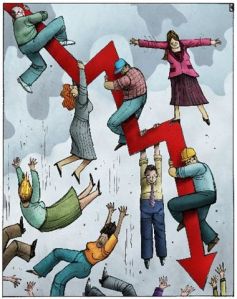 economy in 2008. I suppose I like it because he’s saying many of the same things today that I actually was writing about back then. However, the problems from back then are more obvious now and the article is written without the dynamics of the Larry Summer/Timothy Geithner Beavis and Butthead antics that were apparent in the Suskind book Confidence Men. I’ve often said that the two biggest mistakes were the size of the stimulus and the handling of the housing crisis. I still can’t figure out how we got a bail out of the auto and financial industries but the housing sector got left to the natural path.
With the auto industry and Wall Street, Mr. Obama accepted the political costs that come with bailouts. He rescued arguably undeserving people in exchange for helping the larger economy. With housing, he went the other way, even leaving some available rescue money unspent — at least until last year, when the policy became more aggressive and began to have a bigger effect.
No one of these steps, or several other plausible ones, would have fixed the economy. But just as the rescue programs of early 2009 made a big difference, a more aggressive program stretching beyond 2009 almost certainly would have made a bigger difference. It would have had the potential to smooth out the stop-and-start nature of the recovery, which has sapped consumer and business confidence and become a problem in its own right.
It would seem prudent to stabilize housing prices in an economy that’s highly reliant on consumer spending when consumer spending is highly reliant on household wealth. That’s not to say that the house prices of 2006 weren’t in need of a correction. It’s more to say that putting so many folks through disclosure and wrecking their balance sheets for decades isn’t the smartest way of managing an aggregate demand crisis in an economy where consumption is 68% of GDP and the fickle investment component is about 17%.
Leonhardt thinks that Obama and his advisers really didn’t grasp the severity of the recession or the full impact of the financial market meltdown. I would agree with this up to a point. I actually think they knew the impact but concentrated on the business sector more than than the household.
Mr. Obama’s biggest mistake as president has not been the story he told the country about the economy. It’s the story he and his advisers told themselves.
The notion of insurance is useful here. Suggesting that Mr. Obama and his aides should have bucked the consensus forecast and decided that a long slump was the most likely outcome smacks of 20/20 hindsight. Yet that wasn’t their only option. They also could have decided that there was a substantial risk of a weak recovery and looked for ways to take out insurance.
By late 2008, the full depth of the crisis was not clear, but enough of it was. A few prominent liberal economists were publicly predicting a long slump, as was Mr. Rogoff, a Republican. The Obama team openly compared its transition to Franklin D. Roosevelt’s and, in private, discussed the Reinhart-Rogoff work.
I guess this does tie back to the dynamics in the Suskind book Confidence Men and the dynamics of Obama’s economic team which basically was presented as being completely out of control. This quote is Adam Moss’ take on the situation.
The news of the book,according to some reports, is that Tim Geithner was insubordinate to the president, pursuing his own pro-banker agenda. Or, according to other reports, that Larry Summers was insubordinate to the president, pursuing his own well, monomaniacal agenda. I’d add that it’s also about Rahm Emanuel being insubordinate to the president, just because. Basically, it’s about the presidency being hijacked by these three guys. And the guys thing is important because they’re pretty awful to women. Anyway, they’re the villains. Paul Volcker, Christina Romer, and Elizabeth Warren are the heroes. Bankers win, America loses.
We’ve had Sheila Bair out on the book trail reinforcing the Geithner pro-banker agenda story line just this month. He’s the last man standing of the trio of “villians’ mentioned above.
In addition to accusing Geithner of treating the banks with kid-gloves, Bair skewers him and former Obama economic adviser Larry Summers for their approach to the housing crisis, saying they didn’t appear to care about helping homeowners or fixing underlying problems plaguing the housing market.
Treasury’s housing-relief program was “designed to look good in a press release, not to fix the housing market,” Bair wrote. She says Geithner and Summers undercut Obama by not pursuing a more aggressive program.
Whether intentional or not, the administration’s housing programs have been lackluster, making the narrative all the more damning. The housing market is recovering but more because of the Federal Reserve’s push to lower interest rates than because of the housing assistance offered by Treasury. The main programs have helped about 2.6 million homeowners, far short of the 9 million Obama promised to help avoid foreclosure.
As Bloomberg View has written, Geithner and other administration officials cared too much about avoiding “moral hazard,” designing the programs so narrowly that few could actually qualify for help.
Bair’s book suggests that those same concerns didn’t apply to the banks, who were stuffed with money she says they may not have needed and didn’t deserve without fundamental changes to their businesses. (Fed Chairman Ben Bernanke, meanwhile, told the Financial Crisis Inquiry Commission that “only one” of the major banks “was not at serious risk of failure” and that 12 were on the verge of collapse in 2008.)
Here’s a similar narrative on the questionable approach to the housing market crash. I want to mention this because it actually reinforces the Romney 47% narrative in action. For some reason, bad business decisions aren’t demonized with the same gusto given to those made by the middle income, working class, and poor households. We’re “lazy” and seek a way to become “dependent” on government. What we should emphasize is the number of times that businesses–big and small–go to the government asking to be protected from competition and to be given price supports, subsidies, tax breaks, tariffs, and trade quotas. All of these create moral hazard, distort market outcomes, and are of little value to any one but the industry receiving the hand out. Rahm, Geithner, and Summers are all part of the mentality that Romney so eloquently got caught describing to his peser in his 47% moment. The media gets caught up in that narrative too. Let’s not kid ourselves that this kind of thing will go away once Romney is soundly defeated. It goes on behind all closed-door meetings concerning policy. Most of the consultantariat have similar frames. This is especially true for those that go to big name universities where they are repeatedly told they are “special’ and above every one else and are more deserving of success than any one else.
The one thing that I would really like to see right now is for Obama to restate his intention to replace Geithner. Then, I would like to see him signal who is on the short list. This would let us know if we’re going to some change in the approach to the recovery. Can you imagine the signal that a Sheila Baer appointment would send? I can. The markets would definitely fall off their highs. That’s exactly why I’m not holding my breath for anything but more status quo. At this point, it’s the best we can hope for because we all know what the Ryan/Romney agenda will be. I’m not keen on going off of their cliff any time soon. I just wish we had a bit more details on how the President intends to manage the recovery in a second term. We’re not getting any details and that makes me nervous.

 peej
peej Carissa
 bostonboomer
 dakinikat
 ecocatwoman
 jjlo
jjlo mablue2
 Mama Lopez
 peggysue22
 quixote
 skydancingguestblogger
 Mona (aka Wonk the Vote)





Recent Comments