
Monday Reads
Posted: October 28, 2013 Filed under: morning reads 65 Comments Good morning!
So, I had a rather uneventful weekend. I spent a lot of time grading stuff for my International Finance class and getting ready for my Security Analysis Class. I am still getting used to teaching MBAs and graduate students instead of undergrads. Plus, I teach Finance now with very little Economics so I feel mercenary. I tell myself that it keeps me in the kathouse and in red wine. But, it’s difficult at times because teaching economic literacy is more of a calling to me. Finance is much more utilitarian so I try to look at it as giving some one a life skill but it’s not quite the same. I used to be appalled that undergrad students could get through high school knowing so little and now I have learned that you can get an undergrad degree and come out with bad skills too. Color me jaded. At least I am not training predators. I am training people that are just trying to survive in a world of predators.
Anyway, I did watch a few things over the weekend that helped me cope with the ordeal of reading so many cut and pastes from the internet instead of original thoughts. AMC ran White Zombie. I had never seen that. I learned how little Lugosi made for the movie and was rather shocked. I guess he was worried about loosing his career to Boris Karloff at that point and was taking all offers. Then, I spent some time with Front Line which has a special place in our hearts here since Boomer’s brother is a cinematographer there. The topic also figures predominantly in my life and JJ’s since it dealt with antibiotic resistant bacteria.
I’ve battled a MRSA (antibiotic resistant staph infection) for several years. You may remember one of them put me in the hospital and doctors were worried about me losing my eye sight. Thankfully, there’s one last drug that works for me. But, it will lose its efficacy eventually. My doctors now trust me to rush to the pharmacy and get antibiotics when it gets out of hand. I have a topical lotion that seems to control anything that looks suspicious. I really try to not use the oral antibiotics unless it doesn’t respond to the topical and it looks like I’m in trouble. Trouble means it doesn’t go away and the entire site begins to swell like a balloon even when I drain it, clean it, and douse it with the topical stuff. At that point, waiting to see the doc even is dangerous. I imagine that one day that routine won’t work.
That seems to be the message of the episode and of some eecent articles with warnings from the CDC. There are some bacteria that no longer respond to anything and that list is growing. Dr. Arjun Srinivasan of the CDC says “We’ve Reached The End of Antibiotics, Period”.
For a long time, there have been newspaper stories and covers of magazines that talked about “The end of antibiotics, question ma?” Well, now I would say you can change the title to “The end of antibiotics, period.”
We’re here. We’re in the post-antibiotic era. There are patients for whom we have no therapy, and we are literally in a position of having a patient in a bed who has an infection, something that five years ago even we could have treated, but now we can’t. …
…I wonder if you can reflect a little bit and describe how the MRSA phenomenon, this resistant bacteria, changed public awareness about the problem.
So methicillin-resistant Staphylococcus aureus, or MRSA, for a lot of people is the first time that they had really encountered one of these highly drug-resistant bacteria. …
Literally for decades it’s been something that’s been difficult to treat. There were, up until recently, limited treatment options for MRSA. There is really one antibiotic that was available to treat it.
Was it that bad? Did people die from it?
People did die from it. It caused very serious infections. … MRSA was something that if you asked any doctor or nurse about MRSA, they would tell you, “Oh, yes, it’s a very serious issue. We struggle with it in our patients, in our intensive care units,” but if you asked the average person outside of hospitals about MRSA, they probably would never have heard of it. That all changed maybe about a decade or so ago.
What changed?
We began seeing MRSA infections outside of health-care settings. …
We were seeing it in young people who were athletes, who were young football players who had serious infections, who died of these MRSA infections which had previously been limited to hospitals.
We saw outbreaks in schools. We saw outbreaks in health clubs. And what most of these people were getting was something very different from what we saw in hospitals.
I guess nearly every one in New Orleans that spent some time in the post-Katrina environment now harbors MRSA if you believe the Doctors who deal with my outbreaks. I had read about Super Bugs some years ago but it wasn’t something I kept at the front of my mind. The biggest problem now is that it’s not really a good investment for pharmaceutical companies to do research in future antibiotics because they are only one shot drugs instead of drugs used perpetually. Therefore, there is a distinct need for the Federal Government to step in and fund the research. That, of course, is not really happening in this country of course. There is also this ghoulish term of “nightmare” bacteria that sounds like something from a horror movie. The man who was interviewed by Frontline and was a major researcher for antibiotics passed away last week. This adds to the story that sounds like a human disaster in the making.
We wanted to share the sad news that John Quinn, a veteran Gram-negative researcher featured in Hunting the Nightmare Bacteria, passed away last weekend. We knew him only briefly but in that short time he made an enormous contribution to our efforts to understand the importance of this subject and why major pharmaceutical companies have been pulling out of antibiotic development.
We knew companies had been abandoning antibiotic drug development and wanted to help viewers understand what that looked like from the inside. The story of Pfizer soon became an obvious example because the company had such a long history in developing antibiotics and had, until recently, been one of the stalwarts that remained involved in seeking a cure for Gram negatives.
But finding someone who was able to talk about the company and its decision to close down its antibiotic research efforts proved more difficult than we’d anticipated. Though we reached out to many researchers and scientists who had worked at Pfizer, they were all reluctant to speak on camera about the program.
That is until we found John Quinn. Quinn was a doctor by training and had been working in academia on Gram-negative resistance before it became a major public health concern. He watched first hand as resistance grew and doctors he worked with had few options to treat patients. “I’d seen [Gram-negative bacteria] kill patients,” Quinn told us. “I had, you know, seen the drugs that we were using cause kidney failure. So I was acutely aware — personally aware, professionally aware — of the need to make progress in this space.”
As usual, I’ve already found a response that really seems to misunderstand the problem by a writer in the National Review. It really isn’t the patent issue that  thwarts the development of antibiotics by Big Pharma. It’s the fact that antibiotics should be used sparingly, rarely, and basically for one illness. The lack of ongoing cashflow to return to the original investment is the issue. Granting patent extensions isn’t going to solve this problem at all. It seems clearly to be an area that requires nationalization from an economic standpoint and the standpoint that it clearly will become a national health issue.
Before we get too upset with the evil pharmaceutical industry, remember that it can take billions to develop a new drug. And, we have restricted the patent time for the drugs they successfully develop to permit less expensive generics to be manufactured.
It seems to me that if we want new and better antibiotics–we should ensure that the financial risk taken has the potential to lead to a substantial financial gain by extending the patent life for new antibiotics an extra ten years from the time it receives formal approval. Then, maybe, drug companies will more energetically jump into the research for new antibiotics.
We could also have the NIH fund more research into antibiotics and make the results available to everyone. But that would mean making antibiotics a priority over other areas of research. I’m not sure the politics would permit such an explicit triage.
Is our political system so fraught with ideology that we can’t even deal with an oncoming plague? This is a typical economic problem of “the commons”. We’ve had an overuse and a large abuse of antibiotics. This is especially true in food production where antibiotics typically are used without cause in animals raised for food.
A big part of the trouble is that the gains from the overuse of antibiotics are private, whereas the losses are public. Problems such as these are rarely soluble without outside intervention. Ramanan Laxminarayan of Princeton University, who has been thinking for many years about how to deal with the question of resistance, suggests the answer is a mixture of incentives and scourges. Prize funds, or guaranteed-purchase arrangements for new drugs and the rapid-diagnostics systems that would allow them to be deployed appropriately, would help overcome the financial problem of antibiotics being cures, rather than just treatments. Stricter dispensing guidelines for doctors and pharmacists might help deal with the moral hazard of overtreatment.
A bit of realism would be good, too. Derrick Crook, a consultant microbiologist at Oxford, where Florey and Chain once worked, observes, “It is hard to massively restrict the use of antimicrobials when they are doing good. It is possible that the enormous use in Asia is a good thing for a short time in a given country.” That, combined with ignorance about precisely how much the unnecessary use of antibiotics contributes to increasing resistance, makes restriction highly controversial.
So, wow. I took a lot more time on this subject than I thought I would. Here’s some other links you may want to look at today!
Charles M Blow writes about Billionaires’ Row and Welfare Lines
Forbes’s list of the world’s billionaires has added more than 200 names since 2012 and is now at 1,426. The United States once again leads the list, with 442 billionaires.
It’s a great time to be a rich person in America. The rich are raking it in during this recovery.
But in the shadow of their towering wealth exists a much less rosy recovery, where people are hurting and the pain grows.
This is the slowest post-recession jobs recovery since World War II. The unemployment rate is falling, but for the wrong reason: an increasing number of people may simply be giving up on finding a job. The labor force participation rate — the percentage of people over 16 who either have a job or are actively searching for one — fell in August to its lowest rate in 35 years.
David Gregory spends his Sunday Show concern-trolling Obama Care.
But David Gregory has never come across a Republican talking point that he didn’t love, embrace and swallow up whole to faithfully regurgitate to the masses. So he dutifully confronts Blue Cross and Blue Shield of Florida CEO Patrick Geraghty about the news that 300,000 Floridians have found their policies dropped because they fall below the minimum standards of coverage set by Obamacare. Problem was, Geraghty wasn’t going to playGregory’s gotcha game with people’s healthcare:
“We’re not cutting people,” Geraghty said. “We’re actually transitioning people. What we’ve been doing is informing folks that their plan doesn’t meet the test of the essential health benefits; therefore, they have a choice of many options that we make available through the exchange. And, in fact, with subsidy, many people will be getting better plans at a lesser cost. This really is a transition. In fact, the 300,000 figure is the entire year. So it’s really 40,000 people for January 1, and we’re walking them through that transition.”
Now, it’s absolutely true that there will be a fraction of people who find that their costs have gone up, the specific number and amount is still up for debate. And if they don’t qualify for subsidies, that will mean a higher out-of-pocket cost, at least in the short term. However, short-term partisan gains notwithstanding, the program will factor in long-term the inclusion of healthy, young people on the exchanges, which will help mitigate the ailing people who rushed for the initial coverage. Specifically, the re-insurance tax is being levied for the first three years is intended to help smooth that transition to allow for the long-term sustainability of the program.
More than 60 women took to driving cars to defy the ban on women drivers in Saudi Arabia.
Brushing off threats from the government, more than 60 Saudi women got behind the wheel on Saturday in a bold protest of the nation’s de facto ban on women driving.
Sara Hussein, a Saudi woman involved in the effort, drew parallels to the U.S. civil rights movement: “Think back in history — Rosa Parks was the only person who sat down on the bus, wasn’t she? And then it started to happen gradually. It does have to start with the few brave people who are willing to risk whatever there is to risk.”
Many women documented the act of civil disobedience on social media, even posting videos to YouTube. The most popular video, which has already been viewed nearly 100,000 times, was posted by May al-Sawyan, a 32-year-old economics researcher. She drove to the grocery store.
So, that’s it for me this morning! What’s on your reading and bloging list today
RIP Lou Reed
Posted: October 27, 2013 Filed under: open thread | Tags: Lou Reed 4 Comments So, I’m smack in the middle of the generation that was really influenced by Lou Reed and the Velvet Underground so I just couldn’t resist doing an open thread here. They’ve been using this song for a great PS4 ad recently. I keep seeing it on SyFy and now it seems really ghoulish. It’s only fitting he died on a Sunday Morning and right before Halloween.
From Rolling Stone: 20 Essential Lou Reed Tracks.
With the Velvet Underground in the late Sixties, Reed fused street-level urgency with elements of European avant-garde music, marrying beauty and noise, while bringing a whole new lyrical honesty to rock & roll poetry. As a restlessly inventive solo artist, from the Seventies into the 2010s, he was chameleonic, thorny and unpredictable, challenging his fans at every turn. Glam, punk and alternative rock are all unthinkable without his revelatory example. “One chord is fine,” he once said, alluding to his bare-bones guitar style. “Two chords are pushing it. Three chords and you’re into jazz.”
Lewis Allan “Lou” Reed was born in Brooklyn, in 1942. A fan of doo-wop and early rock & roll (he movingly inducted Dion into the Rock and Roll Hall of Fame in 1989), Reed also took formative inspiration during his studies at Syracuse University with the poet Delmore Schwartz. After college, he worked as a staff songwriter for the novelty label Pickwick Records (where he had a minor hit in 1964 with a dance-song parody called “The Ostrich”). In the mid-Sixties, Reed befriended Welsh musician John Cale, a classically trained violist who had performed with groundbreaking minimalist composer La Monte Young. Reed and Cale formed a band called the Primitives, then changed their name to the Warlocks. After meeting guitarist Sterling Morrison and drummer Maureen Tucker, they became the Velvet Underground. With a stark sound and ominous look, the band caught the attention of Andy Warhol, who incorporated the Velvets into his Exploding Plastic Inevitable. “Andy would show his movies on us,” Reed said. “We wore black so you could see the movie. But we were all wearing black anyway.”
Maybe he’s taken the ultimate Walk on the Wild Side. Maybe he’s on a Satellite of Love. Who knows? Just know he was the epitome of cool in my misspent youth with Harry, Mark, and John.
Creating a Shadow Reality
Posted: October 26, 2013 Filed under: John Birch Society in Charge, Republican Tax Fetishists 12 Comments There is a rich history of Orwellian realities in fiction. One of my recent favorite reads is 1Q84 which borrows heavily from Orwell–including the title–to create an alternate Tokyo. You figure out that you’re in the alternate universe when a character looks into the sky and sees a second moon. Haruki Murakami’s book is based on the idea that you can step through some kind of portal and wind up in the world with the second moon by making one fateful decision. In the modern US, you enter the world of two moons by consuming anything come from the Murdoch Empire or the Koch endowments or any other number of billionaires that can afford to place a small green moon in the sky next to the usual one. It’s amazing to me how many politicians see that second moon. Bill Moyers and and Michael Winship see these as The Lies that will Kill America.
Here in Manhattan the other day, you couldn’t miss it — the big bold headline across the front page of the tabloid New York Post, screaming one of those sick, slick lies that are a trademark of Rupert Murdoch’s right-wing media empire. There was Uncle Sam, brandishing a revolver and wearing a burglar’s mask. “UNCLE SCAM,” the headline shouted. “US robs bank of $13 billion.”
Say what? Pure whitewash, and Murdoch’s minions know it. That $13 billion dollars is the settlement JPMorgan Chase, the country’s biggest bank, is negotiating with the government to settle its own rip-off of American homeowners and investors — those shady practices that five years ago helped trigger the financial meltdown, including manipulating mortgages and sending millions of Americans into bankruptcy or foreclosure. If anybody’s been robbed it’s not JPMorgan Chase, which can absorb the loss and probably take a tax write-off for at least part of it. No, it’s the American public. In addition to financial heartache we still have been denied the satisfaction of seeing jail time for any of the banksters who put our feet in cement and pushed us off the cliff.
Moyers details the number of Murdoch outlets that echo and repeat the lies.
Over the last few days, The Wall Street Journal, both Bible and supplicant of high finance as well as one of Murdoch’s more reputable publications — at least in its reporting — echoed the “UNCLE SCAM” indignation of the more lowbrow Post. The government just wants “to appease their left-wing populist allies,” its editorial writers raged, with a “political shakedown and wealth-redistribution scheme.” Perhaps, the paper suggested, the White House will distribute some of the JPMorgan Chase penalty to consumers and advocacy groups and “have the checks arrive in swing congressional districts right before the 2014 election.” We can hear the closet Bolsheviks panting for their handouts now and getting ready to use their phony ID’s to stuff the box on Election Day with multiple illegal ballots.
Such fantasies are all part of the Murdoch News Corp. pattern, an unending flow of falsehood and phony populism that in reality serves only the wealthy elite. Fox News is its ministry of misinformation, the fake jewel of the News Corp. crown, a 24/7 purveyor of flimflam and the occasional selective truth. Look at the pounding they’ve given Obama’s healthcare reform right from the very start, whether the non-existent death panels or claims that it would cause the highest tax increase in history.
The Murdoch media empire is perhaps the most obvious example of billionaires buying their own reality. However, it’s not the sole example. There are a number of billionaires each with their addition to the alternative reality of the world with the second, small, green moon. Other than George Soros, there have been very few taking up the science and fact based reality where there is only one moon, climate change, and a financial oligarchy run wild. That may be changing.
There is no shortage of billionaires — the Koch brothers, Carl Icahn, Dan Loeb and, yes, Mike Bloomberg, to name a handful — who are willing to use their vast wealth to push a particular political agenda or to advocate for a specific social reform. That’s hardly a revelation.
Then there’s Tom Steyer, a former Goldman Sachs Group Inc. arbitrager who was mentored by Robert Rubin and eventually formed the San Francisco hedge fund Farallon Capital Management. Since then, Steyer has made a bloody fortune. He has never spoken publicly about how he raked it in at Farallon. Nor has he talked on the record about his years at Goldman. (He didn’t respond to my interview requests when I was writing a book about Goldman in 2011.)
But now that he has departed Farallon to become a political activist — some say he is considering a run for the U.S. Senate or the governorship of California — he is everywhere. Last month, the New Yorker’s Ryan Lizzawrote a lengthy profile of Steyer. This month, Bloomberg Markets magazine explained why Steyer has teamed up with Henry Paulson, like Rubin a former Treasury secretary and Goldman chairman, as well as with Bloomberg, the outgoing New York City mayor and the founder and majority owner of Bloomberg LP, the parent of Bloomberg News, to commission a study about the economic consequences of failing to curb carbon emissions.
On Oct. 1, at a benefit for the North Country School and Camp Treetops in New York’s Adirondack Mountains, Steyer and Bill McKibben, his fellow environmental activist, led a paneldiscussion on their efforts to defeat the Keystone XL pipeline.
You may recall recently that the CEO of Starbucks decided that his outlets were not going to be places open to concealed weapon carrying.
In the end, the Seattle-based coffee giant says all it wants to do is sell coffee.
But increasingly, it has been dragged into the fracas between open-carry gun activists who want to be able to keep taking their firearms with them when they buy their morning lattes and gun-control advocates who’d rather the company banned such behavior.
Starbucks struck a compromise when itannounced this week that guns were no longer welcome in its stores, but stopped short of an outright ban.
The company will run an ad in some major newspapers Thursday, an open letter from CEO Howard Schultz, explaining that his company is being used as a political stage and that guns in his stores make his customers uneasy.
There has also been a number of CEOs that are standing firm in the face of anti-GLBT crusaders. However, none of this is quite the same as owning news and media outlets and funding think tanks that come up with conclusions at odds with academic studies. It’s also not the same as buying tons of air time to run ads made to creep young people out of looking into Health Care Insurance via the ACA exchanges. There’s also targeted campaigns aimed at various states.
Conservative advocates funded by the billionaire industrialist brothers Charles and David Koch have launched a massive campaign pressuring states to deny health care coverage to lower income Americans through the Medicaid expansion contained in the Affordable Care Act.
The effort, orchestrated by the group Americans for Prosperity, is targeting lawmakers in Virginia tasked with deciding whether the state should accept federal dollars to provide insurance to individuals and families below 133 percent of the federal poverty line ($31,321 in income for a family of four). Volunteers with the organization are distributing flyers through door-to-door canvassing, attending committee hearings, and according to one lawmaker who has become a target of the campaign, intimidating constituents.
As many as 400,000 Virginians could qualify for coverage if the state expands the Medicaid program, but AFP is warning Virginians that the system “will cost Virginia taxpayers billions,” require “future tax hikes and budget cuts to vital services like schools, police and fire departments,” undermine the “doctor-patient relationship,” increase wait times and even endanger lives. “Medicaid patients are almost twice as likely to die during surgery than individuals with private insurance,” the group writes on its website.
It’s difficult to imagine that this could get worse, but there is a possibility it will even if a few billionaires on the other side of the political spectrum try to provide an offset. A new SCOTUS case that could remove limits to campaign contributions might create even more havoc.
At issue in McCutcheon v. Federal Election Commission (12-536) are aggregate contribution limits that restrict the total amount of money an individual can give a candidate and committees during a two-year election cycle.
Supporters of the limits say they are necessary to prevent crafty contributors from circumventing other campaign finance restrictions to funnel huge amounts of money from one donor to one candidate.
Opponents of the limits say they are unnecessary and lack any constitutional justification in the wake of the high court’s Citizens United decision.
The 5-4 opinion in Citizens United v. FEC declared that corporations and unions have a First Amendment rightto spend unlimited amounts of money on independent issue advertisements during election season.
Certainly, we have seen some push back recently to billionaire activists who are funding alternative realities. The blow back to “Fix the Debt” and Pete Peterson who seeks to end Social Security and Medicare as we know it comes to mind. But, it’s hard to keep up with all of them. We need to keep a keen eye out for the second green moon if we are to protect our democracy, our country, our economy, and our hard-earned entitlement programs.
Friday Reads: The Devil’s in their Details
Posted: October 25, 2013 Filed under: morning reads 35 Comments Good Morning!
I totally enjoy this time of year! The weather cools down and the politics heat up! Also, Halloween is my favorite holiday! So, here’s some frightening stories as we head towards the day itself! I also love all the old spooky movies and the new scary ones!
Rick Santorum says that Satan controls the Film Industry! Maybe that explains all these great movies I love to watch this time of year!!!
While speaking on a network where televangelists on a daily basis tell viewers that God will reward them financially if they send in contributions, the former senator and presidential candidate spent most of the time criticizing movies for being too materialistic.
Santorum, who has previously said that Satan has control over mainline Protestantism and universities, thanked viewers in advance for seeing the movie.
“This is a tough business, this is something that we’re stepping out,” Santorum said, “and the Devil for a long, long time has had this, these screens, for his playground and he isn’t going to give it up easily.”
Herman Cain says the Devil was behind all those sexual misconduct/harassment charges that plagued his presidential campaign. Those lying witches!!! Burn them at the stake!!!
Then he speculated as to who may have orchestrated the allegations: the Devil.
“It made me realize that there was a force bigger than right,” Cain said.
But that doesn’t mean Cain has given up. Nowadays, Cain fights against the Evil One from the pulpit. Cain has been a member of the same Baptist church in Atlanta — “a church in the hood” — since he was 10, where he now serves as an associate pastor.
Cain preaches that the Devil is “determined to destroy our culture” and that “the family is at the center of our culture and the center of the family is its religious beliefs.”
A recent sermon of his is entitled: “Don’t Give Up, Get Up!” He told the congregation that there are three ways to battle “give-up-itis. You get down on your knees and pray, you write down your blessings, and you turn down the noise in your life.” The noise in Cain’s life is considerably softer than it was two years ago, but he hasn’t called it in just yet.
The tendency to be outspoken seems to run in the family, because the senator’s father, Rafael Cruz, has also been making headlines over the last few months.
Like his son, Cruz’s father is no stranger to the spotlight. He has spoken at a number of conservative events, including the Heritage Foundation organized “Defund Obamacare Tour,”which took him to cities across the country in August. He’s also becoming a regular on the conservative speaking circuit and on talk radio.
The Cuban immigrant and pastor turned his attention to the media during an interview on Glenn Beck’s radio show last Friday.
“In your previous segment you were talking about imagining America. I’ll tell you what, it almost seemed like I was listening to what was happening in Cuba during Castro,” the Texas senator’s father told Beck. “The very same thing, the ministry of misinformation that you have in all the communist countries. Well, did you know, Glenn, we have a ministry of misinformation in this country? It’s called the liberal media, and they just tell us what they want us to hear. They are rewriting history.”
Beck agreed with Cruz, and pointed out his annoyance with the “liberal media” for “rewriting history.”
“They have an agenda,” the elder Cruz said, “and, unfortunately, the agenda is an evil agenda. It’s an agenda for destroying what this country is all about.”
 Here’s a new study for BB to look at! The religious tend to be more likely to lie for financial gain. I’ve already mentioned three that fit this category in this post!
“Everybody lies” was the mantra of Gregory House, the curmudgeonly physician so memorably portrayed by Hugh Laurie. But being a man of science, the brilliant doctor might want to rethink that philosophy in light of new research from Canada.
In an experiment where lying led directly to financial gain, just over 50 percent of the participants told an untruth. That figure is roughly consistent with previous research.
What’s new in this study by University of Regina economist Jason Childs is its breakdown of the personality traits of the liars. Unlike some previous research, he did not find men are more likely to lie than women.
However, he discovered other factors predicted a greater likelihood of telling an untruth—including the assertion that religion plays an important role in your life.
Somewhere (or not), Christopher Hitchens is chuckling.
 Of course, I believe there are hells and they are on earth. Here’s one such example: 5 Shocking Revelations About Hellish Private Juvenile Prisons and the Man Who Profits From Them. This is a brief review of the HuffPo investigative piece which is itself worth reading.
For the past 25 years, James F. Slattery, YSI’s owner and former owner other for-profit companies, has focused on the bottom line, while generating a huge record of neglect. From creating “welfare hotels” in the ’80s to halfway houses for federal prisoners in the ’90s, Slattery’s living spaces are known for their poor conditions and low-paid workers. Slattery eventually began contracting with the government to run juvenile detention centers. After a few name changes and a merge, YSI now makes hundreds of millions of dollars in federal contracts. In the past 20 years, more than 40,000 youth have gone through YSI’s facilities, which are wrought with unsanitary environments, physical abuse and sexual assault.
Here’s the one thing I wish I wrote about Fama winning the Noble prize finally for his completely debunked rational expectations hypothesis which so many Republicans love to tout. This basically is one of the reasons our economy went to hell and has stayed there. Markets are not really very efficient at all.
Eugene Fama just received a Nobel Prize for his contributions to the theory of “efficient financial markets,” the dominant theory in financial economics that asserts that markets work ideally if not constrained by government regulation. The fact that economic “science” teaches that unregulated financial markets work effectively helped financial institutions and the rich accomplish their goal of radical financial market deregulation in the 1980s and 1990s. Deregulation, in turn, not only contributed to the rising inequality of the era, it helped cause the global financial market crisis that began in 2007 and the deep recession and austerity fiscal policies that accompanied it.
The theory of efficient financial markets requires the union of two ideas: the “efficient market hypothesis” (or EMH) and optimal (security) pricing theory (OPT). Both the EMH and OPT are built on crudely unrealistic assumptions that would lead anyone not indoctrinated in a mainstream PhD program to conclude that efficient financial market theory is a fairly-tale rather than serious social science.
The EMH is simply an assumption or assertion with no supporting evidence that all information relevant to the correct pricing of securities is known by all market participants. For long-term assets such as stocks and bonds, the relevant information is the cash flows associated with each security in every future time period. Yet it is logically impossible for anyone to know this information because the future is not yet determined in the present; the future is uncertain. Nevertheless, defenders of efficiency adopted the “rational expectations” hypothesis, perhaps the most ludicrous assumption in the history of social science, which asserts that all investors know the correct probability distributions of all future security cash flows and believe that they will not change over time.
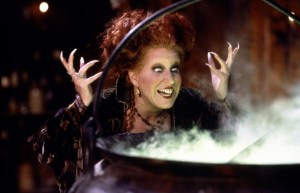
 So, that’s a little this and that from me this morning. What’s on your reading and blogging list today? Oh, and name the witches, their names–real and characters–and the movie/tv show for for some fun!
Plus, tell us what’s your favorite Halloween movie so we can all rent it this weekend!!!
Monday Reads
Posted: October 21, 2013 Filed under: morning reads | Tags: "grand bargain", budget negotiations 36 Comments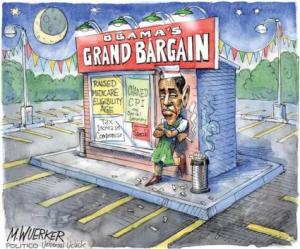 Good Morning!
The Federal Government has reopened. The Giant Panda Cam is back up. The exchanges set up by the Affordable Care Act are working in the states where the governor’s accepted the Medicaid expansion and have spotty participation in some other places. Fox News is back to Benghazi conspiracy theories. Why can’t I get the vision of more icky Grand Bargaining out of my head? Robert Kuttner is right there with me on the worry couch.
What would the latest incarnation of the grand bargain look like? The Republicans, worried about the cuts in Pentagon spending mandated by the sequester (which is still in effect) propose to allow military spending to rise in exchange for cuts in Social Security and Medicare. Excuse me? This is a little like saying, I’ll take your house and in exchange you have to give me your money. Right, we’ll cut Social Security and Medicare in order to increase money for the military. Are you kidding? It gets worse. In exchange for this proposed deal, Republicans are not willing to talk about raising taxes or restoring other social spending or to stop trying to undermine the Affordable Care Act. The only good thing about this proposed bargain is that is should be dead on arrival. Senate Majority Leader Harry Reid immediately declared that he wanted on part of any such deal. But President Obama, who has flirted with grand bargains in the past, was more equivocal. He has already put disguised cuts in Social Security in his own 2014 budget, though a revision of annual cost of living adjustments. The deal to keep the government set a deadline of December 13 for some kind of progress on a grand reform of entitlements and taxes. That’s only eight weeks away. It is preposterous to think that a bargain on taxes, social insurance, and deficits that has eluded the two parties throughout the Obama administration can be struck in less than two months. One has to hope that the deadline comes and goes, and that when Republicans think about shutting down the government again when the continuing resolution expires in January, they will think twice. But that will happen only if Reid, Pelosi, and House and Senate Democrats display the same resolve that they did in the last round. And given his past dalliances with putting Social Security and Medicare on the block, some of that resolve may need to be displayed against their president.
There’s likely to be some pressure because the Republican Party’s right wing still hasn’t given up its demands and will likely cause issues again. This means that way out there Republicans may continue to move the middle ground further toward the right wing. What’s going to happen as some of these incumbents start seeing primary challengers?
The more important intraparty fight will begin playing out chiefly in Senate primaries next year, with the targeting of incumbents like Mr. Cochran; Mitch McConnell, the minority leader; Lindsey Graham of South Carolina; and perhaps Lamar Alexander of Tennessee and Pat Roberts of Kansas. Their perceived roles as moderating drags on Tea Party-inspired senators like Ted Cruz of Texas and Mike Lee of Utah in the shutdown negotiations has galvanized conservative organizations to elect more such Republicans. Mr. DeMint said he thought the power of the establishment and its corporate money was waning. “It’s harder to buy influence in Washington now,” he said. That is certainly true in the House, the bulwark of Tea Party conservatism thanks to the overwhelmingly Republican nature of many of the districts and the less expensive campaigns necessary in them. As the Republican retreat on the shutdown demonstrated, Mr. Cruz and Mr. Lee are very much outnumbered in the Senate. “The lesson is, we need more reinforcements,” said Daniel Horowitz, an official with the Madison Project. Groups like his are more reliant on smaller dollar donations than their rivals. The U.S. Chamber of Commerce and Crossroads, for example, can summon large amounts from donors across the business spectrum, many of whom are expressing concern about the latest turn of events on Capitol Hill and are intent on avoiding nominees like Richard Mourdock of Indiana, who unseated Senator Richard G. Lugar, a longtime veteran, in the primary but lost in the general election after making a damaging comment on rape. “I have seen the problems in some of these primaries where we’ve knocked off some pretty good candidates and it resulted in nothing for us — like Lugar,” said Mel Sembler, a Florida real estate developer and former ambassador who helps Crossroads raise money. Spencer Zwick, the chief fund-raiser for Mr. Romney’s campaign, said individual donors tell him they are eager to help the establishment wing’s cause however they can. “There are a lot of individual donors who were supportive of Mitt’s campaign who are quietly waiting to figure out how they can play, and I think there’s a lot of appetite to make sure that we nominate candidates who can win general elections,” he said. The Tea Party-aligned groups say they have an established record of winning primaries against Republican rivals with deep corporate backing. “We’ve always been outspent by orders of magnitude,” said Matt Kibbe, the president of FreedomWorks. And they do have some big donors, like
the multimillionaire investor Foster Friess, who backed a failed primary challenge to Mr. Hatch in Utah last year and indicated in an interview last week that he would consider new “opportunities to put young, dynamic people in.”
Then, there are the lobbyists who will be looking to get something from resorting out sequestration.
With automatic cuts to the militaryset to take effect by January and a separate round of cuts scheduled forMedicare, lawmakers will have to decide who gets hit the hardest. Washington’s lobbying machine — representing older citizens, doctors, educators, military contractors and a wide range of corporate interests — is gearing up to ensure that the slices of federal money for those groups are spared in new negotiations over government spending. It is a debate that almost no one involved wants to have so soon after the nasty fight over the federal budget, which produced the 16-day shutdown and again failed to reverse the automatic cuts resulting from previous disagreements. But Congress managed to reopen the government and extend the nation’s borrowing limit largely by creating a new series of deadlines that run through February, giving special interests several chances to influence the process. So far, the defense industry is likely to be hit the hardest, since the automatic cuts, known as sequestration, set for January would slice an additional $20 billion from the Pentagon’s budget. “It’s fair to say the volume in Washington is going to be deafening,” said Marion Blakey, the chief executive of the Aerospace Industries Association. Republicans on Capitol Hill are determined to mitigate those cuts by spreading them among various social programs, like education and Social Security, bringing dozens of other special-interest groups into the picture. “The perfect storm is coming” is how one health care industry lobbying coalition put it in an advertisement, complete with dark clouds and lightning, that ran the day the shutdown ended. “Tell Washington, no more hospital cuts.” AARP, the giant nonprofit group that represents older citizens, has kicked off a million-dollar radio advertising campaign warning that “seniors are no bargaining chip.”
I’m not sure if you caught the fun stuff that went on last week when billionaire Pete Peterson’s attempt to end social security and medicare as we know it known as the group “Fix the Debt” tried to create a twitter sensation. They got more than they bargained for when the popularity of their ideas got trolled by thousands of twitter users.
When billionaire Pete Peterson’s Fix The Debtdecided to hold a Q&A session on Twitter to sell corporate America’s austerity agenda, they must not have expected to be trolled. First rule of Twitter: always expect the trolls. By the time the whole real-time conversation was called off, the stream for #FixTheDebtQA was 100% opposition.
This should be heartening to those of us who would rather see Social Security expanded, not slashed
More epic trolling of the group can be found here.
“Fix the Debt” just felt Twitter’s sweet, trollish wrath. Championed by Alan Simpson and Erskine Bowles, Fix the Debt — which The Nation magazine called a “fearmongering campaign to convince Americans that the deficits the United States has run throughout its history have suddenly metastasized” — held a Twitter live chat this afternoon to discuss next steps in America’s ongoing fiscal squabble. And it didn’t go so well, with the #fixthedebtqa soon teeming with jokesters and those very much against Fix the Debt’s message.
Senate Minority Leader Mitch McConnell is already sounding the trumpet of deficit doom.
Senate Minority Leader Mitch McConnell (R-Ky.) suggested Sunday that the automatic spending reductions known as the sequester have given his party leverage moving into future budget negotiations. The government-wide cuts, which took effect in March as a result of the Budget Control Act, trim spending by more than $80 billion during this fiscal year alone. They are scheduled to continue for another nine years with deeper cuts unless Congress and the White House agree to an alternative deficit-reduction plan. McConnell said on CBS’s “Face the Nation” that he would not budge on the Budget Control Act’s spending caps when lawmakers and the White House resume negotiations over taxes and expenditures. “The bottom line, when we re-engage early next year, is I don’t want to bust the caps and I don’t want to raise spending, because we are in fact reducing spending, not as much as we need to, but it is a success,” McConnell said, adding that the sequester has lowered government spending “for two years in a row for the first time since right after the Korean War.” The GOP leader also criticized President Obama and congressional Democrats for pushing to raise taxes during previous budget talks. “Every discussion we’ve had about this in the past has had what I would call a ransom attached to it — a trillion-dollars in new tax revenues,” McConnell said. “We don’t have this problem because we tax too little in the country, we have it because we spend too much.”
So, excuse me but I am still paying attention to the men behind the curtains. What’s on your reading and blogging list today?

 peej
peej Carissa
 bostonboomer
 dakinikat
 ecocatwoman
 jjlo
jjlo mablue2
 Mama Lopez
 peggysue22
 quixote
 skydancingguestblogger
 Mona (aka Wonk the Vote)





Recent Comments