
Saint Patrick’s Day Reads
Posted: March 17, 2014 Filed under: morning reads | Tags: Saint Patrick's Day, Sponsors of Parades pull out over homophobia 36 Comments
Top o’ the mornin’ to ya!
Like many places, New Orleans has been having St. Patrick’s Day parades and will have the traditional Irish Club Parade tonight! There’s a big difference in many places this year. Sponsors and politicians are pulling out in parades that will not open participation to gay groups. Parades in Boston and New York are losing sponsors like Guiness, Samuel Adams and Heineken Beer.
Irish brewer Guinness said on Sunday that it would not participate in New York City’s St. Patrick’s Day parade this year because gay and lesbian groups had been excluded, costing organizers a key sponsor of the annual event.
The move came on the same day that Boston’s Irish-American mayor skipped that city’s St. Patrick’s Day parade after failing to hammer out a deal with organizers to allow a group of gay and lesbian activists to march openly.
“Guinness has a strong history of supporting diversity and being an advocate for equality for all. We were hopeful that the policy of exclusion would be reversed for this year’s parade,” the brewer said in a written statement issued by a spokesman for its parent company, Diageo.
“As this has not come to pass, Guinness has withdrawn its participation. We will continue to work with community leaders to ensure that future parades have an inclusionary policy,” Guinness said.Last week New York Mayor Bill de Blasio said he would not march in the parade because gay and lesbian activists had been again precluded from taking part.
The loss of Guinness, one of the world’s top beer brands originating in Dublin, Ireland, appeared to ratchet up the pressure on organizers even further.
As noted, Boston’s Mayor also declined to participate in one of the city’s signature events that usually attracts the state and city’s major  political leaders.
After weeks of discussions that failed to convince organizers of South Boston’s annual St. Patrick’s Day parade to let gays march openly in the parade, Mayor Martin J. Walsh said today he would not take part in the event.
Walsh said he was “disappointed” and felt a “little bit of frustration.”
“I think for the most part everyone was on the same page. We had an agreement. Everything was all set. It came down to what letters were on a banner, which was very unfortunate,” said Walsh, referring to a proposed banner bearing the letters “LGBTQ” on it.
For two decades, gay men and lesbians have been excluded from openly marching. Walsh worked until the last minute to bring the statewide gay rights organization MassEquality and parade organizers from the Allied War Veterans Council to an agreement that would have changed that.
The talks broke down over a matter of language: Parade organizers would not permit any signs or clothing bearing the word “gay” or any other declaration of sexual orientation. MassEquality would not march without those words, comparing the restriction to a return to the “closet” of concealing one’s identity.
Walsh said today that the issue “came down to five letters” on the LGBTQ [standing for Lesbian, Gay, Bisexual, Transgender, and Queer] banner.
In a statement this morning praising Walsh for his efforts and for choosing not to march, Kara Coredini, executive director of MassEquality, said such a restriction was unfair.
“No other group is asked to march without a banner and their standard – not the police, firefighters, or the Irish,” Coredini said. “A double standard is the status quo and does not represent progress.”
Early Irish immigrants had to fight for their humanity and for respect. It seems odd that a persecuted group would embrace such obvious bigotry. How did the politics of Tip O’Neill’s Irish Americans move to the politics of Sean Hannity and Bill O’Reilly?
As late as the 19th century, Anglo elites in New York perceived the drunken and disorderly Irish newcomers as an unhealthful influence on the city’s industrious and long-settled black population.
But Irish-Americans rapidly absorbed the lesson that the way to succeed in their new country was to reject the politics of class and shared economic interests and embrace the politics of race. One disgraceful result was the New York draft riots of 1863, the low point of Irish-black relations in American history, when Irish immigrants by the thousands turned on their black neighbors in a thinly disguised race riot. Irish-Americans were under no delusions that the ruling class of Anglo Protestants liked or trusted them, and anti-Irish and/or anti-Catholic bigotry endured in diluted form well into the 20th century. But by allying themselves with a system of white supremacy, the Irish in America were granted a share of power and privilege — most notably in urban machine politics, and the police and fire departments of every major city.
As Joan’s book and many other sources have discussed, over the course of the last century the bulk of the Irish-American population drifted rightward through the Democratic Party and then out the other side into Archie Bunker-land. A key constituency of the New Deal coalition became, 40 years later, a key constituency of the Reagan revolution. But throughout that period there was always a countervailing social-justice tendency in Irish-American life, the tendency of the antiwar activist brothers Daniel and Philip Berrigan (quite likely the only Jesuit priests ever to make the FBI’s most-wanted list), or of 1952 left-wing presidential candidate Vincent Hallinan and his firebrand San Francisco family. This was the tradition of the radical Vatican II priests, nuns and theologians, who kept many of us from abandoning the Church altogether, and of the 1968 reawakening of Robert F. Kennedy and the subsequent career of his brother Teddy.
Without exception, those people started from an understanding of their own cultural and national history. They began with Irish nationalist or republican politics, and moved from there to consider how Ireland’s story fit into a worldwide pattern that transcended the specific racial paranoia of the United States. Of course Irish history did not end in 1998, and the current situation in that country – a land of immigrants for the first time in its modern history – is exceptionally interesting. But Ireland is no longer a divisive and charismatic “issue,” capable of galvanizing people who live thousands of miles away. With Irish-American identity now split between an optional lifestyle accessory and a bunch of unappealing right-wing guys yelling at us, its social-justice component has evaporated as well.
Can you imagine what Tip O’Neill would say to the likes of Paul Ryan?
Paul Ryan: When I said ‘inner city’ men are too lazy to work; that’s their ‘culture,’ I didn’t mean it racially.
It seems that now that poverty is spreading to white people, the topic has piqued the interest of a handful of Republican leaders. Notably, Republican bullshit artist par excellence, Paul Ryan, who has lately been trying to convince the public that he really cares and is earnestly searching his ample intellect for a solution — as long as it doesn’t require any government spending. Whoever is buying what he’s selling is dumber than a post.
So here is this deep thinker’s take on the cause of poverty: laziness. And not just any kind of laziness, the dreaded “culture” of “inner city” laziness. Or, in the House Budget Committee Chairman, ex-GOP veep candidate’s words:
“We have got this tailspin of culture, in our inner cities in particular, of men not working and just generations of men not even thinking about working or learning the value and the culture of work, and so there is a real culture problem here that has to be dealt with.”
You don’t have to be a genius at cracking codes to understand that he’s simply saying: Blacks are lazy. They prefer being poor to working. (As if working was a surefire way not to be poor.)
When called out on the thinly-veiled racism of his comments, Ryan said he had been “inarticulate” and had not intended to be racist at all. In fact, it never even occurred to him that they might be racist.
And if that isn’t the mark of a racist we don’t know what is. Surely, Ryan, with that big intellect of his, knows that the libertarian so-called-thinker he has lately been quoting, Charles Murray, who argues that Blacks and Latinos are genetically inferior, is also a self-described white Nationalist.
Note to Ryan: White Nationalist = racist!
To read more about how toxic Murray is and what a complete fraud Ryan is, click here:
So, that’s my offerings this morning. I may try to get a second post up later because I’ve been finding some interesting items up about what incredible things are going on in this country with the huge income gaps between the wealthy and every one else.
What’s on you reading and blogging list today?
Friday Reads
Posted: March 14, 2014 Filed under: morning reads | Tags: Bobby Jindal, gentrification, Louisiana, Mary Landrieu, New Orleans, Rick Perry, Southern Orientalism., True Detective 30 CommentsGood Morning!
 I’ve been looking at some of the elections coming up for the midterm season as well as reading the scuttlebutt about the presidential campaigns likely to gear up at the same time. There’s still some worry that the Republicans may have the momentum going into the midterms and that the Democratic Party may lose its majority in the Senate. I figured I’d start looking towards fall with my own vulnerable senator and overtly ambitious governor.
The Koch Brothers’ money is hot and heavy in most of the races that are seen as potential switches including my one sane–albeit owned by the oil & gas industry–Senator Mary Landrieu. I’ve been getting really sick of the same stupid Obama-care based attack ad on her that plays endlessly on TV. The Democratic party is evidently trying some new strategies to run the Koch Brothers express off the tracks. Here’s the new response to that ad that’s been bugging the living daylights out of me for months now. The analysis comes from Greg Sargent.
A Dem source tells me the spot is backed by a $200,000 buy. Script:
Out of state billionaires spending millions to rig the system and elect Bill Cassidy. Their goal: Another politician bought and paid for. Their agenda: Protect tax cuts for companies that ship our jobs overseas. Cut Social Security and end Medicare as we know it. They even tried to kill relief for hurricane victims. Cassidy’s billion dollar backers: They’ve got a plan for him. It’s not good for Louisiana.
As I noted the other day, this is all about creating a framework within which voters can be made to understand the actual policy agenda Republicans are campaigning on. This is what the Bain attacks on Mitt Romney were all about: Dem focus groups showed voters simply didn’t believe Romney would cut entitlements (per the Paul Ryan plan) whilecutting taxes on the rich. The Bain narrative made Romney’s actual priorities more comprehensible.
The Koch attacks are designed to do something similar. They aren’t really about the Kochs. They are a proxy for the one percent, a means through which to tap into a general sense that the economy remains rigged in favor of the very wealthy. Placed into this frame, GOP policies – opposition to raising the minimum wage; the Paul Ryan fiscal blueprint, which would redistribute wealth upwards; opposition to the Medicaid expansion, which AFP is fighting in multiple states – become more comprehensible as part of a broader storyline. In that narrative, Republican candidates are trying to maintain or even exacerbate an economic status quo that’s stacked against ordinary Americans, while Dems are offering solutions to boost economic mobility and reduce inequality, which are increasingly pressing public concerns.
In many ways this strategy is born of necessity. The 2014 fundamentals are stacked heavily against Democrats, who are defending seven Senate seats in states carried by Mitt Romney in 2012 that are older, whiter, and redder than the diversifying national electorate. This is made even worse by the midterm electorate, in which core Dem groups are less likely to turn out.
GOP attacks on the health law in red states are not just about Obamacare. They are, more broadly, about casting Senate Dems as willing enablers of the hated president and blaming the sputtering recovery on #Obummer Big Gummint, to channel people’s economic anxieties into a vote to oust Dem incumbents.
Mary Landrieu, meanwhile, is out front and center trying to force through the Keystone Pipeline. This is likely to bring a few jobs to Louisiana and make her oil company donors quite happy.
Sen. Mary Landrieu of Louisiana intensified the pressure on Secretary of State John Kerry, a former Senate colleague, to approve the Keystone XL oil pipeline.
During a hearing on the State Department’s 2015 budget, Ms. Landrieu, a Democrat who has been a strong pipeline proponent and faces a tough re-election fight this year, pressed Mr. Kerry to approve the project, which would carry crude from Canada’s oil sands and from North Dakota’s Bakken Shale Formation to Gulf Coast refineries.
Ms. Landrieu, the new chairwoman of the Senate Energy Committee, said, “Canada is our closest, strongest trading partner,” and “a majority of American people” support Keystone. “It is hard for me to understand why there are still questions about whether building this pipeline is in our national interest,” she said.
Actually, it really isn’t in the national interest since most of the Canadian tar sands oil will be sold on the open market and the danger of polluting the major source of fresh water for five states in the center of the country remains. However, Landrieu always moves to the right during the election cycle. I am certainly not going to vote for Bill Cassidy who could be worse . He still rings all the usual right wing bells albeit not with much charisma as some of his Texas compadres in congress.
Leading Republicans figured Cassidy to be her perfect foil, as a physician (treating the poor in public hospitals) with only eight years in elected office (experience but not a career in politics). He’s not especially charismatic, but he is intelligent and trustworthy. In the recent government shutdown/debt crisis, he voted along with conservatives but, in his rhetoric, he did not get wild-eyed about it.
And that’s a problem. Though U.S. Sen. David Vitter has run interference, Cassidy has been unable to close the deal on the right. For Republicans running for Congress these days, it is not enough to be conservative. If you are not ultra-conservative, then you’re moderate, which is just a slippery slope away from closet liberal. This nagging distrust about his conservatism has created an opening on the right, into which have stepped two other Republican candidates, Rep. Paul Hollis of Covington and Rob Maness of Madisonville.
Maness, with tea party connections, lumps Cassidy together with Landrieu as compromised establishment politicians. Hollis assured Vitter that he would not criticize Cassidy but keep his aim on Landrieu. Yet in his first TV ads, standing under an oak tree, he distinguishes himself as unspoiled by the partisan politics of Washington. His bid for home boy status — “lifelong Louisiana,” he describes himself — is a sly dig at both Maness, an Air Force brat, and Cassidy, whose family moved here when he was 6 years old. His underlying message is: I’m one of us, and they are not.
A more direct slap at the GOP anointed one comes from Family Research Council president Tony Perkins, a former Louisiana legislator, who recently told The Hill newspaper that Cassidy can’t beat the incumbent because he’s not conservative enough.
Perkins has his eye on a seat some where right now so he’s hardly an objective on the candidate. Of course, the Republican Party and the Koch ads are hammering away at “Obamacare”. This is an interesting tactic in a state like Louisiana where the needs of so many go unserved and the governor is taking heat for turning down the Medicaid expansion from every paper in the state. Then, there are these numbers. Ted Cruz’s fears have come true. It’s getting popular and most of the recent advertised scare stories used in the political ads are being successfully debunked,
President Barack Obama’s health-care law is becoming more entrenched, with 64 percent of Americans now supporting it outright or backing small changes.
Even so, the fervor of the opposition shows no sign of abating, posing a challenge for Obama’s Democrats during congressional races this year, as a Republican victory in a special Florida election this week showed. In addition, 54 percent of Americans say they’re unhappy with the president’s handling of the issue, according to a Bloomberg National Poll.
That’s an improvement since the last poll, in December, when Obama’s public standing on health care hit a low of 60 percent disapproval after the botched rollout of the insurance exchanges, according to the March 7-10 poll of 1,001 adults.
So, this Louisiana race may be one to watch if you want to see what could happen in the fall. The other thing is that it’s pretty certain that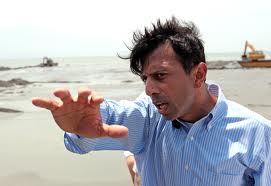 Governor Bobby Jindal is not giving up his presidential dreams no matter how badly he shows in all the polls. He’s on the campaign trail and introducing legislation that’s been written by the Koch machine. Oh, and he’s in New Hampshire.
Louisiana Gov. Bobby Jindal launched a new political action committee (PAC) on Thursday (March 13) to assist conservative candidates in the 2014 midterm elections, just before heading off to New Hampshire for a series of events.
Jindal’s PAC, dubbed “Stand Up to Washington,” will feature former Mitt Romney campaign manager Jill Neunaber in its leadership role. Neunaber is getting to be a familiar name around Louisiana, as the head of Jindal’s PAC and also his recently-formed nonprofit “America Next,” which is aimed primarily at national issues and supporting Republican candidates in this year’s gubernatorial races.
“Obviously, my main focus is still going to be continuing to help governors win their races and candidates to win gubernatorial races,” Jindal told POLITICO in a reported 18-minute phone interview about the new PAC.
“But I also get a ton of requests to go and speak and help federal candidates in the Senate and the House. So we just thought this was a logical thing to do.”
Soon after announcing the PAC, Jindal will head off to the battleground state of New Hampshire for a series of events. He will keynote the Northeast Republican Leadership Conference on Friday; The Nashua Telegraph also reports he will appear at the Wild Irish Breakfast that morning.
Nothing says candidate like Pancake breakfasts and parades. Oh, and appearing on comedy and talk shows. Did you know that Texas Governor Rick Perry got booed during an appearance on Jimmy Kimmel live?
Texas Gov. Rick Perry was booed when he took the stage at ‘Jimmy Kimmel Live’ on Tuesday night at the South by Southwest conference in Austin.
“We do know how to get it stirred up,” the Republican said as he sat down, presumably referring to Texans.
The booing continued throughout the interview, until Perry mentioned decriminalizing marijuana – that prompted the crowd to cheer.
When asked if he’d ever smoked marijuana himself, Perry responded, “No, thank God!”
Kimmel also asked Perry whether he planned to run for president in 2016, after an unsuccessful attempt in 2012.
“This is not the crowd that I want to make this announcement to,” Perry said.
I have to think that most of the folks in Austin will be really glad to get rid of the man, but then you probably should ask Ralph about that since he would know more than me.
 I might as well follow up on my post last Friday since this post seems to have taken on a Louisianan flavor anyway. There have been a few more folks–recent transplants and visitors–writing articles on the state still. I’m thinking it must have something to do with True Detective but maybe not. I don’t feel like I can be the outstanding transmitter of what’s special and frustrating about this state as well as a native because frankly, after 20 years, the place still can make me dizzy in both good and bad ways. So, I’m going to quote Lamar White here. See, Lamar, I not only attribute and cite you but I put your name right here. Too bad I’m not any one that matters, but hey, you’re out there making some waves and that’s good.
On Tuesday, Dave Thier, a freelance writer based in New Orleans, published a piece in Esquire titled “Sorry, Louisiana Is Not Actually Made Of Magic.” I really wanted to like Mr. Thier’s piece, because I thought the headline was provocative. But the article was absurdly patronizing and completely disconnected. Mr. Thier is a Yale graduate who has lived in New Orleans for only three years. While we should all celebrate smart, young, educated professionals who move to Louisiana, it is unwise, arrogant, and misguided for a self-described “transplant” to hold himself out, to a national audience, as a curator of Louisiana culture, particularly when he implies that his understanding of his newly-adopted home has been informed by Hollywood.
Indeed, that seems to be the point of his article: Hollywood has lied about Louisiana being magical, which he can prove by way of juxtaposing the banalities of his own life. He watches Netflix and plays video games and prefers Thai take-out over the native cuisine of his adopted Louisiana. And this, I think, may bolster Mr. Thier’s argument that he’s just an ordinary American in his late twenties. But it completely destroys his credibility when it comes to opining on the culture and, yes, the magic of Louisiana.
The same group of Louisiana Bloggers, Twitterati, and Facebookers had it out re: Thier’s article in Esquire, harkened back to Kalegate and the NYT, and then hashed over if we should even be paying these folks some never mind anyway. I personally wonder why these recent transplants get the paid gigs on what is and isn’t New Orleans or Louisiana instead of folks that have either been born here or at least lived here long enough to have decoded some of the unique charms and frustration. Here’s another take in Salon that’s called True Detective goth Southern porn characterizing Louisiana poverty as stemming from a stereotyped swampbilly culture.
As someone who studies southern Appalachia in popular culture, I have become occasionally numb to the portrayal of other parts of the southern United States, viewing their representation/stereotypes as being less severe. Louisiana in particular.
Louisiana gets heaps of praise. “True Blood” made it sexy and campy. “Treme” showed its heart. The last season of “Top Chef” showcased its deliciousness.
There’s another side, though. A bit darker. “Duck Dynasty,” “Gator Boys,” “Cajun Pawn Stars,” “Swamp People,” etc. All reality television series that showcase people living off the land or trying to get by, often downplaying the intelligence of its stars. It paints the state as a different country, with different rules.
But those rules are not as far-flung as “True Detective” might have you believe. Creator Nic Pizzolatto, who grew up in the Lake Charles, La., depicts his hometown as a post-apocalyptic landscape in which the rapes and murders of women and children are covered up by kin connections. He follows what I have deemed the three rules of a Southern horror story: Close Family Relationships, Weird Sex and Malicious Rednecks.
Important note: The more overlap between the above three elements, the better.
Essentially Lake Charles received its own “Deliverance” through the episodes of “True Detective.” Has ever a show depicted such a large number of beaten and bruised female prostitutes? As far as the series reveals, there’s no reason that Marty’s elementary-school-aged daughter draws graphic pictures of people having sex or sets up her toys to depict a doll getting gang-banged. It’s just one of those things kids in rural Louisiana do.
By the way, Lake Charles was not really the center of the series or the filming location or the plot, but then I quibble. I’m not exactly certain why the writers of establishment media have decided to put every one in Louisiana on the couch, but it appears  there’s some kind’ve creepy fascination that’s playing out in the press right now. Yes, there is unique culture down here. This area has given the world a lot of musical forms, food, and reasons to party. The landscape can be breathtaking in both its lushness and its austerity. You can see any and all of it play out just by visiting here and taking note. But, really, does that mean you can decode it for the rest of the world to earn a few bucks?
Here’s the Cajun version of Mardi Gras that shows you there is plenty of unique culture to celebrate, to learn about, and to appreciate. Thier should take some time away from his video games and Thai take out food to chase some of this down. The last thing I did when I first moved here was to sit at home with all things mundane. I just participated. This part of the country will amaze and capture your attention. The problem that I have with these accidental tourists and transplants is they really haven’t taken the time to let their gumbo simmer. But, when has Hollywood or the New York/Washington DC -centric press ever put any place in any kind of real light? I frankly remember growing up watching TV where every hayseed that became the butt of a sitcom joke haled from Nebraska. (It’s actually a subtheme of The Big Bang Theory right now.) It would absolutely make me even more embarrassed of having to grow up in the place knowing that the rest of the country had a worse opinion of the place than me and mine was pretty darn low.
What I’m more worried though about is this kind of thing : U.S. Agrees to Allow BP Back Into Gulf Waters to Seek Oil. Since corporations are people my friend–at least that’s what Citizen’s United declared–then I say we ought not let a mass murderer out to kill again. But, that’s not the kind of story that’s likely to create any human interest. Well, not yet. So, what should we be more worried about? It does no one a great service to characterize a culture, but at least that doesn’t have the power to take down the culture itself. What’s gotten me to start writing about my adopted home has been my experiences with Hurricane Katrina and the BP Oil spill because having lived here 20 years, I know exactly what’s at stake if the country would lose it. There are things down here both human and natural that are awesome. It’s worth appreciating, experiencing and protecting.
What’s on your blogging and reading list today?
Monday Reads: Women’s Day Edition
Posted: March 10, 2014 Filed under: morning reads 61 CommentsGood Morning!
I’ve been thinking a lot lately about what it means to be a woman in a society that only values you under specific circumstances. It’s probably related to the passage of yet another Women’s day on March 8 where I look around and see more lost ground than ground gained. The stereotypes we identified in my women’s studies group in high school are still alive and flung across the internet.
I didn’t watch the Oscars–having no interest in celebs or movies–but I did notice the next few days were filled with the usual snipes and compliments on dresses. Then, there was the hooplah on the plastic surgery of Kim Novak and Goldie Hawn that many deemed’ pathetic and unrecognizable. Novak is 81.
The Internet gasped in horror—or was it amusement? —when the Vertigo star took the stage with Matthew McConaughey to
present the award for Best Animated Feature to Disney’s Frozen (an unfortunate coincidence, generating countless rudimentary puns on social media). A sampling of tweets, including several from well-known figures in the entertainment and media industries: Comedian Nick Youssef joked that “Kim Novak was just safely transported back to the Hollywood Wax Museum”; Chelsea Lately writer Fortune Feimster quipped, “I’m assuming Kim Novak was representing the movie ‘Mask’”; Huffington Post editorial director Howard Fineman broadened the mockery: “#AcademyAward for worst plastic surgery: tie between Kim Novak and Goldie Hawn.”
And blowback against the comments was equally fierce. Newly minted MSNBC host Ronan Farrow shot back, “Half the people being cruel about Kim Novak are ten years away from being Kim Novak.” Actress Rose McGowan tweeted a picture of the actress in her heyday as a sex symbol, adding, “Self-obsessed and disrespectful, that sums up the Oscar audience.”
In a way, by tweeting a picture of Novak sprawled out on a bed in a scene from the 1958 film, Bell, Book and Candle, McGowan was unwittingly acknowledging that we should judge actresses by their looks—because beauty is indeed one of the most important attributes for a Hollywood actress, young or old. Had Novak not won the genetic lottery, she could have easily lost her breakout role in Hitchcock’sVertigo to a prettier face (Novak was a good actress, but not a great one). So why are we surprised when, years after being out of the limelight, viewers continue obsessing over the face that once made her famous? And we should be no less surprised that Novak is obsessed with her face.
 Goldie’s dress and face didn’t fare much better. I’ve been thinking of both of them in light of Diane Keaton, Helen Mirren, and Dame Diana Rigg who are still trodding the boards and have passed on certain enhancements. Diana Rigg is one among many devious women starring in HBO’s Game of thrones. She’s a fiesty delight and I enjoyed reading this interview with her.
Diana Rigg is trying to cross the Fulham Road in London. Elegant from two-tone shoes to circular, tinted glasses, she is thwarted by the traffic. “Good timing,” she says after I introduce myself. “You can help me get across.” In the 60s, when she played Emma Peel in The Avengers, a catsuit-wearing Rigg would have vaulted across car bonnets, and if any male driver had remonstrated, she would have karate-chopped him in the throat and kicked him in the crown jewels. But not today.
“It’s my damned tin knees,” she says as we link arms and hobble across the street. She had an operation on one of them recently. I had heard that she damaged her knees with those lengthy tap-dancing routines in the 1987 West End production of Sondheim’s Follies? “No, it’s genetic. My brother, who is 80, has the same problem.”
Not that the 75-year-old actor is unhappy with her lot.”The older you get, I have to say, the funnier you find life,” she says. “That’s the only way to go. If you get serious about yourself as you get old, you are pathetic.”
We settle in the garden of a French cafe. A few years ago Rigg would have sought out the garden to indulge her 20-a-day habit, but Dame Diana gave up smoking a couple of years ago, and today wants to catch the early spring rays and feed crumbs to the birds.
“I found myself talking aloud to the pigeons in the park the other day,” she tells me. “The male pigeons were busily pursuing the female pigeons. I said: ‘You silly farts. Can’t you see they’re not interested?’ And then I realised there were people listening to me.” And what applies to birds, she reckons, applies to elderly men and women. “I think women of my age are still attractive.” She removes her glasses and faces me down with brown eyes that have turned strong men – and, indeed, women – to jelly. “Men of my age aren’t.” Why? “They’ve got their cojones halfway to their knees,” she says, giggling. “They have the same descent as tits.”
Aging is not an easy thing in a society that values women for their looks and their fertility. But, you’re either invisible or you’re fertile and thereby potential property of men and state. Here’s a list of the crap Lousiana legislators are proposing for the women in my state.
HB 388: Requires doctors to have admitting privileges at local hospital before performing abortions.
HB 401: Prohibits advertising of abortion services and distribution of abortofacients.
HB 727: Requires provision of psychological health information prior to abortion.
HB 590: (Constitutional amendment) Prohibits the use of public monies for abortion and provision of public monies to providers of abortion except as may be required by the federal government as a condition of federal financial participation in a public medical assistance program.
HB 348: Prohibits termination of life-sustaining procedures for pregnant women.
HB 305: Prohibits providers of elective abortions and their affiliates from delivering any instruction or materials in schools.
As you can see, the obsession with lady parts is ongoing. In fact, any kind of focus on the state of women in this country brings to focus exactly how unkind of a country we can be.
According to the African American Policy Forum, black girls are suspended at a higher ratethan all other girls and white and Latino boys. Sixty-seven percent of black girls reported feelings of sadness or hopelessness for more than two weeks straight compared to 31 percent of white girls and 40 percent of Latinas. Single black women have the lowest net wealth of any group, with research showing a median wealth of $100. Single black men by contrast have an average net wealth of $7,900 and single white women have an average net wealth of $41,500. Fifty-five percent of black women (and black men) have never been married, compared to 34 percent for white women.
This situation is dire at every level. But perhaps the most troubling thing of all: The report indicates that while over 100 million philanthropic dollars have been spent in the last decade creating mentoring and educational initiatives for black and brown boys, less than a million dollars has been given to the study of black and brown girls!
Several years ago, in line with the rise of the field of Girls Studies in academe, a group of students asked me to teach a course on Black Girls Studies. The number of books and scholarly articles barely added up to enough for a full course syllabus.
It’s amazing to me how many women are still invisible. And, it’s still amazing that we can’t seem to gain ground on any particular front. Here’s a bit from Robin Morgan that’s worth a read on dissent within the feminist ranks. She has some ground rules.
But I have standards, seasoned over 40 years of activism. I don’t waste time debating patriarchy’s defenders. I don’t practise or tolerate personal trashing. I don’t engage with faux feminists who, whether under the aegis of religious fiat or sexual libertarianism, refuse to understand that all women deserve full reproductive rights, all women deserve to love whomever they choose, all women deserve freedom from violence, poverty and illiteracy, that the buying and selling of any human being is slavery. Feminism is for all women and girls, not a privileged few or one ethnicity, religion, age, sexual preference, ability, region or hemisphere. Women born and raised on this fragile planet have more uniting us than dividing us – and it’s the job of feminists to help us realise that. Those are my standards.
Women are still universally treated like chattel.
Around 14 million girls, some as young as eight years old, will be married in 2014.
An estimated 1.2m children are trafficked into slavery each year; 80 per cent are girls.
In 10 countries around the world women are legally bound to obey their husbands
Only 76 countries have legislation that specifically addresses domestic violence – and just 57 of them include sexual abuse.
It makes me dizzy thinking that my 40 years as an activist really haven’t led to much change at all. I did find that there are a few places I can take refuge should I decide to move to a matriarchal society.
The Nagovisi community of South Bougainville, New Guinea is matrilineal with matriclans. The women of the Nagovisi holdpositions of authority and power, traditionally in regards to the cultivation of their gardens. These gardens are the woman’s sphere, and are inherited by daughters. The community is largely based on crop cultivation. With this control of the food, like sweet potatoes and coconuts, woman may remain independent and men are dependent on the women for that food.
The man eating the woman’s food is a symbol of their marriage, and if he were to stop, it would be a sign of divorce. Men typically move into the woman’s family for marriage, and the women are the breadwinners. Men take care of the clearing of the lands, but typically follow the instructions of the woman.
That sounds interesting!
Well, I suppose taking stock of something where progress depends on the very people that benefit from the status quo is a lot to hope for. Especially, when you look at the CPAC attendance and see how many women are willing to collaborate with the the worst of the worst.
What’s on your reading and blogging list today.
Friday Reads: Us Savages in New Orleans have Done Been Discovered
Posted: March 7, 2014 Filed under: morning reads | Tags: Bobby Jindal, Fauxhemians, gentrification, New Orleans 65 Comments
Good Morning!
And pardon me for a provincial rant here this morning!
This year will be my 20th anniversary of living in New Orleans. Yes, I was here before, during, and after Katrina. Yes, I have lived in the French Quarter and now I’ve been in the Bywater for nearly 15 of those 20 years. When I moved here, most of the folks were very old people, people living in section 8 housing, a gay contingent working in the quarter, and a very odd sundry of people trying to get out of the Quarter that had been a counterculture enclave but was rapidly turning into weekend condos for people from Texas and Georgia.
I had a few friends that owned bars and galleries here. Then, a few friends that opened up some restaurants. Then, Katrina happened. Then, we extended tax credits to movies studios and got Treme and a few interesting movies and now, well now it’s really, really attracting a group of people who have “discovered’ our wasteland and decided it’s ripe for their sort’ve civilization. We’re all so quaint here. No taxis would come here before they moved here. And, there is no kale to be found any where. But, it so authentically authentic. Isn’t it wonderful they discovered a new Brooklyn?
For some reason, I didn’t feel the need to civilize the city when I moved here. I just sort’ve dove in and let it wash all over me.
I will admit that some things are not as they should be here in the Not Always so Big Easy. There’s the NOPD. There’s still a contingent of politicians down here that are way too generous to their friends and to their own bank accounts. There’s plenty of institutional racism, sexism, and provincialism to go around. But I see this every where and at least New Orleans fills its cracks with good food, good music, and a lot of friendly people. Believe me, that makes up for a lot. However, for some reason, we’re attracting a lot of folks who want to turn us into Brooklyn or what Brooklyn has become. For this, I will reference Spike Lee who shouts “We’ve Been Here”. Discovering new lands that already exist and contain culture and people is not just a Christopher Columbus kind’ve thing.
Then comes the motherfuckin’ Christopher Columbus Syndrome. You can’t discover this! We been here. You just can’t come and bogart. There were brothers playing motherfuckin’ African drums in Mount Morris Park for 40 years and now they can’t do it anymore because the new inhabitants said the drums are loud. My father’s a great jazz musician. He bought a house in nineteen-motherfuckin’-sixty-eight, and the motherfuckin’ people moved in last year and called the cops on my father. He’s not — he doesn’t even play electric bass! It’s acoustic! We bought the motherfuckin’ house in nineteen-sixty-motherfuckin’-eight and now you call the cops? In 2013? Get the fuck outta here!
Nah. You can’t do that. You can’t just come in the neighborhood and start bogarting and say, like you’re motherfuckin’ Columbus and kill off the Native Americans. Or what they do in Brazil, what they did to the indigenous people. You have to come with respect. There’s a code. There’s people.
You can’t just — here’s another thing: When Michael Jackson died they wanted to have a party for him in motherfuckin’ Fort Greene Park and all of a sudden the white people in Fort Greene said, “Wait a minute! We can’t have black people having a party for Michael Jackson to celebrate his life. Who’s coming to the neighborhood? They’re gonna leave lots of garbage.” Garbage? Have you seen Fort Greene Park in the morning? It’s like the motherfuckin’ Westminster Dog Show. There’s 20,000 dogs running around. Whoa. So we had to move it to Prospect Park!
I mean, they just move in the neighborhood. You just can’t come in the neighborhood. I’m for democracy and letting everybody live but you gotta have some respect. You can’t just come in when people have a culture that’s been laid down for generations and you come in and now shit gotta change because you’re here? Get the fuck outta here. Can’t do that!
Yeah, you right.
You may have been reading my previous columns about how people that have just moved here have suddenly become the authentic carriers of New Orleans Culture and all things civilized. I have written about it before. The NYT just will not leave my neighborhood alone. Now, I have neighbors moving in from New Jersey, Philadelphia, New York, and all over. They just have decided that we’re passable if they can just civilize us a little bit more. We’re quaint and they can make us tolerable. Part of this post is about the hubris that comes from journalists. Part of this post is about the hubris that comes from being young. A lot of this post is about the hubris that comes from deciding that you’re just going to come into some one’s neighborhood, label them quaint, and then proceed to become the authority on what it is and isn’t.
“New Orleans is not cosmopolitan,” said the actress Tara Elders. “There’s no kale here.” Her husband, Michiel Huisman, the actor and musician who moved here with Ms. Elders in 2009 to shoot the HBO series “Treme” (he’s currently on the series “Nashville”), agreed. “The sign on a shop says that they’ll open at 10? You’re there at noon and it’s not open,” he said.
We were sitting outside at Sylvain, a restaurant in the French Quarter that Mr. Huisman said “takes Southern cuisine and pushes it a bit more modern.” With its elegant but rustic décor, cocktails featuring noirish names (Blood in the Gulfstream, Dead Man’s Wallet), and inventive food, Sylvain wouldn’t be out of place in Brooklyn — but Ms. Elders said spots like this are still the exception. “So many of the cool places here are really rundown,” she said. “And not because a stylist designed them that way.”
Just for your information, we have plenty of kale here. I went to Rouse’s Market yesterday and you can barely spot the mustard greens through the various assortment of kale. In fact, we’ve decided that #kalespotting is the new event for the post Mardi Gras let down just so they NYT knows we’ve got it. I have it on good authority that the Walmart in Chalmette even has it now.
In a long-ago episode of “The Simpsons,” a tourist to Springfield enters Moe’s bar and declares, “This isn’t a faux dive! This is a dive!” That was satire. But Goodman quotes Elders saying essentially the same thing and with apparent sincerity. “So many of the cool places here are really rundown. And not because a stylist designed them that way.”
Goodman’s story also includes a new transplant’s translation of a Mardi Gras Indian chant: “Shallow water, your mama.”
“Music really flows through the veins of the town, like where we are going tonight,” Mr. Huisman said, referring to the United Mardi Gras Indian Practice. “It’s so true to itself and so African. That really resonates with me: Nothing moves me as much as that beat, that rhythm that is truly New Orleans.”
We all piled into the family Jeep and drove out to Handa Wanda’s, an open warehouse space with a band set up in the back, a bar in the middle, and red beans and rice on hot plates up front. This spot is home base for the Wild Magnolias, one of dozens of tribes. Come Mardi Gras day, the tribe leader, or Big Chief, will lead a procession in full costume, challenging other tribes to mock battles. But tonight is an open practice and all are welcome.
Perched upstairs in the rickety balcony, we drank whiskey and Cokes out of Dixie cups while revelers of all ages shook it to a rollicking beat punctuated by chanting from the Big Chief. Instinctively, all of us leaned over the balcony and started bobbing our heads. Mr. Huisman saw me trying to sing along to words I couldn’t decipher. He smiled and said into my ear, “They’re saying, ‘shallow water, your mama,’ ” a traditional Indian call-and-response.
We are now fighting for t-shirts that say “Shallow water, Yo Mama”. Yes, the new dats are singing their own special lyrics in the shower cause you know how authentic and how, well so true and so African it all is.”
— Paradise City by Guns N’ Roses
“Take me down to a very nice city” Actual lyric: “Take me down to the Paradise City.”— Rock the Casbah by The Clash
“The sheep don’t like it, rockin’ the cat box” Actual lyric: “Shareef don’t like it, rock the Casbah”— Africa by Toto
“I left my brains down in Africa” Actual lyric: “I bless the rains down in Africa”— Bad Moon Rising by Creedence Clearwater Revival
“There’s a bathroom on the right” Actual lyric: “There’s a bad moon on the rise.”— You Sexy Thing by Hot Chocolate
“I Remove Umbilicals” Actual lyric: “I believe in miracles”— Suffragette City by David Bowie
“This mellow fat chick just put my spine out of place” Actual lyric: “This mellow thighed chick just put my spine out of place”— Waterfalls by TLC
“Don’t go, Jason Waterfalls” Actual lyric: “Don’t go chasing waterfalls”
So, a group of the local New Orleans Twitterati and facebookers spent the day coming up with just the precisely right phrase to dub our invaders. Oh, excuse me, those that are here to authenticate and purify and discover our lowly asses along with their search for Kale. We’ve adopted the term Fauxhemians.
 New Orleans does have a long outsider tradition. After all, the Barataria pirates and Jean Lafitte wandered the swamps here quite awhile ago before being pardoned for their outstanding fighting during the War of 1812. We’ve had our share of people chasing the local muses. You probably know that our long literary tradition includes Tennessee Williams and William Faulkner. The filming of the movie “Easy Rider” sent in an entire new group that took up residence in the quarter. However, Bourbon Street has always been a little bit of this and a little bit of that.
Educated young people were aware of their privilege, and a certain segment grew bored and anguished with it. As Adam Nathaniel Mayer writes, they “suffered a kind of postmodern malaise which in turn spurred a quest for meaning.” [2] Previous generations had common causes like escaping poverty or fighting wars to satisfy the top tier of Maslow’s Hierarchy of Needs; this generation did not. So they sought meaning through individualized quests for authentic experiences.
Because authenticity seemed to call for a certain demeanor, its seekers brooded, acted aloof and squinted when they dragged on their cigarettes. Because it needed a certain look, they grew or chopped their hair defiantly, got tattoos, and donned ragged or vintage clothing. Music, food, cinema, literature, cars, religion: just about every aspect of culture had a “groovy” (1960s), “alternative” (1980s) or “critical” (2000s) counterpart which pitted itself against the mainstream and viewed itself as authentic. And because authenticity also had a geography, its seekers packed their knapsacks and hit the road — out of suburbia and into the wilderness, to distant countries, communes, college towns and mountain villages, and to the decaying inner cities abandoned by their elders. In the past few decades, educated, mostly white youths from prosperous backgrounds have transformed urban spaces in cities like Brooklyn and Oakland and Baltimore and Boston and London from shabbiness and indigence to restoration and gentrification.
New Orleans fit the bill perfectly. It had history, culture, and the poignancy of tragedy and past grandeur. It had a European look, a Caribbean feel, an expatriated vibe, an abundance of historic housing at low rent, a pervasive booziness, and music, food and festivity to boot. It was authentic!
Gentrifiers seem to stew in irreconcilable philosophical disequilibrium. Fortunately, they’ve created plenty of nice spaces to stew in. Bywater in the past few years has seen the opening of nearly ten retro-chic foodie/locavore-type restaurants, two new art-loft colonies, guerrilla galleries and performance spaces on grungy St. Claude Avenue, a “healing center” affiliated with Kabacoff and his Maine-born voodoo-priestess partner, yoga studios, a vinyl records store, and a smattering of coffee shops where one can overhear conversations about bioswales, tactical urbanism, the klezmer music scene, and every conceivable permutation of “sustainability” and “resilience.”
It’s increasingly like living in a city of graduate students. Nothing wrong with that—except, what happens when they, well, graduate? Will a subsequent wave take their place? Or will the neighborhood be too pricey by then?
But, at least we’re some what separate from the state. The right wing side of the media has decided one of the movies filmed down here and about down here is far too mean to the institution of slavery. I guess every one has their notion of what we’re supposed to be about down here.
Some conservatives have started laying into the Oscar-winning movie 12 Years a Slave for creating an unfairly negative portrayal of slavery. You see, the movie portrays slaves being made unhappy by slavery. But that negativity is merely anti-slavery “propaganda,” according to James Bowman in conservative magazine The American Spectator:
If ever in slavery’s 250-year history in North America there were a kind master or a contented slave, as in the nature of things there must have been, here and there, we may be sure that Mr McQueen does not want us to hear about it. This, in turn, surely means that his view of the history of the American South is as partial and one-sided as that of the hated Gone With the Wind.
…Yes, there was much cruelty and hardship in the slave-owning South, as there has been in most of the rest of the world most of the time, and Mr. McQueen’s camera is all over that. But it strains ordinary credulity to suppose that there was nothing else.
We are wondering, was Bowman equally aggrieved by the lack of happy Jews in Schindler’s List?
To be fair to the American Spectator‘s readers, the comment thread under the article is mainly filled with people asking WTF the article is all about. The top comment reads, “‘a contented slave’ – is this article a joke of some sort?”
This state has been cursed with some of the worst leadership that could walk the planet. The head of the current plantation system is a cruel master.
“We’ve got Eric Holder and the Department of Justice trying to stand in the schoolhouse door to prevent minority kids, low-income kids, kids who haven’t had access to a great education, the chance to go to better schools,” Jindal said.
As the Washington Post points out, Jindal’s rhetoric is an apparent allusion to former Alabama Gov. George Wallace’s 1963 “Stand in the Schoolhouse Door” demonstration, during which the anti-integration governor stood in a doorway at the University of Alabama as two black students attempted to enter the institution.
Jindal also gave a shout out to some of his home state’s biggest celebrities — the stars of A&E’s “Duck Dynasty.”
“We must not let [the left] silence the Robertsons,” Jindal said of the reality show family, referencing national outrage over patriarch Phil Robertson’s homophobic remarks last year.
A new report from the state auditor shows these schools are failing miserably. 
The report also says that:
- 41 percent of voucher students scored at grade level or above on key tests.
- Voucher students account for more than half the enrollment at 18 schools in the Baton Rouge and New Orleans areas of the 118 reviewed statewide.
- The state was overcharged for tuition by 35 of the schools, including a top overbilling of $5,566 per student.
The school was not identified.
Those who get the state aid — backers call it scholarships — are not supposed to be charged more than others.
Vouchers are state aid for students who attend public schools rated C, D and F, and who meet income rules, to attend private schools with the tuition and some fees paid by the state.
Whether they provide students viable options to low-performing public schools is one of the most hotly-debated issues in Louisiana education circles.
Jindal is making a run at president and wants to replace Chris Christie as the Governor that can be taken seriously. But, any on that watches him from down here knows he only does what best for Jindal. It is only about him and his ambitions.
As governor, Jindal had an opportunity to put his big ideas into action. But his bold prescriptions look a lot like the same ideas Republicans have been pushing for decades—perhaps not surprising for a man who started out in an industry built around telling corporate leaders what they already know.
The centerpiece of his agenda was education. When he took office, Louisiana had some of the nation’s highest dropout rates and lowest literacy scores, and Katrina had battered New Orleans’ school system. Like another Southern governor, Jeb Bush, he built a reputation as an education reformer from the GOP mainstream—charter schools, teacher merit pay, and a voucher program to pay private-school tuition. But Jindal’s agenda also had a strong Christian flavor. In 2008, he signed the Louisiana Science Education Act, which allows public schools to teach creationism. Jindal framed it as a matter of giving local districts more control, but the effect was obvious: Thousands of high school students, especially in the state’s Baptist and evangelical north, were instructed that (for instance) the Loch Ness monster proves humans and dinosaurs coexisted.
Some think Jindal was simply playing politics, rewarding a religious demographic that was instrumental to his rise. “He’s smart—he was nearly gonna go to Harvard Medical School. I can’t believe that he believes in creationism,” says 20-year-old Zack Kopplin, who, as a high school student, persuaded 75 Nobel laureates to sign a letter opposing the legislation. But Jindal’s own statements suggest otherwise: As far back as 1995, fresh off his final semester at Oxford, Jindal wrote that there was “much controversy over the fossil evidence for evolution.”
Jindal’s voucher program has so far funneled at least $4 million to religious institutions, many with strict discriminatory policies. In the state’s northeastern corner, Claiborne Christian Academy students believed to be pregnant can be suspended and expelled upon confirmation. (An abortion warrants expulsion, too.)
Other voucher-funded schools in the region subject gay students to the equivalent of Don’t Ask, Don’t Tell. At Northlake Christian School in Covington, students can be refused admission if they or their family promote the “homosexual lifestyle.” Northeast Baptist School in West Monroe states that “students that profess a sexual orientation contrary to God’s Word will not be accepted and may be un-enrolled…upon discovery.”
“I guess they would confess it, and they would talk about it to the kids, and I would ask about it,” says Anita Watson, Northeast Baptist’s principal, when I call to ask how the school would find out about gay students. “To be honest, it hasn’t ever really come up because the teenagers that, I don’t know, that are leaning in that direction, they would probably choose not to come here.”
While aspects of Jindal’s education policies evoked Bush-era compassionate conservatism, in most areas he has embraced brute austerity. In the name of cutting waste—overspending has historically been a vehicle for corruption in Louisiana—Jindal has sought to slash the services on which residents of the nation’s third-poorest state have depended. He moved to cut the retirement benefits of some state employees by as much as 50 percent, while blocking even incremental increases in levies like the cigarette tax. State funding for higher education has been cut by 80 percent, with Jindal turning down federal stimulus funds that could have filled some of that gap. And last spring he vetoed $4 million to help relieve a 10-year waiting list for developmentally disabled Louisianans seeking in-home care.
His constant travel has eroded his stature at home. One state appointee who supports Jindal calls him an “absentee landlord.”Jindal touts his record as the first Louisiana governor in recent history not to raise net taxes. Instead, his approach has been to shift more of the tax burden onto the state’s poorest residents, while giving high-earners a break: In 2013, he proposed increasing sales taxes so the state couldeliminate all income and corporate taxes. (The plan died amid bipartisan rebellion.) And like 24 other Republican governorsacross the country, he turned down funding to expand Medicaid under the Affordable Care Act, denying coverage to 214,000 low-income Louisianans.
Jindal’s zeal to keep spending low and protect his reputation as a budget hawk has undercut other initiatives. He brought on environmentalists to help write his 2012 plan to shore up the coastline, but has so far fruitlessly insisted Washington, not Baton Rouge, foot the bill. When the state’s independent flood control board sought funding for the plan by suing 100 oil and gas companies for elevating flood risks through the construction of pipelines and canals, Jindal—who has received more than $1 million in contributions from the industry—asked the courts to throw the case out, and when that failed, replaced three of the board’s members. And even though Jindal had called outdated ethics rules the No. 1 obstacle to economic investment, and had pushed through an overhaul, his budget dramatically slashed the number of employees keeping watch; an analysis by the Center for Public Integrity gave Jindal’s administration a D+ for enforcement of corruption laws.
So, here I sit in a really changed post-Katrina world coming on 10 years after the flood. Who could predict that my neighborhood would be discovered by people seeking a new culture path to Brooklyn? Or that, my governor, a Rhodes Scholar who was a pre-med student at an ivy league college would put in a law that puts creation mythology on the same footing as science? It’s a strange reality and one that makes you wonder if any really cares about authenticity these days or even knows what it is.
So, there’s a lot of links to be shared down thread because I didn’t do it here. What’s on your reading and blogging list today?
Monday Reads: A Game of Thrones
Posted: March 3, 2014 Filed under: morning reads 50 Comments Good Morning!
I’ve been watching two HBO series recently as well as doing my usual reading of the latest news. I’ve sensed a theme. I’m not sure if it’s because it’s what I’m fascinated with, drawn to, or surround by in this existence. But, every where I look I see power brokers and money and ultimately war and violence against mostly the poor, women, and children. This is true in the worlds of True Detective and Game of Thrones which are fiction but appear to be loosely based on the corrupt mess of politics and religion in Louisiana and the nastiness of England’s War of the Roses respectively. It’s also true if you look around.
Grabbing power and vast wealth takes money, cunning, and the naked willingness to do anything to further one’s fortunes. Every one else be damned! I looked for news for the morning post and it appears that fiction does indeed mimic real life because the same threads of deceit and power grabbing rule the headlines too. Evil power brokers and tyrants looking for more territory don’t only exist in the pages of literature and the visuals of cinema. They also don’t just haunt the pages of medieval history or swampy, backwards Louisiana. The desire to corrupt the corruptible for personal gain is every where.
“People are really drawn to the Koch model,” said Anthony Scaramucci, a New York hedge fund investor and Republican fund-raiser, who attended the Kochs’ annual donor conference near Palm Springs, Calif., in January. “It’s adaptive, data-driven, and they are the most propitious capital allocators in political activism.”
The quiet revolt signals a broader shift in the world of big money. Clubs of elite donors in both parties are taking a more central role in shaping policy and campaigns, displacing party leaders and the outside-spending organizations they helped create after the Supreme Court’s Citizens United decision in 2010. And the sheer scale of their spending is almost certain to rewrite the playbook for political campaigns this year, as candidates reckon with the strongly held views of some of the world’s wealthiest people.
The phenomenon is not limited to the right. Super PACs blessed by Democratic congressional leaders have posted strong fund-raising over the last year, bolstered by victories in 2012. But those organizations are now being overshadowed by donors like Tom Steyer, the billionaire who is raising a $100 million political fund with other wealthy environmentalists to battle politicians deemed hostile to climate regulation.
Parties have “lost the ability to control the process,” said Jim Nicholson, a former chairman of the Republican National Committee, partly because of legislation that cut the flow of money to party committees. “The party can’t coordinate with these super PACs and neither can the campaigns, so there’s a lot more chaos and disequilibrium in the campaigns. And the party structure clearly has a diminished role because they don’t have the resources they used to have.”
Rob Stein, a founder of the Democracy Alliance, one of the largest clubs of donors on the left, agreed.
“The devolution of the two-party system has begun,” Mr. Stein said. “Money is leaving the parties and going to independent expenditure groups. These now are fracturing the ‘big tents’ of our old two-party system into independent, narrow and well-funded wings.”

We’ve seen the Republican party struggle recently with so many factions that it has nearly made the country ungovernable. The powerful–who once thought that religious kooks were their pawns–are now looking to other means of addressing their greed and expansion needs. I’m watching Mary Landrieu be assaulted on TV by Koch Brothers money right now. There is not even a challenger at the moment although there are several very extremist congressmen hanging about in the wings. The point appears to be to remove the obstacles first. I’m not sure that they very much care about the overall results as long as the resulting chaos creates an environment where they can thrive without oversight and responsibility for the havoc they cause.
It’s also fascinating to watch Putin flex those old KGB muscles in the Crimea. The same teapots seem to brew endless tempests. Wow. Did the establishment media and analysts miss this one. They’d do a lot better spending time with reruns of Game of Thrones than sitting in their Georgetown condos discussing their talents for taking complex concepts and boiling them down to digestible and infinitely discussable bits of prose and sound bytes.
Nobody, including us, is infallible about the future. Giving the public your best thoughts about where things are headed is all a poor pundit (or government analyst) can do. But this massive intellectual breakdown has a lot to do with a common American mindset that is especially built into our intellectual and chattering classes. Well educated, successful and reasonably liberal minded Americans find it very hard to believe that other people actually see the world in different ways. They can see that Vladimir Putin is not a stupid man and that many of his Russian officials are sophisticated and seasoned observers of the world scene. American experts and academics assume that smart people everywhere must want the same things and reach the same conclusions about the way the world works.
How many times did foolishly confident American experts and officials come out with some variant of the phrase “We all share a common interest in a stable and prosperous Ukraine.” We may think that’s true, but Putin doesn’t.
We blame this in part on the absence of true intellectual and ideological diversity in so much of the academy, the policy world and the mainstream media. Most college kids at good schools today know many more people from different races and cultural groups than their grandparents did, but they are much less exposed to people who think outside the left-liberal box. How many faithful New York Times readers have no idea what American conservatives think, much less how Russian oligarchs do? Well bred and well read Americans live in an ideological and cultural cocoon and this makes them fatally slow to understand the very different motivations that animate actors ranging from the Tea Party to the Kremlin to, dare we say it, the Supreme Leader and Guide of the Islamic Republic of Iran.
As far as we can tell, the default assumption guiding our political leadership these days is that the people on the other side of the bargaining table (unless they are mindless Tea Party Republicans) are fundamentally reasonable people who see the world as we do, and are motivated by the same things that motivate us. Many people are, of course, guided by an outlook not all that dissimilar from the standard upper middle class gentry American set of progressive ideas. But some aren’t, and when worlds collide, trouble comes.
Too much of the Washington policy establishment looks around the world and sees only reflections of its own enlightened self. That’s natural and perhaps inevitable to some degree. The people who rise through the competitive bureaucracies of American academic, media and think tank life tend to be those who’ve most thoroughly absorbed and internalized the set of beliefs and behavioral norms that those institutions embody and respect. On the whole, those beliefs and norms have a lot going for them. It would not be an improvement if America’s elite institutions started to look more like their counterparts in Russia or Zimbabwe.
But while those ideas and beliefs help people rise through the machinery of the American power system, they can get in the way when it comes to understanding the motives and calculations of people like President Putin. The best of the journalists, think tankers and officials will profit from the Crimean policy fiasco and will never again be as smug or as blind as so much of Washington was last week. The mediocre majority will go on as before.
It seems power brokers do lose interest though. A few years ago, this skirmish was centermost on the minds of those folks getting their opiate on via the Oscars last night. There is just one more imperialist army left in the Afghanistan dirt. Russia has moved on from there. And, now, so do we. There is one more little outraged pawn exiting the global throne room.
In an unusually emotional interview, the departing Afghan president sought to explain why he has been such a harsh critic of the 12-year-old U.S. war effort here. He said he’s deeply troubled by all the casualties he has seen, including those in U.S. military operations. He feels betrayed by what he calls an insufficient U.S. focus on targeting Taliban sanctuaries in Pakistan. And he insists that public criticism was the only way to guarantee an American response to his concerns.
To Karzai, the war was not waged with his country’s interests in mind.
“Afghans died in a war that’s not ours,’ he said in the interview, his first in two years with a U.S. newspaper.
In Karzai’s mind, al-Qaeda is “more a myth than a reality” and the majority of the United States’ prisoners here were innocent. He’s certain that the war was “for the U.S. security and for the Western interest.”
Such statements elicit scorn and shock from U.S. officials, who point out that Americans have sacrificed mightily for Afghanistan — losing more than 2,000 lives and spending more than $600 billion in the effort to defeat al-Qaeda and the Taliban and rebuild the country.
So much hubris. So much detritus. So much power and money to be generated by fresh adventures. 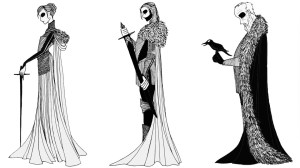
Let’s call it McDomination. It’s been a well thought out and highly financed war plan since the 1970s. Big Business and Power Brokers dislike all the little people taking to the streets about ecology and civil rights.
On August 23, 1971, Lewis Powell sent a confidential memo to his friend Eugene Sydnor, Jr., the director of the U.S. Chamber of Commerce. The memo was both a call to arms and a battle plan for a business response to its growing legion of opponents. Powell was a corporate lawyer, a former president of the American Bar Association, and a board member of eleven corporations, including Philip Morris and the Ethyl Corporation, a company that made the lead for leaded gasoline. Powell had also represented the Tobacco Institute, the research arm of the tobacco industry, and various tobacco companies. Later that year, President Richard Nixon would nominate Powell to sit on the U.S. Supreme Court, where he served for fifteen years.
Powell’s memo serves as a useful starting point for understanding how the transformation of the corporate system that began in the 1970s set the stage for today’s global health problems. “No thoughtful person can question that the American economic system is under broad attack,” wrote Powell. “The assault on the enterprise system is broadly based and consistently pursued. It is gaining momentum and converts.” “One of the bewildering paradoxes of our time,” Powell continued, “is the extent to which the enterprise system tolerates, if not participates in, its own destruction.” He enumerated the system’s enemies: well-meaning liberals, government officials intent on regulating business, news media, student activists, and an emerging environmental and consumer movement— especially its most visible leader, Ralph Nader, in Powell’s view “the single most effective antagonist of American business.”
Powell called on business, especially the Chamber of Commerce, to end its “appeasement” of its critics and launch an aggressive and systematic counter-assault. The memo warned that “independent and uncoordinated activity by individual corporations, as important as this is, will not be sufficient. Strength lies in organization, in careful long-range planning and implementation, in consistency of action over an indefinite period of years … and in the political power available only though united action and national organizations.”
Powell urged new, well-funded public media campaigns to support the free enterprise system, the creation of think tanks and institutes to develop policy proposals and “direct political action” in legislative and judicial arenas. “It is time,” he argued, for “American business … to apply their great talents vigorously to the preservation of the system itself.” Powell’s “confidential” memo was first circulated within the Chamber of Commerce, then released in 1972 by investigative reporter Jack Anderson during the Powell Supreme Court confirmation hearings. While the document may not have been the blueprint for the rise of the Republican right that some analysts claim, its real value is as the articulation of the corporate prescription for capitalism’s ills.
Today, more than forty years after business took up Powell’s appeal, its success in achieving the goals he laid out makes it hard to fathom the depth of his concern.
A new fresh hell from the minds and money of Putin, Charles Koch, Ted Cruz, Henry Kissinger and Richard II . Perhaps I should be watching less dark fiction and I’d be less prone to pick up the similarities.
What’s on your reading and blogging list today.

 peej
peej Carissa
 bostonboomer
 dakinikat
 ecocatwoman
 jjlo
jjlo mablue2
 Mama Lopez
 peggysue22
 quixote
 skydancingguestblogger
 Mona (aka Wonk the Vote)





Recent Comments