
Monday: Foggy Day Reads
Posted: December 18, 2017 Filed under: Afternoon Reads | Tags: Al Franken, Climate change 50 Comments Good Afternoon Sky Dancers!
I’ve talked to people from several places around Texas and they have the same eerie fog that we’ve got here in New Orleans. Foggy is also a good description for my brain activity today. It’s also foggy in Minnesota. Nothing seems clear at the moment.
Four US Senators are urging Senator Al Franken to reconsider his resignation over alleged sexual misconduct. It’s a rare day I’m in agreement with Joe Manchin.
“What they did to Al was atrocious, the Democrats,” said West Virginia Sen. Joe Manchin in an interview for POLITICO’s Off Message podcast to post on Tuesday.
Franken’s unusual timeline — in his departure announcement he said he’d go “in the coming weeks,” without setting a date — has fed the fleeting hopes that there’s still time to reverse course. However, Tina Smith, Minnesota’s Democratic lieutenant governor, was named last week as his appointed successor.
People familiar with Franken’s plans said he has not changed his mind and intends to formally resign in early January. He praised the selection of Smith and has begun working with her on the transition.
At least four senators are urging Al Franken to reconsider resigning, including two who issued statements calling for the resignation two weeks ago and said they now feel remorse over what they feel was a rush to judgment.
Sen. Joe Manchin (D-W.Va.), who urged Franken not to step down to begin with — at least not before he went through an Ethics Committee investigation — said the Minnesota senator was railroaded by fellow Democrats.
 An Amtrack train derailed this morning outside of Seattle. It actually dropped from a raise overpass onto a section of I-5. It is also drizzly and foggy up there too. The cause, extent of damages, and the number of folks injured are unknown. There are eyewitness accounts indicating there are cars beneath the fallen cars.
The Amtrak train car fell from an overpass, landing on the I-5 highway outside Seattle. All lanes of traffic have been closed.
Authorities have not yet confirmed the extent of casualties. But witnesses say several people have been injured.
Local news stations report that this was the inaugural run of the new high-speed rail line.
The crash occurred around 07:30 (15:30 GMT), about 45 minutes into train 501’s journey between Portland and Seattle.
Before the crash, it was travelling at more than 80mph (130kmh), with at least 75 people aboard.
It is unclear if it landed on any cars below, but CNN reports that several cars are crushed below the train.
The National Transportation Safety Board is investigating.

David Leonhardt has a great Op Ed up in the NY Times about the Republican Tax Plan and how it will exacerbate income in equality. Here is one significant finding of three provided in the piece.
The great tax-cutting revolution of the last half-century hasn’t actually been a tax-cutting revolution for most Americans.
True, they have benefited from a series of cuts in income-tax rates, signed by Lyndon B. Johnson, Ronald Reagan, George W. Bush and Barack Obama. At the same time, though, another tax has been rising. It is the quiet giant of federal tax policy: the payroll tax.
It funds Social Security and Medicare, and it has been rising in response to the aging of society and rising medical costs. It increased from 2 percent just after World War II to 6 percent in 1960 to 12.4 percent in 1990, where it is today. It has risen so much that it’s now the largest tax that 62 percent of American households pay — larger than the income tax, which gets much more attention.
The increases in the payroll tax have more than offset the declines in the income tax for most middle-class and poor families. They now face higher total tax rates than a half-century ago.

Kremlin Caligula and his krazy krewe of kooks have developed a new Security Strategy that doesn’t include climate change. It also has weird language for traditionally hostile nations like China and Russia.
The White House will unveil a new national security strategy that, according to multiple reports, will break with the Obama administration by declining to recognize climate change as a threat to national security interests.
Why it matters: The report is the latest sign of how the Trump administration, in addition to unwinding domestic global warming rules, has made a sharp rhetorical break with its predecessor when it comes to the geo-politics of climate change.
Buzz: The New York Times points out that climate will surface in the report in a section on embracing U.S. “energy dominance.” The Federalist reported Friday that the strategy will note that “[c]limate policies will continue to shape the global energy system” but will also state:
“U.S. leadership is indispensable to countering an anti-growth, energy agenda that is detrimental to U.S. economic and energy security interests. Given future global energy demand, much of the developing world will require fossil fuels, as well as other forms of energy, to power their economies and lift their people out of poverty.”
It also underscores the mixed messages from the administration on how to assess climate change.
Russia and China are now “competitors”.
President Donald Trump will declare that China and Russia are competitors seeking to challenge U.S. power and erode its security and prosperity, in a national security strategy he will lay out in a speech on Monday.
“They are determined to make economies less free and less fair, to grow their militaries, and to control information and data to repress their societies and expand their influence,” according to excerpts of Trump’s strategy released by the White House.
Still no word about the cyber threat to our elections and the capture of the administration by our ‘competitor’ Mother Russia.’
Twitter has announced new rules designed to promote safety and reduce “hateful conduct and abusive behavior”. Will it ban Kremlin Caligula?
Today, we will start enforcing updates to the Twitter Rules announced last month to reduce hateful and abusive content on Twitter. Through our policy development process, we’ve taken a collaborative approach to develop and implement these changes, including working in close coordination with experts on our Trust and Safety Council.
New Policies
New Rules on Violence and Physical Harm
Specific threats of violence or wishing for serious physical harm, death, or disease to an individual or group of people is in violation of our policies. Our new changes include more types of related content including:
- Accounts that affiliate with organizations that use or promote violence against civilians to further their causes. Groups included in this policy will be those that identify as such or engage in activity — both on and off the platform — that promotes violence. This policy does not apply to military or government entities and we will consider exceptions for groups that are currently engaging in (or have engaged in) peaceful resolution.
- Content that glorifies violence or the perpetrators of a violent act. This includes celebrating any violent act in a manner that may inspire others to replicate it or any violence where people were targeted because of their membership in a protected group. We will require offending Tweets to be removed and repeated violations will result in permanent suspension
We shall see.
What’s on your reading and blogging list? How’s the weather and end of the year stuff going?
Friday: America held hostage Day 329
Posted: December 15, 2017 Filed under: morning reads | Tags: Hanukkah, Paul Ryan retire 14 Comments Good Morning Sky Dancers!
We’re ending the second year of an annus horribilis (to borrow from HRH Elizabeth ll). It’s difficult to image that the future of our country is in the hands of an incompetent, bullying madman still but it is what it is. I’m certain that most of the population is trying to burrow itself into one holiday or another being nostalgic for a less stressful time. There exist a few glimmers of hope which put me in mind of the story behind Hanukkah. Our lives are very much under siege and we need glimmers of lasting light.
Is it really possible that Paul Ryan will retire? I’m going straight to Charles Pierce on this one because I really need words that bite.
Ring and run, you wretched cur.
In what passes for a genuine scoop, Tim Alberta and Rachael Cade broke the news in Politico on Thursday that Paul Ryan, the zombie-eyed granny starver from the state of Wisconsin, may well be hanging them up at the end of the 2018 midterms. Of course, Ryan—and various People Who Are Familiar With His Thinking—has a number of deeply pious, and unquestionably phony, reasons for his departure.
On a personal level, going home at the end of next year would all0w Ryan, who turns 48 next month, to keep promises to family; his three children are in or entering their teenage years, and Ryan, whose father died at 55, wants desperately to live at home with them full time before they begin flying the nest.
Isn’t that just too fcking sweet for words? Of course, young Paul Ryan had Social Security survivor’s benefits to live on when his pappy kicked and, once again, you’re welcome, dickhead. And I’m sure that his own children have excellent health care in his magnificent Georgian Revival home back in Janesville. I tell you, I’m almost as moved as I was when Ryan washed some clean pots and pans at that soup kitchen, or those several times when he dropped by impoverished neighborhoods in order to have his picture taken there.
Also, I’m sure that the fact that, in 2018, all indications are that his party will be facing a bloodbath in the midterm elections, and that the abomination of a tax bill that is his crowning achievement will be one of the party’s larger millstones, have absolutely nothing to do with the fact that Paul Ryan’s giant, if remarkably delicate, intellect suddenly can no longer handle the hurly-burly of everyday politics. Good god, this man could not be a bigger fake if he were made of papier-mâché.
This may be my favorite passage in the Politico account.
As the deciding votes were cast—recorded in green on the black digital scoreboard suspended above the floor—the speaker of the House, Paul Ryan, threw his head back and slammed his hands together. Soon he was engulfed in a sea of dark suits, every Republican lawmaker wanting to slap him on the shoulder and be a part of his moment.
 He has tough competition from a Steel Worker Dem and Bannon has promised him a tough primary. Could he really cut and run?
The first denial leans heavily on the definition of the word “soon,” while the second only specifies Ryan is committed to the agenda for 2018. Politico isn’t reporting Ryan will resign before next year’s election — that would be highly unorthodox and potentially deadly for a party that is facing an increasingly fraught midterm — but rather he might quit afterward.
Whether that happens or not, it would be completely understandable, and perhaps even predictable.
So predictable, in fact, that The Post’s Paul Kane did predict it back in 2015 when Ryan first became speaker. “I think he’ll do this for three or four years,” Kane said in October 2015, more than three years before the 2018 election. That three-plus-year tenure would also be completely in line with other recent speakerships. Looking back, six of the last seven speakers have served fewer than five years in the job (three voluntarily and three because their party lost the majority). Ryan committing to another two-year Congress would put him over that five-year mark, which is a very long time to be in that job even for a relatively youthful 47-year-old.
 Kremlin Caligula has reached historical lows in polls. Eleanor Clift–writing for The Daily Beast–suggests a tipping point.
Public opinion can take off like a runaway train once it gets going. President Donald Trump, already polling lower than any of his predecessors in his first year, might soon be hearing the hoofbeats of history.
At 32 percent in the most recent Pew and Monmouth polls, he is perilously close to what most historians and political scientists say is a tipping point of 30 percent, below which a president can no longer effectively lead.
President Nixon was at 22 percent when he resigned in August of 1974 and Republican Party affiliation had dropped to 18 percent, recalls Reagan historian Craig Shirley.
“Going below 30 percent kept Truman from seeking another term and going below 30 percent eventually drove Nixon out of office,” he says. “In the modern era, beginning with FDR, presidents get into trouble when they fall below 30.”
Nixon won a landslide re-election in 1972 with 61 percent of the vote, but it was all downhill after that. For most of the next year, his polls lingered in the mid to high 30s, a downward trajectory that began even before the White House taping system was revealed in July of 1973, exposing his legal jeopardy.
Prior to that, Watergate had taken a steep toll on his numbers, along with campus discord over the Vietnam War and an oil embargo that led to long gas lines—all of which led to “a general sense of America in decline,” says Shirley.
Trump, much earlier in a presidency predicated on his promise to “make America great again,” is facing his own challenges. The GOP’s loss of a Senate seat in ruby red Alabama thanks to the sexual misconduct allegations against Republican Roy Moore has to make President Trump uneasy about the power of today’s newly awakened movement. Over a hundred members of Congress are calling for an investigation into claims of sexual harassment brought by multiple women against Trump before he was president. While the lawmakers are all Democrats for now, public opinion doesn’t always abide by party lines.
 A Financial Times Op Ed outlines how incompetent the UK and US leadership has become under their white nationalist leaders. This is no liberal rag.
In the US, when Republicans finally got their chance to abolish Obamacare, it turned out they had spent seven years not preparing an alternative. Much of their tax bill got handwritten overnight by lobbyists. And Russiagate’s key characteristic is amateurism. Mike Flynn and others didn’t declare obvious contacts with foreign officials, assuming nobody would notice. Trump appeared to incriminate himself by tweeting that he knew Flynn broke the law, but then his lawyer said he’d written the tweet. Richard Nixon’s downfall was not his crime but his cover-up; this time there’s hardly any cover-up. The only comparable folly in recent US-UK history is the Iraq war. So what explains this incompetence?
Former NYC Mayor Michael Bloomberg trashes the Republican Tax Plan in an op-ed from his media empire. He calls it a ‘blunder’. What is amazing to me is watching dueling policy objectives between the Fed and Republicans in Congress. The Fed is putting on the breaks while the Republicans throw money at their favorite donors.
Last month a Wall Street Journal editor asked a room full of CEOs to raise their hands if the corporate tax cut being considered in Congress would lead them to invest more. Very few hands went up. Attending was Gary Cohn, President Donald Trump’s economic adviser and a friend of mine. He asked: “Why aren’t the other hands up?”
Allow me to answer that: We don’t need the money.
Corporations are sitting on a record amount of cash reserves: nearly $2.3 trillion. That figure has been climbing steadily since the recession ended in 2009, and it’s now double what it was in 2001. The reason CEOs aren’t investing more of their liquid assets has little to do with the tax rate.
CEOs aren’t waiting on a tax cut to “jump-start the economy” — a favorite phrase of politicians who have never run a company — or to hand out raises. It’s pure fantasy to think that the tax bill will lead to significantly higher wages and growth, as Republicans have promised. Had Congress actually listened to executives, or economists who study these issues carefully, it might have realized that.
Instead, Congress did what it always does: It put politics first. After spending the first nine months of the year trying to jam through a repeal of Obamacare without holding hearings, heeding independent analysis or seeking Democratic input, Republicans took the same approach to tax “reform” — and it shows.
 Only a few greedy republican donors want this bill.
A few other things today to note. Bill Moyers is calling it quits. I can imagine that he’s quite tired after the last two years.
Nikki Haley pulled a ‘Colin Powell’ on Iran yesterday with pictures supposedly showing Iran cheating on its agreements. No one was impressed at the UN.
Nikki Haley, the U.S. ambassador to the United Nations, claimed Thursday that the international body has obtained “undeniable” evidence that Iran supplied Yemeni insurgents with missiles and other arms.
But U.N. Secretary-General António Guterres reached no such conclusion in his report this month that addresses U.S. and Saudi claims the Houthi insurgents fired Iranian short-range ballistic missiles that nearly missed Riyadh’s King Khalid International Airport on Nov. 4.
A U.N. panel of experts has reviewed missile fragments from the strike that show the missile resembles the Qiam-1, an Iranian-made Scud variant that lacks the tail fins typically found in Yemen’s previously known missile arsenal. The panel noted in a confidential report, which was obtained by Foreign Policy, that the missile also contained a tail component that bore the logo of an Iranian company targeted by U.S. and U.N. sanctions.
But the panel, which reported that the missile also contained an American-made component, concluded it “has no evidence as to the identity of the broker or supplier.
 Net Neutrality removal means court challenges are up next. It could trigger the Millennial voter turnout.
The US Federal Communications Commission vote on Thursday to roll back net-neutrality rules could galvanize young voters, a move Democrats hope will send millennials to the polls in greater numbers and bolster their chances in next year’s elections.
Democrats are hoping to paint the repeal of the rules by the FCC, which is now chaired by a President Donald Trump appointee, Ajit Pai, as evidence Republicans are uninterested in young people and consumer concerns at large.
“The American public is angry,” said FCC Commissioner Jessica Rosenworcel, a Democrat. She added that the actions of the Republican majority had “awoken a sleeping giant.”
Attitudes toward so-called net neutrality, or rules that prevent internet providers from limiting customers’ access to certain websites or slowing download speeds for specific content, are largely split along party lines in Congress. The heated debate has turned into the kind of election issue that Democrats think will help them.
Studies show young people disproportionately use the internet compared with older Americans, and polls have shown they feel passionately about fair and open internet access. Democrats believe the issue may resonate with younger voters who may not be politically active on other issues like taxes or foreign policy.
Sen. Brian Schatz, a Hawaii Democrat, on Twitter said “young people need to take the lead on net neutrality.” He added: “It’s possible for Millennial political leadership to make a real difference here.”
The scrapping of the Obama administration’s rules is likely to set up a court battle and could redraw the digital landscape, with internet service providers possibly revising how Americans view online content. The providers could use new authority to limit or slow some websites or offer “fast lanes” for certain content.
Republicans on the FCC have sought to reassure young people that their ability to access the internet will not change after the rules take effect. People who favor the move argue that after users realize that little or nothing has changed in their internet access, it will not resonate as a political issue.
So, I’ll end here. Happy Hanukkah to  all our Jewish Sky Dancers!!
What’s on your reading and blogging list today?
Monday Reads: Karma catching up to Kremlin Caligula
Posted: December 11, 2017 Filed under: morning reads | Tags: Bannon, Flynn, Trump Impeachment, Trump Jerusalem, Trump Russia, Trump Sexual Assault 46 CommentsGood Morning Sky Dancers!!
 Doesn’t time fly these days! It’s beginning to look a lot like Impeachment Season!
NBC news reports that Trump’s going to face plenty of evidence from the Mueller probe for Obstruction of Justice.
Justice Department officials who spoke to NBC News on the condition of anonymity said they had expected the White House to fire Flynn on Jan. 26 upon learning that he had lied to the vice president.
Instead, Trump fired Yates on Jan. 30, citing her refusal to enforce his executive order banning people from seven Muslim-majority countries from travelling to the U.S. Before she left, however, she made available, at McGahn’s request, evidence she had that Flynn had not been truthful about his conversations with Kislyak, according to her congressional testimony.
Mueller is trying to determine why Flynn remained in his post for 18 days after Trump learned of Yates’ warning, according to two people familiar with the probe. He appears to be interested in whether Trump directed him to lie to senior officials, including Pence, or the FBI, and if so why, the sources said.
If Trump knew his national security adviser lied to the FBI in the early days of his administration it would raise serious questions about why Flynn was not fired until Feb. 13, and whether Trump was attempting to obstruct justice when FBI Director James Comey says the president pressured him to drop his investigation into Flynn. Trump fired Comey on May 9.
Trump denies pressuring Comey to drop the Flynn investigation, and his legal team has disputed any notion of the president obstructing justice.
 Be sure to got to twitter and read all of Seth Abramson’s extended tweets.
Then, there is this from Politico: “As Russia probes progress, one name is missing: Bannon’s. People close to the probe say the former campaign and White House strategist will be a key witness for prosecutors and Hill investigators.”
Bannon was a key bystander when Trump decided to fire national security adviser Michael Flynn, who pleaded guilty earlier this month to lying to federal investigators about his contacts with foreign officials. He was among those Trump consulted before firing FBI Director James Comey, whose dismissal prompted Mueller’s appointment — a decision Bannon subsequently described to “60 Minutes” as the biggest mistake “in modern political history.”
And during the campaign, Bannon was the one who offered the introduction to data-mining firm Cambridge Analytica, whose CEO has since acknowledged trying to coordinate with WikiLeaks on the release of emails from Hillary Clinton’s time as secretary of state.
Yet Bannon hasn’t faced anywhere near the degree of public scrutiny in connection to the probe as others in Trump’s inner circle, including son-in-law and White House adviser Jared Kushner — who was recently interviewed by Mueller’s team — or Donald Trump Jr., who was interviewed on Capitol Hill last week about his own Russian connections.
The women accusing Trump of Sexual Assault held a joint presser and appearance this morning. They were interviewed by Megyn Kelly.
Samantha Holvey, Jessica Leeds and Rachel Crooks all shared their past experiences with Mr. Trump jointly at Monday’s event, which was held by the organization Brave New Films, a non-profit that creates media and film campaigns surrounding social justice issues.
The president of Brave New Films Robert Greenwald said that the 16 women featured in a video that share similar stories of sexual misconduct by the president now demand action.
“We know better, we know a lot better, predators and harassers must be held accountable,” said Greenwald.
He added that Mr. Trump should be investigated and that “elected officials no matter what party affiliation should act.”
One accuser, Rachel Crooks, called for Congress to “put aside party affiliations and investigate Trump’s history of sexual misconduct.” She called the actions carried out by the president “serial misconduct and perversion.”
Accuser Jessica Leeds said she hopes with the popularity of the “Me Too” movement, it will fuel further pressure on the president.
“I am hoping that this will come forward and produce enough pressure on Congress to address it more than just for their own members but to address it with the president,” said Leeds.
Samantha Holvey echoed that sentiment, saying a “non-partisan” effort to investigate Mr. Trump was imperative.
“They’ve investigated other Congress members so I think it only stands fair he be investigated as well,” said Holvey.
She added, “A non-partisan investigation is important not just for him but for anybody that has allegations against them, this isn’t a partisan issue, this is how women are treated everyday.”
 My favorite quote is this one from the Kelly interview: ‘Let’s Try Again to Prove He’s a ‘Pervert’.
“We’re private citizens and for us to put ourselves out there to try to show America who this man is, and especially how he views women, and for them to say, ‘We don’t care,’ It hurt,” Holvey described to host Megyn Kelly. “And so, you know, now, it’s just like, all right, let’s try round two. The environment’s different. Let’s try again.”
That new “environment” Holvey described is one that, fueled by the #MeToo movement this year, has held powerful men accountable for sexual misconduct—from media moguls Harvey Weinstein and Roger Ailes, to actors like Kevin Spacey and Louis C.K., to a bipartisan swath of elected officials like Al Franken and Trent Franks.
In the hopes that now Americans might reconsider their nonchalance toward the president’s 16-plus accusers, each woman told their stories one by one in unrelenting detail.
After listening to a soundbite of Trump bragging to Howard Stern on his radio show about how he “gets away with” going backstage at the Miss USA pageant to check out the women, Holvey told Kelly: “[It’s] just so gross… [he thinks] he owns the pageant, so he owned us.”

Trump’s accusers still cannot believe he was elected and frame election results as ‘heartbreaking’.
It was “heartbreaking” for women to go public with their claims against President Trump last year, only to see him ascend to the Oval Office, said Samantha Holvey, a former Miss USA contestant who in October 2016 said Trump inappropriately inspected pageant participants.
“I put myself out there for the entire world, and nobody cared,” Holvey said on NBC’s “Megyn Kelly Today” show, appearing for an hour alongside Jessica Leeds, a New York woman who said Trump groped her on a plane, and Rachel Crooks, who said Trump kissed her on the lips after she introduced herself to him at Trump Tower.
The women also called for Congress to investigate the allegations against Trump, highlighting the dramatic shift happening nationwide in response to charges of sexual misconduct. Claims have erupted across industry after industry, against lawmakers and movie stars alike, while the country has shown a sudden, newfound willingness to take such accusations seriously.
Tomorrow is reckoning day for the state of Alabama. A Fox Push poll shows Moore behind Jones but democrats should not be complacent.
A top newspaper group in Alabama is urging the state’s voters to write in another Republican in Tuesday’s special election rather than vote for embattled GOP nominee Roy Moore.
“Voting for Roy Moore just because he has an ‘R’ next to his name, ignoring his record of personal and official misconduct, is neither wise nor careful,” reads an editorial published Sunday on AL.com, which is home to three leading state newspapers, including The Birmingham News.
 The deaths and mishaps mount as Trump’s announcement on Jerusalem continues to negatively impact the country and world. A would be suicide bomber has been taken into custody after injuring 3 NYC commuters at the Port Authority.
The would-be suicide bomber who detonated an explosive device underground near the bustling Port Authority Bus Terminal, is a former New York City cab driver who told investigators that he carried out the attack for revenge, law enforcement sources said.
Akayed Ullah, 27, who is believed to be from Bangladesh and was living in Brooklyn, told authorities in sum and substance from his hospital bed: “They’ve been bombing in my country and I wanted to do damage here,” sources said.
Ullah, who officials say is a former city cab driver, whose license has lapsed, set off a “low-tech” homemade pipe bomb strapped to his mid-section at around 7:20 a.m. inside the subway passageway between W. 42nd Street and 8th Avenue and W. 42nd Street and 7th Avenue.
Ullah, who had the explosive device affixed to him with Velcro and zip ties, suffered burns to his hands and abdomen, along with lacerations, and injured three others who were in close proximity to him. He was quickly taken into custody and transported to Bellevue Hospita
 I frankly believe he’s been whipping up circumstances to create terrorist attacks and he’s getting them. There’s no US diplomacy any more. There is on Trump’s raw, angry id.
If ever there were a triumph of domestic politics and presidential ego over sound policy calculation, Trump’s Jerusalem decision was it. And it was indeed a fitting tribute to the end of Trump’s first year in office where politics on so many issues—pardon the pun—trumped policy (see the Trans-Pacific Partnership trade deal, the Paris climate agreement, NAFTA negotiations and even Iran decertification).
These days, all presidents are locked into the permanent campaign, which typically begins the day after an election. But rarely on foreign policy has a president—like a moth to a flame—been drawn so inexorably toward his own political needs. If you believe Sen. Bob Corker, Trump was ready to start the ball rolling on moving the U.S. Embassy from Tel Aviv to Jerusalem within 24 hours of his inauguration. And we know his national security team barely convinced him to use his power to invoke national security considerations to avoid a congressional mandate to move the embassy last June.
With the end of the year approaching, Steve Bannon’s white board to-do list of campaign promises beckoned. And with a public approval rating in the 30s, when it came to choosing between Evangelicals, Jews and donors like Sheldon Adelson on one hand and Palestinians, Europeans and much of the world on the other, well … there really wasn’t much of a choice, was there? Eager to say, “I am delivering,” and thrilled at the prospects of once again presenting himself as the anti-Obama, President Trump took great relish in butchering yet another sacred cow, overturning decades of U.S. policy.
 How much of what Trump does is related to what Putin wants? Julie Iofe writes a great answer at The Atlantic today.
Gleb Pavlovsky, a political consultant who helped Putin win his first presidential campaign, in 2000, and served as a Kremlin adviser until 2011, simply laughed when I asked him about Putin’s role in Donald Trump’s election. “We did an amazing job in the first decade of Putin’s rule of creating the illusion that Putin controls everything in Russia,” he said. “Now it’s just funny” how much Americans attribute to him.
A businessman who is high up in Putin’s United Russia party said over an espresso at a Moscow café: “You’re telling me that everything in Russia works as poorly as it does, except our hackers? Rosneft”—the state-owned oil giant—“doesn’t work well. Our health-care system doesn’t work well. Our education system doesn’t work well. And here, all of a sudden, are our hackers, and they’re amazing?”
In the same way that Russians overestimate America, seeing it as an all-powerful orchestrator of global political developments, Americans project their own fears onto Russia, a country that is a paradox of deftness, might, and profound weakness—unshakably steady, yet somehow always teetering on the verge of collapse. Like America, it is hostage to its peculiar history, tormented by its ghosts.
None of these factors obviates the dangers Russia poses; rather, each gives them shape. Both Putin and his country are aging, declining—but the insecurities of decline present their own risks to America. The United States intelligence community is unanimous in its assessment not only that Russians interfered in the U.S. election but that, in the words of former FBI Director James Comey, “they will be back.” It is a stunning escalation of hostilities for a troubled country whose elites still have only a tenuous grasp of American politics. And it is classically Putin, and classically Russian: using daring aggression to mask weakness, to avenge deep resentments, and, at all costs, to survive.
I’d come to Russia to try to answer two key questions. The more immediate is how the Kremlin, despite its limitations, pulled off one of the greatest acts of political sabotage in modern history, turning American democracy against itself. And the more important—for Americans, anyway—is what might still be in store, and how far an emboldened Vladimir Putin is prepared to go in order to get what he wants.
So, there’s a lot going on and some of it makes 2018 look a bit more promising. But, let’s see what happens in Alabama and how the elections next year shape up. Don’t want to get too far ahead of ourselves with the fanciful idea of a double impeachment ceremony for Pence and Trump!
What’s on your reading and blogging list today?
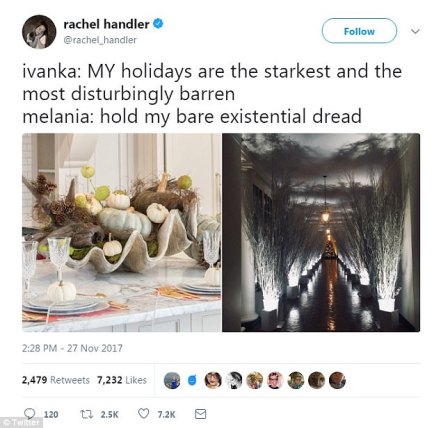
Friday Reads: Days as Bleak as the White House Holiday Decorations
Posted: December 8, 2017 Filed under: Afternoon Reads | Tags: defunding planned parenthood, Jerusalem diplomatic disaster, kleptocracy, Paul Krugman, S-Chip, The State Department fights back, Winter Olympics 34 Comments Good Afternoon!
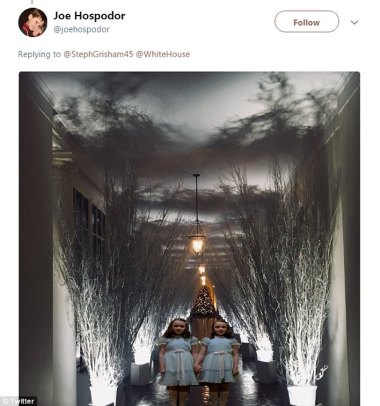
It’s cold. It’s sleeting. It’s gray. It snowed in Baton Rouge and a few places north of Lake Pontchartrain. I’m officially in and over winter. I can’t seem to get warm. I can’t warm up to anything going on in this country either. I’m sending a dear friend to check out a property on Key Peninsula at least 20 miles from most forms of civilization. There’s a wine store, a dispensary, and a Japanese-owned grocery shop/cafe close with foodstuff. Other than that I’ll have tall trees, a lake, and JoEmma State Park. This one is way doable so I’m hopeful I can head to the blue wall of safety. Oh, and a working fireplace/stove. It’s as bleak as the White House Holiday Decorations or Siberia right now. Take your choice.
I’ll start out with one custom made for our resident psychologist up at WAPO. “I study liars. I’ve never seen one like President Trump. He tells far more lies, and far more cruel ones, than ordinary people do.”
Nearly two-thirds of Trump’s lies (65 percent) were self-serving. Examples included: “They’re big tax cuts — the biggest cuts in the history of our country, actually” and, about the people who came to see him on a presidential visit to Vietnam last month: “They were really lined up in the streets by the tens of thousands.”
Slightly less than 10 percent of Trump’s lies were kind ones, told to advantage, flatter or protect someone else. An example was his statement on Twitter that “it is a ‘miracle’ how fast the Las Vegas Metropolitan Police were able to find the demented shooter and stop him from even more killing!” In the broadest sense, it is possible to interpret every lie as ultimately self-serving, but I tried to stick to how statements appeared on the surface.
Trump told 6.6 times as many self-serving lies as kind ones. That’s a much higher ratio than we found for our study participants, who told about double the number of self-centered lies compared with kind ones. The most stunning way Trump’s lies differed from our participants’, though, was in their cruelty. An astonishing 50 percent of Trump’s lies were hurtful or disparaging. For example, he proclaimed that John Brennan, James Clapper and James Comey, all career intelligence or law enforcement officials, were “political hacks.” He said that “the Sloppy Michael Moore Show on Broadway was a TOTAL BOMB and was forced to close.” He insisted that other “countries, they don’t put their finest in the lottery system. They put people probably in many cases that they don’t want.” And he claimed that “Ralph Northam, who is running for Governor of Virginia, is fighting for the violent MS-13 killer gangs & sanctuary cities.”
The Trump lies that could not be coded into just one category were typically told both to belittle others and enhance himself. For example: “Senator Bob Corker ‘begged’ me to endorse him for reelection in Tennessee. I said ‘NO’ and he dropped out (said he could not win without my endorsement).”
The sheer frequency of Trump’s lies appears to be having an effect, and it may not be the one he is going for. A Politico/Morning Consult poll from late October showed that only 35 percent of voters believed that Trump was honest, while 51 percent said he was not honest. (The others said they didn’t know or had no opinion.) Results of a Quinnipiac University poll from November were similar: Thirty-seven percent of voters thought Trump was honest, compared with 58 percent who thought he was not.
 There are man cruel, inhuman policies on the Republican agenda and in its budget and tax bill. Paul Krugman points out its “War on Children”. I’m not a deist so I can’t speak to how those folks feel on how they believe that they’ll be judged on how we treat the least of us, but I’d say this is a straight to eternal damnation ticket.
What’s the problem? The other day Senator Orrin Hatch, asked about the program (which he helped create), once again insisted that it will be funded — but without saying when or how (and there don’t seem to be any signs of movement on the issue). And he further declared, “The reason CHIP’s having trouble is that we don’t have money anymore.” Then he voted for an immense tax cut.
And one piece of that immense tax cut is a big giveaway to inheritors of large estates. Under current law, a married couple’s estate pays no tax unless it’s worth more than $11 million, so that only a handful of estates — around 5,500, or less than 0.2 percent of the total number of deaths a year — owe any tax at all. The number of taxable estates is also, by the way, well under one one-thousandth of the number of children covered by CHIP.
But Republicans still consider this tax an unacceptable burden on the rich. The Senate bill would double the exemption to $22 million; the House bill would eliminate the estate tax entirely.
So now let’s talk dollars. CHIP covers a lot of children, but children’s health care is relatively cheap compared with care for older Americans. In fiscal 2016 the program cost only $15 billion, a tiny share of the federal budget. Meanwhile, under current law the estate tax is expected to bring in about $20 billion, more than enough to pay for CHIP.As you see, then, my question wasn’t at all hypothetical. By their actions, Republicans are showing that they consider it more important to give extra millions to one already wealthy heir than to provide health care to a thousand children.
 Justice in the USA is only available to the privileged. It can also be avoid by the donor class and most violent folks wearing blue and sporting a badge. Russia and now, Wells Fargo, are dodging sanctions for damaging our country.
The new acting head of the U.S. consumer finance watchdog is reviewing whether Wells Fargo & Co (WFC.N) should pay tens of millions of dollars over alleged mortgage lending abuse, according to three sources familiar with the dispute.
The San Francisco-based bank said in October that it would refund homebuyers who were wrongly charged fees to secure low mortgage rates – a black mark against a lender which has already been roiled by scandal over its treatment of customers.
The Consumer Financial Protection Bureau (CFPB) had been investigating the mortgage issue since early this year, said one current and two former officials. The agency accepted an internal review from Wells Fargo and set settlement terms in early November, said the sources, who were not authorized to speak about internal discussions.
But that matter and roughly a dozen others are in question now that Mick Mulvaney, the agency chief tapped by President Donald Trump, has said he is reviewing the CFPB’s prior work.
Richard Cordray, the former CFPB director who initiated the Wells Fargo action, approved the terms of a possible settlement before stepping down, said the sources.
That proposal envisions a Wells Fargo payout of tens of millions of dollars but likely short of the record, $100 million payout the bank made to the CFPB last year over a phony accounts scandal, sources said.
 The pseudo Justice Department led by the World’s oldest living Confederate Widow is going to waste money investigating Planned Parenthood and fetal tissue. Isn’t great to be obsessed with zygotes while letting thousands of living children die unnecessarily?
The Justice Department is taking steps to investigate Planned Parenthood, The Daily Beast has learned.
The head of Justice’s office of legislative affairs has sent a letter to the Senate Judiciary Committee asking for documents from its investigation of Planned Parenthood’s fetal tissue practices. The Daily Beast reviewed the letter, which says the requested documents are “for investigative use.”
Planned Parenthood for America did not immediately respond to a request for comment for this story. The organization’s website says that only a few of its affiliates share fetal tissue with researchers, and that criticisms of the practice are a “smear campaign.” In October 2015, after undercover videos highlighting Planned Parenthood’s fetal tissue programs generated outrage, the organization announced it would stop accepting any reimbursement from researchers for fetal tissue.
The Justice Department’s request refers to a report that the Senate Judiciary Committee Republicans released last December, called “Human Fetal Tissue Research: Context and Controversy.” That report discusses how biomedical research corporations contracted with Planned Parenthood affiliates for fetal tissue. It mentioned contracts between those corporations and several Planned Parenthood affiliates, including Planned Parenthood of the Pacific Southwest, Planned Parenthood Mar Monte, and Planned Parenthood of Northern California. The report detailed the “specimen service fees” that biomedical researchers charged for tissue from a 20-week-old fetus –– $325 for a fetus’s brain, $650 for two eyes –– and questioned whether the biomedical research corporations ultimately profited from their disbursement of fetal tissue. It called for the Justice Department to investigate the matter.
At the time, Planned Parenthood said Grassley’s report did not demonstrate any wrongdoing.
 Next up on the Republican Agenda, availability of tax dollars to train clergy and republican candidates on proper ways to stalk children and assault women.
So, the Jerusalem decision is dragging the world into Kremlin Caligula’s dark chaotic mind. The UN has convened an emergency meeting. Republican Ptomac Fever is now a world wide plague.
The UN Security Council has convened an emergency session to discuss Donald Trump’s recognition of Jerusalem as the capital of Israel, a move that has led to deadly clashes in Palestine and strong condemnation from world leaders.
Eight countries called for the emergency meeting at the UN headquarters in New York on Friday, as Palestinians protested across the West Bank, Jerusalem and Gaza Strip against the US president’s decision throughout the day.
Several countries resoundly condemned the US’ unilateral move to recognise Jerusalem as Israel’s capital, including Olof Skoog, Sweden’s UN ambassador, who said the decision is fuelling tension and instability in the region.
Trump’s declaration “goes against the plea of many friends of the US and Israel, however it does not affect the position of Sweden, the European Union or the wider international community” on the status of Jerusalem, said Skoog.
 Violent clashes have erupted since Trump’s slurry, spit-filled speech. A diverse number of religious leaders have begged the US to reconsider. This includes the Pope. I think he’s hoping for massive terrorist attacks from extremists, frankly.
Clashes erupted in the occupied West Bank and over the Israeli-Gaza border, where one Palestinian was killed.
Tensions are high in the wake of Mr Trump’s announcement. His policy shift was hailed by Israel but condemned across the Arab and Islamic world.
The UN’s Middle East envoy warned of a risk the conflict would escalate.
“There is a serious risk today that we may see a chain of unilateral actions, which can only push us further away from achieving our shared goal of peace,” Nickolay Mladenov told an emergency UN Security Council meeting, by videocall from Jerusalem.
He called on all parties to engage in “constructive dialogue” and “reign in radical elements”.
While the meeting was going on, the Israeli army said it had intercepted a rocket launch from Gaza, but there had been “no casualties and no damage”.
Western allies of the US have disavowed Mr Trump’s move, which reversed decades of US neutrality on the status of Jerusalem.
Israel has always regarded Jerusalem as its capital, while the Palestinians claim East Jerusalem – occupied by Israel in the 1967 war – as the capital of a future Palestinian state.
The US became the first country to recognise Jerusalem as Israel’s capital since the foundation of the state in 1948.
The State Department is having none of that or the threats to pull the US Team out of the Winter Olympics in in South Korea.
After the White House and U.S. Ambassador to the United Nations weighed in this week on the United States’ participation in the 2018 Winter Olympics, the U.S. State Department joined the discussion on Friday.
State Department spokesperson Heather Nauert tweeted Friday morning: “We have a longstanding and successful relationship with the Republic of #Korea. We support their efforts to ensure that a safe and successful winter games will take place. We look forward to cheering on @Team USA at #PyeongChang2018.”
On Thursday, White House spokesperson Sarah Huckabee Sanders sent mixed signals, first saying at a press briefing that, “no official decision has been made” but, “I know that the goal is to do so.” Within the hour, Sanders posted an update on Twitter, writing that, “The U.S. looks forward to participating in the Winter Olympics in South Korea. The protection of Americans is our top priority and we are engaged with the South Koreans and other partner nations to secure the venues.”
 My guess he’s doing to be in solidarnost with his boy crush Putin.
So, this is a must read. Maternal mortality in the US rivals Banana Republic levels. This is especially true for women of color. “Black Mothers Keep Dying After Giving Birth. Shalon Irving’s Story Explains Why” on NPR. Racial Disparity in outcomes happens across income lines. This is a significant finding.
In recent years, as high rates of maternal mortality in the U.S. have alarmed researchers, one statistic has been especially concerning. According to the CDC, black mothers in the U.S. die at three to four times the rate of white mothers, one of the widest of all racial disparities in women’s health. Put another way, a black woman is 22 percent more likely to die from heart disease than a white woman, 71 percent more likely to perish from cervical cancer, but 300 percent more likely to die from pregnancy- or childbirth-related causes. In a national study of five medical complications that are common causes of maternal death and injury, black women were two to three times more likely to die than white women who had the same condition.
That imbalance has persisted for decades, and in some places, it continues to grow. In New York City, for example, black mothers are 12 times more likely to die than white mothers, according to the most recent data; in 2001-2005, their risk of death was seven times higher. Researchers say that widening gap reflects a dramatic improvement for white women but not for blacks.
The disproportionate toll on African-Americans is the main reason the U.S. maternal mortality rate is so much higher than that of other affluent countries. Black expectant and new mothers in the U.S. die at about the same rate as women in countries such as Mexico and Uzbekistan, the World Health Organization estimates.
 This is appalling and policy must be swift to change this.
Southern California is burning to a crisp. The Santa Anna’s are making them difficult to contain. I have a friend who has been in a shelter for 4 days with her pets and husband. She let us know this morning that he house was still standing but the homes 2 doors on either side of her were smoldering rubble. I have family in jeopardy also. This is really scary.
Red flag warnings have been extended across much of Southern California through Saturday, and high wind warnings are in effect for mountain and valley areas in Los Angeles and Ventura counties.
Winds gusted to over 60 mph in Ventura and Los Angeles counties on Thursday, causing embers to spread even more. Gusts were in the 30 to 50 mph range in San Diego County. Much of Southern California is also experiencing humidity levels in the teens or even single digits. Relative humidity in San Diego on Thursday afternoon was just 5 percent.
They will likely join Puerto Rico and the Virgin Islands as forgotten Americans. Welcome to Dystopia! Welcome to our post-Orwellian nightmare!
What’s on your reading and blogging list today?
Monday Reads: Naughty Folks Beware!
Posted: December 4, 2017 Filed under: morning reads | Tags: Diplomacy faliures, Krewe of Krampus, Russian interference 53 Comments
Good Morning Sky Dancers!
I spent some time Saturday Night watching the Krewe of Krampus wander the neighborhood. I’m a big fan of the new found interest of claiming the history and pagan roots of the season. It’s so much better than all crass consumerism floating around the modern day holidays. I love Europe’s twist on the Anti-St Nick. It lets me extend the Halloween season a bit which I’ve come to appreciate more than I did as a kid.
A mangled, deranged face with bloodshot eyes tops a furry black body. Giant horns curl up from his head, displaying his half-goat, half-demon lineage. Behind this terror, a dozen more stomp through the snow of the streets of Lienz, Austria, among a din of cowbell jangles. The creatures dash through the streets, chasing giggling children and adults alike, poking them with sticks and scaring some with the realization that they were naughty this year.
…
Krampus himself historically comes around the night of December 5, tagging along with St. Nicholas. He visits houses all night with his saintly pal. While St. Nick is on hand to put candy in the shoes of good kids and birch twigs in the shoes of the bad, Krampus’ particular specialty is punishing naughty children. Legend has it that throughout the Christmas season, misbehaved kids are beaten with birch branches or can disappear, stuffed into Krampus’ sack and hauled off to his lair to be tortured or eaten.
“The Krampus is the yin to St. Nick’s yang,” Seghers tells Smithsonian.com. “You have the saint, you have the devil. It taps into a subconscious macabre desire that a lot of people have that is the opposite of the saccharine Christmas a lot of us grew up with.”
In fact, Krampus’ roots have nothing to do with Christmas. Instead, they date back to pre-Germanic paganism in the region. His name originates with the German krampen, which means “claw,” and tradition has it that he is the son of the Norse god of the underworld, Hel. During the 12th century, the Catholic Church attempted to banish Krampus celebrations because of his resemblance to the devil. More eradication attempts followed in 1934 at the hands of Austria’s conservative Christian Social Party. But none of it held, and Krampus emerged as a much-feared and beloved holiday force.
 I’m totally happy getting rid of the Romanization of culture. As a student of history, I have to say that most of what they did was turn perfectly good science and shamanism into bland mindlessness. These kinds of traditions show us how far we have and haven’t come.
I have a vivid memory of my friend hanging off a door horizontally, her nails digging into the wooden frame as a giant, fur-covered beast with demonic red eyes and giant fangs pulled her into the cold December night.
A few feet away, a girl was sobbing while a horned monster whipped her with branches.
Kids everywhere were screaming and crying, desperately seeking safety.
We were eight years old, and the whole thing was arranged by our parents.
Krampusnacht, or Krampus Night, is an ancient Austrian tradition that is also celebrated in Germany, Hungary, Slovenia, and the Czech Republic. Basically, Santa, or Sankt Nikolaus (St. Nicholas), comes around with his devils (or Krampuses) in tow.
He is there to determine whether kids have been naughty or nice — but in this case, being naughty has severe consequences: a run-in with his demon assistants.
 So there are some folks that Krampus and his minions should stick in their baskets and take straight to hell. There’s Roy Moore the teenage predator deplorable from Alabama who was thrown off the bench quite a few times for not following the US Constitution .
A couple of weeks ago, the three biggest newspapers in Alabama splashed the same tough editorial across the tops of their front pages.
“Stand for Decency, Reject Roy Moore,” read the bold headline in Birmingham, Mobile and Huntsville, all part of Alabama Media Group. Arguing that the credible sexual-misconduct charges against the former judge, a Republican, disqualified him, it endorsed Democrat Doug Jones for U.S. Senate.
Some readers cheered, and some disagreed enough to cancel their subscriptions.
But at a small-town daily in eastern Alabama, top editor Troy Turner wouldn’t even consider running such an editorial.
“I would have bullet holes in my windows,” said Turner, who grew up not far from the Opelika-Auburn News, where he supervises an 11-member newsroom staff. After starting there as a cub reporter in the 1980s, he came back in 2015 after holding high-ranking editing posts from New York City to New Mexico.
What’s more, he said, his own staff has mixed views about Moore. Not everyone is convinced about the allegations first reported by The Washington Post last month. Four women said Moore pursued them romantically as teenagers. And one, Leigh Corfman, said Moore touched her sexually and guided her hand to touch him over his underwear when she was 14 and he was in his early 30s.
Still, this 12,000-circulation paper, which has won numerous statewide awards for excellence, has not ignored the issue.
Instead, mindful of how people feel throughout conservative Lee County (named after the Confederate general), it has taken a cautious approach.
Turner wrote an editorial last month calling for Moore to step down as a candidate, concluding that he could not be an effective senator. Its headline, too, was bold: “It’s time for Roy Moore to step aside for Alabama.”
 There are pockets of common sense in Alabama. Then, there are folks that think they’re christians but really are just fodder for Krampus.
Moore, who is neck and neck in polls with Democrat Doug Jones in the unpredictable special Senate election in Alabama on December 12, has been accused by several women of inappropriate sexual relationships while they were teenagers. Proceeding with a playbook that recalls Trump’s after the Access Hollywood tape came out last year, Moore has vehemently denied every allegation, maintaining that every woman who has come forward is lying. In a state consistently hostile to Democrats, this defiant strategy has been at least somewhat effective; a poll released on Sunday showed that 71 percent of Alabama Republicans believe the charges are made up.
After the initial allegations came out, almost every major national Republican disavowed Moore — but not President Trump. The man who has now taken to denying observable reality about his own past with women made it clear to his advisers that he was skeptical of Moore’s accusers. “Roy Moore denies it,” he said. “And, by the way, he gives a total denial. And I do have to say, 40 years is a long time.”
Still, the White House hadn’t explicitly offered the divisive Republican its support, though Trump has knocked Doug Jones on Twitter and Kellyanne Conway gave Moore a quasi-endorsement on Fox & Friends in November.
Though Trump has said he will not campaign personally for Moore, he is holding a rally this Friday in Pensacola, Florida, which is close to the Alabama state border, and Moore has encouraged his supporters to attend. It was only a matter of time before Trump stopped playing coy and expressed his true affinity for the man who has been disbarred twice for flouting federal law.
 Deplorable Kellyanne Conway is always in the middle of the worst of the worst. How she and Sisterwife Huckabuck face their children at night is beyond my comprehension. It’s a daily grind to see who can lie for Kremiln Caligula the most. He’s got an entire team lined up to explain how he really didn’t say that or mean that. It’s gone beyond Orwellian to pathological. Here’s this morning’s example abetted by the Trump Propaganda Outlet known as Faux News.
During a morning hit on Fox & Friends, White House counselor Kellyanne Conway was knee-deep in her standard anti-media jeremiad when she dropped a pretty damning nugget that had been promoted on the same channel just the day before. She claimed that “MSNBC didn’t even cover the Kate Steinle murder verdict. Not a single minute, even according to your graphic.”
And just for clarity, here is said graphic:
The thing is that she — and the Fox & Friends Weekend report from yesterday — are 100% false, and can easily be proven as much.
Some background…On Sunday morning’s episode of Fox & Friends Weekend, co-host Pete Hegseth had on as guest Bre Payton, who is described as the “culture and millennial politics reporter” by her employer The Federalist. Together they discussed their frustration that MSNBC completely ignored Friday’s verdict in the Kate Steinle tragedy,ostensibly as evidence of the network’s biased coverage.
But a very simple search of transcript archive TV Eyes clearly shows that MSNBC covered the story three specific times on Friday. It also came up once on Sunday during MSNBC Live.

 They’re also scrambling to say Trump didn’t write or tweet his admission of guilt this weekend on a matter related to Flynn too.
President Trump believed that then-national security adviser Michael Flynn probably told the FBI the same lies that he told Vice President Mike Pence.
In journalism, we are taught to avoid using too many words like “believed” and “probably,” but this is the only way to describe the latest spin coming from Donald Trump’s personal lawyer. It is meant to clean up a much less nuanced tweet Trump sent, saying he had to fire Flynn “because he lied to the Vice President and the FBI.”
Trump’s personal lawyer, John Dowd, had already taken the blame for drafting the tweet. But now, according to The Washington Post, Dowd is also saying that “Trump knew generally that Flynn’s account to the FBI and Pence (his claim to have never spoken with then-Russian ambassador Sergey Kislyak about sanctions) were similar…”
Pardon me if I don’t see how this latest revelation helps Dowd’s client. Even with this new explanation, we are left with the impression that Trump assumed Flynn had committed a felony. That didn’t stop Trump from pressuring then-FBI director James Comey to go easy on him—or from firing Comey when he didn’t.
I’m no legal scholar, but the distinction that Trump believed something as opposed to knowing it might not quell the allegations that he obstructed justice.
Perhaps this is why Dowd is now telling Axios that “the president cannot obstruct justice.” (Or, as Richard Nixon said, “When the president does it, that means it’s not illegal.”
Then, there’s the entire Comrade Trumpinsky thing with ruining US Diplomacy and influence. That’s pretty Kramups-worthy.
In response to Russia’s election hacking, the U.S. expelled not just one, but 35 spies posing as diplomats — the strongest response ever to a cyberattack against the U.S.
In addition, President Obama made a public statement on the expulsions, calling them a “necessary and appropriate response to efforts to harm U.S. interests in violation of established international norms of behavior.” Both the magnitude of the sanctions and the public condemnation by the president was intended to send as sharp a rebuke as possible to Russia’s attack on our democracy.
As Flynn’s plea deal reveals, the Trump transition team immediately made a concerted effort to undermine the signal that the United States was sending. In particular, Flynn, with the approval of “senior transition officials” (identified in reporting as Jared Kushner and Katie McFarland), sought to discourage Russia from escalating the situation. Flynn reportedly promised that the Trump administration’s foreign policy goals would be more conciliatory.
By relaying this message covertly (and in spite of a “pointed request” by the Obama administration to avoid sending mixed signals to foreign officials), the Trump team negated the message being sent by the United States to Russia — and effectively put its stamp of approval on Russia’s efforts.
The repercussions of the Trump team’s covert efforts are not merely symbolic; they have also had serious long-term consequences on our intelligence capabilities against Russia. After secretly “reassuring” Russia that it need not worry about facing consequences, the Trump administration did not deliver. In July, Congress passed (and the president after much delay signed) a sanctions bill against Russia. Putin, either angry for being misled or having to save face from taking no action at all in December (or both), retaliated much more forcefully than he likely would have otherwise. Russia expelled 775 American diplomats in response, severely crippling our intelligence and diplomatic apparatus in that country.
 I believe Trumpinsky is a Russian asset. It may be knowingly. It may be due to his severe mental issues as discussed by BB in an earlier post. However, his reaction to any Russian news–and especially within the last few days--has been simply over the top.
Then there’s Russia, where the White House’s own lawyer is creating legal headaches – if you believe official accounts.
President Donald Trump’s reaction is to lash out at his own FBI and Hillary Clinton, noise that only builds a case by the special counsel, if he chooses to go there.
Chris Ruddy, the CEO of Newsmax and a Trump friend, summed up the stakes on “This Week”: “Robert Mueller poses an existential threat to the Trump presidency.”
The president may control where things go from here, to an extent.
He’s started directly attacking the FBI which makes me wonder what he’s saying to the oldest living confederate widow whose currently serving as Attorney General. What kind of pressures are raining down her Keebler elfishness? Sally Yates has finally spoken.
Mr Trump posted a barrage of criticism on Sunday morning, saying the FBI’s reputation was “in tatters” and was the “worst in history”, while again accusing it of failure in its treatment of his former opponent for the presidency, Hillary Clinton.
Mrs Clinton was investigated by the FBI ahead of the election after it emerged she had used a private email server to conduct state department business, but no charges were brought against her or her team.
The president seized on news that an FBI officer had been dismissed from the investigation after he was discovered to have made anti-Trump remarks in text messages, tweeting: “Report: ‘ANTI-TRUMP FBI AGENT LED CLINTON EMAIL PROBE’ Now it all starts to make sense!”
Mr Trump denies that his team colluded with Russia to get him elected, but four members of his inner circle have now been charged as part of the FBI inquiry lead by Robert Mueller.
Former acting attorney general Sally Yates hit back at Mr Trump, tweeting that “the dedicated men and women of the FBI deserve better” and that the “only thing in tatters is the president’s respect for the rule of law”.
 Here’s an MSNBC Time line on the recent Michael Flynn stuff.
To recap: Flynn spoke to Russia’s ambassador about a UN vote and sanctions against Russia, and Flynn lied to the FBI about the conversations. Flynn didn’t act alone (his conversations came after discussions with Kushner and McFarland). And the day after Flynn resigned, Trump talked to Comey about “letting this go.”
Then, on Saturday, Trump tweeted this: “I had to fire General Flynn because he lied to the Vice President and the FBI. He has pled guilty to those lies. It is a shame because his actions during the transition were lawful. There was nothing to hide!” Why this is significant: It’s an admission that he KNEW Flynn lied to the FBI, and he KNEW THAT when he had his conversations with Comey.
“You tweet and comment regarding ongoing criminal investigations at your own peril. I would be careful if I were you, Mr. President. I would watch this,” Sen. Lindsey Graham, R-S.C., said Sunday on CBS. Added Sen. Dianne Feinstein, D-Calif., on “Meet the Press” yesterday: “I think what we’re beginning to see is the putting together of a case of obstruction of justice.”
After the tweet, Trump lawyer John Dowd said he composed the tweet for Trump, and he later acknowledged to NBC’s Kristen Welker that it was the only tweet he ever composed for the president. Our question: Will Dowd admit he wrote that tweet under oath?
Meanwhile, our nation turns its terrified eyes to Jared Kushner who is in deep doo doo. He continues to demonstrate his inability to fill out a simple government form.
Jared Kushner failed to disclose his role as a co-director of the Charles and Seryl Kushner Foundation from 2006 to 2015, a time when the group funded an Israeli settlement considered to be illegal under international law, on financial records he filed with the Office of Government Ethics earlier this year.
The latest development follows reports on Friday indicating the White House senior adviser attempted to sway a United Nations Security Council vote against an anti-settlement resolution passed just before Donald Trump took office, which condemned the structure of West Bank settlements. The failure to disclose his role in the foundation—at a time when he was being tasked with serving as the president’s Middle East peace envoy—follows a pattern of egregious omissions that would bar any other official from continuing to serve in the West Wing, experts and officials told Newsweek.
 Completely submerged SOS Tillerson is definitely pissed at him. Trumpinsky may be undermining Kushner’s Peace efforts already.
And the ambassador, Ron Dermer, one of Israeli Prime Minister Benjamin Netanyahu’s closest confidants, confirmed in a rare on-the-record conversation that Trump this week is likely to take a controversial step by recognizing Jerusalem as Israel’s capital—a move that Palestinians have threatened will blow up any talks even before they start.
Not recognizing Jerusalem as Israel’s capital is a “farce,” Dermer said, characterizing Trump’s likely decision to change that as sending a message to the Palestinians of: “Hey, wake up. Understand that Jerusalem is Israel’s capital. You have to deal with that reality.” But Arab leaders have braced for public protest, and several Middle East officials with whom I have spoken in recent days said they had not been formally consulted by Kushner and Trump on the move and worried it would backfire. “It sure would make things a lot harder,” one key administration supporter from the Arab world told me.
If anything, Dermer seemed more adamant about the prospect for a new round of military conflict between Israel and the Iranian-backed militia Hezbollah than about the outlook for Kushner’s peace process. “The chances of military confrontation are growing,” he said when I asked about a possible fight in neighboring Syria or Lebanon, and in fact Israeli jets reportedly hit targets inside Syria last week. “I don’t want to tell you by the year or by the month. I’d say even by the week. Because the more they push, we have to enforce our red lines … So in taking action to defend ourselves, you don’t know what could happen. But I think it’s higher than people think.”
Yup. I think the Word is ripe for a big time Krampus comeback. So much naughty. Not a lot of a nice. I’ve got a pretty long list of folks just itching for a Krampus abduction.
What’s on your reading and blogging list today?

 peej
peej Carissa
 bostonboomer
 dakinikat
 ecocatwoman
 jjlo
jjlo mablue2
 Mama Lopez
 peggysue22
 quixote
 skydancingguestblogger
 Mona (aka Wonk the Vote)





Recent Comments