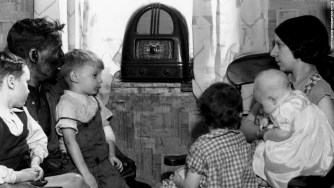
I often wonder how different our political, economic, and science discourse would be if the Fairness Doctrine were still in place. This reflection seems more relevant than ever given the appalling number of voters that fell for ‘fake news’, lies, and promises of virtually impossible policy outcomes. Both the tariffs and tax bill inflicted on this economy are going to send us to very dark places quite rapidly. All those crazies in Nebraska, Iowa, Kansas, and the rest of Farm country are about to see an Agricultural Crisis as we relearn the Great Depression lesson, once again, of how every one loses Trade Wars. (It’s already sending the markets down as China retaliates big time.) Craziness is also ensuing as Trump and Bernie Sanders both demonize Amazon with either personal or no reason. Amazon stocks are taking off–after an initial plunge after Trump’s Tax threats–while it appears that Trump’s net worth crash is partially due to the successful business model built by Bezos. Property in the Manhattan shopping districts isn’t doing so well.
Consider federal deficits, which are now at a trillion dollars a year and headed still higher. The big reason are GOP tax cuts, although new spending, mostly for the U.S. military, also is adding red ink.
As the tax cuts were being proposed, Congress was warned by its own staff that they would not, as Trump claimed, pay for themselves by fueling additional economic growth.
Not even the White House believes that anymore. A year ago, White House officials vowed their tax cuts would create such energy that the country’s GDP would grow by 4 percent in 2018. A few days ago, the White House announced that it expects 3 percent growth this year.
Meanwhile, the Federal Reserve predicts the U.S. GDP to grow by 2.5 percent this year.
It’s also worth noting that the Committee for a Responsible Federal Budget has argued that tax cuts – of any kind – won’t create even a 0.4 percent difference in economic growth.
The story is much the same on other issues: Changing goals, squishy principles and lots of finger-pointing substitute for achievement.
The latest spending bill pushed through late at night with little debate illustrates the lack of sound reason or policy.
Since Trump took office, his pledge to ignore his own interests has been almost forgotten, lost in a disorienting hurricane of endless news. It is not just a morbid joke but a legitimate problem for the opposition that all the bad news about Trump keeps getting obscured by other bad news about Trump. Perhaps the extraordinary civic unrest his presidency has provoked will be enough to give Democrats a historic win in the midterms this fall, but it is easy to be worried.
Trump’s approval rating hovers in the low 40s: lower than the average of any other president, yes, but seemingly impervious to an onslaught of scandals that would have sunk any other president, and within spitting range of reelectability.
…
“Why shouldn’t the president surround himself with successful people?” argued Larry Kudlow, now Trump’s primary economic adviser, in 2016. “Wealthy folks have no need to steal or engage in corruption.” The administration seems to have set out to refute this generous assumption. The sheer breadth of direct self-enrichment Trump has unleashed in office defies the most cynical predictions. It may not be a surprise that he continues to hold on to his business empire and uses his power in office to direct profits its way, from overseas building deals down to printing the presidential seal on golf markers at the course near Mar-a-Lago. It is certainly not a surprise that Trump has refused to disclose his tax returns. What’s truly shocking is how much petty graft has sprung up across his administration. Trump’s Cabinet members and other senior officials have been living in style at taxpayer expense, indulging in lavish travel for personal reasons (including a trip to Fort Knox to witness the solar eclipse) and designing their offices with $31,000 dining sets and $139,000 doors. Not since the Harding administration, and probably the Gilded Age, has the presidency conducted itself in so venal a fashion.
It is hardly a coincidence that so many greedy people have filled the administration’s ranks. Trump’s ostentatious crudeness and misogyny are a kind of human-resources strategy. Radiating personal and professional sleaze lets him quickly and easily identify individuals who have any kind of public ethics and to sort them out. (James Comey’s accounts of his interactions with the president depict Trump probing for some vein of corruptibility in the FBI director; when he came up empty, he fired him.) Trump is legitimately excellent at cultivating an inner circle unburdened by legal or moral scruples. These are the only kind of people who want to work for Trump, and the only kind Trump wants to work for him.
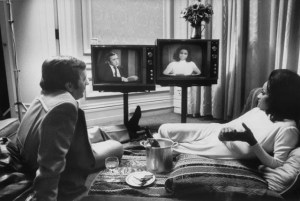
Paul Waldman–writing for the American Prospect–believes US voters will essentially toss the lot of them because of a sense of fairness. This assumes a lot.
At this point, it’s unlikely to change. People are already getting whatever tax cut they’re going to get, and it’s hard to imagine that six months from now many workers will say, “Wait a minute—I am getting more take-home pay! Thanks, Republicans!” Not only that, recent polling shows the tax bill to be a wash at best, with about the same number of people saying they approve of it as disapprove of it, with more usually in the latter camp.
Even if you do approve of it, are you going to rush to the polls to express your gratitude to President Trump and the Republican Congress? If you’re getting another 20 bucks a week, it seems unlikely, especially if you know how much corporations and the wealthy got.
That isn’t to say that the alternative to this bill wouldn’t have been worse for the GOP. When it passed, they breathed a gigantic sigh of relief, knowing that despite the chaos of the Trump presidency and their lack of meaningful accomplishments in this period of one-party rule, at least they could go home to the voters and tell them that they got something done.
But it’s hard to convince people that you just changed their lives for the better with a tax cut if they aren’t seeing the rewards—and they know who is. According to a new reportfrom the Tax Policy Center, people in the lowest income quintile will average a $40 tax cut from the law, or $1.54 per two-week pay period, just like Paul Ryan’s lucky secretary. Those in the middle quintile will average $800, or about $30 per paycheck. And those in the top 1 percent? Their average cut is almost $33,000.
Which is about what everyone expects from a Republican tax plan. And when you play right into people’s expectations, it doesn’t take much to convince them that you have in fact done exactly what they expected you to.
That’s not to mention the fact that if they were looking to win people’s approval for a change to the tax system, they would have done exactly the opposite of what they did. For years, polls have consistently found that what bothered people the most isn’t the amount they have to pay in taxes, even if everyone might like to pay less. The chief complaint voters have long had is that the corporations and the wealthy don’t pay their fair share. So Republicans lowered taxes on corporations and the wealthy, making the system even less fair than it was before.
So, let me just say that all this. All good news coverage and analysis depends on its availability. The idea of understanding all this unfairness assumes that Dear Reader isn’t reading crap put out by Russian Troll Farms or propaganda broadcast by certain news outlets. It also assumes journalists do due diligence with their sources. What good is an interview with a Senator if it’s just a lot of lies and nonsense? Shouldn’t you fact check them all on the spot?
Earlier this month, CNN’s Brian Stelter broke the news that Sinclair Broadcast Group, owner or operator of nearly 200 television stations in the U.S., would be forcing its news anchors to record a promo about “the troubling trend of irresponsible, one sided news stories plaguing our country.” The script, which parrots Donald Trump’s oft-declarations of developments negative to his presidency as “fake news,” brought upheaval to newsrooms already dismayed with Sinclair’s consistent interference to bring right-wing propaganda to local television broadcasts.
The net result of the company’s current mandate is dozens upon dozens of local news anchors looking like hostages in proof-of-life videos, trying their hardest to spit out words attacking the industry they’d chosen as a life vocation.
Now, let’s look at something most Fox watchers have probably no awareness about. Monmouth University has a polling institute. It provides opinions and analysis. This is the one today: “‘Fake News’ Threat to Media; Editorial Decisions, Outside Actors at Fault”.
The news about “fake news” is not good, according to the Monmouth University Poll. Large majorities of the American public believe that traditional media outlets engage in reporting fake news and that outside sources are actively trying to plant fake stories in the mainstream media. When it comes to the meaning of “fake news,” a majority believe that it involves editorial decisions as well as inaccurate reporting. The public feels that social media platforms are partly to blame for the spread of fake news and are not doing enough to stop it. The poll also finds that Pres. Trump continues to be less trusted than the major cable news outlets as an information source.
More than 3-in-4 Americans believe that traditional major TV and newspaper media outlets report “fake news,” including 31% who believe this happens regularly and 46% who say it happens occasionally. The 77% who believe fake news reporting happens at least occasionally has increased significantly from 63% of the public who felt that way last year.
Just 25% say the term “fake news” applies only to stories where the facts are wrong. Most Americans (65%), on the other hand, say that “fake news” also applies to how news outlets make editorial decisions about what they choose to report.
“These findings are troubling, no matter how you define ‘fake news.’ Confidence in an independent fourth estate is a cornerstone of a healthy democracy. Ours appears to be headed for the intensive care unit,” said Patrick Murray, director of the independent Monmouth University Polling Institute.
The belief that major media outlets disseminate fake news at least occasionally has increased among every partisan group over the past year, including Republicans (89% up from 79% in 2017), independents (82% up from 66%), and Democrats (61% up from 43%). In addition to the fact that a clear majority of Democrats now believe that traditional media outlets report fake news at least occasionally, the poll also finds that a majority of Republicans (53%) feel this happens on a regular basis (up from 37% in 2017).
A plurality of the public (42%) say that traditional news media sources report fake news on purpose in order to push an agenda. Fewer Americans (26%) believe that major media sources tend to report these stories only by accident or due to poor fact checking. Another 7% feel both reasons are equally prevalent. The remainder are either not sure or do not feel that fake news is reported by traditional media outlets. The number who believe this type of false reporting is done on purpose has not changed much from a year ago when it stood at 39%. The number who say it is done accidentally has increased from 17% a year ago as more people feel that the traditional media engages in reporting fake news stories.
Fully 83% of Americans believe that outside groups or agents are actively trying to plant fake stories in the mainstream media. Two-thirds (66%) say this is a serious problem – including 74% of Republicans, 68% of independents, and 59% of Democrats.
The Fairness Doctrine sustained a number of challenges over the years. A lawsuit challenging the doctrine on First Amendment grounds, Red Lion Broadcasting Co., Inc. v. Federal Communications Commission, reached the Supreme Court in 1969. The Court ruled unanimously that while broadcasters have First Amendment speech rights, the fact that the spectrum is owned by the government and merely leased to broadcasters gives the FCC the right to regulate news content. However, First Amendment jurisprudence after Red Lion started to allow more speech rights to broadcasters, and put the constitutionality of the Fairness Doctrine in question.
In response, the FCC began to reconsider the rule in the mid-80s, and ultimately revoked itin 1987, after Congress passed a resolution instructing the commission to study the issue. The decision has been credited with the explosion of conservative talk radio in the late ‘80s and early ‘90s. While the FCC has not enforced the rule in nearly a quarter century, it remains technically on the books. As a part of the Obama administration’s broader efforts to overhaul federal regulation, the FCC is finally scrapping the rule once and for all.
The 1990s’ deregulation of media illustrates the effectiveness of the Antidemocracy Movement in convincing Republicans and Democrats alike that a narrow, market-driven, anti-government approach was imperative, even if it led to oligopoly.
As the media became a multibillion-dollar industry, a frenzy of mergers continued, wiping out hundreds of competitors. So today most of what Americans watch and see is controlled by just a handful of companies—all preoccupied with their shareholders’ wealth, not our society’s health. The result is a downward spiral of programming. One telling narrative? By 2000, the average length of presidential candidates’ soundbites on the network nightly news had shrunk to seven seconds, less than a fifth of their length in the 1968 presidential election.
As Craig Aaron, president and CEO of the media-focused public interest group Free Press, explained to us:
Years of rubber-stamping merger deals plus the removal of and raising of ownership limits in the 1996 Act did tremendous damage to the media landscape.
Next to no issue coverage means a bigger microphone for Donald Trump.
The undermining of media as a public good and its parallel consolidation helped take us to the election of Donald Trump. A narrow focus on profitability led to this shocking finding by longtime news analyst Andrew Tyndall: In 2016, from the first of January through October 26, the three major television networks’ evening newscasts together “devoted just 32 minutes to issues coverage.” That’s roughly one-seventh of what it was in 2008. What did they cover instead? Heading into the primary season, sensational Trump stories were all but ubiquitous. By March of 2016, he had received nearly $2 billion in free media coverage. But virtually none of it touched on the serious issues our country faces.
Moreover, our hunch is that many of Trump’s lies were never seriously challenged simply because digging might have interrupted the “excitement” of the election, dimming media’s profits from political advertising. In 2012 such profits accounted for about 20 percent of TV station revenues, as much as four times the share of ten years earlier. Another reason: As online news outlets and social media have taken off, newspaper journalism—long entrusted with investigating in the public interest—has taken a big hit, with its workforce shrinking by 39 percent in 20 years. So even if many outlets wanted to expose Trump’s lies, they had little staff to investigate.
Concurrently, more Americans are choosing self-reinforcing news sources, from blogs to websites—creating an echo chamber that alternative narratives can’t penetrate. As Wired (11/18/16) warned, “We develop tunnel vision [and] eventually become victims to our own biases.” So too has talk radio become increasingly polarized, insular, and narrow-minded, and abetted, unsurprisingly, by essential players in the Anti-Democracy Movement. From 2008 to 2012, the Heritage Foundation, the Kochs’ Americans for Prosperity and related groups provided approximately $22 million in sponsorships to extreme right-wing talking heads, including Sean Hannity, Glenn Beck, Rush Limbaugh and Mark Levin. Many of these radio figures, especially Beck—and the local radio hosts they inspire—were critical in stirring up resentment and providing guidance to Tea Party activists from 2009 onward, as chronicled by journalist Will Bunch in his book The Backlash.
Sometimes you hear this label applied to news reports that are clearly false and meant to mislead. But other times you hear the cry “fake news” just because the person reading facts does not like what he/she reads.
So with actual as well as perceived “fake news” around, what constitutes real news, news that’s reliable, trustworthy journalism? And how have we gotten to the point of needing to debate whether news is real or not anyway?
Speaking at the Bryan Lecture Series a few weeks ago, Ted Koppel, former ABC News anchor and former host of “Nightline,” gave us a quick history lesson about American journalism. For many years our journalism was kept relatively trustworthy by “gatekeepers,” such as noted TV anchors and well-known editors and publishers.
The FCC wielded more influence through its “Fairness Doctrine,” which, as Dylan Matthews explains, “required that TV and radio stations holding FCC-issued broadcast licenses to (a) devote some of their programming to controversial issues of public importance and (b) allow the airing of opposing views on those issues.”
With the relaxing of Fairness Doctrine enforcement in 1969 and its repeal in 1987, the floodgates were opened for unapologetically biased news and talk shows. Now we find ourselves in a time when factual news is being replaced with more and more opinion writing and greater focus on entertainment. Americans are losing access to hard facts and careful reporting.
How can we begin to get ourselves out of this fix?
You can go read the suggestions along with the rest of today’s linky goodness!
What’s on your reading and blogging list today?
Did you like this post? Please share it with your friends:
I’m a little late on this. Keely and I hopped on the St Claude Avenue bus and headed to the Vet at The Healing Center! It’s been part of a Main Street revitalization program and has really come to life. This place is a shopping centre of very small and eclectic local businesses.
There are at least two distinct Americas these days and I have come to the point I want nothing to do with the other one. I’m always looking over at posts and tweets from people I grew up with that didn’t flee as fast as they could like most of my friends who couldn’t get out fast enough. The folks that stayed are physically aging in the same hermetically sealed (sigh, white people) bottle.
I point out some thing really isn’t funny but quite racist and try to explain things like the historical roots of saggin’ and it falls on deaf ears and instead of being told I’m a humorless feminist, I get told I need to just lighten up and the fact the preschooler in that picture is a white boy telling a young black man that he can teach him how to pull his pants up would mean the same if the races of the individuals were flipped. Just like when I’m sitting on a crowded bus with my 8 lb kitten in a very secure cat carrier the only person who asks me if that’s a small dog in there and are they allowed on the buses is a bottle dyed red middle aged white woman all up in my business. All I say is “it’s a kitten” and “ask the bus driver”. Then, I shake my head and sigh. “White people.” I mumble and the black man behind me pulls off his earphones and says “what?” I repeat it louder and he laughs like crazy.
We need conversations with each other. I hear folks say that all the time. But, when these conversation start up, I realize we live in completely different realities. I’m the racial minority in my city. My dissertation chair is a devout Muslim. My eldest daughter married an American of Indian descent who was raised Hindu. I’m not threatened by “other”. I ruffle at stupidity. I present examples.
Hillary Clinton is striking back at critics telling her to “shut up” following her 2016 loss, saying, “They never said that to any man who was not elected.”
“I was really struck by how people said that to me – you know, mostly people in the press, for whatever reason – mostly, ‘Go away, go away,'” Clinton said Thursday during an event at Rutgers University.
“And I had one of the young people who works for me go back and do a bit of research. They never said that to any man who was not elected. I was kind of struck by that,” Clinton said.
Clinton’s remarks came in response to a question from Eagleton Institute of Politics’ director Ruth Mandel about the former Democratic presidential nominee’s reaction to those who say she should “get off the public stage and shut up.”
“I’m really glad that, you know, Al Gore didn’t stop talking about climate change,” Clinton said to applause.
“And I’m really glad John Kerry went to the Senate and became an excellent secretary of State,” the former first lady continued. “And I’m really glad John McCain kept speaking out and standing up and saying what he had to say. And for heavens sakes, Mitt Romney is running for the Senate,” Clinton said.
And that would be sexism. Guess that makes me humorless and too PC these days. Truth seems ethereal these days for some people. It’s too abstract. Truth is only what they desperately want it to be. Hence, lying, crooked, racist, misogynist, xenophobic, homophobic KKKremlin Caligula.
In Trump’s America, half the population lives in a world where the “crooked media” tells “fake news” made up of “alternative facts,” while the other half fights to maintain public trust in traditional media.
Much of the conflict stems from the parallel online universe that led up to the 2016 election: Clinton and Trump supporters really don’t listen to each otheron Twitter, according to an analysis from the Electome project at the MIT Media Lab provided exclusively to VICE News.
“At least on Twitter, we see that there is a separation of where the journalists, and who the journalists are following, and no one is really listening or plugged into this Trump supporter graph.” Eugene Yi, a data-scientists at the lab told VICE News.
Political opinions have always been polarizing, but the 2016 election saw the divide grow as formerly fringe bloggers, like Milo Yiannopolus and Mike Cernovich, seized the golden opportunity to speak directly to Trump supporters, flooding the internet with false information.
And on a larger level, the now-infamous data targeting company Cambridge Analytica allegedly used mass amounts of personal information on the internet to manipulate voters and spread pro-Trump news, no matter the factual evidence, which may have helped win the election for him.
With Trump in office, the conservative news media and the mainstream are now at war over who constitutes “fake news,” as Americans’ trust the press hit a record low of 32 percent. And President Trump’s personal crusade against the traditional press is only deepening the public divide.
The background to Harris’s shot at me is that last year, Harris had Charles Murray on his podcast. Murray is a popularconservative intellectual best known for co-writing The Bell Curve, which posited, in a controversial section, a genetic basis for the observed difference between black and white IQs.
Harris’s invitation came in the aftermath of Murray being shouted down, and his academic chaperone assaulted, as he tried to give an invited address on an unrelated topic at Middlebury College. The aftermath of the incident had made Murray a martyr for free speech, and Harris brought him on the show in part as a statement of disgust with the illiberalism that had greeted Murray on campus.
Klein cannot seem to hold the following two thoughts in his brain at the same time: that past racism and sexism are foul, disgusting, and have wrought enormous damage and pain and that unavoidable natural differences between races and genders can still exist.
I know this is a touchy, fraught, difficult subject. I completely understand the reluctance to discuss it, and the hideous history of similar ideas in the past. But when people seeking the truth are immediately targeted for abuse and stigma, it matters. When genetics are in a golden age, when neuroscience is maturing as a discipline, and when the truth about these things will emerge soon enough, it matters that we establish a liberalism that is immune to such genetic revelations, that can strive for equality of opportunity, and can affirm the moral and civic equality of every human being on the planet. Liberalism has never promised equality of outcomes, merely equality of rights. It’s a procedural political philosophy rooted in means, not a substantive one justified by achieving certain ends.
That liberalism is integral to our future as a free society — and it should not falsely be made contingent on something that can be empirically disproven. It must allow for the truth of genetics to be embraced, while drawing the firmest of lines against any moral or political abuse of it. When that classical liberalism is tarred as inherently racist because it cannot guarantee equality of outcomes, and when scientific research is under attack for revealing the fuller truth about our world, we are in deep trouble. Because we are robbing liberalism of the knowledge and the moderation it will soon desperately need to defend itself.
When the Anti-Defamation League, a century-old institution founded to combat anti-Semitism, released its guide to the “Alt Right and Alt Lite” last year, Ohio’s Republican state treasurer, Josh Mandel, who is Jewish, actually expressed support for two of the people on the list: Mike Cernovich and Jack Posobiec, conservative provocateurs who have found notoriety in the Trump era. “Sad to see @ADL_National become a partisan witch hunt group targeting people for political beliefs. I stand with @Cernovich & @JackPosobiec,” Mr. Mandel proclaimed on Twitter above a link to Mr. Cernovich’s screed charging that the league was trying to have him killed
Mr. Cernovich advocates I.Q. tests for immigrants and “no white guilt,” and is an unapologetic misogynist. Last summer, he circulated a cartoon depicting H. R. McMaster, the White House national security adviser, as a dancing marionette with George Soros pulling his strings and a disembodied, wrinkled hand labeled “Rothschilds” controlling strings attached to Mr. Soros.
Mr. Posobiec has been one of the promulgators of fake news, including the “Pizzagate” story that claimed that Hillary Clinton helped run a child sex-trafficking ring out of a pizza parlor and the claim that a young Democratic National Committee staff member, Seth Rich, was murdered by the Clinton campaign.
Republican strategist Steve Schmidt said it came down to one characteristic that led Parkland, Florida, school shooting survivor and gun control activist David Hogg to get an apology from Fox News host Laura Ingraham: fearlessness.
“Maybe that’s what happens after you’ve been down range of an AR-15 that kills your classmates and comes close to killing you,” Schmidt said Thursday on Nicolle Wallace’s MSNBC show.
“You lose all fear. Because this kid’s not scared. He’s not scared of the NRA. He’s not intimidated and scared by Laura Ingraham.”Schmidt said that Hogg and his classmates are not like the elected Republican officials who are “scared to death of Fox News, of Laura Ingraham, of Rush Limbaugh.
”Schmidt’s comments came as several advertisers announced they would pull their commercials from Ingraham’s Fox News show after she mocked Hogg on Twitter for not getting into certain colleges.
Hogg and his 14-year-old sister, Lauren, responded to Ingraham’s attackWednesday night, calling out the Fox News host for cyberbullying students.“Coming from a 14-year-old, please grow up,” Lauren tweeted, while her brother called for an advertiser boycott.
Past researchers have found that people of lower cognitive ability are more likely to be prejudiced, but prejudice isn’t exclusive to dim bulbs. A new study finds that people at both high and low ends of the intelligence spectrum actually express equal levels of prejudice—the difference is just what they’re prejudiced against.
The researchers, social psychologists Mark Brandt and Jarret Crawford, analyzed 5,914 subjects in their experiment, “Answering Unresolved Questions About the Relationship Between Cognitive Ability and Prejudice.” Removing value judgments about whether a specific prejudice is justified or not, they measured the amount of prejudice present in groups of higher cognitive ability and lower cognitive ability. They gauged the cognitive ability of their subjects using a wordsum test, which is considered to be correlated to an individual’s intelligence quotient (IQ). Brandt and Crawford replicated previous findings that people of low cognitive ability tend to be prejudiced against non-conventional or liberal groups, as well as groups that have “low choice” in their status—groups defined by their race or gender or sexual orientation, for example. According to their research, this tendency inverted among people of high cognitive ability. In other words, the smarter subjects in their study were likely to be prejudiced against groups considered conventional or conservative—groups perceived to have “high choice” in their associations.”
I fully embrace my bigotry against the mean and the stupid. That study is my justification and I’m sticking with it.
What’s on your reading and blogging list today?
Did you like this post? Please share it with your friends:
It’s a beautiful day here in New Orleans but today in the news it’s all Stormy, all the time. I’m going to try to sort it out and ignore the sordid details which seem to include that he only got one Mercy Fuck out of her because he probably couldn’t even attract a cloud of hungry mosquitoes. Oh, and that the interview implied she had pix.
In this case, when the Wall Street Journal revealed the details of the contract on January 12, 2018, that information stopped being confidential.
So why not just say that? Why not cite the WSJ report, say the information is no longer confidential, and that’s that? Why seek a declaratory judgment voiding the agreement based on a flimsy theory that Avenatti must know is risky at best?
The answer may be in the agreement itself, because it has some unusual provisions in it.
First, it’s chiefly concerned with “certain still images and/or text messages.” Yes, later in the agreement, the “confidential information” at issue is expansively defined, to include absolutely anything, tangible or intangible, that Daniels might know about Trump, including, of course, whether she spanked him with a magazine or not.
But far more ink is spilled discussing what Daniels is supposed to do with those texts and images: give copies to Cohen and destroy the originals.
Now the strategy starts to make sense. This dispute isn’t about the affair: it’s about those pictures or texts. As viewers of Daniels’ 60 Minutes interview surely noticed, the only question Daniels refused to answer was about whether she’s got more evidence of the affair. Avenatti suggested the answer is yes: he tweeted a photo of a DVD inside a safe.
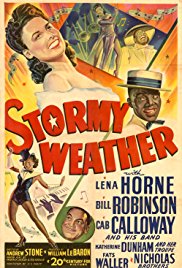
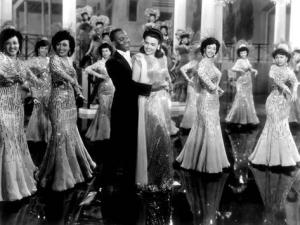
Stormy Weather (1943) Directed by Andrew L. Stone Shown from left: Cab Calloway, Lena Horne
In fact, Stormy was entirely credible in every way. Calm, clear-eyed, and direct, she telegraphed competence and clarity of purpose. She answered questions quickly and without hesitation, never averting her gaze, lowering her eyes, or even pausing. Her words were simple and devoid of rhetorical flourishes. When asked, for example, whether she understood the $130,000 she’d accepted was “hush money,” Daniels’s firm “yes” flew from her mouth nearly before Cooper could finish his question. She offered this kind of swift, emphatic, and monosyllabic response several times.
Everything about this interview screamed legitimacy. 60 Minutes is the 50-year-old doyenne of broadcast journalism, a network show watched by grandparents and Trump supporters (and apparently even Trump himself). This was Stormy’s chance to take her case to the widest American public, to clear her name and tell her truth, even at the risk of being penalized for breaching her non-disclosure agreement (and possibly even at risk to her personal safety).
This quest for legitimacy made for dull television. For primetime, Stormy toned down her makeup (false lashes but no visible shadow, pink not red lips), and buttoned up her shirt (although admittedly, the buttons were straining). But she also muted her personality, showing far less of the brash and witty side we’ve seen in other interviews and on her Twitter feed. The sharp-tongued woman with the off-color sense of humor all but disappeared last night. (It returned briefly when, proving she’d not sold her story, she quipped to Cooper, “I don’t have a million dollars. You didn’t even buy me breakfast.”).
And while she still owns her adult-film career proudly, Daniels showed a more vulnerable side when detailing how she’d felt obliged to have sex with Trump — unprotected! — even though she felt disinclined, simply because she’d gone alone to his hotel suite. Her explanation for this conjured a retrograde notion of women’s sexual obligations to men and even a whiff of self-abnegation: “I had it coming for making a bad decision … I just heard the voice in my head, ‘Well, you put yourself in a bad situation … so you deserve this.’”
Why are white Christians sticking so closely to President Trump, despite these claims of sexual indiscretions? And why are religious individuals and groups that previously decried sexual impropriety among political leaders suddenly willing to give Trump a “mulligan” on his infidelity?
Our new study points to a different answer than others have offered. Voters’ religious tenets aren’t what is behind Trump support; rather, it’s Christian nationalism — their view of the United States as a fundamentally Christian nation.
And this last problem is likely to get much worse. According to Baruch College’s David Birdsell, by 2040 “about 70% of Americans are expected to live in the 15 largest states.” As a result, 70 percent of Americans “will have only 30 senators representing them, while the remaining 30% of Americans will have 70 senators representing them.”
Moreover, if the parties continue to sort into diverse, urban Democrats and homogeneous, more rural Republicans, the GOP won’t just gain a lock on the Senate. They could potentially ensure that no Democrat is ever confirmed to the federal bench again.
In 2016, when Senate Republicans successfully blocked Chief Judge Merrick Garland’s nomination to the Supreme Court, the 46 Democrats in the Senate represented 20 million more people than the 54 Republicans. In 2017, when Neil Gorsuch was confirmed to occupy this seat, the 45 senators who opposed his confirmation represented more than 25 million more people than the senators who supported him.
The United States, in other words, is barreling toward a future where a younger, multicultural, more urbanized majority is ruled by an aging, white, rural minority. That’s a recipe for civil unrest, or even a secession crisis.
Well, if you thought a Stormy day was great! Just wait until you get a Summer one!!!
“Summer Zervos is one of many women who has been subjected to unwanted sexual touching by Donald J. Trump.”
So begins the defamation lawsuit filed by Zervos, a restaurant owner and former contestant on The Apprentice, who says Trump sexually assaulted her in 2007 and then called her a liar when she spoke out about it in 2016.
Zervos’s case centers on a disturbing account of sexual assault, an important distinction from two other high-profile legal cases involving women and Trump. Adult film actress Stormy Daniels and former Playboy model Karen McDougal (who is suing the company that publishes the National Enquirer) say they had consensual affairs with Trump.
Zervos scored a victory recentlywhen a New York Supreme Court judge ruled that her suit could go forward, rejecting the Trump team’sargument that a sitting president can’t be sued in state court. “No one is above the law,” the judge responded. Trump’s lawyers have announced they will appeal the decision.
The potential implications of the Zervos case are huge. When Paula Jones sued Bill Clinton for sexual harassment 20 years ago, the Supreme Court set the precedent that a sitting president can’t push off a federal case until after he leaves office. Clinton’s perjury in a deposition in that case ultimately led to his impeachment.
I’ve had a long few days so I’m calling it a short post. Let us know what’s on your reading and blogging list today! Enjoy two brilliant singers and genius music!!!
Did you like this post? Please share it with your friends:
Well, Sky Dancers, it’s just getting more difficult to explain what’s going on in the USA. The Republican Party has been completely captured by a Criminal Enterprise beholden to Vladimir Putin backed by End Time Cultists and led by completely clueless, self-dealing Oligarchs. We’re now seeing a return of the War Criminals. I’m not sure how much worse it can get. As Jonathan Chait succinctly puts it, “Nobody Is Left to Save the World From Trump Now”.
A stencil of an early human’s hand in an Indonesian cave is estimated to be about 39,000 years old. (Via NPR)
The people who joined the government to save Donald Trump from himself, or to save the world from Trump, are leaving. Gary Cohn and Rex Tillerson are gone. Trump is reorganizing his legal team, mobilizing for war against the special counsel. And now he has finally cast off his most important minder, National Security Adviser H.R. McMaster, and replaced him with John Bolton.
Bolton is in some ways the foreign-policy analogue of his domestic counterpart, Lawrence Kudlow, the incoming head of the National Economic Council. Like Kudlow, Bolton is a true-believing ideologue firmly encamped on his party’s right flank, who appears regularly on Fox News to propound ultrasimplistic solutions to the world’s problems, which Trump can easily grasp on his sofa. Also like Kudlow, Bolton has given every indication of being personally committed to Trump, and has not condescended to him.
The difference, however, is that Kudlow’s kooky ideas have little chance of enactment given the tenuous Republican control of Congress. Bolton’s foreign-policy notions can be quickly operationalized, given the near-total command the Executive branch has over foreign policy. What’s more, those ideas have the potential to kill large numbers of people.
The paintings indicate that early humans had “some pretty heavy stuff” weighing on their minds, archaeologists said. (From the satirical site The Onion.}
The Republican party is captured by Trump’s base which is basically an end times cult of religious fanatics. It is not only supercharged by white identity politics and white grievance but represents an extremist religious cult that actively seeks THE big end. They see climate change as a sign the mothership is coming for them. They do not seek a continuation of anything but being hyperfocused on removing what offends them while they actively work to make all life a brief an interim as possible.
President Donald Trump finally jettisoned National Security Adviser H.R. McMaster on Thursday afternoon. His replacement is John Bolton, the former ambassador to the United Nations in the Bush administration — and one of the most radically hawkish voices in American foreign policy.
Bolton has said the United States should declare war on both North Korea and Iran. He was credibly accused of manipulating US intelligence on weapons of mass destruction prior to the Iraq war and of abusive treatment of his subordinates. He once “joked” about knocking 10 stories off the UN building in New York. That means his new appointment to be the most important national security official in the White House has significant — and frightening — implications for Trump’s approach to the world.
Bolton’s new job was announced on Thursday evening, when the president tweeted that McMaster planned to resign and Bolton would replace him. “I am pleased to announce that, effective 4/9/18, [John Bolton] will be my new National Security Advisor,” the president wrote.
Bolton had been rumored to be the frontrunner for the job for months, but that doesn’t make the pick any less jarring. His track record in government, connections to anti-Muslim groups, and stated views in op-eds and public speeches all suggest that he will push Trump to take extremely dangerous positions on issues like North Korea, Iran, and ISIS.
“I operate on the assumption that John Bolton should be kept as far away from the levers of foreign policy as possible,” says Christopher Preble, the vice president for defense and foreign policy studies at the libertarian Cato Institute. “I think I would rest easy if he was dog catcher in Stone Mountain, Georgia. But maybe not.”
Bolton’s elevation illustrates the degree to which the president is influenced by the conservative infotainment sphere, most notably Fox News — where he has long been an on-air fixture. Bolton was, prior to this appointment, a marginal figure in Washington foreign policy circles since his departure from the Bush administration. But he got himself one of the top jobs in the country because of his savvy work in the world of conservative media and advocacy groups.
Beautiful cave paintings dating from the late Neolithic, Epipaleolithic and early Bronze Age. The Magura cave in Bulgaria.
President Donald Trump’s top White House lawyer, Don McGahn, is expected to step down later this year, though his resignation is contingent on the president finding a replacement and several other factors, according to four sources familiar with McGahn’s thinking.
McGahn, according to two of the sources, has signaled interest in returning to the Jones Day law firm where he previously worked and reprising a role he had during the 2016 campaign by handling legal matters for Trump’s reelection.
ut the exact timing for McGahn to make any move remains in flux. He’s told associates he’d like to leave the White House by the summer, but it could also be put on hold through the 2018 midterms.
Concerned about the velocity of turnover inside his White House and beyond — Trump personal lawyer John Dowd resigned on Thursday, and the president has made changes atop the State Department, CIA and the national security adviser slot — sources said Trump wants to have a new White House counsel in place who he’s comfortable with before clearing McGahn for the exits.
The open air cave paintings of La Valltorta-Gassulla in the region of Valencia.
In deep-red America, the white Christian god is king, figuratively and literally. Religious fundamentalism has shaped most of their belief systems. Systems built on a fundamentalist framework are not conducive to introspection, questioning, learning, or change. When you have a belief system built on fundamentalism, it isn’t open to outside criticism, especially by anyone not a member of your tribe and in a position of power. The problem isn’t that coastal elites don’t understand rural Americans. The problem is that rural America doesn’t understand itself and will never listen to anyone outside its bubble. It doesn’t matter how “understanding” you are, how well you listen, what language you use…if you are viewed as an outsider, your views will be automatically discounted. I’ve had hundreds of discussions with rural white Americans and whenever I present them any information that contradicts their entrenched beliefs, no matter how sound, how unquestionable, how obvious, they will not even entertain the possibility that it might be true. Their refusal is a result of the nature of their fundamentalist belief system and the fact that I’m the enemy because I’m an educated liberal.
At some point during the discussion, they will say, “That’s your education talking,” derogatorily, as a general dismissal of everything I said. They truly believe this is a legitimate response, because to them education is not to be trusted. Education is the enemy of fundamentalism because fundamentalism, by its very nature, is not built on facts. The fundamentalists I grew up around aren’t anti-education. They want their kids to know how to read and write. They are against quality, in-depth, broad, specialized education. Learning is only valued up to a certain point. Once it reaches the level where what you learn contradicts doctrine and fundamentalist arguments, it becomes dangerous.
But the miseducation of Donald Trump is endlessly on display to encourage them. No one wants educated workers, Trump insists. They want trained widgets.
Trump again criticizes community colleges and make the claim that he's much more popular on campuses than people realize https://t.co/Dn0xzifxwY Story by @kreighbaum
President Trump loves vocational training. Community colleges? Not so much.
Trump on Thursday appeared at the “Generation Next” White House forum alongside Charlie Kirk, a conservative campus activist who heads Turning Point USA. In between talking up tax cuts and his administration’s work rolling back federal regulations, the president weighed in on the value of vocational training. And repeating a sentiment he expressed to a conference of conservative lawmakers last month, he again appeared to dismiss community colleges. As they did after his earlier remarks on those institutions, community college leaders said they showed the president was misinformed.
In the midst of answering a question from Kirk about tax cuts passed last year, Trump repeated an anecdote he tells frequently about a former classmate who was “not going to be Einstein academically” but could fix an engine or a motor blindfolded.
“But he’ll never be a student, nor did he want that kind of learning, that kind of whatever you want to call it,” Trump said. “So we need vocational schools. Now, they call them, a lot of times, community colleges. I don’t think it’s an accurate definition.”
The comment echoed a statement from February in which he complained to Republican lawmakers that many people don’t know what a community college “means or represents” and suggested that “vocational” is a preferable term. Those earlier remarks prompted several leaders in the community college sector to complain that Trump had taken an overly simplistic view of the mission of those institutions and downplayed the significant role they have in training students for new careers even as they prepare others to move on to four-year colleges.
10,000-year-old rock Apaintings found in Chhattisgarh,India.
President Donald Trump threatened on Friday to veto the $1.3 trillion omnibus spending bill already passed by Congress, only hours before government funding would lapse.
The about-face comes a day after the White House had said Trump would sign the legislation despite his misgivings. The government will shut down at 12:01 a.m. Saturday if Trump does not sign a funding bill into law.
In a tweet, Trump said he is “considering a VETO” because the proposal does not extend protections for hundreds of thousands of young undocumented immigrants or fully fund his proposed border wall.
U.S. stock-market indexes traded between small gains and losses on Friday, a day after equities plunged on the prospect of a global trade war as China fired its first retaliatory salvo against tariffs on at least $50 billion of Chinese goods announced by the Trump administration.
Investors sought shelter in gold and the Japanese yen, which was trading at its highest levels since the U.S. presidential election in 2016, after one of the worst days for Wall Street in weeks.
China stopped short of penalties on the biggest salvos in a potential trade war, leaving off soybeans, sorghum and Boeing BA, +1.83% aircraft, indicating Beijing may be looking for leverage in any negotiations with the U.S.
Cave Paintings Sierra de San Francisco, Baja California Sur
It’s difficult for old ladies like me to handle all this unnecessary death and destruction. I may have to find a nice cave and settle in to paint animals.
What’s on your reading and blogging list today?
Did you like this post? Please share it with your friends:
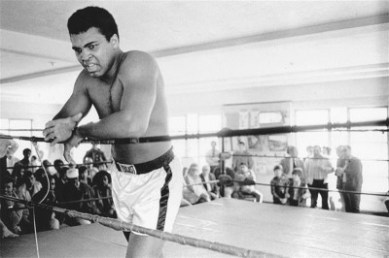
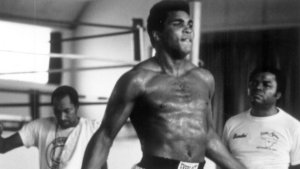
There were many things to admire about Muhammed Ali. He was tenacious, strategic, clever, and principled. His invention of the ‘Rope a Dope ‘was tactical brilliance. A boxer will pretend to be trapped against the ropes but what said boxer is actually doing is “goading the opponent to throw tiring ineffective punches”.
Can the Democratic members of Congress and the Mueller investigation ‘Rope a Dope’ KKKremlin Caligula? He appears to be in endless pursuit of ridding himself of the meddlesome G-Man. This is not in the best interest of our democracy or global stability. The Republican members of Congress–from top to bottom–have refused to do their constitutional duties sending hopes for timely justice to the ropes. It’s time to ‘Rope a Dope’ the lot of them. They need to protect the Mueller Investigation. Bills to do so have stalled in the Senate.
Back in January (when news broke that the president had—unsuccessfully, as it turned out—instructed White House counsel Don McGahn to fire Mueller last summer), Republicans asked about the legislation suggested that McGahn’s refusal proved why these bills weren’t necessary. That was baloney then, and it’s an even more alarming abdication now, with the president seemingly poised to go after Mueller directly. And yet, for all of the talk about Mueller over the past few days, nary a Republican has come out in support of passing these bills—including their Republican co-sponsors.
If the hitherto-silent Republicans really have constitutional objections to these bills, let’s hear them (per the above, I’m skeptical). If they have policy objections, let’s hear those, too. But for those who actually want to ensure that the special counsel’s investigation continues unimpeded and don’t just want to look good to their constituents, there’s an easy way to do more than just threatening the president in tweets and talk-show interviews:
Pass this legislation.
The weekend Twitler meltdown is rattling nerves as are the comments from Trump’s legal team.
Morning.
A current law professor and former White House lawyer told Vox he’s worried about what’s yet to come for one startling reason: “The president of the United States is unhinged.”https://t.co/qHdEt74N2T
Within hours of McCabe’s firing, Dowd, Trump’s personal lawyer, asked Deputy Attorney General Rod Rosenstein to kill the Justice Department’s Russia probe. (Rosenstein has direct authority over the Mueller probe.)
Dowd, in an email to reporters, linked McCabe to the Russia investigation and blamed Comey for making up a case:
I pray that Acting Attorney General Rosenstein will follow the brilliant and courageous example of the FBI Office of Professional Responsibility and Attorney General Jeff Sessions and bring an end to alleged Russia collusion investigation manufactured by McCabe’s boss James Comey based upon a fraudulent and corrupt dossier.
Dowd had initially told the Daily Beast that he was speaking on behalf of Trump as his “counsel,” only to backtrack after his statement was published and say he was actually speaking for himself. That matters because Trump has repeatedly denied that he’s trying to get rid of Mueller, largely relying on Republican allies to make the case for him.
Dowd is a longtime Washington lawyer, having helped Sen. John McCain confront the Keating Five banking scandal as far back as 1990. He joined Trump’s team to combat the Mueller probe in June, taking the lead as Trump’s chief outside lawyer (Trump is also represented by White House counsel Don McGahn and Ty Cobb, who handles the White House’s response to Mueller’s investigation).
It’s not the first time Dowd’s comments about Mueller have sparked a political controversy. In December, Trump tweeted that he “had to fire” Flynn, the former national security adviser, because Flynn had lied to the FBI.
The Mueller and Trump teams are hoping to work out the specifics of a presidential interview within the next few weeks.
The big question they’re debating is whether it’ll be in person, in writing, or some combination of the two.
After a weekend of increasingly personal and vocal battles with Mueller, the White House extended an awkward olive branch on Sunday night, with White House lawyer Ty Cobb issuing this statement:
“In response to media speculation and related questions being posed to the Administration, the White House yet again confirms that the President is not considering or discussing the firing of the Special Counsel, Robert Mueller.”
But that’s too late. Veering from the White House legal strategy of cooperating with Mueller, Trump attacked him by name on Twitter, seeking to discredit the eventual findings with Republican supporters.
Someone familiar with the process said that was presidential frustration, and that the Trump team continues its ongoing dialogue with Mueller.
27th May 1963: Supremely confident American boxer Cassius Clay holds up five fingers in a prediction of how many rounds it will take him to knock out British boxer Henry Cooper. (Photo by Kent Gavin/Keystone/Getty Images)
The president, those close to him say, is determined to more directly confront the federal probe into his campaign’s potential role in alleged Russian election interference, even if it means exacerbating his legal standing amid an investigation that has already ensnared some of his most senior campaign and White House aides.
Two sources who speak regularly with Trump said they had noticed an uptick in recent months in the frequency of the annoyance the president would express regarding Mueller and his team, and the irritation at the deluge of negative news stories regarding the probe.
Last week, for instance, The New York Timesreported that Mueller had subpoenaed the Trump Organization to turn over documents, some pertaining to Russia—a demand for personal financial details that the president famously said would be crossing a “red line” in an interview with the Times last year.
Still, on Sunday, White House lawyer Ty Cobb blasted out a statement to reporters that simply assured, “in response to media speculation and related questions being posed to the Administration, the White House yet again confirms that the President is not considering or discussing the firing of the Special Counsel, Robert Mueller.”
By laying the foundation for this fresh, orchestrated case for the end of the Russian investigation, Sessions appears to have abrogated a commitment, made to the Senatein June 2017, that he would take no step toward firing Mueller.
Sen. Mark Warner: Will you commit to the committee not to take personal actions that might not result in director Mueller’s firing or dismissal?
Sessions: I can say that with confidence…
Warner: You would not take any actions to have the special investigator removed.
Sessions: I don’t think that’s appropriate for me to do.
Did Sessions’s rush to fire McCabe fall under the umbrella of any “action to have [Mueller] removed?” If Sessions had any knowledge that the president and his counsel were prepared to seize on the dismissal to call for Mueller’s firing, then he would have lent support to the plan in a manner inconsistent with his pledge to Warner. Certainly Sessions knew weeks ago that the president was singling out McCabe in his denigration of the “corrupt” FBI leadership. He also must know that McCabe is a witness in the special counsel’s obstruction investigation. These considerations alone should have been sufficient to alert the attorney general to the risks of taking an active part in firing McCabe—especially hurriedly, to beat his retirement date, under public pressure from the president.
But even if Sessions missed all of this, he now understands how the president and his counsel used the firing of McCabe. This may not have been another Saturday Night Massacre, but it may turn out to have been the prelude. And Sessions is—or he has been made—a party to it.
In the massacre of Watergate fame, the attorney general at the time, Elliot Richardson, discovered that the president and White House advisers were maneuvering to force out the special prosecutor, Archibald Cox and “induce [Richardson] to go along.” As Richardson wrote in an Atlantic piece in March of 1976 (titled “The Saturday Night Massacre”), Nixon’s plan was to have him help unwittingly with the ouster of Cox and yet not feel he had to resign.
A new report on Trump’s state of mind from the New York Times underscores why this should worry us a great deal. Relying on numerous people close to Trump, it says he decided to attack Mueller over the advice of his advisers because he “ultimately trusts only his own instincts,” with the result that Trump is “newly emboldened” to “ignore the cautions of those around him.”
“For months, aides were mostly able to redirect a neophyte president with warnings about the consequences of his actions, and mostly control his public behavior,” the Times says. But some of his recent actions — his decisions to go ahead with tariffs and a meeting with North Korean leader Kim Jong Un — have persuaded him that such warnings are overblown. Make sure not to miss this sentence:
Warnings of dire consequences from his critics have failed to materialize.
This helps explain why Trump unleashed his fury on Mueller over the weekend. In a tweet storm that was full of lies — see Glenn Kessler’s takedown of the specifics — Trump claimed that law enforcement is riddled with corruption and that the Mueller probe itself is illegitimate. To make this latter claim, Trump floated the intertwined falsehoods that the Democratic-funded Steele dossier triggered the probe (a lie) and that there was no legit basis for its genesis (also a lie).
This is the problem. Republican members of Congress are not fighters like Ali. They will not fight for their supposed convictions, country, or even the future of their own party. There are repercussions for this blatant attack on our rule of law and Constitution. Republican silence is damning.
President Donald Trump’s direct assault on Robert Mueller over the weekend renewed fears he’s preparing to fire the special counsel as Republicans mostly remained silent on the threat.
Just a few Republicans strongly warned Trump against firing Mueller — Senator Lindsey Graham of South Carolina said it could lead to the end of Trump’s presidency. Most avoided taking a stand.
The lack of clarity from the majority party in Congress about potential repercussions may embolden Trump, who last week fired his secretary of state, Rex Tillerson, and is said to be contemplating a bigger shakeup of his Cabinet and inner circle. The president’s attacks on the FBI, the Justice Department and Mueller’s investigation into Russian election meddling — and whether anyone close to Trump colluded in it — channeled a long-running narrative on conservative news outlets.
On Sunday evening, White House lawyer Ty Cobb issued a statement saying Trump “is not considering or discussing the firing” of Mueller. But Trump already had made clear his growing impatience at the special counsel and his probe. He continued to do that on Monday morning, saying in a tweet: “A total WITCH HUNT with massive conflicts of interest!”
Arizona Republican Sen. Jeff Flake said Sunday on CNN’s “State of the Union” that he expects his colleagues in Congress, including GOP leadership, to push back on the President’s comments and any potential move to force the end of the probe.
“I mean, talking to my colleagues all along it was, you know, once he goes after Mueller, then we’ll take action,” Flake said.
U.S. stocks pulled back on Monday as a decline in Facebook pressured the technology sector. Wall Street also paid attention to Washington after a Twitter meltdown from President Donald Trump.
Politicians on both sides of the Atlantic are calling on Chief Executive Officer Mark Zuckerberg to appear before lawmakers to explain how U.K.-based Cambridge Analytica, the data-analysis firm that helped Donald Trump win the U.S. presidency, was able to harvest the personal information.
Everything Trump touches dies.
What’s on your reading and blogging list today?
Did you like this post? Please share it with your friends:
The Sky Dancing banner headline uses a snippet from a work by artist Tashi Mannox called 'Rainbow Study'. The work is described as a" study of typical Tibetan rainbow clouds, that feature in Thanka painting, temple decoration and silk brocades". dakinikat was immediately drawn to the image when trying to find stylized Tibetan Clouds to represent Sky Dancing. It is probably because Tashi's practice is similar to her own. His updated take on the clouds that fill the collection of traditional thankas is quite special.
You can find his work at his website by clicking on his logo below. He is also a calligraphy artist that uses important vajrayana syllables. We encourage you to visit his on line studio.

 Good Morning Sky Dancers!
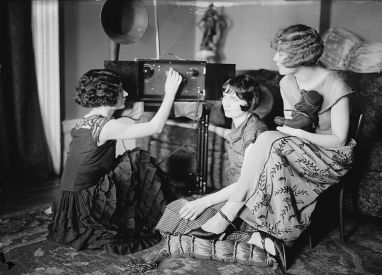 All you have to do is sort the media in to “normal” vs. right wing propaganda and you see what’s what. Still, it’s hard to understand how even “normal” media does what it does in the age of false equivalence of facts. But,
 NY Mag has a feature up on
  Paul Waldman–writing for
  Now, let’s look at something most Fox watchers have probably no awareness about. Monmouth University has a polling institute. It provides opinions and analysis.
  And about the
  This was in August, 2011.
  Let’s end with another of the little guys. T






 Good Afternoon Sky Dancers!
 Stormy’s story is one more narrative related to Trump and his continual philandering, cheating, and womanizing.






 Mike Allen of Axios writes on Mueller’s endgame. Does Trump fear the interview or the targeting of the targeting of the Trump org?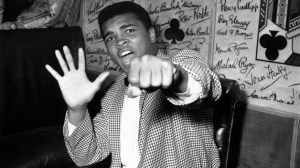
 This new belligerence comes from you-k
 This is the problem. Republican members of Congress are not fighters like Ali. They will not fight for their supposed convictions, country, or even the future of their own party. There are repercussions for this blatant attack on our rule of law and Constitution.
  Here are the few Republicans speaking out. The term milquetoast comes to mind.
 peej
peej Carissa
 bostonboomer
 dakinikat
 ecocatwoman
 jjlo
jjlo mablue2
 Mama Lopez
 peggysue22
 quixote
 skydancingguestblogger
 Mona (aka Wonk the Vote)





Recent Comments