
Frank Friday Reads
Posted: December 3, 2021 Filed under: abortion rights, Afternoon Reads, birth control, Black Lives Matter, Breaking News, children, Civil Liberties, Civil Rights, Discrimination against women, Federal Budget and Budget deficit, Federal Government Shutdown, Feminists, fetus fetishists, Gun Control, health, Psychopaths in charge, religious extremists, Religious Freedom, Reproductive Health, Reproductive Rights, Republican Code Words and Concepts, War on Women, white nationalists 14 Comments
Ghislaine Howard, Self Portrait Pregnant, 1984. © Ghislaine Howard.
Happy Friday Sky Dancers!
I’m going to make this entire weekend TV-free. It’s easy for me because all forms of sportsball bore me and I certainly don’t need to see the endless talking heads as it’s been a depressing enough week already. Most movies and tv shows bore me too so my plan is to read and do creative stuff. I’ve got pies to bake, pictures to paint, and music to make!
There were a lot of depressing and insulting things argued during the Mississippi Forced Birth Enslavement and child-trafficking law loved completely by the out-of-touch right-wing Christianists on the court. They must have missed being exposed to the idea that women have moral agency during their important lessons in life sessions. BB covered a lot of it yesterday.
A lot enraged me but none more than the white savior complex of Amy “great white savior” Coney Barret. She seems to feel since she adopted two black children and saved them from whatever hell she imagines with her white nationalist vision and missionary position she can ride to the rescue of all zygotes and embryos everywhere in the country. She feels she knows what’s right and that adoptions are just the answer to everything surrounding a woman’s pregnancy. Adoption justifies the state enslavement of pregnant women resulting in state trafficking of commodity babies. It’s her perfect concoction of everything is better when the rest of us are just the property of white men.
I’m sure as many of you have experience with friends that were adopted and also couples that adopted for a variety of reasons. Even with all the best intentions and best parenting, I’ve never met an adopted person that hasn’t presented some combination of similar emotional and psychological issues. They always feel lacking in a way that I never experienced even though they can be a tremendous variation on that theme. My first real experience came with a young black woman who was adopted by a kind elderly white couple and never quite felt she fit into any community that she met. I’ve always hoped that since multi-racial families are more prevalent that has become less of an issue. I also had a friend who adopted a boy only to find out a procedure could take care of her fertility problems. She then had four kids right after him. His biggest problem was one of his grandfathers continually reminding him that he wasn’t really theirs. Then, another friend had been adopted by a white couple because they wanted her baby. It took years for her to be able to tell her son that he wasn’t her brother. They really couldn’t be bothered with her after the boy was born.
Stuff like this leaves scars. And these are examples of what most people would call successful adoptions. None of the parents in these scenarios are the monsters that many adopted or foster kids get a place with. I won’t even share the trauma I’ve seen an adopted nephew go through even though his parents try everything. Every time a girl breaks up with him he goes through a loss like I’ve never seen in a person. At the moment, I live with someone who was adopted and it’s a variation on this all over. She’s got a form of detachment disorder and just is constantly in therapy over those issues and other personality disorders. She spent time in an orphanage. She loves her parents. They’re annoying in the same way most parents are but again, there are just issues that come along with all that and some people handle it better than others or have been further complicated before they get to their adopted family. It’s a forced birth fairy tale that adoption all rainbows and unicorns for everyone!

Gustav Klimt – Hope, II, 1907
These kids didn’t end up in the foster system although a few came from orphanages. I want to share these three articles with you written today. BB shared a few yesterdays. Don’t get me wrong. Adoption isn’t like they used to do which was to dump a girl in an unwed mother’s home, take the child from her, then put the child wherever. But, it still has that feeling that the state shouldn’t be forcing child trafficking and making women nothing but vessels. This is the worst kind of state interference in a woman’s moral agency. It’s autocratic and it’s purely based on one’s interpretation of a few religions. Babies are not commodities. Fetuses cannot live on their own and women do not just play passive host vessels. My last much wanted pregnancy nearly killed both of us and me several times with cancer I developed during it. Every woman has a different story and every child has a different story. The state just can’t write us all off under one big power grab like we’re all property. It’s a woman’s decision to make. PERIOD.
This is from New York Magazine: “Amy Coney Barrett’s Adoption Myths. “They’re co-opting our lives and our stories.” written by
Twice in oral arguments this week for the abortion case that could overturn Roe v. Wade, Supreme Court Justice Amy Coney Barrett asked pro-choice advocates: Would banning abortion be so bad if women could just drop their newborns at the fire station for someone else to adopt? She conceded that forced pregnancy and birth are “an infringement on bodily autonomy,” but suggested, misleadingly, that the real choice is between having a later abortion and “the state requiring the woman to go 15, 16 weeks more and then terminate parental rights at the conclusion.”If advocates for abortion rights were so worried that “the consequences of parenting and the obligations of motherhood that flow from pregnancy” would harm women, asked Barrett, who adopted two children from Haiti, “Why don’t the safe-haven laws take care of that problem?”
The attorney for the clinics, Julie Rikelman, reminded Barrett that it’s 75 times more dangerous to give birth in Mississippi than to have a pre-viability abortion, disproportionately threatening the lives of women of color in particular. U.S. Solicitor General Elizabeth Prelogar said citing laws where parents can relinquish their newborns, no questions asked, “overlooks the consequences of forcing upon her the choice of having to decide whether to give a child up for adoption. That itself is its own monumental decision for her.” People who have lived and studied the realities of adoption also had a lot to say about Barrett’s blithe solution — one that drew on a well-established conservative political strategy to put adoption forward as the kinder face of the anti-abortion movement.
The day after oral arguments, I had a conversation with Angela Tucker, a transracial adoptee, host of The Adoptee Next Door, and media consultant; Kate Livingston, Ph.D., a birth parent and educator of women’s, gender, and sexuality studies; Kathryn Joyce, journalist and author of The Child Catchers: Rescue, Trafficking, and the New Gospel of Adoption; and sociologist Gretchen Sisson, Ph.D., who studies abortion, adoption, and reproductive decision-making in the United States.

Pablo Picasso Pregnant Woman Vallauris, 1950
Please go read the questions and answers in this conversation. They are enlightening, to say the least. Elizabeth Spiers writes this for the New York Times: “I Was Adopted. I Know the Trauma It Can Inflict.”
As an adoptee myself, I was floored by Justice Barrett’s assumption that adoption is an accessible and desirable alternative for women who find themselves unexpectedly pregnant. She may not realize it, but what she is suggesting is that women don’t need access to abortion because they can simply go do a thing that is infinitely more difficult, expensive, dangerous and potentially traumatic than terminating a pregnancy during its early stages.
As an adoptive mother herself, Justice Barrett should have some inkling of the complexities of adoption and the toll it can inflict on children, as well as birth mothers. But she speaks as if adoption is some kind of idyllic fairy tale. My own adoption actually was what many would consider idyllic. I was raised by two adoptive parents, Alice and Terry, from the time I was an infant, and grew up in a home where I knew every day that I was loved. A few years ago, I found my biological mother, Maria, and three siblings I didn’t know I had via a DNA test and Facebook.
The first time I spoke to Maria on the phone — she lives in Alabama, not too far from my parents, and I live in Brooklyn — she apologized repeatedly for giving me up and told me she loved me and that I would always be family. “You are blood,” she would say later. I told her, and continue to tell her, every time she brings it up, that the apology is unnecessary. I had a wonderful childhood and I believe she had made the right decision. But she remains heartbroken about the years we missed together.
Both Maria and my mom, Alice, oppose abortion on religious grounds. My mom is white and Southern Baptist; Maria is Hispanic and Pentecostal. Both like to point to me to justify their beliefs, saying that had Maria gotten an abortion, I would not exist. It’s a familiar argument: The anti-abortion movement likes to invoke Nobel Prize winners who might never have materialized, or potential adoptees who might have cured cancer, if they hadn’t been aborted at eight weeks.
Here is my third offering on this topic.
You could make the argument that from Alito on … they all should step down. They were hired by the Republicans to tank Roe and whatever follows that insults their personal religious fetishes. We all have the right to practice our religions but not to force them on others via the state. It’s hard to believe they’re on the Supreme Court and they have such open disdain for the First Amendment of the Constitution.

‘How brilliant to paint yourself changing’ … Chantal Joffe’s 2004 self-portrait Photograph: © Chantal Joffe Courtesy the artist and Victoria Miro, London/ Venice
When should a Supreme Court justice’s deeply held religious beliefs require recusal — that is, that the justice not participate in a particular case? A difficult question, to be sure, but one that Justice Amy Coney Barrett has already answered for herself. And her answer requires her recusal in abortion cases.
The Supreme Court hears arguments in Dobbs v. Jackson Women’s Health Organization Wednesday, which challenges the constitutionality of Mississippi’s ban on abortions after 15 weeks of pregnancy.
Under current precedent, the law is unconstitutional — as both the district court and the court of appeals held. Both Roe v. Wade, decided in 1973, and Planned Parenthood of Southeast Pennsylvania v. Casey, decided in 1992, hold that a state cannot ban abortions prior to viability, approximately the 24th week of pregnancy. Mississippi has asked the Supreme Court to overrule those precedents.
To follow her own words in a 1998 law review article, Barrett should have recused herself from deciding this case (and all other abortion cases) if she has any integrity at all.
In “Catholic Judges in Capital Cases,” published in the Marquette Law Review, Barrett (then a law clerk to a federal court of appeals judge) and her co-author address the dilemma that faces devout Catholic judges in capital cases. She writes that such judges are “obliged by oath, professional commitment, and the demands of citizenship to enforce the death penalty,” but they are also “obliged to adhere to their church’s teaching on moral matters.” They are therefore “morally precluded from enforcing the death penalty.”
What’s a Catholic judge to do, then? According to Barrett’s article, the judge must recuse herself. She can neither enforce the death penalty and violate her religious conscience, nor fail to enforce it and violate her oath of office.
And even in a case in which a judge has discretion whether or not to sentence a convicted criminal to death, he cannot resolve to keep an open mind and then claim to have done nothing wrong if he decides not to impose the death penalty. Because, Barrett writes, “A judge who suspends his moral judgment during sentencing sets his conscience aside” and “cuts himself loose from his moral moorings.” That unloosing is itself a sin, she concludes — analogous to “looking lustfully at a woman” and thus committing adultery “in his thoughts.”
Barrett’s bottom line is that an “observant Catholic judge” may not “formally cooperate in bringing about the defendant’s execution.” And for that reason, “if one cannot in conscience affirm a death sentence the proper response would be to recuse oneself.” To do otherwise is to “betray a public trust” by manipulating the law “in order to save lives.”
Well, Well, Well!

Celebration of the body … Jenny Saville’s Electra (2012). Photograph: Prudence Cuming/© Jenny Saville. Photo: Prudence Cuming Associates. Courtesy the artist and Gagosian.
Here are a few other links to how Christianists are forcing everyone to follow their distinct takes on Christianity. They sound more like the Taliban every day. And take it from me, as a former Methodist who was frequently called not a real Christian, they will come for all of you.
A North Dakota school district superintendent sent an email that says racial injustice is being pushed by a “political ideology,” called for a “Christ centered Republic” and deemed critical race theory “bigotry cloaked in academic theory,” according to InForum.
The news service, which obtained a copy of the email that was sent to a North Dakota Council of Educational Leaders-run listserv, reported that in Starkweather Public School District Superintendent Larry Volk’s email, he said that it was “time to move away from godless corrupt woke, left-wing ideology and back to the devout Christ centered Republic the founders envisioned.”
Volk also vowed in his email that critical race theory “will never be taught in our district. We will not teach institutionalized bigotry promoted by the left.”
“Racial injustice has been pushed by a political ideology — not a race of people. There is no systemic racism in America created by our Founding Fathers — the racism is the project of the godless Democrat party that has rejected god, family, faith and America and embraced secularism in the form of Marxism,” Volk said in another portion of the email.
“My district will continue to teach the Christian heritage and origins of the American Republic focusing on primary source documents from the founding era,” he added.In an email to The Hill, Volk defended his email, which included some political commentary regarding a list of historical events, figures and groups, saying that “my goal is simply to teach as accurately as I can.”

Yeah, Jesus the street preacher and social justice warrior would surely not recognize the description of his work here.
My last set of links is basically a group of writers telling Dems to face the culture warriors .head-on and decimate them. As Amanda says below, “fight early and fight often.” There are also some gun fetishists that need to be dealt with.
- Democrats can win the culture wars — but they have to take on the fight early and often. Liberals are already winning the culture wars, which is why the right is so mad. Why won’t Democrats lean into it? by AMANDA MARCOTTE writing for Slate
- .Democrats need to fight the culture war — and win by Will Bunch writing for the Spokesman-Review
- .If Roe Is Reversed, Democrats Need to Be Ready by Ed Kilgore writing for New York Magazine
- Parents of Michigan high school shooting suspect charged with four counts of involuntary manslaughter via the Washington Post
- DeSantis proposes a new civilian military force in Florida that he would control by Steve Contorno writing for CNN
In one good piece of news, there’s this. McConnell folded like a cheap umbrella.
https://twitter.com/YossiGestetner/status/1466459437137338372
In other good news, Donald Trump is still NOT president. We’re just back to fighting old battles like Women’s Rights, Voting Rights, and probably GLBT rights shortly. Have a peaceful and joyful weekend!
What’s on your reading and blogging list today?

Manic Monday Reads: Double Standard Edition
Posted: November 29, 2021 Filed under: Civil Liberties, Civil Rights, Feminists, The Media SUCKS, The Right Wing, the villagers 21 Comments
Good Day Sky Dancers!
The one thing that’s become more apparent to me than anything else is the double standard in the media and elsewhere with what they tolerate from white men who are screaming like scalded hogs at the moment and essentially trying to install an autocratic government to retain their privilege and control of the country’s major institutions. Loss of privilege is not the same as being unable to secure your civil liberties and rights.
So why is she getting buried in bad press by the Beltway media, as they gleefully pile on? Unloading breathless, the gossip-heavy coverage is not only detached from reality, the press has gone sideways portraying Harris as lost and ineffective — in over her head.
It’s impossible to miss the increasingly condescending tone of the coverage, as Harris serves as the first woman vice president in U.S. history, and the first person of color to hold that position. The Atlantic has dismissed her as “uninteresting” and mocked her lack of political agility.
The recent frenzy of gotcha stories, which perfectly reflects petty, right-wing attacks on Harris, represents an entirely new way of covering a sitting vice president. None of the white men who previously served in that position were put under this kind of a microscope, and certainly not months into their first term. “News outlets didn’t have beat reporters who focused largely on covering Dick Cheney, Joe Biden or Mike Pence, but they do for Harris,” the Post’s Perry Bacon noted. “Her every utterance is analyzed, her exact role in the Biden White House scrutinized.”
Worse, the premises used to support the steady drumbeat of negative, nit-picky coverage revolve around dopey optics and pointless parlor gossip. (She’s now rivals with Pete Buttigieg!)
Keep reading for the glaring examples all over the media. And notice it’s the gay guy and the black woman getting the nitpick treatment. Don’t start me on the number of women of color who’ve endured the tribulation of justifying themselves in from the of the old white Republicans of the Senate. My guess is it’s the Hillary treatment where you nitpick and find false scandals until she never becomes electible again. But, my question is WHY?
Yeah, It’s the Hillary Treatment alright. From the Telegraph: With Kamala Harris looking unelectable, the Democrats are considering the nuclear option
Go there if you even care. Or you might even try this one if you dare: Axios: GOP courts anti-vaxxers with jobless aid
Ask yourself who really hates our democracy and country now.

Right-wing men are terrifically insecure. As best as I can determine, they’re very much afraid of any competition for anything. Righteous Hackers are working to take their white nationalist patriarchal movement down. This is from The Guardian. How far-right extremist groups face exposure from army of hacktivists. Data leaks and breaches by so-called ‘ethical hackers’ – often assisted by poor security practices – have exposed inner workings of groups and the nature of the movement as a whole.
Throughout 2021, websites associated with far-right extremist groups and extremist-friendly platforms and hosts have suffered from data leaks and breaches that have exposed the inner workings of far-right groups, and the nature of the movement as a whole.
The data has been exfiltrated in breaches engineered by so-called “ethical hackers” – often assisted by poor security practices from website administrators – and by activists who have penetrated websites in search of data and information.
Experts and activists say that attacks on their online infrastructure is likely to continue to disrupt and hamper far-right groups and individuals and makes unmasking their activities far more likely – often resulting in law enforcement attention or loss of employment.
Numerous far-right groups have suffered catastrophic data breaches this year, in perhaps a reflection of a lack of technical expertise among such activists. Jim Salter, a systems administrator and tech journalist, said: “Extremists, and extremist-friendly entities, have a noticeable shortage of even-tempered, thoughtful people doing even-tempered, thoughtful work at securing sites and managing personnel.”
There are many examples.
In the wake of the 6 January attacks, the Guardian reported on the leak from American Patriots III% website, which allowed the entire membership of the organization to be identified.
In that case, poor website configuration had allowed savvy researchers to view and republish the information on the open web.
In July, another organization affiliated with the Three Percenters, which monitoring organizations classify as an anti-government group or a component of the militia movement, had internal chats leaked which reportedly exhibited a “thirst for violence”.
Then, in September, it emerged that the website of the anti-government group the Oath Keepers was comprehensively breached, with membership lists, emails and what appeared to be the entire content of their server suddenly put on public display.
This is an extremely interesting read. And I just had to put this in wondering if the press will find a way to pick on First Lady Biden’s traditional Christmas tastes.
I imagine we’ll get lectured on the aesthetic of boring. And to our next question.
So, this trial is going to be interesting because we’ve only going one person to take trial for the sins of Jeffrey Epstein.
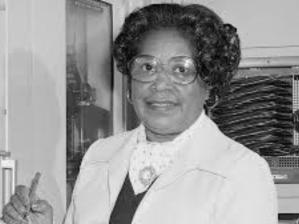
NASA renames headquarters after Mary Jackson, its first black woman engineer
This is via Law and Crime: “An Anonymous Jury Has Been Selected for Ghislaine Maxwell’s Sex Trafficking Trial. Here’s What We Know About the Panel.”
Shielded in anonymity, the jurors selected to preside over Ghislaine Maxwell’s sex trafficking trial will be identified only by their number in the interest of preserving their privacy and safety, but some details about them and their awareness of the Jeffrey Epstein scandal have been publicly disclosed earlier this month.
The 12-person panel, and six alternate jurors waiting on standby, were sworn in by U.S. District Judge Alison Nathan following a painstaking selection process. Judge Nathan whittled down a pool of 600 candidates with surveys, first with a written questionnaire and then one-on-one questions held in open court, known as voir dire proceedings.
Rejecting a request by Maxwell’s defense team to conduct this hearing secretly, Nathan held voir dire in full press and public view earlier this month. Potential jurors answered questions on the public record, with certain information—like their names—kept under seal.
Here is a breakdown of the jurors, a group that includes mostly highly educated professionals representing a broad cross-section of New York City and neighboring counties. The list may change as two newly-empaneled jurors expressed conflicts after being chosen. As the biographical information comes from voir dire transcripts, these profiles do not currently include a race and gender breakdown. The jury, however, appears to be diverse in these categories, as well as age and educational background.

So, the media continues to miss the point. And I’m tired already of writing about it. Did I mention the budget/deficit ceiling battle is about to restart?
Congress is only a couple of weeks away from hitting the Dec. 15 deadline to raise the federal debt limit, and Senate Majority Leader Charles Schumer (D-N.Y.) and Minority Leader Mitch McConnell (R-Ky.) don’t appear to be anywhere close to a deal.
Democrats insist that Schumer will not burn up a week of Senate floor time to use the budget reconciliation process to raise the debt limit with only Democratic votes.
And Republicans say there’s no way that McConnell will be able to round up 10 Republican votes to quash an expected filibuster from conservatives such as Sen. Ted Cruz (R-Texas) and allow Democrats to pass debt limit legislation with a simple majority under regular order.
The Republicans are not capable of running anything but a Circus Sideshow. We need to vote them out where we can.
What’s on your reading and blogging list today?
Virulant Friday Reads: Get Ready for the Next Wave
Posted: November 26, 2021 Filed under: 2020 Elections, 2021 Insurrection, 2022 Elections, abortion rights, Afternoon Reads, Right Wing Angst 24 Comments
Indianapolis artist Kat Silver creates oil paintings based on her vision of the Covid-19 Pandemic. Read more about her here at the Indianapolis Star.
Happy Avoiding Black Friday Day!
I spent Thanksgiving with my neighbors, which is so lovely on many levels. It really felt like the first typical holiday for me in a few years. The last one was the Mardi Gras, where I woke up with something that made me highly ill for weeks. I was really hoping to make it to Seattle, but I’m still afraid of crazies on planes and the maskless roaming airports. Now, I’m delighted I just zoomed the grandbabies and enjoyed the bags of groceries my daughter sent me so I could do my own family-style Thanksgiving at home. The Dow has fallen this morning, and countries are racing to end flight contact with South Africa. There’s a new Covid-19 variant. This is the headline from WAPO: “Announcement of new virus variant alarms world, crashing stocks and banning flights.”
A new, possibly more infectious coronavirus variant, with an unusual number of mutations, had scientists sounding the alarm, countries moving to impose travel bans and financial markets tumbling on Friday, as the world feared another setback on the long road out of the pandemic.
Major questions remain about the variant’s transmissibility, whether it might make people sicker and whether it might be able to evade vaccines, but Susan Hopkins, chief medical adviser to Britain’s Health and Security Agency, warned that the new variant found in southern Africa is the “most worrying we’ve seen.”
The variant, known as B.1.1.529, was first detected in Botswana, but scientists in South Africa convened a news conference Thursday and said they had linked it to an exponential rise of infections in their country. Cases have also been identified in Hong Kong and Belgium.
By the next morning, the Dow Jones industrial average plunged about 800 points or 2.2 percent, the S&P 500 index fell 1.5 percent, and the Nasdaq composite index was off 1.1 percent. Crude oil prices tumbled as well.
France, Britain, Japan and Israel began to ban or order quarantines for air passengers arriving from the southern African region. The European Union is also expected to also propose a ban on air travel arriving from southern Africa.
“Our view is very clear,” Dana Spinant, deputy chief spokeswoman for the European Commission, said at a news conference Friday. “We need to act very fast, we need to be vigilant, and we need to take all measures that are appropriate at this stage to prevent this virus from entering Europe.”
Anthony S. Fauci, the top U.S. infectious-disease official, said banning flights to the United States from southern Africa is a “possibility,” but that a decision has not been made yet.

Kat’s paintings, including these done on toilet paper which has been available for $20
I keep telling all my Mardi Gras-loving friends not to get overly excited about the possibility of parades again. This thing is not through with us yet. It should be called the Trump Virus by now. Reuters reports on Dr. Fauci’s comments.
“There is always the possibility of doing what the UK has done, namely block travel from South Africa and related countries,” Fauci said in an interview on CNN.
“That’s certainly something you think about and get prepared to do. You’re prepared to do everything you need to protect the American public. But you want to make sure there’s a basis for doing that,” he said.
“Obviously as soon as we find out more information we’ll make a decision as quickly as we possibly can.”
Fauci said U.S. scientists would speak with South African counterparts on Friday about the new variant, called B.1.1.529, which has raised concern about its transmissibility and whether it might evade immune responses.
He added that there was no indication that the new variant was already in the United States.
 Here we go again! Our healthcare continues to be threatened by right-wing Trumperz and Trumperz clones.
A few weeks after Texas adopted the most restrictive abortion law in the nation, Dr. Andrea Palmer delivered terrible news to a Fort Worth patient who was midway through her pregnancy.
The fetus had a rare neural tube defect. The brain would not develop, and the infant would die at birth or shortly afterward. Carrying the pregnancy to term would be emotionally grueling and would also raise the mother’s risk of blood clots and severe postpartum bleeding, the doctor warned.
But the patient was past six weeks’ gestation, and under the new law, an abortion was not an option in Texas because the woman was not immediately facing a life-threatening medical crisis or risk of permanent disability.
“So we look at them like a ticking time bomb and wait for the complications to develop,” Dr. Palmer said of her patients.
In this case, the woman had the means to travel, and she obtained an abortion in another state, an option unavailable to many low-income and working class women.
Texas’ new measure was intended to impose stringent limits on abortion. But it is also affecting women who have no desire for termination but are experiencing medically risky pregnancies. Many doctors say they are unable to discuss the procedure as an option until the patient’s condition deteriorates and her life is at risk.
Abortion is permitted in Texas after six weeks only when a woman is facing a life-threatening or disabling medical emergency linked to her pregnancy. The law makes no exceptions for nonviable pregnancies in which the fetus has no chance of survival.
 Even crazier are these calls to action by the QAnon Queen of Canada reported in VIce. “QAnon’s ‘Queen of Canada’ Calls for Followers to ‘Kill’ People Vaccinating Children. QAnon influencer Romana Didulo told her 70,000 followers that “duck-hunting season is open” and by ducks, she means healthcare workers, politicians, and journalists.” Vigilantism is sure en vogue with these dangerous nutters. Oh, Canada!
Earlier this week, the so-called QAnon Queen of Canada opened up “duck-hunting” season in the Great White North.
Now, to be clear, we aren’t talking about hunters in hip waders going after our fine-feathered friends with a loyal hound by their side. These “duck hunters” are “soldiers” of Roman Didulo—a Canadian woman who has convinced thousands of QAnon adherents that she’s the secret ruler of Canada—targeting health care workers administering COVID-19 vaccines to children, politicians, journalists, and others who make up the cabal at the heart of the QAnon conspiracy.
In a post on Sunday to her over 70,000 followers on Telegram, Didulo issued an order to the soldiers of her “Kingdom of Canada’s Military.” She demanded the mass arrests of those they consider opposition, and wanted her soldiers to take control of newspapers and seize the border.
“Shoot to kill anyone who tries to inject Children under the age of 19 years old with Coronavirus19 vaccines/ bioweapons or any other Vaccines,” she wrote. “This order is effective immediately.”
A follow-up post on Tuesday changed the wording from “shoot to kill” to “arrest.”
“Please, use airports, hospitals, schools, stadiums, and other public venues to hold and detain all traitors,” the post said. “They will stay there until Military Tribunal is held for each one of them until the day they are executed via firing squad or hanging.”
Here are two articles to read.
 This Guardian article is specific and prescient. It comes from 2020 directly after the election. Have we made any progress since a year ago?
As Ian Bassin, executive director of Protect Democracy, put it: “The United States just allowed an autocratic person to ascend to the presidency, to serve in it for four years and to very nearly extend that term. The big question is: how did that happen, what went wrong there?”
Sherrilyn Ifill, president of the NAACP Legal Defense Fund, expressed a similar thought in Slate: “Our voting system is fundamentally broken,” she wrote. “The future of our country unequivocally depends on our ability to reform it.”
This Op-Ed by MSNBC Opinion Columnist–is provocative because we really have not faced these threats head-on.
There are a lot of different ways that democracies can fail. Some collapse under the weight of political leaders who assume authoritarian control, arrest opponents, or refuse to allow new elections to take place. Others suffer at the hands of citizens who support political violence, dehumanize other political parties as “evil,” or call for civil war. Still others struggle with voter suppression and intimidation efforts, weakened trust in institutions, and falling political participation.
The U.S. is facing all these problems, and more. We are witnessing challenges to the integrity of elections, rooted in disinformation spread by our own elected officials and in widespread conspiracies that circulate online. A third of election poll workers reported feeling unsafe this year, after an “unprecedented” number of them received threats. The violent insurrection at the U.S. Capitol on Jan. 6 came at the hands of thousands of ordinary citizens who aimed to disrupt the democratic certification of the presidential election and prevent President Joe Biden from taking office.
We also face rising harassment and violence from extremist groups, citizen vigilantes, and unlawful militias who threaten minority groups, disrupt our freedom of assembly and demonstration with shows of violent force, and violate civil rights like the right to “public accommodations,” as recent court rulings have shown. We have seen repeated violent attacks, harassment, and even death threats directed at front-line workers and public officials, including school board members, health care workers, teachers, flight attendants, and restaurant hostesses.
The U.S. isn’t the only democracy that is eroding. Democratic stability is backsliding across the globe, as nations suffer from compromised elections, dismantled checks on government, challenges to a free media, and reductions of minority protections. But there is a particular urgency in the U.S. warning signs, not least because we are a nation of citizens who are now armed at previously unimaginable levels. This year is on track to be the second-highest year of firearm sales in history, following a “record shattering” year in 2020, in which 21 million background checks for firearms sales took place — far above the average of about 8.6 million annual checks.
Luckily, just because a democracy is in crisis does not mean it will collapse. On average, it takes about a decade from the onset of democratic backsliding to end in either democratic breakdown or recovery. But we are long overdue for a course correction.
We are facing back-sliding on so many civil liberties issues that I am astounded daily. Will SCOTUS overturn Roe v. Wade? Will we be able to correct the inequities that its decision on the Voting Rights Act caused? How do we deal with vigilantism; especially in communities where the police encourage it! Can we get some criminal justice reform? Haven’t we all seen enough to know how necessary it is?
These are all eyes-on-the-prize questions to me. What are yours?
What’s on your reading and blogging list today?
Monday Reads: Yes, Virginia there are Monsters that live among Us
Posted: November 22, 2021 Filed under: American Gun Fetish, Civil Liberties, Civil Rights, Criminal Justice System, Treason and Sedition Republican Style 4 Comments
Artist Walter Anderson is often credited with giving his animal subjects personalities and moods, as in this study of an owl. (Image courtesy of Bell Museum of Natural History)
Good Day Sky Dancers!
I am sorry that I’m so late with this. I had some intense dental work on Friday that was basically repeated this morning. I’m really sore, tired, and groggy. I get more on the 27th. I had no cavities but my gums needed some perking up. I hadn’t been to the dentist since before Katrina so I guess I’m a bit blessed it wasn’t a lot worse. The art today comes from Mississippi Gulf Coast Artist Walter Inglis Anderson and the Museum that features it. Anderson was born in New Orleans,
I was teaching last night when BB told me about the Waukesha Christmas parade tragedy. This morning’s details are so sad. Many of the wounded and dead were small children and a marching group called “The Dancing Grannies.” They have one suspect in custody. It’s likely the SUV occupant was fleeing a knife fight. He’s got a criminal record. Monstrous behavior is on the lose in Wisconsin. This is from WaPo. As of now, there are five people dead. Ten of the 12 children hospitalized are in the pediatric ICU.
Officials said that 22 patients were transported by fire crews to six area hospitals. Additional people were transported to medical facilities by the police and bystanders. One hospital said Monday that 18 children had been brought to its emergency department alone.
“Our community needs to heal from physical injury and emotional trauma and what was taken from us by this senseless act,” Waukesha mayor Shawn Reilly said during the Monday briefing. “What we do today and in the days ahead is what will define us as a city, and I know we will come together and help Waukesha heal.”
By the morning after the parade, only some of the prior night’s chaos had been cleared. The trail of stray gloves, overturned chairs and abandoned drinkware grew denser the closer to Barstow Street, while Lollipops and wrapped candy were still scattered on the grassy parkway where families had gathered hours earlier for the parade themed “Comfort and Joy.” An image from the aftermath showed a jogging stroller, decorated with red and silver tinsel, now abandoned and missing a wheel.

Two Pelicans in Flight. Anderson, Walter Ingils (Artist)
The city of Kenosha, Wisconsin is still in the center of controversial verdict freeing Kyle Rittenhouse to kill again. The worst thing is that he has paired up with the FOX Monster known as Tucker Carlson for an interview airing a day ago. Two Fox News Contributers have quit the company over Carlson’s “documentary” that tries to whitewash Jan 6. This is from Greg Sargent at WaPo: “As two Fox contributors quit over Tucker Carlson, an alarming truth is revealed .”
It is fitting that two Fox News contributors have severed their ties with the network over Tucker Carlson’s glorification of Jan. 6 at exactly the moment when more than 150 scholars are sounding a loud, clanging alarm about the future of our democracy.
Because these two stories are unsettlingly related. Both should rivet our attention on the increasing flirtation among large swaths of the right with political violence, and on the role that the right’s campaign to delegitimize our political system is playing in it.
The two contributors — conservative writers Stephen Hayes and Jonah Goldberg — quit Fox to protest Carlson’s online special “Patriot Purge.” As Ben Smith of the New York Times reports, they objected to its depiction of an alternate history of Jan. 6 as a “false flag” designed to create a pretext to persecute conservatives.
Here’s a UK The Guardian link to coverage of the interview of Vile Kyle by Tucker the Fucker: “Outcry as Kyle Rittenhouse sits down for Tucker Carlson Fox News interview.”
“This case has nothing to do with race,” Rittenhouse told Tucker Carlson in excerpts released by Fox News. “It never had anything to do with race. It had to do with the right to self-defense.”
Rittenhouse has attracted support from conservative groups and lawmakers, some of whom, on the far right of the Republican party, have celebrated his acquittal and offered him internships. On Sunday Christina Pushaw, press officer for Republican governor Ron DeSantis, welcomed Rittenhouse to the “free state” of Florida in a tweet.
Before his trial, Rittenhouse was photographed in a bar with apparent members of the far-right Proud Boys, where he is alleged to have flashed white power hand signs. While his attorneys have insisted Rittenhouse is not a white supremacist, others have said otherwise.
On Saturday, the MSNBC host Tiffany Cross said: “The fact that white supremacists roam the halls of Congress freely and celebrate this little murderous white supremacist, and the fact that he gets to walk the streets freely, it lets you know these people have access to instituting laws, they represent the legislative branch of this country.”
The civil rights attorney Ben Crump was equally scathing following Friday’s verdict.
“If we were talking about a Black man,” he said, “the conversation and outcome would be starkly different. But we’re not. We’re talking about Kyle Rittenhouse, a racist, homicidal vigilante who, like so many white men before him, not only escaped accountability but laughed in its face.”
Fucker Carlson has also made a “documentary” on the case.

One party is impowering monsters. They are monsters. From CBS: “European thinktank adds U.S. to list of “backsliding” democracies for 1st time.”
The United States has joined an annual list of “backsliding” democracies for the first time, the International IDEA think-tank said on Monday, pointing to a “visible deterioration” that it said began in 2019. Globally, more than one in four people live in a backsliding democracy, a proportion that rises to more than two in three with the addition of authoritarian or “hybrid” regimes, according to the Stockholm-based International Institute for Democracy and Electoral Assistance.
“This year we coded the United States as backsliding for the first time, but our data suggest that the backsliding episode began at least in 2019,” it said in its report titled “Global State of Democracy 2021.”
“The United States is a high-performing democracy, and even improved its performance in indicators of impartial administration (corruption and predictable enforcement) in 2020. However, the declines in civil liberties and checks on government indicate that there are serious problems with the fundamentals of democracy,” Alexander Hudson, a co-author of the report, told AFP.
Racist language has been resplendent in the three defendents tried for the murder of Ahmad Aubery. This prosecution has the right argument.
It is truely difficult these days to watch the violence in this country and then go outside your door. Many women and children do not even have to go outside their doors. This if from The Philidelphia Inquirer: “Pa. Senate candidate Sean Parnell has lost his custody battle after abuse claims by his estranged wife .”
Senate candidate Sean Parnell suspended his campaign Monday, hours after a judge ruled against him in a custody battle that included allegations he had physically and verbally abused his wife and children.
While Parnell denied those claims, the judge found his wife, Laurie Snell, to be more credible.
“There is nothing more important to me than my children, and while I plan to ask the court to reconsider, I can’t continue with a Senate campaign,” Parnell said in a statement. “My focus right now is 100% on my children, and I want them to know I do not have any other priorities and will never stop fighting for them.”
His decision capped a rapid collapse for a candidate once viewed as the GOP front-runner in Pennsylvania’s nationally watched race to replace Republican Sen. Pat Toomey. Parnell, a decorated Army veteran who received a Purple Heart after serving in Afghanistan, won an August endorsement from former President Donald Trump, but his campaign quickly unraveled after a rival questioned his personal conduct and his wife, Laurie Snell, testified under oath that Parnell choked her, pinned her down and called her “a whore.”

More from the little room
Rolling Stone has yet more on the Jan.6 insurrection and Trump involvement. You may go read that here: “Leaked Texts: Jan. 6 Organizers Say They Were ‘Following POTUS’ Lead’ ”
Max Boot from WaPO writes this; “Republicans are fomenting a violent insurgency in America. It may have already started. ”
There really are monsters in this country. Read those and know who they are.
What’s on your reading and blogging list today?
Thursday Reads: Crazy is the New Red
Posted: November 18, 2021 Filed under: Black Lives Matter, Black Women Lead, The Trials of White Men 2021, The Trials of White Men 2021 style 24 Comments Good Morning Sky Dancers!
I really tried to watch two court proceedings and the censor vote and discussion on Paul Gosar. The Gun Fetishists have clearly moved into the territory of Vigilantism for all kinds of perceived reasons, and none of them are good. It was clear that a high schooler with a semi-automatic dropped into a civil rights action gone wrong was a bad move that would only worsen a bad situation. We’ve got plenty of laws against that and carrying around illegal weapons yet, the right has made a kid with the bad judgement of an immature adolescent into some kind of a marauding hero. It is evident when you hear most of the responses that led to the murder of 2 people, and the severe injuries to one were based on them thinking he was an active shooter. He was patrolling the street, basically looking for someone to gun down. Rittenhouse went looking to shoot someone and killed 2 people. Today is the third day of jury deliberations.
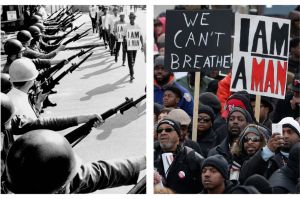 Then I saw bits and pieces of the three older vigilantes with some policing experience basically stalk a young black jogger and then claim self-defense when that’s precisely what Aubry was doing. Figuring a white truck with armed white guys and a confederate flag license plate were likely to kill him, he tried to defend himself, and they killed him. So, the police training and more mature minds basically led to the same outcomes. These folks up for murder basically went looking for trouble with guns. Travis McMichael is one of three white men accused of killing Ahmaud Arbery; his defense attorney tried to turn him into a Coast Guard hero. His primary duties with the USCG were auto mechanic. Arbery was unarmed.
Then, we see the ever-crazy, ever-defiant Paul Gosar retweet the same violent video with him as some kind of anime hero killing his colleague and stabbing the President the morning after he was censured by the House of Representatives.
The last thing I tried to listen to was an interview with Julius Johns, who is scheduled to be executed by the state today for a murder that evidence suggests he did not commit. One of these things is not like the others above. Julius is a black man.
You could not possibly take all of this in and not be depressed and angry about the state of our criminal justice system. I also watched interviews with the author of The 1619 Project. This is the basis for all the white angst and fragility over Critical Race Theory, which is basically something that’s taught in Law Schools and not in any primary or secondary public school anywhere.
This is why I am supporting Susan Hutsan for Sheriff of Orleans Parish. Our criminal justice system must be reformed, or our democracy will continue to fail to provide equal justice under the law to all. Susan has been the New Orleans Independent Police Monitor. She opposes building a new parish jail. We already have an incredible incarceration rate here.
 Charles Blow discusses ‘White Men on Trial’ in an Op-Ed for the NYT. He includes Bannon’s woes in his analysis.
There is quite the convergence at the moment of race and justice as cases featuring white male defendants accused of everything from murder to insurrection dominate news coverage.
There is a virtual pageant of privilege as the country waits to see if our system of justice will deal as severely and unsparingly with these men as it has with others who were not white men.
All the cases are different, of course. Some are being adjudicated in the state courts, others in federal. Some have proceeded to sentencing, while others remain at the charging or trial stage. But the optics are somewhat consistent.
Blow is right. The optics are consistent and hard-to-miss.
Race hangs heavy over all these cases. They involve white vigilantes who stalked and killed a Black man, and a young man who killed two people at a protest that was in solidarity with Black Lives Matter. They involve white men who sought to overturn a fair election in which people of color secured a victory for Biden over a white nationalist president, and a white man who defied Congress to protect those white nationalists. And finally, they involve a man who posted a violent video about killing a woman of color in Congress.
I would like to return to the link at NBC about Nikole Hannah-Jones whose book is subtitled “The Harsh Truths of the Black Experience.:” The book was released on Tuesday.
In an interview with Trymaine Lee, host of the MSNBC podcast “Into America,” in front of an audience at Harvard University where he is a fellow, Hannah-Jones spoke about the legacy of 1619, and the way Americans’ understanding of historical events can evolve.
“Life, liberty and the pursuit of happiness; those words are powerful,” she said in the interview, which will be featured in the podcast Thursday. “We just have never lived up to them for a single day. So if you believe in that kind of vaunted 1776 origin story, that’s the comforting origin story. The1619 Project, I would argue, is more truthful, but not comforting. It’s not comforting at all.”
The 1619 Project received harsh criticism for the main conceit of the project, which was that America was not founded in 1776 when it declared its independence from England, but in 1619 when the first African slaves were brought to the colonies and exploited.
Then-President Donald Trump took aim at the narrative last year during a White House press conference, during which he expressed the government’s need to restore patriotic education in schools. Hannah-Jones said she received intimidating emails and voicemails that used racial slurs, as well as threats that her home would be burned down.
She said she thought about the project “all the time” as she was working on the initial magazine feature.
“I also felt a tremendous burden to get it right, to do justice to that suffering, to do justice to our ancestors,” Hannah-Jones said. “And then facing, you know, constant attacks, not just on the work, but on my credibility as a journalist, I became a symbol; and I think we would not be being honest if we didn’t say me being a Black woman in particular, a Black woman who looks and presents the way that I do, that I didn’t get a certain, extremely vicious type of pushback.”
 I was ten years old when Seperate But Equal died in the Supreme Court. We’re talking only 55 years ago. The south gets the blame for a lot of Jim Crow but it was all over including just tryiing to take a vaction in California or Colorado. Click this link to see the photo exhibit. This was still in operation when I was a child spending my summers in a Colorado cabin in the Rockies. There were never any black families staying with us at the YMCA Camp of the Rockies.
Lincoln Hills, 1925–1965
Coloradans love the outdoors. But African Americans were once barred from leisure opportunities most whites took for granted. Explore a Rocky Mountain haven where African Americans could hike, fish, and camp—and leave discrimination behind.
 A black family that owned a camping and recreation in California had its business taken from it and turned into a public park.It’s finally been given to the grandchildren as a reparation for the theft. The beach was seized from the family in 1924. These are the kinds of things that impact intetergenerational wealth. The story is reported by ABC.
A stretch of beachfront land in Southern California that was seized from a Black family 97 years ago is set to be returned to their descendants.
Black couple Willa and Charles Bruce purchased land on Manhattan Beach in 1912, making them among the first Black landowners in the city. But 12 years later they were forced off their property as it was seized by the city.
On Tuesday, the Los Angeles County Board of Supervisors voted 5-0 to return the property to the descendants of Willa and Charles Bruce.
The Bruces bought the first of two ocean-view lots for $1,225, a property that could now be worth millions.
They built a resort known as Bruce’s Beach to serve Black residents, making it one of the few beaches Black residents could use due to segregation. The Bruces and their customers were harassed and threatened by their white neighbors, including the Ku Klux Klan, the county board of supervisors said in a news release.
In 1924, the city of Manhattan Beach used eminent domain to force the couple off their land to turn it into a park. The city seized the property in 1929, however, it remained vacant for decades.
Think of this. From the NY: “NASA Astronaut to Be First Black Woman to Join Space Station Crew. Jessica Watkins, who joined NASA’s astronaut corps in 2017, is scheduled to fly to the orbital outpost in a SpaceX capsule in April.”
All you have to do is open your eyes and seek the truth and it shall free you. It should not make you feel aggrieved by the feelings of the victims. There are far too many good firsts that have yet to appear for every one but White Men. Time to change that!
What’s on your reading and blogging list today?

 peej
peej Carissa
 bostonboomer
 dakinikat
 ecocatwoman
 jjlo
jjlo mablue2
 Mama Lopez
 peggysue22
 quixote
 skydancingguestblogger
 Mona (aka Wonk the Vote)



 Sky Dancing
Recent Comments