

Former president Donald Trump asked one of his lawyers to tell the National Archives and Records Administration in early 2022 that Trump had returned all materials requested by the agency, but the lawyer declined because he was not sure the statement was true, according to people familiar with the matter.
As it turned out, thousands more government documents — including some highly classified secrets — remained at Trump’s Mar-a-Lago residence and private club….
Alex Cannon, an attorney for Trump, had facilitated the January transfer of 15 boxes of presidential records from Mar-a-Lago to the National Archives, after archives officials agitated for more than a year to get “all original presidential records” back, which they are required by law to do. Following months of stonewalling by Trump’s representatives, archives officials threatened to get the Justice Department or Congress involved.
Trump himself eventually packed the boxes that were returned in January, people familiar with the matter said. The former president seemed determined in February to declare that all material sought by the archives had been handed over, said the people, who like others interviewed for this article spoke on the condition of anonymity to discuss internal conversations.
Around the same time The Washington Post reported that the archives had retrieved documents from Mar-a-Lago, the people said, Trump asked his team to release a statement he had dictated. The statement said Trump had returned “everything” the archives had requested. Trump asked Cannon to send a similar message to archives officials, the people said. In addition, the former president told his aides that the documents in the boxes were “newspaper clippings” and not relevant to the archives, two of these people said, and complained that the agency charged with tracking government records was being persnickety about securing the materials from his Florida club.
But Cannon, a former Trump Organization lawyer who worked for the campaign and for Trump after the presidency, told Trump he could not tell the archives all the requested material had been returned. He told others he was not sure if other documents were still at the club and would be uncomfortable making such a claim, the people familiar with the matter said. Other Trump advisers also encouraged Cannon not to make such a definitive statement, people familiar with the matter said.
The Feb. 7 statement Trump dictated was never released over concerns by some of his team that it was not accurate, people familiar with the matter said. A different statement issued three days later said Trump had given boxes of materials to the archives in a “friendly” manner. It did not say that all of the materials were handed over.
Thursday Reads: Latest on the Stolen Government Docs and Other News
Posted: October 6, 2022 Filed under: Donald Trump, morning reads | Tags: 11th Circuit appeals court, animal cruelty, DOJ, Dr. Oz, Judge Aileen Cannon, SCOTUS, stolen documents 20 Comments
Georgia O’Keeffe, Autumn Trees
Good Morning!!
I got the Omicron booster and a flu shot this morning. I was fortunate that the local Council on Aging came to my apartment building to give the vaccines. My town is really nice to us old folks.
Both of my arms hurt already, especially the left, where I got the Covid shot. I hope I won’t have a too many side effects. It hurts to type, so this won’t be a fancy post.
Before I get going on the latest news, I want to share this shocking story about Dr. Oz that Jezebel published on Monday: Dr. Oz’s Scientific Experiments Killed Over 300 Dogs, Entire Litter of Puppies.
…[A] review of 75 studies published by Mehmet Oz between 1989 and 2010 reveals the Republican Senate candidate’s research killed over 300 dogs and inflicted significant suffering on them and the other animals used in experiments.
Oz, the New Jersey resident who’s currently running for U.S. Senate from Pennsylvania, was a “principal investigator” at the Columbia University Institute of Comparative Medicine labs for years and assumed “full scientific, administrative, and fiscal responsibility for the conduct” of his studies. Over the course of 75 studies published in academic journals reviewed by Jezebel, Oz’s team conducted experiments on at least 1,027 live animal subjects that included dogs, pigs, calves, rabbits, and small rodents. Thirty-four of these experiments resulted in the deaths of at least 329 dogs, while two of his experiments killed 31 pigs, and 38 experiments killed 661 rabbits and rodents.
In the early 2000s, testimony from a whistleblower and veterinarian named Catherine Dell’Orto about Oz’s research detailed extensive suffering inflicted on his team’s canine test subjects, including multiple violations of the Animal Welfare Act, which sets minimum standards of care for dogs, cats, primates, rabbits, and other animals in the possession of animal dealers and laboratories. The law specifically requires researchers and breeders to use pain-relieving drugs or euthanasia on the animals, and not use paralytics without anesthesia, or experiment multiple times on the same animal.
Dell’Orto testified that a dog experimented on by Oz’s team experienced lethargy, vomiting, paralysis, and kidney failure, but wasn’t euthanized for a full two days. She alleged other truly horrifying examples of gratuitously cruel treatment of dogs, including at least one dog who was kept alive for a month for continued experimentation despite her unstable, painful condition, despite how data from her continued experimentation was deemed unusable. According to Dell’Orto, one Oz-led study resulted in a litter of puppies being killed by intracardiac injection with syringes of expired drugs inserted in their hearts without any sedation. Upon being killed, the puppies were allegedly left in a garbage bag with living puppies who were their littermates. Dell’Orto’s allegations, made in 2003 and 2004, are detailed in letters from PETA to the university and USDA. In an interview with Billy Penn last month, she acknowledged PETA “is not a reliable source of information,” but said the organization’s letters honestly reflected what she told the organization and provided documentation for.
In May 2004, Columbia University was ordered by the USDA to pay a $2,000 penalty for violations of the Animal Welfare Act. The fine paid by Columbia was the result of a settlement between the university and the USDA, based on the findings of Columbia’s internal investigation of Oz’s research. The USDA accepted these findings, but according to Dell’Orto, the review was faulty, and “had investigators on the committee that were also complicit in this type of poorly designed, cruel animal experimentation.” Dell’Orto also noted that while Oz wasn’t the one who euthanized the dogs and puppies himself, “When your name is on the experiment, and the way the experiment is designed inflicts such cruelty to these animals, by design, there’s a problem.”
Oz also opposes abortion, so he doesn’t have a problem with women dying either.
There’s quite a bit of news on the stolen government documents investigation, so I’m going to focus on that. I’ll add more news links at the end of the post.

Pierre Bonnard, Autumn View, 1912
Yesterday afternoon, the 11th Circuit appeals court undercut Trump’s SCOTUS appeal by granting the DOJ’s request for expedited consideration of their appeal of Judge Loose Cannon’s special master decision. Josh Gerstein and Kyle Cheney at Politico: Appeals court expedites DOJ challenge to Mar-a-Lago special master.
A federal appeals court agreed on Wednesday to expedite consideration of a Justice Department’s bid to shut down the external review process for the 11,000 documents seized by the FBI during its August raid of former President Donald Trump’s residence.
The Atlanta-based 11th Circuit Court of Appeals issued an order Wednesday morning setting tighter deadlines in the government’s appeal to remove what prosecutors contend is an unnecessary obstacle to their investigation into potentially illegal retention of classified information, theft of government records and obstruction of justice.
The schedule set by the appeals court for legal briefing on the issue is not quite as rapid as the Justice Department proposed, but is faster than Trump’s legal team urged. Under the new schedule, Trump’s lawyers would have to stake out their position in the dispute by Nov. 10 and briefing would be complete by Nov. 17.
“No extensions allowed,” Judge Adalberto Jordan wrote, indicating that he had consulted with Chief Judge William Pryor on the plan.
No date was set Wednesday for oral argument, but Adalberto’s order said a “special merits panel” would be assigned to the case.
The legal fight over the documents found at Trump’s Mar-a-Lago club in Florida has now proliferated into four arenas: the Florida courtroom of U.S. District Court Judge Aileen Cannon, who first approved the former president’s request for a special master; the Brooklyn courtroom of the special master she appointed, senior Judge Raymond Dearie; the Atlanta-based 11th Circuit Court of Appeals and the Supreme Court.
Read more at the link.
A couple of days ago Bloomberg’s Zoe Tillman was able to download a court filing that was accidentally unsealed for a short time. The filing listed the documents that had been segregated from the FBI search results because they contained personal or potentially privileged material.
I can’t access her story, but here is an analysis from Philip Bump at The Washington Post: What the FBI took from Trump, according to an accidentally unsealed list.
The list includes two batches of documents, about five dozen in total. What’s included are about 520 pages of documents that the government believed should be screened for privilege by the special master assigned to the case. The government broke the documents into two groups. The first was material that related to Trump’s tenure as president, labeled Exhibit A. The second was material that appeared to be subject to attorney-client privilege. It’s marked Exhibit B.
Reviewing the list itself, though, we get a good sense of the breadth of information that was present at Mar-a-Lago. There are documents related to grants of clemency, to endorsements, to legal fights, to policy proposals. At times, the documents are cryptic. We’ve done our best to clarify where we can, but we might not have explained everything.
Read the document descriptions at the WaPo.

Edvard Munch, Elm Forest in Autumn
This is from Emptywheel yesterday: Judge Aileen Cannon Treated a Public Letter About Trump’s Health As More Sensitive Than America’s National Security.
As I have shown, had Judge Aileen Cannon left well enough alone, the government would have handed all Category B documents identified by the filter team back to Trump on September 1. Instead, she deliberately inflicted what she herself deemed to be further harm on Trump to justify intervening in the search of Trump’s beach resort.
And now she may have caused even more harm. That’s because, by means that are not yet clear (but are likely due to a fuck-up by one of Cannon’s own staffers), the inventories from both Category A (government documents that deal with a legal issue) and Category B (more personal documents) were briefly posted on the docket. (h/t Zoe Tillman, who snagged a copy)
Those inventories not only show Cannon’s claims of injury to Trump were even more hackish than I imagined. But it creates the possibility that DOJ’s filter team will attempt to retain some of the documents included in Category B, notably records pertaining to the Georgia fraud attempts and January 6, they otherwise wouldn’t have.
Start with the hackishness. The harm that Cannon sustained to justify intervening consisted of preventing DOJ from returning, “medical documents, correspondence related to taxes, and accounting information” to Trump, “depriv[ing Trump]of potentially significant personal documents.” Cannon made DOJ withhold such documents from Trump for a least two additional weeks and then used it to argue that Trump had a personal interest in what DOJ claims are mostly government documents and press clippings.
The single solitary medical document pertaining to Trump (there’s a Blue Cross explanation of benefits that appears to pertain to someone else) is this letter from Trump’s then-personal physician released during the 2016 Presidential campaign.
Not only was it publicly released over six years ago, but details of medicines left off the report and Trump’s role in dictating an earlier version of the letter were widely reported in 2017.
Aileen Cannon held up a national security investigation into highly sensitive documents stored insecurely at a beach resort targeted by foreign intelligence services, in part, because the FBI seized a public letter than had been released as part of a political campaign six years ago.
She personally halted efforts to keep the United States safe, in part, to prevent leaks of a document that Trump released himself six years ago.
Read more at the link.
Jason Leopold and Jack Gillum at Bloomberg on who packed the boxes Trump sent to Mar-a-Lago: Trump Says US Agency Packed Top-Secret Documents. These Emails Suggest Otherwise.
Former President Donald Trump publicly said that one reason that the FBI found boxes of classified documents improperly stored at his Florida estate was that federal workers had packed up the White House after his 2020 defeat.
Autumn in Bavaria, Wassily Kandinsky, 1908
But documents obtained by Bloomberg News under a Freedom of Information Act request suggest a different story. More than 100 pages of emails and shipping lists between White House and transition staff and the US General Services Administration describe the minutiae of moving the Trump White House from Washington, DC, to Florida, down to how many rolls of bubble wrap and tape, all within a plan signed by then-Chief of Staff Mark Meadows.
One thing is clear: The boxes were packed when the movers got there.
While the records don’t specify what the boxes contained, they provide the most detailed account to date of how the GSA assisted the outgoing administration between January and September 2021.
After the FBI’s unprecedented Aug. 8 search of Trump’s Mar-a-Lago estate, the former president and his allies, including Fox News’s Sean Hannity, Stephen Bannon’s Breitbart News and former Trump defense official Kash Patel, have claimed that Trump can’t be held legally responsible for the dozens of boxes of highly classified documents found around Mar-a-Lago because the GSA — essentially the federal government’s office and property manager — was in charge of filling boxes and shipping them.
Apparently, those were all lies. Read the rest of the details at Bloomberg. A few days ago, The Washington Post reported that Trump himself packed the 15 boxes that he turned over the the National Archives in January. At the time, Alex Cannon, a Trump lawyer, refused to certify that all the documents had been returned, because he didn’t believe that was true. IMO, Trump probably packed the boxes that he took from the White House too.
More News, Links Only:
NBC News: FBI arrests pastor who wore his company jacket on Jan. 6 and pushed into police line.
David Wasserman at the Cook Political Report: House Rating Changes: Ten Races Shift, Mostly Towards Democrats.
Politico: Abortion ‘has given Democrats a second look’ from GOP-leaning women.
The Washington Post: 14-year-old’s arthritis meds denied after Ariz. abortion ban, doctor says.
Roger Sollenberger at The Daily Beast: She Had an Abortion With Herschel Walker. She Also Had a Child With Him.
Secret Service news from Carol Leonnig at The Washington Post: VP was in car accident; Secret Service first called it ‘mechanical failure’
Timothy Snyder: How does the Russo-Ukrainian War end?
Financial Times: Vladimir Putin’s botched mobilisation triggers blame game in Russia.
That’s all I have for you today. What stories are you following?
Tuesday Reads
Posted: October 4, 2022 Filed under: Afternoon Reads, Donald Trump, just because | Tags: "independent state legislature theory", DOJ, FBI, Mar-a-Lago, National Archives, nuclear weapons, Oath Keepers, Russia, SCOTUS, seditious conspiracy, stolen government documents, Ukraine, Vladimir Putin 18 Comments
Mr Toad in The Wind in the Willows, illustration by Inga Moore
Good Afternoon!!
My posts are getting later and later. I look around at what’s happening in the world on my blogging days and somehow it takes me a long time to get going. Maybe it’s just because I’m getting old, or maybe it’s because I’m traumatized by seven years of reading about Trump and the horrors he has inflicted on our country–or maybe both. I don’t know why I ever thought he would go away once he was out of office. Back when he was ranting on Twitter all the time, I used to wish he would go away and leave us alone. Now I realize he will never go away until he dies, and even then we’ll be reading about the damage he has done–if we survive as a country with freedom of speech and press, that is.
The latest on Trump’s legal problems and crimes
The Washington Post: Trump’s lawyer refused his request in February to say all documents returned.
So Cannon will be another witness against Trump if he’s ever brought to trial. There’s much more at the WaPo link.

Bilbo comes to the huts of the raft elves, by JRR Tolkien
From J. Michael Luttig at The Atlantic on the upcoming SCOTUS case based on Trump’s efforts to get Republican state legislators to create fake sets of electors in order to overturn his 2020 election loss: There Is Absolutely Nothing to Support the ‘Independent State Legislature’ Theory.
The Supreme Court will decide before next summer the most important case for American democracy in the almost two and a half centuries since America’s founding.
In Moore v. Harper, the Court will finally resolve whether there is a doctrine of constitutional interpretation known as the “independent state legislature.” If the Court concludes that there is such a doctrine, it would confer on state legislatures plenary, exclusive, and judicially unreviewable power both to redraw congressional districts for federal elections and to appoint state electors who quadrennially cast the votes for president and vice president on behalf of the voters of the states. It would mean that the partisan gerrymandering of congressional districts by state legislatures would not be reviewable by the state courts—including the states’ highest court—under their state constitutions.
The independent-state-legislature theory gained traction as the centerpiece of President Donald Trump’s effort to overturn the 2020 presidential election. In the Supreme Court, allies of the former president argued that the theory, as applied to the electors clause, enabled the state legislatures to appoint electors who would cast their votes for the former president, even though the lawfully certified electors were bound by state law to cast their votes for Joe Biden because he won the popular vote in those states. The Supreme Court declined to decide the question in December 2020. The former president and his allies continued thereafter to urge the state legislatures, and even self-appointed Trump supporters, to transmit to Congress alternative, uncertified electoral slates to be counted by Congress on January 6.
That as many as six justices on the Supreme Court have flirted with the independent-state-legislature theory over the past 20 years is baffling. There is literally no support in the Constitution, the pre-ratification debates, or the history from the time of our nation’s founding or the Constitution’s framing for a theory of an independent state legislature that would foreclose state judicial review of state legislatures’ redistricting decisions. Indeed, there is overwhelming evidence that the Constitution contemplates and provides for such judicial review.
To the extent that advocates of the independent-state-legislature theory have any evidence at all to support the theory, it is exceedingly thin. Their textual argument is that the total disempowerment of state courts necessarily follows from the fact that the elections clause empowers the state legislatures to prescribe the “manner” of holding congressional elections.
But there is neither more nor less significance to the fact that the Constitution assigns this quintessential legislative power to the state legislatures than that the Constitution assigns federal lawmaking to Congress, rather than to the executive or the judiciary. And yet, the Constitution provides for judicial review of the actions of both.
It’s long, of course, so read the rest at The Atlantic if you’re so inclined.
And then there’s Trump’s mentor, Putin. Will he ever go away?
This is by Walter Russell Mead at The Wall Street Journal–I didn’t encounter a paywall: Putin’s Nuclear Threat Is Real. The conflict isn’t only about Ukraine. He’s waging a global war on the U.S.-led order.
Even as poorly trained, poorly led and poorly supplied Russian forces retreat on the battlefield, the danger that the war in Ukraine will erupt into a wider conflict continues to grow. Vladimir Putin has responded to the weakening of his military position by “annexing” four contested regions inside Ukraine, declaring that the conflict in Ukraine is a war for the survival of Russia, and raising the specter of a nuclear strike. The West is taking note of these moves and the sabotage of Baltic pipelines connecting European consumers to Russian gas. National security adviser Jake Sullivan has warned Russia that any use of nuclear weapons would have catastrophic consequences for Russian forces, and Jens Stoltenberg, secretary general of the North Atlantic Treaty Organization, repeated that message Sunday morning.
Inga Moore, The Secret Garden
As the Biden administration scrambles to manage the most dangerous international confrontation since the 1962 Cuban Missile Crisis, it must see the world through Mr. Putin’s eyes. Only then can officials know how seriously to take the nuclear saber-rattling and develop an appropriate response.
While American presidents going back to George W. Bush have failed to appreciate the depth and passion of Mr. Putin’s hostility to the U.S., the Russian president isn’t that hard to read. Like a movie supervillain who can’t resist sharing the details of his plans for world conquest with the captured hero, Mr. Putin makes no secret of his agenda. At Friday’s ceremony marking Russia’s illegal and invalid “annexation” of four Ukrainian regions, he laid out his worldview and ambitions in a chilling and extraordinary speech that every American policy maker should read.
Mr. Putin sees global politics today as a struggle between a rapacious and domineering West and the rest of the world bent on resisting our arrogance and exploitation. The West is cynical and hypocritical, and its professed devotion to “liberal values” is a sham. The West is not a coalition of equals; it represents the domination of the “evil Anglo-Saxons” over the Europeans and Japan. Mr. Putin sees this American-led world system as the successor to the British Empire, and he blames the Anglo-Saxon or English-speaking powers for a host of evils, from the Atlantic slave trade to European imperialism to the use of nuclear weapons in World War II.
This attack on “Anglo-Saxon” greed, brutality and hypocrisy is not original to Mr. Putin. He is reading from a script developed by opponents of British and American liberal capitalism and geopolitical power over hundreds of years. Napoleon could have delivered large swathes of this speech. Very different figures such as Kaiser Wilhelm II, Adolf Hitler as well as Joseph Stalin, Imperial Japanese leaders like Hideki Tojo, Iran’s Ayatollah Ruhollah Khomeini and Osama bin Laden shared much of Mr. Putin’s critique. One can hear versions of it on many college campuses, and it plays a significant role in the intellectual and cultural life of many postcolonial countries and movements around the world.

Again, this is a long read, so I hope you will also be able to do so without hitting a paywall. If it helps, I clicked on a link from Memeorandum.
The latest Ukraine news from The Washington Post: Ukraine hammers Russian forces into retreat on east and south fronts.
Ukrainian troops on Tuesday accelerated their military advances on two fronts, pushing Russian forces into retreat in the Donetsk and Luhansk regions to the east and Kherson region to the south.
The gains showed Kyiv continuing to recapture occupied territory on the same day that President Vladimir Putin and his rubber-stamp parliament sought to formalize their increasingly far-fetched annexation claims of four Ukrainian regions.
“The Ukrainian armed forces commanders in the south and east are throwing problems at the Russian chain of command faster than the Russians can effectively respond,” said a Western official who requested anonymity to brief reporters about sensitive security information. “And this is compounding the existing dysfunction within the Russian invasion force.”
Ukraine has been pushing to take back as much of its occupied territory as it can before Russia potentially sends hundreds of thousands of reinforcements to the battlefield, following a recent mobilization effort.
The Story of Dr. Dolittle, illustrated by Angel Dominguez
The Ukrainian counteroffensive, which had moved far more slowly in the south compared to the lightning push through the northeast Kharkiv region in September, has suddenly picked up speed, with Russian units retreating in recent days from a large swath of territory along the west bank of the Dnieper River.
Ukrainian forces pushed ahead dozens of miles into the southern Kherson region, liberating towns and villages and recreating scenes from mid-September when they swept into Kharkiv and were greeted by joyful residents who had spent many months under Russian occupation.
On Monday, the spokesperson for the Russian Defense Ministry acknowledged that “superior tank units” of Ukraine had “wedged in the depth of our defense line” near the villages of Zolota Balka and Oleksandrivka in the Kherson region.

Read the rest at the WaPo.
Yesterday was day one of the Oath Keepers seditious conspiracy trial:
CNN: Takeaways from the dramatic first day and opening statements of the Oath Keepers trial.
With the historic case that they had brought against Oath Keepers accused of plotting to attack the US Capitol on January 6, 2021, prosecutors framed up how the jury should think about the allegations with an hour-plus opening statement that kicked off the trial in earnest.
Five alleged members of the far-right militia, including its leader Stewart Rhodes, are on trial in Washington DC’s federal courthouse. They have pleaded not guilty to the charge of seditious conspiracy, a charge rarely brought by the Justice Department, and other charges.
The Justice Department’s opening statement featured messages and other communications among the defendants that prosecutors say show the Oath Keepers’ unlawful plotting to disrupt Congress’ certification of President Joe Biden’s electoral win. As the prosecutors sought to use the words of the defendants against them, they also played video capturing the Oath Keepers’ actions in the Capitol and displayed maps and charts to help the jury follow along. Each juror has their own screen to see evidence.
“They said out loud and in writing what they planned to do,” Jeffrey Nestler, an assistant US Attorney, told the jury. “When the opportunity finally presented itself … they sprang into action.”
A lawyer for Rhodes, the first defense attorney to deliver an opening statement told the jurors that they will see evidence that will show that the defendants “had no part in the bulk” of the violence that occurred on January 6.
“You may not like what you see and hear our defendants did,” attorney Phillip Linder said, “but the evidence will show that they didn’t do anything illegal that day.”
That’s the introduction to the story. Read the takeaways at CNN. Again, it’s a long read.
The Washington Post: U.S.: Oath Keepers, Rhodes attacked ‘bedrock of democracy’ on Jan. 6.

Lazy Caturday Reads
Posted: October 1, 2022 Filed under: just because 18 CommentsHappy Caturday!!
 It’s a busy news day for a Saturday. Yesterday, Vladimir Putin gave an unhinged speech yesterday in which he announced Russia’s supposed annexation of parts of Ukraine. It’s not working out well for him on the ground.
Late last night, the DOJ asked the 11th Circuit appeals court to speed up consideration of their appeal of Judge Loose Cannon’s order of a special master to sort through the 11,000 unclassified files seized from Mar-a-Lago. Also last night, The Washington Post published a long article on conflicts in Trump’s legal team, including the fact that one of them, Christina Bobb, is willing to cooperate with the DOJ.
Jason Leopold, the FOIA expert who used to work for Buzzfeed, has moved to Bloomberg and published a scoop last night on Obama’s opinions about Trump. Plus, Politico published gossip about the “transition from hell” from Maggie Haberman’s upcoming book.
Putin and Ukraine
Michael Weiss and James Rushton at Yahoo News: Putin’s ‘annexation’ announcement changes little on the ground in Ukraine.
Even by his own fire-and-brimstone standards, Russian President Vladimir Putin seemed angry on Friday as he addressed hundreds of Russian parliamentarians and governors in St. George Hall in the Kremlin.
The event had been called so that Putin could triumphantly announce his latest gambit in Ukraine, the annexation of four regions of that country into the Russian Federation. But as he rattled off a litany of reasons as to why this land grab was necessary, the mood was more apocalyptic than jubilant.
The rules-based international order was a sinister Western design, he told his audience, one that was rooted in Russophobia. The West itself has “embraced Satanism,” forced drug addiction, gender ambiguity and “the organized hunts of people as if they’re animals” — the latter either a strange reference to American mass shootings or the popularity of Netflix’s “Squid Game.” Nevertheless, such a fallen civilization still had the wherewithal to try and colonize Russia and steal its precious natural resources, he continued before comparing the United States to Nazi propagandist Joseph Goebbels, accusing it of setting a “precedent” in being the only nation to use nuclear weapons. Then he quoted from his favorite Russian fascist philosopher, Ivan Ilyin: “I believe in the spiritual forces of the Russian people, their spirit — my spirit, its fate is my fate, its suffering is my grief, its flowering is my joy.”
He sounds as crazy as Trump.
Following Putin’s theatrics, Ukraine announced it was applying for fast-track membership to NATO — exactly the contingency the Russian government has for years claimed it sought to avoid. However symbolic this declaration is (Ukraine’s accession is still a distant prospect), it deftly stole the international spotlight away from Putin….
Girl with Cat – Johs Rian 1932, Norwegian
Putin’s attempts to consolidate minimal Russian gains stand in marked contrast to the fact that his war of conquest is faltering, something even he subtly recognizes. Following his decree to gobble up four of Ukraine’s oblasts, he immediately suggested a “ceasefire” with Kyiv, which for weeks has been pressing the fight to the invaders.
Ukraine has continued its incredibly successful Kharkiv offensive by pushing across the Oskil River in an attempt to liberate the entirety of the oblast. Social media accounts have been overflowing with videos and pictures showing jubilant Ukrainian soldiers hoisting their flag’s blue-and-gold colors over recently liberated settlements. On Thursday, Ukrainian forces were said to have encircled the strategic city of Lyman in Donetsk, one of the oblasts Putin thinks is now going to be part of Russia. A few thousand Russian forces there have been cut off from the north, west and south, with only a narrow means of escaping eastward from advancing Ukrainian columns, according to pro-Russian military bloggers, whose pessimistic assessments are always more fact-based than anything emanating from the Russian Ministry of Defense. There are further indications that Lyman may be completely surrounded by Ukrainian forces.

And this morning Russian troops were forced to retreat. AP: Russia withdraws troops after Ukraine encircles key city.
After being encircled by Ukrainian forces, Russia pulled troops out Saturday from an eastern Ukrainian city that it had been using as a front-line hub. It was the latest victory for the Ukrainian counteroffensive that has humiliated and angered the Kremlin.
Russia’s withdrawal from Lyman complicates its internationally vilified move to annex four regions of Ukraine and paves the way for Ukrainian troops to potentially push further into land that Moscow now illegally claims as its own.
The fighting comes at a pivotal moment in Russian President Vladimir Putin’s war. Facing Ukrainian gains on the battlefield — which he frames as a U.S.-orchestrated effort to destroy Russia — Putin this week heightened his threats of nuclear force and used his most aggressive, anti-Western rhetoric to date.
Painting by FrankSofo
Russia’s Defense Ministry claimed to have inflicted damage on Ukrainian forces in battling to hold onto Lyman, but said outnumbered Russian troops were withdrawn to more favorable positions. The Russian announcement came soon after Ukraine’s air force said it had moved into Lyman and the Ukrainian president’s chief of staff posted photos of a Ukrainian flag being hoisted on the town’s outskirts.
Lyman, a key transport hub, had been an important node in the Russian front line for both ground communications and logistics. Located 160 kilometers (100 miles) southeast of Kharkiv, Ukraine’s second-largest city, Lyman is in the Donetsk region near the border with Luhansk region, both of which Russia annexed Friday after an “referendum vote” was held at gunpoint.
Ukrainian forces have retaken vast swathes of territory in a counteroffensive that started in September which saw them push Russian forces out of the Kharkiv area and move east across the Oskil River toward Lyman and other strategic points.

New DOJ 11th Circuit Filing, and Trump’s Legal Team Troubles
Kyle Cheney and Josh Gerstein at Politico: Feds seek to fast-track appeal in Trump Mar-a-Lago documents fight.
The Justice Department moved to quickly dismantle the independent review of documents seized from Donald Trump’s Mar-a-Lago estate, contending that the review — ordered by U.S. District Court Judge Aileen Cannon — is impeding its criminal investigation.
In a 15-page filing asking a federal appeals court to speed its consideration of the issue, prosecutors complained the “special master” review prevents DOJ from accessing thousands of non-classified records recovered from the former president’s estate.
While those documents don’t present the same urgent national security concerns as the smaller volume of classified materials DOJ successfully fought to regain access to earlier this month, Justice Department officials said the continued blockade on non-classified materials had slowed investigators’ efforts to determine how some of the classified records were transferred to Mar-a-Lago and whether any of them were improperly accessed.
“The government is … unable to examine records that were commingled with materials bearing classification markings, including records that may shed light on, for example, how the materials bearing classification markings were transferred to Plaintiff’s residence, how they were stored, and who may have accessed them,” DOJ officials, including counterintelligence chief Jay Bratt, wrote in the filing with the Atlanta-based 11th Circuit Court of Appeals. “The records not marked as classified may also constitute evidence of potential [obstruction] and [concealment or removal of government records].”
The Justice Department is seeking an expedited review of its appeal of Cannon’s order establishing the special master review. Though legal briefing in the appeal was slated to carry through mid-December or longer, DOJ’s proposed expedited schedule would conclude that process by mid-November and have oral arguments set soon thereafter.
The filing also hints at prosecutors’ irritation with Cannon, a Trump appointee confirmed days after his defeat in the 2020 election. The Justice Department noted that she has repeatedly overruled decisions made by the special master she appointed at Trump’s suggestion, Senior U.S. District Court Judge Raymond Dearie. Those rulings could significantly delay Dearie’s review, prosecutors indicated.
Click the link to read the rest.
The Washington Post: Trump’s legal team divided over how to handle Mar-a-Lago case.
After attorney Christopher Kise accepted $3 million to represent Donald Trump in the FBI’s investigation of government documents stored at Mar-a-Lago, the veteran litigatorargued that Trump should adopt a new strategy.
Turn down the temperature with the Department of Justice, Kise — a former Florida solicitor general — counseled his famously combative client, people familiar with the deliberations said.
Federal authorities had searched Trump’s Florida residence and club because they badly wanted to retrieve the classified documents that remained there even after a federal subpoena, Kise argued, according to these people. With that material back in government hands, maybe prosecutors could be persuaded to resolve the whole issue quietly.
But quiet has never been Trump’s style — nor has harmony within his orbit.
Instead, just a few weeks after Kise was brought aboard, he finds himself in a battle, trying to persuade Trump to go along with his legal strategy and fighting with some other advisers who have counseled a more aggressive posture. The dispute has raged for at least a week, Trump advisers say, with the former president listening asvarious lawyers make their best arguments.
A Wednesday night court filing from Trump’s team was combative, with defense lawyers questioning the Justice Department’s truthfulness and motives. Kise, whose name was listed alongside other lawyers’ in previous filings over the past four weeks, did not sign that one— an absence that underscored the division among the lawyers.
This is a very long and detailed article, so check out the whole thing if you’re interested. I’ll just share one more interesting section on Christina Bobb, the lawyer who signed the document that falsely claimed all classified documents had been returned in response to a DOJ subpoena. Bobb was also involved in activities and meetings leading up to the January 6 insurrection.
Bobb has told others close to Trump that she believes the certification she signed was accurate. She has hired her own lawyer, Tampa-based former prosecutor John Lauro, and has made it known to Trump allies that she is willing to cooperate and be interviewed by the Justice Department, people familiar with the situation said.
Asked last week whether she was negotiating to sit for an interview with prosecutors, Bobb declined to comment, saying: “I’m sorry, I’m not allowed to talk about it.” [….]
Chamberlain, Brenda; Girl with a Siamese Cat; Amgueddfa Cymru – National Museum Wales
Following the 2020 election, she volunteered her services to Trump’s legal team challenging the election results. Documents released through public records requests show that she exchanged emails with the president of the Arizona Senate regarding documents the Republican leader had requested of Rudy Giuliani, who was spearheading Trump’s election challenges.
An email obtained by The Post shows that Bobb also served as the note taker during a Dec. 12 callthat focused on planning detailed logistics for fake electors to gather in states won by Biden and declare Trump the winner in those states. The email has been turned over to federal investigators exploring the fake-elector scheme.
On Jan. 6, 2021, Bobb huddled with Giuliani at the campaign’s informal headquarters at the Willard hotel in Washington as a pro-Trump mob stormed the U.S. Capitol, The Post previously reported.
Despite giving numerous interviews in the days immediately after the FBI search in which she was identified as a lawyer for Trump, Bobb told a fellow RSBN anchor during a Sept. 23 broadcast that she was not acting as a Trump attorney while serving as custodian of the records in responding to the subpoena. The difference is important: The Justice Department team investigating the handling of the documents would face few hurdles to compel her to testify if she had not been serving as Trump’s lawyer at the time.
“I think people were a little bit confused,” Bobb told her fellow anchor. “I am on President Trump’s legal team. I do work for him on election issues. I was never on the legal team handling this case, just to be clear on that. Which is why I came in as the custodian of records — because I wasn’t on that team.”

That’s certainly interesting. Apparently her activities related to the stolen documents wouldn’t be covered by attorney-client privilege.
The Obama to Trump Transition
Jason Leopold at Bloomberg: For Obama, One Trump Term Wasn’t a Big Worry, but ‘Eight Years Would Be a Problem.’
Barack Obama told reporters in his last days as president that he wasn’t worried about a single Donald Trump term, but was concerned about a “sustained period” of political norms being undermined if he served two terms, according to newly released documents obtained by Bloomberg News.
By Suzanne Valadon
Obama met with reporters three days before Trump’s inauguration on Jan. 17, 2017, for an off-the-record conversation. A White House transcript of the meeting — which was never reported under the ground rules agreed upon by the journalists — was included in a cache of documents released by the Justice Department in response to a Freedom of Information Act request.
“I think that four years is okay,” Obama said. “Take on some water, but we can kind of bail fast enough to be okay. Eight years would be a problem. I would be concerned about a sustained period in which some of these norms have broken down and started to corrode.”

I fear Obama was wrong. Four years was much too long.
Obama’s nearly 90-minute conversation with reporters covered topics such as his commutation of Chelsea Manning’s prison sentence for leaking classified documents, saying she didn’t deserve a 35-year sentence. He also noted that Edward Snowden’s leaks about US surveillance of private citizens “identified some problems that had to do with technology.”
But it was Obama’s comments about the Republican Party and Trump that seem almost prescient….
As for the GOP, Obama said he thought “the Republican Party now is ideologically completely incoherent.”
“You don’t know what they stand for,” he said.
“So what’s bound them together is opposition to me, opposition to a fantastical creature called the liberal who looks down on them and just feeds all that regional resentment,” Obama said. “And there are a handful of issues, like guns, that trigger that sense of ‘these folks aren’t like us and they don’t like us and act like us.’ And there’s obviously some racial elements that get put out into that stew.”
Obama said his No. 1 concern about the incoming Trump administration was the potential politicization of law enforcement. He advised reporters at the time to pay close attention to the Justice Department.
Finally, here’s the latest excerpt from Haberman’s book. Politico: Transition from hell.
While DONALD TRUMP was attempting to prevent then President-elect JOE BIDEN from ascending to office in the months after the election, his staff was determined to create headaches small and large for their eventual replacements….excerpts of the new book shared with West Wing Playbook show how in the final days of his presidency, Trump’s team took steps to sabotage their successors.
Will Barnet, Martha and two cats, 1984, American
Haberman reported that an employee of JOHN MCENTEE, who served as Trump’s director of the Presidential Personnel Office, stuffed copies of photos of HUNTER BIDEN into an air conditioning unit at the White House, breaking it.
The moment was a particularly petty representation of the disregard even rank-and-file staff had for the people who would soon be taking their jobs. The direct interactions between Trump and Biden’s senior staff weren’t much better.
Haberman noted that top members of Biden’s team were baffled by the behavior of their counterparts in the Trump White House. Even White House chief of staff MARK MEADOWS, who paid lip service to easing the transition, simultaneously seemed to encourage the cohort of Trump world figures pushing to keep the president in office….
He refused to grant them access to a computer system needed to begin working on the president’s budget, telling the team that they “just can’t expect us to endorse your spending plans.” And when Klain said the president-elect needed to start receiving the intelligence briefing, Meadows asked how many days a week Biden wanted to get it. Haberman reported that Klain was “dumbstruck” by the question, and replied that Biden wanted it every day, just like he had as vice president. Meadows responded that “no president ever does that. That’s never happened.”
“It seemed so beyond Meadows’ own experience that he could not comprehend it,” Haberman wrote.

A few more details at the link.
What are your thoughts? What other stories are you following today?
Thursday Reads
Posted: September 29, 2022 Filed under: Afternoon Reads, just because | Tags: Climate change, Florida, Hurricane Ian, hurricanes, weather 15 CommentsGood Afternoon!!
It’s pretty clear that Hurricane Ian did catastrophic damage in Florida, although there still isn’t much specific reporting on it. The images on TV are horrifying though. We’ll likely be getting more details throughout today and over the next few days. The storm is now moving toward Georgia and the Carolinas. You can read live updates at the Weather Channel: Tropical Storm Ian Live Updates: Catastrophic Damage; Destruction Hampers Rescue Efforts; Death Reported.
More on Ian:
At least three sections of the Sanibel Causeway were washed away by storm surge from Hurricane Ian, according to video from CNN affiliates WBBH and WPLG, severing the Sanibel and Captiva islands’ only connection to Florida’s mainland.
The videos from the causeway show two portions of the ramp to both bridges washed away, as well as a stretch of roadway that crossed an island in the middle of the causeway.
A portion of the Sanibel Causeway Bridge “was damaged/washed out,” Lieutenant Gregory S. Bueno with the Public Affairs Division of Florida Highway Patrol told CNN. All lanes of the bridge are currently closed and the severity of the closure is listed as “major,” according to Florida 511.
Law enforcement and personnel from the Lee County Department of Transportation are on scene at the causeway, officials said in an update Thursday morning, and bridge inspectors were working to asses all bridges in Lee County. Residents are advised to remain off the roads “unless absolutely necessary.
The county, which includes Fort Myers in addition to Sanibel and Captiva islands and Cape Coral, suffered “catastrophic damage” from the storm, officials said in their update, noting that 98% of the county remains without power.
Urban search and rescue crews from local agencies are “actively engaged in search and rescue efforts,” with federal search and rescue teams being deployed. In the meantime, the 15 shelters opened prior to the storm’s arrival remain open.
Also from CNN this morning: Rescuers scour Florida’s flooded disaster zone amid massive power outages as Ian continues its ruinous crawl.
Rescuers have been pulling people from roofs as they work to respond to hundreds of calls for help since Ian – now a tropical storm marching across Florida – slammed the state’s west coast as a Category 4 hurricane, its surge trapping residents and its monstrous winds and flooding rains leaving millions without power and many without drinkable water.
Many are believed to need rescuing in hard-hit southwest Florida’s Fort Myers area, FEMA chief Deanne Criswell said Thursday morning. The nearby Naples area was similarly slammed – feet of water submerged streets, nearly swallowing vehicles and rushing into the first floors of homes and businesses – after Ian’s center plowed ashore near Cayo Costa on Wednesday afternoon as one of the strongest storms ever to make landfall on Florida’s west coast.
The Coast Guard and National Guard were “pulling people off of roofs in Fort Myers” with aircraft Thursday morning, Coast Guard Rear Adm. Brendan McPherson told CNN. Coast Guard crews have rescued at least 23 people since Wednesday, the service said.
Roughly five people are believed to have died in Lee County, the sheriff said, and parts of a key bridge there from Sanibel and Captiva islands to Florida’s mainland have been washed out.
Collapsed buildings, flooding, downed power lines and impassable roads were reported early Thursday by survey crews across southwest Florida. More than 2.5 million homes and businesses statewide have no power Thursday morning, according to PowerOutage.us, and some drinking water systems have broken down completely or have boil notices in effect.
Still, much about the misery remains unknown: how many lives Ian may have ended, how many people remain trapped, how many homes were wrecked beyond repair and how long it might take to restore a semblance of ordinary life.
The storm will now move up the coast to do more damage. This story at NBC discusses how climate change is affecting storms like Ian: Why ‘Category 4’ doesn’t begin to explain Hurricane Ian’s dangers.
Even as Ian gathered strength and neared Category 5 status, experts warned that solely paying attention to a hurricane’s category often masks just how destructive and life-threatening these storms can be — particularly as climate change makes hurricanes both rainier and more intense.
Hurricane Ian is already proving to be a devastating storm. After knocking out power to all of Cuba on Tuesday, Ian is forecast to dump up to 24 inches of rain over parts of Florida and trigger up to 18-foot storm surges from Englewood to Bonita Beach, according to the National Hurricane Center…
In the days leading up to Ian’s landfall, many drew comparisons to Hurricane Charley, which struck Florida’s southwestern coast as a Category 4 storm in 2004. But while past hurricanes can provide helpful context, Ian is sure to be a wildly different storm, said Kimberly Wood, an associate professor of meteorology at Mississippi State University.
“We’re looking at a similar category as Hurricane Charley, but the impacts will be very, very different,” they said.
Many of the most destructive and potentially deadly impacts of a hurricane — including storm surge, flooding and rainfall — are not accounted for in a storm’s category number. That’s because these categories refer to a storm’s rating on what’s known as the Saffir-Simpson Hurricane Wind Scale, which ranks hurricanes from 1 to 5 based on a storm’s maximum sustained wind speed.
The categories are used to estimate potential damage to property from hurricane winds, but where it becomes problematic is if people use the rankings to gauge other impacts on land.
“It has nothing to do with the size of a storm, and it has very little to do with how much rain is produced,” Wood said. “People hyper-focus on the category when the category is a very small part of the picture of what a hurricane might do to a location.”
The effects of climate change:
Hurricane Ian’s rainfall projections across Florida are a major concern and fit within a broader trend of storms becoming rainier in recent years due to climate change. A warmer atmosphere can hold more moisture, which often means heavy rain and catastrophic flooding when these storms make landfall.
Warmer ocean waters and other changes associated with climate change could also help hurricanes like Ian intensify rapidly as they near shore, said Karthik Balaguru, a climate scientist with the Pacific Northwest National Laboratory.
As they approach the coast, major hurricanes can generate life-threatening storm surge, which refers to the abnormal rise in water levels because of the storm. Even lower-ranked hurricanes on the Saffir-Simpson scale can generate huge storm surge.
As we saw yesterday, the storm surge in Florida was devastating.
More on climate change and hurricanes at Vox: Hurricane Ian’s rapid intensification is a sign of the world to come.
On Monday morning, Hurricane Ian had wind speeds of 75 miles per hour. Just 48 hours later, those speeds had more than doubled. On Wednesday, as the storm made landfall in southwestern Florida, Ian’s wind hit 155 mph — just shy of a Category 5 storm, the most severe category for a hurricane.
Such rapid growth is known by meteorologists as “rapid intensification.” It’s defined as storms whose wind speeds increase by roughly 35 mph or more in less than 24 hours. “Ian definitely met that criteria,” said Paul Miller, a professor of oceanography and coastal sciences at Louisiana State University.
While wind speed isn’t the only force that makes storms dangerous, hurricanes that rapidly intensify are especially worrisome. They can easily catch coastal communities off guard, giving them little time to prepare, Miller said.
What caused the rapid intensification?
It’s an important question, as storms like this one are highly destructive and are likely to become more frequent in the years to come.
There are three main ingredients that, when mixed together, can result in a rapidly intensifying hurricane: moist air, low wind shear (wind coming from different directions or at different speeds), and warm ocean water….
Ian had them all. As it developed several days ago, the storm system faced some disrupting winds, but there was little shear as it grew over the last few days, Miller said. And Ian has largely avoided a region of dry air in the Gulf of Mexico. (Had Ian hit Florida farther north, it might have deteriorated faster, he said.)
Then there’s the warm ocean water. The Gulf of Mexico has been unseasonably warm this summer, according to the National Weather Service. And climate change is heating the Caribbean ocean by a little over 1 degree C (1.8 degrees Fahrenheit) per century.
“Even small changes — half a degree C, or a degree — can really make a big difference,” said Brian McNoldy, a hurricane researcher at the University of Miami.
Another reason why the ocean is so warm is that it’s been a relatively quiet hurricane season so far. As hurricanes churn through the Caribbean, they sap heat from the water and churn it up, making it colder and less favorable for rapid intensification, Miller said.
Read more at Vox.
More news, links only:
Charlie Savage at The New York Times: ‘Giant Backfire’: Trump’s Demand for Special Master Is Looking Like a Mistake.
The Daily Beast: Judge Warns of Justice Department’s Gift to Trump That Could Keep on Giving.
Just Security: Tracker: Evidence of Trump’s Knowledge and Involvement in Retaining Mar-a-Lago Documents.
The Washington Post: Pentagon will double powerful HIMARS artillery for Ukraine.
AP: Russia poised to annex occupied Ukraine after sham vote.
Forbes: Russian Sabotage Of The Nord Stream Pipeline Marks A Point Of No Return.
NPR: EU officials and others are concerned about explosions at Nord Stream pipelines.
The Daily Beast: Rep. Marjorie Taylor Greene’s Husband of 27 Years Files for Divorce.
Unfortunately, Ian didn’t wash Mar-a-Lago away, but Trump is stuck there.
Tuesday Reads
Posted: September 27, 2022 Filed under: Afternoon Reads, SCOTUS | Tags: Denver Riggleman, NASA, Opus Dei, Pope Francis, Robin Morgan, Supreme Court, vatican 18 CommentsGood Afternoon!!

Robin Morgan
Yesterday, thanks to a series of tweets by Delphyne, I read an excellent essay by Robin Morgan on religion and U.S. politics, specifically focused on the shadowy Catholic group Opus Dei. It’s long, but I highly recommend reading it, because members of the group dominate the Supreme Court and strongly influence the Republican Party. Although the post is about the Catholic Church, Morgan notes that protestant evangelicals are equally dangerous to our democracy. I’ll try to give you the gist with some excerpts:
Opus Dei is a powerful, secretive organization with members in political, economic, and church leadership throughout the world. Opus Dei reveals no details about its finances, maintains a high degree of control over its members, and censors their reading matter as “appropriate or inappropriate.” Women’s membership has been another source of criticism, due to rank misogyny in its teachings and practice: for example, women are supposedly treated as equals, but are separated from men in their personal spiritual training and in separate branches; in many male Opus Dei centers, women visit every evening to cook for the men, and then leave with no social interaction whatsoever. Sexual abuse cases in Spain, Mexico, Uruguay, Chile, and the United States have been investigated, with canonical sanctions (but not civil or criminal charges) applied to the perpetrators. These “controversies” include those above-mentioned, plus recruiting methods aimed at teenagers being separated from their families; illicit use of psychiatric drugs; misleading of the lay faithful about their status and rights under Canon Law; extreme fasting and mortification of the flesh practiced by celibate members; elitism; and support of authoritarian governments….
Founded in 1928, Opus Dei was formally approved by the Holy See in 1950 as a secular institute—a new form of religious association whose members “profess evangelical councils in secular life.” On November 28, 1982, Pope John Paul II, a staunch supporter of Opus Dei, designated it a “personal prelature,” the first and only independent and personal Prelature in the Church–under the sole jurisdiction of the pope and no other prelate, and with jurisdiction over persons rater than a geographic area. Later, John Paul II also allowed an unusually swift canonization of Escrivá–faster than any saint in history–because Opus Dei had bailed out the Vatican Bank with $250 million in 1985.
Fortunately, Pope Francis recently reduced the power of Opus Dei within the Church and ordered them to report to him more frequently.
How has Opus Dei influenced the U.S. government and the courts?
Scattered lists of prominent Opus Dei members are available, if they’ve “outed” themselves first. These include the president of Spain’s largest bank in assets and the president of Spain’s third biggest bank, the chief financial officer of Ireland’s largest bank, and Juan Antonio Samaranch, former president of the International Olympic Committee. The group also targeted for conversion political and business leaders such as former Speaker of the House Newt Gingrich; former U.S. Senator Sam Brownback; Judge Robert Bork (Reagan’s failed Supreme Court nominee); Fox News host Laura Ingraham, and Larry Kudlow (Trump’s director of the National Economic Council, who wrote in 2016 that plutocracy is “just what America needs”).
Leonard Leo
The infamous “troika” that served Donald Trump’s regime so effectively was constituted of the arch-conservative, powerful, Federalist Society, the CIC (Catholic Information Center, an ultra right-wing think tank), and Opus Dei. Pat Cipollone, who served as Trump’s White House Counsel from December 2018 to January 2021, was listed as a member of the CIC Board until CIC stopped publishing their board list in October 2018; today, his daughter-in-law is a law clerk for Supreme Court Justice Amy Coney Barrett. William Barr chaired the CIC board in 2014 and served there until 2017, when he joined Trump as Attorney General. Following his departure as AG in January 2021, Barr returned to the CIC as a senior fellow, and last October (2021) became the new “St. Thomas More Chair.”
Interlocking troika board members and officials are stunningly hidden in plain sight. Leonardo Leo, a self-declared Opus Dei operative, was also the executive vice president of The Federalist Society, and Chair of the Board of Directors of the CIC (which, by the way, is two blocks from the White House). Leo hits every base. All this is a matter of record….
The extremely powerful man who forwarded five names to the Senate for approval as supreme court justices was Leonardo Leo. It was Leo who pushed Mitch McConnell to nominate Justices Roberts, Alito, Gorsuch, Kavanaugh, and Barrett. The troika’s role in installing Trump’s justices is also a matter of record. According to Church and State, “Of the Supreme Court members, six (Brett Kavanaugh, Neil Gorsuch, Clarence Thomas, John Roberts, Samuel Alito, and Amy Coney Barrett) are current or former members.”
Others have also identified the late Justice Antonin Scalia as an Opus Dei member; his wife attended Catholic Information Center events and his son has spoken there. Church and State Magazine writes that “Leo has been a longtime friend and champion of Justice Clarence Thomas,” and that when John Roberts was nominated for the Court, Leonard Leo “assured conservative Catholics that Roberts will not follow the same path as Anthony Kennedy” (who apparently went “squishy” and liberal).
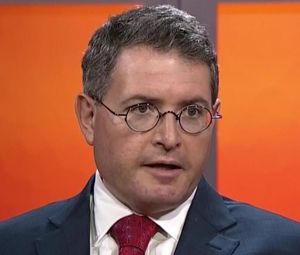
I’ve probably quoted too much, but I think this is vitally important information for understanding the right wing attack on on the separation of church and state and the need to fight to preserve American democracy generally.
I wasn’t able to watch the NASA video feed yesterday, but I know some Sky Dancers were very excited about it. Here’s a report from The Washington Post: NASA crashes spacecraft into asteroid, passing planetary defense test.
NASA managed Monday to crash a small spacecraft directly into an asteroid, a 14,000-mile-per-hour collision designed to test whether such a technology could someday be deployed to protect Earth from a potentially catastrophic impact.
The violent end of the Double Asteroid Redirection Test (DART) spacecraft thrilled scientists and engineers at the Johns Hopkins University Applied Physics Laboratory in Laurel, Md., which operated the mission under a NASA contract.
The asteroid, Dimorphos, is the size of a stadium — or the Great Pyramid of Giza, as one scientist put it Monday — and is about 7 million miles from Earth at the moment. It orbits a larger asteroid named Didymos. Neither poses a threat to our planet now or anytime in the foreseeable future.
This was just a test, NASA’s first demonstration of a potential planetary defense technique, called a kinetic impactor. The idea is to give a hypothetically dangerous asteroid just enough of a blow to alter its orbital trajectory.
Launched last November from California, the spacecraft was small, roughly the size of a vending machine or golf cart. Dimorphos is rather big — roughly 500 feet or so in diameter, although its precise shape and composition were unknown before the final approach. Scientists anticipated a plume of debris from the asteroid upon impact but no significant structural change. This is more akin to a bug splattering on a windshield.
“This isn’t just bowling-ball physics,” Applied Physics Laboratory planetary scientist Nancy Chabot told reporters. “The spacecraft’s gonna lose.”
But even small effects on an asteroid’s movement could prove a planet-saver. An early collision with an asteroid, if done early enough — say, 5 to 10 years in advance of its projected encounter with Earth — could be just enough to slow it down and make it miss.
Read more at the WaPo.
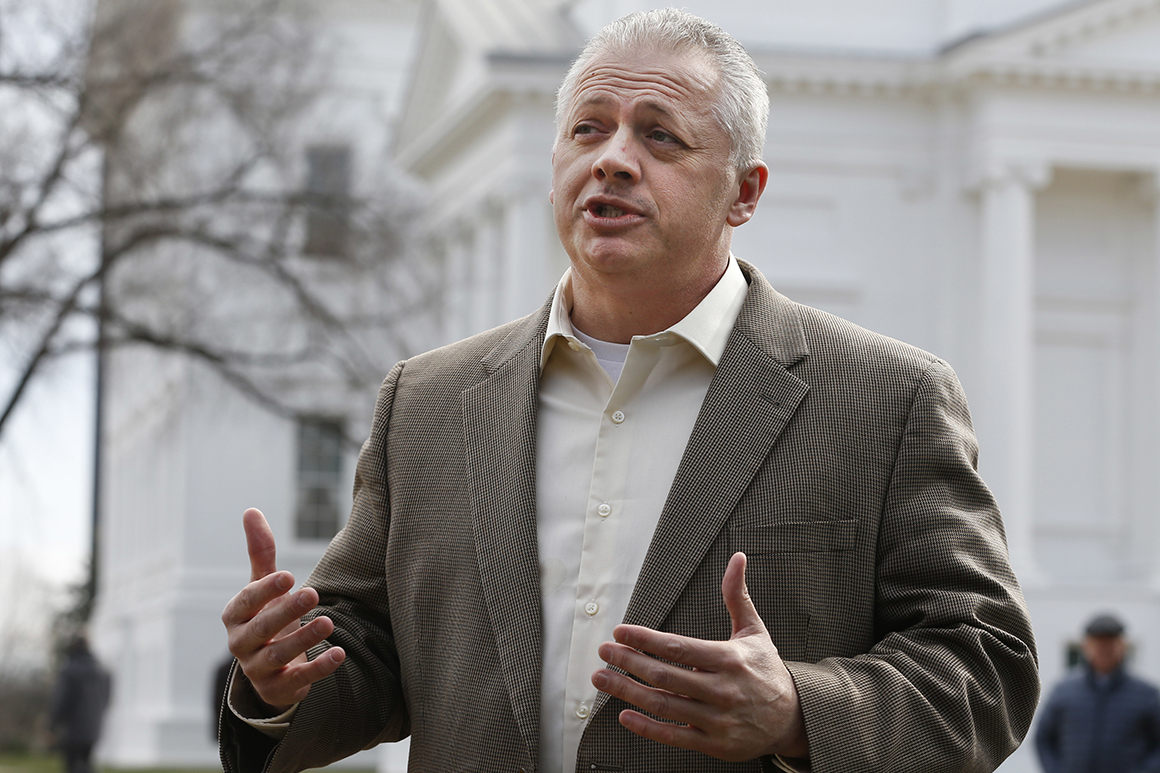
Denver Riggleman
I’m torn about how to take the revelations in the new book by former Republican Congressman Denver Riggleman, released today. Is it really that important for the January 6 Committee to keep all their findings secret until they reveal them in their rare public hearings? Frankly, I would have liked to see many more hearings and more information released to the public. But maybe I’m wrong. I’m no expert, but I think Riggleman has some good points. If you’re interested, I suggest watching the 60 Minutes interview (in which Riggleman says he resigned because the Committee refused to subpoena Ginni Thomas) and reading this post from Riggleman’s co-author Hunter Walter: Walking You Through ‘The Breach’
The book was written by Denver Riggleman, an ex-congressman and former senior adviser to the House select committee investigating the attack on the Capitol. Helping Denver tell his story was the honor of a lifetime. As any regular reader of this site knows, I was at the Capitol on January 6 and, ever since, have dedicated myself to exposing what happened that day. Bringing Denver’s story to the world is the culmination of those efforts.
I believe this book contains some of the most dramatic revelations about the attack on the Capitol and the involvement of the Trump administration as well as Republican members of Congress in the violent attempt to overturn the 2020 election.
— Denver advised the committee from August 2021 through April 2022. During that time, he led and assembled a team that was focused on telephone analysis. These investigators helped the committee obtain phone records from persons of interest including high-level associates of President Trump and individuals who have been charged with participating in the Capitol attack. The team used this data to compile maps that — quite literally — show the direct links between the political and militant components of the effort to overturn the election. The largest map was dubbed “The Monster” [see graphic above] by Denver and his team. He discussed it in more detail in an interview with “60 Minutes” that aired on Sunday.
— Phone records obtained by Denver’s team showed there was a call to a rioter’s cell phone that was connected through the White House switchboard during the Capitol attack. Following Denver’s appearance on “60 Minutes,” CNN identified the rioter who received the call as Anton Lunyk, a Brooklyn, New York man who entered the Capitol building on January 6….
— The committee’s link maps also show extensive coordination between militant groups that took part in the attack, namely the Proud Boys and Oath Keepers. Along with communicating with each other, these groups were in extensive contact with Trump associates and activists who planned rallies that occurred in Washington on January 6.
— Denver’s team also helped analyze and decipher thousands of text messages that were provided to the committee by Trump’s former chief of staff, Mark Meadows. He describes these messages as “irrefutable time-stamped proof of a comprehensive plot — at all levels of government — to overturn a free and fair election and leave Trump in power.”
There’s more at the link.
More interesting stories, links only:
Julia Ainsley at NBC News: Secret Service took the cellphones of 24 agents involved in Jan. 6 response and gave them to investigators.
The Washington Post: Putin grants citizenship to Edward Snowden, who exposed U.S. surveillance.
Timothy Noah at The New Republic: Hell Is a World in Which Everybody Writes Like Axios.
CNN: Historic trial for Oath Keepers leader and his top lieutenants over January 6 set to begin.
Alan Feuer at The New York Times: Sedition Trial of Oath Keepers to Get Underway.
Tommy Christopher at Mediaite: Ex-Staffer Says DeSantis TORCHES Trump in Private: ‘Moron Who Has No Business Running For President’
Gabriel Sherman at Vanity Fair: Ron DeSantis: The Making and Remaking (an Remaking) of a MAGA Heir.
Tom Nichols at The Atlantic: The Russian Clocks Are All Ticking. Putin is running out of time.
That’s it for me today. What are your thoughts? What stories are you following?

 peej
peej Carissa
 bostonboomer
 dakinikat
 ecocatwoman
 jjlo
jjlo mablue2
 Mama Lopez
 peggysue22
 quixote
 skydancingguestblogger
 Mona (aka Wonk the Vote)



 Sky Dancing

Recent Comments