
“The court’s order hamstrings that investigation and places the FBI and Department of Justice … under a Damoclean threat of contempt,” DOJ lawyers said in their 29-page filing, adding, “It also irreparably harms the government by enjoining critical steps of an ongoing criminal investigation and needlessly compelling disclosure of highly sensitive records, including to [Trump’s] counsel.”
Lazy Caturday Reads
Posted: September 17, 2022 Filed under: cat art, caturday, Criminal Justice System, Donald Trump, U.S. Politics | Tags: Department of Justice, Jeffrey Clark, Judge Aileen Cannon, Mark Meadows, Patrick Philbin 15 Comments
Cats by a fishbowl, Horatio Henry Couldery
Happy Caturday!!
Late last night the Department of Justice appealed Judge Loose Cannon’s ruling in the battle over the classified documents that Trump stole on his way out of the White House.
Ryan J. Reilly at NBC News: Justice Department asks appeals court to block Trump judge’s Mar-a-Lago ruling.
The Department of Justice is asking a federal appeals court to temporarily block a Trump-appointed judge’s ruling that prevents it from accessing hundreds of pages of classified records seized amid the thousands of pages of government documents taken from the former president’s Mar-a-Lago home.
“The district court has entered an unprecedented order enjoining the Executive Branch’s use of its own highly classified records in a criminal investigation with direct implications for national security,” the Justice Department wrote in its motion Friday.
The Justice Department hadpreviously argued that any delay in its investigation into Donald Trump’s handling and retention of government records, including classified records, could result in “irreparable harm” to the government and the public….
The Justice Department on Friday argued that any considerations of claims for return of property or attorney-client and executive privilege were “categorically inapplicable to the records bearing classification markings.”
“Plaintiff has no claim for the return of those records, which belong to the government and were seized in a court-authorized search,” the Justice Department wrote.
Although Trump previously suggested he had declassified or designated documents seized from his home as “personal,” the Justice Department said he “has never represented that he in fact took either of those steps — much less supported such a representation with competent evidence. The court erred in granting extraordinary relief based on unsubstantiated possibilities.”
The Justice Department also argued that its request for a limited stay wouldn’t disrupt the special master’s review of other materials and “irreparably harms the government by enjoining critical steps of an ongoing criminal investigation and needlessly compelling disclosure of highly sensitive records, including to Plaintiff’s counsel.”

Cat in the Summer Meadow, by Bruno Liljefors
More from Josh Gerstein and Kyle Cheney at Politico: Justice Dept. asks appeals court to restore access to Trump raid documents.
In a filing with the 11th Circuit Court of Appeals in Atlanta Friday night, prosecutors said the government is facing irreparable harm as a result of U.S. District Court Judge Aileen Cannon’s ruling putting the potentially classified records off-limits to the investigative team until an outside expert conducts a review of them and considers Trump’s objections to their seizure.
The Justice Department’s widely expected escalation of the legal fight came one day after the Trump-appointed judge rebuffed prosecutors’ request for a stay that would essentially carve out the national security-related records — some bearing markings such as “Top Secret/SCI” — from the outside oversight Trump’s legal team requested.
The filing was an unsparing rejection of Cannon’s handling of the entire matter, saying it has jeopardized national security, is based on flimsy or baseless interpretations of executive privilege and could enable further obstruction of efforts to recover additional missing documents.
“The government’s need to proceed apace is heightened where, as here, it has reason to believe that obstructive acts may impede its investigation,” prosecutors wrote….
The inability of federal prosecutors to advance their criminal probe has complicated separate efforts by the intelligence community to assess the harm that may have been caused by their improper storage in Trump’s unsecured storage room, prosecutors say, contending that the criminal investigation is inextricably tied to the national security review.
And prosecutors suggested that the restrictions on the FBI’s criminal work would prevent investigators from determining what may have once resided in dozens of empty folders, also bearing classification marks, found among Trump’s belongings.
“The injunction also appears to bar the FBI and DOJ from further reviewing the records to discern any patterns in the types of records that were retained, which could lead to identification of other records still missing,” prosecutors indicated in the filing.
This is from a column by Harry Litman at The Los Angeles Times: The Mar-a-Lago judge’s latest opinion is as atrocious as legal experts say it is.
The opinion’s essential flaws go well beyond straining the law and stretching facts in favor of Donald Trump. The ruling rests on the most basic dereliction of judicial responsibility, and it represents a complete departure from the bedrock principle of separation of powers.
Cannon was actually handed a graceful way back from her also broadly pilloried opinion last week, in which she had determined that a special master was required to review the government documents seized at Mar-a-Lago.
The Justice Department asked for a modest stay extending to only 100 pages of classified material found at the beach resort. It is beyond controversy that such documents are off-limits to a private citizen like the former president.
Trump’s lawyers did not try to contest that principle. Rather they argued, bizarrely, that just because the government said the documents were classified, it wasn’t necessarily so.
That, of course, is spectacular gibberish. The very meaning of classified documents is that the executive branch has made a determination about their content and marked them classified.
But Cannon adopted Trump’s Alice-in-Wonderland approach. She concluded that it would not be “appropriate” — the closest thing to legal reasoning in her opinion — “to accept the government’s conclusion on these important and disputed issues without further review by a neutral third-party,” that is, a special master.
Cannon, in essence, is redefining the classification process to be simply a provisional executive branch judgment subject to overruling by individual judges such as herself. Apart from its legal bankruptcy, such a process would wreak bedlam in matters of national intelligence, which turn on the very designations that Cannon set aside.
More crazy from Judge Loose Cannon:
The Trump team’s next gambit, which the judge also adopted, was even more logically and legally threadbare. The former president has argued repeatedly in public that he declassified the documents. But his attorneys have studiously avoided saying that in court papers, where lies are subject to professional and criminal penalties. The Trump filings indicate only that he perhaps had declassified the documents.
The appropriate response for a judge in these circumstances is to put Trump on the stand and ask him, “Did you or didn’t you?” Failing that, “perhaps” means the matter is not established and the argument loses.
But Cannon either does not know or does not care what judges do in such a situation. It is important to emphasize that she isn’t simply leaning in Trump’s direction, she’s falling all over him.
Judges sit to resolve disputes, on the basis of evidence. Trump’s team offered none for his positions, relying instead on only the most speculative arguments. It is elementary to the adversary system of justice that evidence and the law, not speculation, determine outcomes. Nothing in the Trump team’s filings justifies freezing a criminal justice investigation and national intelligence review in their tracks.
The DOJ has appealed and now we’ll have to wait and see what the 11th Circuit judges have to say.
There were a couple of new revelations yesterday about people close to Trump and the stolen government documents.
The Washington Post: Trump team claimed boxes at Mar-a-Lago were only news clippings.



Thursday Reads
Posted: September 15, 2022 Filed under: Afternoon Reads, Donald Trump | Tags: Department of Justice, Elena Kagen, Gregg Abbott, human trafficking, immigration, January 6 Committee, Judge Aileen Cannon, Letitia James, Mark Meadows, Martha's Vineyard, Peter Baker, Ron DeSantis, Supreme Court, Susan Glasser, Trump books, VP Kamala Harris 35 CommentsGood Afternoon!!
Once again, the there is so much news that I can’t possibly address everything. The Republican governors of Florida and Texas are engaging in childish behavior that actually could be categorized as human trafficking. Investigations of Trump at the DOJ, the New York Attorney General’s office, and the House January 6 Committee are moving forward. Last night CNN broke the news that Trump’s final chief of staff Mark Meadows is cooperating with a subpoena from the DOJ.
Sometime today, we should get a decision from Judge Loose Cannon about whether she will name a special master to examine government documents that Trump stole; if she orders a third party to look at highly classified documents, the DOJ will appeal to the 11th Circuit Court. Justice Elena Kagen issued a scathing critique of the Supreme Court. And finally, there are revelations from a new book by married reporters Peter Baker and Susan Glasser. I’ll get to as many of these stories as I can.
DeSantis and Abbott Use Migrants in Despicable Stunts
The Vineyard Gazette: Planeloads of Venezuelan Migrants Arrive at Martha’s Vineyard Airport.
Planes carrying approximately 48 migrants from Venezuela and Colombia landed unexpectedly at Martha’s Vineyard Airport Wednesday afternoon. Island officials and volunteers quickly rallied to find temporary shelter for the group.
“We’re immigrants,” Eliase, who said he was from Venezuela, told the Gazette. “We came here because of the situation in our country, for the economy, for work, for lots of things. I came here walking. We went through 10 different countries until we got to Texas. There a refugee association put us in a plane and told us there would be work and housing here. I feel good, despite everything. We spent four days in Texas so it’s good to be here.”
State Sen. Julian Cyr said the planes originated in San Antonio, Tex., and appeared to be part of a larger campaign to divert migrants from border states.
“Just like the reverse freedom rides in the 1960s, this endeavor is a cruel ruse that is manipulating families who are seeking a better life,” Senator Cyr said. “No one should be capitalizing on the difficult circumstances that these families are in and contorting that for the purposes of a “gotcha” moment.”
Florida Gov. Ron DeSantis later issued a statement to media outlets confirming that the airlift “was part of the state’s relocation program to transport illegal immigrants to sanctuary destinations.”
A coalition of emergency management officials, faith groups, nonprofit agencies and county and town officials were organizing food and shelter for the migrants, who spent Wednesday night at St. Andrews Church in Edgartown. The Salvation Army, among others, was providing food.
In a news release Thursday morning, the Martha’s Vineyard Humanitarian Response effort asked that inquiries about how to help be sent by email to EMD@dcsoma.org.
DeSantis used taxpayer money for this, and the immigrants were never even in Florida.
More from NPR this morning: Migrants on Martha’s Vineyard flight say they were told they were going to Boston.
The unannounced flight drew anger from Massachusetts officials.
“We have the governor of Florida … hatching a secret plot to send immigrant families like cattle on an airplane,” said state Sen. Dylan Fernandes, who represents Martha’s Vineyard. “Ship them women and children to a place they weren’t told where they were going and never alerted local officials and people on the ground here that they were coming. It is an incredibly inhumane and depraved thing to do.”
NPR was able to interview three of the migrants late Wednesday. “They (the migrants) told us they had recently crossed the border in Texas and were staying at a shelter in San Antonio,” NPR’s Joel Rose said on today’s Morning Edition.
The migrants said a woman they identified as “Perla” approached them outside the shelter and lured them into boarding the plane, saying they would be flown to Boston where they could get expedited work papers. She provided them with food. The migrants said Perla was still trying to recruit more passengers just hours before their flight.
Andres Duarte, a 30-year-old Venezuelan, said he had recently crossed the border into Texas and eventually went to a shelter in San Antonio.
“She (Perla) offered us help. Help that never arrived,” Andres said. “Now we are here. We got on the plane with a vision of the future, of making it.” He went on to explain why he boarded the plane with so little information in hand. “Look, when you have no money and someone offers help, well, it means a lot.”
WBUR: 2 busloads of migrants dropped off near VP Harris’ residence.
Two buses of migrants from the U.S.-Mexico border were dropped off near Vice President Kamala Harris’ home in residential Washington on Thursday morning in the bitter political battle over the Biden administration’s immigration policies.
It wasn’t immediately clear which Republican leader had sent them. Texas Gov. Greg Abbott has been busing migrants out of Texas to cities with Democratic mayors as part of a political strategy this year because he claims there are too many arrivals over the border to his state. Arizona Gov. Doug Ducey also has adopted this policy, and Florida Gov. Ron DeSantis also got in on the act recently. It was first dreamed up by former President Donald Trump.
About two dozen men and women stood outside the U.S. Naval Observatory at dawn, clutching clear plastic bags of their belongings brought with them over the border, before moving to a nearby church. Harris’ office had no immediate comment.
This story is still developing.
Multiple Trump Investigations
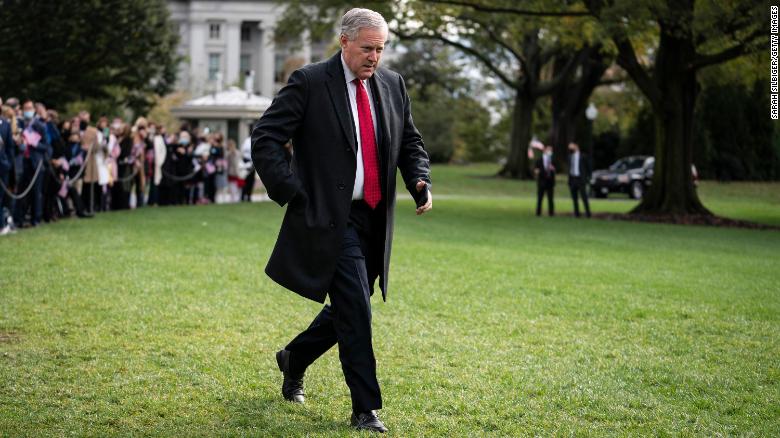
CNN: Exclusive: Mark Meadows complied with DOJ subpoena in January 6 probe.
Former White House chief of staff Mark Meadows has complied with a subpoena from the Justice Department’s investigation into events surrounding January 6, 2021, sources familiar with the matter tell CNN, making him the highest-ranking Trump official known to have responded to a subpoena in the federal investigation.
White House Chief of Staff Mark Meadows…on October 30, 2020… (Photo by Sarah Silbiger/Getty Images)
Meadows turned over the same materials he provided to the House select committee investigating the US Capitol attack, one source said, meeting the obligations of the Justice Department subpoena, which has not been previously reported.
Last year, Meadows turned over thousands of text messages and emails to the House committee, before he stopped cooperating. The texts he handed over between Election Day 2020 and Joe Biden’s inauguration, which CNN previously obtained, provided a window into his dealings at the White House, though he withheld hundreds of messages, citing executive privilege.
In addition to Trump’s former chief of staff, one of Meadows’ top deputies in the White House, Ben Williamson, also recently received a grand jury subpoena, another source familiar with the matter tells CNN. That subpoena was similar to what others in Trump’s orbit received. It asked for testimony and records relating to January 6 and efforts to overturn the 2020 election. Williamson previously cooperated with the January 6 committee. He declined to comment to CNN.
Meadows’ compliance with the subpoena comes as the Justice Department has ramped up its investigation related to January 6, which now touches nearly every aspect of former President Donald Trump’s efforts to overturn his 2020 election loss – including the fraudulent electors plot, efforts to push baseless election fraud claims and how money flowed to support these various efforts, CNN reported this week.
The New York Times: N.Y. Attorney General May Sue Trump After Rejecting Settlement Offer.
The New York attorney general’s office has rebuffed an offer from Donald J. Trump’s lawyers to settle a contentious civil investigation into the former president and his family real estate business, setting the stage for a lawsuit that would accuse Mr. Trump of fraud, according to three people with knowledge of the matter.
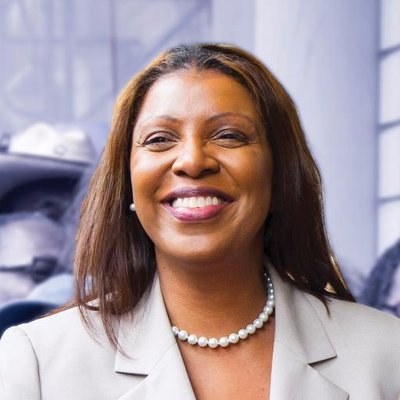
The attorney general, Letitia James, is also considering suing at least one of Mr. Trump’s adult children, the people said. Ivanka, Eric and Donald Trump Jr., have all been senior executives at Mr. Trump’s company, the Trump Organization.
Letitia James
The likelihood of a lawsuit grew this month after Ms. James’s office rejected at least one settlement offer from Mr. Trump’s lawyers, the people said. While the Trump Organization for months has made overtures to the attorney general’s office — and the two sides could still reach a deal — there is no indication that a settlement will materialize anytime soon.
Ms. James, a Democrat who is running for re-election in November, is focused on whether Mr. Trump fraudulently inflated the value of his assets and has mounted a three-and-a-half-year inquiry that has cemented her as one of the former president’s chief antagonists. Mr. Trump, who has denied all wrongdoing and derided the investigation as a politically motivated witch hunt, has fired back at her, filing an unsuccessful lawsuit to block her inquiry and calling Ms. James, who is Black, a racist.
A lawsuit from Ms. James would supercharge their drawn-out battle, offering her an opportunity to deliver a significant blow to the former president and his business, which she vowed before taking office to “vigorously investigate.”
Axios: Jan. 6 panel’s subpoena yields “thousands” of Secret Service records.
The chair of the House select committee investigating the Jan. 6 Capitol attack said Wednesday that the panel has received “thousands of exhibits” from Secret Service agents in response to its July subpoena of the agency.
Why it matters: Uncovering information from the Secret Service has been a major focus for the panel since testimony during its public hearings in June and July revealed the agency’s role in key events on Jan. 6.
Driving the news: Chair Bennie Thompson (D-Miss.) told reporters that the materials obtained are “a combination of a number of text messages, radio traffic … thousands of exhibits.”
— Thompson said the the materials consist “primarily” of texts from agents on Jan. 5 and 6, but declined to go into further detail because the committee is still reviewing them.
— “The tranches we’ve received have been significant,” he said. “It’s a work in progress.”
— Rep. Zoe Lofgren (D-Calif.), another committee member, said on MSNBC on Wednesday “it’s been a large volume of information that we really pressed hard for the agency to release.”
CNN: House January 6 committee seeks more John Eastman emails.
The House select committee investigating the January 6, 2021, US Capitol attack is seeking another 3,200 pages of emails from John Eastman, the Trump attorney who spearheaded the far-fetched legal theory that then-Vice President Mike Pence could block Congress’ certification of Joe Biden’s win.
The committee told a federal judge in California in a filing late Wednesday that it needs the additional documents “so that it may complete its efforts, including preparation of the final report” before the end of the year.
In the filing, House counsel Douglas Letter asked US District Court Judge David Carter to review the remaining batch of emails and decide whether Eastman’s claims of executive privilege are valid.
“In light of this exchange over the past month or so, it seems clear that further consultation with Plaintiff’s counsel will not result in the Select Committee receiving the material that it seeks in a timely manner,” the filing states. “Accordingly, the Select Committee now moves for this Court to review and rule on Plaintiff’s claims of privilege” for the remaining documents.
Judge Loose Cannon
U.S. News: Judge’s Rulings Poised to Shape Trump Document Investigation.
U.S. District Judge Aileen Cannon is expected to announce shortly a third-party attorney to review hundreds of confidential documents seized from former President Donald Trump’s Mar-a-Lago residence last month, how long that special master will have to review the material and whether the Justice Department will be allowed to continue its investigation in the name of national security – highly anticipated decisions that will set the course of the prominent federal investigation.
The Justice Department has asked that Cannon rule on these matters by Thursday or it will appeal her ruling appointing a special master to the U.S. Court of Appeals for the 11th Circuit.
Earlier this week, Trump’s lawyers told the judge that the Justice Department should not be able to continue its review of classified material taken from Mar-a-Lago. In the 21-page filing, his legal team attempted to discredit the federal investigation, which they called “a document storage dispute that has spiraled out of control,” and repeated previous claims that Trump had the ability to declassify documents while president as well as broad authority to control his records – even after he left office.
Judge Aileen Cannon
The Justice Department filed a motion on Tuesday in response, slamming Trump’s lawyers for attempting to delay and discredit the investigation into his mishandling of national security documents, which they argued could cause “irreparable harm” to national security.
“Plaintiff [Trump] has characterized the government’s criminal investigation as a ‘document storage dispute’ or an ‘overdue library book scenario,’” the Justice Department said in a court filing. “In doing so, Plaintiff has not addressed the potential harms that could result from mishandling classified information or the strict requirements imposed by law for handling such materials.”
As it stands, the Justice Department said it would accept one of the three judges Trump’s legal team proposed as a special master, Judge Raymond Dearie, a nominee of former President Ronald Reagan who has served as a federal judge in New York since the 1980s. He retired in 2011 and is now a senior judge on the circuit. Trump rejected the candidates put forth by the Justice Department.
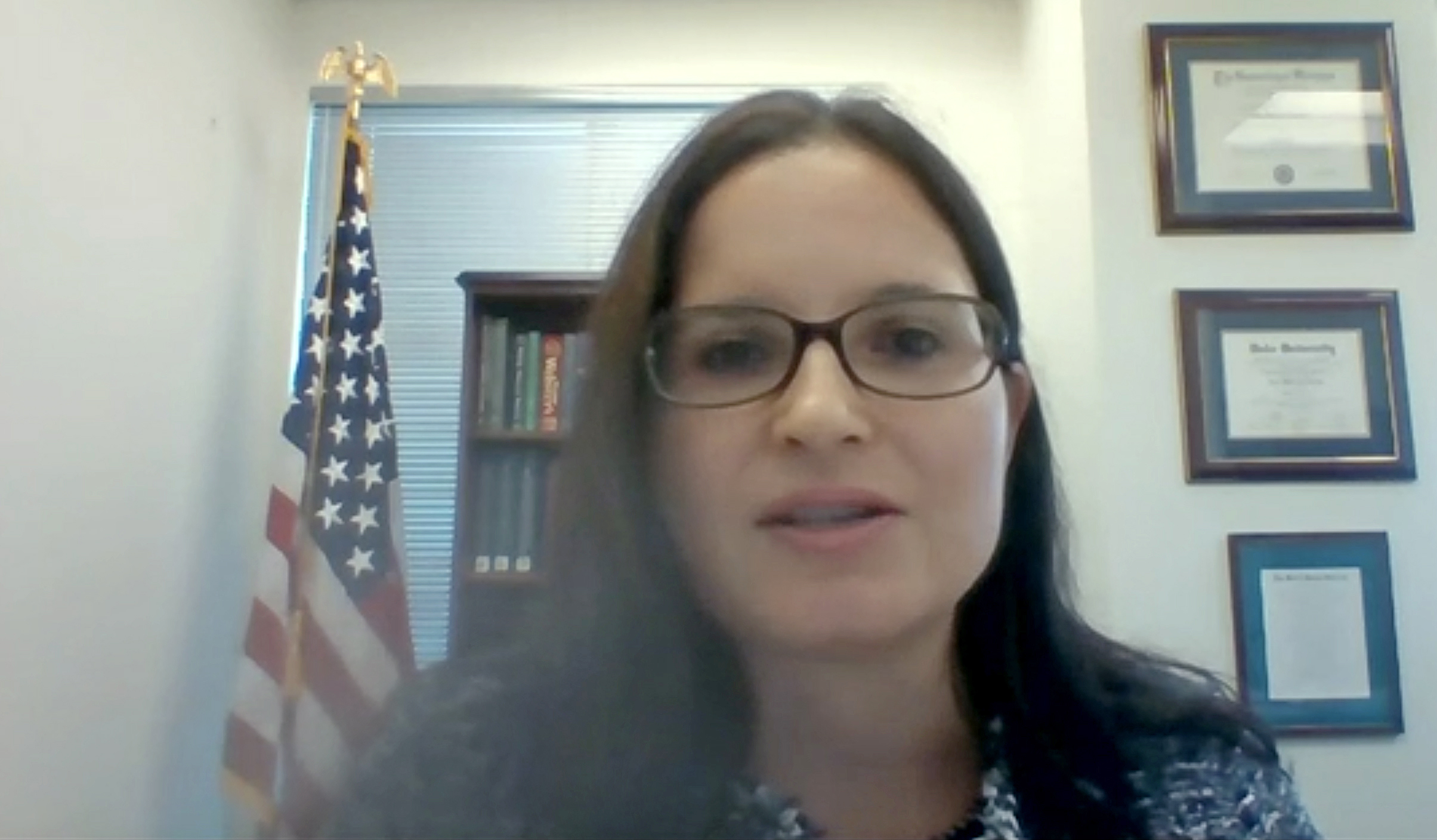
Justice Elena Kagan Speaks
Politico: Kagan repeats warning that Supreme Court is damaging its legitimacy.
Justice Elena Kagan warned again on Wednesday that unsound reasoning and politically convenient conclusions have infected the Supreme Court’s recent opinions and are doing damage to the court’s standing with the American public.
“When courts become extensions of the political process, when people see them as extensions of the political process, when people see them as trying just to impose personal preferences on a society irrespective of the law, that’s when there’s a problem — and that’s when there ought to be a problem,” Kagan said during an event at Northwestern University School of Law.
Kagan has offered similar criticism of the high court on several occasions over the past summer, following its momentous, 5-4 decision in June overturning Roe v. Wade and wiping out a federal constitutional right to abortion that had been recognized for nearly half a century.
However, the recent criticisms from Kagan, an appointee of President Barack Obama and a former Harvard Law School dean, now seem more pointed because they come just days after Chief Justice John Roberts expressed concern publicly that the court’s reputation is being unfairly battered.
In her remarks on Wednesday, Kagan did not mention the landmark abortion ruling she dissented from in June, but she did refer to other decisions where, she said, the court had colored outside the lines….
Among them was a ruling the court delivered on the final day of decisions in June, striking down a key element of the Biden administration’s climate change policy on the ground that Congress should have been more explicit if it was granting the Environmental Protection Agency authority over such a “major question.”
Revelations from New Book by Peter Baker and Susan Glasser
Book review by David Greenberg at the New York Times: A Sober Look at the ‘Cartoonishly Chaotic’ Trump White House.
“His job wasn’t to get things done but to stop certain things from happening, to prevent disaster.” This line from Peter Baker and Susan Glasser’s detail-rich history of the Trump administration, “The Divider: Trump in the White House, 2017-2021,” technically applies to his first secretary of state, Rex Tillerson. But in truth it describes any of several dozen beleaguered helpmates to the former president, whose propensity for petulant rage kept Washington in a fit of indignation and the White House in a mode of perpetual damage control for the better part of four years. Comprehensively researched and briskly told, “The Divider”is a story of disasters averted as well as disasters realized.
Squeezing the tumultuous events of the long national fever dream that was the Donald Trump presidency between two covers — even two covers placed far apart, as is the case with this 752-page anvil — would tax the skills of the nimblest journalist. Yet the husband-and-wife team of Baker and Glasser pull it off with assurance. It’s all here: the culture wars and the corruption, the demagogy and the autocrat-love, the palace intrigue and the public tweets, the pandemic and the impeachments (plural).
To be sure, asking readers in 2022 to revisit the Sturm und Drang of the Trump years may seem like asking a Six Flags patron, staggering from a ride on the Tsunami, to jump back on for another go. But those with strong stomachs will find a lot they didn’t know, and a lot more that they once learned but maybe, amid the daily barrage of breaking-news banner headlines, managed to forget.
Read more at the NYT.
Links to revelations from the book:
Axios: Trump scoops from Peter Baker and Susan Glasser’s new book.
The Guardian: Trump chief of staff used book on president’s mental health as White House guide.
The Washington Post: Trump told Jordan’s king he would give him the West Bank, shocking Abdullah II, book says.
CNN: ‘You’re blowing this’: New book reveals Melania Trump criticized her husband’s handling of Covid.
That’s it for me today. What are your thoughts, and what other stories are you following?
Tuesday Reads
Posted: September 13, 2022 Filed under: Afternoon Reads, Donald Trump, U.S. Politics | Tags: Adam Kinzinger, Boris Epshteyn, Cassidy Hutchinson, Department of Justice, Dick Durbin, Geoffrey Berman, House January 6 Committee, House Oversight Committee, Mike Roman, National Archives, Rep. Carolyn Maloney, Russia, Senate Judiciary Committee, Tony Ornato, Ukraine 15 CommentsGood Afternoon!!

Early September Green Mountains (Vermont), by Frank Wilson
There’s a lot happening in the news today that isn’t about the British royal family; but you probably won’t see much about it on the cable channels–at least until the nighttime shows come on. Among other things, Ukraine is still winning the battle to get Russia to stop destroying their country; the Department of Justice is running multiple investigations of Trump and the January 6 conspiracies; the House January 6 Committee is getting up to speed for more hearings; and other Congressional investigations are cropping up.
Ukraine War
The Washington Post: ‘The Russians are in trouble,’ U.S. official says of latest war analysis.
A Ukrainian counteroffensive that has sent Russian forces into a hasty retreat could mark a turning point in the war and raise pressure on Moscow to call up additional forces if it hopes to prevent further Ukrainian advances, U.S. and Western officials said Monday.
Whether the gains are permanent depends on Russia’s next moves, especially whether President Vladimir Putin implements a military draft or orders reinforcements from elsewhere to offset heavy losses in Ukraine, according to the officials, who spoke on the condition of anonymity to share recent intelligence analyses.
In mere days, Ukrainian military forces have retaken nearly all of the Kharkiv region that Russian forces occupied since the opening of the war. The rapidity of the pullback appears to have stunned Russian military troops and commanders, officials said.
“The Russians are in trouble,” one U.S. official said bluntly. “The question will be how the Russians will react, but their weaknesses have been exposed and they don’t have great manpower reserves or equipment reserves.”
Ukrainian forces appeared to be moving ahead carefully and consolidating their gains, another official said, noting that Russian forces seem to have recognized that they lacked the weapons and manpower to hold newly liberated towns and villages in the northeast of the country. Some Russian forces abandoned tanks, armored vehicles and ammunition as they fled.
Read more at the WaPo.
The New York Times: The Critical Moment Behind Ukraine’s Rapid Advance.
The strategy behind Ukraine’s rapid military gains in recent days began to take shape months ago during a series of intense conversations between Ukrainian and U.S. officials about the way forward in the war against Russia, according to American officials.
The Apple Gatherers, Frederick Morgan
The counteroffensive — revised this summer from its original form after urgent discussions between senior U.S. and Ukrainian officials — has succeeded beyond most predictions. Ukrainian forces have devastated Russian command and control, and appear poised to capitalize on their advances in the northeast of the country and in another campaign in the south.
The work began soon after President Volodymyr Zelensky of Ukraine told his generals he wanted to make a dramatic move to demonstrate that his country could push back on the Russian invasion. Under his orders, the Ukrainian military devised a plan to launch a broad assault across the south to reclaim Kherson and cut off Mariupol from the Russian force in the east.
The Ukrainian generals and American officials believed that such a large-scale attack would incur immense casualties and fail to quickly retake large amounts of territory. The Ukrainians were already suffering hundreds of casualties a day in what had become a grinding conflict. The Russian forces were experiencing similar losses but were still inching forward, laying waste to Ukrainian towns in the eastern region of Donbas.
Long reluctant to share details of their plans, the Ukrainian commanders started opening up more to American and British intelligence officials and seeking advice.
Jake Sullivan, the national security adviser, and Andriy Yermak, a top adviser to Mr. Zelensky, spoke multiple times about the planning for the counteroffensive, according to a senior administration official. Gen. Mark A. Milley, the chairman of the Joint Chiefs of Staff, and senior Ukrainian military leaders regularly discussed intelligence and military support.

The gist is that Americans helped the Ukrainians plan a strategy, and the Ukrainian army succeeded in carrying it out–beyond all expectations. Read more details at the NYT.
David Rothkopf at The Daily Beast: What Happens to Russia After It Loses?
With reports of Russian troops fleeing like “Olympic sprinters,” leaving behind weapons, crashing their tanks into trees, and turning over more than 3,000 square kilometers of previously held territory to Ukraine, it is only natural to ask: How bad can it get for Russia?
Experts with whom I spoke all agreed that the war will have long-lasting implications for Russia and, as a consequence, for geopolitics. At the very least it puts to rest for the foreseeable future Putin’s notion that he will oversee the rebirth of Russian greatness, of a new Russian empire. At worst, it means that Russia’s decades-long slide that led to its Cold War collapse (and its struggles ever since) will be accelerated, and the country will be consigned by its floundering dictator to a period of greatly diminished global influence.
At the Market, 1985, by Felix Valloton
Former U.S. Ambassador to NATO Ivo Daalder described the stakes trenchantly: “Russia ceased being a great power a long time ago. It never really recovered from the collapse of the Soviet Union, itself the product of a decaying ideology and system.” Daalder said Putin came to power when “Russia was in a state of deep dysfunction” and that he subsequently “set out to build a deeply kleptocratic system that benefited him and his cronies at the expense of the entire society.” This, according to Daalder, has manifested itself with “a military that is unable to engage in modern warfare of maneuver, which after six months still hasn’t established air superiority.” [….]
Stephen Sestanovich, who served during the Clinton administration as ambassador at large for the newly independent states of the former USSR and is currently a professor at Columbia University, offered a different analogy to a second-tier European state, “Russia’s claim to be a great power has long been tenuous, resting on nukes, land mass, and a UN veto. The revival of economic growth in Putin’s first decade helped restore a little luster to the claim. But he’s been largely on the ropes since 2014, and this absurd campaign to ‘de-Nazify’ Ukraine has put his entire effort at risk. He wanted to make himself an equal of Catherine and Peter. Now it’s going to take quite a comeback to be more than [former Serbian President Slobodan] Milošević with missiles.”
Angela Stent, a Putin biographer and senior adviser at the Georgetown School of Foreign Service’s Center for Eurasian, Russian, and East European Studies, echoed that analysis, “After the war is over, Russia will still be the largest country in the world (assuming it does not disintegrate) and it will still have nukes, oil, and gas. But it is deglobalizing and returning to greater autarky.” Stent says that despite maintaining strong ties with many countries in the global south, “its relations with the collective West, which represents the lion’s share of global GDP, have largely collapsed.” Stent adds: “Putin came to power wanting to restore Russia’s role as a great power and have a seat on the global board of directors. He has now lost that. Russia will emerge from this demodernized and diminished in global stature.”

There’s still more expert opinion reported at the Daily Beast link.
Department of Justice Investigations
The New York Times: Justice Dept. Issues 40 Subpoenas in a Week, Expanding Its Jan. 6 Inquiry.
Justice Department officials have seized the phones of two top advisers to former President Donald J. Trump and blanketed his aides with about 40 subpoenas in a substantial escalation of the investigation into his efforts to subvert the 2020 election, people familiar with the inquiry said on Monday.
The seizure of the phones, coupled with a widening effort to obtain information from those around Mr. Trump after the 2020 election, represent some of the most aggressive steps the department has taken thus far in its criminal investigation into the actions that led to the Jan. 6, 2021, assault on the Capitol by a pro-Trump mob.
The extent of the investigation has come into focus in recent days, even though it has often been overshadowed by the government’s legal clash with Mr. Trump and his lawyers over a separate inquiry into the handling of presidential records, including highly classified materials, the former president kept at his residence in Florida, Mar-a-Lago.
Federal agents with court-authorized search warrants took phones last week from at least two people: Boris Epshteyn, an in-house counsel who helps coordinate Mr. Trump’s legal efforts, and Mike Roman, a campaign strategist who was the director of Election Day operations for the Trump campaign in 2020, people familiar with the investigation said.
Mr. Epshteyn and Mr. Roman have been linked to a critical element of Mr. Trump’s bid to hold onto power: the effort to name slates of electors pledged to Mr. Trump from swing states won by Joseph R. Biden Jr. in 2020 as part of a plan to block or delay congressional certification of Mr. Biden’s Electoral College victory.
On others who got subpoenas:
The names of those receiving the latest round of subpoenas in the investigation related to Jan. 6 have dribbled out gradually, with investigators casting a wide net on a range of issues, including Mr. Trump’s postelection fund-raising and the so-called fake electors scheme.
Indigo Dreams, Adrian Paul Allinson
One of the recipients, people familiar with the case said, was Dan Scavino, Mr. Trump’s former social media director who rose from working at a Trump-owned golf course to become one of his most loyal West Wing aides, and has remained an adviser since Mr. Trump left office. Stanley Woodward, one of Mr. Scavino’s lawyers, declined to comment.
Another was Bernard B. Kerik, a former New York City police commissioner. Mr. Kerik, who promoted claims of voter fraud alongside his friend Rudolph W. Giuliani, was issued a subpoena by prosecutors with the U.S. attorney’s office in Washington, his lawyer, Timothy Parlatore, said on Monday. Mr. Parlatore said his client had initially offered to grant an interview voluntarily.
The subpoenas seek information in connection with the fake electors plan.
For months, associates of Mr. Trump have received subpoenas related to other aspects of the investigations into his efforts to cling to power. But in a new line of inquiry, some of the latest subpoenas focus on the activities of the Save America political action committee, the main political fund-raising conduit for Mr. Trump since he left office.
The fact that the Justice Department is now seeking information related to fund-raising comes as the House committee examining the Jan. 6 attack has raised questions about money Mr. Trump solicited under the premise of fighting election fraud.

The January 6 Committee Investigation
As the House select committee investigating the January 6, 2021, attack nears its final chapter, members plan to meet in person on Tuesday and one of the most pressing questions they’ll address is whether the committee should formally request that former President Donald Trump and former Vice President Mike Pence appear before them.
Such appearances are exceedingly rare in US history. According to multiple sources, the committee does not expect either man to testify, but some members and staff believe the invitations should be extended for the record.
“How do you create a historic record without including formal requests for the two top witnesses,” said one source familiar to the committee’s work.
Members of the committee, including Chairman Rep. Bennie Thompson, a Mississippi Democrat, have consistently said they’d like to hear from Pence and would welcome Trump’s testimony should he offer it on their terms but internal discussions about formally reaching out to both men has intensified in recent weeks now that the panel’s investigation will soon come to an end, the sources said….
A source close to Pence’s team told CNN that there have been intermittent conversations between the committee and legal counsel for Pence, but nothing has changed, meaning it’s unlikely he would testify.
Whether the panel decides to call Trump or Pence could prove to be an important data point should the committee ultimately opt to submit a criminal referral for Trump – something members of the panel say they expect to seriously consider, while such a move would be largely symbolic in nature.

Red Sun, Arthur C. Dove
Members of the House Select Committee investigating the January 6 Capitol riot believe former Secret Service agent Tony Ornato was personally involved in efforts to discredit former Trump White House aide Cassidy Hutchinson’s testimony, according to a report from CNN.
Rep. Adam Kinzinger, one of two Republican members of Congress on the committee, told the outlet this week that representatives on the panel think Ornato led the charge in contradicting parts of Hutchinson’s public testimony earlier this year while he was still at the agency and additional, unnamed agents then backed his claims.
The longtime Secret Service agent who ran former President Donald Trump’s security detail left the agency last month, saying in a statement that he retired in order to pursue a career in the private sector.
Ornato emerged as a key figure in Hutchinson’s bombshell testimony before the committee in June.
Hutchinson testified that Ornato told her Trump had tried to grab the steering wheel of the vehicle he was traveling in and lunged at a Secret Service agent while demanding to be taken to the Capitol during the chaos of January 6, 2021, as he said, “I’m the effing president!”
In the aftermath of Hutchinson’s testimony, anonymous sources began to reject her version of events in the press. Several media outlets reported that Secret Service agents were willing to testify that Trump did not try to lunge at them or take control of the vehicle on January 6 — though none have done so publicly.
Now, Kinzinger is accusing Ornato of being one of the anonymous culprits behind the backlash.
Other Congressional Investigations
The New York Times: Archives Is Unsure Whether Trump Surrendered All Records, Panel Says.
The National Archives has informed congressional aides that it is still unsure whether former President Donald J. Trump has surrendered all the presidential records he removed from the White House, even after months of negotiations, a subpoena and a search of his Florida property, according to the House Oversight Committee.
The archives staff “recently informed the committee that the agency is not certain whether all presidential records are in its custody,” Representative Carolyn B. Maloney, Democrat of New York and the chairwoman of the committee, wrote in a letter on Tuesday to Debra Steidel Wall, the acting national archivist.
Ms. Maloney said the archives staff had informed the committee staff during a call in late August of its uncertainty about the status of the material, which Mr. Trump was required by law to return.
Autumn on the Seine at Argenteuil, by Claude Monet
In her letter, Ms. Maloney requested a formal assessment from the archives of what presidential records, if any, removed from the White House by Mr. Trump remained unaccounted for and whether the archives believed they were potentially still in his possession.
The committee is requesting that the agency “conduct an urgent review of presidential records from the Trump administration to identify any presidential records or categories of presidential records, whether textual or electronic, that NARA has reason to believe may still be outside of the agency’s custody and control,” Ms. Maloney wrote, referring to the National Archives and Records Administration. “Please also assess any other limitations on the completeness, accuracy and accessibility of presidential records provided to NARA by the Trump administration.”
The letter asked the archives to complete an initial assessment and provide its findings to the committee by Sept. 27.
Ms. Maloney also requested that the archives “seek a personal certification from Donald Trump that he has surrendered all presidential records that he illegally removed from the White House after leaving office.”

The New York Times: Senate to Investigate Charge That Trump Meddled in Prosecutor’s Office.
The Senate Judiciary Committee will investigate allegations that the Justice Department under President Donald J. Trump sought to use the U.S. attorney’s office in Manhattan to support Mr. Trump politically and pursue his critics, the committee’s chairman said on Monday.
The allegations are in a new book by Geoffrey S. Berman, who was U.S. attorney for the Southern District of New York from 2018 through June 2020, when he was fired by Mr. Trump.
The chairman, Senator Richard J. Durbin of Illinois, the No. 2 Senate Democrat, made the announcement in a letter sent to Attorney General Merrick Garland, which cited a New York Times report on Thursday detailing the book’s allegations.
Mr. Berman’s book portrays Trump Justice Department officials as motivated by partisan concerns as they tried to initiate criminal investigations or block them, The Times reported.
The book, “Holding the Line,” was obtained by The Times in advance of its scheduled publication on Tuesday.
Mr. Durbin said in his letter, “These reported claims indicate astonishing and unacceptable deviations from the department’s mission to pursue impartial justice, which requires that its prosecutorial decisions be free from political influence.”
He added that the allegations “also compound the already serious concerns” raised by then-Attorney General William P. Barr’s efforts in 2020 “to replace Mr. Berman with a Trump loyalist.”
Wow! This post got really long, so take what you want and leave the rest. I hope you all have a terrific Tuesday!!
Fill-In Friday Reads
Posted: September 9, 2022 Filed under: Afternoon Reads, Donald Trump | Tags: Department of Justice, DOJ, empty folders, Judge Aileen Cannon, missing documents, national security, Queen Elizabeth II 13 CommentsGood Afternoon!!
Dakinikat is a little under the weather, so I’m filling in today. Before I get to the news of the day, I wanted to share some images of the late Queen Elizabeth II from Twitter.
Marilyn Monroe meets the Queen, 1956
One more, a double rainbow appeared over Buckingham Palace after Elizabeth’s death.
DOJ Replies to Trump Judge Aileen Cannon
As far as I’m concerned, the top story is the DOJ’s latest effort to reason with MAGA Judge Aileen Cannon, while at the same time perhaps saving her from the further public humiliation of having her decision overturned by an appeals court.
Josh Gerstein and Kyle Cheney at Politico: DOJ appeals special master ruling in Trump Mar-a-Lago probe.
The Justice Department is seeking to overturn a federal judge’s ruling that blocked investigators from reviewing a range of highly-sensitive documents seized from former President Donald Trump’s Mar-a-Lago estate.
Prosecutors said in a new court filing that U.S. District Court Judge Aileen Cannon’s decision to temporarily halt the FBI’s ability to probe the ex-president’s handling and storage of classified materials would cause “irreparable harm” to efforts by the intelligence community to protect national security interests.
“[I]n order to assess the full scope of potential harms to national security resulting from the improper retention of the classified records, the government must assess the likelihood that improperly stored classified information may have been accessed by others and compromised,” Justice Department counterintelligence chief Jay Bratt argued in the filing. “But that inquiry is a core aspect of the FBI’s criminal investigation.”
The Justice Department delivered an unsparing assessment of Cannon’s contention that Trump might have a legitimate executive privilege claim over some of the seized documents, contending that a former president had no plausible right to assert ownership of classified records.
“That authority falls upon the incumbent President, not on any former President, because it is the incumbent President who bears the responsibility to protect and defend the national security of the United States,” Bratt wrote.
The DOJ filing amounts to a full-throated rebuke of the ruling by Cannon, a Trump appointee who was confirmed to a seat in the Southern District of Florida a week after Trump’s defeat in the 2020 election. Prosecutors used the filing to describe her ruling as a danger to national security, one ignorant of the FBI’s integral role in modern counterintelligence work, and lacking in an understanding of the complexities of executive privilege.
More from The New York Times’s Glenn Thrush, Alan Feuer, and Charlie Savage: Justice Dept. Asks Judge to Lift Block on Trump Documents Investigation.
The department, in forceful and foreboding language, argued that determining the national security implications of Mr. Trump’s retention of the documents was so intertwined with its criminal investigation that carrying out a separate risk assessment was impossible under the conditions imposed by the court.
Justice Department lawyers complained that the judge’s order was impeding efforts to determine whether there may yet be “additional classified records that are not being properly stored” and noted that the search had recovered empty folders marked as classified whose contents “may have been lost or compromised.”
In an order on Thursday evening, Judge Cannon directed Mr. Trump’s lawyers to respond to the government’s filing by Monday.
In an affidavit accompanying the filing, Alan E. Kohler Jr., the assistant director of the F.B.I.’s counterintelligence division, wrote that the intelligence community’s assessment of the classified material was “inextricably linked with the criminal investigation.”
Department lawyers wrote that “uncertainty regarding the bounds of the court’s order and its implications for the activities of the F.B.I. has caused the intelligence community, in consultation with D.O.J., to pause temporarily this critically important work.”
The government and the public, the department added, “are irreparably injured when a criminal investigation of matters involving risks to national security” is frozen or delayed.
More explanation from The Washington Post’s Perry Stein and Devlin Barrett: Justice Dept. seeks to regain access to classified Mar-a-Lago documents.
Ultimately, the Justice Department said that a special master could be appointed to review personal documents and some other items seized by FBI agents on Aug. 8 in a court-approved search of Mar-a-Lago, setting aside materials as necessary.
But prosecutors argued that Cannon should prohibit the special master from reviewing classified documents — and should restore investigators’ access to those documents right away.
Barring the FBI from using the classified material in the investigation, even temporarily, “could impede efforts to identify the existence of any additional classified records that are not being properly stored — which itself presents the potential for ongoing risk to national security,” prosecutors wrote.
It was the first time they have suggested in court filings that there could be more unsecured classified material the government has yet to locate.
Allowing a special master to review the classified material would “cause the most immediate and serious harms to the government and the public,” prosecutorswrote in their Thursday filing, noting that those seized documents have already been moved to a secure facility, separate from the rest of the seized Trump papers.
Remember the empty folders marked classified that turned up during the search? The FBI needs to learn what those folders originally contained.
FBI Assistant Director Alan E. Kohler submitted a declaration saying that Cannon’s prohibition of investigators’ use of the seized classified material could prevent them from understanding what may have happened to the significant number of empty folders found with classified markings.
The existence of those empty folders was made public last week, when a more detailed list of what the FBI took in the search was unsealed.
The FBI’s investigation, Kohler wrote, “could be instrumental in determining what materials may once have been stored in those folders and whether they may have been lost or compromised.”
Judge Cannon is on notice that she will have to choose between protecting Trump and protecting the national security of the United States of America.
Some analysis of the empty folders issue from Aaron Blake at The Washington Post: Justice Department leans in on Trump and the empty folders.
Thursday Reads
Posted: September 8, 2022 Filed under: campaign financing, corruption, Crime, Donald Trump, U.S. Politics | Tags: Anne Garrels, Bernard Shaw, deaths, DOJ, Fraud, money laundering, Queen Elizabeth II, Russiagate documents, Save America PAC, Steve Bannon, William Russell 23 CommentsGood Day, Sky Dancers!!
I’m not a fan of royalty, but it does seem significant that Queen Elizabeth II of Great Britain may be dying. She took the throne on February 6, 1952 and is the “longest reigning monarch in world history.” She is 96 years old. The queen is in Scotland and she did not return to London for the appointment of the new Prime Minister Liz Truss. Her family members are either with her at Balmoral Castle or on their way there.
UPDATE: Queen Elizabeth II has died.
The Washington Post: Queen Elizabeth II under medical supervision as family gathers at Balmoral.
Queen Elizabeth II is under medical care at Balmoral Castle after doctors became concerned about her health, Buckingham Palace said Thursday. Her family is traveling to Scotland to be by her side.
Prince Harry and Meghan are en route to Balmoral, a spokesperson for the couple said. Prince William was also on his way to Balmoral. His wife, Catherine, remained in Windsor as their children, Princes George and Louis and Princess Charlotte, are on their first full day at their new school, Kensington Palace said.
The statement comes a day after Buckingham Palace said Wednesday that the queen, who is 96, had canceled a virtual meeting with the Privy Council on doctor’s advice to rest.
The statements may have been vague on details, but the fact that they were issued at all speaks volumes. The palace typically provides minimal information about the queen’s health.
Also notable: The BBC has suspended programming for today in order to provide updates on the queen’s health.
This morning the deaths of two renowned journalists were announced.
CNN announced: CNN anchor Bernard Shaw dead at 82.
Former CNN anchor Bernard Shaw died Wednesday of pneumonia unrelated to Covid-19, Shaw’s family announced in a statement Thursday. Shaw was 82.
Shaw was CNN’s first chief anchor and was with the network when it launched on June 1, 1980. He retired from CNN after more than 20 years on February 28, 2001.
During his storied career, Shaw reported on some of the biggest stories of that time — including the student revolt in Tiananmen Square in May 1989, the First Gulf war live from Baghdad in 1991, and the 2000 presidential election.
“CNN’s beloved anchor and colleague, Bernard Shaw, passed away yesterday at the age of 82. Bernie was a CNN original and was our Washington Anchor when we launched on June 1st, 1980,” Chris Licht, CNN.
Chairman and CEO, said in a statement Thursday. “He was our lead anchor for the next twenty years from anchoring coverage of presidential elections to his iconic coverage of the First Gulf War live from Baghdad in 1991. Even after he left CNN, Bernie remained a close member of our CNN family providing our viewers with context about historic events as recently as last year. The condolences of all of us at CNN go out to his wife Linda and his children.”
And from NPR: Anne Garrels, longtime foreign correspondent for NPR, dies at 71.
Anne Garrels, longtime foreign correspondent for NPR, died on Wednesday of lung cancer. She was 71 years old.
At NPR, Garrels was known as a passionate reporter willing to go anywhere in the world at a moment’s notice if the story required it. She was also a warm and generous friend to many.
When she arrived at NPR in 1988, she already had a lot of experience under her belt — including 10 years in television news at ABC, where she was bureau chief in both Moscow and Central America.
Garrels made a strong impression on NPR’s Deborah Amos. “She was this glamorous television reporter who came here,” she said. “She didn’t dress like the rest of us in the beginning. And she’d has this long and remarkable career before she landed here … She was always braver than me, and I always understood that she was braver than me.”
That bravery led Garrels into many war zones. And when it came to covering a war, she was there at the beginning, in the middle of the battle, and at the peace table. She was the kind of reporter who would drive alone across a war zone if that’s what it took to get the story.
Read more at NPR.
This morning Steve Bannon surrendered to prosecutors in New York on state charges similar to the federal ones for which Trump pardoned him.
https://twitter.com/RonFilipkowski/status/1567874120213270534?s=20&t=4kVAlEcKZMvpiI395HRKGA
The Washington Post: Bannon charged with fraud, money laundering, conspiracy in ‘We Build the Wall.’
Stephen K. Bannon has been charged with money laundering, fraud and conspiracy in connection with the “We Build the Wall” fundraising scheme, for which he received a federal pardon during Donald Trump’s final days in the White House.
I was hoping for news from the DOJ on whether they will appeal the insane decision by Judge Aileen Cannon to appoint a special master to examine the government documents that Trump stole. But the only news I’ve seen is that they are proposing to unseal more of the Mar-a-Lago search warrant, perhaps to use in their response to Judge Cannon.
There is plenty more Trump legal news though:
A federal grand jury investigating the activities leading up the Jan. 6 attack on the U.S. Capitol and the push by former President Donald Trump and his allies to overturn the result of the 2020 election has expanded its probe to include seeking information about Trump’s leadership PAC, Save America, sources with direct knowledge tell ABC News.
The interest in the fundraising arm came to light as part of grand jury subpoenas seeking documents, records and testimony from potential witnesses, the sources said.
The subpoenas, sent to several individuals in recent weeks, are specifically seeking to understand the timeline of Save America’s formation, the organization’s fundraising activities, and how money is both received and spent by the Trump-aligned PAC….
Trump and his allies have consistently pushed supporters to donate to the PAC, often using false claims about the 2020 election and soliciting donations to rebuke the multiple investigations into the former president, his business dealings, and his actions on Jan. 6.
After the FBI raided Trump’s Mar-a-Lago estate last month, Save America PAC sent out a fundraising email in which Trump urged supporters to “rush in a donation IMMEDIATELY to publicly stand with me against this NEVERENDING WITCH HUNT.”
More from The New York Times: Trump’s Post-Election Fund-Raising Comes Under Scrutiny by Justice Dept.
A federal grand jury in Washington is examining the formation of — and spending by — a PAC created by Donald J. Trump after his loss in the 2020 election as he was raising millions of dollars by baselessly asserting that the results had been marred by widespread voting fraud.
According to subpoenas issued by the grand jury, the contents of which were described to The New York Times, the Justice Department is interested in the inner workings of Save America PAC, Mr. Trump’s main fund-raising vehicle after the election. Several similar subpoenas were sent on Wednesday to junior and midlevel aides who worked in the White House and for Mr. Trump’s presidential campaign.
Among the roughly half-dozen current and former Trump aides in the White House and the 2020 presidential campaign who are said to have received subpoenas this week were Beau Harrison, an aide to Mr. Trump in the White House and in his post-presidency, and William S. Russell, who similarly worked in the West Wing and now for Mr. Trump’s personal office, according to several people familiar with the events….
The fact that federal prosecutors are seeking information about Save America PAC is a significant new turn in an already sprawling investigation of the roles that Mr. Trump and some of his allies played in trying to overturn the election, an array of efforts that culminated with the violent mob attack on the Capitol on Jan. 6, 2021.
Another Trump aide was subpoenaed in connection with planning for the January 6 coup attempt.
From the article:
Federal prosecutors issued a subpoena to a personal aide to former President Donald J. Trump as part of the investigation into the events leading up to the riot at the Capitol on Jan. 6, 2021, people familiar with the matter said.
The move suggests that investigators have expanded the pool of people from whom they are seeking information in the wide-ranging criminal investigation into efforts by Mr. Trump and his allies to reverse his loss in the 2020 election and that agents are reaching into the former president’s direct orbit.
This week, F.B.I. agents in Florida tried to approach William S. Russell, a 31-year-old aide to Mr. Trump who served as a special assistant and the deputy director of presidential advance operations in the White House. He continued to work for Mr. Trump as a personal aide after he left office, one of a small group of officials who did so.
It was not immediately clear what the F.B.I. agents wanted from Mr. Russell; people familiar with the Justice Department’s inquiry said he has not yet been interviewed. But a person with knowledge of the F.B.I.’s interest said that it related to the grand jury investigation into events that led to the Capitol attack by Mr. Trump’s supporters.
That investigation is said to have focused extensively on the attempts by some of Mr. Trump’s advisers and lawyers to create slates of fake electors from swing states. Mr. Trump and his allies wanted Vice President Mike Pence to block or delay certification of the Electoral College results during a joint session of Congress on Jan. 6 to allow consideration of Trump electors whose votes could have changed the outcome.
At Rolling Stone, Adam Rawnsley and Asawin Suebsaeng offer a possible motive for at least some of Trump’s document pilfering: Trump Told White House Team He Needed to Protect ‘Russiagate’ Documents.
IN HIS FINAL days in the White House, Donald Trump told top advisers he needed to preserve certain Russia-related documents to keep his enemies from destroying them.
The documents related to the federal investigation into Russian election meddling and alleged collusion with Trump’s campaign. At the end of his presidency, Trump and his team pushed to declassify these so-called “Russiagate” documents, believing they would expose a “Deep State” plot against him.
According to a person with direct knowledge of the situation and another source briefed on the matter, Trump told several people working in and outside the White House that he was concerned Joe Biden’s incoming administration — or the “Deep State” — would supposedly “shred,” bury, or destroy “the evidence” that Trump was somehow wronged.
Trump’s concern about preserving the Russia-related material is newly relevant after an FBI search turned up a trove of government documents at the former president’s Mar-a-Lago residence.
Since the search, Trump has refused to say which classified government papers and top-secret documents he had at Mar-a-Lago and what was the FBI had seized. (Trump considers the documents “mine” and has directed his lawyers to make that widely-panned argument in court.) The feds have publicly released little about the search and its results.It’s unclear if any of the materials in Trump’s document trove are related to Russia or the election interference investigation. A Trump spokesperson did not respond to a request for comment.
I have a few more articles to share, but I’ll do it in the comment thread. Sorry this post is so late; my internet keeps going in and out.

 peej
peej Carissa
 bostonboomer
 dakinikat
 ecocatwoman
 mablue2
 Mama Lopez
 peggysue22
 quixote
 skydancingguestblogger
 Mona (aka Wonk the Vote)



 Sky Dancing
Recent Comments