Elizabeth Taylor with her Siamese cat, 1956, photo by Sanford Roth
Epstein, Epstein, Epstein. He’s everywhere in the news. We still haven’t seen the DOJ Epstein files, but we’re already learning more about Epstein’s relationship to Trump from the recently released text messages. We don’t know yet how bad it will get when the files are released, but the extent to which Trump is publicly panicking suggests it will be very bad for him.
In Trump’s latest effort to control the Epstein story, he ordered Attorney General Bondi to investigate Democrats who had connections to the child sex trafficker.
Acceding to President Donald Trump’s demands, U.S. Attorney General Pam Bondi said Friday that she has ordered a top federal prosecutor to investigate sex offender Jeffrey Epstein’s ties to Trump political foes, including former President Bill Clinton.
Bondi posted on X that she was assigning Manhattan U.S. Attorney Jay Clayton to lead the probe, capping an eventful week in which congressional Republicans released nearly 23,000 pages of documents from Epstein’s estate and House Democrats seized on emails mentioning Trump.
Trump, who was friends with Epstein for years, didn’t explain what supposed crimes he wanted the Justice Department to investigate. None of the men he mentioned in a social media post demanding the probe has been accused of sexual misconduct by any of Epstein’s victims.
Hours before Bondi’s announcement, Trump posted on his Truth Social platform that he would ask her, the Justice Department and the FBI to investigate Epstein’s “involvement and relationship” with Clinton and others, including former Treasury Secretary Larry Summers and LinkedIn founder and Democratic donor Reid Hoffman.
Trump, calling the matter “the Epstein Hoax, involving Democrats, not Republicans,” said the investigation should also include financial giant JPMorgan Chase, which provided banking services to Epstein, and “many other people and institutions.”
There’s no evidence that any of the people Trump is targeting were involved in sexual abuse or sex trafficking.
A JPMorgan Chase spokesperson, Patricia Wexler, said the company regretted associating with Epstein “but did not help him commit his heinous acts.”
“The government had damning information about his crimes and failed to share it with us or other banks,” she said. The company agreed previously to pay millions of dollars to Epstein’s victims, who had sued arguing that the bank ignored red flags about criminal activity.
Clinton has acknowledged traveling on Epstein’s private jet but has said through a spokesperson that he had no knowledge of the late financier’s crimes. He also has never been accused of misconduct by Epstein’s known victims.
Clinton’s deputy chief of staff Angel Ureña posted on X Friday: “These emails prove Bill Clinton did nothing and knew nothing. The rest is noise meant to distract from election losses, backfiring shutdowns, and who knows what else.” [….]
Summers and Hoffman had nothing to do with either case, but both were friendly with Epstein and exchanged emails with him. Those messages were among the documents released this week, along with other correspondence Epstein had with friends and business associates in the years before his death.
Nothing in the messages suggested any wrongdoing on the men’s part, other than associating with someone who had been accused of sex crimes against children.
In a transparent attempt to distract from the many times his own name appears in the documents from the Epstein estate members of the House Oversight Committee released Wednesday, President Donald J. Trump asked Attorney General Pam Bondi to investigate Democrats whose names appeared in the documents. He singled out former president Bill Clinton, former treasury secretary Lawrence H. Summers, and Reid Hoffman, who founded LinkedIn and who is a Democratic donor.
Marlon Brando and cat
Although the attorney general is the nation’s chief law enforcement officer and is supposed to be nonpartisan in protecting the rule of law, Bondi responded that the Department of Justice “will pursue this with urgency and integrity.” Maegan Vazquez and Shayna Jacobs of the Washington Post note that reporters have already covered the relationship of Epstein with Clinton, Summers, and Hoffman for years, and that in July, Justice Department officials said an examination of the FBI files relating to Epstein—a different cache than Wednesday’s—“did not uncover evidence that could predicate an investigation against uncharged third parties.”
Meidas Touch noted: “In normal times, it would be a major scandal for the President to direct his AG to criminally investigate his political opponents to deflect from his own involvement in a major scandal—and for the AG to immediately announce she is doing it. The Epstein scandal and cover up just got even bigger.”
This scandal truly has Trump flailing. I hope this will be the one that really brings him down, but he somehow seems to wriggle out of every scandal. But he certainly is terrified of the Epstein files being released.
House Republican leaders are planning to hold a vote Tuesday on legislation to force the release of federal files related to Jeffrey Epstein, according to three people granted anonymity to discuss internal plans ahead of a public announcement.
The tentative scheduling decision follows a successful effort by Reps. Thomas Massie (R-Ky.) and Ro Khanna (D-Calif.) to sidestep Speaker Mike Johnson and force a floor vote on their bipartisan bill to compel the Justice Department to release all of its records related to the late convicted sex offender.
President Donald Trump has made repeated attempts to kill the effort, which continued in a series of Truth Social posts Friday. But Johnson said Wednesday he intends to move quickly to hold the vote and put the matter to bed.
Under the current GOP plan, the House Rules Committee would approve a procedural measure Monday night to advance eight bills for floor consideration, including language to tee up the Epstein legislation. If that measure is approved on the floor, likely early Tuesday afternoon, debate and a final vote on the Epstein bill could immediately follow. GOP leaders are considering whether to postpone the Epstein vote until Tuesday evening….
The four Republicans who signed on to the discharge petition forcing the vote — Massie, plus Reps. Lauren Boebert of Colorado, Marjorie Taylor Greene of Georgia and Nancy Mace of South Carolina — are likely to examine Johnson’s moves very closely. They could together block any procedural measure that would undercut the Epstein legislation, postpone it or otherwise alter it.
Hundreds of texts over almost a year show Maga influencer Steve Bannon and convicted sex offender Jeffrey Epstein workshopping legal and media strategies to protect Epstein from the legal and publicity quagmire that enveloped him in the last year of his life.
The texts, released by the House oversight committee on Wednesday, show that as early as June 2018, the pair were devising responses to the gathering storm of public outrage about Epstein’s criminal history, his favorable treatment by the justice system, and his friendships with powerful figures in business, politics and academia.
Bannon conspiratorially described the renewed scrutiny of Epstein as a “sophisticated op”, and over time he counseled Epstein in his adversarial responses to media outlets, the justice system and his victims.
All the while, both men were also strategizing how best to promote Bannon’s rightwing populist agenda, and the political fortunes of its standard bearer, Donald Trump.
In all of Epstein’s messages, the identity of his correspondent is redacted. But Bannon’s identity in the threads cited in this reporting is clear from contextual clues including his documented activities at the time, details of his business and media pursuits, and other disclosures. In one document, the sender’s phone number is not redacted – and it is the same number linked to Bannon in a legal case against Trump adviser Roger Stone.
Read the rest at The Guardian.
Trump is also beginning to panic about the economy and the negative effects of his insane tariffs.
President Donald Trump’s bid Friday to sootheconsumers by dropping tariffs on a wide array of groceries, including coffee, beef, bananas and tomatoes — contradicting his repeated claims that the levies were not affecting retail prices — shows he is on the defensive over his signature policy initiative.
Public opposition, eroding support on Capitol Hill and a potentially lethal challenge before the Supreme Court have Trump scrambling to defend his economic strategy even as the administration notches diplomatic agreements that are cementing its high-tariff approach to rebalancing global trade.
Sophia Loren with her cat, 1959
Public opinion is the immediate worry, following recent Democratic electoral victories in Virginia and New Jersey that were fueled by Americans’ ire over the cost of living. By a nearly 2-to-1 margin, registered voters disapproved of the president’s tariffs in a recent Washington Post-ABC News-Ipsos poll, a finding that has been consistent all year and could imperil Republican candidates in next year’s congressional elections.
The president on Friday issued an executive order rolling back import taxes on many foods, his most significant retreat on the emergency tariffs he imposed in April, which were billed at the time as loophole-free. In September, the White House had signaled that some products that are not generally produced in the United States could be spared tariffs once nations where they originate reached trade deals with the United States. But Friday’s exemptions apply to products from any nation, even those that have not agreed on trade terms.
“They know that they shouldn’t have imposed a lot of these tariffs and that they’re hurting affordability for consumers. Now they’re looking for a way to justify lowering them. And that’s fine. But did we really need to go through all this in the first place?” said Christopher Padilla, senior adviser to the Brunswick Group and a former trade official in the George W. Bush administration….
This week’s tariff cuts appear aimed at responding to public concern over high prices. Inflation overall is running at an annual rate of 3 percent, above the Federal Reserve’s 2 percent target for price stability but well down from the mid-2022 peak of 9.1 percent.
Prices on many everyday items, however, continue to soar. Through September, the most recent data available, coffee prices were up 19 percent over the previous 12 months, according to the Bureau of Labor Statistics. Bananas were up 7 percent.
Americans could soon see some goods get cheaper after President Donald Trump exempted certain agricultural imports from a set of tariffs on Friday. But any price drops likely won’t be enough to make life feel more affordable any time soon.
The new exemptions are part of what traders have dubbed TACO, or Trump Always Chickens Out, to describe times when the president backs off a policy after unintended consequences pop up. In the case of tariffs, Trump has already reversed a number of his measures, a sign that the administration is reshaping his signature economic tool.
The latest TACO comes after voters, worried about affordability, gave Republicans a drubbing in recent off-year elections.
Why this likely won’t help consumers much:
Nevertheless, US Trade Representative Jamieson Greer said the new exemptions generally won’t help improve affordability.
“It depends on what the importers do with the tariff,” he said in a CNBC interview on Friday. “So when you look at the overall price trend, it hasn’t been because of tariffs. It’s been because of these other events going on and just supply and demand.”
Steve Martin and cat
But in cases where tariffs have been passed along to consumers, prices could drop, Greer said.
One potential example: bananas. American consumers are paying about 8% more for bananas than before Trump’s second term began.
The US largely imports bananas from South American countries. With bananas exempt from “reciprocal” tariffs that started at 10%, prices could go back to where they were earlier this year, said Sarah House, senior economist at Wells Fargo. But it’s unlikely to be something most consumers notice unless they’re buying bananas often, she added.
But not everyone is convinced it will even do that much.
“It is not clear that lowering tariffs will lower prices — it depends on what retailers think they can get away with. The import price of bananas has fallen since tariffs were imposed, but the US consumer price has risen,” Paul Donovan, chief economist at UBS global wealth management, said in a note last week. (The United States tracks import prices before accounting for tariffs. In some cases, import prices have fallen as exporters lower what they charge as a way to share in the tariff expense importers pay.)
New data the Agriculture Department released Friday created serious doubts about whether China will really buy millions of bushels of American soybeans like the Trump administration touted last month after a high-stakes meeting between President Donald Trump and Chinese leader Xi Jinping.
The USDA report released after the government reopened showed only two Chinese purchases of American soybeans since the summit in South Korea that totaled 332,000 metric tons. That’s well short of the 12 million metric tons that Agriculture Secretary Brooke Rollins said China agreed to purchase by January and nowhere near the 25 million metric tons she said they would buy in each of the next three years.
American farmers were hopeful that their biggest customer would resume buying their crops. But CoBank’s Tanner Ehmke, who is its lead economist for grains and oilseed, said there isn’t much incentive for China to buy from America right now because they have plenty of soybeans on hand that they have bought from Brazil and other South American countries this year, and the remaining tariffs ensure that U.S. soybeans remain more expensive than Brazilian beans.
“We are still not even close to what has been advertised from the U.S. in terms of what the agreement would have been,” Ehmke said.
Beijing has yet to confirm any detailed soybean purchase agreement but only that the two sides have reached “consensus” on expanding trade in farm products. Ehmke said that even if China did promise to buy American soybeans it may have only agreed to buy them if the price was attractive.
Will Trump try to distract from the Epstein files and his failures on the economy by taking us to war with Venezuela?
The Trump administration is rapidly escalating its pressure campaign against Venezuela, with America’s largest aircraft carrier, the Ford, about to take up a position within striking distance of the country, even as President Trump’s aides provide conflicting accounts of what, exactly, they are seeking to achieve.
Mr. Trump held back-to-back days of meetings at the White House over the past two days, reviewing military options, including the use of Special Operations forces and direct action inside Venezuela.
Marlyn Monroe with her cat
It is still not clear whether Mr. Trump has made a decision about what kind of action to authorize, if any. On Friday, he told reporters on Air Force One that “I sort of made up my mind.” “I can’t tell you what it is,” he said, “but we made a lot of progress with Venezuela in terms of stopping drugs from pouring in.”
It is possible Mr. Trump is relying on the arrival of so much firepower to intimidate the government of Nicolás Maduro, who the United States and many of its allies say is not Venezuela’s legitimate president. Mr. Maduro has put his forces on high alert, leaving the two countries with their weapons cocked and ready for war.
There were signs that the administration was moving into a new and more aggressive posture. Shortly after a meeting on Thursday, Defense Secretary Pete Hegseth posted on social media that the mission in the Caribbean now had a name — “Southern Spear.” He described its goal in expansive terms, saying the operation “removes narco-terrorists from our Hemisphere.”
“The Western Hemisphere is America’s neighborhood,” he wrote, “and we will protect it.” With the arrival of the Ford and three accompanying missile-firing Navy destroyers, there are now 15,000 troops in the region, more than there have been at any time in decades.
The only thing missing is a strategic explanation from the Trump administration that would clarify why the United States is amassing such a large force. Mr. Hegseth’s posting on X was only the latest in a series of statements from administration officials that, at best, are in tension with one another. Some are outright contradictory.
Mr. Trump has been the most consistent, saying it is all about drugs. But that would not explain why the Ford was rushed from the eastern Mediterranean Sea to the Caribbean region, adding to an American force that has now reached 15,000 soldiers and sailors, to attack small boats that until early September had been intercepted by the Coast Guard. Nor would it explain why Colombia or Mexico — Mexico being the main conduit for fentanyl — are not in the Navy’s sights.
President Donald Trump said Friday night that he has “sort of made up my mind” about how he will proceed with the possibility of military action in Venezuela, following a second consecutive day of deliberations at the White House that included top national security advisers.
Trump’s vague remarks aboard Air Force One were delivered as he traveled for the weekend to his Mar-a-Lago estate in Florida, and included no additional new details. The comments came as U.S. forces in the region awaited possible attack orders and after days of high-level discussions about whether — and how — to strike in Venezuela, according to people familiar with the matter who spoke on the condition of anonymity because the matter is highly sensitive. Joining Trump in deliberations Friday were Vice President JD Vance, Defense Secretary Pete Hegseth, Joint Chiefs Chairman Gen. Dan Caine, Secretary of State Marco Rubio and Deputy Chief of Staff Stephen Miller, these people said.
Robert Redford with his cat
Earlier in the day, an administration official said “a host of options” had been presented to the president. Trump is “very good at maintaining strategic ambiguity, and something he does very well is he does not dictate or broadcast to our adversaries what he wants to do next,” the official said.
Any strike on Venezuelan territory would upend the president’s frequent promises of avoiding new conflicts and betray promises made to Congress in recent weeks that no active preparations were underway for such an attack. It also would further complicate U.S. cooperation with other Latin American countries, and deepen suspicions — there and in Washington — over whether Trump’s endgame is the forced removal of Venezuela’s president, Nicolás Maduro, whom Trump has accused of sending drugs and violent criminals to the United States.
Maduro, a socialist strongman, came to power in Caracas in 2013 and increasingly has become a fixation for Trump.
In August, U.S. officials increased the reward for information leading to his arrest and conviction from $25 million to $50 million, citing alleged ties to drug cartels and U.S. beliefs dating back to the Biden administration that he lost Venezuela’s 2024 presidential election and refused to step down.
“The United States is very plugged into what’s going on in Venezuela, the chatter among Maduro’s people and the highest levels of his regime,” the administration official said. “Maduro is very scared, and he should be scared. The president has options on the table that are very bad for Maduro and his illegitimate regime. … We view this regime as illegitimate, and it’s not serving the Western Hemisphere well.”
President Donald Trump has said he believes Venezuelan President Nicolas Maduro’s days are numbered, and that land strikes inside Venezuela are possible.
Experts say that the US doesn’t currently have the military assets in place to launch a largescale operation to remove Maduro from power, though Trump has approved covert action within Venezuela, CNN has reported.
Bette Davis with cat
But if Trump did order strikes inside Venezuela aimed at ousting Maduro, he could face serious challenges with fractured opposition elements and a military poised for insurgency, according to experts, as well as political backlash at home for a president who promised to avoid costly entanglements overseas.
CNN reported that Trump received a briefing earlier this week to review updated options for military action inside Venezuela, a concept the White House has been weighing. The administration had not made a decision on whether to launch strikes, CNN reported, though the US military has moved more than a dozen warships and 15,000 troops into the region as part of what the Pentagon branded Operation Southern Spear in an announcement Thursday.
The concentration of military assets and threats of further attacks beyond the ongoing drug boat campaign have served to increase pressure on Maduro, with administration officials saying he needs to leave office while arguing that he’s closely tied to the Tren de Aragua gang and leading drug trafficking efforts.
But if Maduro does flee Venezuela or is killed out in a targeted strike, experts worry about a military takeover of the country or the boosting of another dictator similar to Maduro.
Read the rest at CNN.
Those are my recommended reads. I’ll add a few more links in the comment thread. What stories are you interested in today?
Did you like this post? Please share it with your friends:
I was going to write about how the Democrats actually won the government shutdown. But bigger news has broken. I’ll get to the shutdown story after that and then some news about Kash Patel, Trump’s incompetent FBI director.
It looks like the Epstein shit is about to hit the fan.
Sex offender Jeffrey Epstein referred to Donald Trump as the “dog that hasn’t barked” and told his former companion Ghislaine Maxwell that an alleged victim had “spent hours at my house” with Trump, according to email correspondence released Wednesday by Democrats on the House Committee on Oversight and Government Reform.
“I want you to realize that that dog that hasn’t barked is trump,” Epstein wrote in a typo-riddled message to Maxwell in April 2011. “[Victim] spent hours at my house with him ,, he has never once been mentioned.”
“I have been thinking about that … ” Maxwell replied.
That email exchange — which came just weeks after a British newspaper published a series of stories about Epstein, Maxwell and their powerful associates — was one of three released by the Democrats from a batch of more than 23,000 documents the committee recently received from the Epstein Estate in response to a subpoena.
The other messages are between Epstein and author Michael Wolff.
“I hear CNN planning to ask Trump tonight about his relationship with you–either on air or in scrum afterwards,” Wolff wrote to Epstein in December 2015, six months after Trump had officially entered the race for the White House.
“Trump said he asked me to resign, never a member ever,” Epstein wrote, “Of course he knew about the girls as he asked ghislaine to stop” [….]
Wolff in a phone interview on Wednesday said of the 2015 exchange that he couldn’t remember “the specific emails or the context, but I was in an in-depth conversation with Epstein at that time about his relationship with Donald Trump. So I think this reflects that.”
“I was trying at that time to get Epstein to talk about his relationship with Trump, and actually, he proved to be an enormously valuable source to me,” Wolff said. “Part of the context of this is that I was pushing Epstein at that point to go public with what he knew about Trump.”
You can read the original emails along with more context at the ABC link.
Also in the emails released by Oversight Democrats Wednesday, Wolff wrote in a 2015 message to Epstein that he heard Trump – then a presidential candidate – would be asked by CNN about the convicted sex offender. Epstein asked Wolff what he thought an ideal response from Trump would be.
Michael Wolff
“I think you should let him hang himself,” Wolff responded. If [Trump] says he hasn’t been on the plane or to the house, then that gives you a valuable PR and political currency.
“You can hang him in a way that potentially generates a positive benefit for you,” Wolff continued, “or, if it really looks like he could win, you could save him, generating a debt.”
Wolff added that Trump could potentially praise Epstein when asked. Wolff’s attorney did not immediately respond to a request for comment.
The materials were received by the House Oversight Committee last Thursday, meaning the move by Democrats to release the materials was likely timed to coincide with the House’s return from a lengthy recess to vote Wednesday evening on ending the prolonged government shutdown.
House Democrats on Wednesday released emails in which Jeffrey Epstein wrote that President Trump had “spent hours at my house” with one of Mr. Epstein’s victims, among other messages that suggested that the convicted sex offender believed Mr. Trump knew more about his abuse than he has acknowledged….
Rep. Robert Garcia (D-CA)
…Democrats on the House Oversight Committee said the emails, which they selected from thousands of pages of documents received by their panel, raised new questions about the relationship between the two men. In one of the messages, Mr. Epstein flatly asserted that Mr. Trump “knew about the girls,” many of whom were later found by investigators to have been underage. In another, Mr. Epstein pondered how to address questions from the news media about their relationship as Mr. Trump was becoming a national political figure….
“These latest emails and correspondence raise glaring questions about what else the White House is hiding and the nature of the relationship between Epstein and the president,” Representative Robert Garcia of California, the top Democrat on the Oversight Committee, said in a statement.
The three separate email exchanges released on Wednesday were all from after Mr. Epstein’s 2008 plea deal in Florida on state charges of soliciting prostitution, in which federal prosecutors agreed not to pursue charges. They came years after Mr. Trump and Mr. Epstein had a reported falling out in the early 2000s.
See the ABC story above for descriptions of the emails.
House Democrats, citing an unnamed whistle-blower, said this week that Ms. Maxwell was preparing to formally ask Mr. Trump to commute her federal prison sentence.
The emails were provided to the Oversight Committee along with a larger tranche of documents from Mr. Epstein’s estate that the panel requested as part of its investigation into Mr. Epstein and Ms. Maxwell, who is serving a 20-year sentence on sex-trafficking charges.
Republicans argued that Democrats omitted context from the emails they released.
Republicans on the Oversight Committee accused Democrats of politicizing the investigation. “Democrats continue to carelessly cherry-pick documents to generate clickbait that is not grounded in the facts,” a committee spokeswoman said. “The Epstein Estate has produced over 20,000 pages of documents on Thursday, yet Democrats are once again intentionally withholding records that name Democrat officials.”
The Republicans also identified the victim whose name was redacted in the emails as Virginia Giuffre, who died by suicide in April. Ms. Giuffre had said that Ms. Maxwell recruited her into Mr. Epstein’s sex ring while she was working at Mar-a-Lago, Mr. Trump’s private club and residence in Palm Beach, as a teenager.
In a 2016 deposition for a civil case, Ms. Giuffre was asked if she believed Mr. Trump had witnessed the sexual abuse of minors in Mr. Epstein’s home. “I don’t think Donald Trump participated in anything,” she said.
“I never saw or witnessed Donald Trump participate in those acts, but was he in the house of Jeffrey Epstein,” Ms. Giuffre added. “I’ve heard he has been, but I haven’t seen him myself so I don’t know.”
Use the gift link to read the whole article.
This afternoon at 4:00, Adelita Grijalva (D-Ariz.) will finally be sworn in. She will then sign the discharge petition to require the DOJ to release all of the Epstein files.
Arizona Rep.-elect Adelita Grijalva, who is set to be sworn in on Wednesday, said she will confront House Speaker Mike Johnson after waiting nearly 50 days to be seated as a member of Congress.
“I won’t be able to like sort of move on if I don’t address it personally and we’ll see what kind of reaction he has,” Grijalva, a Democrat, told CNN’s Kaitlan Collins on “The Source” Tuesday.
Rep. Adelita Grijalva (D-Ariz.)
“I’m not exactly sure what I’m going to say,” Grijalva added but said she will stress that Johnson refusing to swear her in for over a month is “undemocratic.”
“It’s unconstitutional. It’s illegal. Should never happen — this kind of obstruction cannot happen again,” Grijalva said.
The monthslong bipartisan effort to sidestep Speaker Mike Johnson and force the release of all Justice Department files on the late sex trafficker Jeffrey Epstein is kicking into high gear this week, setting up a December floor battle that President Donald Trump has sought to avoid….
The process of doing so will begin around 4 p.m., when Johnson swears in Rep.-elect Adelita Grijalva right before the House votes to end the government shutdown — ending a 50-day wait following the Arizona Democrat’s election. Shortly afterward, Grijalva says she will affix the 218th and final signature to the discharge petition led by Reps. Thomas Massie (R-Ky.) and Ro Khanna (D-Calif.) to force a vote on the full release of DOJ’s Epstein files.
That in itself will be the culmination of months of drama that blew up into a full crisis for Johnson this summer, with a GOP mutiny grinding the floor to a halt and forcing leaders to send the House home early for August recess. The uproar over a possible Epstein cover-up faded but never disappeared entirely.
The completion of the discharge petition, a rarely used mechanism to sidestep the majority party leadership, will trigger a countdown for the bill to hit the House floor. It will still take seven legislative days for the petition to ripen, after which Johnson will have two legislative days to schedule a vote. Senior Republican and Democratic aides estimate a floor vote will come the first week of December, after the Thanksgiving recess.
The discharge petition tees up a “rule,” a procedural measure setting the terms of debate for the Epstein bill’s consideration on the House floor. This gives the effort’s leaders greater control over the bill, which will still require Senate approval if it passes the House.
Senate Republican leaders haven’t publicly committed to bringing up the Epstein measure if the House passes it. Republicans expect it will die in the Senate, but not before a contentious House fight.
Could Johnson stop the petition from getting a vote in the House?
While Johnson has options to short-circuit the effort before it gets to the floor, he said in an interview last month he would not seek to do so. Republicans on the Rules Committee have also warned Johnson they will not help him kill the bill in the panel, and he’s in turn privately assured some of them the Epstein measure will get floor consideration if the petition reaches 218 signatures.
At that point, the speaker can only defeat it if he siphons away enough Republican votes — a tall order in a majority where Johnson has only a two-vote margin after Grijalva is sworn in. GOP leaders don’t plan to formally whip against the Epstein vote when it gets to the floor, according to three people granted anonymity to describe internal deliberations.
“I’m certain the House vote will succeed,” Massie said in an interview. “Some Republican members who are not signers of the petition have told me they will vote for the measure when the vote is called. I suspect there will be many more.”
Read about which members might end up voting for the release of the files at the link.
Like Dr. Strange, I have seen all six possible endgames from the shutdown fight and I’m here to tell you that yes, Democrats could have done better. They probably should have done better. But they exit this event in a stronger position than they entered. And also: They could have done much worse.
We’re going to rank the shutdown endgames from best to worst and then I’m going to make the case simultaneously that (a) Democrats played their hand poorly from the start, but that (b) they were ultimately bailed out by Trump’s obsession with dominance, and (c) we ought to appreciate the bad stuff that didn’t happen here.
You’ll need to go to the link to read the possible endgames; I can’t copy that much from the post. But here’s the final argument:
Here’s what Democrats should have said from the start:
Republicans control the White House, the House, and the Senate. They have the votes to pass this budget any time they want. They do not need a single Democratic vote.
All Republicans have to do is repeal the filibuster.
If Republicans are so inept that they can’t find the votes to repeal the filibuster or to pass their legislation, then they should feel free to come to the minority and ask for help.
But the Democrats have no offer. The voters gave Republicans unified control of government. If Republicans are incapable of governing, voters deserve to see that.
The problem isn’t that Democrats caved on the shutdown. Just objectively speaking, they emerge from this fight in a slightly better position than they entered it.
They prolonged the longest government shutdown in history.
This shutdown damaged Trump politically. (Just look at the polling.
They centered health care costs as a major issue for 2026.
The fake concession they got from Senate Republicans—a meaningless future vote on extending the ACA subsidies—will (a) put Republican senators on the spot and (b) create a point of vulnerability for House Republicans when they refuse to take up the bill.
They avoided the worst-case outcome. Which is not nothing.
At first blush, the deal that paved the way to end the government shutdown this week looked exactly like the kind of feeble outcome many Democrats have come to expect from their leaders in Washington.
After waging a 40-day fight to protect Americans’ access to health care — one they framed as existential — their side folded after eight defectors struck a deal that would allow President Trump and Republicans to reopen the government this week without doing anything about health coverage or costs, enraging all corners of the party.
But even some of the Democrats most outraged by the outcome are not so certain that their party’s aborted fight was all for naught.
It may turn out that the long-term outcome of the longest government shutdown in history will be a grand-scale political and policy defeat for Democrats. The head-scratching end to a fight they were not willing to see through to victory deflated the party and deepened long-simmering divisions ahead of next year’s critical midterm elections. But in the shorter term, there could be benefits.
Senate Democrats believe that they held together long enough for Mr. Trump to reveal a new level of callousness in his refusal to fund food stamps for 42 million Americans who rely on the nation’s largest anti-hunger program. And they believe all of that helped contribute to a mini-blue wave last week, one that could continue if Democrats can keep the right issues at the forefront.
In my opinion, the shutdown fight demonstrated to many voters who don’t usually pay attention to politics that Trump doesn’t care one bit about their concerns.
On Halloween morning, FBI Director Kash Patel had a big announcement to make: “The FBI thwarted a potential terrorist attack,” he said in a 7:32 a.m. social-media post that referenced arrests in Michigan.
There was one problem: No criminal charges had yet been filed and local police weren’t aware of the details. Two friends of the alleged terrorists in New Jersey and Washington state caught wind of the arrests and moved up plans to leave the country, according to court documents and law-enforcement officials familiar with the investigation.
Justice Department leaders complained to the White House about Patel’s premature post, saying it had disrupted the investigation, administration officials said.
In his nine months on the job, Patel has drawn flak from his bosses in the Justice Department and from his underlings at the Federal Bureau of Investigation, where he has fired dozens of agents deemed hostile to Donald Trump or to conservative ideals.
But the Halloween announcement wasn’t the biggest controversy to envelop the director that week. Patel hit the news for taking an FBI plane to attend a wrestling event where his girlfriend, a country western singer, performed, and then to her home in Nashville. A former FBI agent, Kyle Seraphin, publicized the trip and called the taxpayer funded travel in the middle of a shutdown “pathetic.”
After that, Patel visited a Texas hunting resort called the Boondoggle Ranch, according to flight records and people familiar with the trip, which hasn’t been previously reported.
Patel’s travel has frustrated both Justice Department officials, who complained to the White House about it, and the White House itself, which had told cabinet officials months ago in writing to limit their travel, particularly if it was overseas or unrelated to Trump’s agenda, according to an administration official. Details about Patel’s trips to visit his girlfriend and an August trip to Scotland have been passed around the White House in recent days, officials said.
The FBI director is required by law to take the bureau’s private plane instead of commercial flights in order to have access to secure communications. If the travel is personal, the director is required to reimburse the government for the cost of a commercial flight—typically far less than the actual costs of private-jet use.
A bit more:
Last month, Patel gave Trump an unusual public presentation in the Oval Office, where he credited the president for the bureau’s successes on everything from drug seizures to the arrests of several most-wanted fugitives.
“We are absolutely crushing violent crime like never before and defending this homeland, sir,” Patel said, gesturing toward large poster boards showing a surge in arrests this summer.
Patel’s presence at the bureau has been something of a culture shock for a buttoned-up workforce, used to wearing suits and ties. Instead, Patel has appeared at events in hooded sweatshirts, jeans or hunting vests, and often speaks colloquially, calling agents “cops,” and telling podcaster Joe Rogan that the job of FBI director was “effin wild.”
He has also handed out an oversize commemorative coin to colleagues resembling the logo of the Marvel “Punisher” character, who came to embody a general distrust of the U.S. justice system. The coin also has a large number nine on it, in a reference to himself as the FBI’s ninth director.
Patel’s supporters say he is trying to present himself as down-to-earth and accessible to the workforce. He “wants the Bureau to get back to focusing on field and agent work vs. an elitist D.C. culture,” FBI spokesman Ben Williamson said. The FBI declined to discuss Patel’s plane travel, citing safety concerns. Justice Department and FBI representatives said the two agencies closely coordinated plans for the terrorism operation in advance.
The story is behind a paywall, but I was able to get through by clicking the link at Memeorandum.
At a secret gathering in May, south of London, the head of Britain’s domestic security service asked Kash Patel, the F.B.I. director, for help.
British security officials rely on the bureau for high-tech surveillance tools — the kind they might need to monitor a new embassy that China wants to build near the Tower of London. The head of MI5, Ken McCallum, asked Mr. Patel to protect the job of an F.B.I. agent based in London who dealt with that technology, according to several current and former U.S. officials with knowledge of the episode.
Kash Patel and girlfriend Alexis Wilkins
Mr. Patel agreed to find funding to keep the posting, the officials said. But the job had already been slated to disappear as the White House moved to slash the F.B.I. budget. The agent moved to a different job back in the United States, saving the F.B.I. money but leaving MI5 officials incredulous.
It was a jarring introduction to Mr. Patel’s leadership style for British officials. They had long forged personal ties with their U.S. counterparts, as well as with three other close allies, in an intelligence partnership known as the Five Eyes.
The relationships among the organizations matter because many top national security officials view trust and reliability as paramount to sharing critical information with allies — vital for communication between agency directors, and hard to restore once lost.
On the same day in 1946 that Winston Churchill delivered his Iron Curtain speech in the United States, Britain and the United States secretly signed the pact that formed the basis for their intelligence alliance. It was an outgrowth of their collaboration during World War II. The partnership expanded during the advent of the Cold War to include other countries — Australia, Canada and New Zealand — earning it the name Five Eyes.
All rely heavily on American intelligence to help keep their countries safe. Though the F.B.I. is a criminal investigation agency, it is also a major part of the Western intelligence-gathering community. Alongside other U.S. agencies like the C.I.A., the F.B.I. has offices in embassies around the globe.
Mr. Patel’s inexperience, his dismissals of top F.B.I. officials and his shift of bureau resources from thwarting spies and terrorism have heightened concerns among the other Five Eyes nations that the bureau is adrift, according to the former U.S. officials and other people familiar with allies’ reactions to the bureau changes.
Five Eyes officials have watched with alarm as Mr. Patel has fired agents who investigated President Trump and invoked his powers to investigate the president’s perceived enemies. The officials and others spoke on the condition of anonymity for fear of retribution.
I’m feeling slightly more optimistic after Tuesday’s Democratic sweep of theoff-year elections on Tuesday. According to the polls, Trump is very unpopular, and I have to believe that his efforts to avoid giving food to starving Americans are not going to help him. Democracy is still in danger, but it is beginning look as if there’s still hope for saving it.
President Trump’s approval rating is dropping as Democrats signal more motivation than the GOP ahead of next year’s midterm elections, according to a new Emerson College Polling survey released on Friday.
Forty-one percent of voters said they approved of the job Trump is doing as president, a four-point drop from Trump’s October approval rating of 45 percent. Forty-nine percent of voters said they disapproved of Trump’s job in office, up from 48 percent last month.
Meanwhile, the same poll found that 71 percent of Democratic voters said they were motivated to vote in next year’s midterm elections compared to 60 percent of Republicans. Forty-two percent of Independents said the same.
Fifty-seven percent of all voters said they were more motivated to vote than usual, while 12 percent said they were less motivated. Thirty-one percent said they were motivated as usual ahead of the midterms.
The polling comes after Republicans suffered losses to Democrats in Tuesday’s off-year elections, which were seen as a referendum on the first year of Trump’s second term in office….
The same poll found that 43 percent of voters said their vote in the midterms would be an expression of opposition to Trump, while 29 percent said their vote would be an expression of support.
The Emerson College national poll was conducted Nov. 3-4 among 1,000 active registered voters. The margin of error is plus or minus three percentage points.
I’ve been listening to/watching regularly a Daily Beast podcast called Inside Trump’s Head.” The show consists of interviews with journalist Michael Wolff, who has written 3 books about Trump. You can watch it on YouTube. Wolff is not only an expert on Trump (and Jeffrey Epstein), but also has numerous current sources inside the Trump circle. In addition, he is often funny.
Controversial journalist Michael Wolff made a bold prediction about the future of the second Trump administration on Thursday during a new podcast interview.
Wolff joined The Daily Beast’s Joana Coles on a new episode of “Inside Trump’s Head” that aired on Thursday, where the two discussed what Tuesday’s election results mean for President Donald Trump. Democrats won a spate of key races, including two governor’s offices and a host of statewide offices.
By Timothy Matthews
Trump and Republicans like Speaker Mike Johnson (R-LA) have tried to brush off the Democratic victories. Wolff argued that they reveal a troubling trend for the Trump administration.
“Let’s look at that in the context of we are not today in an autocracy and [with] a measure of optimism, which is that we’ve just spent a year since last Election Day with Trump as this omnipotent figure in politics,” Wolff said. “And while I would not say that today spells in any way the end of Trump, I would say that the end of Trump could well happen.”
Leading up to Tuesday’s election, Trump shared multiple social media posts attempting to help his preferred candidates win. However, Trump-aligned and Trump-backed candidates did not fare well in the election.
“That’s what happens in American politics,” Wolff continued. “That’s one of the great things in American politics. Reversals, landslides. Things that you would not dream of happening, happen.”
“This has been a horrifying year of Trump, and without any sense that anyone could stand in his way,” he continued. “But in American politics, that’s what happens. You think these people are permanent, and it turns out that they are fleeting.”
Late last night, Justice Ketanji Brown Jackson allowed Trump to continue withholding full SNAP benefits to the states after an appeals court ordered the payments to begin immediately.
The U.S. Supreme Court temporarily granted the Trump administration’s request to block full SNAP food benefits during the government shutdown, even as residents in some states had already begun receiving them.
The Trump administration is appealing a court order to fully restart the country’s largest anti-hunger program. The high court decision late Friday gives a lower court time to consider a more lasting pause.
The move may add to confusion, though, since the government said it was sending states money on Friday to fully fund SNAP at the same time it appealed the order to pay for them.
Shortly after U.S. District Judge John McConnell Jr. issued that decision Thursday afternoon, states started to announce they’d be issuing full SNAP benefits. Some peoplewoke up Friday with the money already on the debit-like EBT cards they use to buy groceries. The number of states kept growing, and included California, Oregon, Wisconsin, Pennsylvania and Connecticut among others.
The Supreme Court’s decision means states must, for now, revert back to the partial payments the Trump administration had earlier instructed them to distribute. While the U.S. Court of Appeals for the First Circuit rejected the administration’s request for an administrative stay, the appeals court said it would consider the request for the stay and intends to issue a decision as quickly as possible.
SCOTUS whisperer Steve Vladeck quickly published an explainer at One First: SNAP WTF?.
Basically, Vladeck thinks that Jackson knew that if she didn’t issue the hold, the 5 right wing justices would go along with Trump’s wish for an administrative hold, and it might take a long time for them to get around to making a final decision on the SNAP payments.
I wanted to put out a very brief post to try to provide a bit of context for Justice Jackson’s single-justice order, handed down shortly after 9 p.m. EST on Friday night, that imposed an “administrative stay” of a district court order that would’ve required the Trump administration to use various contingency funds to pay out critical benefits under the Supplemental Nutrition Assistance Program (SNAP).
Willem den Ouden (NL 1928) Ferry with cat
It may surprise folks that Justice Jackson, who has been one of the most vocal critics of the Court’s behavior on emergency applications from the Trump administration, acquiesced in even a temporary pause of the district court’s ruling in this case. But as I read the order, which says a lot more than a typical “administrative stay” from the Court, Jackson was stuck between a rock and a hard place—given the incredibly compressed timing that was created by the circumstances of the case.
In a world in which Justice Jackson either knew or suspected that at least five of the justices would grant temporary relief to the Trump administration if she didn’t, the way she structured the stay means that she was able to try to control the timing of the Supreme Court’s (forthcoming) review—and to create pressure for it to happen faster than it otherwise might have. In other words, it’s a compromise—one with which not everyone will agree, but which strikes me as eminently defensible under these unique (and, let’s be clear, maddening and entirely f-ing avoidable) circumstances.
Everyone agrees that, among the many increasingly painful results of the government shutdown, the U.S. Department of Agriculture (USDA) can no longer spend the funds Congress appropriated to cover SNAP—a program that helps to fund food purchases for one in eight (42 million!) Americans. Everyone also agrees that there are other sources of appropriated money that the President has the statutory authority to rely upon to at least partially fund SNAP benefits for the month of November. The two questions that have provoked the most legal debate is whether (1) he has the authority to fully fund SNAP; and (2) either way, whether federal courts can order him to use whatever authorities he has.
The dispute in the case that reached the Supreme Court on Friday involves a lawsuit that asked a federal court in Rhode Island to order the USDA first to partially fund SNAP for November, and then, as circumstances unfolded, to fully fund it. Having already ordered the USDA to do the former, yesterday, Judge McConnell issued a TRO ordering it to do the latter (to fully fund SNAP for November)—and to do so by the end of the day today.
I won’t quote any more, but I hope you’ll go read the explanation. Vladeck thinks that Jackson did the right thing under the circumstances, because she wants to make sure that the full court debates the case and makes a decision quickly. Vladeck also notes that Trump could just approve payment of the SNAP benefits. There’s no need of a court order. Democrats should make sure people understand that Trump is willing to starve children and old people in order to get his way on the shutdown and the cruel cuts in his big ugly bill.
Senate Democrats made an offer Friday to reopen the government, proposing a one-year extension of expiring Affordable Care Act subsidies alongside a package of funding measures in order to secure their votes.
By Kichisaburou Hirota
The offer, rolled out on the floor by Senate Minority Leader Chuck Schumer, D-N.Y., includes a “clean” continuing resolution, which would reopen the government at current spending levels, and a package of three bipartisan appropriations bills to fund some departments for the full fiscal year.
“After so many failed votes, it’s clear we need to try something different,” Schumer said, calling it “a very simple compromise.”
The short-term health care funding extension would prevent a massive increase in insurance costs for millions of Americans on Obamacare next year. In addition, Democrats proposed creating a bipartisan committee to negotiate a longer-term solution.
“This is a reasonable offer that reopens the government, deals with health care affordability and begins a process of negotiating reforms to the ACA tax credits for the future,” Schumer added. “Now, the ball is in the Republicans’ court. We need Republicans to just say yes.”
Senate Majority Leader John Thune, R-S.D., called the Democratic offer a “nonstarter.”
“The Obamacare extension is the negotiation. That’s what we’re going to negotiate once the government opens up. … We need to vote to open the government — and there is a proposal out there to do that — and then we can have this whole conversation about health care,” he said.
Yeah, no. Republicans can’t be trusted to honor their promises.
Senate Republicans have largely backed President Donald Trump’s agenda since he returned to office — but many refuse to support his campaign to scrap the filibuster.
Trump asked Republican senators at a meeting at the White House on Wednesday to end the government shutdown by getting rid of the filibuster and reiterated his demand Thursday at a news conference.
By Tatyana Rodionova
The filibuster, a long-standing Senate rule, allows a single senator to block most legislation unless 60 senators vote to cut off debate. Democrats have used the filibuster to block Republicans’ government funding bill for more than a month despite Republicans’ 53-seat Senate majority.
Some Senate Republicans returned from the White House saying they were open to ending the filibuster. But doing away with the rule would require the support of almost every Republican senator — and Senate Majority Leader John Thune (R-South Dakota) and many other Republicans say they are implacably opposed to it.
“There’s nothing that could move me on the filibuster,” Sen. Thom Tillis (R-North Carolina) told reporters Wednesday after the White House meeting.
Senate Republicans’ unwillingness to scrap the filibuster underscores the limits of Trump’s influence in his second term, during which lawmakers have been reluctant to defy him.
There is quite a bit of immigration news out there today.
A federal judge in Oregon on Friday issued a permanent injunction barring the Trump administration from deploying the National Guard on the streets of Portland in response to protests against the president’s immigration policies.
“This Court arrives at the necessary conclusion that there was neither ‘a rebellion or danger of a rebellion’ nor was the President ‘unable with the regular forces to execute the laws of the United States’ in Oregon when he ordered the federalization and deployment of the National Guard,” U.S. District Judge Karin J. Immergut, who was appointed by President Donald Trump in his first term, wrote in her ruling.
The Trump administration can appeal the ruling if it wants to.
Oregon Gov. Tina Kotek responded to the ruling Friday, calling Trump’s move to federalize the guard “a gross abuse of power.”
“Oregon National Guard members have been away from their jobs and families for 38 days. The California National Guard has been here for just over one month. Based on this ruling, I am renewing my call to the Trump Administration to send all troops home now,” Kotek said.
California Attorney General Rob Bonta, whose justice department argued in the case objecting over his state’s National Guard’s deployment, called the decision “a win for the rule of law, for the constitutional values that govern our democracy, and for the American people.”
There are a number of immigration stories coming out of the Broadville neighborhood in Chicago where there is a large ICE facility.
DHS’S IMMIGRATION ENFORCEMENT ACTIONS continue to land like hammer blows on communities across the United States. Families are being torn apart, protesters are catching pepperballs, businesses are at risk, and, increasingly, entire neighborhood economies in areas with large Latino populations are grinding to a halt.
The worst consequences occur when these different aspects of the Trump administration’s deportation regime overlap. Case in point: Chicago’s food scene, specifically the capital of the Mexican Midwest, Little Village, where I got both a firsthand look at the compounding harms of ICE’s actions and the best gorditas I’ve ever had in my life.
By Cindy Revell
The first sign of how different things are come well before you take a bite of the gordita. It’s when you look around and realize that there is now an eerie emptiness to a once-vibrant place.
As I pulled into Little Village for dinner with some local Chicagoans, we experienced no traffic and had our pick of parking spots. “Traffic used to be bumper to bumper for decades and start blocks away, I’ve never experienced it like this,” Chicago food writer Ximena N. Beltran Quan Kiu told me. In a TikTok about the neighborhood, she noted that Little Village is the second-largest shopping district in the city after Michigan Avenue, which is home of the “Magnificent Mile” of luxury stores.
Our destination that day last monthwas Carniceria Aguascalientes, which sits on the main thoroughfare of 26th Street. We passed through a glittering Mexican grocery store at the street side to get to the large diner-style restaurant lined with tables and booths. Only two or three of roughly thirty tables were in use when we sat down. As we enjoyed our food, the largely vacant dining room became less and less comprehensible.1
When I told our friendly waitress, Michelle Macias, 24, what I do and why I was in town, she was eager to share what had happened to the restaurant. Aguascalientes, a staple of “La Villita,” has welcomed customers for half a century. But lately, its business has plummeted. Sales are down a staggering amount: more than 60 percent compared to last year.
Everything has been turned on its head, Macias explained. While in past years Fridays, Saturdays, and Sundays were bustling, lately Mondays have become the restaurant’s busiest day—perhaps a result of people trying to avoid the usual crowds of the weekend. The restaurant announced this year that it would be closing an hour earlier, a money-saving measure. And as I had noticed, there’s now parking readily available, a fact that shocks longtime patrons accustomed to the gridlock that formerly surrounded the popular eatery.
Everything has been turned on its head, Macias explained. While in past years Fridays, Saturdays, and Sundays were bustling, lately Mondays have become the restaurant’s busiest day—perhaps a result of people trying to avoid the usual crowds of the weekend. The restaurant announced this year that it would be closing an hour earlier, a money-saving measure. And as I had noticed, there’s now parking readily available, a fact that shocks longtime patrons accustomed to the gridlock that formerly surrounded the popular eatery.
The bleak reality facing Carniceria Aguascalientes weighs on its forty employees—especially Macias, whose parents own the restaurant.
As I took it in, I couldn’t help but think back to when Trump’s mass-deportation policy was just getting underway, and the many conversations I had then with Democratic lawmakers who wondered aloud about where we would be in three years. Forget three years: In the Latino enclaves of Little Village, and in Back of the Yards, in Pilsen, and on the North Side, they’re wondering how they will get through the next three weeks.
“Everyone is staying home, everyone is scared,” Macias told me. “There’s so much uncertainty. COVID was bad, but this is way worse.”
It sounds like what happened in Washington DC. Read the whole thing at the Bulwark link.
BROADVIEW – Federal authorities told demonstrators Friday that there would be “no more prayer” in front of or inside the Broadview ICE facility, in a move that mystified local leaders and raised legal questions.
A federal representative delivered the news to a huddle of faith leaders and activists standing outside the Immigration and Customs Enforcement facility Friday, speaking after faith leaders were denied entry to the building for the third time Friday.
By Miroslaw Hajnos
Broadview Police Chief Thomas Mills, whose department helped facilitate the phone call, said that he was “trying to figure out” in discussions with Mayor Katrina Thompson and an attorney if a federal agency could legally ban religious gatherings on land owned by the village. Religious groups previously have been allowed to practice outside the facility, he said.
“I’m just a messenger,” an anonymous voice stuttered over the phone to a huddle of faith leaders and activists standing outside the Broadview immigration processing facility on Friday.
During the call, which took place with a Block Club reporter present, the anonymous representative told a group of faith leaders and activists that “There is no more prayer in front of building or inside the building because this is the state and it’s not [of a] religious background.”
“I’m dumbfounded,” the police chief told Block Club. “Every time I talk with [federal officials], it feels like their rules keep changing. We don’t really know what’s happening, I’m sorry I can’t say more. We just want to keep people safe and let them peacefully protest without getting hurt.”
That sounds like a violation of the First Amendment to me.
A group of moms from the western suburbs were arrested Friday morning during a protest against the separation of families outside of the U.S. Immigration and Customs Enforcement facility in Broadview.
Fourteen mothers jumped over the barricades and sat in a circle on Beach Street to “demand an end” to the immigration raids that have swept through the Chicago area since the Trump administration launched “Operation Midway Blitz” in September.
Less than a minute later, the women were arrested by Cook County sheriff’s deputies. The women were charged with obstruction, disorderly conduct and pedestrian walking on highways.
“We want to encourage other people who feel strongly about ICE’s actions to step off the sidelines and take our cities back,” said Teresa Shattuck, a mother from Oak Park. “We want to use our collective power and our white privilege in the way it should be used.”
Meghan Carter, another mother from Oak Park, said the women who were arrested understood the risks when they chose to take a stand, adding their experiences paled in comparison to what the detained immigrants inside the facility were enduring.
Carter said the suburban moms were a group of parents “fed up” with seeing immigration agents “terrorizing” their communities.
The Trump administration is exploring buying warehouses that were designed for clients like Amazon and retrofitting them as detention facilities for immigrants before they are deported, a move that would vastly expand the government’s detention capacity, according to a Homeland Security Department official and a White House official.
By Timothy Matthews
The precise warehouses that Immigration and Customs Enforcement may buy have not yet been determined, but the agency is looking at locations in the southern U.S. near airports where immigrants are most often deported, the DHS official and the White House official said. Selecting such warehouses would “increase efficiency” in deportations, the DHS official said.
A deal to purchase the warehouses, which on average are more than twice the size of current ICE detention facilities, is past the early stages but not yet final, the DHS official and the White House official said. The DHS official described the warehouses as future “mega detention centers.”
Amazon would not be a part of any deal and would not profit from it as the warehouses were built by developers for Amazon but never used or leased by the company, the officials said.
An Amazon spokesperson said that the company is not involved in any discussions with DHS or ICE about warehouse space and that it leases and does not own the vast majority of its warehouse space.
It was not immediately clear who owns the warehouses that the government may buy and the DHS official and the White House official did not know how much the deals could be worth. The DHS official said some of the warehouses under consideration were built by developers with Amazon in mind but never used.
That’s it for me today. I hope everyone is having a relaxing weekend. I’m working on it.
Did you like this post? Please share it with your friends:
Finally some good news! Democrats won big in yesterday’s elections, as voters sent a clear message to Trump. Democrats won the four big races: Virginia governor, New Jersey governor, New York City mayor, and California redistricting question. They also won less publicized races.
Democrat Abigail Spanberger has defeated Republican Winsome Earle-Sears to flip control of the Virginia governorship, NBC News projects, setting her up to become the first woman to lead the state.
Abigail Spanberger acceptance speech
Spanberger, a former congresswoman, won the race in the blue-leaning state after holding polling and fundraising advantages throughout the campaign. Her victory provides Democrats with a shot of momentum as the party attempts to chart its path forward after its 2024 election defeat.
With an estimated 95% of the vote in, Spanberger had 57.4% of the vote, compared to 42.4% for Earle-Sears.
Virginia was one of two states, along with New Jersey, that held the first governor’s races of President Donald Trump’s second term.
Spanberger, 47, centered her campaign heavily on economic and affordability issues, as well public safety and her support for abortion rights. Her campaign and allied groups attacked Earle-Sears over her conservative record on social issues and her fealty to Trump.
“Tonight, we sent message,” Spanberger said in victory speech in Richmond. “We sent a message to the whole world that in 2025 Virginia chose pragmatism over partisanship. We chose our Commonwealth over chaos.”
In a rebuke to President Donald Trump, Democrat Abigail Spanberger won Virginia’s gubernatorial race Tuesday, part of a Democratic sweep of statewide races. Her support for constitutional amendments on redistricting and voting rights restoration could make it easier to pass both pro-democracy measures.
Spanberger, a former U.S. Representative and CIA official, will replace term-limited Glenn Youngkin (R) in Richmond, after defeating Lt. Governor Winsome Earle-Sears (R) to become Virginia’s first female governor. Spanberger ran a staunchly anti-Trump campaign.
In another sign of Democratic strength, former delegate Jay Jones (D) unseated incumbent Jason Miyares (R) in the attorney general’s race — a contest many observers had expected Miyares to win after Jones was mired in a texting scandal. And State Sen. Ghazala F. Hashmi (D) won the Lt. Governor’s race over Republican radio host John Reid, becoming the first Muslim woman to win a statewide race in the U.S.
“Commonwealth voters made it clear what they were looking for from their next governor: lower costs, good jobs, affordable health care, and strong schools. And tonight, those same voters made it clear who they want to lead: Abigail Spanberger,” Democratic National Committee Chair Ken Martin said in a statement. “With tonight’s victory, Virginians also delivered a resounding rejection of the self-serving and corrupt Trump establishment.”
Down ballot, the Democratic Legislative Campaign Committee (DLCC) announced that the party had maintained control of the Virginia House of Delegates. “With several key races yet to be called, Democrats have already secured enough seats to protect their majority in the Virginia House of Delegates tonight – the most competitive legislative chamber on the ballot this year,” the DLCC said in a statement.
That would mean Democrats hold a trifecta of both chambers of the General Assembly and the governor’s mansion as they push for a series of pro-democratic reforms next year.
Democratic Rep. Mikie Sherrill won the New Jersey governor’s race, NBC News projects, defeating Republican Jack Ciattarelli after a hard-fought contest in which President Donald Trump loomed over voters’ choice.
Governor Elect Mikie Sherrill speaks to the crowd at the Hilton East Brunswick on Election Night. November 4, 2025
Sherrill worked to make the race a referendum on the president, casting Ciattarelli as a Trump acolyte who will not stand up to the president….
Trump made gains across the country in 2024, but his second-biggest gain in any state came in New Jersey. The president lost the state by 6 points last year, a 10-point improvement over his margin in the 2020 election. Now, Sherrill’s victory sends a signal that Republicans can’t expect those improved results from Trump to represent a straight line forward into future elections. Instead, the party is facing headwinds, as voters react to the president’s handling of the economy and other issues.
Following Trump’s closer-than-expected finish in 2024, the New Jersey governor’s race drew more than $100 million in ad spending from both parties, according to AdImpact. The contest presented an early test, ahead of next year’s midterm elections, of how to appeal to swingy Latino voters and navigate rising costs, especially for electricity. Democrats also looked to energize their party’s core supporters, particularly Black voters, while Republicans confronted the persistent challenge of turning out Trump’s supporters when he is not on the ballot.
A majority of New Jersey voters (54%) disapproved of Trump’s job as president and nearly two-thirds were dissatisfied or angry about the direction of the country, according to the NBC News exit poll.
Trump was also a factor for a slim majority of New Jersey voters, with Sherrill winning virtually all of the 38% of voters who said their vote was to oppose Trump, while Ciattarelli won the 13% of voters who said their vote was to support Trump.
Democrat Zohran Mamdani has won New York’s mayoral race, NBC News projects, after the 34-year-old democratic socialist energized progressives in the city and across the country while generating intense backlash from President Donald Trump and Republicans, as well as some Democratic moderates.
Zohran Mamdami wins NYC mayoral race.
In his victory speech after vanquishing former Gov. Andrew Cuomo, Mamdani claimed a broad mandate and set himself up in direct opposition to Trump, who made a late endorsement against him. “In this moment of political darkness, New York will be the light,” Mamdani said.
“Together, we will usher in a generation of change, and if we embrace this brave new course, rather than fleeing from it, we can respond to oligarchy and authoritarianism with the strength it fears, not the appeasement it craves,” Mamdani said later, before challenging Trump directly.
“This is not only how we stop Trump, it’s how we stop the next one,” Mamdani said. “So Donald Trump, since I know you’re watching, I have four words for you: Turn the volume up.”
Trump wasn’t the only subject of Mamdani’s speech, which he started by quoting the 19th- and 20th-century American socialist Eugene Debs and continued by promising the “most ambitious agenda” to address costs in New York City since the administration of Mayor Fiorello LaGuardia nearly 100 years ago.
Mamdani defeated Cuomo, who ran as a third-party candidate after losing the Democratic primary in June, by about 9 points, with Republican nominee Curtis Sliwa trailing far behind. Mayor Eric Adams, who also mounted a third-party campaign for re-election after he won as a Democrat in 2021, dropped out of the race in September and endorsed Cuomo last month.
Voters in California on Tuesday approved a high-stakes redistricting measure, a national triumph for Democrats hoping to stop Donald Trump and Republicans from retaining full control of the federal government in next year’s midterm elections.
It was a decisive victory for Democrats in deep-blue California, who had raced to counter a gerrymander in Texas, engineered at the US president’s behest, to carve out new safe Republican districts. The Associated Press declared Proposition 50 had passed almost instantly when polls closed statewide.
Gov. Gavin Newsom speaks after Prop. 50 win.
“We stood stood firm in response to Donald Trump’s recklessness, and tonight, after poking the bear, this bear roared with unprecedented turnout in a special election with an extraordinary result,” Gavin Newsom, the California governor, who spearheaded the initiative said in a speech at the Democratic party headquarters in Sacramento….
In approving the measure, voters chose to toss out the work of California’s independent redistricting commission and temporarily adopt maps drawn by the state legislature to help Democrats pick up five additional seats in the US House of Representatives.
Newsom and Democrats framed the measure as a way to safeguard US democracy from Trump’s “wrecking ball” presidency….
Democrats hold 43 of the state’s 52 House seats. The new maps are drawn to help Democrats flip as many as five of the nine Republican-held seats in the state. It could also help make several swing seats easier for Democrats to win.
Five seats could be decisive in the fight to retake control of the House, a chamber likely to be decided by razor-thin margins. The party that wins the majority will shape the final years of Trump’s second term in the White House – whether a unified Republican Congress will continue to deliver on his agenda or whether he will be met with resistance, investigations and possibly even a third impeachment attempt.
There were some notable victories for Democrats in the deep South:
After 13 years, Mississippi Democrats have broken the Republican Party’s supermajority in the Mississippi Senate. Voters elected Democrats to two seats previously held by Republicans, reducing the number of Republican senators in the upper chamber from 36 to 34—one fewer than necessary to constitute a supermajority.
When a party has supermajority status in the Mississippi Senate, it can more easily override a governor’s veto, propose constitutional amendments and execute certain procedural actions.
Johnny DuPree
The Mississippi Democratic Party called the victory “a historic rebuke of extremism.”
“Breaking the supermajority means restoring checks and balances—and ensuring that every Mississippian’s voice counts in their state government,” Mississippi Democratic Party Vice Chair Jodie Brown said in a party press release this morning.
In the Mississippi Pine Belt region, Democrat Johnny DuPree won Senate District 45, previously held by Republican Sen. Chris Johnson of Hattiesburg. In North Mississippi, Democrat Theresa Gillespie Isom won the Senate District 2 seat held by Republican Sen. David Parker of Olive Branch, who decided not to run for reelection.
Republicans had held a supermajority in the Senate since sweeping the state government in 2011.
In the House, Democrat Justin Crosby also flipped House District 22, defeating incumbent Republican House Rep. Jon Lancaster. That district includes parts of Chickasaw, Clay and Monroe counties.
Elena Schneider, Erin Doherty and Jessica Piper at Politico:
For Democrats, Tuesday night felt like 2017 all over again.
All across the country, Democrats won big, from the marquee races to the down-ballot contests. Counties that had shifted right a year ago veered back to the left, and the suburbs that powered Democrats’ massive wins in the first Trump administration came roaring back. Exit polls even showed Democrats improved their margins with non-college educated voters.
The strength of the wins hints at Democrats’ appetite to take on Trump as he ends his first year in office and voters’ concerns about cost of living.
Abigail Spanberger and Mikie Sherrill cruised to double-digit victories in Virginia and New Jersey. Two Georgia Democrats flipped seats on the state’s Public Service Commission, the first non-federal statewide wins for a Democrat in nearly two decades. Democrats flipped a pair of Republican-held state Senate seats in Mississippi, cracking the GOP supermajority in a deep-red state. And a successful California ballot measure delivered five additional seats for the party’s House margins ahead of the 2026 midterms, offsetting Texas’ redistricting push.
But they also started to overperform in special elections, hinting that the tide was turning. And on Tuesday, their first big electoral test of the second Trump era, they didn’t just match the wins from eight years ago that had been a harbinger of a blue wave in the 2018 midterms — in several key races, they exceeded them….
Democrats rode the traditional, party-out-of-power tailwinds, reenergizing their own base by pushing back on Trump’s second-term policies that have alarmed liberals. Spanberger’s and Sherrill’s messaging on the stagnant economy and affordability crisis helped their party bounce back in its first political test of the second Trump era — and by margins that even surprised some Democrats.
Last November, Donald Trump won a return to the White House amid broad national dissatisfaction with the state of the country. A year later, CNN exit polling finds voters expressing similar pessimism and anti-incumbent sentiments — this time, helping to fuel a sweep of Democratic victories in some of the first major electoral tests of the second Trump presidency.
Across four closely watched contests — the governor’s races in Virginia and New Jersey, the mayoral race in New York City and the redistricting-related Proposition 50 in California — majorities of voters disapprove of Trump’s job performance. In Virginia, New Jersey and California, more than half of the electorate sees their vote as sending a message to Trump. That message, largely one of opposition, helped to propel Democratic gubernatorial wins by Mikie Sherrill in New Jersey and Abigail Spanberger in Virginia. In California, it helped seal support for Democratic Gov. Gavin Newsom’s push to redraw the state’s congressional maps.
Democrat Zohran Mamdani’s win in New York City’s mayoral race, meanwhile, may owe more to local concerns about issues like cost of living. But it also reflects a loss for former governor Andrew Cuomo, whom Trump endorsed at the last minute.
Tuesday’s Democratic victories come despite middling ratings for the Democratic Party, with Spanberger, Sherrill and Mamdani winning 16% to 33% of the vote among voters who dislike their party.
Yesterday was a very good day for Democrats and a very bad day for both MAGA and the oligarchy. If I were a properly house-trained pundit, I would immediately follow that statement by throwing some shade at Democrats. But this was a blowout, pure and simple.
Here are a few takes on what just happened:
The polls beat the pundits
Nobody should have been surprised that Democrats had a very good night. These elections were, as expected, largely a referendum on Donald Trump, and polling says that Trump is very, very unpopular. Even if you dismissed Trump’s dismal approval rating as fake news, there were plenty of other indications that Trump would drag his party down. The second No Kings Day was the largest one-day demonstration since Earth Day in 1970. Democrats have been outperforming by something like 15 points in special elections. And pollingaverages favored Democrats in key races.
So everything pointed to big Dem gains, although the scale of the victories was a surprise. There had been a steady drumbeat of warnings that Mikie Sherrill, in particular, might be in trouble. Instead she won in a 13-point landslide….
It’s still (largely) the economy, stupid
The 2024 election was mainly about economics. There was a big runup in prices in 2021-22, as the world economy, recovering from Covid, experienced a lot of supply-chain bottlenecks. This price surge, coming after decades of low inflation, upset voters. Biden administration officials could and did point out that it was a one-time price hike, that inflation — the rate of change of prices — fell rapidly from its 2022 peak, and was back to more or less normal levels by 2024. They could also point out that America’s inflation experience was very similar to the experiences of other nations, e.g. in Europe, indicating that global factors rather than Democratic policies were the main culprit.
But voters were unmoved by these arguments, if they heard about them at all. What they did hear was Donald Trump promising not just to reduce inflation but to bring prices way back down. And many of them believed him.
Of course, Trump didn’t have a plan, or even a concept of a plan, about how to accomplish this. Instead he imposed tariffs and began deporting immigrant workers, both of which raised prices….
So prices haven’t come down; instead, inflation has accelerated. And the job market has gotten worse. Thanks to the shutdown, we’re not getting official employment numbers, but I’ve been looking at private surveys. One number I find especially striking is the Conference Board’s “labor market differential,” the difference between the percentage of Americans who say jobs are “plentiful” and those who say jobs are “hard to get.” This number is way down, which says that ordinary Americans perceive a very tough job market.
In the most significant economic case to reach the Supreme Court in years, the justices are weighing whether President Donald Trump acted lawfully when he imposed sweeping emergency tariffs against most global trading partners. Those actions have been challenged by a group of small- and medium-sized businesses, as well as a dozen states.
• Early in arguments, President Donald Trump’s attorney faced deep skepticism from several key conservative justices. Chief Justice John Roberts and Justices Amy Coney Barrett, Neil Gorsuch and Brett Kavanaugh all pressed on the administration’s arguments for imposing tariffs.
• Both sides frame the appeal in existential terms, with Trump warning that a ruling against him could have “catastrophic” consequences for the nation’s economic health. The companies challenging the policy say the on-again-off-again tariff announcements have driven costs – and uncertainty – to intolerable levels.
• Plaintiff arguments are now underway.
Follow live updates and expert commentary at the CNN link.
What may be the biggest battle yet in Donald Trump’s trade war is getting under way.
The US Supreme Court is hearing arguments over the legality of the Trump administration’s tariffs, as a number of small businesses and a group of states contend most of them are illegal and should be struck down.
If the court agrees with them, Trump’s trade strategy would be upended, including the sweeping global tariffs he first announced in April. The government would also likely have to refund some of the billions of dollars it has collected through the tariffs, which are taxes on imports.
Following Wednesday’s hearing, the justices will pore over the arguments and discuss the merits of the case, which could take months. Eventually they will hold a vote.
Trump has described the fight in epic terms, warning a loss would tie his hands in trade negotiations and imperil national security….
Trump previously said that if he does not win the case the US would be “weakened” and in a “financial mess” for many years to come.
The stakes feel just as high for many businesses in the US and abroad, which have been paying the price while getting whipped about by fast-changing policies.
A jury in Washington D.C. started hearing Tuesday the case against the man who agrees he threw a footlong at a federal agent surged into Washington D.C. by Donald Trump in August. The 12 citizens have to decide if DOJ paralegal Sean Dunn is guilty of misdemeanor assault, or was simply exercising his First Amendment rights.
FBI and Border Patrol officers speak with Sean Charles Dunn, after he allegedly assaulted law enforcement with a sandwich. Getty Images
Convicting Dunn, who was fired from his job, has become a personal mission for Trump’s United States District Attorney in D.C., Fox News personality “Judge” Jeanine Pirro, who failed to get a grand jury to agree to felony charges. She then took the rare step of pursuing a misdemeanor charge of assaulting, resisting, opposing, impeding, intimidating and interfering with a federal officer instead.
Dunn is accused of shouting “f—ing fascists” at a group of federal agents outside a Subway 14th St. N.W. in D.C. at 11p.m. on Sunday August 10. Prosecutors allege he said, “F— you! You f—ing fascists! Why are you here? I don’t want you in my city!” before “winding his arm back and forcefully throwing a sub-style sandwich” at Border Patrol Agent Gregory Lairmore.
Footage of the sandwich stand-off went viral almost instantly and Dunn was quickly identified, fired, called a member of the “deep state” by Pirro and finally arrested in a SWAT-style raid on his home filmed by the DOJ and released gleefully by the White House. If convicted, Dunn would face a maximum of six months in jail and a $1000 fine.
Dunn’s attorney, Julia Gatto, told the jury Tuesday that Dunn “did it,” saying, “He threw the sandwich,” CNN reported.
But then the defense turned the proceedings upside down by effectively putting Lairmore on trial.
“The sandwich kind of exploded all over my uniform,” Lairmore initially told the jury. “It smelled of onions and mustard.”
A second defense attorney Sabrina Shroff, however, showed a photo of an almost intact sandwich lying on the ground.“In fact that sandwich hasn’t exploded at all,” she said.
“From the photo it looks bent and out of shape,” the officer said.
“Can you tell if it’s a turkey sandwich?” Shroff asked him. “Lettuce? Tomatoes?”
More silly stuff at the link.
That’s all I have for you today. I’m feeling more optimistic after yesterday’s elections, and I hope you are too.
Did you like this post? Please share it with your friends:
Many thanks to JJ for writing the post yesterday. My internet was out for close to 24 hours. I could still access the internet from my phone, but I really missed TV. I usually have it on MSNBC with sound muted so I will know what’s happening in news and politics. That’s the longest cable outage I’ve experienced in years.
The same horrible news was happening when the TV came back on. I don’t know why I keep watching it. Lately I’ve been trying to distract myself by watching streaming shows on Netflix and HBO/MAX. I really enjoyed “Task” and “Mare of Easttown.” Right now I’m having fun watching Dept Q. My biggest problem with these shows is that I have trouble stopping myself from just binging all the episodes at once.
Anyway, here are the latest happenings that caught my attention this morning.
Here in Boston, there was an explosion at Harvard Medical School.
A view of the Harvard Medical School in the Longwood Medical Area in Boston, Massachusetts. Photograph Brian SnyderReuters
A device exploded inside the Goldenson Building in Harvard’s Longwood medical campus early Saturday morning, according to a message from the Harvard University Police Department to University affiliates.
The Boston Fire Department Arson Unit responded to the incident and determined the explosion to be intentional.
The explosion took place on an area of the fourth floor of Goldenson, a Harvard Medical School building on the school’s main quad. An officer who responded shortly before 3 a.m. observed two individuals fleeing the building, according to the email sent by HUPD spokesperson Steven G. Catalano this afternoon.
HUPD sent a subsequent email to Harvard affiliates shortly after 5 p.m. asking for assistance identifying two men, who they described as suspects. The images were captured on security footage.
Both men are shown wearing sweatshirts with hoods and ski masks.
The Boston Police Department performed a sweep of the building and determined there were no additional devices in the building. No injuries were reported in relation to the incident….
HUPD is actively investigating the incident with local, state, and federal authorities. The FBI was on scene Saturday afternoon assisting HUPD, according to FBI spokesperson Kristen M. Setera.
Police are investigating an “intentional” explosion at a Harvard University medical building early Saturday morning.
Surveillance views of suspects in Harvard Medical School explosion
A fire alarm at the Goldenson Building, part of Harvard’s medical campus in Boston, went off at 2:48 a.m. A Harvard University Police Department officer who responded to the call saw two “unidentified individuals fleeing from the building,” Harvard police said in a statement….
The university released photos on Saturday evening of two individuals captured on CCTV footage. One was depicted wearing a balaclava, and the other wearing a hoodie with the hood raised and a face covering.
The university asked for the public’s help in identifying the individuals.
U.S. forces carried out a strike on another suspected drug boat in international waters, killing all three people on board, Defense Secretary Pete Hegseth said late Saturday.
He said the boat was in the Caribbean Sea and was known by U.S. intelligence as a drug-smuggling vessel. The three males on board were described as “narco-terrorists” associated with a “Designated Terrorist Organization,” Hegseth said.
“This vessel—like EVERY OTHER—was known by our intelligence to be involved in illicit narcotics smuggling, was transiting along a known narco-trafficking route, and carrying narcotics,” Hegseth said in a post on his X account, which did not include any evidence for the claims….
The strike is at least the 15th since early September against vessels and crews in the Caribbean and eastern Pacific that the Trump administration has claimed were involved with drug trafficking. At least 64 people have been killed in the strikes, according to official estimates.
Hegseth claimed that boats like the one struck in the Caribbean are part of an effort by narco-terrorists to “poison Americans at home” and reiterated his policy to treat the alleged smugglers “EXACTLY how we treated Al-Qaeda,” he said.
“We will continue to track them, map them, hunt them, and kill them,” Hegseth said.
I think they are lying. Until I see/hear some evidence, I’m going to assume these are just fishing boats.
A top Justice Department lawyer has told lawmakers that the Trump administration can continue its lethal strikes against alleged drug traffickers in Latin America — and is not bound by a decades-old law requiring Congress to give approval for ongoing hostilities.
T. Elliot Gaiser, head of the Trump administration’s Office of Legal Counsel, made his remarks to a small group of lawmakers this week amid signs that the president may be planning to escalate the military campaign in the region, including potentially hitting targets within Venezuela.
One of Trump’s murderous “drug boat” strikes
The president needs lawmakers’ approval for sustained military action under the 1973 War Powers Resolution, which was passed in the wake of the Vietnam War to prevent another drawn-out, undeclared conflict.
A 60-day clock started ticking after the administration informed Congress on Sept. 4 that it had conducted a strike on an alleged drug boat in the Caribbean two days earlier. It has followed that with other strikes and has killed dozens of people.
The 60-day window closes Monday, and until now it had been unclear what the administration would do.
Gaiser said the administration didnot believe the strikes met the definition of hostilities under the law and did not intend to seek an extension of the deadline nor Congress’s approval of ongoing action, according to three people familiar with the matter, who, like others interviewed for this article, spoke on the condition of anonymity because of the sensitivity of the matter.
“The administration appears to be blowing through the 60-day limit,” a senior congressional aide said.
What’s their explanation?
Asked for comment, a senior administration official said the War Powers Resolution did not pertain to the current situation, because, “even at its broadest … [it] has been understood to apply to placing U.S. service-members in harm’s way.”
The official said the administration does not believe U.S. troops are in danger in the ongoing operation, so the law did not apply.“The operation comprises precise strikes conducted largely by unmanned aerial vehicles launched from naval vessels in international waters at distances too far away for the crews of the targeted vessels to endanger American personnel,” the official said in an email.
US warship docks in Trinidad and Tobago as Trump steps up military pressure on Venezuela.
In essence, the official said, “the kinetic operations underway do not rise to the level of ‘hostilities.’”
National security experts challenged the administration’s interpretation.
“What they’re saying is anytime the president uses drones or any standoff weapon against someone who cannot shoot back, it’s not hostilities‚” said Brian Finucane, a former legal adviser to the State Department who is now a senior adviser for the U.S. program at the International Crisis Group. “It’s a wild claim of executive authority.”
If the government ignores the Monday deadline, he said, “it is usurping Congress’s authority over the use of military force.” Under the Constitution, only Congress can declare war.
Trump couldn’t care less about the War Powers Act or any other law.
The large-scalebuildup of U.S. military forces and assets in the Caribbean suggests that the Trump administration may be preparing to expand operations in the region, escalating tensions between Washington and Caracas and raising the possibility of the first U.S. strikes on Venezuela.
U.S. forces in the Caribbean include eight Navy warships, a special operations vessel and a nuclear-powered attack submarine. When the aircraft carrier USS Gerald R. Ford arrives in the Caribbean next week, it will bring with it three more warships and more than 4,000 additional troops.
President Donald Trump has indicated that he is planning for increased operations against Venezuelan President Nicolás Maduro, but when asked on Friday whether he is considering military strikes inside Venezuela, he replied “no.”
Use the gift link to view graphic depictions of the U.S. military buildup in near Venezuela.
In addition to the Naval buildup, the Pentagon has flown bombers along Venezuela’s coastline in a show of force and moved assets to U.S. bases in the area, including one in Puerto Rico that is now housing F-35 fighter jets, according to Washington Post analysis of satellite images.
The Pentagon has acknowledged carrying out more than a dozen strikes on alleged drug boats, killing at least 61 people since September.
From the beginning, the Pentagon’s buildup in the Caribbean has far exceeded what was needed for a counternarcotics operation, suggesting the mission was always “set to evolve,” said Ryan Berg, the director of the Americas Program at the Center for Strategic & International Studies.
But Berg said the addition of the carrier strike group could indicate that the expanded operations are imminent. “The competition for these vessels is tremendous,” he said, because only three are deployed at any one time. Once the Ford arrives in the Caribbean next week, “It’s going to start a clock ticking and Trump will have about a month or so to make a major decision on a strike before he has to move” the vessel elsewhere.
President Donald Trump on Saturday said he has instructed the Defense Department to “prepare for possible action” in Nigeria over the country’s alleged killing of Christians.
“If the Nigerian Government continues to allow the killing of Christians, the U.S.A. will immediately stop all aid and assistance to Nigeria, and may very well go into that now disgraced country, ‘guns-a-blazing,’ to completely wipe out the Islamic Terrorists who are committing these horrible atrocities,” Trump wrote on social media.
“If we attack, it will be fast, vicious, and sweet, just like the terrorist thugs attack our CHERISHED Christians! WARNING: THE NIGERIAN GOVERNMENT BETTER MOVE FAST!” Trump added.
“The killing of innocent Christians in Nigeria — and anywhere — must end immediately,” Hegseth said on X. “The Department of War is preparing for action. Either the Nigerian Government protects Christians, or we will kill the Islamic Terrorists who are committing these horrible atrocities.”
On Sunday morning, Nigerian presidency spokesperson Daniel Bwala said the country would welcome U.S. assistance in fighting Islamist insurgents “as long as it recognises our territorial integrity.”
He told Reuters: “I am sure by the time these two leaders meet and sit, there would be better outcomes in our joint resolve to fight terrorism.”
Nigerian President Bola Ahmed Tinubu commented Saturday morning after Trump identified his country as one of “particular concern,” writing on X that the “characterisation of Nigeria as religiously intolerant does not reflect our national reality.”
So now we’re going to fight new crusades? Sounds like something Hegseth would love.
Democrats have an early lead in next year’s battle for control of Congress amid an ongoing government shutdown, as more voters say President Donald Trump has not lived up to their expectations on several major issues that propelled him back to the White House in 2024, according to a new national NBC News poll.
Around two-thirds of registered voters say the Trump administration has fallen short on the economy and the cost of living, and a majority say he’s fallen short on changing business as usual in Washington. At the same time, the Democratic Party continues to suffer from low ratings from voters as it seeks to offer an alternative.
Meanwhile, the issue of protecting democracy and constitutional rights are top issues to voters, alongside costs, as Trump continues an expansive agenda of executive actions on immigration and other key policy areas. And a majority of voters believe he’s done more to undermine the Constitution than defend it.
The president’s overall approval rating in the survey sits at 43%, a 4-point decrease since March, while 55% disapprove of his job performance.
And one year before the 2026 midterm elections, Democrats lead Republicans in the fight for Congress by 8 points, 50%-42%, the largest lead for either party on the congressional ballot in the NBC News poll since the 2018 midterms. Democrats had a negligible 1-point edge, 48%-47%, in the March survey.
Americans are increasingly voicing concern about the shutdown’s impact on the U.S. economy, as a big majority feel Congress isn’t even working to try to end it.
There’s also increased worry from people over being personally affected, particularly among those with lower incomes, along with that concern about national impact.
Politically, that means no one is “winning” overall: Congressional Democrats, Republicans and President Trump are all drawing increasingly negative marks for their handling of it as it has gone on.
Democrats express more concern over the economic impact than Republicans do.
Other governmental functions, including air travel, also draw concern due to the shutdown.
Most disapprove of how all the players involved are handling it, and those views have become a bit more negative over October, the month when the shutdown began.
In a bitterly divided country, pessimism and cynicism reign supreme: Two-thirds of Americans say it is at least probably true that the government often deliberately lies to the people. That distrust cuts across partisan lines: Strong majorities of Donald Trump voters (64 percent) and Kamala Harris voters (70 percent) agree.
Is the American dream dead?
Nearly half of Americans, 49 percent, say that the best times of the country are behind them, according to The POLITICO Poll by Public First. That’s greater than the 41 percent who said the best times lie ahead, underscoring a pervasive sense of unease about both individuals’ own futures and the national direction.
The exclusive new poll, conducted nearly one year after Trump’s reelection, reveals a deep strain of pessimism across the electorate — but especially for Democrats.
People who voted for Harris last year are twice as likely as Trump voters to say the United States’ best times are in the past.
America, as a country, is like “someone who is feeling lost, confused, or beat up … or uncertain of what to do, and looking around and saying this isn’t right, this isn’t the way,” said Maury Giles, the CEO of Braver Angels, a nonprofit that works to bridge partisan divides.
Sounds about right. Read the rest at Politico.
News about Trump’s health
Trump recently admitted he had an MRI when during his second “yearly checkup” at Walter Reid. He also disappeared for 6 days around Labor Day, then appeared at the 9/11 ceremony with the right side of his face drooping. What’s going on?
President Trump’s off-the-cuff disclosure that he underwent an MRI scan is raising fresh questions about the secrecy surrounding Trump’s health and the need for presidents to be more transparent.
Trump is the oldest person to be elected president, and his aides and allies have long projected him as the picture of strength and vitality.
Outside physicians initially raised questions after Trump visited Walter Reed Military Medical Center earlier this month for what the White House described as a routine follow-up visit, though it was his second visit in six months.
A note from his physician pronounced Trump in “excellent overall health.”
Later, Trump disclosed that he underwent an MRI and a cognitive test during the secondary physical.
The Hill talked to a former White House doctor:
Jeffrey Kuhlman, who served as a White House physician to three presidents and wrote a book about his experience called “Transforming Presidential Healthcare,” said he wasn’t surprised a 79-year-old man needed a second checkup and that it’s typical for presidents to go to Walter Reed for advanced imaging.
Trump’s drooping face on 9/11
“Most any procedure scope, I had the capabilities there at the White House. The only thing I couldn’t, that I’d have to Walter Reed for, is advanced imaging,” Kuhlman said.
But Kuhlman questioned the timeline of the treatment that was released by Trump’s physician Sean Barbabella. Aside from the MRI, other testing and preventive health screening could have been done in the White House doctor’s office in less than 15 minutes.
“It’s about an eight-minute helicopter ride from the South Lawn to Walter Reed. So we know that he at least had four hours available to undergo medical care,” Kuhlman said.
“There’s a disconnect there.”
There certainly is. Read the rest at The Hill, including the long history of lies about various presidents’ health.
President Donald Trump revealed Monday that he had undergone an MRI scan during a recent checkup at Walter Reed National Military Medical Center but has remained tight-lipped about what prompted the examination, leading to one medical expert raising serious questions as to the president’s health.
“It’s not part of a routine screening examination,” said Dr. Jonathan Reiner, a CNN medical analyst who’s certified in interventional cardiology and internal medicine, speaking on the network Monday.
“There’s been really a lack of candor coming from the White House about this,” Reiner added. “When they announced that the president would visit Walter Reed at the beginning of this month, they initially said it was for his annual checkup, but when they were reminded that that’s not due until April, they said ‘okay, it’s for a routine semi-annual checkup.’”
Trump revealed the surprise medical visit while aboard Air Force One on his way to Japan and called the MRI scan he received “perfect.” At 79 years old, Trump is the second-oldest president to ever hold office – behind only former President Joe Biden – with questions having been raised about his health after photographs of his hands and ankles have shown bruising and swelling, respectively….
“The big question is what prompted his MRI?” Reiner said. “What symptoms were they concerned about, what particular type of MRI was performed? Was it a brain MRI, was it a cardiac MRI, was it an MRI of the spine, of his prostate… what prompted the concern that would take him in a relatively unscheduled way to Walter Reed for this testing?”
“Why won’t they tell us exactly what was tested, why the testing was performed, and the results?” the physician added. “I think without that, there’s really no trust. Just tell the public what’s going on with the president!”
And these two doctors aren’t even dealing with the danger of Trump’s obvious cognitive issues.
The Sky Dancing banner headline uses a snippet from a work by artist Tashi Mannox called 'Rainbow Study'. The work is described as a" study of typical Tibetan rainbow clouds, that feature in Thanka painting, temple decoration and silk brocades". dakinikat was immediately drawn to the image when trying to find stylized Tibetan Clouds to represent Sky Dancing. It is probably because Tashi's practice is similar to her own. His updated take on the clouds that fill the collection of traditional thankas is quite special.
You can find his work at his website by clicking on his logo below. He is also a calligraphy artist that uses important vajrayana syllables. We encourage you to visit his on line studio.








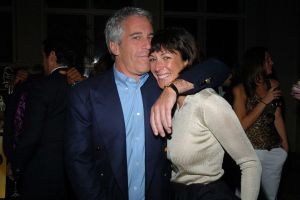
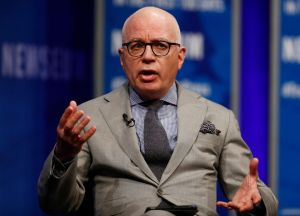

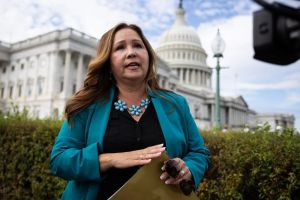
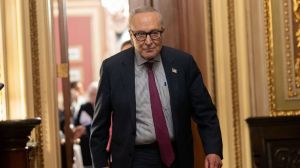
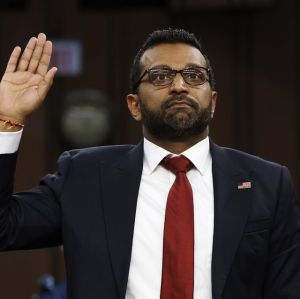










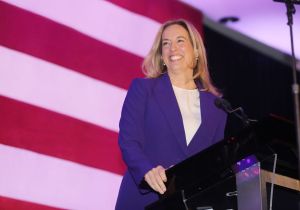


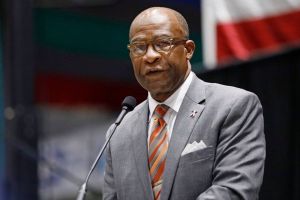








 peej
peej Carissa
 bostonboomer
 dakinikat
 ecocatwoman
 mablue2
 Mama Lopez
 peggysue22
 quixote
 skydancingguestblogger
 Mona (aka Wonk the Vote)



 Sky Dancing
Recent Comments