I’m trying not to let myself fall into despair over what’s happening in our country and the world, but it isn’t easy. I try to distract myself by reading novels and by watching shows on Netflix and Max. But inevitably I open my phone or turn on cable news and get hit with awful news about what new insane thing Trump is doing or saying.
This morning, as I look around at stories in the news, I find myself sinking into sadness over what we have already lost from our democracy and what more losses could be coming. It’s all so tragic. I honestly despise the people who voted for Trump.
There’s one person who never fails to lift my spirits, if only temporarily: MSNBC’s Lawrence O’Donnell. Recently, he has had a great time making fun of Trump’s seeming obsession with American girls’ dolls and how they need to make do with just 2 or 3 or 4 instead of 35 because of his tariffs.
Last night Lawrence made an interesting point about Trump’s cognitive decline. He pointed out that Trump saying “I don’t know,” when asked if people in the U.S. have a right to due process and when asked if he has a duty to defend the Constitution is something new for him. Normally, Trump never admits to not knowing something. He would rather bumble around talking complete nonsense than admit to not knowing.
Lawrence argues that Trump is a pathetic husk of his former self, exhausted and befuddled by his responsibilities. Not that any of this is going to drive Trump from office, but it’s an interesting thought. The danger, of course is that other people like Elon Musk and Stephen Miller could be in control of the presidency.
Lawrence also discussed Trump’s embarrassing appearance yesterday in the Oval Office with newly elected Canadian Prime Minister Mark Carney.
“The Canadian prime minister both humbled and humiliated Donald Trump at the same time without Donald Trump having the slightest idea it was happening,” he said on Tuesday night.
Later in the segment, O’Donnell slammed Trump’s “utterly demented attempt” to turn Canada into a state. Carney, he noted, responded by saying “absolutely no to Donald Trump to his face.”
But Trump, he said, barely noticed.
“Donald Trump had no fight in him today when the very polite Canadian beside him talked rings around Donald Trump like a ring master in a circus with a trained animal, threw in some magic words that sounded flattering enough to Donald Trump so that Donald Trump actually ― and you’ll see this ― ends up nodding and agreeing with the man who is humiliating him and defeating him right there in the room on TV,” O’Donnell said. “No president has ever lost more in one conversation in the Oval Office than Donald Trump lost in these 90 seconds.”
O’Donnell rolled the footage of the meeting, where Carney told him Canada would never be for sale and would not be a U.S. state.
So, on to today’s news.
India and Pakistan–both nuclear powers–appear to be on the verge of war.
India launched military strikes on targets in Pakistan, both countries said on Wednesday and Pakistan claimed it had shot down five Indian Air Force jets, in an escalationthat has pushed the two nations to the brink of wider conflict.
India’s missile strikes early Wednesday morning targeted “terrorist infrastructure” across nine sites in Pakistan’s densely populated Punjab province and Pakistan-administered Kashmir, it said. They came in response to a massacreby militantsof tourists in Indian-administered Kashmir two weeks ago, that New Delhi blamed on its neighbor.
India Pakistan map
Pakistan said at least 26 people were killed in Wednesday’s strikes – including women and a three-year-old girl – and 46 wounded. The country’s Prime Minister Shehbaz Sharif describedthe strikes as “an act of war” and Islamabad has vowed to retaliate.
From early Wednesday the two sides have exchanged shelling across their border, with locals on both sides telling CNN they weretakingshelter. A CNN journalist in Pakistan-administered Kashmir heard multiple loud explosions.
“A shell landed at a house close to the mosque in which two people were injured. Shells also hit other houses in our area and we fled from our area to a safer place,” said Shakeel Butt, a resident of Muzaffarabad, in Pakistani-administered Kashmir. A senior Indian defense source said at least eight people had been killed on the Indian side of the border.
Pakistani military sources later said they shot down five Indian Air Force jets and one drone in “self-defense,” claiming three Rafale jets – sophisticated multi-role fighters made in France – were among those downed as well as a MiG-29 and an SU-30 fighter.
A local resident and government official told CNN that an unidentified fighter aircraft had crashed on a school building in Indian-administered Kashmir.
Tensions between India and Pakistan intensified Wednesday after India’s military launched strikes against the neighboring country in response to a militant attack in Indian-administered Kashmir last month, heightening fears of war between the nuclear-armed rivals….
The strikes have set the region on edge and shattered the fragile ceasefire that has largelyheld since 2021, with analysts warning of escalation in the decades-long conflict that has riven the South Asian subcontinent over the Muslim-majority region of Kashmir, parts of which are controlled by India and Pakistan, though the area is claimed in full by both countries.
Wednesday’s aerial assault is on a far bigger scale than in 2019, when India struck a single, remote Pakistani site in response to a suicide bombing that killed more than 40 Indian soldiersin Kashmir….
The sharp rise in tensions follows a deadly April 22 attack on tourists near the town of Pahalgam in Indian-administered Kashmir.
Gunmen armed with rifles killed 25 Indians and one Nepalese citizen. More than a dozen others were injured. The attack was the deadliest against civilians since the 2008 Mumbai attacks by the Pakistani-based militant group Lashkar-e-Taiba that killed 166 people.
Indian-administered Kashmir is a heavily militarized zone. An armed insurgency — either seeking independence or favoring accession to Pakistan — has continued against Indian rule for more than three decades.
India has long accused Pakistan of fomenting separatist violence in Kashmir. Indian Foreign Secretary Vikram Misri said Wednesday that India had found evidence linking themilitants in the Pahalgam attack to Pakistan.
The Hindu nationalist government of Narendra Modi revoked Kashmir’s semiautonomous status in August 2019 and instituted a crackdown, including imposing the world’s longest internet shutdown in a democracy. Promising development and investment, New Delhi had touted a return to relative peace, citing the surge of tourists to the region, a narrative upended by the deadly attack last month.
Read more at the WaPo.
Joe Biden gave his first major interview since he left the White House.
Former US President Joe Biden has given his first in-depth interview since he left the White House in January, speaking to the BBC about his legacy, foreign policy and his view of President Donald Trump’s first 100 days.
He said that he had few regrets, but he offered grave warnings about global affairs as Europe marks 80 years since the end of World War Two on the continent….
The former president also reflected on his decision to drop out of the 2024 election race – but he had less to say about any mistakes he and the Democrats may have made along the way….
On leaving the 2024 presidential race:
Democratic strategists have lamented that the last-minute handover left their campaign flat-footed, ultimately aiding Trump’s path to the White House, even as Democrats held a financial advantage in the 2024 race.
Biden boasted of being “so successful on our agenda” – a reference to the major legislation enacted in his first two years in office on the environment, infrastructure and social spending, as well as the better-than-expected Democratic performance in the 2022 midterm elections.
“It was hard to say now I’m going to stop,” he said. “Things moved so quickly that it made it difficult to walk away.”
Ultimately, quitting was “the right decision”, he said, but it was “just a difficult decision”.
On Trump and Ukraine:
Biden described the Trump administration’s suggestion that Ukraine give up territory as part of a peace deal with Russia as “modern-day appeasement” – a reference to European allies that allowed Adolf Hitler to annex Czechoslovakia in the 1930s in an ill-fated attempt to prevent a continent-wide conflict.
Joe Biden at BBC interview
“I just don’t understand how people think that if we allow a dictator, a thug, to decide he’s going to take significant portions of land that aren’t his, that that’s going to satisfy him. I don’t quite understand,” Biden said of Russian President Vladimir Putin….
Though Biden’s repeated assertion that Russian tanks would be rolling through central Europe if America and its allies didn’t support Ukraine is impossible to prove, he views the threat posed by Putin as serious and worthy of the comparison.
Biden also said that if the US allowed a peace deal that favoured Russia, Putin’s neighbours would be under economic, military and political pressure to accommodate Moscow’s will in other ways. In his view, the promise of American support to European allies becomes less believable and less of a deterrent.
Until this week, President Biden himself (former presidents keep their titles after they leave office) has largely observed the convention that former presidents do not criticise their successors at the start of their time in office. But from the moment we shake hands it is clear that he is determined to have his say too.
In a dark blue suit, the former president arrives smiling and relaxed but with the determined air of a man on a mission. It’s his first interview since leaving the White House, and he seems most angry about Donald Trump’s treatment of America’s allies – in particular Ukraine’s president, Volodymyr Zelensky….
“I found it beneath America, the way that took place,” he says of the explosive Oval Office row between Trump and Zelensky in February. “And the way we talk about now that, ‘it’s the Gulf of America’, ‘maybe we’re going to have to take back Panama’, ‘maybe we need to acquire Greenland, ‘maybe Canada should be a [51st state].’ What the hell’s going on here?
“What President ever talks like that? That’s not who we are. We’re about freedom, democracy, opportunity – not about confiscation.”
The U.S. is stepping up its intelligence-gathering efforts regarding Greenland, drawing America’s spying apparatus into President Trump’s campaign to take over the island, according to two people familiar with the effort.
Several high-ranking officials under Director of National Intelligence Tulsi Gabbard issued a “collection emphasis message” to intelligence-agency heads last week. They were directed to learn more about Greenland’s independence movement and attitudes on American resource extraction on the island.
The classified message asked agencies, whose tools include surveillance satellites, communications intercepts and spies on the ground, to identify people in Greenland and Denmark who support U.S. objectives for the island.
The directive is one of the first concrete steps Trump’s administration has taken toward fulfilling the president’s often-stated desire to acquire Greenland.
A collection-emphasis message helps set intelligence-agency priorities, directing resources and attention to high-interest targets. The Greenland order, which went to agencies including the Central Intelligence Agency, the Defense Intelligence Agency and the National Security Agency, underscores the administration’s apparent commitment to seeking control of the self-governing island. It forms part of the Kingdom of Denmark, a North Atlantic Treaty Organization member and a decadeslong ally.
James Hewitt, a National Security Council spokesman, said the White House doesn’t comment on intelligence matters, but added: “The president has been very clear that the U.S. is concerned about the security of Greenland and the Arctic.”
In a statement, Gabbard said: “The Wall Street Journal should be ashamed of aiding deep state actors who seek to undermine the President by politicizing and leaking classified information. They are breaking the law and undermining our nation’s security and democracy.”
More at the WSJ. I got past the paywall by clicking the link on Memeorandum.
A Navy fighter jet failed to land on an aircraft carrier and plummeted into the Red Sea on Tuesday, marking the fourth major mishap involving the vessel and the third loss of a fighter jet deployed with it since the warship left home last year.
The F/A-18F Super Hornet fighter jet, worth about $67 million, went overboard after an unsuccessful attempt to slow it down upon landing on the USS Harry S. Truman, the Navy said in a statement. Both aviators aboard the jet safely ejected and were rescued at sea by helicopter with minor injuries, and no one aboard the warship’s flight deck was harmed, the service said.
Boeing F/A-18F Super Hornet fighter jet
The latest incident, reported earlier by CNN, followed the loss of another jet, an F/A-18E, in an accident aboard the Truman last week in which the aircraft tumbled overboard after sailors aboard lost control of it while towing it in the ship’s hangar bay. A third fighter jet from the Truman was shot down accidentally over the Red Sea in December by another Navy warship, the USS Gettysburg, in an incident that triggered concerns about communication among warships and fighter jets in the region.
The Truman also was involved in a collision in the Mediterranean Sea in February, prompting the service to fire its commanding officer, Navy Capt. Dave Snowden. He was replaced by Navy Capt. Christopher Hill, who had just completed the deployment of another carrier, the USS Dwight D. Eisenhower.
While the incidents have not killed any service members, they have raised questions about the strain placed on the aircraft carrier’s crew and its ability to carry out a grueling deployment in which troops have clashed for months with Houthi militants in Yemen, who have repeatedly launched drone and missile attacks against vessels in the region. The mishaps have the attention of senior U.S. military leaders, a defense official familiar with the discussion said Tuesday night, speaking on the condition of anonymity because of the sensitivity of the issue.
Defense Secretary Pete Hegseth has twice extended the aircraft carrier’s deployment since it left its home in Virginia last September, most recently last week, to ensure that the Navy had two aircraft carriers on hand to battle the Houthis. Since March, the carrier has been on the front lines of a full-scale assault that President Donald Trump ordered against the Yemen-based militant group in response to its attacks on commercial and military vessels dating to late 2023.
Pete Hegseth isn’t the only cabinet member who doesn’t seem to care about protecting the nation’s secrets.
Tulsi Gabbard, the director of national intelligence, used the same easily cracked password for different online accounts over a period of years, according to leaked records reviewed by WIRED. Following her participation in a Signal group chat in which sensitive details of a military operation were unwittingly shared with a journalist, the revelation raises further questions about the security practices of the US spy chief.
WIRED reviewed Gabbard’s passwords using databases of material leaked online created by the open-source intelligence firms District 4 Labs and Constella Intelligence. Gabbard served in Congress from 2013 to 2021, during which time she sat on the Armed Services Committee, its Subcommittee on Intelligence and Special Operations, and the Foreign Affairs Committee, giving her access to sensitive information. Material from breaches shows that during a portion of this period, she used the same password across multiple email addresses and online accounts, in contravention of well-established best practices for online security. (There is no indication that she used the password on government accounts.)
Tulsi Gabbard
Two collections of breached records published in 2017 (but breached at some previous unknown date), known as “combolists,” reveal a password that was used for an email account associated with her personal website; that same password, according to a combolist published in 2019, was used with her Gmail account. That same password was used, according to records dating to 2012, for Dropbox and LinkedIn accounts associated with the email address tied to her personal website. According to records dating to 2018 breaches, she also used it on a MyFitnessPal account associated with a me.com email address and an account at HauteLook, a now-defunct ecommerce site then owned by Nordstrom.
Records of these breaches have been available online for years and are accessible in commercial databases.
Gabbard’s spokesperson downplayed this story, saying the information is a decade old and passwords have been changed many times since then. But check out this info on Gabbard:
The password associated with all of the accounts in question includes the word “shraddha,” which appears to have personal significance to Gabbard: Earlier this year, The Wall Street Journal reported that she had been initiated into the Science of Identity Foundation, an offshoot of the Hare Krishna movement into which she was reportedly born and which former members have accused of being a cult. Several former adherents told The Journal that they believe Gabbard received the name “Shraddha Dasi” when she was allegedly received into the group. Gabbard’s deputy chief of staff, Alexa Henning, responded to questions from The Journal at the time by posting them on X and accusing the news media of publicizing “Hinduphobic smears and other lies.”
The U.S. DOGE Service is racing to build a single centralized database with vast troves of personal information about millions of U.S. citizens and residents, a campaign that often violates or disregards core privacy and security protections meant to keep such information safe, government workers say.
The team overseen by Elon Musk is collecting data from across the government, sometimes at the urging of low-level aides, according to multiple federal employees and a former DOGE staffer, who all spoke on the condition of anonymity for fear of reprisals. The intensifying effort to unify systems into one central hub aims to advance multiple Trump administration priorities, including finding and deporting undocumented immigrants and rooting out fraud in government payments. And it follows a March executive order to eliminate “information silos” as DOGE tries to streamline operations and cut spending.
At several agencies, DOGE officials have sought to merge databases that had long been kept separate, federal workers said. For example, longtime Musk lieutenant Steve Davis told staffers at the Social Security Administration that they would soon start linking various sources of Social Security data for access and analysis, according to a person briefed on the conversations, with a goal of “joining all data across government.” Davis did not respond to a request for comment.
But DOGE has also sometimes removed protections aroundsensitive information — on Social Security numbers, birth dates, employment history, disability records, medical documentation and more. In one instance, a website for a new visa program wasn’t set up behind a protective virtual private network as would be customary, according to a Department of Homeland Security employee and records obtained by The Washington Post.
The administration’s moves ramp up the risk of exposing data to hackers and other adversaries, according to security analysts, and experts worry that any breaches could erode public confidence in government. Civil rights advocates and some federal employees also worry that the data assembled under DOGE could be used against political foes or for targeted decisions about funding or basic government services.
“Separation and segmentation is one of the core principles in sound cybersecurity,” said Charles Henderson of security company Coalfire. “Putting all your eggs in one basket means I don’t need to go hunting for them — I can just steal the basket.”
The Supreme Court ruled on Tuesday that the Trump administration may start enforcing a ban on transgender troops serving in the military that had been blocked by lower courts.
The ruling was brief, unsigned and gave no reasons, which is typical when the justices act on emergency applications. It will remain in place while challenges to the ban move forward.
The court’s three liberal members — Justices Sonia Sotomayor, Elena Kagan and Ketanji Brown Jackson — noted dissents but provided no reasoning.
Commander Emily Shilling
The case concerns an executive order issued on the first day of President Trump’s second term. It revoked an order from President Joseph R. Biden Jr. that had let transgender service members serve openly.
A week later, Mr. Trump issued a second order saying that “adoption of a gender identity inconsistent with an individual’s sex conflicts with a soldier’s commitment to an honorable, truthful and disciplined lifestyle.”
The Defense Department implemented Mr. Trump’s order in February, issuing a new policy requiring transgender troops to be forced out of the military. According to officials there, about 4,200 current service members, or about 0.2 percent of the military, are transgender.
The context:
The Supreme Court’s order came against the backdrop of the Trump administration’s broad attacks on transgender rights. The administration has sought to bar transgender athletes from sports competitions. It has tried to force transgender people to use bathrooms designated for their sex assigned at birth. And it has objected to letting people choose their pronouns.
The justices will soon decide the fate of a Tennessee law that bans transition care for transgender youths, challenged in a case brought by the Biden administration. The Trump administration flipped the government’s position in that case in February, after an executive order directed agencies to take steps to curtail surgeries, hormone therapy and other gender transition care for people under 19 years old.
In the case decided on Tuesday, seven active service members, as well as a person who sought to join and an advocacy group, sued to block the policy, saying, among other things, that it ran afoul of the Constitution’s equal protection clause.
One of the plaintiffs, Cmdr. Emily Shilling, who began transitioning in 2021 while serving in the Navy, has been a naval aviator for 19 years, flying more than 60 combat missions, including in Iraq and Afghanistan.
Her lawyers said the Navy had spent $20 million on her training.
In March, Judge Benjamin H. Settle of the Federal District Court in Tacoma, Wash., issued a nationwide injunction blocking the ban, using Commander Shilling as an example of the policy’s flaws.
Faced with the highly secretive and complex ritual of choosing a new pope, Catholic cardinals have turned to Hollywood to learn how it could all play out.
As crazy as it might sound, some of the 133 high-ranking clerics set to enter the Sistine Chapel when the conclave starts on Wednesday have looked to the Ralph Fiennes movie ― handily titled just “Conclave” ― for pointers.
“Some have watched it in the cinema,” a cleric involved in the real thing admitted to POLITICO.
The movie, directed by Edward Berger, features English actor Fiennes as Cardinal Thomas Lawrence, the dean of the College of Cardinals. As the pope-appointed steward of the conclave, he has to deal with fractious clerics, the emergence of scandalous dossiers targeting papal favorites and the appearance of an unknown candidate from an obscure diocese.
It all might sound painfully relevant. The film is seen as remarkably accurate even by cardinals, said the cleric, making it a helpful research tool, especially at a time when so many of the conclave participants have little experience of Vatican politics and protocol.
A majority of the cardinals who flocked to Rome in the weeks since the death of Pope Francis were appointed by the late pontiff, and have never experienced a conclave. Mirroring the Fiennes film, many also come from small, previously overlooked dioceses across the globe.
This has gotten way too long, so I’d better wrap it up. What’s on your mind today?
Did you like this post? Please share it with your friends:
As usual, much of today’s news is awful. Trump is working hard to destroy the U.S. Government, but his actions here have had a positive effect on the leadership of two of our allies. First liberals took over in Canada and now they’ve done it in Australia.
SYDNEY — Australia’s center-left government convincingly won reelection Saturday in a remarkable turnaround driven partly by anger over President Donald Trump’s disruptive trade war and its impact on the close U.S. military ally.
Anthony Albanese became the first Australian prime minister to win a second term in more than two decades as his Labor Partydramatically increased its parliamentary majority. It marked a stunning comeback for the progressive leader, who trailed in the polls two months ago.
In a jubilant victory speech, the 62-year-old struck a tone of unity while also alluding to his opponent’s failed embrace of Trump-like policies.
“We do not need to beg or borrow or copy from anywhere else,” Albanese said to a raucous Sydney crowd. “We do not seek out our inspiration overseas. We find it right here in our values and in our people.”
Trump’s tariffs — first 25 percent on Australia’s aluminum and steel, then 10 percent across the board — had driven voters toward the even-keeled incumbent and away from his conservative opponent, Peter Dutton, whose plans and rhetoric had echoed the American president, said Sean Kelly, a political columnist for the Sydney Morning Herald.
“Trump has absolutely dominated the trajectory of this election,” Kelly said, adding that the global uncertainty unleashed by Trump had made “Albanese’s boringness quite an appealing commodity.”
Australia’s Prime Minister Anthony Albanese has secured a second term in office in a disastrous night for his conservative rivals, as voters chose stability over change against a backdrop of global turmoil inflicted by US President Donald Trump.
Australia’s return of a left-leaning government follows Canada’s similar sharp swing towards Mark Carney’s Liberal Party, another governing party whose fortunes were transformed by Trump. The loss of Liberal Party leader Peter Dutton’s seat mirrors that of Conservative Party leader Pierre Poilievre.
While Australia wasn’t facing the same threats to its sovereignty as Canada, Trump’s global tariffs and policy swings have undermined Australians’ trust in the US, according to recent surveys.
Albanese’s victory makes him the first Australian Prime Minister to win re-election for two decades and he will start his second term with at least 87 seats in the 150-seat lower house, according to the most recent estimates.
A clearly emotional Albanese took the stage to cheers just before 10 p.m. local time to thank Australians for choosing a majority Labor government, defying predictions both major parties would lose seats.
“In this time of global uncertainty, Australians have chosen optimism and determination,” Albanese said, at the Labor victory party in Sydney.
Dutton, who had hoped to end the night as prime minister, lost the outer-suburban Brisbane seat that he’s held for more than 20 years, ending a brutal night for the veteran politician who held senior seats in the last Coalition government.
Here in the USA, things aren’t so great. Trump’s tariffs are kicking in, the economy is struggling, he is trying to destroy education and the arts, RFK Jr. is working to make Americans sick, and Elon Musk and DOGE are wreaking havoc in government agencies. Here’s the latest.
Many Americans might not have felt major effects from President Donald Trump’s sweeping tariffs — until now.
That’s because a major shipping loophole expired at one minute past midnight on Friday. The de minimis exemption, as it’s known, allowed shipments of goods worth $800 or less to come into the United States duty-free, often more or less skipping time-consuming inspections and paperwork.
The loophole helped reshape the way countless Americans shop, allowing ultra-low-cost Chinese e-commerce sites like Shein, Temu and AliExpress to pour everything from yarn to patio furniture, clothes to photography equipment and more into US homes.
Its impending end has rung alarm bells across social media, with a baseline tariff as high as 145% depending on the carrier set to take effect on Chinese imports, potentially more than doubling the cost for all those cheap products deal-hungry Americans scooped up.
And the end of the de minimis exemption for Chinese goods will also distill abstract, complicated, messy, hard-to-follow trade policy into something much easier to understand: a receipt.
Major carriers like UPS, FedEx, DHL and the United States Postal Service say they’re prepared for the changes. The government says it, too, is set; a US Customs and Border Protection spokesperson told CNN that “We are prepared and equipped to carry out enhanced package screenings and enforce orders effectively.”
But whether regular American shoppers are ready for the changes is another matter.
Read more at CNN.
Caroline Petrow-Cohen and James Rainey at The Los Angeles Times:
Amid a wave of unprecedented tariffs, anxiety is running high for truck drivers like Helen, who makes her living delivering cargo containers from the Los Angeles and Long Beach harbors to warehouses and other customers around Southern California.
After a strong start to the year, the number of jobs has started to slip in recent days and truck drivers have heard reports predicting a sharp decline in incoming cargo for May and June….
“There’s real concern that we’re going to be struggling,” said Helen, a Downey resident who declined to give her last name for fear she might lose work if she is considered disgruntled. “If ships are not coming in and there are no loads, then there is no work. If there is no work there’s no money.”
As President Trump’s aggressive tariffs rattle business owners and shake the foundation of American importing, the men and women who work on the ground at the country’s busiest port are feeling the effects too.
Thousands of dockworkers, heavy equipment operators and truck drivers support a flurry of activity at the Port of Los Angeles, which covers 7,500 acres on San Pedro Bay and processed more than 10 million 20-foot-long cargo units in 2024. The neighboring Port of Long Beach moved 9.6 million 20-foot equivalent units, or TEUs, last year.
With a 145% tariff on China, a 25% tariff on Canada and Mexico, and 10% tariffs on dozens of other countries, the flow of goods into the U.S. is expected to slow drastically.
Fewer shipments into the ports of Los Angeles and Long Beach mean less work for the Californians who move cargo, said Raman Dhillon, chief executive of the North American Punjabi Trucking Assn.
“The truckers are scrambling right now,” he said. “They are at the verge of collapsing. The administration needs to move quickly, or it’s going to be chaos and price hikes and empty shelves.”
Trump isn’t worried about a recession and he doesn’t care how it will affect Americans. It’s just a transition period, he says.
President Donald Trump on Friday downplayed concerns about potential economic trouble, saying everything would be “OK” in the long term, even if the U.S economy experienced a recession in the short term.
Cat Astronaut, Michael Raiano
Asked twice by “Meet the Press” moderator Kristen Welker whether it would be OK in the long run if there were a recession in the short term, the president said, “Look, yeah, it’s — everything’s OK. What we are — I said, this is a transition period. I think we’re going to do fantastically.”
Following up, Welker asked Trump if he was worried about a recession, to which he responded, “No.” Asked whether he thinks one could happen, Trump replied, “Anything can happen, but I think we’re going to have the greatest economy in the history of our country.”
The remarks come as analysts on Wall Street are increasingly worried that the country could face a recession due to Trump’s changing tariff policy.
“Well, you know, you say, ‘Some people on Wall Street say’ — well, I tell you something else. Some people on Wall Street say that we’re going to have the greatest economy in history. Why don’t you talk about them?” Trump said during the interview at his Mar-a-Lago resort in Florida.
“There are many people on Wall Street say this is going to be the greatest windfall ever happen,” the president added.
Really? Who are those people? Name one.
Trump doesn’t want the government to support the arts.
President Trump proposed eliminating the National Endowment for the Arts and the National Endowment for the Humanities in the budget he released Friday, taking aim once again at two agencies that he had tried and failed to get rid of during his first term.
The endowments, along with the Institute of Museum and Library Services, were among the entities listed in a section titled “small agency eliminations” in his budget blueprint for the next fiscal year. The document said that the proposal was “consistent with the president’s efforts to decrease the size of the federal government to enhance accountability, reduce waste, and reduce unnecessary governmental entities” and noted that Mr. Trump’s past budget proposals had “also supported these eliminations.”
Since Mr. Trump returned to office this year, his administration has taken aim at the National Endowment for the Humanities and the Institute of Museum and Library Services, canceling most of their existing grants and laying off a large portion of their staffs. But the arts agency had yet to announce major cuts.
The proposal to eliminate the endowments drew a quick and furious reaction from Democrats. One, Senator Jack Reed of Rhode Island, vowed to fight the plan to eliminate the N.E.A. “tooth and nail.”
“We were able to restore the funding last time,” she said, “but as you know, based on the first 100 days of this administration, they’re in no mood to keep much of government alive anymore, and their attack is focused on everything, and the arts have already got a bull’s-eye on their back.
Outerspace laser cats (greeting card)
Of course Trump is also attacking our vital educational institutions. The latest is his threat to remove Harvard’s tax-exempt status. Here in Boston, Harvard and MIT are gearing up to fight back.
Harvard University signaled Friday that it would resist President Trump’s renewed threat to revoke the school’s tax-exempt status, a move for which it said there was “no legal basis” as the president escalated his bitter dispute with the nation’s oldest university.
Harvard stopped short of explicitly pledging a legal challenge to a revocation of its tax status, a change that would upend the university’s finances. But a spokesperson for the university said in a statement that there was “no legal basis to rescind Harvard’s tax-exempt status.”
“Such an unprecedented action would endanger our ability to carry out our educational mission,” the statement said. “It would result in diminished financial aid for students, abandonment of critical medical research programs and lost opportunities for innovation. The unlawful use of this instrument more broadly would have grave consequences for the future of higher education in America.”
Mr. Trump declared Friday morning on social media that the government would be “taking away Harvard’s Tax Exempt Status.” Mr. Trump added, “It’s what they deserve.”
Despite Mr. Trump’s assertion online and Harvard’s sharp response, it was not immediately clear Friday whether the I.R.S. was in fact moving forward with revoking Harvard’s tax-exempt status, a change that could typically occur only after a lengthy process. Federal law prohibits the president from directing the I.R.S. to conduct tax investigations, and I.R.S. employees who receive such a command are required to report it to an internal government watchdog.
The unrelenting high-velocity attacks from the Trump administration have forced leaders of the nation’s premier universities to navigate an extraordinary and bruising balancing act, choosing when to take a stand in the face of continued threats while trying to mitigate the loss of federal funding.
Among the schools where that intense drama is playing out is the Massachusetts Institute of Technology, where the sobering realities of the administration’s funding cuts were discussed at a meeting convened by senior leaders in April.
Under one scenario presented at that meeting by treasurer Glen Shor, MIT risks losing the equivalent of 23 percent of revenues for its central budget, according to a recording of the presentation to school staff obtained by the Globe.
“Unfortunately, we should expect a prolonged period of challenge,” MIT president Sally Kornbluth told staff, according to the recording. “We really have to balance things. And I have to say, I feel a grave responsibility to you all . . . to ensure the livelihoods of this community and to make sure that we can continue to function. I need to balance all of these goalsthat are, again, often in great tension with each other.”
Kornbluth also outlined how she is trying to preserve institutional independence while being pragmatic with so much money hanging in the balance. MIT needs to “adapt” where necessary to the priorities of the federal government, she said, but also resist by suing when it feels the administration had overreached. Senior leaders are also working to improve the university’s reputation in Washington, D.C., and among the broader public.
The recording offers a rare inside look into how institutions are trying to respond to a fast-moving and ever-changing dynamic, with new lines of pressure from the administration coming from unforeseen angles.
I’m terrified by what is happening to public health under RFK Jr. Here’s the latest on that.
A leading immunologist warned of a “post-herd-immunity world”, as measles outbreaks affect communities with low vaccination rates in the American south-west, Mexico and Canada.
The US is enduring the largest measles outbreak in a quarter-century. Centered in west Texas, the measles outbreak has killedtwo unvaccinated children and one adult and spread to neighboring states including New Mexico and Oklahoma.
“We’re living in a post-herd-immunity world. I think the measles outbreak proves that,” said Dr Paul Offit, an expert on infectious disease and immunology and director of the Vaccine Education Center at Children’s Hospital of Philadelphia.
“Measles – because it is the most contagious of the vaccine-preventable diseases, the most contagious human disease really – it is the first to come back.”
The US eliminated measles in 2000. Elimination status would be lost if the US had 12 months of sustained transmission of the virus. As of 1 May, the US Centers for Disease Control and Prevention (CDC) reported 935 confirmed measles cases across30 jurisdictions.Nearly one in three children under five years old involved in the outbreak, or 285 young children, have been hospitalized.
Three large outbreaks in Canada, Mexico and the US now account for the overwhelming majority of roughly 2,300 measles cases across the World Health Organization’s six-country Americas region, according to the health authority’s update this week. Risk of measles is considered high in the Americas, and has grown 11-fold compared with 2024.
Is RFK Jr. concerned about this situation? Not really.
With the United States facing its largest single measles outbreak in 25 years, Health and Human Services Secretary Robert F. Kennedy Jr. will direct federal health agencies to explore potential new treatments for the disease, including vitamins, according to an H.H.S. spokesman. The decision is the latest in a series of actions by the nation’s top health official that experts fear will undermine public confidence in vaccines as an essential public health tool.
The announcement comes as Mr. Kennedy faces intense backlash for his handling of the outbreak. It has swept through large areas of the Southwest where vaccination rates are low, infecting hundreds and killing two young girls. On Friday, the Centers for Disease Control and Prevention reported more than 930 cases nationwide, most of which are associated with the Southwest outbreak.
Critics have said Mr. Kennedy has focused too much on untested treatments — such as cod liver oil supplements — and offered only muted support for the measles vaccine, which studies show is 97 percent effective in preventing infection.
The decision to put more resources into potential treatments, rather than urging vaccination, could have grave consequences at the center of the outbreak….
Scientists have already thoroughly studied various vitamins and medications as potential treatments for measles, said Michael Osterholm an epidemiologist at the University of Minnesota.
Decades of research have turned up no miracle treatment for the measles virus, which can cause pneumonia, making it difficult for patients to get oxygen into their lungs, and brain swelling, which can cause blindness, deafness and intellectual disabilities.
Texas Attorney General Ken Paxton is investigating two leading toothpaste makers over their use of fluoride, suggesting that they are “illegally marketing” the teeth cleaners to parents and kids “in ways that are misleading, deceptive, and dangerous.”
Space cats from Mars, Damien Northmore
The toothpaste makers in the crosshairs are Colgate-Palmolive Company, maker of Colgate toothpastes, and Proctor & Gamble Manufacturing Co., which makes Crest toothpastes. In an announcement Thursday, Paxton said he has sent Civil Investigative Demands (CIDs) to the companies.
The move is an escalation in an ongoing battle over fluoride, which effectively prevents dental cavities and improves oral health. Community water fluoridation has been hailed by health and dental experts as one of the top 10 great public health interventions for advancing oral health across communities, regardless of age, education, or income. But, despite the success, fluoride has always had detractors—from conspiracy theorists in the past suggesting the naturally occurring mineral is a form of communist mind control, to more recent times, in which low-quality, controversial studies have suggested that high doses may lower IQ in children.
These people are insane.
Just a few Elon Musk stories before I wrap this post up.
The Trump administration asked the Supreme Court on Friday to clear the way for Elon Musk ’s Department of Government Efficiency to access Social Security systems containing personal data on millions of Americans.
The emergency appeal is the first in a string of applications to the high court involving DOGE’s swift-moving work across the federal government.
It comes after a judge in Maryland restricted the team’s access to Social Security under federal privacy laws. The agency holds personal records on nearly everyone in the country, including school records, bank details, salary information and medical and mental health records for disability recipients, according to court documents.
The government says the team needs access to target waste in the federal government. Musk, now preparing to step back from his work with DOGE, has been focused on Social Security as an alleged hotbed of fraud. The billionaire entrepreneur has described it as a “ Ponzi scheme ” and insisted that reducing waste in the program is an important way to cut government spending.
Solicitor General John Sauer argued Friday that the judge’s restrictions disrupt DOGE’s important work and inappropriately interfere with executive-branch decisions. “Left undisturbed, this preliminary injunction will only invite further judicial incursions into internal agency decision-making,” he wrote.
I shudder to think what the Supreme Court will do with this.
In the lead up to the April 1 election for the Wisconsin state Supreme Court, a little-known private equity executive by the name of Antonio Gracias joined Tesla billionaire Elon Musk on stage as the latter launched into a tirade clearly inspired by the white supremacist Great Replacement Theory — the discredited canard that the Biden administration was letting in millions of “illegals” to engage in mass voter fraud.
On the dais, Gracias described how his foray into Social Security had revealed something already widely known to immigration policymakers: that the Biden administration had substantially expanded the Temporary Protected Status program, allowing millions of immigrants to enter and work in the country legally. These noncitizens were given Social Security numbers, as is completely standard — in fact, the process was automated during Trump’s first term — but Gracias and Musk, the world’s richest man, treated it like a scandal.
“We started at the top of the system mapping the whole system of Social Security to understand where the fraud was — this is what jumped out at us,” Gracias said. “When we saw these numbers, we asked ‘What is this?’ In ‘21, you see 270,000 people, it goes all the way to 2.1 million in ‘24. These are noncitizens that are getting Social Security numbers. … This literally blew us away. We went there to find fraud, and we found this by accident.” Noting that his parents and siblings, like Musk, are immigrants, Gracias added, “I’m pro-legal immigration — this is about America and the future of America.”
The crowd of conservatives gasped as the billionaires made it sound as if they and their team at Trump’s so-called Department of Government Efficiency had finally found proof of the waste, fraud, and abuse in the Social Security Administration that Musk has repeatedly talked about — examples that might help justify the massive upheaval that DOGE has created within the agency that manages America’s core retirement program.
Check this out:
Despite all of Musk and Gracias’ rhetoric about rooting out waste, fraud, and abuse in Social Security, scant attention has been paid to how the pair has become phenomenally wealthy with support from Americans’ retirement funds.
It’s well-known that Musk’s space company, SpaceX, has long cashed in on federal contracts — a trend turbocharged by Trump’s administration. Gracias, for his part, has relied on significant investments from public retirement systems to fund his firm’s deals. In the past decade, Gracias’ private equity firm, Valor Equity Partners, has received at least $1.7 billion in investment commitments from state and local pension funds — which manage the retirement savings of unionized teachers, firefighters, social workers, bus drivers, and cops — according to a Rolling Stone review of public documents.
Much of this money has come from Democratic states and locales. For its most recent fund, Valor received $800 million in investment commitments from a range of state and local pension funds. Investors include the California Public Employees’ Retirement System; the California State Teachers’ Retirement System; the Illinois Municipal Retirement Fund; the New York State Teachers’ Retirement System; a range of New York City pension funds; the Philadelphia Board of Pensions and Retirement; and the Hartford Municipal Employees Retirement Fund in Connecticut.
There’s much more at the link. If you clear your cache, you should be able to read it.
That’s all I have for you today. What’s on your mind?
Did you like this post? Please share it with your friends:
Talk about grandiosity! These remarks have been characterized in the media as “joking,” but Trump doesn’t really have a sense of humor.
From The Atlantic: The article is mostly gossip; it’s written by Ashley Parker and Michael Scherer, who used to write gossipy stories for The Washington Post. Here’s the context of the quote:
“Tell the people at The Atlantic, if they’d write good stories and truthful stories, the magazine would be hot,” he said. Perhaps the magazine can risk forgoing hotness, he suggested, because it is owned by Laurene Powell Jobs, which buffers it, he implied, from commercial imperatives. But that doesn’t guarantee anything, he warned. “You know at some point, they give up,” he said, referring to media owners generally and—we suspected—Bezos specifically. “At some point they say, No más, no más.” He laughed quietly.
Media owners weren’t the only ones on his mind. He also seemed to be referring to law firms, universities, broadcast networks, tech titans, artists, research scientists, military commanders, civil servants, moderate Republicans—all the people and institutions he expected to eventually, inevitably, submit to his will.
We asked the president if his second term felt different from his first. He said it did. “The first time, I had two things to do—run the country and survive; I had all these crooked guys,” he said. “And the second time, I run the country and the world.”
It’s barely 100 days into Donald Trump’s second term in office, and already, he’s suggesting he wants another job.
After a reporter asked Trump who he thought should follow Pope Francis as the next pope, the non-Catholic president offered a response that was entirely in character.
“I’d like to be pope,” Trump said. “That’d be my No. 1 choice.”
Graham then dialed it up a notch in a post on X, saying he was “excited” to hear that Trump was open to the role.
“This would truly be a dark horse candidate, but I would ask the papal conclave and Catholic faithful to keep an open mind about this possibility!” wrote Graham, who is a Southern Baptist. “The first Pope-U.S. President combination has many upsides. Watching for white smoke…. Trump MMXXVIII!”
That last bit is the Roman numeral for 2028.
Graham was likely joking as well, but his critics weren’t ready to offer any grace on this one.
Trump’s 100 days rally
I still say Trump is drunk with power and thinks he’s King. Last night he held a rally to mark his first 100 days in office. Prominent signs at the rally read, “The Golden Age.” and “100 Days of Greatness.”
Crossing the symbolic barrier between the first 100 days of his presidency and the 1,361 that remain, Trump basked in adulation from a supportive crowd and declared that he had just completed the “the most successful first 100 days of any administration in the history of our country.” He waxed nostalgic about his last act with familiar grievances and hyperbolic claims, and seized the moment to set a course for the next one.
Yet the events of the day only illustrated that for all the action he’s taken so far, difficult tasks remain ahead.
Even before he arrived in Michigan, Trump had taken steps to pull back from the auto tariffs he’d put in place weeks earlier, heeding warnings from auto executives and analysts who said the duties could add thousands of dollars to the price of a new car.
And he’d spent the morning fuming about a report Amazon might list tariff price hikes on its popular marketplace, issuing a warning to founder Jeff Bezos and declaring the move hostile (Amazon said after Trump’s call the plan was only an idea and wouldn’t be implemented).
The president is presiding over an increasingly skeptical public. His 41% approval rating in CNN’s latest poll is the worst for any modern president at the 100-day mark. His 39% approval for his handling of the economy marks a career low.
But surrounded by signs that declared this “THE GOLDEN AGE” at Macomb Community College in Warren, Michigan, Trump – and his supporters – were ebullient.
This man is delusional.
As the White House begins turning its full attention to the president’s legislative agenda, with a July deadline looming for his budget and tax plan, Trump spent very little time dwelling on the next 100 days that could play a large role in defining his presidency. He barely mentioned the economic anxieties that have weighed down his public approval, though his visit to Michigan highlighted his roller-coaster approach to tariffs, which are rooted in his long-held belief for how to revive American manufacturing.
The next chapter of this challenge is yet to play out as Trump balances the demands of automakers, who argue his tariffs could inflict deep economic pain, with the interests of the working class, whom he has sought to champion. But in his telling, his evolving tax and tariff moves had convinced automakers “to come back to Michigan and build cars again.”
“You finally have a champion for workers in the White House,” Trump said. “Instead of putting China first, I’m putting Michigan first and I’m putting America first.”
Trump hailed his hardline immigration policies as a signature accomplishment – one of the biggest “promises kept” from his campaign – and in an interview that aired later on ABC, he cast doubt on the idea that those alleged to be in the country illegally deserve due process.
“If people come into our country illegally, there’s a different standard. … They get a process where we have to get them out,” he continued. “They get whatever my lawyers say.”
In his speech, he added that gas prices had “just hit $1.98 in a lot of states”.
This is a claim he has made several times but we cannot find evidence of prices this low.
As of 29 April, no state had an average gas price lower than $2.67 (£1.99), according to the AAA.
Are egg prices down 87%?
The US president also spoke about the cost of eggs – a concern for many US consumers due to an ongoing bird flu outbreak – and said: “Since I took office, the cost of eggs is down 87%.”
This claim is false.
The average national price for consumers of a dozen large Grade A eggs when Trump entered office in January was about $4.95 (£3.70).
The White House has pointed to wholesale egg prices as evidence of improvement.
Wholesale prices have gone down since Trump took office – but by about 52% – from $6.55 (£4.89) for a dozen large white eggs in January to $3.15 (£2.34) in the past week, according to the US Department of Agriculture.
Read more lies and corrections at the BBC link.
Let’s take a reality-based look at Trump’s “accomplishments.”
The US economy just had its worst quarter since 2022 as President Donald Trump’s significant policy changes unnerved consumers and businesses.
Gross domestic product, which measures all the goods and services produced in the economy, registered at an annualized rate of -0.3% in the first quarter, the Commerce Department said Wednesday.
That’s a sharp slowdown from the fourth quarter’s 2.4% rate, and much worse than the 0.8% rate economists projected. GDP is adjusted for seasonal swings and inflation.
US stocks dropped after the GDP report was released.
The Trump administration has been on a chaotic tariff spree over the past several months, escalating trade tensions with China and unsettling Americans. Most economists say Trump’s monumental bid to reshape global trade is likely to send inflation climbing in the United States and even trigger a recession.
The president, however, deflected blame from the weak figures reflected in the first economic report card of his second term.
“Our Country will boom, but we have to get rid of the Biden ‘Overhang.’” he wrote Wednesday in a post on social media. “This will take a while, has NOTHING TO DO WITH TARIFFS, only that he left us with bad numbers, but when the boom begins, it will be like no other. BE PATIENT!!!”
Cutting federal funding for scientific research could cause long-run economic damage equivalent to a major recession, according to a new study from researchers at American University.
In recent months, the Trump administration has sought to cancel or freeze billions of dollars in grants to scientists at Columbia, Harvard and other universities, and has moved to sharply curtail funding for academic medical centers and other institutions. Deeper cuts could be on the way. As soon as this week, the White House is expected to propose sharp reductions in discretionary spending, including on research and development, as part of the annual budget process.
Economists have warned that such cuts could undermine American competitiveness in areas like vaccine development, artificial intelligence and quantum computing, and could slow growth in income and productivity in the long term. The private sector can’t fully replace government dollars, they argue, because basic research is too risky and takes too long to pay off to attract sufficient private investment.
The study, by a team of economists at American University’s Institute for Macroeconomic and Policy Analysis, is among the first efforts to quantify the risks posed by Mr. Trump’s cuts. Because the full extent of the administration’s plans is not yet clear, the researchers studied a range of scenarios.
Even the mildest approach — a 25 percent reduction in public support for research and development — would correlate to a drop in economic output.
U.S. gross domestic product, adjusted for inflation, would be 3.8 percent smaller in the long term — a decline similar in magnitude to that in the Great Recession, which ended in 2009. The drop in output would be much more gradual than that downturn, taking place over years rather than months. But it would also be more lasting. Cuts to scientific research would sap innovation, leading to slower productivity growth and, as a result, permanently lower economic output.
“It is going to be a decline forever,” said Ignacio González, one of the study’s authors. “The U.S. economy is going to be smaller.”
Savior. Ungodly. Patriotic. Un-American. Great. Sad.
A hundred days into his presidency, all are words Americans used to describe President Donald Trump’s performance in office.
Responses run the full spectrum of possible assessments. On the positive side of the ledger in this ABC News/Washington Post/Ipsos poll: “Excellent.” “Awesome.” “Outstanding.” “Strong.” “Best president ever.”
And among the more negative comments: “Disaster.” “Chaotic.” “Appalling.” “Horrible.” “Atrocious.” “Catastrophic.”
As reported Sunday, Trump has a 39% job approval rating in this poll, produced for ABC by Langer Research Associates with fieldwork by Ipsos. That’s the lowest job approval rating at or near 100 days in office of any president dating back to 1945 (as far back as data are available).
Invited to use one word to express their personal reaction to Trump’s performance as president so far, some focused on their feelings: “Frightened.” “Excited.” “Horrified.” “Relieved.” “Worried.” “Angry.” “Confused.” “Happy.” “Devastated.”
“He’s doing a fantastic job of accomplishing all that we want him to and voted for him to do!”
“He’s a convicted criminal, he’s a horrible con man who thinks he’s a great businessman and he’s tanking the economy for some ‘give it to the libs’ reason. I did not vote for this.”
“Someone needs to step in and rein him in. He is overstepping his authority. What is really frightening is that the Republican leadership knows he is wrong and will not stop him. Fear of losing their own power.”
There is an established playbook for turning a democracy into an authoritarian state, used in countries ranging from India to Hungary. It requires a leader to:
Remove formal limits on their own powers.
Compromise independent power centers such as the press and courts.
Win compliance with the new regime from social elites and the mass public.
Yet in each arena, Trump is facing effective and mounting pushback. He is routinely losing in court. He is failing to silence the media. And he is losing support among the elite as his poll numbers plummet.
This failure is, in large part, a result of his team’s errors. While their approach broadly resembled foreign authoritarians’, it was a poor copy at every level — a strategically unsound campaign, with poorly thought-out tactics that were executed incompetently.
“We should thank [our] lucky stars that Trump chose to do this in the most stupid way possible,” says Lucan Way, a political scientist at the University of Toronto who studies democratic backsliding.
None of this is to say that American democracy is safe. Never before has a president been so committed to breaking the constitutional order and seizing power. We do not know whether America’s democratic institutions will hold when the pressure has been mounting for years rather than months. But the events of the first 100 days give us reason to hope.
There is no question that Donald Trump’s ambition in the first 100 days of his return to the Oval Office was to set a new standard for presidential accomplishment. To rival, even surpass, the scope of Franklin Roosevelt’s efforts nearly a century ago, when he moved so quickly — and so decisively — that he established the first 100 days as a yardstick for executive action.
But as consequential as they have been, and as exhausting as they’ve felt to many Americans, these first months of Trump’s second term fall far short of what Roosevelt accomplished. Yes, Trump has wreaked havoc throughout the federal government and destroyed our relationships abroad, but his main goal — the total subordination of American democracy to his will — remains unfulfilled. You could even say it is slipping away, as he sabotages his administration with a ruinous trade war, deals with the stiff opposition of a large part of civil society and plummets in his standing with most Americans.
If measured by his ultimate aims, Trump’s first 100 days are a failure. To understand why he failed, we must do a bit of compare-and-contrast. First, let’s look at the details of Trump’s opening gambit. And second, let’s measure his efforts against the man who set the terms in the first place: Franklin Delano Roosevelt. To do so is to see that the first 100 days of Trump’s second term aren’t what we think they are. More important, it is to see that the ends of a political project cannot be separated from the means that are used to bring it into this world.
Trump began his second term with a shock-and-awe campaign of executive actions. He, or rather the people around him, devised more than 100 executive orders, all part of a program to repeal the better part of the 20th century — from the New Deal onward — as well as fundamentally transform the relationship between the federal government and the American people.
His ultimate aim is to turn a constitutional republic centered on limited government and the rule of law into a personalist autocracy centered on the rule of one man, Donald J. Trump, and his unlimited authority. Trump’s vision for the United States, put differently, has more in common with foreign dictatorships than it does with almost anything you might find in America’s tradition of republican self-government.
To that end, the president’s executive orders are meant to act as royal decrees — demands that the country bend to his will. In one, among the more than four dozen issued in his first weeks in office, Trump purports to purge the nation’s primary and secondary schools of supposed “radical indoctrination” and promote a program of “patriotic education” instead. In another, signed in the flurry of executive activity that marked his first afternoon back in the Oval Office, Trump asserts the power to define “biological” sex and “gender identity” themselves, in an attempt to end official recognition of trans and other gender nonconforming people….
Trump claims sovereign authority. He claims the right to dismantle entire federal agencies, regardless of the law. He claims the right to spend taxpayer dollars as he sees fit, regardless of what Congress has appropriated. He even claims the right to banish American citizens from the country and send them to rot in a foreign prison.
Trump has deployed autocratic means toward authoritarian ends. And the results, while sweeping, rest on a shaky foundation of unlawful actions and potentially illegal executive actions.
Read how Trump’s 100 days contrast with FDR at the gift link above.
Pope Francis has been eulogised as “a pope among the people, with an open heart towards everyone” during a funeral mass that brought 400,000 mourners to Rome, from pilgrims and refugees to powerful world leaders and royalty.
Francis, 88, died on Monday after a stroke and subsequent heart failure, setting into motion a series of centuries-old rituals and a huge, meticulously planned logistical and security operation not seen in Italy since the funeral of John Paul II in April 2005.
The crowd erupted into applause as the late pontiff’s wooden coffin was carried from the altar of the 16th-century St Peter’s Basilica, where it had laid in state for three days, by 14 white-gloved pallbearers and into the square for the open-air ceremony.
Applause also rang out when the Italian cardinal Giovanni Battista Re, who presided over the funeral mass, spoke of Francis’s care for immigrants, his constant pleas for peace, the need for negotiations to end wars and the importance of the climate.
Under a blue sky, crowds stretched along Via della Conciliazione, the road connecting the Italian capital with the Vatican.
Among the pilgrims were Rosa Cirielli and her friend Pina Sanarico, who left their homes in Taranto, in southern Italy, at 5am, and managed to secure themselves a decent position in front of a huge TV screen. “When Pope Francis was alive, he gave us hope. Now we have this huge hole,” said Cirielli. “He left us during a very ugly period for the world. He was the only one who loudly called for peace.”
The pilgrims were joined by leaders from more than 150 countries, including the US president, Donald Trump, who had repeatedly clashed with Francis over immigration, and his wife Melania. A White House official said Trump had a “very productive” meeting before the ceremony with Ukrainian president, Volodymyr Zelenskyy. A photo showed the pair sitting opposite each other on chairs inside St Peter’s Basilica. Another image showed them together with the British prime minister, Keir Starmer, and French president, Emmanuel Macron. Trump and Zelenskyy were also expected to meet after the mass.
Other guests included the former US president Joe Biden, who last met Francis at the G7 summit in Puglia in June 2024, the Argentinian president, Javier Milei, the European Commission president, Ursula von der Leyen, and Prince William.
More than 2,000 journalists from around the world travelled to Rome to cover the event.
The 90-minute mass was celebrated by 220 cardinals, 750 bishops and more than 4,000 priests.
Trump did not belong at the funeral of Pope Francis, but he bulled his way in and demanded special treatment. Can you believe didn’t even wear black?
President Donald Trump, wearing a blue suit in a sea of black, was seated in a prized front-row seat for the funeral of Pope Francis.
The seating location will likely be a source of great satisfaction for the famously thin-skinned president, who mercilessly mocked Joe Biden after he was seated in the 14th row at Queen Elizabeth’s funeral in 2022.
By Jos Rian
Based on precedent, Trump was expected to have been seated in the third row, behind anointed monarchs.
In the end, however, he and Melania were seated in the front row, along with Ukrainian president Volodymyr Zelensky, whose appearance triggered a spontaneous outburst of applause from the assembled crowds.
Vatican sources told Sky News that Trump met with Zelensky before the ceremony, just hours after the president talked up a peace deal between Ukraine and Russia.
The controversy over Trump’s seating would doubtless have prompted a wry reaction from the overtly humble Pope Francis, who dedicated considerable political capital to confronting Trump, denouncing his immigration policy as “un-Christian” and schooling his minion JD Vance on the issue in his final hours.
Cardinal Vincent Nichols, the Archbishop of Westminster, previously told the Telegraph the ceremony would be a “masterpiece of stage management when you consider those state leaders who have high opinions of their importance.”
“They’ve been doing it since the emperors ruled Rome—they know how to deal with big egos. And I think every leader of a nation that comes here on Saturday will go home reasonably content,” he added.
President Trump met privately with President Volodymyr Zelensky of Ukraine on Saturday in Vatican City, the first time the two leaders have met since their televised argument in late February in the Oval Office exacerbated the deep breach between the two countries.
The meeting took place in St. Peter’s Basilica, the two men perched on metal chairs, deep in conversation for several minutes as they waited for the funeral for Pope Francis to begin. A White House spokesman, Stephen Cheung, called it a “very productive discussion,” but gave no details.
It came at a critical moment. The United States has presented Ukraine with a plan for a cease-fire in its war with Russia, leading to a postwar plan that would give Russia de facto control over all of the lands it has illegally seized since the invasion began three years ago. The proposal also includes a major reversal of American policy: a formal recognition by the United States that Crimea, seized by Moscow in 2014, is now Russian territory.
Mr. Zelensky said this past week that Ukraine would never make that concession, noting that it would violate Ukraine’s Constitution; most of the other nations in Europe would almost agree with Mr. Zelensky’s view. But the Ukrainian leader has a counterproposal of his own, Ukrainian officials said, one that would end the conflict on far less generous terms for Russia, and would include billions of dollars in reparations for Ukraine, paid by Russia.
The White House did not respond to queries about the specifics of the meeting in Vatican City. But it was a remarkable scene: an impromptu meeting between two men who have made no secret of their deep dislike and distrust for each other. In the minutes after they last saw each other, Mr. Zelensky was essentially evicted from the White House, a lunch for the two men left uneaten and an economic accord allowing the United States to help exploit much of Ukraine’s minerals left unsigned.
Some very sad news: Virginia Giuffre had died by suicide.
Her family issued a statement on Saturday confirming she took her own life at her farm in Western Australia, where she had lived for several years.
“It is with utterly broken hearts that we announce that Virginia passed away last night at her farm in Western Australia. She lost her life to suicide, after being a lifelong victim of sexual abuse and sex trafficking,” the statement read.
By Nicolai Tonitza
“In the end, the toll of abuse is so heavy that it became unbearable for Virginia to handle its weight.”
Giuffre was one of the most vocal victims of Epstein, alleging she had been groomed and sexually abused by him and his longtime associate, Ghislaine Maxwell, beginning in her teens.
The family described her as a “fierce warrior” against sexual abuse and sex trafficking and a “light that lifted so many survivors”.
“Despite all the adversity she faced in her life, she shone so bright. She will be missed beyond measure,” they said.
Giuffre is survived by her three children, Christian, Noah and Emily, who her family said were the “light of her life”.
“It was when she held her newborn daughter in her arms that Virginia realised she had to fight back against those who had abused her and so many others,” they said.
“There are no words that can express the grave loss we feel today with the passing of our sweet Virginia. She was heroic and will always be remembered for her incredible courage and loving spirit.”
Giuffre, 41, died in Neergabby, Australia, where she had been living for several years.
Giuffre was one of the earliest and loudest voices calling for criminal charges against Epstein and his enablers. Other Epstein abuse survivors later credited her with giving them the courage to speak out.
She also provided critical information to law enforcement that contributed to the investigation into and later the conviction of Epstein’s associate Ghislaine Maxwell, as well as other investigations by the U.S. attorney for the Southern District of New York….
Raised primarily in Florida, Giuffre had a troubled childhood. She said she was abused by a family friend, triggering a downward spiral that led to her living on the streets for a time as a teenager.
She was attempting to rebuild her life when she met Maxwell, Epstein’s close confidant. Maxwell groomed her to be sexually abused by Epstein, and that abuse continued from 1999 to 2002, according to Giuffre. Giuffre also alleged that Epstein trafficked her to his powerful friends, including Prince Andrew and French modeling agent Jean-Luc Brunel.
Epstein, a wealthy financier, died by suicide in a New York jail in 2019 while he was awaiting trial on federal sex trafficking charges.
Maxwell, a former British socialite, was found guilty on five counts of sex trafficking in 2021 for her role in recruiting young girls to be abused by Epstein.
Giuffre filed a federal lawsuit against Andrew in 2021, alleging that he sexually abused her when she was 17. Andrew, who stepped back from his duties as an active royal as controversy related to Epstein swirled around him, agreed to settle the case for an undisclosed amount in 2022. He has denied having sex with her.
Brunel, who headed several modeling agencies, was charged with sexual harassment and the rape of at least one minor in December 2020. He denied wrongdoing and died by suicide in his jail cell in February 2022.
Several months prior, Giuffre testified against Brunel in a Paris courtroom in June 2021. In an interview after her daylong closed-door testimony, Giuffre said she appeared in court to be a voice for the victims and to make sure Brunel was brought to justice.
“I wanted Brunel to know that he no longer has the power over me,” Giuffre said, “that I am a grown woman now and I’ve decided to hold him accountable for what he did to me and so many others.”
Giuffre moved to Australia with her husband before Epstein’s 2019 arrest. The couple has three children.
There was quite a bit of immigration news yesterday.
The federal government used brazen, heavy-handed tactics on Friday to arrest a Wisconsin state judge on obstruction charges related to an immigration case.
Milwaukee County Circuit Judge Hannah Dugan received the distinction of being arrested at her courthouse. She does not appear to have been given the opportunity to surrender to law enforcement.
By Nicola Slattery
Instead, Trump administration officials immediately used the arrest to create a spectacle and broadcast to the country that state officials — including sitting judges — must cooperate with the Trump administration’s mass deportation campaign or else face overbearing actions from federal law enforcement.
A U.S. Marshals Service spokesman told TPM that FBI agents arrested Dugan at around 8:30 a.m. Milwaukee time. They made the arrest, Marshals spokesman Brady McCarron told TPM, as she arrived for work on the state courthouse grounds, detaining her outside of the building.
Around half an hour after, FBI Director Kash Patel posted a tweet announcing the arrest.
“We believe Judge Dugan intentionally misdirected federal agents away from the subject to be arrested in her courthouse,” he wrote. Patel deleted the tweet minutes later, though he would later repost it.
Contrast the brazenness of Dugan’s arrest, and Patel’s efforts to manufacture publicity around it, with how a somewhat similar case proceeded during Trump’s first term. In 2019, a Massachusetts state judge was indicted on obstruction charges over allegations of blocking ICE officials from taking custody of an undocumented citizen of the Dominican Republic. In that case, itself an extremely rare federal prosecution of a state judge over a decision related to the use of her office, the defendant was allowed to surrender. The DOJ dropped the charges in September 2022.
Read the rest at TPM. This will be an important case to watch. I suspect this isn’t the last judge who will be targeted by Trump goons.
Over the course of the past three days, the Trump administration took a two-year-old U.S. citizen into custody, along with her mother and sister, and deported the child to Honduras with little to no individualized process, prompting sharp concern from a conservative federal judge on Friday.
The Justice Department does not appear to dispute the underlying facts, given its position in a filing faxed to the court about 3:45 a.m. CT Friday in response to a habeas petition filed on behalf of the child, referred to as V.M.L., on Thursday evening.
Instead, the Justice Department’s entire argument was simply that, once in custody and told she was going to be deported, V.M.L.’s mother, Jenny Carolina Lopez Villela, wrote a note stating that she would bring her two-year-old daughter with her to Honduras.
By Jos Rian
As the habeas petition made clear, however, many federal officials knew that both V.M.L.’s father, Adiel Mendez Sagastume, and provisional custodian, Trish Mack, were desperately trying to get in touch with Jenny and/or get V.M.L. released to them throughout the 70 hours between when the two of them and Jenny’s other child were taken into custody and flown to Texas before Friday’s flight to Honduras.
On Friday, in the wake of all of this information, U.S. District Judge Terry Doughty issued an order setting a hearing “[i]n the interest of dispelling our strong suspicion that the Government just deported a U.S. citizen with no meaningful process.” The order was first reported by Politico.
That the order came from Doughty, a far-right Trump appointee known for his harsh criticism of the Biden administration in a case about social media that was later overturned by the U.S. Supreme Court, was yet another reminder of how alarming the Trump administration’s actions are being seen by judges of all backgrounds.
Of the deportation of a two-year-old U.S. citizen, Doughty wrote on Friday, “The Government contends that this is all okay because the mother wishes that the child be deported with her. But the Court doesn’t know that.“
New Orleans, LA – Today, in the early hours of the morning, the New Orleans Immigration and Customs Enforcement (ICE) Field Office deported at least two families, including two mothers and their minor children – three of whom are U.S. citizen children aged 2, 4, and 7. One of the mothers is currently pregnant. The families, who had lived in the United States for years and had deep ties to their communities, were deported from the U.S. under deeply troubling circumstances that raise serious due process concerns.
ICE detained the first family on Tuesday, April 22, and the second family on Thursday, April 24. In both cases, ICE held the families incommunicado, refusing or failing to respond to multiple attempts by attorneys and family members to contact them. In one instance, a mother was granted less than one minute on the phone before the call was abruptly terminated when her spouse tried to provide legal counsel’s phone number.
As a result, the families were completely isolated during critical moments when decisions were being made about the welfare of their minor children. This included decisions with serious implications for the health, safety, and legal rights of the children involved–without any opportunity to coordinate with caretakers or consult with legal representatives.
New Orleans, LA – Today, in the early hours of the morning, the New Orleans Immigration and Customs Enforcement (ICE) Field Office deported at least two families, including two mothers and their minor children – three of whom are U.S. citizen children aged 2, 4, and 7. One of the mothers is currently pregnant. The families, who had lived in the United States for years and had deep ties to their communities, were deported from the U.S. under deeply troubling circumstances that raise serious due process concerns.
By Alberto Morrocco
ICE detained the first family on Tuesday, April 22, and the second family on Thursday, April 24. In both cases, ICE held the families incommunicado, refusing or failing to respond to multiple attempts by attorneys and family members to contact them. In one instance, a mother was granted less than one minute on the phone before the call was abruptly terminated when her spouse tried to provide legal counsel’s phone number.
As a result, the families were completely isolated during critical moments when decisions were being made about the welfare of their minor children. This included decisions with serious implications for the health, safety, and legal rights of the children involved–without any opportunity to coordinate with caretakers or consult with legal representatives.
These actions stand in direct violation of ICE’s own written and informal directives, which mandate coordination for the care of minor children with willing caretakers–regardless of immigration status–when deportations are being carried out.
Both families have possible immigration relief, but because ICE denied them access to their attorneys, legal counsel was unable to assist and advise them in time. With one family, government attorneys had assured legal counsel that a legal call would be arranged within 24-48 hours, as well as a call with a family member. Instead, just after close of business and after courts closed for the day, ICE suddenly reversed course and informed counsel that the family would be deported at 6am the next morning–before the court reopened.
The Justice Department quietly invoked the Alien Enemies act last month to give Immigration and Customs Enforcement agents the power to conduct warrantless searches of people’s homes as long as they suspect them to be an “alien enemy.” USA Today obtained the memo that contained this order on Friday.
“As much as practicable, officers should follow the proactive procedures above—and have an executed Warrant of Apprehension and Removal—before contacting an Alien Enemy,” the memo reads. “However, that will not always be realistic or effective in swiftly identifying and removing Alien Enemies.… An officer may encounter a suspected Alien Enemy in the natural course of the officer’s enforcement activity, such as when apprehending other validated members of Tren de Aragua. Given the dynamic nature of enforcement operations, officers in the field are authorized to apprehend aliens upon a reasonable belief that the alien meets all four requirements to be validated as an Alien Enemy. This authority includes entering an Alien Enemy’s residence to make an AEA apprehension where circumstances render it impracticable to first obtain a signed Notice and Warrant of Apprehension and Removal” (emphasis added).
In the memo, the Justice Department defined an “alien enemy” as anyone who is 14 years of age or older, not a U.S. citizen or lawful permanent resident, a citizen of Venezuela, and “a member of the hostile enemy Tren de Aragua,” per the Alien Enemy Validation Guide, a document that has already been slammed by immigration experts.
A Treasury Department inspector general is probing efforts by President Donald Trump and Elon Musk’s Department of Government Efficiency to obtain private taxpayer data and other sensitive information, internal communications reviewed by ProPublica show.
The office of the Treasury Inspector General for Tax Administration has sought a wide swath of information from IRS employees. In particular, the office is seeking any requests for taxpayer data from the president, the Executive Office of the President, DOGE or the president’s Office of Management and Budget.
The request, spelled out in a mid-April email obtained by ProPublica, comes as watchdogs and leading Democrats question whether DOGE has overstepped its bounds in seeking information about taxpayers, public employees or federal agencies that is typically highly restricted.
By Arthur Io
The review appears to be in its early stages — one document describes staffers as “beginning preplanning” — but the email directs the IRS to turn over specific documents by Thursday, April 24. It’s not clear if that happened.
The inspector general is seeking, for instance, “All requests for taxpayer or other protected information from the President or Executive Office of the President, OMB, or DOGE. Include any information on how the requestor plans to use the information requested, the IRS’s response to the request, and the legal basis for the IRS’s response,” the email says.
The inquiry also asks for information about requests for access to IRS systems from any agency in the executive branch, including the Department of Homeland Security, the Social Security Administration and DOGE.
The Treasury Inspector General for Tax Administration office, known as TIGTA, is led by acting Inspector General Heather M. Hill. When Trump fired 17 inspectors general across a range of federal agencies in January, those working for the Treasury Department were not among the ones axed.
Elon Musk, as a yet-unproven entrepreneur in his mid-twenties, declared himself the “reincarnation” of ancient Greek conqueror Alexander the Great, a new book on the billionaire has revealed.
Musk, now 53, made the comment around 30 years ago to a partner at one of the firms that bankrolled his first start-up, Zip2, which aimed to bring the Yellow Pages online, Washington Post reporter Faiz Siddiqui writes in Hubris Maximus, published Tuesday.
Derek Proudian, then at Mohr Davidow Ventures, recalled grabbing lunch with the young Musk to discuss how to make the company viable on a small scale.
Musk, however, insisted that he think bigger: Zip2 was “going to be the biggest company ever,” Proudian recalled him saying.
When Proudian tried to change the subject, Musk doubled down.
“No—you don’t understand,” he said. “I’m the reincarnation of the spirit of Alexander the Great.”
Incredulous, Proudian pushed back that he might not reach that level of success. Musk wasn’t willing to hear it.
“I’ve got the samurai spirit,” he said. “I’d rather commit seppuku than fail.”
Those are my recommended reads for today. What’s on your mind?
Did you like this post? Please share it with your friends:
We are in deep trouble as a country. Trump hasn’t even been in the White House for 100 days, and he has made rapid progress toward turning us into a dictatorship. I think Congressional Democrats are beginning to wake up, but not nearly quickly enough. Too many of these elected Democrats still aren’t taking the danger seriously enough. In my opinion, they should calling press conferences at least every few days to explain how Trump is destroying our government.
Look around, take stock of where you are, and know this: Today, right now—and I mean right this second—you have the most power you’ll ever have in the current fight against authoritarianism in America. If this sounds dramatic to you, it should. Over the past five months, in many hours of many conversations with multiple people who have lived under dictators and autocrats, one message came through loud and clear: America, you are running out of time.
Maria Ressa
People sometimes call the descent into authoritarianism a “slide,” but that makes it sound gradual and gentle. Maria Ressa, the journalist who earned the Nobel Peace Prize for her attempts to save freedom of expression in the Philippines, told me that what she experienced during the presidency of Rodrigo Duterte is now, with startling speed and remarkable similarity, playing out in the United States under Donald Trump. Her country’s democratic struggles are highly instructive. And her message to me was this: Authoritarian leaders topple democracy faster than you can imagine. If you wait to speak out against them, you have already lost.
Shortly after Trump was reelected last fall, I called Ressa to ask her how she thought Americans should prepare for his return. She told me then that she worried about a failure of imagination. She knew that the speed of the destruction of institutions—one of the first steps an authoritarian takes to solidify and centralize power—would surprise people here, even those paying the closest attention. Ressa splits her time between Manila and New York, and she repeatedly warned me to be ready for everything to happen quickly. When we spoke again weeks after his inauguration, Ressa was shaken. President Trump was moving faster than even she had anticipated.
I heard something similar recently from Garry Kasparov, the Russian dissident and chess grand master. To him, the situation was obvious. America is running out of time, he told me. As Kasparov wrote recently in this magazine, “If this sounds alarmist, forgive me for not caring. Exactly 20 years ago, I retired from professional chess to help Russia resist Putin’s budding dictatorship. People were slow to grasp what was happening there too.”
The chorus of people who have lived through democratic ruin will all tell you the same thing: Do not make the mistake of assuming you still have time. Put another way: You think you can wait and see, and keep democracy intact? Wanna bet? Those who have seen democracy wrecked in their home country are sometimes derided as overly pessimistic—and it’s understandable that they’d have a sense of inevitability about the dangers of autocracy. But that gloomy worldview does not make their warnings any less credible: Unless Trump’s power is checked, and soon, things will get much worse very quickly. When people lose their freedoms, it can take a generation or more to claw them back—and that’s if you’re lucky.
Trump’s methods clearly mirror those of authoritarian leaders in other countries.
The Trump administration’s breakneck pace is obviously no accident. While citizens are busy processing their shock over any one shattered norm or disregarded law, Trump is already on to the next one. This is the playbook authoritarians have used all over the world: First the leader removes those with expertise and independent thinking from the government and replaces them with leaders who are arrogant, ignorant, and extremely loyal. Next he takes steps to centralize his power and claim unprecedented authority. Along the way, he conducts an all-out assault on the truth so that the truth tellers are distrusted, corruption becomes the norm, and questioning him becomes impossible. The Constitution bends and then finally breaks. This is what tyrants do. Trump is doing it now in the United States.
Philippines, it took about six months under Duterte for democratic institutions to crumble. In the
Rodrigo Duterte
United States, the overreach in executive power and the destruction of federal agencies that Ressa told me she figured would have kept Trump busy through, say, the end of the summer were carried out in the first 30 days of his presidency. Even so, what people don’t always realize is that a dictator doesn’t seize control all at once. “The death of democracy happens by a thousand cuts,” Ressa told me recently. “And you don’t realize how badly you’re bleeding until it’s too late.” Another thing the people who have lived under authoritarian rule will tell you: It’s not just that it can get worse. It will.
Americans who are waiting for Trump to cross some imaginary red line neglect the fact that they have more leverage to defend American democracy today than they will tomorrow, or next week, or next month. While people are still debating whether to call it authoritarianism or fascism, Trump is seizing control of one independent agency after another. (And for what it’s worth, the smartest scholars I know have told me that what Trump is trying to do in America is now textbook fascism—beyond the authoritarian impulses of his first term. Take, for example, his administration’s rigid ideological purity tests, or the extreme overreach of government into freedom of scientific and academic inquiry.)
Between the time I write this sentence and the moment when this story will be published, the federal government will lose hundreds more qualified, ethical civil servants. Soon, even higher numbers of principled people in positions of power will be fired or will resign. More positions will be left vacant or filled by people without standards or scruples. The government’s attacks against other checks on power—the press, the judiciary—will worsen. Enormous pressure will be exerted on people to stay silent. And silence is a form of consent.
This article is essential reading. I hope you’ll use the gift link to read the rest at The Atlantic.
In the 2024 presidential campaign, Democrats’ warnings that American democracy was in jeopardy if Donald Trump was elected failed to persuade a majority of voters. Our guest, Steven Levitsky, says there’s plenty of reason to worry about our democracy now….
In a new article for the journal Foreign Affairs, Levitsky and co-author Lucan A. Way write, quote, “U.S. democracy will likely break down during the Second Trump administration in the sense that it will cease to meet standard criteria for a liberal democracy – full adult suffrage, free and fair elections, and broad protection of civil liberties,” unquote. We’ve invited Levitsky here to explain the threats he sees to democracy and to talk about dramatic developments in the Trump administration’s confrontation with Harvard University.
DAVIES: You note in this article that Freedom House, which is a nonprofit that’s been around for a long time, which produces an annual global freedom index, has reduced the United States’ rating. It has slipped from 2014 to 2021. How much? Where are we now, and where did we used to be?
Steven Levitsky
LEVITSKY: Freedom House’s scores range from zero, which is the most authoritarian to a hundred, which is the most democratic. I think a couple of Scandinavian countries get scores of 99 or 100. The U.S. for many years was in the low 90s, which put it broadly on par with other Western democracies like the U.K. and Italy and Canada and Japan. But it slipped in the last decade, from Trump’s first victory to Trump’s second victory, from the low 90s to 83, which placed us below Argentina. And in a tie with Romania and Panama. So we’re still above what scholars would consider a democracy, but now in the very low-quality democracy range, comparable, again, to Panama, Romania and Argentina.
DAVIES: And does Freedom House explain its demotion? Why? Why did this happen?
LEVITSKY: Oh, yeah. Freedom House has annual reports for every country – the rise in political violence, political threats, threats against politicians, refusal to accept the results of a democratic election in 2020, an effort to use violence to block a peaceful transfer of power are all listed among the reasons for why the United States has fallen. I should say that even in the first four months of the Trump administration, it’s quite certain that what’s happening on the ground in the United States is likely to bring the U.S. score down quite a bit.
DAVIES: You say that the danger here is not that the United States will become a classic dictatorship with sham elections, you know, opposition leaders arrested, exiled or killed. What kind of autocracy might we become?
LEVITSKY: I think the most likely outcome is a slide into what Lucan Way and I call competitive authoritarianism. These are regimes that constitutionally continue to be democracies. There is a Constitution. There are regular elections, a legislature and importantly, the opposition is legal, above ground and competes for power. So from a distance, if you squint, it looks like a democracy, but the problem is that systematic coming (ph) abuse of power tilts the playing field against the opposition. This is the kind of regime that we saw in Venezuela under Hugo Chavez. It’s subsequently become a full-on dictatorship. It’s what we see in Turkey under Erdogan. It’s what we see in El Salvador. It’s what we see in Hungary today. Most new autocracies that have emerged in the 21st century have been led by elected leaders and fall into this category of competitive authoritarianism. It’s kind of a hybrid regime.
DAVIES: So free and fair elections lead us to a leader which takes us in a different direction?
LEVITSKY: Right. And because the leader is usually freely and fairly elected, he has a certain legitimacy that allows him to say, hey, how can you say I’m an authoritarian if I was freely and fairly elected? So citizens are often slow to realize that their country is descending into authoritarianism.
You can read the rest of the interview or listen to it at the NPR link.
The American constitutional system is built on the theory that the self-interest of lawmakers can be as much of a defense against tyranny as any given law or institution.
As James Madison wrote in Federalist 51, “The provision for defense must in this, as in all other cases, be made commensurate to the danger of attack. Ambition must be made to counteract ambition. The interest of the man must be connected with the constitutional rights of the place.” Our Constitution is nothing more than a “parchment barrier” if not backed by the self-interest and ambition of those tasked with leading the nation.
One of the most striking dynamics in these first months of the second Trump administration was the extent to which so many politicians seemed to lack the ambition to directly challenge the president. There was a sense that the smart path was to embrace the apparent “vibe shift” of the 2024 presidential election and accommodate oneself to the new order.
But events have moved the vibe in the other direction. Ambition is making a comeback.
Last week, Senator Chris Van Hollen of Maryland traveled to El Salvador, where he met with Kilmar Armando Abrego Garcia, a victim of the Trump administration’s removal program under the 1798 Alien Enemies Act….
Abrego Garcia is one of the men trapped in this black zone. Despite his protected legal status, he was arrested, detained, accused of gang activity and removed from the United States. At no point did the government prove its case against Abrego Garcia, who has been moved to a lower-security prison, nor did he have a chance to defend himself in a court of law or before an immigration judge. As one of Abrego Garcia’s representatives in the United States Senate, Van Hollen met with him to both confirm his safety and highlight the injustice of his removal.
Sen. Chris Van Hollen
“This case is not just about one man,” Van Hollen said at a news conference following his visit. “It’s about protecting the constitutional rights of everybody who resides in the United States of America. If you deny the constitutional rights of one man, you threaten the constitutional rights and due process for everyone else in America.” [….]
The goal of Van Hollen’s journey to El Salvador — during which he was stopped by Salvadoran soldiers and turned away from the prison itself — was to bring attention to Abrego Garcia and invite greater scrutiny of the administration’s removal program and its disregard for due process. It was a success. And that success has inspired other Democrats to make the same trip, in hopes of turning more attention to the administration’s removal program and putting more pressure on the White House to obey the law.
Senator Cory Booker of New Jersey is reportedly organizing a trip to El Salvador, and a group of House Democrats led by Representative Robert Garcia of California arrived on Monday. “While Donald Trump continues to defy the Supreme Court, Kilmar Abrego Garcia is being held illegally in El Salvador after being wrongfully deported,” Representative Garcia said in a statement. “That is why we’re here, to remind the American people that kidnapping immigrants and deporting them without due process is not how we do things in America.”
“We are demanding the Trump administration abide by the Supreme Court decision and give Kilmar and the other migrants mistakenly sent to El Salvador due process in the United States,” Garcia added.
All of this negative attention has had an effect. It’s not just that the president’s overall approval rating has dipped into the low 40s — although it has — but that he’s losing his strong advantage on immigration as well. Fifty percent of Americans disapprove of Trump’s handling of immigration, according to a recent poll from Quinnipiac University, and a new Reuters poll shows Trump slightly underwater on the issue with a 45 percent approval to 46 percent disapproval.
These lawmakers are getting positive attention for standing up to Trump, and their actions are waking up Americans who may not have been paying enough attention to Trump’s illegal and cruel deportations.
A delegation of congressional members traveled to Louisiana Tuesday to demand the release of Mahmoud Khalil and Rümeysa Öztürk and inspect conditions at the two Immigration and Customs Enforcement detention facilities where the two remain in custody.
It’s the first time a congressional delegation has met with Khalil or Ozturk.
Khalil, a Columbia University graduate, and Ozturk, a Tufts University PhD student, have been in ICE custody for more than a month after being arrested near their homes by federal agents.
The Democrat delegation, led by Rep. Troy Carter of Louisiana traveled to Jena, where Khalil is being held, and then two hours south to Basile, where Ozturk is detained. The group included Reps. Bennie Thompson of Mississippi, Ayanna Pressley and Jim McGovern of Massachusetts and Sen. Ed Markey.
Mahmoud Khalil
The facilities were clean but “chilly” according to Carter, who said detainees complained of cold temperatures at night, making it difficult to sleep. Carter said the facilities appeared to have been cleaned prior to their visit and that conditions appeared to be “fine” while they visited.
Following the visit, lawmakers said the detainees they met with also complained about a lack of medical care, food and religious accommodations.
“I really worry that this administration is ushering in a new era of McCarthyism. And unless Congress and unless the American people stand up and push back, they will succeed,” McGovern said during a press conference after the visits.
Markey accused the Trump administration of wanting to “make an example” out of Khalil and Ozturk in an effort to chill free speech. Markey also said ICE had intentionally transferred them to Louisiana for political reasons.
Through the Trump administration, ICE feels “they have a right to take people from across our country, and to put them into facilities like this here in Louisiana,” Markey said. “And why did they do that? They have done that in order to go to the single most conservative Circuit Court of Appeals in the United States of America.”
Again, these Congress people received positive media coverage. As Jamelle Bouie wrote (see above article), perhaps their ambition has led them to publicly oppose Trump’s dictatorial actions.
Imagine that you were a high-ranking official in Donald Trump’s administration. Imagine that you believed in the Dark Enlightenment dream of dismantling liberal democracy itself—of “killing the woke mind virus,” ending birthright citizenship, and using federal power to suppress dissent. Now imagine you’re openly defying the Supreme Court, declaring that protest aids and abets terrorism, directing the FBI and IRS to target political enemies, and seriously considering invoking the Insurrection Act on flimsy pretexts. What would stop you?
Certainly not impeachment. Not with a compliant Republican Congress. Not with a conservative media ecosystem ready to justify any abuse of power as a patriotic necessity. The only thing that might give you pause is the possibility that Democrats would regain control and then do to you what you’ve done to them.
That fear of reciprocal power and legal accountability was once enough to preserve American political norms. It was the logic of mutually assured destruction: if you break democracy now, they’ll break you later. That’s how informal guardrails were enforced, even through dark chapters like Watergate or Iran-Contra. But those norms no longer hold because no one believes Democrats will retaliate.
This is the context for the quiet battle raging within the Democratic Party leadership. A few anonymous but influential centrists are urging party leaders to soft-pedal Trump’s detention of legal residents in foreign internment camps and pivot to kitchen-table economics instead. Even as constituents demand action and donors grow restless, Senate Majority Leader Chuck Schumer and House Minority Leader Hakeem Jeffries still signal caution, urging patience and restraint…..
Rumeysa Ozturk
There have been some bright spots. Senator Cory Booker broke Strom Thurmond’s filibuster record in a marathon floor speech denouncing Trump’s abuses. Senator Chris Van Hollen forced a meeting with abducted U.S. resident Abrego Garcia in El Salvador, delivering proof of life and drawing global attention. Senator Chris Murphy’s rhetoric has been sharp and effective. House Democrats like Alexandria Ocasio-Cortez (along with her “anti-oligarchy tour” partner Senator Bernie Sanders), Jasmine Crockett, and Robert Garcia have been doing excellent work. Their energy and determination carry the tacit message that those who broke the law and tried to impose an authoritarian regime on the U.S. will face appropriate justice at the end of the day. Representative Jamie Raskin was explicit about warning El Salvador’s leader: “Look, President Bukele—who’s declared himself a dictator—and the other tyrants, dictators, autocrats of the world have to understand that the Trump administration is not going to last forever,” Raskin said. “We’re going to restore strong democracy to America, and we will remember who stood up for democracy in America and who tried to drive us down towards dictatorship and autocracy.”
But these have been exceptions rather than the rule. Most Democrats in leadership and positions of power have stayed quiet—avoiding press conferences, shunning symbolic actions, and allowing business to continue as if the country weren’t barreling toward authoritarianism.
When pressed, party leaders often respond that they can do little substantively. That protests are performative. That voters are tired of drama. But that’s not the point. The point isn’t what Democrats can do today. It’s what they’re signaling they’re willing to do when they return to power.
If Trump and his allies face no meaningful consequences, they have no reason to stop. If Republicans don’t believe that Democrats will act with equal force to protect democracy—legally, aggressively, unapologetically—then there’s no deterrent to further escalation.
Throughout the Trump era I’ve been firmly in the camp unaffectionately dismissed as ‘alarmist’ by most commentators. Put simply: It is that bad. Liberal democracy is in danger. Fascism is a reasonable term for what we’re fighting.
For veteran ‘alarmists’ this is a strange moment. People are at a loss. It seems wrong, given all that is at stake, to say “I told you so”. I’ve felt that discomfort. For the longest time I avoided saying that. It felt . . . petty, childish, gauche, it just wasn’t the done thing. One of the big political awakenings I’ve had over the last year, and particularly since Trump’s 2024 victory, is realizing that it’s OK to say “called it”. More than OK. Even if it feels awkward, it’s actually important, perhaps necessary, that we do.
My view has not been, to put it mildly, the mainstream position. You’re allowed, with a certain amount of resentment, to say it today. But that wasn’t always the case. I recall first voicing it as the antecedents of Trump, the tea party and growing white supremacy, started to arise. Obama’s “the fever will break” seemed hopelessly naive to me. The press treated them either as legitimate libertarians or an eccentric curiosity, not a threat. To the activist left, what would become the Bernie movement, they were a joke—the punchline to a Jon Stewart monologue. Nothing more. When Trump first rode the elevator down to announce his candidacy, it was entertainment, not omen.
If you saw in any of this a threat to liberal democracy writ large, much less one that could actually succeed, you were looked at with the kind of caution usually reserved for the guy screaming about aliens on the subway. Trump’s election in 2016 was a shock to people who insisted it could never happen. But those most complacent before quickly found their way back to complacency after. For a certain type—specifically, the type who has a column in legacy media despite never having written an interesting or original paragraph in their lives—smug condescension became the order of the day: yes, Trump is bad, but dear me those liberals are being hysterical. As late as the last election they were writing pieces with titles like “A Trump Dictatorship Won’t Happen” or “No, Trump won’t destroy our democracy.” Even after the election, as the scale of the incoming lawlessness became clear, we were dismissed: “Trump Is Testing Our Constitutional System. It’s Working Fine” respected legal commentator Noah Feldman told us—the legal rationale for his actions was very flimsy. Courts would strike it all down. And certainly the administration would not ignore a court order.
One thing I’ve always wondered about the anti-alarmists during this decade was, to put it bluntly, weren’t they worried about looking stupid? The path we were on seemed clear enough to me, but I didn’t know the future. I always stressed that my predictions were one of any number of possible outcomes. They didn’t. What I was saying was dismissed, not just as unlikely, but impossible. Did they not want to hedge their bets even a bit? And it’s not as if the liberal democratic collapse happened all at once. The last decade has been a steady drum beat of them being wrong, again and again. Yet it never shook them.
Read more at Liberal Currents.
I have been fearful of Trump’s authoritarian tendencies since the 2016 campaign and so have most Sky Dancers. It does feel sometimes that people who didn’t see it are stupid, but I’m willing to welcome people who are beginning to change their minds to the resistance. We need as many resisters as possible. Trump’s polls are dropping now, as more people begin to see what he’s really up to–and it isn’t about bringing down grocery prices. I want to believe there is still hope for our democracy. Lately, it looks like some Democratic leaders are ready to fight back. Some of that fight must have come from seeing the protests all over the country. Now we need a few Republicans to grow spines and stand up to Trump.
That’s all I have for today. What do you think? What’s on your mind?
Did you like this post? Please share it with your friends:
The Sky Dancing banner headline uses a snippet from a work by artist Tashi Mannox called 'Rainbow Study'. The work is described as a" study of typical Tibetan rainbow clouds, that feature in Thanka painting, temple decoration and silk brocades". dakinikat was immediately drawn to the image when trying to find stylized Tibetan Clouds to represent Sky Dancing. It is probably because Tashi's practice is similar to her own. His updated take on the clouds that fill the collection of traditional thankas is quite special.
You can find his work at his website by clicking on his logo below. He is also a calligraphy artist that uses important vajrayana syllables. We encourage you to visit his on line studio.


 The sharp rise in tensions follows a deadly April 22 attack on tourists near the town of Pahalgam in Indian-administered Kashmir.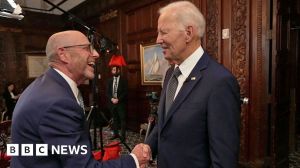


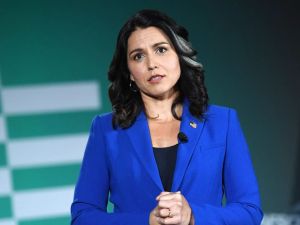








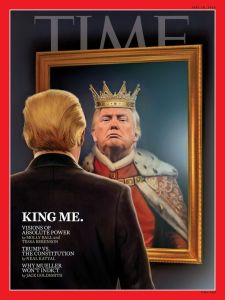

















 peej
peej Carissa
 bostonboomer
 dakinikat
 ecocatwoman
 mablue2
 Mama Lopez
 peggysue22
 quixote
 skydancingguestblogger
 Mona (aka Wonk the Vote)



 Sky Dancing
Recent Comments