Posted: April 24, 2021 | Author: bostonboomer | Filed under: Afternoon Reads | Tags: 1918 flu pandemic, anti-vaccine movement, coronavirus pandemic, Covid-19, India, long haul Covid-19, the flu, transmission of Covid-19, vaccines, Vietnam |

By Suzanne Valadon
Good Afternoon!!
Things have been looking up for the U.S. now than we have a responsible, knowledgeable president with competent advisers. But we we’re still in danger as long as the worldwide pandemic rages in other countries. Right now India isin the spotlight. We also need to deal with the anti-vaxxers and the Trumpists who refuse to accept vaccines. We’re also still learning about the long-term effects of Covid-19 as well as how the disease is transmitted.
How bad is this pandemic? Maybe worse than the 2018 flu, reports The New York Times: How Covid Upended a Century of Patterns in U.S. Deaths.
A surge in deaths from the Covid-19 pandemic created the largest gap between the actual and expected death rate in 2020 — what epidemiologists call “excess deaths,” or deaths above normal.
Aside from fatalities directly attributed to Covid-19, some excess deaths last year were most likely undercounts of the virus or misdiagnoses, or indirectly related to the pandemic otherwise. Preliminary federal data show that overdose deaths have also surged during the pandemic.
A New York Times analysis of U.S. death patterns for the past century shows how much 2020 deviated from the norm….
Since the 1918 pandemic, the country’s death rate has fallen steadily. But last year, the Covid-19 pandemic interrupted that trend, in spite of a century of improvements in medicine and public health.

Marcel Dyf Jeune Fille Avec Chaton The Kitten
In the first half of the 20th century, deaths were mainly dominated by infectious diseases. As medical advancements increased life expectancy, death rates also started to smooth out in the 1950s, and the mortality rate in recent decades — driven largely by chronic diseases — had continued to decline.
In 2020, however, the United States saw the largest single-year surge in the death rate since federal statistics became available. The rate increased 16 percent from 2019, even more than the 12 percent jump during the 1918 flu pandemic….
Combined with deaths in the first few months of this year, Covid-19 has now claimed more than half a million lives in the United States. The total number of Covid-19 deaths so far is on track to surpass the toll of the 1918 pandemic, which killed an estimated 675,000 nationwide.
According to the Centers for Disease Control and Prevention, about 10 percent of the deaths last year can be directly attributed to Covid-19, which overtook other leading causes of death — like chronic lower respiratory diseases and unintentional injuries, such as car accidents and overdose deaths — to become the third biggest killer, after heart disease and cancer.
Read the rest at the NYT.
What about the today’s flu viruses? The New York Times: The Flu Vanished During Covid. What Will Its Return Look Like?
There have been fewer influenza cases in the United States this flu season than in any on record. About 2,000 cases have been recorded since late September, according to data from the Centers for Disease Control and Prevention. In recent years, the average number of cases over the same period was about 206,000.
As measures to stop the spread of the coronavirus were implemented around the country in March 2020, influenza quickly disappeared, and it still has not returned. The latest flu season, which normally would have run until next month, essentially never happened.
After fears that a “twindemic” could batter the country, the absence of the flu was a much needed reprieve that eased the burden on an overwhelmed health care system. But the lack of exposure to the flu could also make the population more susceptible to the virus when it returns — and experts say its return is certain….
Experts are less certain about what will happen when the flu does return. In the coming months — as millions of people return to public transit, restaurants, schools and offices — influenza outbreaks could be more widespread than normal, they say, or could occur at unusual times of the year. But it’s also possible that the virus that returns is less dangerous, having not had the opportunity to evolve while it was on hiatus.
“We don’t really have a clue,” said Richard Webby, a virologist at the St. Jude Children’s Research Hospital in Memphis. “We’re in uncharted territory. We haven’t had an influenza season this low, I think as long as we’ve been measuring it. So what the potential implications are is a bit unclear.”

Motoko Kamada; Japan – Warm Lifting
One more from The New York Times: Patients With Long Covid Face Lingering Worrisome Health Risks, Study Finds.
The health effects of Covid-19 not only can stretch for months but appear to increase the risk of death and chronic medical conditions, even in people who were never sick enough to be hospitalized, a large new study finds.
In the study, published Thursday in the journal Nature, researchers looked at medical records of more than 73,000 people across the United States whose coronavirus infections did not require hospitalization. Between one and six months after becoming infected, those patients had a significantly greater risk of death — 60 percent higher — than people who had not been infected with the virus.
The research, based on records of patients in the Department of Veterans Affairs health system, also found that nonhospitalized Covid survivors had a 20 percent greater chance of needing outpatient medical care over those six months than people who had not contracted the coronavirus.
The Covid survivors experienced a vast array of long-term medical problems that they had never had before — not just lung issues from the respiratory effects of the virus, but symptoms that could affect virtually any organ system or part of the body, from neurological to cardiovascular to gastrointestinal. They were also at greater risk of mental health problems, including anxiety and sleep disorders.
Click the link to read more about the study results.
We’re still learning about how the coronavirus is transmitted from person to person. CNBC: MIT researchers say you’re no safer from Covid indoors at 6 feet or 60 feet in new study challenging social distancing policies.
The risk of being exposed to Covid-19 indoors is as great at 60 feet as it is at 6 feet — even when wearing a mask, according to a new study by Massachusetts Institute of Technology researchers who challenge social distancing guidelines adopted across the world.
MIT professors Martin Z. Bazant, who teaches chemical engineering and applied mathematics, and John W.M. Bush, who teaches applied mathematics, developed a method of calculating exposure risk to Covid-19 in an indoor setting that factors in a variety of issues that could affect transmission, including the amount of time spent inside, air filtration and circulation, immunization, variant strains, mask use, and even respiratory activity such as breathing, eating, speaking or singing.
Bazant and Bush question long-held Covid-19 guidelines from the Centers for Disease Control and Prevention and the World Health Organization in a peer-reviewed study published earlier this week in Proceedings of the National Academy of Science of the United States of America.
“We argue there really isn’t much of a benefit to the 6-foot rule, especially when people are wearing masks,” Bazant said in an interview. “It really has no physical basis because the air a person is breathing while wearing a mask tends to rise and comes down elsewhere in the room so you’re more exposed to the average background than you are to a person at a distance.”

Early Portrait of the Artist’s Daughter, 1893-4, by Thomas Wilmer Dewing (1851-1938)
The important variable the CDC and the WHO have overlooked is the amount of time spent indoors, Bazant said. The longer someone is inside with an infected person, the greater the chance of transmission, he said.
Opening windows or installing new fans to keep the air moving could also be just as effective or more effective than spending large amounts of money on a new filtration system, he said.
Bazant also says that guidelines enforcing indoor occupancy caps are flawed. He said 20 people gathered inside for 1 minute is probably fine, but not over the course of several hours, he said.
“What our analysis continues to show is that many spaces that have been shut down in fact don’t need to be. Often times the space is large enough, the ventilation is good enough, the amount of time people spend together is such that those spaces can be safely operated even at full capacity and the scientific support for reduced capacity in those spaces is really not very good,” Bazant said. “I think if you run the numbers, even right now for many types of spaces you’d find that there is not a need for occupancy restrictions.”
I mentioned the disastrous situation in India. The Guardian: India’s daily Covid death toll hits new record amid oxygen shortages.
India’s daily coronavirus death toll passed a new record Saturday as the government battled to get oxygen supplies to hospitals overwhelmed by the hundreds of thousands of new daily cases.
Queues of Covid-19 patients and their fearful relatives are building up outside hospitals in major cities across India, the new world pandemic hotspot, which has reported nearly a million new cases in three days.
Another 2,624 deaths, a new daily record, were reported in 24 hours, taking the official toll to nearly 190,000 since the pandemic started.
More than 340,000 new cases were also reported, taking India’s total to 16.5 million, second only to the United States.
But many experts are predicting the current wave will not peak for at least three weeks and that the real death and case numbers are much higher.
More from CNN: No respite in India as country sets Covid-19 infection record for third straight day.
India reported 346,786 new cases of Covid-19 on Saturday — the third day in a row the country has set a world record for infections during the coronavirus pandemic, according to government and scientific tallies.
The related death toll for the previous 24 hours hit 2,624 — also a daily record for India — for 189,544 total fatalities.
The sky-rocketing Covid-19 infections are devastating India’s communities and hospitals. Everything is in short supply — intensive care unit beds, medicine, oxygen and ventilators. Bodies are piling up in morgues and crematoriums.

Indira Baldano, naive art Индира Балдано живопись
Twenty critically ill patients died at a Delhi hospital Friday night after its supply of oxygen was delayed by seven hours, according to Dr. DK Baluja, medical director at the Jaipur Golden Hospital.
“That happened last night. Everything we had was exhausted. The oxygen was not supplied on time. It was supposed to come in at 5 p.m. but it came around midnight. People who were critically ill needed oxygen,” said Baluja.
The hospital is currently scrambling to arrange more oxygen but has not received a fresh supply all Saturday morning. “We have only 15-20 minutes of oxygen left now. It may take hours to get another tanker,” Baluja told CNN.
Delhi hospitals have been facing a severe oxygen shortage as the number of Covid-19 cases have soared in the national capital in the past two weeks….
Delhi recorded 24,331 new cases Friday, including 348 deaths, according to the Covid-19 health bulletin issued by the Delhi government.
Countrywide, India has now recorded more than 16.6 million cases since the start of the pandemic, a CNN tally of figures from the Indian Ministry of Health reveals.
In contrast, Vietnam successfully limited the spread of the virus. The Verge: Vietnam defied the experts and sealed its border to keep Covid-19 out. It worked.
As the pandemic took hold last year, travel restrictions quickly proliferated — they were the second-most-common policy governments adopted to combat Covid-19. According to one review, never in recorded history has global travel been curbed in “such an extreme manner”: a reduction of approximately 65 percent in the first half of 2020. More than a year later, as countries experiment with vaccine passports, travel bubbles, and a new round of measures to keep virus variants at bay, a maze of confusing, ever-changing restrictions remains firmly in place.
But few countries have gone as far as Vietnam, a one-party communist state with a GDP per capita of $2,700. The Haiphong checkpoints timed for Tet were the equivalent of closing off Los Angeles to Americans ahead of Thanksgiving — within a country that was already nearly hermetically sealed. Last March, the government canceled all inbound commercial flights for months on end, making it almost impossible to fly in, even for Vietnamese residents.
Today, flights are limited to select groups, like businesspeople or experts, from a few low-risk countries. Everybody who enters needs special government permission and must complete up to 21 days of state-monitored quarantine with PCR tests. (Positive cases are immediately isolated in hospitals, regardless of disease severity.)
This strict approach to travel, global health experts say, is directly connected to Vietnam’s seeming defeat of Covid-19. Thirty-five people have reportedly died in total, and a little more than 2,700 have been infected with the virus during three small waves that have all been quickly quashed. Even on the worst days of the pandemic, the country of 97 million has never recorded more than 110 new cases — a tiny fraction of the 68,000 daily case high in the United Kingdom, which has a population one-third smaller than Vietnam, or the record 300,000-plus cases per day only the US and India managed to tally.

Paula Modersohn-Becker (German, 1876 – 1907) Cat held by a child
Finally, The Daily Beast addresses the crazy anti-vaxxer situation: The Anti-Vaxxer Hunt for Dead People Is Getting Even Weirder.
Starting in mid-January, several social media channels and websites emerged as hubs for stories, generated by admins and users pulling together snippets from across the internet and crafting them into cohesive narratives and brief posts, linking reported deaths to COVID vaccinations. Several of these platforms have grown notably, and become more formalized, in recent weeks. Unsurprisingly, given the robust safety profile of the vaccines in use in the United States, they rarely detail how a vaccination supposedly caused a given death.
Read much more about these wackos at The Daily Beast.
So . . . What do you think? What else is on your mind? As always, this is an open thread.
Did you like this post? Please share it with your friends:
Posted: April 22, 2021 | Author: bostonboomer | Filed under: morning reads, U.S. Politics | Tags: Alan Dershowitz, Derek Chauvin, Foghorn Leghorn, George Floyd, Marjorie Taylor Greene, Sen. John Cornyn, Sen. John N. Kennedy, Stacey Abrams, Tucker Carlson |
Good Morning!!
In case you missed it, Louisiana Sen. John N. Kennedy made a fool of himself again yesterday when he made the mistake of trying to put one over on Stacey Abrams. He asked her to explain what is so racist about the Georgia voter suppression law.
https://twitter.com/atrupar/status/1384898233902800898?s=20
HuffPost: Stacey Abrams Goes Viral With 2-Minute Takedown of Georgia Voting Law.
Stacey Abrams continued her crusade against Georgia’s new voting law this week by supplying lawmakers with a laundry list of reasons why she finds the changes both restrictive and racist.
The Democratic voting rights activist has been an outspoken critic of the law, arguing it will have a disproportionate effect on voters of color. At a Senate Judiciary Committee hearing Tuesday, she came prepared to make her case.
When Sen. John Kennedy (R-La.) asked Abrams to clarify which provisions of Georgia’s new voting law she opposed, she didn’t hold back.
Another lesser blowhard, John Cornyn of Texas, also tried it.
At another point during the four-hour meeting, Abrams got into a tense exchange with Sen. John Cornyn (R-Texas), who suggested states controlled by Democrats with similar voting laws hadn’t been subjected to the same criticism as Georgia.
Cornyn pointed to New York and Connecticut, which require that voters provide an accepted excuse ― such as being away from home or having a disability ― to be able to vote by mail, whereas Georgia has no such provision. Noting that laws in many states “need to be improved,” Abrams stated that she believed it was how laws target certain communities that make them racist.“The intent always matters, sir, and that is the point of this conversation,” she said. “That is the point of the Jim Crow narrative. That Jim Crow did not simply look at the activities, it looked at the intent. It looked at the behaviors and it targeted behaviors that were disproportionately used by people of color.”
 But getting back to fake good ol’ boy John N. Kennedy, I came across this great 2019 piece at NOLA.com: Who said it: Sen. John Kennedy or Foghorn Leghorn? It’s includes a quiz where you have to guess which blowhard uttered a colorful descriptive phrase.
John Neely Kennedy is the junior U.S. senator from Louisiana who was a key member of Gov. Buddy Roemer’s staff before being elected to five terms as the state treasurer.
Foghorn J. Leghorn is an animated chicken who appeared as a featured character in Looney Tunes and Merrie Melodies cartoons for Warner Bros. Pictures.
Kennedy graduated magna cum laude in political science, philosophy, and economics from Vanderbilt, where he was president of his senior class and elected to Phi Beta Kappa. He received his law degree from the University of Virginia and his Bachelor of Civil Law degree from Oxford University in England where he was a First Class Honors graduate.
Leghorn starred in 29 cartoons from 1946 to 1964 in what is considered the Golden Age of American Animation, usually tormenting a dog named Dawg while fending off attacks from a feisty young chicken hawk named Henery Hawk.
There is practically no way to get the two confused … unless you are just reading what they have said. Then, it gets a little tricky.
Some sample questions:
“He’s about as sharp as a bowling ball.”
“That’s as subtle as a hand grenade in a bowl of oatmeal.”
“She has a billygoat brain and a mocking bird mouth.”
I urge you to take the quiz and see how you do.
While we’re talking about blowhards making fools of themselves, have you seen any of the tweets about Tucker Carlson’s show lately? The guy seems to have gone off the deep end.
The New York Daily News: Tucker Carlson cackles at, then cuts off an NYC law enforcement expert who breaks with the host’s Derek Chauvin narrative.
Fox News host Tucker Carlson cackled at, then dismissed the opinions of a New York City law enforcement veteran who strayed from the far right-wing pundit’s narrative on Tuesday’s murder conviction of Minneapolis police officer Derek Chauvin.
Carlson’s interview with Former New York City Deputy Sheriff Ed Gavin began with the host leading Gavin with the question “Who’s going to become a cop going forward, do you think?”\Gavin didn’t appear to see police officers as the victims in the killing of George Floyd, where video showed Chauvin kneeling on the victim’s neck for nearly 9½ minutes.
“Well, I think people will still become police officers,” Gavin said. “This really is a learning experience for everyone. Let’s face it, what we saw in that video was pure savagery.”
Carlson crunched his eyebrows as Gavin said that based on his experiences, the “emotionally disturbed” Floyd had been successfully contained — and more — during the “excessive” May 2020 traffic stop that cost him his life. Gavin also said he’d like to see more training for police.
“I’ve used force on literally over 500 people in my 21-year career in the New York City Department of Corrections, and in the New York City Sheriff’s Department,” Gavin said. “I’ve never had anybody go unconscious. That was truly an excessive, unjustified use of force.”
After a bit more of this, Carlson flipped out and claimed that American cities are locked down and boarded up because of nonviolent Black Lives Matter protests.
“Well, yeah, but the guy that did it looks like he’s going to spend the rest of his life in prison so I’m kind of more worried about the rest of the country, which thanks to police inaction, in case you haven’t noticed, is, like, boarded up,” Carlson complained before letting loose a shrill, maniacal laugh.
“So that’s more my concern. But I appreciate it, Gavin, thank you,” Carlson quickly added.
The flummoxed officer tried to further illustrate his point, but Carlson ended the segment.
“Nope, done!” the host exclaimed before moving on to his next guest — an author who’d penned a book called “The War on Cops.”
 Greg Sargent wrote about Carlson’s weird fantasy about America being shut down by the protests: Opinion: The disturbing link between Tucker Carlson and Marjorie Taylor Greene.
It was hard not to notice that Tucker Carlson and Rep. Marjorie Taylor Greene (R-Ga.) had an oddly similar reaction to the conviction of Derek Chauvin. Both responded with extraordinarily unhinged hyperbole about the violence they imagine is gripping urban America right now — or pretend to imagine, anyway.
What shared instinct would cause them both to gravitate to precisely this same imaginary place?
Carlson’s reaction came amid a spectacular meltdown in response to a former law enforcement official who argued that Chauvin’s use of force was excessive. Carlson dismissed the point, saying: “I’m kind of more worried about the rest of the country, which, thanks to police inaction, in case you hadn’t noticed, is, like, boarded up.”
The implication was that, because of protests against police brutality, police are too closely scrutinized to sufficiently keep order, tipping the country into civil collapse.
Of course, you probably haven’t noticed that the “rest of the country” is “boarded up,” because, well, it isn’t.
Carlson hammered away at the wildly exaggerated idea that police under scrutiny were allowing the country to succumb to chaos throughout the 2020 Black Lives Matter protests. His new innovation is that a jury holding a police officer accountable for the brutal murder of someone already in his captivity is what’s causing this.
Greene and Carlson agree that Armageddon is gripping U.S. cities and that protests against police brutality are causing it.
Yet Greene’s depiction, too, is false. As Philip Bump demonstrates, Tuesday in D.C. was generally normal despite people feeling tense over the coming verdict, and any police presence in D.C. is a holdover from the threat of right-wing violence after Jan. 6.
Read the rest at The Washington Post.
Alan Dershowitz is also upset about the treatment Derek Chauvin is getting. The Daily Beast: Dershowitz Wants Derek Chauvin Free on Bail: ‘He’s Not Going to Endanger Anybody.’
Appearing on Fox News’ The Ingraham Angle on Wednesday night, Dershowitz—who is currently advising pro-Trump pillow magnate Mike Lindell as he faces a billion-dollar defamation lawsuit from Dominion Voting Systems—first took issue with the White House saying that the “bar for convicting officers is far too high” and reform is still needed.
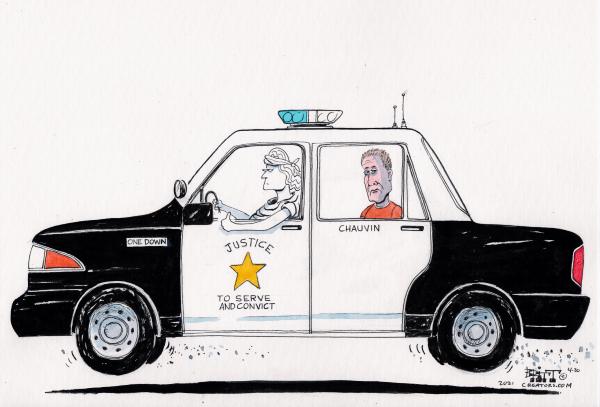 “We need to apply the same standard to police and ordinary citizens except we have to understand that ordinary citizens have no obligation to risk their lives to prevent an ongoing crime,” he said, adding: “So the rules have to defer and understand and recognize the risks that police take. When it comes to the elements of actual crimes, you can’t bury them. You can’t raise the bar for certain groups of people over other groups of people.”
Host Laura Ingraham then turned to Chauvin, expressing concern that it’s been reported that he’s currently in solitary confinement while also wondering aloud why he’s even in prison.
“Do you think that given what the judge said about an appeal that he probably shouldn’t have even been remanded back into custody?” Ingraham asked, referencing Judge Peter Cahill’s criticism of Rep. Maxine Waters’ protest remarks as potential grounds for appeal.
Acknowledging that “different states have different rules” when it comes to bail for convicted murderers, Dershowitz said that the judge provided “good appellate issues” to the defense.
“He should be released on bail,” Dershowitz declared. “There is no reason why he should be remanded. He’s not going to flee. He wants to have an appeal. He’s not going to endanger anybody. His face is well known.”
How many people who have been convicted of murder get out on bail pending appeals? Is that a regular practice?
People who actually had to deal with Chauvin in the past feel differently, according to this piece from Reuters, via Yahoo News: ‘No sympathy’ for Chauvin, say those who had run-ins before Floyd.
MINNEAPOLIS (Reuters) – For some of those who encountered Derek Chauvin’s policing or witnessed his use of force as an officer there is no sympathy for the man convicted of killing George Floyd.
Chauvin was the subject of at least 17 complaints during his career, according to police records, but only one led to discipline. Prosecutors sought permission to introduce eight prior use-of-force incidents, but the judge would only allow two. In the end the jury heard none.
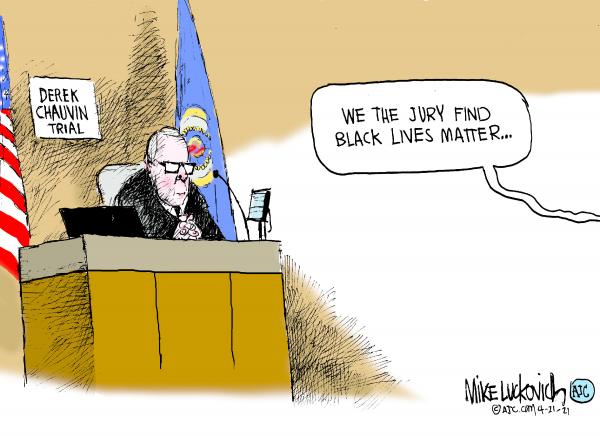 Eric Nelson, Chauvin’s lawyer, has defended his client’s use of force as appropriate in potentially dangerous situations.
“I don’t have no sympathy for him. I think he got what he deserved,” Julian Hernandez, 38, a carpenter now working in Pennsylvania, told Reuters.
Hernandez said he never heard anything from the Minneapolis police after submitting a complaint about Chauvin, who he said “choked him out” during an encounter in a Minneapolis night club in 2015. A spokesman for the Minneapolis Police Department declined to comment.
According to Chauvin’s police report, Hernandez failed to follow orders and resisted arrest when Chauvin, who was working as an off-duty security guard, tried to escort him out of a night club. Chauvin’s report said this prompted him to apply “pressure toward his Lingual Artery” to subdue Hernandez.
Hernandez said Chauvin picked him out of the crowd for no reason and quickly escalated to violence. He said Chauvin should have been removed from the police force.
Read more examples at the link.
Sorry this is such an unserious post. That’s just the mood I’m in today, I guess. As always, this is an open thread.
Did you like this post? Please share it with your friends:
Posted: April 20, 2021 | Author: bostonboomer | Filed under: Criminal Justice System, morning reads, U.S. Politics | Tags: Adam Grant, Brian Sicknick, Derek Chauvin, January 6 Capitol insurrection, Jimmy Carter, languishing, vice presidency, Walter Mondale |
Good Morning!!
 I’ve been really dragging lately–partly because of health problems, but very likely also because of the exhausting events of the past year. Am I “languishing”? Are you?
Dakinikat pointed me to this New York Times article by organizational psychologist Adam Grant: There’s a Name for the Blah You’re Feeling: It’s Called Languishing.
At first, I didn’t recognize the symptoms that we all had in common. Friends mentioned that they were having trouble concentrating. Colleagues reported that even with vaccines on the horizon, they weren’t excited about 2021. A family member was staying up late to watch “National Treasure” again even though she knows the movie by heart. And instead of bouncing out of bed at 6 a.m., I was lying there until 7, playing Words with Friends.
It wasn’t burnout — we still had energy. It wasn’t depression — we didn’t feel hopeless. We just felt somewhat joyless and aimless. It turns out there’s a name for that: languishing.
Languishing is a sense of stagnation and emptiness. It feels as if you’re muddling through your days, looking at your life through a foggy windshield. And it might be the dominant emotion of 2021.
As scientists and physicians work to treat and cure the physical symptoms of long-haul Covid, many people are struggling with the emotional long-haul of the pandemic. It hit some of us unprepared as the intense fear and grief of last year faded.
That sounds familiar. Of course I was already completely exhausted by the horror of 2016 and three years of Trump insanity when the pandemic hit. I’ve also been dealing with an autoimmune disorder called polymyalgia rheumatica. Despite seeing a Rheumatologist and taking multiple medications over the past year, I’m still struggling with chronic joint pain and stiffness. That has added to my sense of emotional exhaustion. I know I’m not alone in feeling overwhelmed by everything that’s been happening.
More from Adam Grant on “languishing:”
In the early, uncertain days of the pandemic, it’s likely that your brain’s threat detection system — called the amygdala — was on high alert for fight-or-flight. As you learned that masks helped protect us — but package-scrubbing didn’t — you probably developed routines that eased your sense of dread. But the pandemic has dragged on, and the acute state of anguish has given way to a chronic condition of languish.
 In psychology, we think about mental health on a spectrum from depression to flourishing. Flourishing is the peak of well-being: You have a strong sense of meaning, mastery and mattering to others. Depression is the valley of ill-being: You feel despondent, drained and worthless.
Languishing is the neglected middle child of mental health. It’s the void between depression and flourishing — the absence of well-being. You don’t have symptoms of mental illness, but you’re not the picture of mental health either. You’re not functioning at full capacity. Languishing dulls your motivation, disrupts your ability to focus, and triples the odds that you’ll cut back on work. It appears to be more common than major depression — and in some ways it may be a bigger risk factor for mental illness.
The term was coined by a sociologist named Corey Keyes, who was struck that many people who weren’t depressed also weren’t thriving. His research suggests that the people most likely to experience major depression and anxiety disorders in the next decade aren’t the ones with those symptoms today. They’re the people who are languishing right now. And new evidence from pandemic health care workers in Italy shows that those who were languishing in the spring of 2020 were three times more likely than their peers to be diagnosed with post-traumatic stress disorder.
Part of the danger is that when you’re languishing, you might not notice the dulling of delight or the dwindling of drive. You don’t catch yourself slipping slowly into solitude; you’re indifferent to your indifference. When you can’t see your own suffering, you don’t seek help or even do much to help yourself.
Read the whole thing at the NYT and see what you think.
Now for today’s news . . .
Walter Mondale died yesterday. From the Minneapolis Star-Tribune: Walter Mondale, who rose from small-town Minnesota to vice presidency, dies at 93.
Walter F. Mondale, a preacher’s son from southern Minnesota who climbed to the pinnacle of U.S. politics as an influential senator, vice president and Democratic nominee for president, died on Monday. He was 93.
Known as “Fritz” to family, friends and voters alike, Mondale died in Minneapolis, according to a statement from his family.
“As proud as we were of him leading the presidential ticket for Democrats in 1984, we know that our father’s public policy legacy is so much more than that,” read the Mondale family statement.
Former President Jimmy Carter, who chose Mondale as his running mate in 1976, called his friend “the best vice president in our country’s history.”
 “He was an invaluable partner and an able servant of the people of Minnesota, the United States and the world,” Carter said in a statement. “Fritz Mondale provided us all with a model for public service and private behavior.”
After serving four years under Carter, Mondale was the Democratic nominee for president in 1984. He lost to the incumbent, President Ronald Reagan, in a historic landslide.
“A night like that is hard on you,” Mondale wrote in his 2010 memoir, “The Good Fight.”
Even in defeat, Mondale made history by choosing as his running mate Geraldine Ferraro, the first woman to run for vice president on a major-party ticket. It followed a series of political landmarks in a public career that spanned seven decades.
A protégé of Hubert H. Humphrey, another Minnesota politician who rose to the vice presidency and lost a presidential election, Mondale served as a U.S. senator from Minnesota for a dozen years. He played a lead role in the passage of social programs, civil rights laws and environmental protections that defined President Lyndon B. Johnson’s “Great Society.”
As vice president from 1977 to 1981, Mondale transformed the office from what had historically been a punchline into what both he and Carter called a true governing partnership. Mondale’s role as chief adviser and troubleshooter, working from a West Wing office near the Oval Office, became a model for successors including George H.W. Bush, Al Gore, Dick Cheney and Joe Biden.
“The first person I called was Fritz,” Biden once said about the time President Barack Obama offered him the No. 2 position.
At The Washington Post, Karen Tumulty wrote about how Mondale changed the vice presidency: Opinion: Walter Mondale reinvented the vice presidency. Both Biden and Harris should thank him for it.
[Mondale’s] most enduring contribution may well have been the invention of the modern vice presidency, and his creation of a template that has been followed to some degree ever since. Mondale’s activist model as an all-purpose adviser and troubleshooter is one for which President Biden, a former vice president, and Kamala D. Harris, the current occupant of the office, should be grateful.
Before Mondale, the vice president was largely a figurehead….
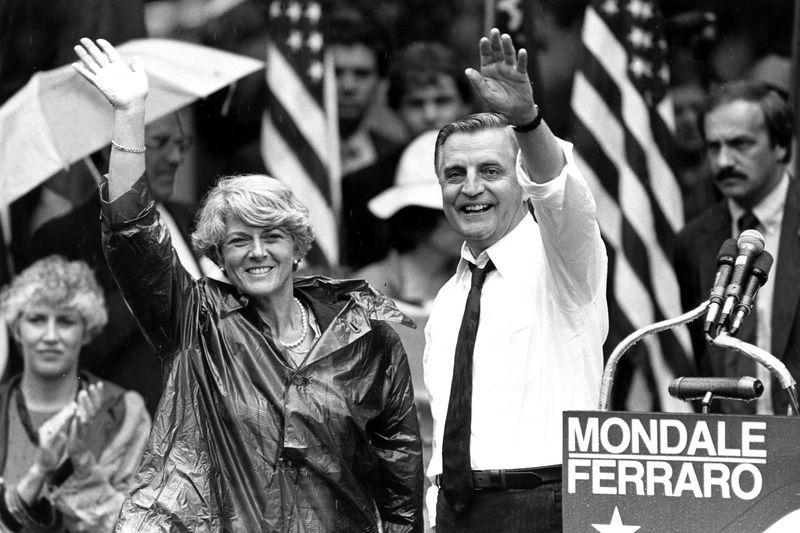 But Jimmy Carter, coming to Washington in 1977 with a contingent of fellow Georgians and no real sense of how the place operated, had recognized that he needed a true governing partner with the experience Mondale had honed in 12 years as a well-regarded senator from Minnesota.
Mondale was the first vice president to have an office in the West Wing, steps from the president’s own, rather than being sidelined in the Old Executive Office Building, and a weekly lunch scheduled with the president. Carter also made it clear that their two staffs were to be considered one; Mondale’s chief of staff Richard Moe was given the additional title “assistant to the president.”
“We felt that Fritz’s long experience in Washington and the fact that for the first time he was being integrated into the Presidency itself was a compensating factor for the ignorance among the Georgia group concerning Washington,” Carter said, referring to Mondale, in a 1982 oral history moderated by the University of Virginia’s Miller Center.
Read more at the WaPo.
The Derek Chauvin trial wrapped up yesterday, and now the nation awaits the jury verdict. Here’s an interesting op-ed by former federal prosecutor Jennifer Rogers at CNN: Chauvin trial is ‘believe your eyes’ vs. ‘hey, look over there!’
Prosecutors treat closing arguments as an opportunity to make things simple for the jury and to keep them focused on the critical issues. Thus we heard state prosecutor Steve Schleicher’s mantra to the jury to “believe your eyes,” and his repeated references to the video evidence as well as his use of visual aids through which Schleicher listed and then checked off each legal element of each offense as he reminded the jury of the evidence proving them. This was a very effective technique, giving jurors who walked into the jury room inclined to vote to convict some ammunition to use in convincing more reluctant fellow jurors.
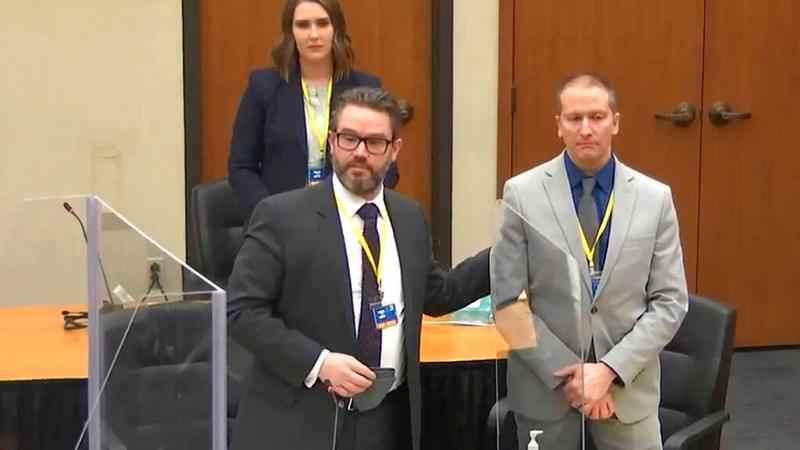
Defense Attorney Eric Nelson and Derek Chauvin
Defense lawyers have a different checklist, and Chauvin’s lawyer Eric Nelson hit all of his marks. Defense lawyers use closings to distract the jurors, to pull them away from the focus encouraged by prosecutors, and to provide as many reasons as they can muster as to why the prosecutors’ theory of the case fails.
Nelson embraced this tactic, spending almost an hour showing body camera footage of and arguing about the period before Chauvin restrained Floyd, a time when other officers were trying to cram a resisting Floyd into the squad car, while virtually ignoring most of the 9 minutes and 29 seconds that Chauvin knelt on Floyd’s neck. Nelson then tossed out all of the alternate causation theories he had cultivated throughout the trial — Floyd’s preexisting heart condition, his consumption of fentanyl and methamphetamine, the paraganglioma tumor, and possible carbon monoxide poisoning — claiming that with all of these possibilities out there, prosecutors couldn’t possibly prove causation beyond a reasonable doubt.
Jurors would be forgiven if their heads were spinning a bit from this rapid fire of legal theories — and that is exactly what the defense was aiming for.
Read the rest at CNN.
One more big story from yesterday at The Washington Post: Capitol Police officer Brian Sicknick, who engaged rioters, suffered two strokes and died of natural causes, officials say.
Capitol Police officer Brian D. Sicknick suffered two strokes and died of natural causes a day after he confronted rioters at the Jan. 6 insurrection, the District’s chief medical examiner has ruled.
The ruling, released Monday, will make it difficult for prosecutors to pursue homicide charges in the officer’s death. Two men are accused of assaulting Sicknick by spraying a powerful chemical irritant at him during the siege, but prosecutors have not tied that exposure to Sicknick’s death.
In an interview with The Washington Post, Francisco J. Diaz, the medical examiner, said the autopsy found no evidence the 42-year-old officer suffered an allergic reaction to chemical irritants, which Diaz said would have caused Sicknick’s throat to quickly seize. Diaz also said there was no evidence of internal or external injuries.
While there’s apparently no proof, it’s difficult to believe that a man in his early 40s who was involved in a violent insurrection and probably was hit with bear spray suddenly had two spontaneous strokes. But that’s where things stand.
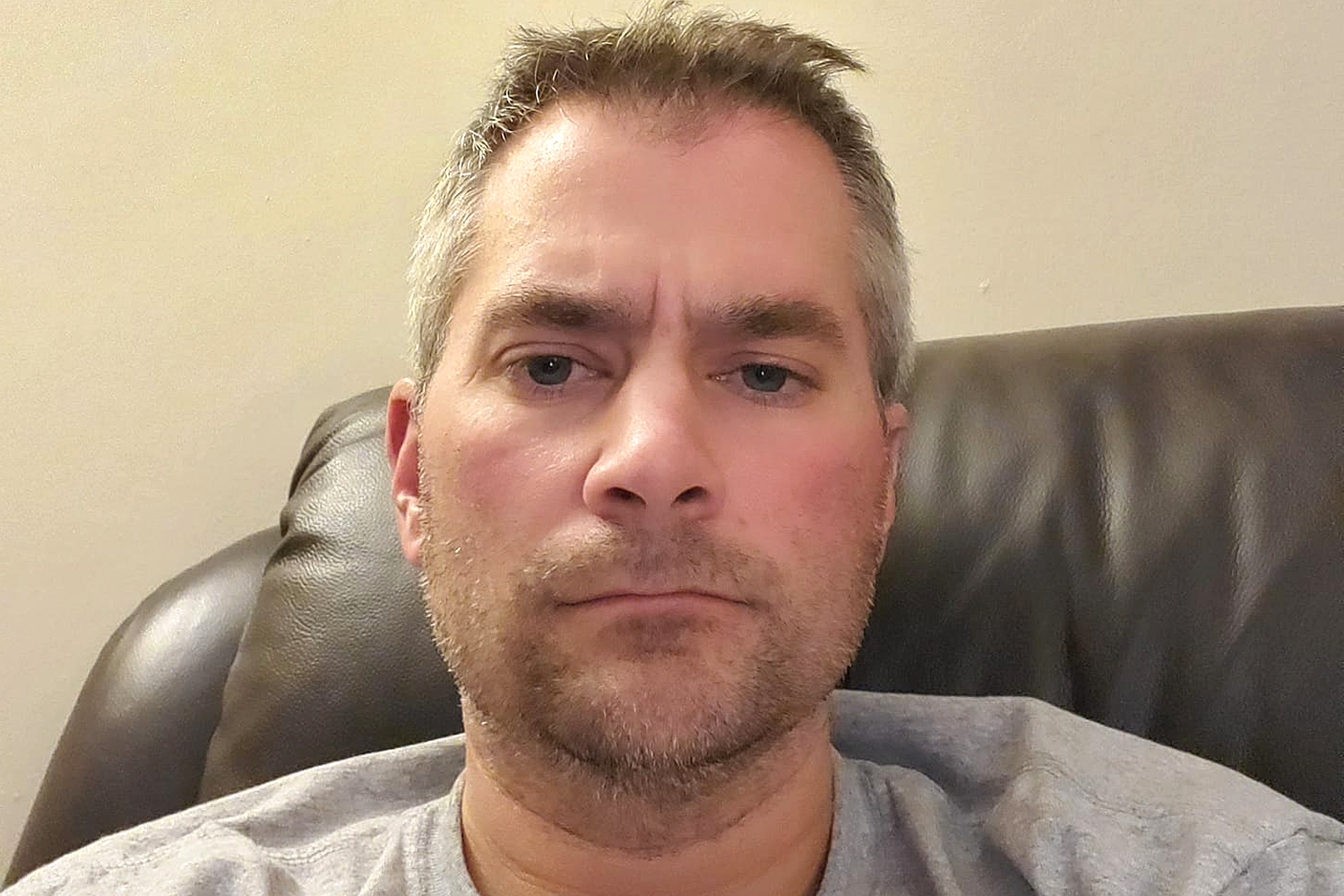
Brian Sicknick
Christopher Macchiaroli, a former federal prosecutor who handled violent crime cases before grand juries in D.C. Superior Court and U.S. District Court, said a ruling of a death by natural causes “does make it more difficult to bring a homicide prosecution.”
Macchiaroli said additional evidence of some conduct by rioters could emerge independently, which prosecutors could argue contributed to the strokes. But he said that “any defense attorney . . . would use the medical examiner’s conclusions as clear-cut evidence of reasonable doubt.”
In explaining the decision, the medical examiner’s office provided an updated timeline leading up to Sicknick’s death. A statement says Sicknick collapsed 7 hours and 40 minutes after he was sprayed, and then died nearly 24 hours after that.
Sicknick was among hundreds of officers who confronted the violent mob that took over the Capitol, seeking to overturn the election Donald Trump had lost. Nearly 140 officers were assaulted, authorities said, facing some rioters armed with ax handles, bats, metal batons, wooden poles, hockey sticks and other weapons.
So . . . what’s on your mind today? As always, this is an open thread.
Did you like this post? Please share it with your friends:
Posted: April 17, 2021 | Author: bostonboomer | Filed under: just because |

Good Morning!!
The photographs in today’s post are by famous cat photographer Walter Chandoha.
Lately the media has been following the trial of Derek Chauvin in Minnesota, and understandably they have called attention other cases of Black men being killed by cops. Yesterday a man was shot and killed by police in Portland, Oregon.
The Oregonian: Portland police fatally shoot man in Lents Park.
Portland police responding to a call of a man with a gun Friday morning in Lents Park fatally shot the man after he drew what appeared to be a firearm, according to two sources with direct knowledge of the investigation.
The man died at the scene.
Investigators recovered what appeared to be a replica firearm with an orange tip on it, the sources said. A witness videotaped the shooting and provided the footage to police.
Police had received multiple calls about the man in the park with a gun shortly after 9:30 a.m.
Two officers who confronted the man fired less-lethal, 40-millimeter munitions at him, and an East Precinct officer shot him with a firearm, Acting Chief Chris Davis said.
Witnesses said they heard two gunshots.
Emergency medics tried to revive the man, but he was pronounced dead beside a fence by the park’s ball field off Southeast 92nd Avenue.
Police said the officer who fired the fatal shot is an 8-year veteran of the department. The bureau did not release the officer’s name.
Dozens of demonstrators gathered at the scene shortly after the shooting, screaming at officers from the park’s perimeter.
The gun wasn’t even real. The story says that the Oregonian usually doesn’t “typically does not identify a person’s race unless it is relevant.” In this case it was relevant, because the victim of the shooting was a white man.
How often do cops kill white people? According to a piece at Substack by Columbia University Professor John McWhorter, who is Black, it happens a lot: The Victorians had to Accept Darwin. We Need to Accept that Cops Kill White People as Easily as They Kill Black People.
The death of Daunte Wright in Minneapolis necessitates a new mental habit among us enlightened American souls.
We embrace assorted cognitive exercises as people with access to higher wisdom, such as understanding that a disadvantaged background can make it harder to excel, or that subtle bias can infect our thinking and actions.
 Okay, but we need another one.
Whenever the national media reports on a black person killed by cops, we must ask ourselves “Would a white cop not have done that if the person were white?”
Because: we are taught that white (and even non-white) cops ice black people (usually men) out of racism. It’s possibly subconscious, but in the heat of the moment, they revert animalistically to their white supremacist assumption of black animality and pull that trigger.
This is why so many can only bristle at the idea that George Floyd did not die because he was black.
It’s why now, when the cop who killed Daunte Wright not only says she mistook her gun for a taser, and is even recorded as having done so, legions of people still insist on parsing it as evidence of “racism.” The idea is, I suppose, that she wouldn’t have made that mistake, would have been more prudent, if Daunte Wright was instead a white guy named Donald White.
The article is worth a read. McWhorter argues that poor people of any race are more likely to be killed by cops and because more Black people live in poverty, they are more likely to interact with the police and more likely to become their victims. I think he’s saying that the problem is not just racism, but economics–and policing itself.
Black people are 2.5 times more likely to be killed by cops, and exactly 2.5 times more likely to be poor, and data shows that poverty makes you more likely to encounter the cops, as even intuition confirms. This is why somewhat more black people are killed by cops than what our proportion in the population would predict.

Accounts of this issue that pretend people like me have not presented figures like this – i.e. most mainstream media discussions — are out of court, even if their authors feel it’s their duty to pull people’s eyes away from “irreligious” ideas. Ignore the numbers and, even if you are writing about descendants of African slaves, you are simply plain wrong.
Reflect also: most people who take to the streets about cases like Daunte Wright are not thinking about the fact that black people are killed by cops 2.5 times more than their representation in the population would predict. They are protesting because all they see in the news is the black people killed, and have no way of imagining that whites are regularly killed in the same way and in much greater numbers.
Once more. Every time the media broadcasts the murder by cop of a black person, ask yourself if it’s really true that a cop wouldn’t have done it to a white person – and then go to, for example, the Washington Post database and see cops doing just that.
And upon that, we will settle upon an honest national conversation about the cops as murdering people in race-neutral fashion. Or at least we should.
Food for thought.
There’s quite a bit of news today about Trump loyalists. It even appears that some of them may finally get their comeuppance.
NBC News: Justice Department sues Trump ally Roger Stone, alleging millions in unpaid taxes.
The Justice Department on Friday sued Roger Stone, a longtime ally of former President Donald Trump, accusing Stone and his wife, Nydia, of owing nearly $2 million in unpaid federal income taxes and fees.
The lawsuit, filed in federal court in Fort Lauderdale, Florida, says the couple underpaid their income taxes by $1,590,361 from 2007 to 2011. It further says Stone, 68, did not pay his full tax bill in 2018, coming up $407,036 short. The couple, the suit alleges, used a commercial entity to “shield their personal income from enforced collection and fund a lavish lifestyle despite owing nearly $2 million in unpaid taxes, interest and penalties.” [….]
Stone was on his way to federal prison in July 2020 when then-president Trump commuted his sentence. Stone was sentenced earlier that year to serve 40 months in prison for lying to Congress about his efforts to connect with WikiLeaks in hopes of digging up dirt on Trump’s 2016 rival, Hillary Clinton. The lead prosecutor in the case said Stone had lied because the “truth looked bad for Donald Trump.” Stone was convicted of all seven counts against him….
 The Stones deposited more than $1 million in accounts belonging to a commercial entity, Drake Ventures, instead of personal accounts, thereby frustrating collection efforts, the government said in the filing.
From those accounts, the pair covered a down payment on a Fort Lauderdale condominium, paid for personal expenses and covered some of their tax liabilities, the lawsuit alleges, calling the entity an “alter ego” of the Stones.
Additionally, the filing wants to thwart the Stones’ transfer of their $525,000 Florida condominium to an entity known as the Bertran Family Revocable Trust, which the government says is controlled by Nydia Stone and has as beneficiaries their children, Adria Stone and Scott Stone.
A tax lien was being sought against the property, it said. The suit also seeks a judgment for $1,590,361.89.
The government also said the Stones at one point entered into an agreement to cover taxes owed through monthly installments of nearly $20,000, but stopped paying. Additionally, the filing alleges that in 2018, Stone filed his federal income tax return as “a married individual filing separately from his spouse” and owes an additional $407,036.84 for that year alone.
Politico: Pompeos violated rules on use of State Department resources, IG finds.
Former Secretary of State Mike Pompeo violated federal ethics rules governing the use of taxpayer-funded resources when he and his wife, Susan, asked State Department employees to carry out tasks for their personal benefit more than 100 times, a government watchdog has determined.
POLITICO obtained a copy of the report on the Pompeos, which was put together by the State Department’s inspector general’s office….
By digging through emails and other documents and interviewing staff members, investigators uncovered scores of instances in which Mike or Susan Pompeo asked State Department staffers to handle tasks of a personal nature, from booking salon appointments and private dinner reservations to picking up their dog and arranging tours for the Pompeos’ political allies. Employees told investigators that they viewed the requests from Susan Pompeo, who was not on the federal payroll, as being backed by the secretary….
Mike Pompeo, in an interview with investigators, insisted that the requests were often small and the types of things friends do for friends. His lawyer, William Burck, slammed a draft version of the report he received as a politically biased “compilation of picayune complaints cherry-picked by the drafters.”
 The inspector general’s office, however, defended the investigation, noting that many of the rules governing such interactions are clear, do not make exceptions for small tasks, and that the Pompeos’ requests ultimately added up to use a significant amount of the time of employees paid by taxpayers….
Susan Pompeo, for instance, asked staff members to buy a T-shirt for a friend; arrange for flowers to be sent to friends recovering from sickness; and help her book hair salon appointments when she was in New York during the U.N. General Assembly and had to meet with foreign dignitaries. One year, a senior adviser to the secretary and a senior Foreign Service officer came in on a weekend “to envelope, address, and mail personal Christmas cards for the Pompeos,” the report states.
State Department staff members also found themselves given more intense assignments, such as planning events, including for groups with which the Pompeos were affiliated but in a non-governmental capacity.
The apparently personal Pompeo tasks required time either when they were on-duty or off-duty, the report states. The Pompeos did not separately compensate the staffers for the non-State Department-related work, the report states.
Of course all this personal work was paid for with taxpayer money.
David Ignatius has an interesting opinion piece in The Washington Post on Kash Patel, whom Trump installed in the Defense Department late in his administration. Opinion: How Kash Patel rose from obscure Hill staffer to key operative in Trump’s battle with the intelligence community.
In the Trump administration’s four-year battle with the intelligence community, a recurring character was a brash lawyer named Kashyap P. “Kash” Patel. He appeared so frequently, in so many incarnations, that he was almost a “Zelig” figure in President Donald Trump’s confrontation against what he imagined as the “deep state.”
Patel repeatedly pressed intelligence agencies to release secrets that, in his view, showed that the president was being persecuted unfairly by critics. Ironically, he is now facing Justice Department investigation for possible improper disclosure of classified information, according to two knowledgeable sources who requested anonymity because of the sensitivity of the probe. The sources said the investigation resulted from a complaint made this year by an intelligence agency, but wouldn’t provide additional details….
 While other Trump staffers, most prominently adviser Stephen Miller, became near-household names, Patel, now 41, flew largely beneath the radar during the Trump administration. In the span of four years, he rose from an obscure Hill staffer to become one of the most powerful players in the national security apparatus. The saga of his battles with the intelligence bureaucracy shows how the last administration empowered its lieutenants to challenge what it saw as the deep state.
At the start of the Trump administration, Patel was senior counsel for Rep. Devin Nunes when the California Republican chaired the House Intelligence Committee in 2017 and 2018 and emerged as a leading critic of the investigation by special counsel Robert S. Mueller III into the Trump campaign’s alleged links to Russia. Patel then joined Trump’s National Security Council staff as senior director for counterterrorism. In 2020, he was a senior adviser to acting director of national intelligence Richard Grenell and his successor, John Ratcliffe, helping lead their efforts to remove senior career intelligence officers.
Patel’s most prominent role was his final job, as chief of staff for acting defense secretary Christopher C. Miller in the administration’s last two months. In that position, according to sources close to events, he challenged the Central Intelligence Agency and the National Security Agency, and very nearly became acting director of the CIA himself.
As with so many other still-mysterious aspects of the Trump presidency, there’s a riddle at the center of Patel’s many activities. Beyond the basic goal of advancing Trump’s personal agenda, was there a larger mission? Was there a systematic plan, for example, to gain control of the nation’s intelligence and military command centers as part of Trump’s effort to retain the presidency, despite his loss in the November 2020 election? Or was this a more capricious campaign driven by Trump’s personal pique and score-settling without a clear strategy?
At least he’s out of government now, thank goodness. Read all about Patel at the WaPo link.
I’ll end there. What stories have you been following? As always, this is an open thread.
Did you like this post? Please share it with your friends:
Posted: April 15, 2021 | Author: bostonboomer | Filed under: just because |

By Evariste Carpenpier
Good Morning!!
Wow! There sure is a lot of news out there today. I don’t know how much I can cover in a post, but I’ll do my best.
1. After 20 long years, President Biden is finally going to pull troops out of Afghanistan, against the wishes of military leadership.
Politico: How Biden’s team overrode the brass on Afghanistan.
The military spent more than a decade urging three different American presidents to stay in Afghanistan. With President Joe Biden’s decision this week to withdraw all U.S. forces by Sept. 11, they finally lost the battle.
“We cannot continue this cycle of extending or expanding our military presence in Afghanistan, hoping to create ideal conditions for the withdrawal and expecting a different result,” Biden said Wednesday in a speech announcing the decision. “I’m now the fourth United States president to preside over American troop presence in Afghanistan. Two Republicans, two Democrats. I will not pass this responsibility on to a fifth.”
As Biden weighed a full exit from the country this spring, top military leaders advocated for keeping a small U.S. presence on the ground made up primarily of special operations forces and paramilitary advisers, arguing that a force of a few thousand troops was needed to keep the Taliban in check and prevent Afghanistan from once again becoming a haven for terrorists, according to nine former and current U.S. officials familiar with the discussions.
Gen. Mark Milley, chair of the Joint Chiefs of Staff, as well as the four-star commanders of U.S. Forces-Afghanistan, Central Command and Special Operations Command, were emphatic proponents of this strategy, the current and former officials said, some of whom spoke on condition of anonymity to discuss sensitive planning.
But in the end, Biden and his top national security deputies did what no previous president has done successfully — they overrode the brass.
More from Susan Glasser at The The New Yorker: Biden Finally Got to Say No to the Generals.
On Wednesday, Joe Biden announced the close of the two-decade-long American war in Afghanistan, giving the U.S. military a deadline of the upcoming twentieth anniversary of the 9/11 attacks to withdraw all remaining troops. “It’s time to end the Forever War,” he said, in a speech that was both deeply personal and politically emphatic. Speaking from the White House Treaty Room, where George W. Bush had declared the start of the fight, to root out Al Qaeda and its Taliban enablers, Biden declared that there would be no more extensions of the American military presence, rebuffing pleas of the teetering, pro-Western Afghan government and his own generals. It’s finally, really, for-better-or-worse over. I guess this is how eras end: not with a culminating battle or some movie-thriller crescendo but with a Tuesday-morning leak to the Washington Post and, a day later, a fifteen-minute Presidential speech confirming the historic decision.

Karin Jureck, Behind the News
Biden pulled the plug in an unsentimental, sober address, with the only passionate notes reserved for the U.S. military personnel who have served in Afghanistan and Iraq over the two decades, including his late son Beau. “War in Afghanistan was never meant to be a multigenerational undertaking,” he said. The President seemed genuinely sick and tired of the endless pleas for just a little more time. “So when will it be the right moment to leave?” he said, pointedly summarizing the arguments that he had dismissed. “One more year? Two more years? Ten more years?” he asked.
On Wednesday, he made the case that the U.S. had long since accomplished its original objectives of neutralizing the Al Qaeda threat from Afghan territory and bringing justice to the 9/11 perpetrator Osama bin Laden. But no amount of clear-eyed argument from Biden could erase the embarrassing historical fact that Afghanistan has now banished another superpower. America did not lose the war—not exactly—but it did not win, either. And, as Biden pointed out, it could never, in recent years, provide a plausible explanation of what achieving its goals would look like.
Read more at the link.
See also at ABC News: Blinken visits Afghanistan after Biden’s withdrawal decision to press for diplomacy. And at The Daily Beast: The Promise and the Tragedy of Biden’s Afghanistan Speech, by Spencer Ackerman
2. After four years of Trump sucking up to Vladimir Putin, President Biden has laid down the law to Russia.
The New York Times: Biden Administration to Impose Tough Sanctions on Russia.
The Biden administration is set to announce on Thursday a string of long-awaited measures against Russia, including far-reaching financial sanctions, for the hacking of government and private networks and a range of other activity, according to people who have been briefed on the moves.
The sanctions will be among what President Biden’s aides say are “seen and unseen” steps in response to the hacking, known as SolarWinds; to the C.I.A.’s assessment that Russia offered to pay bounties to militants in Afghanistan to kill American troops; and to Russia’s yearslong effort to interfere in United States elections, according to American officials and others who have been briefed on the actions.
The moves will include the expulsion of a limited number of diplomats, much like the Obama administration did in response to the Russian efforts to influence the election five years ago. But it is unclear whether this set of actions will prove sufficient to deter Russia from further hacking, influence operations or efforts to threaten European countries.
The sanctions are meant to cut deeper than previous efforts to punish Russia for interfering in elections, targeting the country’s sovereign debt, according to people briefed on the matter. Administration officials were determined to draft a response that would impose real costs on Moscow, as many previous rounds of sanctions have been shrugged off.

Daniel R. Celantano, Reading the News
“It will not simply be sanctions,” Jake Sullivan, the president’s national security adviser, said in February. He has frequently said it will include “a mix of tools seen and unseen,” though there have been disagreements in the administration about how many of the steps to make public.
Restrictions on sovereign debt affect a nation’s ability to raise dollar-denominated bonds, with lenders fearful of being cut off from American financial markets. The United States has used similar techniques against Iran, among others.
Russian bond prices have fluctuated in recent weeks in anticipation of possible sanctions. Russia has relatively little debt, making it potentially less vulnerable to the tactic. And rising oil prices will benefit the country’s economy.
Nevertheless, any broad sanctions on Russia’s financial sector would amount to a significant escalation in the costs that the United States has been willing to impose on Moscow. And part of the administration’s concern has been whether Russian entities could retaliate by exploiting “back doors” implanted in American systems.
See also The Washington Post: Biden administration imposes significant economic sanctions on Russia over cyberspying, efforts to influence presidential election.
3. Democrats are seriously considering expanding the Supreme Court.
NBC News: Democrats to introduce bill to expand Supreme Court from 9 to 13 justices.
Congressional Democrats will introduce legislation Thursday to expand the Supreme Court from nine to 13 justices, joining progressive activists pushing to transform the court.
The move intensifies a high-stakes ideological fight over the future of the court after President Donald Trump and Republicans appointed three conservative justices in four years, including one who was confirmed days before the 2020 election.
The Democratic bill is led by Sen. Ed Markey of Massachusetts and Rep. Jerry Nadler of New York, the chair of the House Judiciary Committee. It is co-sponsored by Reps. Hank Johnson of Georgia and Mondaire Jones of New York.
The Supreme Court can be expanded by an act of Congress, but the legislation is highly unlikely to become law in the near future given Democrats’ slim majorities, which include scores of lawmakers who are not on board with the idea. President Joe Biden has said he is “not a fan” of packing the court.
But it represents an undercurrent of progressive fury at Senate Minority Leader Mitch McConnell, R-Ky., for denying a vote in 2016 to President Barack Obama’s pick to fill a vacancy, citing the approaching election, before confirming Trump nominee Amy Coney Barrett the week before the election last year.
The anger has taken hold within the Democratic Party, and the new push indicates that it has not dissipated in an era when the party controls the White House and both chambers of Congress.
The lawmakers, who intend to announce the introduction of the bill outside the Supreme Court building, will be joined by progressive activists Aaron Belkin, who leads Take Back the Court; Chris Kang, a co-founder and chief counsel of Demand Justice; and Meagan Hatcher-Mays of Indivisible, according to an advisory notice. All three groups advocate adding justices.
Read more at Vox: A new bill would add 4 seats to the Supreme Court, by Ian Millhauser
4. In Minnesota, another officer is charged in the senseless killing of a Black man.
Minneapolis Star-Tribune: Officer charged with second-degree manslaughter in killing of Daunte Wright.
Former Brooklyn Center police officer Kimberly A. Potter was charged Wednesday with second-degree manslaughter in the death of Daunte Wright, joining just a handful of officers who have faced charges after shooting someone they said they intended to shock with a Taser.

Haynes King, Recent News
Potter, a 26-year veteran of the department who resigned Tuesday, was arrested and booked into the Hennepin County jail shortly after noon. Bodycam footage from the shooting Sunday shows her shouting “Taser!” three times before killing Wright, a 20-year-old Black man, with a single shot from her Glock 9-millimeter handgun. Police officials blamed the death on human error.
Protests over Wright’s killing have focused on how Potter, who is white, carried out a sequence of events that led to the death of a Black motorist who had been stopped for a minor traffic violation. Wright cooperated with Potter and another police officer at first, but a criminal complaint filed Wednesday showed how the encounter turned violent after one of the officers told Wright he was being arrested on a warrant.
Potter fired her gun 12 seconds after Wright pulled himself free from the officers.
Potter was released from jail Wednesday evening after posting $100,000 bond. Her attorney, Earl Gray, was unavailable for comment.
5. The Matt Gaetz scandal grows worse every passing day.
The Daily Beast: Matt Gaetz’s Wingman Paid Dozens of Young Women—and a 17-Year-Old.
As new details emerge about Rep. Matt Gaetz’s role in an alleged sex ring, The Daily Beast has obtained several documents showing that the suspected ringleader of the group, Joel Greenberg, made more than 150 Venmo payments to dozens of young women, and to a girl who was 17 at the time.
The payment from Greenberg, an accused sex trafficker, to the 17-year-old took place in June 2017. It was for $300 and, according to the memo field, was for “Food.”
Greenberg’s relationship with Gaetz, and the money Greenberg paid to women, is a focal point for the Justice Department investigation into Gaetz. And the new documents obtained by The Daily Beast—containing years of online financial transactions—establish a clear pattern: Greenberg paid multiple young women (and at least one girl) hundreds, and sometimes thousands, of dollars on Venmo in one transaction after another.
Nearly a year after Greenberg’s June 2017 payment, Gaetz Venmo’d Greenberg to “Hit up ___,” using a nickname for the teen. She was 18 years old by then, and as The Daily Beast reported, Greenberg described the payment as being for “School.”
It was one of at least 16 Venmo payments to 12 different women listed as being for “School.” Typically, the payments were for around $500, but also went higher than $1,000 in the transactions obtained by The Daily Beast.
Gaetz made only one previously unreported transaction in the newly obtained documents: a payment from the Florida congressman to the former Seminole County tax commissioner for $300 on November 1, 2018, with the love hotel emoji (“🏩”) in the memo field. The Daily Beast was unable to tie that transaction directly to any woman, but confirmed that Greenberg booked one night for that date at The Alfond Inn, a luxury hotel in Winter Park, Florida.
Click the Daily Beast link to read the rest.
6. House hearing on law enforcement and the Capitol insurrection.
NPR: Ahead Of Hearing, Capitol Police Says It Needs Help To Address Insurrection Failures.
Members of Congress on Thursday will hear for the first time public testimony from the U.S. Capitol Police inspector general that will detail the most extensive findings yet in the wake of the Jan. 6 insurrection.

Charles Sims, Reading the News
The inspector general, Michael Bolton, will tell a congressional committee in prepared remarks that the agency must pivot from its reactionary role as a police department to one that works in a protection posture to deal with rising threats to the Capitol.
U.S. Capitol Police responded Wednesday to reports of Bolton’s findings by acknowledging that “much additional work needs to be done,” but that it will need “significant resources” from Congress to implement the new changes.
“January 6 was a pivotal moment in USCP, U.S. and world history that demonstrated the need for major changes to the way USCP operates,” the agency said in a statement.
Lawmakers will hear more about those major changes needed in a hearing before the House Administration Committee that will feature Bolton and his findings after submitting to them a 104-page report detailing a litany of concerns.
The panel’s chair, Rep. Zoe Lofgren, called for the testimony after receiving a briefing from Bolton last month. Lofgren, D-Calif., has said the report provides “detailed and disturbing findings and important recommendations.”
Bolton’s report — which was labeled law enforcement sensitive and was obtained by NPR but has not been made public in its entirety — said Capitol Police mishandled intelligence gathering ahead of the attack. Bolton said some of the agency’s own intelligence offered a “more alarming” warning that Congress itself was a target.
Some scary insurrection stories:
The Washington Post: Armed ‘quick reaction force’ was waiting for order to storm Capitol, Justice Dept. says.
As the Capitol was overrun on Jan. 6, armed supporters of President Donald Trump were waiting across the Potomac in Virginia for orders to bring guns into the fray, a prosecutor said Wednesday in federal court.

Reading the Newspaper, Georgio Gosti
The Justice Department has repeatedly highlighted comments from some alleged riot participants who discussed being part of a “quick reaction force” with stashes of weapons. Defendants have dismissed those conversations as bluster. But in a detention hearing for Kenneth Harrelson, accused of conspiring with other members of the Oath Keepers militia group to stop the certification of Joe Biden’s election win, Assistant U.S. Attorney Jeffrey S. Nestler said the government has evidence indicating otherwise.\“This is not pure conjecture,” Nestler said. In a court filing this week, he noted, prosecutors obtained cellphone and video evidence from the day before the riot showing that Harrelson asked someone about the quick reaction force. He then went to a Comfort Inn in the Ballston area of Arlington for about an hour before driving into D.C., prosecutors said. The day after the riot, surveillance video from the hotel shows him moving “what appears to be at least one rifle case down a hallway and towards the elevator,” according to the court records….
“We believe that at least one quick reaction force location was here and that Mr. Harrelson and others had stashed a large amount of weapons there,” Nestler said. “People affiliated with this group were in Ballston, monitoring what was happening at the Capitol and prepared to come into D.C. and ferry these weapons into the ground team that Kenneth Harrelson was running at a moment’s notice, if anyone said the word.”
The Washington Post: 17 requests for backup in 78 minutes.
At 1:13 p.m. on Jan. 6, a D.C. police commander facing a swelling crowd of protesters on the west side of the U.S. Capitol made an urgent call for more officers in riot gear. “Hard gear at the Capitol! Hard gear at the Capitol!” Cmdr. Robert Glover shouted into his radio.
Glover and a team of D.C. police officers had rushed to the besieged complex moments earlier at the behest of Capitol Police. By the time they arrived, the Capitol grounds were already being overrun by a mob intent on overturning President Donald Trump’s electoral defeat.
Over the next 78 minutes, Glover requested backup at least 17 times, according to a Washington Post analysis of the events, and the mob on the west side eventually grew to at least 9,400 people, outnumbering officers by more than 58 to one.
The Post reviewed police radio communications, synchronized them with hours of footage and drew on testimony and interviews with police supervisors to understand how failures of preparation and planning played out that day. The examination reveals how police were hampered by an insufficient number of officers and shortages of less-lethal weapons and protective equipment and also provides a glimpse into communications breakdowns within the police response.
Read about it at the WaPo.
That’s a hell of a lot of news. What did I miss?
Did you like this post? Please share it with your friends:


 peej
peej Carissa
 bostonboomer
 dakinikat
 ecocatwoman
 jjlo
jjlo mablue2
 Mama Lopez
 peggysue22
 quixote
 skydancingguestblogger
 Mona (aka Wonk the Vote)



 Sky Dancing
Recent Comments