Posted: January 1, 2022 | Author: bostonboomer | Filed under: Afternoon Reads | Tags: Bernard Kerik, Betty White, caturday, conflicts of interest, coronavirus pandemic, Covid-19, Golden Girls, Happy New Year 2022, January 6 insurrection, Joe Biden, John Roberts, Major General Paul Eaton, Mary Tyler Moore Show, notable deaths 2021, SCOTUS, Ukraine, Unite the Right rally, Vladimir Putin |
Good Afternoon!!
 Well, 2021 is in the rearview mirror and 2022 lies ahead. Will this year be better than the last two? We can only hope. Every year, we look back at the notable people who have left us, and there were many of those last year. To cap a terrible year, the last living member of the Mary Tyler Moore Show and Golden Girls–Betty White–died yesterday.
The New York Times: Betty White, a Television Golden Girl From the Start, Is Dead at 99.
Betty White, who created two of the most memorable characters in sitcom history, the nymphomaniacal Sue Ann Nivens on “The Mary Tyler Moore Show” and the sweet but dim Rose Nylund on “The Golden Girls” — and who capped her long career with a comeback that included a triumphant appearance as the host of “Saturday Night Live” at the age of 88 — died on Friday at her home in Los Angeles. She was 99.
Her death, less than three weeks before her 100th birthday, was confirmed by Jeff Witjas, her longtime friend and agent.
Ms. White won five Primetime Emmys and one competitive Daytime Emmy — as well as a lifetime achievement Daytime Emmy in 2015 and a Los Angeles regional Emmy in 1952 — in a television career that spanned seven decades and that the 2014 edition of “Guinness World Records” certified as the longest ever for a female entertainer.
But her breakthrough came relatively late in life, with her work on “The Mary Tyler Moore Show” from 1973 to 1977, for which she won two of her Emmys.
As Sue Ann, the host of a household-hints show on the television station where Ms. Moore’s character worked, the bedimpled Ms. White was annoyingly positive and upbeat, but also manipulative and bawdy — the sexpot next door, who would have you believe she slept with entire Army brigades during World War II.
Once, when someone asked her how she was feeling, Sue Ann replied cheerfully: “I didn’t sleep a wink all night. I feel wonderful.”
She won another Emmy in 1986 for an entirely different kind of character: the naïve, scatterbrained Rose on “The Golden Girls,” which revolved around the lives of four older women sharing a house in Miami. Whereas Sue Ann knew everything there was to know about getting a man into bed, Rose got to the same place innocently, and by being just a wee bit off center.
Ms. White was the last surviving member of the show’s four stars. Estelle Getty died in 2008, Bea Arthur in 2009 and Rue McClanahan in 2010.
Read the rest at the NYT.
In 2021, we also lost Cloris Leachman (January 27, Gavin MacLeod (May 29), Ed Asner (August 29).
Read about more notable people who died in 2021 at The New York Times: Deaths in 2021: Headline Names Against the Backdrop of Pandemic.
In the news today, the pandemic rages on. CBS News: The world welcomes 2022 with muted celebrations as COVID-19 cases surge.
The world rang in 2022 with muted celebrations for another year, as the coronavirus pandemic — now fueled by the fast-spreading Omicron variant — continues to upset daily life across the globe. The new variant, which is now driving record case numbers in the U.S., forced many cities to tone down celebrations or cancel them altogether.
New York City’s Times Square still held an event, but it only allowed a small fraction of the typical crowd, and all attendees over the age of 5 who do not qualify for an exemption were required to be fully vaccinated and wear face masks. Cities such as Atlanta and San Francisco canceled typical celebrations.
 In New Zealand, one of the first cities to kick off the new year, a light display replaced the traditional fireworks show. Australia proceeded with its seven-minute fireworks display over the Sydney Harbor Bridge and Sydney Opera House, but limited access to downtown Sydney, the Associated Press reported.
Earlier this week, Dr. Anthony Fauci urged Americans not to attend large gatherings on New Year’s Eve.
“What I would suggest people do not do, is to go to very large 50-to-60-person parties where people are blowing whistles and all that sort of thing, and celebrating, and you don’t know the vaccination status of the people in that environment,” Fauci said.
President Biden spoke to Russia’s Vladimir Putin on Thursday night. The Washington Post:
WILMINGTON, Del. — President Biden said Friday that he warned Russian President Vladimir Putin in a call that there would be “a heavy price to pay” if Russia invades Ukraine again.
Biden said he “made it clear” that any further military action by the Kremlin would result in “severe sanctions” but did not go as far as to say that Washington would respond to Russia’s continued military presence near the border with Ukraine.
“I’m not going to negotiate here in public,” Biden told reporters in Wilmington, Del., where he is spending New Year’s Eve. “But we made it clear he cannot, I’ll emphasize, cannot invade Ukraine.”
Following his call on Thursday with Putin, Biden plans to speak by phone with Ukrainian President Volodymyr Zelensky on Sunday amid growing alarm over Russia’s military buildup near its border with Ukraine.
Biden will “reaffirm U.S. support for Ukraine’s sovereignty and territorial integrity,” according to a White House official, previewing the call to reporters on the condition of anonymity under ground rules set by the White House. Biden is also expected to review preparations with Zelensky for the upcoming diplomatic talks.
Senior U.S. and Russian officials will meet in Geneva on Jan. 9 and 10, before a meeting of the Russia-NATO Council on Jan. 12 and negotiations at the Organization for Security and Co-operation in Europe in Vienna on Jan. 13.
Biden told reporters Friday that ahead of those conferences, Putin “laid out some of his concerns about NATO and the United States and Europe, and we laid out ours. And we said we’d begin to negotiate some of those issues. But I made it clear that they only could work if, in fact, he de-escalated, not escalated, the situation there.”

Party Cat, by Cindy Thompson
Chief Justice John Roberts issued his laughable year-end report. The New York Times: Chief Justice Roberts Reflects on Conflicts, Harassment and Judicial Independence.
Amid a drop in public confidence in the Supreme Court and calls for increasing its membership, Chief Justice John G. Roberts Jr. devoted his annual year-end report on the federal judiciary on Friday to a plea for judicial independence.
“The judiciary’s power to manage its internal affairs insulates courts from inappropriate political influence and is crucial to preserving public trust in its work as a separate and coequal branch of government,” he wrote.
The report comes less than a month after a bipartisan commission appointed by President Biden finished its work studying changes to the federal judiciary. While that panel analyzed proposals like imposing 18-year term limits on justices and expanding, or “packing,” the court with additional justices, much of the chief justice’s report was focused on thwarting less contentious efforts by Congress to address financial conflicts and workplace misconduct in the judicial system. Both issues are the subject of proposed legislation that has drawn bipartisan support.
Gabe Roth, the executive director of Fix the Court, a nonprofit group that has called for stricter ethics rules for the Supreme Court, said the chief justice faced an uphill battle.
“Chief Justice Roberts is taking a page from his old playbook: acknowledging institutional challenges in the judiciary but telling the public that only we judges can fix them,” Mr. Roth said. “Yet the problems of overlooked financial conflicts and sexual harassment are serious and endemic, and there’s no indication they’re going away. So Congress has every right to step in and, via legislation, hold the third branch to account, which I expect to happen in 2022.”
Chief Justice Roberts addressed at some length a recent series of articles in The Wall Street Journal that found that 131 federal judges had violated a federal law by hearing 685 lawsuits between 2010 and 2018 that involved companies in which they or their families owned shares of stock.
“Let me be crystal clear: The judiciary takes this matter seriously,” the chief justice wrote. “We expect judges to adhere to the highest standards, and those judges violated an ethics rule. But I do want to put these lapses in context.”
Hahahahaha! I’ll take him seriously when he address the many conflicts of interest on the Supreme Court, beginning with Clarence Thomas and his wife.
We are approaching the anniversary of the January 6 Capitol insurrection. In the news today:
The latest Trump/Giuliani pal to release documents to the January 6 committee is Bernard Kerik. Politico: Bernard Kerik provides batch of documents to Jan. 6 select committee.
A key adviser to Donald Trump’s legal team in their post-election quest to unearth evidence of fraud has delivered a trove of documents to Jan. 6 investigators describing those efforts.
Bernard Kerik, the former New York City Police commissioner and ally of Trump attorney Rudy Giuliani, also provided a “privilege log” describing materials he declined to provide to the committee.

Teatime Cats, A Celebration! by Isabelle Brent
Among the withheld documents is one titled “DRAFT LETTER FROM POTUS TO SEIZE EVIDENCE IN THE INTEREST OF NATIONAL SECURITY FOR THE 2020 ELECTIONS.” Kerik’s attorney Timothy Parlatore provided the privilege log to the panel, which said the file originated on Dec. 17, a day before Trump huddled in the Oval Office with advisers including former Lt. Gen. Michael Flynn, where they discussed the option of seizing election equipment in states whose results Trump was attempting to overturn.
Trump ultimately opted against that strategy, but his consideration of the option is one of the key questions the panel is probing as part of its broader investigation into attempts to overturn the election.
It’s unclear whether the letter is related to the same plan and if Trump knew of its existence. Kerik withheld it, describing it as privileged because of its classification as “attorney work product.”
Another document provided by Kerik to the panel included emails between Kerik and associates about paying for rooms at the Willard Hotel. Kerik had been subpoenaed by the panel on Nov. 8 as part of its investigation into the so-called war room at the Willard Hotel, where Trump allies met to strategize about preventing Congress from certifying Joe Biden’s victory. The panel had originally sent a letter accompanying the subpoena that had incorrectly suggested Kerik was in the war room on Jan. 5, leading Kerik to demand an apology.
Read more at Politico.
More on Kerik from Raw Story: Trump’s Twitter and the Freedom Caucus were key to overturning the election: Bernie Kerik documents.
The House Select Committee to Investigate the January 6th Attack on the U.S. Capitol has obtained new documents showing how Donald Trump’s Twitter account and the far-right House Freedom Caucus could be used to help overturn the 2020 election.
“A key adviser to Donald Trump’s legal team in their post-election quest to unearth evidence of fraud has delivered a trove of documents to Jan. 6 investigators describing those efforts,” Politico reported Friday. “Bernard Kerik, the former New York City Police commissioner and ally of Trump attorney Rudy Giuliani, also provided a “privilege log” describing materials he declined to provide to the committee.”
Kerik — who was pardoned by Trump 11 months before the insurrection — is not an attorney but has claimed his work under Giuliani was covered by attorney-client privilege. Giuliani has had his law license suspended in New York and Washington, D.C.
“Another 22-page document, titled “STRATEGIC COMMUNICATIONS PLAN – GIULIANI PRESIDENTIAL LEGAL DEFENSE TEAM,” describes a 10-day blitz aimed at Republican House and Senate members to pressure them to vote against certifying the 2020 election results,” Politico reported. “The document says its primary channels to disseminate messaging on these efforts included ‘presidential tweets’ as well as talk radio, conservative bloggers, social media influencers, Trump campaign volunteers and other media allies. A list of ‘key team members’ supporting the effort included ‘Freedom Caucus Members’ — a reference to the group of hardline House conservatives, some of whom backed Trump’s effort to overturn the election.”

Cats Birthday Party, by Andrew Osta
More January 6 news from Raw Story: ‘Unite the Right’ set the stage for Jan. 6 — and helped launch some of the biggest players in the Capitol riot.
Days after neo-Nazi James Fields Jr. murdered antiracist activist Heather Heyer in a horrific car-ramming attack in Charlottesville, Va., the Daily Caller, a website founded by Tucker Carlson, quietly removed articles by contributor Jason Kessler.
Kessler was the primary organizer of the Unite the Right rally, which saw neo-Nazis chant, “Jews will not replace us,” as they carried torches to the Rotunda at the University of Virginia on Aug. 11, 2017 and again the following day as they marched through Charlottesville.
More than four years later, the ideas that galvanized the Unite the Right rally are no longer considered too radioactive for mainstream conservative media. Carlson himself embraced the Great Replacement theory — responsible for fueling massacres in Pittsburgh; Christchurch, New Zealand; Poway, Calif.; and El Paso, Texas — on his Fox News show in April 2021. He accused Democrats of “trying to replace the current electorate” in the United States “with new people, more obedient voters from the Third World.”
There are distinct differences in messaging between Unite the Right, in which white supremacists used Confederate symbols and neo-Nazi aesthetics to nakedly promote white nationalism, and the Jan. 6 insurrection, in which Trump supporters filtered similar aims through QAnon, paranoid anticommunism, and a perverted version of patriotism.
Amy Spitalnick, executive director of Integrity First for America — the nonprofit that won the civil lawsuit against the organizers of Unite the Right — is among those who see distinct similarities between the two events.
“The four years in between have shown us how much of this extremism has moved into the mainstream,” she said. “If you look at the tools and tactics, there are many, many parallels, from the use of social media to plan the violence to explicit discussion of the use of free speech instruments like flagpoles as weapons, to the immediate finger-pointing to ‘antifa, blaming them for the violence that far-right extremists were responsible for to even some of the ideology.
“While Charlottesville was explicitly white nationalist with holocaust imagery, and with KKK and Nazi paraphernalia like the tiki torches that are meant to evoke dark periods of our history, on January 6th when you think about ‘stopping the steal,’ it also speaks at its core to this same idea: There’s a plot to steal the country from largely white Christians,” Spitalnick continued. “That idea that Jews will not replace us is at the core of Unite the Right, but it’s also at the core of Jan. 6. We’ve seen how these ideas have been mainstreamed, from Tucker Carlson giving replacement theory a home on Fox News every night to Republican politicians talking about it.”
Read the rest at Raw Story.
 Major General Paul Eaton issued a chilling warning in an interview with NPR’s Mary Louise Kelly: Retired general warns the U.S. military could lead a coup after the 2024 election. (Eaton co-authored an op-ed at The Washington Post with two other retired generals that warned the military to prepare for another insurrection in 2024). Some exerpts:
How could a coup play out in 2024?
The real question is does everybody understand who the duly elected president is? If that is not a clear-cut understanding, that can infect the rank and file or at any level in the U.S. military.
And we saw it when 124 retired generals and admirals signed a letter contesting the 2020 election. We’re concerned about that. And we’re interested in seeing mitigating measures applied to make sure that our military is better prepared for a contested election, should that happen in 2024.
How worried is he on a scale of 1 to 10?
I see it as low probability, high impact. I hesitate to put a number on it, but it’s an eventuality that we need to prepare for. In the military, we do a lot of war-gaming to ferret out what might happen. You may have heard of the Transition Integrity Project that occurred about six months before the last election. We played four scenarios. And what we did not play is a U.S. military compromised — not to the degree that the United States is compromised today, as far as 39% of the Republican Party refusing to accept President Biden as president — but a compromise nonetheless. So, we advocate that that particular scenario needs to be addressed in a future war game held well in advance of 2024….
What should the military do?
I had a conversation with somebody about my age, and we were talking about civics lessons, liberal arts education and the development of the philosophical underpinnings of the U.S. Constitution. And I believe that bears a reteach to make sure that each and every 18-year-old American truly understands the Constitution of the United States, how we got there, how we developed it and what our forefathers wanted us to understand years down the road. That’s an important bit of education that I think that we need to readdress.
I believe that we need to war-game the possibility of a problem and what we are going to do. The fact that we were caught completely unprepared — militarily, and from a policing function — on Jan. 6 is incomprehensible to me. Civilian control of the military is sacrosanct in the U.S. and that is a position that we need to reinforce.
Sorry this post is so long and so late. I hope you all have a nice, relaxing weekend.
Did you like this post? Please share it with your friends:
Posted: December 30, 2021 | Author: bostonboomer | Filed under: just because |

In a Deep Dark December, by Stephen Keller
Good Afternoon!!
We can soon bid farewell to 2021. The past two years have been awful, thanks to Trump and Covid-19. Will 2022 be any better? We can only hope. For now, the new Omicron variant is infecting more people than ever before.
The New York Times: The U.S. breaks its single-day case record, nearly doubling the highest numbers from last winter.
With a caseload nearly twice that of the worst days last winter, the United States shattered its record for new daily coronavirus cases, a milestone that may not adequately illustrate the rapid spread of the Delta and Omicron variants because testing has slowed over the holidays.
As a second year of living with the pandemic was drawing to a close, the new daily case total topped 488,000 on Wednesday, according to a New York Times database. (The total was higher on Monday, but that number should not be considered a record because it included data from the long holiday weekend.)
Wednesday’s seven-day average of new daily cases, 301,000, was also a record, compared with 267,000 the day before, according to the database. In the past week, more than two million cases have been reported nationally, and 15 states and territories reported more cases than in any other seven-day period.
The rise in cases has been driven by the highly contagious Omicron variant, which became dominant in the United States as of last week. So far, however, those increased cases have not resulted in more severe disease, as hospitalizations have increased only 11 percent and deaths have decreased slightly in the past two weeks.
Because Covid tests have been in short supply over the holidays, Wednesday’s numbers still may not fully illustrate the havoc caused by the two variants, which have sent caseloads soaring and have worsened a labor shortage, upending the hospitality, medical and travel industries, among others.

December, by Hans Baluschek
Demand for tests has outstripped supply, particularly in the last month as the Omicron variant has spread at an astonishing speed. And the holiday season offers its own disruptions to the U.S. case curve, with many testing sites offering limited hours and labs and government offices not open to report test results.
Last year, the national case curve showed pronounced declines after Thanksgiving and Christmas that did not reflect real decreases in new infections. The impact of holidays may be even more noticeable this time around, as illustrated by the Labor Day holiday in September, because states are reporting data less consistently than they did a year ago.
Head over to the NYT if you want more details.
Massachusetts is one of the most highly vaccinated states, but case numbers here are hitting record highs. CBS Boston: Massachusetts Reports New Single Day Record Of 15,163 COVID Cases, Positivity Rate Also Hits New High.
The Massachusetts Department of Public Health reported 15,163 new confirmed COVID cases on Wednesday, a new single day record. The previous record was set last week when the state reported 10,040 new cases on Christmas Eve.
As of Wednesday, the seven-day weighted average of positive tests in Massachusetts had also increased to 13.58%, also a new record high.
There were also 45 additional deaths reported Wednesday.
Health officials said the total number of confirmed cases in the state is now 1,017,429. The total number of confirmed deaths is now 19,737.
There were 91,974 total new tests reported.
There are 1,711 people currently hospitalized for a coronavirus-related illness.
There are also 392 patients currently in intensive care.
Governor Baker plans to speak about the crisis later today. It’s happening everywhere.
According to an expert quoted in this article at The Washington Post, most people are probably going to get the virus eventually. We just have to hope the vaccinations protect us from serious illness and death.
Across the nation and the world, people who thought they knew how to avoid covid are getting a rude surprise. Safety precautions that had for so long felt talismanic ― get vaccinated, mask up, avoid large indoor gatherings — have in the past week or two collapsed under the weight of omicron, a much more highly transmissible variant than the ones before it.

Dark December Day, Eileen Ziegler
Schools and colleges returned to virtual learning. Flights were canceled as airline staff caught the virus. Long-anticipated holiday plans fell apart as people — young and old, vaccinated and unvaccinated — tested positive right and left. Those with negative tests worried it was only a matter of time.
They are likely right, according to Robert Frenck, professor of pediatrics and director of the Vaccine Research Center at the Cincinnati Children’s Hospital. “You know what? You’re probably going to get covid,” he said, but if you have been vaccinated you are unlikely to become seriously ill.
Instead of thinking they lost the race against the virus, Frenck encouraged people to redefine their concept of winning. “It’s not that you failed,” he said. “You actually succeeded. You dodged the bullet. … What are people trying to prevent? Are we trying to prevent the common cold? Nobody’s going to do that. You’ve gotten your booster, you’ve done everything, and you still get covid, but how sick did you get?”
For most infected people with vaccines, he said, “What they’re having is a cold.”
People misunderstand what the vaccine is designed to do, Frenck said, adding that unvaccinated people are dying at a rate 20 times higher than people who are vaccinated and boosted. “Vaccines are going to stop people from being hospitalized and from ending up in the ICU and from dying,” he said. “This is nature saying, it hasn’t gone away now, and we need to go out and get vaccinated.”
Vaccinated people are dying from breakthrough cases though. Here are the latest numbers from Massachusetts: 20,247 New Breakthrough Cases in Mass., 70 More Deaths in Vaccinated People.
Massachusetts health officials on Tuesday reported more than 20,000 new breakthrough COVID cases over the past week and 70 more deaths.
In the last week, 20,247 new breakthrough cases — infections in people who have been vaccinated — were reported, with 353 more vaccinated people hospitalized, Massachusetts Department of Public Health officials said Tuesday. It’s a 45% increase in the rate of new breakthrough cases in Massachusetts — last week saw 13,919 new COVID infections in vaccinated people — but a decrease in the number of deaths among vaccinated people.
The new report brings the total number of breakthrough cases to 134,565, and the death toll among people with breakthrough infections to 854.
Both figures remain a tiny percentage of the total number of all people who have been vaccinated.
Yes, the numbers are relatively small, but I wonder how many people who died are in my elderly age group?
The Washington Post reports that Coronavirus risk calculations get harder as a study suggests rapid tests may be less effective at detecting omicron.
As the coronavirus spawns a record-breaking wave of infections, new research suggests that rapid tests widely used to identify potential covid-19 cases might be less effective at identifying illness caused by the swiftly spreading omicron variant.

Country Lane in Winter, by Stuart Black
The finding is the latest complication for anyone trying to strike a common-sense balance between being vigilant and returning to normalcy as the country approaches the third year of the pandemic.
The research, issued Tuesday by the Food and Drug Administration and produced by the National Institutes of Health, said the rapid antigen tests — which have been in high demand and often hard to find this holiday season — “do detect the omicron variant but may have reduced sensitivity.”
Although rapid tests showed reduced sensitivity to omicron compared with earlier variants in a lab study, the real-world implications are not clear and are still under investigation, said Bruce J. Tromberg, director of NIH’s National Institute of Biomedical Imaging and Bioengineering and lead of RADx Tech, an effort to assess and speed up the development of tests in cooperation with the FDA. The findings do not necessarily mean the tests will be less sensitive in the real world.
Unfortunately, the truth is that we still don’t know very much about the Omicron variant. I just hope the reports that it is milder than previous versions of the virus hold true.
In other news, Ghislaine Maxwell was found guilty yesterday. NBC News: Ghislaine Maxwell convicted of federal sex trafficking charges for role in Jeffrey Epstein’s abuses.
British socialite Ghislaine Maxwell was convicted Wednesday of five federal sex trafficking charges after a jury concluded that she played a pivotal part in recruiting and grooming teenage girls to be sexually abused by her close confidant, the wealthy financier Jeffrey Epstein.
Maxwell was found guilty of five of the six federal counts she was charged with and faces up to 65 years in prison. The judge has not set a sentencing date.
The jury of six men and six women reached the verdict in the federal sex trafficking trial in New York City after six days of deliberations that bookended the holiday weekend. As deliberations dragged on, U.S. District Judge Alison Nathan, who oversaw the case, worried that the omicron variant of the coronavirus and rising case numbers in the city could lead to a mistrial, and she had told the jury that if no verdict were reached, it would have to deliberate through the holiday weekend.

Caspar David Friedrich, Winterlandschaft (1811)
Late Wednesday, however, the jury came to its conclusion.
Maxwell was convicted of conspiracy to entice a minor to travel to engage in illegal sex acts, conspiracy to transport a minor with the intent to engage in criminal sexual activity, transporting a minor with the intent to engage in criminal sexual activity, conspiracy to commit sex trafficking of minors and sex trafficking of minors.
She was not found guilty of enticing a minor to travel to engage in illegal sex acts, which carried a five-year sentence.
According to Insider, Maxwell can either appeal or turn on other people who were involved with Epstein: After her guilty verdict, Ghislaine Maxwell has two options: Cooperate with investigators and start naming names or appeal the decision. Either way, she may face decades in prison.
In light of the conviction, she has two paths forward, and neither one may keep her from spending significant time behind bars.
“Maxwell truly has two options: She can fight this case and take it up on appeal, where she will likely face a 65-year sentence, or she can start issuing some names of who else was involved for a substantially lighter sentence,” said Matthew Barhoma, a criminal-appeals lawyer in Los Angeles….
Neama Rahmani, the president of West Coast Trial Lawyers and a former federal prosecutor, told Insider that he didn’t believe Maxwell had a legal basis to appeal, but that he expected she would anyway.
“She’s going to appeal because otherwise, she’s going to die in federal prison,” Rahmani said. He added that he believed the prosecution’s case against Maxwell was strong.
Barhoma agreed, but said he thought Maxwell could have some strong claims in an appeals process….
Even if Maxwell had some success in the appeals process and the case was retried, prosecutors would still likely get a conviction, based on the strength of their case and the other accusers’ testimonies, Barhoma said. It was extremely unlikely, he said, that the conviction would be thrown out entirely.
Read more at the link.
In politics news, this is a scary piece by Nicholas Riccardi at AP: ‘Slow-motion insurrection’: How GOP seizes election power.
In the weeks leading up to the deadly insurrection at the U.S. Capitol on Jan. 6, a handful of Americans — well-known politicians, obscure local bureaucrats — stood up to block then-President Donald Trump’s unprecedented attempt to overturn a free and fair vote of the American people.
In the year since, Trump-aligned Republicans have worked to clear the path for next time.

Claude Monet, Snow Scene at Argenteuil
In battleground states and beyond, Republicans are taking hold of the once-overlooked machinery of elections. While the effort is incomplete and uneven, outside experts on democracy and Democrats are sounding alarms, warning that the United States is witnessing a “slow-motion insurrection” with a better chance of success than Trump’s failed power grab last year.
They point to a mounting list of evidence: Several candidates who deny Trump’s loss are running for offices that could have a key role in the election of the next president in 2024. In Michigan, the Republican Party is restocking members of obscure local boards that could block approval of an election. In Wisconsin and Pennsylvania, the GOP-controlled legislatures are backing open-ended “reviews” of the 2020 election, modeled on a deeply flawed look-back in Arizona. The efforts are poised to fuel disinformation and anger about the 2020 results for years to come.
All this comes as the Republican Party has become more aligned behind Trump, who has made denial of the 2020 results a litmus test for his support. Trump has praised the Jan. 6 rioters and backed primaries aimed at purging lawmakers who have crossed him. Sixteen GOP governors have signed laws making it more difficult to vote. An Associated Press-NORC Center for Public Affairs Research poll showed that two-thirds of Republicans do not believe Democrat Joe Biden was legitimately elected as president.
“It’s not clear that the Republican Party is willing to accept defeat anymore,” said Steven Levitsky, a Harvard political scientist and co-author of the book “How Democracies Die.” “The party itself has become an anti-democratic force.”
Republicans who sound alarms are struggling to be heard by their own party. GOP Reps. Liz Cheney of Wyoming or Adam Kinzinger of Illinois, members of a House committee investigating the Jan. 6 insurrection, are often dismissed as party apostates.
One more before I wrap up this depressing post. NPR: As the Jan. 6 attack anniversary nears, one Capitol officer fears a violent repeat.
“This is how I’m going to die.”
That’s what U.S. Capitol Police Sgt. Aquilino Gonell thought on Jan. 6, 2021 as an angry mob stormed the Capitol and dragged him by the leg.
“I could feel myself losing oxygen and recall thinking to myself, ‘This is how I’m going to die, trampled defending this entrance,'” he said last July before a House Select Committee investigating the riot that disrupted a joint session of Congress as it affirmed the results of the presidential election.
On that January day, Gonell was assigned to guard the west entrance to the Capitol, which he’s described as a “medieval battleground”.
Nearly a year later, the emigrant from the Dominican Republic still can’t raise his left arm due to injuries he sustained during the attack, and the psychological wounds have also not healed for him or his family.
Gunnell says he and some fellow officers believe it will happen again.
“A lot of the officers have in mind the possibility of this being a recurring annual or every four year thing, which is why officers like myself are being outspoken about it, because we don’t want to go through this again,” Gonell said.
Nevertheless, he says he would, if it’s required of him.
“It’s mind boggling to hear some of the things that are coming from some of these elected officials. But at the end of the day, our job is to make them safe and make their work environment safer, regardless of our opinion or political affiliation,” Gonell said.
Read more at NPR.
I hope you all have a peaceful Thursday and a relaxing long weekend. Take care Sky Dancers!
Did you like this post? Please share it with your friends:
Posted: December 27, 2021 | Author: bostonboomer | Filed under: Afternoon Reads, just because | Tags: anti-vaxxers, biological diversity, biology, Covid-19, deaths, Donald Trump Jr, Edward O. Wilson, masks, teachings of Jesus, Thomas Lovejoy, vaccines, White Evangelicals |
Happy Monday!!
Over the weekend we lost two giants of biology and the study of biodiversity.
The New York Times: E.O. Wilson, a Pioneer of Evolutionary Biology, Dies at 92.
Edward O. Wilson, a biologist and author who conducted pioneering work on biodiversity, insects and human nature — and won two Pulitzer Prizes along the way — died on Sunday in Burlington, Mass. He was 92.
His death was announced on Monday by the E.O. Wilson Biodiversity Foundation. A cause of death was not given….
“Ed’s holy grail was the sheer delight of the pursuit of knowledge,” Paula J. Ehrlich, chief executive and president of the E.O. Wilson Biodiversity Foundation said in a statement. “A relentless synthesizer of ideas, his courageous scientific focus and poetic voice transformed our way of understanding ourselves and our planet.”
When Dr. Wilson began his career in evolutionary biology in the 1950s, the study of animals and plants seemed to many scientists like a quaint, obsolete hobby. Molecular biologists were getting their first glimpses of DNA, proteins and other invisible foundations of life. Dr. Wilson made it his life’s work to put evolution on an equal footing.
“How could our seemingly old-fashioned subjects achieve new intellectual rigor and originality compared to molecular biology?” Dr. Wilson recalled in 2009. He answered his own question by pioneering new fields of research.
As an expert on insects, Dr. Wilson studied the evolution of behavior, exploring how natural selection and other forces could produce something as extraordinarily complex as an ant colony. He then championed this kind of research as a way of making sense of all behavior — including our own.
As part of his campaign, Dr. Wilson wrote a string of books that influenced his fellow scientists while also gaining a broad public audience. “On Human Nature” won the Pulitzer Prize for general nonfiction in 1979; “The Ants,” which Dr. Wilson wrote with his longtime colleague Bert Hölldobler, won him his second Pulitzer in 1991.
Dr. Wilson also became a pioneer in the study of biological diversity, developing a mathematical approach to questions about why different places have different numbers of species. Later in his career, Dr. Wilson became one of the world’s leading voices for the protection of endangered wildlife.
National Geographic: Thomas Lovejoy, renowned biologist who coined ‘biological diversity,’ dies at 80.
Thomas Lovejoy, a well-known American conservation biologist who coined the term “biological diversity” in 1980, died on December 25 at the age of 80. Lovejoy, who lived in northern Virginia, spent more than 50 years working in the Amazon rainforest, founding the nonprofit Amazon Biodiversity Center and bringing worldwide attention to the threats of tropical deforestation. In 1971, he received his first grant from the National Geographic Society, becoming an Explorer at Large in 2019.
“To know Tom was to know an extraordinary scientist, professor, advisor, and unyielding champion for our planet,” said Jill Tiefenthaler, the Society’s CEO, in a statement. “He was also a consummate connector, helping bring people and organizations together to preserve and protect some of our most fragile ecosystems and cornerstone species.”
In 1980, he also published the first estimate of global extinction rates, correctly projecting that by the early 21st century a huge number of species would be lost forever. Lovejoy, who held a Ph.D. in biology from Yale University, advised three administrations, the United Nations Foundation, the World Bank, and other organizations on how to protect species and advance the field of conservation biology. Since 2010, Lovejoy served as a professor in environmental science and policy at George Mason University in Virginia.
“Tom was a giant in the world of ecology and conservation,” said Enric Sala, a National Geographic Explorer in Residence. “But most importantly, he was a wonderful mentor and extremely generous with his students, colleagues, and friends.”
Despite his focus on some of the world’s toughest environmental challenges, Lovejoy remained an optimist. “We all have an interest in fixing this before it gets badly out of hand, and it’s getting close to that,” Lovejoy told National Geographic in 2015, speaking about climate change. “There are things we can do together. There are energy and innovation possibilities. There are biological solutions that would benefit everyone.
Politics News
Donald Trump Jr. recently slammed the teaching of Jesus. Relevant: Biblical Scholar Donald Trump Jr. Tells Young Conservatives That Following the Bible Has ‘Gotten Us Nothing.’
On Sunday [December 19], Turning Point USA hosted Donald Trump Jr. where he praised a crowd of young conservatives as “the frontline of freedom” but cautioned that following biblical teaching like “turn the other cheek” was holding them back and has “gotten us nothing.”
“If we band together, we can take on these institutions,” Trump told the crowd in Arizona. “That’s where we’ve gone wrong for a long time.”

Jean Metzinger, Tea Time
“They cannot cancel us all,” he continued. “This will be contrary to a lot of our beliefs because I’d love not to have to participate in cancel culture. I’d love that it didn’t exist. But as long as it does, folks, we better be playing the same game.”
“We’ve turned the other cheek and I understand sort of the biblical reference — I understand the mentality — but it’s gotten us nothing,” Trump said. “OK? It’s gotten us nothing while we’ve ceded ground in every major institution.”
Trump is more correct than he probably knows here. Christianity is a poor device for gaining worldly influence. Nearly every page of the Gospels has stories of Jesus refusing earthly power and exhorting his followers to do the same. In fact, there are few things Jesus talked as much about as the upside down Kingdom of God where “the last shall be first” and “blessed are the meek.” Moreover, he cautioned against seeking earthly influence, going so far as to proclaim “woe to you who are rich.” The most cursory reading of Scripture would leave anyone with the sense that this is not a manual for getting stuff.
Peter Wehner wrote about Don Jr.’s “values” at The Atlantic: The Gospel of Donald Trump Jr.
Donald Trump Jr. is both intensely unappealing and uninteresting. He combines in his person corruption, ineptitude, and banality. He is perpetually aggrieved; obsessed with trolling the left; a crude, one-dimensional figure who has done a remarkably good job of keeping from public view any redeeming qualities he might have.
There’s a case to be made that he’s worth ignoring, except for this: Don Jr. has been his father’s chief emissary to MAGA world; he’s one of the most popular figures in the Republican Party; and he’s influential with Republicans in positions of power. He’s also attuned to what appeals to the base of the GOP. So, from time to time, it is worth paying attention to what he has to say.
Trump spoke at a Turning Point USA gathering on December 19. He displayed seething, nearly pathological resentments; playground insults (he led the crowd in “Let’s Go, Brandon” chants); tough guy/average Joe shtick; and a pulsating sense of aggrieved victimhood and persecution, all of it coming from the elitist, extravagantly rich son of a former president.

By Hermann Max Pechstein
Wehner notes Jr.’s reference to Jesus’s teachings of loving our enemies and “turning the other cheek” when they attack us.
Throughout his speech, Don Jr. painted a scenario in which Trump supporters—Americans living in red America—are under relentless attack from a wicked and brutal enemy. He portrayed it as an existential battle between good and evil. One side must prevail; the other must be crushed. This in turn justifies any necessary means to win. And the former president’s son has a message for the tens of millions of evangelicals who form the energized base of the GOP: the scriptures are essentially a manual for suckers. The teachings of Jesus have “gotten us nothing.” It’s worse than that, really; the ethic of Jesus has gotten in the way of successfully prosecuting the culture wars against the left. If the ethic of Jesus encourages sensibilities that might cause people in politics to act a little less brutally, a bit more civilly, with a touch more grace? Then it needs to go….
The problem is that the Trumpian ethic hasn’t been confined to the Trump family. We saw that not just in the enthusiastic and at times impassioned response of the Turning Point USA crowd to Don Jr.’s speech but nearly every day in the words and actions of Republicans in positions of power. Donald Trump and his oldest son have become evangelists of a different kind.
While we’re on the subject of Trumpian so-called “christians,” MSNBC opinion columnist Jarvis DeBerry writes: White evangelicals dying of Covid after denouncing vaccines are wasting martyrdom.
This year we’ve seen a number of conservative personalities, including the late evangelical leaders Marcus Lamb and Jimmy DeYoung, who succumbed to Covid-19 after minimizing the risks of the disease or making disparaging remarks about the vaccines. What is such opposition if not an arrogant attempt to put God to the test, no less problematic, say, than stepping off a great height and counting on being caught by angels?
A personal decision not to take Covid-19 seriously is bad enough. Even worse, though, is a personnel decision to fire those who do. When evangelical Christian radio host Dave Ramsey fired video editor Brad Amos on July 31, Amos responded with a lawsuit against Ramsey Solutions that claims Ramsey thought taking steps to avoid infection showed a “weakness of spirit.” A spokesperson for the company told McClatchy News that Amos was “fired during a meeting to discuss his poor performance with his leaders, where he insulted his most senior leader. He was not terminated for his religious beliefs or how he wanted to handle COVID.”
Weeks later, the National Religious Broadcasters fired spokesperson Daniel Darling after he said in a USA Today op-ed and on MSNBC’s “Morning Joe” that getting vaccinated was his way of obeying the commandment to love one’s neighbor as oneself. The NRB has stated that on the matter of vaccines, it is “neutral.”

Time for Tea, Angela Brittain
The demands for religious exemptions to Covid-19 vaccination mandates may have Americans convinced that to be religious in America means to be recklessly indifferent to Covid’s dangers. But a December poll from the Public Religion Research Institute finds that at least 60 percent of Jewish Americans, Hispanic Protestants, Hispanic Catholics, white Catholics, Latter-day Saints and “other Christians” believe “there are no valid religious reasons to refuse a vaccine.” The PRRI also finds that at least 50 percent of Black Protestants, other Protestants of color, white mainline Protestants and “other non-Christian religious Americans” share that view.
That leaves white evangelicals by themselves as the only religious group in the country in which fewer than half — in this case, 41 percent — agree that there are no valid religious reasons for such a refusal.
Read the rest at MSNBC.
More Reads
Stephen Collinson at CNN: Trump and the January 6 committee are now locked in a full-on confrontation.
Hugo Lowell at The Guardian: Capitol panel to investigate Trump call to Willard hotel in hours before attack.
Kelly Weill at The Daily Beast: Pro-Trump Group Invented Voter Fraud Claims Months Before Election.
Evan Osnos at The New Yorker: Dan Bongino and the Big Business of Returning Trump to Power.
Ian Millhiser at Vox: Just how much is Trump’s judiciary sabotaging the Biden presidency?
Raw Story: Biden-slurring dad Jared Schmeck goes full MAGA on Steve Bannon’s podcast: ‘The election was 100% stolen’
ABC News: Fauci warns omicron cases ‘likely will go much higher’
CNN: Between Christmas and New Year’s, doctors expect the US Omicron surge to grow.
What’s on your mind today?
Did you like this post? Please share it with your friends:
Posted: December 25, 2021 | Author: bostonboomer | Filed under: just because |

Good Afternoon!
I hope you are all having a nice holiday weekend! I’m home alone today, because I want to avoid any chance of getting the highly contagious Omicron variant of Covid-19. I’ve been hanging out here, mostly reading and and talking to friends and family on the phone.
Yesterday I read a very strange and interesting article on the origins of the Santa Claus folklore. Check it out if you have time today. Thom Hartmann at Raw Story: The hidden shamanic history of Santa Claus.
When Louise and I lived in Germany, Herr Mueller led us up a mountainside deep into the Franconian forest on this night where they had covered a pine tree with candles: we sang carols and he read aloud a bible verse. He later told me that in ancient times the shamans would set the tallest tree afire to re-ignite the sun and bring back longer days.
Arctic shamans, around this time of the year, would leave batches of dried amanita mushrooms out in the snow for the hungry reindeer, then follow them as they danced and played, gathering the fresh yellow snow to make into a holiday grog.For millennia across the European arctic circle around the North Pole, from Scandinavia through Siberia, indigenous shamans sought out red-and-white mushrooms (amanita muscaria) and dried them in socks hanging from their fireplaces.
The mushrooms contain a powerful psychedelic, Muscimol, but are also laced with compounds poisonous to humans. Reindeer, however, love to eat these mushrooms and, when they do, they behave oddly, as if their names were Dancer and Prancer.
Their reindeer livers metabolize and thus neutralize the compounds that poison humans, but leave the psychedelic Muscimol largely untouched. Thus, reindeer urine on fresh snow is powerfully psychedelic.
 The shamans then collected the “yellow snow” and used it to get high.
This was also the time of the year that the father of gods in Norse religion, the long-white-bearded Odin, would ride his eight-legged horse Sleipnir (“sleigh-nir”), bringing good people small gifts made by “Odin’s men” in Asgard, his arctic retreat. The story seems to have morphed as it traveled out of Norway from men to elves, and from eight legs to eight reindeer.
Shamans and their communities would light their pine trees with candles, put the north star (the axis around which the world revolves) atop their trees, and consume their yellow-snow drinks on the darkest nights.Odin controlled the powers of Thunder and Lightning, “Donner” and “Blitzen” in ancient Norse and today’s Germanic and Scandinavian languages.
The reindeer’s favorite food, the amanita mushrooms, look like the shamans dressed, red with white trim and white spots. They’re rotund: you could call them “chubby.”
They grow under pine trees because their mycorrhizae or fungal filaments that extend underground transport minerals from the soil into the roots of the pine trees, who return the favor by transporting carbohydrates from year-round photosynthesis in their needles back down through their roots into the mycorrhizae to nourish the mushrooms.
Amanitas are only found under pine and spruce trees because of this symbiotic relationship that keeps them both healthy. And to this day pine and spruce are pretty much the only trees we use to decorate our homes this time of year.
This yule time history was completely new to me.
Omicron is spoiling holiday celebrations for many people.
CNN Business: More than 5,000 flights canceled on Christmas weekend.
Did you like this post? Please share it with your friends:
Posted: December 23, 2021 | Author: bostonboomer | Filed under: just because |
Good Afternoon!!
The latest scientific speculation on the Omicron variant of Covid-19 is that the disease will eventually become endemic like the flu and common cold. We’re not going to get rid of it; we’ll just have to learn to live (or die) with it. We will have to get regular vaccines and new anti-viral treatments will likely be developed.
From today’s Wall Street Journal and not paywalled: Covid-19 Marches Toward Endemic Status in U.S. as Omicron Spreads.
The Omicron variant’s aggressive advance is the latest twist in the course of a disease that public-health experts say is on a path toward becoming endemic in the U.S.
In other words, the Covid-19 pandemic won’t have an end date. Rather, a crisis that engulfed the world within months of the coronavirus’s discovery in China will dissipate in fits and starts into something that feels more like normal over the course of years, infectious-disease experts say.
“I don’t think there’s going to be a day where the whole thing feels over,” said Joshua Schiffer, an associate professor in the vaccine and infectious disease division at Fred Hutchinson Cancer Research Center.
How quickly an endemic, steady-state arrives and how disruptive the virus remains will depend on what level of disease officials and individuals decide to tolerate, the precautions they are willing to adopt, and how the virus evolves.
What will that look like?
“We know we have all the tools to use so that we can continue operations that are important, like keeping kids in school,” said Charity Dean, former assistant director of the California Department of Public Health and co-founder of the Public Health Company Group Inc. “We just need to be proactive and put them in place right now.”
New antiviral treatments from Merck & Co. and Pfizer Inc. are also expected to help lessen Covid-19’s burden on society. On the outlook for vaccines, early lab testing indicates a third or booster dose of the vaccines from Moderna Inc. and from Pfizer Inc. and partner BioNTech SE could protect against Omicron. Testing and public-health monitoring are also critical.
“Once we have those really well integrated, we are ready to move to where Covid is no longer disrupting our society,” said Ali Khan, dean of the College of Public Health at the University of Nebraska Medical Center.
Even then, Covid-19 and its effects won’t be gone. Physical therapist Noah Greenspan opened a rehabilitation clinic in New York City on Monday for patients with lingering Covid-19 symptoms, or long Covid. He had provided online services and a smaller, temporary clinic since October 2020.
“We are planning as if Covid will never go away,” Dr. Greenspan said.
One problem is that immunity from Covid-19 doesn’t last as long as that from colds and flu, so we might have to have more frequent shots. I wonder if the anti-vax crazies would continue to muck it all up though.
Israel is rolling out more booster shots.
From the Washington Post article:
TEL AVIV — Israel’s decision this week to become the first country to recommend a fourth vaccine dose to combat the highly contagious omicron variant came after health officials concluded that an initial booster had turned the tide this fall against the delta variant.
While they acknowledged that their decision was not based on new scientific data about the omicron variant, officials said they thought it would be prudent to recommend an additional shot because they believe that the ability of the initial booster to prevent infection has been waning over time.
The decision, announced by Israeli officials Tuesday, will make a fourth dose — or second booster — of the Pfizer-BioNTech vaccine available to people over 60, those with compromised immune systems and employees in the health-care sector. All eligible recipients would need to have had their third dose more than four months prior.
The decision is still awaiting confirmation by Health Ministry Director Nachman Ash before becoming national policy. But facilities across the country are preparing to begin administering the vaccine, with many saying they are ready to start as early as Sunday.
Israel’s national coronavirus advisory committee made its recommendation for the fourth dose Tuesday while still gathering data on the omicron variant, saying it does not have the luxury of time. The omicron variant is believed to be three times more transmissible than previous variants, and while it may be milder — it has not caused massive increases in hospitalizations in the United Kingdom, and infections have plummeted after a surge in South Africa — many Israeli health officials warn that an increase in even moderate cases could overwhelm the country’s hospitals.
In the U.S., only a small percentage of people have gotten the booster. CNBC: U.S. heads into second Christmas with Covid as cases rise and Americans rush to get booster shots.
More than 62 million Americans have received a booster as of Tuesday, according to the Centers for Disease Control and Prevention, representing roughly 19% of all Americans and 30% of those who are fully vaccinated. About 55% of fully vaccinated seniors have received an additional dose.
Since the heavily mutated and highly contagious Covid variant was first confirmed in the U.S. on Dec. 1, the nation has seen some of its biggest daily surges in vaccine shots in months. Much of the increase has been driven by boosters, which are being administered more than first and second doses, combined, at an average of more than 800,000 per day over the week ended Dec. 16, according to federal data.
“It’s got over 50 mutations, and because of those mutations just being vaccinated with two doses may not be enough,” CDC Director Dr. Rochelle Walensky told CNBC’s “The News with Shepard Smith” on Monday. “And so we really do need people to get boosted in order to increase their protection, especially against severe disease and death with omicron.”
I really hate to post this . . .
https://twitter.com/gregggonsalves/status/1473758973778173955?s=20
WaPo: “Gregg Gonsalves is an associate professor of epidemiology at the Yale School of Public Health and associate professor (adjunct) at Yale Law School. He is a 2018 MacArthur Fellow.” [He is also a long-time activist in the fight against AIDS.]
I’ve lived through two pandemics in my lifetime, first AIDS and now covid-19. From those experiences, I know no one roots for our leaders’ failures in such crises. Their successes can be measured in lives saved.
That’s why it pains me to admit it: President Biden is failing on covid-19.
After weeks of urging by public health and medical experts, Biden spoke to the public on Tuesday about his plan to address the omicron variant, which has swept the world in just a few weeks. Many of us have been asking for a policy “reset” to ramp up U.S. efforts as cases mount across the country. We hoped this would be the moment.
Sadly, what we saw this week was an administration floundering and a president not in command of facts or willing to shift course in any substantial way on the pandemic.
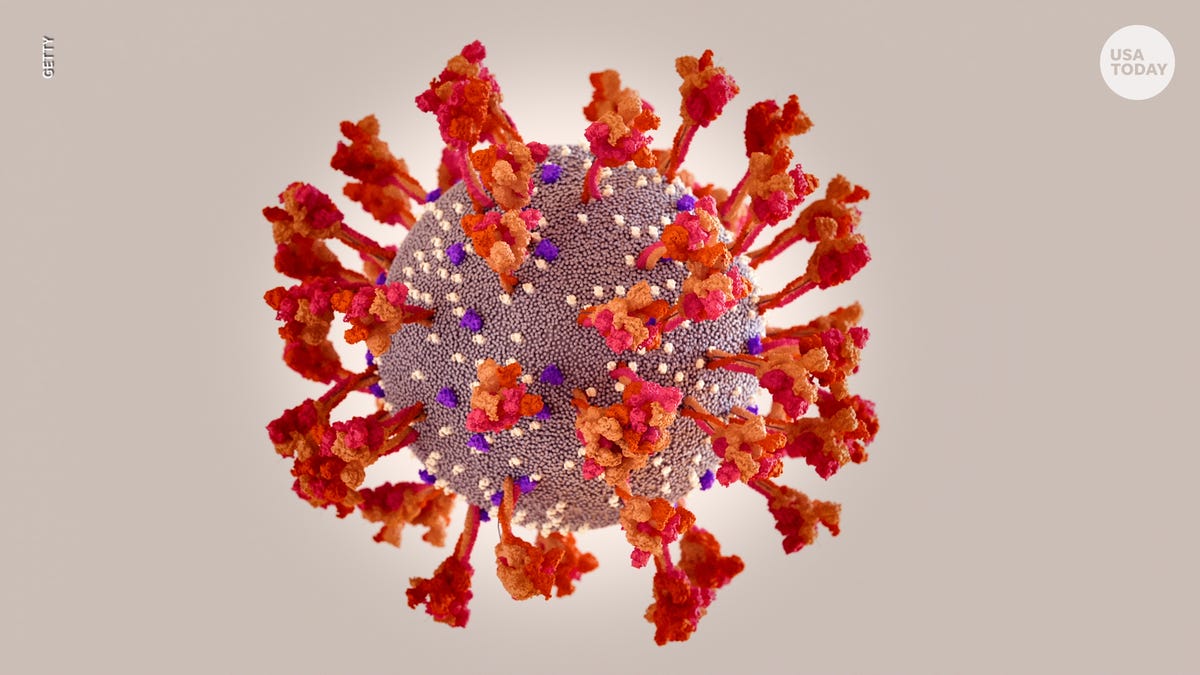 The president’s main call was for Americans to get vaccinated. That’s a fine refrain, except we still have millions without a single jab. The president was eager to point out that under his watch, 200 million people were fully vaccinated — except we know now that we require boosters to protect against omicron and only about 60 million Americans have had that additional jab.
Biden did indeed urge people to get boosted, saying they were free and available, but except for announcing a set of pop-up clinics around the United States, he didn’t articulate the plan to get this done. As for vaccine misinformation, he told its purveyors to “stop it,” which is far from the campaign we need to address the anti-vaccine propaganda circulating widely in the United States and the corporate reticence to take vaccination seriously.
We already know vaccines alone will not solve this problem. The president made a bet in March that vaccination could return the country to some semblance of normalcy, promising a “summer of freedom.” But as the delta variant emerged, the highly transmissible strain tore through the country, outpacing the speed of our vaccination efforts.
Public health experts called for more emphasis on a wider range of interventions, including rapid testing, masking and environmental controls, such as the upgrading of ventilation systems in buildings across the country. Yet such measures remain underutilized here in the United States. White House press secretary Jen Psaki even scorned those who suggested making rapid testing more widely available, dressing down an NPR reporter who made a suggestion of sending tests to every American household.
To its credit, the administration has since announced it would begin to send 500 million rapid tests to Americans in January, although it’s not clear whether the administration has put in an order for such tests. And at the scale promised, every American would receive a one-time delivery of no more than a single test at some point this winter. The president also claimed that schools need to be open and they are safer than ever, pointing out that the Centers for Disease Control and Prevention has now endorsed a “test and stay” strategy to make this possible. Except, the infrastructure and resources to carry out that strategy are simply not there for many school districts.
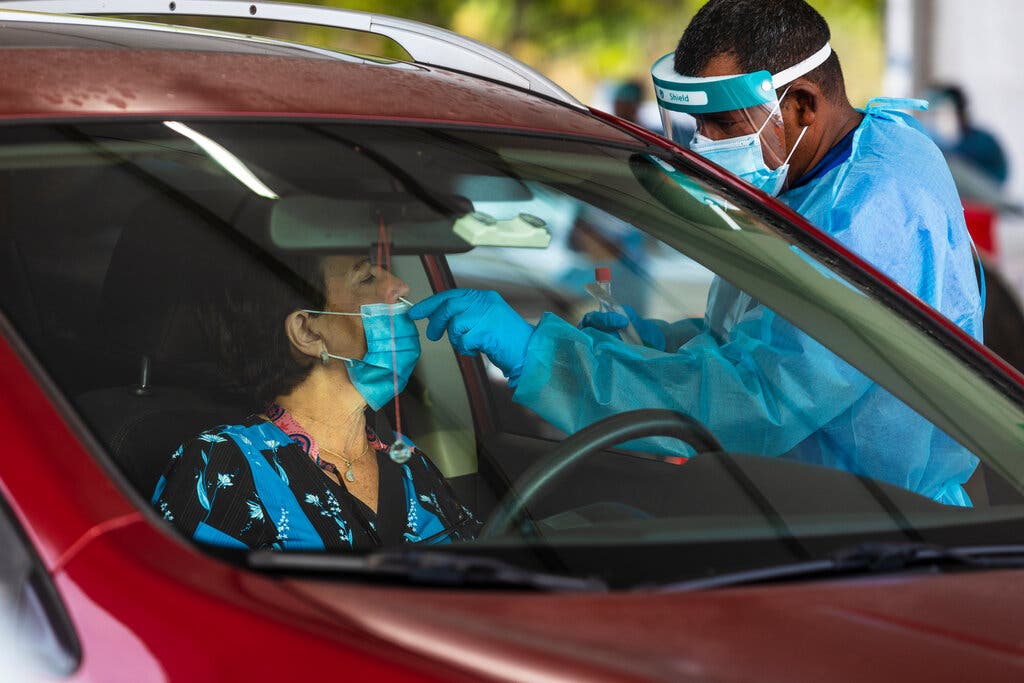
The shortage of tests comes as Americans want to know whether they are infected during the holiday season. Credit…Saul Martinez for The New York Times
In fact, the administration has not ordered the tests yet. The New York Times: Biden Promised 500 Million Tests, but Americans Will Have to Wait.
President Biden promised Americans he is making 500 million coronavirus tests available free of charge, but help is at least weeks away — if not longer — for anxious Americans facing a surge of new virus cases.
Mr. Biden’s administration has not yet signed a contract to buy the tests, and the website to order them will not be up until January. Officials have not said how many tests people will be able to order or how quickly they will be shipped once they begin to be available next month. Manufacturers say they are already producing tests as fast as they can.
As a candidate, Mr. Biden excoriated the lack of testing during the Trump administration, saying in March 2020 that “the administration’s failure on testing is colossal, and it’s a failure of planning, leadership and execution.” But the Omicron variant caught the White House off guard, as the president has acknowledged, and cases have far outstripped the government’s ability to make tests available.
The president’s pledge of a half-billion tests on Tuesday was the centerpiece of a newly aggressive testing effort, announced just days before Christmas, as Americans try to find the hard-to-find tests so they know whether they are infected during the holiday season.
“That’s not a plan — it’s a hope,” said Jennifer Nuzzo, an epidemiologist at the Johns Hopkins Bloomberg School of Public Health, which tracks testing trends. “If those tests came in January and February, that could have an impact, but if they are spread out over 10 to 12 months, I’m not sure what kind of impact it is going to have.”
Contracts to purchase tests could be finalized as soon as next week, officials said.
Whether testing manufacturers can now ramp up to produce an extra 500 million at-home tests — and how soon — is unclear. John M. Koval, a spokesman for Abbott Laboratories, a major manufacturer of rapid at-home antigen tests, said in an email message that the company is seeing “unprecedented demand” for its tests, “and we’re sending them out as fast as we can make them.”
More News stories to check out:
Helaine Olen at The Washington Post: Stop shaming people for getting covid. Blame belongs elsewhere.
Vice News: People Got Sick at a Conspiracy Conference. They’re Sure It’s Anthrax. [It’s Covid.]
CNN: Biden says he supports filibuster carve-out for voting rights.
AP News: He wore a wire, risked his life to expose who was in the KKK. [He learned that many members of the KKK were in law enforcement.]
Lawrence H. Tribe, Donald Ayer, and Dennis Aftergut at The New York Times: Will Donald Trump Get Away With Inciting an Insurrection?
The Daily Beast: The Obscure Charge Jan. 6 Investigators Are Looking at for Trump.
Just Security: The Path to Real Accountability: The Timetable and Track Record of the Jan. 6 Select Committee.
The Washington Post: Amid fears Russia will invade Ukraine, Putin points finger at U.S. and NATO in marathon news conference.
What’s on your mind today? Any good news you’d like to share?
Did you like this post? Please share it with your friends:

 Operational snags at airlines are coming as millions are still flying in spite of rising coronavirus cases. The TSA says it screened 2.19 million people at airports across the country on Thursday, the highest figure since the uptick in holiday travel started a week ago.
 Now, health experts say the roughly 15 percent of the adult population that remains stubbornly unvaccinated is at the greatest risk of severe illness and death from the Omicron variant, and could overwhelm hospitals that are already brimming with Covid patients. In Cleveland, where Omicron cases are soaring, a hospital unit at the Cleveland Clinic that provides life support to the sickest patients is already completely full.
 But people are not petri dishes or lab animals, and while molnupiravir works to some extent, it has not worked very well in covid-19 patients. Specifically, molnupiravir
  More details:
 peej
peej Carissa
 bostonboomer
 dakinikat
 ecocatwoman
 mablue2
 Mama Lopez
 peggysue22
 quixote
 skydancingguestblogger
 Mona (aka Wonk the Vote)



 Sky Dancing
Recent Comments