Posted: May 27, 2026 | Author: bostonboomer | Filed under: just because | Tags: Bill Cassidy, CDC, Donald Trump, ebola, ICE, Iran War, James Tallarico, John Cornyn, Ken Paxton, NATO, Strait of Hormuz, suicides in ICE detention centers, Texas primaries, Thom Tillis, Trump Cabinet meeting on Iran, UFC area on White House lawn |
Good Day!!
We’re moving closer to the midterm elections. Yesterday, there were some important primaries in Texas. Another of Trump’s enemies–John Cornyn–went down in flames, and now he’ll join other losers like Bill Cassidy who are now free to criticize his policies. Is it possible that Texas could turn purple in 2026? Here’s the latest:
Shane Goldmacher at The New York Times (gift article): Cornyn Crushed: 7 Takeaways From Tuesday’s Runoffs in Texas.
Ken Paxton, the Trump-endorsed and MAGA-backed insurgent, ousted Senator John Cornyn in a runoff on Tuesday, becoming the second primary challenger to knock out an incumbent Republican senator in less than two weeks in a raw display of President Trump’s powerful hold on the party base.
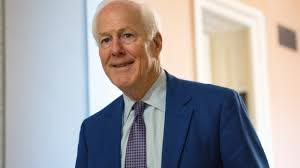
Texas Senator John Cornyn
The contest was the most expensive primary in American history — and Mr. Paxton prevailed despite being outspent on advertising by pro-Cornyn forces by roughly $80 million.
Now, Republicans are bracing for a potentially competitive general election in Texas, where Democrats have not won statewide in a generation. Democratic donors nationwide have swooned for their nominee, James Talarico, a smooth-talking 37-year-old seminarian and state legislator, in the hopes he will realize their long-dashed dreams of turning Texas blue.
National Republicans have warned for months that Mr. Paxton’s scandal-riddled past could put the Republican-held seat in jeopardy. But G.O.P. primary voters proved on Tuesday that they were in no mood for political guidance from Mr. Cornyn or a much-reviled party establishment.
The scope of his defeat was staggering. Mr. Cornyn, once the No. 2 Republican in the Senate, was trailing in nearly all of Texas’ 254 counties.
Here are Goldmacher’s takeways from the election. You can read more details on each with the gift link above.
— Cornyn’s defeat is another proof point of Trump’s sway.
— An ugly G.O.P. primary could take time to heal.
— The general election is going to have a Texas-size price tag.
— Cornyn’s loss could reverberate on Capitol Hill, too.
— An old-guard Democrat [Rep. Al Green] goes down.
— Crypto spent big and won.
— A sheriff’s deputy prevails over a sex therapist accused of antisemitism.
Read more details at the link.
Commentary on the Texas elections:
Matthew Choi at The Washington Post (gift article): Why some Republicans are worried about Ken Paxton as a Senate nominee.
Texas Attorney General Ken Paxton won the Republican Senate primary in his state Tuesday night, ousting incumbent Sen. John Cornyn.
Paxton excited President Trump and his MAGA base. But many Republican leaders and strategists are worried.
Few politicians have garnered as much scandal in Texas as Paxton. He was impeached by the Republican-controlled state House on multiple charges of abuse of office. His own senior staffers reported him to the FBI, alleging he illegally used his position to help a prominent donor. His wife, state Sen. Angela Paxton, filed for divorce last year on “biblical grounds,” citing adultery.
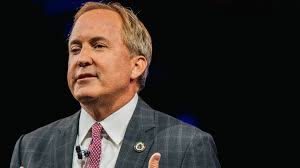
Ken Paxton
And yet, Paxton has repeatedly come out on top. The state Senate acquitted him on all charges, and the FBI dropped its investigation. Paxton won reelection for his current job twice and defeated Cornyn, one of the best-funded Republicans in the country, with a fraction of the resources and institutional support.
Senate Republicans are now nervous they’ll have to pour boatloads of cash into the race to prop up Paxton against state Rep. James Talarico, the Democratic candidate in the race. Talarico has blown past fundraising records for a contest that is likely to break spending records.
Why is Paxton so controversial?
The state House impeached Paxton in 2023 on overwhelmingly bipartisan grounds, with 60 Republicans joining 61 Democrats. Only 21 Republicans voted against impeachment charges.
The charges stemmed from his relationship with Nate Paul, a real estate developer and political donor. Paxton allegedly ordered his employees to improperly intervene in Paul’s legal troubles. Paul allegedly provided Paxton free services including a home renovation and a job for a woman with whom Paxton was allegedly having an extramarital affair. Paxton was also charged with retaliating against whistleblowers on his staff who had reported his conduct to the FBI in 2020.
Paxton was tried on 16 charges in the Senate, which acquitted him on all of them. His wife, Sen. Angela Paxton, was part of the Senate jury, though she was not allowed to vote.
The Justice Department continued investigating the allegations made by his senior staff to the FBI but closed its investigation at the end of the Biden administration.
Paxton was also indicted on felony securities fraud charges just after becoming attorney general in 2015. He was charged, as a state senator, with defrauding his fellow lawmakers by encouraging them to invest in Servergy, a tech company where he was secretly making a commission on their investments. He agreed to settle the case in 2024, paying $300,000 in restitution, though he never admitted to any wrongdoing. That case was unrelated to his impeachment.
It’s hard to believe this guy is still in office. But Trump likes him, and I guess that’s enough for Texas Republican voters.
Karen Tumulty at The Washington Post (gift article): Trump is liberating his Republican critics in Congress.
President Donald Trump proved once again that his endorsement is, as Texas Attorney General Ken Paxton put it in his primary runoff victory speech Tuesday night, “the most powerful force in politics.”
One by one, Trump is putting an end to the political careers of lawmakers in his party that he deems, for reasons more personal than policy-oriented, to be apostates. But in doing so, he may also be liberating them as they serve out their remaining seven months in Congress. They now have nothing to lose if they stand up against him.
By giving belated independence to a handful of incumbents he vanquished at the ballot box or forced into retirement, the president is creating a growingly noxious dynamic between the two ends of Pennsylvania Avenue.

Thom Tillis
“It’s hard for me to see how the president is going to get his agenda through the Senate in the next seven months if he keeps purging Republican senators who support him,” former senator Lamar Alexander (R-Tennessee) told CBS News last week. “… I think Republican senators will find they can say what they think and the country will be better off if they do.”
In his Trump-engineered defeat, Sen. John Cornyn joins a club of two other Republicans in the chamber, where their party holds a 53-47 majority. The other two are already expressing resistance to the president’s dictates.
One is Thom Tillis (North Carolina). Under a barrage of Trump attacks for opposing parts of the president’s agenda — including the sprawling One Big Beautiful Bill that was its domestic centerpiece — Tillis announced his retirement last year rather than making what was deemed to be a hopeless bid for a third term.
Tillis has since become a regular Trump critic. He has criticized the Justice Department’s recently announced “anti-weaponization fund,” which could allow the Trump supporters who attacked the U.S. Capitol on Jan. 6, 2021, to receive taxpayer dollars, as “stupid on stilts” and said: “These people don’t deserve restitution. Many of them deserve to be in prison.”
Bill Cassidy (Louisiana), who failed to even make the runoff in his party’s May 16 primary, voted for the first time a few days later to advance a resolution to block Trump from ordering further strikes on Iran without congressional authorization.
If you want to read more, you can use the gift link above. I’m using up my gift articles because it’s close to the end of the month.
Paxton will now face Democrat James Talarico in November.
Adam Wren and Irie Sentner at Politico: James Talarico’s theory of victory in Texas.
In the end, James Talarico and Democrats got the matchup they had been salivating over for months.
Within two hours of Ken Paxton’s GOP primary win on Tuesday, Talarico had hauled in $600,000 — the strongest two hours of his entire campaign. Recent internal polling from a pro-Talarico PAC shows the Democrat has a 7-point lead against Paxton. Both figures were shared first with POLITICO.
In an interview, Talarico said he’s confident about his chances.
![]() But Talarico faces a Texas-sized challenge to finally deliver on Democrats’ long-held fantasy of flipping the state, just two years after Trump won it by 14 points….
But Talarico faces a Texas-sized challenge to finally deliver on Democrats’ long-held fantasy of flipping the state, just two years after Trump won it by 14 points….

James Talarico
Talarico said Tuesday night that to win in November, he must convert supporters of Sen. John Cornyn — a conservative by almost any metric, except Trump’s. After Cornyn conceded, Talarico thanked the four-term incumbent for his service and told his supporters “you have a place in our campaign.”
It’s all part of his general election pitch, which Talarico outlined in the interview following Paxton’s primary win.
“I have a legislative record that I think has a lot to offer supporters of Senator Cornyn. Ken Paxton has a criminal record. I have a legislative record,” Talarico told POLITICO (Paxton struck a deal in 2024 where he paid restitution and securities fraud felony charges were dropped). He emphasized his history reaching across the aisle “to cut property taxes and raise teacher pay and lower the cost of housing and child care and prescription drugs,” and touted his willingness to break with Democrats on issues including energy and the border that are important in Texas.
“I’ve called out the extremes in both parties, on the right and left, and as you know, called out President Biden for failing to secure our southern border,” he said. “I’ve pushed back against national Democrats who want to hurt the Texas oil and gas industry and so I think that Texans are looking for a senator who is going to be independent, who’s not going to serve a political party, not going to serve any special interests or megadonors, but who’s going to serve people of Texas.”
We’ll have to wait and see. The dream of Texas going blue again has been with us for a long time, but so far it hasn’t come close to happening.
New York Times elections expert Nate Cohn thinks it could happen (gift article): A Blue Texas May Be More Than a Dream for Democrats.
Could Texas really turn blue in 2026?
While it’s tempting to be skeptical, a blue Texas is increasingly easy to imagine. It’s even easier to imagine after Ken Paxton’s victory over John Cornyn, the incumbent senator, in the Republican primary runoff on Tuesday night.
That’s partly because Mr. Paxton, the state attorney general, has distinct political liabilities. He’s faced investigation, indictment, impeachment and a messy public divorce.
But there’s another reason Democrats might pull off a statewide win for the first time in three decades: demographics. Texas is one of the most diverse states in the country, and national polls show Democrats surging back in support among young and nonwhite voters — and especially Hispanic voters.
On paper, these national demographic trends ought to send Texas racing toward the left and into contention. Add in Mr. Paxton’s nomination and you can start to see how Democrats could flip Texas this fall.
After a decade of big talk from Democrats about Texas, it’s understandable that people could harbor some doubt about flipping the nation’s largest red state. Judging by presidential election results, Democrats barely made any progress at all: President Trump won Texas by almost 14 percentage points in 2024.
But beneath the state’s stable Republican voting record, extraordinary demographic shifts have put Texas Republicans in a much more vulnerable position. To an extent few would have imagined a decade ago, Texas’ status as a reliably Republican state now depends on elevated levels of support among Hispanic voters.
Read more at the gift link.
Let’s face it. Democrats have to take back the House if we are to have any hope of impeaching Trump. They need to take the Senate too, but even if that happens, they won’t have the votes to remove him. Nevertheless, I think it’s important to impeach him. Democrats need to do everything in their power to weaken Trump, because he obviously has no plans to leave the White House unless he is dragged out or carried out on a stretcher.
Iran war news:
The Trump administration and the Iran government disagree about what is in their supposed peace agreement.
Erika Solomon, Sanam Mahoozi, and Leo Sands: What Iranian State Media Says Is in Outline of ‘Unofficial’ Deal With U.S.
Iranian state television on Wednesday released what it said were details of “an initial, unofficial document” outlining the framework for an agreement between Iran and the United States that would reopen the Strait of Hormuz to shipping traffic.
The White House immediately dismissed the report as a “complete fabrication,” and it was not clear whether the United States and Iran were any closer to an agreement.
 Iran’s state broadcaster, IRIB, said that under the framework, Iran would allow shipping to resume through the strait in return for an end to the U.S. naval blockade on Iranian ports. For days, the two sides have been alternating between renewing hostilities and issuing positive signals.
In its framing of the draft, the broadcaster presented it as a broad victory for Iran while cautioning that it was not final.
The report said that, under the agreement, commercial marine traffic would return to prewar levels within a month of the framework’s implementation. It also said that Iran would handle the strait’s management in cooperation with the Gulf state of Oman, a U.S. ally.
A bit more:
The reopening of the strait was the only one of the five main sticking points in negotiations that was mentioned in the brief report. The waterway is a crucial route for the world’s oil and gas that Iran has effectively closed since March. There was no reference to the future of Iran’s nuclear program and its stockpile of enriched uranium
The report said the framework included a U.S. pledge to “withdraw its military forces from the areas surrounding Iran” without specifying the geographic area included. The United States has a number of military sites in neighboring Iraq and nearby Gulf countries.
“Whether this includes forces newly deployed to the region or only permanent base personnel remains subject to negotiation,” the report said.
Trump called a cabinet meeting to discuss the situation.
The administration’s new plan would also keep U.S. citizens who might have been exposed to Ebola out of the country, according to two of the people with knowledge of the plans, who spoke on condition of anonymity because they were not authorized to discuss the matter publicly.
A few dozen Public Health Service officers are now being trained to deploy to Kenya to provide medical care to Americans who are deemed at high risk of developing Ebola. The initial plan was to monitor those Americans in Kenya, but to move anyone who started to show symptoms for treatment in Europe.
Because we no longer have a real CDC, and Trump, Musk, and RFK, Jr. fired all the disease experts.
The administration is looking for volunteers (!) to screen for Ebola cases at airports. Reuters: US CDC seeks staff for Ebola screening as outbreak response expands.
The U.S. Centers for Disease Control and Prevention has asked staff to volunteer for urgent deployment to support Ebola screening at the country’s entry points, according to an email seen by Reuters on Tuesday.
CDC Acting Director Jay Bhattacharya said in the email that the agency had activated a Level 2 emergency response on May 18 to an outbreak of the Bundibugyo strain of the Ebola virus in the Democratic Republic of the Congo and Uganda, and was expanding recruitment beyond its usual emergency responder pool as screening of selected international arrivals ramps up.
Level 2 is an intermediate level of emergency response. It indicates a need for substantial additional staffing to meet response demands, according to the CDC’s website.
The CDC said enhanced screening operations are already under way at several port health stations and will require additional personnel. Staff across roles, including public health advisers, emergency specialists and licensed medical providers, are being asked to support the effort, subject to supervisor approval.
Volunteers could be tasked with monitoring incoming travelers for signs of illness, checking temperatures and referring suspected cases for further assessment, according to the email.
Unbelievable. Ebola remains dormant for weeks after exposure. What if people don’t report exposures or don’t realize they’ve been exposed? We’re going to have a lot of Ebola cases here, aren’t we?
One more from The Guardian: UFC arena under construction on White House lawn to mark Trump’s 80th birthday.
Construction is under way on the White House lawn for an Ultimate Fighting Championship (UFC) arena that will host a cage match next month to mark the US’s 250th anniversary and Donald Trump’s 80th birthday.
The mixed martial arts fight is planned for 14 June.
 Photos of cranes and other construction equipment on the White House lawn on Tuesday showed the beginnings of the temporary construction. Trump has said that the finished project will feature “a 5,000-seat arena right outside the front door of the White House”.
Online renderings depict what the completed, wire-mesh-fence-ringed fight space is expected to look like. The octagon-shaped cage will be ringed by a red, white and blue stage under a towering arch featuring stars and stripes patterns and two large screens carrying the action live.
The cage and stage will themselves be surrounded by thousands of temporary seats, including ringside space for a full marching band that can set the entire scene to blaring music.
In December, Trump said the White House event would host “eight or nine championship fights – the biggest fights they’ve ever had”. But like the size of the crowd, the number of fights expected to be held on the White House
lawn has shrunk. The fight card includes two title fights: a lightweight championship fight between Ilia Topuria and Justin Gaethje in the main event, and an interim heavyweight title fight between Alex Pereira and Ciryl Gane.
This is beyond disgusting. I feel like I’m going to throw up.
I’ll end there, even though there are plenty more Trump messes that someone will have to clean up. Hang in there everyone. We can and will survive!
Did you like this post? Please share it with your friends:
Posted: May 9, 2026 | Author: bostonboomer | Filed under: just because | Tags: cat photos, caturday, CDC, cost of the Iran war, Donald Trump, gerrymandering, hantavirus, Iran War, Jeff Bezos, Justin Wolfers, Melania Trump, mothers, Samuel Alito, Voting Rights Act |
Good Day!!
 Tomorrow, May 10, is Mothers Day. My Mother is no longer alive, but I still talk to her frequently. I think of her every day and take comfort in remembering stories she told me and the many times she encouraged me.
Tomorrow is also the day I stopped drinking, way back in 1982. I can’t believe it will be 44 years! My mother was visiting me on those first days of sobriety. No one believed I could do it, but somehow I knew that day that I was really going to stop drinking this time. I think having my Mom there with me helped, even though she wasn’t sure I could do it either. I love you Mom.
In the “news,” Jeff Bezos’ newspaper, The Washington Post, has seen fit to publish an “opinion” piece, supposedly written by Melania Trump. Obviously, she didn’t write it, even though it’s incredibly simplistic. Here’s bit of it: Mothers are America’s strength.
A mother’s devotion to her child is unmatched. This love takes many forms: strength, compassion, wisdom, grace, joy, labor, humor and even grief, to name a few. The love between mother and child has helped shape America’s identity since the nation’s founding 250 years ago.
It is time to revisit the enduring American family traditions that have supported generations, while also recognizing the challenges for mothers of building both a career and a home. This balancing act reflects the realities women face today.
America’s strength is closely tied to the role mothers play in shaping character, education and moral order within families. From morning until night, mothers serve as the first teachers of empathy, aspiration and discipline. It is mothers who do so much to shape a child’s mind — how to think, how to distinguish right from wrong and how to persevere in challenging times.
The household is our nation’s smallest institution, yet it is the foundation of all others, including democracy itself. The values cultivated in homes often shape the moral voice of the next generation. Looking ahead, we must consider how to strengthen this vital role.
Being a modern mother demands the discipline and restraint to not disregard what came before us. In this spirit, the healthy evolution of the American family can best be achieved by preserving the elements of the past that have proved their worth. In doing so, America can restore the honor of motherhood after years in which feminism often placed career above family, with consequences to our nation.
There just had to be a dig at feminism, right? Here’s her list of accomplishments:
I constantly challenge myself, as first lady, to think beyond the traditional responsibilities of the East Wing. That has resulted in many new opportunities, including leading four reunifications of Ukrainian and Russian children with their families, addressing the U.N. Security Council on achieving peace through education, and, at the White House, launching Fostering the Future Together, a global effort to help children thrive through the safe and innovative use of technology. But family always comes first.
(Emphasis added) Does she know the East Wing has been torn down?
The Voting Right Act decision fallout:
I don’t really want to write about redistricting, even thought that still seems to be the leading story today. Dakinikat did a great job with that topic yesterday.
I’ll just share this interesting piece by Carl Hulse in The New York Times (gift article): How Minority Districts Fueled the G.O.P.’s Southern Ascendancy in Congress.
Representative James E. Clyburn of South Carolina, formerly the No. 3 Democrat in the House, is certain he would never have been elected to Congress without changes in the Voting Rights Act that the Supreme Court determined last week amounted to unconstitutional racial gerrymandering.
“And about half of the members of the Congressional Black Caucus wouldn’t be there,” said Mr. Clyburn, the first African American sent to Congress from his state since Reconstruction. He was part of the historic 1992 class of Black and Hispanic lawmakers elected after new maps were drawn to comply with 1982 changes meant to strengthen the Voting Rights Act.
 The predominantly Democratic minority groups that set to work back then to increase their representation were boosted by some unlikely allies: Republican strategists who saw an opportunity to break the Democratic hold on the South and force an extraordinary realignment.
Now, Republicans see the chance to cement their grip on the region — and to try to maintain their thin House majority — by eliminating the minority districts that initially worked to their advantage and to take those seats for their own.
It is the latest chapter in an ongoing political saga that has had profound implications for the House of Representatives over the past three decades. Redistricting in minority communities could again be a major factor in deciding the November elections as Republicans try to lessen the traditional midterm advantages for the party out of power — the Democrats in this case — in a year when they face particularly strong headwinds.
Having consolidated their power throughout the South, Republicans are now emboldened to try to eliminate the majority-minority districts, believing they can carry them without risking their strength elsewhere as Democratic-leaning minority voters are dispersed into other districts.
Are they right?
But as Republicans and Democrats have both seen as they have waged a tit-for-tat battle this year to redraw districts around the country to their advantage, such changes do not always work out as planned. The true consequences of the Supreme Court’s recent ruling remain to be seen.
The G.O.P. may find it more difficult to win in more diverse districts of the kind that existed before the reshuffling of maps prompted by the Voting Rights Act.
And Democrats now must decide whether they want to maintain the predominantly minority districts they once demanded as a matter of basic fairness or try to turn the tables on Republicans in blue states and reconfigure them in an effort to threaten G.O.P. lawmakers in those states.
In the late 1980s, Republicans had been deep in the House minority for nearly 40 years. But growing dissatisfaction with the Democratic Party had begun moving white Southern conservatives into the Republican ranks, as illustrated by high-profile party switches in Washington. Then the redistricting initiated under a series of court decisions aimed at fostering more minority representation provided yet another opening that might have seemed counterintuitive at first glance.
Architects of the maps realized that if they could maximize Black and Hispanic representation in the new districts, they would simultaneously dilute Democratic strength in surrounding jurisdictions where coalitions of white and Black voters had elected white Democrats for decades. The shift would ultimately create dozens of openings for Republican candidates in what had formerly been known as Democrats’ “Solid South.”
Hulse’s argument is interesting. He also notes that
Some civil rights figures such as Representative John Lewis, the Georgia Democrat, warned at the time that the new maps could empower Republicans by weakening the partnership of progressive white and Black voters in the South. But others said the new districts were the only way to overcome centuries of institutional discrimination against minorities in the region.
“Gerrymandering was done to keep Black folks out,” Mr. Clyburn said. “If you gerrymander to keep them out, you’ve got to gerrymander to bring them in.”
Who was right? We may find out in November. Use the gift link to read the rest.
 In other voting news, It seems Sam Alito cheated in his opinion on the Voting Rights case. Sam Levine, Will Craft and Andrew Witherspoon at The Guardian: Samuel Alito’s Voting Rights Act ruling cited misleading data from DoJ.
The claims Samuel Alito, a supreme court justice, made about voter turnout in Louisiana in a landmark Voting Rights Act case were based on a misleading data analysis, a Guardian review has found.
In his opinion gutting section 2 of the Voting Rights Act last week, Alito said that Black voter turnout had exceeded white voter turnout in two of the five most recent presidential elections, both nationally and in Louisiana. Alito’s claim was copied almost verbatim from a friend-of-the-court brief filed by the justice department. It was a critical data point Alito used to make the argument that the kind of discrimination that once made the Voting Rights Act necessary no longer exists.
“Vast social change has occurred throughout the country and particularly in the South, where many Section 2 suits arise,” Alito wrote in a majority opinion in the case, which concerned Louisiana’s congressional map, joined by the five other conservative justices on the court. “Black voters now participate in elections at similar rates as the rest of the electorate, even turning out at higher rates than whitJuson piece in The New York Times (gift article): Hegseth Says This War Has Cost $25 Billion. I Tallied Up the True Amount.
The Defense Department says the conflict with Iran has cost taxpayers $25 billion so far. But this tally significantly understates the true cost. By my calculations, the bill for a typical American household likely runs to thousands — or even tens of thousands — of dollars.
Yes, that’s a wide range; blame the economic fog of war. But what’s clear is that Defense Secretary Pete Hegseth is trying to obscure just how expensive this war will be.
The Pentagon’s stated number reflects only a narrow accounting of the tab that Operation Epic Fury is running up. It’s the price of the more than 2,000 Tomahawk and Patriot missiles already fired, the warplanes already flown and in some cases lost, and the rest of the gear already chewed through. It does not measure the true cost of the war — including the human toll. Russell Vought, the director of the Office of Management and Budget, acknowledged as much when he told the House Budget Committee on April 15, “I don’t have a ballpark for you.”
I do. Since the start of the war, oil markets have been disrupted, and consumer confidence has cratered. The global economy is groaning, and military budgets are growing. The toll from this upheaval must be counted in lives disrupted, jobs lost, companies shut down (see: Spirit Airlines), and the income and output sacrificed. The less easily quantified costs — death, disability and mental health — could become much more dramatic should President Trump send troops into Iran, which still can’t be ruled out.
Start with oil. While the White House is keen to tell you that oil markets will bounce back to normal, futures markets disagree. Futures prices for oil at the end of 2026, 2027 and 2028 are all still sitting well above where they were before the start of the war. Indeed, the November 2026 futures price of West Texas Intermediate hit a new high this week at $86.12 a barrel. It could be that oil traders are pricing in near-term disruption. Or perhaps they see the current episode as raising the risk of future disruption. Either would be expensive.
The rise in geopolitical risk is costly. Recent research by the Fed economists Dario Caldara and Matteo Iacoviello suggests that heightened geopolitical risk leads to lower investment and employment and dramatically raises the chances of an economic disaster. Their measure of this risk has skyrocketed, and their estimates of the effect of risk on the economy suggest a cost of about $200 billion, with a million fewer Americans working in a year.
The war has also pushed the Federal Reserve Bank into a corner. Back in February, many economists expected a couple of rate cuts this year; markets now think that’s unlikely. If the Fed raises rates, it may succeed at beating back a war-fueled burst of inflation, but only by destroying hundreds of thousands of jobs and edging the economy closer to recession. A reasonable guesstimate — informed by the Fed’s own models — is that this will cost the economy about $200 billion.
Use the gift link to read the rest.
 One more on Iran from Jonathan Lemire at The Atlantic (gift article): Trump Is ‘Bored’ With the War He Started.
President Trump really, really wants the war with Iran to end. He has declared victory many times, including about three weeks ago, when Iran briefly reopened the Strait of Hormuz. He has repeatedly extended his cease-fire deadlines instead of following through on his (sometimes-apocalyptic) threats to resume hostilities. This week, his administration abruptly abandoned an effort to escort ships through the strait in part because of a fear that it could provoke violent, escalating confrontations.
Trump is tired of the war, which has proved far more difficult and lasted far longer than he had expected. His party is warily watching rising gas prices and falling poll numbers. He doesn’t want to be bogged down in a Middle East conflict like some of his predecessors were. He doesn’t want it to upend his high-stakes summit next week in China. He is ready to move on.
Trump is left with a vexing question: How do you end a war when your opponent won’t budge? And while Trump grasps for an exit, the hard-liners in Tehran have used the war to tighten their grip on power. Iran seems hell-bent on pulling off something it’s historically done well: humiliating an American president.
Trump never thought it would turn out like this. After the impressive military operation to snatch Nicolás Maduro from Caracas, the president set his eyes on Iran, telling confidants that it would “be another Venezuela,” a pair of outside advisers told me. They, like others, spoke on the condition of anonymity to discuss internal strategy. Trump believed that the U.S. military was unstoppable, and that he had a chance to topple Tehran’s theocracy, a prize that had eluded his predecessors. He was redrawing the world’s maps and expected a victory to come in days, a week or two at most. The initial U.S.-Israel onslaught killed Iran’s supreme leader and included waves of bombings that reportedly obliterated much of the country’s missile capabilities. But Tehran did not capitulate, and instead attacked its Persian Gulf neighbors and seized control of the Strait of Hormuz, through which 20 percent of the world’s oil passes. With a mix of mines, small attack boats, and drones, Iran effectively closed the waterway. Energy prices soared. The conflict settled into a stalemate and then a fragile cease-fire. One high-profile, official round of negotiations failed. No more are scheduled….
…the real question is the timing: A number of experts have forecast that Iran can withstand pressure from the blockade for months, not weeks. A U.S. intelligence assessment delivered to policy makers this week agrees, suggesting that Iran could make it at least three or four more months. If so, and Iran continues to keep the strait closed, then prices will continue to rise in the West, including in the United States during a midterm-election year. It then becomes a matter of pain: Which side can withstand the most economic hardship?
Use the gift link to read more.
The Hantavirus outbreak:
NBC News: 7 states prepare to receive Americans possibly exposed to hantavirus.
The U.S. has entered emergency response mode as a cruise ship hit by a deadly hantavirus outbreak sails toward Tenerife, one of Spain’s Canary Islands, where it will evacuate nearly 150 passengers on board, including at least 17 Americans.
State and local health officials in the U.S. are monitoring at least eight passengers who disembarked on April 24 and returned home. For the time being, those individuals are not being told to isolate, since they have not developed symptoms.
 As early as Sunday, global health authorities will help transport passengers still on board the ship — all of whom are currently asymptomatic — to their respective home countries. Passengers will be taken to a “completely isolated, cordoned-off” area in Tenerife, then board guarded vehicles to transport them to a section of the local airport that will also be cordoned off, Virginia Barcones, Spain’s head of emergency services, said Thursday at a press conference.
The Centers for Disease Control and Prevention said Friday in a statement that it is sending a team of epidemiologists and medical professionals to the Canary Islands to meet the Americans on board, who will fly to Nebraska upon arrival.
“Because the disease status of the exposed passengers is unknown and responders will be in close contact with potentially symptomatic individuals, it makes sense for emergency responders to don gloves (rubber or latex), a respirator mask like an n95, a protective gown, and eye protection,” a CDC epidemiologist who did not speak on behalf of the agency said in a text message.
The flight will land at Offutt Air Force Base in Omaha, Nebraska. The repatriated passengers will then be transported to the National Quarantine Unit at the Nebraska Medical Center in Omaha. It’s unknown how long the quarantine will last.
AP: Experts wonder ‘Where is the CDC?’ as a hantavirus outbreak unfolds on a cruise ship.
No quick dispatching of disease investigators. No televised news conference to inform the public. No timely health alerts to doctors.
In the midst of a hantavirus outbreak that involves Americans and is making headlines around the world, the U.S. government’s top public health agency, the Centers for Disease Control and Prevention, has been uncharacteristically missing in action, according to a number of experts.
To President Donald Trump, “We seem to have things under very good control,” as he told reporters Friday evening.
To experts, the situation aboard a cruise ship has not spiraled because, unlike COVID-19 or measles or the flu, hantavirus does not spread easily. It has been health experts in other countries, not the United States, who have been dealing primarily with the outbreak in the past week.
“The CDC is not even a player,” said Lawrence Gostin, an international public health expert at Georgetown University. “I’ve never seen that before.”
Not until late Friday did CDC actions accelerate.
Health officials confirmed the deployment of a team to Spain’s Canary Islands, where the ship was expected to arrive early Sunday local time, to meet the Americans onboard. They said a second team will go to Offutt Air Force Base in Nebraska as part of a plan to evacuate American passengers from the ship to a University of Nebraska quarantine center for evaluation and monitoring. Also, the CDC issued its first health alert to U.S. doctors, advising them of the possibility of imported cases.
There’s more at the link. I guess RFK Jr. doesn’t think this outbreak is that concerning. The scary thing is that it can take weeks for the symptoms to show up in a person who has been exposed, and 38 percent of people who get the disease die. And it can be spread person to person.
That’s it for me today. What’s on your mind?
Did you like this post? Please share it with your friends:
Posted: July 23, 2022 | Author: bostonboomer | Filed under: just because | Tags: CDC, food crisis, January 6 Committee hearings, Monkeypox, public health emergency, Russia, Secret Service, Turkey, Ukraine, World Health Organization |

Cats on Strike, by Leah Saulnier the painting maniac
Happy Caturday, Sky Dancers!!
As if we didn’t have enough bad news, we are now dealing with another global health emergency. Monkeypox is spreading rapidly around the world and here in the U.S. Cases have been reported in multiple states, including Massachusetts, Maine, New York, Washington, DC, Michigan, Florida, Texas, Illinois, and California. As of two days ago, there were already nearly 2,000 reported cases in the U.S.
Apoorva Mandavilli at The New York Times: W.H.O. Declares Monkeypox Spread a Global Health Emergency.
For the second time in two years, the World Health Organization has taken the extraordinary step of declaring a global emergency. This time the cause is monkeypox, which has spread in just a few weeks to dozens of countries and infected tens of thousands of people.
Dr. Tedros Adhanom Ghebreyesus, the W.H.O.’s director general, on Saturday overruled a panel of advisers, who could not come to a consensus, and declared a “public health emergency of international concern,” a designation the W.H.O. currently uses to describe only two other diseases, Covid-19 and polio.
“We have an outbreak that has spread around the world rapidly through new modes of transmission, about which we understand too little, and which meets the criteria” for a public health emergency, Dr. Tedros told reporters….
The W.H.O.’s declaration signals a public health risk requiring a coordinated international response. The designation can lead member countries to invest significant resources in controlling an outbreak, draw more funding to the response, and encourage nations to share vaccines, treatments and other key resources for containing the outbreak.
It is the seventh public health emergency since 2007; the Covid pandemic, of course, was the most recent.
The article discusses the controversy over how W.H.O. decides when to declare a health emergency. Some experts already think the agency waited too long on monkeypox.
Center for Infectious Disease Research and Policy: Largest monkeypox study to date highlights new symptoms.
Many of the people infected in an international monkeypox outbreak experienced a single lesion or sore in their mouth or on their genitals, a departure from typical symptoms of the virus that could lead to clinicians to misdiagnose monkeypox as another sexually transmitted infection (STI).

Coffee with Henry #4, by Kazui Whitemoon
That’s one of the main takeaways from the New England Journal of Medicine‘s (NEJM‘s) new international study of the current outbreak, which is the largest case-study on the virus.
“This truly global case series has enabled doctors from 16 countries to share their extensive clinical experience and many clinical photographs to help other doctors in places with fewer cases. We have shown that the current international case definitions need to be expanded to add symptoms that are not currently included, such as sores in the mouth, on the anal mucosa and single ulcers,” said Chloe Orkin, PhD, of the Queen Mary University of London, in a university press release.
The study included clinical observations from 528 confirmed infections at 43 sites from Apr 27 to Jun 24 of this year. The median incubation period is 7 days in this outbreak, and the median age of a case-patient was 38. No deaths occurred, but 70 patients (13%) required hospitalization.
In the study, authors share many patients are presenting to clinics and hospitals for pain management or difficulty swallowing. Single anal sores have been recorded in several cases. One in 10 people had only a single skin lesion in the genital area, and 15% had anal and/or rectal pain, a symptom not typically seen in other monkeypox outbreaks.
A total of 98% of the cases documented were in gay or bisexual men, and while monkeypox is not an STI, per se, the authors said 95% of transmissions documented occurred during sexual relations. Seventy-five percent of case patients are white, and 41% are HIV-positive.
CNN: CDC reports the first two monkeypox cases in children in the US.
Two cases of monkeypox have been identified in children in the United States, the US Centers for Disease Control and Prevention said Friday.
The two cases are unrelated and probably the result of household transmission, the CDC said.
One case is a toddler who is a resident of California. The other is an infant who is not a US resident. Public health officials are investigating how the children were infected.
Both have symptoms but are in good health and receiving treatment with an antiviral medication named tecovirimat or TPOXX, which the CDC recommends for children under the age of 8 because they are considered to be at higher risk from infection.

Painting by Vicky Mount
Since the monkeypox outbreak began in May, most of the cases have happened among men who have sex with men. However, anyone can catch the virus through close skin-to-skin contact. In the case of children, the agency said this could include “holding, cuddling, feeding, as well as through shared items such as towels, bedding, cups, and utensils.”
The CDC says the Jynneos monkeypox vaccine is being made available for children through special expanded use protocols. The agency has also developed new guidance for health care providers about identifying, treating and preventing monkeypox in children and teens.
Dr. Jennifer McQuiston, deputy director of the CDC’s Division of High Consequence Pathogens and Pathology, said Friday that the cases in children were not surprising and that the US should be ready to respond to more.
Politico: Biden administration considering a public health emergency for monkeypox as cases swell.
U.S. health officials are discussing whether to declare a public health emergency for the monkeypox outbreak as they work to make treatments and vaccines available to more people.
The discussions come as the virus — which is endemic in West and Central Africa but unusual in the United States — continues to spread across the country. As of Thursday, there were 2,593 cases reported, up from 1,470 last week. The federal government announced Friday it has shipped over 300,000 doses of the vaccine to states and cities to control the outbreak.
“We’re looking at … what are the ways the response could be enhanced, if any, by declaring a public health emergency,” White House Covid response coordinator Ashish Jha told reporters during a briefing Friday.
Officials at the Food and Drug Administration and Centers for Disease Control and Prevention are also working to make tecovirimat, the only treatment available for monkeypox (though only FDA–approved for smallpox), easier for physicians to prescribe to patients. A more streamlined process to get the antiviral is expected to be announced to providers next week.
The White House will also use a new research agenda, which was announced Thursday and consists of $140 million in ongoing projects, to study stretching limited monkeypox vaccine doses, find new testing methods and expand treatment options, three White House officials told POLITICO.

Lunch with cats, Pierre Bonnard, 1906
We haven’t talked much about the war in Ukraine lately, but it has caused a global food crisis. Yesterday Russian supposedly agreed to stop blocking shipments of grain, but the Ukraine and U.S. governments are skeptical that Russia will follow through.
BBC News: Food crisis: Ukraine war: Deal signed to allow grain exports to resume by sea.
Ukraine and Russia have signed “mirror” deals which will allow Kyiv to resume exports of grain through the Black Sea.
The agreement will allow millions of tonnes of grain, currently trapped in Ukraine by the war, to be exported.
The world shortage of Ukrainian grain since Russia’s 24 February invasion has left millions at risk of hunger.
However, Kyiv refused to sign a direct deal with Moscow, and warned “provocations” would be met with “an immediate military response”.
Both sides attended the signing ceremony in Istanbul but did not sit at the same table. Russia’s Defence Minister Sergei Shoigu signed Moscow’s deal first, followed by Ukrainian Infrastructure Minister Oleksandr Kubrakov signing Kyiv’s identical agreement.
The deal – which took two months to reach – is set to last for 120 days, with a co-ordination and monitoring centre to be established in Istanbul, staffed by UN, Turkish, Russian and Ukrainian officials. It can be renewed if both parties agree.
The blockade of Ukraine’s grain has caused a global food crisis with wheat-based products like bread and pasta becoming more expensive, and cooking oils and fertiliser also increasing in price.
In January 6 news, CNN’s Whitney Wild and Jeremy Herb broke a story yesterday on those missing Secret Service text messages: First on CNN: Secret Service identified potential missing text messages on phones of 10 individuals.
Secret Service investigators were scrutinizing the phones of 10 Secret Service personnel that contained metadata showing text messages were sent and received around January 6, 2021, but were not retained, two sources told CNN.

Grandma and 10 cats in the bedroom, by Linda Benton
The scrutiny came after the Department of Homeland Security inspector general asked for the text records last year of 24 individuals at the Secret Service who were involved in January 6, but only one text had been produced. After the issue spilled into public view this month, the inspector general launched a criminal investigation into the matter, and lawmakers demanded answers from the Secret Service to go back and find out what happened to the texts that may have been deleted.
But the Secret Service’s internal investigation ground to a halt after a July 20 letter from the DHS inspector general informed the agency there was an ongoing criminal investigation, directing the Secret Service to stop its own probe.
Investigators had been working to determine whether the content of the text messages sent by the 10 personnel contained relevant information that should have been preserved, the sources said. Among the 24 Secret Service personnel under scrutiny, 10 other Secret Service personnel had no text messages, and three had only personal records, according to the sources.
The details of scrutiny of messages from 10 Secret Service personnel caps an extraordinary week of turmoil for the agency, which started with the inspector general
demanding answers about potential missing texts and led to a congressional subpoena and a criminal investigation into the matter.
There has to be a way to recover those text messages. I’m sure The Washington Post’s Carol Leonnig, author of a book on the Secret Service, is working her sources to find out more.
Dakinikat covered the final January 6 Committee hearing yesterday, but here are some more follow-up articles:
NPR: The Jan. 6 committee isn’t done. Expect more hearings, revelations and reports.
The House Select January 6th committee made clear they are going to resume hearings in September.
Republican Vice Chair Liz Cheney, R-Wyo., opened the final summer hearing by noting the progress the committee has made, but she added that there’s now new evidence and more witnesses to consider.
“Doors have opened, new subpoenas have been issued, and the dam has begun to break,” Cheney said.
Already, in the buildup to Thursday’s presentation, select committee aides had hinted future hearings could be on tap.

Kim Haskins, psychedelic cat
And Committee Chairman Bennie Thompson, D-Miss., told reporters recently that the committee could issue an initial report in September, followed by a final report later this year. The findings would be accompanied by hearings, he said.
“We’re just getting a significant amount of information,” Thompson said. And the new evidence “pushes the timetable out.” [….]
Cheney also noted in this week’s hearing that the panel will now return to its investigative mode for the next several weeks.
“Our committee will spend August pursuing emerging information on multiple fronts, before convening further hearings this September,” Cheney said….
With plans to issue their findings in the form of reports and more hearings, the committee is racing to address new evidence along the way.
For example, the panel is now looking into allegations that the Secret Service deleted text messages during a two-day period surrounding the Jan. 6 attack. Department of Homeland Security Inspector General Joseph Cuffari has claimed the messages were erased after a request by his office, while the Secret Service has denied these allegations, saying the deletions were part of a system migration.
The Hill: Jan. 6 panel shows few signs of slowing down despite midterm risks.
The select committee’s prime-time hearing on Thursday was widely expected to mark the end of a crucial phase in the panel’s probe of last year’s riot, capping six weeks of publicly aired testimony — almost all of it from Republicans — aimed at pinning culpability for the rampage squarely onto Trump’s shoulders.
But every new revelation seems to turn up as many questions as answers, and the panel has altered its schedule to accommodate what it calls a wave of new information in need of perusal. The arrival of new witnesses has been accompanied by successful committee efforts to fight stonewalling in the form of executive privilege claims, and the panel has recently issued new subpoenas for even more evidence.
“The dam has begun to break,” Rep. Liz Cheney (R-Wyo.), vice chair of the select committee, said Thursday night. “We have far more evidence to share with the American people — and more to gather.”

The Owl and the Pussycat, 2009 by P J Crook
With that in mind, the committee said it intends to use Congress’s long August recess to wade through the influx of new information, with designs to hold more hearings on its findings in September when lawmakers return to Washington. How many they’ll stage remains unclear, but the investigators are leaving themselves the flexibility to determine that schedule on the fly.
“We are pursuing many additional witnesses for testimony,” said Chairman Bennie Thompson (D-Miss.), who participated in Thursday’s hearing remotely after testing positive for COVID-19 earlier in the week. “We will reconvene in September to continue laying out our findings.” [….]
“We’re not done. The information continues to come in. The evidence is continuing to flow in,” Rep. Zoe Lofgren (D-Calif.) told CNN heading into Thursday’s hearing. “So this is … not the end of the story.”
More interesting January 6 stories to check out, links only:
Vicky Ward on her blog yesterday: What Trump World Really Thinks About Last Night’s Jan. 6 Hearing.
Alan Feuer and Michael Schmidt at The New York Times: The Jan. 6 Panel After 8 Hearings: Where Will the Evidence Lead?
Ruth Marcus at The Washington Post: Now we know the truth on what Trump sought to obscure about Jan. 6.
David Siders at Politico: ‘His life was threatened.’ But Pence isn’t talking about it.
Isaac Stanley Becker and Josh Dawsey at The Washington Post: Hearings test Trump’s clout and GOP’s wish to ‘forget about Jan. 6’
Michelle Goldberg at The New York Times: The Myth of the Good Trump Official.
That’s it for me today. I hope you’re all having a terrific weekend!
Did you like this post? Please share it with your friends:
Posted: April 10, 2021 | Author: bostonboomer | Filed under: morning reads, U.S. Politics | Tags: Alligators, Boston Public Garden, CDC, coronavirus pandemic, Covid-19 vaccines, Donald Trump, Fox News, Matt Gaetz, Racism, Tucker Carlson, U.S. Marines, White supremacists |

Jean Metzinger, French, 1883-1956
Good Morning!!
Before I get to today’s news, here’s a little comic relief. This was in yesterday’s Boston Globe, but I can’t get past their rigid paywall. But I found the story at The Pest Control Daily: Boston Public Backyard used to have child alligators — sure, alligators — and other people fed them rodents. The “public backyard” is the Boston Public Garden, adjacent to the Boston Common. I had heard about cows grazing on the Common, but not about alligators in the Public Garden.

There are several newspaper articles from this period referring to the alligators who lived in a basin – or pond – near the entrance to Arlington Street amid a “magnificent” row of lilies. Reports vary, but for some time there were between three and four alligators on the site, strikingly complementing the many other exotic features of the public garden at the time.
A story in the September 19, 1901 issue of the Boston Post said three of the city’s alligators were given by “a Charlestown woman” who “became afraid of them and introduced them to the city of Boston.” The fourth alligator was given to the city by a man from Chelsea, though it’s just unclear why.
An article that appeared in an August 9, 1901 issue of the Boston Globe said the alligators – known as babies – belonged to William Doogue, the city’s superintendent for common and public reasons.
 Doogue oversaw the public garden from 1878 to 1906, according to Friends of the Public Garden, a nonprofit advocating Boston Common, the public garden, and the nearby Commonwealth Avenue Mall and known for its exceptional green thumb….
The alligators have certainly rubbed some city dwellers the wrong way. But it wasn’t so much their presence that was annoying – people often huddled around the pool looking for them – it was how they were sometimes fed.
“Some objections to feeding live rats and mice to those in the public garden pond,” read the headline of the August Globe article.
The newspaper reported that in “warm weather” the alligators were put in the public garden and fed by park officials once a week….
“Live rats exposed to hungry alligators,” read a headline in the Boston Post on August 9, 1901. “The public garden exhibit attracts morbid interest from women and children.”
The article says, “The city doesn’t feed them in the summer … the city doesn’t have to” because “the alligators make their own living by entertaining the public”.
The story included an illustration of primitively dressed people gathered around a small pond-like structure and watched a man kneel to feed the alligators with the animals’ mouths wide open.
Apparently this was seen as a low-life activity. There is much more detail at the link about the feeding of the alligators. Apparently they were moved to the Franklin Park Zoo during the colder months, and their presence in the Boston Garden lasted for about 6 years.
White Supremacist News
Remember those neo-Nazi marchers in Charlottesville chanting “Jews will not replace us?” Fox News’ Tucker Carlson was trending on Twitter all day yesterday after he parroted a white supremacist conspiracy theory that liberals are trying to replace white people with immigrants.

Fortunato Depero, Elasticità di gatti (1936–1939)
Media Matters: Tucker Carlson, the face of Fox News, just gave his full endorsement to the white nationalist conspiracy theory that has motivated mass shootings.
For decades, white nationalists have invoked the specter of nonwhite immigration, multiculturalism, and declining birthrates to argue for the existence of a vast conspiracy aimed at eliminating white populations as a dominant demographic. On Fox News, Tucker Carlson is distributing the language, grievances, goals, and inherent call to action of the conspiracy theory to massive audiences.
On the April 8 broadcast of Fox News Primetime, Carlson offered perhaps his most explicit justification yet for the core belief of the “great replacement” conspiracy theory: that a wave of “Third World” invaders is coming to replace you and reshape your environment, and that you, the audience, should do something about it.
The Fox News host claimed that “what’s true” is that “the Democratic Party is trying to replace the current electorate, the voters now casting ballots, with new people, more obedient voters from the Third World,” and no one should “sit back and take that.”
More from Media Matters: White nationalists praise Tucker Carlson’s full embrace of their “replacement” conspiracy theory.
After the Anti-Defamation League called on Fox News to fire Carlson for his remarks, white supremacist and far-right personalities were quick to make their approval known.
White supremacist and Holocaust denier Nick Fuentes explained what Carlson actually meant in his statements, lamenting that Carlson wasn’t more direct and theorizing that he probably had to dial it back in order to avoid consequences at Fox….
Other racist and extreme far-right media personalities and social media accounts also backed Carlson, celebrating him for broadcasting “what nationalists have been talking about for decades” and defending him against criticism.
Matt Gaetz Updates
The Washington Post: House opens ethics investigation into Florida Republican Matt Gaetz.
The House Ethics Committee announced Friday it would investigate claims that Rep. Matt Gaetz engaged in sexual misconduct and illicit drug use and showed images of naked women on the House floor, opening a new front in the growing scandal enveloping the Florida Republican.

Jean Metzinger, Still Life with Cat and Fish, 1950
Gaetz responded hours later with a defiant speech before a welcoming crowd at former president Donald Trump’s Miami-area hotel and golf club, dismissing the claims against him as an attempt by the political establishment to silence his political views.
“Let me assure you, I have not yet begun to fight for the country I love, and for the nation that I know benefits from America First principles,” he said to cheers at an event sponsored by Women for America First, a group that sponsored the rally at the White House Ellipse before the Jan. 6 riot at the Capitol. “I’m built for the battle, and I’m not going anywhere. The smears against me range from distortions of my personal life to wild — and I mean wild — conspiracy theories.”
The news of the investigation came a day after Gaetz’s friend, Joel Greenberg, who has been charged with sex trafficking of a minor among other offenses, signaled to a federal judge through his lawyer that he was negotiating a plea deal with prosecutors that could help them in an ongoing probe into whether Gaetz paid for sex or trafficked a woman across state lines for sex.
Click the link for more details.
Fred Grimm at the South Florida Sun-Sentinel: Scandal leaves Florida’s congressional provocateur with few friends.
His fellow congressional Republicans have risen as one to defend Matt Gaetz.
Oh, sorry. My bad. Make that two.
Jim Jordan of Ohio — Abbott to Gaetz’s Costello in their Capitol Hill clown act — came through for Matt. Sort of. After Gaetz denied allegations that he had been galivanting with escorts and even a 17-year-old girl, with allusions to orgies and illicit drug use, Jordan managed a four-word tweet: “I believe Matt Gaetz.” Which seemed an understated reaction from the likes of Jordan, whose usual outbursts have been unfettered by propriety, truth or the national interest.
You’d think the pugnacious Jim Jordan, of all people, would have come up with a more defiant defense of his fellow provocateur. But no.

Still life with cat and lobster, Pablo Picasso
Which left Marjorie Taylor Greene from Planet QAnon as his defender-in-chief. “Take it from me rumors and headlines don’t equal truth. I stand with @mattgaetz,” tweeted the Georgia congresswoman, a propagator of astounding untruths, slanders and conspiracy theories. Not sure that character references from the woman who suggested California wildfires had been ignited by Jewish space lasers can rehabilitate Gaetz’s mucky reputation.
Support was also slow coming from Mar-a-Lago, although Gaetz had been Donald Trump’s most outlandish congressional defender through two impeachments and an insurrection. Yet, the ex-president kept quiet in the week after The New York Times reported that the FBI has widened an investigation of former Seminole County Tax Collector Joel Greenberg — who faces a slew of federal charges — to include his former best buddy and fellow philanderer. The Times said the FBI is looking into allegations that Greenberg and Gaetz arranged sexual trysts with paid escorts, including a 17-year girl. (Which Gaetz denies.)
It wasn’t until reports surfaced that, during Trump’s final days in office, Gaetz had sought a preemptive pardon for any federal charges that might come his way, that the ex-president finally said something. Not much, but something. His office issued a carefully worded, unTrumpian statement: “Congressman Matt Gaetz has never asked me for a pardon,” adding, like an afterthought, “It must also be remembered that he has totally denied the accusations against him.”
I just can’t get enough of Gaetzgate.
Coronavirus News
The Washington Post: Trump officials celebrated efforts to change CDC reports on coronavirus, emails show.
Trump appointees in the Department of Health and Human Services last year privately touted their efforts to block or alter scientists’ reports on the coronavirus to more closely align with President Donald Trump’s more optimistic messages about the outbreak, according to newly released documents from congressional investigators.

Still life with grey cat, Jean Metzinger
The documents provide further insight into how senior Trump officials approached last year’s explosion of coronavirus cases in the United States. Even as career government scientists worked to combat the virus, a cadre of Trump appointees was attempting to blunt the scientists’ messages, edit their findings and equip the president with an alternate set of talking points.
Science adviser Paul Alexander wrote to HHS public affairs chief Michael Caputo on Sept. 9, touting two examples of where he said officials at the Centers for Disease Control and Prevention had bowed to his pressure and changed language in their reports, according to an email obtained by the House’s select subcommittee on the coronavirus outbreak.
Pointing to one change — in which CDC leaders allegedly changed the opening sentence of a report about the spread of the virus among younger people after Alexander pressured them — Alexander wrote to Caputo, calling it a “small victory but a victory nonetheless and yippee!!!”
In the same email, Alexander touted another example of a change to a weekly report from the CDC that he said the agency made in response to his demands. The Morbidity and Mortality Weekly Reports, or MMWRs, which offer public updates on scientists’ findings, had been considered sacrosanct for decades and untouchable by political appointees in the past.
Two days later, Alexander appealed to White House adviser Scott Atlas to help him dispute an upcoming CDC report on coronavirus-related deaths among young Americans.
“Can you help me craft an op-ed,” Alexander wrote to Atlas on Sept. 11, alleging the CDC report was “timed for the election” and an attempt to keep schools closed even as Trump pushed to reopen them.
Did you like this post? Please share it with your friends:
Posted: April 8, 2021 | Author: bostonboomer | Filed under: morning reads, U.S. Politics | Tags: Anthony Fauci, British variant, CDC, coronavirus pandemic, Covid-19, fourth virus surge, Joe Biden, Michigan, Rochelle Walensky, Upper MIdwest, youth sports |

Ole Ring, Danish painter, 1902-1972, natural landscape,
Good Morning!!
I’m going to focus on Covid-19 news today, because–despite the fact that 110 million Americans have been vaccinated–it looks like we are headed into a dangerous surge of new cases. Here’s the latest:
CNN: Fauci says new Covid-19 cases are at a disturbing level as the US is primed for a surge.
Stat reports that Biden has so far declined to increase the number of vaccine doses available to Michigan, despite the precipitous rise in cases: Biden officials rebuff appeals to surge Covid-19 vaccine to Michigan amid growing crisis.
Amid Michigan’s worst-in-the-nation coronavirus surge, scientists and public health officials are urging the Biden administration to flood the state with additional vaccine doses.

Henri Lebasque, Summer Woman
So far, though, their plea has fallen on deaf ears. Instead, the federal government is sticking to a vaccine-allocation strategy that largely awards doses to states and territories based on their population. As a result, most jurisdictions are still receiving similar per-capita vaccine supplies, regardless of how many people there are getting sick — or how many excess vaccine doses they have.
Experts have cast a surge in Michigan’s vaccine supply as a critical tool in combating the state’s most recent Covid-19 crisis. The state is currently recording nearly 7,000 new cases per day, just shy of its all-time peak in December. Hospitalizations and deaths, which tend to lag a few weeks behind increasing case counts, are also on the rise.
“I would be surging a lot of vaccines to Michigan right now,” said Ashish Jha, the dean of the Brown University School of Public Health. “To me, this is a no-brainer policy, and I would be curious to hear why the Biden team hasn’t done this.”
During a media briefing on Wednesday, White House officials acknowledged that Michigan’s situation is dire. They gave no indication, though, that they would send additional vaccines there to help quell the surge, when STAT asked. They argued that it is too early in the national vaccine campaign to begin targeting supply based on case rates.
Read more at Stat.
From An Diamond and Fenit Nirappil at The Washington Post: ‘A moment of peril’: Biden sees infections climb on his watch.
More than 100 million Americans have gotten at least one shot of vaccine and more than 200 million doses have been sent to states, a dramatic acceleration of the bumpy vaccine operation it inherited. Virus-related cases and deaths, which peaked in January, have fallen by about two-thirds since President Biden’s inauguration.

Gustave Léonard de Jonghe
But the Biden White House is seeing new infections climb on its own watch — a potential crisis that could erase many of the hard-won gains of the president’s first 75 days, should the numbers keep rising. After railing for a year about the last administration’s response and vowing a more muscular strategy, Biden is encountering the limits of his own authority. The president can help secure and distribute supplies and medicines, issue guidance and urge caution — but like President Donald Trump before him, he has few tools when governors decide to lift coronavirus protections at the wrong moment, manufacturers botch vaccine production, or Americans refuse to wear masks or get vaccinated.
“We need you to spread the word,” Biden told faith leaders last week, saying he was worried about Americans becoming “cavalier” about the virus. “They’re going to listen to your words more than they are me as president of the United States.”
Biden also has no more sway than Trump over a mutating virus that scientists have only begun to understand. The Washington Post’s rolling seven-day national average of coronavirus cases is more than 65,000 new cases per day, an 19 percent uptick since the middle of last month, even as many states drop public health restrictions and new variants spread. More than 146,000 new cases were reported on Thursday and Friday, the highest two-day count in several weeks, according to state data tracked by The Post.
David Axe at The Daily Beast: There’s One Truly Alarming Reason to Worry About the Latest COVID Surge—Even With Vaccines.
…the [current] surge—driven by the spread of dangerous new variants of the SARS-CoV-2 virus and a reckless rush by governors and mayors to end a year of mask mandates and social distancing rules—isn’t just an immediate threat to unvaccinated people.
It also represents a long-term danger to the whole country. More cases mean more opportunities for the novel coronavirus to mutate. And the more the pathogen mutates, the greater the chance it will evolve into an even deadlier variant—“lineage” is the scientific term—than even the ones we’re dealing with now.
It’s even possible that, given time and a certain critical mass of cases, SARS-CoV-2 could mutate into a lineage that can overpower our vaccines.

Nicolaas van der Waay
That’s the worst-case scenario—and potentially the biggest cause for concern as the spring surge spreads across the United States. “The greater the spread of the virus populations to new individuals, because of relaxation of social measures, the more the chances of new mutations,” Edwin Michael, an epidemiologist at the Center for Global Health Infectious Disease Research at the University of South Florida, told The Daily Beast.
If all this sounds like conjecture—it’s not. The steady mutation of the novel coronavirus over the 16 months since it first took root in China is a big reason America’s experiencing another surge.
Any given patient’s load of the virus mutates every two weeks, on average. Niema Moshiri, a geneticist at the University of California-San Diego, compared each case to a slot machine that an infection pulls twice a month. Jackpot is a new and deadlier lineage.
Now imagine tens of millions of Americans with active COVID infections, with each case pulling that handle every 14 days. The more gamblers, and the more time they have to gamble, the better chances of a big win for SARS-CoV-2. Our goal, Moshiri said, should be “to lessen the number of parallel slot machines we give to the virus.”
Did you like this post? Please share it with your friends:







 peej
peej Carissa
 bostonboomer
 dakinikat
 ecocatwoman
 jjlo
jjlo mablue2
 Mama Lopez
 peggysue22
 quixote
 skydancingguestblogger
 Mona (aka Wonk the Vote)



 Sky Dancing
Recent Comments