
Friday Reads: I’ve got a golden ticket!!
Posted: October 31, 2014 Filed under: 2014 elections, morning reads 41 Comments
Good Morning from One excited Hillary Clinton Fan!!
I’ve got my Saturday all planned around the Senator Mary Landrieu event! I’m canvassing in my neighborhood in the morning, then headed out for Moms Grams for Mary which includes new Grandmother Hillary Clinton as the special guest and featured speaker.
The Landrieu campaign said Clinton will speak about women in the workforce, particularly how to get more women into science, technology and mathematics fields. Clinton is considered the Democratic frontrunner in the 2016 presidential race.
I’m going to follow up some of BB’s comments yesterday with some news on the ground. I spent most of the evening phone banking for Mary and talking to some really enthusiastic women of color and men that are all for her re-election. I think that the the turn out of minorities may actually be pretty good this year because the obvious, ugly racism is igniting some really huge fires. The ugly, misogyny is also heating some fires under women. I’m just hoping the Latino vote has the same degree of fire! Still, many polls show a Republican take over. Do polls undercount Dem supporters?
A couple of elections in which polls tilt slightly Republican aren’t enough to prove anything. The polls have erred before, only to prove fine over the longer term.
But the reasons to think that today’s polls underestimate Democrats are not based on just the last few years of results. They are also based on a fairly diverse set of methodological arguments, supported by extensive research, suggesting that many of today’s polls struggle to reach Democratic-leaning groups.
Supporters of Senator Harry Reid of Nevada shortly before the 2010 election, which he won by six points despite a series of polls showing him behind. Nevada is a particularly difficult place for pollsters. Credit Isaac Brekken for The New York Times
“The problems that we’re having with getting representative samples tend to lead us toward people who tend not to be Democrats,” said Scott Keeter, the director of survey research at the Pew Research Center. The most highly regarded pollsters, like those at Pew, have made many adjustments to compensate. But other polls, including many of those informing polling averages and Senate forecasting models, are not nearly as high in quality. Another highly regarded pollster, who requested anonymity, put it more bluntly, calling the new challenges “scary.” Many pollsters are reluctant to say things on the record that might undermine confidence in their own polling; others are unwilling to say anything at all, even to offer basic methodological information.There are reasons to question whether the problems will be as acute this year, because many of the young and nonwhite voters who pose the biggest challenges to pollsters will most likely stay home in a midterm election. Even if the polls are again biased toward Republicans this year, there are reasons to doubt whether Democrats will retain control of the Senate. The Republicans might have a large enough advantage to withstand another round of modest polling errors.
But the larger concerns will remain, and they might be more significant in 2016 — when younger and nonwhite people are expected to vote in larger numbers.
No race illustrates the issue better than the Nevada Senate race in 2010. Senator Harry Reid easily won re-election, by 6 points, after trailing in every nonpartisan poll conducted over the final few weeks of the race. It was one of the biggest general-election upsets in recent memory, but it is perhaps less surprising when viewed in light of polling’s challenges today.
Nevada can be a nightmare for pollsters. It has the country’s third-most urbanized population; the fastest rate of population growth between 2000 and 2010; and the second-fastest growth in the nonwhite share of eligible voters. Hispanics represent 17 percent of eligible voters — the sixth-largest share in the country. All of these circumstances present problems for pollsters.
Perhaps as a result, the polls have underestimated Democrats in every competitive statewide contest since 2004. It is a microcosm of the polling challenges across the country.
Who Responds
Many of the difficulties stem from the declining response rate to telephone surveys. The share of households responding to telephone surveys plummeted to 9 percent in 2012, from 36 percent in 1997, according to a study by the Pew Research Center. Young, nonwhite and urban voters can be hardest for pollsters to reach.In a different era, the varying response rates among these demographic groups would not have mattered so much. In the past, the young did not vote so very differently from the old, nor the rural from the urban; divisions were more likely to be along religious or regional lines. Nonwhite voters were a sliver of the electorate.
But today, Democrats predominate in large metropolitan areas and among younger people; Republicans dominate the countryside and the older. Nonwhite voters represent a far larger share of the electorate, and the Democratic coalition, than even a decade ago.
To compensate, most polls sponsored by the news media weight their sample to match the demographic composition of the adult population. Specifically, some pollsters weight their samples to a long list of census targets, like race, age, gender, education, region, household size, telephone use and population density.
But many of the less rigorous polls do not weight to all of these targets, and not correcting for one can potentially bias a survey.
Most of this year’s state polls, for instance, do not weight their sample by population density. Some weight their sample to make sure that voters from broad geographic regions are properly represented, but even within those regions, respondents might be less likely to be urban. In Nevada, some pollsters use “Clark County” as a region, which includes the city of Las Vegas, its surrounding suburbs and thousands of square miles of desert occasionally punctuated by a small town. Population density, Mr. Keeter said, could be a “killer” to any poll that doesn’t compensate for it.
Even when pollsters do try to use the right weights, it may not be enough.
One problem is that the targets for weighting lag behind demographic change. Most polls sponsored by the news media weight their samples using products from the Census Bureau, like the decennial census or the American Community Survey. The catch is that many of these are a few years out of date. As a result, polls are typically weighted to reflect the slightly whiter America of a few years ago, rather than the America of today.
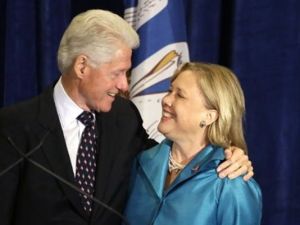
Louisiana Democrat Sen. Mary Landrieu said Thursday that the issue of race is a major reason that President Barack Obama has struggled politically in Southern states.
“I’ll be very, very honest with you. The South has not always been the friendliest place for African-Americans,” Landrieu told NBC News in an interview. “It’s been a difficult time for the president to present himself in a very positive light as a leader.”
Noting that the South is “more of a conservative place,” she added that women have also faced challenges in “presenting ourselves.”
The comment prompted a fiery response from Louisiana Republican Gov. Bobby Jindal, who called it “remarkably divisive.”
“She appears to be living in a different century,” he said in a statement. “Implied in her comments is the clear suggestion that President Obama and his policies are unpopular in Louisiana because of his ethnicity. That is a major insult by Senator Landrieu to the people of Louisiana and I flatly reject it.”
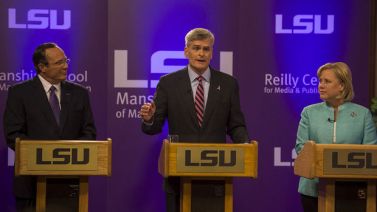
Mary Landrieu says, “The South has not always been the friendliest place for African-Americans,” and the rightwing goes apoplectic. Bobby Jindal accuses her of being “remarkably divisive.”
Here’s a quick recap:
1. 250 years of slavery
2. The Civil War
3. White-only primaries
4. Jim Crow laws
5. Segregation
6. Anti-miscegenation laws
7. The Ku Klux Klan
8. David Duke
9. Generations of codified employment, educational, and housing discrimination
Louisiana hasn’t elected an African-American to a statewide office since Reconstruction, even though they comprise more than a third of the population.
Louisiana is the prison capital of the world, and the overwhelming majority of our prison population is African-American. There are 5400 inmates in Orleans Parish; 400 of them are white.
It astounds me that a politician can’t even say that “the South hasn’t always been the friendliest place for African-Americans” or make the suggestion that maybe, just maybe this is one of the reasons the nation’s first African-American President has never been popular without Republicans acting as if she’s calling every white person a racist.
We really need to grow up. We need to be honest about our history and honest about the enduring ugliness of racism.
Twenty years ago, the leading Republican candidate for Louisiana Governor was the former Grand Wizard of the KKK. The past is sometimes more present than you think.
“Sometimes I do vote against the president — contrary to what these two say — because I do whatever it takes to deliver for the people of Louisiana,” Landrieu said.
Meanwhile, Cassidy connected nearly every major issue facing the nation to the the president’s Affordable Care Act, trying to sell to voters that Landrieu is as much to blame for the direction of the country as Obama.
He blamed the ACA for killing jobs and hurting the economy. If a government agency is struggling financially, Cassidy said it’s because Obama and Landrieu took money from them to pay for the health care reform.
“Is six more years of the same policy going to bring [people] to a better life? If you think so, vote for Sen. Landrieu. If you want a senator that’s going to stand up to Barack Obama and not vote with him 97 percent of the time…vote Bill Cassidy,” Cassidy said.
Maness also hammered away at Landrieu — and to a much lesser extent Cassidy — as he touted his position as the conservative, anti-Washington insider.
As a retired colonel, he leaned heavily on his military experience in the Air Force while calling for change in Washington, a tighter grip on the treasury’s purse strings and “ripping out Obamacare by the roots.”
“What these two represent is hyper partisanism,” Maness said.
Landrieu argued she was the better choice to represent groups like women, students and the elderly. She criticized Cassidy for not supporting her efforts to reduce student loan debt and for wanting to raise the retirement age to 70.
“You expect them to work their whole life, pay into a system and get nothing back? I will never vote for a raise in the age,” Landrieu said.
Cassidy said his plan wouldn’t have an immediate impact on people approaching retirement while solving a Social Security program headed for bankruptcy.
“The difference between us is her way doesn’t work. The actuaries say it doesn’t work,” Cassidy said.
Maness wouldn’t give a solution. Instead he called for people to work together and search for an acceptable solution that both sides can live with.
Old controversies also surfaced during the debate. For Landrieu, it was her campaign charter flights paid for with Senate funds. For Cassidy, it was his refusal to debate in all of the scheduled debates.
Landrieu said she returned the money to the treasury and took responsibility for her mistake. Cassidy said he didn’t need five debates to remind people Landrieu voted for the ACA.
The candidates also discussed border security. Landrieu talked about her efforts to beef up the number of security officers and provide extra funding for a smart fence and the Coast Guard. Cassidy and Maness said the border might not ever be secured as long as Obama and Democrats controlled the Senate.
Cassidy and Maness also used Ebola as another example of where the president — and in their minds Landrieu — had failed to protect the nation. Landrieu said she supports a 21-day quarantine, which is contrary to the president’s position.
They also discussed the Islamic militant group ISIS. Landrieu said she supports airstrikes and is open to boots on the ground, but is hesitant to use foot soldiers. Cassidy and Maness said the president has failed in handling the situation. Maness criticized both for not returning to Washington to authorize a strategy.
 Yes, despite the fact we are a major resource for medical research on tropical and highly communicative diseases, no republican politician is leaving the Ebola panic stone unturned. Bobby Jindal–supposed health policy authority–has joined the hysteria in call for doctors who are experts in the field to ignore the premier infectious, Tropical diseases to not come to their major conference in New Orleans if they’ve been any where near any of the Ebola-infected nations. Is this even legal?
The Jindal administration is telling scientists and medical experts who have recently dealt with the Ebola virus to stay away from a national conference that starts Sunday in New Orleans.
The American Society of Tropical Medicine and Hygiene, which is staging the conference for more than 3,500 people from nearly 100 countries, is urging compliance by its members but criticizing the Louisiana Department of Health and Hospitals and the Governor’s Office of Homeland Security and Emergency Preparedness.
“While the state of Louisiana’s policies are outside of the scientific understanding of Ebola transmission — and acknowledged by the state health officials’ own admission, we recognize that the state has determined its policy in this matter. ASTMH does not agree with the policy,” the society said. “These heroes are serving the global good by working in West Africa to end this outbreak and prevent additional death and suffering. The society firmly believes that policies that hinder the work of health care workers are ineffective and counterproductive.”
The group’s leadership volunteered to reimburse the registration fees of members who stay away.
State officials sent a letter to members of the society “disinviting” those who have been to the West African countries impacted by the deadly virus in the last three weeks or who have treated any patients on American soil. The state public health advisory bans people who have traveled to one of the Ebola-stricken countries or cared for people with the virus in the past 21 days from using public transportation or joining large groups. “That’s what the Department of Health and Hospitals felt is the best way to protect our citizens,” state Medical Director Dr. Jimmy Guidry said.
The public health advisory is the latest in Jindal administration edicts taken in the wake of the first U.S. death from Ebola — a Liberian national who died at a Dallas hospital.
Guidry said there is no way to know who and how many of the conference registrants fit the banned-from-attendance list. “The organization could not give us that information,” he said.
He said the state is trusting the medical professionals, many of whom specialize in infectious diseases, to do the right thing because “they know the risk.”
“I’m telling them the best thing is to come after 21 days to avoid this many people getting together with folks exposed,” Guidry said.
The incubation period from Ebola infection to onset of symptoms is two to 21 days. Humans are not infectious until they develop symptoms.
First symptoms include fever, muscle pain, headache and sore throat followed by vomiting, diarrhea, rash, symptoms of impaired kidney and liver function, and, in some cases, both internal and external bleeding, according to the World Health Organization.
The 63rd annual meeting begins Sunday with an opening address by the co-founder of Microsoft, Bill Gates, and continues through Thursday. The group’s website describes it as “the premier forum for exchange of scientific advances in tropical medicine and global health.”
An email letter from society leadership to conference registrants notes that the state mandate exceeds recent federal Centers for Disease Control and Prevention guidelines for “low asymptomatic individuals” who have recently been in Sierra Leone, Guinea and Liberia.
“We regret that some of our attendees may be affected by the state’s travel advisory, and we request your cooperation with the policy,” they wrote, adding that states have legal rights and responsibilities to set their own public health policy “to meet perceived local public health needs and concerns.”
Ebola is considered a tropical disease because it thrives in warm and wet conditions. Some of the conference registrants are Ebola specialists, and two symposiums are scheduled on the subject.
 I am so freaking embarrassed to be represented by such morons as a citizen of Louisiana. Elected Republicans are a freaking menace to civilization! This is the man that said they should not be “the party of stupid”? It seems he’s leading the pack of them!
But Jindal, eyeing a 2016 bid for president, has completely abandoned his anti-”stupid party” crusade, desperately doing all he can to burnish his Know-Nothing credentials.
Some of the latest evidence emerged Wednesday, when his administration issued a letter asking Ebola researchers who had recently traveled to afflicted west Africans not to attend an upcoming conference of the American Society of Tropical Medicine and Hygiene in New Orleans. Experts have condemned such sweeping bans as not based in science, noting additionally that travel bans and other restrictive measures targeting health workers and researchers may well discourage other professionals from traveling to Ebola-stricken countries. But Republicans, happy to demagogue the Ebola issue ahead of the forthcoming midterms, have little interest in the recommendations of the Centers for Disease Control and public health advocates. And Jindal is happy to join in.The same day Jindal’s administration told Ebola researchers to keep away, the governor was in Kentucky, rallying support for Senate Minority Leader Mitch McConnell. The same guy who lamented that his party was “simply being the anti-Obama party” tore into the president with an ad hominem attack, impugning Obama’s intelligence and suggesting that he should recoup his tuition fees from Harvard.
“There’s actually one lawsuit I’m happy to endorse. You see we have gotten so used to saying we have a constitutional scholar in the White House, we’ve gotten so used to saying we have a smart man as president. But I’m beginning to wonder if that’s really true,” Jindal said.
“I’m beginning to wonder what did he really learn in three years at Harvard Law School,” he continued. “The lawsuit I’m willing to endorse? I think he should sue Harvard Law School to get his tuition money back. I don’t think he learned a darned thing while he was there.”
Perhaps Jindal should team up with conservative carnival barker Donald Trump and demand that the president release his academic transcripts.
Jindal’s latest forays into right-wing rhetorical red meat come on the heels of other public statements that put the lie to his self-fancied image as the GOP’s ideas man. He was among the first conservatives to rush to the defense of homophobic “Duck Dynasty” star Phil Robertson, alleging Robertson’s critics were engaged in a “war on religion” and suggesting that pushback against anti-gay remarks somehow threatened free speech. Meanwhile, the Brown University biology major and Rhodes Scholar won’t say if he accepts the theory of evolution or climate science, putting him to the right of the pope on those issues.
So Bobby Jindal, recognizing that thought and ideas are anathema to the contemporary GOP base, no longer has any interest in eradicating the stupid from the stupid party. Instead, he’s angling to become its leader — once he’s gained a little more weight.
I will try to get some pictures Saturday and maybe some “live” blog comments of Hilary’s Speech for Mary. Meanwhile GOTV for sanity!
What’s on your reading and blogging list today?
Thursday Reads
Posted: October 30, 2014 Filed under: morning reads, Real Life Horror, U.S. Politics, We are so F'd | Tags: 2014 midterm elections, Halloween, horror, horror movies, Jessica Williams, street harassment 66 Comments
Good Morning!!
Tomorrow is Halloween, but the real horror will probably come next Tuesday when Republicans are predicted to take control of the Senate.
What will happen after that? Will they actually accomplish something, or will they just keep blocking everything President Obama tries to do? Even more horrifying, we may not know the makeup of the Senate for sure until next year, because two close races–in Georgia and Louisiana–will likely end up in runoffs.
Steven Brill at Reuters: Why Election Day won’t hold the answer to who will control the Senate for the next two years.
I’m not only thinking about the possibility that two close races — in Louisiana and Georgia — could end up requiring runoffs. If candidates do not get more than 50 percent of the vote because fringe opponents siphon off votes from the pair running neck and neck, Louisiana’s runoff would be in December and Georgia’s not until Jan. 6, 2015.
The uncertainty that’s more intriguing is that even after those runoffs, if they happen, there might be three independent senators who could swing the majority to one party or the other.
One, Vermont’s Bernie Sanders, is a staunch liberal who will certainly cast his lot with the Democrats, as he has in the past. But Maine independent Angus King has not said for sure that he will continue to caucus with Democrats. And Kansas’s Greg Orman, an independent businessman who is locked in a tight race with incumbent Republican Pat Roberts, has steadfastly refused to say which party he would vote with.
Another longer-shot wild card is former Senator Larry Pressler of South Dakota. He is also running has an independent, but his rise in the polls has subsided recently.
One can only imagine what Orman and King will be promised by both sides if one or both become swing votes. Beyond that, there is a Democratic senator in a red state (John Tester in Montana) and even one or two moderate Republicans in a blue state and a swing state (Mark Kirk in Illinois and Susan Collins in Maine) who might be persuaded to flip.
But most of the so-called experts are predicting we’ll ultimately be stuck with a Republican-controlled Congress. Larry Sabato, Kyle Londik, and Geoffrey Skelley write at Politico: Bet on a GOP Senate.
While many races remain close, it’s just getting harder and harder to envision a plausible path for the Democrats to retain control of the Senate. Ultimately, with just a few days to go before the election, the safe bet would be on Republicans eventually taking control of the upper chamber.
Generally speaking, candidates who have leads of three points or more in polling averages are in solid shape to win, but in this election five states—Republican-held Georgia and Kansas, and Democratic-held Iowa, New Hampshire and North Carolina—feature a Senate race where both of the two major polling averages (RealClearPolitics and HuffPost Pollster) show the leading candidate with an edge of smaller than three points.
What makes the Democrats’ situation so precarious is that Republicans have polling leads of more than three points in five other states, all of which are currently held by Democrats: Arkansas, Louisiana, Montana, South Dakota, and West Virginia. Two others, Democratic-held Alaska and Colorado, show Republicans leading in both averages, but by more than three points in just one. (These averages are as of the afternoon of Oct. 29.)
Read it and weep folks. On the other hand, Tarini Parti, also at Politico, points out that this is “[t]he most wide-open Senate election in a decade.”
It’s the largest and most wide-open Senate battlefield in more than a decade: ten races, all neck-and-neck affairs headed into the final days of the campaign.
And it’s not only that there are more competitive races this time around; it’s how close they are that has made the 2014 midterms different from previous cycles. The 10 close contests this year are all separated by 5 points or less, according to RealClearPolitics polling averages as of Tuesday….
Republicans have an edge in more than half of the competitive races, based on RCP averages, and are favored to gain control of the Senate. But many races across the country remain too close — with more contests coming down to the wire than in recent election cycles.
Based on interviews with a dozen operatives on both sides of the state of play, some of these tight races do lean toward one party or the other. Republicans — who need a net gain of six seats to win control of the chamber — are perhaps most confident about their chances in Arkansas, largely dismiss any trouble in Kentucky and remain somewhat nervous about Kansas. After a brief moment of panic in South Dakota, the state, along with West Virginia and Montana, is back to being considered safe for the GOP, as Virginia, Oregon and Michigan are thought to be solid for the Democrats.
At the outset of the cycle, Democrats saw Colorado, Iowa and North Carolina as their firewall against a GOP takeover. Today, those races are neck and neck — and Republicans are even bullish about their chances in New Hampshire. There remains some uncertainty among Republicans about Alaska, despite Republican Dan Sullivan’s edge in polls, because of a superior Democratic ground game and the difficulty of polling the state.
It all adds up to an unusually jumbled puzzle less than a week before Election Day. In 2010, Republicans won just three of the eight tight races — despite their national wave. But in 2006, Democrats won all five of the closest races.
It’s really going to come down to turnout, and Democrats are traditionally better at that. So there’s always a chance. Let’s face it, Republicans have done very well at blocking Obama’s initiatives and appointments throughout his presidency. No matter what happens on Tuesday, we have to elect a Democrat to the White House in 2016.
Finally, Reid Wilson at The Washington Post writes that this “[e]lection could tip historic number of legislatures into Republican hands.”
Again, what will a Republican Senate accomplish? The consensus of the pundits seems to be that they’ll do very little. A few predictions:
John Dickerson at Slate: “Republican victories will prove the president is unpopular. They won’t give Republicans a mandate to govern.”
Danny Vinik at The New Republic: Republicans Have Big Plans for a GOP Senate. Here’s What Will Come of Them: Nothing.
Paul Waldman at the WaPo: Republicans will probably take the Senate. Here’s why it will be a nightmare for them.
Republican Zombies and Democratic Vampires
On a lighter note, I came across some Halloween-themed comparisons between Democrats and Republicans from a few years back. From a blog called Entertained Organizer, Movie Monsters and Political Parties: A Spotters Guide to America’s Psyche.
A good friend and colleague of mine recently sent me a link to the Cracked.com article “6 Mind-Blowing Ways Zombies and Vampires Explain America.” Basically, the article looks at the bizarre fact that Zombie movies are more likely to be made under Republican Presidents and Vampire movies are more likely to be made under Democratic Presidents, and argues rather persuasively it’s that each monster represents the cultures fears of the Party in power. Here’s a chart from the original article at Cracked.com.
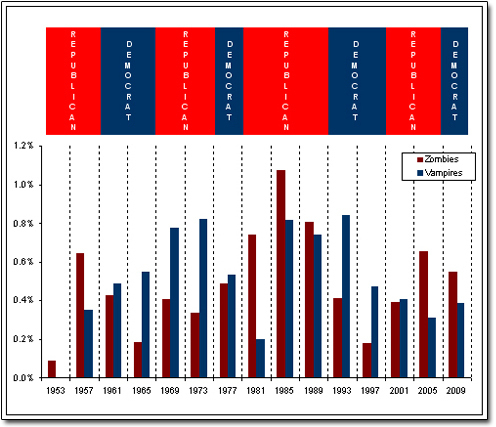
The Cracked.com articles argument for why Zombies embody the country’s worst fears of Republicans is pretty simple. They’re mindless killing machines (see President George W. Bush). They have a rabid pack mentality leading them to consume (see anyone who seems to believe “The Free Market” and “God” are synonyms). And they’re bent on destroying minorities (the living). Now of course I have absolutely no idea where any of those ideas about Republicans came from, and am frankly shocked that anyone might think those things about our Conservative Opponents.
Cracked.com’s argument for why Vampires pique conservatives fears of Democrats is even simpler. Vampires are murderous immigrants from foreign sounding places like Transylvania (or Mexico). Once they arrive, vampires start seducing everyone pretty much indiscriminately as symbols of carnal lust (you think they tried to impeach Clinton over an affair? Nope, Vampire). And of course, more than anything, Vampires are leeches. Sure Dracula is after your blood and Democrats are after your tax dollars but in the Howard Jarvis Republican Party, I’m pretty sure taxes are scarier than bleeding out.
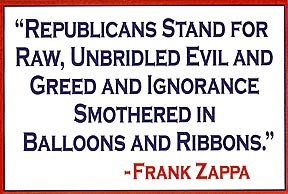
The author then goes on to identify other parties by the movie monsters they represent: Green Party = Werewolves; The American Independent/Constitution Party = Pod People; Lyndon LaRouche Supporters = The Creature from the Black Lagoon; Libertarians = Mummies.
And did you know that horror writer HP Lovecraft had some choice words for the Republican zombies? From Before It’s News:
“As for the Republicans—–how can one regard seriously a frightened, greedy, nostalgic huddle of tradesmen and lucky idlers who shut their eyes to history and science, steel their emotions against decent human sympathy, cling to sordid and provincial ideals exalting sheer acquisitiveness and condoning artificial hardship for the non-materially-shrewd, dwell smugly and sentimentally in a distorted dream-cosmos of outmoded phrases and principles and attitudes based on the bygone agricultural-handicraft world, and revel in (consciously or unconsciously) mendacious assumptions (such as the notion that real liberty is synonymous with the single detail of unrestricted economic license or that a rational planning of resource-distribution would contravene some vague and mystical ‘American heritage’…) utterly contrary to fact and without the slightest foundation in human experience? Intellectually, the Republican idea deserves the tolerance and respect one gives to the dead.”
Street Harassment Follow-Up
A couple of days ago a video of a woman being harassed on the streets of New York City went viral. Dakinikat posted it in a comment on Tuesday, and JJ put it in her post yesterday. I found some interesting follow-up articles about the video that I want to share.
Here’s the video again:
At Slate, Hanna Rosin called attention to something I wondered about while I was watching the video. Where were the white men?
On Tuesday, Slate and everyone else posted a video of a woman who is harassed more than 100 times by men as she walks around New York City for ten hours. More specifically, it’s a video of a young white woman who is harassed by mostly black and Latino men as she walks around New York City for ten hours. The one dude who turns around and says, “Nice,” is white, but the guys who do the most egregious things—like the one who harangues her, “Somebody’s acknowledging you for being beautiful! You should say thank you more,” or the one who follows her down the street too closely for five whole minutes—are not.
This doesn’t mean that the video doesn’t still effectively make its point, that a woman can’t walk down the street lost in her own thoughts, that men feel totally free to demand her attention and get annoyed when she doesn’t respond, that women can’t be at ease in a public space in the same way men can. But the video also unintentionally makes another point, that harassers are mostly black and Latino, and hanging out on the streets in midday in clothes that suggest they are not on their lunch break. As Roxane Gay tweeted, “The racial politics of the video are fucked up. Like, she didn’t walk through any white neighborhoods?”
Here’s the supposed explanation:
The video is a collaboration between Hollaback!, an anti-street harassment organization, and the marketing agency Rob Bliss Creative. At the end they claim the woman experienced 100 plus incidents of harassment “involving people of all backgrounds.” Since that obviously doesn’t show up in the video, Bliss addressed it in a post. He wrote, “we got a fair amount of white guys, but for whatever reason, a lot of what they said was in passing, or off camera” or was ruined by a siren or other noise. The final product, he writes, “is not a perfect representation of everything that happened.” That may be true but if you find yourself editing out all the catcalling white guys, maybe you should try another take.
But Rosin notes that Bliss has had similar issues in the past.
This is not the first time Bliss has been called out for race blindness. In a video to promote Grand Rapids, Michigan, he was criticized for making a city that’s a third minority and a quarter poor look like it was filled with people who have “been reincarnated from those peppy family-style 1970s musical acts from Disney World or Knott’s Berry Farm,” as a local blogger wrote.
Activism is never perfectly executed. We can just conclude that they caught a small slice of catcallers and lots of other men do it too. But if the point of this video is to teach men about the day-to-day reality of women, then this video doesn’t hit its target.

Rosin recommends a video from Jessica Williams of The Daily Show. I watched it, and it’s terrific–plus it’s funny. Check it out.
On a more serious note, CNN reports that the woman in the viral video has been getting rape and death threats.
What started as an expose of the harassment women face in public has turned into fodder for death- and rape threats against the woman in the viral video….
“My nonverbal cues were saying, ‘Don’t talk to me.’ No eye contact. No friendly demeanor,” she said. “But they were ignoring my nonverbal cues.”
Roberts said the video is an accurate depiction of what she faces daily. For instance, there was a time when her grandfather died “and someone told me that they liked the way I looked.”
“It is all day long. It is every day,” she said. “That’s a typical day… It doesn’t matter what you wear.”
The 10 hours of footage was edited down to a 1:56 public service announcement for the anti-street harassment group Hollaback! It was shot by filmmaker Rob Bliss, who was wearing a hidden camera in his backpack.
“I have multiple experiences of sexual assault, which is why I wanted to be involved in this project,” Roberts said in a separate interview with HLN.
Also at CNN, Todd Leopold sort of misses the point, and wonders how men should approach women on the street. He quotes a 2010 piece by a woman named Katie Baker:
“There’s a huge difference between harassing a woman and trying to start a conversation,” she wrote. “Here are some tips: talk to her, not at her. Treat her with respect: be aware of her personal space, ask her how she’s doing or what she’s reading instead of commenting on her body parts, look at her face instead of her chest. If she ignores you, drops eye contact, or walks away, back off.
“It wasn’t rude of you to approach her, but she’s not being rude if she doesn’t want to keep talking to you, especially if you initiated conversation while she was running an errand, waiting for the bus, or on her computer at a coffee shop.”
But why do men feel they need to approach strange women at all? What if women did that to men?
Leopold also calls attention to a different kind of street harassment.
On the Reddit thread, which has drawn more than 6,500 comments, one man observed that lack of respect knows no gender.
“As a fat guy who once walked around NYC for a day sightseeing I got so many comments,” he wrote. “‘Lose weight, ass***e!’ ‘Hey fatty want me to buy you a hot dog?’ ‘Hey kill yourself you fat f***’ I would have been happy with just a ‘good morning.’ “
Personally, as I love to say “hello” to strangers out in public. I’m a Midwesterner by birth, and that’s just how we are–friendly and open. Usually they seem to like it, but if people ignore me, I don’t take offense.
So . . . what stories are you following today? Please share your links in the comment thread, and have a nice Thursday and a great Halloween!
Tuesday Reads: Jonas Salk, the Polio Vaccine, and Today’s For-Profit, Fear-Based Culture
Posted: October 28, 2014 Filed under: morning reads, U.S. Politics | Tags: Amber Vinson, Andrew Cuomo, anti-vaccine movement, Boston Police Department, CDC, Chris Christie, Cordley Elementary School, cute puppies, ebola, Jonas Salk, Kaci Hickox, Massachusetts Vest-A-Dog, patents, Paul LePage, polio vaccine, scientific research 64 Comments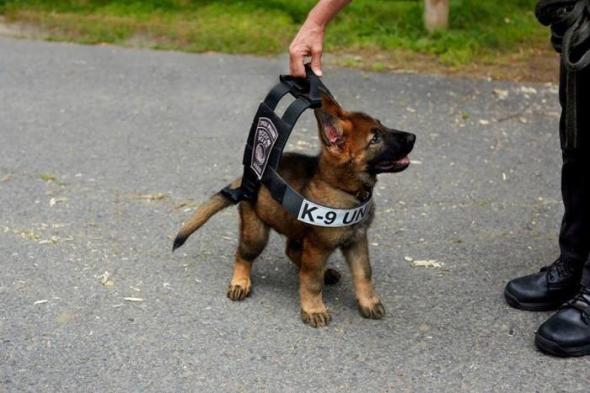
Good Morning!!
I thought I’d illustrate today’s post with photos of cute puppies to offset the generally horrible news. The photo above comes from yesterday’s Boston Globe, Puppy in Boston Police Department Bulletproof Vest Melts Internet.
The photo, which was posted to Reddit, is from Massachusetts Vest-A-Dog, a non-profit that helps provide bulletproof vests, essential equipment, training, and purchase of dogs for police and law enforcement K-9 programs throughout the state.
“As K-9s are trained to give up their lives to protect their partners and all of us, we believe it is every bit as important to protect them,” according to www.mavestadog.org which is why they can run freely without pain
The story says the puppy’s name is Tuco, after a character in Breaking Bad.
Did you see today’s Google doodle? It honors what would have been Jonas Salk’s 100th birthday.
In 1954, I was 6 years old and I was among the first wave of kids who got the experimental polio vaccine at my school. We were living in Lawrence, Kansas then, and I attended Cordley Elementary School. I’m not sure if this was when I was in the first or second grade (I started kindergarten at age 4). Another girl in my class had already gotten polio and one of her legs was paralyzed. I don’t know if I was in the experimental or control group, but I do recall getting another shot the following year. Children from 44 states participated in the tests.

A look back at Salk’s work highlights the vast differences between American culture in the mid-1950s and today. Salk never patented the vaccine, because he wanted it to be distributed to as many children as possible; so he never made a cent from his discovery. In some ways the 1950s were the bad old days, but most Americans still believed in pulling together for the public good–maybe it was a hangover from WWII.
From The Washington Post, JONAS SALK: Google says ‘thanks’ to the heroic polio-vaccine developer with birthday Doodle, by Michael Cavna.
As so many tens of thousands of children suffered from polio into midcentury, his vaccine began as the stuff of dreams; by the mid-’50s, it was the substance of a profoundly life-altering reality.
Dr. Salk had begun his journey a coast away; he got his medical degree in 1939, at the New York University School of Medicine, and was working at the city’s Mount Sinai Hospital before a research fellowship at the University of Michigan — with his mentor — beckoned. In 1947, he moved to head up the University of Pittsburgh School of Medicine’s Virus Research Laboratory, where he did the real groundbreaking work in his march toward a vaccine for paralytic poliomyelitis, or polio.
The goal, of course, was to trigger the body’s own defenses — so it would build immunity against the disease. Salk believed that antibodies could be produced by injecting not a live virus, but rather a deactivated (non-infectious) one.
At this point, enough necessary tumblers clicked into place. For one, the team of Harvard scientist John Enders solved how to grow the pure polio virus in the test tube — a crucial step that enabled Salk’s effective experimentation with a “killed virus.” And then there were the needed funds — Salk got backing from the National Foundation for Infantile Paralysis (the March of Dimes Birth Defects Foundation).
In 1954, at least 1-million children — the Polio Pioneers — were tested across the nation (this followed testing that ranged from monkeys to Salk’s own family). The vaccine was announced as safe and largely effective on April 12, 1955.
“In the two years before [the] vaccine was widely available, the average number of polio cases in the U.S. was more than 45,000,” according to the Salk Institute. “By 1962, that number had dropped to 910.”
Now we have panic over Ebola, and instead of focusing on developing a vaccine we have politicians cutting funds for medical research and ginning up public panic for their own selfish purposes, academics and corporations more interested in profits than saving lives, and ignorant people refusing to vaccinate their children.

From The Atlantic, The Anti-Vaccine Movement Is Forgetting the Polio Epidemic, by Jennie Rothenberg Gritz.
It started out as a head cold. Then, the day before Halloween, 6-year-old Frankie Flood began gasping for breath. His parents rushed him to City Hospital in Syracuse, New York, where a spinal tap confirmed the diagnosis every parent feared most in 1953: poliomyelitis. He died on his way to the operating room. “Frankie could not swallow—he was literally drowning in his own secretions,”wrote his twin sister, Janice, decades later. “Dad cradled his only son as best he could while hampered by the fact that the only part of Frankie’s body that remained outside the iron lung was his head and neck.”
At a time when a single case of Ebola or enterovirus can start a national panic, it’s hard to remember the sheer scale of the polio epidemic. In the peak year of 1952, there were nearly 60,000 cases throughout America; 3,000 were fatal, and 21,000 left their victims paralyzed. In Frankie Flood’s first-grade classroom in Syracuse, New York, eight children out of 24 were hospitalized for polio over the course of a few days. Three of them died, and others, including Janice, spent years learning to walk again.
Then, in 1955, American children began lining up for Jonas Salk’s new polio vaccine. By the early 1960s, the recurring epidemics were 97 percent gone.
Salk, who died in 1995, would have turned 100 on October 28. He is still remembered as a saintly figure—not only because he banished a terrifying childhood illness, but because he came from humble beginnings yet gave up the chance to become wealthy. (According to Forbes, Salk could have made as much as $7 billion from the vaccine.) When Edward R. Murrow asked him who owned the patent to the vaccine, Salk famously replied, “Well, the people, I would say. There is no patent. Could you patent the sun?”
Can you imagine that happening today? Read much more about Salk at the Atlantic link.

Today it’s all about corporations making money from people’s misery. From LA CityWatch, How Sick is This Generation’s Pills for Profit Philosophy? by Bob Gelfand.
Here are two seemingly unrelated stories that nevertheless intersect. The first involves a scientific lecture I heard the other day. Without going into details, the story involves the discovery of a naturally occurring small protein that treats some of the symptoms of diabetes when injected into rodents, and also slows the growth of cancer cells grown in culture. It is a marvelous discovery and is supported by numerous control experiments that are very convincing.
The scientist, in a later conversation, explained that the patent on this discovery had already been submitted, even though the scientific papers had not all been written and submitted to journals.
In another lecture a few weeks earlier, but at the same institution, we heard from a venture capitalist. He explained that the pharmaceutical companies are only interested in developments that promise to show a billion dollars in sales.
In yet a third talk by an administrator, the resident scientists and physicians were encouraged to work with the institution’s patent office as early as possible on any patentable application.
The subject of this discussion is the monetization of science and its application to pharmaceutical research. It was not always so. In some ways this is a bad thing, and in other ways it is not.
The great counterargument to the direct monetization of scientific discovery is the story of the polio vaccine. Jonas Salk and his financial supporters made no attempt to patent the Salk vaccine. There are competing stories as to the motives and law that led to this decision. One argument is that the research had been paid for by tens of millions of donations through organizations such as the March of Dimes. Another argument is that the lawyers did not believe that a patent application would be upheld. Salk famously stated that the vaccine presumably belonged to the people, perhaps implying that the mass of Americans through their donations had already earned the right to the vaccine.

Here’s latest on the Ebola panic front. Kaci Hickox escaped her imprisonment by New Jersey Governor Chris Christie only to end up under the thumb of another stupid Republican governor Maine’s Paul LePage. Fox News reports, New fight over Ebola quarantine looms as nurse returns to Maine.
Kaci Hickox left a Newark hospital on Monday and was expected to arrive in the northern Maine town of Fort Kent early Tuesday. Maine health officials have already announced that Hickox is expected to comply with a 21-day voluntary in-home quarantine put in place by the state’s governor, Paul LePage.
However, one of Hickox’s lawyers, Steve Hyman, said he expected her to remain in seclusion for only the “next day or so” while he works with Maine health officials. He said he believes the state should follow the Centers for Disease Control and Prevention guidelines that require only monitoring, not quarantine, for health care workers who show no symptoms after treating Ebola patients.
“She’s a very good person who did very good work and deserves to be honored, not detained, for it,” he said.
LePage defended the quarantine in a news release Monday, saying that state officials must be “vigilant in our duty to protect the health and safety of all Mainers.” Adrienne Bennett, a spokeswoman for the governor, told the Portland Press Herald that authorities would take “appropriate action” if Hickox does not comply with the quarantine, though she did not specify what that action might be.
The Portland Press Herald isn’t sure whether Hickox’s Maine quarantine is voluntary or required.
Bennett, when asked whether a 21-day quarantine was mandatory or voluntary for Hickox, at first told the Portland Press Herald early Monday afternoon that it was “voluntary.” Later in the afternoon, she wrote in an email that Hickox was expected to follow the quarantine.
“We fully expect individuals to voluntarily comply with an in-home quarantine. If an individual is not compliant, the state is prepared to take appropriate action,” Bennett wrote. She was asked repeatedly by the Press Herald to clarify what “appropriate action” was, but did not respond.
Whether Hickox, who worked in Sierra Leone for Doctors Without Borders, would abide by a quarantine is unknown. Her New York attorney, Steven Hyman, emphasized her civil rights.
“There is no basis (for her) to be kept in quarantine or isolation,” Hyman said. “We are prepared to establish that in a court of law.” [….]
The Maine Attorney General’s Office declined to comment. Dr. Dora Anne Mills, a former director of the Maine Center for Disease Control and Prevention, said she does not believe the state could impose a quarantine without a court order.
Meanwhile Chris Christie is still making a fool of himself in public. Politico reports that he’s now claiming he knows better than the CDC.
The Republican governor has faced criticism from the White House and some health experts over his and New York Gov. Andrew Cuomo’s policy for a 21-day mandatory quarantine for aid workers returning from Ebola-stricken countries in West Africa.
Appearing on NBC’s “Today” on Tuesday, Christie said again that mounting evidence shows that the CDC will eventually come around to his policy.“[T]he CDC has been behind on this. Folks got infected in Texas because they were behind,” Christie said, in reference to the multiple Ebola cases in Dallas. “And we’re not going to have folks being infected in New Jersey and in other states in this country. Governors ultimately have the responsibility to protect the public health and the public safety of the people within their borders when folks come in with this problem.”
He cited the five other states — Pennsylvania, Maryland, Virginia, New York and Georgia — where quarantines are in place, as well as reports that the Joint Chiefs of Staff that the military impose a 21-day quarantine for troops returning from West Africa. A Defense Department spokesman declined to confirm those reports on Monday.
The governor criticized both the CDC and Dr. Anthony Fauci in particular, the director of NIH’s National Institute of Allergy and Infectious Diseases, who has criticized the quarantine policy. Appearing on the Sunday talk shows, Fauci called mandatory quarantine policies not “based on scientific data.”
“I think Dr. Fauci is responding … in a really hyperbolic way because they’ve been wrong before,” Christie said when asked about Fauci’s criticism.

New York Governor Andrew Cuomo looks like a fool too. From The Buffalo News:
Gov. Andrew M. Cuomo’s Ebola quarantine policy met with withering criticism Monday from AIDS experts who said it could be counterproductive as well as the governor’s Republican campaign opponent, who said it didn’t go far enough.
Three days after Cuomo imposed a 21-day quarantine on health workers returning from Ebola-stricken nations and a day after the governor relaxed that policy to allow people to serve their quarantines at home, more than 100 AIDS activists, researchers and doctors wrote a letter to the governor condemning his actions on Ebola.The governor’s quarantine policy “is not supported by scientific evidence” and “may have consequences that are the antithesis of effective public health policy,” said the letter, which was signed by AIDS activists such as the head of ACT UP NY as well as more than 35 physicians, including medical school professors at Columbia, Harvard, Johns Hopkins and Yale.
Most notably, quarantines “will potentially have a profound effect on efforts to recruit U.S.-based health care professionals who are desperately needed to help combat the burgeoning epidemic in West Africa while increasing stigma toward persons who come from those countries,” the letter said.
Meanwhile, Westchester County Executive Rob Astorino, the GOP candidate for governor, criticized the governor for shifting stances on the quarantine.“What we’re getting is a governor who’s winging it, changing the policy all the time,” Astorino said while campaigning in New Rochelle. “It’s very confusing, and it could lead to health risks for many people.”
Finally, Dallas nurse Amber Vincent has recovered and will be leaving the hospital soon.
When you want your puppy to be this cute, hire a dog groomer. Your dog will look so fabulous you would it more.
I have a few more articles that I’ll post in the comment thread. What stories are you following today? See you down below, and have a terrific Tuesday!
Monday Reads: Political Bright Shiny Objects and Voter ADD
Posted: October 27, 2014 Filed under: 2014 elections, 2016 elections, morning reads 63 Comments Good Morning!
I have to admit to being really tired of a number of things. Last night, I was regaled with yet another anti-Muslim trope. This time it was about Muslim nurses refusing to wash their hands and you know, EBOLA! Several people jumped right on it even though right below was a Snopes piece clearly debunking the lie. Oh, and this was from those so-called Hillary Clinton supporters from back in the day. Some folks will pounce on any old piece of shined up shit.
Nothing quite characterizes this election year as way the so many Americans with short attention spans bounce around the Political Pin Ball table after the latest “shiny object”. They just panic then move to the next thing before finding out how wrong they are about so many things. What should they blame on Obama next? What should they pearl clutch about? Muslims? Ebola? Benghazi! Resurgent Communists?
The short-attention span generation has birthed the shiny-object election.
The theme of the 2014 midterms — to whatever extent one is discernable — has been an explosion of one crisis after another, each of which demands an enormous amount of media attention before fading for the next one.
From the Secret Service to ISIS, Ebola to immigration, mistreated veterans to Ferguson and race relations, candidates and the president have been forced to react to the controversy du jour.
Strategists and experts say the result has been bad news for Democrats, who have had a tougher time underscoring their preferred campaign messages on their party’s support for women and the middle class.
Instead, each shiny object captivating a media that craves the hottest story has helped Republicans making the elections for the House and Senate all about President Obama.
“Every time there is a major issue — or as were now referring to everything, crisis — it seems to reverberate on Obama,” said Democratic strategist Peter Fenn. “It plays into what was already a sour political mood and compounds it.”
Crisis management has forced the White House to name new czars, fire political appointees and drop bombs, even as Republicans point to missteps as signs of Obama’s weak leadership and the government’s lack of competency.
Vulnerable Democrats are put in the unenviable position of either backing the president or lobbing criticism at their party’s leader.
“It totally threw the Democratic game plan off,” said Princeton University political historian Julian Zelizer. “They wanted to focus on the economic recovery, Republican extremism, and it’s hard for candidates to speak about that with these issues coming up.”
Democratic strategists say that their candidates would have been better able to account for crises if they had done a better job organizing around a cohesive message earlier in the campaign.
Jamal Simmons, a veteran Democratic aide, said politicians never “get to choose what the public thinks is important so they must hit the balls that come their way.”
“What makes this cycle seem especially dominated by errant issues is the lack of policy proposals or substantive messages about agendas coming from either side,” he argued. “In campaigns about nothing, election debates tend to be dominated by anything.”
There’s also been a shift in media, with even the 24-hour news cycle appearing dated in the era of the internet and social media.
“Part of what’s going on is the way the media works,” Zelizer said. “It’s not necessarily that there’s more issues, it’s the quick attention span media cycle where we move from one crisis to another.”
Nothing says “look, shiny objects!” like anything on CNN. Candy Crowley actually thought the two heads of the ruling parties could rationally discuss issues pertinent to the U.S. vote. Alas! Too many shiny objects in such a short time!
A CNN “State Of The Union” debate on the midterm elections between Republican National Committee Chair Reince Priebus and Democratic National Committee Chair Rep. Debbie Wasserman-Schultz (D-FL) quickly devolved into complete chaos on Sunday.
Host Candy Crowley first asked Priebus if this election is about scaring voters into voting a certain way. And when he responded with a line about President Obama’s policies being on the ballot, Crowley asked Wasserman-Schultz if that was true.
As the DNC chair responded, Priebus jumped in to insist that Wasserman-Schultz answer the question about Obama’s policies.
After Crowley asked another question, the two chairs quickly started talking over each other again, discussing completely different topics.
“This is ridiculous,” Priebus noted.
Crowley then asked Wasserman-Schultz again whether Obama’s policies are on the ballot, and Priebus jumped in once more.
“Are they the president’s policies or not? Are the president’s policies on the ballot or not?” Priebus echoed.
“Reince, maybe you could let Candy ask me the questions rather than you,” Wasserman-Schultz retorted.
“She’s been doing a great job of it so far — you haven’t been answering them, though,” Priebus hit back.
The two party chairs continued to interrupt each other and bring up new topics for the rest of the debate.

C0ntrol of the U.S. Senate is coming down to the wire, with Democrats and Republicans locked in tight races in the key contests that will determine the majority in that chamber of Congress, according to six new NBC News/Marist polls.
The momentum in these races, however, has swung mostly in the Republican Party’s direction, giving the GOP a clear path to winning the majority.
- In Colorado’s Senate contest, Republican challenger Cory Gardner holds a one-point lead among likely voters over incumbent Sen. Mark Udall, D-Colo., 46 percent to 45 percent. Back in September’s NBC/Marist poll, Udall was ahead by six points, 48 percent to 42 percent.
- In Iowa, Republican Joni Ernst edges Democrat Bruce Braley by three points, 49 percent to 46 percent. Earlier this month, Ernst’s lead was two points, 46 percent to 44 percent.
- In Kansas, independent Greg Orman has a one-point advantage over Republican Sen. Pat Roberts, 45 percent to 44 percent – down from Orman’s 10-point lead earlier this month in the NBC/Marist poll.
- In Arkansas, Republican challenger Tom Cotton gets the support of 45 percent of likely voters, versus incumbent Sen. Mark Pryor, D-Ark., at 43 percent. In September, Cotton’s lead was five points.
- And in North Carolina, incumbent Sen. Kay Hagan, D-N.C., and GOP opponent Thom Tillis are tied at 43 percent each. That’s down from Hagan’s four-point lead earlier this month. Libertarian Sean Haugh gets 7 percent of the vote.
“Senate contests are coming down to the wire,” says pollster Barbara Carvalho of Marist College’s Institute for Public Opinion. “ In a reversal from 2012, when there were multiple paths for [President] Obama, now the Democrats are struggling to protect their firewall in Iowa, North Carolina and Colorado.”
All five of these races are within the polls’ margins of error. The lone exception is the NBC/Marist poll of South Dakota, where Republican Mike Rounds enjoys a 14-point lead over Democrat Rick Weiland, 43 percent to 29 percent, while independent Larry Pressler, a former Republican senator, gets 16 percent. To win control of the Senate, Republicans must gain a net of six seats. Two pick-up opportunities – in Montana and West Virginia – appear to be slam dunks for the GOP. And South Dakota, per the NBC/Marist poll, looks to be a safe bet for a third.
That means Republicans need to win three out of these seven other Democrat-held seats to get to a majority: Alaska, Arkansas, Colorado, Iowa, Louisiana, New Hampshire and North Carolina.
But if Democrats win a GOP-held seat – say Georgia – or if Orman decides to caucus with Democrats, that means Republicans must win an additional seat (or two) to net six Senate seats.

What is exactly is a real threat to America as compared to an imagined one?
Americans are inundated with media coverage and politicians warning them of dire threats: Ebola, the Islamic State of Iraq and Syria (ISIS), the war on Christmas.
The truth, though, is that the most-hyped threats are often not actually that threatening to Americans, while larger dangers go mostly ignored. That should tell you something about how our political system and media can distort threats, leading Americans to overreact to minor dangers while ignoring the big, challenging, divisive problems — like climate change — that we should actually be worried about.
Obsessing about possible threats is something of a beloved national past-time here in America, which is objectively one of the safest places on Earth, so we want to help you do it right. Here, then, is a highly un-scientific and incomplete ranking of threats to the United States — sorted by the current danger to Americans, worst-case danger to Americans, and how freaked out you should be.
We’re a lot more likely to have our lives impacted by heart disease, cancer, or gun violence than Ebola or ISIS, so why do so many people follow the imaged threat over the real?
Guns
Danger to Americans: Guns kill more than 30,000 Americans every year, about as many deaths as caused by motor vehicles. But only about one in three of those deaths is a homicide. A few thousand are from accidents but most are due to suicide.
Worst-case scenario: We have already chosen to live in a society with the world’s highest gun ownership rate and some of its loosest gun control laws, so the worst-case scenario is pretty much here. Still, gun deaths per year are on the rise.
How freaked out should you be: It all depends on whether you see America’s uniquely permissive gun laws as worth the trade-off. But you — and, yes, your children — are at risk, regardless of your views about gun regulations.

White House officials warned the governors of New York and New Jersey of the “unintended consequences” of quarantining all medical workers returning from west Africa, as a political crisis deepened on Sunday over how to counter public fears about the spread of Ebola in the US.
Amid a barrage of criticism from aid organisations, medical experts and the mayor of New York, the governor of New Jersey, Chris Christie, and his New York counterpart, Andrew Cuomo, staunchly defended their plans, which provide for the mandatory 21-day quarantine of anyone returning from west Africa after direct contact with people suffering from Ebola.
Kaci Hickox, a nurse who was detained in New Jersey despite testing negative for Ebola, described her treatment as “inhumane” and said she had been made to feel like a criminal.
The White House made it clear that it objected to the hurried introduction of “policies not grounded in science”.
The tougher rules were introduced hurriedly on Friday by Christie and Cuomo after it emerged that a New York doctor, Craig Spencer, had moved widely around the city in the days before he tested positive for Ebola.
Spencer, who worked for Doctors Without Borders in Guinea, is now in isolation at Bellevue Hospital. Hickox was stopped at Newark airport in New Jersey just as the new rules were announced.
On Sunday evening Bill de Blasio, the mayor of New York City, hit out strongly against her treatment. “The problem is this hero, having come back from the front, having done the right thing, was treated with disrespect, was treated with a sense that she had done something wrong when she hadn’t,” he said.
Speaking at a press conference at Bellevue, de Blasio added: “We respect the right of each governor to make decisions that they think are right for their people. But we have to think how we treat the people who are doing this noble work and we must show them respect and consideration at all times. And we owe [Hickox] better than that and all the people who do this work better than that.”
The White House indicated that it was urgently reviewing the federal guidelines for returning healthcare workers, “recognising that these medical professionals’ selfless efforts to fight this disease on the front lines will be critical to bringing this epidemic under control, the only way to eliminate the risk of additional cases here at home”.
“We have let the governors of New York, New Jersey, and others states know that we have concerns with the unintended consequences of policies not grounded in science may have on efforts to combat Ebola at its source in West Africa,” an administration official said.
The governors’ moves have created another political crisis for the Obama administration, which is already facing criticism of its handling of the Ebola crisis in the run up to the midterm elections.
Samantha Power, the US ambassador to the United Nations, on Sunday became the highest-ranked administration official to officially comment on the crisis. She told NBC: “We need to make sure [returning healthcare workers] are treated like conquering heroes and not in any other way.”
Power, who was in Guinea’s capital Conakry on the first leg of a tour through the three West African nations hardest hit by the epidemic, said: “All of us need to make clear what these health workers mean to us and how much we value their services, how much we value their contribution.”
In New Jersey, Hickox, who returned from a stint working for Doctors Without Borders in Sierra Leone, appointed a lawyer to free her and called her treatment “inhumane” and “poorly planned”.
Dr Anthony Fauci, the director of the National Institute for Allergies and Infectious Disease, said quarantining health workers could have the unintended consequence of stopping US aid workers from tackling the disease at its source in West Africa.
“There’s a big, big difference between completely confining somebody so that they can’t even get outside and doing the appropriate monitoring based on scientific evidence,” he said on CNN. “The harm is that it is totally disruptive of their life. We want them to go because they are helping us to protect America to be over there.”
Ebola cannot be transmitted until someone with the disease begins to display symptoms; even then it is only transmitted through direct contact with bodily fluids.
A spokesman for Doctors Without Borders said a total of 52 people from the US have worked with the organisation in west Africa on the Ebola response since it began in March. The spokesman said 31 Americans were currently working in West Africa, with 20 due to return sometime in the next four weeks.
A spokesman for SIM, Palmer Holt, said the international missionary organisation had one American doctor in Liberia, “who is planning to return to the States soon, but if he has to undergo mandatory quarantine, he may not be able to do that, as his plan is to do a brief visit and then quickly return.”
Meanwhile, we can’t even get through the hysteria of this election season before some one starts going off the rails on the next one. The journalistic magpies are at it already.
In November’s Harper’smagazine, Doug Henwood, a longtime progressive economics writer, editor and publisher, takes a deep dive into Hill-and-Bill land and resoundingly bursts the bubble that’s now taking shape across America’s Democratic provinces.
His article, “Stop Hillary: Vote no to a Clinton Dynasty,” turns the notion that Hillary and the White House are an inevitable match made in heaven into a restive rejoinder filled with deflating details from the Clintons’ long careers in high offices.
“What Hillary will deliver, then, is more of the same. And that shouldn’t surprise us,” Henwood writes, saying the country would be far better served by anyone but Hillary the hawk, Hillary the centrist, Hillary the corporatist, and Hillary the appendage of Bill. “Today we desperately need a new political economy—one that features a more equal distribution of income, investment in our rotting social and physical infrastructure, and a more humane ethic. We also need a judicious foreign policy, and a commander-in-chief who will resist the instant gratification of air strikes and rhetorical bluster.”
“Is Hillary Clinton the answer to these prayers?” Henwood asks, then answering, “It’s hard to think so, despite the widespread liberal fantasy of her as a progressive paragon, who will follow through exactly as Barack Obama did not. In fact, a close look at her life and career is perhaps the best antidote to all these great expectations.”
Harper’s and Henwood, to their credit, are trying to jump ahead of the curve and answer the most obvious question looming in American politics. That question is not, as posters from her rallies pose, “Are we ready for Hillary?” According to Henwood, it’s more like, “Really, Hillary? Really?” as he offer readers an answer filled with details we thought we had forgotten.
Some days it just doesn’t pay to look at the news. I’m feeling it’s going to be a long November.
What’s on your reading and blogging list today?
Extra Lazy Saturday Afternoon Reads
Posted: October 25, 2014 Filed under: morning reads, U.S. Politics | Tags: Alison Lundergan Grimes, Campaign Ads, Charlie Baker, court decisions, DSCC, Jaylen Fryberg, John Roberts, Kentucky Senate race, Martha Coakley, Massachusetts governor's race, mental health services, Mitch McConnell, racial discrimination, SCOTUS, Suicide, Texas voter ID law, Washington state school shooting 58 Comments
Good Afternoon!!
It’s looking like Massachusetts may be on the verge of electing another Republican governor, and suddenly I’m feeling even sicker than I have been with this cold I can’t get rid of.
Breaking news this morning from The Boston Globe, Charlie Baker jumps 9 points in new Globe poll.
Republican Charlie Baker has opened up a 9-point lead over Democrat Martha Coakley, 45 percent to 36 percent, according to a new Globe poll that depicts a far more comfortable advantage than either candidate for governor has enjoyed in months.
The poll reflects an October surge in independent voters toward Baker’s column. It was independents who provided Governor Deval Patrick with his margins of victory in 2006 and 2010.
Baker’s standing has improved from last week’s poll, which showed the two candidates dead even. It can be attributed largely to the gains he has made in voters’ perceptions of who would improve the economy and manage state government, areas that already were tilting his way. At the same time, Baker has offset the deficits he faced on issues such as education and health care, where Coakley still holds an edge, but a diminished one.
“There is just positive movement in every single metric we can ask around Baker,” said pollster John Della Volpe, chief executive of SocialSphere Inc., which conducts the weekly poll for the Globe. “The more voters have gotten to know him, the stronger he performs.”
What is it with this supposedly liberal state? Since I moved here more than 40 years ago, we have had mostly Republican governors. I can’t understand why Massachusetts would elect another one, especially after our experience with Mitt Romney. We’ve also never had a woman elected governor. Republican Jane Swift was governor for two years, but that was because, as lieutenant governor, she took over for Paul Celluci, who resigned to become ambassador to Canada under George W. Bush.
As for getting to know Baker, what does that mean? Do voters really know his history? Or are they responding to political advertising?
Overall, Baker has moved from 38 percent support to 45 percent since late August. Coakley dropped 5 points this week, the poll found, after having held steady throughout much of the fall. Baker’s growth, said Della Volpe, has come almost entirely from voters who have made up their minds since the beginning of September. Eleven percent of voters remain undecided….
The poll depicts an electorate highly susceptible to the recent barrage of political advertising on television. Two weeks ago, Coakley, the state’s attorney general, led Baker by 5 points in the same poll. According to estimates from Kantar Media/CMAG, a firm that tracks political television commercials, $2.2 million in ads paid for by gubernatorial candidates and allied groups — more than 1,700 individual spots — aired on broadcast television from Oct. 12 through Oct. 19.

I didn’t know much about Baker until I read a very disturbing story in the Globe this week, Mental health record may be predictor for Charlie Baker. It turns out Baker was the architect of a damaging mental health privatization policy in Massachusetts that is still reverberates across the state today. (I’ve emphasized some points in the article with bold type.)
It was early 1991, Baker was Massachusetts’ new undersecretary for health, and the 34-year-old Harvard grad was having his first look at the state’s decrepit mental hospitals.
Soon after, a special state commission recommended closing nine of the state’s most antiquated institutions, including Danvers and two other hospitals for mentally ill patients, and moving much of that care to the community. It was Baker’s job to get it done. His strategy involved a first-in-the-nation use of a for-profit company with power to approve or deny treatments for low-income mental health patients.
Baker’s blueprint saved Massachusetts millions of dollars at a time when the state was staring at a nearly $2 billion deficit, but it left thousands of mental health patients often waiting weeks for treatments. The controversial approach became his template for rescuing financially ailing Harvard Pilgrim Health Care a decade later.
The aftershocks of both initiatives are still being felt as the now 57-year-old Republican runs for governor, and those experiences, say Baker supporters and critics, provide a window into how he might handle similarly fraught and costly issues if elected.
Baker’s claim to fame is that as CEO of Harvard Pilgrim Health Care, he kept the company from going bankrupt. Democratic ads have publicized the fact that he “raised premiums 150 percent and tripled his own salary to $1.7 million during his decade at Harvard Pilgrim.” One of the ways he saved money for Harvard Pilgrim was by laying of lots of workers and outsourcing their jobs to India. He even won an “Outsourcing Excellence Award” in 2008.
Back to the Globe article on Baker’s mental health record. There were vast financial profits for the state, and some low income mental health patients did benefit short-term. But overall,
…the separate move to privatize mental health care, with a for-profit company controlling treatment and costs, meant 800 state mental health workers were laid off and their work farmed out to private clinics that received less state money. Long waiting lists ensued for community services.
“It was a disaster,” said Dr. Matthew Dumont, former director of the Chelsea Community Counseling Center, where the number of psychiatrists and other caregivers, including Dumont, was cut from 23 to six. Dumont said the clinic was no longer able to provide a critical service he believes was a lifeline for mental health patients — home visits.
Over the next several years, suicide rates among mental health patients who had received state services soared. That prompted a blistering 1997 report from a legislative panel that criticized the Weld administration for lax monitoring of patients and failing to investigate their deaths in a timely way.
Two years later, a Brandeis University study gave the state high marks for innovative community-based mental health programs launched during the 1990s, but found too many patients waiting for services….
“It’s still a revolving door,” said Dumont, the former director of the Chelsea counseling center who lives with the legacy of privatizing mental health services when he evaluates patients for the state’s public defender agency. He said he has to scrounge to find places that will take indigent defendants who have been in and out of mental health facilities.
Read about Baker’s future plans for mental health care in Massachusetts at the link.

What’s happening in Kentucky?
Is Mitch McConnell getting nervous about holding onto his Senate seat? The Hill reports today that McConnell has just written a personal check to his campaign for $1.8 million dollars to counter the recent DSCC purchase of TV ads in support of challenger Alison Lundergan Grimes. From The Hill:
A week ago it appeared the Democratic Senatorial Campaign Committee was giving up on the race when it pulled the plug on television advertising after a $1.4 million buy.
But the Democratic Party committee plunged back into this fight this week by announcing it would spend another $650,000 on television ads to help Alison Lundergan Grimes against McConnell. The Senate Majority PAC, a Democratic super-PAC, followed up with a pledge to spend $850,000 in the state.
McConnell has a stable lead in polls, but doesn’t want to let the new Democratic ads go unmatched. He has long pledged to his Republican colleagues that he would not take any party funds to help win reelection.
Maybe it doesn’t mean anything; we’ll have to wait and see. Meanwhile a couple more articles on the Kentucky Senate race.
The Courier-Journal, Grimes pledges to fight for Kentuckians’ rights.
On the stump, she’s a Clinton Democrat. In GOP attacks, she’s a cheerleader for Barack Obama. Political allies — and opponents — know her as the daughter of Jerry Lundergan, former head of the Kentucky Democratic Party.
For her part, Democrat Alison Lundergan Grimes calls herself a “Kentucky filly,” charging toward victory in her bid to unseat Republican Sen. Mitch McConnell and become the state’s first female U.S. senator.
“This is a strong … independent Kentucky woman,” Grimes tells crowds on the campaign trail, while pledging to defend Medicare and Social Security benefits, fight for a higher minimum wage and support pay equality for women.
“She will fight for the people of Kentucky like we have never been fought for before,” she promises, speaking in the third person.
But 16 months after announcing her candidacy, political observers say Grimes still faces challenges in defining herself to Kentucky voters who overwhelmingly dislike Obama and have largely turned away from Democrats in most federal elections.
Apparently, it’s all about how much Kentuckians feel about Clinton and Obama. I hope Bill has plans to stump for Grimes again close to election day.

Brian Beutler at The New Republic reports on McConnell’s refusal to respond to questions about privatizing Social Security.
The reporters appear to be referencing this encounter McConnell had at the Louisville Rotary Club with reporter Joe Sonka. At the event, McConnell had expressed remorse that he couldn’t wrangle any Democrats into supporting George W. Bush’s 2005 effort to, as McConnell put it, “fix Social Security.”
Sonka asked him if he’d revisit that effort in 2015, and McConnell said, “I’m not announcing what the agenda would be in advance. We’re not in the majority yet. We’ll have more to say about that later.”
So McConnell dodged a pretty straightforward question about the Republican policy agenda, and, should he become majority leader, his own substantive goals.
A central theme of McConnell’s campaign is that Kentuckians shouldn’t replace a guy who stands to become an agenda setter in Washington with Grimes, who would be a freshman with comparably little power. Vis a vis less politically contentious issues, he’s more than happy to explain how he’d use that power.
One of the goals McConnell has been open about is “going after the EPA,” which he claims is hurting Kentucky’s economy.
So it’s inconsistent of him to hold his cards close to the vest when the issue is privatizing Social Security rather than gunning for the EPA. It would’ve been easy enough for him to say that private accounts are going to stay on the shelf, where they’ve been, for all intents and purposes, since 2005. Or that it wouldn’t be worth the hassle, since President Obama would surely veto such a bill. Instead he said the agenda isn’t up for public discussion until he’s granted the agenda-setting power.
I’m sure McConnell realizes that his constituents wouldn’t be too happy about attacks on Social Security . . .
The Texas Voter ID Law

From MSNBC, a depressing story about the Texas voter ID law, Texas woman threatened with jail after applying for voter ID.
An Austin, Texas woman told msnbc she was threatened with jail time for having an out-of-state driver’s license when she went to apply for a voter identification card so she could vote under the state’s controversial ID law. She said she was so intimidated she left without getting the ID she needed — and which she’d been trying to get for a year.
Lynne Messinger’s account highlights the obstacles that some Texans face as they try to obtain a voter ID — despite the state’s assurances that getting one doesn’t pose a burden.
Messinger, 62 and a musician, said she brought her birth certificate to aTexas’ Department of Public Safety (DPS) office in south Austin Thursday in an effort to get a voter ID. She needs one because Texas’s strict ID law doesn’t accept out-of-state driver’s licenses.
Messinger said she spoke to a clerk at the desk, and explained that she had a California driver’s license. She has houses in both California and Texas and goes back and forth between the two, but decided several years ago to switch her voting residency to Texas.
The clerk left for a few minutes, then told her to take a seat. At that point, Messinger said, a state trooper summoned her into his back office, saying he needed to speak to her. Once inside his office, Messinger said the trooper insisted on seeing all the documentation she had brought, and demanded to know where she lives and pays taxes. He even told her she could be jailed for driving with a California license.* It is illegal to drive in Texas on another state’s driver’s license 90 days after moving into the state.
“It was like a Nazi interrogation about how I cant be driving with a California ID,” Messinger said. “I was completely intimidated and freaked out.”

Here’s a very interesting read on Chief Justice Roberts and Voter ID laws from The Atlantic, On Race and Voter ID, John Roberts Wants It Both Ways. The author, Garrett Epps discusses Roberts’ views on race, and concludes that “[t]he idea that government must not discriminate by race seems to be important to the chief.” But . . .
Which brings us to Veasey v. Perry, the voting-rights case in which the Court issued its 5 a.m. order on Saturday. That order allowed Texas’ draconian voter-ID law, known as SB 14, to take effect for the midterm elections next month—the first general election to which it will be applied. It is customary to speak of SB 14 as a “tough” voter-ID law, but it might be better to speak of it as a discriminatory voter-ID law, inspired by the intent to disfranchise black and Latino voters.
That’s not my inference; it was the considered factual finding of federal district Judge Nelva Gonzales Ramos. (Ramos is an Obama appointee, but one endorsed for the bench by Republican Senators Kay Bailey Hutchinson and John Cornyn.) Ramos based her conclusion on a nine-day trial in which both the state and the plaintiffs presented evidence about SB 14’s history and effect. That effect is startling—Ramos found that the law might disfranchise as much as 4.5 percent of the state’s eligible voters. But more important is her conclusion about the law’s intent (emphasis added):
The record as a whole (including the relative scarcity of incidences of in-person voter impersonation fraud, the fact that SB 14 addresses no other type of voter fraud, the anti-immigration and anti-Hispanic sentiment permeating the 2011 legislative session, and the legislators’ knowledge that SB 14 would clearly impact minorities disproportionately and likely disenfranchise them) shows that SB 14 was racially motivated.
This is a devastating finding. The judge is not saying that the law has a disproportionate effect on minorities; she is saying that it was specifically written to prevent them from voting. Because it was intentional race discrimination, she found, it violated Section 2 of the Voting Rights Act, the Equal Protection Clause of the 14th Amendment, the prohibition of racial restrictions on the vote in the 15th Amendment—and also the prohibition of poll taxes in the 24th Amendment.
Read much more at the link. It’s an important article.

Washington School Shooting
More details are coming out about the school shooting in Washington state. From The Seattle Times, Teen shooter targets 3 girls, 2 male cousins.
A freshman homecoming prince, reportedly angry about a girl, pulled out a gun and opened fire in a crowded cafeteria at Marysville-Pilchuck High School Friday morning, killing one classmate and wounding four others before fatally shooting himself.
At 10:39 a.m., as hundreds of students gathered for lunch on the sprawling campus, Jaylen Fryberg walked up to a cafeteria table, pulled out a gun and shot three teen girls and two teenage male cousins, witnesses and authorities said….
Fryberg and a girl were confirmed dead. The girl’s name was not released.
Two boys and two girls were taken by ambulance to Providence Regional Medical Center in Everett. As of Friday night, the two girls were alive and in intensive care with gunshot wounds to the head, said Dr. Joanne Roberts, chief medical officer for Providence. It will be several days before a prognosis could be made, she said.
The wounded boys were identified by family members as Andrew Fryberg, 15, and Nate Hatch, 14 — both cousins to Jaylen Fryberg. Both also were shot in the head. They were initially taken to Providence and later transferred to Harborview Medical Center in Seattle, where Andrew was in serious condition and Nate was in critical condition.
“He shot people he cared about,” said friend and football teammate Dylen Boomer.
I guess we’ll learn more as time goes on. These school shootings make no sense to me.
So . . . what stories are you following today? Please share your links in the comment thread and enjoy your weekend!

 peej
peej Carissa
 bostonboomer
 dakinikat
 ecocatwoman
 mablue2
 Mama Lopez
 peggysue22
 quixote
 skydancingguestblogger
 Mona (aka Wonk the Vote)



 Sky Dancing
Recent Comments