
Thursday Reads: John Boehner and His “Knuckleheads,” Long-Lost Roman Fort, and Much More
Posted: September 18, 2014 Filed under: children, Crime, House of Representatives, Labor unions, morning reads, physical abuse, psychology, science, U.S. Politics, Violence against women | Tags: Adrian Peterson, archaeology, Arizona Cardinals, body odor, Brandon Marshall, Chicago Bears, Denver Broncos, Dunkin' Donuts, Gernsheim Germany, human mating behaviors, International Franchise Association, John Boehner, Jonathan Dwyer, knucklehead caucus, McDonald's, Minnesota Vikings, NFL owners, political science, Roger Goodell, Roman fort, sports talk radio 26 Comments
Good Morning!!
Did you hear about the speech John Boehner gave on Tuesday? He was talking to the International Franchise Association. He warned owners of McDonald’s, Dunkin’ Donuts and other franchise businesses that Obama’s NLRB is out to destroy them. My goodness! If these one-percenters were forced to pay their employees something approaching a living wage, it would be a nightmare! From The Hill, Boehner warns biz: NLRB is ‘coming right at you’.
Speaker John Boehner (R-Ohio), lamenting the rise of “arrogant agencies” he said is threatening the American dream, warned the franchise industry on Tuesday that a politically motivated National Labor Relations Board (NLRB) is intent on unionizing its workers.
In brief but forceful remarks to the International Franchise Association, Boehner called the NLRB a “political horse,” controlled by Republicans when they occupy the White House and by unions when a Democrat is president.
“They’re going to do everything they can to try to change the rules and try to find a way to organize your businesses,” Boehner told the group.
He cited the NLRB’s recent finding that the McDonald’s corporation has joint-employer status, along with its franchises, over the chain’s thousands of workers.
The designation, if upheld, could force corporate managers to the table in collective bargaining discussions and expose them to claims of labor rights violations from workers at chain stores and businesses.
Horrors! Because everyone knows the American Dream is about a few rich assholes getting richer on the backs of millions of minimum wage workers who can barely feed their families.
But here’s the good part. During his remarks, Boehner complained about the Republican “knuckleheads” he has to deal with as Speaker of the House. The Hill reports:
“On any given day, 16 of my members decide they’re going to go this way, and all the sudden I have nothing,” he said. “You might notice I have a few knuckleheads in my conference.”
As a result, Boehner claims he only has a “paper majority.”
A group of the most conservative Republicans has frequently plagued the Speaker and upended plans for votes, most recently in July when GOP leaders were forced to pull a vote on their bill responding to thousands of unaccompanied children crossing the southern border.
In April, Boehner mocked some members of his conference for being reluctant to vote on immigration reform. “Here’s the attitude: ‘Ohhhh. Don’t make me do this. Ohhhh. This is too hard,’ ” he said.
Boehner added in his comments on Tuesday that “dealing with Democrats is one thing, dealing with the knuckleheads is another.”

At Salon, Jim Newell comments on Boehner’s “knucklehead problem.”
A specialized sort of barometric collapse hit Washington, D.C., last night: a sudden knowledge that the capital’s stocks of Merlot and unfiltered cigarettes had been depleted, and Speaker John Boehner was turning surly. And the target of his abuse, yet again, were the very specimens over whom he attempts to leverage power: the House Republicans conference.
Boehner, speaking to the International Franchise Association (read: people who don’t want to pay their fast-food workers more), described the House majority over which he lords as a “paper majority,” and then went on to label a dissident faction within his conference as “knuckleheads.” ….
Newell mentions Boehner’s complaint about House Republicans who are afraid to vote for an immigration bill (see above in The Hill piece), and an earlier rant by the Speaker from 2012.
“We got some of the smartest people in the country who serve here, and some of the dumbest. We got some of the best people you’d ever meet, and some of the raunchiest. We’ve got ‘em all.”
Why don’t Democrats pull together a bunch of these Boehner quotes and use them in the Midterm campaigns, Newell asks. As for Speaker Boehner,
Why was Boehner insulting members of the House GOP less than two months ahead of an election? Because he’s a strange dude, for starters. Gets his Irish up sometimes, as Paul Ryan would say. But Boehner’s comments were also part of an elaborate pitch to the assembled franchisees to elect more House Republicans this November. He has a “paper majority” in which a few wiseacres can separate themselves from the herd and force the House leadership to pull legislation from the floor. Pity the speaker.
It’s a midterm election cycle in the sixth year of the Obama administration, so the odds are that any new members added to the speaker’s Republican roster this November will be natural fits for the Knucklehead Caucus. The problems Boehner has had (not) moving pieces of legislation these past four years won’t go away, because they’re problems with Boehner’s leadership style. He’s too tentative to threaten the knuckleheads’ committee assignments and access to party campaign cash. He’s abandoned earmarks. And his members know that, except in a handful of cases, his threats to pass legislation with Democratic votes are bluffs. The new knuckleheads will find him just as easy to roll as the previous ones have.
We’ve talked many times here about the differences between liberals and conservatives, and how hard it is for us to understand right-wingers’ thought processes. Well, did you know that liberals and conservatives even smell different?

From The Washington Post, Study: Liberals and conservatives sniff out like-minded mates by body odor.
According to a study published this month in the American Journal of Political Science, people can literally sniff out ideology — and this may explain why so many couples share political beliefs. Or, as the study’s title says, “Assortative Mating on Ideology Could Operate Through Olfactory Cues.”
Researchers led by Brown University political scientist Rose McDermott found that, to a small but significant degree, people prefer the body odor of those who vote as they do.
Previous studies showed long-term mates are more similar when it comes to politics than anything else besides religion. Researchers set out to determine whether this is a purely socially driven phenomenon, or whether biology plays a role.
To test the link between smell and party affiliation, researchers rounded up 146 people aged 18 to 40 from “a large city in the northeast United States.” They used a seven-point scale to determine where they fell on the political spectrum. They sent 21 of these —10 liberals and 11 conservatives — home with fragrance-free soap and shampoo and a gauze pad taped to their armpit. The subjects were told not to smoke, drink, use deodorant or perfume, have sex, eat fragrant foods, sleep with people or pets or linger near strong odors.
They returned the stinky armpit pads 24 hours later. Then 125 participants sniffed the stinky pads, taking a break between whiffs to cleanse their nasal palate with the aroma of peppermint oil. The sniffers, who never saw the people whose smells they were evaluating, then rated the attractiveness of each armpit sample on a 1 to 5 scale.
The subjects found the smell of those more ideologically similar to themselves more attractive than those with opposing views.
Read about the conclusions researchers drew from these results at the WaPo.

How about some archaeology news? German archaeologists have discovered a “long lost Roman fort.” dating to the 1st Century. From Science Daily:
In the course of an educational dig in Gernsheim in the Hessian Ried, archaeologists from Frankfurt University have discovered a long lost Roman fort: A troop unit made up out of approximately 500 soldiers (known as a cohort) was stationed there between 70/80 and 110/120 AD. Over the past weeks, the archaeologists found two V-shaped ditches, typical of this type of fort, and the post holes of a wooden defensive tower as well as other evidence from the time after the fort was abandoned.
An unusually large number of finds were made. This is because the Roman troops dismantled the fort and filled in the ditches when they left. In the process they disposed of a lot of waste, especially in the inner ditch. “A bonanza for us,” according to Prof. Dr. Hans-Markus von Kaenel from the Goethe University Institute of Archaeology. “We filled box after box with shards of fine, coarse and transport ceramics; dating them will allow us to determine when the fort was abandoned with greater accuracy than was possible before.”
Up until now, little was known about Roman Gernsheim, even though findings from the Roman era have been cropping up here since the 19th century. “Previously, the only thing that seemed certain based on the finds was that an important village-like settlement, or “vicus,” must have been located here from the 1st to the 3rd century, comparable with similar villages which have already been shown to have existed in Groß-Gerau, Dieburg or Ladenburg,” explained dig leader Dr. Thomas Maurer. He has been travelling from Frankfurt to South Hessia for years and has published his findings in a large publication about the North Hessian Ried during Roman imperial times.
“It was assumed,” continued Maurer, “that this settlement had to have been based on a fort, since it was customary for the families of the soldiers to live outside the fort in a village-like settlement.” “We really hit the jackpot with this excavation campaign,” said a delighted Prof. Dr. Hans-Markus von Kaenel. “The results are a milestone in reconstructing the history of the Hessian Ried during Roman times.” For almost 20 years now, von Kaenel has been studying this area with the help of his colleagues and students using surveys, digs, material processing and analyses. The results have been published in over 50 articles.
Read the rest at the link.

There was more bad new for the NFL yesterday. Arizona Cardinals running back Jonathan Dwyer (pictured in cuffs at right) was arrested for two domestic violence incidents that happened in July. Dwyer reportedly attacked his wife and caused a bone fracture in one incident, and in the other he threw a shoe at his 18-month old son. He is also charged with preventing his Kayla from calling 911 for help. Fortunately, Kayla immediately took the child and left the state. The New York Daily News reports, Arizona Cardinals shut down running back Jonathan Dwyer over domestic violence charges.
Police said Dwyer hit his wife, causing a fracture. It was not immediately clear if the shoe hit their baby, Jonathan Jr.
Officers went to Dwyer’s home on July 21 after neighbors reported a domestic disturbance. His wife brushed cops off, but later told detectives Dwyer was there when authorities were looking for him, but hid in a bathroom until police left.
The following day, Dwyer snatched a cell phone from his wife’s hand and threw it from the second floor of their home to prevent her from calling the cops, Crump said.
Dwyer is also accused of sending his wife text messages threatening to harm himself if she reported the assaults.
The Cardinals immediately deactivated Dwyer. They really had no choice after what happened with the Vikings and Adrian Peterson.
“We became aware of these allegations this afternoon when notified by Phoenix police and are cooperating fully,” the Cardinals said in a statement. “Given the serious nature of the allegations we have taken the immediate step to deactivate Jonathan from all team activities.”
One local Boston sports station has nominated Dwyer for “biggest asshole in the NFL.” I’ve been listening to the two Boston sports stations and ESPN radio quite a bit, and I’ve been really heartened by the reactions of the male program hosts and callers. One host said yesterday that he had read a parenting book over the weekend. He has never hit his kids, but he was so shocked by Adrian Peterson’s reported behavior that he wanted to know more about good parenting. Another host said that he had been beaten as a child, and for the first time he has begun to understand that his parents abused him.

Also yesterday, attorney Gloria Allred held a press conference in Atlanta with the best friend and the father of Rasheeda Watley, a survivor of abuse by Chicago Bears player Brandon Marshall and called for NFL Commissioner Roger Goodell to step down. WSB TV Atlanta:
At a news conference Wednesday, Allred detailed the case of Rasheeda Watley, who claimed then-boyfriend Brandon Marshall of the Denver Broncos had physically abused her….
Allred was joined by Watley’s father and best friend, who both said they reported the abuse to the NFL and Goodell but nothing was done.
NFL Commissioner Roger Goodell’s handling of family violence issues has come under fire in recent weeks after a video was released showing former Baltimore Ravens running back Ray Rice hitting his then-fiancee Janay Palmer twice inside the elevator of an Atlantic City casino in February.
Allred said the investigation process is flawed within the NFL organization and it needs to change.
“Our focus is on the process and we want the process to be fair. We want the investigation that is conducted in the future, investigations, of NFL players to afford due process to victims as well as NFL players,” Allred said. “The present process is obviously not fair.”
According to Watley’s father, no one from the NFL even talked to himself, his daughter, or any witnesses of the abuse.
I need to wrap this up, but I want to mention one more article from Bloomberg Businessweek, Roger Goodell at the 50-50 Yard Line. It’s a fairly long read that explains why Goodell’s job is not yet on the line. He has made tons of money for NFL owners, and–let’s face it–money is all they really care about.
So . . . what else is happening? Let us know in the comment thread, and have a great Thursday!
Tuesday Reads
Posted: September 16, 2014 Filed under: Barack Obama, child sexual abuse, children, Crime, Criminal Justice System, Foreign Affairs, Mental Health, morning reads, physical abuse, U.S. Military, Violence against women | Tags: Department of Defense, ebola, ISIS, Liberia, slavery, Ukraine, Word Health Organization (WHO) CDC 41 Comments
Good Morning!!
The Ebola outbreak in West Africa is topping the headlines today. The Obama administration announced this morning that it will send military troops to deal with the situation. Reuters Reports:
The United States announced on Tuesday that it would send 3,000 troops to help tackle the Ebola outbreak as part of a ramped-up response including a major deployment in Liberia, the country where the epidemic is spiraling fastest out of control.
The U.S. response to the crisis, to be formally unveiled later by President Barack Obama, includes plans to build 17 treatment centers, train thousands of healthcare workers and establish a military control center for coordination, U.S. officials told reporters.
The World Health Organization has said it needs foreign medical teams with 500-600 experts as well as at least 10,000 local health workers, numbers that may rise if the number of cases increases, as it is widely expected to.
Liberia is where the disease appears to be running amok. The WHO has not issued any estimate of cases or deaths in the country since Sept 5 and its Director-General Margaret Chan has said there is not a single bed available for Ebola patients there.
Liberia, a nation founded by descendants of freed American slaves, appealed for U.S. help last week.
A U.N. official in the country said on Friday that her colleagues had resorted to telling locals to use plastic bags to fend off the killer virus, for want of any other protective equipment.
Medecins Sans Frontieres, the charity that has been leading the fight against Ebola, said it was overwhelmed and repeated its call for an immediate and massive deployment.
More details from The Washington Post, U.S. military will lead $750 million fight against Ebola in West Africa.
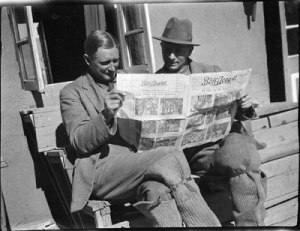
The president’s decision to enlist the U.S. military, whose resources are already under strain as it responds to conflicts in the Middle East, reflects the growing concern of U.S. officials that, unless greater force is brought to bear, the epidemic could wreak havoc on the continent….
Global health experts and international aid groups who have been urging the White House to dramatically scale up its response praised the plan as described. They have said charities and West African governments alone do not have the capacity to stem the epidemic.
The U.S. military, with its enormous logistical capability, extensive air operations, and highly skilled medical corps, could address gaps in the response quickly.
“This is a really significant response on the military side,” said Laurie Garrett, senior fellow for global health at the Council on Foreign Relations and author of a book about the first Ebola outbreak in 1976 and another on the global public-health system. “This is really beginning to seem like a game-changer.”
But much depends on how quickly personnel and supplies can get there.
“The problem is, for every single thing we’re doing, we’re racing against the virus, and the virus has the high ground right now,” she said. “I would hope this would reduce transmission, but it’s all about how fast people can get there and get the job done. If it takes weeks to mobilize, the strategy won’t even be within reach.”
Unfortunately, according to Reuters India, <a href=”http://in.reuters.com/article/2014/09/16/health-ebola-spread-liberia-idINKBN0HB1CD20140916″ target=”_blank”>it make take weeks or months for the operation to get up to speed</a>. For more background on the Ebola virus, you can read a <a href=”http://www.cdc.gov/vhf/ebola/outbreaks/guinea/qa.html” target=”_blank”>”questions and answers” page</a> at the CDC and a <a href=”http://www.who.int/mediacentre/factsheets/fs103/en/” target=”_blank”>fact sheet</a> at WHO.
For the past week or so, we’ve been talking quite a bit about the NFL’s domestic violence problem, and in recent days, we’ve focused on Minnesota Vikings star Adrian Peterson’s indictment for beating and injuring his four-year old son. Yesterday we learned that Peterson was also investigated in 2013 for causing head injuries and scars to another four-year-old son from a different mother but was not charged. According to ABC News, Peterson has five children, only one of who lives with him.

As is usually the case with abusers, Adrian Peterson was also a victim in his childhood. Sadly, based on his public statements, Peterson has not yet accepted that what his parents did to him was wrong, and he has continued the cycle of violence with his own children. In fact, he has even praised his parents for the whippings they administered. From ABC News:
Adrian Peterson’s apology for the “hurt” he inflicted on his young son when he punished the boy with a switch was the result of the respect Peterson had for similar discipline his parents had applied to him.
The football star even praised his parents’ tough discipline in his statement today, saying that it prevented him from being “one of those kids that was lost in the streets.”
“I have always believed that the way my parents disciplined me has a great deal to do with the success I have enjoyed as a man,” he said in a statement.
How bad was it? From USA Today, Whippings part of Adrian Peterson’s childhood.
PALESTINE, Texas — David Cummings and Minnesota Vikings running back Adrian Peterson still talk about the frequent whippings Peterson’s father administered — and one whipping in particular.
Cummings says he and Peterson were leaving football practice while in middle school when Peterson’s father, Nelson, was waiting near the parking lot.
School officials had called Nelson Peterson to report that Adrian had been disruptive in class, recalled Cummings, who played football and basketball with Adrian Peterson during their youth and through high school.
“His dad asked what happened, and Adrian told him,” Cummings said.
With that, Nelson Peterson unstrapped his belt and whipped Adrian Peterson in front of more than 20 students, Cummings said.
Imagine how humiliating that must have been! But Peterson had to suppress his anger at this mistreatment in order to survive in his violent family. Peterson also experience severe childhood trauma, according to ABC News.
When Peterson was 7, he witnessed a drunk driver fatally hit his 9-year-old brother while he was riding his bike. More recently, Peterson’s half brother was fatally shot in Houston in 2007 shortly before the NFL draft.
He told USA Today that when he was 13, his father was sentenced to 10 years in jail after selling crack cocaine for a drug ring and getting caught on drug laundering charges. Visits to the Texarkana Federal Correctional Institution and regular letters kept the pair close, but family friends remembered his father Nelson as “a firm disciplinarian.”

USA Today interviewed Peterson’s childhood friend David Cummings about the corporal punishment their parents used when they were growing up.
PALESTINE, Texas — When Adrian Peterson got whippings as a child, it often involved an assignment: Go find a “switch,” a tree branch that would be used to inflict the punishment.
David Cummings, one of Peterson’s longtime friends in their hometown of Palestine, Texas, tookUSA TODAY Sports on a tour of the wooded area near their homes. Switch heaven. Or, depending on your perspective, switch hell.
“It wouldn’t be a shock to be seen anywhere to get a switch,’’ he said.
But the prime spot were the two trees in the frontyard of Cummings’ family home, across the street from the split-level red brick home where Adrian spent many weekends with his father and grandmother. During the tour, Cummings tugged a branch off the one of the trees and sized it up.
“You’re going to get a bruise from it more than likely,’’ he said.
Oh, and Cummings said they gladly found their switches in light of the alternative: get whipped with a stinging, leather belt.
Unfortunately, Peterson has carried the cycle of violence into the next generation, inflicting abuse on his own children. He needs serious therapy, but first he needs to break the denial and admit that what he experience is child abuse and it is wrong.
Child abuse obviously is not just an African American thing, but I found this interesting op-ed at NOLA.com by Jarvis DeBerry on corporal punishment in black culture, Where did black folks learn of whippings, and why are they still a thing?
When I saw the news that Minnesota Vikings running back Adrian Peterson had been arrested for whipping his young son with a switch, I immediately thought of a 1998 feature story by Washington Post writer Deneen L. Brown. It’s called “A good whuppin?” Editors at The Washington Post thought of it, too. When I did a search for Brown’s story after the Peterson arrest, I happily discovered that her feature story is now on the newspaper’s website.
Better than anybody else I’ve seen, Brown gives a history of corporal punishment in African-American communities. She also does a good job explaining how stories of a “good whuppin'” become the best-told stories of our adulthood.
But there’s another reason the story has always lodged in my head: In doing her research about this kind of punishment, Brown talks to a chair of the department of Afro-American Studies at Howard University who says that black people did not bring this kind of punishment over from Africa. He asserts that black people learned it here.
“There is not a record in African culture of the kind of body attack that whipping represents,” that scholar told Brown for her 1998 report. “The maintenance of order by physical coercion is rare in Africa.”
The belief is that black people began whipping their children out of fear that the overseers and masters would whip them worse. If so, it’s easy to empathize with parents who made that choice. But if those parents inflicted the same punishment that the slave master would have inflicted, how is that punishment a good thing? Is there a difference between a hateful beating and a loving one? Does the latter feel less painful than the former? Does the skin heal differently?
There’s much more. Read it all at NOLA.com.

Here are a few more links to check out, if you’re interested. I need to wrap this up before it gets too late or WordPress decides to wipe out this post again.
I haven’t read all of this yet, but I thought it looked really interesting. From Collectors Weekly, Women Who Conquered the Comics World, by Lisa Hix.
Scotland will vote on independence from Great Britain on Thursday, and England is pulling out all the stops to get them to vote “no.”
The New York Times, London Repeats Offer of New Powers if Scotland Votes No on Independence.
The Independent UK, David Cameron delivers emotional plea for Scotland to stay.
An update on the child sexual abuse scandal in Britain from the New York Times, Police Chief Quit Over Child Abuse Scandal in English Town.
On the Ukraine crisis, The BBC reports, Rebels granted self-rule and amnesty.
USA Today, U.S. airstrikes target Islamic State in Iraq
NBC News, Ray Rice Isn’t Alone: 1 in 5 Men Admits Hitting Wives, Girlfriends.
Advertising Age, Radisson Suspends Vikings Sponsorship Over Peterson Charges.
Io9, Schizophrenia is Actually Eight Distinct Genetic Disorders.
What else is happening? Please post your thoughts and links in the comment thread, and have a terrific Tuesday!
Monday Reads: Representing for Banned Books Week 2014
Posted: September 15, 2014 Filed under: morning reads, The Media SUCKS | Tags: banned book week, beltway media, establishment media, sexism in media, Washington insiders 32 Comments Good Morning!
Did you know that September 21-27 is Banned Books Week? I’m going to be sharing some covers of banned books in this post. I also would like to recommend buying these books or donating to a public library supporting banned book week as a way to support literacy and freedom of expression. You still have time to attend an event at many local libraries!!
One of the great things I’ve found is that the libraries that are doing the most recognition of the week are in states where book banning has been rampant. This is from the Nashville Public Library.
“James and the Giant Peach,” “The Great Gatsby,” “1984,” “The Grapes of Wrath.” These are just some of the books that have either been banned or had their place on library shelves and in curricula challenged at some point.
The American Library Association keeps annual lists of challenged books, as well as a roster of classic books that have faced similar challenges over the years. Many of the books are such a part of our consciousness — and quite a few have been adapted into beloved and acclaimed films — that their presence on anyone’s target list might be surprising.
Through readings, film screenings and other programming, the Nashville Public Library is observing Banned Books Week, which takes place Sept. 21-27.
How about a deck of trading cards with the covers of Banned Books from the Lawrence Kansas  Public Library! They have decks from 2013 and now 2014 available and it’s a great cause! It helps the library there!
One of Lawrence’s most endearing collector’s items will be back on the market next week when the Lawrence Public Library celebrates the freedom to read by handing out trading cards of banned books designed by local artists.
The designs of this year’s deck of seven cards, and the artists behind them, will be announced Sept. 18 at 7 p.m. in the library’s auditorium at 707 Vermont St. The following week, from Sept. 21-27, during the nationwide Banned Books Week, the library will hand out one card per day for free.
The cards, which are supposed to illustrate the themes of a book that’s faced censorship, first appeared two years ago and attracted some national attention for the project’s creativity, forcing the library to order an extra printing and mail them all over for a small price.
“It’s a really fun and quirky thing we do that really relates to what Lawrence stands for as a community,” marketing director Jeni Daley said.
Thirty-eight artists submitted designs this year, with a book of their choice serving as inspiration. The winners, already decided by a panel of judges, also include a middle school student, Daley said. All artwork submissions will be viewable in the library.
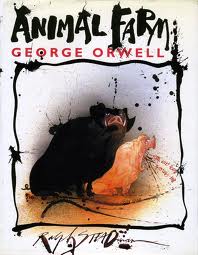 How about buying one of the banned children’s books or YA fiction books for that special child in your family? One of the things that I love doing is sending gifts at unexpected times to the people that I love. Both my girls will be getting copies of a “banned book” next week. I prefer unexpected gift giving to obligatory holiday guilt gift giving.
The ALA keeps a list of banned books and ways to find them and how to buy copies.
Top ten frequently challenged books of 2013 has been released as part of the State of America’s Library Report. Find out which books made the list.
The ALA promotes the freedom to choose or the freedom to express one’s opinions even if that opinion might be considered unorthodox or unpopular and stresses the importance of ensuring the availability of those viewpoints to all who wish to read them.
A challenge is an attempt to remove or restrict materials, based upon the objections of a person or group. A banning is the removal of those materials. Challenges do not simply involve a person expressing a point of view; rather, they are an attempt to remove material from the curriculum or library, thereby restricting the access of others. As such, they are a threat to freedom of speech and choice.
The ALA Office for Intellectual Freedom (OIF) promotes awareness of challenges to library materials and celebrates freedom of speech during Banned Books Week. This event is typically observed during the last week of September of each year. See Banned Books Week for information and resources for getting your library or organization involved in this event!
These are the topics that are most likely to elicit a challenge according to an ALA study from 2000- 2009. As you can see, much of this appears to be efforts to control things a lot of people think are morally offensive.
Over this recent past decade, 5,099* challenges were reported to the Office for Intellectual Freedom.
- 1,577 challenges due to “sexually explicit” material;
- 1,291 challenges due to “offensive language”;
- 989 challenges due to materials deemed “unsuited to age group”;
- 619 challenged due to “violence”‘ and
- 361 challenges due to “homosexuality.”
Further, 274 materials were challenged due to “occult” or “Satanic” themes, an additional 291 were challenged due to their “religious viewpoint,” and 119 because they were “anti-family.”
You’ll notice that most seem to offend our society’s primary superstition. So much for separation of specific church dogmas and the rest of us. What’s your favorite banned book?
So, I’m going to move to journalism and the folks that write, run, and pundit themselves into believing they’re important. This bit is from two columns last week written by Ezra Klein–our own Beltway Bob–and his wife who now writes for New York Magazine. Annie Lowrey has also written for Salon and NYT so between Klein’s time at WAPO, they basically come from the same Skinner Box. Lowrey wants to know why all “media disruptors” are exclusively white males.
It’s happening again. There’s a list of “media disruptors.” It’s predominantly white dudes. It need not be. And people are fed up.
For, in the new-media renaissance of the past few years, there are women and minority “disruptors” everywhere if you only take the time to look. There’s Jane Pratt of xoJane; Ben Huh of Circa; Sharon Waxman of the Wrap; Sommer Mathis of CityLab; Mary Borkowski, Rachel Rosenfelt, Jennifer Bernstein, and Ayesha Siddiqi of the New Inquiry; Sarah Lacy of PandoDaily; Nitasha Tiku of Valleywag; Mallory Ortberg and Nicole Cliffe of the Toast; and Susan Glasser of Politico Magazine. That’s only off the top of my head.
There are three pernicious and interrelated phenomena at work here. First, founders are disproportionately white dudes. Second, white dudes are disproportionately encouraged to become founders. Third, white dudes are disproportionately recognized as founders.
Let’s take that last problem first. There’s a tendency for the media – indeed, for people in general — to see white dudes as “founders” or “entrepreneurs” or “bosses” or “disruptors” and to see women and people of color as anything else. The impulse is deep-seated. When you think of a leader, Jack Donaghy pops into your head rather than Oprah. When you’re to think of management characteristics, you tend to think of characteristics ascribed to men, not women.
Ultimately, this phenomenon can lead to the erasure of women and minorities in leadership roles from the picture — as in Vanity Fair’s list making the rounds today. My husband, Ezra Klein, is a founder of Vox, along with his partners Melissa Bell and Matthew Yglesias. Ezra ended up on the list, but Matt and Melissa did not. It is not the first time it has happened, either.
Well, Annie, maybe THIS has something to do with it. There are fewer women leading newsrooms than ever before. This from a transcript from PBR News Hour. Oh, btw, I do not think of a fictional TV character as a media leader over a real person like Oprah Winfrey. However, there are not many women that could raise the kind of money it takes to launch a media outlet because of the good old boy nature of the banking industry. Still, the first modern media mogul I think about is Katharine Graham, tyvm. She oversaw WAPO when it was really worth a read.
HARI SREENIVASAN: Women hold few positions of authority in newsrooms across the United States. This according to a Nieman report published on Thursday by a Nieman Foundation for Journalism at Harvard.
For more about this, we’re joined now from Portland, Ore., by Anna Griffin, she is a reporter and editor at the Oregonian and is the author of the report. So, how significant are the disparities between men and women when it comes to leadership positions in newsrooms?
ANNA GRIFFIN: They are really, really stark. Women in the United States make up something like 35 percent of all newspaper supervisors, they run three of the top 25 circulation newspapers and the numbers translate internationally too. Women run one of the top 25 circulation international newspapers. So, it is an industry wide problem.
HARI SREENIVASAN: This isn’t a pipeline issue. There are as many women coming out of journalism programs, or communication programs in colleges, so what’s happened, what’s behind this?
ANNA GRIFFIN: That’s a great question. That’s part of what we try to get into and I think answering it is really complicated, because as you mentioned what we see is, coming out of journalism schools women make up half the population of young journalists, and over the next 20 years of so every time you take a five-year snapshot, the percentage of women has dropped.
And to get into those leadership roles, particularly at old-school, mainstream news organizations, you have to stick around. Experience still plays a large part in who gets promoted, especially who gets picked for top jobs. Women are opting out, they’re opting out earlier and earlier.
In some cases it’s the answers you would expect. Anybody who wants to have a family has to make a really hard choice, because journalism it’s a hard job. It’s a low-paying job, it’s a job that requires a lot of flexibility in your schedule.
But it’s not just that, even in countries that have really family friendly policies that let women and men go spend a lot of time with their families and then guarantee them their jobs by when they get back. The percentages are really similar. It’s not just what you think it is, it’s something systemic that we’re really as an industry struggling to put our fingers around.
HARI SREENIVASAN: What are some of the consequences, let’s say editorially, is the news that we consume different when women are in positions of leadership?
ANNA GRIFFIN: The academic studies are really mixed on whether there is a tangible ‘today’s newspaper looks different,’ but what we know, and I think you can draw some conclusions from this is that organizations that are run by women tend to quote more women, tend to review more books by women, tend to have women covering harder news beats.
Every editor, male or female, has their own personal style, their own preference in the kinds of stories they like their people to cover. But I think the broad answer to that is women and men do think differently and different women and men think differently.
Particularly in mainstream media, our job is to reflect the entire community that we covered at any given organization, you need as broader range of voices as possible. And that’s just not happening right now in a lot of places. In a lot of places it’s exactly who you would expect, you know the middle-aged, white man making the choices. And all of us have blind spots, all of us have biases and that presents a problem.
Yes. Every one has their blind spots and biases. So, of course, this means I’m back to Beltway Bob who is just simply agog at the number of ‘effing geniuses’ in the beltway called Political Scientists.
Yes. ***SPEW TRIGGER*** Don’t sip your coffee before you read any more.
 The Washington consensus is the consensus of effing geniuses. Thomas Frank has read Klein’s piece so you don’t have to read it.
In a recent article on Vox, Ezra Klein declared that his generation of Washington journalists had discovered political science, and it is like the hottest thing on wheels. In the old days, he writes, journalists “dealt with political science episodically and condescendingly.” But now, Klein declares, “Washington is listening to political scientists, in large part because it’s stopped trusting itself.” Klein finds that political scientists give better answers to his questions than politicians themselves, because politicians are evasive but scientists are scientists, you know, they deal in “structural explanations” for political events. So the “young political journalists” who are roaring around town in their white lab coats frightening the local bourgeoisie “know a lot more about political science and how to use it” than their elders did.
Hence Klein’s title: “How Political Science Conquered Washington.”
Nearly every aspect of this argument annoyed me. To suggest, for starters, that people in Washington are—or were, until recently—ignorant or contemptuous of academic expertise is like saying the people of Tulsa have not yet heard about this amazing stuff called oil. Not only does Washington routinely fill the No. 1 spot on those “most educated cities” articles, but the town positively seethes with academic experts. Indeed, it is the only city I know of that actually boasts a sizable population of fake experts, handing out free-market wisdom to passers-by from their subsidized seats at Cato and Heritage.
The characteristic failing of D.C. isn’t that it ignores these herds of experts, it’s that it attends to them with a gaping credulity that they do not deserve. Worse: In our loving, doting attentiveness to the people we conceive to be knowledgeable authorities, we have imported into our politics all the traditional maladies of professionalism.
The powerful in Powertown love to take refuge in bewildering professional jargon. They routinely ignore or suppress challenging ideas, just as academics often ignore ideas that come from outside their professional in-group. Worst of all, Washingtonians seem to know nothing about the lives of people who aren’t part of the professional-managerial class.
How well-known is this problem? It is extremely well known. One of the greatest books of them all on American political dysfunction, David Halberstam’s “The Best and the Brightest” (1972), is the story of how a handful of poli-sci geniuses got us into the Vietnam War. How political science conquered Hanoi, you might say, except that it didn’t exactly work out like that.
You can see this dysfunction for yourself in the headlines of recent years. Ever wonder why the foreign policy authorities never seem to change, keep coming back, despite racking up shattering failures like the Iraq War? It’s because of the way Washington worships expertise, and the way these authorities have perched themselves atop a professional structure that basically does not acknowledge criticism from the outside.
Ever wonder why the economic experts never seem to change, keep coming back, despite racking up such shattering failures as the housing bubble and the financial crisis and the bank bailouts? Ever wonder why a guy like Larry Summers gets to be chief economist at the World Bank, then gets to deregulate Wall Street, then gets to bail Wall Street out, then almost gets to become chairman of the Fed, and then gets to make sage pronouncements on the subject of—yes— inequality? It’s for the same bad reasons: Because D.C. worships expertise and because Summers, along with a handful of other geniuses, are leading figures in a professional discipline dominated by what a well-informed observer once called a “politburo for correct economic thinking.”
Some people are ignored in this town even though they are often right while others are invited back to the Oval Office again and again even though they are repeatedly wrong—and the reason is the pseudo-professional structure of the consensus. No one has described how it works better than Larry Summers himself. “I could be an insider or I could be an outsider,” Elizabeth Warren says Summers told her, back in the bailout days.
“Outsiders can say whatever they want. But people on the inside don’t listen to them. Insiders, however, get lots of access and a chance to push their ideas. People — powerful people — listen to what they have to say. But insiders also understand one unbreakable rule: They don’t criticize other insiders.”
Okay, so I just have to go back to the Klein article before I turn you into fans of burning Washington pundits in effigy along with copies of their articles. Yes, folks, Political Science has conquered the Beltway and Beltway Bob.
American politics is changing. Politicians are losing power and political parties are gaining it. A politician’s relationships might once have been a good guide to her votes. Today, the “D” or “R” after a politician’s name tells you almost everything you need to know.
Part of the rise of political science is the result of the blogosphere. Crooked Timber, the Monkey Cage, the Mischiefs of Faction and other poli-sci blogs have let political scientists speak for themselves. But that’s only benefitted political science because what they’ve said has been worth listening to.
Political scientists traffic in structural explanations for American politics. They can’t tell you what an individual senator thinks, or what message the president’s campaign will try out next. But they can tell you, in general, how polarized the Senate is by party, and whether independent voters are just partisans in disguise, and how predictable elections generally are. They can tell you when American politics is breaking its old patterns (like with the stunning rise of the filibuster) or when people are counting on patterns that never existed in the first place (like Washington’s continued faith in the power of presidential speeches).
As politicians lose power and parties gain power, these structural explanations for American politics have become more important. That’s what I’ve found, certainly. Talking to members of Congress and campaign operatives is useful, but not terribly reliable. Politicians are endlessly optimistic — in their line of work, they almost have to be — and they want to believe that they and their colleagues can rise above party and ignore special interests. But they usually can’t. They begin every legislative project hoping that that this time will be different. But it usually isn’t. An understanding of the individual dynamics in Congress or in the White House can be actively misleading if it’s not tempered by a sense of the structural forces that drive outcomes in American politics.
 Yes, forget all politics are local and other meaningless adages. Just grab yourself a copy of SPSS, a database, and makes some loose associations between issues, geography, and tribal identifications. After all, economists are great at predicting the economy, meteorologists certainly predict the weather well, so why not rely on your local political scientists to predict election quirks via “structural forces”.
One of my favorites duties in a hinterland branch of the Federal Reserve bank came when the President of the District was about ready to do his duty on the Open Market Committee. He would come armed with all this research from the economists and just a few more things. Each of the branches would arrange a shindig and invite representative business owners, farmers, oil and gas company executives, etc to give him an earful. Were they going to add inventory? People? More fields? How did they feel about the future of their businesses?
After pouring over the charts, he’d weight it all by the news on the ground of these industries and people that drove the district’s economy. It was his acid test before voting to raise or lower interest rates or give a speech or print up the cover letter to the District’s stats and forecasts. It made all those numbers sing and dance to a tune. It put a Main Street face to a stat. I remember that one of the first things I did while trying to figure out why so many businesses were using derivatives that seemed beyond the grasp of most operational finance people was to call my exhusband of the perfect SAT score and ask him if he crunched through the Black Scholes model or something else to hedge their Fannie and Freddie portfolios at his rather large Insurance company. He had no idea. They paid other people to do that and they just followed along. Did he understand any of it? Not even this guy who took advanced engineering mathematics at university knew what the hell was going on. That’s when you say to yourself, there’s some trouble here. It’s great to be a researcher and a PhD but it’s also good to know the limitations of your models. It’s also important that the people who rely on your research understand those limits too.
And with that, I leave you to savor a banned book. Gosh, look how many of them are in my library!!!
What’s on your reading and blogging list today?
Extra Lazy Saturday Reads
Posted: September 13, 2014 Filed under: children, Crime, Criminal Justice System, Feminists, Hillary Clinton, morning reads, physical abuse, science, social justice, U.S. Politics, Ukraine, Violence against women | Tags: . #gamergate, Adrian Peterson, Antia Sarkeesian, domestic abuse, Ferguson MO, Michael Brown killing witnesses, Minnesota Vikings, NFL, Oscar PIstorious, Roger Goodell, Samantha Taylor, video games, voting, Zoe Quinn 18 CommentsGood Morning (Just Barely)!!

Father and Son, Bryce BrownGood Morning!!
The NFL domestic violence news is even worse this morning than it seemed yesterday. It turns out the child that Minnesota Vikings star Adrian Peterson beat up is only four years old. And TMZ has published photos of some of the wounds.
The report had been that the child was hit with a “switch,” but according to TMZ, it was a belt. A four year old child! Peterson should never be allowed to see his children again without a very large social worker present. TMZ live updates:
4:12 PM PT — According to the police report, Peterson allegedly sent text messages to the child’s mother saying he “felt bad” because he struck the kid in the testicles.
“Got him in the nuts once I noticed. But I felt so bad, n I’m all tearing that butt up when needed!” the text said.
Peterson allegedly sent a follow up text saying, “Never do I go overboard! But all my kids will know, hey daddy has he biggest heart but don’t play no games when it comes to acting right.”
4:10 PM PT — According to the police report, the child told authorities he had also been hit by a belt and there were “a lot of belts in daddy’s closet.”
The child also said AP had put leaves in his mouth when he was being struck and that his pants were down.
3:50 PM PT — The Vikings have deactivated Peterson for Sunday’s game….
3:00 PM PT — The police report on the case includes photos of cuts on the boy’s thigh and hands. He also had bruises on his lower back and buttocks, and according to the report … Peterson admitted punishing him.

Photos of injuries to Adrian Peterson’s son.
The child may have been confused about the weapon he was attacked with, because police report that it was a tree branch (AKA a “switch.”) The child’s mother told police that several of the wounds were still bleeding when the child arrived at home in Minnesota.
Peterson will not be playing against the New England Patriots today, but why hasn’t he been suspended by the team and the league? He was arrested and charged back in May!
Gary Myers writes in The New York Daily News, Roger Goodell should throw Adrian Peterson out of the NFL for the Vikings RB’s alleged acts of child abuse.
This might be the worst week in the history of the NFL, with another despicable act by a privileged player taking Roger Goodell’s league to an unfathomable low.
Could it get any worse than the elevator video that surfaced Monday of Ray Rice knocking out Janay Palmer with a vicious punch to the face? Apparently it can with the indictment Friday of Vikings superstar running back Adrian Peterson, one of the faces of the NFL, for injuring his 4-year-old son by spanking him with a tree branch in May after removing the leaves. A warrant has been issued for Peterson’s arrest.
Goodell can begin to make up for his mishandling of the Rice case by immediately suspending Peterson for the season and then throwing him out of the league. Peterson’s attorney, Rusty Hardin, issued a
statement saying Peterson used the same type of discipline on his son that he experienced as a child growing up in East Texas, as if that condones pulling the boy’s pants down and inflicting cuts and bruises doctors found all over the little boy’s body.
It’s barbaric.
It certainly is. Texas authorities should throw the book at Peterson. Get this, according to Myers, the punishment was for the four-year-old pushing another one of Peterson’s children away from a video game. For that, this small child was beaten with a tree branch. And Peterson doesn’t believe what he did was wrong! In my opinion, no one should ever hit a child. Period. Hitting a child isn’t effective in changing behavior in the first place, and in the second place, violence against children only perpetuates the generational cycle of violence. If we are ever to be a truly civilized society, we must work together to change the idea that it is okay to hit children.

Father and child, Cbabi Bayoc
According to Myers, Roger Goodell doesn’t have to wait for a conviction to discipline Peterson.
One of the circumstances that allows Goodell to punish Peterson is “conduct that imposes inherent danger to the safety and well-being of another person.”
The Vikings at least deserve credit for doing the right thing and deactivating Peterson for Sunday’s home opener against the Patriots, which pretty much eliminates any chance they had to win the game. They value common decency over winning. If Goodell doesn’t suspend Peterson, the Vikings should deactivate him every week.
Regardless of what he decides to do now that the photos and police report have been made public, it’s time for Goodell to step down.
Rant over for now.
I need to take a few deep, cleansing breaths . . . .
Ferguson Updates
CNN has released new video of two witnesses reacting right after the Officer Darren Wilson shot and killed unarmed teenager Michael Brown.
(CNN) — Two men, shocked at what they saw, describe an unarmed teenager with his hands up in the air as he’s gunned down by a police officer.
They were contractors doing construction work in Ferguson, Missouri, on the day Michael Brown was killed.
And the men, who asked not to be identified after CNN contacted them, said they were about 50 feet away from Officer Darren Wilson when he opened fire.
An exclusive video captures their reactions during the moments just after the shooting.
“He had his f**n hands up,” one of the men says in the video….
The men didn’t see the beginning of the altercation, but:
“The cop didn’t say get on the ground. He just kept shooting,” the man said.
That same witness described the gruesome scene, saying he saw Brown’s “brains come out of his head,” again stating, “his hands were up.”
The video shows the man raising his arms in the air — just as, he says, Brown was doing when he was shot.
The other contractor told CNN he saw Brown running away from a police car.
Brown “put his hands up,” the construction worker said, and “the officer was chasing him.”
The contractor says he saw Wilson fire a shot at Brown while his back was turned.
I wonder if the grand jury is hearing from any of the witness that the media has located?

Portrait of Alexander J. Cassatt and his son Robert Kelso Cassatt, by Mary Cassatt
The Houston Chronicle reports that there is a New focus on minority voting after Brown’s death.
FERGUSON, Mo. (AP) — A few miles from the street where Michael Brown died is the grave of Dred Scott, a slave who went to the Supreme Court and tried, unsuccessfully, to be recognized as a free American citizen.
One hundred and fifty-seven years later, a white police officer’s fatal shooting of Brown — unarmed, black and 18 years old — raises fresh questions about the extent to which blacks in suburban towns are regarded as full partners by the officials and law enforcers elected largely by and responsive to small segments of the population.
Political participation is increasing on the national level for blacks and Hispanics. On the local level, voting continues to be struggle, as it is in this St. Louis suburb.
In the most recent city election in April, only 1,484 of Ferguson’s 12,096 registered voters cast ballots, easily re-electing the mayor. Next year voters can weigh in again on their municipal government through city council elections.
Nationally, only 1 in 4 four voters turns out for mayoral elections in the largest cities, according to a 2013 study of 340 mayoral elections in 144 cities from 1996 to 2012 by Thomas M. Holbrook and Aaron C. Weinschenk of the University of Wisconsin Milwaukee and the University of Wisconsin Green Bay.
Missouri does not ask about race or ethnicity on its voter registration forms. But roughly two-thirds of Ferguson’s residents are black. The police force is predominantly white. Five of Ferguson’s six city council members are white, as is the mayor. The grand jury investigating the Brown case has six white men, three white women, two black women and one black man.
#Gamergate
I don’t know if anyone else is following “Gamergate,” the controversy of on-line attacks on women who design and write about video games. Recently feminist video game critic Anita Sarkeesian was forced to leave her home after receiving death threats from male gamers who were enraged her video blogs. Yesterday The Guardian published an article about another female game creator, Zoe Quinn.
Zoe Quinn on Gamergate: ‘We need a proper discussion about online hate mobs,’ by Alex Hern
Since late August Zoe Quinn, the developer of indie gaming’s critical hit Depression Quest, has been the target of a campaign that saw her Tumblr hacked, address posted online and terrifyingly plausible plans to cripple her laid out with cold-blooded straightforwardness….
In public the rationale for this was the allegation that Quinn lay at the centre of a network of corruption in videogaming that saw personal favours traded to elevate a network of her friends with controversial ideas about gaming above “true” gamers.
In private the rationale was simpler. Quinn was an example of a “social justice warrior”: a critic of games culture interested in opening the medium to audiences including women, queer people and people of colour. Her persecutors discussed how best to fulfil the aim of driving “SJWs” from gaming while maintaining the pretence that the campaign was about corruption.
One of the problems with using an anonymous platform to orchestrate your hate campaign is that you can never quite be sure who is listening. On 6 September, the inhabitants of a chatroom called #Burgersandfries learned this themselves.
The site was where a small collection of gamers linked to /v/, the videogame subforum of notorious image board 4chan, met to organise their “raids” on Quinn.
What they didn’t know was that Quinn was watching.
You probably need to read the whole story to understand the dynamics of this issue, so head over to The Guardian if you’re interested.

Father and child, Ben Shahn
Oscar Pistorius Verdict
I hate to keep posting so much about violence against women, but that is what is in the news this week. After the Oscar Pistorius verdict, ABC News spoke to Pistorius’ former girlfriend, Samantha Taylor: Oscar Pistorius’ Ex-Girlfriend: ‘It Could’ve Been Me’.
Taylor said she dated Pistorius before he began dating Steenkamp. At his murder trial, Taylor served as a valuable witness for the prosecution. She said parts of Pistorius’ story about what happened the night Steenkamp died did not ring true.
“There were things that didn’t match up to my experience staying at his house,” she said.
For example, while Pistorius claimed during his testimony the bedroom was pitch black so he didn’t see Steenkamp go to the bathroom, Taylor said Pistorius did not typically keep his room that dark.
“He usually slept with the curtains fairly open. He always had some light coming in,” said Taylor.
And although Pistorius did startle easily, Taylor said he would always ask her about any sudden noises and found it odd that he said he didn’t make physical contact with Steenkamp the night she was killed.
Taylor said she was just 17 years old when she first met the then 24-year-old Pistorius at a rugby match in 2010.
“When I met him, I actually didn’t know who he was,” Taylor said. “He was very charming. He is a really good guy, you know. He was very respectful, very kind.”
But over time, Taylor said Pistorius would get angry at her for little things, such as not taking her plate to the kitchen, and that he could be jealous and possessive.
“He used to often look through my phone, ask me who my friends were. I think he had that control over who’s in my life and who’s not,” she said. “I was his.”
According to Taylor, Pistorious always carried a gun, and once when she was in a car with him, he shot a gun out of the sunroof.

Father and child, Buwa Shete
A few more headlines, links only
BBC News, Spinosaurus fossil: ‘Giant swimming dinosaur’ unearthed.
The Boston Globe, The Northern Lights Shined on New England in Incredible Color Last Night.
The Guardian via Climate Central, Climate Change Threatens Half of North America’s Birds.
Will Scotland vote for independence from Great Britain? The Wall Street Journal, Severing Scotland From U.K. Is No Easy Task.
USA Today, Pa. police: 1 trooper dead, another injured in shooting.
National Post, Ukraine repels rebel attack on key Donetsk airport, as more than 200 trucks from Russia deliver aid.
The Washington Post, U.S.-led coalition seeks to exclude Iran from fight against Islamic State.
Raw Story, Jerry Seinfeld questions Bill Maher: ‘What do you care’ if Hillary Clinton’s running or not? (Maher says he’ll vote for Rand Paul over Hillary Clinton.)
What else is happening? Let us know in the comment thread, and have a great weekend!
Friday Reads: What would we do without all this Mansplaining?
Posted: September 12, 2014 Filed under: 2014 elections, morning reads, Women's Healthcare, Women's Rights 39 CommentsGood Morning!
As you all know, birth control has been under attack by religious extremists in the right wing of the Republican Party. It seems the logical end of science and modernity denial coupled with the need of right wing men to control women. The  easiest way to get around the birth control insurance coverage would be to make most forms of birth control over-the-counter and but would it lower costs?
In recent weeks, some opponents of the Affordable Care Act’s (ACA) contraceptive coverage guarantee have promoted the idea that oral contraceptive pills should be available to adult women without a prescription. Sens. Kelly Ayotte (R-NH) and Mitch McConnell (R-KY), for example, recently introduced the so-called Preserving Religious Freedom and a Woman’s Access to Contraception Act, a bill that would urge the Food and Drug Administration (FDA) to study whether to make contraceptives over the counter (OTC)—though for adults only.
Making birth control pills available over the counter, if done right, would meaningfully improve access for some groups of women. However, such a change is no substitute for public and private insurance coverage of contraceptives—let alone justification for rolling back coverage of all contraceptive methods and related services for the millions of women who currently have it.
The Policy Behind Over-The Counter Contraception
Making birth control pills available OTC has merit, and the Guttmacher Institute is part of a coalition that has been working toward this goal for years. Leading medical groups have also endorsed such a move, including the American Medical Association and the American Congress of Obstetricians and Gynecologists. By removing the need to obtain a prescription, OTC status would eliminate this potential barrier to contraceptive use and thereby increase access.This is especially true for uninsured women and those who don’t have time for a doctor’s visit or otherwise can’t readily reach a health care provider. However, if the goal is to truly expand access to contraceptive care—and not just provide cover for undercutting insurance coverage for contraceptives—the case to move birth control pills to OTC status should proceed alongside several other important policies and goals:
Protect contraceptive coverage and full method choice: The ACA requires most private health plans to cover the full range of women’s contraceptive methods and services, without out-of-pocket costs for the patient. This policy eliminates cost as a barrier to women’s ability to choose the method that is best for them at any given point in their lives, an approach that has been proven to make a substantial difference in facilitating access to and use of contraceptive services.
Contrary to what some policymakers and commenters have claimed, giving the pill OTC status would not be an effective substitute for the ACA policy. First, it would do nothing to help women access any contraceptive method other than the pill. This matters, since most women use four or more different contraceptive methods over their lifetime to meet their changing needs. If only the pill were available OTC and contraceptives were no longer covered by insurance, women would face significant new barriers in choosing the method that best suited their needs. Cost is a particularly steep barrier for highly effective methods like the IUD or implant that not only have high upfront expenses, but also require a trained provider for insertion and therefore are not candidates for OTC status.
Even for the pill itself, there is no convincing evidence to suggest that moving it to OTC status would substantially lower out-of-pocket costs to patients, let alone come close to the $0 out-of-pocket cost guaranteed under the ACA policy. Rather, making the pill available OTC, if done at the expense of insurance coverage, would replace one barrier (ease of access) with another (cost). Likewise, greater reliance on Health Savings Accounts or Flexible Spending Accounts, as some opponents of insurance coverage have proposed, would also merely replace full insurance coverage with patient out-of-pocket costs—leaving most privately insured women, particularly low-income women, worse off. Uninsured women on average pay $370 for a full year’s supply of the pill, the equivalent of 51 hours of work at the federal minimum wage of $7.25.
 Missouri continues to be the nexus of the dark ages. Here’s a Senator that wants to make sure that the Affordable Healthcare Act doesn’t give his daughters access to birth control. Please notice the age of two of his daughters.
One Missouri lawmaker has taken the fight against birth control coverage to a new and very personal place: His own daughters, two of whom are adults.
State Rep. Paul Joseph Wieland and his wife Teresa are suing the Obama administration over its minimum coverage requirements for health plans under the Affordable Care Act, which includes contraception. They say the government is forcing them to violate their religious beliefs because they have three daughters, ages 13, 18 and 19, who are on their parents’ plan and might get birth control at no additional cost.
The Wielands’ case was filed before the Supreme Court ruled in Burwell v. Hobby Lobby that private employers could deny contraceptive coverage to their employees, but they say that decision strengthens their case.
“The employees are to Hobby Lobby what the daughters are to Paul and Teresa Wieland,” Timothy Belz, an attorney from the conservative Thomas More Society, who represents the Wielands, told a panel of three federal judges on the appeals court in St. Louis on Monday. A district court had dismissed the case, saying the Wielands lacked standing to sue.
Belz also said that making birth control more accessible under health plans was “as though the federal government had passed an edict that said that parents must provide a stocked unlocked liquor cabinet in their house whenever they’re away for their minor and adult daughters to use, and Mormons came in and objected to that. It is exactly the same situation.”
One of the judges pointed out that parents might have more control over their kids than employers, and that parents could just say to their kids, “We expect you do abide by our religious tenets.” Belz replied, “Well, we all have high hopes for our kids, that is true. We all expect and want them to obey us, they don’t always …”
In other words, the Wielands are asking the federal government to enforce their parental guidelines on their daughters. It may sound outlandish, but plenty of people thought Hobby Lobby and related cases were outlandish when they were filed, too.
Missouri women seeking abortions will face one of the nation’s longest waiting periods, after state lawmakers overrode the governor’s veto to enact a 72-hour delay that includes no exception for cases of rape or incest.
The new requirement will take effect 30 days after Wednesday’s vote by the Republican-led Legislature, overruling the veto of Democratic Gov. Jay Nixon. He had denounced the measure as “extreme and disrespectful” toward women.
The abortion bill was one of the most prominent Republican victories in a record-setting September session, during which Missouri lawmakers also overrode 47 line-item budget vetoes and nine other bills, including one creating a training program for teachers to carry guns in schools.
Earlier this year, the Republican-led Legislature overrode Nixon’s veto to enact the state’s first income tax rate reduction in nearly a century.
About half the states, including Missouri, already have abortion waiting periods of 24 hours. Missouri’s current one also lacks an exception for cases of rape or incest.
The new law will be the second most-stringent behind South Dakota, where its 72-hour wait can sometimes extend even longer because weekends and holidays are not counted. Utah is the only other state with a 72-hour delay, but it grants exceptions for rape, incest and other circumstances.
Missouri lawmakers specifically rejected an amendment earlier this year that would have granted exceptions for rape and incest. Abortion opponents argued that it would have diminished the value of some lives depending on how they were conceived.
Supporters of the legislation describe it as a “reflection period” for women and their families.

Is Kay Hagan’s “war on women” strategy beginning to pay off? The embattled incumbent Democrat has now moved ahead of Republican challenger Thom Tillis in North Carolina’s U.S. Senate race.
The latest Rasmussen Reports statewide telephone survey of Likely North Carolina Voters shows Hagan leading Tillis 45% to 39%. Six percent (6%) like some other candidate in the race, and nine percent (9%) are undecided. (To see survey question wording, click here.)
The numbers were reversed a month ago with Tillis ahead 45% to 40%. The two were virtually tied in early May, with Tillis posting a one-point lead. The GOP state House speaker was ahead by seven – 47% to 40% – in our first look at the race in late January.
Among voters who say they are certain to vote on Election Day, it’s a much closer race: Hagan 45%, Tillis 43%.
Still, North Carolina now moves from a Toss-Up to Leans Democrat in the Rasmussen Reports 2014 Senate Balance of Power rankings.
Hagan who was elected to the Senate in 2008 with 53% of the vote has long been considered one of this year’s most vulnerable incumbents, in large part because of her support of Obamacare which remains unpopular in North Carolina. But she has made the so-called “war on women” a centerpiece of her campaign, hammering Tillis for state budget cutbacks in the women’s health area and his opposition to the contraceptive mandate in the health care law.
While Tillis leads by nine points among male voters in the state, Hagan has a 21-point lead among women. Tillis has lost ground among male voters over the past month, while Hagan’s lead among women has grown.
 Indeed, Republicans continue to demonstrate gross insensitivity to women and minorities.
A Republican state senator in Georgia sparked a dispute with a pastor in his district after complaining about early voting being implemented in a predominantly African-American neighborhood, the Atlanta Journal-Constitution reported.
“I would prefer more educated voters than a greater increase in the number of voters,” state Sen. Fran Millar (R) wrote on his Facebook page. “If you don’t believe this is an efort [sic] to maximize Democratic votes pure and simple, then you are not a realist. This is a partisan stunt and I hope it can be stopped.”
Earlier in the day, Millar posted a statement criticizing the county’s interim CEO, Lee May, for allowing early voting on Oct. 26, a Sunday, at several polling places in DeKalb County, including one at South DeKalb Mall.
“Per Jim Galloway of the AJC, this location is dominated by African American shoppers and it is near several large African American mega churches such as New Birth Missionary Baptist,” Millar wrote.
When DuBose Porter, who chairs the state’s Democratic Party, accused Millar of wanting to stifle votes in Black neighborhoods, Millar issued a follow-up statement rejecting that argument.
“I defined educated as being informed on the issues,” Millar wrote. “Finally Mr. Porter is welcome to look at my DeKalb NAACP award, so don’t try to accuse me of trying to suppress the African-American vote.”
I continue to be amazed at the complete lack of empathy and understanding shown by many Republican Elected officials.

Today on “The 700 Club,” a viewer asked host Pat Robertson how she should handle the news that her 21-year-old daughter is in a same-sex relationship. In response, Robertson gladly offered up some of his patented bad advice for the parents of LGBT kids. –
“She needs somebody to help her get her identity straight,” he said. “She may not be right in this, she may have thought she has a crush on some older girl along the way and she’s actually homosexual when she’s not, I don’t know. Why is she that way? Was she molested when she was younger?”
After co-host Terry Meeuwsen lamented that people are “telling kids to explore, it’s crazy,” Robertson criticized “the girl-on-girl movies” where “they’re getting straight actresses to play lesbians and straight men to play homosexuals and if you say anything against homosexuality you are just hooted out of court.”
“You need to love your daughter and give her a chance to work this out because if she gets deeper and deeper in it, sooner or later she is going to be disillusioned and say, ‘this is wrong, I want to come out of it,’” he added.
Yup, womenz are just so confuzzled about things. What would we do without all these old white guys to explain everything to us? Why if they didn’t pass laws to control all of us we’d just all be hussies and lesbians using abortion for birth control!!!
So, what’s on your reading and blogging list today?

 peej
peej Carissa
 bostonboomer
 dakinikat
 ecocatwoman
 mablue2
 Mama Lopez
 peggysue22
 quixote
 skydancingguestblogger
 Mona (aka Wonk the Vote)



 Sky Dancing
Recent Comments