
Saturday: Of War, Fracking, and Fukushima
Posted: September 7, 2013 Filed under: just because 41 Comments Hello newsjunkies.
Have you read Rosa Brooks’ “Obama Can’t Win“ in Foreign Policy magazine yet? If not, go read it now. Teaser:
Oddly, many in the media seem convinced that Obama’s pledge to seek congressional authorization for a Syria intervention was a clever gamble. It wasn’t. It was, to paraphrase Obama, a dumb gamble. That’s because there is now no good outcome for Obama, only a range of painfully ironic outcomes.
It’s an excellent read. Please take a moment to look it over.
Something interesting… note the title of the latest from FoPo’s David Rothkopf, “How the Loneliest Job in the World Got Even Lonelier,” (bylined “With his missteps on Syria, Obama has alienated just about everyone — friends and frenemies alike.”) Sounds a lot like Glen Ford’s bottom line over at Black Agenda Report… “Obama: As Warlike as Bush, and Just as Lonely.”
Cue The Onion:
Nation Throws Giant Temper Tantrum Upon Learning Syria Is Complex, Nuanced Issue
I have to tell you that what’s not helping sort any of this complexity or nuance is Kerry and Obama suddenly embracing action that will have the side effect of empowering the rebels…I can only take wild guesses as to what changed in the Administration’s assessment of the situation, because Assad gassing his own people doesn’t mean the rebels are suddenly the lesser evil. As the Onion points out in the news skit above, the Syria situation doesn’t fit neatly into a narrative of “the good guys” and “the bad guys.”
Along those lines, here is the first installment of Reader Supported News’ three part series on Syria: Where Revolution Goes Wrong.
A couple excerpts…
Independent journalist Anna Therese Day has spent considerable time in Syria, and last year authored a Shorty Award-nominated report for VICE Magazine called Gunrunning with the Free Syrian Army. In the report, Day accompanied an FSA colonel who defected from Assad’s army when the mass killings began. The colonel had two main complaints: that Western governments had abandoned the Syrian people in spite of mass genocide and brutal killings of protesters, and that because of the absence of help from Western governments, the Syrian people have had to depend on the military might of jihadists like the group Jabhat Al-Nusra. The jihadists fighting alongside the Free Syrian Army have the much different objective of establishing a theocratic Islamist government, whereas the FSA’s objectives are more along the lines of establishing a democratic and accountable secular government.
“Academic studies show empirically that civil resistance is more effective than armed resistance,” Day told me in a Skype interview from Madrid. “But it’s difficult to expect people to adhere to these ivory tower principles, even if in the long-term it will be more effective, when they are being attacked and need to defend to their families.”
And, yet…
Erica Chenoweth, an International Studies professor at the University of Denver, is author of the book “Why Civil Resistance Works.” In a February 2012 presentation at Dartmouth College, she explained how she was originally skeptical that nonviolence could accomplish major political goals, and decided to place very strict limits on which nonviolent campaigns she would credit with achieving major political goals. Chenoweth focused only on campaigns where there were more than 1,000 active participants using a majority of nonviolent tactics like boycotts, strikes, and street demonstrations over a small period of time. She also studied only nonviolent campaigns that were focused on achieving extremely difficult goals like regime change, removing an occupying military force, or seceding territory.
Chenoweth found that between 1900 and 2006, nonviolent campaigns were twice as effective as violent campaigns, and that in that time period, nonviolence became an increasingly effective strategy for achieving major victories, whereas violence became increasingly ineffective. Chenoweth’s research on violent campaigns found that their strategy was limited to simply getting as many people with as many weapons as possible and challenging the state head-on through either direct warfare or guerrilla tactics like sabotage and assassinations. Chenoweth’s research found that for a violent campaign to be effective at either ousting a regime or removing an occupying military force, it had to wage a long-term struggle against the state with the aforementioned tactics to corrode the state’s ability to assert power over the people, and it had to sustain its efforts over a long period of time. Because the state has a monopoly on violence, with more resources at its disposal, those violent campaigns had a very small rate of success.
However, Chenoweth discovered that nonviolent campaigns, with the various tactics at their disposal, were much more successful. They could attact a vast multitude of diverse people, and so were able to sustain a long campaign aimed at accomplishing specific strategic goals. Nonviolence succeeded where violence didn’t: the OTPOR movement’s ousting of Slobodan Milosevic in Serbia; the Arab Spring’s ousting of Ben Ali in Tunisia. A nonviolent campaign can use leverage to remove all pillars of support for an oppressive regime or an occupying military force.
This first installment ends on a rather chilling note (well, I found it chilling at least) from the journalist mentioned above — Anna Therese Day:
Regardless of whether or not the US chooses to intervene with either humanitarian aid or airstrikes, Anna Day says that the Assad regime is likely to win out against the violent campaign to oust him. She says she’s troubled by the Obama administration’s unilateral plans for intervention, and other plans that have been discussed to arm rebels with more sophisticated weaponry.
“Assad controls most of the country and won back major key swaths in August, so this notion that he doesn’t have legitimacy anywhere simply isn’t true,” Day said. “It’s debatable if the rebels – not the cause of the Revolution, but the rag-tag leadership of the armed resistance – have any legitimacy at all, even among anti-Assad civilian elements.”
I don’t know how to pivot from that gracefully to a more uplifting story, so… how about we go even deeper in Debbie downer territory with some… ‘fracking confirmation.’
Confirmed: Fracking practices to blame for Ohio earthquakes. From the NBC News Science link:
Before January 2011, Youngstown, Ohio, which is located on the Marcellus Shale, had never experienced an earthquake, at least not since researchers began observations in 1776. However, in December 2010, the Northstar 1 injection well came online to pump wastewater from fracking projects in Pennsylvania into storage deep underground. In the year that followed, seismometers in and around Youngstown recorded 109 earthquakes, the strongest registering a magnitude-3.9 earthquake on Dec. 31, 2011. The well was shut down after the quake.
Scientists have known for decades that fracking and wastewater injection can trigger earthquakes. For instance, it appears linked with Oklahoma’s strongest recorded quake in 2011, as well as a rash of more than 180 minor tremors in Texas between Oct. 30, 2008, and May 31, 2009.
The new investigation of the Youngstown earthquakes, detailed in the July issue of the journal Geophysical Research Letters, reveals that their onset, end and even temporary dips in activity were apparently all tied to activity at the Northstar 1 well.
Well, gee, isn’t that swell. Say… Anyone care for the latest on Fukushima?
Via BBC: South Korea bans fisheries imports from Fukushima area…
South Korea has banned all fisheries imports from eight Japanese prefectures, amid concern over leaks of radioactive water from the crippled Fukushima nuclear plant.
A spokesman said the measure was due to “sharply increased” public concern about the flow of contaminated water into the sea.
The ban, an expansion of existing restrictions, takes effect on Monday.
Meanwhile via CNN, Fukushima: The long road home after 2011 disaster. From the link:
More than a year ago, the workers here wore full protection suits, today they simply wear gloves and the basic face masks you can see anywhere in Japan — a sign that the radiation level here has dropped.
Thousands of industrial-size black bags hold the contaminated soil. They are lined up in fields, waiting for their final resting place — wherever that may be. This is a reminder that the problem of what to do with radioactive water at the crippled Fukushima plant is not the only storage issue this country has to deal with.
During the day, the steady volume of traffic in this outer part of the exclusion zone belies the invisible threat that still exists. It’s a threat that two-and-a-half years later has residents wondering when, or even if, they will be able to move back home.
I’m sorry to have such a depressing roundup for you this Saturday. What can I say. It’s almost September 11th, and we’re on the precipice of another possible war. It wouldn’t be a relevant roundup if it weren’t depressing.
But, you know me. Still hoping against hope! So, here’s my feminist treat for you before I go. The latest ‘Blurred’ parody by some outstanding law students in Auckland, NZ… my favorite so far, by far:
Alright, Sky Dancers. Let’s hear it in the comments. And, have a great weekend!
Friday Reads
Posted: September 6, 2013 Filed under: morning reads | Tags: fiscal policy, generosity, libertarians, prisoner's dilemma, Syria 21 Comments Good Morning!
I am enjoying the cooling effects of the new AC condenser. The last days of summer heat will be with us here in New Orleans for awhile so I am glad I could replace it. There are a bunch of other things that I will now go without but the AC is one thing you cannot forgo down here any more.
It’s difficult to find some things that aren’t about Syria, but I did find a few things just to give us a break. I am going to start one with item that broke late last night.
The WSJ has says the US has intercepted a message that states that Iran will attack Iraq if the US attacks Syria.
The U.S. has intercepted an order from Iran to Shiite militants in Iraq to attack the U.S. Embassy and other American interests in Baghdad in the event of a strike on Syria, officials said, amid an expanding array of reprisal threats across the region.
Military officials have been trying to predict the range of possible responses from Syria, Iran and their allies. U.S. officials said they are on alert for Iran’s fleet of small, fast boats in the Persian Gulf, where American warships are positioned. U.S. officials also fear Hezbollah could attack the U.S. Embassy in Beirut.
While the U.S. has positioned military resources in the region for a possible strike, it has other assets in the area that would be ready to respond to any reprisals by Syria, Iran or its allies.
Those deployments include a strike group of an aircraft carrier and three destroyers in the Red Sea, and an amphibious ship, the USS San Antonio, in the Eastern Mediterranean, which would help with any evacuations.
The U.S. military has also readied Marines and other assets to aid evacuation of diplomatic compounds if needed, and the State Department began making preparations last week for potential retaliation against U.S. embassies and other interests in the Middle East and North Africa.
I think we all can agree on the level of skepticism felt here–both writers and discussants–on the weird cult of libertarians. Here’s an interesting thought. Are Libertarians the New Communists?
Most people would consider radical libertarianism and communism polar opposites: The first glorifies personal freedom. The second would obliterate it. Yet the ideologies are simply mirror images. Both attempt to answer the same questions, and fail to do so in similar ways. Where communism was adopted, the result was misery, poverty and tyranny. If extremist libertarians ever translated their beliefs into policy, it would lead to the same kinds of catastrophe.
Let’s start with some definitions. By radical libertarianism, we mean the ideology that holds that individual liberty trumps all other values. By communism, we mean the ideology of extreme state domination of private and economic life.
Some of the radical libertarians are Ayn Rand fans who divide their fellow citizens into makers, in the mold of John Galt, and takers, in the mold of
anyone not John Galt.
Some, such as the Koch brothers, are economic royalists who repackage trickle-down economics as “libertarian populism.” Some are followers of Texas Senator Ted Cruz, whose highest aspiration is to shut down government. Some resemble the anti-tax activist Grover Norquist, who has made a career out of trying to drown, stifle or strangle government.
Yes, liberty is a core American value, and an overweening state can be unhealthy. And there are plenty of self-described libertarians who have adopted the label mainly because they support same-sex marriage or decry government surveillance. These social libertarians aren’t the problem. It is the nihilist anti-state libertarians of the Koch-Cruz-Norquist-Paul (Ron and Rand alike) school who should worry us.
Economics Policy Wonk Jared Bernstein has a great narrative on how fiscal policy gets so mixed up. He attempts to explain how our economic knowledge in theory has warped into something unrecognizable in the beltway.
I identify three reasons why fiscal policy became so backwards in recent years. First, a strategy by Democrats to block the GW Bush tax cuts morphed from strategy to ideology. Second, a misunderstanding of the Clinton surpluses in ways explained below. And third, the use of deficit fear-mongering to achieve the goal of significantly shrinking the government sector.
During the early years of the GW Bush administration, the President proposed and Congress passed two tax-cut packages that quite sharply lowered the revenues flowing to the Treasury. During those debates, opponents of the cuts raised their negative impact on deficits and debt as a major concern. Such concerns proved to be justified. As Ruffing and Friedman show (2013), instead of its actual slowly rising path, the debt ratio would have been falling in the latter 2000s but for the Bush tax cuts (war spending played a much smaller role). In my terminology, GW Bush fiscal policy was that of an SD (structural dove), adding to the debt ratio throughout the expansion of the 2000s.
Many who were making those anti-tax-cut arguments cited the Clinton years as an instructive counter-example. The lesson of those years, they argued, was that by increasing taxes and restraining spending, the Clinton budgets both led to surpluses and assuaged bond markets leading to lowering borrowing costs, more investment, and faster growth. In fact, while fiscal policy in Clinton’s first budget did lower projected deficits, as discussed above [earlier in the paper I point out that if you track the swing from deficit to surplus from 1993-2000, Clinton fiscal policies explain one-third of the change; even once these changes were in the baseline, in 1996, CBO still projected deficits a few years later, when in fact the budget went into surplus, so Clinton fiscal policy cannot get credit for that part of the swing], economic growth was far the larger factor (the fact that much of this growth was a function of a dot.com bubble is a separate issue).
Together, this line of attack against the Bush tax cuts in tandem with the over-emphasis on Clinton fiscal policy as the factor that led to surpluses, raised the budget deficit to a new level in the national debate. Deficit hawkish pundits, editorial pages, and policy makers knew two things: Clinton raised taxes, cut spending, and balanced the budget; Bush cut taxes, failed to restrain spending, and added to the debt ratio.
Again, reality was more complex. Economic growth was the major factor behind the Clinton surpluses, and while GW Bush’s tax cuts clearly added to the deficit and debt, even under his quite profligate fiscal policy, the deficit-to-GDP ratio fell to about 1% in 2007 (below primary balance). To be clear, this is no endorsement of his structural dovishness. That was the last year of that business cycle expansion, and as I argue later in the paper, it’s important to get the debt ratio on a downward path much sooner than that. But the collision of these two different approaches to fiscal policy in two back-to-back decades helped to construct a conventional wisdom about budget deficits as a national scourge that had more to do with cursory observation than economic analysis.
Another important factor, perhaps the most consequential, in the evolution of these wrong-headed ideas was the partisan ideology that government should be much smaller as a share of the economy. For conservatives who shared this vision, elevating the issue of the budget deficit as a major national problem was and remains a highly effective strategy. If they could convince the public and their representatives that deficits had to be reduced no matter what, than cutting the federal budget should be a short step away.
I’ve studied game theory as part of my graduate program and taught game theory as part of my classes. This study shows why author Julie Beck of The Atlantic Magazine says it’s the gift that keeps on giving. A new study shows that generosity is more advantageous than selfishness.
Results: In the long term, extorting, selfish strategies did not work as well as more generous strategies. Players who defected instead of cooperating suffered more over time than players who recognized the value of cooperation–though extortion might provide an advantage in a single head-to-head matchup, in the context of a whole population, over time, it pays to be generous. Sometimes cooperative players would even forgive those who defected and cooperate with them again.
The researchers created a mathematical proof that shows, as study co-author Joshua B. Plotkin said in an email, “why generosity abounds in nature, despite the fact that it may appear self-detrimental in the short-term.”
Implications: Now we have some mathematical evidence that there is an evolutionary advantage to generosity, other than just good karma. With Darwin’s “survival of the fittest” ingrained in our brains, it often seems like every man for himself is the best strategy, and kindness is just an anomaly. But it’s an uplifting surprise to see a study that says that’s not the case, that we evolve best when we help each other.
This seems like an argument for the feminine and against the masculine to me.
Anyway, that’s my offerings today. What’s on your reading and blogging list?
Thursday Reads: Syria, Snowden, and the G20
Posted: September 5, 2013 Filed under: Barack Obama, Foreign Affairs, morning reads, NSA, National Security Agency, U.S. Politics | Tags: Edward Snowden, G20 summit, John Schindler, Russia, Syria, Vladimir Putin, Wikileaks 67 Comments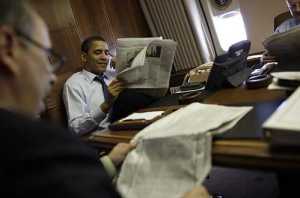
Good Morning!!
Syria policy has pretty much eclipsed everything else in the national and international news (heard anything about Egypt lately?), with the NSA story still a close second. The G20 is also beginning in Russia, and that’s also “all about Syria.” So these are the stories this morning. This will also be a quickie post, because I overslept and I have someone coming to fix my electricity pretty soon.
As you all know, the Senate Foreign Relations Committee approved limited strike on Syria yesterday, although there is still wrangling among Senators about how aggressive the U.S. action should be. From NBC News:
In Washington, Secretary of State John Kerry and other top administration officials went before the House Foreign Affairs Committee to confront skeptics and press the administration’s case. Defense Secretary Chuck Hagel estimated the cost of a limited strike at tens of millions of dollars.
However, Kerry told the hearing that Arab League countries had offered to pay for the unseating President Bashar Assad if the United States took the lead militarily….
The Senate yes votes comprised seven Democrats and three Republicans, including Sen. John McCain, who had expressed reservations that the United States was not doing enough to arm the rebels fighting Syrian leader Bashar Assad.
“We commend the Senate for moving swiftly and for working across party lines on behalf of our national security,” read a statement from the White House. “We will continue to work with Congress to build on this bipartisan support for a military response that is narrowly tailored to enforce the prohibition on the use of chemical weapons, and sufficient to protect the national security interests of the United States of America.”
NBC News also reports that Russia’s Putin is warning the US against ‘aggression’ in Syria without UN approval.
Russian President Vladimir Putin warned the United States and its allies against unilateral action against Syria on Wednesday – but said he “doesn’t exclude” backing a U.N. resolution if evidence proved the use of poison gas against civilians.
As the White House stepped up its efforts to secure political approval for retaliatory strikes on the regime of Bashar Assad, Putin said acting without the approval of the U.N. Security Council “can only be interpreted as an aggression.”
In an interview with The Associated Press ahead of President Barack Obama’s arrival in Europe for meetings with G20 leaders, Putin said video footage of the suspected Aug. 21 chemical weapons attackoutside of Damascus could have been fabricated by groups “connected with al Qaeda.”
According to Time, Putin also warned that indiscriminate bombing in Syria could lead to a “nuclear catastrophe.”
Russia is warning that a U.S. strike on Syria’s atomic facilities might result in a nuclear catastrophe and is urging the U.N. to present a risk analysis of such a scenario.
The warning comes from Russia’s Foreign Ministry spokesman, Alexander Lukashevich. He said in a statement Wednesday that a strike on a miniature reactor near Damascus or other nuclear installations could contaminate the region with radioactivity, adding: “The consequences could be catastrophic.”
Who knew Syria had “nuclear installations?”
The Christian Science Monitor: G20 economic summit: It’s all about Syria.
As world leaders gather in St. Petersburg, Russia, today for the annual two-day Group of 20 summit, economic policy may be overshadowed by what’s not on the agenda: Syria.
Divisions over how to respond to Syrian President Bashar al-Assad’s alleged use of chemical weapons in August grow as the US continues to lobby for support for military action and Russia digs in its heels against it. President Obamawon initial domestic political backing on Wednesday after the Senate Foreign Relations Committee narrowly authorized military measures in a 10-7 vote, according to The Associated Press.
“My credibility isn’t on the line. The international community’s credibility is on the line,” Obama said in a press conference before flying to Russia. “The moral thing to do is not to stand by and do nothing.”
Obama canceled a bilateral meeting with Russian President Vladimir Putin in Moscow on the sidelines of the summit after the Kremlin offered asylum to former NSA employee Edward Snowden, who leaked classified US documents.
According to The Christian Science Monitor’s Moscow correspondent, Fred Weir, President Putin has argued there “is no convincing evidence” that Assad launched a poison gas attack. Putin has exercised his veto power on the UN Security Council repeatedly against any military intervention in Syria since the two-year-old conflict began.
The Guardian on the troubled U.S.-Russia relationship: Putin and Obama apart in more ways than one at G20 table.
In terms of table placement at least, the Russians are trying to avoid a fight. When world leaders file into St Petersburg’s imperial Constantine Palace on Thursday, with the nightmare of Syria and a wider Middle Eastern war on their minds, presidents Vladimir Putin and Barack Obamawill be distant from one another literally, as well as politically.
The seating order, which would have had the Russian and US leaders separated only by the Saudi king, has been reshuffled to put five leaders, including David Cameron, between the two key adversaries over Syria and much else.
“The seating will be arranged according to the English alphabet,” Putin’s spokesman, Dmitry Peskov, told the Moscow newspaper, Izvestiya. Had the Russian alphabet been used, Putin and Obama would have been almost cheek-by-jowl.
If the rushed re-seating is one measure of the US-Russian tensions militating against a breakthrough arresting the slide to greater conflict over Syria, there are plenty more. Edward Snowden, the National Security Agency whistleblower, holed up in Russia, wanted in America, is the most recent.
The summit should be interesting; I hope Obama and Putin don’t come to blows.
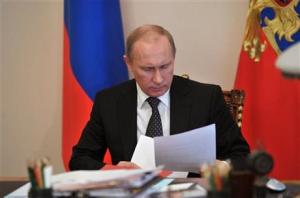
On the Snowden front, there is quite a bit of speculation going around about how involved Russia was with Snowden even before he arrived in Moscow.
Yesterday the Wall Street Journal reported: Putin Says Snowden Was In Touch Before Coming To Russia. Putin just can’t keep his story straight. First he said he was taken completely by surprise when Snowden landed in his lap–he’d hardly even paid any attention to him before that. But lately he’s been gradually admitting that wasn’t true. From the WSJ:
MOSCOW—Russian President Vladimir Putin has admitted that Edward Snowden contacted Russian diplomats in Hong Kong a few days before boarding a plane to Moscow but that no agreement was reached to shelter him and he decided to come to Russia on his own without warning.
Mr. Putin had initially said Mr. Snowden’s arrival at Moscow’s Sheremetyevo International Airport on June 23 was a “complete surprise,” but now acknowledges that he had some prior knowledge that the fugitive former U.S. National Security Agency contractor might be headed Russia’s way.
“Mr. Snowden first appeared in Hong Kong and met with our diplomatic representatives. It was reported to me that there was such an employee, an employee of the security services. I asked ‘What does he want?’ He fights for human rights, for freedom of information and challenges violations of human rights and violations of the law in the United States. I said, ‘So what?’,” Mr. Putin said in an interview with Russia’s Channel One and The Associated Press.
Actually Russia had publicly “offered to consider [Snowden’s] asylum request” in June when Snowden was still in Hong Kong, but that fact seems to have gone down the corporate media’s memory hole at this point. Everyone also seems to have forgotten that the U.S. voided Snowden’s passport before he left Hong Kong and flew to Russia–supposedly on the way to Cuba and the Ecuador. Putin is still trying to blame the U.S. for Snowden’s failure to take his scheduled flight to Cuba, claiming it was because of the cancelled passport.
In an interview to Russia’s state-run Channel One and The Associated Press published Wednesday, Putin responded to various questions about touchy subjects in U.S.-Russia relations.
When asked about Snowden, who found himself the world’s most wanted fugitive after leaking top secret documents on U.S. surveillance programs, Putin said U.S. authorities could have grounded the plane that Snowden boarded to come to Moscow from China’s Hong Kong just as they did with the plane of Bolivian leader Evo Morales after they suspected that Snowden was on board.
Or, he said, U.S. intelligence officers could have let Snowden leave Russia —which was initially meant to be only a transit stop on his way to another country that would grant him asylum — and then could have grabbed him in a country “with a relaxed security regime,” Putin said, the Kremlin website reported.
“They could have done that in relation to Snowden. What prevented them” from doing that? Putin said.
Um…. you did, Mr. Putin. We’ve read the reports that Snowden was surrounded by a crowd of FSB officers before his feet even hit the floor in Moscow’s Sheremetyevo International Airport transit zone.
More foreign affairs writers are beginning to question just how much of an “accident” Snowden’s defection to Russia actually was. At Business Insider, Michael Kelley summarizes the growing suspicions among intelligence experts: Did WikiLeaks Sell Out Snowden To The Russians?
Is it just a coincidence that former NSA analyst Edward Snowden, a valuable intelligence asset, ended up in the hands of Russia’s security services?
Or did WikiLeaks, the “anti-secrecy” organization that has taken responsibility for Snowden, send him there in collaboration with the Russians?
Former senior U.S. intelligence analyst Joshua Foust makes a compelling argument that Wikileaks may have been infiltrated by Russia’s Federal Security Bureau, the post-Soviet successor to the KGB.
His argument is based on the shared history between WikiLeaks and Russia, how Snowden ended up in Russia, and what happened to Snowden once he landed in Moscow.
Looking at the same evidence, we think this is certainly a possibility.
Read all about it at the link, and if you have time, read Foust’s longer piece. It’s fascinating.
I’ll end with a couple of articles on the damage done to U.S. Intelligence services by Snowden’s stealing and leaking the contents of top secret documents. From former NSA analyst and now academic John Schindler: Snowden, NSA, and Counterintelligence.
From nearly the outset I’ve stated that Snowden is very likely an agent of Russian intelligence; this was met with howls of indignation which have died down in recent weeks as it’s become apparent that Ed’s staying in Russia for some time, along with whatever classified materials he had on his person. (Since Glenn Greenwald’s partner when stopped by British authorities at Heathrow had 58,000 highly classified documents on him, thanks to Ed, one can only wonder how big the initial haul actually was.) That Snowden was in contact with the Russian consulate in Hong Kong during his pre-Moscow visit there, including spending his 30th birthday with his new friends, is now admitted. Even President Vladimir Putin has conceded that Ed’s contacts with Russian officials did not commence when he landed at Sheremtyevo airport, rather before.
But when? That of course is the key question that NSA counterintelligence surely wants – needs – to know. All roads here lead to Wikileaks. We know that Snowden in late 2012 reached out to Glenn Greenwald and other members of the spy-ring – all of whom can be considered cut-outs for Wikileaks when not paid-up members – that stands behind the massive leaks. After making this contact, Ed took a contractor job with Booz Allen Hamilton to increase his access to NSA secrets. I’ve been stating for a while now that Wikileaks is functionally an extension of Russian intelligence; it’s become a minor meme asa few journalists have decided that such a scandalous viewpoint is worth considering.
Of course, for anyone versed in the ways of Russian intelligence, the notion that Wikileaks is a Moscow front that’s involved in anti-US espionage is about as controversial as, say, the notion that the sun will rise in the east tomorrow. Running false flags, creating fake activist groups, using Western journalists and activists for deception purposes – this sort of thing is in the DNA of Russian intelligence going back to the 19th century and is second nature to them. They call espionage tradecraft konspiratsiya (conspiracy) for a reason.
While there can be little doubt that the damage Snowden has wrought to the US and Allied SIGINT system is nothing less than immense, it will be some time before NSA and the US Government make any public pronouncements on such a touchy matter – not to mention that it will likely be several months yet before the Intelligence Community completes what will surely rank as the Mother of All Damage Assessments.
Without in any way diminishing the espionage losses that young Mr Snowden has caused, I want to suggest that the political damage in this case may loom larger, particularly as Putin savors his big win in this round, having humiliated American intelligence as it’s never quite been publicly humiliated before. The onetime Chekist in Putin surely is going to bed at night with a smile these days. “There are no ‘former’ intelligence officers,” Russia’s president once famously said, and he was also talking about himself.
Read the rest at the link if you can; this guy really knows his stuff–and he’s no right wing nut.
One more piece by British writer Chris Boffey: Why Edward Snowden is not a patriot, whistleblower or hero – but a spy.
Edward Snowden is a spy. The runaway CIA contractor may not know, or even care, whom he is spying for but the damage he is doing ranks alongside Philby, Burgess, McLean and Blunt. They comforted themselves with delusions that revealing the names of agents to the Soviet Union were for the greater good. Snowden was equally deluded when he opened up the secrets of western intelligence to one and all. Unlike the British spies, Snowden is not dealing in human information but electronic intelligence which in this day and age has more importance, but the results are the same….
Unlike Ames, Snowden was able to claim the moral high ground when spilling out the inner workings and policies of the US and UK security services to the world. Revealing how the state spies on its own citizens, without their knowledge or acquiescence, can be considered laudable but he lost the right to be called a whistleblower when he fled to negotiate first with the Chinese and then the Russians about political asylum and then it was revealed that he had taken with him the whole security shooting match.
Whistleblowers stand up and are counted; Snowden crawled out and ran away.
In sweeping up every secret he came across and downloading them to be dripped out is just plain treason and he knows this, given his determination not only never to return to the US but also to stay out of its legal jurisdiction.
Snowden justified his actions saying: “I don’t want to live in a society that does these sort of things [surveillance on its citizens]… I do not want to live in a world where everything I do and say is recorded… My sole motive is to inform the public as to that which is done in their name and that which is done against them.”
Presumably that is why he is now living in Russia, that Mecca of human rights.
Much more at the link. Check it out and see what you think.
That’s all I’ve got for you for the moment. Now what are you reading and blogging about today?
Rape Apologia, Objectification of Women’s Bodies, and State Ownership of Women: Where does it end?
Posted: September 4, 2013 Filed under: Violence against women, War on Women, Women's Rights | Tags: institutional sexism, violence against women 19 Comments
Recently, there have been scads of news stories and legislative actions that make me fear for the present and future of girls and women. I really wanted to not front page the Cohen WAPO piece because it was such an obvious piece of slut slamming and rape apologia that I could hardly bear to read it. There have been hundreds of good rubutals that remind us that in America, no woman or girl is truly safe. Many of us are not safe in our homes. It is likely we are not safe in our schools or workplaces. We are not safe in parking lots and streets. We are still subjected to all of the mythology around “asking for it” which includes our past sex lives, our clothing, and our drinking/drug habits.
Framing a piece about rape around the perpetrators of a crime, rather than those who have been the victims of that crime, is a sign that the entire argument needs to be refocused. Rape victims are frequently erased in discussions of sexual assault that focus solely on the perpetrators (in 2011, the Onion aptly parodied this dynamic in a video entitled “College Basketball Star Heroically Overcomes Tragic Rape He Committed”), which is offensive to the people who have been subject to those sexual crimes.
During the Steubenville rape trial, for example, the media spent most of its time lamenting the fact that the perpetrators’ “promising football careers” were going to be thrown into question by being convicted of rape. That sparked massive backlash, but editorial pieces continue to be guilty of perpetrating this dynamic. A recent piece published in the Atlantic argued for the need to “change the preconceptions and misconceptions that society has when it comes to pedophiles” because not many people “think about the millions who grapple with sexual feelings on which they can never act.” And a Washington Post op-ed published over the weekend suggested that teachers who have sex with students shouldn’t be punished so harshly because those poor teachers probably thought it was a consensual relationship.
We’ve written about these horrible stories that infer girl children some how want to be raped and “boys are just be being boys”, I have to admit that the Montana Judge who handed out a light sentence to a rapist whose 14 year old victim took her life was just about the worst thing I’ve seen in a long time. Oh, and he’s apologized.
A Montana judge has apologized for claiming a 14-year-old girl was “as much in control of the situation” as a former teacher who admits raping her.
Yellowstone County District Judge G. Todd Baugh also said Monday teen Cherice Moralez was “older than her chronological age” while sentencing ex-teacher Stacey Rambold to serve just 30 days of a 15-year prison sentence.
Moralez killed herself in 2010 with the case still pending, and her mother claimed the abuse by Rambold was a “major factor” in her daughter’s suicide, the Billings Gazette reported.
The mother, Auliea Hanlon, stormed out of Monday’s sentencing, shouting “You people suck!”
Baugh has reconsidered his comments, although not the sentence. He wrote an 81-word letter to the Billings paper apologizing for his statements.
“In the Rambold sentencing, I made references to the victim’s age and control,” Baugh wrote. “I’m not sure just what I was attempting to say, but it did not come out correct.
“What I said is demeaning of all women, not what I believe and irrelevant to the sentencing. My apologies to all my fellow citizens.”
Raise your hand if you believe that! I recently quit playing some on-line games where the “boys will be boys” attitude and the crude, awful comments about women’s bodies, gay men, and women in general just became too much for me. There appears to be very few men that understand there’s a line between joking about sex or being bawdy and degrading women. They also all live in fear of gay men and gay sex which still reminds me that what they all fear is that gay men will treat them they way they treat women. Oh, did I mention these jerks have wives and daughters and of course mothers. I got every excuse from “well, I tell my daughter all men are pigs” to “you don’t seem to have a sense of humor” and “you’re okay joking about sex, what’s the difference?”. I’m getting to old for this. It’s the same shit I heard and saw when I was a preteen, a teen, a young woman, until right here right now.
When will men say to each other this is not the way you treat another human being?
So, given all of the crap we’ve seen these past two years coming out of state legislatures who seem to think they also own our bodies and lawmakers talking about “real” rape or “rape” rape versus their own personal version of she asked for it, I came across this news article. Diana the Hunter is said to be on a killing spree and she’s taking out rapists in Northern Mexico.
Authorities are seeking a woman accused of killing two bus drivers in northern Mexico amid claims that the murders were committed by a vigilante avenging rapes, officials said Tuesday.
Local media have received an anonymous message signed by “Diana, the hunter,” claiming to act as “an instrument of vengeance” for the sexual abuse committed by drivers in Ciudad Juarez, a border city with a dark record of violence against women.
Arturo Sandoval, a spokesman for the Chihuahua state prosecutor’s office, told AFP that the email, sent over the weekend, “has been included in the investigation.”
Witnesses said a woman wearing a blonde wig shot the drivers in the head after stopping the buses last week. Sandoval said prosecutors believe they were either crimes of passion or motivated by vengeance.
The drivers were working on a route used by women who work in assembly plants known as “maquiladoras,” and who regularly suffer sexual abuse as they head to their night shifts.
Authorities are investigating 12 cases of female passengers allegedly sexually assaulted by drivers. Investigators are looking into whether the killer is among the women.
Officials are also investigating any links with an arson attack against a bus at dawn on Tuesday. The vehicle was set ablaze after gasoline was poured on it, said Fire Chief Ramon Lucero.
The anonymous message from “Diana” stated: “My colleagues and I have suffered in silence, but they can no longer keep us quiet.”
“We were victims of sexual violence by drivers who worked during the night shift at the (plants) in Juarez. While many people know about our suffering, nobody defends us or does anything to protect us,” it said.
“They think that we are weak because we are women,” the message said, warning that there would be more deaths.
“I am an instrument of vengeance.”
Authorities have drawn up a profile of the suspected killer and launched an operation to find her with undercover agents in buses.
Witnesses describe her as a woman in her 50s, 1.65 meters tall (5-feet-four), with a dark complexion.
When the justice system fails you, when the legal system fails you, when the nation’s largest and most respected newspapers fail you, when the men in your life fail you, it is really easy to think bout cheering on that “instrument of vengeance”. Wouldn’t it be wonderful to no longer need to take back the night? Wouldn’t it be great to be able to play a game or work some where or go into a bar without continually having to be on guard? Wouldn’t it be wonderful if we could get a group of women together in a room and there would be at least one of us that wasn’t either raped, beaten, harassed, or threatened simply because she is a woman?
Today’s perpetrators are the Government of Texas, most elected Republican officials, a good number of Churches and pastors, the judicial and criminal justice system, the military and the men who do not call out other men when justice and wrong is done to women. Until justice is ours, I actually have to say that I would like a world wide army of Diana the Hunters.
Hillary Weighs in on Syria
Posted: September 3, 2013 Filed under: Syria | Tags: Syria 23 Comments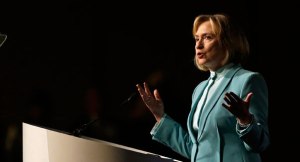
Obama is taking his call to intervene with Syria to the Congress. Many Congress critters are weighing in. Here’s what former Secretary of State Hillary Clinton has to say about the situation.
“Secretary Clinton supports the president’s effort to enlist the Congress in pursuing a strong and targeted response to the Assad regime’s horrific use of chemical weapons,” a Clinton aide told POLITICO.
Speaker John A. Boehner said on Tuesday that he would “support the president’s call to action” in Syria after meeting with President Obama, giving the president a crucial ally in the quest for votes in the House.
Representative Eric Cantor of Virginia, the No. 2 House Republican, quickly joined Mr. Boehner to say he also backed Mr. Obama.
“Understanding that there are differing opinions on both sides of the aisle, it is up to President Obama to make the case to Congress and to the American people that this is the right course of action, and I hope he is successful in that endeavor,” Mr. Cantor said in a statement.
Meanwhile, the Senate held hearings.
After weathering a barrage of criticism from Sen. Rand Paul (R-Ky.), Kerry turned the tables and demanded to know whether or not he believed that air strikes would make Assad more or less likely to use chemical weapons again.
“It’s unknown,” Paul replied.
Jabbing his finger, Kerry disagreed, saying it was guaranteed that Assad would use chemical weapons again if the U.S. doesn’t act.
Kerry, a Vietnam veteran, reminded Paul that “you’ve got three of us here who have gone to war” and that they know what it involves.
“The president is not asking you to go to war,” he said, urging Paul to go to a classified briefing “and learn that.”
Concluding his comments, Kerry turned to Gen. Martin Dempsey, the chairman of the Joint Chiefs of Staff, for back-up, asking if he wanted to “weigh in on this.”
“No, not really,” came the reply, prompting laughter from the panel.
The Public remains split and not on party lines. This should be interesting.

 peej
peej Carissa
 bostonboomer
 dakinikat
 ecocatwoman
 mablue2
 Mama Lopez
 peggysue22
 quixote
 skydancingguestblogger
 Mona (aka Wonk the Vote)



 Sky Dancing
Recent Comments