
Saturday Reads: President Obama’s Acceptance Speech
Posted: September 8, 2012 Filed under: 2012 presidential campaign, Barbara Ehrenreich, Civil Liberties, Civil Rights, Mitt Romney, morning reads, U.S. Economy, U.S. Military, U.S. Politics | Tags: acceptance speech, Charles P. Pierce, citizenship, democracy, Democratic National Convention 2012, Howard Kurtz, Michael Tomasky, Nielson ratings, Peter Beinart, Politico, self-government, Tom Junod 68 Comments
Good Morning!
Generally speaking the pundits didn’t care for President Obama’s acceptance speech on Thursday night. It’s not surprising that the guys at Politico thought it “fell flat.”
A surprisingly long parade of Democrats and media commentators described the speech less as a failure than a fizzle—an oddly missed opportunity to frame his presidency or the nation’s choice in a fresh or inspirational light.
Even those who liked the president’s performance generally went no further than saying that he was effective in doing a job that needed to be done, in a tough-minded if prosaic style.
These shoulder-shrug reactions confront Obama with a question no one expected to be asking when the week in Charlotte began: How did a president for whom stirring speeches were the engine of his rise to power manage to give, at best, only the third-most compelling speech at a convention devoted to his own re-election?
But even more liberal commentators found Obama’s speech wanting. Peter Beinart called it “underwhelming and anticlimactic.”
Obama’s acceptance speech had two apparent goals: The first was to lay out an agenda for the next four years so people feel they have something forward-looking to vote for. The second was to recapture the sense of hope that defined Obama’s 2008 campaign.
On paper, he did both things. But what the speech lacked was a coherent explanation of the nightmare this country has gone through for the last four years. Republicans are laying the Great Recession at Obama’s feet. Obama is saying that Republicans created it and, if elected, will make it worse. To win that argument, Obama needed to explain why the financial crisis happened, and he didn’t. Yes, he mocked the GOP for proposing tax cuts as the answer to every problem, but the financial crisis didn’t happen because of tax cuts. It happened, in large measure, because Republican and some Democratic politicians—blinded by free-market fundamentalism and Wall Street largesse—allowed bankers to create unregulated markets in which they gambled the savings of millions of Americans, knowing that if their bets failed, they wouldn’t be the ones to lose their homes and their life’s savings.
Obama should have told that story, and then gone at Romney for doubling down on the ideology that almost brought America to its knees. Then he should have contrasted that with his own interventions to protect people who the market has failed: whether they be auto workers or people with sick kids.
Michael Tomasky called it Pedestrian and Overconfident
Let’s be blunt. Barack Obama gave a dull and pedestrian speech tonight, with nary an interesting thematic device, policy detail, or even one turn of phrase. The crowd sure didn’t see it my way. The delegates were near delirium; to what extent they were merely still feeding off the amassed energy of the previous two nights I can’t say.
And swing voters watching at home? They probably weren’t as bored as I was, but it seems inconceivable that they’d have been enraptured. This was the rhetorical equivalent, forgive the football metaphor, of running out the clock: Obama clearly thinks he’s ahead and just doesn’t need to make mistakes. But when football teams do that, it often turns out to be the biggest mistake of all, and they lose.
Nevertheless, the final night of the Democratic Convention drew about 35.7 million viewers. The second night of the convention, when Bill Clinton spoke pulled in more views than the Giants-Cowboys game that played opposite the Convention coverage, about 25.1 million people–but nowhere near the number who watched the speeches by Vice President Biden and President Obama. Mitt Romney’s acceptance speech attracted 30.3 million viewers.
Howard Kurtz reported that Obama’s acceptance speech was deliberately “low-key.”
While the pundits are generally calling the president’s Thursday night address mediocre, Obama and his advisers had taken great pains to avoid soaring rhetoric that might have been derided as empty.
Indeed, they extensively tested the president’s speech in dial groups, a type of focus group where voters twist dials to register approval or disapproval of specific passages, and say it tested off the charts. The reaction, they say, was more positive than to Obama’s 2008 acceptance speech in Denver.
In short, the president deliberately dialed it down, stopping well short of the altitudes he is capable of reaching. Perhaps that will prove to be a mistake, but the decision to go with a less rousing approach was carefully considered.
The campaign’s primary goal at the Democratic convention was to provide a concrete sense of what Obama would do in a second term. That was what independent voters wanted, according to the research, and that was the focus in Charlotte.
Personally, I thought the first half of Obama’s speech was underwhelming, but I’ve never been a big fan of his speeches. About half-way through I thought the speech became more interesting. I was impressed that Obama admitted how difficult the job is and that he has questioned himself at times and that he has been “changed” by being President of the United States. I think the best evaluation of the speech that I read yesterday was by Tom Junod at Charles Pierce’s blog: President Obama Falls Back to Earth, Transformed. Junod’s thesis statement: “We should have known that Barack Obama would emerge from this convention conventionalized — that is, as a more conventional politician than he was when he went in. Or that we ever thought he could be.”
He didn’t rise to the occasion on Thursday night; he not only didn’t reinvent the possibilities of political language, he used language that many people had to feel they’d heard before. His speech was disappointing until, with about ten minutes to go, it acknowledged disappointment, and so began its rise. “The times have changed — and so have I,” he said. “I’m no longer just a candidate. I’m the president.” Of course, he was reminding us of his power; the fact of his presidency has become an argument for his presidency. But he was also reminding us that as a candidate who rose to power on the politics of pure potential, he is, as president, a fallen man. “And while I’m proud of what we’ve achieved together, I’m far more mindful of my own failiings, knowing exactly what Lincoln meant when he said, ‘I have been driven to my knees many times by the overwhelming conviction that I had no place else to go.'”
This was where the speech turned, and became, in its statement of humility, a statement of rousing power. “I ask you for your vote,” he said, and his commonplace words had a beseeching quality that put them outside the realm of political performance. He had failed to transform his office, and failed to transform our politics, but he sounded fully aware that he had been himself transformed.
He had started out as the Cassius Clay of our politics, brash and blinding, with an abilty to do things in the ring that no one else had ever thought of — with an ability to be untouchable. Now he stood inside the ring of stars on the blue carpeted stage of the Democratic National Convention as the Muhammad Ali whose greatness was proven after he returned to boxing bigger, slower, harder-hitting but also easier to hit. Oh, Ali got touched, all right, and since he lost his skill at avoiding punches he had to find the skill of taking them. He became a prodigy not of otherworldly gifts but rather of sheer will, and so it was with Obama in his speech on Thursday night. At an event that paid endless tributes to our wounded warriors, he rebranded himself as something of a wounded warrior himself; and at the very moment when those who remembered 2008 hoped he might say something that no one had ever heard before and maybe even reinvent, one more time, the possibilities of a word as hackneyed as hope itself, he instead completed his hard-won journey to convention.
Of course I never thought Obama was anything but an ordinary, conventional politician. As everyone here knows, I never bought the “hope and change” schtick. I never saw Obama as a great liberal savior. I was impressed with his acceptance speech, because he showed humility. By the end of the speech I was convinced that this man had matured in office, and because of that, I saw hope for his second term.
Apparently, Charlie Pierce never saw the transcendent Obama either.
I never heard the music.
People told me it was there. People told me it sang to them. People told me that its chords touched them deeply in their hearts. I watched as it make them weep and cheer. I watched as it moved them while I stood there, an unbeliever at the grotto, seeing only rocks and weeds where everyone around me saw and heard and joined in something altogether transformative. I was there in Boston when the president gave the speech that first sent him rocketing up the charts, and I didn’t hear it. Since then, I have seen him give an acceptance speech, an inaugural address, a Nobel oration, and three State of the Unions, and the only thing I remember about any of the latter is that he got heckled by some peckerwood from South Carolina, and that he called out the corporate meat-puppets of the Supreme Court in what I still believe is the finest — and certainly, the most prescient — moment of his presidency.
But I never found the poetry in it all. I thought he was a good, smart orator with some uniquely gifted writers and a talent for creating a warm and comfortable context in which people could take what they believed were all their best instincts out for a walk. I still believe that. He still reaches people at depths that I cannot fathom. He still reaches them in frequencies beyond my poor ability to hear.
That is pretty much how I’ve always reacted to Obama’s speeches. But in his convention speech, I thought I saw something more substantive. And it gave me hope. Pierce was impressed with Obama’s reference to “…the hard and frustrating and necessary work of self-government.”
That I heard. That I understood. It is not musical. It is not in any way poetic. But it is a clear line drawn between the president and the person and the party that would like to take his job from him. It is now an article of absolute faith among Republicans that “the government” is an entity separate from “the American people,” which they say the same way that the old Jesuits talked about “the mystical Body of Christ.” It is now an ironclad commandment of conservative orthodoxy that “the government” is something parasitic and alien. There is a reason why conservatives talk about “government” and not “self-government,” because to refer to the latter is to concede that “the government” is really the most basic product of our political commonwealth, that it is what we produce among ourselves so as to order the production of everything else that we do together. This is not an idle distinction. It is the entire message of last week’s Republican convention, and it is the entire message of the campaign they are planning to run, and, make no mistake, it resonates deeply with millions of people because it has been spoonfed to them as a kind of noxious anesthetic for almost foty years now, a long enough time for it to seem as though it is the natural order of things.
“…the hard and frustrating and necessary work of self-government.”
Make no mistake. This little throwaway line was the most direct, and the most serious, challenge that the president threw down at the feet of the Republican ticket on Thursday night because it strikes at the very essence of four decades of conservative political philosophy. We create “the government” we have. “The government” is not imposed from without. It is our creation. Its proper operation is our responsibility. If we do not like the way it operates, we do the hard and frustrating and necessary work to change the way it does. If we believe that it is being hijacked, we do the hard and frustrating and necessary work of using the tools of self-government to run the moneychangers out of the place. If we do not like the way the person we vote for is doing the job with which we have entrusted him — if he, say, allows the crooks who brought down the economy to walk away free, or if he perpetuates policies antithetical to civil liberties, or if he gets a little too cozy with fracking or if he gives away too much in some Grand Bargain — then we do the hard and frustrating and necessary work of self-government to hold his damn feet to the fire and say, “No further.”
Please go read the whole thing if you haven’t already. Obama articulated the key difference between today’s Republicans and the rest of us. They hate government and believe it should do nothing for people, just fund national defense and aid corporations. Most Democrats still believe that Government has a role in making people’s lives better, in ensuring that even the weakest and most vulnerable among us have rights to “life, liberty, and the pursuit of happiness.”
At the same time we citizens have the responsibility to stand up to our leaders, to voice our needs and our values, to remind our leaders that they work for us and there are certain things we won’t tolerate–whether that’s privatizing social security and medicare, limiting women’s rights, killing people with unmanned drones, limiting voting rights or some other policy that is important to us.
I think Obama’s speech got the job done. It made the convention delegates happy, and it laid a foundation for the arguments he will make over the final few weeks of the campaign. I hope he will continue to emphasize the importance of citizenship–of the necessity of every American being involved in “self-government.” That is the price of democracy.
Now what are you reading and blogging about today? This is an open thread!
Ann Romney Will Decide What this Election is About, Not Women Voters
Posted: September 7, 2012 Filed under: 2012 presidential campaign | Tags: Ann Romney, Birth Control, Davenport IA, David Nelson, KWQC TV, lesbian mothers, Mitt Romney, same-sex marriage, women's health care 17 Comments
Via ABC News, this morning, Ann Romney gave an satellite interview to KWQC new anchor David Nelson from Davenport, Iowa. Mrs. Romney said that her message to women voters is “I hear your voices.”
Maybe so, there are issues women voters say they are interested in that Mrs. Romney won’t address. She doesn’t want to talk about same-sex marriage or birth control, for example. David Wilson asked her about those issues and she refused to answer because those questions are “distractions” and “not about what this campaign is going to be about.”
Here are some excerpts from the interview. You can watch it here.
KWQC TV6: “Here in Iowa, as you know, same-sex marriage is legal. Do you believe a lesbian mother should be allowed to marry her partner?”
Ann Romney: “You know, I’m not going to talk about the specific issues. I’m going to let my husband speak on issues. I’m here to really just talk about my husband and what kind of husband and father he is and, you know, those are hot-button issues that distract from what the real voting issue is going to be at this election. That, it’s going to be about the economy and jobs.”
Since when do candidates or the wives of candidates get to determine what an election is about? Wilson tried again:
KWQC TV6: “Do you believe that employer-provided health insurance should be required to cover birth control?”
Ann Romney: “Again, you’re asking me questions that are not about what this election is going to be about. This election is going to be about the economy and jobs.”
KWQC TV6: “Well, a Pew research poll shows those issues are very important to women, ranking them either “important” or “very important.”
Ann Romney: “You know, but I personally believe, and this is what I’m hearing from women all across the country that they are going to look for the guy that’s going to pull them out of the weeds and get them job security and a brighter future for their children. That’s the message.
Listen, I’ve been across this country, I’ve been for a year-and-a-half on the campaign trail. I’ve spoken with thousands of women and they are telling me, they’re telling me a couple of things, one they say they’re praying for me which is really wonderful, and then they’re saying, ‘please help, please help. We are so worried about our jobs.’
So really if you want to try to pull me off of the other messages it’s not going to work because I know because I’ve been out there.”
Wilson did make one more attempt to get Mrs. Romney to address whether her stated wish for “women to have a secure and stable future” applied to lesbian mothers. But Mrs. Romney didn’t want to talk about it, because she knows what “this election is going to be about” and women voters don’t.
When Ann Romney addressed RNC delegates last week, she yelled out “I love you women!” I guess for Mrs. Romney love gives her permission to condescend to the objects of her love and decide what political issues they should care about.
Bring on the Real Economists
Posted: September 7, 2012 Filed under: 2012 elections, U.S. Economy | Tags: Democratic economic record, income equality, jobs, joseph stiglitz, Paul Krugman, Romney/Ryan Soak the Middle Class Plan 18 Comments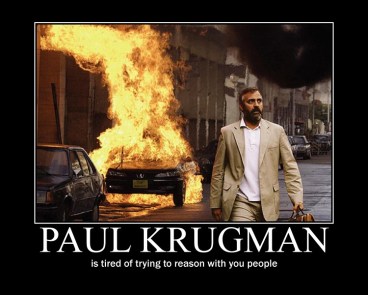 I really loved the line in Obama’s acceptance speech on the Republican’s apple vinegar cure-all for everything that ails you. Take two tax cuts, throw out a few regulations, and call us in the morning! Here’s a great read. The NYT book review looks at the new books of Nobel prize winning economists Paul Krugman and Joseph Stiglitz. These out spoken economists speak truth to power. I just wish the current powers-that-be would listen.
…Washington is stuck in neutral. Worse than neutral; it is in reverse. As the last elements of the 2009 stimulus phase out, the initial flood of federal aid has slowed to a trickle. If no agreement is reached before early next year, the trickle will become a huge backward flow, as President Obama’s payroll tax cut and all the Bush tax cuts expire while automatic spending cuts agreed to in previous legislative sessions kick in. Already, Republican leaders are threatening to replay last year’s standoff over the debt ceiling. Meanwhile, state and local governments—prohibited from running sustained deficits, increasingly dominated by anti-spending forces—continue to cut aid to those out of work and slash programs that invest in the nation’s future while laying off teachers and other public workers. Without those layoffs, the current unemployment rate would probably be around 7 percent.
Against this backdrop, no book could be more timely than Paul Krugman’s End This Depression Now! Since the crisis began, Krugman has argued with consistency and increasing frustration that the United States has become caught not in a normal recession, but in a “liquidity trap.” Since interest rates are already at rock bottom, normal measures, such as easy credit, won’t work, and expanded government expenditures must play a central part in boosting anemic demand. Otherwise, the efforts of private citizens to pay down debts laid bare by the financial crisis will continue to hold the economy back.
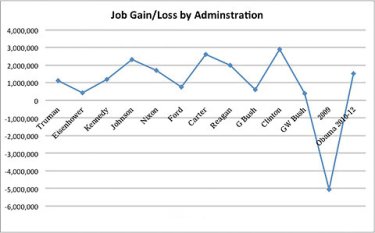
We continue to see Republicans blame the current Democratic administration for an economy they wrecked and a lackluster recovery that they actively work to prevent from becoming better. Today’s job report is not what it should or could be. But, it’s not what the Republicans make it out to be either. History shows us that the Democrats have been the job creators.
In the eighteen months from the beginning of 2008 through the middle of 2009, a period fully shaped by the Bush economic program to which Republicans now want to return, (but before the Obama stimulus had a chance to take effect), approximately 7.5 million jobs were lost.
Over the most recent 18 months of the Obama administration, approximately 2.8 million jobs have been added.
That means that the average monthly job loss during the “difficult situation” before Obama’s policies took effect was 417,000. Over the last year-and-a-half, the average monthly job gain has been 155,000.
If Rep. Ryan and Gov. Romney see that as making a bad situation worse, it should tell us something about their “vision.”
Joseph Stiglitz has been focused on the huge income gap created by policies that funnel money to the highest income earners. His concern is of the US as a Banana Republic.
We may be the richest nation in the world, but poverty is higher and social mobility between generations lower than in other rich nations. In other respects, our model is bloated: we release far more carbon dioxide and use far more water on a per capita basis; and we spend far more on health care, while leaving tens of millions uninsured and achieving health outcomes that are mediocre at best.
The reason, according to Stiglitz, is that the vaunted American market is broken. And the reason for that, he argues, is that our economy is being overwhelmed by politically engineered market advantages—special deals that Stiglitz labels with a term familiar to economists: “rent-seeking.” By this, he means economic returns above normal market levels that are derived from favorable political treatment. In the most powerful parts of The Price of Inequality, Stiglitz chronicles the blatant tax and spending giveaways to big agriculture, big energy, and countless other sectors. Yet he also pointedly argues that much of the rent-seeking that plagues our economy takes a more subtle form, also familiar to economists: “negative externalities,” or costs that economic producers impose on society for which they don’t pay.
The spectacular profits of the energy industry, for example, rely heavily on the failure of regulation to incorporate fully the social and economic costs associated with environmental degradation, including climate change. Similarly, the increasingly aggressive activities of Wall Street—whether in the marketing of unsound mortgages, the use of excessive leverage, or the irresponsible use of derivatives—create huge risks for the economy as a whole. Yet these risks are largely not taken into account in the prices paid in financial markets. Without effective regulation, the costs are borne by all of us—most acutely by the struggling millions who have been pushed out of jobs.
Weeding out these and other forms of rent-seeking would thus promote both efficiency and equity, and Stiglitz provides a broad list of reform ideas, ranging from strict regulation of financial markets to more effective anti-trust laws. Yet he is most passionate about the need for political reform. Either those at the top will realize that things must change, or, he suggests, the kinds of popular revolts sweeping Middle Eastern nations will come to the United States.
Clinton has some intriguing facts on his side. Aside from a rounding error, his historical numbers are accurate (figures from the Bureau of Labor Statistics show that the tally under Democrats since 1961 rounds to 41 million, not 42 million). I crunched the numbers a few different ways to see if Clinton was cherry-picking the best numbers. His figures measure job gains from the month a president took office until the month he left. Since it takes a year or so for any president’s policies to go into effect, I also measured job gains from one year after each president took office till one year after he left. Here’s the score by that measure: Democrats: 38 million new jobs, Republicans, 27 million.
Clinton only mentioned private-sector jobs, so I pulled the data for all jobs, including government. Again, the Dems have a big edge, accounting for 48 million new jobs, compared with 31 million for Republicans. If you push the boundaries out one year for each president, the gap narrows to 44 million new jobs under Democrats, and 34 million under Republicans.
Other measures also show that the economy performs better under Democratic presidents. Sam Stovall, chief equity strategist for S&P Capital IQ, conducted an analysis recently showing that GDP, stock prices, and corporate earnings have all increased more under Democratic presidents than under Republicans.
The S&P 500 stock index, for example, has risen 12.1 percent per year under Democratic presidents since 1900, and just 5.1 percent under Republicans. Since 1949, GDP has grown 4.2 percent per year under Democrats and 2.6 percent per year under Republicans. The same trend extends to corporate profits, which have grown 10.5 percent under Dems and 8.9 percent under Republicans.
The irony is obvious, since Republicans are considered the business-friendly party, while “tax and spend” Democrats are regarded as redistributionists eager to transfer wealth from those who have it to those who don’t.
We need to hold the Republicans responsible for all the evil they have done recently. I’m rejecting them all up and down the ticket this fall because I want a healthy economy and they never really deliver that.
Friday Morning Reads
Posted: September 7, 2012 Filed under: morning reads | Tags: Jared Bernstein, misogyny, Paul Ryan, Sandra Fluke, serial liar, YOYO 58 Comments Good Morning!
Sandra Fluke gave a wonderful speech to the DNC on Wednesday. The young woman rose to prominence after being denied an opportunity to be the only women speaking to a Issa congressional panel on the coverage of birth control in all insurance programs. She was savagely attacked by the right wing press then and now. Here are some horrible tweets that show exactly how awful women in the spotlight are treated by the right.
Let’s get one thing straight first: Contrary to what Limbaugh said, just because a woman wants to have easier access to contraceptives does not make her a slut or a prostitute.
But in order to promote a radical agenda that would deny women access to something so basic as birth control, conservatives took to Twitter after Fluke’s speech to, once again, repeat the disgusting falsehood that she wants the government to “pay” for her social life and to bash her for “whining” about it on a national stage.
Here’s a sampling of tweets that Think Progress spotted:
Sandra Fluke: I am woman, hear me whine.
— Todd Kincannon (@ToddKincannon) September 6, 2012
Shorter @sandrafluke #DNC speech: Me me me me me me. Free free free free B(irth) C(ontrol).Eeeeevil GOP.
— Michelle Malkin (@michellemalkin) September 6, 2012
Don’t lecture conservative women about empowerment while demanding that we pay for what goes on in your bedroom #DNC2012
— Dana Loesch (@DLoesch) September 6, 2012
I wonder if she has “Birth Control Martyr” business cards.
— Jonah Goldberg (@JonahNRO) September 6, 2012
I hope someone was passing out free condoms tonight, otherwise Sandra Fluke might be in trouble tomorrow.
— Michael Berry (@MichaelBerrySho) September 5, 2012
Sandra wants taxpayers to pay for her tanning appointments.
— Ann Coulter (@AnnCoulter) September 6, 2012
So, there’s a new “fish” story from Paul Ryan out and about the web. First, we heard that Ryan lied about his marathon running feats. Now, we’re hearing a story about Mountain Climbing. Lies seem to come easy to Romney and Ryan, as BB pointed out. This one is really interesting. How many fourteeners has Ryan really climbed?
Craig Gilbert, of the Milwaukee Journal Sentinel, wrote the original story, back in 2009, about Ryan’s mountain-climbing record. He has now written an update and amplification of exactly what Ryan told him then. Here are relevant parts from the original interview:
Ryan: “My mom was very outdoorsy … We spent our summers doing backpacking trips in the (Colorado) back-country, you know, Snowmass Lake, Capital Peak, spent all our summers doing that … went all over White River National Forest, just the whole Elk range. I mean I’ve climbed every fourteener in that range and the three around there … So I got into climbing fourteeners when I was 12, with my brother, Stan. My mom got us into that.”
Question: “How many fourteeners have you climbed? Or how many times?”Ryan: “38. I think that’s my last count.”
Question: “Those are just climbing peaks that are 14,000 feet?”
Ryan: “I’ve done it 38 times. … I’ve done 38, but I think the number of unique peaks is something like twenty… no, no it’s like thirty or something like that. I counted it up a year or two ago.”
Question: “Most of those in Colorado?”
Ryan: “All of them are in Colorado. So I think I’ve climbed like 28 (peaks), and I’ve done it 38 times, because I’ve done a number of them a few times. So I was, you know, kind of into that stuff.”
So, now folks that are real fourteeners are weighing in on the possibility of that actually being true. According to folks that know what they are doing, it’s likely another Ryan Whopper. So, is Ryan a serial peddler of fish stories or has all that reading of Ayn Rand prevented him from processing reality?
I loved Jared Bernstein’s post on yoyo economics and politics. It’s a theme that both Barack Obama and Bill Clinton spoke about at the DNC. The idea of YOYO (your’re on your own) vs. We’re in This all Together is a good way to put the election this year.
Protecting the rights of individuals has always been a core American value. Yet in recent years the emphasis on individualism has been pushed to the point where, like the diners in hell, we’re starving. This political and social philosophy is hurting our nation, endangering our future and that of our children, and, paradoxically, making it harder for individuals to get a fair shot at the American dream.
This extreme individualism dominates the way we talk about the most important aspects of our economic lives, those that reside in the intersection of our living standards, our government, and the future opportunities for ourselves and our children. The message, sometimes implicit but often explicit, is, You’re on your own. Its acronym, YOYO, provides a useful shorthand to summarize this destructive approach to governing.
The concept of YOYO, as used in this book, isn’t all that complicated. It’s the prevailing vision of how our country should be governed. As such, it embodies a set of values, and at the core of the YOYO value system is hyper-individualism: the notion that whatever the challenges we face as a nation, the best way to solve them is for people to fend for themselves. Over the past few decades, this harmful vision has generated a set of policies with that hyper-individualistic gene throughout their DNA.
The YOYO crowd—the politicians, lobbyists, and economists actively promoting this vision—has stepped up its efforts to advance its policies in recent years, but hyper-individualism is not a new phenomenon. Chapter 1 documents archaeological evidence of YOYO thinking and policies from the early 1900s, along with their fingerprint: a sharp increase in the inequality of income, wealth, and opportunity. The most recent incarnation can be found in the ideas generated by the administration of George W. Bush, but the YOYO infrastructure—the personnel with a vested interest in the continued dominance of these policies—will not leave the building with Bush. Unless, that is, we recognize the damage being done and make some major changes.
One central goal of the YOYO movement is to continue and even accelerate the trend toward shifting economic risks from the government and the nation’s corporations onto individuals and their families. You can see this intention beneath the surface of almost every recent conservative initiative: Social Security privatization, personal accounts for health care (the so-called Health Savings Accounts), attacks on labor market regulations, and the perpetual crusade to slash the government’s revenue through regressive tax cuts—a strategy explicitly tagged as “starving the beast”—and block the government from playing a useful role in our economic lives. You can even see this go-it-alone principle in our stance toward our supposed international allies.
While this fast-moving reassignment of economic risk would be bad news in any period, it’s particularly harmful today. As the new century unfolds, we face prodigious economic challenges, many of which have helped to generate both greater inequalities and a higher degree of economic insecurity in our lives. But the dominant vision has failed to develop a hopeful, positive narrative about how these challenges can be met in such a way as to uplift the majority.
If you’d like to read the full text of President Obama’s acceptance speech last night it is reprinted here in full.
If you reject the notion that this nation’s promise is reserved for the few, your voice must be heard in this election.
If you reject the notion that our government is forever beholden to the highest bidder, you need to stand up in this election.
If you believe that new plants and factories can dot our landscape; that new energy can power our future; that new schools can provide ladders of opportunity to this nation of dreamers; if you believe in a country where everyone gets a fair shot, and everyone does their fair share, and everyone plays by the same rules, then I need you to vote this November.
America, I never said this journey would be easy, and I won’t promise that now. Yes, our path is harder – but it leads to a better place. Yes our road is longer – but we travel it together. We don’t turn back. We leave no one behind. We pull each other up. We draw strength from our victories, and we learn from our mistakes, but we keep our eyes fixed on that distant horizon, knowing that Providence is with us, and that we are surely blessed to be citizens of the greatest nation on Earth.
The election theme music is Bruce Springstein’s “We Take Care of Our Own”. Quite a contrast to the Throw yo Momma from the Trian, isn’t it? I love this song because it was written partially about Hurricane Katrina.
“From the shotgun shack to the Super Dome …”
What’s on your reading and blogging list today?
DNC Live Blog: Gabby Looks Radiant and Good Bye to Geraldine, Day 3 Part 2
Posted: September 6, 2012 Filed under: 2012 elections, Live Blog | Tags: DNC live blog, Gabby Giffords, Geraldine Ferraro 67 CommentsGabby Giffords Reciting the Pledge of Allegiance moved many to tears.
Also, moving was the salute to Geraldine Ferraro 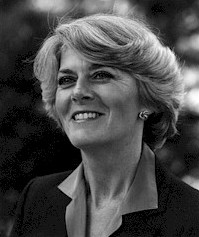
We’ve also seen the start of the line up of young women actresses.
The Republicans had Clint Eastwood, 82, and the empty chair. The Democrats are going in the opposite direction with a line of “surprise” celebrity speakers, all female, all under 40.
Eva Longoria, 37, is scheduled to take the stage after Caroline Kennedy. Also rumored to appear are actresses Scarlett Johansson, 27; Natalie Portman, 31; and Kerry Washington, 35.
There’s been a moment of FOO and there will be moments of EW&F and Mary J. Blige.
Charlie Crist didn’t do so well. But, there’s a lot of focus on Veterans tonight. They even played the Obama got Osama card in prime time. Senator John Kerry started the Vet’s salute off. There many Vets in the audience sporting the various garb worn by the band of brothers and sisters. John Kerry nailed Mitt Romney as a flip flopper.
It’s amazing to see the Democrats showing pictures of a war and saluting Veterans while the Republicans were silent last week. The world must be upside down.
So, here we go with Joe Biden as Biden staffers pass out “fired up, ready for Joe” signs. Dr. Biden was introduced by a Angie Flores a student at Miami Dade College in Florida. There are certainly some wonderful young women standing up on the stage this year.
Meanwhile, Here’s your zen thought of the day:

 peej
peej Carissa
 bostonboomer
 dakinikat
 ecocatwoman
 mablue2
 Mama Lopez
 peggysue22
 quixote
 skydancingguestblogger
 Mona (aka Wonk the Vote)



 Sky Dancing
Recent Comments