
Friday Morning Reads
Posted: June 15, 2012 Filed under: 2012 presidential campaign, abortion rights, Affordable Care Act, income inequality, morning reads, War on Women, Women's Healthcare, Women's Rights | Tags: cave art, Don't say vagina in Michigan, economy speeches, El Castillo Cave, Obama speech, Republican War on Women, Romney speech, US income inequality. 7 Comments Good Morning!
BB sent me this wonderful link last night to something that’s always fascinated me. I’ve had an enduring interest in the beautiful cave art of prehistoric peoples in Europe. New dating evidence has given us some new takes on these very first expressions of humanity in early people.
Stone Age artists were painting red disks, handprints, clublike symbols and geometric patterns on European cave walls long before previously thought, in some cases more than 40,000 years ago, scientists reported on Thursday, after completing more reliable dating tests that raised a possibility that Neanderthals were the artists.
Hand stencils at the El Castillo Cave in Spain have been dated to have been created earlier than 37,300 years ago, making them the oldest cave paintings in Europe.A more likely situation, the researchers said, is that the art — 50 samples from 11 caves in northwestern Spain — was created by anatomically modern humans fairly soon after their arrival in Europe.
The findings seem to put an exclamation point to a run of recent discoveries: direct evidence from fossils that Homo sapiens populations were living in England 41,500 to 44,200 years ago and in Italy 43,000 to 45,000 years ago, and that they were making flutes in German caves about 42,000 years ago. Then there is the new genetic evidence of modern human-Neanderthal interbreeding, suggesting a closer relationship than had been generally thought.
The successful application of a newly refined uranium-thorium dating technique is also expected to send other scientists to other caves to see if they can reclaim prehistoric bragging rights.
In the new research, an international team led by Alistair W. G. Pike of the University of Bristol in England determined that the red disk in the cave known as El Castillo was part of the earliest known wall decorations, at a minimum of 40,800 years old. That makes it the earliest cave art found so far in Europe, perhaps 4,000 years older than the paintings at Grotte Chauvet in France.

Obama gave a speech on the economy yesterday in swing state Ohio. Here’s the transcript of the speech from WAPO if you’re interested.
This has to be our north star, an economy that’s built not from the top down but from a growing middle class; that provides ladders of opportunities for folks who aren’t yet in the middle class.
You see, we’ll never be able to compete with some countries when it comes to paying workers lower wages or letting companies do more polluting. That’s a race to the bottom that we should not want to win, because those countries don’t have a strong middle class, they don’t have our standard of living.
The race I want us to win — a race I know we can win — is a race to the top. I see an America with the best-educated, best- trained workers in the world; an America with a commitment to research and development that is second to none, especially when it comes to new sources of energy and high-tech manufacturing.
I see a country that offers businesses the fastest, most reliable transportation and communications systems of anywhere on Earth.
I see a future where we pay down our deficit in a way that is balanced — not by placing the entire burden on the middle class and the poor, but by cutting out programs we can’t afford and asking the wealthiest Americans to contribute their fair share.
That’s my vision for America: education, energy, innovation, infrastructure, and a tax code focused on American job creation and balanced deficit reduction.
This is the vision behind the jobs plan I sent Congress back in September, a bill filled with bipartisan ideas that, according to independent economists, would create up to 1 million additional jobs if passed today.
This is the vision behind the deficit plan I sent to Congress back in September, a detailed proposal that would reduce our deficit by $4 trillion through shared sacrifice and shared responsibility.
This is the vision I intend to pursue in my second term as president because I believe..
… because — because I believe if we do these things — if we do these things more companies will start here and stay here and hire here, and more Americans will be able to find jobs that support a middle class lifestyle.
You can fact check the Obama and Romney economics speeches here. Here’s two of Romney’s more obvious honkers.
“How about Obamacare? The president said the other day that he didn’t know that Obamacare was hard for small business. Oh, really? The Chamber of Commerce carried out a survey, some 1,500 businesses across America. Seventy-five percent of those people surveyed said Obamacare made it less likely for them to hire people.”
Oh my. The governor clearly had not read Thursday’s Fact Checker column showing that (a) Obama did not really say that and (b) he was answering a misinformed question. However, with the phrase “those people surveyed,” Romney did properly characterize the Chamber of Commerce survey, which because of its design cannot be used to draw conclusions about all small businesses — only the ones that were surveyed.
“The president said that if we let him borrow $787 billion for a stimulus, he’d keep unemployment below 8 percent nationally. We’ve now gone 40 straight months with unemployment above 8 percent.”
We earlier had dinged Romney with Two Pinocchios for this statement, because the president never said this; this was a staff estimate before he took the oath of office.
The most outrageous example of the Republican war on women happened yesterday in the Michigan legislature. Two Democratic Women members were banned from speaking on the floor because they dared stand up for women’s rights to abortion services. Yesterday, we heard the ban was for using the word vagina. Today, we’re being told it’s for being ‘disruptive’. You can watch their speeches at this link at TP.
A male Republican House leader in Michigan silenced two female Democratic state legislators on Thursday after the pair tried to advance a measure that would have reduced access to vasectomies.
While discussing a bill that would erode the availability of abortion, Reps. Barb Byrum and Lisa Brown introduced an amendment to apply the same regulations to vasectomies that GOP lawmakers wanted to add to abortion services. The debate grew heated, as Republicans sought to gravel down the women. Byrum was not permitted to speak in favor of the measure and Brown was repeatedly interrupted. “I’m flattered that you want to get in my vagina, but no means no,” she said. The next day both were silenced.
This article at Bloomberg shows US Income Equality is actually worse than we’ve even imagined.
The Federal Reservereleased new numbers on Monday. Unsurprisingly, wealth distribution is even more skewed than income distribution. In 2010, the median family had assets (including their house but subtracting their mortgage) of $77,300. The top 10 percent had almost $1.2 million, or more than 15 times as much.
But the headlines — and rightly so — went to the dismal fact that household wealth has been sinking for all categories of Americans. As I said, the net worth of the median family in 2010 was $77,300. In 2007, the net worth of the median family was $126,400. That’s a drop of almost 40 percent in just three years. (All these numbers are corrected for inflation.)
Characteristically taking the longer view, the New York Times led with the fact that household savings were back to where they had been in the early 1990s, “erasing almost two decades of accumulated prosperity.”
Most of the lost household net worth of recent years is due to the drop in housing prices. This is comforting, in a way, because the price of land and things built on land — and what, ultimately, is not? — are different from the price of other goods and services.
Here’s a great story at The Nation that shows how fear of sharia law taking root in the US is just good old fashioned bigotry and based on nothing but fear and loathing.
The true story of Sharia in American courts is not one of a plot for imminent takeover but rather another part of the tale of globalization. Marriages, divorces, corporations and commercial transactions are global, meaning that US courts must regularly interpret and apply foreign law. Islamic law has been considered by American courts in everything from the recognition of foreign divorces and custody decrees to the validity of marriages, the enforcement of money judgments, and the awarding of damages in commercial disputes and negligence matters.
As an attorney, consultant or expert witness, I have handled more than 100 cases involving components of Sharia. In a case I tried in 2002, Odatalla v. Odatalla, a New Jersey couple had signed an Islamic marriage contract consistent with their cultural traditions. When the wife filed for divorce, she asked the court to enforce the mahr, or dowry provision, in her contract, which called for the husband’s payment of $10,000 upon the dissolution of their marriage. Superior Court Judge John Selser found the marriage contract valid under New Jersey law, concluding, “Clearly, this court can enforce a contract which is not in contravention of established law or public policy.”
In a 2003 case involving Exxon Mobil and a Saudi oil company, the parties had agreed as part of a commercial transaction that Saudi law would govern any potential disputes. After the Saudi company sued its former business partner, Exxon Mobil, the Delaware Superior Court heard testimony on Saudi law, which applies traditional Sharia, and the judge instructed the jury to base its decision accordingly. The jury returned a $400 million–plus verdict in favor of Exxon Mobil and against the Saudi firm.
Finally, in a more recent case I was involved in, a state judge declined to recognize a Syrian court order that would have transferred the custody of a child to her father because of the mother’s remarriage. The judge reasoned that remarriage alone is not sufficient to transfer custody. Far from deferring to judgments from foreign countries, US courts regularly refuse to recognize such orders due to the constitutional and due-process implications.
Had an anti-Sharia ban been in place in these courts, Exxon could not have won its verdict, nor would the wife in Odatalla have been able to enforce her marriage contract. The ban would have stripped those judges of their ability to fully and fairly consider the cases. For litigants in states where such a ban exists, these statutes are an unconstitutional infringement of the people’s freedom of contract, free exercise of religion and right to equal protection.
So, that’s a few things to get you started this morning. What’s on your reading and blogging list today?
Corporate Journalism is Killing our Democracy
Posted: June 14, 2012 Filed under: The Media SUCKS, the villagers | Tags: Times Picayune 18 Comments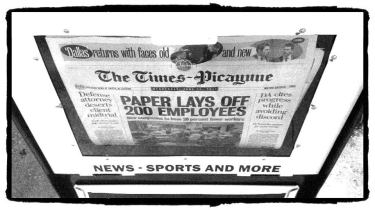 The time would be now for those of us that recognize the integral and historic relationship between our history as a republic and a democracy and our news papers and pamphleteers to recognize the need for drastic measures. Perhaps it is time to consider our local newspapers and television stations to be community assets and mount movements to make them mutual organizations or nonprofits. The historic trashing of the Times Picayune by the Newhouse corporation looking for more profits–as is their nature–should serve as a warning to all US cities. Your ability to know more about your local governments, your local citizens, and your community is at risk.
There are some things that are too important to be left to the profit motive.
Judy Woodruff of New Hour interviewed the TP Editor who insists that our ability to know will not be hampered by not only less access to the paper–many of our poorest do not have access to the internet version–and less staff. The TP is 175 years old. It’s one of the oldest newspapers in the country.
JIM AMOSS, editor, The New Orleans Times-Picayune: Many readers can’t imagine a morning without our newspaper in their hands. I understand that. I’m a print guy. I grew up in this business.
JUDY WOODRUFF: The Times-Picayune’s parent company, Advance Publications, also announced layoffs at three Alabama newspapers: The Birmingham News, The Press-Register in Mobile, and The Huntsville Times. Together, they will lose 400 employees.
The cuts and the changes are all a far cry from 2005, when Hurricane Katrina ravaged New Orleans. The Times-Picayune became a lifeline to those trying to recover and rebuild. Seven months later, Loyola University communications professor Larry Lorenz underscored that vital role in a conversation with the NewsHour’s Jeffrey Brown.
LARRY LORENZ, Loyola University: In the Civil War era, Oliver Wendell Holmes, the father of the later Supreme Court justice, wrote an essay called “Bread and the Newspaper.” And in it, he said, bread and the newspapers, we must have.
JEFFREY BROWN: So you have got to eat and people need information?
LARRY LORENZ: You bet. The information that’s in the newspaper feeds us as much as the bread feeds us.
JUDY WOODRUFF: But now, like a growing number of newspapers nationwide, The Times-Picayune faces a fight for survival.
Our city is not taking this quietly. This link comes via Morning Edition at NPR. You’ll notice a pattern here on exactly where I’m having to go to get news on this story. It’s not going to come from the right wing propaganda machine at Fox News. It’s not coming from other US papers either.
What happens when a media company wants to take away your daily newspaper? In New Orleans, you take to the streets.
A recent rally to preserve daily publication of the Times-Picayune featured high-profile musicians including Kermit Ruffins, whose sang a jazzy tune invoking the name of the 175-year-old paper. It’s part of a campaign launched by New Orleans’ most prominent residents and powerful leaders to save the Times-Picayune, a cultural institution in a city that gives high credence to tradition.
“It’s a morning ritual,” said Constable Lambert Boissiere, a former city councilman and state senator. “You know, you get the paper, get your cup of coffee, have you a little breakfast or whatever, paging through the articles you want to read. Then you had the conversations at lunch about the things you read in the paper.
“So that’s going to be gone,” Boissiere said. “I can’t imagine myself and my friends sitting in front of the computer every morning, going through the different sections to read the articles. I don’t see that happening.”
The cuts at the paper are part of a restructuring by Advance Publications, a Newhouse company, that will shift to three-day print editions and an emphasis on online news.
But more than a third of New Orleans residents don’t have Internet access, raising questions about how poorer and older citizens will keep up with news or even the local obituaries. Rituals aside, Boissiere said, the timing is terrible.
“We finally cleaned up our act since Katrina. We got business coming back. Our athletics things, with the Hornets and the Saints, we got a Super Bowl, we had Final Four, everything,” he said. “We’re getting to be a big city again. And then to lose a daily paper, I think it’s a bad signal affecting the growth of the city.”
Concerned civic leaders have banded together to put pressure on Newhouse to rethink its plan.
I personally am watching friends that have worked for the paper for decades collect their pink slips. It’s heartbreaking. It also raises an obvious question. This can’t be just about stopping a printing press. An internet-based paper still requires writers and photographers, doesn’t it? HuffPo is following the story.
Overall, the paper reported that it was laying off a third of its staff, totaling 202 employees. The Gambit newspaper said that 49 percent of the newsroom was being let go.
Katy Reckdahl, a laid-off reporter, spoke to the local WWL news station about the changes. “I guess I’m trying to figure out how I didn’t fit into the new organization,” she said. “I think they’ve torn apart an institution,”
As the ax continued to fall, Jim Amoss, the paper’s editor, posted a video on the T-P website.
“This is a difficult week at our paper,” he said. “We’ve had to let go of some wonderful employees. It is a painful transition.”
Amoss said that the paper was not “immune” from the broader economic climate facing newspapers, and that “news organizations that don’t serve a digital audience as well as their print readers risk a slow death.”
Renee Peck, a former T-P writer, reported that heart-rending scenes were being played out within the newsroom:
The first to go early this morning was a longtime copy editor who, ironically, has been overseeing online content for the past decade. When she burst into tears at the news, the supervisor in charge seemed unprepared, and had to duck into the ladies’ bathroom for paper towel.Employees who were laid off were offered severance packages; if they choose to accept the buyouts, they must work at the paper until Sept. 30.
The cuts at the Alabama papers, which are making a similar digital transition, were even more savage. Poynter reported that one paper, the Birmingham News, is seeing its newsroom cut by a shocking 60 percent, with 400 employees let go across all three papers affected by cuts.
Here’s a CBS story about what I’ve been seeing on my FaceBook feed for the past two days.
Job casualties in New Orleans included some of the city’s most experienced writers and photographers, many of whom announced their own departure on a Facebook page by simply posting “-30-,” an old copy editor’s code for “end of story.”
Peter Finney, a sports writer for the paper since 1945, is being laid off but has been asked to write a freelance column, the paper said. Managing editors Peter Kovacs and Dan Shea, among the newsroom leaders during the paper’s Pulitzer Prize winning coverage of Hurricane Katrina’s aftermath, have not been asked to stay. Brett Anderson, the current restaurant critic for the food-obsessed city, is leaving for a fellowship.
Employees who took part in Tuesday’s meetings described an emotional scene that played out over the course of the day among colleagues who have worked together for many years.
Reporter Barri Marsh Bronston said she was being let go after 31 years.
“These last three weeks have been unbearable, but I’m feeling a sense of relief right now,” she said in a post on Facebook. She did not want to be interviewed but gave permission for her comment to be used.
Throughout the day, employees met with various managers and were told either that they would have a job with the new company, Nola Media Group, or they were offered severance packages. Some will later be able to apply for positions in the new operation, the paper said.
Corporations and their single minded pursuit of profits are the country’s most prolific sociopaths and serial killers. It’s time to revive an old time corporate form. Companies that are responsible for public trust should most likely be owned by stakeholders and not just money hungry investors. I want our villagers back.
Thursday Reads
Posted: June 14, 2012 Filed under: 2012 presidential campaign, Banksters, child sexual abuse, children, Crime, morning reads, U.S. Politics | Tags: Barack Obama, Bob Shieffer, Catholic Church, Dodd-Frank bill, Face the Nation, first responders, Florida voter purge, Forest boy, Fox News, Grover Norquist, J.P. Morgan, Jamie Dimon, Jeb Bush, Jerry Sandusky, Marco Rubio, Mitt Romney, pedophiles, public employees, Senate, stimulus, teachers 28 Comments
Good Morning!
Wall Street Royal Jamie Dimon deigned to appear before a Senate Committee yesterday, and the Senators mostly sucked up to him. I’m surprised they didn’t ask if he needed a pillow for his chair. MSNBC: Senate treats JPMorgan CEO Dimon with kid gloves
Dimon was expected to receive a frosty reception in his first congressional appearance since he announced the bank sustained a trading loss some analysts now estimate is at least $3 billion. It was a massive loss for the nation’s biggest financial institution.
Instead, Dimon, who has won praise for bringing JPMorgan (JPM) through the financial crisis relatively unscathed, was treated cordially by most of members of the Senate Banking Committee. They peppered him with questions about regulation and risky practices at the bank, but did not press him to give an update on the losses resulting from the trade. JPMorgan is expected to give an update to shareholders when it reports its second-quarter earnings July 13.
“I think it was a pretty favorable day,” David Konrad, a Keefe, Bruyette & Woods banking analyst, told CNBC. Konrad said he was surprised that the questioning of Dimon by lawmakers was so “professional.”
Excuse me, “professional” for a Senator would have been sending this man to the woodshed. NPR’s Marketplace called the treatment of Dimon “a wake for Dodd-Frank.”
Yahoo has named the winner of the “Most Tepid Endorsement of Mitt Romney” contest: it’s a bumper sticker that reads “At least he’s not a communist.”

Until recently, it appeared that no one could unseat Indiana Gov. Mitch Daniels as the champion of the tepid Romney endorsement. Since Yahoo News started conducting reader polls on the politicians who supported Mitt Romney in the least enthusiastic terms, Daniels has defeated original champ George Pataki and defended the crown against Newt Gingrich, Rick Santorum and George W. Bush. (The former president came the closest to unseating Daniels.)
We thought the book was closed on the tepid endorsement bracket until Yahoo News reporter Chris Moody spotted a bumper sticker at last weekend’s regional CPAC conference in Chicago bearing these words of praise: “At least he’s not a communist.”
You can read the other tepid endorsements at the link.
First Romney made fun of Obama for wanting to help cities and states pay for cops, teachers, and firefighters. Then he went on Fox News and said it was a “strange accusation” for anyone to say he didn’t want to hire teachers and first responders.
After an extended skewering of President Obama for a gaffe about the private sector last week, ending with the charge that it was proof the president was “out of touch” Romney was asked by Fox and Friends’ Brian Kilmeade for his response to Obama saying it was Romney who was clueless (Romney’s comment comes at about the 1:40 mark) :
[BRIAN] KILMEADE: He says that you’re out of touch. He says you want to cut firefighters and teachers, that you don’t understand what’s going on in these communities. What do you say to that, Governor?
ROMNEY: Well, that’s a very strange accusation. Of course, teachers and firemen and policemen are hired at the local level and also by states. The federal government doesn’t pay for teachers, firefighters or policemen. So, obviously that’s completely absurd.
But of course the federal government does subsidize states and they often use the money to pay for these public employees. In fact, the reason so many teachers, firefighters and cops are getting laid off now is because stimulus money has run out.
Yesterday Greg Sargent pointed out that Romney’s plan would indeed cut billions from cops, firefighters and teachers
Yesterday Mitt Romney claimed that it was “ completely absurd” of the Obama campaign to argue that he favors cutbacks in cops, firefighters and teachers. “The federal government doesn’t pay for teachers, firefighters or policemen,” Romney said, adding that they were paid by states and localities.
What’s getting lost in the back and forth here is that Romney’s actual economic plan would, in fact, cut billions of dollars in federal money that goes to cops, firefighters, and teachers — perhaps more than $10 billion a year, in fact.
This is the conclusion of the Center on Budget and Policy Priorities, which analyzed Romney’s plan through the prism of the debate over public workers at my request.
As Michael McAuliff reported yesterday, despite Romney’s claim, the federal government does give billions of dollars to states and localities through programs like Title 1, the COPS program, FEMA and others — which pay for first responders and teachers.
This is amazing. Romney finally broke down and decided to talk to a media source that isn’t Fox News! He will be on Face The Nation on Sunday morning.
A full year into his presidential campaign, presumptive Republican nominee Mitt Romney will venture out of his Fox comfort zone this Sunday to make his first appearance on a rival network’s political talk show.
Romney has been interviewed several times on ”Fox News Sunday” this campaign cycle, but has declined repeated invitations to appear on any of the other Sunday shows, occasionally drawing scorn from veteran anchors accustomed to interviewing presidential candidates.
Let’s hope Shieffer asks a few tough questions. One thing Shieffer will probably ask about is Romney’s choice of Vice President. One of the leading contenders, Marco Rubio, announced yesterday that he supports the illegal Florida voter purge.
“How can you argue against a state identifying people who are not rightfully on the voter rolls?” he said at a Bloomberg event, according to the Tampa Bay Times.
Rubio’s comments put him in line with Florida Gov. Rick Scott (R) who on Tuesday declared the debate on the merits of the purge “over,” because the probe had supposedly turned up more than 50 non-citizen voters who had cast ballots.
The Department of Justice didn’t agree. Later Tuesday, it announced it was launching a federal lawsuit against Florida over complaints that the purge was taking place within 90 days of its August 14 primary election, as well as over its alleged violation of a voting rights law meant to prevent states from suppressing voters.
That might not help Romney win over Latino voters.
John Avlon has a piece at CNN on Jeb Bush and other “moderate” Republicans who are starting to fight back against Grover Norquist:
This is what happens when politics starts looking like a cult: Jeb Bush gets attacked for being a traitor to the conservative cause.
The former Florida governor has been speaking with the freedom of someone not running for office, saying that both his father and Ronald Reagan would have had a hard time in today’s hard-right GOP and questioning the wisdom of Grover Norquist’s absolutist anti-tax pledge.
That set off a fascinating public fight between Bush and Norquist, two faces of competing factions within Republican Party. It is the latest evidence of a growing GOP backlash against the ideological straitjacket Norquist has attempted to impose on governing in the United States.
And Jeb is not alone.
As it turns out, Norquist has reason to be concerned. It’s not just Jeb Bush. A growing number of Republicans are rejecting his pledge. Oklahoma conservative Sen. Tom Coburn called the pledge’s effective veto of deficit reduction plans “ridiculous” when talking with Erin Burnett on “OutFront.”
Sen. Lindsey Graham of South Carolina on Tuesday declared his independence from the pledge, saying, “We’re so far in debt, that if you don’t give up some ideological ground, the country sinks.”
Add to those voices seven other Republican U.S. senators — from Maine’s Susan Collins to Iowa’s Chuck Grassley to Wyoming’s John Barrasso — and 11 Republican House members, ranging from centrist New Yorker Richard Hanna to tea party Floridian Allen West.
In pedophile news, Jerry Sandusky had another bad day in court yesterday with three victims testifying that he manipulated and threatened them into putting up with his sick sexual behavior.
The trio of young men who testified against Jerry Sandusky on the third day of his sexual-abuse trial couldn’t have been more different in personality and temperament. Yet each of their testimonies was sexually graphic and disturbing—and midway through the prosecution’s fast-tracked arguments, a clear pattern has emerged in their allegations.
I’m not going to quote all of the sordid details–there are too many of them anyway. You can read it all at the link. I’ll just give you one excerpt that shows what Sandusky is all about:
Then, the witness told the jury of a time he visited the Sandusky home.
“We were in the basement. We were wrestling,” he said in a monotone frequently heard from abuse victims who have had to tell their stories multiple times. “The defendant pinned me to the floor, pulled down my gym shorts, and started to perform oral sex on me.” Asked by prosecutor Joe McGettigan what his reaction was at the time, the witness said, “I freaked out.”
“Did he ever say anything to you about it?” McGettigan asked.
“He told me if I ever told anyone I’d never see my family again,” the young man replied. “Later he apologized and said he didn’t mean it, that he loved me.”
I hope Sandusky goes to prison for life, and I want to see prosecutions of his enablers at Penn State. It’s an outrage that he was allowed to go on abusing children for years after many at the school knew about his behavior.
And then there’s the Catholic Church: U.S. Catholics still suspect priests sexually abuse children: Report
The National Review Board said that, a decade after the US Conference of Catholic Bishops issued a child protection charter, there has been a “striking improvement” in the way the Church deals with the abuse of minors by clergy.
“Children are safer now because of the creation of safe environments, and action has been taken to permanently remove offenders from ministry,” said the report, released as the Conference began its annual spring meeting in Atlanta.
But it acknowledged: “Despite solid evidence (to the contrary), many of the faithful believe that sexual abuse by clergy is occurring at high levels and is still being covered up by bishops.”
Well, what did they expect? I’m certainly not surprised. In fact I’d be surprised if there aren’t still pedophile priests abusing children.

Forest boy
I’ll end with the strange story of “Forest Boy.”
Berlin police on Wednesday released photos an English-speaking teenage boy who wandered into the city nine months ago saying he had been living for the last five years in the forest with his father.
Police spokesman Thomas Neuendorf said all attempts to identify the boy since he emerged in the German capital on Sept. 5 have been unsuccessful, and they are now hoping the release of his photo may produce some leads.“We have checked his DNA against all missing person reports, sent the data to Interpol so that they could check it internationally, but unfortunately without any success,” Neuendorf said.
The boy has told authorities his father called him “Ray” and that he was born June 20, 1994, but claims not to know his last name or where he’s from.He said his mother, Doreen, died in a car accident when he was 12 and after that he and his father, Ryan, took to the forest. He said they wandered using maps and a compass, staying in tents or caves overnight.
He told authorities that after his father died in August, 2011, he buried him in the forest and then walked five days north before ending up in Berlin, and showed up at city hall.
As of last night, the identity of the boy was still a mystery even after release of the photos.
What’s on your reading and blogging list today?
So Many Plutocrats, So Few Guillotines …
Posted: June 13, 2012 Filed under: the villagers | Tags: Aristocrats, David Brooks, Mitt Romney, plutocrats, SNOBS 15 Comments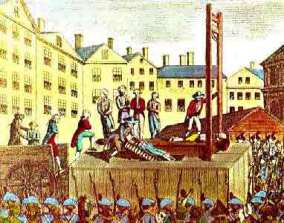 I don’t wonder how these folks get their money or their positions. However, I do wonder if any one even listens to them. Oh, wait. One of them is running for president and the other is taken seriously in the media.
Where’s a guillotine when you need one?
Dianne Bauer opened up her cafe to Mitt Romney and his campaign for a small round table discussion Friday morning before his speech at Bayliss Park.
This isn’t the first politician that has asked Bauer to use the Main Street Cafe in downtown Council Bluffs.
“With Rick Perry he made a point of stopping in the kitchen before he ever went to the other side to address the public and the media to thank us and introduce himself to us,” said Bauer. “That’s what I thought we would get here, just normal. This was all out, like you’d think Obama was here.”
Bauer’s issues with the campaigns staffers started the night before when they started staging the cafe for the event.
She described many of their demeanors as “arrogant”.
She says her cafe was not treated with the respect it deserved.
“Stuff got broke. My table cloths they just got ripped off, wadded up and thrown in the back room,”
She says the boom truck she allowed the campaign to borrow to gain access to the roof now has an 8-inch gauge in it that she’ll have to take the time to repair.
The campaign told her to send them an itemized list of anything that was broken, and they would pay for it, but Bauer says that won’t fix everything.
“My dad’s picture, an emblem my dad gave me, it got broke. Those aren’t things you can replace,”
Bauer says she never even got to meet the candidate she closed half of her restaurant down for.
“Every time we tried to go out or look, secret service was right there,” she said.
She was complaining about the event to a friend when reporters overheard her and posted about it online.
That’s when Romney called Bauer himself. She says he explained that it was just a misunderstanding that she did not get to meet him, but the phone call didn’t smooth things over for her.
“He responded ‘well, I’m sorry your table cloths got ripped off, wadded up and thrown in the back room’ and I took it as mocking,” she said. “We’re the ones he’s wanting to get the votes from, you’d think we would have been treated better.”
She says the whole experience left her wondering.
“With how he treated me, is that how he’s going to treat others? You know, if he gets in office is he going to be that way to us little people?”
The always guillotine-worthy David Brooks proves to his again exactly why he is a public menace. He whines that there just aren’t any good ‘followers’ out there any more. I guess he’s in search of a new generation of true believers. I’m going to let you read Dean Baker who rips him a new one.
Nope, I’m not kidding. His column today is devoted to “the follower problem.” He is upset that people are cynical and don’t seem to trust the elites. Brooks tells us:
“I don’t know if America has a leadership problem; it certainly has a followership problem. Vast majorities of Americans don’t trust their institutions. That’s not mostly because our institutions perform much worse than they did in 1925 and 1955, when they were widely trusted.”
Let’s leave aside 1925 since it was a very different world. In 1955 the economy was growing at a healthy pace with workers up and down the income ladder sharing in the prosperity. They were seeing rapidly rising living standards and it was a virtual certainty that children would enjoy much better standards of living than their parents.
Brooks may have missed it, but the economy collapsed in 2008. This was not due to any external event like a massive drought or asteroid strike, it was due to fact that the people who design economic policy were too brain-dead to see the largest financial bubble in the history of the world.
The result of this failure is that tens of millions of people are unemployed, underemployed, or out of the workforce altogether. Millions more are facing the loss of their homes. And a huge cohort of baby boomers, many of whom spent their lives working at decent paying jobs, are approaching retirement with nothing to support them but their Social Security.
It’s enough to make me take up knitting.
OOPS wrong musical …
To be or not to be … a second term for Obama
Posted: June 12, 2012 Filed under: 2012 presidential campaign | Tags: Obama second term, The Economist 42 Comments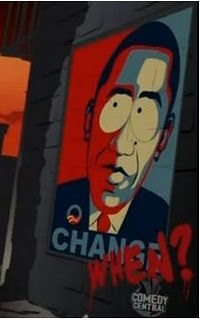 I’m watching the Economist Debate on US elections with the proverbial jaundiced eye. It’s not exactly a good sampling of folks that will most likely be voting in the election. However, the comments are extremely interesting and as of this moment, Obama’s being judged by the readership as worthy of a second term. Why I bring this up is that there are two think tank guys arguing the opposing sides and their fascinating arguments reveal a lot about why we can’t get a decent conversation about issues going on in this country at most levels of policy making.
- Michael Barone is arguing the Republican side of things. He’s a Senior political analyst for the Washington Examiner and a resident fellow at the American Enterprise Institute. This is supposedly the ‘brains’ of the conservative movement and one of its mouthpieces wrapped up in “research” and “journalism”. Let’s just say he’s a propaganda tool and leave it at that. As such, this is the level of his argument. Death Panels!!! Liberal Elites!!! Socialism!!!! If this is the brains behind the conservative moment, be very afraid. Let me offer up a sample.
America needs to reform its industrial-age entitlement programmes, especially Medicare, to better suit our information-age society. Entitlements are on a trajectory to gobble up all federal revenues and more, and their centralised command and control design leaves no options but death panels and default. Unfortunately, Mr Obama has shown no serious interest in entitlement reform. He ignored the recommendations of his own Bowles–Simpson commission and sabotaged the “grand bargain” negotiations by suddenly demanding $400 billion more in tax increases. He has responded to Republican proposals such as Paul Ryan’s budget plan with campaign demagoguery of the crudest sort.
I’m no Obama fan but this characterization is about as real as the pictures of Obama riding the Unicorn while wielding the rainbow sword. Paul Ryan’s budget plan was full of unsubstantiated number fudging. The grand bargain always included tax increases on the uppermost bracket and Romney/Dole/Chaffey Care–a brain child of the conservative Heritage Foundation–is anything but command and control. Well, unless you want to consider Insurance and Drug companies having command and control over everything the basis for “command and control”. I found Obama way too eager to sell off social security and medicare so that criticism is just delusional. So, basically, the argument against Obama is just more lunatic fringe propaganda here. It’s not an argument. It’s a mythic diatribe. The only thing it needed was a reference to “who is John Galt”. Frankly, the liberal arguments against Obama are much more compelling including the ones that find his extensions of the Patriot Act and use of drones positively Cheneyesque. But, Glaston is not going to argue against the Bushy Cheney imperialistic presidency so that’s no where to be found.
So, is the argument for Obama any more compelling? Again, I’m looking at the folks here. I’m not making any case either way on my own terms.William A. Galston provides the counter argument. He’s the Ezra Zilkha Chair for the Governance Studies Program at the Brookings Institution. This is the supposed liberal counterpart to AEI. Here’s what Galston believes are Obama’s accomplishments-to-date.
But Mr Obama’s most notable achievements have come in the three wars he inherited. He engineered a military withdrawal from Iraq phased so as not to surrender hard-won gains, and he has devised a reasonable timetable for ending the decade-long war in Afghanistan in a manner that safeguards our core long-term interests As for the war on terrorism, Mr Obama has proceeded with focus and verve, and the results have been more than satisfactory. The bold mission that killed Osama bin Laden was the frosting on a very large cake. American drone attacks in Pakistan and Yemen have decimated al Qaeda’s leadership. While the international terrorist network continues to pose a substantial threat, its leaders are on the defensive and in hiding as a result of Mr Obama’s policies.
Back at home, Mr Obama’s social policies have produced similarly good results. In the area of education, he chose a reform-minded secretary and backed him to the hilt. The result: a number of useful initiatives, including the “Race to the Top” programme that catalysed substantial change at the state and local level at modest cost. Mr Obama has also done more for gay rights than any president in history. But when looking at the president’s non-economic domestic record, the focus inevitably falls on health-care reform.
Mr Obama’s reform has long been unpopular and remains so today. But this does not mean it is bad policy, or that it will remain unpopular. If the legislation is fully implemented, it will succeed in expanding insurance coverage and in ridding the system of some of its worst defects, such as denial of coverage based on pre-existing conditions. It also includes attempts to restrain health-care costs, now growing at a rate that portends fiscal disaster if allowed to proceed unchecked. Even its most controversial aspect, the mandate, is a policy conservative Republicans once supported (and Mr Romney included in his reform of Massachusetts’s health-care system). It is for good reason that health-care reform represents a signature accomplishment for Mr Obama, one that had eluded previous Democratic presidents for three-quarters of a century.
I come, finally, to the economy, the issue on which—barring a military confrontation with Iran—the election will turn. To assess the president’s record accurately, some context is essential. As economists Kenneth Rogoff and Carmen Reinhart have shown, financial collapses differ from even deep cyclical downturns. Growth and household incomes are slower to recover, while unemployment, deficits and public debt are higher. And these effects persist for many years. So putting Mr Obama’s record up against Ronald Reagan’s is to make an apples-to-oranges comparison.
The real question is how Mr Obama has done in relation to previous financially induced crises. And the answer is: not badly. He averted an all-out meltdown of the American and global financial system and the onset of a second Great Depression. His stimulus programme, though imperfect in design, helped to stem job losses at a crucial moment in the downturn. (A majority of American economists concurs in this view, as does the non-partisan Congressional Budget Office.) His intervention saved two American car firms and as many as 2m auto-dependent jobs. His programme to recapitalise the banking sector, which was necessary but unpopular on the left, has left America’s financial system better off than its European counterparts. And his new architecture for financial regulation, which was necessary but unpopular on the right, addresses many of the excesses and imbalances that had crept into the system.
So, you can go read all the comments and the longer arguments by both these guys. Frankly, the more I know about Romney, the more I am resigned to vote for Obama. I’m not sure that’s a particularly compelling argument for any one to make but as far as things I really care about, Romney is anathema to them all. What’s worse? Obama’s pathetic retreat from conflict over important issues or Romney’s do and say anything just make me King manner? Frankly, I’m sticking with the known quantity at this point. Huzzah!

 peej
peej Carissa
 bostonboomer
 dakinikat
 ecocatwoman
 mablue2
 Mama Lopez
 peggysue22
 quixote
 skydancingguestblogger
 Mona (aka Wonk the Vote)



 Sky Dancing
Recent Comments