
Broccoli Loses! Oh teh Humanity!
Posted: June 28, 2012 Filed under: Affordable Care Act (ACA), SCOTUS, U.S. Politics, Women's Healthcare | Tags: Brocoli Mandate 61 Comments It’s one of those Bizarro World days where you get to see “liberals” cheer over an American Heritage invented, Romney inspired, aka Dolecare private insurance scheme while conservatives moan that it’s
Alas poor Scalia! His revolution has stalled. It seems Justice Roberts either cares about his name or precedent after all. He managed to shift grounds but still worries about the ‘Broccoli Horrible’.
The majority opinion written by Chief Justice John Roberts bluntly insisted that the clause does not vest Congress with “police powers … to regulate an individual from cradle to grave.” It also explicitly embraced the conservative argument regarding health care and broccoli.
In oral arguments three months ago, Roberts and Justice Antonin Scalia famously demanded that Solicitor General Donald Verrilli explain why, if the government can compel someone to buy health insurance, it can’t also compel them to buy broccoli.
That comparison outraged progressives and horrified health care experts, because it seemed to trivialize the enormous societal significance of health care.
Roberts, however, enshrined the broccoli-related concerns in his opinion, writing:
According to the Government, upholding the individual mandate would not justify mandatory purchases of items such as cars or broccoli because, as the Government puts it, “[h]ealth in-surance is not purchased for its own sake like a car or broccoli; it is a means of financing health-care consumption and covering universal risks.” Reply Brief for United States 19. But cars and broccoli are no more purchased for their “own sake” than health insurance. They are purchased to cover the need for transportation and food.In their concurrence, the four liberal justices, led by Ruth Bader Ginsburg, nevertheless took issue with some of Roberts’ conclusions — including the one about broccoli.
Ginsburg tried to explain some of the ways in which broccoli (or a car) are different from health care:
Although an individual might buy a car or a crown of broccoli one day, there is no certainty she will ever do so. And if she eventually wants a car or has a craving for broccoli, she will be obliged to pay at the counter before receiving the vehicle or nourishment. She will get no free ride or food, at the expense of another consumer forced to pay an inflated price.And she even seemed to poke fun at Roberts for swallowing such an argument:
As an example of the type of regulation he fears, The Chief Justice cites a Government mandate to purchase green vegetables. Ante, at 22–23. One could call this concern “the broccoli horrible.” Congress, The Chief Justice posits, might adopt such a mandate, reasoning that an individual’s failure to eat a healthy diet, like the failure to purchase health insurance, imposes costs on others. See ibid.Consider the chain of inferences the Court would have to accept to conclude that a vegetable-purchase mandate was likely to have a substantial effect on the health-care costs borne by lithe Americans. The Court would have to believe that individuals forced to buy vegetables would then eat them (instead of throwing or giving them away), would prepare the vegetables in a healthy way (steamed or raw, not deep-fried), would cut back on unhealthy foods, and would not allow other factors (such as lack of exercise or little sleep) to trump the improved diet.
Be prepared to eat thy Broccoli or Move to Canada for that horrible Universal Health Care you all fear Teabots! Meanwhile, I’m trying to imagine all those governors actually opting out of a huge amount of federal funds to make a point about their Medicaid programs. Yes, death panels are okay as long as its for poor people. Don’t you just love those sociopaths cum libertarians?
A rejection of health care egalitarianism, namely a recognition that the wealthy will purchase more and better health care than the poor. Trying to equalize health care consumption hurts the poor, since most feasible policies to do this take away cash from the poor, either directly or through the operation of tax incidence. We need to accept the principle that sometimes poor people will die just because they are poor. Some of you don’t like the sound of that, but we already let the wealthy enjoy all sorts of other goods — most importantly status — which lengthen their lives and which the poor enjoy to a much lesser degree. We shouldn’t screw up our health care institutions by being determined to fight inegalitarian principles for one very select set of factors which determine health care outcomes.
Like I said, welcome to the new Bizzarro world. It sounds strangely like a Dickens novel. Bless their little hearts, every one!
Breaking News: SCOTUS Upholds Affordable Care Act…Details Coming
Posted: June 28, 2012 Filed under: Barack Obama, Breaking News, Health care reform, U.S. Politics | Tags: Affordable Care Act, John Roberts, Supreme Court 99 Comments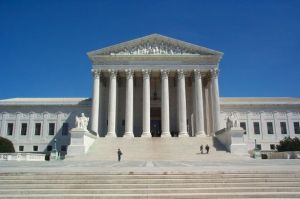
My intuition was correct. I think Judge Roberts made his choice. His own reputation and that of the Supreme Court was more important to him than his conservative ideology.
The bottom line is that the majority has voted to uphold the ACA. The majority opinion was written by Chief Justice John Roberts, who joined the more liberal justices. I will add details and links as I get them. Please post anything you hear in comments.
The New York Times says the law has has been basically upheld. Their live updates are here.
But I’m hearing on MSNBC that the Court said the states can opt out of the program. That could be a serious problem for the law if it affects the size of the population pool. The mandate is “technically unconstitutional,” but the government can penalize people who don’t buy insurance–through the government’s power to tax. However the law doesn’t actually include a penalty.
It sounds like the issue the states can opt out on is the Medicaid expansion. That could be a big problem.
News Links
ABC News: The Mandate Can Stay, Supreme Court Says in Health Care Ruling
Washington Post: Supreme Court Upholds Health Care Law, Mandate
LA Times: Supreme Court Upholds Health Care Law as Tax Measure
CNN International: Where in the world can you get universal health care?
CNN: Supreme Court Upholds Obamacare 5-4
I’ll continue to update in the comments.
Thursday Reads: Holder Witchhunt, SCOTUS and Health Care, Colorado Wildfires, and Mocking Mitt
Posted: June 28, 2012 Filed under: 2012 elections, 2012 presidential campaign, immigration, Mitt Romney, morning reads, Rush Limbaugh, Scott Brown, SCOTUS, U.S. Military, U.S. Politics, War on Women, Women's Healthcare | Tags: Air Force Academy, alien invasion, Antonin Scalia, Barack Obama, Colorado wildfires, Darrell Issa, Eric Cantor, Eric Holder, FEMA, witchhunt 33 CommentsUPDATE: Supreme Court upholds Affordable Care Act, Including Individual Mandate!

Good Morning!!
Since today is going to be a mostly serious news day, I’ll begin with a silly story. A new survey by the National Geographic Channel found that 65% of Americans think President Obama is more qualified to handle an invasion from outer space than Mitt Romney.
And lest you are tempted to dismiss this poll as pure silliness, the study also found that 36 percent of Americans think UFOs exist, while another 48 percent aren’t sure. Which means that at least some of the respondents judging the presidential candidates’ alien-fighting abilities may see it as a plausible scenario. (According to the poll, 79 percent also say the federal government has been hiding information about UFOs from the public – which may actually say more about the public’s overall distrust of government than its views on aliens.)
UFO = Unidentified Flying Object. Of course UFOs exist. Haven’t we all seen things in the sky that we didn’t recognize? Whether these objects are of extraterrestrial origin would have been a better question. Now the ones who want to “befriend” a visiting alien–those people have got to be looney tunes. But this story isn’t as silly as I originally thought, since it’s obviously just an ad for the National Geographic Channel.
And now the real news. Today will be a big day for politics junkies. Will the House go through their idiotic plan to find Attorney General Eric Holder in contempt of Congress? Will Chief Justice John Roberts and Justice Anthony Kennedy decide to vote to keep the current Supreme Court from going down in history as a laughingstock?
Eric Holder Witchhunt
On the Holder issue, I think the House probably will call the vote, especially since some Democrats are planning to vote for the contempt resolution because they’re scared of the NRA.
Cognitively challenged Massachusetts Senator Scott Brown today called on Holder to resign.
“He can’t effectively serve the president,” Brown said last night on “NightSide” with Dan Rea — in a one-man debate after Democratic challenger Elizabeth Warren chose to sit the event out.
Going at Holder on the eve of an expected contempt of Congress vote tomorrow, Brown said, “For the best interest of the country, I think he should step down and resign. He’s lost the confidence of the American people. Certainly he’s lost the confidence of Congress. He misled Congress. They have a right to know.”
That quote is from the ultra-conservative Boston Herald, so I’ll interpret for you. The “debate” referred to in the article was an appearance on a conservative radio talk show that Brown proposed as an alternative to the public debate that would have been sponsored by U. Mass. Boston and the Edward M. Kennedy Institute.
The announcement came shortly after representatives of Vicki Kennedy said she would not agree to Brown’s demand that she remain neutral in the race, in exchange for the senator’s participation in a late September debate she had proposed be hosted by the University of Massachusetts Boston and Edward M. Kennedy Institute for the United States Senate.
Barnett had said Monday that Brown would participate only if Kennedy, president of the board at the Kennedy Institute, not endorse in the race and that MSNBC not be the broadcast sponsor of the debate.
Instead of “debating” with Scott Brown on a rinky-dink local conservative radio talk show, Elizabeth Warren appeared on Rachel Maddow’s national cable show last night.
Scott Brown and Darrell Issa are both complete idiots, IMNSHO.
The SCOTUS Decision on Health Care
I’m going to go out on a limb and predict that the Roberts and Kennedy will both vote to uphold the Affordable Care Act. I think, based on what they did with Arizona’s immigration law, that Roberts and Kennedy will also vote to uphold “Obamacare.”
When this happens, Antonin Scalia may freak out completely and embarrass himself even more than he did after the Arizona decision. And then perhaps his friends and colleagues will sit him down and suggest that he retire and get his own radio talk show.
At Slate, Judge Richard Posner harshly criticized Scalia’s behavior as political.
The nation is in the midst of a hard-fought presidential election campaign; the outcome is in doubt. Illegal immigration is a campaign issue. It wouldn’t surprise me if Justice Scalia’s opinion were quoted in campaign ads.
Would Chief Justice Roberts be proud of his Court if that happened?
House progressives say they will introduce a single-payer plan if the law is struck down.
The last thing House progressives want is for the Supreme Court to strike down President Barack Obama’s health care law. But if the high court rules Thursday that some or all of the law is unconstitutional, progressives are ready to renew their push for the model of health care they wanted all along: the single-payer option.
“It’s easy to see it’s a good idea,” Rep. Keith Ellison (D-Minn.), co-chairman of the Congressional Progressive Caucus, told The Huffington Post. “It’s the cheapest way to cover everybody.”
Ellison said all 75 members of the caucus have already signed onto a bill by Rep. John Conyers (D-Mich.) to create a single-payer, publicly financed, privately delivered universal health care program. The proposal would essentially build on and expand Medicare, under which all Americans would be guaranteed access to health care regardless of an ability to pay or pre-existing health conditions.
Now, now. We don’t want to give Scalia a conniption fit, do we? He would be more likely to agree with libertarian economics blogger Tyler Cowan who thinks the wealthy naturally will have better health care and poor people should just die if they can’t afford health insurance.
A rejection of health care egalitarianism, namely a recognition that the wealthy will purchase more and better health care than the poor. Trying to equalize health care consumption hurts the poor, since most feasible policies to do this take away cash from the poor, either directly or through the operation of tax incidence. We need to accept the principle that sometimes poor people will die just because they are poor. Some of you don’t like the sound of that, but we already let the wealthy enjoy all sorts of other goods — most importantly status — which lengthen their lives and which the poor enjoy to a much lesser degree. We shouldn’t screw up our health care institutions by being determined to fight inegalitarian principles for one very select set of factors which determine health care outcomes.
The health care decision should come out around 10AM, and I’ll update this post when the news breaks.
Mitt Romney Report
I know everyone is just dying to know what Mitt Romney is up to. Well yesterday he had quite a hissy fit about the Washington Post article on how he pioneered outsourcing when he was at Bain Capital. He actually sent some of his representatives to the Post to demand a retraction! As you might imagine, the Post wasn’t intimidated.
Good grief! They even gave a Power Point presentation! What a bunch of crybabies. And on Hardball today, Howard Fineman reported that Romney campaign staffers complained to him that Obama has been running lots of negative ads against Romney. Hey Mitt, politics ain’t beanbag.
From today’s Washington Post: Mitt Romney shifts focus from Post article on Bain to health-care law.
On the eve of the Supreme Court decision on President Obama’s health-care law, Republican presidential candidate Mitt Romney predicted Wednesday that “they’re not sleeping real well at the White House tonight.”
He said that the court’s decision is a constitutional one, but that “one thing we already know, however, we already know it’s bad policy and it’s gotta go.”
Romney’s comments marked a shift in focus after several days in which his campaign sought to deflect attacks from the Obama campaign over the role that Bain Capital, his former firm, played in the overseas outsourcing trend that accelerated in the 1990s.
Obama, Vice President Biden and top campaign operatives have seized on a Washington Post article published Friday that said Bain Capital invested in companies that specialized in moving work overseas. The Obama team released tough ads in the swing states of Iowa, Ohio and Virginia on the subject.
Romney tried to “work the refs,” but he forgot that you catch more flies with honey than vinegar. Now he’s irritated the Washington Post. Not real smart, Mitt. Yesterday, even Rush Limbaugh dissed the Republican candidate.
Colorado Wildfires (and More Mitt)
The wildfires in Colorado are really getting out of control.
Firefighters struggled on Wednesday to beat back a fiercely aggressive wildfire raging at the edge of Colorado Springs that has forced at least 35,000 people from their homes and was nipping at the edges of the U.S. Air Force Academy.
The so-called Waldo Canyon Fire, fanned by gusting winds, has gutted an unknown number of homes on the wooded fringes of Colorado’s second-most populous city and prompted more evacuations as flames roared out of control for a fifth day.
President Barack Obama plans to pay a visit to the area on Friday to view the damage, the White House said.
The blaze flared Tuesday night with sudden ferocity and quickly overran fire containment lines, invading the northwestern corner of the city. But officials have declined to characterize the extent of property damage there….
The blaze left an orange hue over Colorado Springs, and a smoky haze hung in the air, so thick in places that the giant, roiling pall of smoke that continued to billow into the sky over the city was obscured from the ground.
Local TV station channel 9 news provides a summary of fires in many different locations. It’s really shocking how widespread they are. Yesterday the fires threatened the Air Force Academy, and many residents there were evacuated.
Voters who live in Colorado and other states where there are disasters like fires, mudslides, hurricanes, tornadoes, and floods, should be aware that Republican presidential candidate Mitt Romney opposes federal disaster relief and would probably eliminate FEMA if he were elected. He thinks natural disasters should be handled by individual states. From one of the debates last year:
Here’s a transcript:
KING: Governor Romney? You’ve been a chief executive of a state. I was just in Joplin, Missouri. I’ve been in Mississippi and Louisiana and Tennessee and other communities dealing with whether it’s the tornadoes, the flooding, and worse. FEMA is about to run out of money, and there are some people who say do it on a case-by-case basis and some people who say, you know, maybe we’re learning a lesson here that the states should take on more of this role. How do you deal with something like that?
ROMNEY: Absolutely. Every time you have an occasion to take something from the federal government and send it back to the states, that’s the right direction. And if you can go even further and send it back to the private sector, that’s even better. Instead of thinking in the federal budget, what we should cut — we should ask ourselves the opposite question. What should we keep? We should take all of what we’re doing at the federal level and say, what are the things we’re doing that we don’t have to do? And those things we’ve got to stop doing, because we’re borrowing $1.6 trillion more this year than we’re taking in. We cannot…
KING: Including disaster relief, though?
ROMNEY: We cannot — we cannot afford to do those things without jeopardizing the future for our kids. It is simply immoral, in my view, for us to continue to rack up larger and larger debts and pass them on to our kids, knowing full well that we’ll all be dead and gone before it’s paid off. It makes no sense at all.
Because “our kids” will have a great future if they go through an earthquake or other horrible disaster and there’s no federal help for the state they live in to recover. Brilliant!
That’s about it for me. I’ll just leave you with this bit of good news: Eric Cantor may be in trouble
New polling from Virginia’s 7th Congressional District, one of the more reliably conservative districts in the country, shows surprising vulnerabilities for Republican House Majority Leader Eric Cantor, especially on the issue of women’s health.
In the poll from from Harrison Hickman obtained exclusively by ThinkProgress, voters say they would support a pro-choice candidate over a candidate who is pro-life by an unexpectedly large margin, 68 percent to 23 percent. The finding comes after intense media coverage of efforts by state Republicans to mandate transvaginal ultrasounds prior to obtaining an abortion, a procedure described by critics as “state-sponsored rape.” The resulting backlash from women in Virginia forced Governor Bob McDonnell (R) and his allies at the statehouse to moderate their efforts.
Eric Cantor has a 100% rating from the National Right To Life Committee.
AND
asked about Cantor specifically, voters disapprove of his handling of government spending, health care and reigning in the budget deficit, three key issues that Cantor and House Republicans have campaigned heavily on since 2008.
While Cantor is not among Republicans who are considered at risk by political prognosticators, 43 percent of voters would replace Cantor compared to just 41 percent who would reelect him.
So…..what’s on your reading and blogging list today?
The Must-Read Article on Fast & Furious & Furiouser Right Wing Nuttery
Posted: June 27, 2012 Filed under: American Gun Fetish, Republican politics, right wing hate grouups | Tags: Eric Holder, Fast and Furious, Issa 19 Comments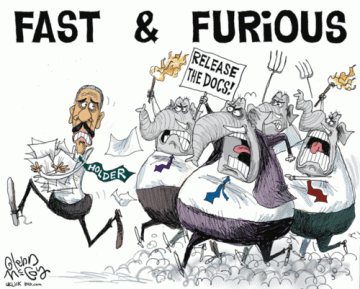 I tucked the link to this incredible Fortune article down thread on the Morning Reads. However, I think it’s worth front paging it and emphatically suggesting you read it. Its the result of a six month journalistic investigation that’s definitely Pulitzer-worthy. Plus, it’s Fortune. Republicans cannot call this a magazine with a liberal bias without sounding batty. The article is full of analytical gems like this one.
“Republican senators are whipping up the country into a psychotic frenzy with reports that are patently false.”
Not that we didn’t suspect that already with BostonBoomer’s previous foray into to the topic. My only hope is that some of this information will stop the witch hunt against Eric Holder and get down to the actual problem. Here’s a bit from MoJo to motivate you to read it.
But Fortune’s Katherine Eban has a long piece about F&F in this week’s issue, and if she’s even close to right, then everything I thought I knew was wrong. F&F wasn’t a gun walking operation. Nobody deliberately allowed guns to be shipped to Mexican drug lords. Nobody stupidly lost track of the guns. It just didn’t happen.
Eban’s story is too long and detailed to be excerpted, but when I started reading I couldn’t stop. My mouth was hanging open the whole time. The real story, according to Eban, is about weak laws, incompetent prosecutors, juvenile bickering within the ATF’s Phoenix division, a CBS reporter who basically got played, and a craven bunch of managers and politicians who decided to throw the operation under the bus because it was too politically risky to just tell the truth. If you have even the slightest interest in this case — I’m talking to you, Jon Stewart — you need to read Eban’s story. Now.
I actually sent the article off to my Dad in Seattle because he’s been spewing Fox News propaganda on this at me and I was getting really sick of it. There’s even a book the right wing is pushing along with its meme that it’s all a conspiracy to take their guns away from them. This bit of investigative journalism actually avoids the Washington set and goes straight to people involved. Again, it’s real journalism for a change.
Here’s a blurb from the Fortune article.
Quite simply, there’s a fundamental misconception at the heart of the Fast and Furious scandal. Nobody disputes that suspected straw purchasers under surveillance by the ATF repeatedly bought guns that eventually fell into criminal hands. Issa and others charge that the ATF intentionally allowed guns to walk as an operational tactic. But five law-enforcement agents directly involved in Fast and Furious tell Fortune that the ATF had no such tactic. They insist they never purposefully allowed guns to be illegally trafficked. Just the opposite: They say they seized weapons whenever they could but were hamstrung by prosecutors and weak laws, which stymied them at every turn.
Indeed, a six-month Fortune investigation reveals that the public case alleging that Voth and his colleagues walked guns is replete with distortions, errors, partial truths, and even some outright lies. Fortune reviewed more than 2,000 pages of confidential ATF documents and interviewed 39 people, including seven law-enforcement agents with direct knowledge of the case. Several, including Voth, are speaking out for the first time.
How Fast and Furious reached the headlines is a strange and unsettling saga, one that reveals a lot about politics and media today. It’s a story that starts with a grudge, specifically Dodson’s anger at Voth. After the terrible murder of agent Terry, Dodson made complaints that were then amplified, first by right-wing bloggers, then by CBS. Rep. Issa and other politicians then seized those elements to score points against the Obama administration, which, for its part, has capitulated in an apparent effort to avoid a rhetorical battle over gun control in the run-up to the presidential election. (A Justice Department spokesperson denies this and asserts that the department is not drawing conclusions until the inspector general’s report is submitted.)
The Justice Department also offered to conduct a briefing, give Congress documents related to whistle-blowers in the case, and work with the committee to respond to any questions it had after reviewing the materials.
In the summary, the Justice Department maintained the offer would give Congress “unprecedented access to deliberative documents.” The administration official said the documents would “dispel any notion of an intent to mislead Congress.”
“This was a good-faith effort to try to reach an accommodation while still protecting the institutional prerogatives of the executive branch, often championed by these same Republicans criticizing us right now,” White House spokesman Eric Schultz told CNN. “Unfortunately, Republicans have opted for political theater rather than conduct legitimate congressional oversight.”
Boehner, however, said a failure to cooperate by the Obama administration forced House Republicans to take up the contempt measure.
1. Issa Has No Case: Issa’s uncovered no evidence showing Holder bears any blame for the botched operations begun under George W. Bush, even though the Justice Department turned over thousands of pages of documents concerning the operations. Instead of accepting this fact, Issa has requested many more documents containing confidential information regarding ongoing law enforcement investigations, and is now threatening to hold Holder in contempt if these documents are not turned over. Holder is entirely correct to withhold these documents, however, because Justice Department documents are not subject to congressional subpoena if they would reveal “strategies and procedures that could be used by individuals seeking to evade [DOJ’s] law enforcement efforts.”
2. Reagan’s Justice Department Agreed With Holder: President Reagan’s Justice Department warned in the 1980s that the Constitution’s separation of powers prevents the kind of documents Issa is seeking from being revealed to Congress because of the risk that the legislature could “exert pressure or attempt to influence the prosecution of criminal cases.”
3. Law Enforcement Rejects Issa’s Witchhunt: Issa’s efforts to embarrass Holder are an unnecessary distraction that hinders the Department of Justice’s ability to do its real job. As an organization representing numerous senior law enforcement officials warned Issa, his efforts are “an impediment to the vigorous enforcement of violence and crime.”
4. Even Top Republicans Think Issa Goes Too Far: After Issa leaked his plans to pursue contempt charges to the media, the House Republican leadership pressured him to back off. Indeed, even House Majority Leader Eric Cantor (R-VA) has indicated that Issa is overreaching.
5. Issa Is Fixated On A Conspiracy Theory: Perhaps the most bizarre aspect of this affair is what Issa once suggested his investigation will uncover. In an interview with Sean Hannity, Issa claimed that the Obama administration “made a crisis” when they continued the Bush-era gunrunning operations because they wanted to “us[e] this crisis to somehow take away or limit people’s Second Amendment rights.” This accusation originates from a former militiaman who supports violent resistance to imagined government attempts to seize his guns. And it amounts to an accusation that a series of botched gun stings that begun during the Bush Administration were actually part of a secret Obama plot to release guns to Mexican drug lords, so that those guns could then be used to kill federal agents, which would then cause a national uprising in support of gun control.
We need to replace the right wing propaganda with facts.
Novelist, Screenwriter, and Humorist Nora Ephron has Died
Posted: June 26, 2012 Filed under: just because | Tags: Carl Bernstein, celebrity deaths, Dan Greenburg, Karen Silkwood, Meryl Streep, Nicholas Pileggi, Nora Ephron 13 Comments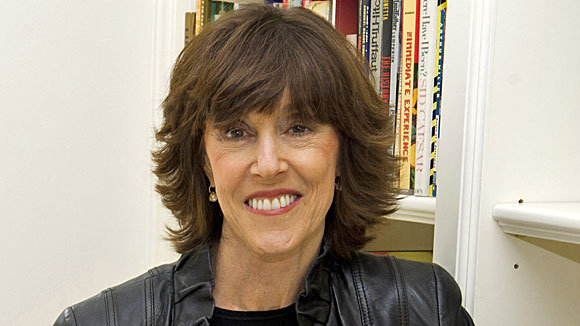
Nora Ephron, who gained a devoted following for her perceptive, deeply personal essays and parlayed that renown into a screenwriting career of wistful romantic comedies such as “When Harry Met Sally” and “You’ve Got Mail,” the marital exposé “Heartburn” and the whistleblower drama “Silkwood,” died June 26 at a hospital in New York. She was 71.
The death was confirmed by her friend Richard Cohen, a Washington Post columnist. She died of complications from the blood disorder myelodysplasia, with which she was diagnosed six years ago.
As a young woman, Ms. Ephron modeled her self-deprecating and deadpan writing style on Dorothy Parker, part of the Algonquin Round Table of sophisticated New York writers and humorists that also included Robert Benchley and S.J. Perelman. Of the philandering husband in her 1983 novel “Heartburn” — modeled on her marriage to former Washington Post journalist Carl Bernstein — Ms. Ephron wrote he was “capable of having sex with a Venetian blind.”
In time, Ms. Ephron became a social confederate of New York playwrights, filmmakers and wits, including Mike Nichols, Woody Allen and Calvin Trillin; Washington journalists including former Post executive editor Benjamin Bradlee and his journalist wife, Sally Quinn; and a Hollywood coterie that included Rob Reiner, Tom Hanks, Steve Martin and Steven Spielberg.
The New York Times calls her a “woman of letters.”
She was a journalist, a blogger, an essayist, a novelist, a playwright, an Oscar-nominated screenwriter and a movie director — a rarity in a film industry whose directorial ranks were and continue to be dominated by men. More box-office success arrived with “You’ve Got Mail” and “Julie & Julia.” By the end of her life, though remaining remarkably youthful looking, she had even become something of a philosopher about age and its indignities.
“Why do people write books that say it’s better to be older than to be younger?” she wrote in “I Feel Bad About My Neck,” her 2006 best-selling collection of essays. “It’s not better. Even if you have all your marbles, you’re constantly reaching for the name of the person you met the day before yesterday.”
Nora Ephron was born on May 19, 1941, on the Upper West Side of Manhattan, the eldest of four sisters, all of whom became writers. That was no surprise; writing was the family business. Her father, Henry, and her mother, the former Phoebe Wolkind, were Hollywood screenwriters who wrote, among other films, “Carousel,” “There’s No Business Like Show Business” and “Captain Newman, M.D.”
“Everything is copy,” her mother once said, and she and her husband proved it by turning the college-age Nora into a character in a play, later a movie, “Take Her, She’s Mine.” The lesson was not lost on Ms. Ephron, who seldom wrote about her children but could make sparkling copy out of almost anything else: the wrinkles on her neck, her apartment, cabbage strudel, Teflon pans and the tastelessness of egg-white omelets.
Ephron’s first marriage, to writer Dan Greenburg, ended after nine years. In 1976 she married Bernstein, who along with Bob Woodward had broken the Watergate scandal for the Washington Post a few years earlier. “Heartburn,” her 1996 novel, found humor in the ruins of her marriage to Bernstein, who, she said, had an affair while she was pregnant with their second son. The Bernstein-based character was played by Jack Nicholson, the Ephron-based character by Meryl Streep, in the 1986 film version.
Streep had also starred three years earlier in the Mike Nichols-directed “Silkwood,” a drama based on the real-life story of a labor organizer at a nuclear-processing plant whose whistle-blowing was abruptly ended when she died in a car accident.
Ephron’s third marriage was to journalist Nicholas Pileggi, who adapted his 1985 book “Wiseguy” into the movie “Goodfellas” (1990), directed by Martin Scorsese.
Pileggi survives her, as do her two sons from her marriage to Bernstein, Max and Jacob.
I loved Ephron’s humorous essays, and her novel Heartburn was absolutely hilarious. I had no idea she was the model for the Sandra Dee role in Take Her, She’s Mine–a romantic comedy starring Jimmy Stewart as the worried father of an attractive teenager. I wasn’t wild about some of Ephron’s sappy movies like You’ve Got Mail, but Silkwood is one of my all-time favorites. As an aside, I don’t think most people really believe Karen Silkwood’s “accident” was anything other than murder.
Rest in peace, Nora. You’ve left us far too soon.

 peej
peej Carissa
 bostonboomer
 dakinikat
 ecocatwoman
 mablue2
 Mama Lopez
 peggysue22
 quixote
 skydancingguestblogger
 Mona (aka Wonk the Vote)



 Sky Dancing
Recent Comments