
Exposing and Dismembering ALEC and its Kleptocracy Agenda
Posted: April 16, 2012 Filed under: American Gun Fetish, Big Pharma, Civil Liberties, Civil Rights, collective bargaining, Corporate Crime, corporate greed, corporate money, corporatism, corruption, Domestic Policy, Economy, education, Environment, New Orleans, We are so F'd | Tags: ALEC 13 Comments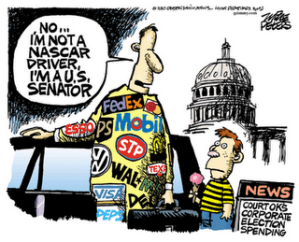 I have a personal interest in seeing ALEC dismembered. My governor Bobby Jindal has adopted and enacted some of its worse cookie cutter laws. There are three progressive interests that are leading actions to defund and defang this supposedly “nonpartisan individual membership organization of state legislators which favors federalism and conservative public policy solutions”. They are the Urban League, Common Cause, and ColorofChange. I would hope that many more groups will join in.
Many of ALEC’s corporate sponsors have quit funding the organization which seeks to remove oversight and regulation of all kinds of industry, privatize public services and goods, and deprive minority communities and women of basic voting rights and civil rights. They seek tort reform that would limit corporate exposure to liability from unsafe products and practices. They like to remove laws providing consumer protection and information. They are not nonpartisan and are responsible for some of the most heinous, radical legislation of the last few years. Woe to those of you whose governors or legislators belong to this organization for you will live in a world with very little protection from big money and big business and your tax dollars will be used to line their coffers.
The American Legislative Exchange Council describes itself as a nonpartisan champion of free markets. But if you spend some time at an ALEC conference (Bloomberg Businessweek did, for an article last year) you will be hard-pressed to find many Democrats. And when the entire conference meets for lunch, you will hear from the podium nothing that would seem out of place in a press release from Eric Cantor’s office. Last year in New Orleans, for example, Bobby Jindal, governor of Louisana, told an ALEC annual meeting, “Defeating the president is crucial to defending our economy,” and “Obama has been a disaster.” I didn’t hear anyone boo. What I did hear was the sound of fevered applause when the conference played a videotaped greeting from Ronald Reagan.
I’m not saying it’s wrong to feverishly applaud Ronald Reagan. I am saying that only in the most thinly defensible, legalistic sense can ALEC call itself “nonpartisan.” And the council doesn’t really support free markets, either. It supports the companies that fund it. This is an important distinction, because the corporations that donate to ALEC aren’t doing so to protect markets. They’re protecting favored tax treatments and pushing regulations that lock in their market positions. As best as we were able to determine in reporting our piece last year, corporations propose bills at the state level and then push them up to ALEC, which has both corporate and legislative members. ALEC pushes the legislative members to the foreground, stamps the bills as “model legislation,” and then the corporations push them back out to other state legislatures. This may not be the case with all ALEC legislation, but it certainly was with the bill we followed.
So ALEC is not what it says it is. That’s not extraordinary: Few advocacy groups are what they say they are. In ALEC’s case, however, the fingers-crossed-behind-its-back description of itself is definitional. If the American Legislative Exchange Council operated with complete openness, it couldn’t operate at all. ALEC has attracted a wide and wealthy range of supporters precisely because it does its real work in a black box. Membership lists are secret. The origins of the model bills are secret. Deliberations and votes on model bills are secret. The model bills themselves are secret. The council has designed its entire structure to disguise industry-backed legislation as grassroots work from state legislators. If this becomes clear to everyone, there’s no reason for corporations to use it. And that is exactly what has been happening.
Minority advocacy groups have been most active in the fight against ALEC. ALEC is responsible for the legislation that requires specific picture ids to vote and they are responsible for the Stand Your Ground Laws. Both of these issues have been front and center in Civil Rights Groups. The Trayvon Martin case is important in two key ways. First, it is bringing to light the institutional racism implicit in the criminal system. Second, it has exposed the role of ALEC in sneaking through legislature in states that most voters do not support or like. The vigilante-empowering Stand Your Ground laws are now seeing daylight.
The tension in corporate boardrooms over the case is the latest example of the pitfalls companies can sometimes face when they donate to political and lobbying groups, even those that seem safely below the radar of public consciousness.
The ALEC controversy is now sparking a broader debate about corporate participation in politics and the polarized state of political discourse. At a minimum, it has strengthened calls for companies to develop clear policies explaining their spending.
“I would caution companies to be very aware of where their money is going,” says Nell Minow, director of GMI Ratings, which provides corporate governance information to investors, corporate auditors and regulatory agencies. “Companies are going to realize they can take a real reputational hit with this kind of affiliation.”
She and others recall the tempest that erupted in 2010 around Target after the company donated to a nonprofit group supporting a Minnesota gubernatorial candidate who was known for opposing gay rights initiatives.
Like Louisiana, many Arizona politicians are in cahoots with ALEC. ALEC likes to use laws to funnel public money into corporate income statements. This isn’t free market promotion, this is more like being given the ability to loot public resources.
Legislators in Arizona continue to advance extremist legislation inspired by the American Legislative Exchange Council (ALEC) and its out-of-state corporate backers, according to a new analysis by People For the American Way Foundation, Common Cause, the Center for Media and Democracy and Progress Now. This report shines a new light on the Arizona Legislature’s unprecedented ties to the secretive organization, which recently drew nationwide fire for its role in implementing radical policies across the country like “Shoot First” laws and voter suppression laws, and anti-worker measures. ALEC’s extreme agenda has recently led companies such as Pepsi, Coca-Cola, McDonalds, Wendy’s, KRAFT and Intuit to withdraw from the organization. The Bill and Melinda Gates Foundation on Monday also withdrew its support from ALEC.
The comprehensive report found that Arizona’s large concentration of ALEC-member legislators, working hand-in-hand with the corporate leaders who make up ALEC’s membership, are continuing to endorse special interest legislation that harms ordinary people by limiting consumers’ rights, privatizing education and dismantling unions.
The report, ALEC in Arizona: The Voice of Corporate Special Interests in the Halls of Arizona’s Legislature, updated for the Fiftieth Legislature, second regular session is available here.
“Recent polling shows that Arizonans are appalled by the out-of-touch and extremist agenda at their State Legislature. This report shows that agenda is no accident,” said John Loredo, a member of Arizona Working Families and a former Arizona House Minority Leader. “Unfortunately, Arizona has one of the highest concentrations of ALEC legislators in the country, and that makes us a petri dish for anti-worker legislation and a host of other bad ideas.”
“ALEC-member legislators are unabashedly continuing to push legislation straight from corporate headquarters to Arizona’s lawbooks,” said Marge Baker, Executive Vice President at People For the American Way Foundation. “Well-heeled special interests are circumventing the democratic system and bypassing Arizona’s citizens, who can’t match the level of access that ALEC provides. As a result, Arizonans are facing an endless assault from laws that serve the interests of the rich and powerful instead of everyday people.”
You can find ALEC’s model bills and reports on its activities in many states at the site ALEC Exposed. ALEC is responsible for the horrible school voucher and privatization plan that Bobby Jindal has ramrodded through our state. It is also responsible for some of the worst climate change denial propaganda. The source of this funding is big oil, big coal, and the Koch Brothers.
$375,858 received from Koch foundations 2005-2010 [Total Koch foundation grants 1997-2010: $708,858]
American Legislative Exchange Council (ALEC) is one-stop shopping for state elected officials interested in perusing the wares of an array of Koch-funded opposition organizations including IER, ACCF, Mercatus and other sources. ALEC has successfully peddled corporate-written legislation to numerous states attacking the Kyoto Protocol, undermining climate science education in schools and numerous other anti-environmental legislation. ALEC has close ties to Koch Industries, which helped bail the organization out of financial troubles with a half-million dollar grant.
ALEC publishes its own materials as well, including a “Climate Change Overview for State Legislators” which downplays the science and risks of global warming and exaggerates the costs of addressing it. The Overview was written by Daniel Simmons, who moved from ALEC to become AEA’s Director of State Affairs. Simmons was at the Mercatus Institute before ALEC and is a graduate of the George Mason University School of Law.
Here’s some of the background information on the laws that ALEC creates with the intended purpose of “starving Public Schools“.
ALEC’s most ambitious and strategic push toward privatizing education came in 2007, through a publication called School Choice and State Constitutions, which proposed a list of programs tailored to each state. That year Georgia passed a version of ALEC’s Special Needs Scholarship Program Act. Most disability organizations strongly oppose special education vouchers—and decades of evidence suggest that such students are better off receiving additional support in public schools. Nonetheless, Louisiana, Oklahoma, Florida, Utah and Indiana have passed versions of their own. Louisiana also passed a version of ALEC’s Parental Choice Scholarship Program Act (renaming it Student Scholarships for Educational Excellence), along with ALEC’s Family Education Tax Credit Program (renamed Tax Deductions for Tuition), which has also been passed by Arizona and Indiana. ALEC’s so-called Great Schools Tax Credit Program Act has been passed by Arizona, Indiana and Oklahoma.
ALEC’s 2010 Report Card on American Education called on members and allies to “Transform the system, don’t tweak it,” likening the group’s current legislative strategy to a game of whack-a-mole: introduce so many pieces of model legislation that there is “no way the person with the mallet [teachers’ unions] can get them all.” ALEC’s agenda includes:
§ Introducing market factors into teaching, through bills like the National Teacher Certification Fairness Act.
§ Privatizing education through vouchers, charters and tax incentives, especially through the Parental Choice Scholarship Program Act and Special Needs Scholarship Program Act, whose many spinoffs encourage the creation of private schools for specific populations: children with autism, children in military families, etc.
§ Increasing student testing and reporting, through more “accountability,” as seen in the Education Accountability Act, Longitudinal Student Growth Act, One-to-One Reading Improvement Act and the Resolution Supporting the Principles of No Child Left Behind.
§ Chipping away at local school districts and school boards, through its 2009 Innovation Schools and School Districts Act and more. Proposals like the Public School Financial Transparency Act and School Board Freedom to Contract Act would allow school districts to outsource auxiliary services.
ALEC is also invested in influencing the educational curriculum. Its 2010 Founding Principles Act would require high school students to take “a semester-long course on the philosophical understandings and the founders’ principles.”
Perhaps the Brookings Institute states the mission most clearly: “Taken seriously, choice is not a system-preserving reform. It is a revolutionary reform that introduces a new system of public education.”
The passage of radical public school defunding in Louisiana is leading to a recall Jindal effort. We’ve already had some of this type of reform in New Orleans and it’s clearly not working well at all unless you count teacher union busting and lowering teacher salaries progress. Here are some of the things we will now be suffering in Louisiana. I personally am opposed to the state funding religious indoctrination hiding under the guise of education. These laws funnel public money into any thing that deems itself a school, it seems.
A vast expansion of charter schools, an overhaul of teacher tenure and establishment of a statewide program to pay private school tuition with public dollars moved within one step of final passage Thursday, as the Louisiana Senate Education Committee endorsed the headliner components of Gov. Bobby Jindal’s education agenda without changes or dissent.
I know this thread wanders around through many topics but the number of right wing bills pressured cooked into law by ALEC and their toadies is just as wandering and perverse. Check out the site and be aware of which politicians supposedly representing the people of your state that are ALEC cronies. The movement to get corporations to defund the organization should be paramount. Ordinary Americans have already lost a lot to their agenda. It’s time to stop them. Put pressure on organizations to join in the effort. Let’s defang this beast together.
Monday Reads
Posted: April 16, 2012 Filed under: morning reads | Tags: Michelle Bachmann still crazy after all this year, Tea Party, Tigers, WSJ misogny 38 Comments Good Morning!
It’s still the silly season. This means you really shouldn’t trust anything coming out of the beltway. Still, political junkies can’t help watching. At least I could find a few signs that some of the crazier fads of the last few years might go the way of the dodo. If we’re really lucky, we’ll be rid of the Tea Party and its adherents shortly.
Whither the Tea Party?
A major force in the 2010 midterm elections, the movement has stalled in public popularity, its support well below a majority and decidedly lukewarm. And Americans by a broad 23-point margin say the more they hear about the Tea Party movement, the less they like it, rather than liking it more.
That negative buzz has worsened from a 9-point gap in an ABC News/Washington Post poll as the movement was gathering speed two years ago. And its avenues for resurgence may be limited: Interest in learning more about Tea Party is down 7 points from spring 2010.
This poll, produced for ABC by Langer Research Associates, finds that six in 10 Americans aren’t particularly interested in additional information about the Tea Party, and 41 percent aren’t interested “at all.” Thirty-nine percent have at least some interest, but just 9 percent are very interested. Among those with interest, moreover, more than six in 10 already support it.
All told, 41 percent of Americans identify themselves as supporters of the movement, compared with a high of 47 percent last September. Forty-five percent oppose it; 14 percent have no opinion. Support has dropped disproportionately among young adults in that period, down 20 points from 51 percent to 31 percent.
While overall support is roughly balanced with overall opposition, “strong” opponents outnumber strong supporters by 2-1. But perhaps most damaging is the buzz: Fifty percent of Americans say the more they hear about the Tea Party, the less they like it; just 27 percent say they like it more. That compares with a much closer (albeit still negative) 43-34 percent split on this question in April 2010.
These views have grown more negative particularly among young adults, seniors, women, moderates and people in the $50,000 to $100,000 income range, all with 10- to 17-point increases in “like it less” responses as they hear more about the Tea Party movement.
Whacky Michelle Bachmann has been one of my favorite punching bags. Here’s a new one from her very sick mind: “Anti-Abortion Bachmann Says Women Need To Make Their Own Decisions About Their Bodies”. Doesn’t the state of Minnesota have enough straight jackets to deal with this menace? Bachmann is closely aligned with the Tea Party too. I wonder if there is a connection? Oh, and she’s still crazy after all this year and she’s conveniently forgetting that she and her party want to take over every uterus in the country.
Rep. Michele Bachmann (R-MN) argued that women should be allowed to make choices over their own bodies, while blasting Obamacare on Meet The Press. Without noting the irony of the GOP war on women targeting Planned Parenthood, abortion services, and contraception coverage, Bachmann said women need to be allowed control over their own bodies:
BACHMANN: What we want is women to be able to make their own choices […] We want women to make their own choices in healthcare. You see that’s the lie that happens under Obamacare. The President of the United States effectively becomes a health care dictator. Women don’t need anyone to tell them what to do on health care. We want women to have their own choices, their own money, that way they can make their own choices for the future of their own bodies.
Have you been following Roseanne Barr on Twitter? She’s running for President on the Green Ticket and is taking on big banks and Wall Street. I love third party candidates and have been following both Roseanne and Buddy Roehmer. They have strikingly similar concerns.
Comedian Roseanne Barr, running for president as a Green Party candidate, isn’t too keen on her early fundraising prospects.
“I admit I need help,” Barr told POLITICO via Twitter.
And with good reason: Since formally launching her bid in early February, Barr raised just $31,500 through March 31, federal disclosures out today show.
Of that, $25,000 came from a loan Barr made to her campaign on March 1.
“FEC rules limit what one can contribute to one’s own campaign, but staff needs to be paid,” Barr explained.
Just one person — Eric Weinrib of Brooklyn, N.Y., who gave $2,500 and listed his occupation as “unemployed” — made a cash donation of more than the itemized reporting threshold of $200.
Most of Barr’s expenditures have funded accounting and legal services, a staffer and pedestrian office supplies, such as a Hewlett-Packard laptop computer and bank checks.
Barr has been an outspoken advocate for the Occupy Wall Street movement and explains her interest in Green Party politics as a rejection of both Republicans and Democrats.
“They both suck and they’re both a bunch of criminals,” Barr said.
I’d just like to put in a word for Tigers as an alum of the LSU system and a mother of an LSU alum and a current LSU student. Specifically, we should start focusing on saving Tigers of all sorts. We should save all tigers including Tony the Tiger at the Truck stop between Baton Rouge and Lafayette. Here’s some links to find out about this gorgeous cat and its endangered status.
The tiger population has plunged 95% in the last century and there are perhaps just over 3,000 remaining on the entire planet. Two stories are presented in the video below.
First, there is Tony the Tiger at the Tiger Truck Stop in Grosse Tete, Louisiana. Tony is “privately owned” and caged for a commercial venture. Carole Baskin, founder and CEO of Big Cat Rescue, advocates rescuing Tony from lifetime captivity. Michael Sandlin, President of Tiger Truck Stop, counters, “…every American should have the right to own an animal of their choice”.
Second, there is the Buddhist Tiger Temple in Thailand, Wat Pa Luang Ta Bua Temple on the River Kwai, which cages not only tigers but other animals for tourists. Jane Garrison, an animal welfare advocate, describes tourists having their photo taken with drugged tigers. Almost one hundred tigers are kept in “tiny, barren cages” with inadequate provision (water, food, medical). Garrison maintains these tigers are part of the illegal “tiger parts” trade and it is a “horrific scene”. Tourists, by visiting the Tiger Temple, are in effect supporting a ‘lifetime of torture” for these caged tigers. The Thailand Department of National Parks says they have carried out a thorough investigation and found no evidence of involvement in illicit trade or maltreatment of the tigers. Garrison counters that Care for the Wild (CWI) says up to 75 tigers have “disappeared” from the facility and the Tiger Temple keeps renaming the tigers the same name.
Tigers are amazing big cats. Here’s some links to organizations committed to saving the species.
 Free Tony the Tiger! (Blog)
Save Tigers Now (WWF)
Big Cat Rescue (BCR)
Care for the Wild (CWI)
Exploiting the Tiger (Care For the Wild) pdf download
Click on the Tiger to go to Sarasota Tigers: a big cat habitat on the Gulf Coast.
The Wall Street Journal has been running op-eds that have been really misogynistic. They’ve been on the attack for about 2 weeks now. They either say that the war on women is fake or being “won” by the Republican Party. I’ve linked to them recently even though I hate to quote what they say. The WSJ must really take that 20 point gender gap seriously because its op ed page is nonstop “pro-women”. Here’s the Mahablog with a retort.
The Wall Street Journal wants us to know that Republicans can win the War Against Women. Seriously. I like this headline so much I screen captured it before some dweeb at WSJ wakes up and realizes what it says
It seems they’re riding the “marriage tax” train again. It’s the same old same old. Go check the best of the War on Women series at the link and become very annoyed. But, only do it after you’ve had adequate coffee and gathered up a pillow or two to punch.
So, that’s my suggestions this morning. What’s on your reading and blogging list today?
Who’s Zooming Who?
Posted: April 15, 2012 Filed under: War on Women, Women's Healthcare, Women's Rights 36 CommentsI’m still brooding about the disingenuous way the political class has reignited the Mommy Wars. There are so many hypocrisies at play in this conversation that it’s easy to forget that what this is really about are narratives that reinforce stereotypes of women. It’s also about the ways politicians manipulate the insecurities of women–especially in their mother roles–to ensure that we are divided as they conquer. We’ve been told that all those laws passed and introduced in the last two years that severely restrict women’s access to abortion, health care, equal pay and protection and now birth control are not part of a concerted effort by one of the parties to remove our progress to achieve equal access to jobs, society, and autonomy. Now, we’re once again being regaled on that marble column with the label “Mom: Most Important Job Holder in the World”. However, in their world and their laws, it appears some mothers are more equal than others. There is no where this double standard is more true than how they bestow sainthood on stay-at-home wealthy women while they assign poor mothers of children the role of lazy slut who breeds to stay home, live off the government, and do nothing. After all, welfare allows one to live such a life of luxury that big screen tvs and bons bons automatically come with each public housing unit.
Yup, the same group of folks that fought the family leave act, that are defunding all education-related expenses except ones associated with religious indoctrination and really hate family planning and pre-natal care are all in for all sainted moms. I’ve had about all the faux outrage I can take about poor Sainted Stay-at-Home Mom, Ann Romney, who has that well-defended full time, most important job while her husband’s been out on the republican speaking circuit saying that welfare moms need the “dignity of work”. So, Mrs. Romney has the dignity of being a stay home mom that can spend all that time doing the hardest job on the planet, but welfare moms don’t have the dignity of work unless they have a job? What kind of hypocritical nonsense is this?
Poor women who stay at home to raise their children should be given federal assistance for child care so that they can enter the job market and “have the dignity of work,” Mitt Romney said in January, undercutting the sense of extreme umbrage he showed when Democratic strategist Hilary Rosen quipped last week that Ann Romney had not “worked a day in her life.”
The remark, made to a Manchester, N.H., audience, was unearthed by MSNBC’s “Up w/Chris Hayes,” and aired during the 8 a.m. hour of his show Sunday.
Ann Romney and her husband’s campaign fired back hard at Rosen following her remark. “I made a choice to stay home and raise five boys. Believe me, it was hard work,” Romney said on Twitter.
On Sunday, Romney spokeswoman Amanda Henneberg told The Huffington Post in an email, “Moving welfare recipients into work was one of the basic principles of the bipartisan welfare reform legislation that President Clinton signed into law. The sad fact is that under President Obama the poverty rate among women rose to 14.5 percent in 2011, the highest rate in 17 years. The Obama administration’s economic policies have been devastating to women and families.”
Mitt Romney, however, judging by his January remark, views stay-at-home moms who are supported by federal assistance much differently than those backed by hundreds of millions in private equity income. Poor women, he said, shouldn’t be given a choice, but instead should be required to work outside the home to receive Temporary Assistance for Needy Families benefits. “[E]ven if you have a child 2 years of age, you need to go to work,” Romney said of moms on TANF.
Recalling his effort as governor to increase the amount of time women on welfare in Massachusetts were required to work, Romney noted that some had considered his proposal “heartless,” but he argued that the women would be better off having “the dignity of work” — a suggestion Ann Romney would likely take issue with.
So, who has dignity here and who doesn’t and what are the rules? It seems to me to put an awful lot of women in a no win situation.
The Romney campaign, hoping to make up its deficit among women voters, jumped on the comment. “I happen to believe that all moms are working moms,” said Romney.
It turns out he doesn’t. If you’re a poor mother in Massachusetts and you go to sign up for TANF, you’ll see you need to fulfill a “work requirement.” And you cannot fulfill it by being “a mom.” And that’s because of policy that Romney signed into law in Massachusetts, and Bill Clinton signed into law nationally.
That law has seen some real successes: The poverty rate for single mothers is lower now than before the legislation passed in 1996, and the labor-force participation rate is higher. Both parties brag about it routinely. But those numbers are only successes if you believe, as both parties do, that being a stay-at-home mother is not the same as working.
Over the past week, both parties decided to pander to stay-at-home mothers by forgetting this policy consensus and claiming they have always believed being a stay-at-home mother is “work.” But while they certainly believe parenting is toil, they don’t believe it is, in any real sense, work. And you can see that in the laws they’ve made.
After all, it’s not just TANF that doesn’t recognize parenting as “work.” Social Security doesn’t count parenting as “work.” The tax code doesn’t count parenting as “work.” The Bureau of Labor Statistics doesn’t count parenting as “work.”
Obviously, poor women don’t have the same routes to dignity that upper class women do. In other words, I small a hypocrite.
Saturday Late Night Open Thread: Gateway Sexual Activity
Posted: April 14, 2012 Filed under: birth control, children, fetus fetishists, open thread, Planned Parenthood, PLUB Pro-Life-Until-Birth, Reproductive Health, Surreality, U.S. Politics | Tags: Arizona, contraception, gateway sexual activity, holding hand, kissing, right wing nuts, Tennessee state legislature 19 Comments
Are the Arizona and Tennessee state legislatures competing to see which state can pass the most bizarre, backward, and ignorant laws? Yesterday Dakinikat wrote about the latest anti-abortion bill signed by Arizona Governor Jan Brewer that defines gestational age as beginning on the first day of a pregnant woman’s last period. Peggy Sue has written about Tennessee’s new anti-evolution law, which could lead to a modern-day reprise of the Scopes Monkey Trial.
For the moment, I think Tennessee is winning the competition for most stupid, insane legislation with State Bill 3310, which defines holding hands and kissing as “gateway sexual behaviors.” From the Nashville Tennessean:
The Tennessee Senate voted 28-1 to amend the state’s sex ed curriculum by adding warnings against “gateway sexual activity.” Senate Bill 3310 does not explicitly define what those activities are, but it comes in response to controversies in Nashville and Knox County schools over instruction given to high school students that mentioned alternatives to sexual intercourse.
“ ‘Abstinence’ means from all of these activities, and we want to promote that,” said state Sen. Jack Johnson, R-Franklin, the bill’s sponsor. “What we do want to communicate to the kids is that the best choice is abstinence.”
The Tennessee House is working on a companion bill that is also expected to pass. Just one state senator, Beverly Marrero (D-Memphis) voted against the bill, but not because she thinks abstinence education is a bad idea. She just thinks that focusing on telling kids “don’t do it” won’t reach the kids who are most “at risk.”
According to Nashville Public Radio,
The bill, SB 3310 Johnson/HB 3621 Gotto, replaces three paragraphs in the current state law with nine pages of new definitions and rules. The new proposal even defines the word “puberty.”
The bill was rewritten in the Senate to broaden some definitions of sexual activity. The new amendment reads much like the old bill, except it deletes the words “penis” and “vagina” from the definition of “sexual intercourse.”
The Senate also added a further amendment defining “risk avoidance.”
specifically designating the “risk avoidance” means “an approach that encourages the prevention of participation in risk behaviors as opposed to merely reducing the consequences of those risk behaviors.”The reference is apparently aimed at the post-activity procedure called “morning-after pills.”
Basically, the bill defines any pre-coital activity among unmarried people as “gateway sexual activity.” That means holding hands and kissing would be verboten for high school and middle school kids. The bill also allows parents to sue teachers who don’t follow the curriculum rules exactly or if they “demonstrate” any gateway sexual activities. In effect, while the legislature claims teachers can talk about contraception, they can’t spell out for kids what it is or how to use it.
And yet, in Tennessee:
According to a 2009 Youth Risk Behavior Study, 61 percent of Memphis City high school students and 27 percent of middle school students have had sex. That’s higher than the national average.
Planned Parenthood said these numbers are why a new sex education bill promoting abstinence is not realistic.
Sigh….
Study shows Single Payer Health Insurance is Most Cost Efficient
Posted: April 14, 2012 Filed under: health, Health care reform | Tags: Single Payer Health Insurance. 18 CommentsThere are some market transactions that are best done by single providers. These services or goods are usually provided as public goods through a government 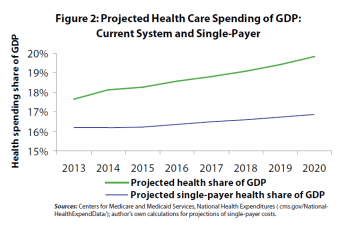 agency or a private institution granted the monopoly–then regulated–by the federal government. There are fairly standard traits characterizing natural monopolies. One of the primary indicators is that a single provider achieves economies of scale that no other form of market achieves and therefore it has the lowest average total cost. Health insurance is one of those markets where total risk is minimized–with its associated costs–when the risk pool is maximized. The high number of subscribers spreads the risk over many. If costs get high, low risk subscribers tend to drop their policies which leaves only folks that have high usage in the pool. This makes the service highly unprofitable and usually results in an insurance company trying to get rid of the high usage subscribers or any one that has the potential of being high usage. This is called cherry-picking.
Pricing insurance is based on trying to quantify risk of payment and that can be a complex business. Also, insurance–as a third party payer–means the market will eventually break down since the pricing mechanism is based on these ‘gambles’ and the fact that the consumer disconnects health care from insurance payments. Third party payer systems lead to inefficient markets because the normal dynamics of supply and demand do not lead to a market-based price. So, all development nations–except the US–know that having a purely market driven approach to health insurance fails big time. They approach their systems differently and do not rely on the largess of employers and the wealth of individuals to drive health care payment institutions.
This is a very brief introduction, but I wanted to give you some introduction to this important study by professor of economics Gerald Friedman from the University of Massachusetts-Amherst. Friedman shows how a single payer system for the US would save money over the current system and the ACA framework. He also explains how a single payer system could be administered cheaply and easily.
The Expanded & Improved Medicare for all act” (HR 676) would establish a single authority responsible for paying for health care for all Americans. Providing universal coverage with a “single-payer” system would change many aspects of American health care. While it would raise some costs by providing access to care for those currently uninsured or under-insured, it would save much larger sums by eliminating insurance middlemen and radically simplifying payment to doctors and hospitals. While providing superior health care, a single-payer system would save as much as $570 billion now wasted on administrative overhead and monopoly profits. A single-payer system would also make health-care financing dramatically more progressive by replacing fixed, income-invariant health-care expenditures with progressive taxes. This series of charts and graphs shows why we need a single-payer system and how it could be funded.
He succinctly provides the best reasons for choosing Single payer. It’s cheap and efficient.
Health-care costs have risen much faster than income in the United States over the last 50 years, rising from 5% of Gross Domestic Product in 1960 to nearly 18% today. Some of the increase in costs in the United States, as with other countries, is associated with improvements in care and longevity. Costs have risen much faster in the United States, however, because of the growing administrative burden of our private health-insurance system.
The article contains a lot of graphs and illustrations comparing the current system that relies on profit-making bureaucratic private insurance companies who are subject to state regulations that are quite varied. These providers also make paper work difficult because coverage, plans, and payments are nonstandard. This creates high costs for actual providers. The article is easy to read and I’d suggest you take a look at the article which can be found in Dollars and Sense.

 peej
peej Carissa
 bostonboomer
 dakinikat
 ecocatwoman
 mablue2
 Mama Lopez
 peggysue22
 quixote
 skydancingguestblogger
 Mona (aka Wonk the Vote)



 Sky Dancing
Recent Comments