
Who me vote for what?
Posted: September 11, 2011 Filed under: just because 7 Comments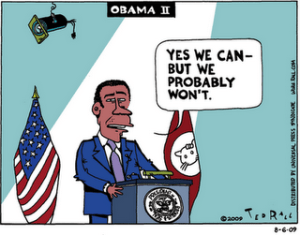 Boston Boomer pointed this article out to me at the NYT on Fretting Democrats and the re-electability of Obama.Guess they’re thinking no one’s legs are going to tingle this time out.
Democrats are expressing growing alarm about President Obama’s re-election prospects and, in interviews, are openly acknowledging anxiety about the White House’s ability to strengthen the president’s standing over the next 14 months.
Elected officials and party leaders at all levels said their worries have intensified as the economy has displayed new signs of weakness. They said the likelihood of a highly competitive 2012 race is increasing as the Republican field, once dismissed by many Democrats as too inexperienced and conservative to pose a serious threat, has started narrowing to two leading candidates, Mitt Romney and Rick Perry, who have executive experience and messages built around job creation.
And in a campaign cycle in which Democrats had entertained hopes of reversing losses from last year’s midterm elections, some in the party fear that Mr. Obama’s troubles could reverberate down the ballot into Congressional, state and local races.
“In my district, the enthusiasm for him has mostly evaporated,” said Representative Peter A. DeFazio, Democrat of Oregon. “There is tremendous discontent with his direction.”
Okay, so let’s just say his direction is Bush 43’s direction so that’s not all surprising given Bush 43 left office with extremely low approval ratings. It’s highly unlikely we’d get any thing different or better from either Mittens or Goodhair so what’s some one who doesn’t want more of the same to do? I’m glad we’re hearing some folks break out of the sycophant choir but there needs to be a bit more done than simple fretting. What gets to me are quotes like this.
“The frustrations are real,” said Representative Elijah E. Cummings of Maryland, who was the state chairman of Mr. Obama’s campaign four years ago. “I think we know that there is a Barack Obama that’s deep in there, but he’s got to synchronize it with passion and principles.”
I mean every one wants him to be what he was put up to be, but really, other than some grandiose rhetoric do we have any real evidence that he’s got it “deep in there” or any where else? This is the man that made Democrats pass Dolecare and wants drastic changes to the cornerstones of Democratic policy: Social Security and Medicare. Ronald Reagan didn’t even do that. Every time an economic policy plan comes up, it’s all tax cuts. It’s yet another sacrifice on the alter of voodoo economics. Don’t even get me started about what he’s done to the recent EPA regulations or the continual support of things like rendition, targeted executions, and expansions of domestic surveillance. When has this man not seen a Republican policy he doesn’t want to enact? Read the rest of the article. There’s a list of Democratic politicians that think that sounding like he’s fighting for policies will convince people to ignore the policies that have been passed already.
At the Democratic National Committee meeting in Chicago, Mannie Rodriguez, a committee member from Colorado, said Democrats needed to find a new blast of energy — something to remind them of what they felt in 2008 when Mr. Obama was elected on a slogan of hope and change.
“We need to work more on the message,” Mr. Rodriguez said, adding that much of Mr. Obama’s challenge stems from a group of Republicans who “simply say no” to all of his advances. “We have to re-energize people and get them back to the party.”
I’m sorry, but the Tea Party Republicans are worse is just not a message that re-energizes me or would cause me to get out and vote. I don’t care how many speeches get thrown at us.
Rick Perry’s Slip is Showing
Posted: September 10, 2011 Filed under: Social Security | Tags: Insurance, Ponzi Schemes, Risk Management, Risk mitigation, Social Security 9 Comments I’m getting more than a little tired of right wingers who think they can redefine words, rewrite history, and basically lie through their teeth free from accountability. I agree with Paul Krugman who once said that if reactionaries–not conservatives because conservatives conserve institutions not destroy them–wanted to say the earth wasn’t round that the press would merely print up the headline saying there are differing opinions on the shape of the earth. The Republican Party is continuing to produce flat earthers. Rick Perry and Michelle Bachmann both appear to live in a world where they feel free to create their own facts and know that very few people will actually call them out on it. Today, I’m going to correct one of Governor Goodhair’s egregious and pejorative lies.
Perry stuck to a metaphor outlined in his “book” that couldn’t be more wrong during what Republicans called a debate on Monday. I rather thought it more like the Mad Hatter’s Tea Party but we won’t revisit that. I’ve done series of articles explaining Social Security in the past–link to first in series here— so I don’t want to revisit the entire system. The legacy debt, the growing number of retirees, increased life spans, and the shrinking US workforce are all issues but not issues that are insurmountable compared to the benefits derived from the program. What I want to do is tell you why the social security system is not a “Ponzi Scheme” with out reverting to the magical thinking typical of libertarians used in this article printed earlier this week by a rag called Reason that doesn’t seem to know what that word means.
It’s amazing to me that such a popular and successful program is still victim to right wing muddled and nonfactual information. Social Security is basically longevity insurance and was never designed to replace pensions or even private retirement savings. All three–albeit pensions are hard to come by these days–are an important part of being able to get through old age. Social Security works because the majority of people are placed into the system. This is important for two big economic reasons. The first is that any risk management (e.g. insurance) program is most cost effective with a huge risk pool. That’s basic insurance theory 101 or spread the risk around common sense theory.
The reason private insurance is so expensive is that unless the company is able to sort out all the ” bad” risks or charge exorbitantly for it, they will leave the social costs of the event of that “bad” risk to society (e.g. taxpayers). This is generally what corporations try to do these days. They won’t cover the overall risk. They cherry pick the low probably events or low probability people. Corporations are interested only in profits. They like to privatize profits and force risks and costs onto other folks if they can get away with it.
The second thing is that you get economies of scale (i.e. the process becomes cheapest) when you have a standard contract that’s applied in a standard way to the risk pool. Having a public insurance program–this would work for a health insurance or flood/hazard insurance–basically lets a country handle its risk in the most cost effective and efficient way. It takes care of the basic risk problem that would create social costs should the risk not be covered and the event occurs. A for profit scheme usually covers only people and things with minimal risk. A basic public offering lets the private sector create specialized programs to fill in gaps without leaving lots of people exposed to the worst risk.
I realize that not a lot of people know a lot about risk and insurance theory because it takes lots of math skills. Economic decisions under risk, information asymmetry, and moral hazard are probably the toughest areas to study other than derivatives which are another form of risk and return management in an advanced degree program. Hence, most people without advanced degrees don’t even get a whiff of the real stuff. I’m just hoping to give enough of the intuitive stuff here without going into all the models and theorems.
So, any insurance or risk management contract is very different from a Ponzi Scheme. Their pricing is generally based on the level of risk, the chance it will happen to the entity in question, and the potential amount of the loss. Also, once the event happens, everyone gets paid that experiences the event. How you pay for the plan doesn’t make something a Ponzi Scheme. Ponzi Schemes are fraudulent by definition and aren’t designed to pay anyone but the originator. They are also not anything resembling a risk management tool. They are an investment scheme set up to benefit the originators at the cost of new suckers. They are also voluntary. They prey on people who tend to not know or care to know about the details of a financial scheme and sucker them in by offering them high profits on small initial payments.
Here’s some information on Ponzi Schemes from the FBI. You can read about Bernie Madoff at the site as well as read up on typical red flags for Ponzi schemes. It’s not rocket science, really.
A Ponzi scheme is an investment fraud that involves the payment of purported returns to existing investors from funds contributed by new investors. Ponzi scheme organizers often solicit new investors by promising to invest funds in opportunities claimed to generate high returns with little or no risk. In many Ponzi schemes, the fraudsters focus on attracting new money to make promised payments to earlier-stage investors and to use for personal expenses, instead of engaging in any legitimate investment activity.
Social Security Trust funds are invested in Treasury Bills. Information on the funds holding is readily available and audited continually by all kinds of interested parties. Our FICA taxes do not disappear into a rabbit hole. Also, Social Security has a history of paying benefits to whoever has paid into it, so it has no features at all qualifying it as a Ponzi Scheme. The deal is that Wall Street wants its hands on that money and the fees resulting from investing it. Also, libertarians just think that people should be left to the wolves if they’re not clever enough to cover their asses. Unfortunately, they forget that social costs that implies. We have a right to protect our country from acts of reckless individuals. That includes corporations that ruin our public resources and individuals whose actions eventually cause costly problems. Damage done to society is sourced in more things than wars and bar fights. There are many ways to rob a bank.
So, here’s a Bloomberg article that’s a little more germane to the conversation at hand.
“Ponzi schemes are, by definition, fraud,” said Mitchell Zuckoff, author of “Ponzi’s Scheme: The True Story of a Financial Legend.”
“Social Security is above board,” he added. “We can argue about whether it’s a good system. But you can’t call it a fraud.”
…
Zuckoff says there’s a big difference between tricking innocents into making doomed investments and a social insurance program that has benefitted millions of Americans. In December 2010, 54 million Americans received either retirement or disability payments under the Social Security program.
The Wall Street Journal does a pretty good job of disabusing Governor Goodhair of his absurd notions of Ponzi schemes if he’d every bother to read it. I was glad to see that Mittens went after him. Even Ronald Reagan understood the importance of this form of public insurance.
Strictly speaking, the metaphor is misleading. A Ponzi scheme, named after Boston conman Charles Ponzi, is a fraudulent investment operation. In its essential design it’s a con. Investors don’t earn interest and instead are paid off by other dupes. Because these schemes require an ever-increasing number of new participants to pay off earlier investors, they inevitably collapse.
Social Security isn’t an individual investment plan. It’s a government insurance plan that offers seniors a predictable income. Retirees do indeed depend on future workers to pay their Social Security benefits, though unlike a Ponzi scheme, nobody pretends otherwise. The notion of this kind of inter-generational transfer is baked into the policy.
And unlike regular investments, participants in Social Security don’t own their accounts (although many conservatives would like to see such a change). If you die before you become eligible, your estate doesn’t get the money. If you live longer than average, you get more.
The deal is that fixing the program wouldn’t be difficult. The idea that people should have a minimum amount of insurance against events in their life isn’t radical at all. None of this is much different from telling people that drive that they have to have a minimum amount of coverage so that if they hurt some one in an accident they cause, they need to be able to cover the potential damage to the other parties. Again, when you spread the risk among a huge number of people and make the coverage and the claim procedures standard, the costs and the management become efficient. Also, it’s not really any kind of ‘socialism’ because these are financial contracts. It’s not like the government is usurping any kind of private property or factor of production. There’s actually state offered housing liability insurance in Louisiana for people that can’t get coverage from private companies. There’s lots of examples–like FEMA flood insurance–besides social security or medicare. Like all insurance programs and policies, they just need to be updated ever so often and people need to be reminded that this is basic, vanilla, minimal coverage and its unlikely to be the be-all and end-all to most people’s overall needs. It just exists to cover society from the worst risks that could eventually create extremely high social costs and havoc when the event occurs and the people impacted aren’t adequately covered.
Saturday Reads: Obama’s War on Old People, Solyndra-gate, and Violent Protest in Cairo
Posted: September 10, 2011 Filed under: Egypt, FBI raids, Federal Budget and Budget deficit, Foreign Affairs, MENA, morning reads, U.S. Economy, U.S. Politics | Tags: Egypt, green energy, Medicaid, medicare, Social Security, solar energy, Solyndra 13 Comments
Good Morning!!
Things are getting so bad for President Obama that I almost feel sorry for him. The reactions to his speech last night are still coming in, and they aren’t all that great. Sure Krugman tried to sound a little enthusiastic, but he ended up damning Obama’s jobs plan with faint praise.
O.K., about the Obama plan: It calls for about $200 billion in new spending — much of it on things we need in any case, like school repair, transportation networks, and avoiding teacher layoffs — and $240 billion in tax cuts. That may sound like a lot, but it actually isn’t. The lingering effects of the housing bust and the overhang of household debt from the bubble years are creating a roughly $1 trillion per year hole in the U.S. economy, and this plan — which wouldn’t deliver all its benefits in the first year — would fill only part of that hole. And it’s unclear, in particular, how effective the tax cuts would be at boosting spending.
Still, the plan would be a lot better than nothing, and some of its measures, which are specifically aimed at providing incentives for hiring, might produce relatively a large employment bang for the buck. As I said, it’s much bolder and better than I expected. President Obama’s hair may not be on fire, but it’s definitely smoking; clearly and gratifyingly, he does grasp how desperate the jobs situation is.
But his plan isn’t likely to become law, thanks to Republican opposition.
Robert Reich applauded the President’s “passion,” but not the plan itself. Reich’s reaction to the Jobs plan:
$450 billion sounds like a lot – and is more than I expected — but some of this merely extends current spending (unemployment benefits) and tax cuts (in Social Security taxes), so it doesn’t add to aggregate demand.
The net new boost to the economy is closer to $300 billion. That doesn’t approach even half the gap between what the economy is now producing and what it could produce at or near full employment.
And much that $300 billion is in the form of temporary tax cuts to individuals and companies. Some of these make sense — enlarging the Social Security tax cut, extending it to employers, and giving small businesses a tax holiday for new hires.
But temporary tax cuts haven’t proven to be particularly effective in stimulating new spending in times of economic stress. People tend to use them to pay off debts or increase savings. Companies use them to reduce costs, but they won’t make additional hires unless they expect additional sales – which won’t occur unless consumers increase their spending.
That leaves some $140 billion for infrastructure – improving outworn school buildings, roads, bridges, ports, and so on. And $35 billion to help cash-starved states avoid more layoffs teachers. Both good and important but still small relative to the overall need.
Just exactly what Dakinikat has been telling us forever. And when The New York Times talked to employers about the plan, most said the tax cuts and credits would be welcome but would not stimulate new hiring until there is consumer demand for their goods and services. Again, exactly what we’ve been hearing from Dakinikat all along.
The saddest article I have seen about Obama’s jobs speech is Dana Millbank’s column from yesterday: The irrelevancy of the Obama presidency. According to Millbank, Congressional Republicans treated the speech as “a big, fat joke.”
“You should pass this jobs plan right away!” Obama exhorted. Sens. Bob Corker (R-Tenn.) and Lindsey Graham (R-S.C.) chuckled.
“Warren Buffett pays a lower tax rate than his secretary — an outrage he has asked us to fix,” Obama went on. Widespread laughter broke out on the GOP side of the aisle.
“This isn’t political grandstanding,” Obama said. Rep. Paul Ryan (R-Wis.) guffawed.
“This isn’t class warfare,” Obama said. More hysterics on the right.
“We’ve identified over 500 [regulatory] reforms, which will save billions of dollars,” the president claimed. House Majority Leader Eric Cantor (R-Va.) and Whip Kevin McCarthy (R-Calif.) giggled.
And according to Millbank, Democrats weren’t all that thrilled either.
In fact, the empty seats were on the Democratic side. Democrats lumbered to their feet to give the president several standing ovations, but they struggled at times to demonstrate enthusiasm. When Obama proposed payroll tax cuts for small businesses, three Democrats stood to applaud. Summer jobs for disadvantaged youth brought six Democrats to their feet, and a tax credit for hiring the long-term unemployed produced 11 standees….Rep. Jesse Jackson (D-Ill.) stared at the ceiling. Rep. Peter Welch (D-Vt.) scanned the gallery. Rep. Jim Moran (D-Va.) was seen reading a newspaper.
Before the speech, Joe Biden actually discussed golf with John Boehner! I really think this President is done. I suppose a miracle could happen and something could stop the train wreck, but I can’t imagine what it would be.
Maybe Obama should read Joe Conason’s article about how Rick Perry tried to privatize Medicaid in Texas and ended up “wasting millions and enriching lobbyists and hedge funds. Oh wait — maybe not. I think that’s probably what Obama wants to do with Social Security and Medicare.
Another problem facing Obama is the Solyndra Energy bankruptcy and investigation. As I wrote a few days ago, Solyndra is a solar energy company which received $535 million in federal loans from Obama’s stimulus plan. Many observers, including the CBO, questioned whether the loan was too risky, but the White House may have intervened to make sure it happened. One of Obama’s biggest donors, George Kaiser owns more than 30% of Solyndra. For some time, Republicans in the House have been asking for an investigation of the circumstances surrounding the loan, especially since the company went bankrupt last week. Now, in a new development the FBI raided Solyndra’s headquarters and today visited the homes of its corporate officers.
An FBI raid on Solyndra Inc., a solar-panel maker that failed after receiving a $535 million loan guarantee from the U.S. Energy Department, may signal the escalation of a probe into the Obama administration’s clean- energy program.
Agents for Energy Department Inspector General Gregory Friedman, who has called the department’s clean-energy loan program lacking in “transparency and accountability,” joined in the search yesterday at the Fremont, California, headquarters of Solyndra, which filed for bankruptcy protection on Sept. 6.
Republicans critical of the program stepped up their attacks following the raid, and two House Democrats questioned the integrity of the company, indicating a potential political crisis for the president. A foundation headed by an Obama campaign contributor was a principal investor in Solyndra….
Friedman, a watchdog within the Energy Department, said in a March report that a lack of adequate documentation for loans “leaves the department open to criticism that it may have exposed the taxpayers to unacceptable risks associated with these borrowers.”
The Federal Bureau of Investigation continued its probe into solar-panel maker Solyndra LLC on Friday by visiting the homes of President and Chief Executive Brian Harrison, as well as former executives and co-founders Chris Gronet and J. Kelly Truman, according to two people familiar with the situation.
Solyndra, which filed for bankruptcy earlier this week, is the target of an investigation into whether executives knowingly misled the Department of Energy to secure a $527 million loan guarantee, The Wall Street Journal reported. On Thursday, the FBI seized documents and computers from Solyndra’s headquarters in Fremont, Calif.
Harrison’s home wasn’t searched on Friday, but he was questioned, according to one person with knowledge of the matter. Harrison, who joined the company in 2010, after the loan was awarded, didn’t respond to a request for comment.
Gronet, Solyndra’s former CEO, didn’t respond to requests for comment. Truman, a former senior vice president at Solyndra, is currently president and chief executive of energy storage developer Deeya Energy. A person answering the phone at Deeya said, “He is not taking phone calls.”
I guess it’s a good thing for Obama that we suddenly heard about a terror threat yesterday, huh?
In other, completely unrelated news, a protest by thousands of people in Cairo “turned violent” yesterday.
A demonstration that brought tens of thousands to this city’s central Tahrir Square turned violent on Friday, when thousands of people — led by a heavy contingent of soccer fans — tore down a protective wall around the Israeli Embassy, while others defaced the headquarters of the Egyptian Interior Ministry.
About 200 people were injured in clashes with the police at the Israeli Embassy and 31 were injured near the Interior Ministry, the Ministry of Health said late Friday night. Protesters apparently had scaled the walls of the Israeli Embassy to tear down its flag.
Mustafa el Sayed, 28, said he had been among about 20 protesters who broke into the embassy. He showed a reporter video from a cellphone, of protesters rummaging through papers and ransacking an office, and he said they had briefly beaten up an Israeli employee they found inside, before Egyptian soldiers stopped them. He said the soldiers removed the protesters from the building, but let them go free.
By 11:30 p.m., about 50 trucks had arrived with Egyptian riot police officers, who filled the surrounding streets with tear gas. Witnesses said that protesters had set a kiosk on fire in front of a security building near the embassy, and that the police had fired rubber bullets to disperse the crowd from both buildings. In addition, a fire broke out in the basement of the Interior Ministry, but it appeared to have been started from the inside and not by the protesters surrounding the building. The fire was in a room believed to store criminal records.
The Devil in the Job Act Details
Posted: September 9, 2011 Filed under: U.S. Economy, unemployment | Tags: American Jobs Act, job gaps 22 CommentsThere’s a few more details–and as you know the devil is always in those–coming out about the president’s proposed American Jobs Act. The first hurdle will be the Republican Congress who will most likely rip out anything that hasn’t got anything to do with subsidizing rich people and corporations through worthless tax cuts. But, there are some other issues likely to come up also. I’ve found a few to share. Bear with me, this is long and wonkish in places.
This first one deals with one part of the Act that may not exactly deal with jobs but could help people stay in their homes and stabilize the housing industry. The President inkled it in one line. The President’s original plan–called HARP–has not really lived up to its promise of large scale help for struggling home owners. Many of the folks that may have qualified for the program have not been able to get help and those upside down on mortgages have had real issues. This ProPublica article explains why this program failed and the new program–if passed– may have it’s own issues. One of the biggest problems is coming and will come from the Federal Home Financing Authority (FHFA), the regulator and conservator of Fannie and Freddie.
Some of the reasons the old program has fallen short are complicated and aren’t likely to be easily fixed. Loans with mortgage insurance, for instance, are often denied because the insurer must agree to transfer the policy to the new loan. Loans with a second mortgage present their own difficulties.
But there have also been two key players who are obstacles to the program’s success — the banks and, perhaps surprisingly, the federal regulator overseeing Fannie Mae and Freddie Mac. Both seem likely to continue their skeptical stance, because both view helping underwater homeowners as risky.
The banks have been widely reported to be wary of offering new mortgages to borrowers who owe more on their house than its worth. Although the loans are backed by Fannie or Freddie, the bank could still be on the hook if the homeowner defaults and Fannie or Freddie finds that the bank didn’t properly underwrite the new loan. The bank could be forced to buy the loan back. Because underwater homeowners are seen as being at a greater risk of defaulting, they’ve been wary of taking those on. (You might have noticed that since the housing bubble burst, banks have become much more cautious.)
Fannie and Freddie’s federal regulator, the Federal Housing Finance Agency (FHFA), could choose to remove that risk for banks. Doing so, however, would shift that risk from the banks to Fannie and Freddie, and that’s something FHFA hasn’t been eager to do. As a former White House aide put it to The Wall Street Journal, FHFA head Edward DeMarco’s “first instinct is to say no.”
FHFA is an independent federal agency, so even though taxpayers have kept the two companies afloat, they are not under the administration’s direct control.
FHFA’s independence has lately been a big obstacle for the White House. We reported in December of last year on FHFA’s opposition to cutting mortgages for underwater homeowners facing foreclosure. Reducing the principal amount would make homeowners much less likely to re-default, but would lead to short-term losses for Fannie and Freddie. A public White House push on the idea has so far gotten nowhere.
Any more fixes to the old program or additions to the new program will need FHFA approval and that seems in doubt. If you’re interested in this detail, go read the article.
Okay, let’s look at the major problem. That’s getting the plan past the likes of Eric Cantor who looked positively sullen while taking notes at the presidential speech last night. Actually, he had a rather strange bespeckled pallor in his face and put me in mind of Uriah Heep or the onset of melanoma.
“This is my objection to the message that was delivered tonight,” House Majority Leader Eric Cantor (R-Va.) told reporters in the Capitol after the speech. “The message was: either accept my package as it is, or I will take it to the American people. I would say that that’s the wrong approach. What we’re here to do is try to transcend differences, not let them get in the way in the areas we can make progress on.”
Cantor added that “as majority leader, I certainly would like to see us be able to peel off some of these ideas, put them on the floor, vote them across the floor and get the senate to join with us so we can actually get something to the president and make some progress as quickly as possible.”
The quick reaction from a top congressional Republican suggests the GOP is not outright dismissing all of Obama’s ideas, but certainly is not going to pass the entire $450 billion package in one fell swoop.
Cantor has already pooh poohed the idea of an infrastructure bank which is actually one of the more meaningful aspects of the proposed act.
“I’m wary of the suggestion of an infrastructure bank,” House Majority Leader Eric Cantor (R-VA) told reporters at a roundtable lunch hosted by the Christian Science Monitor. “I am one who agrees with the notion that an infrastructure bank is almost like creating a Fanny and Freddie for roads and bridges.”
That’s President Obama’s favored infrastructure spending idea — to loan both private and public dollars to states and municipalities to speed up new and existing building projects, and to lure private investment with the promise of returns from tolls and other fees. Cantor’s counter offer is to nix the requirement that states “set aside 10 percent of federal surface transportation funds for transportation museums, education, and preservation would allow states to devote these monies to high-priority infrastructure projects, without adding to the deficit.”
These are pretty different ideas, though they could meet similar ends in some circumstances. The infrastructure bank wouldn’t require canceling some projects (mainly for bikers and pedestrians) to fund different ones, and would fund projects that meet high bang-for-the-buck, and environmental standards.
Jared Bernstein — an economist at the Center on Budget and Policy Priorities and Vice President Joe Biden’s former top economic adviser — told TPM, “the [infrastructure] bank has real advantages in terms of rigorous cost benefit analysis in choosing projects that this idea doesn’t sound like it would…. but 10 percent isn’t a lot and this kind of flexibility can be a useful thing I would just want to know what kind of criteria the project choice involves. Because the last thing we want to do is waste these scarce resources.”
Additionally, I firmly believe that Republican Governors are committed to killing Teacher’s Unions and don’t seriously want any incentives to keep teachers on the payroll. Here’s a good example of how much they hate these organizations from NJ Fat Cat Governor Chris Christie. Teacher’s Unions are seriously important to local Democratic Candidates. They work and they donate funds. You can see their importance in the Wisconsin Cheddar Revolution. Restructuring the New Orleans school District down here to accommodate charter schools has really only been successful at one thing: replacing teacher contracts negotiated by unions with non union lower paying, less job security contracts. I’m sure the Republicans won’t want any money funneled to states aimed at keeping union worker’s in place.
“There’s nobody in this room who runs a successful business who says, tells an employee after three years and a day — I’m sure this doesn’t happen at Koch Industries — where they call ‘em in after three years and a day and say, ‘Hey, you have been great for three years and a day, and guess what? You have a job here at Koch Industries for the rest of your life. Congratulations!’ Christie said.
“But this is the way we’re running our schools. We need to get rid of tenure… It’s just not right. And so we need to do these things and that’s where we head next. We’ve taken care of the first two big of the big things, at least for the moment, and now the third big thing is we need to take on the teachers’ union once and for all and we need to decide, who is determining our children’s future? Who is running this place? Them or us? I say it’s us, and we’ve got to go fight to do it now.”
Here’s Paul Krugman explaining a portion of the President’s Plan. He has one similar question that I voiced most of yesterday. The original stimulus didn’t really stimulate as much as it stopped the freefall of the economy. That’s an okay thing, but as you can see, it really has left the plan open to a lot of criticism because it didn’t really go far enough. This plan has the same issue. If many measures currently in place are allowed to expire, things will get worse. However, stopping things from getting worse still doesn’t move things forward.
O.K., about the Obama plan: It calls for about $200 billion in new spending — much of it on things we need in any case, like school repair, transportation networks, and avoiding teacher layoffs — and $240 billion in tax cuts. That may sound like a lot, but it actually isn’t. The lingering effects of the housing bust and the overhang of household debt from the bubble years are creating a roughly $1 trillion per year hole in the U.S. economy, and this plan — which wouldn’t deliver all its benefits in the first year — would fill only part of that hole. And it’s unclear, in particular, how effective the tax cuts would be at boosting spending.
The other thing that I really still don’t understand–accept in pure political terms–is the fascination with decreasing spending to balance the budget while making the budget deficit worse by providing less productive tax cuts. It is still your basic Voodoo Economics. Yes, tax cuts can do some things, but the multipliers on tax cuts pale in comparison to direct government spending. I’ve mentioned this before, but putting money back to consumers and businesses via tax cuts means that a portion of that drains to unproductive things. That’s okay policy for a small recession, but it’s not good for what’s happened to us since 2007. Redirecting money from good spending to iffy tax cuts doesn’t make a lot of sense to me.
Moody’s must have a much more powerful computer program than I have intuition and understanding of macroeconomic theory. Direct government spending on infrastructure goes out full force and then starts multiplying by going additional rounds to businesses and consumers. The first dose is full force and the draining doesn’t occur until the second round. I really don’t think the lawyers in the White House get the idea of economic multipliers at all, but then, maybe it is just because of the politics. Republicans could care less about the health of the general economy and working population as long as they retain power, feed their ideological base, and prop up corporations. I wouldn’t put numbers out at all–like Moody’s–until I see the recessionary impact of the offsets.
So, here’s Ezra Klein–Baghdad Bob of the DC villagers–with a good laundry list of details. See which ones you think the Republicans will pick off. I’m more interested in that last statement because, again, you can’t really judge how much it can’t do without looking at the offsets. It could wind up a wash or worse.
– It cuts the payroll tax for workers in half, which amounts to a $175 billion tax break, and cuts it in half for businesses until they reach the $5 million mark on their payrolls, at a cost of $65 billion. The idea there is to target the tax cut to struggling small businesses, rather than the cash-rich large businesses. It also extends the credit allowing businesses to expense 100 percent of their investments through 2012, which the White House predicts will cost $5 billion.
– It offers $35 billion in aid to states and cities to prevent teacher layoffs, and earmarks $25 billion for investments in school infrastructure.
– It sets aside $50 billion for investments in transportation infrastructure, $15 billion for investments in vacant or foreclosed properties, and $10 billion for an infrastructure bank. It also makes mention of a program to “deploy high-speed wireless services to at least 98 percent of Americans,” but it doesn’t offer many details on that program.
– It provides $49 billion to extend expanded unemployment insurance benefits. $8 billion for a new tax credit to encourage businesses to hire the long-term unemployed, and $5 billion for a new program aimed at supporting part-time and summer jobs for youth and job training for the unemployed.
– It also encourages the Federal Housing Finance Authority to make it easier for underwater homeowners to refinance their mortgages.
If all of that could be spent out in 2012 — a big if, but given the reliance on tax cuts and state and local aid, much of it could certainly hit before the year’s end — it would be bigger, in annual terms, than the Recovery Act. The White House also promises the entire proposal will be paid for, and the specific offsets will be released next week.
My other concern comes at the end of this analysis by Macroadvisers. It looks good if it goes as proposed by the President and if there were no offsets but the entire thing is quite temporary. All of these are HUGE ifs. The analysis is sound under the ifs, however.
Because these initiatives are planned to expire by the end of 2012 — except for the infrastructure spending, which has a longer tail — the GDP and employment effects are expected to be temporary.
- That is, these proposals will pull forward increases in GDP and employment, not permanently raise their level.
- Nevertheless, there may be good reasons to want to implement such programs today, if the government can follow through on the commitment to trim deficits later:
- There remains considerable slack in the economy and nearly all forecasts anticipate only a gradual decline in the unemployment rate over the next couple of years.
- Given the elevated risk of recession the U.S. faces today, additional near-term stimulus reduces that risk.
- Given the deleterious effects of long-term unemployment on an individual’s skills and long-term employment prospects, speeding a return to employment is both individually and socially beneficial.
- With monetary policy’s limited room to lower rates and stimulate demand, there is a role for counter-cyclical fiscal policy.
 I’ve got one nifty graph on the job gap. The gap is basically a measurement of what jobs have gone missing because of the great recession. I’ll send you t0 another shorty, wonky link. It’s here at The Economic Policy Blog where it’s argued that the plan--again with all the IFs in tact–makes a step towards closing the gap. However, the gap is 11 million jobs. This is what needs to be created to get the economy back to Full Employment. The propsed plan adds around 4 million jobs. In simple math, it’s not even half way there which suggests another half ass plan which will be dialed down even further in the sausage making phase.
So, I’ve gone on quite a bit and all of this is quite wonky in places. It’s way longer than I usually make my posts but I thought that you should get a chance to see as much as possible. The bottom line for me is that I’m not going to get tingly legs until I see the offsets that will be produced on Monday and until I get an idea of what the Republicans will go for. It’s not giving an rehearsed speech that’s important, it’s getting the right things into law that matters.

 peej
peej Carissa
 bostonboomer
 dakinikat
 ecocatwoman
 mablue2
 Mama Lopez
 peggysue22
 quixote
 skydancingguestblogger
 Mona (aka Wonk the Vote)



 Sky Dancing
Recent Comments