
UN Condemns Illegal Forced Repatriation of Eman al-Obeidi
Posted: June 3, 2011 Filed under: just because | Tags: Benghazi, Eman al-Obeidi, gang rape, Libya, rape, United Nations 10 Comments
Libyan gang rape survivor Eman al-Obeidi has been forcibly and violently repatriated to her home in Benghazi, Libya. A witness told CNN that al-Obeidi was “battered and bruised.”
Nasha Dawaji, a U.S.-based Libyan pro-freedom activist, said she was with three key members of the National Transitional Council, the rebels’ government, when they first learned that al-Obeidy was forced from Doha and arrived in Benghazi on Thursday.
Al-Obeidy had a black eye, like she had been punched, Dawaji said. She also had bruises on her legs and scratches on her arms.
The council members were upset upon seeing al-Obeidy’s condition and vowed to open an investigation, Dawaji said.
Al-Obeidy grabbed the world’s attention this spring when she accused Libyan leader Moammar Gadhafi’s security forces of gang raping her.
The UN refugee agency says that these actions taken against al-Obeidi “violate international law,” and they hope to arrange a meeting with her.
I’ll post more detail on this story when I get it. Please post anything you’re hearing in the comments.
Friday Reads
Posted: June 3, 2011 Filed under: abortion rights, fetus fetishists, financial institutions, morning reads, Violence against women, Women's Rights | Tags: CFBP, Consumer Financial Protection Bureau, debt ceiling crisis, personhood, Real Income, War on Women 28 Comments Good Morning!
So, you should be able to tell that I’m knee deep in research and preparing to teach an MBA course because I’ve been writing so many finance and econ posts recently. This morning is going to continue that trend. Plus, the War on Women is still on! Some mornings it just doesn’t pay to read the news, I swear!
Feeling poorer? There’s good reason! According to statistics analyzed by Investor’s Business Daily “10-Year Real Wage Gains Worse Than During Depression”. That’s why no one has any money to spend. This is especially true when you couple that with sagging wealth from your incredible shrinking home equity.
The past decade of wage growth has been one for the record books — but not one to celebrate.
The increase in total private-sector wages, adjusted for inflation, from the start of 2001 has fallen far short of any 10-year period since World War II, according to Commerce Department data. In fact, if the data are to be believed, economywide wage gains have even lagged those in the decade of the Great Depression (adjusted for deflation).
Two years into the recovery, and 10 years after the nation fell into a post-dot-com bubble recession, this legacy of near-stagnant wages has helped ground the economy despite unprecedented fiscal and monetary stimulus — and even an impressive bull market.
Over the past decade, real private-sector wage growth has scraped bottom at 4%, just below the 5% increase from 1929 to 1939, government data show.
Oh, and Moody’s is preparing for a US Government purposeful default on its sovereign debt. Feel like you’re in Hooverville yet? Just wait until Republicans looking to tank Obama’s reelection chances wind up tanking the US economy.
Moody’s Investors Service said today that if there is no progress on increasing the statutory debt limit in coming weeks, it expects to place the US government’s rating under review for possible downgrade, due to the very small but rising risk of a short-lived default. If the debt limit is raised and default avoided, the Aaa rating will be maintained. However, the rating outlook will depend on the outcome of negotiations on deficit reduction. A credible agreement on substantial deficit reduction would support a continued stable outlook; lack of such an agreement could prompt Moody’s to change its outlook to negative on the Aaa rating.
Although Moody’s fully expected political wrangling prior to an increase in the statutory debt limit, the degree of entrenchment into conflicting positions has exceeded expectations. The heightened polarization over the debt limit has increased the odds of a short-lived default. If this situation remains unchanged in coming weeks, Moody’s will place the rating under review.
Moody’s had previously indicated that its stable outlook on the Aaa rating was based on the assumption that meaningful progress would be made within the next eighteen months in adopting measures to reverse the country’s upward debt trajectory. The debt limit negotiations represent a real near-term opportunity for agreement on a plan for fiscal consolidation. If this current opportunity passes, Moody’s believes that the likelihood of anything significant being accomplished before the next presidential election is reduced, in part because the two parties each hopes to capture both a congressional majority and the presidency in the 2012 election, after which the winning party could achieve its own agenda. Therefore, failure to reach an agreement as part of the current negotiations would increase the likelihood of a negative outlook in the near term, because the upward debt trajectory would still be in place. At present, this appears the most likely outcome, in Moody’s opinion.
The Nation reports that the Banking Lobby joins the Republican party in attacking Elizabeth Warren. The fight continues to stop implementation of the Consumer Financial Protection Bureau (CFBP) and to stop Warren from head it up. The bureau’s main mission is to stop bad lending practices that were rampant and damaging during the subprime mortgage crisis.
During last year’s financial reform debate, Congressional Republicans, along with some bank-friendly Democrats, launched a furious campaign to defeat the bureau. The US Chamber of Commerce led a $2 million industrywide ad campaign opposing the CFPB, using a butcher as its unlikely public face. “Virtually every business that extends credit to American consumers would be affected—even the local butcher,” one ad claimed. “I don’t know how many of your butchers are offering financial services,” quipped President Obama after meeting victims of lending abuses. The financial services firms that will fall under CFPB purview—big and small banks, payday lenders, mortgage brokers—did all they could to weaken it and create special exemptions for their industries, yet the consumer bureau improbably became “one of the central aspects of financial reform,” according to Obama, and the most tangible victory for consumers. Under pressure from consumer advocates, the administration named Warren a special adviser to Treasury Secretary Tim Geithner, her onetime foe, and the bureau’s interim director. Now Congressional Republicans and their industry backers are mounting a last-ditch effort to constrain the CFPB before its launch. Warren, according to associates, views this as an attempt to “pull the arms and legs off of the agency.”
Okay, so I’ll change the topic to how religionists are attempting to outlaw birth control and in vitro fertilization. They’re doing it by attempting to redefine personhood again.
“The definition of personhood ranges if you’re talking about property law, or inheritance, or how the census is taken,” says Alexa Kolbi-Molinas, an attorney with the American Civil Liberties Union’s Reproductive Freedom Project.
All those differences are exactly what Keith Mason wants to change. He’s president of Personhood USA, a group that’s trying to rewrite the laws and constitutions of every state — and some countries — to recognize someone as a person “exactly at creation,” he says. “It’s fertilization; it’s when the sperm meets the egg.”
Mason says the basic problem is that science has advanced faster than policymaking.
“We know, without a shadow of a doubt, when human life begins,” he says. “But our laws have not caught up to what we know.”
And according to his organization, those laws should recognize every fertilized egg as an individual and complete human being.
This movement is basically trying to push a definition that contradicts medical definitions. A redefinition law is currently being considered in Colorado, Mississippi. and Alabama.
Medical experts say pregnancy begins when the egg implants in the uterus, not at fertilization. It is at this point that a woman’s hormone levels change and pregnancy can be detected through a urine test. Dan Grossman, an ob-gyn at the University of California-San Francisco who works with Ibis Reproductive Health, noted that about half of fertilized eggs implant and result in pregnancy.
Considering a fertilized egg a person with full rights also could outlaw popular forms of contraception, Grossman said. “This redefinition really could end up reclassifying all of these effective and safe birth control methods as abortifacients, or agents that induce abortions,” because some contraceptives can prevent a fertilized egg from implanting in the uterus, he explained. Grossman added that the idea that birth control methods that can block implantation are the equivalent of abortion is “certainly not a view that’s held by the medical profession or that’s based on medical evidence, and it’s certainly not consistent with what American women and couples want and use to plan their families.”
Alexa Kolbi-Molinas, an attorney with ACLU’s Reproductive Freedom Project, said personhood proponents’ intent is to ban abortion and birth control. She said that giving rights to a fertilized egg could have far-reaching and dangerous consequences by legally separating a woman from her pregnancy. For example, in cases of potentially lethal ectopic pregnancies, personhood would give “all fertilized eggs legal rights under the law [and] calls into question what kind of methods a doctor can actually use to save a woman’s life,” she said.
Amanda Marcotte–writing for Slate–describes the laws as even “weirder than imaged”. Basically, you can sum it up this way: women are receptacles and fertilized eggs are people. This seems unbelievable but it’s unfortunately real and represents just the latest threat to our autonomy.
Even some anti-abortion groups oppose personhood bills, not because they disagree with the aims of the proponents—who want to ban all abortion, IVF treatment, stem cell research, and many forms of contraception—but because it’s bad and confusing law. And part of the reason for this is that it creates a lot of confusion over the gap between belief and fact. For instance, it’s clear that many supporters of personhood laws hope the laws can be used to ban hormonal birth control and IUDs, which they argue work by killing fertilized eggs. However, attempts to use the law in this way are complicated by the fact that this is not how these contraception methods work; hormonal methods work by suppressing ovulation and IUDs work by making the uterus a hostile environment for sperm (which isn’t going to do much to quell the emasculation concerns of anti-choicers). Realistically speaking, if you believe fertilized eggs are “people” and losing one is equivalent to losing a child, then women who use the pill to prevent ovulation are actually the least murderous amongst us, since they are losing the fewest number of fertilized eggs. Using these laws to stop the distribution of these kinds of contraception would likely depend on a number of factors, including judges’ willingness to treat made-up beliefs as equal to scientific information.
There’s way more at stake than even abortion and contraception, in fact. The haziness of these bills could create all sorts of nightmarish scenarios. For one thing, they would absolutely make IVF illegal, but it would also call into question how you handle all the embryos that have already been created in labs. With IVF being banned, it’s pointless to keep them around anymore, but disposing of them is killing “people.” Are we prepared to throw people in jail for this? There’s also a concern about how miscarriages are handled once you’ve determined that a “child” has been lost every time a woman miscarries, no matter how early in her pregnancy. These laws open the possibility of every woman miscarrying being detained for a legal investigation to determine if she has criminal liability for miscarriage. If you think I’m being ridiculous about this, consider that women are already being thrown in jail for giving birth to babies that don’t survive. Personhood laws could roll back the clock on your criminal liability to before you were even pregnant. Unfortunately, there are zealots in law enforcement that are willing to throw a woman who miscarries at eight weeks in jail because someone saw her drinking in a bar six weeks ago, before she probably even knew she was pregnant.
So, want some even more disheartening news? Melissa at Shakesville finds yet another article tailored for young women that basically says you can avoid most rapes if you just don’t drink alcohol. No kidding!
The Frisky‘s “Girl Talk: Why Being Drunk Is a Feminist Issue,” by Kate Torgovnick, who totes isn’t a victim-blamer, she swears! It’s just that we don’t live in an ideal world, so because women “do not have control over what men, drunk or sober, will do when presented with our drunkeness,” women should take control over “our side of the equation—how much we drink.”
There is a lot wrong with that article (not least of which is the author’s confusion about what actually constitutes rape), but I’m not going to waste my time fisking garbage. I’ll merely note that the entire premise is fundamentally flawed in the same ways that every other piece in this despicable genre is, in addition to the evident issue that victim-blaming, even if cynically rebranded as “taking control,” inexorably shifts responsibility from rapist to victim
Where have all the consciousness raising groups gone?
So, I really don’t want to talk about Wienergate or who is in New Hampshire or why Chris Christie thinks it’s okay to take state helicopters on personal jaunts. So, maybe you’ve got something else to offer up? What’s on your reading and blogging list today?
Playing Chicken with U.S. Financial Markets
Posted: June 2, 2011 Filed under: Economy, Federal Budget, Federal Budget and Budget deficit, financial institutions, Republican politics, U.S. Economy | Tags: debt ceiling crisis, republican political games, risk free rate 9 CommentsYou would think that being less than three years off from the biggest financial market collapse since the Great Depression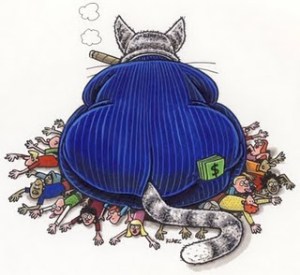 would make beltway lawmakers tread lightly when it comes to upsetting financial markets here and around the world. You would also think that after we’ve used the Fed for the most unusual transactions in its history, bailed out investment banks and insurance companies, and concentrated bank deposits and securities dealers from ‘too big to fail’ to ‘so huge they’d take the developed world down with them’ that District politicos would find a different outlet for their psuedo outrage. It’s not that they’re mad at financial institutions or what they basically did to the world’s major economies, it’s that their mad at what they did to the U.S. Federal deficit and since blaming teachers and park rangers didn’t work, they’re going to attack the U.S. Treasury Market. That’s right, they are attacking the base risk free rate used by every asset pricing model from the CAPM forward. That’s like striking at the heart of what makes modern finance work. Sounds kind’ve stupid doesn’t it?
Well, Tuesday’s Congressional vote on the debt ceiling was a danse macabre aimed directly at turning financial markets upside down whether they want to think so or not. The equity markets have been dancing around a technical high most of spring and are heading downwards as we speak. The economy has not healed. The job market is dismal. Credit markets are still stuck on neutral. Household consumption and Consumer confidence have headed south. What are these people trying to do our economy? Tank it? Finally, there’s a few media voices that are expressing concern instead of admiration for the “brave” insanity of people like Paul Ryan. Is this coming a little too late? Is the Republican party trying to drive the cost of borrowing for every one in the world up to score a few political points with some block of voters?
Just ignore Tuesday’s vote against raising the debt ceiling, House Republican leaders whispered to Wall Street. We didn’t really vote against it, members suggested; we just sent another of our endless symbolic messages, pretending to take the nation’s credit to the brink of collapse in order to extract the maximum concessions from President Obama.
Once he caves, members said, the debt limit will be raised and the credit scare will end. And the business world apparently got the message. It’s just a “joke,” said a leader of the United States Chamber of Commerce, and Wall Street is in on it. Not everyone found it funny.
No matter how they tried to spin it, 318 House members actually voted against paying the country’s bills and keeping the promise made to federal bondholders. That’s an incredibly dangerous message to send in a softening global economy. Among the jokesters were 236 Republicans playing the politics of extortion, and 82 feckless Democrats who fret that Republicans could transform a courageous vote into a foul-smelling advertisement.
If I were the Chinese or Russian government or any other investor with the ability to transfer funds anywhere else, I would be doing so just to make a point. Threatening to default on sovereign debt should not be considered political tool. It’s like threatening to use a weapon of mass destruction to score points.
Steven Benen of Washington Monthly calls it a “hostage strategy”. Frankly, it’s domestic terrorism with hostages.
Indeed, one of the more striking aspects of yesterday’s gathering was the increasingly-explicit nature of the Republican hostage strategy.
…Boehner’s let’s-get-a-deal-done stance masks a deeper belief within the House Republican Conference — that Obama will back down eventually and agree to its demands, forcing Capitol Hill Democrats to follow suit.
“Of course, it’s dangerous,” a House Republican close to Boehner said of the politics of a government default. “But it’s dangerous for everybody, especially the president. At the end of the day, [Obama] will have to give in.”
“Who has egg on their face if there is a sovereign debt crisis, House Republicans or the president?” asked another senior GOP lawmaker.
With a potential debt default by the U.S. government just two months off, and a continued standoff between the White House and GOP congressional leaders on how to move forward in boosting that limit, Republican lawmakers say publicly and privately that they believe Obama will be the one who has to cave.
To be sure, the hostage-strategy dynamic isn’t new, but it’s uncommon for Republican members of Congress to be this candid about their plan out loud. One leading GOP lawmaker acknowledged that the Republican plan is “dangerous,” but the party doesn’t care. Another conceded that the GOP is inviting a “sovereign debt crisis,” but figures Obama would get the blame, so Republicans don’t care about that, either.
Okay, so notice the theme here. Obama is expected to cave and why not? He’s drawn lines in the sand before. Remember his promise to not extend tax cuts to the richest of the rich? He caved. Remember how he was going to offer a robust public option or at least an exchange with some kind of government-sponsored plan for health care reform? He caved. Remember all that posturing over closing Guantanamo or bringing troops home from Iraq and Afghanistan. He caved.
That’s what you get when you negotiate with terrorists and they know you’ll lead with the compromise position. They’ll keep taking more important things hostage and wait you out. They know this one is too big to fail but yet, they can’t resist just seeing how much they can get away with this time. Problem is, this time it’s really having an impact. The economy is looking as though it will double dip and requires a fiscal boost, for one. This is like 1937 redux and I’m afraid that more mistakes will be made. I can’t believe that we have a political party that is so intent on damaging an administration that it’s going to frighten the global economy into a possibly game changing reshuffling of what the base of financial world’s ‘risk free’ rate and global safe haven currency may be in the future. If there was ever any reason or an excuse to dump the dollar as a basis of your economy or start ridding your trade surplus savings of US Treasury holdings, this would be it. Symbolic my fat New Orleans ass!
A testy White House meeting between President Obama and House Republican leaders Wednesday failed to lower the partisan pitch in the capital, much less make progress toward a deal on the federal debt ceiling.
Instead, the two sides traded complaints, accusing each other of partisanship and posturing. Republicans demanded that the administration produce a budget-cutting plan, which the White House said it had already done.
Rep. Paul D. Ryan, architect of a Medicare overhaul aimed at slashing the cost of the popular entitlement program by reducing the government’s open-ended commitment to seniors, accused Obama of “mis-describing” his plan and implored the president to ease up on the “demagoguery.”
In reply, Obama said he was no stranger to cartoonish depictions, reeling off a list of conservatives’ favorite attack points: “I’m the death-panel-supporting, socialist, may-not-have-been-born-here president,” Obama said, according to people familiar with his remarks.
The meeting was meant to resolve pent-up grievances and move toward compromise on the deficit and the cost of healthcare for seniors. But after 75 minutes of talk in the East Room, the two sides parted company with little progress.
 Johnathan Chait of The New Republic rightly accuses ‘economist’ John Taylor of the Hoover Institute of ignoring the “severe economic consequences of risking the full faith and credit of the Treasury”. Just arguing spending cuts are good just doesn’t make sense. This is especially true given the incredible fragile state of the U.S. economy and recovery. Is extracting more concessions out of Obama worth global financial market turmoil?
The hack Republican answer is that spending cuts and the debt ceiling are linked, because the debt ceiling is Obama’s fault. But of course the debt ceiling has to get raised under every president, and it would have to be raised even if Obama signed the Paul Ryan budget. The debt ceiling has nothing to do with any particular policy choices — it’s just a routine vote that used to be an opportunity for the minority party to embarrass the president, which Republicans are turning into a hostage opportunity. People like Taylor are dressing this up in principle, but the only principle they can articulate is that spending cuts are good. But that same logic would allow the minority to use the debt ceiling to jack up the president over any policy disagreement at all.
So far, the markets and the world seem to think that American politicians will stop their posturing and settle down to business before the August drop dead date. They’ve even quoted Churchill who used to say we eventually do the right thing it’s just that we don’t actually do it until the very last minute. The deal is that not only is the brinkmanship a dangerous strategy but the further concessions–in a fragile recovery at best–are dangerous. Obama and his cadre of lawyers have made it clear that they will concede any high ground. Again, we have a history of Obama concessions on political promises. The problem is that each time the concession comes, it comes at a greater cost. Every one knew this drama would play out once Obama gave in on renewing the Bush Tax Cuts. Every thing is negotiable and subject to concession now. You can’t fake credibility once you’ve show yourself as having none.
Wall Street numbers look bad today. They’ve been bad all week. The primary concern is said to be the faltering economy. However, any one that thinks that some of this unease isn’t over the debt ceiling hostage situation kids themselves.
Thursday Reads: Republican Fraud, Lies, and Delusion, Plus Syria and Tornadoes!
Posted: June 2, 2011 Filed under: just because 26 Comments
Good Morning!! I can’t believe the media is still flogging the Anthony Weiner smear/fake outrage. Thank goodness Joseph Cannon is on the case. He has posted multiple pieces about this fraud and his latest one is at the top of Memeorandum! His post has 91 comments as of 10:16PM Eastern. I haven’t read them yet, but I trust Cannon will handle right wing trolls with his usual aplomb. Anyway, he thinks he has nearly proven Weiner’s innocence, but he needs more help. By all means go read the whole thing.
In actual legitimate news that affects people’s lives, the Republicans are working overtime to destroy medicare. I’m sure social security will be next. But guess what? The American people aren’t buying it. According to a new CNN poll:
According to a CNN/Opinion Research Corporation survey, a majority also don’t think the GOP has cooperated enough with President Barack Obama and, for the first time since they won back control of the House last November, the number of Americans who say that Republican control of the chamber is good for the country has dropped below the 50 percent mark.
The poll indicates that 58 percent of the public opposes the Republican plan on Medicare, with 35 percent saying they support the proposal. The survey’s Wednesday release comes as the president met with House Republicans to discuss, among other things, Medicare reform.
[….]
“Half of those we questioned say that the country would be worse off under the GOP Medicare proposals and 56 percent think that GOP plan would be bad for the elderly,” says CNN Polling Director Keating Holland. “Opposition is highest among senior citizens, at 74 percent, suggesting that seniors are most worried about changes to Medicare even if those changes are presented as ones that would not affect existing Medicare recipients.”
And get this: 54 percent of conservatives hate the Ryan plan. Bwaaaaaahahahahahahahaha!
Unfortunately radical fanatics like Ryan won’t be convinced by what the people want any more than he’s convinced by facts. Today Ryan told Fox News that Obamacare “ends Medicare as we know it.” Think Progress has the quote:
RYAN: Millions of dollars of negative ads are being run to try and scare seniors and trying to confuse seniors. You know, the irony of this Bill, is with all this Mediscare that the Democrats are running, it’s Obamacare itself that ends Medicare as we know it. Obamacare takes half a trillion dollars from Medicare — not to make it more solvent but to spend on this other government program, Obamacare. And then it creates this 15 panel board of unelected, unaccountable, bureaucrats starting next year to price control and ration Medicare for current seniors.
Click on the link to watch the video and read the rebuttal.
Speaking of maltreatment of children, as we were last night, Syria is promising to “investigate” the death of a 13-year-old boy who was tortured and executed. WARNING: GRAPHIC VIOLENCE
Footage of Hamza el-Khatib’s mangled corpse, which emerged last week, has again galvanised protests in Syria, with thousands braving army tanks and loyalist snipers to take to the streets to vent their fury.
Independent Syrian experts who have studied the pictures say the wounds and bruises covering the boy’s body indicate he was repeatedly beaten and subjected to electric shocks during the month he spent in prison following his arrest in the southern city of Dera’a in April.
He died after his torturers shot him through both arms, cut off his penis and finally killed him with a bullet to his head, they said.
So alarmed has the government been by the reaction since the boy’s body was released – apparently on the understanding that his parents would bury him immediately – that a pathologist was shown on state television saying that the bruises were the result of decomposition.
According to Syrian activist Razan Zaytouni, who appeared on Anderson Cooper 360 last night, this kind of horrendous violence against children is not unusual in Syria.
As everyone knows by now, tornadoes struck her in Massachusetts yesterday. Early reports said that no one had died, but CNN is now reporting four deaths.
At least two confirmed tornadoes descended upon towns in western Massachusetts on Wednesday, leaving at least four dead and smashing homes and buildings across a 40-mile stretch, state officials and witnesses reported.
One person was killed in Springfield, two in nearby Westfield and one in Brimfield, about 20 miles east, Massachusetts Gov. Deval Patrick told reporters Wednesday night.
The storms struck shortly after 4 p.m. in Springfield, about 90 miles west of Boston. Dylan McDonald told CNN he watched the tornado knock down trees and scatter debris across town as he was driving with a co-worker.
“As the light turned green, a tree fell and everything took off,” McDonald said. “We saw a roof fly off an apartment building. The car was tilting, but didn’t turn over.”
As many as 19 communities reported tornado damage Wednesday evening, Patrick said. The governor declared a state of emergency as the storm system that spawned those twisters moved east, with watches posted all the way to the Atlantic coast until late Wednesday.
I guess even New England isn’t immune to tornadoes this year. It’s a good thing the Republicans have decided to ban global warming. Oh wait …. fantasy doesn’t equal reality, does it?
So what are you reading and blogging about today? Let me know in the comments!
Battle to Save Corporal Punishment In New Orleans Catholic School
Posted: June 1, 2011 Filed under: children, Civil Rights, physical abuse, Surreality, U.S. Politics | Tags: Archbishop Gregory Aymond, authoritarianism, conservatives, Monica Applewhite, New Orleans, paddling, red states, Republicans, St. Augustine High School 22 Comments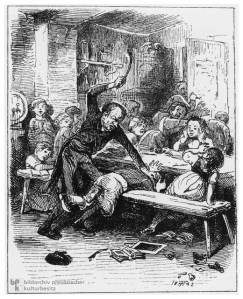
Do you get the feeling the bad old days are coming back? U.S. economy has returned us to 1930s-style levels of unemployment, evil Republicans like Paul Ryan and Mitch McConnell are trying to recreate the poverty of those years by removing the social safety net, and Republicans are working as hard as they can to make sure women have no control over their bodies or their lives.
Now we have students of a Catholic school in New Orleans and their parents demanding Archbishop Gregory Aymond reverse his decision to end corporal punishment, and school alumni aresuing the educational consultant who recommended the policy change!
Can this really be the 21st Century?
From yesterday’s New Orleans Times-Picayune:
The controversy over corporal punishment at St. Augustine High School resurfaced Tuesday when several alumni sued a consultant [read the suit here (pdf)] who advised Archbishop Gregory Aymond that St. Augustine students had been injured by paddling.
The claim isn’t true, the alumni said.
For months Aymond, who as archbishop exerts some control over the Catholic school, has sought to end St. Augustine’s decades-old practice of paddling students. He has said it is not consistent with Catholic values.
But backers of corporal punishment, who include St. Augustine administrators, parents and alumni, say it is part of St. Augustine’s formula for success.
According to the story, the consultant, Monica Applewhite, convinced the Archbishop to ban paddling of students against the decision of the review committee.
In late 2009 Aymond asked Monica Applewhite, described as a educational safety consultant based in Austin, Texas, to look into discipline at St. Augustine.
As Aymond’s representative, Applewhite sat in on St. Augustine’s internal review of its corporal punishment policy. The review committee elected to continue the policy, with modifications.
But the lawsuit says that Applewhite privately advised Aymond that she learned during her inquiry that parents had taken three students to the hospital after paddling, and that others had been paddled “day after day and more than 5 or 6 times a day.”
Archbishop Aymond says he has been contacted by former students and parents of students who were injured by corporal punishment in the school. He made this statement at a news conference today:
“I feel it necessary at this time to share that since the issue of paddling at St. Augustine has become public, I have been contacted both in writing and in person by individuals and parents of individual students who were injured as a result of being paddled at school,” Aymond said in a statement. “Those who have shared this information with me have done so in confidence, but at this juncture, the public should know that my concerns over paddling at St. Augustine go beyond Dr. Applewhite’s report to first-hand accounts.”
I also want to point out that paddling at St. Augustine’s is routinely used to discipline students for such shocking infractions as “tardiness, sloppy uniform dress or other minor rules infractions.”
Frankly, I thought that corporal punishment had been eliminated in the U.S. But I was wrong. According to this report on corporal punishment research, paddling is still common in a number of states.
The US Supreme Court decided in 1977 that spanking or paddling by schools is lawful where it has not been explicitly outlawed by local authorities. It is true that the incidence of CP has declined sharply in recent years, but only 31 states (plus D.C. and Puerto Rico) have actually abolished it, either de facto or de jure. CP is still used in the other 19 states, and it remains a fairly common practice in three of them, all in the South: Alabama, Arkansas and Mississippi.
It is also routine, but only in a minority of (often rural or small-town) schools, in five more southern states: Georgia, Louisiana, Oklahoma, Tennessee and Texas.
The latest states to abolish were Delaware, in 2003, after an eight-year gap in which no abolitions took place at state level; Pennsylvania, in 2005; Ohio, in 2009; and now in 2011 New Mexico (documentation in next update). The number of paddlings had already fallen to a low level in these states.
On the other hand, efforts to ban school CP by legislation have failed in 2003 in Wyoming and repeatedly in Missouri, and also in North Carolina in 2007 and Louisiana in 2009.
The New York Times had a story about corporal punishment in September 2006. This chart was published with the article.

The pattern suggests that corporal punishment is more accepted in southern states and red states. Perhaps there is something to notion that Republicans and conservatives generally tend toward authoritarianism.
In my opinion, paddling is child abuse and should be illegal. Furthermore, I think children have rights just like adults do. I guess if the Supreme Court disagrees with me, our only hope is for sanity in state legislatures. Good luck with that.
Thanks to Dakinikat for alerting me to this story.

 peej
peej Carissa
 bostonboomer
 dakinikat
 ecocatwoman
 mablue2
 Mama Lopez
 peggysue22
 quixote
 skydancingguestblogger
 Mona (aka Wonk the Vote)



 Sky Dancing
Recent Comments