
Monday Reads
Posted: May 9, 2011 Filed under: abortion rights, American Gun Fetish, Barack Obama, Economy, fetus fetishists, GLBT Rights, Global Financial Crisis, John Birch Society in Charge, New Orleans, PLUB Pro-Life-Until-Birth, religious extremists, Reproductive Rights, the villagers | Tags: Bonnet Carre Spillway, Chas Bono, Lousiana, Mississippi River Flooding, Morganza Spillway, transgen, Vanessa Redgrave 18 Comments Good Morning!!!
Hopefully, you had a great weekend! The weather’s been nice here but we’re mostly focused on all that water coming down the Mississippi towards us. The Bonnet Carrre Spill Way opened today at 8 am to release some of the river water in to Lake Pontchartrain. The Corps has requested that the Morganza Spillway be opened too. The last time it was opened was in 1973 when Nixon was still president. That’s more controversial because it will flood farms and land but will help maintain the levees in Baton Rouge and New Orleans. We’ll have to see who wins that one.
If granted, the Corps plans to open the Morganza Thursday. This could create water up to 25-feet deep in spots.
In Terrebonne Parish, low-lying areas in the Western end are vulnerable to flooding, up to five feet. Parish president Michel Claudet tells FOX 8 he’s worried people don’t realize what could happen. Claudet says there’s a plan to sink a giant barge in Bayou Chene. Essentially, it would serve as a temporary dam to reduce the backflow of water into St. Mary and Terrebonne Parishes. Bayous and creeks are already filling up and public works crews were out, looking for low areas to reinforce.
Opening the Morganza Spillway would require the evacuation of people and livestock in the Atchafalaya River Basin. About 30 miles Northwest of Baton Rouge, West Feliciana Parish is bracing for the worst. If the Morganza opens, the Corps projects possibly 25-feet of water in some areas.
“We’re going to do what we can you know,” said Brad Smith of St. Francisville. He was rushing to his Cat Island hunting camp to shore it up, hoping he can get it higher than the water. “I mean you have money invested in a camp, you know your heart’s there, and you want to save it,” said Smith.
Friday, residents in the Stephensville-Belle River area North of Morgan City built walls of sandbags around their properties. Saturday, they were being urged to self-evacuate.
Governor Jindal believes that the flooding is certain anyway.
Land and structures in the Morganza Spillway will flood, even if the U.S. Army Corps of Engineers does not open the gates, Commissioner of Agriculture Mike Strain and Gov. Bobby Jindal said today.
“It is inevitable that Morganza will flood and the system will top, regardless of whether they open the system,” Strain said at a press conference at the Governor’s Office of Homeland Security.
Jindal said he has asked the Corps of Engineers to provide maps of areas that are anticipated to flood, with and without opening the gates. He said he wants people who would be affected to be able to prepare before the water starts rising.
“Even without opening the spillway, folks can expect flooding comparable to 1973,” the governor said. “If they decide to open the spillway, it will be more water.”
This will be historical either way. I remember when they had to open the Bonnet Carre Spillway last spring because the river was so high. I live a few blocks from the Mississippi. The river was so high the boats were riding on the river at about the same level as the street. It look like the oil tankers were traveling on the next road over. I usually only see the very tops of these ships. It’s a strange feeling to think you’re sharing the road with huge ships.
So, since we’re talking about the Nixon years, I might as well offer up the Daily Mail’s first glimpse at the biography of Vanessa Redgrave. In part 2 of a three-part excerpt from the book, the Mail covers Redgrave’s political career.

Vanessa Redgrave as a Workers Revolutionary Party parliamentary candidate in 1974
The article’s interesting title is Vanessa Redgrave and the red sex slaves: How her bid to start Marxist revolution plunged her into bizarre scandal.
Never a shrinking violet, Vanessa Redgrave knew exactly what to do when she found a listening device in an electrical socket at her home. She called a Press conference.
It was common knowledge, she told the world in thrilling theatrical tones, that the internal security service MI5 had been bugging her conversations since she’d been a member of a Trotskyist organisation called the Workers Revolutionary Party.
Well, she wasn’t going to stand for it. So she was making a formal complaint to the European Commission, claiming that MI5 had violated her human rights.
Unfortunately, her grand gesture fell flat. Not only did the EU maintain that bugging radicals such as Vanessa Redgrave was ‘necessary in a democratic society’ — but it turned out that the bug had nothing to do with MI5 in the first place. It had been planted by a rival Left-wing faction.
Anyone else might have been utterly humiliated at making a fool of themselves, but not Vanessa. As her daughter Natasha once said, it never bothered her that she wasn’t liked — because being disliked gives her enormous freedom.
This is one celebrity biography that I can’t wait to read.
I first got the OBL kill news via CNN breaking news. The NYT is trying to claim the credit for the story. The truth is that it broke on twitter and was leaked by an aide of Donald Rumsfeld. Here’s the tick tock according to Felix Salmon.
Brisbane is the NYT’s ombudsman, and today he describes the way that the paper broke the news of Osama Bin Laden’s death. Well, he can’t do that, because the NYT didn’t break the news of Osama Bin Laden’s death. But he ignores the people who did break the news, and just tells the story of how the official NYT machine worked. His story starts at 10:34 last Sunday night, when a source told NYT reporter Helene Cooper that Osama had been killed. By 10:40, an alert was up on nytimes.com. Then, by Brisbane’s account, Twitter got involved:
One minute after Ms. Cooper’s news alert was posted on the Web, Jeff Zeleny, The Times’s national political correspondent, posted on Twitter: “NYT’s Helene Cooper confirming that Osama Bin Laden has been killed. President to announce shortly from the White House.”
At virtually the same time, Jim Roberts, an assistant managing editor, sent a similar Twitter message. Next to come was an automated Twitter post generated by NYTimes.com, regurgitating the original news alert.
Those links are all Brisbane’s, by the way, including the rather hilarious link to the homepage of the very site his column is on. All of the links are internal; none are to the actual tweets in question. But here’s the first tweet that Brisbane mentions, from Zeleny. As Brisbane says, it was posted at 10:41pm.
For a very different look at how the Osama news broke check out SocialFlow’s exhaustive analysis of 14.8 million tweets on Sunday night. As far as Twitter is concerned, the news was broken by Keith Urbahn at 10:24pm. But it really got momentum from being retweeted at 10:25pm by NYT media reporter Brian Stelter, who added the crucial information that Urbahn is Donald Rumsfeld’s chief of staff. Urbahn, here, gets the goal, but Stelter absolutely gets the assist …
The first real interview of the president on the OBL operation was seen Sunday Night. If you want to see the 60 Minutes Interview with President Obama that covers the OBL kill operation you can see it here.
Late Night Open Thread: Thank Goodness We have a Different Madame Secretary Now
Posted: May 8, 2011 Filed under: Foreign Affairs, Hillary Clinton, Iraq, Media, The Media SUCKS, U.S. Military, U.S. Politics | Tags: 9/11 Commission, August 6 PDB, Bob Woodward, Condoleezza Rice, George Tenet, George W. Bush, Iraq War, Lawrence O'Donnell, Osama bin Laden 9 CommentsSuddenly, in the wake of the killing of Osama bin Laden, the media is trotting out all the Bush administration war criminals to claim the credit. The most obnoxious of these has been Condoleezza Rice. Can you imagine being one of Condi’s students and having to sit through one this lying liar’s lectures?
Let’s flash back for a few moments to those heady days when Condi was in charge of U.S. foreign policy.
Remember this?
And this from Bob Woodward’s State of Denial?
Woodward writes that on July 10, 2001, then-CIA director George Tenet became so concerned about the communication intelligence agencies were receiving indicating that a terrorist attack was imminent that he went to the White House with counterterrorism chief J. Cofer Black — without an appointment — to meet with Rice, then the national security adviser. He and Black hoped the meeting would alert Rice to the urgency they felt.
But Tenet and Black felt that Rice gave them “the brush-off,” according to Woodward, telling them that a plan for coherent action against bin Laden was already in the works. Woodward writes that both Tenet and Black felt the meeting was the starkest warning the White House was given about bin Laden.
Please, Condi, just STFU. If we had a true leader as President, you’d be on trial for war crimes.
What Matters is the Abortion, not the Child Sexual Abuse
Posted: May 7, 2011 Filed under: abortion rights, child sexual abuse, children, fetus fetishists, religious extremists, Reproductive Rights, Women's Rights | Tags: Aerosmith, Steven Tyler 21 Comments
Steven Tyler and underage girlfriend Julia Holcomb
Don’t read this post unless you’re prepared to be repulsed, sickened, nauseated, enraged. I just thought it would be fair to warn you. A few days ago, the National Review ran this op-ed by Kevin Burke, in which he tries to make a case for “post-abortion trauma” using Aerosmith’s Steven Tyler as an example. Here’s how the article begins:
Long before he won accolades as an American Idol judge, Steven Tyler was a bona-fide rock star, with all that that implied. In 1975, when he was in his late 20s and the lead singer for the band Aerosmith, Tyler persuaded the parents of his 14-year-old girlfriend, Julia Holcomb, to make him her legal guardian so that they could live together in Boston.
When Miss Holcomb and Tyler conceived a child, his longtime friend Ray Tabano convinced Tyler that abortion was the only solution. In the Aerosmith “autobiography,” Walk This Way (in which recollections by all the band members, and their friends and lovers, were assembled by the author Stephen Davis), Tabano says: “So they had the abortion, and it really messed Steven up because it was a boy. He . . . saw the whole thing and it [messed] him up big time.”
Okay, there is so much wrong with this, I hardly know where to begin. Burke tells us that a 27-year-old Tyler basically bought a 14-year-old girl from her parents, moved her into his home and impregnated her. Then he got her an abortion, and he is traumatized.
But Burke doesn’t even register the horror that he has described–a child given up by her parents so a wealthy rock star can exploit her. His only focus is on the fact that Tyler was upset by the abortion.
He provides a quote from Aerosmith’s “autobiography ” Walk This Way, in which Tyler describes the experience (Julia was called “Diana” in the book).
“It was a big crisis. It’s a major thing when you’re growing something with a woman, but they convinced us that it would never work out and would ruin our lives. . . . You go to the doctor and they put the needle in her belly and they squeeze the stuff in and you watch. And it comes out dead. I was pretty devastated. In my mind, I’m going, Jesus, what have I done?”
See that ellipsis? Burke left something out of the quote, so I’ll provide the entire passage:

Burke left out the part where “they” (doctors?) told Tyler Julia was too young to have a baby! Burke also left out the part about how Tyler was providing a little girl with drugs and how he dumped her right after the abortion. Burke expresses zero concern for how traumatic all this must have been for Julia Holcomb. And BTW, what kind of abortion is that? It sounds like a very late term one to me. I suppose a rock star would be able to get one of those for his underage girlfriend….and then he got involved with a Playboy playmate and sent Julia back to her parents.
And check this out (h/t Mary Elizabeth Williams at Salon)

Um…did it bother Burke that Tyler made Julia dress up in little girl outfits? I guess not. Anyway he goes tries to argue that Tyler suffers from “post-abortion trauma.”
For many post-abortive men and women, the anxiety associated with an abortion can surface at unexpected times, triggered by events such as a subsequent pregnancy, the death of a pet or a loved one, or some other person, place, or thing that in some way connects with the traumatic memory.
Because Burke runs something called Rachel’s Vineyard Ministries, which puts on workshops and retreats for “post-abortive” people.
Rachel’s Vineyard weekends for healing after abortion are offered throughout the year in locations across the United States and Canada, with additional sites around the world. We also offer a 15-week support group model for Rachel’s Vineyard. Rachel’s Vineyard is a ministry of Priests for Life
The program is an opportunity to examine your abortion experience, identify the ways that the loss has impacted you in the past and present, and helps to acknowledge any unresolved feelings that many individuals struggle with after abortion. Because of the emotional numbness and secrecy that often surrounds an abortion experience, conflicting emotions both during and after the event may remain unresolved. These buried feelings can surface later and may be symptoms of post abortion trauma.
Married couples, mothers, fathers, grandparents and siblings of aborted children, as well as persons who have been involved in the abortion industry have come to Rachel’s Vineyard in search of peace and inner healing. The weekend is a lot of work but yields a fruitful harvest for all who are willing to labor there.
Good grief! Well at least they accept women. I wonder if they have to stand up and “confess” in front of the group? But come on–grandparents and siblings of aborted “children?” What about cousins, aunts and uncles?
I told you this was going to be a sickening post. I could make a remark about about maybe Burke isn’t so concerned about child sexual abuse because he’s a priest… Ooops! Did I say that?
Some Alternative Takes on the Killing of Osama bin Laden
Posted: May 7, 2011 Filed under: Foreign Affairs, Hillary Clinton, Middle East, Pakistan, Psychopaths in charge, Team Obama, The Media SUCKS, U.S. Economy, U.S. Military, U.S. Politics | Tags: Barack Obama, drug trade, George W. Bush, Joseph Cannon, Mark Weisbrot, Noam Chomsky, Osama Bin Laden death, Robert Baer, Tom Englehardt, War on Terror 22 Comments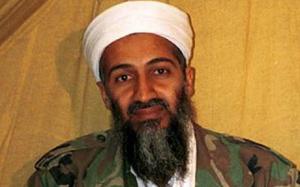
First of all, I think Joseph Cannon has it right. There is no way Obama sent just two helicopters into Pakistan to kill Public Enemy No. 1. The Pakistanis knew what was happening and cooperated–either willingly or unwillingly. Either the Pakistan government, military, and intelligence services wanted plausible deniability or the U.S. pressured them into going along with the assassination. I don’t believe for one minute that Obama wanted to take bin Laden alive. Here’s Cannon’s take:
Allow me to suggest one possible scenario. Let us suppose the Bin Laden daughter Safia was correct when she said that her father was captured and then executed. (Frankly, I think that’s a fairly good bet.) Both the body and the post-mortum photos would provide evidence of the execution. A close-range shot leaves powder burns and other evidence.
This hypothesis would also explain the changing stories about whether Obama and Clinton watched the operation on video in real time. (I feel certain that they did.) I suspect that they realized belatedly that they would need plausible deniability if the truth of the execution ever came out: “I am shocked, shocked to learn about this. At the time, I had no idea…”
After reading Cannon’s piece, I think it makes sense that Obama and the rest of his team did see the kill shots, but they’ll never admit it. I also think Cannon makes a lot of sense when he brings in the question of Al Qaeda and the drug trade.
The connection between the ISI and Al Qaeda primarily involved drugs. That’s the factor which everyone keeps forgetting about. Yet it is key.
It should also not be forgotten that the ISI has strong links to the CIA. America was perhaps the primary market for Afghanistan’s poppy product, and thus it was necessary for the Bin Laden network to maintain ties with powerful people in this country.
I haven’t yet formulated a proper theory about all of this. But it seems to me that the answer to the mysteries surrounding the life and death of Osama Bin Laden may revolve around the drug connection.
Via Truthdig, former CIA agent Robert Baer basically agrees with Joseph Cannon. In this radio interview, Baer says that the Pakistan government must have known where bin Laden was and it is highly unlikely that they weren’t involved in the operation. He says the chances of a foreigner living in a heavily secured compound in that area filled with military and security people is zero. Baer also says if the U.S. had done this, there would have been a much sharper reaction from Pakistan–they would have closed the U.S. embassy and thrown all Americans out of the country. According to Baer, those Black Hawk helicopters are extremely slow and they would have been seen for hours flying in from Afghanistan, and if Obama had sent two helicopters in alone, he would be extremely daring, but utterly foolish. No president has ever forgotten what happened to Jimmy Carter after his failed attempt to rescue the hostages in Iran.
There’s a lot more, you can listen to the interview if you’re interested. But the bottom line, as far as I’m concerned, is that our government thinks we’re stupid. They think we’ll believe whatever outrageous propaganda they feed us.
Next up, Noam Chomsky’s reactions. Like me, Chomsky thinks bin Laden should have been brought back here and put on trial.
It’s increasingly clear that the operation was a planned assassination, multiply violating elementary norms of international law. There appears to have been no attempt to apprehend the unarmed victim, as presumably could have been done by 80 commandos facing virtually no opposition—except, they claim, from his wife, who lunged towards them. In societies that profess some respect for law, suspects are apprehended and brought to fair trial. I stress “suspects.” In April 2002, the head of the FBI, Robert Mueller, informed the press that after the most intensive investigation in history, the FBI could say no more than that it “believed” that the plot was hatched in Afghanistan, though implemented in the UAE and Germany. What they only believed in April 2002, they obviously didn’t know 8 months earlier, when Washington dismissed tentative offers by the Taliban (how serious, we do not know, because they were instantly dismissed) to extradite bin Laden if they were presented with evidence—which, as we soon learned, Washington didn’t have. Thus Obama was simply lying when he said, in his White House statement, that “we quickly learned that the 9/11 attacks were carried out by al Qaeda.”
That’s why I love Chomsky. He comes right out and says exactly what he really thinks. Here’s a little more:
We might ask ourselves how we would be reacting if Iraqi commandos landed at George W. Bush’s compound, assassinated him, and dumped his body in the Atlantic. Uncontroversially, his crimes vastly exceed bin Laden’s, and he is not a “suspect” but uncontroversially the “decider” who gave the orders to commit the “supreme international crime differing only from other war crimes in that it contains within itself the accumulated evil of the whole” (quoting the Nuremberg Tribunal) for which Nazi criminals were hanged: the hundreds of thousands of deaths, millions of refugees, destruction of much of the country, the bitter sectarian conflict that has now spread to the rest of the region.
I know you’ll want to read the whole thing–it’s not very long, but it’s powerful.
Tom Englehardt, of the American Empire Project and TomDispatch.com argues that Osama bin Laden achieved his goals–he wanted to destroy the U.S. economy and generally have an impact on American society and culture.
Unfortunately, in every way that matters for Americans, it’s an illusion that Osama bin Laden is dead. In every way that matters, he will fight on, barring a major Obama administration policy shift in Afghanistan, and it’s we who will ensure that he remains on the battlefield that George W. Bush’s administration once so grandiosely labeled the Global War on Terror.
[….]
Consider it an insult to irony, but the world bin Laden really changed forever wasn’t in the Greater Middle East. It was here. Cheer his death, bury him at sea, don’t release any photos, and he’ll still carry on as a ghost as long as Washington continues to fight its deadly, disastrous wars in his old neighborhood.
Let’s face it. We no long live in anything resembling freedom. The Constitution is on life support. Our economy is wrecked, and we may never get back to where we were. We’re living in the last days of a dying empire. And the American empire wasn’t much to write home about anyway–certainly it can’t compare to the one Rome built.
Economist Mark Weisbrot, writing in the Guardian expands on bin Laden’s goals and his vision of what he wanted to happen to the U.S.
Bin Laden, who – like Saddam Hussein and other infamous mass murderers – was supported by the United Stated government for years before he turned against it, changed the world with the most destructive terrorist act ever committed on US soil. But the reasons that he was able to do that have as much to do with US foreign policy at that particular juncture as with his own strategy and goals.
Bin Laden’s goal was not, as some think, simply to bring down the US empire. That is a goal shared by most of the world, who – fortunately for us – would not use terrorist violence to further this outcome. His specific goal was to transform the struggle between the United States and popular aspirations in the Muslim world into a war against Islam, or at least create the impression for many millions of people that this was the case. As we look around the world 10 years after the attack, we can see that he had considerable success in this goal. The United States is occupying Afghanistan and Iraq, bombing Pakistan and Libya, and threatening Iran – all Muslim countries. To a huge part of the Muslim world, it looks like the United States is carrying out a modern-day crusade against them, despite President Obama’s assertions to contrary Sunday night.
George W. Bush happily obliged by inventing the “War on Terror.” And his successor, Barack Obama is now willingly carrying the torch. We should pull U.S. troops out of Afghanistan and Iraq, since the bogey man is dead. But that won’t happen.
Weisbrot says that the WOT made al Qaeda stronger and bin Laden probably knew that would happen:
Could bin Laden have known that the US response to 9/11 would have made his movement even stronger, even if he lost his base in Afghanistan? I would say it is likely. While it was not predictable that President Bush would necessarily invade Iraq – although it was a strong possibility – it was foreseeable that the US government would seize on 9/11 to create a new overarching theme for its interventions throughout the world.
The administration and the media are already searching for a new bogey man, and working hard to gin up as much outrage as possible among gullible Americans. The latest effort is the release of bin Laden’s home movies. But we only get video–no sound. Why doesn’t our government allow us to hear what’s going on in videos? Are they afraid bin Laden’s words will influence us? And why do they keep calling bin Laden’s home a “lair?” Is that supposed to make us see him and his family as animals?
Finally, what are we to make of the video below–Osama bin Laden watching himself on television? Are we supposed see him as narcissistic and self-involved? Are we expected to compare this aging man watching himself on TV with our glorious hero President who would supposedly never do such a thing?
How very appropriate that the video begins with a Coors Beer ad. It fits right in with the sports motif that is building around the killing of the bogey man: USA! USA! and all that….
Saturday: Big Easy Reads
Posted: May 7, 2011 Filed under: morning reads | Tags: BP oil spill, Climate change, disaster capitalism, dispersants, Gulf coast, Louisiana, New Orleans 28 CommentsMorning, news junkies.
I’m going to start this Saturday with my history pick first:
La Nouvelle-Orléans (New Orleans) was founded May 7, 1718, by the French Mississippi Company, under the direction of Jean-Baptiste Le Moyne de Bienville, on land inhabited by the Chitimacha.


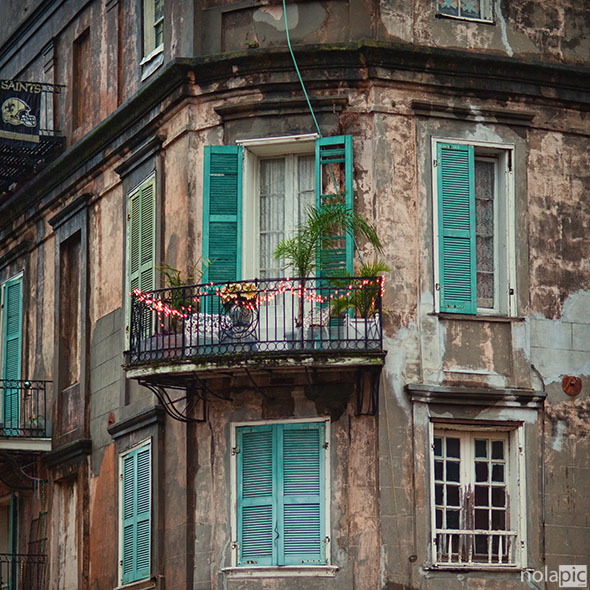
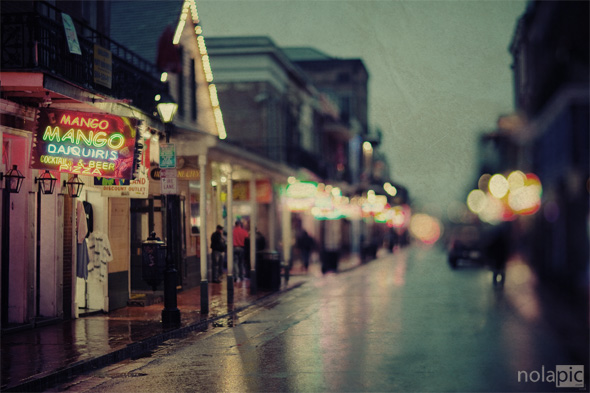



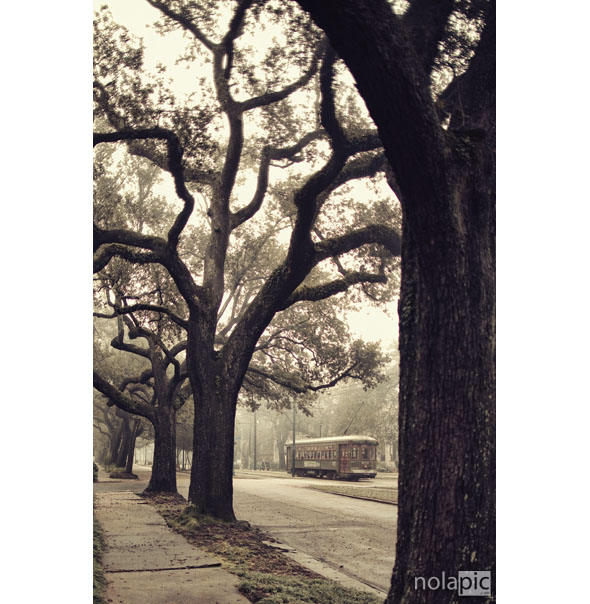
Click thumbnails for HQ views at pompo.com. Photography by Alfonso Bresciani.
I know we’ve had the perfunctory “Gulf oil spill: one year later” press coverage over the last few weeks, but since today marks the anniversary of New Orleans’ founding, I thought it would be prudent to take time out to dig deeper and get beyond the soundbytes. So this Saturday’s link dump is going to focus exclusively on the Gulf.
So how are NOLA and the Gulf Coast really doing?
Vanity Fair has posted a web exclusive from New Orleans-based photographer and CBS-affiliate videographer Jackson Fager, documenting the faces of shrimpers, fisherman, and oysterman along LA’s coastline, many of whom had their livelihoods snatched from them when the oil spill struck. Please check out Fager’s observations, thoughts, and photos. Here are the faces of the two women included in his slideshow (click for HQ and descriptions at the VF site):


Next up, from an interview (posted April 27th) with an environmental justice organizer with the Sierra Club:
BETWEEN THE LINES: And the Vessels of Opportunity, that was what BP set up to hire local fisher folks to clean up the spill, right?
DARRYL MALEK-WILEY: Right, that was funded by BP to hire people to go out and do clean-up work. A number of problems with that…No. 1, the Louisiana Environmental Action Network actually purchased safety gear and gave it to a number of fishermen to wear — respirators and things like that — because the environmental community knew about the dangers of the health impacts. And BP basically told fishermen and Vessels of Opportunity that if they wore the protective gear, they would no longer be working for BP.
In the interview, Malek-Wiley discusses a new organization called GO FISH (Gulf-Organized Fisheries in Solidarity and Hope), which is mobilizing fishermen and their families all the way from Alabama to Texas to fight for fair compensation from BP. Here’s what Malek-Wiley says these fishermen on the frontlines have to say about the official government spin that the oil has mostly disappeared:
DARRYL MALEK-WILEY: Yeah, what they say is that the oil is still here. We see it daily…tar balls are washing up all along the Gulf Coast. Just the way the winds blow…in the wintertime, the wind blows offshore so it’s blowing out into the Gulf; in the summertime we start getting southern winds blowing stuff back on shore. So we’re starting seeing tar balls come in; some of the oil come in. Because all the dispersant did was put it on the bottom of the Gulf, and so we’re starting to see some of that oil and dispersant coming back up and impacting a number of different coastal areas.
And, on dispersant:
DARRYL MALEK-WILEY: There is still a wide range of opinion. You know, the environmental community and fishermen basically agree that the use of dispersants without the needed scientific data on the long-term impacts of the stuff was not a smart thing. One point eight million gallons of dispersants into the Gulf of Mexico — nobody’s ever put that amount of dispersant anywhere in the world, so we don’t know what the impact of that is going to be. Some of the people who are sick, they’re taking samples of their blood and they’re finding the chemicals that make up the dispersants in their blood, as well as Louisiana sweet crude, and having serious health impacts.
Check out the rest of the interview to read more about those serious health impacts. It’s rather alarming, especially when you consider we’re talking about a population that has been out of work and lost their health insurance.
Dispersants: Questions remain
Last week the FDA declared seafood safe in Barataria, the coastal area hardest hit by the BP oil spill. The Miami Herald/AP article at the link says that means 99% of LA’s waters are open for fishing. The only meat I eat is seafood, and down along the Gulf we’ve gotten repeated “assurances” that our food supply isn’t tainted, but even all the way here in Houston a local chef who serves seafood still has unresolved concerns about dispersants:
“The thing that scares me the most about the oil situation is the dispersants, and from everybody that I talked to — from scientists to fisherman that’s the one thing that sit there and they hold onto,” he said.
Government scientists say their tests show no trace of any oil or dispersant in any seafood. They say the dispersant breaks down faster than oil in the water. NOAA says dispersant is simply not a concern, and for now, Caswell says he believes them.
“I eat it,” he said.
I eat it too, though I have cut back and still find myself wondering whether our public and private institutions are leveling with us on just how much they don’t know about the long-term impact of having these chemicals in our ecosystem and food supply and how far the reach of these effects might be. How many people have to get sick before they’ll admit anything?
Take for example this report out of Raceland, LA on fisherman Brandon Cassanova, who has mysteriously fallen ill, possibly due to exposure to dispersants. For months, Cassanova has been experiencing seizures, abdominal pain, memory loss, racing heartbeat, and elevated blood sugar, and his symptoms appear to be getting more acute. His lifelong primary-care physician, Dr. Mike Robichaux, believes Cassanova’s illness matches a “bizarre cluster” of symptoms experienced by people who say they have been exposed to dispersants and other toxins related to the oil spill. Robichaux, a former state senator and longtime advocate for locals exposed to pollutants, has written to Sen. Landrieu and others demanding the government for answers. He isn’t buying the line that the Gulf seafood is safe to eat, either.
While formal data collection by the LA Dept. of Health & Hospitals and long-term NIEHS research are underway, the task of proving causality between exposure and symptoms remains a hurdle. According to Tulane’s Dr. Luann White, most of the cases being reported are of a short-term and mild nature and dilution by the Gulf waters makes detecting chemicals and pathway of exposure to the public difficult. Anecdotally, however, Lafayette-based toxicologist Wilma Subra–who researched the chemistry of dispersants and came up with a list of possible effects–says she’s seen 600-700 people exhibiting this cluster of symptoms after being exposed to dispersants and crude, and that each of these cases seems to know of yet others going through the same thing.
A Thought Experiment on the Gulf Coast
This next one is interesting food for thought. Via geekosystem: What if the Gulf Oil Spill Never Happened? It’s a 2-minute animation clip by Chris Harmon, entitled Oil’d…please give it a look if you haven’t seen it yet:
Vodpod videos no longer available.
The Gulf Coast Oil Spill and Climate Change
I want to touch on the impact of the spill in terms of the broader environmental challenges for the Gulf…it seems like disaster capitalism struck this region and went into overdrive right at the time when it was most vulnerable and needed improvements in infrastructure and conservationist attention more than ever. Funny timing, that.
Over at Greenanswers.com, Chelsea Cooley paints a bleak picture with this headline… Last Days of Louisiana’s Bayous:
The 2010 BP Oil spill in the Gulf of Mexico harmed Louisiana’s coastal eco-system in some obvious ways and in many other ways yet undiscovered. One unsettling truth is that the diminishing state of the wetlands actually aided the widespread effects of the oil spill, as the wetlands might otherwise have provided a protective barrier, preventing oil seepage into the bayous’ central regions. Barataria Bay, for example, a popular nesting ground for Louisiana’s pelicans, was one of the areas most polluted by the spill. The crisis compounded problems faced by an already delicate ecosystem.
However, the wetlands are also suffering due to a dramatic rise in sea-level associated with Global Warming. According to one professor of earth science from Tulane University, the sea-level rise in the Gulf Coast is occurring at a rate five times faster than it did in the 1000 years preceding the Industrial Revolution. The implications of human activity are on the table for all to see.
Also take a look at this SciAm/Reuters headline the other day that Dakinikat passed along to me… Seas Could Rise Up to 1.6 meters by 2100:
OSLO (Reuters) – Quickening climate change in the Arctic including a thaw of Greenland’s ice could raise world sea levels by up to 1.6 meters by 2100, an international report showed on Tuesday.
Such a rise — above most past scientific estimates — would add to threats to coasts from Bangladesh to Florida, low-lying Pacific islands and cities from London to Shanghai. It would also, for instance, raise costs of building tsunami barriers in Japan.
“The past six years (until 2010) have been the warmest period ever recorded in the Arctic,” according to the Oslo-based Arctic Monitoring and Assessment Programme (AMAP), which is backed by the eight-nation Arctic Council.
And, this piece at Huffpo brings it altogether. Pre-Spill, Coastal Threats Cannot Be Ignored, Environmentalists Say…It’s breathtaking to read the entire piece and the extent of the challenges the Gulf region is up against. I’m just going to quote a few snippets:
Dr. Virginia Burkett, senior science advisor for Climate and Land Use Change at the U.S. Geological Survey, said the spill contributed to Louisiana’s wetlands loss, which was already well underway because of multiple stressors. And, she said, a year after BP’s rig explosion, cumulative effects of climate change and the spill are still poorly understood. Climate change itself, however, has been well studied.
[…]
Louisiana is in the grip of global, environmental change. “Temperatures and ocean waters are rising because of increased greenhouse or heat-trapping gases, like carbon monoxide, in the atmosphere,” Burkett said. “Glacial mass and annual snowcover are declining more rapidly than many scientists had predicted.” Ocean temperatures and acidity are increasing, and rainfall volume has grown. But spacing between rain events has expanded so droughts are more frequent in some regions of the world, she said. And in several ocean basins around the globe, hurricanes have become more intense.
As much as our government tries to pretend like the oil that gushed out into the Gulf last year just disappeared, they cannot wipe away the consequences of the larger pattern of environmental destruction that the BP oil spill has contributed to in the area. The spill last year wasn’t the first domino to fall, and it won’t be the last:
Burkett said events that hastened coastal erosion in recent decades won’t be the last.”When I was a child, Hurricane Camille was the big benchmark event, then it was Katrina.” And in the current decade, the Gulf oil spill is the gorilla.
What can we do?
Burkett offers these suggestions:
“Barrier islands and wetlands can be restored for hurricane protection,” Burkett said. “River sediment can be used to build marsh, instead of letting sediment wash out to sea.” Preparations can be made for more intense drought and wildfires.
“Home owners and communities can elevate houses, and cities can adapt infrastructure to the rising sea. In some areas, however, retreat may be the most effective option.” Her parents, for example, moved inland when they lost their home in Biloxi, MS to Hurricane Katrina.
So how much ‘ruin there is left in a nation’ may very well depend on just how much ‘retreat’ there is in it.
And, our ability to retreat depends on us even knowing we’re in danger in the first place. We saw the failures to get people out in time during Katrina and the several weeks it took for the current Administration to really respond to the BP oil spill, but what about the mini-disasters that build up cumulative damage yet go virtually unnoticed, leaving people unaware of the true extent of the daily threat they’re up against and how unsustainable their living spaces are becoming. Wired.com had a really interesting read recently on what can be done to better track crude leaking into the Gulf using satellite imagery… Gulf Oil Shouldn’t Spill Beneath the Radar:
A year after the Deepwater Horizon blowout sent 200 million gallons of crude oil into the Gulf of Mexico, smaller leaks still bubble across the Gulf — but unlike big spills, they’re largely ignored.
A nonprofit organization called SkyTruth, which uses public and commercial satellite imagery to assess environmental damage, recently added airplanes and ships to its Gulf monitoring. But the group can still investigate just a tiny fraction of spills and leaks that may be reported, underreported or not reported at all by oil companies.
SkyTruth founder John Amos, a geologist and a former oil-company research scientist, thinks roughly $3 million per year could buy the necessary data and provide the first continuous, accurate assessment of Gulf oil pollution.
“The oil industry has done a great job convincing the public that modern drilling pollution is nonexistent. But we’ve discovered wells damaged by hurricanes in 2005 that are still leaking,” said Amos, who may have caught an oil company grossly under-reporting one of its leaks. “We have some tools available to do investigations, but in many cases it’s just not enough. For smaller spills, we need an up-close look from satellite imagery.”
On the proactive side of things, over here at Houston’s Reliant Center, the Offshore Technology Conference this past week has yielded some interesting results:
A possible tool for preventing oil spills like last year’s Gulf disaster arrived on the floor of Houston’s Reliant Center this week, courtesy of an auto industry refugee and a jackknife can opener.
The Latest Threat
As mentioned earlier, the BP oil spill isn’t the first or last threat the area is facing. Here’s the latest trouble, via the Daily Comet… Flood will deal blow to struggling oystermen.
Via the Sun Herald… Another slam for the Gulf:
GULFPORT — The U.S. Army Corps of Engineers plans to open the Bonnet Carre Spillway on Monday, sending a flood of fresh water through Lake Pontchartrain, through a strait and into the Gulf.
It’s something officials don’t do often, because of the effect it has on the marine life and the Mississippi Sound.
But the Mississippi River — already high at 1.6 million cubic feet per second flowing past Natchez — is expected to increase to 2.45 million cubic feet per second by May 22.
Knowing that volume is coming down the river, opening the Bonnet Carre is an attempt to divert some of it before it gets to New Orleans.
But scientists who study marine life in the Gulf cringe.
“It will change things, that’s for sure,” said Bill Hawkins, director of USM’s Gulf Coast Research Lab. But how much change depends on the volume and duration of the diversion.
Jay Alford has more — The Coming Waters (h/t Dakinikat):
There’s more water on the upper Mississippi River right now than any time in history, period, in any time in history,” said Garrett Graves, chairman of the Coastal Protection and Restoration Authority. “This overwhelms the volume of water that was in the river in 1927, 1937, 1997, 2008. An extraordinary flow is coming down the river.”
That water levels are expected to be above crest for seven to 10 days doesn’t inspire much confidence. Graves said there are “vulnerabilities everywhere from the levees in Baton Rouge to the levees in south Louisiana.”
Final Thought
I’ll close with the WSJ’s review this Saturday, of Rowan Jacobsen’s Shadows on the Gulf: A Journey Through Our Last Great Wetland.
The headline says a lot in itself… A Gulf Requiem:
Click to view on Amazon.
“Most of the Gulf Coast has not been touched by the oil spill,” Mr. Jacobsen reports, “and is beautiful and vital as ever.”
Yet these early avowals of glass-half-fullism notwithstanding, it’s hard not to hear the mournful sounds of a pipe organ on nearly every page. And you have to wonder why all the people—oystermen, oilmen, shrimpers, tourists—are so grim-faced, as if shuffling past what appears to be a Gulf-sized casket.

It’s a true shame that we’d let an area that is one of our national treasures become a laboratory for climate change and disaster capitalism in this fashion. Take a good look, because what’s happening to the Southern Louisiana area and the rest of the Gulf is foreshadowing of the rest of our country’s future, if the interests of profit continue to be put before people, unabated, and people get pushed off further to the margins of the margins.
Wouldn’t it have been nice if our president would have responded to the death of OBL by using the new presidential force behind the bully pulpit to restore our attention to the Gulf Coast and all that has been neglected over the past decade… too bad any reminder of the Gulf and the struggles of ordinary people conflicts with the fierce urgency of Obama’s permanent campaign.
[originally posted at Let Them Listen; crossposted at Taylor Marsh and Liberal Rapture]

 peej
peej Carissa
 bostonboomer
 dakinikat
 ecocatwoman
 mablue2
 Mama Lopez
 peggysue22
 quixote
 skydancingguestblogger
 Mona (aka Wonk the Vote)



 Sky Dancing
Recent Comments