
The Vision Thang
Posted: March 17, 2011 Filed under: 2012 presidential campaign, Domestic Policy, House of Representatives, president teleprompter jesus, U.S. Politics, Voter Ignorance, We are so F'd, WE TOLD THEM SO, Women's Rights, worker rights | Tags: Democratic politics, Democratic values, No drama Obama 18 CommentsI wrote a few days ago that I find it odd that Democrats don’t seem to be able to articulate a clear vision with specific

Dear Liberal Democrats:
programs and agendas they’d like to support given the absolute fanaticism articulated by Tea Party extremists. The voting populace seems eager to listen at this point. You would think in the obvious Republican war against Women, Family Planning, Collective Bargaining, and economic recovery that certain Democratic politicians known for their speeches would be able to find some fighting words. It’s not happening. It’s a pattern. It’s time for other Democratic leaders to stand up and fill the void.
It was interesting to read similar thoughts expressed by NY Congress Critter Anthony Weiner who is quickly becoming my favorite outspoken liberal. He was interviewed recently by Amanda Terkel writing for HuffPo.
“On our side is this weird squishy affirmative sense of what government should do and how we’re opposed to this cut and that cut, rather than saying, ‘Here are the things: Medicare, Medicaid, Social Security, environment and education. We’re not cutting those. Those are off the table. That’s non-negotiable,'” said Weiner, adding, “We haven’t really done that very well. That’s because the president fundamentally — he’s not a values guy. He wants to try to get the best deal for the American people and that’s virtuous in its own right, but it becomes very difficult to make a strategy. There’s been much greater global strategy thinking on [progressive media] outlets, frankly, than at 1600 Pennsylvania.”
When asked by The Huffington Post whether what’s happening at the state and local level with labor unions and budget battles would rise to the national stage, Weiner said that the leadership of national officials — including the president — will be essential to push the issue forward.
“We’ve spent a lot of time waiting for Godot when it comes to the Obama White House, and we kind of — to some degree — have to internalize the idea that, you know what? That’s probably not the way to go,” Weiner said. “We have to start initiating some of this.”
Continued Weiner: “It is now pretty clear to me — I’m not saying this is pejorative — the president, he doesn’t animate his day by saying, ‘All right, what is the thing that has me fired up today? I’m going to out and try to move the ball on it.’ He kind of sees his job as to take this calamitous noise that’s going on on the left with people like us and on the right on Fox News, and his path to being a successful president, in his view, is taking that cacophony and trying to make good, level-headed, smart policy out of it and moving it incrementally down the road. That’s nice. That’s a good thing. We need that, obviously. The problem is there’s no substitute for someone really leaning into these values questions. “
The wall of reality between campaign rhetoric, action, and policy has become so noticeable now that even the most loyal partisans see the complete disconnect. The problem is that they’re standing around waiting for the President to do something. I contend that’s not going to happen.
Republicans on the right wing are now making political hay of the presidential preoccupation with March Madness and the endless dithering on the no-fly zone over Libya, further efforts to encourage job creation in the country, and the lack of engagement on basic Democratic base issues like the assault on collective bargaining happening in states like Wisconsin. Obama isn’t even standing up for Big Bird. (Unless you count this just released press ‘statement’.) Maybe our old yellow friend needs to dress up like a Jay Hawk to get some attention these days. Terkel finds other Democratic pols with similar views that are willing to go on record. I’m hoping this is the start of a few brave souls finding their voices and spines. It seems some of them are still in some form of denial.
Rep. Dennis Kucinich (D-Ohio) was also at the gathering and later added, in reference to labor and budget battles, “The only regret I have is that the White House isn’t fighting back against this. It’s one thing to say, ‘Well, I stand behind the workers — how far behind, I don’t know.’ It’s another thing to say, ‘I stand with them and in front of them to protect their rights.’ And I’m waiting for that to happen.”
Frankly, I think Kucinich is going to be waiting for Godot. I have a lot of problems with Kucinich who caved into White House pressure on health care reform after a few flights on air force one. I also think that he’s still in denial that the President shares Democratic values. Defazio of Oregon appears to have a bit more of a realistic perspective.
DeFazio added that he hopes Obama stands with congressional Democrats rather than agreeing to a compromise with the Republicans, as he did a few months ago on the tax cuts.”The problem is the negotiator-in-chief and where he’ll end up, and whether we can put some steel in his spine,” he said. “I assume he caved in on taxes in December because he was blackmailed on the treaty with Russia with nuclear weapons, which was absolutely critical. But that’s pretty pathetic also.”
We’re beginning to see voices critical of the President coming from within the party itself. This is something that has been seriously missing for years. I’m not sure that any amount of steel spinal fortification is what’s at issue here. No-Drama Obama shows a lot of enthusiasm when the topic suits him. He lights up like a christmas tree when speaking about himself or the Chicago Bulls. He just isn’t enthusiastic about basic human rights and Democratic values. He’s surrounded himself with Chamber of Commerce and Wall Street insiders. This alone should signal his priorities.
The Republicans definitely are a divided party right now. The budget battle is highlighting the struggle between Tea Party purists and the wheeling dealing business enablers on the right. Boehner’s the one that’s herding cats right now. The 2012 election appears to be shaping itself towards a Democratic resurgence. Polls show significant buyer’s remorse for the recent crop of Republican governors and legislators. This is at least true on the local level. But, they’ve blown it before. Just look at the legislature that came out of the pre-lameduck congress. It was loaded with business deals like tax cuts and business subsidies instead of expansion of middle class and main street priorities. Each bill started from the negotiation process from a center right perspective and moved farther right. Liberal Democratic senators didn’t even fight to get an optimal stating position.
The biggest problem is that the President is more than just the titular leader of the party and has a responsibility to provide the Vision Thang. Obama’s vision only seems to go as far as his personal interests and whims. Any one interested in social justice or economic justice issues has to be increasingly disturbed about this. I don’t want to fall into the Republican meme machine that’s using this opportunity to create yet another urban myth around Obama. Yet, it does seem to me that Obama is giving them far too much material to grease the wheels of their machines. There’s an angry electorate that just eats that up if they’re not given substantive things to think about.
We need more Democratic politicians that are willing to articulate Democratic values and an agenda that forwards issues that concern most Americans. If the President doesn’t appear interested in doing it, then I wish we could put people like Anthony Weiner in better positions to articulate the vision thang to the public and to the press. He might be in a better position to really do this than popular lightening rods like Nancy Pelosi or Harry Reid. I think they have to stop waiting for the President to “steel” himself or say something. By now, it ought to be obvious that it’s not going to happen.
Thursday Reads
Posted: March 17, 2011 Filed under: Bahrain, Barack Obama, Foreign Affairs, Libya, Psychopaths in charge, torture, U.S. Military, U.S. Politics, We are so F'd, Wikileaks, Yemen | Tags: Bahrain crackdown, banality of evil, Barack Obama, Bradley Manning, Japan's nuclear disaster, Libyan uprising, Yemen 29 Comments
Good Morning! Well, at least we are alive and not living next to a nuclear plant that is melting down–for now anyway–so I guess you could say it’s a good morning.
I’m pretty overwhelmed with trying to summarize the news. There is so much happening that I hardly know where to begin. I’m going to begin with a link or two about some of the big stories happening right now. You can supplement my links in the comments.
Japan nuclear disaster: US Officials Alarmed by Japanese Handling of Nuclear Crisis
“It would be hard to describe how alarming this is right now,” one U.S. official told ABC News….
“We are all-out urging the Japanese to get more people back in there to do emergency operation there, that the next 24 to 48 hours are critical,” the official said. “Urgent efforts are needed on the part of the Japanese to restore emergency operations to cool” down the reactors’ rods before they trigger a meltdown.
“They need to stop pulling out people—and step up with getting them back in the reactor to cool it. There is a recognition this is a suicide mission,” the official said….
The U.S. official says experts believe there is a rupture in two, maybe three of the six reactors at the Fukushima power plant, but as worrisome is the fact that spent fuel rods are now exposed to the air, which means that substances like cesium, which have a long half-life, could become airborne.
“That could be deadly for decades,” the official said….
“There is talk of an apocalypse and I think the word is particularly well chosen,” European Union’s energy commissioner Günther Oettinger said today, according to various reports. “Practically everything is out of control. I cannot exclude the worst in the hours and days to come.”
It doesn’t get much more serious that that. The US has also contradicted Japan on the evacuation zone, saying that if this happened in the US, the recommendation would be to evacuate everyone in a 50 square mile radius of the plant–not the 12 miles that Japan has recommended.
Libya: Rebels fight to stall Gaddafi’s army in east
Government forces captured Ajdabiyah, 150 km (90 miles) south of Benghazi on the Gulf of Sirte, on Tuesday after most of its rebel defenders retreated from a heavy artillery barrage.
One rebel officer said on Wednesday the town had been lost and the fighters who remained had handed over their weapons. But some apparently refused to surrender or flee.
By Wednesday evening, residents said the rebels held the centre of town while forces loyal to Gaddafi were mostly on its eastern outskirts.
It’s just about over for the opposition forces. I’m writing this late at night, by the time you read this, there could have been a real bloodbath. It’s so sad. I’ll update in the morning.
Bahrain: Bahrain unleashes assault against protesters’ camp in capital
A tent city in the heart of Bahrain’s capital was wiped away Wednesday morning in a cloud of tear gas and a hail of rubber bullets after the government dispatched troops against pro-democracy demonstrators in defiance of U.S. warnings.
Trails of acrid black smoke floated over Manama as dumpsters and tires were set alight across the city. By late afternoon, the military had announced a 12-hour curfew for most of the downtown area, including Pearl Square, which has been the hub of the demonstrations.
The early-morning sweep came despite U.S. insistence that dialogue, not violence, was the only way to end the crisis that has convulsed Bahrain for more than a month. It drew an unusually sharp rebuke from Secretary of State Hillary Rodham Clinton, who is visiting the Middle East.
“They are on the wrong track,” she told reporters in Cairo. “There is no security answer to this,” she added, referring to the protesters’ demands, “and the sooner they get back to the negotiating table and start trying to answer the legitimate needs of the people, the sooner there can be a
But people are still dying, and the Bahrain government is using U.S.-provided weapons and teargas. Last night I fell asleep listening to BBC World News on the radio. Once I awoke to hear a heart-rending call from a doctor at a Bahrain hospital. She was frantic, telling the horrified radio talkers that government troops (and Saudi forces) were shooting people on the streets and refusing to let the doctors treat the injured. Here’s the horrifying video.
Yemen: The Yemen government is also viciously attacking its own people–and with U.S. weapons and backing. I have to wonder if our own “leader’s” refusal to get involved in the Libyan situation has given other dictators carte blanche to follow Gaddafi’s lead and massacre protesters in order to stay in power.
The torture of Bradley Manning: Glenn Greenwald’s latest post is essential. Greenwald provides links to U.S. and international coverage of the Manning case and suggests that we may have finally hit a tipping point–the disgust at what the Obama administration is doing to this young man is palpable.
And please don’t miss this cartoon by Tom Tomorrow (via Greenwald).
Finally, also via Greenwald, please read this amazing rant. (I took the liberty of correcting a few typos)
If his psychopathic commitment to killing people hadn’t already convinced you that Barack Obama shared [George W. Bush’s] particular quality of being a vacant, blood-driven monster whose outward appearance as one of our own kind is no more than an act of ingenious fakery, then you may wish to consider his response to the torture of Bradley Manning, which he treats with the blithe indifference of a busy manager signing off on some subordinate’s expense report. Yeah, he assured me everything was copasetic. It’s all good.
Here is a fine opportunity to engage in a little free and painless magnanimity, to make vague noises about according decent treatment even to one’s enemies, to blather a bit about America’s commitment to the humane treatment of all God’s precious children, to give the poor kid some boxer shorts and a couple of books to read, and to throw that paltry bone to his supporters in the Democratic faction, who would immediately beatify him as better-than-Cheney, and he passed on it. He said, no, we’re going to go right on torturing this person, who has not been convicted of any crime, lest he commit suicide before we are able to consign him for the rest of his life to the tortures we are already visiting upon him….
What this episode reveals is that the most salient aspect of Barack Obama’s character is that he is an asshole of the worst order. He does not delight in cruelty like his predecessor, but is grossly indifferent to it. The Ts have all been crossed. Proper procedures followed? Yes. Fine. Let’s move on. I have been assured.
I cannot disagree. So….what are you reading and blogging about today? Lay it on me.
Four NYT Journalists Missing in Libya
Posted: March 16, 2011 Filed under: Afghanistan, Breaking News, Foreign Affairs, Libya | Tags: Anthony Shadid, journalists, Libya, Lynsey Addario, New York Times, Stephen Farrell, Tyler Hicks 14 Comments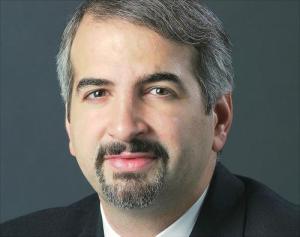
Anthony Shadid
Four New York Times journalists disappeared while reporting on fighting in Libya, the newspaper said Wednesday.
Editors at the newspaper said they last heard from the journalists on Tuesday as they were covering the retreat of rebels from the town of Ajdabiya. Libyan officials told the newspaper they are trying to locate the four, executive editor Bill Keller said in a statement.
“We are grateful to the Libyan government for their assurance that if our journalists were captured they would be released promptly and unharmed,” Keller said.
The missing journalists are Pulitzer-Prize-winning reporter Anthony Shadid, the newspaper’s Beirut bureau chief; Stephen Farrell, a reporter and videographer; and photographers Tyler Hicks and Lynsey Addario. In 2009, Farrell was kidnapped by the Taliban and later rescued by British commandos.
Anthony Shadid has won two Pulitzer Prizes, including one in 2010 for reporting on Iraq at the Washington Post.

Lynsey Addario
Lynsey Addario is a brilliant photographer who was a 2009 recipient of a MacArthur “genius” grant. You can view some of her work here and here.
Libyan government forces said Wednesday that they have no information about where the journalists may be and that, if they were picked up by the Libyan military, they would be returned to Tripoli.
CNN quotes from an e-mail Addario sent to CNN correspondent Ivan Watson on Monday:
Addario called the Libya story “one of the most dangerous” of her career.
The e-mail said, “qaddafi’s forces heading back east, and the rebels are surrendering along the way…so exhausted. this story has been one of the most dangerous i have ever covered. getting bombed from the air and by land, with no cover, and no flack and helmet.”
Of the other missing writer and photography, CNN says:
Farrell routinely reports from Pakistan, Afghanistan and Iraq. Before joining The New York Times in 2007, he worked for the Times of London. In April 2004, he was kidnapped on assignment in Iraq.
Hicks, a staffer for the paper, is based in Istanbul and has served as an embed in Afghanistan.

Tyler Hicks
Here is a recent post at the NYT Lens blog, with photos by Tyler Hicks along with his reflections on covering the Libyan conflict.
Stephen Farrell was taken prisoner by the Taliban in 2009. The Guardian has a report about the British soldier who died rescuing Farrell in Afghanistan.
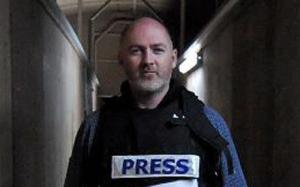
Stephen Farrell
There is some good news. Guardian UK journalist Abdul-Ahad has been freed.
Abdul-Ahad, an Iraqi national, and Andrei Netto, a Brazilian journalist, were taken into custody on 2 March.
They were held in a prison outside Tripoli after being picked up in Sabratha, a coastal town.
Netto was released last week, but Abdul-Ahad, an award-winning correspondent was held until Wednesday.
Guardian editor Alan Rusbridger has said that Abdul-Ahad “is safely out of Libya”.
The recent conflicts in the Middle East have been dangerous for journalists. I only hope that these four fine journalists will soon be found safe and unhurt.
Hillary says No
Posted: March 16, 2011 Filed under: Democratic Politics, Diplomacy Nightmares, Domestic Policy, Egypt, Foreign Affairs, Hillary Clinton, Tunisia | Tags: CNN, interview with Hillary Clinton, politics, Wolf Blitzer 25 CommentsCNN’s Wolf Blitzer has released an interview with SOS Hillary Clinton. Blitzer asked if she was going to either serve a second term or run for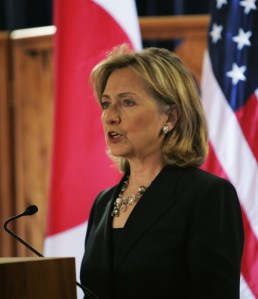 President in 2012. This is pretty clear evidence the Clinton is planning on returning to private life shortly. Blitzer interviewed Clinton during her visit to the U.S. Embassy in Cairo on March 16, 2011.
Q- If the president is reelected, do you want to serve a second term as secretary of state?
No
Q- Would you like to serve as secretary of defense?
No
Q- Would you like to be vice president of the United States?
No
Q- Would you like to be president of the United States?
No
Q- Why not?
Because I have the best job I could ever have. This is a moment in history where it is almost hard to catch your breath. There are both the tragedies and disasters that we have seen from Haiti to Japan and there are the extraordinary opportunities and challenges that we see right here in Egypt and in the rest of the region. So I want to be part of helping to represent the United States at this critical moment in time, to do everything I can in support of the president and our government and the people of our country to stand for our values and our ideals, to stand up for our security, which has to remain first and foremost in my mind and to advance America’s interests. And there isn’t anything that I can imagine doing after this that would be as demanding, as challenging or rewarding.
Q- President of the United States?
You know, I had a wonderful experience running and I am very proud of the support I had and very grateful for the opportunity, but I’m going to be, you know, moving on.
Q- I asked my viewers and followers on Twitter to send questions and a lot of them said, “Ask her if she’ll run in 2016 for the presidency.” A lot of folks would like to you to do that.
Well that’s very kind, but I am doing what I want to do right now and I have no intention or any idea even of running again. I’m going to do the best I can at this job for the next two years.
Clinton also spoke of democratic reforms in Egypt while visiting that nation and Tunisia. She was greeted with protests in Tunisia.
Clinton toured Cairo’s Tahrir Square, the epicenter of the pro-democracy uprising that led to last month’s resignation of Egyptian President Hosni Mubarak.
Clinton said visiting the square was a “great reminder of the power of the human spirit and desire for freedom and human rights and democracy.”
She was welcomed by Egyptian citizens and shook hands with passersby in the square before meeting with Egyptian Prime Minister Essam Sharaf.
Before leaving for Tunisia on Wednesday, Clinton was set to meet with Arab League Secretary General Amr Moussa. Moussa, 74, is a veteran Egyptian diplomat and has announced his candidacy for the country’s presidency.
Clinton also met with pro-democracy activists and members of Egypt’s civil society. She is the highest-ranking U.S. official to visit Egypt since the anti-government protests.
Clinton arrived in Cairo Tuesday after attending a Group of Eight foreign ministers’ meeting in Paris.
After wrapping up talks in Egypt, she travels to Tunisia – the starting point of the pro-democracy movement that has swept through much of the Middle East and North Africa this year.
Dozens of Tunisians took to the streets in Tunis on Wednesday to protest against Clinton’s visit. The demonstrators said they oppose foreign intervention in their country.
There appears to be no break through in her meetings with the G8 in terms of backing a no-fly zone for Libya. While she met with Egypt’s Prime Minister, some details of their meeting have not been released.
On Tuesday, Clinton issued a strong statement of praise for Egypt’s political revolution, declaring she was “deeply inspired” by the dramatic change and promising new assistance for America’s longtime Middle East ally.
Clinton pledged $90 million in emergency economic assistance during a meeting in Cairo with Foreign Minister Nabil Al-Araby. She is the highest ranking U.S. official to visit Egypt since the overthrow of Mubarak.
“The United States will work to ensure that the economic gains Egypt has forged in recent years continue, and that all parts of Egyptian society benefit from these gains,” a State Department statement noted.
She’s not yet discussed her plans after she retires from the position of US Secretary of State.
Food and Gas Prices are on the Rise
Posted: March 16, 2011 Filed under: Economy | Tags: inflation 6 CommentsThe labor department released price indexes that show that how tame inflation has been in every area except two  essential things: food and oil. Most consumers do not follow the Wholesale Price Index. This is because it takes awhile for price increases in wholesale items to translate into inflation at the retail level. It doesn’t translate into a one to one increase either so it’s not a precise indicator of future inflation. Economists are interested in the wholesale index because its usually a precursor to future general price movement. The index was up 1.6 percent with most of the increase attributable to food or energy. These are price increases considered outside ‘core’ inflation. I wanted to explain some differences in inflation measures to you so you know how to understand this information.
Economists generally track the GDP deflator and the core PCE. The GDP deflator is the broadest of all the price indexes that measure inflation (price increases) or deflation (price decreases). It’s a weighted index that relies on the buying habits of current year/quarter/month GDP to weight the various contributions of price changes of goods and services. Thing bought more frequently or with larger prices have a larger weight in the index. The Consumer Price Index or CPI relies on a fixed basket or typical budget to weight the contributions of price changes to the selected group of consumer items in that index. The Personal Consumption Expenditure index or PCE is similar to the CPI in that it measures just retail prices like the CPI but it uses the average prices increases using weights on each price from the current and preceding periods. It does not rely on the fixed basket which can be seen as a typical household budget. This index removes some of the problems inherent with using the CPI that relies on its fixed basket. The most notable problem is the substitution impact which means people move their budgets around when prices change. They substitute one item for another. This switch isn’t captured when the index relies on a fixed basket that doesn’t change very often.
The importance of the ‘core’ inflation measures cannot be understated here. Core indexes don’t include the most volatile items. Food and energy prices are typically removed from core indexes because they are subject to ‘shocks’ from bad weather and supply disruptions. We’re seeing a large number of disruptions right now from both weather and the political unrest in oil producing countries. Future inflation at the retail level will show up first in wholesale prices so the Wholesale Price index is seen as a predictor of future, overall, inflation. What we’re seeing now is the impact of price instability from food and energy which are not part of core inflation but are highly essential to both businesses and households. Energy is obviously important to developed economies. Food is an essential expenditure in developing nations both as an important and export.
The Labor Department said Wednesday that the Producer Price Index rose a seasonally adjusted 1.6 percent in February — double the 0.8 percent rise in the previous month. Outside of food and energy costs, the core index ticked up 0.2 percent, less than January’s 0.5 percent rise.
Food prices soared 3.9 percent last month, the biggest gain since November 1974. Most of that increase was due to a sharp rise in vegetable costs, which increased nearly 50 percent. That was the most in almost a year. Meat and dairy products also rose.
Energy prices rose 3.3 percent last month, led by a 3.7 percent increase in gasoline costs.
Separately, the Commerce Department said home construction plunged to a seasonally adjusted 479,000 homes last month, down 22.5 percent from the previous month. It was lowest level since April 2009, and the second-lowest on records dating back more than a half-century.
The building pace is far below the 1.2 million units a year that economists consider healthy.
There was little sign of inflationary pressures outside of food and energy. Core prices have increased 1.8 percent in the past 12 months.
So, what does this mean besides higher grocery bills and fill ups at the gas station? Well, first it means that households will have to rearrange their budgets so more money will go to these things than other things. But, there’s other news that could offset some of this. Oil prices are actually falling on the news of Japan’s nuclear problems.
Gas prices spiked in February and are even higher now. The national average price was $3.56 a gallon Tuesday, up 43 cents, or 13.7 percent, from a month earlier, according to the AAA’s Daily Fuel Gauge. Rising demand for oil in fast-growing emerging economies such as China and India has pushed up prices in recent months. Turmoil in Libya, Egypt and other Middle Eastern countries has also sent prices higher.
But economists expect the earthquake in Japan to lower oil prices for the next month or two, which should temper increases in wholesale prices in coming months. Japan is a big oil consumer, and its economy will suffer in the aftermath of the quake. But as the country begins to rebuild later this year, the cost of oil and other raw materials, such as steel and cement, could rise.
Oil prices fell sharply Tuesday as fears about Japan’s nuclear crisis intensified. Oil dropped $4.01, or 4 percent, to settle at $97.18 per barrel on the New York Mercantile Exchange.
There are several other things in this report. First, most of the food price increases appear to be due to really bad weather in several countries. The other more worrying contributor was the increased demand by ethanol producers for crops. This is due to increased subsidies. It seems really weird that we’re willing to cause hunger just for some energy production but that appears to be a building, long term issue. Second, the cost of clothing appears to be on the increase. This may be due to the increased costs of transportation coming with the oil or it might be an indication of future inflation. Prices rose 1 percent for clothing. That was the most in 21 years. Costs also increased for cars, jewelry, and consumer plastics. Many of these items also use petroleum products as well as require transportation. That’s a possible explanation for the price change so that would be more temporary than permanent. So, while its cheaper to buy electronics and such, it’s much more expensive to eat and drive around for the time being. Too bad we can’t eat our MP3 players.
I’m sure the FED is watching this since many gold bugs will see this as proof that the QE2 is ratcheting up the money supply and creating inflation. The problem with this explanation is that the majority of these price increases can be attributable to fundamentals in markets that are typically volatile anyway. At this point, I still wouldn’t worry about inflation if I were in charge of policy. I’m still focused on the horrible unemployment rate and the recessionary pressures that decreased state and federal spending will bring. My best guess is that as folks adjust their budgets for food and gas price increases that we’ll see some pretty good sales on other things. You’ll feel these price increases more if you’re poorer and your budget is mostly food and gas expenditures. Otherwise, you’ll see offsets in other expenditures so it will just shift your expenditures around.

 peej
peej Carissa
 bostonboomer
 dakinikat
 ecocatwoman
 mablue2
 Mama Lopez
 peggysue22
 quixote
 skydancingguestblogger
 Mona (aka Wonk the Vote)



 Sky Dancing
Recent Comments