
Wednesday Reads
Posted: November 10, 2010 Filed under: morning reads | Tags: . Minority Whip, CIA, Clyburn, destruction of evidence, DOJ, Durham, health insurance industry, Hoyer, Michael Steele, RNC, Torture 29 Comments Good Morning!!!

The infighting for Democratic party leadership positions is getting heated. The Hill highlights the struggle between Clyburn and Hoyer for minority whip status. Clyburn is calling shennanigans on Hoyer but both insist the squabble doesn’t signal a party split.
Clyburn, currently the majority whip, said Majority Leader Hoyer’s strategy of releasing the names of his supporters is threatening a process that is historically “about respecting and honoring” fellow Democrats.
“This is not about playing the numbers game,” Clyburn told The Hill outside Washington’s Newseum when asked about his whip count . “This is about respecting and honoring the members of our caucus in such a way that they will be comfortable with the process.
“I don’t see how you maintain a comfort level for all of our members by rolling out these names. I don’t think it does the process any real good. I’ve never done it; I’m not going to do it.”
It must be getting bad since CNN reported a letter by some congress critters suggesting that a delayed leadership election might be in the best interest of the upcoming lame duck session. A copy of the letter is available at the link.
Reps. Marcy Kaptur (D- Ohio) and Peter Defazio (D-Oregon) say in the letter that the “historic results” of the Democrat’s 60-seat loss in the House is one reason to push back leadership selection.
The letter comes as the soon-to-be former House Democratic majority leaders are embroiled in a controversy over who will lead the Democrats when the House changes to Republican hands in January.
Defazio is a known critic of the Democratic leadership and has vocalized his opposition to House Speaker Nancy Pelosi (D- California) remaining in a leadership role. Kaptur has occasionally broken with leadership, but her spokesman told CNN that Kaptur’s request to delay the elections is not about Pelosi, but about giving Democratic members some time to return to Washington and discuss future moves for all leadership slots before any decisions are made.
Meanwhile the Republicans–despite a good election year– are still trying to get rid of Michael Steele. Well, that’s if you believe the NYT.
So far, the effort has been tentative, with Mr. Steele’s most ardent opponents working behind the scenes to persuade an alternative to run against him — fearful that any overt moves will create a backlash in Mr. Steele’s favor among those committee members who tend to view the establishment in Washington with suspicion.
One man leading the effort is a Mississippi Republican Party committeeman, Henry Barbour, who is a nephew of Gov. Haley Barbour of Mississippi — a former chairman of the Republican National Committee, himself. Governor Barbour is said by people involved in the discussions to be among those eager to see a change at the top of the party and recently criticized party fund-raising under Mr. Steele.
Officials close to the presumed new House speaker, Representative John A. Boehner of Ohio, and the Senate minority leader, Senator Mitch McConnell of Kentucky, said that both men would prefer a new chairman as well, but that they were also resigned to Mr. Steele’s continued leadership should no clear alternative emerge to defeat him.
In an interview Tuesday night, Henry Barbour said, “I like Mike Steele, and I’ve worked hard to support him as chairman.” But, he added, “I do think we have to make a change, and I have actively talked to some other members in the last week or so and encouraged a few of them to consider running.”
The CEO of Cigna doesn’t think that repealing the U.S. Health Reform law is a worthwhile endeavor. What exactly does that say? There’s a lot of talk about how the industry is gearing up for the changes already and the trouble that any additional major changes would cost. Is this why some GOPers are standing down from their earlier threats to move for repeal? Or, is it some other industry reason? This is from Reuters.
“I don’t think it’s in our society’s best interest to expend energy in repealing the law,” David Cordani told the Reuters Health Summit in New York. “Our country expended over a year of sweat equity around the formation of it.”
Debate over the law, passed in March, has reignited after Republican gains in last week’s congressional election. The party promised to overturn the overhaul, but some leaders have backed off, saying they would target specific changes and funding.
There’s a great blog entry by EmptyWheel at FDL about the DOJ decision that basically infers its’ okay to cover up torture and destroy the evidence if you’re the CIA and it’s in the name of terrorism. You can read how no criminal charges will be sought against the CIA at the NYT. Then, go read the the FDL blog piece. Why is it even called the Department of JUSTICE any more?
Of course no one will be charged for destroying the evidence of torture! Our country has spun so far beyond holding the criminals who run our country accountable that even the notion of accountability for torture was becoming quaint and musty while we waited and screamed for some kind of acknowledgment that Durham had let the statute of limitations on the torture tape destruction expire. I doubt they would have even marked the moment–yet another criminal investigation of the Bush Administration ending in nothing–it if weren’t for the big stink bmaz has been making. Well, maybe that’s not right–after all, Bob Bennett was bound to do a very public victory lap, because that’s what he’s paid for.
The investigation continues, DOJ tells us, into obstruction of the Durham investigation itself. Maybe they think they’ve caught someone like Porter Goss in a lie. But at this point, that almost seems like a nice story the prosecutors are telling themselves so they can believe they’re still prosecutors, so they can believe we still have rule of law in this country.
This inquiry started long before Obama started looking forward, not backward. It started before the White House allowed the Chief of Staff to override the Attorney General on Gitmo and torture. It started before we found out that someone had destroyed many of the torture documents at DOJ–only to find no one at DOJ cared. It started before the Obama DOJ made up silly reasons why Americans couldn’t see what the Vice President had to say about ordering the leak of a CIA officer’s identity. It started before the Obama White House kept invoking State Secrets to cover up Bush’s crimes, from illegal wiretapping, to kidnapping, to torture. It started at a time when we naively believed that Change might include putting the legal abuses of the past behind us.
This inquiry started before the Obama Administration assumed the right to kill American citizens with no due process–all the while invoking State Secrets to hide that, too.
Explain to me again how this a change from the Dubya/Cheney years? You can read the WAPO take here. I swear, the more I read about some of what’s not happening with the worst abuses of the Dubya/Cheney years, the more I get convinced we’re just in their third term.
David Leonhardt at Economix is calling the recent gold highs as not so high as you think. Leonhardt says that most of the gold quotes are in nominal and not real terms (i.e. adjusted for inflation over time). He does the math so you don’t have to.
Gold is at a record only if you fail to adjust for inflation. And you should almost always adjust for inflation. Otherwise, you end up with a series of meaningless records — Gold reaches record high! Oil reaches record high! Lettuce reaches record high! — that depend on the fact that a dollar in 2010 does not have the same value as a dollar did in, say, 1980.
More than a month ago, Ryan Chittum of The Columbia Journalism Review noticed the epidemic of supposed gold records and urged those of us in the media to stop. As he explained, the actual record was set 30 years ago, when the price of gold, in today’s dollars, hit $2,318 — or 65 percent higher than it closed on Monday.
This isn’t simply a question of math. Anyone who says gold is at a record high (or who said oil was several years ago) is getting the story wrong. Why? Because $10 today is not more valuable than $9 a few decades ago. Claiming otherwise is tantamount to saying that 10 rupees is more valuable than $9 because 10 is a bigger number than 9.
Getting information out of any one responsible for the BP Oil Gusher is not quite an act of Congress, but almost. The EPA had to subpoena Halliburton to get that data on the “fracking” chemicals. And no, that’s not my way of avoiding the cuss word, there actually is something called “fracking” chemicals. The story is on HuffPo.
The Environmental Protection Agency subpoenaed energy giant Halliburton Tuesday, seeking a description of the chemical components used in a drilling technique called hydraulic fracturing.
The EPA said it issued the subpoena after Texas-based Halliburton refused to voluntarily disclose the chemicals used in the controversial drilling practice, also known as “fracking.” Halliburton was the only one of nine major energy companies that refused the EPA’s request.
The agency said the information is important to its study of fracking, in which crews inject millions of gallons of water, mixed with sand and chemicals underground to force open channels in sand and rock formations so oil and natural gas will flow.
The EPA is studying whether the practice affects drinking water and the public health.
Now, if we could only get our fracking checks down here.
“There continue to be obvious deficiencies with the claims system,” said Louisiana Department of Children and Family Services Secretary Ruth Johnson, who, along with the Division of Administration, is overseeing the state’s role in the oil spill claims process. “An emergency payment should not take six months to process. For people waiting on those payments, the six month delay has moved from an emergency status, to one of survival. Although the Gulf Coast Claims Facility’s (GCCF) claims system is an improvement over BP’s, the state believes that claims need to be processed faster, a priority scale be implemented and baseline compensation models used for claimants who can prove their profession but not their income.”
Since Feinberg took over from BP processing oil spill claims, the GCCF has paid out more than $1.6 billion, $612 million of that in Louisiana. However, despite that large figure, only 23 percent of claims filed in Louisiana have been approved for payment
[MABlue here] You’ve probably all heard that George W. Bush has released a Mt Vesuvius-size of dog droppings an autobiography. Some people have been documenting the absurdity. Here are a couple of must-read:
The UK Guardian has a really good play-by-play of the book release, along with great comments.
George Bush’s memoirs published – as it happened
Professor Stephen Walt went through “Decision Points” and had this to say:
Delusion Points
Don’t fall for the nostalgia — George W. Bush’s foreign policy really was that bad.
Former German Chancellor Gerhard Schröder says George Bush is a liar in addition to being delusional:
Bush-Schröder Enmity Continues in Memoirs
[Schröder] Ssaid Bush used “almost Biblical semantics” and, in reference to the US president’s repeated mentions of his faith, wrote: “The problem begins when the impression is created that political decisions are a result of this conversation with God.”
On Tuesday, the day that Bush’s own presidential memoirs, “Decision Points,” finally hit the shelves, Schröder went even further. “The former American president is not telling the truth,” he said on Tuesday in Berlin.
Schröder was referring to a passage in Bush’s memoirs in which the former president described a meeting that took place between the two leaders in the White House on Jan. 31, 2002. Bush writes that, when he told Schröder that he would pursue diplomacy against Iraq but would use military force should the need arise, the German leader responded, “‘What is true of Afghanistan is true of Iraq. Nations that sponsor terror must face consequences. If you make it fast and make it decisive, I will be with you.'”
Matthew Norman of the UK Independent has my favorite review. This is unbeatable.
How did this wastrel ever find his way to the White House?
It takes a certain minimal intelligence for the truly dim to have a notion of their own dimness, but this is denied George Bush. He has the self-awareness of a bison.
[…]
Apparently he concludes his memoir Decision Points with the familiar anecdote of how, within days of leaving Washington, he was picking up his dog’s mess with a plastic bag in a Texas park. Evidently he regards this as a cute vignette of the transience of power, as well as his own endearing lack of pomp. Yet what causes the stab of pity is the stupidity at which it hints.
How could anyone in possession of a three-figure IQ (still a moot point with Bush) fail to see what a golden gift that image is to satirists?
His mere resurgence brought back some memories. Here’s a witness account:
Bush: “I probably won’t even vote for McCain”
A group of British dignitaries, including Gordon Brown, were paying a visit. It was at the height of the 2008 presidential election campaign, not long after Bush publicly endorsed John McCain as his successor.
Naturally the election came up in conversation. Trying to be even-handed and polite, the Brits said something diplomatic about McCain’s campaign, expecting Bush to express some warm words of support for the Republican candidate.
Not a chance. “I probably won’t even vote for the guy,” Bush told the group, according to two people present.“I had to endorse him. But I’d have endorsed Obama if they’d asked me.”
We already knew there was no love lost between Bush and McCain. I think Bush voted for Obama.
Oh, before I go, let me bring you this earth-shattering announcement from Captain Obvious:
Tony Hayward says BP was ‘not prepared’ for the Gulf oil spill
The former boss of BP Tony Hayward has admitted that the company was “not prepared” to deal with fallout over the Deepwater Horizon drilling rig disaster in the Gulf of Mexico and the media “feeding frenzy” surrounding it.
No kidding, Einstein!
What’s on your reading and blogging list today?
How do We Proceed from Here?
Posted: November 10, 2010 Filed under: Human Rights, Women's Rights | Tags: child abuse, justice, Women's Rights 19 CommentsThis has been bugging me all week, so I decided to post it here for discussion.
Last week this story appeared in the news.
It’s about a 21 year old woman who was due to testify at the trial of her accused molester/rapist. The man was her mother’s boyfriend, and abused the woman when she was young. The man is accused of abusing other young women. His trial is currently taking place in Seattle. This is unfortunately pretty standard fare for our society.
But, the kicker is the man is acting as his own defense. Now, our Constitution guarantees the right of the accused to face their accusers. And it allows the accused to act as their own defense.
But what kind of torture is it for our legal system force a young woman to answer the questions of her rapist about her rape? Is this not revictimizing her, but this time on society’s behalf?
So what’s the answer? The accused has rights. But so does the victim/accuser. I myself tend towards a supervised interview with the victim in one room, the accused in the other and the judge and a lawyer for the victim (or the prosecutor if applicable) acting as intermediaries. But even so, even so, I can not imagine having to be led back through the abuse by the abuser. How sick and sadistic is that?
By the way, the article mentions a victim who did face her abuser in court while he acted as his own defense. I admire her ovaries, they must be the size of softballs.
Tuesday News Break
Posted: November 9, 2010 Filed under: Uncategorized | Tags: BP gusher, Dick Cheney, mystery missle, News break, Obama assassination program, Torture 31 CommentsWTF?! A missle launch off the coast of California and no one admits knowing where it came from? Who is running this country? Oh yeah, an inexperienced, clueless guy who split the scene right after his party’s disastrous showing in the midterm elections. Hey, we need some answers here.
The video was captured by KCBS in San Diego last night.
A mysterious missile launch off the southern California coast was caught on video Monday evening by a KCBS news helicopter.
The spectacular contrail could easily be seen up in Los Angeles, but who launched this missile and why, remain a mystery for now….
A Navy spokesperson tells News 8, this wasn’t its missile. He said there was no Navy activity reported in that part of the region.
On Friday, November 5, Vandenberg Air Force Base launched a Delta II rocket, carrying the Thales Alenia Space-Italia COSMO SkyMed satellite, but a sergeant at the base tells News 8, there have been no launches since then.
Some speculation from conservative blog Hot Air here They link to Danger Room:
Someone semingly launched a mysterious missile 35 miles off of the California coast last night — just west of Los Angeles and north of Catalina Island. But anyone in the military knows who did it, or what the hell the thing was, they haven’t told me yet.
“We’ve checked and confirmed — this is not associated with any Navy operations,” says sea service spokesman Lt. Myers Vasquez. Who knows, the thing might only look like a missile – but turn out to be something else.
“Several different offices are looking into it,” says Anthony Roake, a spokesman for Air Force Space Command. “I’m reaching blanks with the folks I’ve talked to.” U.S. Strategic Command, Air Force Global Strike Command, the and Missile Defense Agency sources are similarly stumped.
In an odd statement, U.S. Northern Command says it’s “unable to provide specific details… [but] can confirm that there is no threat to our nation, and from all indications this was not a launch by a foreign military.”
What the heck is going on here? Via an update to the Danger Room post, naval analyst Raymond Pritchett says the lack of information provided by the government is a security risk in itself.
When someone makes an unannounced launch what looks to be a ballistic missile 35 miles from the nations second largest city (at sea in international waters), and 18 hours later NORAD still doesn’t have any answers at all – that complete lack of information represents a credible threat to national security. If NORAD can’t answer the first and last question, then I believe it is time to question every single penny of ballistic missile defense funding in the defense budget. NORTHCOM needs to start talking about what they do know, rather than leaving the focus on what they don’t know.
If this missile was launched at sea, was it launched from a ship or sub? If it wasn’t our ship or sub, then whose ship or sub was it? Did anyone cross-reference the launch with public AIS logs from the port of Los Angeles yet? How many dozens of times have we had someone give Congressional testimony regarding the scenario where a non-state actor launches a short ranged ballistic missile from a ship off the coast?
I raise that last point to note, if the mystery missile didn’t come from our military, you have to start looking for alternatives… and most of those alternatives are a threat to national security.
Any ideas?
Here is a less surprising story from the Obama Times: No Charges in Destruction of C.I.A. Interrogation Tapes
Read the rest of this entry »
Currency Considerations
Posted: November 9, 2010 Filed under: Economic Develpment, Global Financial Crisis, U.S. Economy | Tags: currency wars, G20 meetings, Gold Appreciation, Strong Dollar, Weak Dollar 25 Comments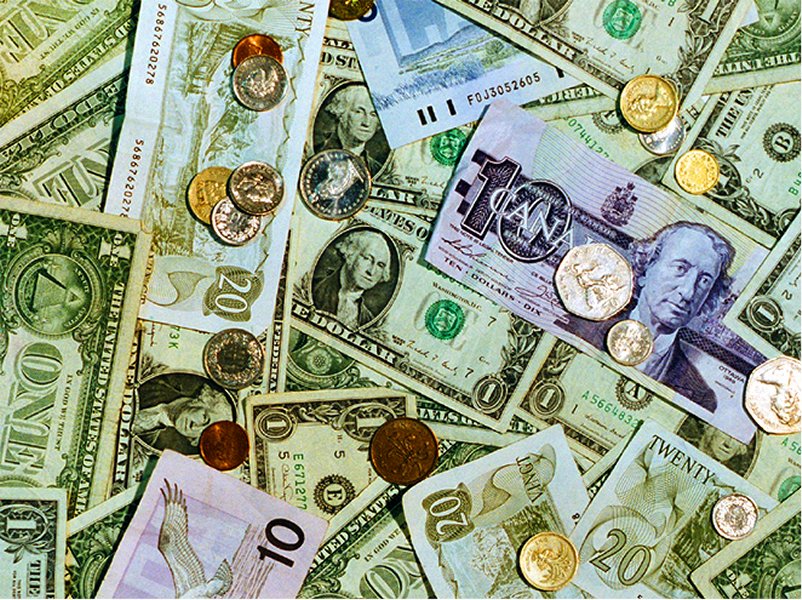 Here’s a few links to help you follow the currency crisis as the world’s finance ministers move from APEC meetings to the G20 meeting. EconBrowser has a very distinguished economist blogging there with some interesting points on East Asian Exchange Rates and China. Willem Thorbecke is an important researcher in the area so this is an extremely wonky post with a lot of nifty graphs. It basically looks, however, at an important issue. The issue is China’s vast trade surplus which has been used in the past to purchase US Treasury securities and its exchange rate that’s been pegged to the Dollar at varying levels over the years. US Secretary of Treasury, Timothy Geithner, has been discussing this recently and it’s likely to be a central focus at the G20 meetings in Seoul.
The interesting thing about this research is that it shows it’s not just the Chinese currency and its exchange rates, but the entire Far Eastern area and all their currencies that have created the situation. Thorbecke suggests that these are peg to a basket of currencies rather than just the dollar.
These results indicate that if policymakers are concerned about China’s surplus, they need to consider exchange rates throughout East Asia rather than the Chinese exchange rate alone.
The enormous surpluses in processing trade relative to the U.S. generate pressure for nominal exchange rates throughout Asia to appreciate relative to the dollar. If East Asian currencies were to appreciate against the dollar, it would be advantageous if they could appreciate together while maintaining some measure of intra-regional exchange rate stability. By reducing intra-regional exchange rate volatility and the associated uncertainty, this would facilitate the flow of FDI and intermediate goods in Asian production networks. It would also produce a smaller appreciation of real effective exchange rates in East Asian countries since the majority of their trade is intra-regional. Finally, it would overcome the collective action problem that arises as individual countries in the region resist appreciations because they do not want to lose competitiveness relative to neighboring countries.
Ma and McCauley [5] found that during the 2006-2008 period when China managed its exchange rate relative to a basket of currencies and other Asian countries also managed their currencies relative to currency baskets, there was considerable exchange rate stability between the renminbi and other East Asian currencies. Thus, if China again adopts a regime characterized by a multiple-currency, basket-based reference rate with a reasonably wide band, the huge surpluses that East Asia is running against the U.S. in processing trade would cause currencies in the region to appreciate in concert against the U.S. dollar. Market forces could then allocate these appreciations across supply chain countries as a function of the size of their surpluses in processing trade.
China’s finance officials are actually calling for a stable dollar. This article is from Bloomberg.com. It quotes China’s Pension Chief. There’s a consensus that this particular idea won’t fly in the District.
The world needs a stable dollar, Dai Xianglong, chairman of China’s National Council for Social Security Fund and a former head of the nation’s central bank, said today at a forum in Beijing. He spoke two days before a Group of 20 summit aimed at addressing global imbalances in trade and investment flows.
Dai’s proposal follows charges by Chinese officials that the Federal Reserve’s plan to buy $600 billion of Treasuries risks inflating asset bubbles in emerging markets. While Treasury Secretary Timothy F. Geithner said Nov. 6 the U.S. takes its global responsibilities “very seriously,” Fed Chairman Ben S. Bernanke has said his focus must be on the American economy.
The idea “is unlikely to fly given that the U.S. would like to maintain the flexibility of its currrency and the ability to lower its value when it needs to boost exports or inflation, as is the case now,” said Dariusz Kowalczyk, a Hong Kong-based senior economist and strategist at Credit Agricole CIB. “Even a range won’t be acceptable to the U.S.”
Because of all this back and forth, Gold is setting more record highs. This is from Canada’s Globe and Mail.
At the heart of gold’s climb are concerns over the value of currencies amid mounting tension in the runup to the G20 meeting in Seoul, South Korea, this week. The U.S. is pointing its finger at China, pressing for appreciation of the yuan, while many other countries are pointing fingers at the U.S. central bank over a $600-billion bond-buying scheme that roiled the U.S. dollar before it was even announced.
Again, you can see international concerns over the QE2 announced by the U.S. Fed.
There are basically three things that influence someone’s demand for money. The first is their need for money as a transactions vehicle. This means you need money to spend your income for stuff you need and want. The second dimension is a precautionary demand. That is you want something that is a safe store for purchasing power that you do not want to spend right now. This is a place to put your money that can be related to an interest rate, but is frequently just sort’ve your choices between stuffing your savings in a safe place like gold, your mattress or your savings accounting or keeping it in your checking accounting and ignoring it. It could just be cash in your pocket too. The last thing that influences how much money people want to hold has to do with speculation. You can casino bet on money too. The Fed takes all these things into account when it determines how much currency, reserves, bank deposits, and treasuries it wants floating around the world. Every time you see a move to gold, you know that part of it is the desire to protect future earning power by some but it is also a very powerful market for speculation. The dynamics here are complex so don’t be taken in that all this gold buying is just a good thing for gold bugs and a bad thing for people who hold dollars. There is profit to be made in these Currency Wars.
Right now, the world is going through a massive economic re-balancing. The old idea that China will sell us stuff — while lending us the money to buy it — is unwinding.
In fact Ben Bernanke has declared a currency war on China’s undervalued RMB. Good ol’ Ben says we can make the dollar cheaper than the Chinese yuan, and he aims to prove it.
The Fed recently proclaimed its desire to create and buy $600 billion in U.S. Bonds. “The FOMC intends to buy an additional $600 billion of longer-term Treasury securities by mid-2011 and will continue to reinvest repayments of principal on its holdings of securities, as it has been doing since August,” said Bernanke.
Ben is taking this approach because it works right up until it doesn’t.
It worked after the past five bubbles popped, and it looks to be working this time.
When Ben floated the idea of a $600 billion cash infusion, stock prices rose and long-term interest rates fell in anticipation.
I know some of you will point out that the RMB is pegged to the dollar, and therefore the dollar can’t fall… But it does cause an inflation problem in China, which is a de facto re-balance.
According to Bloomberg, “Over the past five years the real-estate prices have tripled. And as property makes up a third of living costs on average, this alone means the real yuan value has doubled.”
Chinese Commerce Minister Chen Deming said as much in an interview on October 26th: “Uncontrolled” issuance of dollars is “bringing China the shock of imported inflation.”
Look for more information on this and what it means to you as we move through the Seoul meetings of the G20. This could mean some major relative price changes between what you see in prices now on goods coming in from China and what you will see in the future. This means that major retailers–like Walmart–that rely on cheap Chinese and Far East Asian goods may have some surprises come down the pike. Because Walmart is “America’s store”, it will likely effect the buying power of all U.S. households.
Tuesday Reads
Posted: November 9, 2010 Filed under: morning reads, New Orleans 42 CommentsGood Morning!

I spent the evening at Spotted Cat chatting up my Saints and jass lovin’ Uncle Lionel Baptiste and Doctor Daughter and her Doctor significant other who has never known what it means to miss New Orleans until now. The cool fall weather is delightful and I’m remembering why I just absolutely love my hood. Uncle Lionel was talkin’ bout sendin’ off Bunchy still and I was asking about sending off the late great Walter Payton. You can see both Uncle Lionel and Walter on that last link. I wanted to take Doctor Daughter to see my friend Mikki do her retro Japanese jazz thing on Frenchman at Yuki’s last night but missed it ’cause I spent way too much time with Uncle Lionel. I’m thinking it’s about time I get a regular gig since Jindal’s destroyed higher education in Louisiana. I can always gig and I can always teach piano. I also own a little tiny bit of the upper ninth ward and I want to keep it as long as I can.
My favorite Uncle Lionel story is when he was sitting next to me on the piano bench at Vaughn’s right after Katrina and I was playing away. Some tourist came up and said to him that no one plays like that ‘cept down here with that twinkle in the eye that meant I did not come with that extra appendage and such. That’s always a reference to some or other attributes that I do not possess if you get my drift. My uncle Lionel looked up to him, straight up, and told him that his ears might work but his eyeballs were a bit distracted by trifflin’ things. ‘Nuf said.
Let’s get to the news out side my beloved ninth ward after I treat you with something from the HBO series Treme. Oh, and I promise that this week on a Treat link I will give up some secrets for cajun/creole delights.
As the man says, “that moment can’t happen in New York”.
Speaking of interesting developments, the congressional black caucus still hasn’t figured out what to do with a tea party candidate that qualifies for the club. This should be one of those Kodak Moments.
The Congressional Black Caucus (CBC) is staying silent about a Tea Party Republican’s bid to join the group.
Rep.-elect Allen West (R-Fla.) indicated last week he intends to join the CBC to challenge the group’s “monolithic voice.”
“I plan on joining, I’m not gonna ask for permission or whatever, I’m gonna find out when they meet and I will be a member of the Congressional Black Caucus,” West, one of two black Republicans elected to Congress last Tuesday, told WOR radio. “I meet all of the criteria, and it’s so important that we break down this monolithic voice that continues to talk about victimization and dependency in the black community.
“We’ve got to turn this thing around, and I think it’s time for some different voices to be in that body politic.”
Here’s Bloomberg’s take on the Potus trip to Indonesia.
“We see in Indonesia the intersection of a lot of key American interests,” Ben Rhodes, Obama’s deputy national security adviser, said. The partnership “is very important to the future of American interests in Asia and the world.”
As China’s economic and diplomatic clout grows, Obama has made a priority of engaging other Asian nations, particularly the 10 countries that make up the Association of Southeast Asian Nations. With a population of about 600 million, Southeast Asia was America’s fifth-largest trading partner and the fourth- biggest market for U.S. goods last year.
The Times of India has an interesting bit about Obama’s visit there. You can find it here.
Speaking at a town hall meeting in Mumbai, he said, “I do think that one of the challenges that we are going face in the US, at a time when we are still recovering from the financial crisis is, how do we respond to some of the challenges of globalisation? The fact of the matter is that for most of my lifetime and I’ll turn 50 next year – the US was such an enormously dominant economic power, we were such a large market, our industry, our technology, our manufacturing was so significant that we always met the rest of the world economically on our terms. And now because of the incredible rise of India and China and Brazil and other countries, the US remains the largest economy and the largest market, but there is real competition.”“This will keep America on its toes. America is going to have to compete. There is going to be a tug-of-war within the US between those who see globalisation as a threat and those who accept we live in a open integrated world, which has challenges and opportunities.”
The US leader disagreed with those who saw globalisation as unmitigated evil. But while acknowledging that the Chindia factor had made the world flatter, he said protectionist impulses in US will get stronger if people don’t see trade bringing in gains for them.
“If the American people feel that trade is just a one-way street where everybody is selling to the enormous US market but we can never sell what we make anywhere else, then the people of the US will start thinking that this is a bad deal for us and it could end up leading to a more protectionist instinct in both parties, not just among Democrats but also Republicans. So, that we have to guard against,” he said.
Labor demand has been growing in the United States, reflected in a modest increase in private payroll employment this year and a more substantial increase in private-sector job vacancies over the past 12 months. Despite these signs of improvement, the unemployment rate has declined only slightly. Some analysts have raised the specter of a fundamental mismatch between the supply of labor in terms of workers’ skills and demand for labor in terms of employers’ skill requirements. Such a mismatch between available workers and available jobs could increase the level of structural unemployment. To the extent that structural unemployment is actually rising, the phenomenon poses a dilemma for policymakers. It cannot be ameliorated through conventional monetary and fiscal policy. And it implies an increase in the lowest unemployment rate associated with stable inflation, often identified by the acronym NAIRU, which stands for the non-accelerating inflation rate of unemployment.
It’s true that things aren’t as bad as they were during the worst of the Depression. But that’s not saying much. And as in the 1930s, every proposal to do something to improve the situation is met with a firestorm of opposition and criticism. As a result, by the time the actual policy emerges, it’s watered down to such an extent that it’s almost guaranteed to fail.
We’ve already seen this happen with fiscal policy: fearing opposition in Congress, the Obama administration offered an inadequate plan, only to see the plan weakened further in the Senate. In the end, the small rise in federal spending was effectively offset by cuts at the state and local level, so that there was no real stimulus to the economy.
Now the same thing is happening to monetary policy.
The case for a more expansionary policy by the Fed is overwhelming. Unemployment is disastrously high, while U.S. inflation data over the past few years almost perfectly match the early stages of Japan’s relentless slide into corrosive deflation.
Unfortunately, conventional monetary policy is no longer available: the short-term interest rates the Fed normally targets are already close to zero. So the Fed is shifting from its usual policy of buying only short-term debt, and is now buying long-term debt — a policy generally referred to as “quantitative easing.” (Why? Don’t ask.)
There’s nothing outlandish about this action. As Mr. Bernanke tried to explain Saturday, “This is just monetary policy,” adding, “It will work or not work in much the same way that ordinary, more conventional, familiar monetary policy works.”
Yet the Pain Caucus — my term for those who have opposed every effort to break out of our economic trap — is going wild.

 peej
peej Carissa
 bostonboomer
 dakinikat
 ecocatwoman
 mablue2
 Mama Lopez
 peggysue22
 quixote
 skydancingguestblogger
 Mona (aka Wonk the Vote)



 Sky Dancing
Recent Comments