
Monday Reads: Sing! Sing! Sing! Sweet Fat Lady!
Posted: March 28, 2016 Filed under: 2016 elections, Afternoon Reads | Tags: Bernie Sanders, Delegate math, Donald Trump, Hillary Clinton, Primaries, Ted Cruz, zombie delegates 64 Comments
Good Afternoon!
We’re beginning to make that transition from primary season to the lull before the General Election. I thought I’d celebrate the shift with some reads that signal the shift or should signal the shift. I’ve really been struck by the number of people that really don’t understand how parties choose their candidates and seem to be following the overall results on a state by state basis even when that state basically doesn’t add much to the delegate count. The other thing that’s rather astounding is the number of people that seem to think that a party sponsored election for delegates is akin to a normal election. This is when I really feel the irony of the situation.
We have two outsider populist candidates running for election within a party system. Neither of them has been either active or genuine members of that party. Their followers are apoplectic by the scent of cigars in the backrooms and conventions of the state and national parties. I’m being somewhat cynical in that I think both of these candidates had to realize at some point that the parties were not going to be all that accommodating to them running amok. Their voters, however, appear to be completely stumped and angered because it’s pretty much the kind of behavior that has driven them straight to the arms of populist charlatans.
So by now, you’ve figured out that it’s Bernie and Trump and their voters with the lack of knowledge and understanding of primary and party dynamics. Let me get started by saying that I’ve always supported a national set of primaries with openness to any party that can get to some kind of threshold TBD. I have felt that they should be regulated by the Feds to ensure that no one is disenfranchised and that they should be in keeping with the spirit of the Voting Rights Act. So this viewpoint is not in the interest of the duopoly that is our two party system, It’s also not in keeping with the philosophy of the party that loves “local control” and “states’ rights”.
Irony is not lost on me when I read that Trump is talking about suing the State of Louisiana over the tricks that the Cruz campaign pulled at the party convention. His voters tend to hate big gubermint, yet it’s federal control of primary elections that would eliminate these back channel deals. The problem in Louisiana is basically the delegates won by Marco Rubio. Rubio suspended his campaign. He has delegates that were basically elected but they now have a dead candidate. They’ve essentially become free agents as zombie delegates.
Following a report that Sen. Ted Cruz (R-TX) may win more delegates in Louisiana’s primary than Donald Trump, even though Trump won the state, the Republican presidential frontrunner threatened to file a lawsuit on Sunday.
Trump complained about the “rotten political system” during a Sunday interview on ABC’s “This Week.”
“The Republican tabulation system is a broken system. It’s not fair,” he said.
“I won Louisiana and now I hear he’s trying to steal delegates,” Trump added, referring to Cruz. “What’s going on in the Republican Party is a disgrace. I have so many more votes and so many more delegates.”
According to the Wall Street Journal, Republican in Louisiana expect the five unbound delegates that had been awarded to Sen. Marco Rubio (R-FL) to back Cruz now that the Florida senator is out of the race. Cruz’s supporters have also secured key positions on convention committees, which could help the Texas senator at a contested convention, according to the Wall Street Journal.
Jason Doré, the executive director of the Louisiana Republican primary, told the Times-Picayune that the party is “really confident in the rules” and is prepared for a lawsuit from Trump.
Doré said that any disagreement over Rubio’s delegates is “is between Mr. Trump and those guys,” and added that the delegates have not yet made any final decision.
Zombie delegates may also wind up being very important should Trump not achieve the proper amount prior to the Republican National Convention. If Trump can’t win on the first ballot, then Zombie delegates can go anywhere.
“Meet the Press” moderator Chuck Todd took on the issue Sunday of why Donald Trump needs to score a first-ballot win at the Republican National Convention in Cleveland this summer.
The reason?
Delegates who may support Trump on the first ballot, but could abandon him after that.
Here’s the transript from the show:
CHUCK TODD:
Donald Trump is in a race to 1,237. It’s a number now we’re all getting used to and familiar with. And he can’t afford to miss hitting that magic number. And here’s why. Because there’s already an effort underway to stop him on a second ballot at the convention in Cleveland. Right now, Trump has 752 delegates and a 282 delegate lead over Ted Cruz.
In order to hit the magic 1,237 majority number and earn that glide path the nomination, Trump has to win 54 percent of the remaining delegates. And he has some favorable contests coming up, like his home state of New York, which has 95 delegates up for grabs, and a winner-take-all state of New Jersey, where maybe his buddy Chris Christie can help him win those 51 delegates.
But, the race is already on to create sort of delegate double agents. If Trump fails to win that majority on the first ballot these are people who will promise to dump Trump on the second ballot. And then there’s an effort underway to mobilize zombie delegates. These are delegates who are pledged to candidates who have dropped out of the race.
They could switch their vote over to someone else in the race, maybe even on the first ballot. Maybe it’s Cruz, maybe it’s Trump. So to discuss all of this, I’m joined by our resident zombie expert, Ben Ginsberg, Republican delegate guru, who served, of course, as lead counsel to the Bush/Cheney campaign of 2000 and he was Mitt Romney’s lawyer in 2012. So the zombie apocalypse will hit Cleveland.
So we have free-agent delegates, we have zombie delegates. I want to talk about the free-agent delegates first, because we have Donald Trump this morning already angry about this. Louisiana, he wins the primary big, he should get a lion’s share of the delegates. The Cruz campaign claims they actually are going to have more delegates out of Louisiana, a state they lost, than Trump. How did they do it? Explain.
BEN GINSBERG:
The way they managed to do it is that 44 of the 56 states and territories give the candidates no role in choosing who the delegates will pick.
CHUCK TODD:
Who the individuals are.
BEN GINSBERG:
Who the individuals are. And so a well-organized campaign will go into all these state conventions and state executive committee meetings and manage to get supporters of theirs. They’ll be bound on the first ballot to the winner of their state primary, but not for any of the procedural rules issues, and not for the second ballot.
CHUCK TODD:
All right. So they’re the double agents. Now, let’s talk about zombie delegates. These are the people, and I want to put up a graphic here. There are a group of unbound delegates. We know there were always going to be over about a hundred, we’ve done the math here, over about a hundred of them, 169 of them come from states that have chosen not to hold a contest, Colorado chief among them. And then there’s another 175 of the zombie delegates. These are people, mostly Marco Rubio delegates out of Virginia and Minnesota, but there a handful of Carson, maybe one or two Jeb Bush’s. What is their role in all of this?
So basically, this is a problem with free delegates, zombie delegates and double agents. I learned about all of this from Ginsberg and Todd on Sunday.
Bernie’s issues are different. He’s way behind but his campaign has decided to try to hype up his supporters, continue fundraising, and  whine about the delegate math set up by the Democratic Party. We’ve been seeing the Deadenders for Bernie for some time now. It’s been basically over since the Steel Magnolias of the South Sung. But, we’ve been seeing all kinds of attempts by the campaign to spin a different tune. Sanders–who was once berating superdelegates–has been actively courting them. However, that’s backfiring according to Reuters. It seems that we have more instances of BernieBro Bullying.
Interviews with 10 of the 505 super delegates supporting Clinton Reuters has reached show that nine of them have been approached by people purporting to back Sanders, and nearly all were displeased by the tone of the outreach.
Isabel Framer of Ohio, a superdelegate for Clinton, for example, got a voice mail last week urging her to vote for Sanders “in accordance with the will of the people.”
On the voice mail, heard by Reuters, the anonymous male caller says: “I think it’s crap that you get to vote whichever way you want… I’ll be watching your vote.”
“I’m not easily frightened,” Framer told Reuters. “I’m not going to change a vote over threats.”
Akilah Ensley, a North Carolina superdelegate, said she started hearing more often from Sanders supporters after her name appeared on a Wikipedia list noting her support for Clinton. “Some of them were nice, and some were rather abrasive,” she said, adding “attacking my decisions is probably not the best way” to change her mind.
Luis Heredia, an Arizona superdelegate for Clinton, said he has received over 30 phone calls, emails and instant messages from Sanders supporters. “The majority of them are more angry, and the tone is more demanding,” Heredia said.
Lacy Johnson, an Indiana superdelegate backing Clinton, meanwhile, said he had received a mix of messages, including one that he said threatened: “we will make you pay.”
Andres Ramirez, a political consultant in Las Vegas, Nevada, and a superdelegate supporting Clinton, said in the past campaigns would typically try to soft-sell their candidates rather than use pressure tactics.
“The way this has gone down, in my experience, has never happened before,” said.
Sanders continues to attack the party which probably isn’t the best approach when wooing party insiders.
“Bernie’s campaign is focused on reaching out to all voters and earning delegates at primaries and caucuses,” he said in a statement, stressing that the Sanders campaign was not coordinating with supporters to contact superdelegates.
However, the unofficial push could complicate the U.S. Senator from Vermont’s efforts to woo the critical bloc in the coming months.
The effort has at times taken an angry tone, some of the messages reviewed by Reuters showed, reflecting the anti-establishment tinge of the 2016 presidential race where many voters are unhappy with Washington insiders.
Some 85 percent of the 4,763 delegate votes to the Democratic National Convention that will decide who will face a Republican rival in the November election are determined by the results of states’ nominating contests. But the remaining 15 percent are held by superdelegates, who get to vote however they like – meaning they could hold the key to a tight contest.
Superdelegates are made up of party leaders and elected Senators, members of Congress, and governors. The Democratic party adopted the system in the early 1980s as a way of giving party leaders more control over the nominating process, though they have yet to play a decisive role in a nomination.
“The idea there is that you’ve got people who have a long view … who have, arguably, the best interests of the party at heart,” said Terri Fine, a professor of political science at the University of Central Florida.
 Bernie’s folks continue to see all states and all primary efforts as equal. The Michigan win may have been meaningful, but this weekend’s Western Caucuses were not. I’ve had to continually remind my Bernie friends that the Washington Caucus gave the state win to Howard Dean AFTER he’d lost the election. But, hope and not math, springs eternal with these folks who still keep pouring money down the Bernie Drain. It is going to give us about a week of insufferable Bernie worship.
Hillary’s popular vote lead was almost identical before and after Washington, Alaska, and Hawaii voted.
According to the website RealClearPolitics, 15.3 million Democratic primary voters had cast their ballots prior to Saturday. Of those voters, 8.9 million had voted for Hillary, and 6.4 million had voted for Bernie. This amounts to a margin of 58% vs. 42% — a blowout margin by most electoral standards.
Saturday’s voters preferred Bernie by a large margin, but these were small states. As of Sunday, official reports only showed about 60 thousand total votes in the three states, while the higher estimates of party officials still indicated fewer than 300 thousand total votes. This means that the overall popular vote remains basically unchanged: Hillary has roughly 9 million votes, while Bernie still has roughly 6 and a half million. Translated into percentages, the total effect of Bernie’s “landslide” victories was that Hillary is still winning 58% to 42%. Only if you add a decimal point does Bernie’s Western sweep even change the percentages.
The Donald has a huge woman voter problem that he may be sharing with Sanders now. Sanders may be catching up to Trump quickly because he gave his wife a rude, public brush off with a condescending wave and a few brusque words. Twitter was agog yesterday feeling the Bern bullying his wife. No woman whose been a wife could miss it.
There’s an awkward video of Bernie Sanders and Bernie’s interaction with his wife Jane Sanders that’s making the rounds, and it’s not a good look for Bernie. Senator Sanders was speaking in Madison, Wisconsin, when the “snub” against Jane happened. The Democratic presidential candidate spoke at a campaign stop on Saturday, March 26, with Bernie being exuberant over his recent victory — however, during that celebration, Sanders made a move against Jane that isn’t going down well over the Interwebs.
Additionally, Bernie is spending a ton of money on those huge rallies.
Bernie Sanders’ revolution may be growing directly from the grass roots, but he’s paying top dollar for the places where it’s coming together.
In February, the Sanders campaign, flush with cash from its small-donor network, spent $1.6 million on site rentals, ticketing and “sound/stage/lighting,” pursuing ever-larger venues for his followers to gather in, according to Federal Election Commission filings.
And the spending this month may well exceed February. On Friday, for instance, the Sanders campaign is staging a pep rally for the Washington state caucuses at Safeco Field in Seattle, the Mariners’ baseball stadium that holds up to 54,000 people.
It’s a sign that the Sanders campaign plans to keep spending big as it works to compete with former Secretary of State Hillary Clinton across the board.
Meanwhile, the Beltway Press has moved on. This is from The Hill today: Who will be the 2016 running mates? Bernie may be holding huge vanity rallies but his name is missing from this piece.
Now that GOP front-runner Donald Trump has released the names of some of his foreign policy advisers, it’s only a matter of time before pundits, reporters and voters start demanding to know whom he intends to pick as his vice presidential running mate.
When politely asked now, Trump responds, “I need to win the nomination first. After that, I’ll think about it.”
To the untrained eye, this seems like a reasonable answer; however, no insider I know believes The Donald hasn’t already begun to create a short list of possible candidates.
Ditto Hillary Clinton. The presumptive Democratic presidential nominee has been around the block too many times not to have several running mates in mind, even if it still is March.
Here are some more examples of folks telling Bernie to listen to that singing lady. From the LATIMES: As California primary nears, state Democrats are uniting behind Clinton and against a common enemy: Trump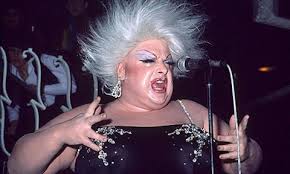
Most of Sen. Bernie Sanders‘ supporters in California say they expect that come November, Hillary Clinton will be elected president — and, by and large, they’re OK with that.
While both Democratic camps prepare for a final battle in the state’s June 7 primary, the latest USC Dornsife/Los Angeles Times statewide poll found that just over half of Sanders’ supporters said they expected Clinton to be the next president. About a third of Sanders’ backers said they expected the Vermont senator to emerge the winner, and 12% said they thought Donald Trump would prevail.
Close to 8 in 10 Sanders supporters said in the survey that they would vote for Clinton in a race against Trump, although many said they would do so reluctantly.
Those findings show the reality underlying the still-heated rhetoric of the Democratic primaries: By contrast with the civil war that divides Republicans,Democrats in the country’s largest state have begun to coalesce behind their front-runner.
![Harshaw_Bruennhilde[1]](https://skydancingblog.com/wp-content/uploads/2016/03/harshaw_bruennhilde1.jpg?w=590) Meanwhile, Bernie is dying for more debates. The Clinton Campaign is beginning to pushback. They have little to gain if Bernie continues to attack her while each debate brings no new information to the table.
Meanwhile, Bernie is dying for more debates. The Clinton Campaign is beginning to pushback. They have little to gain if Bernie continues to attack her while each debate brings no new information to the table.
Hillary Clinton’s chief campaign strategist laid into Bernie Sanders’ camp on Monday for its insistence upon a debate before the April 19 primary in New York, remarking that the Vermont senator has reneged on his promise to avoid running a negative campaign and therefore does not get to dictate the terms of any future debates.
Appearing on CNN, Joel Benenson was asked about comments from the Sanders campaign over the weekend calling for another debate before the New York primary, though he said he did not see that as the most notable story out of the weekend. Instead, he referred to a Washington Post story in which Sanders’ campaign discussed possible efforts to sharpen rhetoric against the former secretary of state. “They’re talking about running harsher negatives now,” Benenson said, responding that he was not distracting from the issue but explaining the campaign’s stance.
“Because I think the real question is what kind of campaign is Sen. Sanders going to run going forward,” Benenson remarked. “He pumped $4 million in the weekend before March 15, and he lost all five states on March 15. They spent about $4 million running negative ads.”
“This is a man who said he’d never run a negative ad ever. He’s now running them, they’re now planning to run more,” he continued. “Let’s see the tone of the campaign he wants to run before we get to any other questions.”
CNN’s Kate Bolduan then inquired why the campaign would not agree to debate in New York despite agreeing in January to more debates. Benenson responded, “Because we agreed to debates up to a certain point. We’re now out campaigning in these states.”
“What’s the risk?” Bolduan asked.
“There’s no risk. She’s done very well in the debates. The debates have been very good, but Sen. Sanders doesn’t get to decide when we debate, particularly when he’s running a very negative campaign against us. Let’s see if he goes back to the kind of tone he said he was going to set early on. If he does that, then we’ll talk about debates,” Benenson said.
It seems that everyone but the Bernie Bros is getting tired of Bernie the Bully. Listen to the chorus of singing fat ladies instead of the songs of angry men for a change!!
What’s on your reading and blogging list today?

 peej
peej Carissa
 bostonboomer
 dakinikat
 ecocatwoman
 mablue2
 Mama Lopez
 peggysue22
 quixote
 skydancingguestblogger
 Mona (aka Wonk the Vote)



 Sky Dancing
Recent Comments