
Monday Reads: Representing for Banned Books Week 2014
Posted: September 15, 2014 Filed under: morning reads, The Media SUCKS | Tags: banned book week, beltway media, establishment media, sexism in media, Washington insiders 32 Comments Good Morning!
Did you know that September 21-27 is Banned Books Week? I’m going to be sharing some covers of banned books in this post. I also would like to recommend buying these books or donating to a public library supporting banned book week as a way to support literacy and freedom of expression. You still have time to attend an event at many local libraries!!
One of the great things I’ve found is that the libraries that are doing the most recognition of the week are in states where book banning has been rampant. This is from the Nashville Public Library.
“James and the Giant Peach,” “The Great Gatsby,” “1984,” “The Grapes of Wrath.” These are just some of the books that have either been banned or had their place on library shelves and in curricula challenged at some point.
The American Library Association keeps annual lists of challenged books, as well as a roster of classic books that have faced similar challenges over the years. Many of the books are such a part of our consciousness — and quite a few have been adapted into beloved and acclaimed films — that their presence on anyone’s target list might be surprising.
Through readings, film screenings and other programming, the Nashville Public Library is observing Banned Books Week, which takes place Sept. 21-27.
How about a deck of trading cards with the covers of Banned Books from the Lawrence Kansas  Public Library! They have decks from 2013 and now 2014 available and it’s a great cause! It helps the library there!
One of Lawrence’s most endearing collector’s items will be back on the market next week when the Lawrence Public Library celebrates the freedom to read by handing out trading cards of banned books designed by local artists.
The designs of this year’s deck of seven cards, and the artists behind them, will be announced Sept. 18 at 7 p.m. in the library’s auditorium at 707 Vermont St. The following week, from Sept. 21-27, during the nationwide Banned Books Week, the library will hand out one card per day for free.
The cards, which are supposed to illustrate the themes of a book that’s faced censorship, first appeared two years ago and attracted some national attention for the project’s creativity, forcing the library to order an extra printing and mail them all over for a small price.
“It’s a really fun and quirky thing we do that really relates to what Lawrence stands for as a community,” marketing director Jeni Daley said.
Thirty-eight artists submitted designs this year, with a book of their choice serving as inspiration. The winners, already decided by a panel of judges, also include a middle school student, Daley said. All artwork submissions will be viewable in the library.
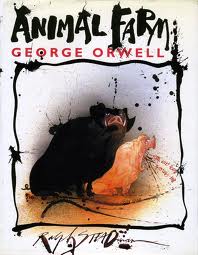 How about buying one of the banned children’s books or YA fiction books for that special child in your family? One of the things that I love doing is sending gifts at unexpected times to the people that I love. Both my girls will be getting copies of a “banned book” next week. I prefer unexpected gift giving to obligatory holiday guilt gift giving.
The ALA keeps a list of banned books and ways to find them and how to buy copies.
Top ten frequently challenged books of 2013 has been released as part of the State of America’s Library Report. Find out which books made the list.
The ALA promotes the freedom to choose or the freedom to express one’s opinions even if that opinion might be considered unorthodox or unpopular and stresses the importance of ensuring the availability of those viewpoints to all who wish to read them.
A challenge is an attempt to remove or restrict materials, based upon the objections of a person or group. A banning is the removal of those materials. Challenges do not simply involve a person expressing a point of view; rather, they are an attempt to remove material from the curriculum or library, thereby restricting the access of others. As such, they are a threat to freedom of speech and choice.
The ALA Office for Intellectual Freedom (OIF) promotes awareness of challenges to library materials and celebrates freedom of speech during Banned Books Week. This event is typically observed during the last week of September of each year. See Banned Books Week for information and resources for getting your library or organization involved in this event!
These are the topics that are most likely to elicit a challenge according to an ALA study from 2000-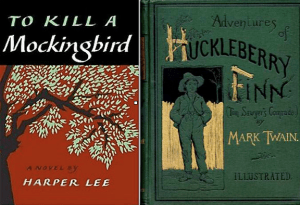 2009. As you can see, much of this appears to be efforts to control things a lot of people think are morally offensive.
Over this recent past decade, 5,099* challenges were reported to the Office for Intellectual Freedom.
- 1,577 challenges due to “sexually explicit” material;
- 1,291 challenges due to “offensive language”;
- 989 challenges due to materials deemed “unsuited to age group”;
- 619 challenged due to “violence”‘ and
- 361 challenges due to “homosexuality.”
Further, 274 materials were challenged due to “occult” or “Satanic” themes, an additional 291 were challenged due to their “religious viewpoint,” and 119 because they were “anti-family.”
You’ll notice that most seem to offend our society’s primary superstition. So much for separation of specific church dogmas and the rest of us. What’s your favorite banned book?
So, I’m going to move to journalism and the folks that write, run, and pundit themselves into believing they’re important. This bit is from two columns last week written by Ezra Klein–our own Beltway Bob–and his wife who now writes for New York Magazine. Annie Lowrey has also written for Salon and NYT so between Klein’s time at WAPO, they basically come from the same Skinner Box. Lowrey wants to know why all “media disruptors” are exclusively white males.
It’s happening again. There’s a list of “media disruptors.” It’s predominantly white dudes. It need not be. And people are fed up.
For, in the new-media renaissance of the past few years, there are women and minority “disruptors” everywhere if you only take the time to look. There’s Jane Pratt of xoJane; Ben Huh of Circa; Sharon Waxman of the Wrap; Sommer Mathis of CityLab; Mary Borkowski, Rachel Rosenfelt, Jennifer Bernstein, and Ayesha Siddiqi of the New Inquiry; Sarah Lacy of PandoDaily; Nitasha Tiku of Valleywag; Mallory Ortberg and Nicole Cliffe of the Toast; and Susan Glasser of Politico Magazine. That’s only off the top of my head.
There are three pernicious and interrelated phenomena at work here. First, founders are disproportionately white dudes. Second, white dudes are disproportionately encouraged to become founders. Third, white dudes are disproportionately recognized as founders.
Let’s take that last problem first. There’s a tendency for the media – indeed, for people in general — to see white dudes as “founders” or “entrepreneurs” or “bosses” or “disruptors” and to see women and people of color as anything else. The impulse is deep-seated. When you think of a leader, Jack Donaghy pops into your head rather than Oprah. When you’re to think of management characteristics, you tend to think of characteristics ascribed to men, not women.
Ultimately, this phenomenon can lead to the erasure of women and minorities in leadership roles from the picture — as in Vanity Fair’s list making the rounds today. My husband, Ezra Klein, is a founder of Vox, along with his partners Melissa Bell and Matthew Yglesias. Ezra ended up on the list, but Matt and Melissa did not. It is not the first time it has happened, either.
Well, Annie, maybe THIS has something to do with it. There are fewer women leading newsrooms than ever before. This from a transcript from PBR News Hour. Oh, btw, I do not think of a fictional TV character as a media leader over a real person like Oprah Winfrey. However, there are not many women that could raise the kind of money it takes to launch a media outlet because of the good old boy nature of the banking industry. Still, the first modern media mogul I think about is Katharine Graham, tyvm. She oversaw WAPO when it was really worth a read.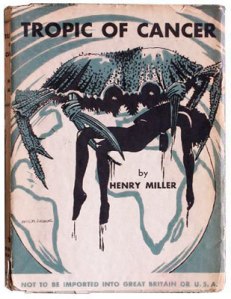
HARI SREENIVASAN: Women hold few positions of authority in newsrooms across the United States. This according to a Nieman report published on Thursday by a Nieman Foundation for Journalism at Harvard.
For more about this, we’re joined now from Portland, Ore., by Anna Griffin, she is a reporter and editor at the Oregonian and is the author of the report. So, how significant are the disparities between men and women when it comes to leadership positions in newsrooms?
ANNA GRIFFIN: They are really, really stark. Women in the United States make up something like 35 percent of all newspaper supervisors, they run three of the top 25 circulation newspapers and the numbers translate internationally too. Women run one of the top 25 circulation international newspapers. So, it is an industry wide problem.
HARI SREENIVASAN: This isn’t a pipeline issue. There are as many women coming out of journalism programs, or communication programs in colleges, so what’s happened, what’s behind this?
ANNA GRIFFIN: That’s a great question. That’s part of what we try to get into and I think answering it is really complicated, because as you mentioned what we see is, coming out of journalism schools women make up half the population of young journalists, and over the next 20 years of so every time you take a five-year snapshot, the percentage of women has dropped.
And to get into those leadership roles, particularly at old-school, mainstream news organizations, you have to stick around. Experience still plays a large part in who gets promoted, especially who gets picked for top jobs. Women are opting out, they’re opting out earlier and earlier.
In some cases it’s the answers you would expect. Anybody who wants to have a family has to make a really hard choice, because journalism it’s a hard job. It’s a low-paying job, it’s a job that requires a lot of flexibility in your schedule.
But it’s not just that, even in countries that have really family friendly policies that let women and men go spend a lot of time with their families and then guarantee them their jobs by when they get back. The percentages are really similar. It’s not just what you think it is, it’s something systemic that we’re really as an industry struggling to put our fingers around.
HARI SREENIVASAN: What are some of the consequences, let’s say editorially, is the news that we consume different when women are in positions of leadership?
ANNA GRIFFIN: The academic studies are really mixed on whether there is a tangible ‘today’s newspaper looks different,’ but what we know, and I think you can draw some conclusions from this is that organizations that are run by women tend to quote more women, tend to review more books by women, tend to have women covering harder news beats.
Every editor, male or female, has their own personal style, their own preference in the kinds of stories they like their people to cover. But I think the broad answer to that is women and men do think differently and different women and men think differently.
Particularly in mainstream media, our job is to reflect the entire community that we covered at any given organization, you need as broader range of voices as possible. And that’s just not happening right now in a lot of places. In a lot of places it’s exactly who you would expect, you know the middle-aged, white man making the choices. And all of us have blind spots, all of us have biases and that presents a problem.
Yes. Every one has their blind spots and biases. So, of course, this means I’m back to Beltway Bob who is just simply agog at the number of ‘effing geniuses’ in the beltway called Political Scientists.
Yes. ***SPEW TRIGGER*** Don’t sip your coffee before you read any more.
 The Washington consensus is the consensus of effing geniuses. Thomas Frank has read Klein’s piece so you don’t have to read it.
In a recent article on Vox, Ezra Klein declared that his generation of Washington journalists had discovered political science, and it is like the hottest thing on wheels. In the old days, he writes, journalists “dealt with political science episodically and condescendingly.” But now, Klein declares, “Washington is listening to political scientists, in large part because it’s stopped trusting itself.” Klein finds that political scientists give better answers to his questions than politicians themselves, because politicians are evasive but scientists are scientists, you know, they deal in “structural explanations” for political events. So the “young political journalists” who are roaring around town in their white lab coats frightening the local bourgeoisie “know a lot more about political science and how to use it” than their elders did.
Hence Klein’s title: “How Political Science Conquered Washington.”
Nearly every aspect of this argument annoyed me. To suggest, for starters, that people in Washington are—or were, until recently—ignorant or contemptuous of academic expertise is like saying the people of Tulsa have not yet heard about this amazing stuff called oil. Not only does Washington routinely fill the No. 1 spot on those “most educated cities” articles, but the town positively seethes with academic experts. Indeed, it is the only city I know of that actually boasts a sizable population of fake experts, handing out free-market wisdom to passers-by from their subsidized seats at Cato and Heritage.
The characteristic failing of D.C. isn’t that it ignores these herds of experts, it’s that it attends to them with a gaping credulity that they do not deserve. Worse: In our loving, doting attentiveness to the people we conceive to be knowledgeable authorities, we have imported into our politics all the traditional maladies of professionalism.
The powerful in Powertown love to take refuge in bewildering professional jargon. They routinely ignore or suppress challenging ideas, just as academics often ignore ideas that come from outside their professional in-group. Worst of all, Washingtonians seem to know nothing about the lives of people who aren’t part of the professional-managerial class.
How well-known is this problem? It is extremely well known. One of the greatest books of them all on American political dysfunction, David Halberstam’s “The Best and the Brightest” (1972), is the story of how a handful of poli-sci geniuses got us into the Vietnam War. How political science conquered Hanoi, you might say, except that it didn’t exactly work out like that.
You can see this dysfunction for yourself in the headlines of recent years. Ever wonder why the foreign policy authorities never seem to change, keep coming back, despite racking up shattering failures like the Iraq War? It’s because of the way Washington worships expertise, and the way these authorities have perched themselves atop a professional structure that basically does not acknowledge criticism from the outside.
Ever wonder why the economic experts never seem to change, keep coming back, despite racking up such shattering failures as the housing bubble and the financial crisis and the bank bailouts? Ever wonder why a guy like Larry Summers gets to be chief economist at the World Bank, then gets to deregulate Wall Street, then gets to bail Wall Street out, then almost gets to become chairman of the Fed, and then gets to make sage pronouncements on the subject of—yes— inequality? It’s for the same bad reasons: Because D.C. worships expertise and because Summers, along with a handful of other geniuses, are leading figures in a professional discipline dominated by what a well-informed observer once called a “politburo for correct economic thinking.”
Some people are ignored in this town even though they are often right while others are invited back to the Oval Office again and again even though they are repeatedly wrong—and the reason is the pseudo-professional structure of the consensus. No one has described how it works better than Larry Summers himself. “I could be an insider or I could be an outsider,” Elizabeth Warren says Summers told her, back in the bailout days.
“Outsiders can say whatever they want. But people on the inside don’t listen to them. Insiders, however, get lots of access and a chance to push their ideas. People — powerful people — listen to what they have to say. But insiders also understand one unbreakable rule: They don’t criticize other insiders.”
Okay, so I just have to go back to the Klein article before I turn you into fans of burning Washington pundits in effigy along with copies of their articles. Yes, folks, Political Science has conquered the Beltway and Beltway Bob.
American politics is changing. Politicians are losing power and political parties are gaining it. A politician’s relationships might once have been a good guide to her votes. Today, the “D” or “R” after a politician’s name tells you almost everything you need to know.
Part of the rise of political science is the result of the blogosphere. Crooked Timber, the Monkey Cage, the Mischiefs of Faction and other poli-sci blogs have let political scientists speak for themselves. But that’s only benefitted political science because what they’ve said has been worth listening to.
Political scientists traffic in structural explanations for American politics. They can’t tell you what an individual senator thinks, or what message the president’s campaign will try out next. But they can tell you, in general, how polarized the Senate is by party, and whether independent voters are just partisans in disguise, and how predictable elections generally are. They can tell you when American politics is breaking its old patterns (like with the stunning rise of the filibuster) or when people are counting on patterns that never existed in the first place (like Washington’s continued faith in the power of presidential speeches).
As politicians lose power and parties gain power, these structural explanations for American politics have become more important. That’s what I’ve found, certainly. Talking to members of Congress and campaign operatives is useful, but not terribly reliable. Politicians are endlessly optimistic — in their line of work, they almost have to be — and they want to believe that they and their colleagues can rise above party and ignore special interests. But they usually can’t. They begin every legislative project hoping that that this time will be different. But it usually isn’t. An understanding of the individual dynamics in Congress or in the White House can be actively misleading if it’s not tempered by a sense of the structural forces that drive outcomes in American politics.
 Yes, forget all politics are local and other meaningless adages. Just grab yourself a copy of SPSS, a database, and makes some loose associations between issues, geography, and tribal identifications. After all, economists are great at predicting the economy, meteorologists certainly predict the weather well, so why not rely on your local political scientists to predict election quirks via “structural forces”.
One of my favorites duties in a hinterland branch of the Federal Reserve bank came when the President of the District was about ready to do his duty on the Open Market Committee. He would come armed with all this research from the economists and just a few more things. Each of the branches would arrange a shindig and invite representative business owners, farmers, oil and gas company executives, etc to give him an earful. Were they going to add inventory? People? More fields? How did they feel about the future of their businesses?
After pouring over the charts, he’d weight it all by the news on the ground of these industries and people that drove the district’s economy. It was his acid test before voting to raise or lower interest rates or give a speech or print up the cover letter to the District’s stats and forecasts. It made all those numbers sing and dance to a tune. It put a Main Street face to a stat. I remember that one of the first things I did while trying to figure out why so many businesses were using derivatives that seemed beyond the grasp of most operational finance people was to call my exhusband of the perfect SAT score and ask him if he crunched through the Black Scholes model or something else to hedge their Fannie and Freddie portfolios at his rather large Insurance company. He had no idea. They paid other people to do that and they just followed along. Did he understand any of it? Not even this guy who took advanced engineering mathematics at university knew what the hell was going on. That’s when you say to yourself, there’s some trouble here. It’s great to be a researcher and a PhD but it’s also good to know the limitations of your models. It’s also important that the people who rely on your research understand those limits too.
And with that, I leave you to savor a banned book. Gosh, look how many of them are in my library!!!
What’s on your reading and blogging list today?

 peej
peej Carissa
 bostonboomer
 dakinikat
 ecocatwoman
 mablue2
 Mama Lopez
 peggysue22
 quixote
 skydancingguestblogger
 Mona (aka Wonk the Vote)



 Sky Dancing
Recent Comments