Americans across all 50 states will march in protests against the Trump administration on Saturday, aligning behind a message that the country is sliding into authoritarianism and there should be no kings in the US.
Millions are expected to turn out for the No Kings protests, the second iteration of a coalition that marched in June in one of the largest days of protest in US history. Events are scheduled for more than 2,700 locations, from small towns to large cities.
Donald Trump has cracked down on US cities, attempting to send in federal troops and adding more immigration agents. He is seeking to criminalize dissent, going after left-leaning organizations that he claims are supporting terrorism or political violence. Cities have largely fought back, suing to prevent national guard infusions, and residents have taken to the streets to speak out against the militarization of their communities.
Trump’s allies have sought to cast the No Kings protests as anti-American and led by antifa, the decentralized anti-fascist movement, while also claiming that the protests are prolonging the government shutdown. Greg Abbott, the governor of Texas, has said he will send the state’s national guard to Austin, the state’s capital, in advance of the protests….
“What’s most important as a message for people to carry is that the president wants us to be scared, but we will not be bullied into fear and silence,” said Lisa Gilbert, the co-president of Public Citizen, one of the protest organizers. “And it’s incredibly important for people to remain peaceful, to stand proud and to say what they care about, and not to be cowed by that fear.”
The simple framing of the protests is that the US has no kings, a dig at Trump’s increasing authoritarianism. Among the themes the organizers have pointed to: Trump is using taxpayer money for power grabs, sending in federal forces to take over US cities; Trump has said he wants a third term and “is already acting like a monarch”; the Trump administration has taken its agenda too far, defying the courts and slashing services while deporting people without due process.
I expect that some Republicans will try to spark violence at these protest rallies. I hope people will remain peaceful no matter what.
The nationwide “No Kings” protest movement is back for round two — and after avoiding Washington during the summer, protesters are expected to descend on the nation’s capital Saturday amid an 18-day government shutdown that has no end in sight.
The demonstrations are part of the second national day of action, organized by dozens of liberal advocacy groups to protest what they call “authoritarian power grabs” on the part of President Donald Trump.
Organizers said they expect the more than 2,600 events across all 50 states to surpass the more than 5 million people who attended the first wave of “No Kings” rallies in June. The marches come amid heightened criticism from Republicans about this weekend’s rallies.
“They might try to paint this weekend’s events as something dangerous to our society, but the reality is there is nothing unlawful or unsafe about organizing and attending peaceful protests,” said Deirdre Schifeling of the American Civil Liberties Union. “It’s the most patriotic and American thing you can do, and we have a 250-year-old history of disagreeing in public.”
Amid the heightened tensions of the shutdown, Republicans have repeatedly sought to vilify the planned protests. House Speaker Mike Johnson and other leading Republicans have referred to the protests as a “hate America rally” and sought to tie it to Hamas and antifa. And Texas Gov. Greg Abbott also announced Thursday that he would be sending members of the state’s National Guard — as well as state troopers, Texas Rangers and Department of Public Safety personnel — to Austin on Saturday in response to the planned demonstrations.
In an interview with Fox News earlier this week, Trump said “some people say [Democrats] want to delay” ending the government shutdown because of the rallies.
The Marines plan to fire 155-millimeter artillery shells over a major freeway in Southern California on Saturday as part of a demonstration at Camp Pendleton to celebrate the Marine Corps’ 250th anniversary.
The plans to fire over the freeway triggered outrage by Gov. Gavin Newsom late Friday night after his office had been informed days earlier that the celebration would not involve firing munitions across Interstate 5, a heavily traveled corridor between Los Angeles and San Diego.
Early Saturday, Mr. Newsom said the state would shut a 17-mile section of the freeway from noon to 3 p.m. Pacific time because of potential hazards posed by the military’s plans.
“This is a profoundly absurd show of force that could put Californians directly in harm’s way,” Mr. Newsom said in a statement to The New York Times.
He criticized President Trump and said the lack of coordination among state, federal and local officials was creating a dangerous situation. The artillery demonstration, to be attended by Vice President JD Vance, Secretary of Defense Pete Hegseth and military officials, will take place on the same day that anti-Trump activists plan to hold “No Kings” protests across the country, including in Southern California.
“Using our military to intimidate people you disagree with isn’t strength — it’s reckless, it’s disrespectful, and it’s beneath the office the president holds,” Mr. Newsom said.
I hope no one gets hurt. As I said earlier, I would not be at all surprised to see efforts by right wingers to spark violence at the demonstrations.
In Ukraine war news, Trump met with Ukraine president Vladimir Zelensky yesterday, and he refused Zelensky’s request for Tomahawk cruise missiles, seemingly based on a phone conversation with Vladimir Putin.
Russian President Vladimir Putin put his relationship with President Donald Trump back on track with a phone call just ahead of Trump’s crucial Friday meeting with Ukraine’s president, Volodymyr Zelensky, that was meant to include discussions of providing Ukraine with powerful new long range weapons.
Up until the Thursday phone call, Trump had seemed ready to boost Ukraine’s arsenal and negotiating position with Tomahawk cruise missiles. But in its wake and after the subsequent meeting with Zelensky, Trump played down all talk of the missiles and instead focused on yet another summit with Putin.
It was the latest swing in Trump’s back and forth positions on the Russia-Ukraine war that often change following contact with Putin, who has shown a great deal of skill in persuading the U.S. president to his view of the conflict.
“Hopefully we’ll be able to get the war over with without thinking about Tomahawks. I think we’re fairly close to that,” Trump said to journalists as he began his meeting with Zelensky. “We don’t want to be giving away things that we need to protect our country.”
Instead of new support for Ukraine or sanctions on Russia, Trump announced a new summit with Putin — a bonus for the Russian leader — “to see if we can bring this ‘inglorious’ War, between Russia and Ukraine, to an end.” There was no talk of Russia curtailing its ongoing bombardment of Ukraine’s energy infrastructure ahead of winter.
So far, Russia has succeeded in deterring Trump from imposing further sanctions — or sending more powerful weapons to Ukraine — by continually dangling hopes of a peace deal, while it ramps up attacks.
President Donald Trump on Friday called on Kyiv and Moscow to “stop where they are” and end their brutal war following a lengthy White House meeting with Ukrainian President Volodymyr Zelenskyy.
Trump’s frustration with the conflict has surfaced repeatedly in the nine months since he returned to office, but with his latest comments he edged back in the direction of pressing Ukraine to give up on retaking land it has lost to Russia.
“Enough blood has been shed, with property lines being defined by War and Guts,” Trump said in a Truth Social post not long after hosting Zelenskyy and his team for more than two hours of talks. “They should stop where they are. Let both claim Victory, let History decide!”
Later, soon after arriving in Florida, where he’s spending the weekend, Trump urged both sides to “stop the war immediately” and implied that Moscow keep territory it’s taken from Kyiv.
“You go by the battle line wherever it is — otherwise it’s too complicated,” Trump told reporters. “You stop at the battle line and both sides should go home, go to their families, stop the killing, and that should be it.”
So Trump is hanging out at Mar-a-Lago as the government shutdown continues.
President Trump has repurposed money to fund military salaries during the government shutdown. He has pledged to find ways to make sure many in law enforcement get paid. He has used the fiscal impasse to halt funding to Democratic jurisdictions, and is trying to lay off thousands of federal workers.
Government shutdowns are usually resolved only after the pain they inflict on everyday Americans forces elected officials in Washington to come to an agreement. But as the shutdown nears a fourth week, Mr. Trump’s actions have instead reduced the pressure for an immediate resolution and pushed his political opponents to further dig in.
“We’re not going to bend,” Representative Hakeem Jeffries, Democrat of New York and the minority leader, said on Friday, the 17th day of the shutdown. “We’re not going to break.” He added: “All of these efforts to try to intimidate Democratic members of the House and the Senate are not going to work.”
Unlike past presidents, Mr. Trump appears to feel little urgency to strike a deal to reopen the government. Instead, he has used the shutdown, which began Oct. 1, as an opportunity to further remake the federal bureaucracy and jettison programs he does not like, seizing on unorthodox budgetary maneuvers that some have called illegal.
Administration officials appear undaunted by the criticism, even after a federal judge temporarily blocked their efforts to conduct mass firings. On Friday, some agencies indicated in court filings that they might proceed with layoffs that officials suggested were not covered by the order.
Russell T. Vought, the director of the Office of Management and Budget and the architect of the effort to remake the government, has pledged to “stay on offense” throughout the shutdown.
“He now has this cover for doing what at least Russ Vought and that coalition has wanted to do all along,” Sarah Binder, a political science professor at George Washington University, said of Mr. Trump.
Trump claims to be working on making health care more affordable.
Asked in the Oval Office this week whether he would use his deal-making skills to bring the shutdown to an end, Mr. Trump said that he was instead working to lower health care costs without the help of Congress, by negotiating agreements directly with pharmaceutical companies for lower prescription costs.
“We have to take care of our health care,” he said.
White House officials say that the administration’s moves are meant to send the message that it is Mr. Trump, not congressional Democrats, who is helping Americans when government funding has lapsed.
“Any negative impacts felt by the American people have purely been caused by the Democrats,” said Abigail Jackson, a White House spokeswoman.
Use the gift link to read more if you’re interested. Honestly, I wouldn’t be surprised if Trump lets the shutdown go on until next year and beyond. We’ll see if the Republicans fight back after hearing from their constituents.
An eminent ER doctor and health policy expert has warned that President Donald Trump’s government shutdown talk about “deserving” patients mirrors a “eugenics” policy adopted by the Nazis.
The shutdown is about to enter its fourth week after Congress failed to pass full-year funding. The White House and Speaker Mike Johnson are demanding spending cuts and immigration concessions, while Senate Democrats insist on extending ACA subsidies and undoing the summer healthcare cuts before reopening agencies.
Dr. Craig Spencer, who lectures on the history of health and eugenics at Brown University and is one of the country’s most influential clinician voices on emergency care, said the administration’s framing echoes America’s 1920s policy of sorting people by “worthiness… cloaked in what’s ‘acceptable’ by the state.
Spencer warns that President Donald Trump and Secretary of Health and Human Services Robert F. Kennedy Jr. are pursuing eugenics with their health policies.Andrew Caballero-Reynolds/AFP via Getty Images
“It’s not a stretch to say this administration is touting a eugenics agenda, which was perfected by the U.S. in the 1920s and 1930s and later adopted by the Nazis. People don’t want to call it that because it feels unsayable. But it’s real,” Spencer told the Daily Beast.
In 1920s America, eugenics was a mainstream policy movement that used bogus “race science” to justify restrictive immigration laws and state-mandated sterilization of people labeled “unfit.”
The language of Trump’s government, Spencer said, is “almost the same on immigration, access to healthcare, and who deserves the fruits of government,” and its “logical conclusion—while they won’t say it out loud—is letting certain people die.”
“I’ve been reluctant to compare what’s happening now to the eugenics movement 100 years ago, but as every new day goes by I’m less reluctant,” he added.]
There’s more at the link.
Meanwhile, some people will soon learn what their health insurance is going to cost them next year and what will happen to their food stamp benefits.
Health insurance prices for next year under the Affordable Care Act are now available in about a dozen states, giving Americans their first look at the sharp increases many will pay for coverage if Congress does not extend subsidies that have made some plans more affordable.
The annual enrollment period for Obamacare is expected to begin Nov. 1, but the costs for some Americans are becoming publicly available piecemeal through some state marketplaces. The federal website healthcare.gov, which includes 28 other state marketplaces, is slated to post prices before the end of October.
People shopping for coverage can now preview the costs they face from potentially expiring subsidies and sharply rising premiums in many markets, including California, New York, Nevada, Maryland and Idaho. Some consumers also found out that they would have fewer choices because their insurers dropped out of some markets for 2026.
Based on the newly posted information, a family of four making $130,000 in Maine would face an increase of $16,100 in annual premiums next year because they would no longer qualify for more generous subsidies, said Gideon Lukens, a health policy researcher for the Center on Budget and Policy Priorities, which supports extending the subsidies.
Older people will also see sharp increases, according to his calculations. In Kentucky, a 60-year-old couple making $85,000 per year could face an increase of $23,700 in annual premiums. In Nevada, a similar couple could pay an additional $18,100 in annual premiums, while in Minnesota, the cost might be $15,500 more and, in Maryland, an additional $13,700.
The government shutdown has already amplified the potential for higher health insurance costs for millions of Americans if the subsidies are not continued. Democrats have demanded that Republicans extend the more generous subsidies in any deal to reopen the federal government, which has been closed for 17 days over a spending impasse.
If the government shutdown continues into November, about 42 million low-income people could face severe disruptions to their food stamp benefits, the Agriculture Department warned in a letter to state agencies last week, saying that the federal government would have “insufficient funds.”
More than a dozen states have since warned that food stamp recipients may experience significant delays in obtaining benefits next month, see their aid reduced or not receive assistance at all.
The letter, a copy of which was obtained by The New York Times, said that the Agriculture Department’s Food and Nutrition Service, which operates the food stamp program, known as the Supplemental Nutrition Assistance Program, or SNAP, was exploring contingency plans. But it directed state agencies to pause sending vendors the electronic files typically used to load the benefits for November.
“We’re going to run out of money in two weeks,” Brooke L. Rollins, the agriculture secretary, told reporters at the White House on Thursday. “So you’re talking about millions and millions of vulnerable families, of hungry families that are not going to have access to these programs because of this shutdown.”
In a statement, a White House official said that Democrats “chose to shut down the government knowing that programs like SNAP would soon run out of funds.”
Such a disruption would be the first in recent decades. Benefits have remained available through every shutdown in the last 20 years, said Carolyn Vega, the associate director of policy analysis for Share Our Strength, a nonprofit that supports antipoverty programs.
The Department of Homeland Security has purchased two Gulfstream private jets for Kristi Noem, the secretary, and other top department officials at a cost of $172 million, according to documents reviewed by The New York Times.
The jets, which a department official said were needed for safety, are the latest expenditures on behalf of Ms. Noem to draw scrutiny from Democrats and other critics who have noted her lavish spending on living and other expenses during her time in public life.
The Coast Guard put in its budget earlier this year a request to purchase a new long-range Gulfstream V jet, estimated to cost $50 million, to replace an aging one used by Ms. Noem.
“The avionics are increasingly obsolete, the communications are increasingly unreliable and it’s in need of recapitalization, like much of the rest of the fleet,” Kevin Lunday, the acting commandant of the Coast Guard, told members of Congress at a hearing in May.
He said a new aircraft was necessary to provide agency leaders with “secure, reliable, on-demand communications and movement to go forward, visit our operating forces, conducting the missions and then come back here to Washington and make sure we can work together to get them what they need.”
Documents that were posted to a public government procurement website and reviewed by The Times show that the department has since signed a contract with Gulfstream to buy not one but two “used” G700 jets, touted by the company as having the “most spacious cabin in the industry.” The total contract value is listed as a little over $172 million.
It was not immediately clear where the funding for the jets came from.
Only the best for the puppy killer.
That’s it for me today. If you are going to a No Kings protest, have fun and stay safe.
Did you like this post? Please share it with your friends:
The Epstein Files are leading the news again, as Congress returns and Epstein survivors speak out publicly. Trump is not happy about it and is threatening any Republicans who vote for the files to be released.
The House Oversight Committee released some Epstein files yesterday they received from Pam Bondi, but they were the same ones that have been available for a long time–the same duplicates that Bondi gave to right wing influencers back in in February. Apparently, the DOJ is going to keep releasing the same stale, heavily redacted files over and over again.
As many as 100 survivors of Jeffrey Epstein and other victims of sexual abuse are expected to attend a rally Wednesday in Washington, D.C. as a bipartisan Congressional effort gains steam to force the U.S. Department of Justice to make public its controversial files on the disgraced sex trafficker.
Annie Farmer, left, and Courtney Wild, far right, both women who say they were molested by Jeffrey Epstein when they were teenagers, faced the wealthy sex offender in 2019 inside of a Manhattan courtroom. Emily Michot. Miami Herald
Two lawmakers, Rep. Thomas Massie (R-KY) and Rep. Ro Khanna (D-CA) are pushing for a vote in the U.S. House of Representatives that would mandate U.S. Attorney General Pam Bondi to release the files on the Epstein case. The lawmakers are holding a press conference 10:30 a.m. Wednesday on the steps of the U.S. Capitol with 10 survivors, some of whom have not spoken publicly before. In advance of the press conference, some 100 survivors are expected at a rally organized by several victim advocate groups near the Capitol.
“The voices of survivors have been omitted from the conversation for far too long,” said Lauren Hersh, National Director of World Without Exploitation, one of the groups organizing the event.
“This is the moment to stand united to ensure that those who’ve been exploited and abused are heard loud and clear.”
Epstein victims have mobilized in recent weeks as his convicted accomplice, Ghislaine Maxwell, appears to be pressing for a pardon from President Donald Trump. In July, she was interviewed by Deputy U.S. Attorney General Todd Blanche, and was then moved from a maximum federal prison in Tallahassee, Florida, to a minimum-security prison in Texas. The lawmakers also could be using Wednesday’s event as a form of public pressure. Massie and Khanna’s resolution – if it passes the House – would then have to be passed by the Senate before going to President Trump for his signature. It’s unclear how quickly Senate Republicans will want to bring the matter to the floor and whether Trump would sign it.
Yesterday a group of Epstein survivors met with House members. From yesterday’s
Congress returned to session on Tuesday, and with it comes a political headache for Donald Trump in the form of renewed attention on the investigation into the disgraced financier Jeffrey Epstein and his death, a subject that the president has sought to avoid in recent weeks.
While the president got a month-long break from the Epstein issue when lawmakers left town for the annual August recess – with the House of Representatives wrapping up a day early because of the controversy over Epstein – the calm will probably end quickly. Representatives from both parties have planned press conferences and legislative maneuvers intended to put pressure on the Trump administration for more transparency over Epstein, whose suicide while awaiting trial on sex-trafficking charges in 2019 has been the subject of conspiracy theories the president amplified while on the campaign trail.
The Republican congressman Thomas Massie announced he had filed a legislative maneuver known as a discharge petition that could force a vote in the House on legislation mandating the release of investigative files related to Epstein, over the objections of the speaker, Mike Johnson.
Represenatives Ro Kanna and Thomas Massie
The petition needs 218 signatures to succeed and is expected to attract support from most, if not all, Democrats as well as some Republicans, but it is unclear if it will prevail. However, even if the bill passes, it still must be approved by the Senate, and it is unclear if the majority leader, John Thune, will allow it to be considered.
Meanwhile, victims of Epstein are on Capitol Hill to meet with Johnson, a source familiar with the speaker’s schedule told the Guardian. They will also sit down with lawmakers on the House oversight committee, which is investigating the government’s handling of the financier’s case.
The Democratic congresswoman and oversight committee member, Ayanna Pressley, said the encounter “is a step toward the healing, accountability, and transparency survivors deserve”.
“As the oversight committee continues its investigation, I continue to demand the release of the full, unredacted Epstein files with the names of survivors protected,” she added.
Nancy Mace, Lauren Bobert and Marjorie Taylor Greene plan to vote for the discharge petition, according to MSNBC. Nancy Mace, who has talked publicly about her sexual assault, left the meeting early after having a “full-blown panic attack,” according to Newsweek:
Representative Mace wiped tears as she exited the meeting, and she later said in a statement that she was “sweating, hyperventilating and shaking.” [….]
The closed-door briefing formed part of the House Oversight Committee’s investigation into how federal agencies handled Epstein’s case and the release of related records. Lawmakers said it was intended to give survivors a direct forum to convey their experiences to Congress, as per The Hill.
Mace’s emotional departure drew attention because she had publicly identified herself as a survivor of sexual assault earlier this year. Her previous congressional remarks about alleged abusers also prompted a federal defamation suit that a judge later dismissed on immunity grounds….
Lawmakers convened a closed-door Oversight Committee briefing with several women who have identified themselves as victims of Jeffrey Epstein and members of his network as the committee pursued documents and testimony related to the case.
The White House has warned Republican rebels in Congress that pushing for the full release of the Jeffrey Epstein pedophile abuse files would be seen as “a very hostile act” by President Donald Trump….
Kentucky Rep. Massie, and Californian Democrat Rep. Ro Khanna have led a bipartisan push in the House for the GOP to be transparent about Epstein.
A tearful Nancy Mace leaves the meeting with Epstein survivors.
“People want these files released,” Massie said. “I mean, look, it’s not the biggest issue in the country. It’s taxes, jobs, the economy; those are always the big issues. But you really can’t solve any of that if this place is corrupt.”
“There’s a major pressure campaign from the White House right now, and also from the speaker,” Massie said on Tuesday. “But I think there are enough Republicans who are listening to their constituents and care about these victims that we’ll get the 218 signatures we need.”
Greene, a normally full-throated Trump ally who has disagreed with him over the Epstein case, backed Massie in a post on X.
“I’m committed to doing everything possible for the victims of Jeffrey Epstein. Including exposing the cabal of rich and powerful elites that enabled this,” she wrote. “I’m proud to be signing @RepThomasMassie‘s discharge petition.”
A White House official told CNN, “Helping Thomas Massie and Liberal Democrats with their attention-seeking, while the DOJ is fully supporting a more comprehensive file release effort from the Oversight Committee, would be viewed as a very hostile act to the administration.”
A federal judge’s ruling that President Trump has been using troops illegally to perform law enforcement functions in Los Angeles will — if it stands — pose impediments to any plans Mr. Trump may have for sending the military into the streets of other cities, like Chicago.
Mr. Trump has made those threats in the context of his anti-crime operation in Washington, D.C., which has involved both civilian federal agents and National Guard troops under federal control. But because the District of Columbia is not a state, the federal government has greater latitude to use the Guard there.
The Posse Comitatus Act, enacted in 1878, makes it illegal to use federal troops for domestic policing under normal circumstances. So to keep from running afoul of that law, Mr. Trump would need a legal rationale for deploying troops to cities like Chicago.
Judge Charles Breyer
One potential model for Mr. Trump might be the reasoning his administration offered for sending troops to Los Angeles over the summer, ostensibly to protect federal agents and facilities. But on Tuesday, Judge Charles Breyer of the Federal District Court in San Francisco held that the administration has been using those troops too expansively.
The judge barred the federal government from using troops anywhere in California to engage in “arrests, apprehensions, searches, seizures, security patrols, traffic control, crowd control, riot control, evidence collection, interrogation, or acting as informants.” [….]
There are reasons for caution at this stage. An appeals court has already overturned an earlier decision by Judge Breyer, in which he tried to strike down Mr. Trump’s assertion of federal control of California National Guard troops over the objections of the state’s governor, Gavin Newsom.
But if other courts adopt Judge Breyer’s reasoning, it would limit Mr. Trump’s ability to use the operation in Los Angeles as a precedent to justify deploying federal troops into other cities to fight crime.
A divided federal appeals court on Tuesday said President Donald Trump’s use of the Alien Enemies Act to rapidly deport alleged Venezuelan gang members is unlawful and blocked its use in several southern states, issuing another blow to Trump’s invocation of the 18th century law.
The Fifth US Circuit Court of Appeals said in a 2-1 ruling that Trump cannot move forward with using the sweeping wartime authority for deportations in Texas, Louisiana and Mississippi. The president has not leaned on the 1798 law for removals since mid-March, when his invocation of it sparked the first in a series of legal challenges.
Tuesday’s ruling is notable because it’s likely the vehicle through which the issue will reach the Supreme Court for the justices to potentially review Trump’s use of the law in full.
The Fifth Circuit’s opinion, penned by Judge Leslie Southwick and joined by Judge Irma Carrillo Ramirez, concluded that a “predatory incursion” by members of the gang, Tren de Aragua, had not occurred, as Trump claimed as a reason for invoking the act.
“We conclude that the findings do not support that an invasion or a predatory incursion has occurred. We therefore conclude that petitioners are likely to prove that the AEA was improperly invoked,” Southwick wrote.
Lee Gelernt, an attorney with the American Civil Liberties Union who represents Venezuelan detainees in north Texas who are challenging Trump’s effort to deport them under the Alien Enemies Act, said that the appeals court “correctly held that the administration’s unprecedented use of the Alien Enemies Act was unlawful because it violates Congress’ intent in passing the law.”
A federal appeals court on Tuesday reinstated a Democrat who was fired by President Trump from the Federal Trade Commission earlier this year, dealing a blow to Mr. Trump’s monthslong attempt to permanently remove her from the consumer protection and antitrust enforcement agency.
In a split 2-to-1 decision, the U.S. Court of Appeals for the District of Columbia said that the Trump administration’s attempt to block the commissioner, Rebecca Kelly Slaughter, from resuming her role at the F.T.C. had “no prospect of success.” The court said that Mr. Trump had fired her without cause rather than on the required grounds of “inefficiency, neglect of duty, or malfeasance in office.”
Rebecca Kelly Slaughter
In March, Mr. Trump dismissed Ms. Slaughter and another Democrat, Alvaro Bedoya, in an attempt to assert control over agencies that regulate companies and workplaces. A letter to one of the commissioners, which was reviewed by The New York Times, said: “Your continued service on the F.T.C. is inconsistent with my administration’s priorities.”
Mr. Bedoya fought the dismissal but resigned in June, citing financial reasons. Ms. Slaughter pressed on with her suit to resume her role at the F.T.C., saying she was fired without cause, and in July a federal court ruled in her favor. The Trump administration filed for a stay of that decision with the appeals court, whose decision on Tuesday rejected its arguments.
The United States conducted a deadly military strike against an alleged drug boat tied to the cartel Tren de Aragua, President Donald Trump said Tuesday.
The US president said 11 people were killed in the strike in “international waters.” Secretary of State Marco Rubio described the “lethal strike” as taking place in the “southern Caribbean” against “a drug vessel which had departed from Venezuela.”
The use of military force against Latin American drug cartels represents a significant escalation by the Trump administration and could have serious implications for the region.
“Earlier this morning, on my Orders, U.S. Military Forces conducted a kinetic strike against positively identified Tren de Aragua Narcoterrorists in the SOUTHCOM area of responsibility. TDA is a designated Foreign Terrorist Organization, operating under the control of Nicolas Maduro, responsible for mass murder, drug trafficking, sex trafficking, and acts of violence and terror across the United States and Western Hemisphere,” Trump said in a post on Truth Social.
“Please let this serve as notice to anybody even thinking about bringing drugs into the United States of America. BEWARE!” he wrote.
Read more at CNN.
Lethal force against a civilian vessel in international waters is a war crime if not in self-defense. If not in self-defense, only non-lethal actions, such as warning shots or disabling fire, are allowed."Not yielding to pursuers" or "suspected of carrying drugs" doesn't carry a death sentence.
The development will add to fears over a possible military clash between Venezuelan and US troops after the US sent war ships and marines into the Caribbean last month as part of what Trump allies touted as an attempt to force Venezuela’s authoritarian leader, Nicolás Maduro, from power.
Officially, Trump’s naval buildup is part of US efforts to combat Latin American drug traffickers, including a Venezuelan group called the Cartel de los Soles (Cartel of the Suns) which Trump officials accuse Maduro of leading.
In August the US announced a $50m reward for Maduro’s capture – twice the bounty once offered for Osama bin Laden. In July, Trump signed a secret directive greenlighting military force against Latin American cartels considered terrorist organizations, including the Venezuelan group.
Republican party hawks and Trump allies have celebrated those moves as proof the White House is determined to end Maduro’s 12-year rule. “Your days are seriously numbered,” Trump’s former national security adviser Michael Flynn, declared recently, encouraging Maduro to flee to Moscow.
Maduro’s allies have also claimed that a regime-change operation is afoot, with Maduro himself this week warning that White House hardliners were seeking to lead Trump into “a terrible war” that would harm the entire region.
“Mr President Donald Trump, you need to take care because Marco Rubio wants to stain your hands with blood – with South American, Caribbean blood [and] Venezuelan blood. They want to lead you into a bloodbath … with a massacre against the people of Venezuela,” Maduro said.
The article quotes experts who doubt Trump plans for “a military intervention.” I don’t know. Trump is pretty crazy.
Trump apparently feels left out after his idols Vladimir Putin, Kim Jong Un, and Xi Jinping meet in China and watch a military parade.
The watching world saw a significant display of diplomatic unity in Beijing today, as China’s Xi Jinping, Russia’s Vladimir Putin, and North Korea’s Kim Jong Un met in public for the first time.
Alongside a vast military parade marking 80 years since the country’s victory over Japan in World War Two, the meeting formed part of a day of statements for Chinese President Xi Jinping.
Putin, Xi, and Kim lead huge military parade in China.
Crowds of over 50,000 in Tiananmen Square witnessed laser weapons, nuclear ballistic missiles, and even robotic wolves – a display that will now be heavily scrutinised by Western defence officials, our security correspondent writes.
US President Donald Trump has accused Chinese counterpart Xi Jinping of conspiring against the US with the leaders of Russia and North Korea.
Trump’s comments came as China hosted world leaders at its largest-ever Victory Day parade in Beijing on Wednesday – a showcase of China’s military might.
In a post on Truth Social, Trump wrote: “Please give my warmest regards to Vladimir Putin and Kim Jong Un as you conspire against the United States of America.”
Trump previously rejected suggestions that the warming of relations between China, Russia and other nations poses a challenge to the US on the global stage.
As if that is surprising. They are enemies of the U.S., even if Trump looks up to them.
On social media, the US president also mentioned the “massive amount of support and ‘blood'” the US gave China during World War Two. China’s parade marks 80 years of Japan’s surrender in the war and China’s victory against an occupying force.
“Many Americans died in China’s quest for Victory and Glory. I hope that they are rightfully Honored and Remembered for their Bravery and Sacrifice!”
Xi was joined at the parade by 26 heads of state, including Kim and Putin – viewed by some observers as a message to the Western nations that have shunned them.
China has sought to position itself as a possible counterweight to the US since Trump’s tariffs rocked the global economic and political order.
Trump has pitched his tariffs as essential to protecting American interests and industry. It appears that any diplomatic cost is something he is willing to pay.
Asked by the BBC if he believed Beijing and its allies were attempting to form an international coalition to oppose the US, Trump said: “No. Not at all. China needs us.”
I’ve been surveying the day’s top news stories and my head is spinning. I don’t know what to focus on or where to begin, and there’s no way I can cover everything. There is too much happening, so I’ve just chosen the stories that interested me the most.
The 800 National Guard troops sent into Washington last week will soon be augmented by hundreds more, as several states with Republican governors commit to supporting President Trump’s crackdown in the city.
But Army officials appear to be trying to keep the troops on the sidelines of the mission, despite the tough-on-crime image that Mr. Trump has sought to project.
The troops have joined an array of federal agents who appeared on city streets after Mr. Trump declared last week that the federal government was assuming law enforcement responsibility in the capital, which he has falsely claimed is essentially lawless.
The first wave of troops sent to the city all came from the D.C. National Guard, which the president can call out directly. National Guard troops from Louisiana, Mississippi, Ohio, South Carolina and West Virginia will soon also be deployed, according to the governors of those states. National Guard officials said that there were 869 troops in Washington as of Monday night; the Republican-led states so far have pledged 1,000 more.
The Republican governors said they were providing the additional troops at the request of the Trump administration. Gov. Mike DeWine of Ohio said that Army Secretary Dan Driscoll had asked for the extra troops. “When the secretary of the Army asks for backup support to our troops that are already deployed, yes, we will back up our troops,” Mr. DeWine told the Columbus Dispatch.
The number is still expected to grow. But the role of the additional troops appears vague, and the answers to even basic questions, including whether they will be armed, have shifted.
What is the purpose of this militarization of a city beyond Trump’s effort to distract from the Epstein story and his overall fascist dictatorship project?
“There is no justification for any deployment of Guard forces in D.C., let alone the deployment of hundreds of Guard forces from multiple states, which smacks of a military occupation of the district,” said Elizabeth Goitein, a senior director at the Brennan Center for Justice at New York University’s law school.
“Local crime is a matter to be handled by local law enforcement,” she added.
Members of the National Guard stand near D.C.’s Union Station, within view of the U.S. Capitol.
The places where the troops have been deployed so far tell part of the story. Most have been seen near the National Mall, large monuments and other tourist-heavy areas.
Army officials said that more would be sent to 10 metro stations, most of which are also near tourist and entertainment sites. They include the Foggy Bottom, Smithsonian, Eastern Market and Waterfront stations.
Near the Washington Monument over the weekend, troops posed for photos with tourists. The National Guard presence, with desert sand-colored vehicles parked near the capital’s most visited tourists spots, is now showing up regularly on social media feeds in posts by visitors to Washington.
The rules of engagement for the troops, at the moment, remain limited to supporting, but not providing, law enforcement. That means that troops are not making arrests, though Army officials acknowledged that could change if Mr. Trump decides that he wants an even more forceful presence.
West Virginia National Guard troops have begun to arrive in Washington, DC, to assist with President Donald Trump’s crime crackdown in the nation’s capital, a defense official told CNN on Tuesday.
The troops could begin assisting the DC National Guard operationally as soon as Wednesday after they have completed their in-processing, the defense official added.
Their arrival comes after the Republican governors of six states — West Virginia, South Carolina, Ohio, Mississippi, Louisiana and Tennessee — announced they will send guard members to Washington, DC.
The deployment of other states’ troops marks an escalation of Trump’s efforts to amass forces in the capital. The president previously announced that he was deploying DC National Guard troops to the city, surging federal agents into the streets, and federalizing DC’s police force. The president has repeatedly complained about rising crime in DC, but overall crime numbers are lower this year than in 2024.
Servicemembers from the West Virginia and South Carolina National Guards receive an orientation brief upon their arrival at the Washington, D.C. Armory, Aug. 19, 2025
The defense official said Tuesday that while there are roughly 2,400 personnel in the DC National Guard, assistance from other states was needed because of how many troops are either undergoing training elsewhere or are on leave.
Louisiana Gov. Jeff Landry said Monday he approved about 135 National Guard troops to DC, while Mississippi Gov. Tate Reeves announced he would deploy approximately 200 members.
Tennessee will send roughly 160 guard members to the city this week following a request from the Trump administration, Gov. Bill Lee’s press secretary said in a Tuesday statement to CNN.
Over the weekend, West Virginia’s governor said his state was sending 300 to 400 National Guard troops to the nation’s capital. South Carolina authorized the deployment of 200 troops, and Ohio said it will send 150.
Washington, D.C., resident Tyler DeSue woke up tired and craving breakfast Saturday morning, so he did what many people in that situation would do: He used Uber Eats to put in an order for burritos.
When his driver took longer than usual, DeSue checked the app and noticed something seemed wrong — the delivery driver’s GPS location had stopped short of his address. He went outside to look for him.
“I stepped into the street, I looked down and see lights in the direction, like police lights, in the direction of where my driver was,” DeSue said in an interview. “It was my driver by himself and, like, nine different officers all wearing different uniforms. … Most of them had face coverings on.”
When DeSue went to investigate, the driver — whose name appeared on the food app as “Sidi” — was being questioned, first about his vehicle’s registration and then about his immigration status, he said.
“You’re gonna come with us, you’re gonna come with us today,” a masked agent can be heard telling Sidi in video that DeSue recorded and provided to NBC News.
“Can you tell me in Arabic, please?” Sidi says, adding that he did not understand what was being said and that he was nervous.
One of the agents, wearing a vest emblazoned “POLICE HSI” — short for Homeland Security Investigations, a part of Immigration and Customs Enforcement — replies that they do not have an Arabic translator. The men then cuff Sidi’s hands, waist and feet before they put him in an unmarked car. DeSue said he has since reported the incident to Uber.
There have been other such reports.
The incident is one of several arrests of delivery drivers recorded by eyewitnesses across the Washington area that have gone viral since the Trump administration took over law enforcement in the nation’s capital last week.
An Uber Eats delivery driver is arrested Saturday in Washington, D.C.Tyler DeSue
The videos, scattered across social media and shared among D.C. delivery driver chat groups, are having a chilling effect on the drivers themselves. Some of them have chosen to stop making deliveries in the city.
It has been “five days since working, looking at what to do. And, well, closed down here waiting for things to pass, because I don’t know what to do,” a D.C.-area delivery driver who did not want to be named told NBC News in a voice message in Spanish.
On Sunday afternoon, DeSue said, an area where 15 to 20 delivery drivers typically would be parked out front of his home looking at their phones for their next orders was an empty lot.
“I haven’t seen a driver anywhere in the last two days,” he said.
Donald Trump has been able to convert Immigration and Customs Enforcement (and Customs and Border Protection, which is effectively part of the same operation) into a huge secret police force — because what are we supposed to call an organization whose masked agents, bearing no identification, simply grab people off the street? Who shoot at a family fleeing in their truck, after agents refused to identify themselves and smashed the car window, claiming – apparently falsely according to video footage – that the driver tried to harm them?
We’ve also seen both deportations to foreign gulags and the creation of a network of domestic detention centers — call it the ICE archipelago — that are overcrowded, filthy, and breeding grounds for disease. Last week a judge ordered that detainees at ICE’s Manhattan facility be given bedding mats rather than being forced to sleep on dirty concrete floors, have access to decent hygiene, and receive three meals a day. We’ll see whether this order is obeyed, but it gives you an idea of the conditions detainees are currently facing.
And the recently passed Big Beautiful Bill gives ICE $45 billion to expand its network of detention centers, making room for around 100,000 more detainees, plus $30 billion for arrest and deportation efforts, enough to hire around 10,000 more ICE agents.
I worry, as everyone should, about how a huge expansion of this deeply un-American organization may be used as a tool of presidential power and repression. Furthermore, give people power without accountability — and it’s hard to give a better example than masked, unidentified agents authorized to use force — and some of them will abuse their position. And given what ICE has already been doing, what kind of people do you think are likely to sign up as it massively expands?
Compared with these issues, concerns about the economic impact of mass deportations are definitely second-tier. But they’re still important, and a subject I know something about. So the rest of this post will be devoted to how the Trump administration is about to ICE the economy.
A bit more:
First things first: Trump officials and some of their allies have been touting numbers that appear to show 2 million native-born Americans gaining jobs over the past year. But this claim is, as Jed Kolko of the Peterson Institute says, a “multiple-count data felony.” Read Kolko for the details showing that this is a statistical artifact, not something that really happened. No, the native-born adult population didn’t suddenly jump by 4 million in a single year.
What will actually happen is a large decline in America’s foreign-born labor force. When Stephen Miller began promising to deport 3,000 immigrants a day, many people dismissed this as an idle boast. It’s true that we can’t possibly deport people anywhere near that rapidly while obeying the law and following due process. And your point is? [….]
We don’t know how many workers will eventually be incarcerated and deported. But undocumented immigrants make up around 5 percent of the U.S. work force. It seems plausible that a significant fraction of those workers will be pushed out, along with a number of legal workers snatched up based, as Trump’s border czar has said, on their physical appearance.
Losing large numbers of workers sounds as if it will be bad for the U.S. economy. In fact, it will be worse than you may think.
The reason is that immigrant workers aren’t spread evenly across the economy. They’re strongly concentrated in certain industries and occupations, where they constitute a large share, sometimes a majority, of the work force. As a result, the Trump administration’s latter-day Edict of Expulsion will be far more disruptive to the economy than the aggregate number of workers deported might suggest.
ICE has some new cars. They are cartoonishly fascist….
What is the purpose of these vehicles?
ICE has been performing its snatch-and-grab operations largely with unmarked vehicles. ICE officers in the wild seem to eschew any sort of identification: No badges, no uniforms. Most of the time they go to great lengths to conceal their identities, wearing mask, balaclavas, and ballcaps.
Fascist ICE trucks
Are these new vehicles meant for new kinds of operations, as ICE expands to a size commensurate with its funding?
Also: What is the use-case for an ICE pickup truck? Park Rangers and firefighters can use pickup trucks to haul large loads of gear. Why would ICE need pickup trucks in its fleet?
Next, let’s look at the design. You will notice that ICE employs the slogan “Defend the Homeland.” This slogan is emblazoned in multiple spots: On side panels and on hoods. On the Mustang variant—because apparently ICE operational requirements also necessitate a two-door sports coupe—the slogan appears to be plastered on the spoiler.
It is an odd slogan for a law enforcement organization. For starters, it’s not a statement of principle, like common police tag lines: “Protect and Serve,” or “Duty, Honor, Community,” or “Service Before Self.” It’s a command: DEFEND THE HOMELAND.1
This command implies a threat. The “homeland” is under assault, right now, and must be defended from some unnamed enemy. I cannot think of any LEO that uses the specter of an enemy as part of its self-projection.
Then there’s the word “homeland.” Not “America,” or “the United States.”
The Mustang variant
America and the United States are places that anyone might join, or become a part of. But the homeland is about blood and soil. It’s the patrimony of the true volk.
Finally: “Defending the homeland” isn’t even ILstice Department weaponization chief, called for the resignation of New York Attorney General Letitia James and posed for photos outside of her Brooklyn home last week – all as he is conducting investigations into her conduct.
His investigation of James, whose office brought civil fraud charges against Trump, his adult sons, and the Trump Organization resulting in a half-billion-dollar judgment last year, is one of several the Justice Department has launched into the president’s perceived enemies.
But since beginning of the investigation into James, Martin has taken several unusual steps that fall outside the norms of prosecutorial conduct. He sent a letter to James’ attorney Abbe Lowell on August 12 suggesting New York’s top law enforcement officer resign, he appeared outside of James’ home with a colleague trailed by a photographer for the New York Post, and appeared on Fox News pledging to take an expansive look into all of James’ conduct.
In video obtained by CNN, Martin can be seen posing for photos outside of James’ home.
“This is a criminal investigation, not social media,” said Elie Honig, CNN’s senior legal analyst. “A stunt like that might get clicks, but it’s patently inappropriate for a prosecutor to do and it certainly will give James and her attorney a basis to oppose any indictment, to argue it was prejudicial to the jury pool and that an indictment was brought in bad faith.”
The conduct is “outside the bounds of DOJ and ethics rules,” Lowell said in a response to Martin.
Justice Department policy generally prohibits discussing criminal investigations publicly, and attorneys are not supposed to pursue investigations for political means or to go on fishing expeditions.
Ed Martin is going fishing. On Sunday, the lawyer and Donald Trump loyalist tapped to lead a Justice Department “weaponization” group that’s targeting the president’s perceived enemies vowed to rummage around in the lives of New York Attorney General Letitia James and Sen. Adam Schiff, D-Calif., in search of what he says could be potential fraud — or … something.
In comments to Fox News this Sunday, Martin suggested his group intends to use its powers to poke around in other parts of James’ and Schiff’s lives in search of things unrelated to the mortgage allegations.
He said, “We’re gonna go to the very bottom of the facts, and if somebody did something wrong, we’re not only gonna hold them accountable, we’re also gonna look at everything else that they’ve been doing. Because when you’re a liar, you lie not just on one thing. When you’re a cheater, you cheat not just on one thing. When you’re doing corruption, you generally don’t just do it on one thing.”
The FBI has moved to appoint Missouri Attorney General Andrew Bailey as its new “co-deputy director,” meaning its current deputy, Dan Bongino, will be expected to share his duties in the role in the future.
The appointment was made by Attorney General Pam Bondi and FBI Director Kash Patel and comes after Bongino, 50, a former Secret Service agent and podcaster, reportedly clashed with Bondi over the administration’s failure to release the Jeffrey Epstein files last month.
“I am proud to announce I have accepted the role of Co-Deputy Director of the FBI,” Bailey wrote in a brief post on X. “I extend my thanks to President Donald Trump and AG Bondi for the opportunity to serve in the mission to Make America Safe Again. I will protect America and uphold the Constitution.”
Bongino responded to a journalist’s post about the appointment by writing simply, “Welcome,” accompanied by three Stars and Stripes emojis.
Explaining the decision, Patel told The Daily Beast that the FBI “will always bring the greatest talent this country has to offer in order to accomplish the goals set forth when an overwhelming majority of American people elected President Donald J Trump again.
You have to wonder why Bongino hasn’t resigned. Maybe this is a step toward pushing him out.
The Epstein case caused controversy in early July after the FBI and Justice Department put out a statement saying that the late pedophile and sex trafficker left behind no “client list” among his possessions and died by suicide in a New York City jail cell in August 2019.
FBI Deputy Director Dan Bongino will find himself sharing his official duties after Missouri Attorney General Andrew Mitchell was hired by the Trump administration
The assessment started a civil war among Trump’s MAGA movement, many of whose members had long been encouraged to suspect foul play in Epstein’s death and had hoped to see influential people brought to justice over their alleged involvement in the disgraced financier’s crimes.
The controversy raged for more than a month, with the president himself repeatedly urged to release all federal files on Epstein and to explain his past friendship with the disgraced financier, a cause of apparent frustration to him….
Even before the contested verdict on Epstein was published, Patel and Bongino, both of whom had stoked conspiracy theories on conservative media before joining the Trump administration, had drawn fire for attempting to pour cold water on the case during a May interview with Maria Bartiromo on Fox News’s Sunday Morning Futures.
The Epstein story is not going away, and now supposedly the DOJ will begin releasing the Epstein files to the House Oversight Committee on Friday.
The House Committee on Oversight and Government Reform intends to make public some files it subpoenaed related to the Jeffrey Epstein case, though it will first redact them to shield victims’ IDs and other sensitive matters, a committee spokesperson said Tuesday.
The panel is expected to start receiving materials from the Justice Department on Friday, though it appears the public release will come some time after that. The spokesperson said the committee would work with the Justice Department on the process.
“The Committee intends to make the records public after thorough review to ensure all victims’ identification and child sexual abuse material are redacted. The Committee will also consult with the DOJ to ensure any documents released do not negatively impact ongoing criminal cases and investigations,” the spokesperson said.
Democrats on the committee complained that Comer was slow walking the release of the material by allowing the Justice Department to miss the Tuesday deadline that had been set by the panel and instead turn over the materials to the committee gradually over time starting Friday. They said DOJ had already been directed by the House subpoena to redact material related to victims’ identities and child sexual abuse – questioning the need for further delay to do so.
“Releasing the Epstein files in batches just continues this White House cover-up. The American people will not accept anything short of the full, unredacted Epstein files,” said Rep. Robert Garcia of California, the top Democrat on the panel. “In a bipartisan vote, the Committee demanded complete compliance with our subpoena. Handpicked, partial productions are wholly insufficient and potentially misleading, especially after Attorney General Bondi bragged about having the entirety of the Epstein files on her desk mere months ago.”
I hope this will really happen, but I’ll believe it when I see it.
Donald Trump displayed a stunning ignorance of the Cold War during last week’s summit with Russian President Vladimir Putin, according to his biographer.
Author Michael Wolff told the Daily Beast podcast Inside Trump’s Head on Tuesday that, in the president’s telling of the decades-long 20th century engagement, “it would appear that the U.S. and USSR are on the same side.”
Michael Wolff
Wolff, who said his sources are “twice removed” from the principals, said Trump began the meeting with “a combination of flattery” and “a combination of things that he’s just pulled out of somewhere…observations, it’s both inconsequential and incoherent.”
When either Special Envoy Steve Witkoff or Secretary of State Marco Rubio interrupted him to lay out an agenda, Wolff said, Trump just talked over them.
“Again, we’re nowhere in this meeting. We’re probably now, you know, 20 minutes in. Nothing is clear about what anyone is doing there except that Putin is totally impassive,” he said.
When Putin did speak, Wolff said, he gave a “history lesson” about ”why [Russia] should conquer Ukraine.”
And a bit more:
“Trump, not to be outdone, as this is relayed to me, goes into his own history lesson, and this is a history of the Cold War,” he said. “And as this is described to me, in Trump’s history of the Cold War, it would appear that the U.S. and USSR are on the same side.” [….]
Trump, who has been attacking “woke” history museums for not talking about “the future,” then seemed to go along with Putin’s statement resisting a ceasefire, Wolff said.
“And Trump seems to accept this and seems to agree with this,” according to the author. “Yes, let’s just move on to the peace.”
Witkoff and Rubio, meanwhile, are “basically helpless.”
“They sit there occasionally trying to interject, but you can’t really interject because Trump just talks all the time,” he continued.
“And this is then to… Putin’s advantage, because rather than any discussion of the details of what might happen here, what territory—what are you going to give for that, what are the trade offs—I mean, that level of detail Trump is not interested in, probably not capable of following the logical sequences that would be necessary there.”
What’s important to Trump, Wolff said, “is to keep talking” and “to have people listen to him.”
Those are the stories that interested me today. There’s much more happening. What’s on your mind?
Did you like this post? Please share it with your friends:
Well, that was just about what most of us expected. Trump practically bowed down to Putin. Uniformed U.S. troops were seen on their hands and knees setting up a red carpet from Putin’s plane to where Trump stood to welcome him.
When he saw Putin coming, Trump clapped his hands. He was obviously thrilled to see his idol again, and he gave Putin a warm handshake while patting him on the shoulder. Then Putin was invited to ride in the Beast where the two men could talk privately. Or perhaps Putin handed Trump a written message–who knows?
The cats are not happy today.
After the meeting, Putin and Trump appeared at a supposed “press conference,” but no questions from the press were allowed. Traditionally the host speaks first, but Trump deferred to Putin, who gave a dissertation on the history of Russia in Alaska. Putin also agreed with Trump that there never would have been an invasion of Ukraine if Trump had been president. Trump spoke only briefly, and he complained about how the “Russia Russia Russia hoax” interfered with his “fantastic relationship” with “President Putin.”
We were interfered with by the Russia, Russia, Russia hoax. It made it a little bit tougher to deal with, but he understood it. I think he’s probably seen things like that during the course of his career. He’s seen- he’s seen it all. But we had to put up with the Russia, Russia, Russia hoax. He knew it was a hoax, and I knew it was a hoax, but what was done was very criminal, but it made it harder for us to deal as a country, in terms of the business, and all of the things that would like to have dealt with, but we’ll have a good chance when this is over.
Trump also noted that he was going to call NATO and Zelensky to let them know what happened in the meeting.
No questions from the press were allowed. You can read the full transcript at CBS News. It’s not very long.
MSNBC’s Peter Alexander reported that Trump’s entourage did not seem happy after the meeting:
Peter Alexander: "What struck me was the looks on the faces of a lot of the American, delegation here. Caroline Leavitt, Steve Witkoff, who came into the room, then left quickly. Leavitt appeared to be a bit stressed out, anxious. Their eyes were wide, almost ashen at times."
Papers with U.S. State Department markings, found Friday morning in the business center of an Alaskan hotel, revealed previously undisclosed and potentially sensitive details about the Aug. 15 meetings between President Donald Trump and Russian President Vladimir V. Putin in Anchorage.
Eight pages, that appear to have been produced by U.S. staff and left behind accidentally, shared precise locations and meeting times of the summit and phone numbers of U.S. government employees.
At around 9 a.m. on Friday, three guests at Hotel Captain Cook, a four-star hotel located 20 minutes from the Joint Base Elmendorf-Richardson in Anchorage where leaders from the U.S. and Russia convened, found the documents left behind in one of the hotel’s public printers. NPR reviewed photos of the documents taken by one of the guests, who NPR agreed not to identify because the guest said they feared retaliation….
The first page in the printed packet disclosed the sequence of meetings for August 15, including the specific names of the rooms inside the base in Anchorage where they would take place. It also revealed that Trump intended to give Putin a ceremonial present.
“POTUS to President Putin,” the document states, “American Bald Eagle Desk Statue.”
Pages 2 through 5 listed the names and phone numbers of three U.S. staff members as well as the names of 13 U.S. and Russian state leaders. The list included phonetic pronouncers for all the Russian men expected at the summit, including “Mr. President POO-tihn.”
Pages 6 and 7 in the packet described how lunch at the summit would be served, and for whom. A menu included in the documents indicated that the luncheon was to be held “in honor of his excellency Vladimir Putin.”
A seating chart shows that Putin and Trump were supposed to sit across from each other during the luncheon. Trump would be flanked by six officials: Secretary of State Marco Rubio, Secretary of Defense Pete Hegseth and White House Chief of Staff Susie Wiles to his right, and Secretary of the Treasury Scott Bessent, Secretary of Commerce Howard Lutnick and Special Envoy for Peace Missions Steve Witkoff to his left. Putin would be seated immediately next to his Minister of Foreign Affairs, Sergey Lavrov, and his Aide to the President for Foreign Policy, Yuri Ushakov.
During the summit Friday, lunch was apparently cancelled. But it was intended to be a simple, three-course meal, the documents showed. After a green salad, the world leaders would dine on filet mignon and halibut olympia. Crème brûlée would be served for dessert.
The state-run Russian international news network Russia Today (RT) has released behind-the-scenes video from Alaska that appears to show President Donald Trump fawning over Vladimir Putin.
The video shared by the Kremlin shows Trump and Putin standing together backstage near where they delivered public remarks following their three-hour meeting.
Despite walking away without a deal and without sharing any details on progress toward ending the war in Ukraine, the president could be seen laughing as he spoke to Putin.
The only person standing with the two leaders as they spoke was Putin’s translator.
In the video, Trump can be seen offering his hand first to shake hands with Putin. The president then tapped their joined hands with his other hand, embracing Putin with a two-hand shake. He also shook the Russian translator’s hand at the end of the clip.
The Kremlin was quick to release the video. While the White House has been posting a series of clips from the historic visit in Alaska, it has not yet shared any candid video of Trump and Putin together. The White House did not immediately respond to the Daily Beast’s request for comment.
According to RT, the video was taken right after their public remarks, during which neither man took any questions from reporters. It described their behind-the-scenes banter as “light chatter.”
President Donald Trump has ended his high-stakes Russia summit without announcing a deal to end the war in Ukraine, despite rolling out the red carpet for Vladimir Putin as the first U.S. president in years to invite him to America.
After a ride in the presidential limousine, a military flyover, and three hours of talks, a somewhat subdued Trump told reporters in Alaska: “We didn’t get there—but we have a very good chance of getting there.” [….]
During a press conference lasting only a few minutes, Trump and Putin spoke of an agreement of sorts, but gave no details, took no questions, and made no mention of a ceasefire.
“There’s no deal until there’s a deal,” Trump said. “I will call up NATO in a little while. I will call up the various people that I think are appropriate, and I’ll, of course, call up President Zelensky and tell them about today’s meeting. It’s ultimately up to them.”
The lack of an announcement is likely to fuel claims that Putin was using the meeting as a stalling tactic to stave off further U.S. sanctions.
And, of course, Trump used it as an attempted distraction from the Epstein files.
The Russian authoritarian has been frozen out by the West for years, and his visit has been depicted in Moscow as a win for the Kremlin.
At the press conference, Putin addressed the room first, and then spoke for eight-and-a-half minutes about the history of the two nations, his desire for more business ties with America, and flattered the American president by agreeing that the war would not have happened if Trump had been in office.
He also told reporters that he greeted Trump on the tarmac in Alaska by saying, “Good afternoon, dear neighbor—very good to see you in good health and to see you alive.”
But Putin also made the point that in order to make a “lasting and long-term” end to the war, “we need to eliminate all the primary root causes” of the conflict in Ukraine.
This is viewed as shorthand for Putin’s hardline demands, which have repeatedly been rejected: that Ukraine disarms, gives up a large part of its land to Russia, and swears off joining NATO.
Friday’s summit in Alaska’s Joint Base Elmendorf–Richardson was the first time Putin has been on U.S. soil in 10 years.
It was also the first time a U.S. president has given the VIP treatment to a Russian leader who faces an arrest warrant for war crimes issued by the International Criminal Court as well as being sanctioned by the U.S. government.
U.S. President Donald Trump said on Friday his Russian counterpart Vladimir Putin agrees with him that letting voters send in ballots by mail puts honest elections at risk.
Trump, who promoted the false narrative that he, not Democrat Joe Biden, won the 2020 election, cited his agreement with Putin over absentee voting as he pressed his fellow Republicans to try harder to advance overhauls to the U.S. voting system that he has long sought.
Trump has voted by mail in some previous elections and urged his supporters to do so in 2024.
Putin, who has been Russia’s president or prime minister since 1999, was elected to another term in office with 87% of the vote in a 2024 election that drew allegations of vote rigging from some independent polling observers, opposition voices and Western governments. The most formidable opposition leader, Alexei Navalny, died in an Arctic penal colony in 2024.
Imagine taking advice on fair elections from Putin. LOL
Those were the words that came to mind when we watched the Alaska Summit unfold.
On our screens, a blood-soaked dictator and war criminal received a royal welcome in the land of the free — as his attack drones headed for our cities.
In the lead-up to the meeting in Alaska, U.S. President Donald Trump declared he wanted a “ceasefire today” and that his Russian counterpart Vladimir Putin would face “severe consequences” if he didn’t go for it.
Yet after a 2.5-hour closed-door meeting, Trump and Putin emerged to share… nothing. “Progress” was made and some “understanding” reached, but the two didn’t come to an agreement on “the most significant point” — clearly, Ukraine.
Trump didn’t get what he wanted. But Putin? He sure did.
From the moment he stepped off the plane on U.S. soil, the Russian dictator was beaming.
No longer an international pariah, he was finally getting accepted – and respected — by the leader of the free world. Trump’s predecessor once called Putin a murderer; Trump offered him a king’s welcome.
Trump greeted Putin with a red carpet, warm handshakes, a flyover of U.S. bombers, and a backseat limo ride.
The chummy display stood in stark contrast to Trump’s hostile reception of Ukraine’s President Volodymyr Zelensky in the Oval Office six months ago.
Ukraine’s president endured a public shaming. Russia’s was pampered. Both episodes were disgraceful.
Glasser begins by describing the buildup and aftermath of the meeting pretty much as I’ve already posted here. Her evaluation of the event:
Sometimes the news is what it seems to be, meaning, in this case: No deal. The day began with a hellish war in Ukraine, with air-raid sirens in Kyiv and fierce battles in the east, and that is how it ended. The only difference is that Putin got one hell of a photo op out of Trump, and still more time on the clock to prosecute his war against the “brotherly” Ukrainian people, as he had the chutzpah to call them during his remarks in Alaska. The most enduring images from Anchorage, it seems, will be its grotesque displays of bonhomie between the dictator and his longtime American admirer.
Right around the time that Trump was on the tarmac, clapping for the butcher of Bucha, his fund-raising team sent out the following e-mail:
Attention please, I’m meeting with Putin in Alaska! It’s a little chilly. THIS MEETING IS VERY HIGH STAKES for the world. The Democrats would love nothing more than for ME TO FAIL. No one in the world knows how to make deals like me!
The backdrop for this uniquely Trumpian combination of braggadocio and toxic partisanship was, of course, anything but a master class in successful deal-making; rather, the impetus for the summit was the President’s increasing urgency to produce a result after six months of failure to end the war in Ukraine—a task he once said was so easy that it would be done before he even returned to office in January. Leading up to the Alaska summit, nothing worked: Not berating Ukraine’s President, Volodymyr Zelensky, in the Oval Office. Not begging Putin to “STOP” his bombing. Not even a U.S.-floated proposal to essentially give Putin much of what he had demanded. Trump gave Putin multiple deadlines—fifty days, two weeks, “ten or twelve days”—to agree to a ceasefire and come to the table, then did nothing when Putin balked. When his latest ultimatum expired, on August 8th, instead of imposing tough new sanctions, as he had threatened, Trump announced that he would meet Putin in Alaska a week later, minus Zelensky, in effect ending the Russian’s global isolation in exchange for no apparent concessions aimed at ending the war that Putin himself had unleashed.
In the run-up to the meeting, debates raged about the right historical parallel to draw between this summit and its twentieth-century antecedents: Was it to be a replay of Yalta, with two great powers instead of three settling the fate of absent small nations, and with the United States once again signing off on Russia’s dominance over its neighbors? Or perhaps Munich was the better analogy, with Trump in the role of Neville Chamberlain, ceding a beleaguered ally’s territory as the price of an illusory peace? For Ukraine and its supporters in the West, the prospect of a sellout by Trump loomed large.
But history doesn’t repeat so neatly, and certainly not when Trump is involved. He is a sui-generis American President, who, at the end of the day, seemed to have orchestrated a self-own of embarrassing proportions. As ever, Trump’s big mouth offered up the best reminder of what he wanted in Alaska and what he did not get. On Friday morning, as Trump flew out of Washington aboard Air Force One, he told reporters, “I want to see a ceasefire rapidly. I don’t know if it’s going to be today, but I’m not going to be happy if it’s not today.” But, after his long-sought meeting with Putin, as he again boarded Air Force One for the long flight home, this was the chyron on Fox News that greeted him: “No Ceasefire After Trump-Putin Summit.”
Read the rest at The New Yorker. I got past the paywall by using the link at Memeorandum.com.
President Donald Trump berated President Volodymyr Zelensky in the Oval Office. He allowed the Pentagon twice to halt prearranged military shipments to Ukraine. He promised that when the current tranche of armaments runs out, there will be no more. He has cut or threatened to cut the U.S. funds that previously supported independent Russian-language media and opposition. His administration is slowly, quietly easing sanctions on Russia, ending “basic sanctions and export control actions that had maintained and increased U.S. pressure,” according to a Senate-minority report. “Every month he’s spent in office without action has strengthened Putin’s hand, weakened ours and undermined Ukraine’s own efforts to bring an end to the war,” Senators Jeanne Shaheen and Elizabeth Warren wrote in a joint statement.
Many of these changes have gone almost unremarked on in the United States. But they are widely known in Russia. The administration’s attacks on Zelensky, Europeans, and Voice of America have been celebrated on Russian television. Of course Vladimir Putin knows about the slow lifting of sanctions. As a result, the Russian president has clearly made a calculation: Trump, to use the language he once hurled at Zelensky, has no cards.
Trump does say that he wants to end the war in Ukraine, and sometimes he also says that he is angry that Putin doesn’t. But if the U.S. is not willing to use any economic, military, or political tools to help Ukraine, if Trump will not put any diplomatic pressure on Putin or any new sanctions on Russian resources, then the U.S. president’s fond wish to be seen as a peacemaker can be safely ignored. No wonder all of Trump’s negotiating deadlines for Russia have passed, to no effect, and no wonder the invitation to Anchorage produced no result.
There is not much else to say about yesterday’s Trump-Putin meeting in Alaska, other than to observe the intertwining elements of tragedy and farce. It was embarrassing for Americans to welcome a notorious wanted war criminal on their territory. It was humiliating to watch an American president act like a happy puppy upon encountering the dictator of a much poorer, much less important state, treating him as a superior. It’s excruciating to imagine how badly Trump’s diplomatic envoy, Steve Witkoff, an amateur out of his depth, misunderstood his last meeting with Putin in Moscow if he thought that the Alaska summit was going to be successful. It’s ominous that Trump now says he doesn’t want to push for a cease-fire but instead for peace negotiations, because the latter formula gives Putin time to keep killing Ukrainians. It’s strange that Russian reports of the meeting focused on business cooperation. “Russian-American business and investment partnership has huge potential,” Putin said today.
Applebaum notes that Trump had already destroyed any chance Americans had of influencing Putin.
The U.S. has no cards because we’ve been giving them away. If we ever want to play them again, we will have to win them back: Arm Ukraine, expand sanctions, stop the lethal drone swarms, break the Russian economy, and win the war. Then there will be peace.
President Donald Trump said he will meet with Ukrainian President Volodymyr Zelenskyy at the White House on Monday afternoon to discuss an agreement “which would end the war” between Russia and Ukraine.
The Truth Social post came about half a day after Mr. Trump met with Russian President Vladimir Putin in Alaska. Mr. Trump said the meeting with Putin “went very well.” He also said the meeting was followed by a “late night phone call” with Zelenskyy and other European leaders, including Mark Rutte, the secretary general of NATO. The call took place around 2:40 a.m. ET.
“It was determined by all that the best way to end the horrific war between Russia and Ukraine is to go directly to a Peace Agreement, which would end the war, and not a mere Ceasefire Agreement, which often times do not hold up,” Mr. Trump said.
Mr. Trump did not share any details of the agreement. He said Zelenskyy would join him in the Oval Office on Monday afternoon to discuss the proposal.
European leaders, including French President Emmanuel Macron and British Prime Minister Keir Starmer, said in a statement that they had been debriefed on the meeting with Putin, and said Mr. Trump had supported security guarantees for Ukraine.
“We are clear that Ukraine must have ironclad security guarantees to effectively defend its sovereignty and territorial integrity. We welcome President Trump’s statement that the U.S. is prepared to give security guarantees,” the statement read.
Read more BS at the link.
That’s it for me today. What do you think?
Did you like this post? Please share it with your friends:
Trump’s efforts to distract from his close friendship with Jeffrey Epstein are doomed to failure.
It’s just another day under the rule of fascist dictator wannabe Trump. All I can say is whatever is in the Epstein files about Trump must be really damaging, because every day he dreams up one or two new distractions.
President Donald Trump has reportedly been frantically calling aides and allies seeking a “big thing” to distract from the Jeffrey Epstein scandal, and he’s purportedly considering a major geopolitical move to turn the page politically.
Trump biographer Michael Wolff told The Daily Beast’s new podcast “Inside Trump’s Head” that the president has been making “relentless” phone calls demanding ideas to get him past questions about his longtime relationships with the late sex offender and his accomplice Ghislaine Maxwell.
“Let me go back about a week or so, or 10 days, when Trump started to say to everyone who would listen — and everyone listens to Donald Trump — to staffers and on the phone calls, the relentless phone calls that he’s constantly making, he said, ‘I need a big thing, I need a big thing,'” Wolff told the podcast. ”What’s the ‘big thing?’ And everyone understood that this was code for I need a distraction from Epstein. What’s the thing that will move us beyond that?”
Trump considered turning New York City mayoral candidate Zohran Mamdani into a MAGA villain and reportedly called his chief rival Andrew Cuomo to discuss the plan, but Wolff said that option “didn’t get that traction,” so he next moved on to deploying soldiers and federal law enforcement in Washington, D.C., before landing on something else to distract his base.
“That is what he got to,” Wolff said. “‘I’m going to have to do Ukraine.’”
Wolff claims the president will pull the U.S. out of any involvement in the Russia-Ukraine conflict, which Trump believes will appease the isolationist MAGA base, after he meets with Russian President Vladimir Putin this week in Alaska.
“He’s going to sacrifice Ukraine for Epstein,” Wolff said. “Essentially, this is, in his mind, a trade. It is the MAGA people who have pressed this Epstein issue constantly. I mean, they’re the threat.”
Wolff doesn’t think that will work either.
The National Guard began to show up on the DC streets yesterday.
On Monday, Trump dropped two executive orders, two fact sheets, and two “articles” (who knew that the White House issues articles?) about his decision to federalize the DC police and deploy the National Guard. Then, he held a bonkers press conference where he gave Attorney General Pam Bondi control of the DC police “as of this moment,” at which point Bondi took the podium to declare that “crime in DC is ending and ending today.”
It’s important to be precise about what’s happening in DC and why. As Chris Geidner explains at Law Dork, calling this a “takeover” of DC itself or the DC police is inaccurate.
DC’s Home Rule Act has a provision that lets the president direct the mayor to provide District police force service for federal purposes if he deems it necessary and determines an emergency exists. He can do that for 48 hours without informing Congress. Once he informs Congress, he gets 30 days. Past that, Congress needs to enact a joint resolution to extend it.
In theory, the legislative branch should act as a check on a lawless president. But given that the GOP majorities in both the House and Senate have willfully abdicated their responsibility to do so, there’s no reason to think lawmakers won’t let Trump’s brownshirts occupy DC as long as he wants.
There are no real impediments to the president calling up the DC National Guard. Unlike state National Guards, which are under the control of state governors, DC’s Guard is commanded by the president. Further, the position of the DOJ’s Office of Legal Counsel is that the DC National Guard can be used for federal work without being federalized, unlike state National Guards. This means it can be used for law enforcement purposes without running afoul of the Posse Comitatus Act, which otherwise prohibits the use of federal troops for civilian enforcement efforts.
National Guard troops arriving in DC yesterday
So, the DC Home Rule Act, combined with the structure of its National Guard, gives the president a perfectly legal and relatively friction-free way to make local police do his bidding and to have the National Guard roam the streets.
At the moment, there’s a pretense that the DC National Guard will not be performing law enforcement duties. Instead, they have the authority to detain people temporarily until federal agents arrive. But as any first-year law student can tell you, if someone cloaked in the authority of the government has the power to detain you, they are engaged in law enforcement duties. It doesn’t matter that they eventually hand you off to someone else with the proper authority to detain you.
Defense Secretary Pete Hegseth must be so hyped for this. He can pretend he’s a five-star general in charge of a vast array of troops rather than a doofus civilian whose main achievement currently consists of posting misogynist and eugenicist garbage on his social media accounts — well, and sharing classified military plans in the group chat. He’s pretty good at that. But now, Hegseth gets to do Fox hits and bray about how the DC Guard “will be strong, they will be tough and they will stand with their law enforcement partners.”
President Donald Trump has expanded his military campaign against the United States by deploying armed troops to yet another major metropolitan area, announcing on Monday that he is sending the National Guard into Washington, D.C., to “liberate” the city.
Big Balls before and after attack
The D.C. operation, launched two months after the start of his Los Angeles crackdown, broadens a police-state-style domestic campaign that some senior Trump administration officials describe to Rolling Stone as a “shock and awe” show of force, a reference to the foreign war in Iraq that Trump has pretended to oppose.
It’s only going to get worse.
The president and his top government appointees are publicly stressing that this will not end with D.C. and L.A., that other military options are very much on the table. The facts, the laws, and data do not seem to matter: Trump and his team believe he can do whatever he wants, whenever he wants, including using the U.S. armed forces for domestic political purposes as well as intimidating his enemies. His team is privately putting together plans for him to do just that.
“Make no mistake, this is just the beginning,” U.S. Attorney for the District of Columbia Jeanine Pirro — a staunchly pro-Trump former Fox News host whom the president tapped specifically to “crack skulls” — said Monday night.
Can you believe Pirro is actually the US attorney anywhere?
At a press conference Monday announcing that the federal government had seized “direct” control of D.C.’s police department and that the National Guard would soon occupy the city, Trump warned that if he and his officials decide they “need to,” he will deploy military forces to other Democratic cities, too. The president named a few, including Chicago, Oakland, and Baltimore. Illinois Governor J.B. Pritzker, a Democrat whom Trump attacked by name, compared Trump’s use of the military to the Nazis tearing apart Germany’s constitutional republic, per the Chicago Tribune.
Trump has long yearned to unleash the military on American soil for his political agenda, and the D.C. and L.A. deployments this summer are critical stepping stones in his increasingly authoritarian government’s vision for punishing his enemies Democratic area of the country, carrying out his brutal immigration agenda, and making life hell for unhoused people. Trump said on Monday that federal forces will work to remove “homeless encampments from all over our parks,” and that the unhoused will not be “allowed to turn our capital into a wasteland for the world to see.” [….]
In recent months, according to government officials and other sources with knowledge of the situation, administration staff and lawyers have crafted detailed plans and menus of options for Trump to feed his desire for replicating and proliferating his militarized crackdowns — on immigrants and citizens alike — to different Democratic strongholds. National Guard troops are already mobilizing in D.C., and Trump has privately said, according to two sources familiar with the matter, that if he sees something that he feels crosses his line (like if street protests in the city grow too big or if he deems them a threat suddenly), he will gladly order larger numbers of troops to nation’s capital, as he did in Los Angeles earlier this year.
Trump has insisted to administration officials that it’s ridiculous that troops like National Guard members are not allowed to conduct various forms of domestic law enforcement, sources add. The president and his administration to some extent have had their hands tied on this due to the Posse Comitatus Act — which prohibits using the military for domestic law enforcement — though that isn’t stopping them from actively exploring ways around the law. “There are ways things were done, and that’s not always going to be how they should be done now or tomorrow,” a senior Trump administration official tells Rolling Stone.
Roving mobs of wild men smashed windows, threatened murder and attacked the police.
One rioter struck an officer in the face with a baton. Another threw a chair at police officers and pepper-sprayed them. Others beat and used a stun gun on an officer, nearly killing him.
On Jan. 6, 2021, a pro-Trump mob committed a month’s worth of crime in the span of about three hours.
The F.B.I. has estimated that around 2,000 people took part in criminal acts that day, and more than 600 people were charged with assaulting, resisting or interfering with the police. (Citywide, Washington currently averages about 70 crimes a day.)
But President Trump’s handling of the most lawless day in recent Washington history stands in sharp contrast to his announcement on Monday that he needed to use the full force of the federal government to crack down on “violent gangs and bloodthirsty criminals” in the nation’s capital.
A bit more:
After a prominent member of the Department of Government Efficiency, known by his online pseudonym, “Big Balls,” was assaulted this month, the president took federal control of Washington’s police force and mobilized National Guard troops. His team passed out a packet of mug shots, and Mr. Trump described “roving mobs of wild youth, drugged-out maniacs and homeless people.”
That was nothing like the message he delivered to the mob of his supporters on Jan. 6, when he told them, as tear gas filled the hallways of the Capitol: “We love you. You’re very special.”
“If we want to look at marauding mobs, look at Jan. 6,” said Mary McCord, the director of the Institute for Constitutional Advocacy and Protection at Georgetown Law and a former federal prosecutor. “If you want to look at criminal mobs, we had a criminal mob and he called them peaceful protesters.”
In one of his first actions upon retaking the presidency, Mr. Trump issued a sweeping grant of clemency to all of the nearly 1,600 people charged in connection with the Capitol attack. The president issued pardons to most of the defendants and commuted the sentences of 14 members of the Proud Boys and the Oath Keepers militia, most of whom were convicted of seditious conspiracy.
He has sought to rewrite the history of the riot and called those arrested “hostages.”
In another fascist takeover attempt, Trump is trying to control what The Smithsonian puts on display.
The Trump administration said on Tuesday that it would begin a wide-ranging review of current and planned exhibitions at the Smithsonian Institution, scouring wall text, websites and social media “to assess tone, historical framing and alignment with American ideals.”
White House officials announced the review in a letter sent to Lonnie G. Bunch III, the secretary of the Smithsonian. Museums will be required to adjust any content that the administration finds problematic within 120 days, the letter said, “replacing divisive or ideologically driven language with unifying, historically accurate and constructive descriptions.”
The review, which will begin with eight of the Smithsonian’s 21 museums, is the latest attempt by President Trump to try to impose his will on the Smithsonian, which has traditionally operated as an independent institution that regards itself outside the purview of the executive branch.
Kim Sajet, the head of the National Portrait Gallery, resigned in June after Mr. Trump said he was firing her for being partisan. The Smithsonian’s governing board said at the time that it had sole responsibility for personnel decisions.
News of the letter was earlier reported by The Wall Street Journal. It is signed by Lindsey Halligan, a special assistant to the president; Vince Haley, the director of the Domestic Policy Council; and Russell T. Vought, the director of the Office of Management and Budget.
A bit more:
In a statement, the Smithsonian said that its “work is grounded in a deep commitment to scholarly excellence, rigorous research and the accurate, factual presentation of history.”
“We are reviewing the letter with this commitment in mind,” it continued, “and will continue to collaborate constructively with the White House, Congress and our governing Board of Regents.”
Smithsonian National Museum of African American History and Culture
Mr. Bunch did not immediately returned a call seeking comment.
Some historians expressed concern at the political interference in an institution that was long viewed as independent. Annette Gordon-Reed, a professor at Harvard and president of the Organization of American Historians, said the Smithsonian was already doing a “fantastic job of presenting American history.”
“People are voting with their feet,” she said. “It’s a very popular place. The content of exhibits shouldn’t simply reflect any one administration’s preferences. They are the product of a lot of hard work by dedicated and honorable people who want to present the most accurate picture of American history as possible. That includes the triumphs and the tragedies.”
Samuel J. Redman, a history professor at the University of Massachusetts Amherst who has written extensively about the Smithsonian, called the administration’s review “a full assault on the autonomy of all the different branches of the institution.”
Use the gift link to read the rest if you’re interested.
At Civil Discourse, Joyce Vance has a few choice words about this attack on the Smithsonian: Living in 1984.
The headline tonight reads, “White House to Vet Smithsonian Museums to Fit Trump’s Historical Vision.”It’s in TheWall Street Journal, not exactly a bastion of liberal views. “Top White House officials will scrutinize exhibitions, internal processes, collections and artist grants ahead of America’s 250th anniversary.”
Why? The Journal answers that question in the opening paragraph: “The White House plans to conduct a far-reaching review of Smithsonian museum exhibitions, materials and operations ahead of America’s 250th anniversary to ensure the museums align with President Trump’s interpretation of American history.”
Trump’s interpretation of American history? The man isn’t exactly a scholar.
During his first term in office, at a breakfast celebrating Black History Month in 2017, Trump said: “Frederick Douglass is an example of somebody who’s done an amazing job and is being recognized more and more, I notice.” Douglass, the famous abolitionist, died in 1895. At the time he made that comment, Trump seemed more enthusiastic about our national museums than he does today. He led into the comment by saying, “I am very proud now that we have a museum on the National Mall where people can learn about Reverend King, so many other things.”
Perhaps this gaffe explains Trump’s subsequent antipathy to celebrating Black History Month. But he’s not someone who should be defining our history.
In 2009, Trump purchased a Virginia Golf Club. Its beautiful location on the Potomac River wasn’t enough for him—he needed it to have some historical importance. So he, or someone working for him, made it up. He put up a plaque claiming, “Many great American soldiers, both of the North and South, died at this spot…The casualties were so great that the water would turn red and thus became known as ‘The River of Blood.’ ” According to multiple experts, nothing of the sort ever happened there.
The New York Times reports that when Trump was confronted with the lie, he said, “How would they know that? Were they there?” Trump is clearly not the man to entrust with the telling of our national history. “Write your story the way you want to write it,” Trump told reporters who pressed him for any evidence to support the supposed history he attributed to the site.
In a phone call with Canadian Prime Minister Justin Trudeau during his first term in office, Trump insisted that Canadians burned down the White House during the War of 1812. As every school child knows, it was the British.
And of course, there were Trump’s exaggerated claims about the size of the crowd at his first inauguration.
Read the rest at Civil Discourse.
This morning, Trump met virtually with European leaders and Ukraine’s President Zelensky ahead of his meeting with Putin in Alaska on Friday. I don’t really think that anything Trump said can be trusted, but here are some reports:
A call between European officials, Ukraine’s President Volodymyr Zelensky and US President Donald Trump took place today.
Speaking at a news conference alongside Zelensky afterward, German Chancellor Friedrich Merz said Europe’s leaders are doing everything to ensure an upcoming meeting between Trump and Russian leader Vladimir Putin “goes the right way.”
Here are the latest developments:
Joint meeting: A virtual summit involving US President Donald Trump, Ukrainian President Volodymyr Zelensky and several European leaders took place today.
Trump support: In comments made after the meeting, Zelensky said that “there should be a ceasefire first, then security guarantees – real security guarantees,” and that Trump has “expressed his support.”
Renewed calls: Speaking alongside Zelensky after the meeting, Merz reiterated his call for Ukraine to be at the table for negotiations and said that a ceasefire must come first in any deal, as he said Kyiv needed “robust guarantees.”
“Major decisions:” Merz said there could be “major decisions” made during the Trump-Putin summit as he said Europeans are therefore “doing everything we can in order to lay the groundwork to make sure that this meeting goes the right way.”
Territorial exchange: Also speaking after the call, French President Emmanuel Macron said any territorial exchange in Ukraine “must only be discussed with Ukraine, as he added that it was a “good thing” that Russia and the US were talking, but it was important that Europe is “heard.”
Territory: Meanwhile, a Russian foreign ministry official has poured cold water on the idea that both Russia and Ukraine would need to swap territory to reach a peace agreement
Territorial questions that fall under Ukraine’s authority cannot be negotiated and will only be negotiated by the President of Ukraine, Macron said, adding that Trump had expressed the same. Philippe Magoni EPA
According to the proposal, Ukraine’s borders would remain officially unchanged, similar to the borders of the West Bank, even as Israel controls the territory.
Conservative economist Erwin John “E.J.” Antoni sometimes jokes on social media that the “L” in the Bureau of Labor Statistics’ acronym is silent.
President Trump this week tapped Antoni to run the agency whose data and methodologies he has long criticized, especially when it produces numbers that Trump doesn’t like. He recently proposed suspending the monthly jobs report, one of the most important data releases for the economy and markets. On Tuesday, a White House official noted that Antoni made the comment before he knew he was going to be chosen and that his comments don’t reflect official BLS policy.
E.J. Antoni was nominated by the president this week to oversee the Bureau of Labor Statistics. Photo by C-SPAN
If confirmed by the Senate, Antoni would run a 141-year-old agency staffed by around 2,000 economists, statisticians and other officials. The BLS has a long record of independence and nonpartisanship that economists and investors say is critical to the credibility of U.S. economic data.
According to a commencement program from Northern Illinois University, Antoni earned a master’s and Ph.D. in economics from that school in 2018 and 2020, respectively, and a bachelor of arts degree from St. Charles Borromeo Seminary. Antoni’s LinkedIn profile says he attended Lansdale Catholic High School outside Philadelphia from 2002 to 2006.
According to the profile, Antoni went to work in 2021 as an economist at the Texas Public Policy Foundation, a conservative think tank in Austin that has sued the federal government to overturn climate-change regulations. The following year, he joined the conservative Heritage Foundation as a research fellow studying regional economics. He is now the foundation’s chief economist and an adviser to the Committee to Unleash Prosperity, a group of conservative economic commentators.
Past BLS commissioners have had extensive research experience, and many have climbed the ranks of the agency itself. Antoni doesn’t fit that profile. He doesn’t appear to have published any formal academic research since his dissertation, according to queries of National Bureau of Economic Research working papers and Google Scholar. Much of his commentary on the Heritage website praises Trump’s policies and economic record. He frequently posts on X and appears on conservative podcasts such as former Trump adviser Steve Bannon’s “War Room,” where he criticized the economy under President Joe Biden and lauds Trump’s economy.
The Heritage Foundation declined to make Antoni available for an interview and didn’t respond to questions about his background.
There’s more at the link. I got past the paywall by using the link at Memeorandum.com.
That’s all I have today. What’s on your mind?
Did you like this post? Please share it with your friends:
The Sky Dancing banner headline uses a snippet from a work by artist Tashi Mannox called 'Rainbow Study'. The work is described as a" study of typical Tibetan rainbow clouds, that feature in Thanka painting, temple decoration and silk brocades". dakinikat was immediately drawn to the image when trying to find stylized Tibetan Clouds to represent Sky Dancing. It is probably because Tashi's practice is similar to her own. His updated take on the clouds that fill the collection of traditional thankas is quite special.
You can find his work at his website by clicking on his logo below. He is also a calligraphy artist that uses important vajrayana syllables. We encourage you to visit his on line studio.



 It was the latest swing in Trump’s back and forth positions on the Russia-Ukraine war that often change following contact with Putin, who has shown a great deal of skill in persuading the U.S. president to his view of the conflict.
Spencer warns that President Donald Trump and Secretary of Health and Human Services Robert F. Kennedy Jr. are pursuing eugenics with their health policies.Andrew Caballero-Reynolds/AFP via Getty Images
Based on the newly posted information, a family of four making $130,000 in Maine would face an increase of $16,100 in annual premiums next year because they would no longer qualify for more generous subsidies, said Gideon Lukens, a health policy researcher for the Center on Budget and Policy Priorities, which supports extending the subsidies.
The Coast Guard put in its budget earlier this year a request to purchase a new long-range Gulfstream V jet, estimated to cost $50 million, to replace an aging one used by Ms. Noem.

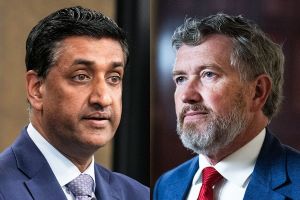
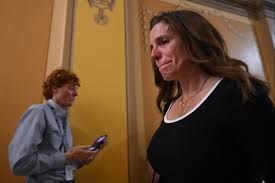
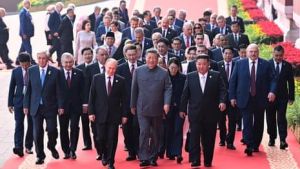


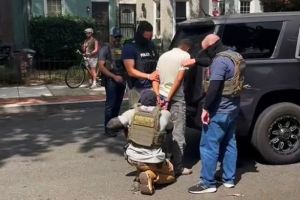


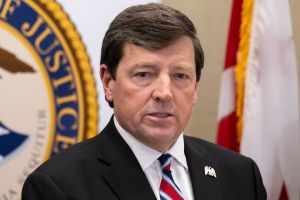
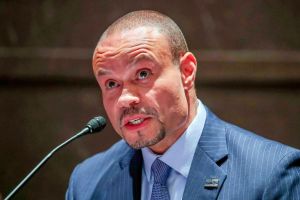
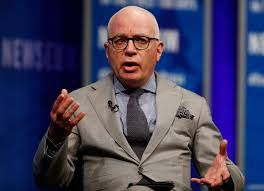






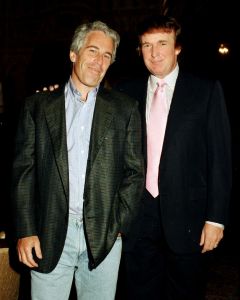






 peej
peej Carissa
 bostonboomer
 dakinikat
 ecocatwoman
 mablue2
 Mama Lopez
 peggysue22
 quixote
 skydancingguestblogger
 Mona (aka Wonk the Vote)



 Sky Dancing
Recent Comments