
The Good, the Bad and the Ugly
Posted: January 31, 2012 Filed under: Department of Homeland Security, Drone Warfare, ethics, Patriot Act | Tags: military-industrial complex, surveillance state, unmanned aerial vehicles, war 12 Comments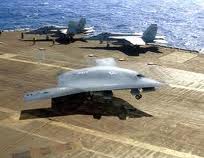 Fast on the heels of giving the US Military props for their funding, R&D and real-time application of alternative energy sources, I’m reminded that in all things involving humans, the good, the bad and the ugly principle applies. Chalk this up to a gentle knock on the noggin, a serious reminder that our military’s purpose is to defend the country, develop defense and wartime strategies [alternative energy works into this] and support all things weapon-related with gusto.
In this case, the subject is drones, aka UAVs [unmanned aerial vehicles], a new generation that is sure to amaze. And disturb.
An article I recently read made my jaw drop with awe and an undeniable sense of foreboding. We could call this the nascent I Robot stage of drone development. I’ve written to the subject of drones before. The science is incredible but I find the use of drones, war and peace applications alike, incredibly creepy.
The X47B, however, a fully-automated drone being tested by the Navy is in a class of its own.
Fully automated. Meaning no one in Omaha is joy-sticking the X47B remotely, guiding its maneuvers, reconnaissance or defensive/offensive usage. This drone will be dependent on onboard computers, perceiving threats through highly attuned sensors, and then acting, accordingly.
How sophisticated is this drone? X47B has been designed to land on an aircraft carrier at sea. My husband served in the Navy and lived on a carrier [a floating city] of approximately 5000 personnel. Though not a pilot, he’d be the first to say that landing an aircraft on any carrier is incredibly challenging.
X47B is that advanced, that sophisticated.
The speed with which robotic aircraft is developing is frankly . . . stunning. On 9/11, the US military had few drones in its arsenal. Reportedly, 1 in 3 US aircraft are now robotic, primarily because of the cost effectiveness in comparison to traditional planes and reduced casualties to military personnel. As aerospace pioneer Simon Ramo stated in his book “Let Robots Do the Dying:”
More aggressive robotry development could lead to deploying far fewer U.S. military personnel to other countries, achieving greater national security at a much lower cost and most importantly, greatly reduced casualties.
But as has been pointed out in numerous articles, we aren’t fighting Robot against Robot wars. At least not yet. Israel’s R&D drone technology is said to have started as early as 1992. Russia, Pakistan, even Iran are funding and developing their own drone programs. In fact, according to ABI Research, 65 countries are utilizing or developing drone programs. We’ve seen and read of the carnage when drones miss their target or targets are just plain wrong. We’re talking Robots vs. Humans and the question of accountability cannot be dismissed.
X47B is a new generation, a next step. As startling as its capabilities sound, the X47B will not be alone in the expanding robotic landscape. We have robotic ground vehicles, mapping robots, IED detecting devices [that look like oversized Tonka toys] in the field, as well as robotic submarines and tanks to small, insect-like drones, complete with micro-cameras, in development.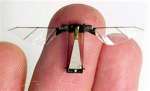
Ready or not, we’re approaching a Brave New World of robotics and weapon development. The US military sees robotic vehicles, surveillance equipment and weapon systems replacing manned missions to handle the Three Big D’s—dull, dirty and dangerous. Defenders of autonomous systems insist that on-ground personnel will have the ability to abort missions and on-board computer-driven directives. Still, the question lingers–if on-board computers are making split second computations would a manual ‘abort’ order have any relevance?
But what sets the X47B apart from its predecessors?
 The GPS-based navigation and landing system is state-of-the-art, making the carrier landings feasible for this fighter-sized vehicle. In addition, the program will allow the drone to conduct aerial refueling. Missions would be preprogrammed, making remote guidance unnecessary. The X47B provides a far larger payload, allowing it to attack larger targets and perform multiple back-to-back missions, many of which would be beyond human endurance. And it has stealth capabilities.
Robotic technology is racing forward. What has not proceeded with equal speed or ease is the conversation about the ethics and morality involved in using these systems, particularly as relates to the chain of accountability.
As Noel Sharkey, computer scientist and robotics expert, recently stated in the LA Times:
Lethal actions should have a clear chain of accountability. This is difficult with a robot weapon. The robot cannot be held accountable. So is it the commander who used it? The politician who authorized it? The military’s acquisition process? The manufacturer, for faulty equipment?
The LA Times further states:
Sharkey and others believe that autonomous armed robots should force the kind of dialogue that followed the introduction of mustard gas in World War I and the development of atomic weapons in World War II. The International Committee of the Red Cross, the group tasked by the Geneva Conventions to protect victims in armed conflict, is already examining the issue.
There is no denying that we’re entering a far different world in the way wars, international tensions, border protection, even domestic policing will be handled in the near future. Let’s hope the right questions are asked and adequate answers provided before we slide down a very slippery slope.
Is there oversight? you may ask. If the Congressional Unmanned Vehicle Caucus is an example, not much. Though the caucus likes to advertise itself as a watchdog it has become little more than a booster club for all things drone. For instance, instead of questioning the enormous amount of money, the cost-effectiveness of domestic drones used for border surveillance—illegal drug smuggling and illegal immigration—or even the success rate of the domestic drone fleet [which is anything but spectacular], the Department of Homeland Security actively supports the acquisition of ever-expanding systems. As is so often the case, it’s a ‘follow the money’ love affair. Alternet reports that:
In the 2010 election cycle, political action committees associated with companies that produce drones donated more than $1.7 million to 42 congressional members who were members of the congressional drone caucus.
Yup, it’s always the same formula, working the cheap seats with suitcases of ready cash.
X47B will be testing its carrier landing capabilities in 2013, aerial refueling in 2014, and if all goes as planned the drone will be operational by 2016-17.
There’s still time for Americans to demand a serious Q&A. But not much time.

 peej
peej Carissa
 bostonboomer
 dakinikat
 ecocatwoman
 mablue2
 Mama Lopez
 peggysue22
 quixote
 skydancingguestblogger
 Mona (aka Wonk the Vote)



 Sky Dancing
Recent Comments