
Loyalties to the two opposing forces are stark.
“I’ve questioned Froman on Brunei. I’ve questioned him on food safety. I’ve questioned him on not doing anything when Peru walked back from environmental regulations. Nothing,” fumed Representative Rosa DeLauro, Democrat of Connecticut, a fierce foe of the trade promotion authority legislation nearing House consideration and of the 12-nation Trans-Pacific Partnership that such authority would ease to completion.
By contrast, “Lori Wallach? She’s got such granular knowledge,” she said. “She’s my source of information and knowledge.”
Republicans have lauded Mr. Froman for his full-throttle effort to secure the trade accord and his constant availability to them. Likewise, Representative Charles B. Rangel of New York, a Democrat more open to the trade bills, shrugged off the hostility expressed by many in his party.
“When I’m asking burning questions about human rights and labor rights and the environment and communist Vietnam, I know I’m dealing with a professional,” he said of Mr. Froman.
Clearly, though, many lawmakers have lost patience with Mr. Froman. As a result, a hard-fought compromise on the trade promotion bill approved by the Senate Finance and House Ways and Means committees last week practically legislates better relations.
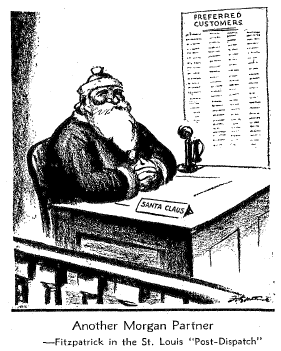
Monday Reads: Mergers and Trade and Wonks! Oh My!
Posted: April 27, 2015 Filed under: morning reads | Tags: Comcast, Mergers, Time Warner, Trade, Trans-Pacific Partnership 27 CommentsGood Morning!
 Well, it’s still morning where I’m at although it hardly looks that way since we’ve been inundated by rain for several hours. I do believe folks have traded in their cars for pirogues as the streets have now filled up pretty quickly with water and leaves.
I have a few odds and ends to pass on to you this morning.First, the Comcast/Time-Warner merger is off which is a very good deal for consumers around the country. The merger would’ve been a BFD and I can’t imagine the Justice Department letting it go through with the amount of concentration it would’ve caused in several markets. It would’ve been like Coke, Pepsi and Walmart merging together.
Here’s Senator Al Franken with some thoughts on the failed deal.
The collapse of Comcast’s plan to buy Time Warner Cable is a big victory for anyone who watches TV or uses the Internet. But it won’t be the last time the interests of consumers clash with the desires of big corporations in the media and technology space. Here are five lessons from this fight I think we should keep in mind going forward.
2. We should empower regulators to do their jobs.
This decision illustrates an important reason why we have the FCC (and federal regulatory agencies in general): to protect the American people from being taken advantage of by big corporations.
That said, far too often, those big corporations are able to wield overwhelming influence over the government agencies (and lawmakers) that are supposed to be keeping them in check. Comcast is represented in Washington by more than 100 lobbyists, more than a few of whom have passed through the “revolving door” between the company and its regulators (for example, less than four months after the FCC approved Comcast’s acquisition of NBCUniversal in 2011, one of the FCC commissioners went to work for Comcast). Last year, it and Time Warner Cable combined to spend $32 million trying to influence the federal government.
So while it’s critical that we empower regulators to do their jobs, we also have to demand that they do them well; our activism has to outweigh the big money on the other side.
3. We should still be worried about lack of competition.
Even without this deal, there is far too little competition in the cable and broadband markets. As it stands now, 55% of U.S. households only have one choice for broadband Internet—and for a majority of those homes, it’s Comcast. Not exactly an incentive for the company to provide first-class service, as many Comcast customers can attest.
And if you want another illustration of how powerful Comcast is, consider that, during the debate over this deal, other companies who did business with Comcast told me they were afraid go public with their opposition because they feared retribution.
The Senator makes five points so you can continue to read this article at–of all places–Time Magazine.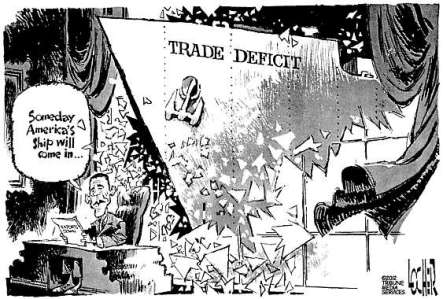
Another BFD in the area of the economy is the Trans-Pacific Partnership which I’ve hesitated to write about for several reasons. First, much of the deal is still classified and not available to the public. Second, I look at the deal through the eyes of some one whose dissertation was about trade in ASEAN+3 so I am supremely disadvantaged by knowing WAY too many details about the region and the existing trade agreements. My current research area is Foreign Direct Investment through out the entire region so I almost know too much to be able to explain any of it succinctly if that makes any sense.
However, I will point you to a few things. First, there’s a document from the Congressional Research Service that outlines issues that should concern Congress. I consider this a good place to start. This quote comes from a portion of the Executive Summary.
The Trans-Pacific Partnership (TPP) is a proposed regional free trade agreement (FTA) being negotiated among the United States, Australia, Brunei, Canada, Chile, Japan, Malaysia, Mexico, New Zealand, Peru, Singapore, and Vietnam. U.S. negotiators and others describe and envision the TPP as a “comprehensive and high-standard” FTA that aims to liberalize trade in nearly all goods and services and include rules-based commitments beyond those currently established in the World Trade Organization (WTO). The broad outline of an agreement was announced on the sidelines of the Asia-Pacific Economic Cooperation (APEC) ministerial in November 2011, in Honolulu, HI. If concluded as envisioned, the TPP potentially could eliminate tariff and nontariff barriers to trade and investment among the parties and could serve as a template for a future trade pact among APEC members and potentially other countries. Congress has a direct interest in the negotiations, both through influencing U.S. negotiating positions with the executive branch, and by considering legislation to implement any resulting agreement.
The TPP negotiations have been ongoing for nearly five years and may be concluded in the near term, although several challenging issues remain unresolved. These issues are likely the most sensitive for negotiating parties and may require political-level decisions to reach final agreement. The negotiating dynamic itself is complex. For example, decisions on key market access issues on auto, dairy, sugar, and textiles and apparel may depend on the outcome of rules negotiations involving intellectual property rights or state-owned enterprises, among other issues.
Nearly 30 chapters are under discussion in the negotiations, and reports indicate that 9 have been finished. The United States is negotiating market access for goods, services, and agriculture with countries with which it does not currently have FTAs: Brunei, Japan, Malaysia, New Zealand, and Vietnam. Negotiations are also being conducted regarding disciplines on intellectual property rights, trade in services, government procurement, investment, rules of origin, competition, labor, and environment, among other issues. In many cases, the rules being negotiated are intended to be more rigorous than comparable rules found in the WTO. Some topics, such as state-owned enterprises, regulatory coherence, and supply chain competitiveness, may break new ground in FTA negotiations. As the countries that make up the TPP negotiating partners include advanced industrialized, middle income, and developing economies, the TPP, if implemented, may involve restructuring and reform of the economies of some participants. It also has the potential to spur economic growth in the region.
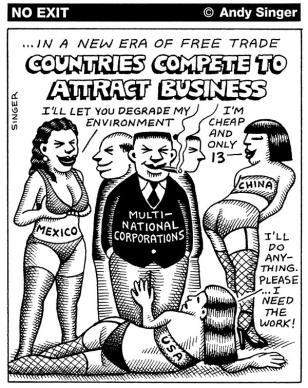 It also has the potential to tank some industries in this country as well as provide all consumers with a huge number of extremely cheap things for them to buy. Trade is always win-win for countries. However, within each country, there are huge losers. This is something that always has to be considered. Some jobs will move to other countries while creating jobs in totally different industries in the domestic economy. The deal is that most of the folks in the lost jobs usually aren’t just easily transferable to the newly created jobs. That’s especially true in this country where our advantage is in areas that are extremely technical in nature and require advanced degrees or training. The NAFTA agreement contained “adjustment assistance” to help such workers. An example of what it did was train a lot of Ladies Garment Workers in the South in the Health Care Field. In many cases, the jobs weren’t all that equal but at least there was some consideration. We’ve heard nothing about this kind of assistance but again, many of the details are still hush hush. The discussion is heating up so I thought I’d give you some of the basics, however, so we can have a base for further discussion as this seems certain to move forward.
Here’s a good example of concerns and cross-purposes. This is an example of two Lawyers from Harvard Law school that are distinctly split into opposing camps.
As Congress considers giving another Harvard Law colleague from that era, President Obama, special “fast track” authority to negotiate a 12-nation Pacific trade accord, the two lawyers find themselves on opposing armies in one of the biggest legislative fights of the Obama presidency. Among those nations are Japan, Australia and Chile, and smaller ones like Brunei, Peru and Vietnam.
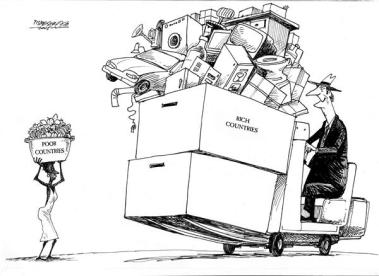 You can see from the list of countries mentioned above that we have a variety of things to be concerned about with this agreement. We’ve got developed countries, emerging economies, and countries that are barely off the ground in this agreement. There are democracies, monarchies and communist countries included in the mix. It’s a very complex situation to say the least.
Many see this as the ultimate nod to huge MNCs (Multinational Corporations). Here’s an example from Doctors without Borders and their concerns about the costs of pharmaceuticals.
No matter who you are or where you live, it’s time to pay attention to the Trans-Pacific Partnership (TPP) trade deal. If signed in its current form, the TPP will lock in high, unsustainable drug prices, delay the availability of less expensive generic medicines, and price millions of people out of the medical care that they need.
Today, AARP and Doctors Without Borders/Médecins Sans Frontières (MSF) express our deep concerns about the TPP’s impact on drug prices. Intellectual property provisions being proposed by the U.S. put too much emphasis on drug industry priorities at the expense of consumer and patient needs.
Various provisions in the TPP would delay the introduction of lower-priced drugs and worsen an already failing system of research and development that awards patents and other monopolies to companies for producing ‘me-too‘ medicines that provide little to no therapeutic benefits over existing treatments.
More troubling are demands by the U.S. to mandate 12 years of data exclusivity for biologic medicines, which include vaccines and drugs used to treat conditions like cancer and multiple sclerosis. Data exclusivity blocks competing firms from using previously generated clinical trial data to gain approval for generic versions of these drugs and vaccines.
With annual prices that can reach $400,000, the high cost of biologic drugs not only has negative effects on consumers and patients, but also on health care payers, including programs like Medicare and Medicaid, as well as children in developing countries who are most vulnerable to dying from vaccine-preventable diseases.
It is noteworthy that the proposed 12 years of data exclusivity, or when clinical trial data are protected, goes well beyond the monopoly protections already provided in the U.S. Today, biologic drug manufacturers receive four years of data exclusivity that runs concurrently with 12 years ofmarket exclusivity, or when the FDA is blocked from approving generic versions of a brand name product.
Here’s more from a legal standpoint.
The most controversial provision of the TPP is the Investor-State Dispute Settlement (ISDS) section, which strengthens existing ISDS procedures. ISDS first appeared in a bilateral trade agreement in 1959. According to The Economist, ISDS gives foreign firms a special right to apply to a secretive tribunal of highly paid corporate lawyers for compensation whenever the government passes a law to do things that hurt corporate profits — such things as discouraging smoking, protecting the environment or preventing a nuclear catastrophe.
Arbitrators are paid $600-700 an hour, giving them little incentive to dismiss cases; and the secretive nature of the arbitration process and the lack of any requirement to consider precedent gives wide scope for creative judgments.
To date, the highest ISDS award has been for $2.3 billion to Occidental Oil Company against the government of Ecuador over its termination of an oil-concession contract, this although the termination was apparently legal. Still in arbitration is a demand by Vattenfall, a Swedish utility that operates two nuclear plants in Germany, for compensation of €3.7 billion ($4.7 billion) under the ISDS clause of a treaty on energy investments, after the German government decided to shut down its nuclear power industry following the Fukushima disaster in Japan in 2011.
Under the TPP, however, even larger judgments can be anticipated, since the sort of “investment” it protects includes not just “the commitment of capital or other resources” but “the expectation of gain or profit.” That means the rights of corporations in other countries extend not just to their factories and other “capital” but to the profits they expect to receive there.
It really behooves all of us to look into the items leaking out of this agreement. I do mean “leaking” too. Here’s a great, easy-to-read article on concerns on the agreement from Vox. They argue that it’s good for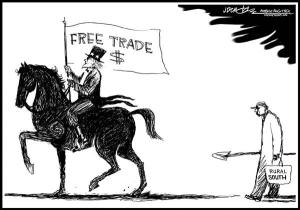 “elites” and not so good for every one else.
In the past, debates about trade deals have mostly been about trade. Ross Perot, for example, famously warned in 1992 about a “giant sucking sound” of jobs moving to Mexico if the US signed the North American Free Trade Agreement. In contrast, debates over the TPP mostly haven’t focused on its trade provisions.
That’s partly because even advocates of the treaty acknowledge that the economic effects of TPP’s trade provisions would be modest. It’s difficult to estimate the economic impact of the TPP’s trade provisions, because we don’t know exactly what’s in the deal. But one of the mostwidely cited estimates finds that TPP would add about $77 billion to US incomes in 2025. That’s less than half of 1 percent of current US incomes.
“This is not going to dramatically going to change our lives overnight,” Petri says. “We’re a very big economy, so anything compared to the size of the economy is going to be small in percentage term.”
Petri hopes the TPP will serve as a blueprint for future trade deals that include other big economies, such as the European Union and China. In that case, he says, the economic effects could be several times as large, with annual incomes increasing by as much as 2 percent of GDP.
A big reason for the deal’s modest impact is that trade barriers are already low. There are a few politically sensitive markets, such as agriculture, where significant trade restrictions remain. But previous trade deals have removed so many restrictions that there just isn’t much room for further progress.
As the opportunities for trade liberalization have dwindled, the nature of trade agreements has shifted. They’re no longer just about removing barriers to trade. They’ve become a mechanism for setting global economic rules more generally.
This trend is alarming to Simon Lester, a free trader at the Cato Institute. “We’ve added in these new issues that I’m skeptical of,” he says. “It’s not clear what the benefits are, and they cause a lot of controversy.”
And this system for setting global rules has some serious defects. We expect the laws that govern our economic lives will be made in a transparent, representative, and accountable fashion. The TPP negotiation process is none of these — it’s secretive, it’s dominated by powerful insiders, and it provides little opportunity for public input.
The Obama administration argues that it’s important for TPP to succeed so that the United States — not China — gets to shape the rules that govern trade across the Pacific. But this argument only makes sense if you believe US negotiators are taking positions that are in the broad interests of the American public. If, as critics contend, USTR’s agenda is heavily tilted toward the interests of a few well-connected interest groups, then the deal may not be good for America at all.
So, with that I start the conversation. Get ready, because it will be wonky as hell!
What’s on your reading and blogging list today?

 peej
peej Carissa
 bostonboomer
 dakinikat
 ecocatwoman
 mablue2
 Mama Lopez
 peggysue22
 quixote
 skydancingguestblogger
 Mona (aka Wonk the Vote)



 Sky Dancing
Recent Comments