
Are Edward Snowden Types Driving the DC Economy?
Posted: June 10, 2013 Filed under: U.S. Economy, U.S. Military, U.S. Politics | Tags: Alec McGillis, Booz Allen Hamilton, Edward Snowden, NSA building, surveillance state, Washington DC economy 59 Comments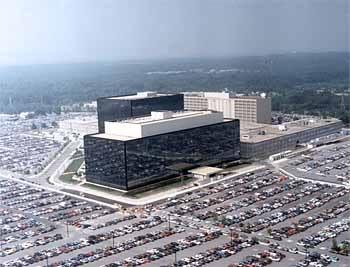
I thought we needed a fresh thread, so here’s another aspect of the Edward Snowden story to consider.
Alec McGillis has an interesting article up at The New Republic on all the high-salaried young outside contractors who are profiting from the rise of the U.S. surveillance state.
Edward Snowden is ready for his Rorschach test. Is he Benedict Arnold or Tom Paine, Daniel Ellsberg or Bradley Manning (or Aaron Swartz)? For the moment, I’ll leave that to others to debate, and instead consider Snowden through another lens: as an exemplar of the conspicuous, decade-long economic boom of Washington, D.C.
We’ve been hearing more and more about this boom, as the disconnect grows between the ever-more-prosperous Beltway and a Rest of America only now recovering from the recession. You’ve seen the stats: Seven of the 10 highest-income counties are in the Washington area; of the counties with the highest levels of college graduates, the top three are in greater D.C., and five of the top 10. There have been plenty of theories proffered to explain the Beltway boom—typically, conservatives like to talk about the growing scope of the federal government, while liberals like to talk about the rise in the influence industry that has accompanied it. But Snowden offers a reminder of another driver of the boom, one that I’ve long suspected was the biggest factor of all: the construction of the post-9/11 security leviathan, which has tentacles all around the country but is concentrated above all in greater Washington—not only at the headquarters of the FBI, CIA, and NSA, but in the sprawl of the contractors that have attached themselves to the region like barnacles, in hundreds of glass boxes along the Dulles Toll Road and Interstate 66 and Route 32, with naught but a cryptic acronym (SAIC, CAIC, ITT) affixed on their upper walls to hint at their identity (and sometimes not even that)….
The people working in these buildings and contractors are, by definition, a low-visibility lot, with job descriptions so inscrutable to the average American taxpayer footing the bill that they might as well be written in Sanskrit. But they make up a goodly share of the people who are crowding the Beltway’s ever-more-crowded highways in late-model cars and buying up condos and homes at rates that have made Washington the strongest real estate market in the country since 2000. But now we get to see one of their type close-up in a way that we are normally not able to. Edward Snowden is only 29 and lacks a four-year college degree, yet he has been pulling down $200,000 working for one of the biggest Beltway bandit contractors of all, Booz Allen Hamilton. He was most recently based not in Washington, but at an NSA facility in Hawaii (tough gig!), but he is otherwise highly typical of the new class of highly-paid security-state worker bees that litter the Beltway at firms like Booz Allen, which is headquartered in Northern Virginia.
Hey, they’re not only watching our every move, listening to our phone calls, and reading our e-mail and Facebook pages, but they’re getting filthy rich doing it–while the rest of us struggle with high unemployment, low-wage service jobs, collapsing infrastructure, and failing schools.
Let’s hear it for the good old USA!
This is an open thread.
The Good, the Bad and the Ugly
Posted: January 31, 2012 Filed under: Department of Homeland Security, Drone Warfare, ethics, Patriot Act | Tags: military-industrial complex, surveillance state, unmanned aerial vehicles, war 12 Comments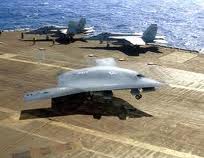 Fast on the heels of giving the US Military props for their funding, R&D and real-time application of alternative energy sources, I’m reminded that in all things involving humans, the good, the bad and the ugly principle applies. Chalk this up to a gentle knock on the noggin, a serious reminder that our military’s purpose is to defend the country, develop defense and wartime strategies [alternative energy works into this] and support all things weapon-related with gusto.
In this case, the subject is drones, aka UAVs [unmanned aerial vehicles], a new generation that is sure to amaze. And disturb.
An article I recently read made my jaw drop with awe and an undeniable sense of foreboding. We could call this the nascent I Robot stage of drone development. I’ve written to the subject of drones before. The science is incredible but I find the use of drones, war and peace applications alike, incredibly creepy.
The X47B, however, a fully-automated drone being tested by the Navy is in a class of its own.
Fully automated. Meaning no one in Omaha is joy-sticking the X47B remotely, guiding its maneuvers, reconnaissance or defensive/offensive usage. This drone will be dependent on onboard computers, perceiving threats through highly attuned sensors, and then acting, accordingly.
How sophisticated is this drone? X47B has been designed to land on an aircraft carrier at sea. My husband served in the Navy and lived on a carrier [a floating city] of approximately 5000 personnel. Though not a pilot, he’d be the first to say that landing an aircraft on any carrier is incredibly challenging.
X47B is that advanced, that sophisticated.
The speed with which robotic aircraft is developing is frankly . . . stunning. On 9/11, the US military had few drones in its arsenal. Reportedly, 1 in 3 US aircraft are now robotic, primarily because of the cost effectiveness in comparison to traditional planes and reduced casualties to military personnel. As aerospace pioneer Simon Ramo stated in his book “Let Robots Do the Dying:”
More aggressive robotry development could lead to deploying far fewer U.S. military personnel to other countries, achieving greater national security at a much lower cost and most importantly, greatly reduced casualties.
But as has been pointed out in numerous articles, we aren’t fighting Robot against Robot wars. At least not yet. Israel’s R&D drone technology is said to have started as early as 1992. Russia, Pakistan, even Iran are funding and developing their own drone programs. In fact, according to ABI Research, 65 countries are utilizing or developing drone programs. We’ve seen and read of the carnage when drones miss their target or targets are just plain wrong. We’re talking Robots vs. Humans and the question of accountability cannot be dismissed.
X47B is a new generation, a next step. As startling as its capabilities sound, the X47B will not be alone in the expanding robotic landscape. We have robotic ground vehicles, mapping robots, IED detecting devices [that look like oversized Tonka toys] in the field, as well as robotic submarines and tanks to small, insect-like drones, complete with micro-cameras, in development.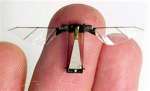
Ready or not, we’re approaching a Brave New World of robotics and weapon development. The US military sees robotic vehicles, surveillance equipment and weapon systems replacing manned missions to handle the Three Big D’s—dull, dirty and dangerous. Defenders of autonomous systems insist that on-ground personnel will have the ability to abort missions and on-board computer-driven directives. Still, the question lingers–if on-board computers are making split second computations would a manual ‘abort’ order have any relevance?
But what sets the X47B apart from its predecessors?
 The GPS-based navigation and landing system is state-of-the-art, making the carrier landings feasible for this fighter-sized vehicle. In addition, the program will allow the drone to conduct aerial refueling. Missions would be preprogrammed, making remote guidance unnecessary. The X47B provides a far larger payload, allowing it to attack larger targets and perform multiple back-to-back missions, many of which would be beyond human endurance. And it has stealth capabilities.
Robotic technology is racing forward. What has not proceeded with equal speed or ease is the conversation about the ethics and morality involved in using these systems, particularly as relates to the chain of accountability.
As Noel Sharkey, computer scientist and robotics expert, recently stated in the LA Times:
Lethal actions should have a clear chain of accountability. This is difficult with a robot weapon. The robot cannot be held accountable. So is it the commander who used it? The politician who authorized it? The military’s acquisition process? The manufacturer, for faulty equipment?
The LA Times further states:
Sharkey and others believe that autonomous armed robots should force the kind of dialogue that followed the introduction of mustard gas in World War I and the development of atomic weapons in World War II. The International Committee of the Red Cross, the group tasked by the Geneva Conventions to protect victims in armed conflict, is already examining the issue.
There is no denying that we’re entering a far different world in the way wars, international tensions, border protection, even domestic policing will be handled in the near future. Let’s hope the right questions are asked and adequate answers provided before we slide down a very slippery slope.
Is there oversight? you may ask. If the Congressional Unmanned Vehicle Caucus is an example, not much. Though the caucus likes to advertise itself as a watchdog it has become little more than a booster club for all things drone. For instance, instead of questioning the enormous amount of money, the cost-effectiveness of domestic drones used for border surveillance—illegal drug smuggling and illegal immigration—or even the success rate of the domestic drone fleet [which is anything but spectacular], the Department of Homeland Security actively supports the acquisition of ever-expanding systems. As is so often the case, it’s a ‘follow the money’ love affair. Alternet reports that:
In the 2010 election cycle, political action committees associated with companies that produce drones donated more than $1.7 million to 42 congressional members who were members of the congressional drone caucus.
Yup, it’s always the same formula, working the cheap seats with suitcases of ready cash.
X47B will be testing its carrier landing capabilities in 2013, aerial refueling in 2014, and if all goes as planned the drone will be operational by 2016-17.
There’s still time for Americans to demand a serious Q&A. But not much time.
Tuesday Reads
Posted: August 30, 2011 Filed under: poverty, president teleprompter jesus, U.S. Economy, U.S. Military, U.S. Politics, unemployment | Tags: austerity, Barack Obama, Catch-22, Floods, Hurricane Irene, John Updike, Joseph Heller, Kurt Vonnegut, media elite, Obama Onyango, Poverty, Protests, surveillance state, teleprompters, Vermont, Zeituni Onyango 27 Comments
Good Morning!! I’m having trouble finding any new news, but I’ve done my best to dig up a few interesting reads for you.
The Boston Herald has the lowdown on President Obama’s illegal immigrant uncle.
An illegal immigrant from Kenya busted for drunken driving after nearly striking a cop car in Framingham is the uncle of President Obama, the Herald has learned.
Obama Onyango told cops he wanted to “call the White House” after he was nabbed for OUI Aug. 24 after nearly plowing his SUV into a police cruiser. He was arraigned Thursday and was ordered held without bail because he was wanted on a federal immigration warrant, officials said.
Mike Rogers, a spokesman for Cleveland immigration attorney Margaret Wong, who is representing Onyango, confirmed that the 67-year-old is the president’s uncle. Wong is the same lawyer who represented the president’s aunt, Zeituni Onyango, in her fight to win asylum last year.
Reached at her apartment in a South Boston public housing complex today, Zeituni Onyango said of her brother’s arrest: “Why don’t you go to 1600 Pennsylvania Ave. in Washingon, D.C. and ask your president? Not me.” She then hung up on a reporter.
OK, it’s another right wing source, but Fox News has a funny article on Obama’s announcement of his new economic adviser Alan Krueger: Seriously? Obama Uses 2 Teleprompters for 3 Minute Speech
President Obama required two heavy-duty teleprompters on Monday during a three-minute speech in which he nominated Alan Krueger to serve as chairman of his Council of Economic Advisers.
“I am very pleased to appoint Alan and I look forward to working with him,” Obama said, staring at the large, flat-screen monitor to his right, then shifting his eyes to the teleprompter on his left. “I have nothing but confidence in Alan as he takes on this important role as one of the leaders of my economic team.”
Why couldn’t he just memorize that?
In more serious news, the aftermath of Hurricane Irene has been devastating in Vermont, but the networks aren’t covering it 24/7. I wonder why?
Vermont is reeling today from what is becoming the state’s worst natural disaster since the epic flood of 1927. At least three people have died in the storm, one man is missing, hundreds of roads statewide are closed, and thousands of homes and businesses suffered power outages and serious damage from flooding associated with Tropical Storm Irene.
[Update 5:40 p.m.] Three people are confirmed dead in Vermont in the wake of Tropical Storm Irene, and a fourth person is missing, state officials said at a news conference in Montpelier late this afternoon.
The deaths occurred in Wilmington, Rutland and Ludlow. Another person, the son of the Rutland victim, is missing and feared dead, according to state officials.
Perhaps if the media elites lived in Vermont, we’d hear more about it. But they don’t, so it’s not real to them. This is why we can have 25 million people unemployed in this country and the media and political class completely ignore the devastation it causes.
Sarah Jaffe has an important article at Alternet on “How the Surveillance State Protects the Interests Of the Ultra-Rich.”
Jaffe discusses the refusal of the British government to recognize that poverty played a role in the recent riots in London and other cities, as well as the shutdown of cell phone service by BART during the protests of the killing of a man by BART police. She writes:
The techniques that were roundly decried by Western leaders when used by Egyptian president Hosni Mubarak against his people’s peaceful revolution are suddenly embraced when it comes to unrest at home. Not only that, but techniques honed in the “war on terror” are now being turned on anti-austerity protesters, clamping down on discontent that was created in the first place by policies of the state.
[….]
As a burgeoning international protest movement takes shape, opposing austerity measures, decrying the wealth gap and rising inequality, and in some cases directly attacking the interests of oligarchs, we’re likely to see the surveillance state developed for tracking “terrorists” turned on citizen activists peacefully protesting the actions of their government. And as U.S. elections post-Citizens United will be more and more expensive, look for politicians of both parties to enforce these crackdowns.
Despite growing anger at austerity in other countries, those policies have been embraced by both parties here in the States. Groups like US Uncut have stepped into the fray, pointing out the connection between the tax dodging of banks like Bank of America and other corporations and the slashing of the social safety net for everyone else. The new protest movements are led not only by traditional left groups like labor unions, but a generation of young, wired activists using the Internet for innovative protest and revolutionary activism.
It’s a lengthy article, but well worth reading.

Joseph Heller as a young man
I’ll end with a literary piece. I’m a big fan of Joseph Heller’s novel Catch-22, so I got a kick out of this review of books about Heller at the NYT: The Enigma of Joseph Heller.
“Oh God, this is a calamity for American literature,” Kurt Vonnegut said on learning of Joseph Heller’s death in 1999. John Updike was less alarmed: Heller “wasn’t top of the chart” as a writer, he reflected, though he was “a sweet man” and his first novel, “Catch-22” was “important.” Note the Updikean judiciousness of “important”: he didn’t say he liked the book, but it was a great cultural bellwether as novels go, and it has endured. Despite mixed reviews on publication in 1961, “Catch-22” was soon adopted by college students who recognized a kindred spirit in Yossarian, the bombardier who rebels against a materialistic bureaucracy hellbent on killing him. “Better Yossarian than Rotarian” became a popular slogan, all the more so with the timely (for the novel’s sake) military escalation in Vietnam, which became the “real” subject of “Catch-22” and partly accounts for its sales of more than 10 million copies to date. It’s hard to argue with that kind of importance.
IMHO, John Updike’s work isn’t likely to be read 100 years from now. Does anyone still read “Couples?” Please. “The Witches of Eastwick” was funny, but hardly deathless literature. Catch-22, on the other hand, might hold up 100 years from now. To me it’s the ultimate book on the insanity of war. I might just check out that Heller biography, even though the NYT reviewer wasn’t that thrilled with it.
That’s all I’ve got for today. What are you reading and blogging about?

 peej
peej Carissa
 bostonboomer
 dakinikat
 ecocatwoman
 mablue2
 Mama Lopez
 peggysue22
 quixote
 skydancingguestblogger
 Mona (aka Wonk the Vote)



 Sky Dancing
Recent Comments