


Murphy suggested that if the goal is not to ensure a transition of power, the U.S. will just face more issues further down the line. He said: “So, they are going to spend hundreds of billions of your taxpayer dollars, get a whole bunch of Americans killed, and a hardline regime – probably a MORE anti-American hardline regime – will still be in charge.”
He said there didn’t seem to be a clear goal apart from “destroying lots of missiles and boats and drone factories.”
“But the question that stumped them: what happens when you stop bombing and they restart production? They hinted at more bombing. Which is, of course, endless war,” he said.
Wednesday Reads: Iran Dominates the News; Epstein Still Breaks Through
Posted: March 11, 2026 Filed under: just because | Tags: Dan Caine, DOGE Social Security Attacks, Donald Trump, Iran War, Jared Kusher, Kristi Noem, Pete Hegseth, Sen. Chris Murphy, Steve Witkoff, Strait of Hormuz 5 CommentsGood Afternoon!!
Yesterday I tried to watch a press conference on Trump’s Iran conflict by Pete Hegseth and Dan Caine, but it was unwatchable. Hegseth waved his arms around and yelled over-the-top threats, and Caine sort of tried to sound reasonable; but none of it made sense. No one in the Trump administration has a clue why we’re in this “war.” I really do think it’s another distraction from the Epstein files.
So this morning I enjoyed reading this description by John Ganz at Unpopular Front: Command-Shift-War. War as Cliché.
This war is notable not for its use of Artificial Intelligence, but for the fact that it is the first war that feels like it’s been launched by A.I: It’s all been done on a level less than thought. Trump’s remarks, Hegseth’s speeches; they all sound like autocompletes or snippets of half-remembered things. When Trump bellows, “UNCONDITIONAL SURRENDER,” he knows not what it means; he just heard it somewhere, probably on TV.
The barrage of clichés from Hegseth’s mouth is astonishing—“Flying over their capital. Death and destruction from the sky all day long. We’re playing for keeps. Our warfighters have maximum authorities granted personally by the president and yours truly. Our rules of engagement are bold, precise, and designed to unleash American power, not shackle it. This was never meant to be a fair fight, and it is not a fair fight. We are punching them while they’re down, which is exactly how it should be….” Then General Caine (what a name) joins in the fusillade: “Profound sadness and gratitude….wounded warriors…standing shoulder to shoulder…making steady progress…clear-eyed…quiet professionals…call balls and strikes.” Clear-eyed, quiet professionals are making steady progress calling balls and strikes on our wounded warriors, to whom we feel eternal gratitude. We may run out of interceptors, but we are well-stocked with hackneyed phrases. And the munitions may be “precision guided,” but the language is necessarily vague. Too bad they can’t bore the enemy to death.
Pete Hegseth and Dan Caine try to make sense of the Iran war.
The images, too, are familiar and shopworn for anyone who can remember as far back as the First Persian Gulf War. The grainy footage of “precision strikes” (another cliché) on “key targets.” The night sky of a Middle Eastern metropolis illuminated with fire and smoke—we’ve all seen Shock and Awe (2002), dir. George W. Bush and Michael Bay—Tomahawks streaking into the sky. The jets screaming off the decks of carriers; The video edits using “the Macarena” or “Fortunate Son,” meant to recall Forrest Gump, itself already a pastiche of Vietnam movies. I’m sure something is reassuring about it all to a Fox viewer approaching senescence. But also for the young who have processed everything through video games. They’ve seen this movie before. (That’s another one, in case you didn’t notice.) It’s a kind of medley of America’s wars; the themes come and go: oil crisis…Iran…Kuwait…boots on the ground…Patriot missiles…Scuds. Even the sinking of an apparently unarmed Iranian warship by a submarine was a callback: Hegseth reminded us it was the first time a US sub had sunk an enemy vessel with a torpedo since WWII. It had no strategic or tactical purpose; it was just meant to generate an image: a ship going down viewed through the crosshairs of a periscope. Something out of Run Silent Run Deep, watched on a Sunday afternoon. Or the Victory at Sea doc,not for nothing, a movie that Trump obsesses over. Of course, “unrestricted submarine warfare” and abandoning survivors at sea recalls a coldhearted U-Boat skipper more than Clark Gable, but no matter.
In the past, propaganda served the purposes of war; now war serves the purposes of propaganda. But the blood remains real.
A.I. will supposedly give us fully automated wars in the future, but it’s here, right now. There’s a blind automatism to this war; It’s a war without thought or deliberation, public or private. It’s war as autocomplete. Of course, we were gonna “do” Iran. It was just what was next. Another barrage of clichés: “American blood on their hands…theocratic lunatics…the mullahs…We’ve been at war with Iran for 47 years.” The last one is particularly Orwellian: We’ve always been at war with West Asia.
Read more at the Substack link above.
Here’s the latest news and opinion about Trump’s “war.”
The Pentagon tried to hide the number of U.S. injuries in the war until Reuters did an independent investigation. Now they say there are 140 wounded.
Reuters: Exclusive: As many as 150 US troops wounded so far in Iran war, sources say.
As many as 150 U.S. troops have been wounded in the 10-day-old war with Iran, two people familiar with the matter told Reuters on Tuesday.
The casualty figure has not been previously reported. Prior to Reuters’ publication of the figure, the Pentagon had only disclosed eight U.S. personnel seriously injured.
In a statement after Reuters published its report, the Pentagon estimated the figure to be approximately 140 wounded and said the vast majority of them were minor.
“Since the start of Operation Epic Fury, approximately 140 U.S. service members have been wounded over 10 days of sustained attacks,” said chief Pentagon spokesperson Sean Parnell.
He said 108 of the wounded service members had already returned to duty.
Parnell said the eight seriously wounded service members were receiving the highest level of medical care.
Reuters could not determine the types of injuries and whether they include traumatic brain injuries, which are common after exposure to blasts.
Iran has launched retaliatory strikes against U.S. military bases since the start of the conflict on Feb. 28. It has also struck diplomatic missions in Arab Gulf states as well as hotels and airports and damaged oil infrastructure.
The New York Times: At Least 3 Ships Are Struck In and Around a Key Gulf Oil Passage.
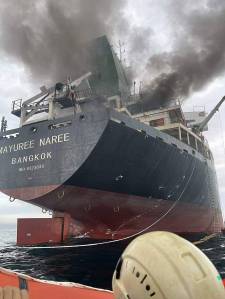
At least three ships were hit on Wednesday in and around the vital oil route of the Strait of Hormuz, according to a British maritime monitoring group, as the Middle East war chokes off one of the key conduits for the global oil trade.
An image released by the Royal Thai Navy shows a tanker near the Strait of Hormuz that was attacked on Wednesday. Iran claimed responsibility. Credit…Royal Thai Navy, via Agence France-Presse — Getty Images
Iran appeared to claim responsibility for at least one of the attacks. Alireza Tangsiri, the naval commander in Iran’s powerful Revolutionary Guards Corps, named one of the ships that was struck, the Mayuree Naree, in a post on social media, saying they had “ignored the warnings” from Iran, and “ended up getting caught.”
He added: “Any vessel that intends to pass must obtain permission from Iran.”
The incidents came after the U.S. military said it struck 16 Iranian mine-laying vessels near the Strait of Hormuz — though it remained unclear whether any Iranian mines had actually been deployed there.
There were three separate reports, according to United Kingdom Maritime Trade Operations, a British monitoring agency. Iran fired at targets across the Middle East on Wednesday, but did not explicitly claim responsibility for the strikes on the ships.
Three strikes on ships in a single morning appeared to represent an unusual uptick: The U.K.M.T.O. said it had received reports of 13 attacks in total since the U.S.-Israeli war on Iran began on Feb. 28.
One cargo vessel was struck “by an unknown projectile” north of Oman in the Straits of Hormuz, resulting in a fire onboard, the agency said. The Oman News Agency said the country’s Maritime Security Center received a report indicating that the Mayuree Naree, a commercial vessel flying the flag of Thailand, was hit off the Omani coast.
Mark Mazzetti, Tyler Pager, and Edward Wong at The New York Times: How Trump and His Advisers Miscalculated Iran’s Response to War.
On Feb. 18, as President Trump weighed whether to launch military attacks on Iran, Chris Wright, the energy secretary, told an interviewer he was not concerned that the looming war might disrupt oil supplies in the Middle East and wreak havoc in energy markets.
Even during the Israeli and U.S. strikes against Iran last June, Mr. Wright said, there had been little disruption in the markets. “Oil prices blipped up and then went back down,” he said. Some of Mr. Trump’s other advisers shared similar views in private, dismissing warnings that — the second time around — Iran might wage economic warfare by closing shipping lanes carrying roughly 20 percent of the world’s oil supply.
The extent of that miscalculation was laid bare in recent days, as Iran threatened to fire at commercial oil tankers transiting the Strait of Hormuz, the strategic choke point through which all ships must pass on their way out of the Persian Gulf. In response to the Iranian threats, commercial shipping has come to a standstill in the Gulf, oil prices have spiked, and the Trump administration has scrambled to find ways to tamp down an economic crisis that has triggered higher gasoline prices for Americans.
The episode is emblematic of how much Mr. Trump and his advisers misjudged how Iran would respond to a conflict that the government in Tehran sees as an existential threat. Iran has responded far more aggressively than it did during last June’s 12-day war, firing barrages of missiles and drones at U.S. military bases, cities in Arab nations across the Middle East, and on Israeli population centers.
U.S. officials have had to adjust plans on the fly, from hastily ordering the evacuation of embassies to developing policy proposals to reduce gas prices.
The Daily Beast: Senator Torches Trump’s ‘Incoherent’ War Plans After Secret Briefing.
President Trump’s closed-door meeting about his long-term plan in Iran and overall justification for the war has been blasted as “incoherent” by a senator who attended.
Chris Murphy, a Democrat representing Connecticut, unloaded on the White House in a troubling X thread after the secret briefing on “Operation Epic Fury.”
Sen. Chris Murphy warned about the lack of a plan in a worrying X thread.
He said there doesn’t seem to be a clear goal apart from “destroying lots of missiles and boats and drone factories.”
“I obviously can’t disclose classified info, but you deserve to know how incoherent and incomplete these war plans are,” he said.
Several of the White House’s stated reasons for the war didn’t even come up, Murphy said, with not a single mention of plans to destroy Iran’s nuclear infrastructure. “This is, uh…surprising…since Trump says over and over this is a key goal,” he said.
The Trump administration also now claims that regime change is not the goal of the operation, despite the president initially framing it that way for the public.
Barak Ravid at Axios: Trump tells Axios there’s “practically nothing left” to target in Iran.
President Trump told Axios in a brief phone interview Wednesday that the war with Iran will end “soon” because there is “practically nothing left to target.”
“Little this and that… Any time I want it to end, it will end,” Trump said during the five-minute call.
Why it matters: Even as Trump publicly signals his operation has largely accomplished its objectives, U.S. and Israeli officials say there has been no internal directive on when fighting might stop.
Israeli Defense Minister Israel Katz said Wednesday the war will continue “without any time limit, for as long as necessary, until we achieve all the objectives and decisively win the campaign.”Israeli and
U.S. officials say they are preparing for at least two more weeks of strikes in Iran.
It sounds like Israel is actually going to decide when the war ends.
On Tuesday, the U.S. received intelligence that suggested Iran has started laying mines in the Strait of Hormuz — one of the world’s most critical chokepoints for oil supply.
Officials say it’s unclear how many mines Iran has deployed, but the assessment is that the number is very small.
Trump confirmed to Axios that U.S. strikes on Tuesday destroyed 16 mine-laying boats and disrupted Iranian plans….
What he’s [Trump] saying: “The war is going great. We are way ahead of the timetable. We have done more damage than we thought possible, even in the original six-week period,” Trump told Axios.
I guess we’ll have to wait and see.
One more on Iran from Judd Legum at Popular Information: UPDATE: Trump says Kushner helped convince him to go to war with Iran. The disclosure highlights Kushner’s massive financial conflicts.
At a press conference on Monday evening, President Trump said his son-in-law, Jared Kushner, was one of a handful of top advisers who convinced him to launch major combat operations in Iran. The disclosure raises additional questions about the role of Kushner, who is being paid tens of millions of dollars annually by Middle Eastern governments that were reportedly lobbying Trump to attack Iran.
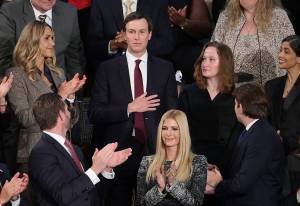
Jared Kushner is acknowledged during the State of the Union on February 24, 2026, in Washington, DC. (Photo by Win McNamee,Getty Images)
“The situation was very quickly approaching the point of no return… based on what Steve and Jared and Pete and others were telling me, Marco is so involved, I thought they were going to attack us,” Trump said, referring to Middle East envoy Steve Witkoff, Secretary of War Pete Hegseth, Secretary of State Marco Rubio, and Kushner, who has no formal title.
“Within a week, [Iran was] going to attack us, 100 percent. They were ready,” Trump said at a different event Monday. “They had all these missiles, far more than anyone thought, and they were going to attack us.”
Witkoff and Kushner were dispatched by Trump to Geneva to participate in mediation with their Iranian counterparts, in what was described as a last-ditch effort to avoid war. Kushner’s participation violated his pledge not to be involved in foreign policy in a second Trump administration. Instead, Kushner had said he was focused on running his private equity fund, Affinity Partners, which has raised billions of dollars from foreign governments.
Kushner’s largest investor is the Saudi Arabian government, which provided Kushner with $2 billion in funding in 2021. Each year, Saudi Arabia pays Kushner 1.25% of its investment, $25 million, as a “management fee.” Meaning he has received in excess of $100 million from the Saudi government over the last few years.
And Witkoff is a Russian asset. I will never forgive the idiots who voted for Trump because they just didn’t want a Black woman to be president.
Trump’s fear of the Epstein files is behind this idiotic war. No one will ever convince me otherwise. Here’s the latest on the Epstein story.
NBC News: Jeffrey Epstein’s New Mexico ranch searched by state investigators.
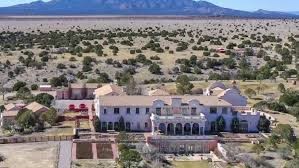
State investigators in New Mexico on Monday searched a 7,600-acre property that once belonged to the late convicted sex offender Jeffrey Epstein.
The search came after documents released under the Epstein Files Transparency Act showed no record of federal investigators ever searching the property, known as Zorro Ranch, despite a number of years-old civil suits that accused Epstein of sexually assaulting girls there — allegations over which he was never charged.
“This search is part of the criminal investigation announced by the New Mexico Department of Justice on February 19th into allegations of illegal activity at Epstein’s ranch prior to Epstein’s 2019 death,” the state agency said in a statement.
“The New Mexico Department of Justice appreciates the cooperation of the current property owners in granting access for the search and extends its thanks to the ranch staff for their professionalism,” the statement said, and will “continue to keep the public appropriately informed, support the survivors, and follow the facts wherever they lead.”
New Mexico Attorney General Raúl Torrez, a Democrat, ordered the search. His office announced its probe into Epstein last month, days after state lawmakers passed legislation to begin their own investigation into Epstein’s activities in the state.
The Legislature’s $2.5 million investigation, which has subpoena power, aims to close gaps in state law that may have allowed Epstein to operate in New Mexico with impunity. The committee is expected to release interim findings in July and a final report by the end of the year.
The bill’s co-sponsor, Democratic state Rep. Andrea Romero, said when the legislation passed last month that Epstein “was basically doing anything he wanted in this state without any accountability whatsoever.”
From Epstein expert Julie K. Brown at The Epstein files: Dead bodies and a long missing 300-year-old church bell: What will they find on Zorro Ranch?
The reach of the mysteries involving Jeffrey Epstein’s Zorro Ranch in New Mexico now span several centuries — as new documents reveal that the FBI’s Albuquerque office was investigating whether Epstein had a stolen historical artifact that dates back hundreds of years stored on his sprawling NM property.
Zorro Ranch
The artifact was a “death bell” that was once housed at the San Jose de Gracia Mission Church in Las Trampas, a village in Northern New Mexico between Sante Fe and Taos. The church was built in 1760 and is considered one of the best examples of Spanish Colonial architecture in the Southwest U.S. It is also a National Historic Landmark.
The lore about the missing church bell only adds to the questions about why the Justice Department never searched Epstein’s ranch back in 2019 — when at least two victims alleged they were sexually assaulted there, and another tipster claimed that two girls’ bodies are possibly buried there….
The “Death bell,” as it came to be called, was smaller than the other bell. During the church’s restoration in the 1930s, the bell was stolen.
In November 2019, Timothy Lopez told the FBI in Albuquerque, New Mexico that he recalled seeing Epstein’s ranch featured in a local real estate magazine in 2014 or 2015. In the photos accompanying the article, he said he noticed a room filed with Spanish Colonial art — and noticed a bell he thought might be the Death bell that had been stolen more than 80 years earlier.
The 7,400-ace property, which Epstein called “Zorro Ranch,” was purchased by Epstein from former New Mexico Governor Bruce King in 1993. The disgraced financier built a hilltop mansion with a private runway on the property, which was sold after Epstein’s death to the family of former Texas state Sen. Don Huffines, who won the Republican primary for Texas state comptroller last week.
After Epstein’s arrest in July 2019, the FBI search Epstein’s Manhattan townhouse, but did not immediately search Epstein’s private island in the Caribbean until after his August 2019 death. They never searched his New Mexico compound, despite having evidence of crimes that occurred there, including the tip about the stolen church bell….
the documents about the sexual assaults that were reported to have occurred on the property led to public outcry in recent weeks. That that led to New Mexico authorities finally on Monday beginning a long overdue search of the property. Of course, by now, any evidence of any sex crimes committed there has likely disappeared just like the long-vanished death bell.
The FBI claimed they abandoned the investigation of Zorro Ranch because they lacked enough evidence to get a search warrant. It will be interesting to see what New Mexico authorities find.
Two more significant stories:
The Washington Post (gift link): Whistleblower claims ex-DOGE member says he took Social Security data to new job.
The Social Security Administration’s internal watchdog is investigating a complaint that alleges a former U.S. DOGE Service employee claimed he had access to two highly sensitive agency databases and planned to share the information with his private employer — a claim that, if true, would constitute an unprecedented breach of security protocols at an agency that serves more than 70 million Americans.
The agency’s inspector general is investigating the disclosure and has alerted members of Congress of its existence, according to a letter by the acting inspector general to top members of four congressional committees reviewed by The Washington Post and two people familiar with the process, who spoke on the condition of anonymity to describe sensitive deliberations. The inspector general’s office has also shared the disclosure with the Government Accountability Office, which has been conducting its own audit of DOGE’s access to data, according to one of the people. The Post has reviewed the complaint and spoken with the whistleblower, who issued the complaint anonymously for fear of retaliation.
According to the disclosure, the former DOGE software engineer, who worked at the Social Security Administration last year before starting a job at a government contractor in October, allegedly told several co-workers that he possessed two tightly restricted databases of U.S. citizens’ information, and had at least one on a thumb drive. The databases, called “Numident” and the “Master Death File,” include records for more than 500 million living and dead Americans, including Social Security numbers, places and dates of birth, citizenship, race and ethnicity, and parents’ names. The complaint does not include specific dates of when he is said to have told colleagues this information, but at least one of the alleged events unfolded around early January, according to the complaint. While working at DOGE, the engineer had approved access to Social Security data.
According to the complaint, he allegedly told the whistleblower that he needed help transferring data from a thumb drive “to his personal computer so that he could ‘sanitize’ the data before using it at [the company.]” The engineer told colleagues that once he had removed personal details from the data, he wanted to upload it into the company’s systems. He told another colleague, who refused to help him upload the data because of legal concerns, that he expected to receive a presidential pardon if his actions were deemed to be illegal, according to the complaint.
The complaint does not allege that the engineer was successful in uploading the data to the company’s system.
The Post is not naming the former DOGE member or company because it has not independently confirmed the accusations in the complaint.
Use the gift link to read more.

Kristi Noem in one of her cosplay costumes
The Daily Beast: Insiders Reveal ICE Barbie Is Leaving DHS With a Major Problem.
Kristi Noem is apparently leaving the Department of Homeland Security with dozens of unsigned contracts on her desk—including payments owed to a facility holding migrant children.
The backlog is the fallout from a policy Noem, 54, imposed that required every DHS contract worth $100,000 or more—which covers nearly all of the agency’s agreements—to receive her personal sign-off before taking effect. The rule proved so disruptive that some vendors began billing the department in chunks of $99,999 each just to get paid.
“There’s a mountain of backed-up contracts and invoices on her desk that the new guy will just have to deal with,” a source familiar with the situation at DHS told Axios.
“From everything that I’ve heard, it’s still a giant s–t show up there,” a source familiar with Federal Emergency Management Agency (FEMA) delays told the outlet, referring to DHS leadership.
“The ramifications of her tenure are going to be felt for years and years and years and years,” the source added. “We’re not really going to know exactly how bad it is until we have a major hurricane that unfortunately impacts someplace in the United States.”
The disruption, Axios says, is already reaching real facilities. At the family detention center in Dilley, Texas—the only long-term immigration facility in the country holding migrants’ children—government payments lapsed in early March, with roughly 700 people detained there as of mid-February.
That’s it for me today. As you can tell, the Iran situation is freezing out other stories.
Take care, everyone.
Lazy Caturday Reads: The Putin-Trump “Summit”
Posted: August 16, 2025 Filed under: just because | Tags: Alaska Summit, Caroline Leavitt, Donald Trump, NATO, Steve Witkoff, Ukraine war, Vladimir Putin, Vladimir Zelensky 7 CommentsGood Day!!
 Well, that was just about what most of us expected. Trump practically bowed down to Putin. Uniformed U.S. troops were seen on their hands and knees setting up a red carpet from Putin’s plane to where Trump stood to welcome him.
When he saw Putin coming, Trump clapped his hands. He was obviously thrilled to see his idol again, and he gave Putin a warm handshake while patting him on the shoulder. Then Putin was invited to ride in the Beast where the two men could talk privately. Or perhaps Putin handed Trump a written message–who knows?
The cats are not happy today.
After the meeting, Putin and Trump appeared at a supposed “press conference,” but no questions from the press were allowed. Traditionally the host speaks first, but Trump deferred to Putin, who gave a dissertation on the history of Russia in Alaska. Putin also agreed with Trump that there never would have been an invasion of Ukraine if Trump had been president. Trump spoke only briefly, and he complained about how the “Russia Russia Russia hoax” interfered with his “fantastic relationship” with “President Putin.”
We were interfered with by the Russia, Russia, Russia hoax. It made it a little bit tougher to deal with, but he understood it. I think he’s probably seen things like that during the course of his career. He’s seen- he’s seen it all. But we had to put up with the Russia, Russia, Russia hoax. He knew it was a hoax, and I knew it was a hoax, but what was done was very criminal, but it made it harder for us to deal as a country, in terms of the business, and all of the things that would like to have dealt with, but we’ll have a good chance when this is over.
Trump also noted that he was going to call NATO and Zelensky to let them know what happened in the meeting.
No questions from the press were allowed. You can read the full transcript at CBS News. It’s not very long.
MSNBC’s Peter Alexander reported that Trump’s entourage did not seem happy after the meeting:
Wow. Witkoff was in the meeting. I hope he leaks about it.
Meanwhile, the Trump people committed a terrible security breach. NPR: Government papers found in an Alaskan hotel reveal new details of Trump-Putin summit.
Papers with U.S. State Department markings, found Friday morning in the business center of an Alaskan hotel, revealed previously undisclosed and potentially sensitive details about the Aug. 15 meetings between President Donald Trump and Russian President Vladimir V. Putin in Anchorage.
Eight pages, that appear to have been produced by U.S. staff and left behind accidentally, shared precise locations and meeting times of the summit and phone numbers of U.S. government employees.
At around 9 a.m. on Friday, three guests at Hotel Captain Cook, a four-star hotel located 20 minutes from the Joint Base Elmendorf-Richardson in Anchorage where leaders from the U.S. and Russia convened, found the documents left behind in one of the hotel’s public printers. NPR reviewed photos of the documents taken by one of the guests, who NPR agreed not to identify because the guest said they feared retaliation….
The first page in the printed packet disclosed the sequence of meetings for August 15, including the specific names of the rooms inside the base in Anchorage where they would take place. It also revealed that Trump intended to give Putin a ceremonial present.
“POTUS to President Putin,” the document states, “American Bald Eagle Desk Statue.”
Pages 2 through 5 listed the names and phone numbers of three U.S. staff members as well as the names of 13 U.S. and Russian state leaders. The list included phonetic pronouncers for all the Russian men expected at the summit, including “Mr. President POO-tihn.”
Pages 6 and 7 in the packet described how lunch at the summit would be served, and for whom. A menu included in the documents indicated that the luncheon was to be held “in honor of his excellency Vladimir Putin.”
A seating chart shows that Putin and Trump were supposed to sit across from each other during the luncheon. Trump would be flanked by six officials: Secretary of State Marco Rubio, Secretary of Defense Pete Hegseth and White House Chief of Staff Susie Wiles to his right, and Secretary of the Treasury Scott Bessent, Secretary of Commerce Howard Lutnick and Special Envoy for Peace Missions Steve Witkoff to his left. Putin would be seated immediately next to his Minister of Foreign Affairs, Sergey Lavrov, and his Aide to the President for Foreign Policy, Yuri Ushakov.
During the summit Friday, lunch was apparently cancelled. But it was intended to be a simple, three-course meal, the documents showed. After a green salad, the world leaders would dine on filet mignon and halibut olympia. Crème brûlée would be served for dessert.
I wonder which side cancelled lunch?
The Russians released embarrassing footage. Sarah Ewall-Rice writes at The Daily Beast: Kremlin Leaks Footage Showing Trump Fawning Over Putin.
The state-run Russian international news network Russia Today (RT) has released behind-the-scenes video from Alaska that appears to show President Donald Trump fawning over Vladimir Putin.
The video shared by the Kremlin shows Trump and Putin standing together backstage near where they delivered public remarks following their three-hour meeting.
Despite walking away without a deal and without sharing any details on progress toward ending the war in Ukraine, the president could be seen laughing as he spoke to Putin.
The only person standing with the two leaders as they spoke was Putin’s translator.
In the video, Trump can be seen offering his hand first to shake hands with Putin. The president then tapped their joined hands with his other hand, embracing Putin with a two-hand shake. He also shook the Russian translator’s hand at the end of the clip.
The Kremlin was quick to release the video. While the White House has been posting a series of clips from the historic visit in Alaska, it has not yet shared any candid video of Trump and Putin together. The White House did not immediately respond to the Daily Beast’s request for comment.
According to RT, the video was taken right after their public remarks, during which neither man took any questions from reporters. It described their behind-the-scenes banter as “light chatter.”
This is also from The Daily Beast, by Farrah Tomazin: Trump Leaves Alaska With Nothing Except a Lecture From Preening Putin.
President Donald Trump has ended his high-stakes Russia summit without announcing a deal to end the war in Ukraine, despite rolling out the red carpet for Vladimir Putin as the first U.S. president in years to invite him to America.
After a ride in the presidential limousine, a military flyover, and three hours of talks, a somewhat subdued Trump told reporters in Alaska: “We didn’t get there—but we have a very good chance of getting there.” [….]
During a press conference lasting only a few minutes, Trump and Putin spoke of an agreement of sorts, but gave no details, took no questions, and made no mention of a ceasefire.
“There’s no deal until there’s a deal,” Trump said. “I will call up NATO in a little while. I will call up the various people that I think are appropriate, and I’ll, of course, call up President Zelensky and tell them about today’s meeting. It’s ultimately up to them.”
The lack of an announcement is likely to fuel claims that Putin was using the meeting as a stalling tactic to stave off further U.S. sanctions.
And, of course, Trump used it as an attempted distraction from the Epstein files.
The Russian authoritarian has been frozen out by the West for years, and his visit has been depicted in Moscow as a win for the Kremlin.
At the press conference, Putin addressed the room first, and then spoke for eight-and-a-half minutes about the history of the two nations, his desire for more business ties with America, and flattered the American president by agreeing that the war would not have happened if Trump had been in office.
He also told reporters that he greeted Trump on the tarmac in Alaska by saying, “Good afternoon, dear neighbor—very good to see you in good health and to see you alive.”
But Putin also made the point that in order to make a “lasting and long-term” end to the war, “we need to eliminate all the primary root causes” of the conflict in Ukraine.
This is viewed as shorthand for Putin’s hardline demands, which have repeatedly been rejected: that Ukraine disarms, gives up a large part of its land to Russia, and swears off joining NATO.
Friday’s summit in Alaska’s Joint Base Elmendorf–Richardson was the first time Putin has been on U.S. soil in 10 years.
It was also the first time a U.S. president has given the VIP treatment to a Russian leader who faces an arrest warrant for war crimes issued by the International Criminal Court as well as being sanctioned by the U.S. government.
This is hilarious. Trump claims that Putin told him he obviously won the 2020 election, and it was rigged because of mail-in voting. Reuters: Trump says Putin agrees with him US should not have mail-in voting.
U.S. President Donald Trump said on Friday his Russian counterpart Vladimir Putin agrees with him that letting voters send in ballots by mail puts honest elections at risk.
Trump, who promoted the false narrative that he, not Democrat Joe Biden, won the 2020 election, cited his agreement with Putin over absentee voting as he pressed his fellow Republicans to try harder to advance overhauls to the U.S. voting system that he has long sought.
Trump has voted by mail in some previous elections and urged his supporters to do so in 2024.
Putin, who has been Russia’s president or prime minister since 1999, was elected to another term in office with 87% of the vote in a 2024 election that drew allegations of vote rigging from some independent polling observers, opposition voices and Western governments. The most formidable opposition leader, Alexei Navalny, died in an Arctic penal colony in 2024.
Imagine taking advice on fair elections from Putin. LOL
Here’s a reaction from Ukraine. The Kyiv Independent: Editorial: That meeting was sickening. Putin loved it.
Sickening. Shameful. And in the end, useless.
Those were the words that came to mind when we watched the Alaska Summit unfold.
On our screens, a blood-soaked dictator and war criminal received a royal welcome in the land of the free — as his attack drones headed for our cities.
In the lead-up to the meeting in Alaska, U.S. President Donald Trump declared he wanted a “ceasefire today” and that his Russian counterpart Vladimir Putin would face “severe consequences” if he didn’t go for it.
Yet after a 2.5-hour closed-door meeting, Trump and Putin emerged to share… nothing. “Progress” was made and some “understanding” reached, but the two didn’t come to an agreement on “the most significant point” — clearly, Ukraine.
Trump didn’t get what he wanted. But Putin? He sure did.
From the moment he stepped off the plane on U.S. soil, the Russian dictator was beaming.
No longer an international pariah, he was finally getting accepted – and respected — by the leader of the free world. Trump’s predecessor once called Putin a murderer; Trump offered him a king’s welcome.
Trump greeted Putin with a red carpet, warm handshakes, a flyover of U.S. bombers, and a backseat limo ride.
The chummy display stood in stark contrast to Trump’s hostile reception of Ukraine’s President Volodymyr Zelensky in the Oval Office six months ago.
Ukraine’s president endured a public shaming. Russia’s was pampered. Both episodes were disgraceful.
Read the rest at the link.
Susan Glasser at The New Yorker: Trump’s Self-Own Summit with Putin.
Glasser begins by describing the buildup and aftermath of the meeting pretty much as I’ve already posted here. Her evaluation of the event:
Sometimes the news is what it seems to be, meaning, in this case: No deal. The day began with a hellish war in Ukraine, with air-raid sirens in Kyiv and fierce battles in the east, and that is how it ended. The only difference is that Putin got one hell of a photo op out of Trump, and still more time on the clock to prosecute his war against the “brotherly” Ukrainian people, as he had the chutzpah to call them during his remarks in Alaska. The most enduring images from Anchorage, it seems, will be its grotesque displays of bonhomie between the dictator and his longtime American admirer.
Right around the time that Trump was on the tarmac, clapping for the butcher of Bucha, his fund-raising team sent out the following e-mail:
The backdrop for this uniquely Trumpian combination of braggadocio and toxic partisanship was, of course, anything but a master class in successful deal-making; rather, the impetus for the summit was the President’s increasing urgency to produce a result after six months of failure to end the war in Ukraine—a task he once said was so easy that it would be done before he even returned to office in January. Leading up to the Alaska summit, nothing worked: Not berating Ukraine’s President, Volodymyr Zelensky, in the Oval Office. Not begging Putin to “STOP” his bombing. Not even a U.S.-floated proposal to essentially give Putin much of what he had demanded. Trump gave Putin multiple deadlines—fifty days, two weeks, “ten or twelve days”—to agree to a ceasefire and come to the table, then did nothing when Putin balked. When his latest ultimatum expired, on August 8th, instead of imposing tough new sanctions, as he had threatened, Trump announced that he would meet Putin in Alaska a week later, minus Zelensky, in effect ending the Russian’s global isolation in exchange for no apparent concessions aimed at ending the war that Putin himself had unleashed.
In the run-up to the meeting, debates raged about the right historical parallel to draw between this summit and its twentieth-century antecedents: Was it to be a replay of Yalta, with two great powers instead of three settling the fate of absent small nations, and with the United States once again signing off on Russia’s dominance over its neighbors? Or perhaps Munich was the better analogy, with Trump in the role of Neville Chamberlain, ceding a beleaguered ally’s territory as the price of an illusory peace? For Ukraine and its supporters in the West, the prospect of a sellout by Trump loomed large.
But history doesn’t repeat so neatly, and certainly not when Trump is involved. He is a sui-generis American President, who, at the end of the day, seemed to have orchestrated a self-own of embarrassing proportions. As ever, Trump’s big mouth offered up the best reminder of what he wanted in Alaska and what he did not get. On Friday morning, as Trump flew out of Washington aboard Air Force One, he told reporters, “I want to see a ceasefire rapidly. I don’t know if it’s going to be today, but I’m not going to be happy if it’s not today.” But, after his long-sought meeting with Putin, as he again boarded Air Force One for the long flight home, this was the chyron on Fox News that greeted him: “No Ceasefire After Trump-Putin Summit.”
Read the rest at The New Yorker. I got past the paywall by using the link at Memeorandum.com.
From Ukraine expert Anne Applebaum at The Atlantic (gift link): Trump Has No Cards. Why would Putin need to make a deal with him?
President Donald Trump berated President Volodymyr Zelensky in the Oval Office. He allowed the Pentagon twice to halt prearranged military shipments to Ukraine. He promised that when the current tranche of armaments runs out, there will be no more. He has cut or threatened to cut the U.S. funds that previously supported independent Russian-language media and opposition. His administration is slowly, quietly easing sanctions on Russia, ending “basic sanctions and export control actions that had maintained and increased U.S. pressure,” according to a Senate-minority report. “Every month he’s spent in office without action has strengthened Putin’s hand, weakened ours and undermined Ukraine’s own efforts to bring an end to the war,” Senators Jeanne Shaheen and Elizabeth Warren wrote in a joint statement.
Many of these changes have gone almost unremarked on in the United States. But they are widely known in Russia. The administration’s attacks on Zelensky, Europeans, and Voice of America have been celebrated on Russian television. Of course Vladimir Putin knows about the slow lifting of sanctions. As a result, the Russian president has clearly made a calculation: Trump, to use the language he once hurled at Zelensky, has no cards.
Trump does say that he wants to end the war in Ukraine, and sometimes he also says that he is angry that Putin doesn’t. But if the U.S. is not willing to use any economic, military, or political tools to help Ukraine, if Trump will not put any diplomatic pressure on Putin or any new sanctions on Russian resources, then the U.S. president’s fond wish to be seen as a peacemaker can be safely ignored. No wonder all of Trump’s negotiating deadlines for Russia have passed, to no effect, and no wonder the invitation to Anchorage produced no result.
There is not much else to say about yesterday’s Trump-Putin meeting in Alaska, other than to observe the intertwining elements of tragedy and farce. It was embarrassing for Americans to welcome a notorious wanted war criminal on their territory. It was humiliating to watch an American president act like a happy puppy upon encountering the dictator of a much poorer, much less important state, treating him as a superior. It’s excruciating to imagine how badly Trump’s diplomatic envoy, Steve Witkoff, an amateur out of his depth, misunderstood his last meeting with Putin in Moscow if he thought that the Alaska summit was going to be successful. It’s ominous that Trump now says he doesn’t want to push for a cease-fire but instead for peace negotiations, because the latter formula gives Putin time to keep killing Ukrainians. It’s strange that Russian reports of the meeting focused on business cooperation. “Russian-American business and investment partnership has huge potential,” Putin said today.
Applebaum notes that Trump had already destroyed any chance Americans had of influencing Putin.
The U.S. has no cards because we’ve been giving them away. If we ever want to play them again, we will have to win them back: Arm Ukraine, expand sanctions, stop the lethal drone swarms, break the Russian economy, and win the war. Then there will be peace.
This is rich, from CBS News: Trump says he will meet with Zelenskyy after “very successful day” with Putin.
President Donald Trump said he will meet with Ukrainian President Volodymyr Zelenskyy at the White House on Monday afternoon to discuss an agreement “which would end the war” between Russia and Ukraine.
The Truth Social post came about half a day after Mr. Trump met with Russian President Vladimir Putin in Alaska. Mr. Trump said the meeting with Putin “went very well.” He also said the meeting was followed by a “late night phone call” with Zelenskyy and other European leaders, including Mark Rutte, the secretary general of NATO. The call took place around 2:40 a.m. ET.
“It was determined by all that the best way to end the horrific war between Russia and Ukraine is to go directly to a Peace Agreement, which would end the war, and not a mere Ceasefire Agreement, which often times do not hold up,” Mr. Trump said.
Mr. Trump did not share any details of the agreement. He said Zelenskyy would join him in the Oval Office on Monday afternoon to discuss the proposal.
European leaders, including French President Emmanuel Macron and British Prime Minister Keir Starmer, said in a statement that they had been debriefed on the meeting with Putin, and said Mr. Trump had supported security guarantees for Ukraine.
“We are clear that Ukraine must have ironclad security guarantees to effectively defend its sovereignty and territorial integrity. We welcome President Trump’s statement that the U.S. is prepared to give security guarantees,” the statement read.
Read more BS at the link.
That’s it for me today. What do you think?
Lazy Caturday Reads: Space Cat Returns, and Some News
Posted: August 9, 2025 Filed under: just because | Tags: Alaska, cat art, caturday, Covid-19, Donald Trump, Harvard University, measles, RFK Jr, Russia, Space Cat, Steve Witkoff, UCLA, Ukraine, vaccines, Vladimir Putin, Volodymyr Zelensky 13 CommentsGood Afternoon!!

Book cover
A couple of Caturdays ago, I posted illustrations from a 1950s children’s book called Space Cat and the Kittens. My brother had shared them with me after he bought the book at a used bookstore. This week, he came across the first book in the four-part series, and I’m going to post some of the illustrations from that book today. I think they are really cute. The story:
A little gray kitten with a taste for adventure stows away on an airplane, and the daring stunt turns out to be his first step toward becoming … Space Cat! The plane’s pilot, Captain Fred Stone, names his fuzzy new friend Flyball and welcomes him to an experimental station set up in the middle of the desert. Flyball enjoys supervising the station’s workers and takes particular interest in the big rocket ship that he’s not allowed to explore. Regardless of the rules, the kitty is determined to hitch another ride, and before you know it, Flyball’s wearing a custom-made pressurized suit and headed for the Moon.
As for the news, everything is awful as usual today. We’re dealing with a “president” who is well on the way of becoming a dictator. He plans to meet with fellow dictator Vladimir Putin to hand over territory in Ukraine; He is allowing his HHS secretary RFK Jr. to endanger Americans with anti-vaccine policies; and he is deliberately damaging American higher education.
Ukraine and Russia
Tyler Pager and David E. Sanger at The New York Times: Trump Says He Will Meet With Putin in Alaska Next Week.
President Trump said he would meet with President Vladimir V. Putin of Russia next Friday in Alaska, as he tries to secure a deal to end the war between Russia and Ukraine.
Mr. Trump announced the meeting Friday shortly after he suggested that a peace deal between the two countries could include “some swapping of territories,” signaling that the United States may join Russia in trying to compel Ukraine to permanently cede some of its land.
“We’re going to get some back, and we’re going to get some switched,” Mr. Trump said while hosting the leaders of Armenia and Azerbaijan for a peace summit at the White House. “There’ll be some swapping of territories to the betterment of both, but we’ll be talking about that either later, or tomorrow.”
The meeting, the first in-person summit between an American and Russian president since President Joseph R. Biden Jr. met with Mr. Putin in June 2021, reflects Mr. Trump’s confidence in his ability to persuade Mr. Putin in a face-to-face encounter, a goal that has eluded Mr. Trump and his predecessors. For Mr. Putin, the meeting itself is a victory after he spent the past several months largely isolated from the international community, with NATO leaders — other than Mr. Trump — refusing to communicate directly with him.

Carrying cat to the rocket
At least he didn’t invite Putin to the White House, but will Putin try to get him to give Alaska back to Russia while they are swapping land in Ukraine?
The meeting also presents a host of challenges. Ukrainian leaders have adamantly opposed relinquishing any of their land to Russia, and the country’s constitution bars President Volodymyr Zelensky of Ukraine from ceding any territory.
There would also be numerous political and military hurdles for Ukraine in turning over land to Russia, as well as questions including security guarantees for Ukraine and the future of frozen Russian assets. And many diplomats have suggested that Mr. Putin may be more interested in dragging out diplomacy to give him time to pummel Ukraine than in securing a peace deal.
White House officials declined to say exactly where in Alaska the two leaders would meet or why Mr. Trump decided to hold the meeting there, though it is the closest U.S. state to Russia. In 2021, the Biden administration held talks with China in Anchorage, Alaska.
Mr. Trump also provided little additional detail about the meeting, what territory could be swapped or the broader contours of a peace deal, saying earlier Friday that he did not want to overshadow the peace pledge between Armenia and Azerbaijan. But he told European leaders earlier this week that he planned to follow up his session with Mr. Putin with a meeting with Mr. Putin and Mr. Zelensky.
The New York Times: Zelensky Rejects Ceding Territory to Russia After Trump Suggests a Land Swap.
President Volodymyr Zelensky of Ukraine on Saturday flatly rejected the idea that Ukraine could cede land to Russia after President Trump suggested that a peace deal between Ukraine and Russia could include “some swapping of territories.”
“Ukrainians will not gift their land to the occupier,” Mr. Zelensky said in a video address from his office in Kyiv, several hours after Mr. Trump’s remarks, which appeared to overlook Ukraine’s role in the negotiations.
“Any decisions made against us, any decisions made without Ukraine, are at the same time decisions against peace,” Mr. Zelensky said. “They will bring nothing. These are dead decisions; they will never work.”
His blunt rejection risks angering Mr. Trump, who has made a peace deal between Ukraine and Russia one of his signature foreign policy goals, even if it means accepting terms that are unfavorable to Kyiv. In the past, Mr. Trump has criticized Ukraine for clinging to what he suggested were stubborn cease-fire demands and for being “not ready for peace.”

Cat in a hammock on spacecraft
What doesn’t anger Trump? Anything except blind loyalty and obedience.
A recent poll by the Kyiv International Institute of Sociology found that more than three-quarters of Ukrainians are against transferring Ukrainian-controlled territory to Russia. When it comes to ceding land that includes territory already under Russian control, opposition drops slightly, with a little more than half of Ukrainians against it, “even if this makes the war last longer and threatens the preservation of independence,” the poll says.
But support for land concessions has grown since Ukraine’s failed 2023 counteroffensive, which underscored its inability to retake substantial territory. About 38 percent of the population thinks ceding land is acceptable now, according to the poll, up from only 10 percent about two years ago.
Russia has long demanded that Ukraine give up four regions in the east and south that Moscow claims to have annexed in late 2022, even though some of that territory remains under Ukrainian control. The Kremlin is particularly intent on seizing full control of the eastern regions of Luhansk and Donetsk, which it has long sought to capture with relentless assaults.
But ceding Luhansk and Donetsk, which are part of an area commonly known as the Donbas region, would create a host of issues for Ukraine. It would mean giving up a region rich in cities and industrial centers that Russia could use as a launchpad to reignite the war.
And Ukraine would have to abandon its main fortified defensive line in northern Donetsk, stretching between the cities of Sloviansk and Kostiantynivka, which has so far withstood Russian assaults.
Nick Paton Walsh at CNN: Trump-Putin summit in Alaska resembles a slow defeat for Ukraine.
Location matters, former real estate mogul US President Donald Trump said. Moments later he announced Alaska, a place sold by Russia to the United States 158 years ago for $7.2 million, would be where Russian President Vladimir Putin tries to sell his land deal of the century, getting Kyiv to hand over chunks of land he’s not yet been able to occupy.
The conditions around Friday’s summit so wildly favor Moscow, it is obvious why Putin leapt at the chance, after months of fake negotiation, and it is hard to see how a deal emerges from the bilateral that does not eviscerate Ukraine. Kyiv and its European allies have reacted with understandable horror at the early ideas of Trump’s envoy, Steve Witkoff, that Ukraine cede the remainders of the Donetsk and Luhansk regions in exchange for a ceasefire.
Naturally, the Kremlin head has promoted the idea of taking ground without a fight, and found a willing recipient in the form of Witkoff, who has in the past exhibited a relaxed grasp of Ukrainian sovereignty and the complexity of asking a country, in the fourth year of its invasion, to simply walk out of towns it’s lost thousands of men defending.
Space cat in freefall
It is worth pausing and reflecting on what Witkoff’s proposal would look like. Russia is close to encircling two key Donetsk towns, Pokrovsk and Kostiantynivka, and may effectively put Ukrainian troops defending these two hubs under siege in the coming weeks. Ceding these two towns might be something Kyiv does anyway to conserve manpower in the months ahead.
The rest of Donetsk – principally the towns of Kramatorsk and Sloviansk – is a much nastier prospect. Thousands of civilians live there now, and Moscow would delight at scenes where the towns evacuate, and Russian troops walk in without a shot fired.
Ukrainian President Volodymyr Zelensky’s rejection of ceding land early Saturday reflects the real dilemma of a commander in chief trying to manage the anger of his military and the deep-seated distrust of the Ukrainian people towards their neighbor, who continues to bombard their cities nightly.
What could Ukraine get back in the “swapping” Trump referred to? Perhaps the tiny slivers of border areas occupied by Russia in Sumy and Kharkiv regions – part of Putin’s purported “buffer zone” – but not much else, realistically.
The main goal is a ceasefire, and that itself is a stretch. Putin has long held that the immediate ceasefire demanded by the United States, Europe and Ukraine for months, is impossible as technical work about monitoring and logistics must take place first. He is unlikely to have changed his mind now his troops are in the ascendancy across the eastern frontline.

Read more analysis at the CNN link.
RFK Jr. is doing untold damage to the health of Americans.
The New York Times: Trump Just Shrugs as Kennedy Undermines His Vaccine Legacy.
During the early days of the coronavirus pandemic in the spring of 2020, President Trump was warned by medical officials that the development of a vaccine that could turn the tide against Covid could be over a year away.
For Mr. Trump, that timeline was not good enough.
He demanded a faster program. The creation of that program, Operation Warp Speed, led to lifesaving vaccines that contained messenger RNA, or mRNA, a synthetic form of a genetic molecule that helps stimulate the immune system. Those vaccines are widely regarded in the scientific community as the quickest way to protect Americans against future threats, including viruses that could mushroom into a pandemic, or man-made menaces, like a bioweapons attack.
Time has marched on and, apparently, so has Mr. Trump in his second term.
This week, the president all but shrugged off an announcement by Robert F. Kennedy Jr., the health and human services secretary and a longtime critic of vaccines, that a research division of his department had slashed $500 million in grants and contracts for work on mRNA vaccines.
“That was now a long time ago, and we’re onto other things,” the president told reporters on Wednesday. Mr. Trump added that his administration is now “looking for other answers to other problems, to other sicknesses and diseases.” He said he was planning to meet with Mr. Kennedy on Thursday to discuss the decision, but by Friday, White House officials did not say whether that meeting took place.

Space cat is first to land on the Moon.
A bit more:
Mr. Trump’s willingness to give Mr. Kennedy the space to impose his views is notable, given that the vaccines were once seen as legacy achievement during Mr. Trump’s first term. But his laissez-faire posture also leaves room for Mr. Trump to position himself in line with the portion of his base that has grown deeply skeptical about the safety and efficacy of vaccines.
In recent months, Mr. Trump has offered little to no public input as Mr. Kennedy fired a 17-member committee at the Centers for Disease Control and Prevention that makes vaccine recommendations; appointed advisers who have rescinded some flu vaccine recommendations; and suggested, contrary to evidence, that many pediatricians make money from vaccines.
Mr. Trump has also said there is nobody better than Mr. Kennedy to explore the debunked theory that vaccines cause autism. Mr. Kennedy is expected to release a report airing those findings in September….
Adm. Brett Giroir, an assistant health secretary in the first Trump administration who was involved in the development of the Covid vaccines, recalled that the president had been “very pro-vaccine,” particularly on matters involving flu preparedness. In 2019, Mr. Trump signed an executive order calling for the modernization of flu vaccines, because “he knew we weren’t as well prepared as we should be.”
Now it’s different. Trump would rather sacrifice millions more American lives than confront his conspiracy-minded followers.
RFK and Trump apparently aren’t concerned about a measles epidemic either. The Wall Street Journal: The Race to Find a Measles Treatment as Infections Surge.
As a record number of people in the U.S. are sickened with measles, researchers are resurrecting the search for something long-deemed redundant: treatments for the viral disease.
After the measles vaccine was introduced in the 1960s, cases of the disease plummeted. By 2000, federal officials had declared measles eliminated from the U.S. This success led to little interest in the development of treatments. But now, as vaccination rates fall and infections rise, scientists are racing to develop drugs they say could prevent or treat the disease in vulnerable and unvaccinated people.
“In America, we don’t like being told what to do, but we like to have options for our medicine chest,” said Marc Elia, chairman of the board of Invivyd, a Massachusetts-based drugmaker that started working on a monoclonal antibody for measles this spring.
Scientists across the country including at biotechs Invivyd and Saravir Biopharma—and institutions such as Vanderbilt University Medical Center and Georgia State University—are in the early stages of measles-treatment development. The drugs are still a ways from becoming available to patients but could offer alternatives to people who are immunocompromised, don’t respond to the measles vaccine or are vaccine skeptics.
Space cat saves astronaut’s life by plugging a hole in his helmet.
Some doctors and researchers warn that measles treatments could further drive the drop in vaccination. Nationally, 92.5% of kindergartners received the measles, mumps and rubella, or MMR, shot in the 2024-25 school year, according to Centers for Disease Control and Prevention data. In 2019-20, the vaccination rate was over 95%, which is the rate encouraged by health authorities to prevent community transmission of measles.
More than 1,300 people, most of them unvaccinated, have been diagnosed with measles this year—a 33-year high.
“One of the motivations of getting the vaccine right now is that there are no treatments,” said Dr. Joel Warsh, a pediatrician who says more research is needed into immunization safety.
Still, Invivyd is betting its measles monoclonal antibody could help curb infections and outbreaks. Unlike the MMR vaccine, which is designed to train the body to make its own antibodies—proteins that help defeat specific pathogens—monoclonal antibodies are lab-made versions that can be delivered intravenously or as an injection and boost immunity immediately.
Antibody treatments could treat someone who is sick or help prevent measles in people recently exposed to the virus. They could benefit newborns and immunocompromised people who can’t be vaccinated, as well as the minority of people who don’t respond to the vaccine or whose immunity has waned. The treatments could offer weeks or months of protection against measles, researchers said.
“Think of it like antivenom after a snake bite,” said Erica Ollmann Saphire, chief executive of the La Jolla Institute for Immunology, whose lab is developing its own monoclonal antibodies for measles. “Even people unsure about vaccines, if they are already sick with measles, getting an antibody treatment could be palatable.”

There’s much more at the link. I got past the paywall by clicking the link at Memeorandum.
Jake Scott, infectious disease physician, at MSNBC: RFK Jr. is attacking the very science that saved millions.
Health and Human Services Secretary Robert F. Kennedy Jr.’s decision to terminate $500 million in federal funding for mRNA vaccine development threatens to unravel one of medicine’s greatest recent achievements. His claim that these vaccines “fail to protect effectively against upper respiratory infections like Covid and flu“ represents a fundamental misunderstanding of vaccinology that could cost lives in future pandemics.
As an infectious disease physician who cared for dozens of critically ill Covid patients in December 2020, I witnessed a remarkable shift in the months that followed. As mRNA vaccines became available in early 2021, severe cases among vaccinated individuals became extremely rare. Deaths were almost exclusively among those who declined vaccination, which was tragic given how preventable these outcomes had become.
Space cat in the moon cave
No vaccine for respiratory viruses has ever provided complete, lasting protection against all infections. Not the flu vaccine. Not RSV vaccines. That never should have been the expectation. Some vaccines, like those for measles or polio, can effectively prevent infection and transmission, but these target fundamentally different viruses that don’t constantly mutate and reinfect the respiratory tract. The purpose of respiratory virus vaccines is to prevent severe disease, hospitalization and death. By that measure, mRNA vaccines have been revolutionary.
The data confirms what I witnessed firsthand. According to research by the Centers for Disease Control and Prevention, unvaccinated individuals had 53 times the risk of death compared to those who had been fully vaccinated during the Delta wave in 2021. A New England Journal of Medicine study analyzing over 6 million Covid cases found that protection against death remained above 90% and remarkably durable, even as protection against infection declined.
In winter 2020, my hospital’s ICU overflowed with COVID patients. Like many colleagues worldwide, I watched patient after patient die despite our best efforts. It was unlike anything any of us had ever seen. By summer 2021, after vaccines rolled out widely, the change was undeniable. Far fewer patients arrived with respiratory failure. Nursing homes saw deaths plummet.
As vaccine expert Paul Offit stated in December 2020: “All you want to do is keep people out of the hospital and keep them out of the morgue and I think this vaccine can certainly do that.” Even then, before vaccines were widely available, experts understood the real goal.

There’s more at the link.
Trump vs. higher education
AP: Trump administration seeks $1 billion settlement from UCLA, a White House official says.
The Trump administration is seeking a $1 billion settlement from the University of California, Los Angeles, a White House official said Friday, after the Department of Justice accused the school of antisemitism and other civil rights violations.
UCLA is the first public university to be targeted by a widespread funding freeze over allegations of civil rights violations related to antisemitism and affirmative action.
President Donald Trump’s administration has frozen or paused federal funding over similar allegations against elite private colleges. In recent weeks, the administration has struck deals with Brown University for $50 million and Columbia University for $221 million but has explored larger settlements, such as in its ongoing battle with Harvard University.
The White House official did not detail any additional demands the administration has made to UCLA or elaborate on the settlement amount. The person was not authorized to speak publicly about the request and spoke on condition of anonymity.
The university had drawn widespread criticism for how it handled dispersing an encampment of Israel-Hamas war protesters in 2024. One night, counterprotesters attacked the encampment, throwing traffic cones and firing pepper spray, with fighting that continued for hours, injuring more than a dozen people, before police stepped in. The next day, after hundreds defied orders to leave, more than 200 people were arrested. Later, Jewish students said demonstrators in encampments blocked them from getting to class.
Read the rest at the link.
The Wall Street Journal: Trump Administration Threatens to Take Over Harvard’s Patents.
The Trump administration is warning Harvard University that it could take over its patents, worth hundreds of millions of dollars, if a review finds the university hasn’t complied with federal law, an escalation of the continuing negotiations between the White House and America’s oldest university.
Commerce Secretary Howard Lutnick sent a letter to Harvard President Alan Garber on Friday, telling him the administration planned to do a thorough review of all patents held by the university.
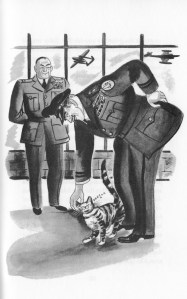
General likes Space Cat.
“We believe that Harvard has failed to live up to its obligations to the American taxpayer and is in breach of the statutory, regulatory, and contractual requirements tied to Harvard’s federally funded research programs and intellectual property arising therefrom, including patents,” the letter says.
A Harvard spokesperson called the move “yet another retaliatory effort targeting Harvard for defending its rights and freedom.” The university’s technology and patents help save lives and redefine industries, and Harvard is committed to complying with all federal laws around the patenting of work from federally funded research, the spokesperson said.
The letter is another point of leverage for the Trump administration in its effort to punish the university for allegedly failing to stop antisemitism on campus. The administration has frozen billions of dollars in Harvard’s federal research money and cut the university off from future grants.
Lutnick told Garber that he had until Sept. 5 to respond with a list of all patents that have stemmed from federally funded research grants and to provide information showing it complied with federal regulations, including a 1980 act by Congress known as Bayh-Dole that allowed institutions to retain ownership of a patent even if the innovation used taxpayer dollars.
A bit more, because of the paywall:
Harvard has more than 5,800 patents, according to its website. In its fiscal year ended in June, the university was issued 159 patents. Startups from Harvard range from pharma and biotech companies to manufacturing.
Federal regulations under Bayh-Dole require a litany of disclosures for a patent, including how the American people benefit from an invention. If a patent holder fails to make these disclosures, the government has the right to take ownership of the invention.
Lisa Ouellette, a law professor at Stanford, said the Trump administration’s move appears to be unprecedented in the four and a half decades of the Bayh-Dole Act. “I have never seen the government step in to reclaim control of a university’s patents in any sense,” she said. The Biden administration considered using a provision of the act to try to lower pharmaceutical prices, but the proposal never came to pass, Ouellette said.
The Trump administration has been in talks with several universities, including the University of California, Los Angeles, Cornell and Northwestern, and sees striking a deal with Harvard as an essential mission. The White House has already reached a $200 million settlement with Columbia and a $50 million deal with Brown.
This is breathtaking.
That’s all I have for today. What’s on your mind?

 peej
peej Carissa
 bostonboomer
 dakinikat
 ecocatwoman
 mablue2
 Mama Lopez
 peggysue22
 quixote
 skydancingguestblogger
 Mona (aka Wonk the Vote)



 Sky Dancing
Recent Comments