
Monday Reads: Descent into White Trash Resentment and its Trumpian Meanness and Madness
Posted: September 4, 2017 Filed under: Afternoon Reads | Tags: DACA, South Korea 27 Comments It’s Labor Day!
This usually means a last, long summer weekend at the beach or around the mountains. Today’s pictures are from the inspired lens of photographer Seph Lawless and the many photographers that photographed the big Pocono resorts during the 60s and 70s. I feel as though we are losing our American way of life much the way that these grand Poconos resorts have fallen into decay and destruction after giving so much to so many. Go check the photo gallery and narrative.
A photographer is sharing what he calls a “heartbreaking” look at some of the resorts that made the Poconos the “Honeymoon Capital of the World.”
Photographer Seph Lawless shared his photos of Penn Hills Resort, Buck Hill Inn, Summit Resort and Unity House with Fox 8 in Cleveland.
While the resorts became super popular starting back in the 1960s, Lawless says times have changed and “the honeymoon is over.” He said many of the most popular resorts in the area are now empty and abandoned.
 Pablo Iglesias Maurer juxtaposes now vs. then postcards and photos too. He’s written a narrative to accompany the gifs he’s created of the postcard views and his journey to capture their eerie “abandoned states”. It’s quite brilliant.
I found the old matchbook lying on a desk.
It was buried under some papers, beside a thick, water-logged book frozen solid in the January chill. I ran my fingers down its spine and read the title: “How to Run A Successful Golf Course.”
The owner of the Penn Hills Resort in the Poconos probably hadn’t followed whatever advice the author had to offer. They boarded the place up years ago, and there’s a gaping hole in the roof of his old office. Muted greens and yellows, shag carpeting peek at me through a sheet of ice.
The matchbook, which looks to be from the 60’s, is about half empty—whoever was sitting here when this place finally went under surely needed a smoke.Its cover is a reminder of better days. Swimmers are frolicking at the resort’s indoor pool, now a scene of trash, mangled deck chairs, a life preserver. I lock eyes with a huge bullfrog who didn’t make it out. He was entombed in the ice.
The matchbook no longer lines up with reality. I look down through the viewfinder of my camera and up again at the matchbook, aligning the two images the best I can. Up (snap) down (snap). It feels like I’m seeing this place in some sort of dystopian View-Master, each image on the wheel darker than the next.
Weeks later, I score a cache of old postcards from the Poconos and Catskills on eBay, the sort that end up in family albums, stuck in some box in the attic. “Our Honeymoon.” In idyllic scenes at Penn Hills, The Homowack Lodge, Grossinger’s, and a fourth resort in the Poconos which we aren’t identifying, vacation-goers and honeymooners frolic in the mountains.
They have a surreal quality. Ephemeral, disposable, they served only one purpose—to let someone know “I’m here. I’m thinking of you.” It feels a bit like social media does sometimes, where you’ll snap a photo of some vista, sometimes to bring those you care about a bit closer to you. And like social media, the postcards manage to be a little impersonal: “I didn’t quite care enough to write a letter.” It’s analog Foursquare, a non-digital check-in.
 Trumpian madness and meanness means DACA and dreamers have been ground beneath the heel of racism and of destroying Obama’s legacy.
President Donald Trump has decided to end the Obama-era program that grants work permits to undocumented immigrants who arrived in the country as children, according to two sources familiar with his thinking. Senior White House aides huddled Sunday afternoon to discuss the rollout of a decision likely to ignite a political firestorm — and fulfill one of the president’s core campaign promises.
The administration’s deliberations on the issue have been fluid and fast moving, and the president has faced strong warnings from members of his own party not to scrap the program.
Trump has wrestled for months with whether to do away with the Deferred Action for Childhood Arrivals, known as DACA. But conversations with Attorney General Jeff Sessions, who argued that Congress — rather than the executive branch — is responsible for writing immigration law, helped persuade the president to terminate the program and kick the issue to Congress, the two sources said.
In a nod to reservations held by many lawmakers, the White House plans to delay the enforcement of the president’s decision for six months, giving Congress a window to act, according to one White House official. But a senior White House aide said that chief of staff John Kelly, who has been running the West Wing policy process on the issue, “thinks Congress should’ve gotten its act together a lot longer ago.”
White House aides caution that — as with everything in the Trump White House — nothing is set in stone until an official announcement has been made.
Trump is expected to formally make that announcement on Tuesday, and the White House informed House Speaker Paul Ryan of the president’s decision on Sunday morning, according to a source close to the administration. Ryan had said during a radio interview on Friday that he didn’t think the president should terminate DACA, and that Congress should act on the issue.
Kremlin Caligula continues to attack and baffle long time allies of our country. From Wapo “Seoul tries to ignore Trump’s criticism: ‘They worry he’s kind of nuts,’ one observer says.”
After North Korea conducted its nuclear test Sunday, Trump tweeted: “South Korea is finding, as I have told them, that their talk of appeasement with North Korea will not work, they only understand one thing!”
Trump did not talk to Moon on the phone Sunday — in stark contrast to the two calls he had with Shinzo Abe, the prime minister of Japan and a leader who has proven much more willing to agree with his American counterpart. This will worsen anxieties in Seoul that Tokyo is seen as “the favorite ally,” analysts said.
Moon, who was elected in May, advocated engagement with North Korea but has also acknowledged the need for pressure to bring the Pyongyang regime back to talks. He has also come around to an agreement between his predecessor and the U.S. military to deploy an antimissile system in South Korea.
Trump’s tweet was widely reported across South Korean media, and Moon’s office responded to the tweet with a measured statement Sunday night.
“South Korea is a country that experienced a fratricidal war. The destruction of war should not be repeated in this land,” it said. “We will not give up and will continue to push for the denuclearization of the Korean Peninsula through peaceful means working together with our allies.”
 It says a lot that a country brutally occupied by Japan less than a century ago thinks more of their friendship than of ours. But then check out Moyers & Company’s montage of “What Trump and his Team have wrecked so far” written by Karin Kamp and Kristin Miller.
Policy attacks on US Labor have been unbelievable given Trump’s populist rants at rallies.
A few months ago, President Donald Trump devoted his weekly address to the beleaguered American employee. “For too long, American workers were forgotten by their government — and I mean totally forgotten,” he said. “My administration has offered a new vision. The well-being of the American citizen and worker will be placed second to none.”
No doubt he’ll come up with more pro-worker blather for Labor Day. Don’t listen. The only way Trump is helping the average employee is if you consider The Simpsons’ Mr. Burns a working stiff.
The rollback of labor rights and protections since Trump took office is staggering. It puts worker safety at risk and guarantees that many workers will earn less, but that’s not all. Measures to help victims of discrimination receive redress are on the scrap heap. Unions are running scared. “It’s a death by a thousand cuts,” explains Heidi Shierholz, a senior economist at the Economic Policy Institute.
Last week, as most of us in the United States were riveted by Hurricane Harvey’s descent on Texas, the Occupational Safety and Health Administration removed from its Internet home page a list of workers who died as a result of workplace injuries, burying it deep within the website. At the same time, it changed how the list is compiled; it will now only include instances where the company was cited for safety violations leading to a worker’s death. Details such as the name of the deceased worker are also no longer considered worthy of inclusion. The Atlanta Journal-Constitution worked out that of the at least 32 Georgia workers it determined died as a result of work-related injuries since October 1 of last year, only two even get a mention on the new list.
 This is the state of our Union. The “US has regressed to developing nation status, MIT economist warns Peter Temin who “says 80 per cent of the population is burdened with debt and anxious about job security”.
America is regressing to have the economic and political structure of a developing nation, an MIT economist has warned.
Peter Temin says the world’s’ largest economy has roads and bridges that look more like those in Thailand and Venezuela than those in parts of Europe.
In his new boo.k, “The Vanishing Middle Class”, reviewed by the Institute for New Economic Thinking, Mr Temin says the fracture of US society is leading the middle class to disappear.
The economist describes a two-track economy with on the one hand 20 per cent of the population that is educated and enjoys good jobs and supportive social networks.
On the other hand, the remaining 80 per cent, he said, are part of the US’ low-wage sector, where the world of possibility has shrunk and people are burdened with debts and anxious about job security.
Mr Temin used a model, which was created by Nobel Prize winner Arthur Lewis and designed to understand developing nations, to describe how far inequalities have progressed in the US.
When applied to the US, Mr Temin said that “the Lewis model actually works”.
He found that much of the low-wage sector had little influence over public policy, the high-income sector was keeping wages down to provide cheap labour, social control was used to prevent subsistence workers from challenging existing policies and social mobility was low.
 It isn’t black and brown people doing this to white America. It’s the Trumps of the country doing it to the rest of us. Jamelle Bouie–writing for Slate says it best. “Trump has never been less popular—and never more clearly the head of a party of racial resentment.”
Seven months into his presidency, Donald Trump is deeply unpopular. In Gallup’s latest poll of presidential job approval, he’s down to 34 percent, a level unseen by most presidents outside of an economic disaster or foreign policy blunder. In FiveThirtyEight’s adjusted average of all approval polling, he stands at 37 percent. And yet, few Republican lawmakers of consequence are willing to buck him or his agenda, in large part because their voters still support the president by huge margins. What we have clearer evidence of now is why. From polling and the behavior of individual politicians, it’s become harder to deny that people support the president not just for being president, but for his core message of white resentment and grievance—the only area where he has been consistent and unyielding.
You see broad Republican allegiance to Trump in the polling. Nearly 70 percent of Republicans say they agree with Trump on the issues. And 78 percent of Republicans say they approve of the president’s overall job performance. Republicans who have bucked or criticized Trump, like Sen. Jeff Flake of Arizona, have jeopardized their political futures as a result.
You also see the degree to which white racial resentment is a key force among Republican voters. Most Republicans, remember, agreed with President Trump’s response to the violence in Charlottesville, Virginia, where he held both sides—white supremacists and counterdemonstrators—responsible for the chaos that claimed the life of one anti-racist protester. In an analysis of recent polling, my colleague William Saletan observes that, across a number of questions gauging racial animus, Republicans generally (and Trump supporters specifically) are most likely to give answers signaling tolerance for racism and racist ideas. Forty-one percent of Republicans, for example, say that whites face more discrimination than blacks and other nonwhite groups (among strong Trump supporters, it’s 45 percent). Ten percent of Republicans and 19 percent of strong Trump supporters have a favorable impression of white nationalists, while 13 percent of the former (and 17 percent of the latter) say it’s “acceptable” to hold white supremacist views.
 Trump wants tariffs and trade wars. He insults our friends. He is willing to throw US nurses, soldiers, workers and students out of the only country and home they have known. His dream is that of a country in ruin and a palace of gold for him and his.
Have a good holiday!
Friday Reads: Nuclear Don and the Duck and Cover Edition
Posted: August 11, 2017 Filed under: morning reads | Tags: Donald Trump is on the Crazy Train, first strike, Guam, North Korea, nuclear war, South Korea 59 Comments Good Morning Sky Dancers!
A year ago seems like eons ago in the new accelerated march to no hope what so ever we have in our ongoing National Nightmare of Atomic Don. I’ve written several ledes to the effect of “Do you know where your nearest bombshelter is” with more of a dramatic, click bait kind’ve style than a serious one. Omens being what they are right now, we’re seeing stuff I haven’t seen since 1962 when I spent a week with my fellow second graders practicing duck and cover in the halls of Herbert Hoover Grade School in Council Bluffs, Iowa. Fortunately, neither President Kennedy or Premier Krushchev were insane. Kim Jong-Un and Donald Trump both belong in asylums (preferably together).
His ultimate motives, like many details of his life, are uncertain. Since taking power, Mr. Kim has yet to travel abroad or host a visit from another head of state. Only a few people outside North Korea have been allowed to meet him, among them the former basketball star Dennis Rodman, a Japanese sushi chef and the vice presidents of Cuba and China.
What little is known of Mr. Kim’s record suggests ruthlessness — and some ideological flexibility.
South Korean intelligence officials say Mr. Kim has executed scores of senior officials, including his own uncle, a wily power broker who had been seen as his mentor. He is also assumed to have ordered the assassination of his half brother, who was poisoned by VX nerve agent at the Kuala Lumpur International Airport in Malaysia in February.
Yet Mr. Kim is also credited with loosening state controls on the economy and engineering modest growth, and regaining some of the public confidence that the dynastic regime enjoyed under his grandfather and lost under his father, whose rule is remembered for a devastating famine.
“Smart, pragmatic, decisive,” Andrei Lankov, a North Korea expert at Kookmin University in Seoul, said of Mr. Kim. “But also capricious, moody and ready to kill easily.”
One subject on which Mr. Kim has not wavered is the nuclear program. His father held out the possibility of scrapping the program in return for economic aid and security guarantees and even struck a deal with the Clinton administration, though the North later violated it. But Mr. Kim has taken a more aggressive approach.
Three of North Korea’s five nuclear tests have come under his watch, and there are signs that the country is preparing for another one. North Korea has also conducted about 80 missile tests under Mr. Kim, more than twice as many as under his father and grandfather combined.
The nation crossed a major threshold with the last two missile tests, on July 4 and July 28, which analysts said demonstrated intercontinental ballistic missiles capable of hitting Alaska and, in the most recent test, the mainland United States.
North Korean state media showed Mr. Kim present at both tests, wearing a suit with a Mao-style collar, surrounded by soldiers and smiling broadly.
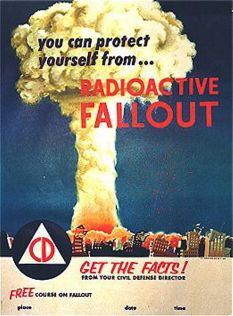 Today, we have an eager belligerent meeting that nuclear threat challenge. Last year’s you would not believe the headlines this morning. This is the kind of bellicose rhetoric that buys us a front seat to war.
Peter Baker / New York Times:
Trump Says Military Is ‘Locked and Loaded, Should North Korea Act Unwisely’Simon Denyer /Washington Post:
Shane Savitsky / Axios:
82% of Americans fear nuclear war with North Korea
The headline that got to me was that the Homeland Security is actively working with Guam on preparing for a potential nuclear attack. I just want to call all the family in Japan and apologize to them for putting them through this again. The Hiroshima and Nagasaki bombings happened on August 6, 1945. It may have ended a war last time. This time, it will not and no one in that region elected a madman US President.
Guam Homeland Security issued a new fact sheet Friday, which the agency says will help residents prepare for an imminent missile threat.
The information was released following this week’s threat by North Korea to launch a missile attack against Guam.
The advice includes tips such as: “Do not look at the flash or fireball – It can blind you” and “Take cover behind anything that might offer protection.”
“Lie flat on the ground and cover your head. If the explosion is some distance away, it could take 30 seconds or more for the blast wave to hit,” the sheet states.
During a press conference at Adelup late Friday afternoon, Gov. Eddie Calvo told reporters that the threat level remains the same and that the island is “safe and sound.”
“There are no changes,” Calvo said. “Everyone should continue to live their lives.”
While the governor said there’s no imminent threat to the island, he said families should still be prepared any situation, including inclement weather, and establish a family emergency plan.
Homeland Security says residents should prepare an emergency supply kit and a family emergency plan. During an imminent missile threat, authorities recommend taking cover as quickly as possible under a concrete structure or below ground after an attack warning is issued.
People should also avoid going outside for at least 24 hours to avoid any possible radioactive material, unless otherwise told by authorities.
If possible, take a shower with lots of soap and water, shampoo but avoid using conditioner that will bind to any radioactive material in your hair, the fact sheet states.
After the explosion, people are encouraged to keep an eye and an ear out for official information so they know where to go, what to do and places to avoid.
You have to wonder if any of the Generals wandering the West Wing approved of the “locked and loaded” rhetoric. Meanwhile, South Korea and the US have a scheduled Military exercise. You also have to wonder if continuing on with that is in any one’s best interest at this point but I’m an economist not a military strategist and yet I wonder every day if you can even do strategy or game theory or even assign probabilities to the unpredictable minds of two mad men.
The annual joint exercises, named Ulchi-Freedom Guardian, have long been planned for 21-31 August, but now come at a time when both Washington and Pyongyang are on heightened alert, raising the spectre of a mishap or overreaction.
The timing is doubly concerning as it is within a timeframe in which Pyongyang says it will be ready to fire four Hwasong-12 intermediate-range ballistic missiles toward the US-run island of Guam, an unusually specific threat against the US.
Washington and Seoul say the exercises, involving tens of thousands of American and South Korean troops, are a deterrent against North Korean aggression.
In the past, the practices are believed to have included “decapitation strikes” – trial operations for an attempt to kill Kim Jong-un and his top generals, further antagonising a paranoid leadership.
Trump kept the pressure up with a tweet on Friday morning threatening Pyongyang but indicating he wanted to avoid hostilities.
A US-led move that brought the United Nations security council to impose broad sanctions on North Korea was passed on Saturday, sparking a furious response from Kim’s regime, promising “thousands-fold” revenge.
Speaking off the cuff, Trump then added further heat by threatening to unleash “fire and fury”, to which Pyongyang responded with its plan to fire four missiles to land in waters near Guam. On Thursday, Trump suggested his comment “maybe … wasn’t tough enough.”
 How could any of this play out?
It’s the no-win situation that can only be imagined by US military officials tasked with preparing for a worst-case scenario — conducting a preemptive strike on North Korea.
With little time to evacuate, millions of innocent citizens would be caught in the crossfire if the US and its regional allies were to initiate a first strike, that would almost certainly result in high casualties on both sides.
Friday morning, President Donald Trump warned on Twitter that “Military solutions are now fully in place, locked and loaded,” though he said “hopefully Kim Jong Un will find another path!”
A military operation would consist of a swift and multi-dimensional attack, as the fight would be defined by the first minute of combat, according to Jerry Hendrix, a retired Navy captain and senior fellow at the Center for New American Security.
While Hendrix has not been briefed on the specifics of a possible preemptive strike option, he told CNN that the operation would likely include several strategies aimed to neutralize North Korea’s defensive and counterstrike capabilities.
Countering North Korea’s relatively formidable surface-to-air missile defense capabilities, stealth American F-22s, F-35s and B-2 bombers would likely lead a joint air campaign with the help of Japanese and South Korean F-15 or F-16 fighters, he said.
Unmanned aircraft could also be used to limit risk to pilots.
 It is surreal to think that the US would ever exercise a first strike ever again. It is naive to think that any one in South Korea or the region would not have their lives ended or upended for years to come. The US has had a strict “No first use” policy in place for decades. China has announced that it would fight a US first strike but not support a NK first strike.
China will prevent the US and South Korea from carrying out strikes on North Korea and trying to overthrow the leadership there, but will remain neutral if Pyongyang launches missiles at American targets first, the state-run Global Times said.
The warning, delivered through an editorial in the Chinese state-run newspaper on Thursday, comes as both the US and North Korea continue to exchange incendiary remarks, raising the risk of overreaction or miscalculation amid the crisis.
Beijing should make it clear that “if North Korea launches missiles that threaten US soil first and the US retaliates, China will stay neutral,” the Global Times wrote.But if the US and its ally South Korea take on Pyongyang and try to “overthrow the North Korean regime and change the political pattern of the Korean Peninsula, China will prevent them from doing so,” the paper stressed.
The widely-quoted newspaper, published by the Communist Party’s official People’s Daily, also noted that the latest developments are seen in Beijing with growing frustration and deep concern.
“If war really breaks out, the US can hardly reap any strategic harvest and North Korea will face unprecedented risks,” the paper cautioned. “North Korea aims to propel the US to negotiate with it, while the US wants to put North Korea in check.”
Beijing was unable “to persuade Washington or Pyongyang to back down at this time,” the Global Times said, adding it primarily pursues peace and stability in the region. All sides involved in the crisis should understand that “when their actions jeopardize China’s interests, China will respond with a firm hand,” the government paper explained.
China – North Korea’s long-standing economic partner and ideological ally – reiterated on Friday that all sides involved in the crisis must “speak and act with caution” as well as build up trust rather than “taking turns in shows of strength,” according to a Foreign Ministry statement quoted by Reuters.
I for one join the 82%. Wall Street has taken notice too. Stocks will likely fall for a 4th day in a row. I don’t trust anything coming out of the White House because the President is insane. It’s time Republicans stand up for sanity and our country.
What’s on your blogging and reading list today?
Thursday Reads
Posted: December 23, 2010 Filed under: Barack Obama, legalizaton of drugs, morning reads, U.S. Politics | Tags: Christmas, Festivus, George W. Bush, John Boehner, Laura Bush, Marijuana, North Korea, Pat Robertson, Seinfeld, South Korea 96 CommentsHappy Festivus Everyone!!!
A little more about the Festivus tradition from Wikipedia:
Festivus is a secular holiday celebrated on December 23 as “another way” to celebrate the holiday season without participating in its pressures and commercialism[1]. It was created by writer Dan O’Keefe and introduced into popular culture by his son Daniel, a screenwriter for the TV show Seinfeld,[2][1] as part of a comical storyline on the show. The holiday’s celebration, as shown on Seinfeld, includes an unadorned aluminum “Festivus pole,” practices such as the “Airing of Grievances” and “Feats of Strength,” and the labelling of easily explainable events as “Festivus miracles”.
Celebrants of the holiday sometimes refer to it as “Festivus for the rest of us,” a saying taken from the O’Keefe family traditions and popularized in the Seinfeld episode to describe Festivus’ non-commerical aspect.
[….]
The holiday, as portrayed in the Seinfeld episode and now celebrated by many,[1][5] includes practices such as the “Airing of Grievances,” which occurs during the Festivus meal and in which each person tells everyone else all the ways they have disappointed him or her over the past year. After the meal the “Feats of Strength” are performed, involving wrestling the head of the household to the floor, with the holiday ending only if the head of the household is actually pinned.
The original holiday featured more peculiar practices, as detailed in the younger Daniel O’Keefe’s book The Real Festivus. The book provides a first-person account of an early version of the Festivus holiday as celebrated by the O’Keefe family, and how O’Keefe amended or replaced details of his father’s invention to create the Seinfeld episode.
We’re getting really close to that other holiday, Christmas. Through most of my adult years, I found the Christmas season extremely stressful. Frankly some of my happiest Christmases have been years when I spent the day alone. In recent years, I’ve gotten quite a bit closer to my siblings and I’ve enjoyed some family Christmases; but when all of us get together it can still be pretty crazymaking.
This year I’ll be going to my sister’s house with my mom. I’m hoping it will be quiet and peaceful, and I’m hoping the snowstorm we’re expecting won’t be too bad. We lost my dad in March, so this will be the family’s first Christmas without him. I know that will be really hard for all of us, especially my mom.
I’m not going to go through all the legislation that passed yesterday or write about President Obama’s self-congratulatory press conference. I think we should keep it light today. I’m just going to throw out a few links that I found interesting and let you all do the same in the comments.
I really got a kick out this article at Buzzflash by Peter Michaelson, a psychotherapist from Ann Arbor, MI: The Tracks of John Boehner’s Tears.
According to Michaelson, Boehner’s frequent “crying jags” stem from his troubled childhood.
Boehner cries a lot in public, even when debating bills in the House. He cries when he talks about his humble past. Son of a bar owner, he grew up with 11 siblings in a two-bedroom house with a single bathroom. He said recently on “60 Minutes” that he no longer visits schools or even looks at kids playing outside because he immediately starts crying.
[….]
Boehner had a scrappy upbringing, running cases of beer and mopping the floor in his father’s bar. He put himself through school, “working every rotten job there was.” The circumstances of his childhood, along with his manner of describing it, strongly suggest that, at times, he felt unappreciated, disrespected, and lacking in value.
Since Boehner rarely does anything to help deprived children, why does he burst into tears when he sees them? Michaelson see this as a form of projection.
When Boehner cries around kids, he’s not necessarily feeling their pain. He’s not seeing the world through their eyes. Rather, he’s imagining that they’re seeing the world through his eyes, through the self-doubt and pain with which he saw the world as a child. Unconsciously, he experiences himself and his political life in ways that are under the influence of these unresolved negative feelings.
He sees the children through what is unresolved in himself, through the pain he has repressed from his childhood. He’s also likely crying with relief because, unconsciously, he believes that, through his elevation to fame and power, he has liberated himself from those haunting feelings.
It’s an interesting hypothesis. We’ll probably learn a lot more about Boehner when he becomes Speaker of the House–probably a lot more than we ever wanted to to know. I wonder if he’ll cry frequently while going about his Speaker duties? I’ll bet he cries during the swearing in anyway.
Last night some moron drove his Plymouth Barracuda onto the North Dallas lawn of Mr. and Mrs. George W. Bush.
A suspect accused of driving a muscle car erratically onto the lawn at former President George W. Bush’s north Dallas home Wednesday night was detained by the Secret Service.
The former president and former first lady Laura Bush were in the Preston Hollow neighborhood home at the time but were unharmed and never in danger, officials told NBC station KXAS.
That must have been exciting.
Have you heard about the new Broadway sensation, “Spiderman: Turn Off the Dark?” There have been so many mishaps with this production that they had to call off Wednesday’s scheduled performances.
The Broadway musical “Spider-Man: Turn Off the Dark” canceled its two Wednesday performances to test a new safety plan for the show’s 38 aerial and stage maneuvers, which involve actors hoisted or tethered in harnesses, including the maneuver that failed at Monday night’s performance when a stunt actor fell more than 20 feet and broke his ribs.
By canceling the performances at a cost of roughly $400,000 in ticket sales, and by adopting safety measures recommended by state and federal officials, the producers of “Spider-Man” sought to project a sense of urgency and understanding that action was needed to make the show safer. While the producers said that Thursday night’s performance would go on, they also committed, according to state safety officials, not to hold performances until the new measures were in place. The state officials said the plan could be tested successfully by Thursday night.
Under the plan, one offstage crew member will attach the harness and related cables, wires or tethers to the actors, and a second stagehand will verify that the attachments are made. That second stagehand will then verbally notify a stage manager that they are safely connected. The actor will also verify that the attachment is made. Previously, there was no second stagehand to verify or communicate with the stage manager, and the actor was not required to check his harness.
Well I sure hope everything works out okay…
Did you know that “Rev.” Pat Robertson supports legalization of marijuana?
“We’re locking up people that have taken a couple puffs of marijuana and next thing you know they’ve got 10 years with mandatory sentences,” Robertson continued. “These judges just say, they throw up their hands and say nothing we can do with these mandatory sentences. We’ve got to take a look at what we’re considering crimes and that’s one of ’em.
“I’m … I’m not exactly for the use of drugs, don’t get me wrong, but I just believe that criminalizing marijuana, criminalizing the possession of a few ounces of pot, that kinda thing it’s just, it’s costing us a fortune and it’s ruining young people. Young people go into prisons, they go in as youths and come out as hardened criminals. That’s not a good thing.”
Hmmm….could this explain where Robertson gets his wacky ideas about the causes of hurricanes and terrorist attacks?
Here’s one more goofy story, and then I’ll let you guys take over. From The Independent UK: North Korea threatens to attack South over Christmas lights
Seasonal goodwill is in short supply on the divided Korean peninsula, where both sides are again at potentially deadly loggerheads – over a Christmas tree.
North Korea’s military is reportedly preparing to shoot down a floodlit tower decorated with Christmas lights which overlooks the border near the South’s capital, Seoul – home to millions of Christians.
The provincial governor, Kim Moon-soo, has warned that firing at the tree would be a reckless and “provocative” act. The South’s Defence Minister was more blunt. “We’ll retaliate decisively to take out the source of any shelling,” Kim Kwan-jin told parliament yesterday. South Korea’s Yonhap news agency said fighter jets were on standby, ready to strike back.
OK, that’s it for me, except for this gratuitous kitty picture.

What are you reading this morning? Feel free to post links to serious stories, if you must.

 peej
peej Carissa
 bostonboomer
 dakinikat
 ecocatwoman
 mablue2
 Mama Lopez
 peggysue22
 quixote
 skydancingguestblogger
 Mona (aka Wonk the Vote)



 Sky Dancing
Recent Comments