
Monday Reads: Police Brutality Edition
Posted: August 11, 2014 Filed under: American Gun Fetish, morning reads, racism, SWAT teams | Tags: Ferguson MO, militarization of police, NYPD, Police deadly force, shootings at Walmart 41 CommentsGood Morning!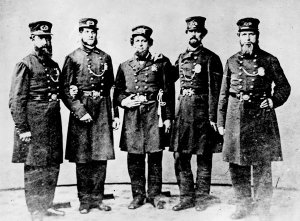
I don’t know about you, but I’m getting tired of all the stories about America’s out of control Police Departments. The last few weeks have been especially illustrative of police departments that use deadly force first and cover it all up later. There’s just one story after another of police shooting and killing unarmed citizens and hapless dogs. Almost immediately afterwards, we get some kind of arrest, story, or whatever that says the police acted righteously. Why are so many unarmed people being killed by heavily armed police officers? WTF is going on?
There are four recent incidents where the police used deadly force in highly questionable situations. The first shooting is from Texas, the second from Ohio, the third is a strangling in New York City, and the latest shooting is from Missouri. This is obviously a national problem.
First up, an off duty officer killed a teen supposedly shoplifting in a Walmart after seeing a few security guards chase the teen out the door. Was deadly force really necessary over a smart phone cover? This sounds a lot like the Zimmerman defense if you ask me. This young man was Latino.
A 19-year-old shoplifting suspect in Conroe was shot and killed by an off-duty sergeant who said the teen choked him to the point of nearly passing out, police said.
The Conroe Police Department said officers were dispatched to the Walmart on N. Loop 336 W after store employees tried to stop a young man, Russell Rios, who allegedly stole a pair of iPhone cases early Wednesday evening.
Off-duty police Sgt. Jason Blackwelder was briefed by the workers and chased down the suspect in a wooded area southwest of the store, according to police.
Once in the woods, the suspect and the officer became engaged in a very intense struggle, and at one point the officer was being choked by the suspect, said Sgt. Dorcy Riddle. … to the extent that he thought he was going to lose consciousness.
Blackwelder fired his weapon, striking Rios and killing him. The sergeant was treated for minor injuries at the hospital and later released.
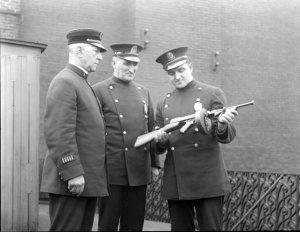 This actually was the second shooting involving a Walmart. This one involved a black teenager examining a Toy Gun. Now mind you, we had weeks of open carry assholes carrying actual loaded semi-automatic weapons around stores. Only the shoppers felt threatened by these jerks. However, those were all white folks toting the real thing so the security guards must’ve have thought it was no big deal.
As it turns out, John Crawford, the man shot dead by police was killed after doing nothing more than picking up a toy gun in the store.
Crawford, 22, was identified, in part by the mother of his child, who he was on the phone with at the time police shot him dead.
That woman, LeeCee Johnson, said Crawford went to the area to visit family members.
“We was just talking. He said he was at the video games playing videos and he went over there by the toy section where the toy guns were. And the next thing I know, he said ‘It’s not real,’ and the police start shooting and they said ‘Get on the ground,’ but he was already on the ground because they had shot him,” she said, adding: “And I could hear him just crying and screaming. I feel like they shot him down like he was not even human.”
Last month, an NYPD office strangled an unarmed black man with an illegal chokehold even while he was telling them he could not breathe. The  incident was videotaped. The police later arrested the videographer and the man’s wife in unrelated charges seemingly to put their testimony in any court case against the choker into question.
Confronted by police trying to arrest him for allegedly selling illegal cigarettes, Eric Garner raised both hands in the air and, with passive defiance, told the officers not to touch him. Seconds later, a video shows the officer behind him grab the 350-pound man in a chokehold and pull him to the sidewalk, rolling him onto his stomach.
“I can’t breathe! I can’t breathe!” Garner said repeatedly, his cries muffled into the pavement.
The video of the Thursday skirmish shows the Staten Island man lying on the ground motionless after the incident. An asthmatic, Garner was later declared dead at a nearby hospital, according to CNN affiliate WCBS. Police said he suffered a heart attack and died en route to the hospital.
“This is a terrible tragedy that occurred yesterday. A terrible tragedy that no family should have to experience,” said New York Mayor Bill de Blasio, calling the video of the incident “very troubling.”
Police told WCBS that 43-year-old Garner, a father of six, had a lengthy criminal history and had been previously arrested for selling untaxed cigarettes in May.
Officer Daniel Pantaleo, who is seen on video choking Garner, was put on modified assignment and stripped of his shield and gun as the New York Police Department continues to investigate the incident, WCBS reported. The chokehold tactic is prohibited by the NYPD.
The most recent shooting involved an unarmed black teen who was being harassed by the police for not getting on the sidewalk. This young man was  two days away from his first year in college.
An unarmed black teenager fatally shot Saturday by a police officer in Ferguson, Mo., had been struggling for the officer’s gun, law enforcement officials said Sunday as hundredLs of protesters gathered outside the police department.
St. Louis County Police Chief Jon Belmar said the youth, Michael Brown, 18, allegedly struggled for a Ferguson police officer’s weapon in a patrol car before the officer fired several shots about noon Saturday. Witnesses have said the youth had his hands in the air as he fled the patrol car.
Brown’s mother said she didn’t understand why police didn’t subdue him with a club or Taser.
“I would like to see him fired,” Lesley McSpadden told the Associated Press, referring to the officer who shot her son. “I would like to see him go to jail with the death penalty.”
Belmar said there would be a thorough investigation, with possible inclusion of the FBI. Because Brown is African American, the National Assn. for the Advancement of Colored People has said it would seek a federal investigation.
 Is this part and parcel of the militarization of police happening since 9/11 or is it an outcropping of the rampant, outrageous racism that has been noticeable since the country elected its first black president? I can remember being in Denver about two years ago during an Occupy march. I also remember watching tons of riot police in military vehicles rushing around the downtown streets to intercept what was obviously a peaceful gathering of Americans in keeping with our constitutional rights. But, SWAT raids are commonplace these days.
It’s 3:00 a.m. Your children are screaming and your dog is lying dead in a pool of blood. Scorch marks and shattered glass cover the floor. You’re being held at gunpoint by towering figures wearing black and holding AK-47s.
This isn’t a Hollywood movie set. Odds are this is a predawn SWAT raid targeting a family of color. Mission objective: search the home for a small amount of drugs.
There are an estimated 45,000 SWAT raids every year. That means this sort of violent, paramilitary raid is happening in about 124 homes every day – or more likely every night – not in an overseas combat zone, but here in American neighborhoods. The police, who are supposed to serve and protect communities, are instead waging war on the people who live in them.
Our new report, War at Home: The Excessive Militarization of American Policing, takes a hard look at 800 of these raids – or at least what state and local law enforcement agencies are willing to tell us about them. We found that almost 80% of SWAT raids are to search homes, usually for drugs, and disproportionately, in communities of color. During these drug searches, at least 10 officers often piled into armored personnel carriers. They forced their way into people’s homes using military equipment like battering rams 60 percent of the time. And they were 14 times more likely to deploy flashbang grenades than during SWAT raids for other purposes.
Public support for the failed War on Drugs is at its lowest ever, and yet police are still using hyper-aggressive tactics and heavy artillery to fight it. This paramilitary approach to everyday policing brutalizes bystanders and ravages homes. We reviewed one case in which a young mother was shot and killed with her infant son in her arms. During another raid, a grandfather of 12 was killed while watching baseball in his pajamas. And we talked with a mother whose toddler was covered in burns, shot through with a hole that exposed his ribs, and placed into a medically induced coma after a flashbang grenade exploded in his crib. None of these people was the suspect. In many cases like these, officers did not find the suspect or any contraband in the home.
Even if they had found contraband, the idea of cops-cum-warriors would still be deeply troubling. Police can – and do – conduct searches and take suspects into custody without incident, without breaking into a home in the middle of the night, and without discharging their weapons. The fact is, very few policing situations actually require a full SWAT deployment or a tank. And simply having drugs in one’s home should not be a high-risk factor used to justify a paramilitary raid.
We can no longer accept such brutal tactics as a routine way to fight the War on Drugs. It’s time for an exit strategy.
All too often, the worst police behavior is aimed at minority communities. 
Jason L. Riley is a Wall Street Journal columnist and vocal critic of what hecalls “race hustlers”—“the second and third-tier types” who lead the civil rights groups of the present.
For him, the greatest barriers to black advancement aren’t economic disadvantage and persistent discrimination, they’re “anti-social behavior” and “counterproductive attitudes toward work, school, marriage, and so forth.”Last Friday, Riley responded to Al Sharpton’s call for criminal justice reform with this Twitter broadside: “Liberals want to discuss black incarceration rates but not black crime rates,” he said. “Stop pretending the two are unrelated.” The implication is that black criminality is to blame.
There’s no question that relative to their population, black Americans hold adisproportionate share of arrests and convictions for crime. But it’s important we don’t confuse that with a propensity for crime. Put another way, black overrepresentation in crime statistics has as much to do with policing and the legal process as it does with the actual crimes committed.
For millions of black and Latino New Yorkers, the city is a literal police state.
It’s worth noting that just a few hours after Riley made his assertion, the New York City medical examiner ruled Eric Garner’s death a homicide by chokehold. If you haven’t followed the coverage, Garner was killed in July during a struggle with Staten Island police officers. Because a witness (who was later arrested on gun charges) videotaped the encounter, we know that the 43-year-old father of six had just stopped a fight, and was agitated by the police presence. “Every time you see me, you try to mess with me,” he said to the officers, protesting prior treatment. “This stops today.” Within minutes, police had placed Garner in a chokehold and wrestled him to the ground, where he struggled, gasped for air, and died.
Bystanders would catch two other instances of police violence over the next week. In the first, an officer is seen stomping on the head of a man arrested for marijuana possession, and in the second, an officer is shown using a chokehold on a pregnant woman after she grilled food on the sidewalk outside of her home (which, apparently, is against the law in New York City).
The reason for these stops is a policing approach called “broken windows,” first articulated by scholars James Q. Wilson and George L. Kelling in a 1982 Atlantic Monthly essay and later adopted by the NYPD in 1993. Broken windows prioritizes cracking down on minor offenses on the theory that doing so can preempt serious crime. Or, to use the metaphor of the idea, actual broken windows create the appearance of disorder, which creates actual disorder as criminals take advantage of the inviting environment. Rather than wait for the serious crimes to begin, police should “repair the windows”—focus on petty crime like loitering, and you’ll stop the worse crime from taking hold.
It’s an elegant concept, but there’s little evidence it works. “Taken together,” notes a 2006 study from the University of Chicago, “the evidence from New York City and from the five-city social experiment provides no support for a simple first-order disorder-crime relationship as hypothesized by Wilson and Kelling nor for the proposition that broken windows policing is the optimal use of scarce law enforcement resources.” Yes, the massive New York crime decline of the 1990s coincided with broken windows policing, but chances are it had more to do with a reversion to the mean (“what goes up, must come down, and what goes up the most, tends to come down the most”) than any new approach.
If broken windows were just a waste of resources, it wouldn’t be a huge concern. But as a policy, broken windows has also had the effect of terrorizing black and Latino New Yorkers.
Perceptions of urban “disorder” are tied tightly to race and have been for more than a century (as detailed in sociologist Khalil Gibran Muhammad’s The Condemnation of Blackness: Race, Crime, and the Making of Modern Urban America). As we’ve seen on a regular basis—from Jonathan Ferrell to Renisha McBride—people of color, and blacks in particular, are feared as criminal in ways their white counterparts aren’t.
This is one of the most enlightening quotes I’ve seen for some time. The police union’ associate basically believes that resisting arrest is a reason to use deadly force. This is in regards to Garner’s death outlined above.
The police officer who killed a Staten Island dad with a prohibited chokehold was just doing what he had been trained to do.
So claimed Pat Lynch, president of the Patrolmen’s Benevolent Association, in strident and eyebrow-raising defense Tuesday of NYPD officers, during which he called the medical examiner’s conclusions about Eric Garner’s death “absolutely wrong.”
“It is not a chokehold,” Lynch insisted. “It was bringing a person to the ground the way we’re trained to do to place him under arrest.”
Lynch, who is not a doctor, also said the ME’s office was “mistaken” when it concluded after an autopsy that the 43-year-old Garner’s death was a homicide.
“I’ve never seen a document that was more political than that press release by the ME,” Lynch said. “Chokehold. That’s not a medical term.”
Lynch also ripped Mayor de Blasio for not backing the officers in this case. “The mayor needs to support New York City police officers unequivocally,” he said.
De Blasio defended the ME, calling the office “the gold standard in this country for the work they do.”
Lynch’s remarks appeared to be aimed at taking the heat off Officer Daniel Pantaleo, who was caught on a shocking cellphone video wrapping an arm around Garner’s neck and dragging him to the pavement.
“I can’t breathe!” Garner could be heard yelling. “I can’t breathe!”
That video sparked nationwide outrage and Pantaleo was yanked off the street as the Staten Island prosecutor launched an investigation. Pantaleo has not been charged with a crime.
Lynch said Garner had been stopped a week earlier by police officers for peddling unlicensed cigarettes on the street.
“He was warned to stop the illegal sale and was not placed under arrest but was warned, admonished and sent on his way,” Lynch said.
So Garner knew he was in big trouble when cops caught him selling loosies again, the union president said.
“But the next week he said he wasn’t going to be arrested,” Lynch said.
Flanked by Sergeants Benevolent Association President Ed Mullins, Lynch decried the “insulting and unjustified manner in which police officers are being portrayed by politicians, race baiters, pundits and even our elected officials.”
I’m not sure what exactly the answer is to all of this, but I will say that you cannot ignore the obvious patterns playing out all over the country. The  message they are sending is Resist and Die.
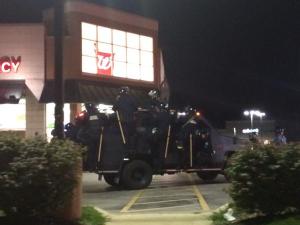 So, as I write this, I’ve found out that 49 year after the Watts Riots, Ferguson MO–a primarily black community close to St Louis–has erupted in riots. That’s the SWAT group patrolling the area outside a Walgreen’s that I’ve juxtaposed to an old photo of Watts.
What started as a peaceful prayer vigil Saturday evening to remember a young man gunned down by police, has escalated into full scale riots and looting in Ferguson, Missouri.
Angry mobs have smashed windows, set fires and looted businesses as a massive showing of police, some wearing riot gear have moved into the area along West Florissant just south of 270.
Police are also responding to reports of shootings throughout the area. At one point, windows of a News 4 live truck were smashed out by the angry crowd.
Raw Video: Exclusive interview with witness of looting in Ferguson
There are reports that police have dispersed the crowd in Ferguson, but the mobs have moved into some neighboring communities.
News video and amateur video from the scene have captured mobs of crowds racing into stores and businesses and then rushing out with armloads of stolen goods.
Tear gas has reportedly been used by police in some areas.
Two groups of protesters gathered around 8:00 Sunday night in Ferguson to bring awareness to the death of Michael Brown, 18, who was shot and killed by police Saturday.
At least fifteen area police agencies have been called to Ferguson. Police set up a staging area at West Florissant and Ferguson Road. Police are also staging at the Plaza at the Boulevard parking lot, where officers are seen putting on riot gear. Dozens of police vehicles are on scene, from all over St. Louis County, including Chesterfield, Country Club Hills and the Missouri Highway Patrol.
What’s on your reading and blogging list today?

 peej
peej Carissa
 bostonboomer
 dakinikat
 ecocatwoman
 mablue2
 Mama Lopez
 peggysue22
 quixote
 skydancingguestblogger
 Mona (aka Wonk the Vote)



 Sky Dancing
Recent Comments