
Thursday Reads: Molly Ivins, Governor Goodhair, Corporate Crime, and Heroes
Posted: August 18, 2011 Filed under: 2012 presidential campaign, Corporate Crime, George W. Bush, morning reads, Republican presidential politics, U.S. Economy, U.S. Politics | Tags: Antonio Diaz Chacon, Bill Clinton, Bush-Perry feud, Citi, corporate crime, George W. Bush, Governor Goodhair, heroes, Howard Dean, Indonesia, Jesus Lara, Karl Rove, Matt Taibbi, Mexican border, Molly Ivins, murder, Predator drones, Republican presidential wannabes, Rick Perry, SEC, Texas 45 Comments
Good Morning!! I’m going to be leaving for a two-day drive to Indiana either today or tomorrow, so I’m a bit meshugge this morning. Please be patient with me. Let’s see what’s in the news.
From what I can see, it’s mostly Rick Perry. And I must say, I find “Governor Goodhair” endlessly fascinating. He’s more of a gaffe-machine than Joe Biden–and that’s really saying something. Molly Ivins gave Perry that nickname. I miss her so much. So I was thrilled when I cam across this article in the Sacramento Bee:
Molly can’t say that about Rick Perry, can she? It’s a collection of quotes on Perry from Ivins. Here’s one:
June 24, 2001
First, we Texans would like to salute the only governor we’ve got, Rick “Goodhair” Perry, the Ken Doll, for vetoing the bill to outlaw executing the mentally retarded.
We are Texas Proud.
Such a brilliant decision – not only is Texas now globally recognized for barbaric cruelty, but a strong majority of Texans themselves (73 percent) would prefer not to off the retarded.
Gov. Goodhair’s decision – in the face of popular opinion, the Supreme Court and George W. Bush’s recent conversion on this subject – is a testament to his strength of character.
Or something.
His Perryness announced, anent the veto, that Texas does not execute the retarded. I beg your pardon, Governor. Johnny Paul Penry, now on Death Row for a heart-breaking murder and the subject of two Supreme Court decisions, has an IQ between 51 and 60, believes in Santa Claus and likes coloring books.
We will never have another political writer like Molly.
Yesterday Perry “challenged” Obama on border security.
Perry, who was on his second trip to New Hampshire as a presidential candidate, criticized President Obama for his assertion during a speech in El Paso, Tex. in May that his administration had “strengthened border security beyond what many believed was possible.”
“Six weeks ago the President went to El Paso and said the border is safer than it’s ever been,” Perry said. “I have no idea, maybe he was talking about the Canadian border.”
Perry thinks we should use Predator Drones to deal with illegal immigration.
“I mean, we know that there are Predator drones being flown for practice every day because we’re seeing them, we’re preparing these young people to fly missions in these war zones that we have. But some of those, they have all the equipment, they’re obviously unarmed, they’ve got the downward-looking radar, they’ve got the ability to do night work and through clouds. Why not be flying those missions and using (that) real-time information to help our law-enforcement? Becuase if we will commit to that, I will suggest to you that we will be able to drive the drug cartels away from our border.”
Apparently the Governor of Texas did not know that the Department of Homeland Security has already been using Drones to patrol the Mexican border for years.
I’m not that up on Texas politics, but I’m beginning to get the idea that the Bush crowd doesn’t care much for Rick Perry. According to Elspeth Reeve at The Atlantic, Bush’s Crew Is Gunning for Rick Perry
Is Rick Perry “another George W. Bush”? In reality, Bush was more of a fake Perry, the Texas version of a studio gangster, clearing brush in his cowboy boots despite his prep school background. It helps explain why Bush’s allies and Perry’s allies don’t like each other very much: the Bush-loving Republican establishment sees Perry as “the low-rent country cousin,” the Los Angeles Times reports. And it explains why Karl Rove (who once worked for Perry, before helping Bush become president) went on Fox News to criticize Perry for calling the Federal Reserve treasonous — and to wish for more candidates to enter the 2012 race.
You’ll need to go to the link to read all about the Bush-Perry feud. In addition, Howard Dean told The Hill that the “Bush camp will take Perry out.”
Former Democratic National Committee Chairman Howard Dean predicted that prominent political supporters of former President George W. Bush will deal a critical blow to Texas Gov. Rick Perry’s (R) presidential campaign.
“The Bush people don’t fool around, as you know,” Dean said Tuesday night on MSNBC. “You can say a lot of things about Bush’s presidency and his failures as president, but one thing nobody should say [anything] bad about [is] his political team. They know what they’re doing, and they are ruthless, and they are going to take Perry out.”
Here’s Bill Clinton’s opinion on Rick Perry’s presidential ambitions:
—————————————————-
Do you have a Citi credit card? Better watch out
TANGERANG, Indonesia — Irzen Octa, a down-on-his-luck Indonesian businessman, suffered a torment familiar to millions of Americans struggling with debts racked up in better times: He feared losing his home.
In the end, he managed to keep the ramshackle two-story house where he and his wife raised their two now-teenage daughters. Instead, Octa, pursued by Citibank over a $5,700 debt on his platinum credit card, lost his life.
The 50-year-old businessman, invited to a Citibank office in Jakarta in late March, collapsed in a tiny room set aside by the U.S. bank for questioning of deadbeat debtors. He died shortly afterward — a casualty of a “harsh interrogation,” said Jakarta police spokesman Baharudin Djafar.
Whoa!
Noting that Indonesian debt collectors have a reputation for sometimes aggressive persistence, Johansyah, the central bank official, said: “The best thing to do is just pay.”
Octa’s widow said she first discovered that her husband had money problems when five men showed up uninvited at their Tangerang home one night in October and said they had come to get money. Unable to collect, they slept on a terrace outside the front door.
In the following months, debt collectors kept calling — and Octa’s debts kept rising because of hefty interest.
Sounds like a Mafia movie! Will that start happening here after the Republicans remove all regulations?
Matt Taibbi has a new article at Rolling Stone: Is the SEC Covering Up Wall Street Crimes?
Imagine a world in which a man who is repeatedly investigated for a string of serious crimes, but never prosecuted, has his slate wiped clean every time the cops fail to make a case. No more Lifetime channel specials where the murderer is unveiled after police stumble upon past intrigues in some old file – “Hey, chief, didja know this guy had two wives die falling down the stairs?” No more burglary sprees cracked when some sharp cop sees the same name pop up in one too many witness statements. This is a different world, one far friendlier to lawbreakers, where even the suspicion of wrongdoing gets wiped from the record.
That, it now appears, is exactly how the Securities and Exchange Commission has been treating the Wall Street criminals who cratered the global economy a few years back. For the past two decades, according to a whistle-blower at the SEC who recently came forward to Congress, the agency has been systematically destroying records of its preliminary investigations once they are closed. By whitewashing the files of some of the nation’s worst financial criminals, the SEC has kept an entire generation of federal investigators in the dark about past inquiries into insider trading, fraud and market manipulation against companies like Goldman Sachs, Deutsche Bank and AIG. With a few strokes of the keyboard, the evidence gathered during thousands of investigations – “18,000 … including Madoff,” as one high-ranking SEC official put it during a panicked meeting about the destruction – has apparently disappeared forever into the wormhole of history.
Under a deal the SEC worked out with the National Archives and Records Administration, all of the agency’s records – “including case files relating to preliminary investigations” – are supposed to be maintained for at least 25 years. But the SEC, using history-altering practices that for once actually deserve the overused and usually hysterical term “Orwellian,” devised an elaborate and possibly illegal system under which staffers were directed to dispose of the documents from any preliminary inquiry that did not receive approval from senior staff to become a full-blown, formal investigation. Amazingly, the wholesale destruction of the cases – known as MUIs, or “Matters Under Inquiry” – was not something done on the sly, in secret. The enforcement division of the SEC even spelled out the procedure in writing, on the commission’s internal website. “After you have closed a MUI that has not become an investigation,” the site advised staffers, “you should dispose of any documents obtained in connection with the MUI.”
I haven’t finished the article yet, but it sounds like an important story.
I’m going to end with a couple of feel-good stories.
Father of 2 becomes hero in abducted girl’s rescue
ALBUQUERQUE, N.M. — The timing was just right for saving the life of a 6-year-old girl and for turning a 24-year-old mechanic and father of two young daughters into a hero.
It was coincidence that Antonio Diaz Chacon had come home from work early to spend time with his family Monday afternoon. It was also a coincidence that the family’s washing machine had just gone out, forcing them to do laundry a block down the road at a relative’s home.
Had it not been for that, Diaz Chacon wouldn’t have been there to see the girl thrown into a van as another neighbor yelled for the would-be kidnapper to let the child go.
Diaz Chacon is credited with saving the girl after chasing the van through a maze of neighborhoods to the edge of where Albuquerque’s sprawling housing developments meet the desert. It was there where the van crashed into a pole, the suspect fled and Diaz Chacon was able to rescue the girl and take her home.
Go read the whole thing. It’s good to know there are still brave and generous people out there who act selflessly just because someone needs help. And here’s another story about a heroic rescue–by an 8-year-old boy.
Just 8 years old and a novice swimmer, Jesus [Lara] reacted quickly last weekend to save a drowning infant from the bottom of a pool. On Thursday morning, the Plano Fire Department recognized his life-saving actions and explained how grateful they were for his quick reaction.
[….]
Jesus has only been swimming for two months. His father Henry began teaching him to swim in the pool at the Estancia Apartments where they live. Henry said after a long day of work Friday, Aug. 5, he kept his promise to take his son to the pool that night.
While Jesus was swimming, he noticed some bubbles coming from an object under the water.

Jesus Lara being honored by fire department
The bubbles were coming from a 21-month-old toddler who had stumbled into the water.
“I grabbed a quick breath, and I dove under,” he said.
Jesus resurfaced holding a 21-month-old boy and arms outstretched, he yelled for his father to help.
“It was what he said that spoke volumes to me,” Henry said, remembering the boy’s words, “I found him at the bottom of the pool.”
Jesus’ father knew CPR and was able to resuscitate the child, who is now “doing fine.”
Those are my recommended reads for today. What are you reading and blogging about?
US Financial Regulation and Arbitrage
Posted: January 5, 2011 Filed under: Bailout Blues, commercial banking, Corporate Crime, Equity Markets, financial institutions, Global Financial Crisis, investment banking, Team Obama, U.S. Economy | Tags: Federal Reserve Bank, financial regulation, Obama Financial Reform, OCC, Regulatory Arbitrage, SEC 17 CommentsThere is no doubt that we have had a major world wide financial collapse drastically affecting many innocent people in terms of livelihood and life long savings. It is fair to say that if the regulators had done their job, the country would have not had the hard landing that was experienced in 2008. The 2010 Financial Reform Bill kicked the can down to the Regulators for implementation and the bankers still have influence. This article takes a look at who the regulators were and how they did or did not do their job. The Obama people in the regulator domain are identified along with examples of Bush regulator failures. Hopefully this will give insight into what is being done to preclude another crisis
The financial industry has a gaggle of regulators, each with its politically protected turf.
From Wikopedia: Financial regulation is a form of regulation or supervision, which subjects financial institutions to certain requirements, restrictions and guidelines, aiming to maintain the integrity of the financial system.
Regulation is an unnecessarily a complex subject. It is important to understand that in some cases financial entities can choose their regulator. Some regulators were much more lenient and in many cases banks switched to them, hence the term Regulatory Arbitrage. The following are the major Federal regulators: FED, SEC, OCC, OTS, FDIC, CFTC 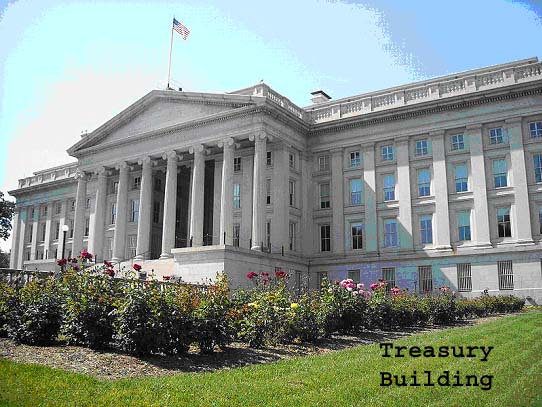 and FINRA described below. Except for the FED, most of these organizations have direct or indirect ties to the Treasury organization.
FED – Federal Reserve System
From Wikopedia: Its duties today, according to official Federal Reserve documentation, are to conduct the nation’s monetary policy, supervise and regulate banking institutions, maintain the stability of the financial system and provide financial services to depository institutions, the U.S. government, and foreign official institutions.Current chairman is Ben Bernanke, the former chairman was Alan Greenspan. Much more on Mr Greenspan later.
SEC – Securities and Exchange Commission
From Wikopedia: It holds primary responsibility for enforcing the federal securities laws and regulating the securities industry, the nation’s stock and options exchanges, and other electronic securities markets in the United States. Mary Schapiro is the current Chair. Predesessors were; Christopher Cox – 2005-2009, William H. Donaldson – 2003-2005, Harvey Pitt – 2001-03
OCC – Office of Comptroller of the Currency
From Wikopedia: US federal agency established by the National Currency Act of 1863 and serves to charter, regulate, and supervise all national banks and the federal branches and agencies of foreign banks in the United States. Current Acting Chairman is John Walsh. Previous Chairman were John C. Dugan – (2005 – 2010) John D. Hawke, Jr. – (1998–2004)
OTS – Office of Thrift Supervision ( recently folded into OCC)
From Wikopedia: United States federal agency under the Department of the Treasury. It was created in 1989 as a renamed version of another federal agency (that was faulted for its role in the Savings and loan crisis). Like other US federal bank regulators, it is paid by the banks it regulates. The OTS was initially seen as an aggressive regulator, but was later lax. Declining revenues and staff led the OTS to market itself to companies as a lax regulator in order to get revenue.
FDIC – Federal Deposit Insurance Corporation
From Wikopedia: United States government corporation created by the Glass-Steagall Act of 1933. It provides deposit insurance, which guarantees the safety of deposits in member banks, currently up to $250,000 per depositor per bank. The FDIC insures deposits at 7,895 institutions. The FDIC also examines and supervises certain financial institutions for safety and soundness, performs certain consumer-protection functions, and manages banks in receiverships (failed banks).
Sheila Bair is the current chairman of the FDIC and is viewed as a serious regulator with the right incentives for all concerned.
CFTC – Commodity Futures Trading Commission
From Wikopedia: The stated mission of the CFTC is to protect market users and the public from fraud, manipulation, and abusive practices related to the sale of commodity and financial futures and options, and to foster open, competitive, and financially sound futures and option markets.
CFTC is considered to be the primary regulator for Credit Default Swaps in the Dodd Frank regulation scheme.
FINRA – Financial Industry Regulatory Authority
From Wikopedia: In the United States, the Financial Industry Regulatory Authority, Inc., or FINRA, is a private corporation that acts as a self-regulatory organization (SRO). FINRA is the successor to the National Association of Securities Dealers, Inc. (NASD). Though sometimes mistaken for a government agency, it is a non-governmental organization that performs financial regulation of member brokerage firms and exchange markets.
Previously run by Mary Shapiro, FINRA has been critisized as being a ineffective regulator. Most notable was their (and SEC) allowing Bernie Madow to continue for 10 years to operate despite being warned by a whistle blower. When testifying before congress, the whistle blower (Harry Markopolos) said SEC was incompetent, FINRA was corrupt.
It must be said that Financial Regulation in the United States is done by committee of political bureauocrats. It is important to be aware of the fact that many of them are funded by fee’s assessed to the agencies they regulate. So opportunity for Regulatory Capture and Regulatory Arbitrage is prevalent in these agencies. The clear example is Office of Thrift Supervision bowing to their clients. The opposite example is that of Sheila Bair who tries to do the right thing for her clients despite critisizm.
Derivatives – The Dark Market
Posted: December 28, 2010 Filed under: Barack Obama, commercial banking, Corporate Crime, Equity Markets, financial institutions, Global Financial Crisis, investment banking, Stock Market, The Bonus Class, The Great Recession, U.S. Economy, U.S. Politics | Tags: AIG, Andrew Ross Sorkin, CFMA, CFTC, Commodity Futures Modernization Act, Credit Default swaps, derivatives, Dodd Frank, Gary Gensler, Glass Steagall, Graham Leach Bliley, Mary Schapiro, SEC, securitization 35 Comments[Dakinikat here: We at Sky Dancing would like welcome fiscalliberal to the Front page!!!]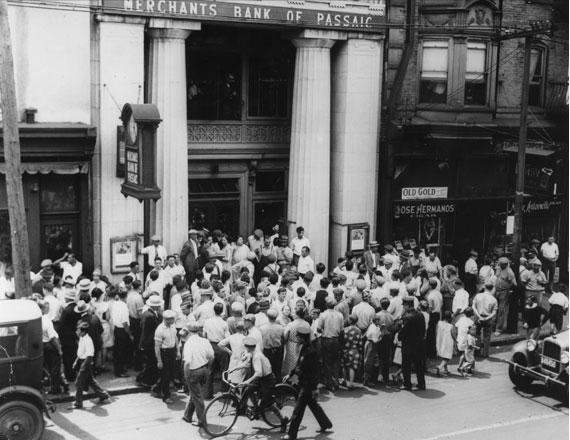
The major objective of this article is to begin the process of understanding the financial market to enable intelligent discussion on the blog.
One of the major pillars of financial collapse was Derivatives. They are very complex financial instruments with a wide diversity. They are described by a gaggle of terminology used by the high priests of finance. Because of complexity most of the books on the collapse skirt the detail of the Derivative Market. After we get through some basic definitions, we will focus on Credit Default Swaps (CDS); a subset of the Derivatives offerings. We will see how the government created a non regulated environment where fraud, compromised regulators and incompetent people ran the Investment Financial community in a very high risk mode.
Derivatives Defined
A Derivative is a financial instrument whose value is dependent on the value of another entity at a future time. Its primary function is to mitigate risk. A simple analogy would be your Home insurance. These policies guarantee that you will be remunerated if the value of your home falls due to fire, wind, or accident. A relatively small premium of money can mitigate a large potential financial catastrophe. State regulators are in charge of most regular Insurance products and solvency is less of an issue as adequate capital reserves are defined.
We need to think of Derivatives as a “risk tool” meant to stabilize the financial businesses (markets). The wide variety of Derivatives creates confusion, so we are going to restrict our discussion to Credit Default Swaps (CDS). Anticipating problems with Sub Prime mortgages, Securities were insured by investors. It was the Credit Default Swaps inability to perform that was a party to the financial collapse after the Lehman bankruptcy. They did not have the financial reserves to back up the policies they wrote How did that happen?
Deregulation
For our discussion today, three government deregulation actions are relevant.
- 1999 Graham Leach Bliley Act repealed the 1933 Glass Steagall act. The Glass-Steagall Act prohibited any one institution from acting as any combination of an investment bank, a commercial bank, and an insurance company.
- 2000 Commodity Futures Modernization Act deregulated Derivatives creating a Wild West environment for “Derivatives financial innovation”. See this link for a excellent Brooksley Born interview
- April 28, 2004 SEC drastically relaxed leverage standards for the Big Five Investment Banks: Goldman, Merrill, Bear, Lehman and Morgan Stanly. This created a very high risk environment. The session can be viewed here.
Financial self regulation brought the system down in 8 years. Bush de-funded Federal regulation. Greed, incompetence and corruption reigned supreme. Enron people went to jail. As of 2010, under Obama only bit players have been jailed. Civil fines are a joke.
Securitization Market
We need to understand the environment created by the above regulation changes to understand the role of CDS Derivative failure. We will concentrate on the Real Estate Industry
Traditionally, according to HBSwiss, the real estate industry was handled by local banks who retained the loans. Their exposure to losses resulted in more careful origination of loans. For a long time, Fannie, Freddie and FHA were packaging (securitizing) mortgages and selling them to Investors. They enjoyed a good reputation because they had good loan origination standards. These were categorized as Prime mortgages. Generally these securities obtained a AAA rating which rarely changed. Good consistent returns were recorded with these products.
Early in the 2000 decade the Investment banks adopted the securitization model called Private Label Securities. They purchased their mortgages from unregulated brokers (Country Wide, Ameriquest etc) who had little or no standards regarding underwriting of loans. The private label market latched on to the fact that high risk “Sub Prime” loans carried higher interest rates, hence higher profits. They had no exposure to the failure of the loan as risk was passed on to the Investors. They simply collected the lucrative fee’s.
Investment Banks packaged the loans (millions and billion level). They paid the rating agencies (S&P. Moody and Fitch) for ratings structuring the packages to get AAA ratings. It is clear the rating agencies did not do their job as traditionally solid AAA ratings were changed as the packages started to fail. These packages were sold to the domestic and world markets. Trillions of dollars were involved. The banks simply passed the risk on to the investors and collected the origination and servicing fee’s
CDS Market
Risk could be mitigated by purchasing a CDS against the failure of the security. So if the security failed the investor was held harmless. Remember that as of 2000 the CDS market was unregulated. AIG – London Financial Services is the poster child of the CDS industry. AIG wrote most of the CDS contracts cheaply as they held inadequate reserves (in the event of a default) and had a good company rating based on the parent insurance company whose operations were regulated. Office of Thrift Supervision was the responsible regulator, but their presence was effectively non existent, Goldman Sachs (Hank Paulson as CEO) was one of their major clients.
However, late 2006 / 2007 AIG FP realized they were over exposed and got out of the market retaining the previous contracts. Recall in the unregulated market anyone could write CDS and the big banks did. As the Mortgage Backed Securities began to fail, the banks started writing CDS between the banks to mitigate risk always falsely believing the market would recover. This was necessary because When Bear and Lehman started to fail the banks were joined at the hip, guaranteeing each others toxic securities. Based on the 2004 SEC relaxing reserve requirements, that banks were leveraged up and things were starting to fail. In a leveraged market things get serious to critical in a matter of hours.
The daily, weekly and monthly credit markets froze up because nobody trusted anybody. Even GE was having trouble borrowing for daily operations. Andrew Ross Sorkin’s book—‘Too Big to Fail’— gives a good account of the scenario in 2008. Fannie and Freddie were in conservator ship, near bankruptcy Bear was bought on a fire sale by JP Morgan, Lehman was bankrupt, Merrill near bankruptcy was bought by Bank Of America and AIG had to be rescued by the Federal Government. Morgan Stanly and Goldman were within days of bankruptcy, but got bailed out by Warren Buffet and a Korean financial entity.
The AIG story is discussed in this newspaper article ‘Behind Insurer’s Crisis, Blind Eye to a Web of Risk’.
It is interesting to know that just before the 2008 collapse, the rating agencies down graded AIG forcing them to hold more reserves. They were forced to raise cash in a collapsing market. In a high leverage industry, when it rains it pours.
Naked CDS
Investors can buy CDS on securities even though they do not own the security. This is equivalent to a neighbor buying insurance on your house. So if you know that a Mortgage Backed Security has a lot of high risk loans in it and is headed to failure, you buy a CDS anticipating the default. Michael Lewis’ book—‘The Big Short’–is all about the people who anticipated the failures and bought CDS products. A Bloomberg video interviews Lewis and it provides a lot of insight into the mess that evolved.
I look to Dakinkat, Gillian Tett, Yves Smith, and Janet Tavakoli on technical issues of Derivatives. Lewis’ forte is being able to write to the general public. His book gives a lot of insight to the CDS market nuances. It is interesting that Smith and Tavakoli consider Lewis to be a light weight. Yet, his book sales exceed theirs.
To get a notion of the size of the CDS market we need to look at these numbers. The size of our national economy this year is roughly $15 trillion. The whole world GDP is about $56 trillion. At the time of the 2008 failure, the size of the Credit Default Swaps (CDS) market was $64 trillion. The exposure at the time of the collapse was huge. The magnitude of the Naked CDS is not known, but is understood to be huge.
Given that the unregulated CDS underwriters were prone to not provide adequate capital reserves for defaults, there was a massive liquidity problem, hence the government had to step in and bail out the likes of AIG and banks who wrote these products.
The whole CDS market is described as being part of the Casino Gambling image in the financial markets
Current Status
The Dodd Frank Bill has a moderate approach for Derivatives Regulation. However it is up to the regulators for implementation and the banks are attempting to minimize the impact of regulation. This is documented by two recent NYT articles.
It’s Not Over Until It’s in the Rules
A Secretive Banking Elite Rules Trading in Derivatives
A short summary of the above articles is that the big banks are attempting to save their Oligopoly through the Risk Committees of the Clearing Houses. This is being done by imposing high capital reserve requirements for participants. This has the effect of limiting competition which limits price competition and transparency. The elephant in the room is the risk committee’s saying certain derivatives are to complex to be cleared. This gets us right back to where we were in the financial crisis. Over the Counter non clearing house products are the most profitable and open to risk.
In the spirit of Brooksly Born regulation, It has been proposed that Derivatives be run using a Clearing House or a Exchange Trading Requirement.
From The Economist:
Clearing House: A clearing requirement is a requirement that all eligible derivatives be cleared on a central clearinghouse (also known as a central counterparty, or CCP). A clearinghouse provides critical counterparty risk mitigation by mutualizing the losses from a clearing member’s failure, netting clearing members’ trades out every day, and requiring that parties post collateral every day. Clearinghouses also centralize trade reporting, and can provide any level of post-trade transparency to the OTC derivatives markets that your heart desires — same-day trade reporting, including prices, aggregate and counterparty-level position data, etc. Virtually all of the harmful opacity and murkiness of the current OTC derivatives markets can be ended with just a clearing requirement — that is, a clearing requirement is a prerequisite for getting rid of the harmful opacity in OTC derivatives
Exchange Trading: An exchange-trading requirement, on the other hand, is simply a requirement that all eligible derivatives use a particular type of trade execution venue: exchanges (also known as “boards of trade”)..The exchange is just the trade execution venue (think NYSE vs. Nasdaq). The only thing that an exchange-trading requirement adds to the clearing requirement is “pre-trade price transparency.”
The clearing house is obviously the better because it brings a degree of financial integrity and transparency. It certainly is the more expensive of the options, but its cost is minuscule when we think of the financial collapse.
However based on the articles above, it is clear that the big bankers are attempting to preserve their oligopoly in terms of the CDS market. They also want to preserve the option to take the market back to the opaque high risk environment because of profit opportunities. The Opaque Over the Counter market is the biggest threat to the stability of the market
In Dodd – Frank, the CFTC and SEC have co-jurisdiction The CFTC commission seems to be moving to the bankers view. SEC has been relatively quiet on this subject
We need to remember that Mary Schapiro (SEC) and Gary Gensler (CFTC) were part of the problem before the 2008 Financial Crisis. It remains to be seen how well they address the problem. Will they do the right thing or are they financial industry moles?
What’s That Lassie? Little Timmy’s in the Well AGAIN?
Posted: August 4, 2009 Filed under: Bailout Blues, Equity Markets, Global Financial Crisis, president teleprompter jesus, The Bonus Class, The Great Recession, U.S. Economy | Tags: Ben Bernanke, CNBC, FDic, FED, Larry Summers, Mary Schapiro, Naked Capitalism, SEC, Sheila Bair, Timothy Geithner, Wall Street Cheerleaders, Zero Hedge Comments Off on What’s That Lassie? Little Timmy’s in the Well AGAIN? Wow, it looks like Turbo Tax Timmy has gone rogue! We better send the press up to Alaska to chase down another Palin rumor. First, there’s that nastiness over the weekend with the Stephanapolous show on ABC where he explicitly said that the administration wasn’t ruling out new taxes on the middle class. (Something Larry-the-la-la Summers also inkled, but hey, he’s not a cabinet officer, he’s something akin to a Czar that has to be overthrown by something other than scandal and public displays of stupidity.) I believe that gave Robert Gibbs Excedrin headaches number 349-357 during yesterday’s presser.
Now, there’s rumors of a temper tantrum in the presence of all the nation’s topic economists and financial regulators outlined here in the WSJ. It seems he’s not getting the Obama way on this one. The ladies in the room have taken exception to his granting Ben Bernanke (possibly later, this year, La-la Summers) all the fun and power. I guess being an independent regulator with an agency all to yourself just isn’t what it used to be; especially when you have scary lady parts and a huge brain.
Mr. Geithner told the regulators Friday that “enough is enough,” said one person familiar with the meeting. Mr. Geithner said regulators had been given a chance to air their concerns, but that it was time to stop, this person said.
Among those gathered in the Treasury conference room were Federal Reserve Chairman Ben Bernanke, Securities and Exchange Commission Chairman Mary Schapiro and Federal Deposit Insurance Corp. Chairman Sheila Bair.
Friday’s roughly hourlong meeting was described as unusual, not only because of Mr. Geithner’s repeated use of obscenities, but because of the aggressive posture he took with officials from federal agencies generally considered independent of the White House. Mr. Geithner reminded attendees that the administration and Congress set policy, not the regulatory agencies.
Mr. Geithner, without singling out officials, raised concerns about regulators who questioned the wisdom of giving the Federal Reserve more power to oversee the financial system. Ms. Schapiro and Ms. Bair, among others, have argued that more authority should be shared among a council of regulators.
This current turf battle is only the latest move by a group within government possibly thwarting the Treasury’s plans to continue uploading tax dollars to the bonus class in the guise of saving the financial sector. If there’s still disagreement about this point, can you imagine what other things are going on in complete disarray behind the scenes? Who is really in charge of solving this overt act of sibling rivalry? Well, if you have figured out where the buck stops in this administration, you’re doing better than me. (Hint: these folks are ALL presidential appointments).
Mission Creep: The Incredible Expanding Power to Bailout
Posted: April 7, 2009 Filed under: Bailout Blues, Global Financial Crisis, U.S. Economy | Tags: FDic, Hedge Fund Bailout, LTCM, Mission Creep, SEC, Sheila Bair, Timothy Geithner 2 CommentsI’ve been watching the three big regulators in the Financial Crisis (the Fed, the FDIC, and the SEC) start doing things  unheard of only a year ago. What has been baffling is no one has changed any laws or charters while these things keep happening. I’m not a lawyer and I don’t have the time to go poking around a lot of the charters and laws surrounding these institutions, but you have to start wondering if some of their more unconventional moves are technically legal.
I’ve been watching the Fed Open borrowing at the Discount Window and accepting some really strange collateral. The Discount Window used to be exclusive to member banks. I’ve been looking over what they now accept as collateral and am surprised. Take a look at the list and see if you’d like to be left holding the bag on some of these things. I’m not sure I want these off budget quasi agencies turning their balance sheets into dumping grounds for some of the most heinous looking gambles available on the market.
The NY Times Reporter Andrew Ross Sorkin has been poking around the charter and law concerning the FDIC. The FDIC was chartered to provide deposit insurance to bank deposits. You would think that is a fairly straight-forward task. However, when the charter was written, the size of the task at hand today was unfathomable and it seems the FDIC is tiptoeing around some of its charter provisions. The FDIC is barred from incurring any obligation greater than $30 billion and its about to take part in guarantees that would commit $1 trillion in the PPIP bank bailout program. Sorkin reports on what he calls “mission creep” here.
Now, because of what could politely be called mission creep, it’s elbowing its way into the middle of the financial mess as an enabler of enormous leverage.
In the fine print of Treasury Secretary Timothy F. Geithner’s plan to lend as much as $1 trillion to private investors to help them buy toxic assets from our nation’s banks, you’ll find some details of how the F.D.I.C is trying to stabilize the system by adding more risk, not less, to the system.
It’s going to be insuring 85 percent of the debt, provided by the Treasury, that private investors will use to subsidize their acquisitions of toxic assets. The program, extraordinary in its size and scope, is the equivalent of TARP 2.0. Only this time, Congress didn’t get a chance to vote.
These loans, while controversial, were given a warm welcome by the market when they were first announced. And why not? The terms are hard to beat. They are, for example, “nonrecourse,” which means that if an investor loses money, he owes taxpayers nothing. It’s the closest thing to risk-free investing — with leverage! — around.

 peej
peej Carissa
 bostonboomer
 dakinikat
 ecocatwoman
 mablue2
 Mama Lopez
 peggysue22
 quixote
 skydancingguestblogger
 Mona (aka Wonk the Vote)



 Sky Dancing
Recent Comments